




Abstract
Crimean-Congo hemorrhagic fever (CCHF) is a potentially fatal viral vector-borne zoonosis which has a mortality rate of up to 30% without treatment in humans. CCHF virus is transmitted to humans by ticks, predominantly from the Hyalomma genus. Following the report of two confirmed and one suspected death due to CCHF virus in Kurdistan province of Iran in 2007, this study was undertaken to determine the fauna of hard ticks on domestic ruminants (cattle, sheep, and goats) and their possible infection with CCHF virus using reverse transcription PCR technique. This is the first detection of CCHF virus in ticks from the Kurdistan province of Iran. Overall, 414 ixodid ticks were collected from two districts in this province. They represented four genera from which 10 separate species were identified. The Hyalomma genus was the most abundant tick genus (70%). It was the only genus shown to be infected with the CCHF virus using RT-PCR technique. The number of ticks positive for CCHF virus was 5 out of 90 (5.6%) adult ticks. The three remaining genera (Haemaphysalis, Rhipicephalus, and Dermacentor) were all negative following molecular survey. Four of the five virally-infected ticks were from cattle mainly in the Sanandaj district. We concluded that CCHF virus is present in the Hyalomma ticks on domestic ruminants (cattle) in Kurdistan province of Iran.
Introduction
After a short (1–3 up to 5 days) incubation period, human disease is characterized by a febrile illness with headache and myalgia, as well as overt disseminated intravascular coagulation (DIC) with capillary fragility, severe bleeding, frequent extensive ecchymoses, and hepatic dysfunction, with case fatality rates ranging from 8–90% (Williams et al. 2000), and an average mortality rate of up to 30% without treatment (Ergonul 2006).
Human disease is highly focalized in its occurrence (Brown et al. 2005). CCHF has the largest geographical distribution of any tick-borne viral disease. It is present in more than 30 countries of Africa, Asia, Eastern Europe, and the Middle East (Ergonul 2006). CCHF infection mainly circulates in rural areas. Like all other vector-borne diseases, the presence and persistence of zoonotic foci of infection depends on the biological and ecological relationships between three very different kinds of organisms: virus, tick, and vertebrate host (Papa et al. 2009). Although CCHF virus has been isolated from several species of hard ticks (Ixodidae), the main group of vectors appears to be ticks of the genus Hyalomma (Nabeth et al. 2004).
In most Iranian provinces, a significant number of human infections (738 confirmed cases and 108 fatal cases from 2000–2010) with CCHF virus have been reported in recent years (Chinikar et al. 2010). The viral agent is closely related to the Matin strain (GenBank accession no. AF527810) from neighboring Pakistan, and is associated with Hyalomma species of tick (Chinikar et al. 2008, 2010). Immature ticks acquire the virus by feeding on infected small mammals like rodents, leporids, and ungulates, and birds. Once infected, they remain infectious throughout their life. Transovarial transmission (i.e., transmission from adult female ticks to the eggs) has also been documented (Whitehouse 2004). Upon maturity, they transmit the infection to humans and large animals, such as domestic livestock (Ergonul 2006). Entomological survey is thus essential for assessing the risk of human exposure and to identify CCHF hot spots for preventive measures to ameliorate the effects of virus outbreaks.
Following a recent outbreak of CCHF in Kurdistan province, this study was undertaken to determine the fauna of ixodid ticks on domestic ruminants and their possible infection with CCHF virus in the center of Kurdistan province (Sanandaj and Kamiaran, where two confirmed deaths and one suspected death due to CCHF were reported in 2007; CDC, Tehran) using reverse-transcription polymerase chain reaction (RT-PCR). To the best of our knowledge, this is the first report of detecting CCHF virus in ixodid ticks in Kurdistan province of Iran.
Materials and Methods
Study area
Kurdistan province is located on the northwestern frontier of Iran (Fig. 1). It covers an area of about 28,500 km2, and is an entirely mountainous region (with a mean altitude of about 2650 m) with many caves, rivers, and forest refuges, and a rich fauna of domestic and wild animals including birds and mammals. Annual rainfall is about 500 mm/year. The annual average minimum and maximum temperatures are 21° and 40°C, respectively. This region is mainly covered with oak trees. This study focused on the two county towns of Sanandaj (the capital city of Kurdistan; 47°E, 35°23’N; at an altitude of about 1500 m above sea level) and Kamiaran (46°55’E, 34°58’N; at an altitude of about 1400 m above sea level). For the present study, 30 villages from Sanandaj and 10 villages from Kamiaran, that each held at least 10 households, were randomly selected.
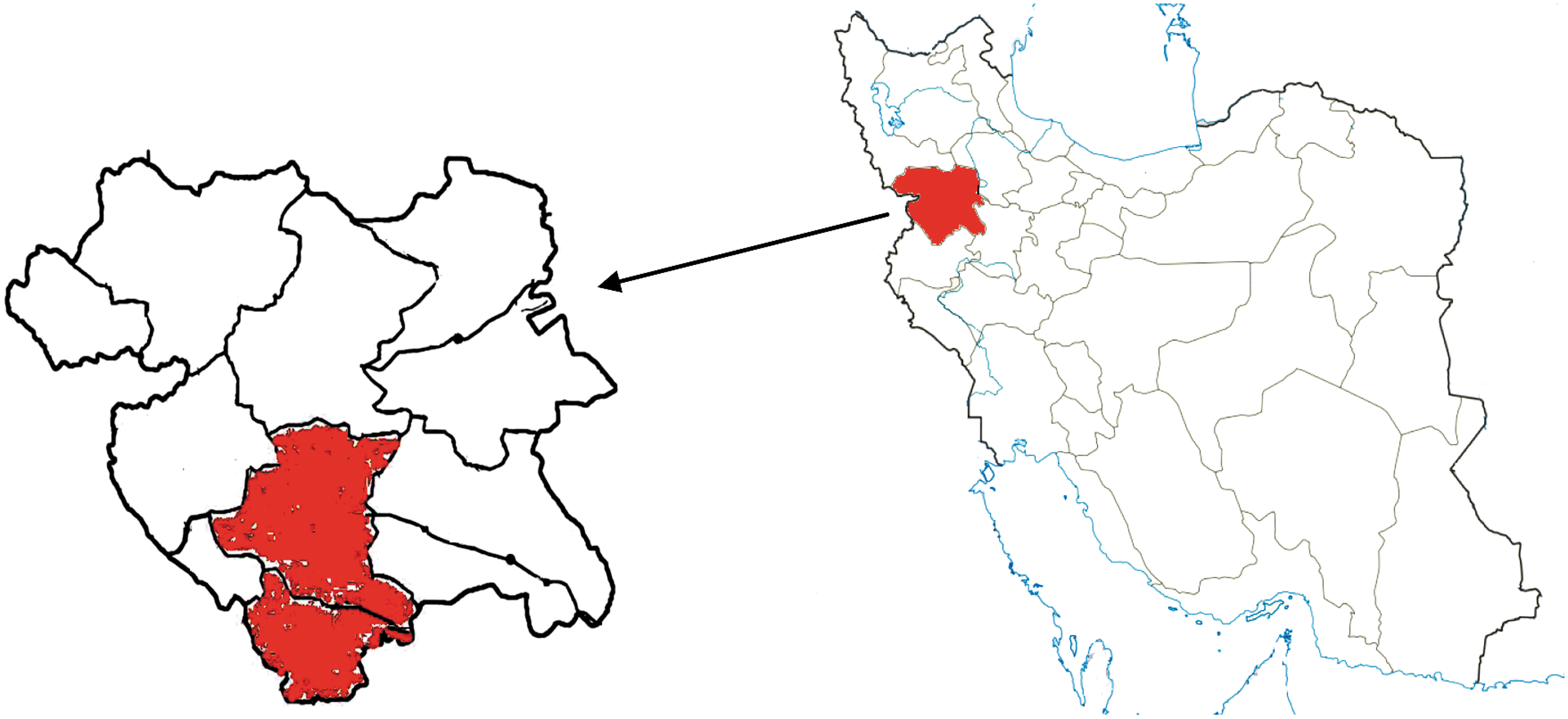
Map of Iran showing the study location in Kurdistan Province, Iran. (Color image available at
Collection of ticks
Ticks were collected from domestic ruminants from May to October of 2010, when peak densities of ticks were expected (Nabian et al. 2009). They were collected from different parts of the bodies of sheep, goats, and cows, by clustered random sampling in the 40 sampled villages. The whole body of each sampled host was searched for the presence of tick infestations by palpation, mainly on the ears and along the nape of the neck, perineum, scrotum or udder, and tail base. All ticks were handled with forceps. Each one was transferred alive into a separate screw-capped sterile vial that contained a small piece of cotton moistened with 1% mycostatin solution to prevent desiccation and mold growth. Each vial was labeled accordingly, with collected adult ticks were checked for CCHF virus at Pasteur Institute of Iran, Tehran.
RNA extraction from ticks
Each of the 90 adult ticks (a random sample of the ticks that were collected) was separately washed twice with phosphate-buffered saline (PBS; pH 7.4), and crushed with a pestle and mortar in 200–300 μL of PBS. Total RNA was extracted from each sample homogenate using the RNAeasy kit (Qiagen GmbH, Hilden, Germany) according to the manufacturer's instructions. The extracted RNA was dissolved in 50 mL of RNase-free water and stored at −70°C until analysis.
RT-PCR
Reverse transcription of RNA was performed using previously described primers (Schwarz et al. 1996), which amplify a 536-bp fragment of the S-segment of the CCHF viral genome. Briefly, the extracted viral RNA was subsequently analyzed by gel-based and real-time RT-PCR using a one-step RT-PCR kit (Qiagen) using specific primers: F2 primer (5′-TGGACACCTTCACAAACTC-3′), and R3 primer (5′-GACAAATTCCCTGCACCA-3′). For qualitative analysis, 1 μL of SYBR green dye at 1:10,000 dilution was also used in the master mix. For gel-based analysis, 5 μL of the PCR products were mixed with 1 μL loading buffer, and electrophoresis was performed on 2% agarose gel in Tris-borate EDTA buffer (TBE). Both cycling and melting curves in the real-time and gel-based analyses were evaluated with respect to negative and positive controls (Chinikar et al. 2004; Tonbak et al. 2006). DNA bands were stained with ethidium bromide and were visualized on a UV transilluminator.
Statistical analysis
Data were analyzed using SPSS version 15 software. Descriptive statistics were used to present the results. A p value≤0.05 was considered statistically significant.
Results
During the study period, a total of 414 adult ticks were collected from Sanandaj (349; 84.3%) and Kamiaran (65; 15.7%) districts. In Sanandaj, different tick species were removed from cattle (167; 47.9%), sheep (137; 39.2%), and goats (45; 12.9%). In Kamiaran, various ticks were removed from cattle (29; 44.6%), sheep (26; 40%), and goats (10; 15.4%). Four distinct tick genera were represented from which 10 different tick species were identified on the animals in Sanandaj and Kamiaran districts of Kurdistan province (Table 1). The genus Hyalomma was found to be widely distributed in all study villages. It was also the most common (70%) tick genus, while the least abundant (1%) tick genus was Dermacentor, found in only two study villages. The genus Hyalomma included four species, the least frequent (1.7%) species of which was Hyalomma asiaticum. The most abundant species were Hyalomma anatolicum and Hyalomma marginatum, with 37% and 27%, respectively. The latter species was present in all but two of the Kamiaran villages, whereas the highest number of Hy. anatolicum was recorded from a village known as Tavankosh in the same district. Although both tick species were found to be widely distributed in the surveyed region, neither of them was found in all sampled locations in the study area.
Hy., Hyalomma; Ha., Haemaphysalis.
The second most abundant tick genus was Haemaphysalis, represented by three species comprising 22% of the total sample volume. Haemaphysalis sulcata was the most frequent (15%) species, while Haemaphysalis inermis ranked second (6%). Haemaphysalis punctata represented the third most abundant (1%) species caught from sheep and goats only in the Kamiaran district. Two species of Rhipicephalus, including the brown dog tick Rhipicephalus sanguineus, were also recorded, which represented 7% of the total sample volume.
Using RT-PCR on a selection of collected ticks (22%), it was revealed that Hyalomma ticks removed from cattle were primarily infected with CCHF virus (Table 2). A total of 90 adult ticks from four separate genera were included in this study. Most of the selected tick species were Hy. anatolicum (34; 37.78%) and Hy. marginatum (25; 27.78%). Hy. dromedarii and Hy. asiaticum represented 3 (3.33%) and 1 (1.11%), respectively. All of the selected tick species were subjected to nested RT-PCR. The presence of CCHF virus was detected in 3 of 25 (12%) Hy. marginatum, 1 of 34 (2.94%) Hy. anatolicum, and 1 of 3 (33.3%) Hy. dromedarii (Fig. 2). None of the Haemaphysalis, Rhipicephalus, or Dermacentor species gave any positive nested RT-PCR results against CCHF virus. Only one tick from a goat in a village of the Kamiaran district was found to be positive for CCHF virus. Apart from the village of Naiisar, all of the other four collection stations with infected tick species had the lower range of ticks (No. 6–7) on their domestic ruminants.
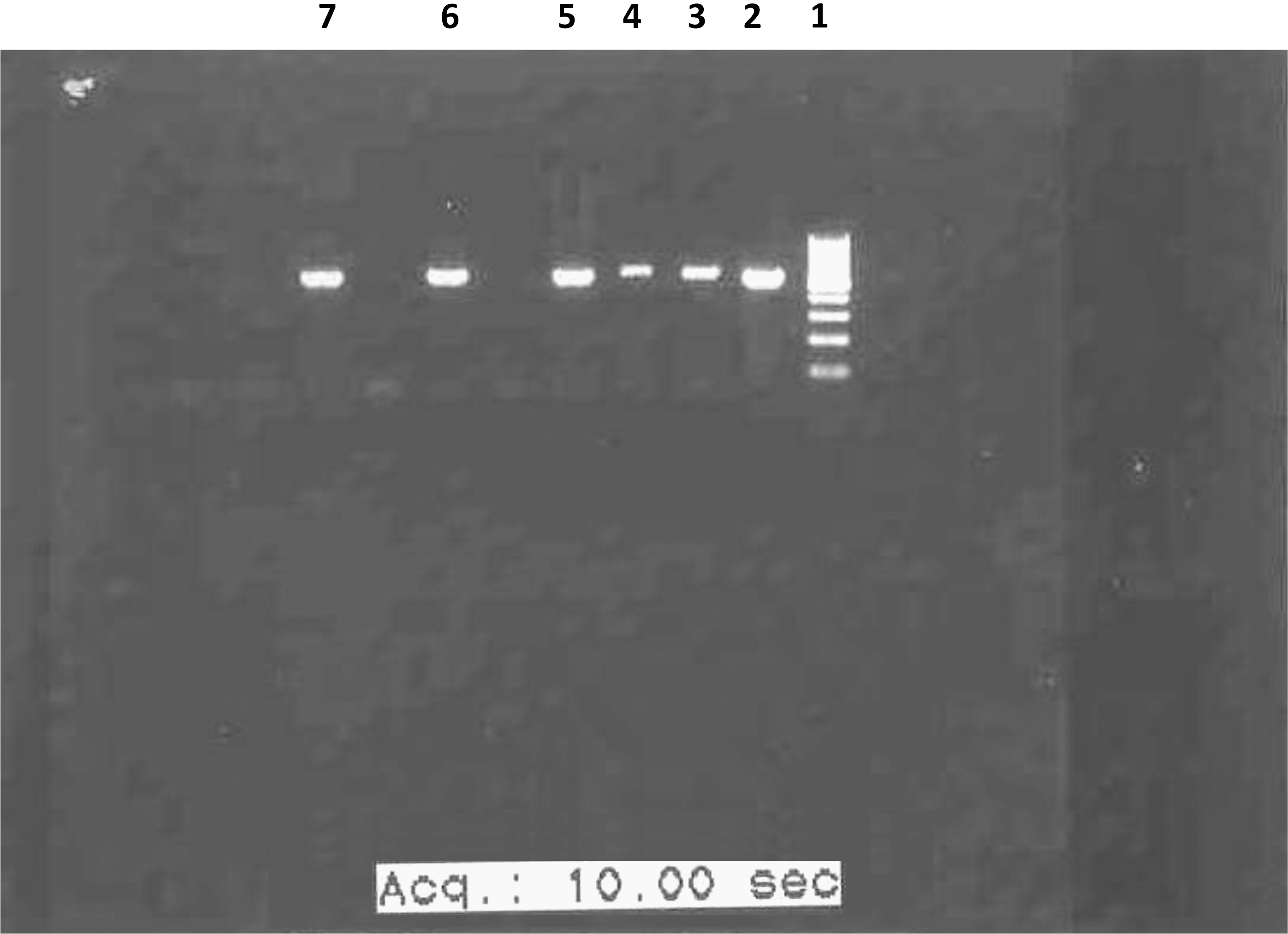
RT-PCR results showing the DNA bands with 536 bp from positive control ticks (lane 2), and infected ticks: Hy. dromedarii (lane 3), Hy. anatolicum (lane 4), and Hy. marginatum (lanes 5, 6, and 7), as well as the molecular-weight marker (lane 1).
Hy., Hyalomma; Ha., Haemaphysalis.
Discussion
Tick-borne fevers, caused by different pathogenic agents, are of increasing public health importance in Iran (Fakoorziba et al. 2006; Moemenbellah-Fard et al. 2009). Infections resulting from viruses being transmitted via blood-feeding arthropods (arthropod-borne viruses or arboviruses such as CCHF viruses) impose a particularly persistent and substantial burden of disease on the lives of healthy Iranians. Crimean-Congo hemorrhagic fever virus is endemic in different parts of Iran. It is vectored by various tick species, but mainly those in the genus Hyalomma (Family: Ixodidae). Domestic ruminants are infected through infectious tick bites and could infect more ticks to perpetuate the virus in nature (Hoogstraal, 1979; Whitehouse 2004).
Although 10 different species of ixodid ticks were identified in this study, only two species (Hy. marginatum and Hy. anatolicum) were predominantly present on domestic ruminants in most villages. The remaining eight tick species were sporadically distributed on different hosts in disparate places. The collection of ticks in this study was overshadowed by the spraying of insecticides in the months prior to our study, since as stated above a few deaths in 2007 were attributed to CCHF virus in these two districts of Kurdistan province.
The detection of CCHF virus in Hyalomma spp. ticks from Sanandaj and Kamiaran districts indicates that CCHF virus is present in Kurdistan province of Iran. Hy. marginatum is considered as a competent vector and one commonly found to attack humans, whereas other species such as Hy. dromedarii, though CCHF positive, are less of a risk to humans. The virus was detected only in ticks collected from cattle and a goat. Domestic ruminants play a role in the amplification of the virus since they become viremic in about a week (Ergonul 2006), during which time they can infect more ticks.
Future work will continue on the five positive samples, including sequence analysis on these ticks, and this will provide information about which genetic variant prevails in specific tick species. It is well known that there is more than one viral strain present in Iran, and these have been documented in ticks. These data may be used to evaluate the epidemiological importance of CCHF virus in Iran.
Footnotes
Acknowledgments
The authors are indebted to anonymous referees who gave their valuable advice on our initial draft. We are also grateful to the vice chancellor for research and technology at Shiraz University of Medical Sciences (SUMS) for his official approval of this research project (no. 5062-88 dated March 17, 2009), which led to the thesis for post-graduate student P. Golmohammadi toward a Master of Science degree in Medical Entomology at the School of Health and Nutrition, Shiraz University of Medical Sciences, Iran.
Author Disclosure Statement
No competing financial interests exist.