




Abstract
Hemorrhagic fever with renal syndrome (HFRS) and Crimean–Congo hemorrhagic fever (CCHF) are the 2 widespread viral hemorrhagic fevers occurring in Europe. HFRS is distributed throughout Europe, and CCHF has been reported mainly on the Balkan Peninsula and Russia. Both hemorrhagic fevers are endemic in Bulgaria. We investigated to what extent acute undifferentiated febrile illness in Bulgaria could be due to hantaviruses or to CCHF virus. Using enzyme-linked immunosorbent assays (ELISAs), we tested serum samples from 527 patients with acute febrile illness for antibodies against hantaviruses and CCHF virus. Immunoglobulin M (IgM) antibodies against hantaviruses were detected in 15 (2.8%) of the patients. Of the 15 hantavirus-positive patients, 8 (1.5%) were positive for Dobrava virus (DOBV), 5 (0.9%) were positive for Puumala virus (PUUV), and the remaining 2 were positive for both hantaviruses. A plaque reduction neutralization test (PRNT) confirmed 4 of the 10 DOBV-positive samples. PRNT was negative for all PUUV-positive samples. Serologic evidence of recent CCHF virus infection was found in 13 (2.5%) of the patients. Interestingly, HFRS and CCHF were not only detected in well-known endemic areas of Bulgaria but also in nonendemic regions. Our results suggested that in endemic countries, CCHF and/or HFRS might appear as a nonspecific febrile illness in a certain proportion of patients. Physicians must be aware of possible viral hemorrhagic fever cases, even if hemorrhages or renal impairment are not manifested.
Introduction
Hantavirus infections are transmitted to humans through inhalation of rodent or some insectivore excreta. Several hantaviruses cause HFRS: Puumala virus (PUUV), Dobrava virus (DOBV), Saaremaa virus (SAAV), Hantaan virus (HTNV), and Seoul virus (SEOV). Each hantavirus is associated with a specific natural reservoir (for review, see Schmaljohn and Hjelle 1997): PUUV with the bank vole, Myodes glareolus; DOBV with the yellow-necked field mouse, Apodemus flavicollis; SAAV and HTNV with the striped field mouse, Apodemus agrarius; and, SEOV with the rats, Rattus rattus and R. norvegicus. HFRS caused by PUUV, SAAV, or DOBV is endemic in Europe. HFRS cases in China and Korea are caused by infections with HTNV or SEOV.
In Europe, PUUV and SAAV infections cause a milder form of HFRS. PUUV-associated HFRS is widely distributed and characterized by fever, back pain, and renal impairment (Vapalahti et al. 2003). HFRS caused by DOBV infection is endemic in the Balkan countries and is much more severe; it presents with hemorrhages, fever, and acute renal failure, sometimes requiring dialysis, and has a case-fatality rate up to 10% (Avsic-Zupanc et al. 1999). Hantaviruses target endothelial cells. Kidneys are the most affected organs. Capillary injury leads to hemorrhages, low blood pressure, acute shock, and renal failure in patients with HFRS (for review, see Schmaljohn and Nichol 2007).
CCHFV is transmitted to humans by tick bites. CCHFV can also be transmitted by smashing ticks with naked hands or by direct contact with the blood, other body fluids, or tissues from infected animals or patients, thus increasing the risk for medical staff or family members and leading to nosocomial outbreaks. The main tick vector of CCHFV is the species Hyalomma marginatum. In addition, some members of the genera Rhipicephalus, Dermacentor, and other Hyalomma species can efficiently transmit CCHFV. Geographic distribution of CCHFV reflects the global distribution of Hyalomma spp. ticks, having a 50°N latitude limit. CCHF is endemic in southern parts of Russia, Balkan countries, Africa, Middle East, and southwest Asia (Papa et al. 2002a,b, Yashina et al. 2003, Papa et al. 2004, Gozalan et al. 2007, Papa et al. 2010a).
CCHF symptoms start with fever, headache, nausea, and/or vomiting. In severe cases, profuse hemorrhages appear a few days after with petechiae and bleeding from the nose, gastrointestinal, urinary, or respiratory systems (Ergonul 2007). The case-fatality rate is up to 30%.
Reported CCHF cases in Balkan countries increased significantly in the last years. Sporadic cases and a few outbreaks were described in Kosovo and Albania (Papa et al. 2008; Humolli et al. 2010). A cluster of cases was observed in 2008 in southwest Bulgaria, an area considered at low risk for CCHF outbreaks (Christova et al. 2009). The first human case was reported in Greece (Papa et al. 2010a). The most prominent increase in CCHF incidence has been reported from Turkey, where the first cases were reported in 2002. Between 2002 and 2007, the number of registered cases per year has increased from 150 to over 700. Over 1300 cases were reported each year in 2008 and 2009 (Yilmaz et al. 2009; Leblebicioglu 2010).
Located in southeastern Europe, on the Balkan Peninsula, Bulgaria is endemic for both hemorrhagic fevers, HFRS and CCHF. For the last 5 years, a total of 34 CCHF and 14 HFRS cases were officially reported to the Ministry of Health in Bulgaria. Because both hemorrhagic fevers can cause unspecific febrile disease with no clinical hallmarks, i.e., hemorrhages or renal impairment, we hypothesize that some of the acute febrile illnesses with undefined etiology in Bulgaria could be due to infection with hantaviruses or CCHFV. To test this hypothesis, we tested 836 acute and convalescence serum samples from 527 patients with acute undifferentiated febrile illness in Bulgaria using immunoglobulin M (IgM) and IgG enzyme-linked immunosorbent assay (ELISA) to detect antibodies against hantaviruses or CCHFV. A plaque-reduction neutralization assay (PRNT) was used to confirm hantavirus ELISA-positive results.
Materials and Methods
Patients and serum samples
Serum samples from patients with acute febrile illness were collected between 2008 and 2011. The samples were drawn by physicians at the infectious diseases units at regional hospitals in 7 districts of Bulgaria, namely: Sofia (n=72), Pazardjik (n=128), Plovdiv (n=131), Sliven (n=35), Burgas (n=116), Ruse (n=37), and Pleven (n=8) (Fig. 1). A total of 527 serum samples were drawn during the acute phase and 309 sera were collected at the convalescence phase, 7–30 days after the first sample.
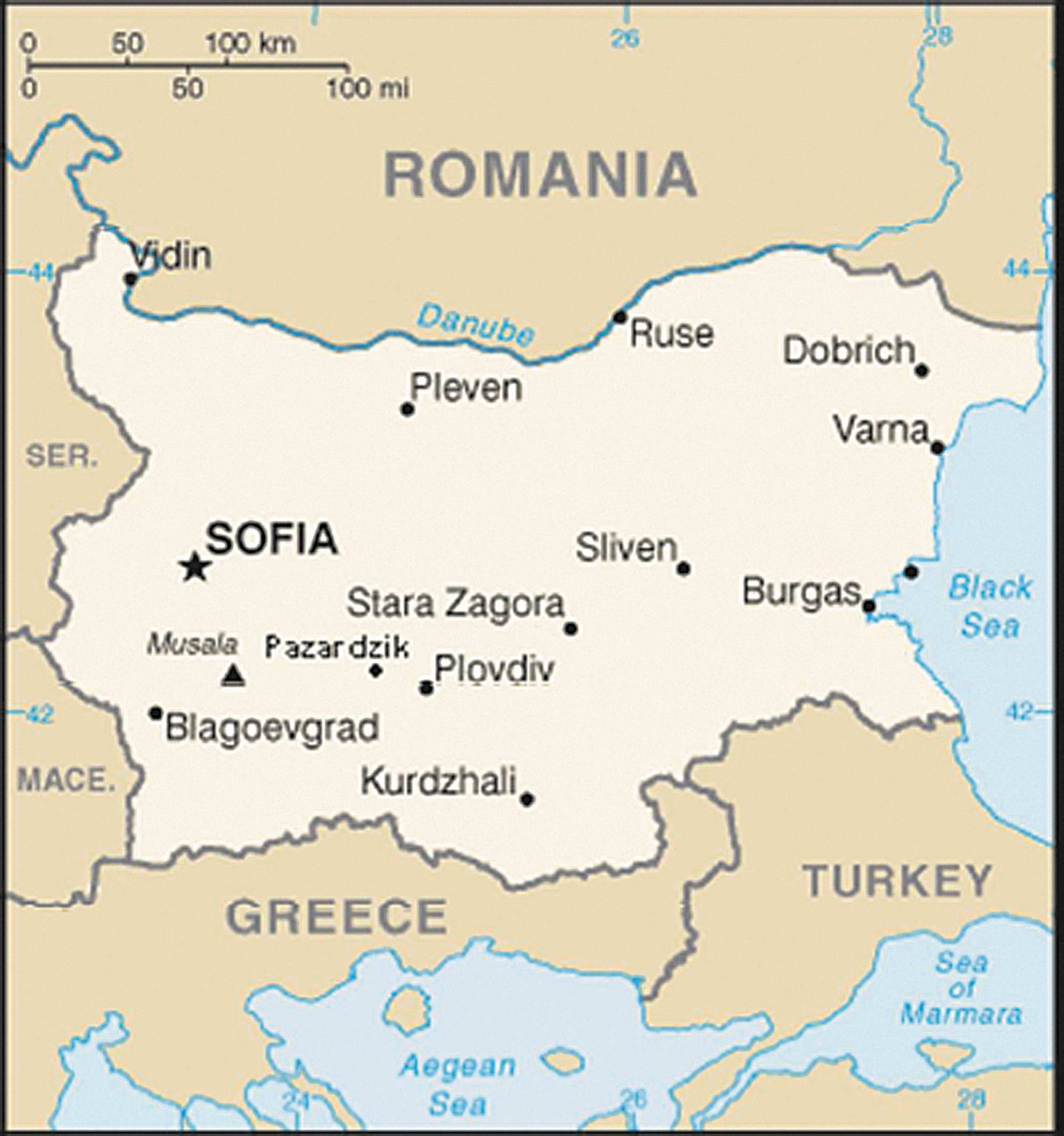
Map of Bulgaria showing neighboring countries and 7 districts where patients with nonspecific febrile illness were tested. (Color image is available at
Criteria for inclusion of patients were temperature >38.5°C for more than 2 days with no specific symptoms and no etiology suspected. Patients with an established diagnosis of different infectious diseases were excluded from the study.
Enzyme-linked immunosorbent assay
All 836 serum samples from patients were tested for antibodies against DOBV, PUUV, and CCHFV using commercially available ELISA tests. Antibodies against PUUV and DOBV were detected by using the PUU and DOB/HTN ELISA test (Progen Biotechnik GmbH, Germany), according to the manufacturer's instructions. This test uses recombinant nucleocapsid proteins of PUUV and HTNV as ELISA antigens. Serum samples were diluted 1:200. Peroxidase-labeled anti-human IgM antibodies and 3,3′,5,5′-tetramethylbenzidine (TMB)/peroxide substrate were used to detect specific interactions. Results were interpreted as positive when they exceeded 2 or more times the cutoff value as described by the manufacturer.
IgM and IgG antibodies to CCHFV were tested by ELISA (Vector Best, Russia). The test procedure and calculation of the results were according to the manufacturer's instructions. Calculated values below 0.9 were interpreted as negative; those between 0.9 and 1.1 were accepted as borderline, and those above 1.1 were read as positive.
Plaque-reduction neutralization test
PRNT (USAMRIID, Fort Detrick, Maryland) was used to confirm ELISA-positive results for hantaviruses. PRNT was performed for PUUV and DOBV on Vero E6 cells as reported previously (Chu et al. 1995, Spik et al. 2006, 2008). Results are reported as those that result in a 50% reduction of plaques as compared to a negative control serum (PRNT50).
Results
A total of 527 patients with acute undifferentiated febrile illness were tested by ELISA for antibodies against hantaviruses causing HFRS and CCHFV. Serum samples (n=836) were collected within 4 years between 2008 and 2011 from 7 districts of Bulgaria and comprised of 527 samples from acute phase and 309 samples from the convalescence phase of the illness.
Hantavirus ELISA revealed IgM antibodies in 15 (2.8%) of the patients. Antibody reactivity to PUUV was found in 7 patients; antibodies to DOBV were detected in 10 patients. Serum samples from 2 of the patients reacted with both PUUV and HTNV (Table 1).
ELISA, Enzyme-linked immunoassay; PUUV, Puumala virus; HTNV, Hantaan virus.
Antibody specificity was further tested by PRNT. Presence of specific antibodies to DOBV was demonstrated by PRNT in 4 of 10 HTNV ELISA-positive samples. In 1 of these 4 samples, the PRNT50 titer in the serum was very high at 1:640 (Table 2). PRNT did not confirm any of the PUUV ELISA-positive serum samples. However, a PRNT50 titer of 1:40 to PUUV was demonstrated in the serum sample of the patient with the high antibody titer to DOBV.
PRNT, plaque-reduction neutralization test; ELISA, enzyme-linked immunosorbent assay; DOBV, Dobrava virus; PUUV, Puumala virus; IgM, immunoglobulin M.
District distribution of hantavirus cases detected by ELISA showed the highest prevalence in Burgas (southeast Bulgaria) and Plovdiv (south-central Bulgaria), but cases were found in 6 of 7 investigated districts (Table 1). PRNT confirmed hantavirus infections only in Plovdiv and Pazardjik (Table 2), both located in south-central part of the country (Fig. 1).
Antibodies to CCHFV were detected in serum samples of 20 (3.8%) of 527 tested patients. Serologic evidence of recent CCHFV infection was found in 13 (2.5%) of the patients. Only IgM antibodies to CCHFV were detected in 9 of the 13 patients and synthesis of both, IgM and IgG, antibodies were revealed in 4 patients. Only IgG antibodies were found in 7 (1.3%) of the investigated patients with unspecific febrile illness (Table 3).
ELISA, Enzyme-linked immunosorbent assay; CCHFV, Crimean–Congo hemorrhagic fever virus; IgM, immunoglobulin M.
The highest prevalence of the newly recognized CCHF cases was found in the districts of Burgas (8.6%) and Sliven (5.7%), both located in the southeast part of Bulgaria. Lower, but still significant, incidence of CCHF cases in patients with acute febrile illness in Bulgaria was found in the districts of Plovdiv (3.8%) and Ruse (2.7%) (northeast Bulgaria) (Fig. 1).
Discussion
Acute undifferentiated febrile illness is a serious diagnostic and therapeutic problem. Patients with this diagnosis are often hospitalized and undergo many laboratory investigations that do not always result in a confirmed diagnosis. Here we report serological evidence of hantaviruses and CCHFV in hospitalized patients with febrile illness of no obvious etiology in Bulgaria. Less than 20 annual cases of HFRS and CCHF were reported in Bulgaria in the last 10 years. Despite the low clinical importance of these two hemorrhagic fevers, their etiological agents circulate in rodents and in ticks in the country; thus, the potential risk of acquiring these infections remains a threat. Because both hemorrhagic fevers can have mild clinical presentation of acute febrile illness with no clinical hallmark, making clinical diagnosis difficult, we investigated to what extent acute undifferentiated febrile illness in hospitalized patients in Bulgaria could be due to HFRS or CCHF.
Serological evidence of current hantavirus infection was obtained by ELISA in 2.8% (15/527) of the investigated hospitalized febrile patients. DOBV infection was suspected in 1.5% (8 patients), PUUV in 0.9% (5 patients), and both PUUV and DOBV in 0.4% (2 patients). PRNT confirmed a hantavirus etiology of the febrile illness in 4 (0.8%) of the patients, all of them reactive only with DOBV. Recently, 3 HFRS cases in Bulgaria were confirmed by real time RT-PCR and 2 nested RT-PCRs amplifying partial small (S) and medium (M) RNA segments. Sequencing and phylogenetic analysis showed that the causative agent in all 3 cases was DOBV (Papa and Christova 2011). The last finding led us to the assumption that only DOBV cases were detected because only typical HFRS cases with renal impairment were investigated.
In the present study, however, the patients appeared with milder and atypical clinical manifestations, mainly based on febrile illness, malaise, headache, and nausea. This could mean that other hantaviruses, such as PUUV, might also be circulating in Bulgaria. In Bosnia and Herzegovina, about half (49.6%) of HFRS cases are caused by DOBV and 26.1% are due to infection with PUUV (Hukić et al. 2011). In the same study, PUUV antibodies were detected in asymptomatic persons. Simultaneous circulation of DOBV and PUUV has been described in other Balkan countries (Avsic-Zupanc et al. 1999, Papa and Antoniadis 2001, Markotic et al. 2002, Papa et al. 2006) as well as in Hungary, the Czech Republic, Poland, and Central European Russia (Plyusnina et al. 2009, Papa et al. 2010b, Dzagurova et al. 2009, Nowakowska et al. 2009). In Croatia, all 4 European hantaviruses have been detected in rodents (Scharninghousen et al. 2002; Plyusnina et al. 2011).
HFRS cases have been described in Bulgaria since 1953. The well-known areas of HFRS endemicity include hilly areas in the Balkan, Rila, Pirin, and Rhodope mountains in central and south-central Bulgaria (Kamarinchev et al. 2005). Interestingly, hantavirus infections in our study were not only found in these well-known endemic areas, but also in nonendemic regions in eastern and northern parts of the country. Most of these infections were thought to be caused by PUUV, on the basis of ELISA results. Even though unsupported by PRNT, this finding needs to be reassessed for the possibility of a milder form of HFRS in areas now thought to be nonendemic. Previous investigations in Bulgaria have shown PUUV infections in rodents. PUUV have been cultivated from 10 different rodent species. Apodemus sylvaticus, A. flavicollis, and M. glareolus have been proved as main reservoirs of hantaviruses in Bulgaria (Kamarinchev et al. 2005).
CCHF was first described in Bulgaria in 1952, and since then most cases have been reported from southeast (Burgas, Haskovo, Kardjali) and northeast (Shumen) regions of the country. Also endemic, but with lower CCHF incidence, are south-central (Plovdiv, Pazardjik) and southwest districts (Blagoevgrad). In general, CCHF is a severe illness with high fatality, but it may appear as a milder disease with no or discrete hemorrhages, thus remaining unrecognized, as was shown in this study. We detected serologically 13 (2.5%) patients with acute CCHF (with IgM antibodies) out of 527 investigated patients with unspecific febrile disease of no obvious cause. None of these patients presented with typical hemorrhagic manifestations of CCHF. Discrete hemorrhages could be seen only in places of laboratory manipulations and injections. As with hantavirus infections, CCHF cases were found not only in well-known endemic areas but also in nonendemic regions of Bulgaria. Because diagnosis relied on detection of the specific antibodies, the probability of some false-positive or some false-negative results should be considered; nevertheless, the unexpected finding of CCHF in northern provinces demonstrates that milder diseases can go unrecognized, and we have no true estimation of the true extent of CCHF distribution in the country.
Our results indicate that in endemic countries CCHF and/or HFRS might appear as unspecific febrile illness in a certain proportion of patients. Physicians must be aware of the possibility of viral hemorrhagic fever due to CCHFV or hantavirus infections, even if hemorrhages or renal impairment, respectively, are not manifested. In addition, the distribution of viral hemorrhagic fevers could be wider than previously thought.
Footnotes
Acknowledgments
This work was supported by the Global Emerging Infections Surveillance Response System (GIES) funds work unit # 847705.82000.25GB.E0018. This study protocol was approved by the Institute Review Board (IRB DoD# NAMRU-3.2008.003) in compliance with federal regulations governing the protection of human subjects. We are thankful to Mr. Mohamed Abdel Moemen for excellent technical assistance.
The content of the work reported here does not represent the opinion of the U.S. Naval Medical Research Unit No. 3 or the National Center of Infectious and Parasitic diseases and is the entire responsibility of the authors.
Author Disclosure Statement
The authors state that no competing financial interests exist.