




Abstract
Lyme borreliosis is the most prevalent tick-borne disease throughout the Northern Hemisphere. Because the disease has large socioeconomic consequences, there is an urgent need to further educate the public to stimulate preventive behavior. Unfortunately, risk factors for tick bites are poorly known. In this study, we determined the habitats and activities at risk for tick bites for people of different age categories using reports of Dutch citizens. Most people, 43%, were bitten in the forest, and an unexpected large number of people reported tick bites from their gardens (31%). Hiking, hobby gardening, and playing were the most-mentioned activities during which tick bites were received; people aged from 50 to 69 and children below 10 were bitten most. Different age categories were bitten in different habitats and during different activities. People aged from 0 to 60 reported most tick bites related to visiting a forest and hiking, whereas people older than 60 were mainly bitten in gardens. The percentage of garden and hobby gardening tick bites increased with age, but was also high for children less than 10 years of age. We suggest that these findings should be taken into account for the development of prevention strategies aiming to decrease the number of Lyme borreliosis cases.
Introduction
L
The Netherlands is among the countries with the highest incidence of Lyme borreliosis worldwide (Lindgren and Jaenson 2006, Smith et al. 2006, Bacon et al. 2008, Hofhuis et al. 2010). The incidence of the characteristic skin rash associated with Lyme borreliosis—erythema migrans—observed by general practitioners, more than tripled between 1994 and 2009 to an estimated total of 22,000 persons in 2009. In this same period, the incidence of tick bites reported to general practitioners tripled from 191 to 564 bitten persons per 100,000 inhabitants per year (Hofhuis et al. 2010). I. ricinus is by far the most abundant tick species found questing in the Dutch vegetation (Gassner et al. 2011); therefore, we can assume that the vast majority of reported tick bites are caused by this species. Although a wide variety of potentially pathogenic microorganisms are present in I. ricinus in The Netherlands, very few clinically relevant cases other than B. burgdorferi have been reported to date (Tijsse-Klasen et al. 2011).
To reduce the incidence of Lyme borreliosis, the number of tick bites needs to decrease, and bitten people should quickly remove the tick to prevent transmission of the Borrelia bacteria. However, the right knowledge and attitudes are often missing and vary between different locations and between age and gender groups (Mawby and Lovett 1998, Phillips et al. 2001, Stjernberg and Berglund 2005, Kramer 2007, Gould et al. 2008). Although 90% of the Dutch population has heard about Lyme borreliosis, the majority is not aware of the consequences. Furthermore, only 26% knows what to do in case of a tick bite (Kramer 2007).
Given the increasing incidence of Lyme borreliosis, the large socioeconomic costs, and the current lack of preventive behavior, there is an urgent need to determine the risk habitats and activities for people of different ages with respect to tick bites. Such information is required to develop adequate prevention strategies. The objective of this paper is to determine in which habitats and during which activities people of different age categories become bitten by ticks.
Materials and Methods
Reporting and visualizing tick bites
The data presented in this paper were collected as part of a citizen science research program started in July, 2006, aiming to support the development of Lyme prevention strategies. The program consists of two parts. In the first part, we monitor and analyze ticks and Borrelia infections monthly at 15 sites throughout The Netherlands (Gassner et al. 2011). In the second part, we continuously gather tick bites reported by the public via the website of the Dutch Phenology Network Nature's Calendar (
Stimulating people to report tick bites
We used several methods to announce the project and to stimulate people to report tick bites. National and regional media played the most important role in the communication efforts. We actively communicated the start of the program and intermediate results to different media via press releases. We were frequently consulted by media on the topic. Since the start of the project, almost 200 newspaper articles and many radio and TV programs paid attention to the program. Furthermore, we actively announced the project on the websites of Nature's Calendar and Wageningen University and since 2008 on our nature news site Natuurbericht.nl. As a result of these communication actions, reports of our research appeared on many other websites. No information is available on the number of websites and the number of people reached via internet.
All 7000 observers of Nature's Calendar were informed about the possibility of reporting tick bites via the observation manual they received in Spring, 2007. Finally, we collaborated with other institutions dealing with Lyme borreliosis issues in The Netherlands (e.g., Foundation for Healthcare in Agricultural Branches [Stigas] and the State Forestry Service). Together we went to various outdoor fairs to inform the public on ticks, Lyme borreliosis, and the research program.
Data analysis
Microsoft Excel 2010 was used for data analysis. The chi-squared test was used to study the association among categorical variables; the significance level was set at ≤0.05. In our analyses, we included all tick bites reported between July, 2006. and December, 2010. Although the number of reported tick bites varied between these 5 years, we analyzed them as one group, because preliminary analyses did not reveal any statistical difference between the years in the proportions of recorded tick bites in different habitats, activities, or age categories.
Results
Habitats
The number of reported tick bites between July, 2006, and December, 2010, was 8043. Most people (43%) reported tick bites from the forest (Fig. 1); an unexpectedly large number of people reported tick bites from their gardens (31%). The other habitats, including the dunes (7%), were mentioned much less. Only 4% of the people did not know where they were bitten. The chi-squared test revealed that the numbers of tick bites reported from the forest and garden categories differed significantly from each other and from all other categories.
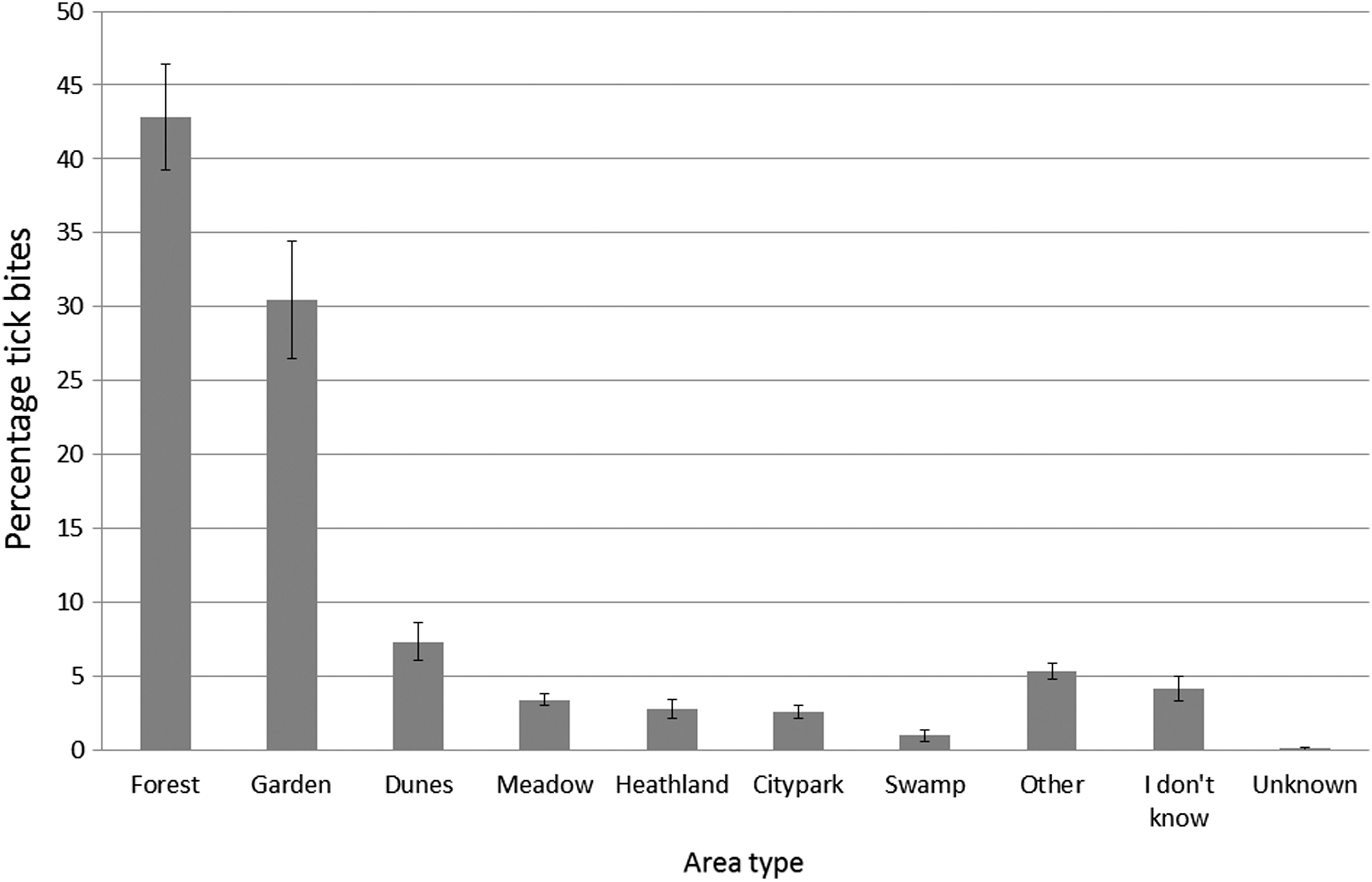
Percentages of registered tick bites per habitat. Error bars represent the standard deviation of the variation between the years.
Activities
We analyzed the activities during which people were bitten by ticks for two periods, 2006–2008 and 2009–2010 (Fig. 2), because the category “playing” was added as extra activity in 2009. In both periods most people were bitten during “hiking” (32% and 34%) followed by the categories “other” (25% and 17%) and “hobby gardening” (23% and 19%). In the period 2009–2010, 12% of all tick bites were received while playing. With the addition of “playing,” percentages of tick bites reported from the categories “other” and “hobby gardening” decreased substantially (respectively, 8% and 4%), indicating that the tick bites obtained during playing were mainly reported in those categories before the category “playing” was added to the program. “Playing” represents the fourth category in terms of reported tick bites in the period 2009–2010 and differs significantly from all other categories. Besides playing, outdoor activities such as camping and cycling were regularly mentioned as “other” activity. The chi-squared test revealed that the numbers of tick bites reported from the categories “hiking,” “hobby gardening,” and “other” differed significantly from each other and all other categories for the entire study period and the period 2009–2010. “Hobby gardening” and “other” did not differ significantly in the period 2006–2008 (p=0.054).
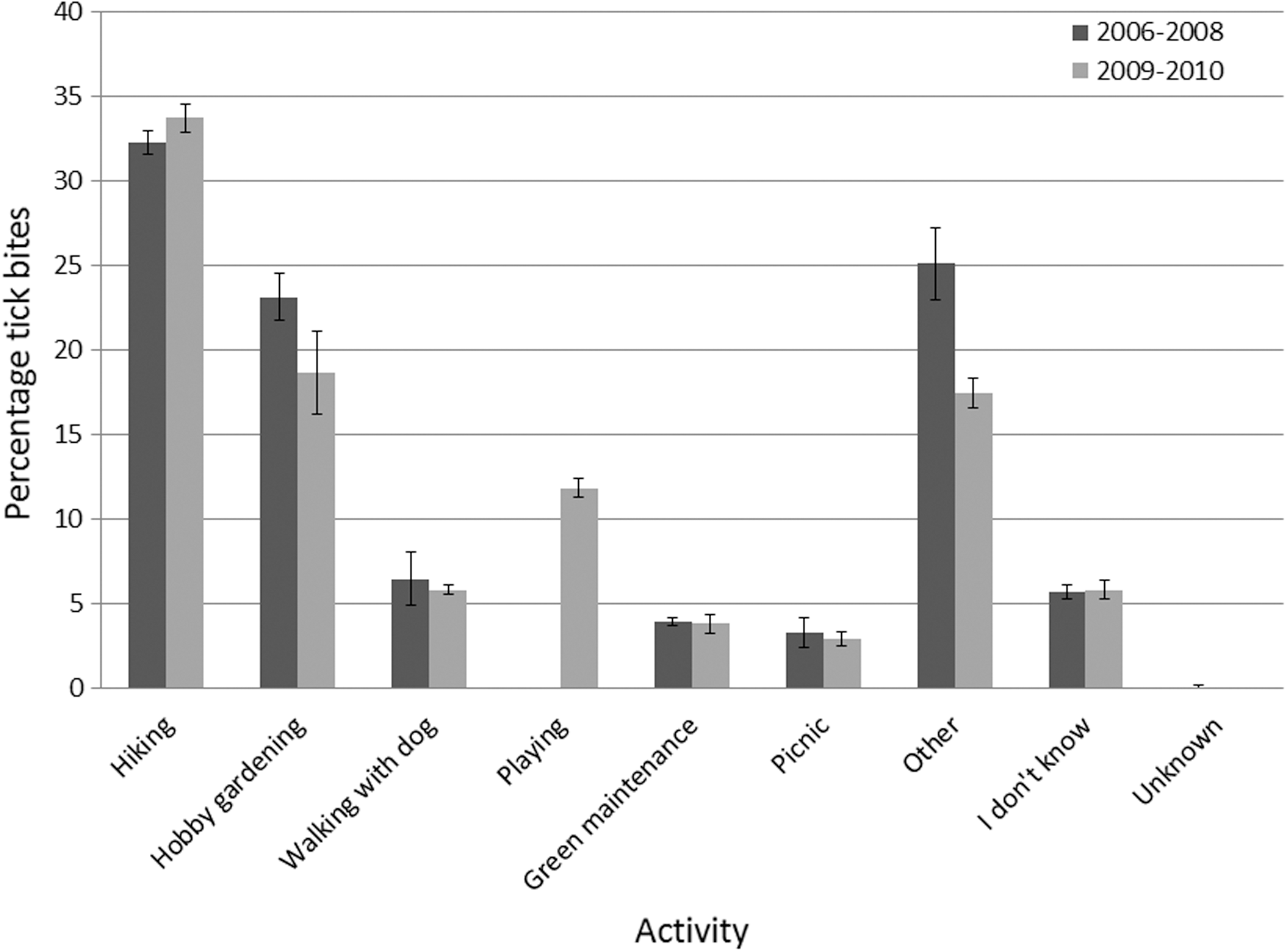
Percentages registered tick bites per activity without playing (2006–2008) and with playing (2009–2010). Error bars represent the standard deviation of the variation between the years.
Age categories
The age categories with most registered tick bites were 0–9 (14%), 50–59 (19%), and 60–69 (16%) (Fig. 3). The lowest number of tick bites was found among teenagers and young adults belonging to the age categories 10–19 (6%) and 20–29 (7%), and the eldest people belonging to age categories 70–79 (5%), 80–89 (1%), and 90–99 (0%). The chi-squared test revealed that the number of reported tick bites was significantly different for almost all age categories. Only the categories 0–9 and 40–49 did not differ significantly from each other.
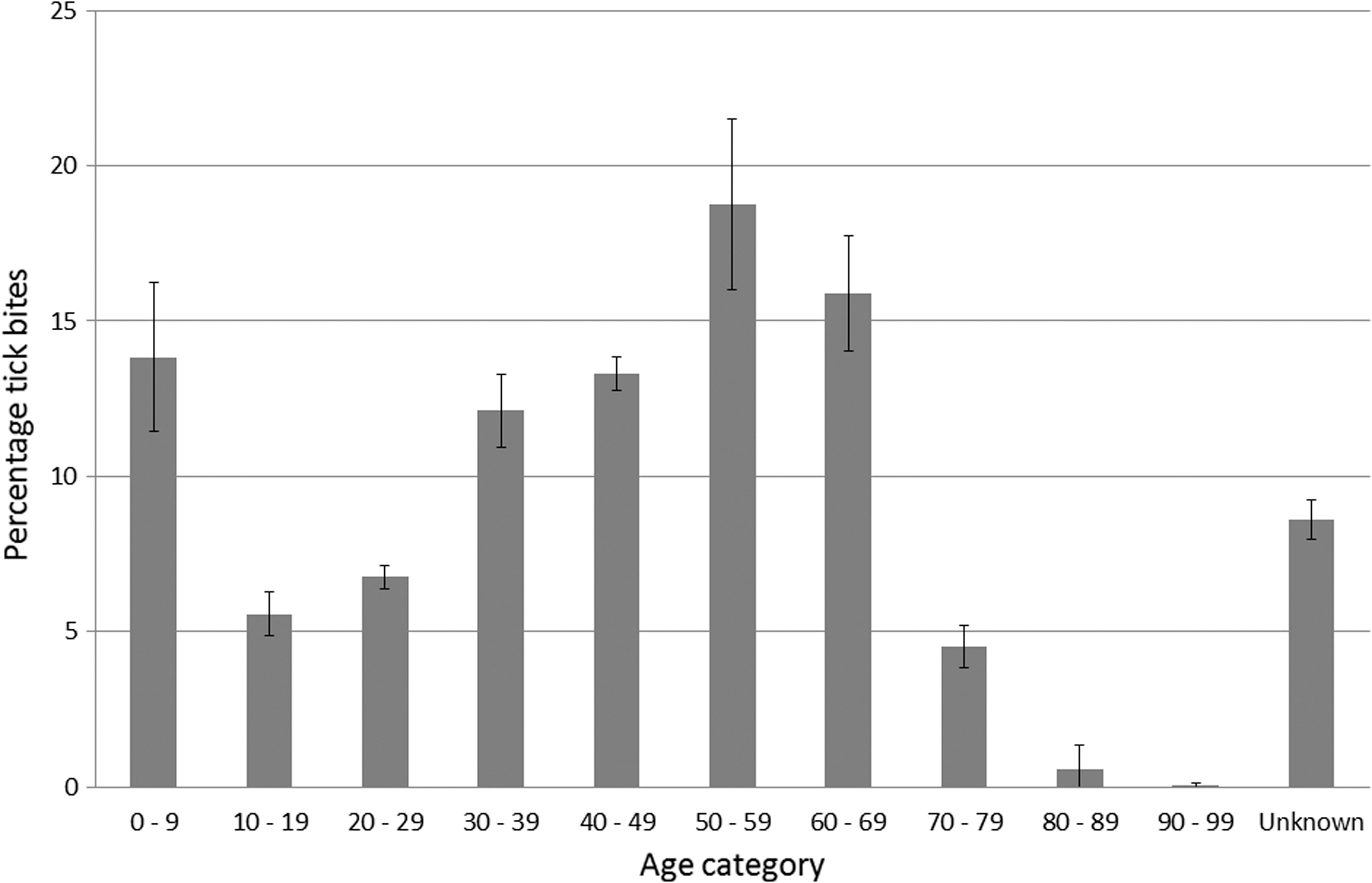
Percentages of registered tick bites per age category. Error bars represent the standard deviation of the variation between the years.
Age, habitat, and activity
The habitats and activities most associated with tick bites vary per age category (Figs. 4 and 5). People aged between 0 and 59 reported most tick bites from the forest. Percentages of reported forest tick bites did not differ significantly for the age categories within this range. The percentage of garden tick bites increased with age from 13% in the category 20–29 to 75% in the category 90–99. Children aged between 0 and 9 years formed an exception to this trend because they were relatively often bitten by ticks in the garden (29%). The chi-squared test confirmed that percentages of garden tick bites of categories above 70 years old were significantly higher than those of categories below 70. Only age categories 70–79 and 60–69 did not differ significantly from each other (p=0.07). There was no significant difference between age categories above 70.
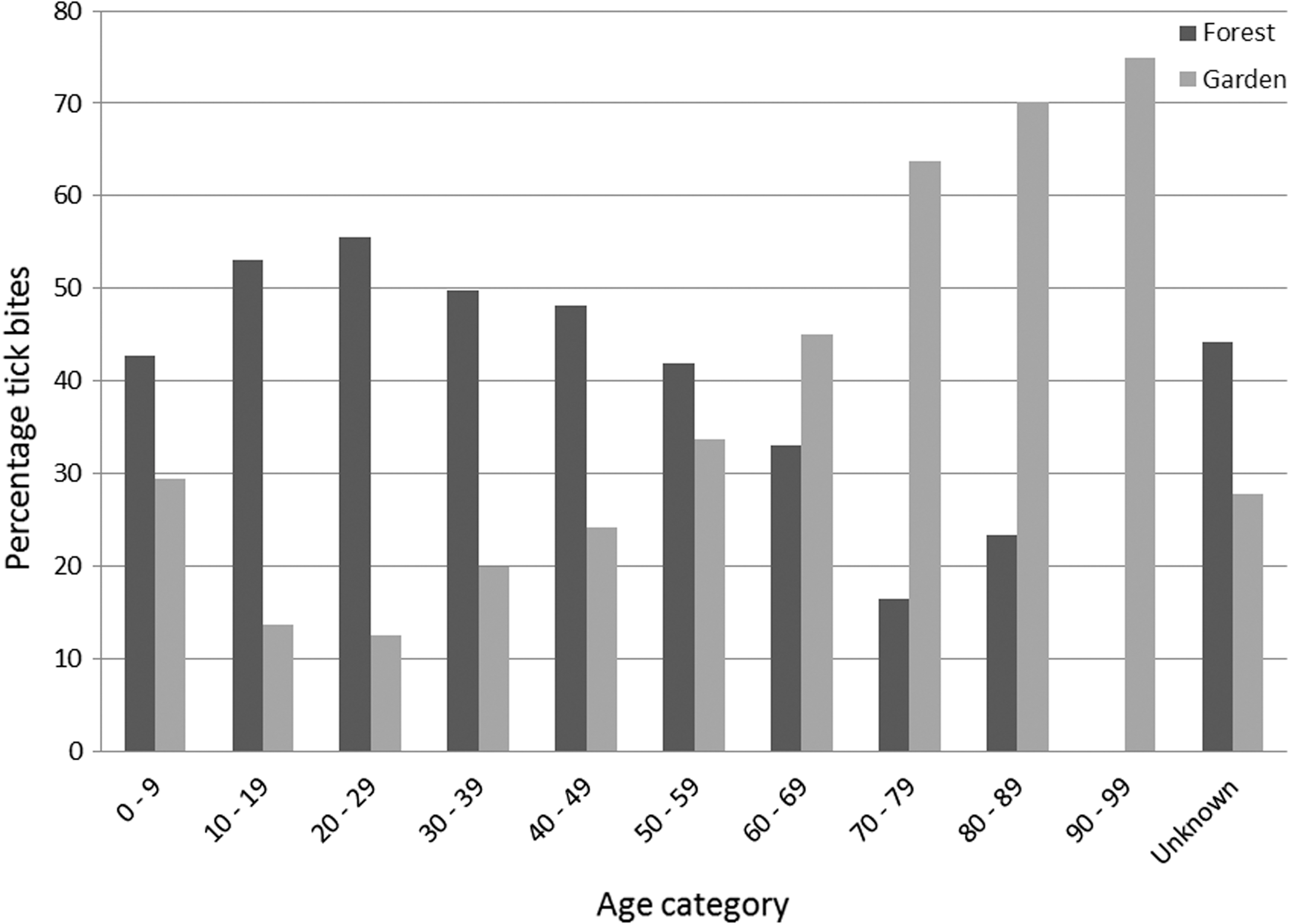
Percentage registered tick bites from forests and gardens in different age categories. Although only forest and gardens are shown, percentages are calculated based on all studied habitats.
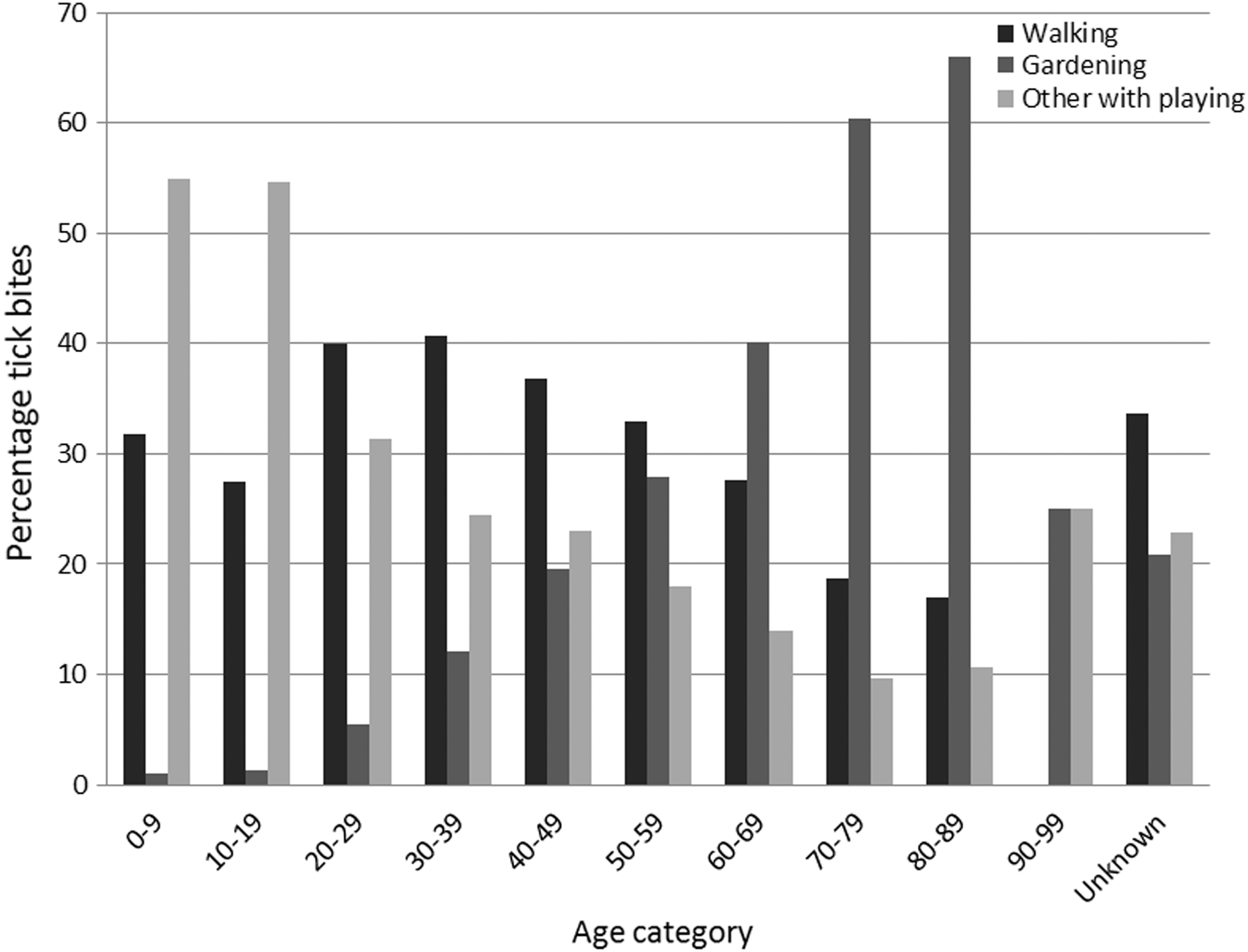
Percentage registered tick bites from “walking,” “gardening,” and “other” (including “playing”) at different age categories. Although only “walking,” “gardening,” and “other” are shown, percentages are calculated based on all studied activities.
Figure 5 shows that the percentage of “hobby gardening” tick bites increased with age and that people older than 60 were mostly bitten during “hobby gardening” (40–66%). Younger people were more often bitten during hiking. The chi-squared test showed that the percentage of “hobby gardening” did not differ significantly between adjoining age categories and differed significantly from less close age categories. This confirms that percentages of “hobby gardening” tick bites were indeed changing gradually with age. Percentages of “hiking” tick bites did not differ significantly for people aged between 0 and 69. Tick bites reported from the activity “other” decreased with increasing age. The chi-squared test revealed that the youngest two age categories reported significantly more tick bites from this activity than the other age categories. This is partly explained by the fact that playing was included in the activity “other” in this analysis. From the comments field, we learnt that “other” activities also often meant cycling and camping, which are mainly activities for younger people.
Discussion
The web-based self-reporting of tick bites in The Netherlands revealed some hitherto unknown characteristics that may contribute to an increased risk of getting Lyme borreliosis. Notably, the analyses of data concerning the habitat and activities associated with acquiring a tick bite provided new insights that can be useful for the development of measures for the prevention of the disease. The highest percentage of tick bites was found in the forest (43%). Ecological studies confirm that in The Netherlands sheep ticks (I. ricinus) are predominantly found in forest areas, widely described as an optimal habitat for this species (Mawby and Lovett 1998, Estrada-Pena 2001, Killilea et al. 2008). Dune areas are also highly infested with (Borrelia-infected) ticks (Wielinga et al. 2006, Gassner et al. 2011). Nevertheless, the overall percentage of tick bites reported from dunes in our study was only 7% (Fig. 1), although dunes are as popular recreational areas as forests (Goossen et al. 2006). However, the surface area of the dunes in The Netherlands is nearly 10 times smaller than the forest cover (39,000 ha dune; 360,000 ha forest) (Compendium voor de Leefomgeving 2011). In addition, 11,000 ha of dune area is covered with forest; in those cases, people may not have known whether they were bitten in the forest or in the dunes or they did not know how to report it. Therefore, the chance of acquiring a tick bite in Dutch dunes and forests might be comparable.
The large number of tick bites reported from gardens (one-third) was unexpected. Municipalities with the highest percentages of garden tick bites and highest percentages of forest and dune tick bites correspond greatly (unpublished results from this study). This indicates that people who live in forest and dune areas run a higher risk of garden tick bites than people who live elsewhere. Killilea et al. (2008) also assumed that the risk of getting tick bites in gardens was high. However, these authors did not have data on people's tick bite related activities to support this assumption. Further research is needed to better specify the characteristics of risk gardens and which specific behaviors in such gardens facilitate tick bites. Also, the risk in urban areas such as city gardens and parks should be considered.
With forests and gardens being the habitats where most people suffer from tick bites, it is obvious that many people are bitten during hiking and hobby gardening. Others stress the risk of getting tick bites during hobby or professional gardening based on tick prevalence data (Falco and Fish 1988, Maupin et al. 1991). The high percentage (12%) of people that mentioned “playing” as activity in the period 2009–2010 stresses the need for prevention focused on children and their caretakers, as suggested by de Vries and van Dillen (2002).
During the period studied, most tick bites were reported concerning people in the age categories 0–9 and 50–69 (Fig. 3). The lowest number of tick bites was found among teenagers, young adults, and the three highest age categories (70–99). Similar distributions of tick bites and Lyme borreliosis cases among age categories were found in the United States, Sweden, and Germany (Nadelman and Wormser 1998, Orloski et al. 1998, Dennis and Hayes 2002, Bennet et al. 2007, Bacon et al. 2008, Fülöp and Poggensee 2008). The observed distribution of tick bites over different age categories is not explained by the overall distribution of age categories of the Dutch population in the studied period (Netherlands Statistics Office 2011a). Fülöp and Poggensee (2008) suggest differences in recreational habits as the reason for the different numbers of Lyme borreliosis cases in different age categories. The number of people that mention “walks as a daytrip” as holiday activity per age category (Netherlands Statistics Office 2011b) corresponds with our distribution of tick bites over different age categories. Vaara and Matero (2011) found a similar distribution of daily participation in outdoor recreation among age categories. The high number of children bitten by ticks correlates with the relatively high percentage of playing as an activity. Besides, Hengge et al. (2003) explain the disproportionate number of Lyme cases among children by increased exposure and decreased attention to prevention.
Differences in the willingness to register tick bites may be another explanation for the age division over registered tick bites. In the beginning of the project, the age distribution could be biased by the age division of Nature's Calendar observers (relatively more older people) since we first announced the project to them. In addition, they were already familiar with the website and the registration of nature observations. Other possible explanations for the bias toward different age categories in the willingness to register tick bites are the ability to use the internet and different susceptibilities to various media. Using a website to study preferences of the Dutch for specific landscape types, Goossen et al. (2006) also found the highest response in age category 46– 55 and an underrepresentation of children and elderly people. They explain this with the possible lower internet access of those groups, but they could not show this statistically. In their study on tick bites, Phillips et al. (2001) found most nonrespondents among young adults, and they also assume an underestimation of the rates in children. Kramer (2007) found differences in knowledge and prevention behavior between age classes and internet use. People above 55 and people with access to the internet were much better informed on the disease and prevention than younger people and people without access to internet. According to The Netherlands Statistics Office (CBS 2008, Netherlands Statistics Office 2011c) people between 65 and 75 years of age had much less access to the internet (59%) than younger people (over 82%) in the period 2006–2010. Further research is needed to determine whether the underrepresented age categories in this study are really bitten less or that we did not use the right channels to reach them.
We recommend that our findings will be used in developing prevention strategies aiming to decrease the number of tick bites and Lyme borreliosis cases. Various communication channels should be used to direct information on tick bites and Lyme borreliosis to different groups. Differences in internet access and susceptibility to different media should be taken into account in choosing the right channel for the different groups at risk. We suggest a communication campaign using national, regional, and local media and public health agencies to inform the general public. In addition, communication channels of nature and hobby gardening organizations, outdoor clubs, and educational institutions could be used to focus the communication to groups in society that are more likely to come in contact with ticks. Children, as well as their caretakers, should be especially informed about the risk during playing in gardens and forested areas.
Footnotes
Acknowledgments
This study would not have been possible without the financial support of the Dutch research programs Ruimte voor Geo-Informatie (
Author Disclosure Statement
No competing financial interests exist.