




Abstract
In this series of review articles entitled “Practical guidelines for studies on sandfly-borne phleboviruses,” the important points to be considered at the prefieldwork stage were addressed in part I, including parameters to be taken into account to define the geographic area for sand fly trapping and how to organize field collections. Here in part II, the following points have been addressed: (1) factors influencing the efficacy of trapping and the different types of traps with their respective advantages and drawbacks, (2) how to process the trapped sand flies in the field, and (3) how to process the sand flies in the virology laboratory. These chapters provide the necessary information for adopting the most appropriate procedures depending on the requirements of the study. In addition, practical information gathered through years of experience of translational projects is included to help newcomers to fieldwork studies.
Introduction
T
Trapping of Phlebotominae: Factors Influencing Efficacy
The methods chosen for sampling sand flies depend on the main objectives of the study in relation to the target phlebovirus(es). In addition to active collection of samples from humans or animals acting as bait, there are a variety of established mechanical methods for trapping Phlebotomus species depending on the specific requirements [for a review, see Killick-Kendrick (1987) and Alexander (2000)]. The most commonly used are sticky traps, light traps, and carbon dioxide (CO2) traps. However, each of these trap types has advantages and disadvantages and also variations in efficacy (Burkett et al. 2007, Hoel et al. 2010, Junnila et al. 2011, Hesam-Mohammadi et al. 2014, Müller et al. 2015); thus, combining the various traps may be advisable when performing field studies intended to estimate the number and species of sand flies. For readers requiring detailed information, the review written by Alten et al. (2015) is recommended. Many observers have noted that huge number of night-flying insects attracted by light traps appear to be circling the traps and settling on the surrounding vegetation (Hartstack 1991). Thus preferential use of suction traps is observed in most studies of insect flight range and dispersal. Weather conditions, humidity, wind direction and many other factors can also play an important role, but often have not been extensively studied and adapted with the different designs of traps. In most cases, mosquito capture data from light traps can be compared with data obtained from human or animal baits using suction traps, CO2-baited traps, and collections of resting insects during their inactive daytime period. However, some comparisons show that particular species of biting insects, which are rarely taken in light traps, may be captured by alternative capture methods. Alternative capture methods help to clarify whether closely related species, which are consistently recorded widely at different population levels, reflect a difference in abundance, or differences in trap response solely of the involved species.
Concerning the respective efficacy of trap types for virus isolation/detection, the limited number of comparative studies precludes any conclusions; most of the published studies have used Center for Disease Control and Prevention (CDC) light traps that have enabled virus isolation and/or detection; in the absence of comparative studies, it is now impossible to measure their efficacy relative to other types of traps. Therefore, until more data become available, we have to assume that the different types of traps are not impacting the subsequent virological studies. Thus far, quality of traps has been measured by their capacity to catch the highest number of sand flies.
Nonbaited traps
There are various mechanical techniques available for collecting sand flies using nonattractant traps, including flight trapping by nets or netting screens and/or simple mechanical suction devices. The latter can also be handheld devices that have the advantage of being deployable, thus making use of the experience of the sampler employed to seek the most likely insect resting sites. However, this is a highly stochastic process and may reflect the preferences of the sampler. In complex environments, for example, urban or sylvatic reliance solely on this method may lead to biased estimates of species composition and other distribution parameters. Moreover, statically positioned traps collect only flies within their immediate vicinity. Thus, reliance on these traps alone would give a misleading picture of the tested locality. As there is no “gold standard” among the available field-sampling procedures, multiple methods are applied consistently throughout the year. This is considered essential to obtain an approximation of species diversity and density for particular areas.
Sticky traps
Simple sticky traps have been successfully employed in France and the former USSR. These initially consisted of standardized pieces of paper/cards soaked in castor oil that are usually exposed overnight. Other carrier materials such as bottle designs can be used as alternatives to paper. The result of the catch is expressed by the number of sand flies attached to the equivalent of 1 square meter. If placed properly, that is, near likely insect resting sites and human and animal housings, they provide objective means of risk evaluation and also a reliable quantitative method of collection. However, unilluminated sticky papers like other nonattractive traps, for example, unlit, unbaited CDC traps, usually yield relatively low number of sand flies as they only catch flies from their immediate surroundings (Burkett et al. 2007). They are best suited for insect density studies, and because they kill the insect almost immediately, their use for virological studies of sand flies is not ideal. Sticky papers are very cheap and flexible. They can be placed in wind-protected sites and they can be used for complex environmental studies. For example, castor oil paper traps have been placed next to the exit and entry paths of rodents burrows to capture phlebotomines. The choice of trap may also influence the proportion of males or females collected. Sticky traps were found to be more effective than light traps for collecting sand flies entering rodent burrows either to take bloodmeals or for mating (Lahouiti et al. 2014).
Malaise traps
Malaise traps (Fig. 1) are open tent constructions developed by a Swedish entomologist in the 1930s while observing the high frequency of insects entering his tent. On reaching the apex of the tent, the only way out is through the collecting device that is filled with a killing agent (Malaise 1937). Modified versions using plastic cylinders for sampling and different netting materials were invented in the 1960s [for a review of different constructions, see Townes (1962)], but the basic design principle of the Malaise trap has remained virtually unchanged since its invention. These flight traps can be equipped with different types of collection heads. One type of head enables the use of isopropyl alcohol, which kills the insects rapidly and avoids them becoming damaged. The catch is then removed by unscrewing the bottles hanging under the angled collection heads. Malaise constructions are quite versatile as they can be simply baited, illuminated, or in some cases they can be adapted to house small animals to attract insects. Malaise traps are also relatively insensitive to wind compared with other traps, and they can be used for selective sampling as they provide most of the functions of Shannon traps or Disney traps. However, their tent-like design, the need to transport and assemble ropes, nets and poles together with their obtrusive appearance in the environment have reduced their popularity against competition from many other types of traps.
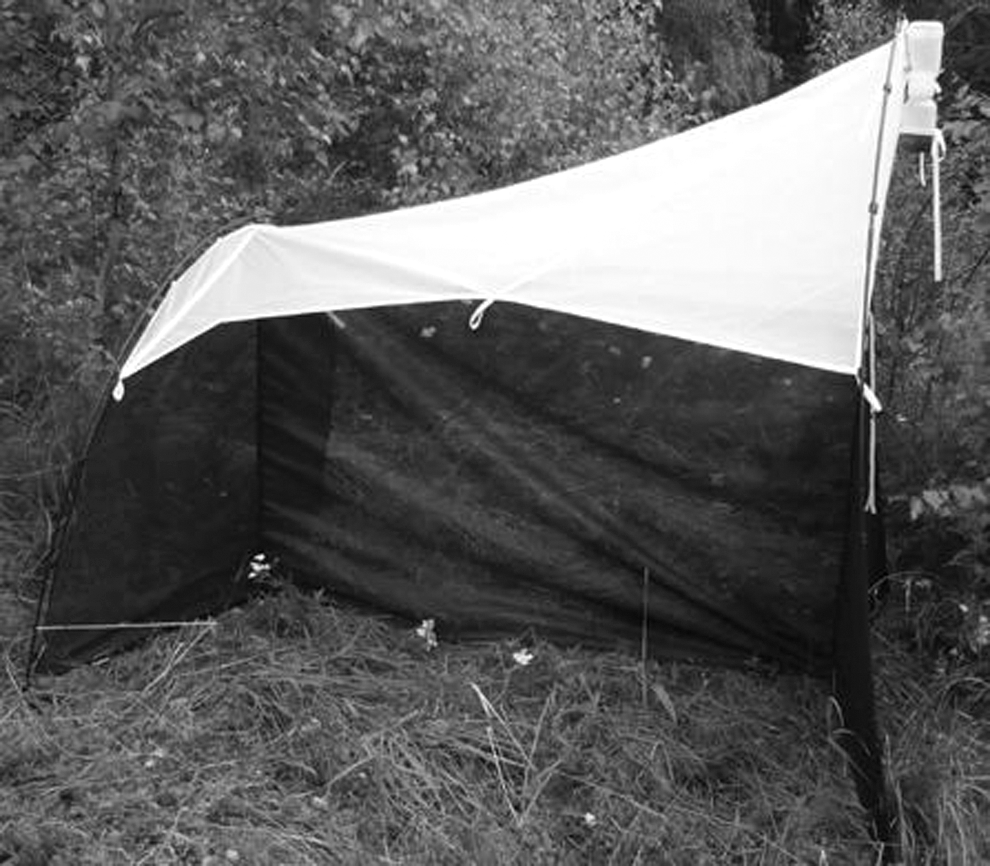
Malaise trap.
Shannon traps
They consist of black or white nets or netting screens used to attract sand flies, which can then be captured using manually held suction or other mechanical devices under visible control. Thus they are suitable for preselected catches. Shannon traps can also be illuminated and baited by placing humans or animals next to them. Studies in Brazil have shown that the black nets seem to be more attractive for sand flies and lead to higher yields (Galati et al. 2001). Shannon traps are most effective in a forest environment, where specific insect resting sites are not readily apparent. In some cases, Shannon traps have a tent-like construction with a strong light source. Typically used in the early evening and during the night, sand flies are attracted to the light and walk up the tent side where they can be hand aspirated. Illumination of the Shannon traps has the advantage of enabling sampling to be standardized. To some extent, mosquitoes may display a preference for individual investigators. Thus, “baiting or repellent effects” caused by natural or deodorant-induced odors may be considered, although this is not an evidence-based recommendation.
Baited traps
Human/animal landing collection
Landing collections often attract large number of insects, but the effectiveness and overall yield of the catches largely depend on the skill and “attractiveness to the insect” of the individual collectors. In addition, collections can also be obtained using domestic animals as bait. This can have the advantage of providing insights into human/animal preferences for “biting” behavior of local species and the ecological impact of livestock (Gebresilassie et al. 2015b). One disadvantage of this method is that it may expose the collectors to an increased risk of phlebotomine-transmitted infections, as the sampling is usually conducted in areas of suspected or proven disease prevalence. Studies have shown a strong correlation between sticky trap indices and human baiting. Thus, the simple and inexpensive sticky traps, although lacking an evaluation of individual insect aggressiveness or human/animal preferences, may be regarded as an acceptable substitute for studies of human-landing/biting rates (Hanafi et al. 2007).
Light traps
The use of artificial light has been applied to many different trap designs to attract nocturnal insects. Light traps (Fig. 2) have been widely used with considerable success for more than 50 years especially in the Americas. Owing to their simplicity and cost effectiveness, they have effectively become the “standard” method for most investigations. CDC traps, that is, miniature light traps developed by the U.S. Center for Communicable Diseases, now known as the Center for Disease Control and Prevention (CDC), equipped with incandescent or ultraviolet (UV) light, tend to catch significantly more sand flies than unilluminated traps and are effective up to several meters of distance (Killick-Kendrick 1985) (Fig. 3). When equipped with a suction device, they remain lightweight and portable and are more easily standardized than other manually aspirated sampling methods. However, the efficacy for collecting sand flies varies at the inter- and intraspecies levels, by gender and physiological status as a result of significant differences in phototropic and other behavioral characteristics within the same genus. Despite these limitations in collecting blood-fed females, CDC light traps have been shown to catch sufficient proportions of both indoor and outdoor sand flies to justify their recommendation (Dinesh et al. 2008).
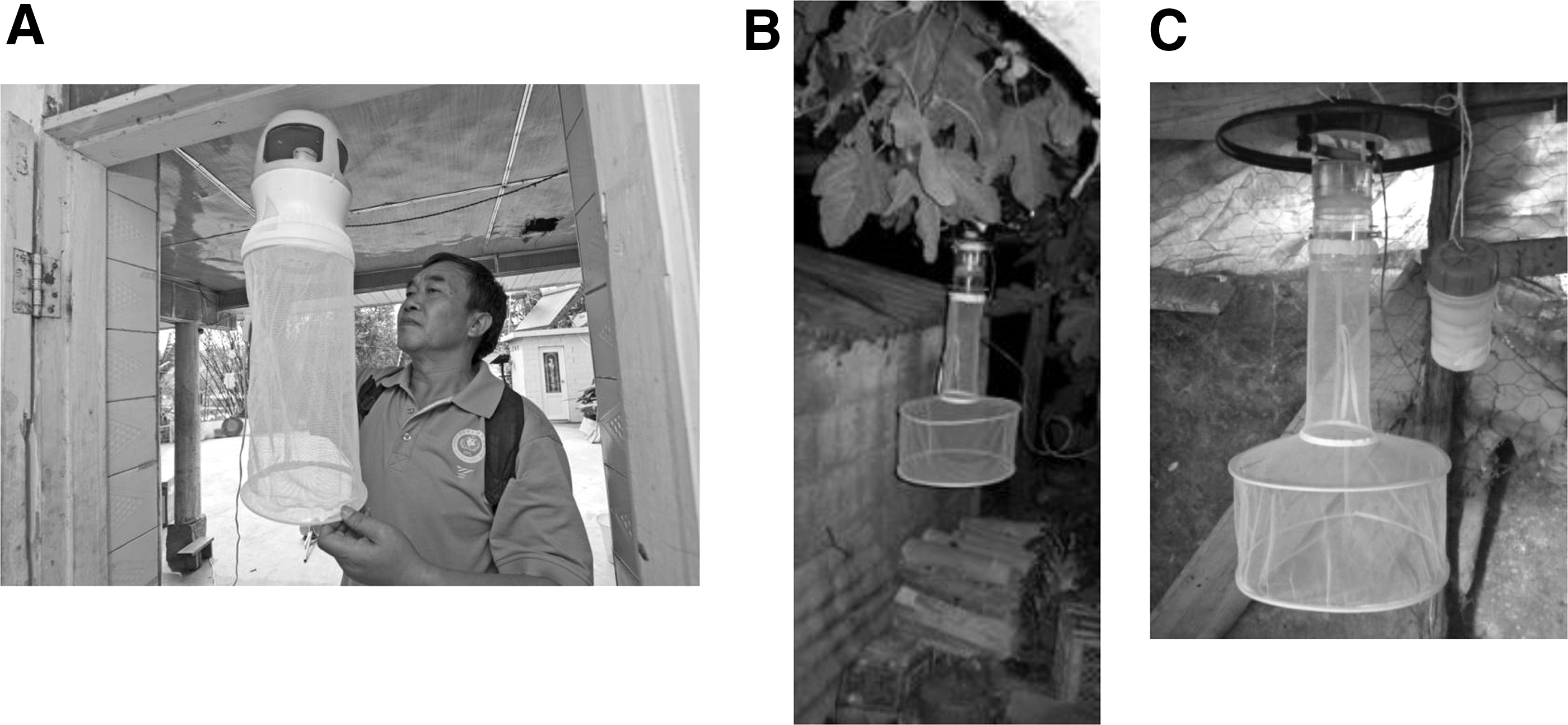
(

CDC miniature light traps, with modified ultrafine mesh and baited with dry ice in a sheep pen, Arrábida, Portugal.
Light intensity, wavelength, and some environmental factors have been shown to influence significantly the efficiency of light traps.
• Light intensity and wavelength: Short wavelengths of UV light may upset the orientation of nocturnal flying insects rather than simply attracting them (Nowinszky 2004); sand flies with compromised orientation are directed toward the light source (Junnila et al. 2011). Influence of moonlight and the lunar cycle has been clearly described (Gebresilassie et al. 2015a). One study showed that light displayed by light emitting diodes can attract sand flies, and that red light seems more effective than blue light (Hoel et al. 2007); this contrasts with results that show no measured differences in the efficacy when using different wavelengths.
• Environmental factors: The influence of environmental factors on the sensitivity and overall yield of light traps has been reported, in particular for exophilic species, that is, those ecologically independent of humans and their domestic environment. This could be because seasonal variations, changing weather conditions, environmental illumination in urban areas, or other factors (Guernaoui et al. 2006a, 2006b). The collection period lasts from before nightfall until just after dawn in outside installations. In endophilic species, that is, those ecologically associated with humans and their domestic environment, these factors are generally better controlled and the traps can be installed for longer time periods in enclosed places such homes or animal housing. Comparing studies of different regions may be difficult because of interspecies variation in the response to light. Only limited information on differences in phototropism of local species is currently available. Light trap catches are also affected by the wind direction (downwind, upwind), especially with sand flies, which because of their lightweight are highly sensitive to wind flow.
Carbon dioxide traps
CO2 is a very powerful attractant for blood questing sand flies, but for cost as well as technical maintenance/supply reasons, it is used infrequently (Killick-Kendrick 1987). It can be applied in various mechanical sampling devices, mostly suction traps. Its use in combination with CDC light traps is common and “CO2–light trap combos” are also available in several commercial forms that uses CO2 production either by combustion of propane gas or dry ice (Fig. 4) (Hoel et al. 2010). Another advantage is that propane is less expensive and, in many areas, is much easier to obtain and easily handled compared with dry ice or containers of gaseous CO2. A convenient workaround has been described when access to dry ice is impossible to obtain. This involves the use of self-fermenting sugar–yeast baits leading to the continuous production of CO2 in warm climates (Kirstein et al. 2013).

Carbon dioxide light trap.
Other baited sand fly collection systems
Sugar based and plant component based
Attractive toxic sugar baits (ATSBs) consisting of fermented ripe fruit have been used successfully as attractants for several mosquito species. Mixed with oral insecticide and sprayed on vegetation or bait stations, they have also been proposed for insect control. A study in the Jordan valley showed that ATSBs may also work for Phlebotomus papatasi, reducing local populations at the testing sites significantly (Müller and Schlein 2011). An interesting recent approach combines the attractant activity of sugar and CO2 by using a sugar–yeast mixture in their trapping systems, continuously producing CO2 by fermentation. This mixture, applied in 3 V miniature suction traps, has been shown to be of efficacy similar to collecting phlebotomines using light traps (Kirstein et al. 2013). Additional strategies have been tested that include plant material within the traps, mimicking the vegetation of suspected preferred resting sites. Thus, different plants have been identified that have either attractant or repellent features. Addition of water to the traps in dry areas has also shown an enhancement effect for yields of phlebotomines [review see Müller et al. (2015)].
Animal-baited traps
The original Disney trap consisted of an animal cage in which a small animal such as a rodent (rat, guinea pig, or hamster) was placed as bait for insects. The cage was enclosed within a protective construction that denied access to predators. In its unmodified form, this outer area contained sticky papers to trap insects as they approached the caged animal (Disney 1966) (Fig. 5). Initially used with rats, it has been improved in several modified forms and can be used with a variety of small or larger animals known to serve as a blood source for local phlebotomine populations (Dorval et al. 2007). Other animal-baited insect traps suitable for Phlebotomus trapping or Leishmaniasis studies include tents or nets housing a goat, sheep, or cattle. Larger domestic animals such as goats appear to be more attractive to Phlebotomus species than rodents or chickens, and trapping successes of Phlebotomus duboscqi in semi-field environments have been observed to be similar in performance to CO2-baited CDC light traps (Kasili et al. 2009).
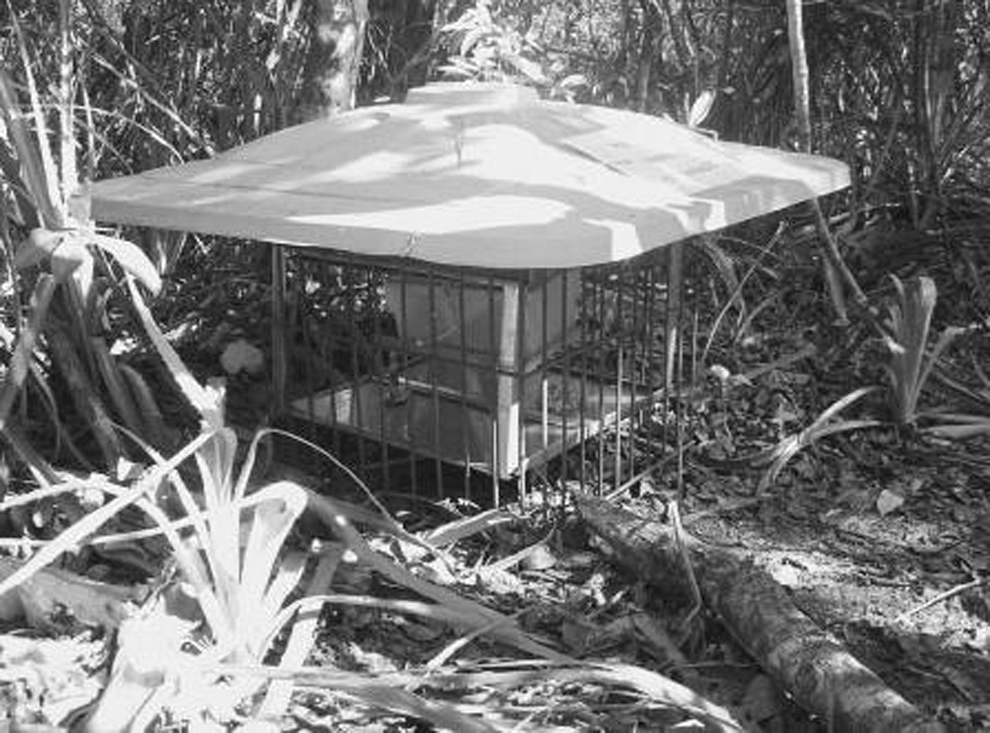
Modified Disney trap installed in a forested area, Bela Vista, Brazil.
Considerations of general trap design functions
Other trap design functions may often have an unexpected influence on insect-catch efficiency. Using the CDC miniature light/suction traps, updraft modifications of the suction/air stream, representing the equivalent of an “inverted CDC trap” deployed with their access point close to the ground, seem to be more effective for trapping sand flies than the classical downdraft designs in open habitats (Kline et al. 2011). One disadvantage of fan-incorporated traps resides in the turbulence generated by the airflow that may prevent fragile insects such as sand flies from entering the trap. Thus, both New Jersey and CDC trap designs used successfully in classic studies in the Americas have been found to be relatively ineffective in trapping European sand fly species in southern France (Rioux and Golvan 1969); the air movement at the fringe of the fan repelled light-attracted flies, before they were drawn in by the airflow of the trap. In more recent studies, the frequent use of “sticky papers” has proven its value in complementing suction-operated mini CDC traps for trapping living insects. However, additional sampling methods including handheld suction devices/aspirators clearly help to supplement light trap catches. It is important to underline that “sticky papers” are not suitable for virus isolation, and that their interest for viral RNA detection remains to be established.
How to Process the Sand Flies in the Field
As aforementioned, the procedure will depend upon the objectives of the study; accordingly, distinct approaches can be employed.
Virus detection versus isolation of viruses
Techniques used for maintenance and transportation of the sand flies after collection depend on the purpose of the study. The initial technical difference between virus isolation and virus detection approaches starts from the specimen collection step. Virus isolation requires sand flies to be collected alive and maintained either alive or at ultralow temperature from the time of trapping, through the transportation stage, and during storage. For virus detection only, it is possible to identify viral RNA from sand flies stored either under refrigeration or in 70% ethanol, which avoids total dehydration.
Virus isolation
Virus isolation has been the method of choice for direct diagnosis for almost a century. However, it is beginning to be displaced after the discovery of PCR and the development of molecular recovery methods to rescue infectious viruses. Historically, virus isolation was performed using laboratory animals (mice, rhesus monkeys, etc.) and chick embryos. At the beginning of the 1950s, cell cultures started to be used for virus studies, which provide facile working opportunities and easier cytopathic effect (CPE) monitoring (Bichaud et al. 2014). Despite the apparent sensitivity of laboratory-animal inoculation compared with cell cultures, they have been progressively abandoned, largely for ethical reasons. For virus isolation, sandfly material derived either from individual insects or from pooled homogenates is inoculated onto monolayers of cultured cells. The most commonly used cell line is Vero cells because sandfly-borne phleboviruses do not replicate in C6/36 insect cells. Sandfly fever Naples virus and Sandfly fever Sicilian virus also replicate in LLC-MK2 and BHK21 cells (Karabatsos 1985), but these cell lines have rarely been used in recent studies.
Molecular detection of the viral genomic RNA
For a long time, the paucity of complete genome or individual RNA segment sequences available for phleboviruses has rendered molecular screening difficult, and a limited number of detection assays has been available with unpredictable capacity to detect virus variants. For instance, dedicated RNA primers developed by Valassina et al. (1996, 2003) were unable to amplify genetic variants of Toscana virus, which were subsequently identified as a distinct lineage (lineage B). However, in a pioneer study, Sánchez-Seco et al. (2003) developed a nested PCR system, capable of amplifying all sandfly-borne phleboviruses recognized at the time of publication. Importantly, this system has revealed its great potential because it enables the detection of novel virus strains.
Qualitative versus quantitative study: individual sand flies versus pools
Ideally sand flies should be studied individually. This increases the sensitivity and optimizes species identification of the sand flies, which can be achieved through gene sequencing. The reduced manipulation required with individual sand flies also decreases the likelihood of virus inactivation. However, this approach requires maximal manpower and high direct and indirect costs. Thus, most studies have relied on pooling of sand flies for virological studies. Nevertheless it is still important to pool sand flies based on sex, trapping site, and trapping date, which provides essential information concerning phlebovirus transmission. Interestingly phlebovirus isolation and/or detection has been achieved from both blood-sucking females and males (Zhioua et al. 2010, Peyrefitte et al. 2013, Remoli et al. 2014, Alkan et al. 2015a, 2015b), implying transovarial, venereal, or both transmission pathways of the viruses within sand fly populations (Tesh and Modi 1987, Tesh et al. 1992). Organizing pools according to trapping site and day is crucial for mapping purposes and to correlate the results with environmental parameters. Finally, blood-fed sand flies could be investigated individually for further possible host investigation with bloodmeal identification. In general, sand fly pool sizes of 20–50 are convenient for most purposes.
Identification and distribution of sand fly species in the trapping region
When robust epidemiological and sand fly species distribution data are available in the region where trapping will take place, the information can be used to optimize the yield of the study. However, sand fly population densities can vary widely both annually and monthly because of changes in climate or population dynamics. The objectives of the study must, therefore, be critically discussed to determine the most suitable sampling strategy. For instance, if the aim is to search for phleboviruses in specific sand fly species, then any robust information concerning distribution of the target sand fly species could enhance the quality of the investigation.
If there is no information concerning the distribution of sand fly species in the collection region, the biology and ecological requirements of the species and the area should be investigated intensively to choose the most suitable places for sample collection. Accordingly, all data on (1) Leishmania parasites, (2) human/canine leishmaniasis cases, (3) seroprevalence results for phleboviruses, and (4) previous data indicative of phlebovirus isolation or detection will be invaluable for study planning and should be searched in the peer-reviewed literature and in appropriate databases.
Living versus preserved sand flies
Virus infectivity and viral RNA structural integrity are highly susceptible to adverse climatic conditions, particularly elevated temperatures and extended periods of time before study or preservation. Phlebovirus studies based on phlebotomine sand flies require optimal methods for maintaining viral infectivity and the integrity of viral RNA from the time of field collection until arrival at the investigating laboratory. The optimal conditions to maintain viral infectivity and viral RNA integrity include (1) exclusion of the dead sand flies when traps are harvested, (2) keeping the flies alive as long as possible before processing for virus isolation, (3) relying on dry ice or −80°C cold chain until laboratory processing or permanent storage becomes available. The decision of whether or not to keep the specimens alive or frozen should rely on the facilities available. In cases in which immediate laboratory transfer of the specimens is not anticipated, dry ice or liquid nitrogen could be employed for preserving the cold chain. For PCR detection of the viral RNA genome, sand flies can be preserved either individually or in pools in 70% ethanol without the need for freezing (Bichaud et al. 2014, Remoli et al. 2015).
The need for sand fly species identification
Since sandfly-borne phleboviruses are vectored by sand flies belonging to a variety of different species that have characteristic ecological niches and geographic distributions, entomological identification is critical. Depending on the purpose of the study, species identification can be performed as a complementary task in trapping areas that have resulted in virus detection or isolation. Currently, in the Old World, phleboviruses have been isolated from the following species: P. papatasi [Sicilian virus (George 1970), Naples virus (Schmidt et al. 1971), Tehran virus (Karabatsos 1985), Punique virus (Zhioua et al. 2010)], Phlebotomus longicuspis [Toscana virus (Es-Sette et al. 2015)], Phlebotomus sergenti [Toscana virus (Es-Sette et al. 2015)], Phlebotomus neglectus [Corfou virus (Rodhain 1985)], Phlebotomus perfiliewi [Naples virus (Gligic et al. 1982), Fermo virus (Remoli et al. 2014), Toscana virus (Verani et al. 1980)], and Phlebotomus perniciosus [Toscana virus (Verani et al. 1980, Charrel et al. 2007, Remoli et al. 2016), Massilia virus (Charrel et al. 2009), Alcube virus (Amaro et al. 2015), and Arbia virus (Verani et al. 1988)].
Moreover, viral RNA of phleboviruses has been detected in the following species: P. papatasi [Sicilian virus (Moureau et al. 2010)], P. longicuspis [Naples-like virus (Moureau et al. 2010)], P. perfiliewi [Girne and Edirne virus (Ergunay et al. 2014)], P. perniciosus [Toscana virus (Es-Sette et al. 2012), Provencia virus (Peyrefitte et al. 2013), Utique virus (Zhioua et al. 2010)], and Sergentomyia minuta [Toscana virus (Charrel et al. 2006)].
Optimal Identification and Processing Procedures for Sand Flies in the Laboratory
Identification of sand flies
Sand fly species morphological identification is based on the morphology of male genitalia and female spermathecae and pharynges according to morphologic taxonomic keys (Lewis 1982, Killick-Kendrick et al. 1991), which need abdominal dissection of the specimen. During virus isolation studies, it is imperative to perform the sand fly identification process on ice to reduce the risk of degradation of the virus and thus to maintain its infectivity. Successful phlebovirus isolation has been accomplished in the morphologically identified samples in several studies (Sabin 1951, Verani et al. 1980, Gligic et al. 1982, Charrel et al. 2006, Zhioua et al. 2010, Remoli et al. 2014). In some cases, particular sand fly species may not be reliably identified through morphological examination, which requires molecular identification approaches for accurate results (Alten et al. 2015). As molecular methods for identification of sand flies and other insects continue to improve, they almost certainly will ultimately become the method of choice.
The gene regions most commonly used for molecular identification of the sand fly species include mitochondrial cytochrome b, mitochondrial cytochrome c, ribosomal ITS2, nuclear EF-1α, and cytochrome oxidase subunit 1 (Depaquit et al. 2005, Kasap et al. 2013, Alten et al. 2015). Generally speaking, pooling the individual specimens without performing morphological identification increases the probability of successful virus isolation. This is largely because of the reduced time and workload involved in morphological and/or genetic identification that are done at temperatures that are deleterious for viral RNA and virus infectivity. With Next Generation Sequencing (NGS) techniques, it is now possible to perform molecular identification of the sand fly species that are contained in the pools as recently described (Alkan et al. 2016).
Recently, MALDI-TOF (matrix-assisted laser desorption/ionization time-of-flight) mass spectrometry was used for identification of sand fly species using the thorax/wings/legs of the specimen (Dvorak et al. 2014, Mathis et al. 2015, Lafri et al. 2016). Interestingly, since arbovirus replication in the vector is prominent in salivary glands attached to the head, it is possible to separate body parts used for MALDI-TOF identification from body parts used for virus isolation and detection. Such procedures can be easily performed in the field, where distinct body parts can be stored in separate tubes for specific use. Moreover, nucleic acids extracted from head and salivary glands can be used for molecular determination of sand fly species in samples requiring confirmation.
Virus isolation in cell culture or newborn mice
In general, sand fly pools that test positive using molecular methods are used secondarily to inoculate newborn mice intracerebrally (although this approach is gradually being phased out despite producing excellent results) or to seed cell lines that are competent for the replication of sandfly-borne phleboviruses. Naples virus, Sicilian virus, and Toscana virus can replicate in Vero, LLC-MK2, and BHK-21 cells (Karabatsos 1985). Among these lines, Vero cells have been the most frequently used in recent studies (Charrel et al. 2009, Collao et al. 2010, Alkan et al. 2015b, 2016, Amaro et al. 2016, Bichaud et al. 2016). Other cell lines, including monocytic cell lines, have also been used for basic research studies and diagnostic purposes. It is important to underline that during the initial isolation efforts from sand flies, several blind passages may be required before CPE becomes apparent (Alkan et al. 2016). Viral replication can be monitored using molecular detection procedures before CPE becomes obvious.
Nucleic acid extraction: RNA only, RNA+DNA, DNA only
Technically, the yield of RNA and DNA obtained by using RNA only, DNA only, or total nucleic acid kits is suitable for the detection of DNA and RNA microorganisms. Total nucleic acid purification is preferred rather than viral RNA extraction for practical reasons. Indeed, the entomological material is frequently collected during integrated and multidisciplinary projects, in which virological aspects overlap with parasitic or bacterial aspects that demand access to DNA rather than RNA. In addition, it is appropriate to anticipate that the stored material might be screened for DNA viruses in the future. Although PCR inhibitors have rarely been reported to affect virus detection in sand fly-derived material, spiking all samples subjected to extraction with appropriate internal controls should be considered because it enables the monitoring of all steps from nucleic acid purification to PCR (Ninove et al. 2011).
Nucleic acid extraction: manual versus automated
Both methods are equally effective. The choice more or less depends on the availability of equipment in the laboratory. Pooling the sand flies does not appear to affect virus detection rates significantly. Recent reports clearly indicate that pooling does not significantly impact on the isolation of the virus strains. The viral loads in infected sand flies are generally high enough to allow molecular detection and also virus isolation (Zhioua et al. 2010, Alkan et al. 2015a, 2015b, 2016, Amaro et al. 2016; Bichaud et al. 2016).
PCR detection using generic detection systems based on RT-nested PCR protocols
The relatively low number of available complete genomic sequences for viruses in the Phlebovirus genus has been a limiting factor in the design of either universal primers for all phleboviruses or group-specific primers (for viruses belonging to the Sandfly fever Naples complex, the Salehabad species, but also for other groups of phleboviruses belonging to species transmitted by mosquitoes and ticks). Subsequently, few systems have proved their capacity to detect a large array of phleboviruses. Although being far from optimal, most studies aimed at virus discovery have been performed using these PCR assays either singularly or in combination. The corresponding systems are (1) NPhlebo 1S/1R together with the nested NPhlebo 2S/2R described by Sánchez-Seco et al. (2003) located in the polymerase gene and enabling amplification of a primary PCR product (∼560 bp) and of a nested PCR product (∼240 bp), (2) Phlebo forward 1 and 2/Phlebo reverse described by Lambert and Lanciotti (2009) allowing the amplification of a 370-bp PCR product, and (3) SFNV-S1/R1 associated with nested SFNV-S2/R2, which enables detection of all members of the Sandfly fever Naples virus species (Charrel et al. 2007).
For PCR detection using species-specific assays
Although the limited number of complete genome sequences has hampered the development of specific assays, several systems have been described in the literature (Weidmann et al. 2008, Cusi and Savellini 2011, Brisbarre et al. 2015). The accumulating number of newly determined sequences justifies verification of these assays to evaluate in silico their capacity to detect all variants and genotypes for which sequences are available. Indeed, some of these systems are based on sequence alignments with a relatively small number of sequences; the recent increase in sequence data should attract researchers to reconsider these systems for improvement and constant updating.
Conclusions
Isolation and subsequent complete genomic and antigenic characterization still remain the mainstay for identification of novel and well-known viruses. Advances in tNGS techniques, enabling viral metagenomic investigations in a variety of specimens including field-collected vectors, have also accelerated investigations for new viruses. All these approaches rely mainly on the appropriate collection, transfer, and processing of the specimens. As discussed in detail, the choice of methodology in major tasks should be based on the goals of the particular project, the budget, available infrastructure, as well as the experience of the research team, and such an effort definitely requires thorough planning and organization. These studies also facilitate fruitful collaborations among various research domains and are more likely to provide an integrated, holistic view of virus circulation in nature, as emphasized within the One Health concept.
Footnotes
Acknowledgments
The work of all authors was carried under the frame of EurNegVec COST Action TD1303. This work was supported, in part, by (1) the European Virus Archive goes Global (EVAg) project that has received funding from the European Union's Horizon 2020 research and innovation program under grant agreement no. 653316 and by (2) the EDENext FP7-no. 261504 EU project; this article is catalogued by the EDENext Steering Committee as EDENext463 (
Author Disclosure Statement
No competing financial interests exist.