




Abstract
Rhodnius montenegrensis was described in 2012. Since then, reports of the occurrence of this species associated with palm trees near households in Rondônia have been published. This study aimed to analyze the natural infection of R. montenegrensis with trypanosomatids in the municipality of Monte Negro, Rondônia, Brazilian western Amazon. Capture of triatomines occurred in Attalea speciosa (babassu) specimens around households. Twelve of the 72 captured triatomines were identified by morphological and morphometric characters, by molecular analysis made using the PCR, DNA sequencing, and phylogenetic analyses. The intestinal content was collected from 60 of these 72 specimens. The positivity for trypanosomatids was confirmed by examining the intestinal content followed by PCR amplification of the cathepsin L-like gene specific for Trypanosoma cruzi (PCR-DTcrCatL) and Trypanosoma rangeli (PCR-DTraCatL). Of the 60 specimens analyzed by microscopy, 22 (36.7%) were positive for trypanosomatids in the intestinal content analysis. Of these 22 specimens of R. montenegrensis, 16 (72.7%) were infected with T. cruzi, 2 (9.1%) were infected with T. rangeli, 2 (9.1%) had mixed infection with T. cruzi and T. rangeli, and 2 were negative (9.1%). These data suggest the need for attention of the health surveillance system of Chagas disease in the State of Rondônia, as this study points out to another potential vector of the disease.
Introduction
T
Trypanosoma cruzi natural transmission cycle occurs in diverse ecotypes, comprising a large variety of sylvatic animals and a great number of vector species (Monteiro et al. 2012). These factors contribute to maintaining the enzootic cycle of Chagas disease (Monteiro et al. 2012). Occurrence of triatomines of the genus Rhodnius colonizing palm trees in the Amazon region, along with epidemiological evidence of the T. cruzi vector potential, suggests their active role in transmitting Chagas disease in this region (Abad-Franch et al. 2010).
Anthropogenic environmental alterations increase contact of humans with palm trees colonized with triatomines. Selective deforestation is one of the determinant factors for the proximity of these palms to domiciles in many regions (Palomeque et al. 2005), thus potentializing the risk for vector or oral transmission of T. cruzi.
The State of Rondônia, in the Brazilian western Amazon, has been modified by anthropogenic actions, causing imbalances that facilitate transmission of pathogens (Massaro et al. 2008). There is a need for knowledge on the natural infection rates of vector insects with trypanosomatids in this region for a better understanding of the epidemiological role of these vectors in transmitting Chagas disease.
This study aimed to determine the rate of natural infection with T. cruzi and T. rangeli in R. montenegrensis collected in palm trees in the periurban region of the municipality of Monte Negro, State of Rondônia, in the western Amazon, Brazil.
Materials and Methods
Specimens of R. montenegrensis were captured in the periurban area of the municipality of Monte Negro, Rondônia (Fig. 1). It was defined that triatomines would be collected in domiciles located inside a radius of up to 10 km from the city hall of the municipality. To obtain specimens of R. montenegrensis, four samples of Attalea speciosa (babassu) were selected from nine properties in the periurban region of Monte Negro. Then, the bracts (where invertebrates and small vertebrates can inhabit) were taken off one-by-one for the capture of triatomines (Meneguetti et al. 2012). The specimens were stored in vivo, individually, in plastic containers identified by the location of capture.
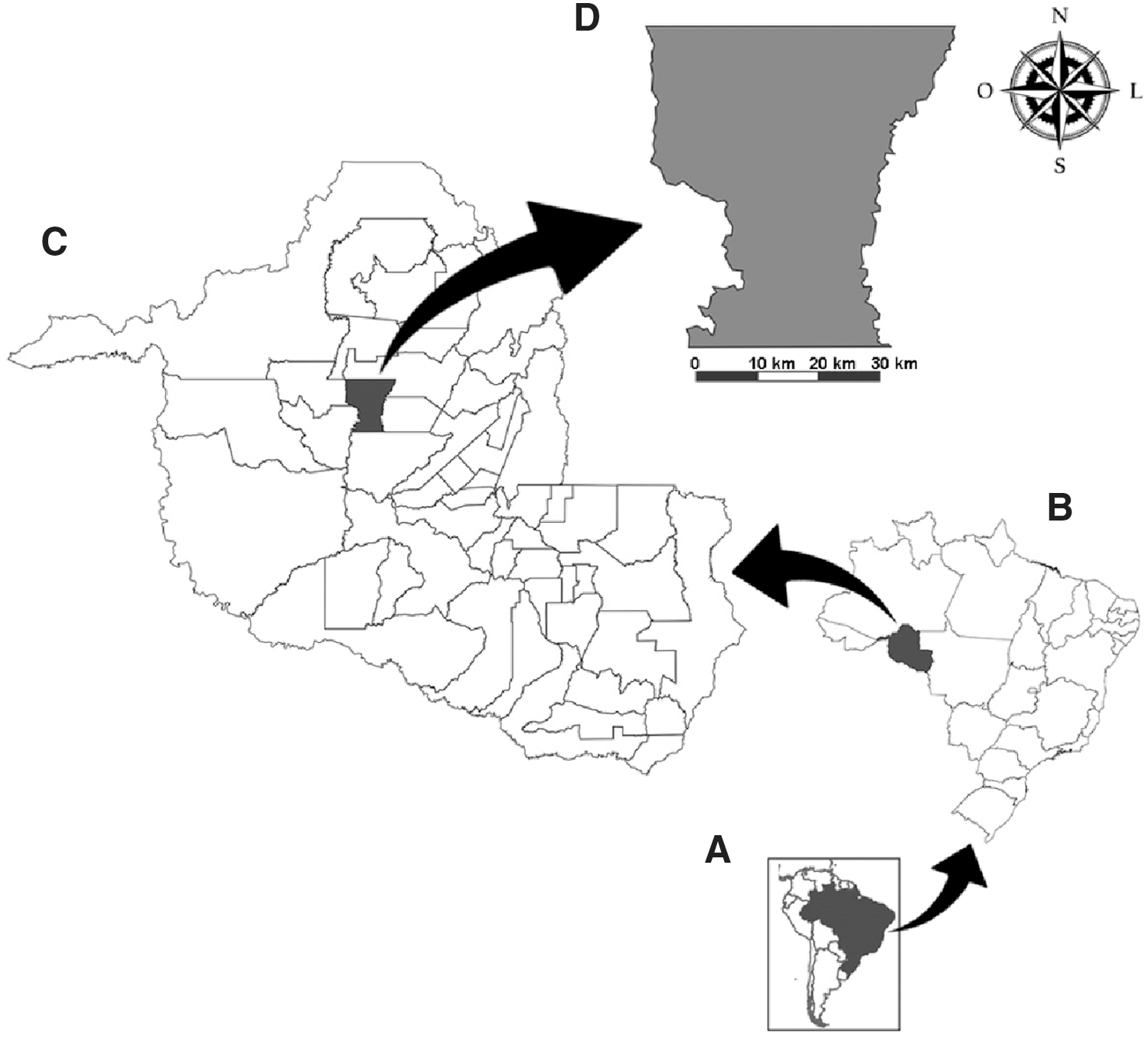
Map of Monte Negro municipality, state of Rondônia
Morphological and molecular identification of R. montenegrensis
The 72 captured specimens were identified by morphological and morphometric characters (head, thorax, and abdomen) as proposed by Rosa et al. (2012) and Galvão and Gurgel-Gonçalves (2014). Of these 72 specimens, 12 were identified by the examination of male internal genitalia proposed by Rosa et al. (2012) and by molecular and phylogenetic analysis. The images of the male internal genitalia were made using the stereoscopic microscope (Leica MZ APO) and the image analysis system Motic Advanced 3.2 plus.
To identify the specimens on molecular basis, DNA was extracted from each of the 12 individuals according to the protocol of Wizard-Genomic DNA Purification Kit, following the manufacturer's instructions. DNA amplification was performed specifically for each target, according to methods described elsewhere (Saiki et al. 1988, Rosa et al. 2012, Gardim et al. 2014). The primers used in the amplifications of the cytochrome b (Cytb) gene of mitochondrial DNA were described by Monteiro et al. (2003).
Purification and concentration of the PCR product were achieved using Illustra GFX PCR DNA and Gel Band Purification Kit (GE Life Sciences), following manufacturer's instructions, and then subjected to a sequencing reaction using BygDye Kit (PE Applied Biosystems), according to the manufacturer's instructions. Samples were processed in an automatic sequencer (ABI 3730XL). Sequences were edited with BioEdit 7.0.5 and aligned with ClustalW (Larkin et al. 2007). Nucleotide data for Cytb were translated into sequences of amino acids to verify alignment, as recommended by Mas-Coma and Bargues (2009), and to prevent interpretation of pseudogenes in the analysis. The sequences were checked manually for quality, and DNA fragments were cut to feasible sizes of 60 pb for the Cytb gene. The new sequences obtained in this work were deposited in GenBank (Table 1).
Cytb, cytochrome b.
Triatomines and outgroups.
Phylogenetic analyses were carried out using Mega 7.0.14 (Molecular Evolutionary Genetics Analysis—
Bayesian analyses with the Cyt b gene were carried out using the MrBayes software, version 3.2. To assign the best fit of nucleotide substitution for the data obtained, the MrModeltest 2.3 software was used, defining the best fit for GTR + G according to the Akaike information criterion generated by the program. The consensus phylograms were generated by the FigTree, version 1.4.2 (
Fresh triatomines' feces analysis and molecular analysis
To determine the percentage of positive triatomines for trypanosomatids, examination of fresh fecal material was conducted in 60 insects, as 12 were sent for molecular identification and genitalia examination.
The specimens were anesthetized in a diluted ethyl ether solution and their abdomens were compressed. The resulting material (feces and/or urine) was deposited on a slide containing a small amount of salt solution 0.9% that was homogenized and covered with a glass coverslip. Subsequently, all fields of the slides were examined under an optical microscope (Olympus CX41) with 40 times magnification to search for flagellated forms like trypanosomatids.
The specimens for which the test was positive had their intestines extracted and preserved in 70% ethyl alcohol for molecular analysis.
PCR amplification of the catalytic domain of cathepsin L-like protease for T. rangeli (PCR DTraCatL) and T. cruzi (PCR DTcrCatL) was carried out according to Ortiz et al. (2009). In these reactions, the species-specific reverse primers Tra-CatL 5′ ACA CCG GCC GTG TAG GAC ATG 3′ and TcrCatL 5′ GGT AAT CGT CCG AAC CAC CGT 3′ were used. The DTO154 primer was employed as a forward primer in all reactions.
Statistical analysis
To determine significance of the difference between the rates of natural infection in fifth-instar nymphs and adults, the Fisher's chi-squared test was used, considering significant (p value <0.05), using the Open Epi software program (
Results
Thirty-six A. speciosa palms were examined in 9 properties, and in 32 of them (88.9%) triatomine specimens were found. From the 32 palm trees examined, there was an average of 8.3 (±3.2) individuals (nymphs and adults) per palm tree with a maximum of 14 and a minimum of 3 individuals.
Morphological and molecular identification of R. montenegrensis
The 72 specimens captured were identified by morphological and morphometric characters (head, thorax, and abdomen). Of the 72 specimens, 12 were identified by the examination of male internal genitalia proposed by Rosa et al. (2012) and by molecular and phylogenetic analysis (Fig. 2).
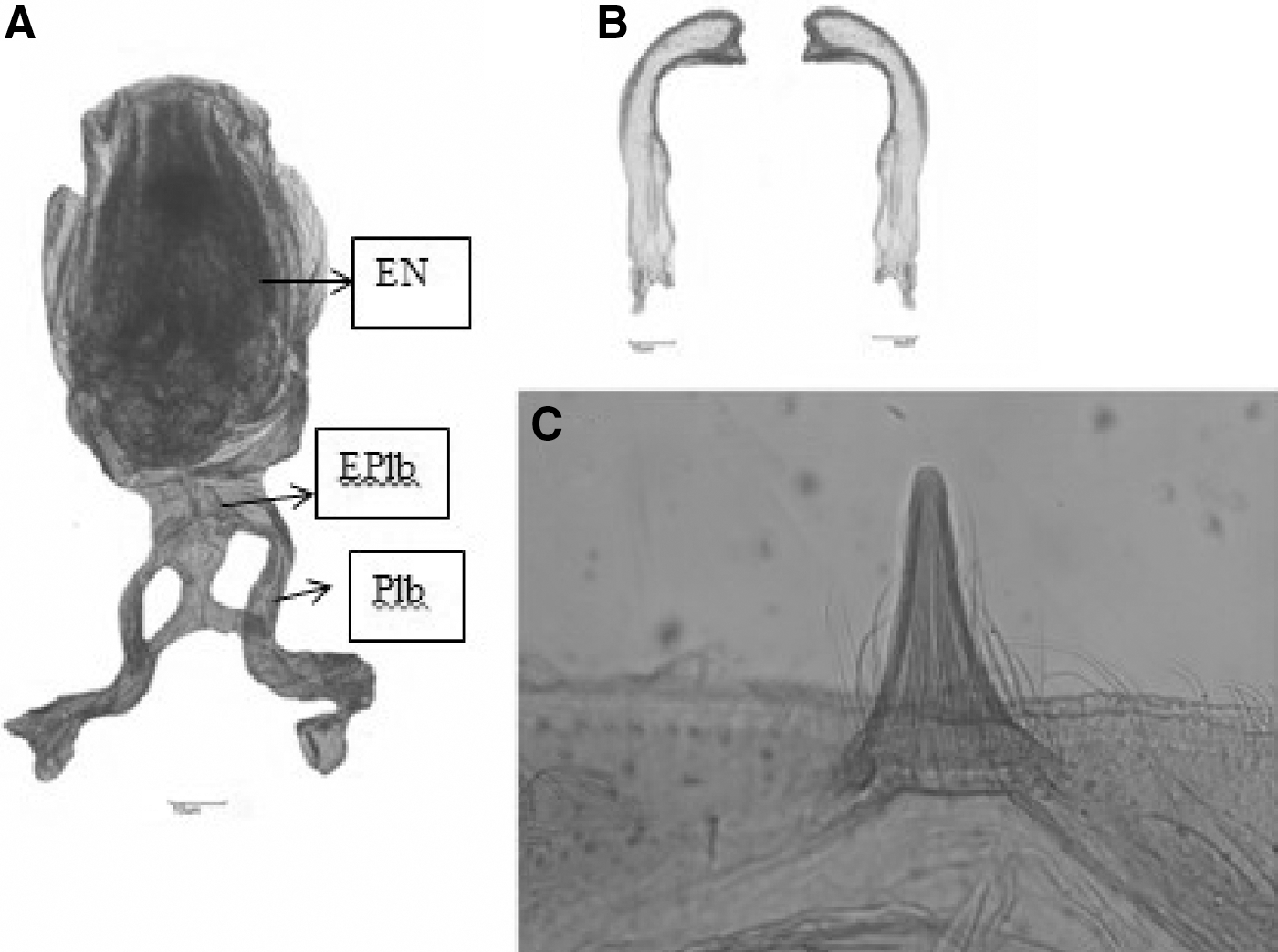
Microscopic image of male internal genitalia of Rhodnius montenegrensis.
Using the BLAST tool, the sequences for mitochondrial Cytb of the 12 representative triatomines were as expected from the R. montenegrensis species. This tool allowed to correlate the sequence obtained for Cytb with the sequences deposited in GenBank (Table 1). The values used in this work were those of maximum identity, similarity, and e-value.
Phylogenetic analysis (Fig. 3) indicates a close relation between the species R. montenegrensis and Rhodnius robustus. The product of amplification of the Cytb gene exhibited distinct profiles between these species. The results of the molecular and Bayesian phylogenetic analysis indicate that the specimens examined belong to the R. montenegrensis species.
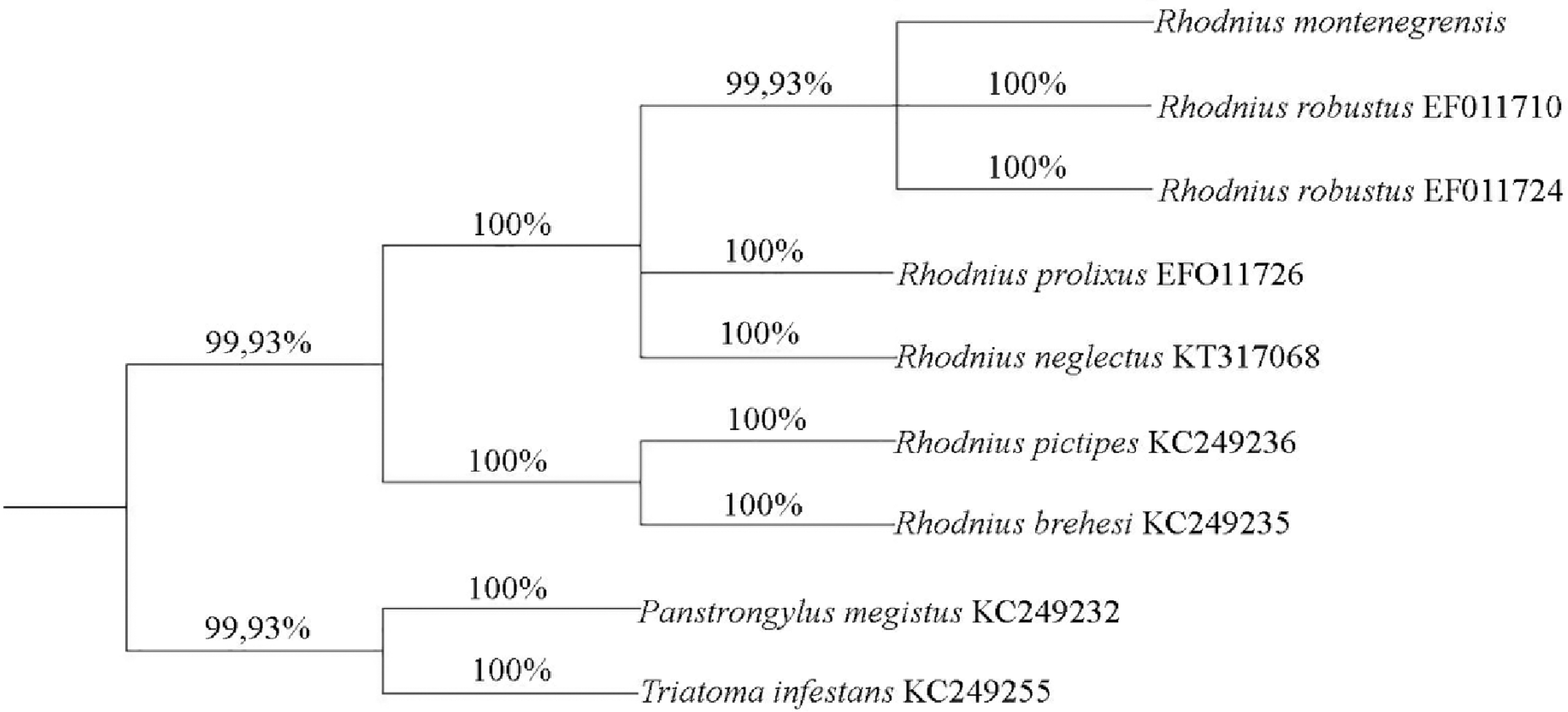
Bayesian analysis using parameters of similarity between five species of the genus Rhodnius and the species R. montenegrensis based on mitochondrial Cyt b gene. Triatoma infestans and Panstrongylus megistus were used as outgroups.
Fresh triatomines' feces analysis
Feces/urine were collected from the remaining 60 specimens (as 12 were used for genitalia and molecular identification) of R. montenegrensis, 30 fifth-instar nymphs and 30 adults. Of the 60 specimens analyzed, 22 (36.7%) were positive for trypanosomatids. In 30 of the adult specimens, 15 (50%) were positive for trypanosomatids and of the 30 fifth-instar nymphs 7 (23.3%) were also positive. The difference was statistically significant (p < 0.05).
Molecular analysis for detection of DNA of T. cruzi and T. rangeli
Of the 22 specimens of R. montenegrensis that were positive for trypanosomatids in the fresh feces/urine analysis, 16 were infected with T. cruzi (72.7%), 2 with T. rangeli (9.1%), 2 concomitantly infected with T. cruzi and T. rangeli (9.1%), and 2 (9.1%) were negative (Fig. 4).
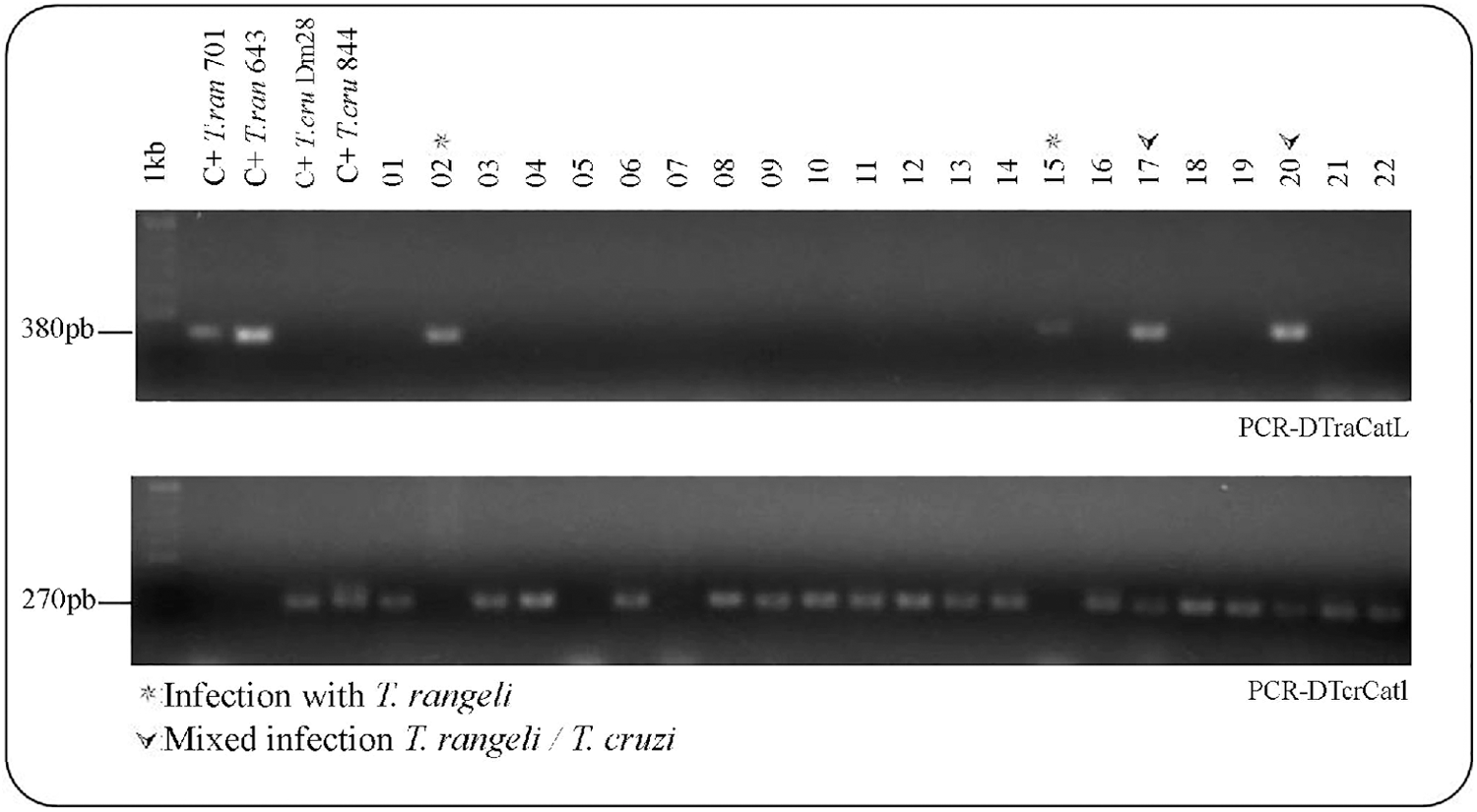
Gel containing cathepsin L-like fragments generated from PCR amplification of samples 1 to 22, obtained from gastrointestinal tract of R. montenegrensis.
Discussion
Species of the genus Rhodnius are commonly associated with palm trees that provide a microenvironment for colonization of these bugs (Coutinho et al. 2014). Urbano et al. (2015) observed high percentages of infestation in palms with specimens of Rhodnius prolixus and found a higher percentage in palms grown near pastures and domiciles. They also found 88.66% of triatomines-infested palms, corroborating with this study.
Carvalho et al. (2011), in a study conducted in Monte Negro, Rondônia, observed in a sample of 322 triatomines 50% of infection with trypanosomatids, based on microscope analysis of the digestive tract. Meneguetti et al. (2012), in a study conducted in Ouro Preto do Oeste, Rondônia, found 35.6% of infection with trypanosomatids, without identifying the species, in a sample of 494 specimens of triatomines collected in A. speciosa.
Besides that, adult specimens make larger meals increasing the chances of detection of trypanosomatids DNA in the triatomine's intestinal content. In this study, the highest percentage of infection with trypanosomatids found in the intestinal content analysis was observed in adult specimens. This fact can be explained by the larger number of meals by adult bugs, which increases the chances of infection with hemoflagellates.
These data are of great concern since the proximity of palms colonized with triatomines to domiciles can lead to infestation with specimens infected with T. cruzi.
By molecular analysis, infection of R. montenegrensis with T. cruzi was significantly higher than with T. rangeli and mixed infection with T. rangeli and T. cruzi.
This study shows for the first time infection with T. cruzi and mixed infections with T. cruzi and T. rangeli in R. montenegrensis. These findings have great relevance for determination of natural infection rates with trypanosomes and for understanding the enzootic cycle of T. cruzi in Monte Negro, Rondônia.
Studies conducted in the Brazilian Amazon have shown that the rate of transmission of human Chagas disease has grown sharply in the past decades (Barbosa et al. 2015). Among the major triatomines that account for this condition is the genus Rhodnius. The occurrence of T. cruzi-infected R. montenegrensis, as found in this study, indicates that this species plays an active role in maintaining the enzootic cycle of T. cruzi.
Conclusion
To date the state of Rondônia has not been considered for risk of vector-transmitted Chagas disease. In contrast, oral transmission may occur and the data obtained in this study indicate the need for a review of the epidemiological surveillance mechanisms for this disease, considering the widespread anthropic actions in the region and the occurrence of triatomines of the genus Rhodnius infected with T. cruzi.
Footnotes
Author Disclosure Statement
No conflicting financial interests exist.