




Abstract
Stomoxyinae flies (Diptera: Muscidae) are cosmopolitan obligate hematophagous insects of medical and veterinary importance. The subfamily Stomoxyinae includes 51 known species within 10 genera. Five genera, Stomoxys, Haematobosca, Haematobia, Haematostoma, and Stygeromyia, represent important livestock pests causing substantial economic losses in the commercial animal industry. The majority of Stomoxyinae research and control efforts have focused on Stomoxys species. Following the earliest descriptions of Stomoxyinae in Asia in the beginning of the past century, the first published list of species identified in Thailand did not occur until 1978. Currently, there are 11 confirmed species in the country with 3 others suspected present. This includes six species of Stomoxys with Stomoxys calcitrans the most common and widespread in the country. Since 1978, 20 publications, 17 of which since 2006, have covered original research on Stomoxyinae fly biology, species distribution, patterns of daily and seasonal activity, gene flow, and phylogenetics in Thailand. All Stomoxyinae-related published research from Thailand through 2017 is reviewed herein, and include an updated identification key to the Stomoxyinae genera and all known or suspected species, both male and female adults, present in Thailand.
Introduction
Stomoxyinae flies (Diptera: Muscidae) are obligate hematophagous insects with some species considered significant economic pests of livestock (cattle for beef and dairy, horses, sheep, and swine) and other warm-blooded animals (poultry). Collectively, these flies are assigned to the subfamily Stomoxyinae (De Carvalho 1989, Couri and De Carvalho 2003), with at least 51 described species distributed across 10 genera (Zumpt 1973, Pont and Mihok 2000, Pont and Dsouli 2008). Species within five genera (Stomoxys, Haematobosca, Haematobia, Haematostoma, and Stygeromyia) represent important livestock pests causing substantial economic losses in the commercial animal industry, particularly cattle production (Steelman 1976). Blood feeding can result in host of defensive behavioral responses, stress, loss of energy, immunosuppression, and weight loss in attacked animals, which, in turn, influences general fitness (e.g., weight gain) of the animal (Campbell et al. 2001).
Secondarily, some species have been implicated as occasional mechanical biological vectors (actual or suspected) or intermediate hosts of disease-causing pathogens in animals. These include viruses (equine infectious anemia, bovine leucosis, lumpy skin disease, West Nile, and others), bacteria (Bacillus anthracis, Enterobacter sakazakii, Dermatophilus congolensis, and likely others), spirurid nematodes (Habronema microstoma and possibly others), and various protozoa (Trypanosoma spp., Besnoitia besnoiti) of livestock and other animals (Greenberg 1973, Yeruham et al. 1995, Baldacchino et al. 2013, Sharif et al. 2017). Additionally, Stomoxys calcitrans has been suspected or implicated as possible mechanical vectors of blue tongue virus, Rift Valley fever virus, Trypanosoma evansi, Borrelia recurrentis (louse-borne relapsing fever), Anaplasma marginale, Brucella abortus, Francisella tularensis, and other agents; however, the evidence is generally weak, being largely experimental or circumstantial observations (Harwood and James 1979, Crosskey 1993). In general, S. calcitrans (possibly other species) appears to be inefficient as a vehicle for transmitting most pathogens, particularly to humans, primarily because of its stronger zoophilic feeding propensity. However, because of their variable feeding habits, risk cannot be ruled out depending on the pathogen involved (e.g., persistence outside a host and infectious dose threshold) and other factors (e.g., infectiousness of reservoirs, fly densities, frequency of interrupted biting, etc.) (Greenberg 1973). For humans, some fly species can become a severe biting annoyance (Newson 1977), especially in the absence of alternative animal hosts. However, being generally zoophilic, the frequency for biting humans is circumstantial and, in part, spatially dependent on conditions. Overall, their importance and roles as vectors of human pathogens remain unclear, therefore, generally posing low risk.
The economic damage and impact caused by S. calcitrans and related species can be enormous. In large numbers, they are responsible for substantial productivity losses in the animal industry (Campbell et al. 2001, Taylor et al. 2012). Severe biting activity from these flies reduces animal weights that contribute to significant meat and milk production losses (Greenberg and Povolny 1971). Reduction of up to a half pound (0.4 kg) a day in weight gain and 40–60% decrease in milk yields have been recorded (Mullens and Meyer 1987, Mullens et al. 2006, Baldacchino et al. 2013). Skin lesions and other abnormalities caused by these flies, including necrotic dermatitis, exudative dermatitis, and “hair whirlpools” on the back of calves have been observed (Yeruham and Braverman 1995).
Most of the research on Stomoxyinae flies in Thailand and elsewhere has focused on members in the genus Stomoxys, in particular, S. calcitrans, which globally is the most important economic species. Stomoxys are similar in appearance and size to the common house fly (Musca domestica) but can be easily distinguished by their forward projecting piercing sucking mouthparts. They are often found breeding in outdoor silage, decaying vegetation (e.g., hay), and manure mixed with bedding (Masmeatathip et al. 2006a). Male and female flies take bloodmeals, and generally begin feeding 1 day after emergence (Hoffman 1968). Feeding occurs typically twice a day, and flies can engorge up to three times their own body weight at each feeding (Hoffman 1968, Zumpt 1973).
Gravid females deposit eggs in groups, with around 50 eggs produced per oviposition cycle. There are three larval stages with development to adult stage ranging from 11 to 21 days, depending on breeding medium temperature and other environmental conditions (Lysyk 1998, Gilles et al. 2005a, 2005b). Females require multiple bloodmeals each cycle to complete ovarian development (Jones et al. 1985, Moon 2009), while males require blood to produce seminal fluid and attain sexual maturity (Anderson 1978). Stable flies are not particularly host specific, and potential mammalian blood sources can vary by location (Hoffman 1968, Moon 2009). They also feed on plant nectar as an energy source for flight (Müller et al. 2012). Stable flies rest on sun-exposed surfaces in cool weather, but during warm and hot conditions, they rest out of the sun to digest bloodmeals (Bishop 1913).
Larval development substrates include grass clippings (Ware 1966), various forms of manure (horse, cattle, chicken, and swine) mixed with straw and waste feed (Coffey 1966), chopped silage (Williams et al. 1980), and round hay bales (Hall et al. 1982). On feedlots, larvae often congregate under fence lines, drainage ditches, and haylage (silage made from partially dried grass) (Meyer and Petersen 1983, Skoda et al. 1991). Spilled and excess waste feed is a common development site in large feedlots and stored manure at dairies (Meyer and Petersen 1983). For overwintering in temperate zones, stable fly larvae migrate into decaying organic matter to prevent freezing and continue development at a reduced rate during cold periods (Berry et al. 1978). Larvae and pupae can overwinter in silage, piled manure or grass (Berkebile et al. 1994), but evidence is otherwise scant on this seasonal phenomenon.
Because of host defensive behaviors, stable flies will make numerous visits, biting repeatedly, before blood repletion. Cattle attacked by stable flies attempt to find a position within the herd to protect their front legs, a common feeding site for flies. Considerable energy is expended by foot stomping, tail twitching, and throwing the head toward the front legs to dislodge flies or prevent biting. Cattle “bunching” behavior caused by fly attack may induce or increase heat stress and reduce feed intake that results in lower weight gain and less milk production (Wieman et al. 1992). Bruce and Decker (1958) estimated that the deleterious effect of stable flies on dairy cattle and milk production increases proportionally with the number of bites. Relief generally only comes in the evening, as flies are typically diurnal feeders.
Control of stable flies focuses on either targeting the immature and/or adult stages. Methods include use of chemicals, biological agents, adult trapping, and environmental modifications to reduce stable fly habitats and development (Zumpt 1973). Cultural control practices of maintaining good sanitation and reduction or removal of immature fly developmental sites are valuable techniques for reducing fly production (Greene 1993). As decaying organic matter mixed with manure and high moisture levels provides excellent conditions for larval development; therefore, waste can be either removed from site, spread thin to dry out, composted, or incinerated to kill larvae or deprive flies of oviposition sites (Harwood and James 1979).
For fly dispersal, adult flies normally remain in the general area of origin if potential hosts and suitable larval substrates are available. Studies have indicated flight distances up to 3.2 km in search of bloodmeals (Bailey et al. 1973, Gersabeck and Merritt 1985), thus making stable fly management more difficult. Analyzing the origin of host bloodmeals, Pitzer et al. (2011) showed the dispersal of adult flies at distances of up to 1.5 km between nearby farms and pastures. Some beach populations of stable flies have been shown to disperse from distances up to 225 km away, possibly assisted by weather fronts (Hogsette and Ruff 1985, Hogsette and Farkas 2000), but such large distances would be considered exceptional.
In Thailand, 14 species of Stomoxyinae flies in 5 genera (6 Stomoxys, 3 Haematobia and Haematobosca each, and 1 Haematostoma and Stygeromyia each) have either been recorded as either present (11 species) or suspected as likely occurring in the country (3 species located in bordering countries) (Table 1). The objective of this review is to provide an overview of published research in Thailand on Stomoxyinae and an updated taxonomic key to the adult flies in the country (Supplementary Data; Supplementary Figures S1–S4).
Stomoxyinae Flies Occurring or Suspected Present in Thailand
Review
Earlier species records and research in Thailand
There are few references to Thailand and the Oriental Region in Zumpt's extensive monograph on Stomoxyinae biting flies published in 1973 (Zumpt 1973). Earlier, Austen (1909) described several new species from the Ethiopian and Oriental Regions; among these, Haematobia sanguisugens Austen 1909, later revised as Haematobosca stimulans Meigen 1824, was suspected to be present in Thailand but has not yet been observed. Bdellolarynx sanguinolentus, now Haematobosca sanguinolenta Austen 1909, is present in Thailand (Zumpt 1973, Tumrasvin and Shinonaga 1978, Changbunjong et al. 2012).
Stomoxys limbata and Stomoxys pusilla, later synonymized as Stomoxys indicus Picard 1908, has been recorded frequently in Thailand (Tumrasvin and Shinonaga 1978, Masmeatathip et al. 2006a, 2006b, Keawrayup et al. 2012). Stomoxys pullus (formerly S. pulla) (Steyskal 1975) has been observed on several occasions in Thailand (Tumrasvin and Shinonaga 1978, Changbunjong et al. 2012). Brunetti (1910) also described several species in Thailand, including Haematobosca sanguinolenta Austen 1909, which has been recorded on several occasions since (Zumpt 1973, Tumrasvin and Shinonaga 1978, Changbunjong et al. 2012). Haematobia sanguisugens Austen 1909 and Haematobia rufipes Brunetti 1910, now both regarded as a single species H. stimulans Meigen 1824, are suspected present in areas of northwestern Thailand as this species is found in bordering countries (Zumpt 1973).
S. calcitrans Linnaeus 1758 has a global distribution and is the most common biting muscid fly species of domestic animals. This holds true for Thailand, as this species is found throughout the country and is the primary biting fly of economic concern. Stomoxys dacnusa Speiser 1908, cited by Brunetti (1910), is synonymous with S. calcitrans. Stomoxys sitiens Rondani 1873 has been observed commonly in Thailand (Zumpt 1973, Tumrasvin and Shinonaga 1978, Masmeatathip et al. 2006a, 2006b). Stomoxys triangularis Brunetti 1910, S. pusilla Austen 1909, and S. limbata Austen 1909, all synonymous with S. indicus Picard 1908, are probably the most common species in the Oriental Region. It has been observed frequently in Thailand (Tumrasvin and Shinonaga 1978, Masmeatathip et al. 2006a, 2006b, Keawrayup et al. 2012). Stomoxys bengalensis Picard 1908 has been observed in Thailand (Tumrasvin and Shinonaga 1978, Masmeatathip et al. 2006b, Muenworn et al. 2010). S. pulla ( = S. pullus) is also mentioned as present by Austen 1909.
Brunetti (1910), indicated that Stygeromyia maculosa Austen 1907 is not an Oriental genus; however, this species may be introduced from one continent to another owing to the international traffic in cattle. Indeed, this species is present in Thailand, having been introduced at some point during the last century (Tumrasvin and Shinonaga 1978). Lyperosia minuta bezzi, now named Haematobia minuta Bezzi 1892, has been observed in Thailand (Zumpt 1973). Lyperosia exigua De Meijere 1903, Lyperosia flavohirta Brunetti, 1910, now Haematobia irritans exigua De Meijere 1903, was first reported in Thailand by Tumrasvin and Shinonaga (1978).
Since those earlier works and following the global review of the group by Zumpt (1973), major publications concerning Stomoxyinae flies in Thailand include Tumrasvin and Shinonaga (1978) describing 32 species in the subfamilies Muscinae and Stomoxyinae in the country, along with providing taxonomic keys. Sucharit and Tumrasvin (1981) surveyed flies of human and veterinary importance in the north, northeast, and central regions of Thailand of which four Stomoxyinae species are recorded, including the common presence of S. calcitrans in all surveyed locations (commonly market places, garbage areas, slaughter houses, and animal sheds). S. indicus and Haematobia exigua were present only in northern Thailand and primarily associated with animal sheds. Stomoxys uruma was present in the northeast and in animal sheds only. Ketavan and Kanjanamungsuk (1987) were the first to publish research on the biology and control of S. calcitrans in Thailand.
Recent investigations in Thailand, 2006 to present
From 1909 to 2005, we found only six publications providing information about Stomoxyinae flies in the Oriental Region, including three recording their presence in Thailand. From 2006 until 2017, 17 publications were generated that cover original research on Stomoxyinae bionomics, species diversity and distribution, patterns of adult fly activity, gene flow, phylogenetic analysis, and barcoding. The increased interest in the study of Stomoxyinae flies in Thailand is long overdue.
Morphological and morphometric studies
Accurate species identification is important to focus on those species posing the greater risk to commercial interests and humans, so that control methods can be more economically and effectively deployed. Masmeatathip et al. (2006a), from the Faculty of Agriculture, Kasetsart University in Bangkok, conducted morphological studies of Stomoxys species collected in central Thailand (Nakhonpathom, Kanchanaburi, and Saraburi provinces), using Vavoua traps (Fig. 1) (Laveissière and Grebaut 1990) and sweep nets. S. calcitrans was the most common and abundant species in all sampled localities, followed by S. sitiens, S. indicus, and S. bengalensis. The external morphological characteristics and male genitalia of each species were described in detail (Masmeatathip et al. 2006b).
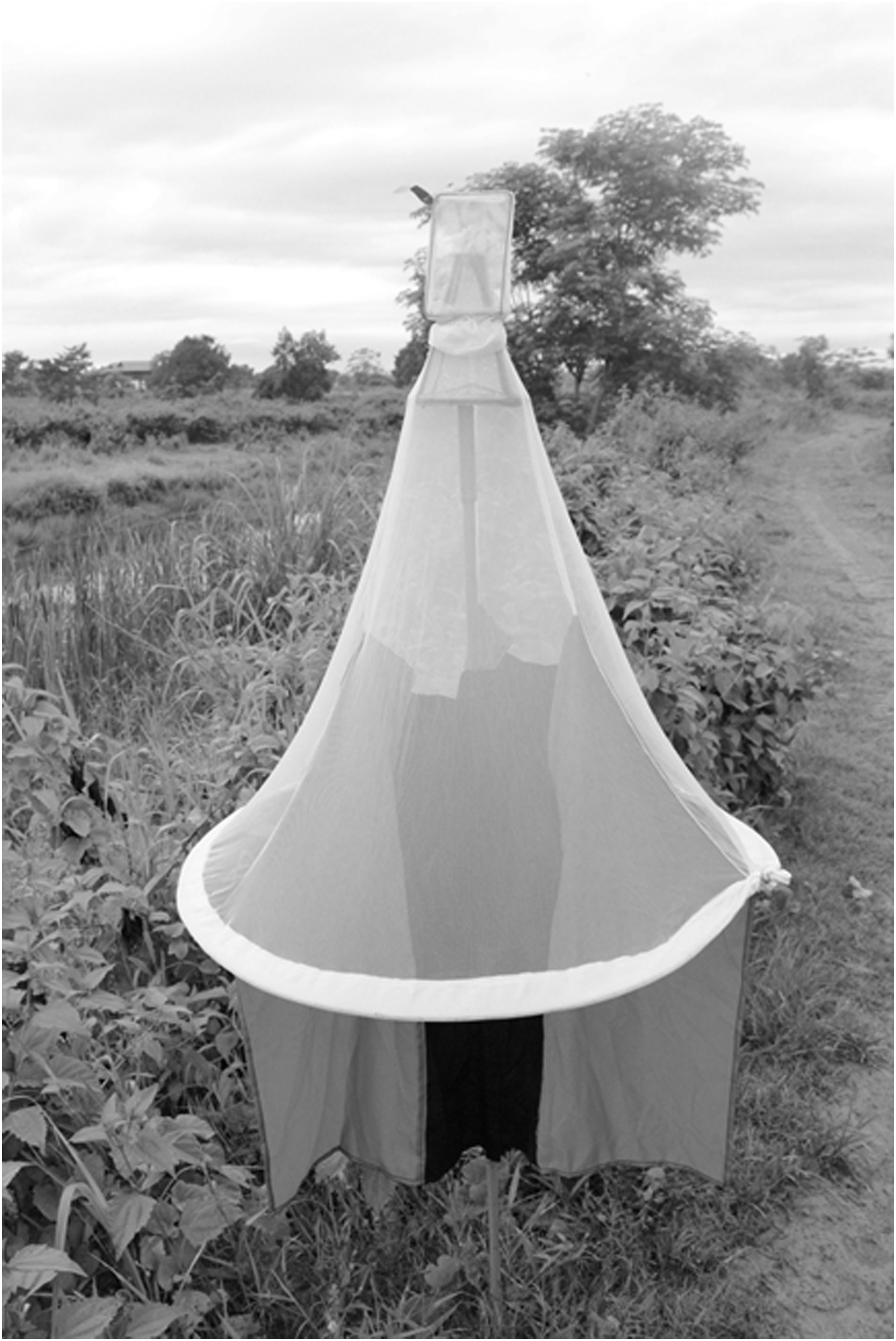
Example of Vavoua trap used for collecting Stomoxyinae flies.
Adult flies in the genus Stomoxys, especially S. pullus, S. uruma, and S. indicus, are morphologically very similar and often difficult to separate; therefore, Changbunjong et al. (2016a) used more detailed morphometric methods for species identification. They analyzed 198 and 190 wing pictures for landmark- and outline-based morphometric approaches, respectively. Analysis showed wing shape could separate species and sex of the three Stomoxys flies based on highly significant differences in Mahalanobis distances that determine if a sample is an outlier or a member of a group. The cross-validated classification scores ranged from 76% to 100% for landmark and 77% to 96% for outline-based morphometric analysis. The geometry of wing features appears to be a useful low-cost method for differentiating morphologically similar species.
Trapping and attractants for trapping efficiency
Tunnakundacha et al. (2017) compared the efficacy of three insect traps (Vavoua, Malaise, and Nzi trap designs) to monitor hematophagous insects on two cattle farms in Thailand. Additionally, a comparison of olfactive attractants was carried out in a pasture setting. Vavoua traps caught significantly (p < 0.05) greater number of Stomoxys spp. than Malaise and Nzi traps, with daily means of 69.7 ± 13.6, 31.3 ± 26.6, and 32.3 ± 25.8 Stomoxys flies in a stable area in Nakhon Pathom Province and 79.67 ± 23.71, 46.67 ± 21.55, and 58.33 ± 24.11 in a pasture in Kanchanaburi Province, respectively. Conversely, Nzi traps caught significantly more tabanids than Malaise and Vavoua traps on both farms. The mean daily number of insects caught using traps baited with cow urine mixed with dry straw (CUS) significantly increased in Vavoua, Malaise, and Nzi traps by 2.2 ± 0.9, 1.6 ± 0.5, and 1.8 ± 0.6 for Stomoxys and by 3.6 ± 1.8, 3.3 ± 1.7, and 1.8 ± 0.4 for tabanids, respectively. Vavoua and Nzi traps baited with the CUS attractant combination could be used on farm and pasture environments to reduce Stomoxys and tabanids adult populations.
Phasuk et al. (2016) compared attractants for sampling efficacy for S. calcitrans on four dairy farms in Muak Lek District, Saraburi Province. Vavoua traps, with either carbon dioxide (dry ice), octenol, a mixture of cow dung and urine, a combination of dry ice plus octenol, or traps with no attractants (control), were tested. In total, 7,000 Stomoxys species were collected between July 2013 and September 2014, of which 1058, 867, 1274, and 3801 were trapped on farms 1–4, respectively. Four species of Stomoxys were identified: S. bengalensis, S. calcitrans, S. indicus, and S. sitiens. S. calcitrans was the predominant species, comprising 99% of all samples. The number of male and female S. calcitrans collected differed significantly by attractant type. Significantly more S. calcitrans were attracted to dry ice or a combination of dry ice plus octenol-baited traps compared to unbaited or octenol-baited traps alone.
Diversity of species, geographic distribution, and patterns of activity
Masmeatathip et al. (2006b) described the seasonal changes and daily activity patterns of Stomoxyinae species in a dairy and beef cattle farm in Nakhonpathom Province. S. calcitrans was the most commonly captured species using the Vavoua trap, followed by S. sitiens and S. indicus. Approximately 80% of flies were collected during the rainy season (May to October), decreasing to around 20% during the dry period (November to April). There were no major differences in fly densities between both cattle locations. The activity pattern of S. calcitrans peaked in the morning between 08:00 and 10:00 h with another less marked peak in the afternoon. The activity patterns of S. sitiens and S. indicus were primarily crepuscular, with peaks around sunrise and again late in the afternoon near sunset.
Muenworn et al. (2010) studied the geographic distribution of Stomoxys flies in Thailand collected in 10 localities. These localities represented four major ecological settings, that is, small dairy farms, large industrial dairy farms, a national park, and one wildlife (elephant) conservation area. Using Vavoua traps, three species of Stomoxys were identified: S. calcitrans (91.5% of sample), S. indicus (7.9%), and S. sitiens (0.6%). The number of flies differed significantly between collection sites with dairy farms as most productive. The comparatively high number of Stomoxyinae flies, S. calcitrans in particular, collected in dairy farms are most likely the consequence of relative higher host density (i.e., availability) for blood-feeding adults and more suitable soil and environmental conditions (associated with rainfall and humidity) for immature stable fly stages to complete their life cycle. This combination of ideal conditions (host and habitat) likely contributes significantly in stable fly abundance and fitness. Additionally, the mixture of manure with silage and spilled feed in dairy farms is a highly favorable medium for the development of stable fly larvae (Masmeatathip et al. 2006a). A greater number of S. calcitrans were captured from the dairy farms than from a forest setting, indicating that the anthropic ecological setting is more favorable for S. calcitrans propagation. Seasonal and diurnal (photoperiod) activity of S. calcitrans was recorded during a 12-month period at two locations. Although S. calcitrans was more abundant during the rainy season (March to September), the population density was not associated with total amount of rainfall (r 2 = 0.0002, p < 0.05). The study found two peaks in daily flight activity for male S. calcitrans, 10:00 and 16:00 h, whereas females showed a steady increase of activity throughout the day until 16:00 h.
Keawrayup et al. (2012) and Phasuk et al. (2011, 2013) conducted species diversity studies, including diurnal and seasonal activity patterns of Stomoxys species in different locations in Thailand. Keawrayup et al. (2012) performed 12 months of continuous observations at a dairy farm in Wang Nam Khiao District, Nakhon Ratchasima Province (central Thailand). Four species were morphologically identified: S. indicus (50.2%) and S. calcitrans (49.5%), while S. sitiens and S. uruma were found in far less abundance (< 1%). The total number of flies captured was significantly different between the three key climatic seasons in Thailand: hot, wet, and cool–dry periods of the year. The greatest number of flies was seen during the rainy season. Variations of diurnal (06:00–18:00 h) activity were observed during the three seasonal periods. Male S. indicus and S. calcitrans flies showed unimodal activity patterns in the cool–dry and hot periods, but bimodal activity during the wetter months. Female S. calcitrans showed a unimodal activity peak during the cool–dry season, while having relatively uniform diurnal activity in the hot and rainy seasons, increasing gradually from the morning to early evening hours.
Phasuk et al. (2011) investigated species diversity and seasonal abundance of blood-sucking flies using Malaise traps in five different dairy farms in Amphur Muaklek (Saraburi Province) between June 2008 and May 2009. A total of 17,922 adult flies belonging to 2 families (Tabanidae and Muscidae), 4 genera, and 12 species were captured, including Haematopota glenni, H. pachycera, Haematopota singularis, H. varifrons, Tabanus konis, Tabanus rubidus, Tabanus systenus, Tabanus striatus, Haematobia irritans exigua, and Stomoxys species. Collectively, Stomoxys were the predominant group (98%) followed by members in Haematobia (1.3%), Haematopota (0.5%), and Tabanus (0.2%). Seasonal factors had an influence on abundance with an increase in number correlated with the beginning of wet period and a decline during the cool–dry season.
Phasuk et al. (2013) reported seasonality and daily flight activity of Stomoxys species on two dairy farms in Saraburi Province in central Thailand. Adult fly collections using Vavoua traps occurred throughout a continuous 12-month period. From 2,520 captured flies, S. calcitrans, S. indicus, S. sitiens, and S. bengalensis were identified. The majority of fly densities peaked during the wet season (September) and gradually decreased toward the cool–dry period (February). A second peak occurred during the hot months (between March and April). S. calcitrans was captured throughout the year and was the most abundant species overall. Relative humidity and light intensity were correlated with S. calcitrans abundance and activity. The number of male and female S. calcitrans captured differed significantly between seasons and time intervals. As with temporal variations in activity patterns between sexes mentioned previously, why male and female trap densities vary both spatially and temporally from one another is unclear.
Changbunjong et al. (2012) conducted a survey of Stomoxyinae flies using Vavoua traps from different sites in Thailand that included zoos, livestock farms, wildlife conservation areas, and a national park. From 3,314 collected samples, 8 species were identified, including S. calcitrans (46.6% of all samples), S. uruma (26.8%), Haematobosca sanguinolenta (11.2%), Haematobia irritans exigua (9.8%), S. pullus (4.3%), S. indicus (0.7%), Haematostoma austeni (0.5%), and S. sitiens (0.1%). The diversity of flies in the livestock farms was higher than in other locations, possibly due to the location of some farms near sites of higher ecological biodiversity. The authors reported a correlation between altitude and number of flies collected (r = 0.66). These results correspond with Gilles et al. (2005a, 2008) reporting the abundance of S. calcitrans and Stomoxys niger varied with altitude. Altitude (elevation above sea level) has a direct effect on climatic patterns such as rainfall and ambient temperatures, as well as governing the presence of particular ecological habitats depending on exposure to sunlight and wind, thus influencing the distribution of Stomoxyinae flies.
Changbunjong et al. (2013) determined species diversity, relative population abundance, and diurnal activity of flies at the Khao Yai National Park, Nakhon Ratchasima Province, in central Thailand, and an area devoid of commercial livestock. Using Vavoua traps, adult flies were collected bimonthly for 5 months. Based on morphological identification, 712 flies and 6 species were recorded: S. pullus (44.4%), S. uruma (19.7%), Haematobosca sanguinolenta (19.2%), S. calcitrans (13.3%), Haematostoma austeni (2.7%), and S. indicus (0.7%). This study provides the first information about Stomoxyinae flies present in a natural area with abundant wild native fauna serving as the primary hosts.
All of the aforementioned publications in this section provide a better understanding of the diversity of Stomoxyinae species, seasonal distributions, and behavior related to host feeding and diurnal activity patterns that can facilitate improving the efficiency (timing, locations, etc.) of fly control measures.
Genetics and molecular studies
Tainchum et al. (2010) published the first paper on genetic diversity of stable fly populations in Thailand. The rate of gene flow between populations was estimated by comparing the isozymes of nine different regional wild populations of S. calcitrans. Among 10 enzyme systems used, 13 putative loci and 10 polymorphisms were identified. Limited genetic differentiation among the sampled populations was seen (FST 0.060). The highest percentage polymorphism (69.2%) was observed in northern Thailand (eastern Trat Province and northern Chiang Mai Province), whereas the lowest polymorphism (23.1%) was seen in south-central Thailand (Saraburi Province). Gene flow between populations varied from 3.3 to 27.5 reproductive migrants per generation. Among the nine populations, no correlation was seen between genetic and geographical distances, showing a close fit in the same taxon cluster. Isozyme analysis also showed strong genetic homogeneity between S. calcitrans populations in Thailand.
Dsouli-Aymes et al. (2011) conducted phylogeographic analysis based on S. calcitrans populations from six major zoogeographic regions of the world to analyze the population genetic structure and to trace the species' global dispersion. Populations analyzed from Thailand represented the Oriental Region. Results from mitochondrial genes cytochrome oxidase 1 (COI), cytochrome b (Cytb), and ND1–16S, and the nuclear ribosomal internal transcribed spacer 2 (ITS2) DNA, showed a substantial differentiation of Oriental populations (first lineage) from the Afrotropical, Palearctic, Nearctic, Neotropical, and Oceanian populations (second lineage).
The divergence time analyses suggested that the separation between the two lineages occurred approximately during the mid-Pleistocene (ca. 781–126 thousand years ago). The authors considered the Oriental populations isolated and unlikely to have participated in the colonization of other zoogeographic regions, whereas the Afrotropical populations appear to be the source of S. calcitrans dispersion into other zoogeographic regions. Demographic analyses also indicated that Oriental, Afrotropical, and Palearctic regions had undergone a population expansion between late Pleistocene (ca. 126 thousand to 11,500 years ago) and early Holocene (ca. 11,700–7,000 years ago) epoch periods.
Dsouli et al. (2011) also conducted a phylogenetic analysis using 10 representative species of Stomoxys, together with the closely related genera Prostomoxys Zumpt, Haematobosca Bezzi, and Haematobia Lepeletier & Serville. Populations of S. calcitrans, S. sitiens, and S. indicus from Thailand were included in the study. Genetic relationships were inferred using maximum likelihood and Bayesian methods from DNA fragments of COI (753 bp), Cytb (587 bp) mitochondrial genes, and ITS2 (426 bp). Bayesian analyses supported three distinct lineages within the genus with a strong biogeographical component.
The first lineage consists solely of the divergent Asian species, wherein S. indicus appears as the sister group to all other Stomoxys species. The second clade consists of strictly African species, Stomoxys inornatus, Stomoxys transvittatus, Stomoxys omega, and Stomoxys pallidus. The third clade includes both African species and taxa that are more widespread, such S. calcitrans. Divergence time estimates indicate that the Stomoxys genus originated in the late Oligocene (∼30 million years ago [mya]), with the major lineages diversifying in the Early Miocene (∼15 to 20 mya), at a time when temperate forests developed in the northern hemisphere. Interestingly, these findings indicate the probable origin of the genus Stomoxys as Oriental owing to the strong support obtained for the basal branching of S. indicus (clade A) and its absence in Africa.
Bhakdeenuan et al. (2012) found molecular markers (ITS2 ribosomal DNA [rDNA]) useful for identification of important public health and veterinary flies (Muscidae). Fly samples from various regions of Thailand and different subfamilies were analyzed, including Azeliinae (Hydrotaea spinigera), Muscinae (Musca domestica and Musca sorbens), and Stomoxyinae (S. calcitrans, S. indicus, and S. sitiens). Using a bottom-up clustering method for the creation of phylogenetic trees based on DNA sequences, no overlapping ITS2 sequences between intra- and interspecific divergences were found between species. A restriction fragment length polymorphism PCR approach, using XapI restriction enzyme digestion, is capable to differentiate between the three Stomoxys species. This study provided additional molecular-based tools for more accurate identification of important fly species.
Changbunjong et al. (2016b) also considered the difficulty of identification for some closely related fly species and the inherent risks of misidentification using morphological characters alone. Using cox1 (COI) barcodes, they could discriminate between species with high interspecific divergence, especially those morphologically difficult to differentiate, such as S. indicus, S. pullus, and S. uruma, and the Haematobia subspecies (H. irritans and H. irritans exigua). Phylogenetic analysis and the genealogical sorting index revealed that all Stomoxyinae species formed a monophyletic group and were separated into distinct species clusters. DNA barcoding can discriminate between morphologically uncertain Stomoxyinae flies, thus having ecological and other applications.
Changbunjong et al. (2016c), using DNA molecular detection methods to examine Stomoxyinae flies from Khao Yai National Park, for the first time detected Theilera sp. and Babesia sp., protozoan parasites known to infect both domestic and wild vertebrates. A total of 110 Stomoxyinae flies, representing six species in three genera, S. calcitrans, S. indicus, S. pullus, S. uruma, H. sanguinolenta, and H. austeni, were examined by amplification of the 18S ribosomal RNA (rRNA) gene (Theileria/Babesia species) and PCR products sequenced for species identification by comparison with published GenBank sequences. Ten (9.1%) fly samples had the 18S rRNA gene.
For sequence analysis, seven samples (6.4%) were identified as Theileria spp., showing high identity (99%) with Theileria sp. (JQ751279) and Theileria cervi (HQ184406 and HQ184411). Three samples (2.7%) were identified with Babesia canis vogeli, showing 100% identity with reported sequences of B. canis vogeli (AB083374 and HM590440). Phylogenetically, sequenced samples indicate the Theileria sp. is in the same group as T. cervi, whereas B. canis vogeli appears as a distinct group. This study is the first report of Stomoxyinae flies infected with Theileria and Babesia in Thailand using molecular detection and identification techniques. Interestingly, hard ticks (Ixodidae) naturally transmit parasites in both genera. The biological and epidemiological implications of these findings, although indicating possible Stomoxyinae fly transmission of these parasites, require further investigation.
Discussion
The early descriptions and known distributions of Stomoxyinae flies by Austen (1909) and Brunetti (1910) were followed decades later by a comprehensive global coverage on Stomoxyinae flies (Zumpt 1973). The first published species lists for Thailand were provided by Tumrasvin and Shinonaga (1978) and Sucharit and Tumrasvin (1981). In that intervening period of nearly 70 years, there are no known published investigations on Stomoxyinae flies in the country. All Stomoxyinae-related published research from Thailand up through 2017 was identified for review. Since 1978, 20 publications, of which 17 were generated after 2006, have covered original research on Stomoxyinae fly bionomics, species diversity and distribution, patterns of activity, gene flow, and phylogenetics in Thailand. With few exceptions (Changbunjong et al. 2013), published studies clearly indicate that S. calcitrans is the most important species in Thailand, in terms of population number relative to other Stomoxyinae members, its wide geographic distribution, and potential economic impact. However, species abundance may be more apparent because of specific trapping locations near preferred hosts and the possibility the traps might provide a selective advantage for capturing S. calcitrans. Nevertheless, the evidence attests to this species being the prime target for control efforts in and around livestock areas.
This surge in interest in recent years has greatly expanded the knowledge on this important group of biting flies in Thailand. Epidemiologically, these and other observations are important as blood-feeding flies pose serious risks to wild and domestic fauna, not just as serious pests but also potential vectors of pathogens. The possible emergence and expansion of enzootic and zoonotic pathogens to animals and humans, respectively, remain a real threat. This information is welcome as a better knowledge of species diversity, seasonal abundance, ecological requirements, and behavior assists in the design of effective management programs against these insects.
Historically, the problem of correct species identification has potentially confounded many studies. The more recent development of molecular-based methods for differentiating species has led to further exploration on the genetic makeup of the group. For example, findings have showed genetic homogeneity for S. calcitrans throughout Thailand. Phylogeographic analysis also revealed that the Oriental populations of this cosmopolitan species appear to have been isolated for long periods from populations in other regions. Phylogenetic analysis of the Stomoxys genus also revealed that S. indicus, an endemic Oriental species, is regarded as a sister group to all other Stomoxys species analyzed, indicating the genus may likely have originated in the Oriental Region and not in Africa.
Trapping devises, either as monitoring or control tools, which capture day-active biting flies, typically use either visual targets or olfactory stimuli for attraction (Muirhead-Thomson 1991, Gibson and Torr 1999). The Vavoua trap (Laveissière and Grebaut 1990) has been the most common method for attracting and capturing adult Stomoxyinae flies in Thailand. Flies search for hosts or resting places partly, or wholly, by visual cues and are attracted to larger moving objects or those contrasting with the background landscape. Certain colors, especially blue wavelengths, appear to attract a wider range of diurnally active flies (Laveissière and Grebaut 1990). Green (1989) found traps with dual colored screens can effectively remove adult flies (tsetse) from an area much larger distance than the apparent zone of immediate attraction. A similar control strategy may have merit against other biting flies. In general, use of diurnal visual response traps is a preferred collection method, including various forms of sticky trap designs, without the need of a live host attractant (Black and Krafsur 1985).
Although the Vavoua trap is a passive, relatively inexpensive, and convenient to use device, other trapping methods might be more attractive and productive (Taylor and Berkebile 2006, Mihok and Carlson 2007). Use of translucent fiberglass (Alsynite, New Zealand), a product with strong light-reflecting properties that increase spectral reflectance of ultraviolet light, has been shown to attract both sexes of S. calcitrans in high numbers (Agee and Patterson 1983). An earlier trap was devised using the Alsynite plastic combined with a sticky adhesive compound to capture adults (Williams 1974), and later improved upon with design and size modifications (Broce 1988). Chemical-mediated or animal-baited traps could also be explored further as alternative, possibly superior, methods of collection. For example, carbon dioxide (CO2) and host odors (Warnes and Finlayson 1985) or combination of CO2 with acetone vapor can synergistically enhance the attraction of S. calcitrans to a trap (Vale 1980). Ammonia and phenylpropanoid compounds have shown promise as attractant stimuli for biting flies (Gibson and Torr 1999). These devices and attractants might work similarly with other Stomoxyinae species but await further assessment.
Besides monitoring tools, innovative approaches and development of new or improved methods of fly control should also be explored with the goal for greater capture efficiency while being practical to use and environmentally sound. For example, earlier trials found the Williams Trap (Williams 1974) useful in controlling stable flies (Rugg 1982). Meifert et al. (1978) found that using a trap designed with Alsynite plastic as attractant, combined with a toxicant (permethrin), could reduce stable fly populations. For the control of tsetse flies, the use of blue-colored screens as visual attractants, together with a sticky film or treatment with a non-repellent insecticide, was found successful in reducing population numbers (Gouteux et al. 1982).
Green (1989) found traps with dual blue-black colored fabric screens can effectively remove adult tsetse flies from an area much larger distance than the apparent zone of immediate attraction. Similar control strategies may have merit against other biting flies. Using similar trap designs in Africa and elsewhere, the control of diverse species of Stomoxys is possible (Holloway and Phelps 1991, Mihok et al. 1995, Gilles et al. 2007). Traps continue to be evaluated and compared between various designs (e.g., fabric vs. sticky traps) for efficiency (Solorzano et al. 2015). It would be informative to conduct similar trap evaluations in Thailand in comparison with the commonly used Vavoua trap.
More recently, there has been interest in assessing attractive toxic sugar bait (ATSB) as a control method against mosquitoes (Beier et al. 2012). Combining an ATSB system with visual attractants to draw in biting flies to traps might be an effective control strategy; however, more information is needed about natural sugar-feeding behavior by flies. Various forms of repellent compounds (synthetic and plant-based essential oils) have also been evaluated for protection of animals and humans against stable flies (Schreck et al. 1978, Hieu et al. 2010, Zhu et al. 2012).
Lastly, in areas where residual synthetic chemicals are used to control flies, insecticide susceptibility patterns should be monitored periodically. Resistance to various classes of insecticides has been documented among different stable fly populations (Brown and Pal 1971, Cilek and Greene 1994, Pitzer et al. 2010). Currently, there is no published information on response of Stomoxyinae flies to insecticides in Thailand. Programs involving the systematic rotation of chemical classes to mitigate the selection and development of resistance in fly populations should be practiced as a part of an integrated pest management strategy.
Few studies have examined natural transmission or pathogen isolation from wild Stomoxyinae (Baldacchino et al. 2013). Compared to S. calcitrans, far less is known about other species that also readily attack animals (e.g., S. sitiens and S. indicus). Except for a few examples, the importance and role of Stomoxyinae flies in natural transmission of disease-causing organisms through mechanical means (contaminated mouthparts or regurgitation of infectious blood) remains unclear. Under the correct circumstances, the potential for pathogen transmission from fly to host exists. The extent that biting (and non-biting) flies are involved in mechanical transmission, and what conditions might facilitate this, requires further study (Greenberg 1973, Baldacchino et al. 2013).
Research on vector competence and capacity (mechanical or biological) should investigate the roles these flies might potentially play in pathogen transmission, their impact on livestock productivity, and risk to human health. Greater communication between livestock operators and control specialist should be encouraged to enhance information exchange and experience. Cross-disciplinary collaborative studies can also assist bridging the knowledge gap on fly biology more quickly and efficiently, thus assisting better approaches to integrated control. We hope this review will provide a useful perspective of what is known and what, in large part, remains to be investigated in Thailand regarding this economically important group of biting flies.
Last provided by Tumrasvin and Shinonaga (1978), we have also included an updated identification key to the Stomoxyinae genera and all known or suspected species, both male and female adults, present in Thailand.
Footnotes
Acknowledgments
Financial support for this research was provided by the Center for Advanced Studies for Agriculture and Food, Institute for Advanced Studies, Kasetsart University under the Higher Education Research Promotion and National Research University Project of Thailand, Office of the Higher Education Commission, Ministry of Education, Thailand, and the International Research Network (IRN58W0003), Thailand Research Fund. We thank Amanda Lynn for her valuable comments on article preparation.
Author Disclosure Statement
No conflicting financial interests exist.
Supplementary Material
Supplementary Data
Supplementary Figure S1
Supplementary Figure S2
Supplementary Figure S3
Supplementary Figure S4
References
Supplementary Material
Please find the following supplemental material available below.
For Open Access articles published under a Creative Commons License, all supplemental material carries the same license as the article it is associated with.
For non-Open Access articles published, all supplemental material carries a non-exclusive license, and permission requests for re-use of supplemental material or any part of supplemental material shall be sent directly to the copyright owner as specified in the copyright notice associated with the article.
