




Abstract
Rabies reemerged in Greek fauna during October 2012, 25 years after the last report in animals and 42 after the last human case. This study examined the administration of rabies postexposure prophylaxis (PEP) in humans over the period 2012–2016. A total of 1,454 individuals (62.6% males) received PEP. The vast majority (92.3%) of regimens was initiated in high risk for animal rabies areas (11.1 PEP per 100,000 residents per year). Among the exposed, 77.0% presented at a healthcare setting during the first 24 h after the incident; more severe injuries were associated with faster presentation (p < 0.05). A vaccine series was administered in 54.5% of exposed persons whereas 43.7% received both vaccine and immunoglobulin and 1.7% immunoglobulin only. Exposure to stray dogs represented 68.4% of all incidents. In exposures occurring in nonhigh risk for rabies areas, bat was the second most frequently involved animal (13.4% of incidents). All dogs and cats evaluated by a veterinarian and laboratory-confirmed rabid were initially deemed suspect for rabies during clinical examination or according to history. No human rabies cases were recorded during the period of the study. Surveillance of PEP represents a valuable tool for aiding assessment of present and future demands in prophylaxis biologicals, outlining the epidemiological profile of exposures and planning effective policies for the management of exposure incidents.
Introduction
R
Rabies reemerged in Greek fauna during October 2012, 25 years after the last report in animals and 42 after the last human case (Tsiodras et al. 2014). Laboratory-confirmed cases, from October 2012 to December 2016, concerned mainly foxes (40 foxes, 5 dogs, 1 cat, and 2 cattle) (Giannakopoulos et al. 2016) with the most recent positive animal (fox) identified in May 2014. The sequence analysis of isolates revealed ≥99.8% identity with rabies virus (RABV) previously isolated from carnivores in neighboring Balkan countries (Tasioudi et al. 2014, 2015).
In June 3, 2013, the Ministry of Health with the cooperation of the Hellenic Center for Disease Control and Prevention (HCDCP) laid down updated guidelines for the medical management of humans potentially exposed to virus species within the genus Lyssavirus. Complementary guidelines, to optimize the coordination among the competent stakeholders, were issued in January 23, 2015.
The recommendation for administration of human rabies postexposure prophylaxis (PEP), consisted of vaccine or vaccine and immunoglobulin, was based on the following criteria: (i) geographic area in Greece where the incident occurred or the involved animal had lived or visited during the last 6 months before the incident, classified as high, medium, or low risk for Lyssavirus spp presence in the local fauna. The risk assessment was performed by an inter-sectorial team, comprised of health, veterinary, and wildlife professionals and was based on veterinary surveillance data, fox ecology, and terrain characteristics; (ii) species of the animal involved (domestic or wildlife); (iii) availability of the animal for prompt veterinary evaluation or laboratory examination (if the animal was set under veterinary observation and evaluated as free of signs compatible with rabies or was found negative in laboratory tests for Lyssavirus spp, prophylaxis was not recommended); (iv) circumstances of the incidence, including provoked or unprovoked attack; and; (v) category of exposure (COE) based on the World Health Organization (WHO) criteria (WHO 2018) (Fig. 1).
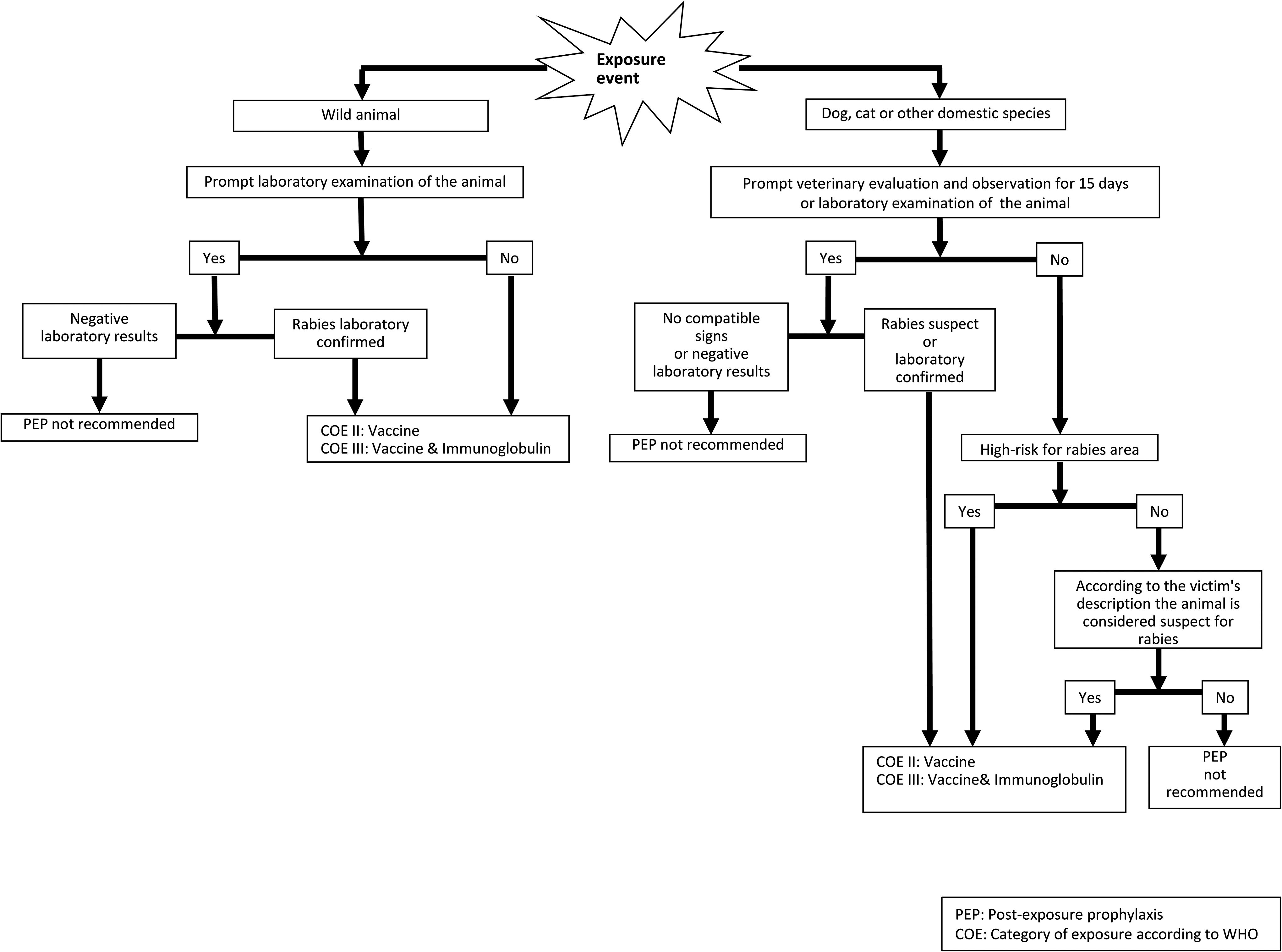
Algorithm for the management of human exposures to animals.
Monitoring of exposures to animals and the subsequent consumption of antirabies biologicals is considered an essential tool in rabies management (Helmick 1983, Rotivel et al. 2008). A semi-active surveillance system was developed by HCDCP to monitor exposures to animals that resulted in PEP.
Herein, we provide 4 years data, from October 2012 to December 2016, regarding the epidemiologic profile of incidents and the use of PEP in individuals who presented in healthcare facilities in Greece after contact with suspect animals and prophylaxis was initiated due to suspicion of exposure.
Materials and Methods
A standardized case report form (CRF) was rapidly sent by the healthcare practitioners to the HCDCP when Lyssavirus spp transmission was considered probable due to exposure to a potentially rabid animal and PEP was administered. Additional information for each incident, regarding initiation and outcome of veterinary observation, clusters of humans exposed to the same animal, and PEP eventually administered, was also obtained through another CRF sent from local health directorates to HCDCP and incorporated in the main body of data. Optimization of the database and collection of missing data was periodically performed by active retrograde communication with the treating physicians and the public health and veterinary authorities.
Epidata Analysis V.2.2.2.180 and SPSS 20.0.0. were used to analyze available data (demographics, date, time, and location of exposure event, species and owned or ownerless status of the involved animal, cleaning of the contact site before arrival at the hospital, date and time of presentation to the healthcare setting, COE according to WHO, vaccination history, and the type of PEP administered). Appropriate tests were used for univariate comparisons (Kruskal–Wallis and Mann–Whitney tests for nonparametrically distributed data). QGIS 2.18.10 was utilized for displaying geospatial data.
Laboratory tests in animal samples were performed in the National Reference Laboratory for Rabies in Animals and included fluorescent antibody test, real-time RT-PCR, heminested RT-PCR, sequencing, and phylogenetic analysis.
Results
From October 1, 2012 to December 3, 2016, a total of 1,454 cases (62.6% males) with a mean age of 40.2 years (CI 95%: 39.1–41.2 years, mdn = 39.0 years, range:1–90 years) received rabies PEP due to exposure to a suspect animal, corresponding to an average PEP rate of 4.0 regimens per 100,000 residents per annum (CI 95%: 3.9–4.1, mdn = 4.3, range: 1.4–5.2). However, in the high risk for rabies areas of the country, comprised of 18 regional units and representing the residence of 29.1% of the total population, 92.3% of the total PEP were administered, equaling to 11.1 average PEP rate (CI 95%: 2.8–20.0, mdn = 11.4, range: 4.9–16.8).
Among the treated individuals, 28 (1.9%) were reported as foreign citizens, exposed to animals in Greek territory.
A variation of PEP rate of administration among the 18 high-risk regional units was observed, ranging from 1.0 to 23.8 (avg = 10.2, CI 95%: 6.7–13.7, mdn = 8.7). Classification of regional units according to estimated risk of Lyssavirus spp circulation in animals and spatial distribution of average PEP rate appear in Figure 2.
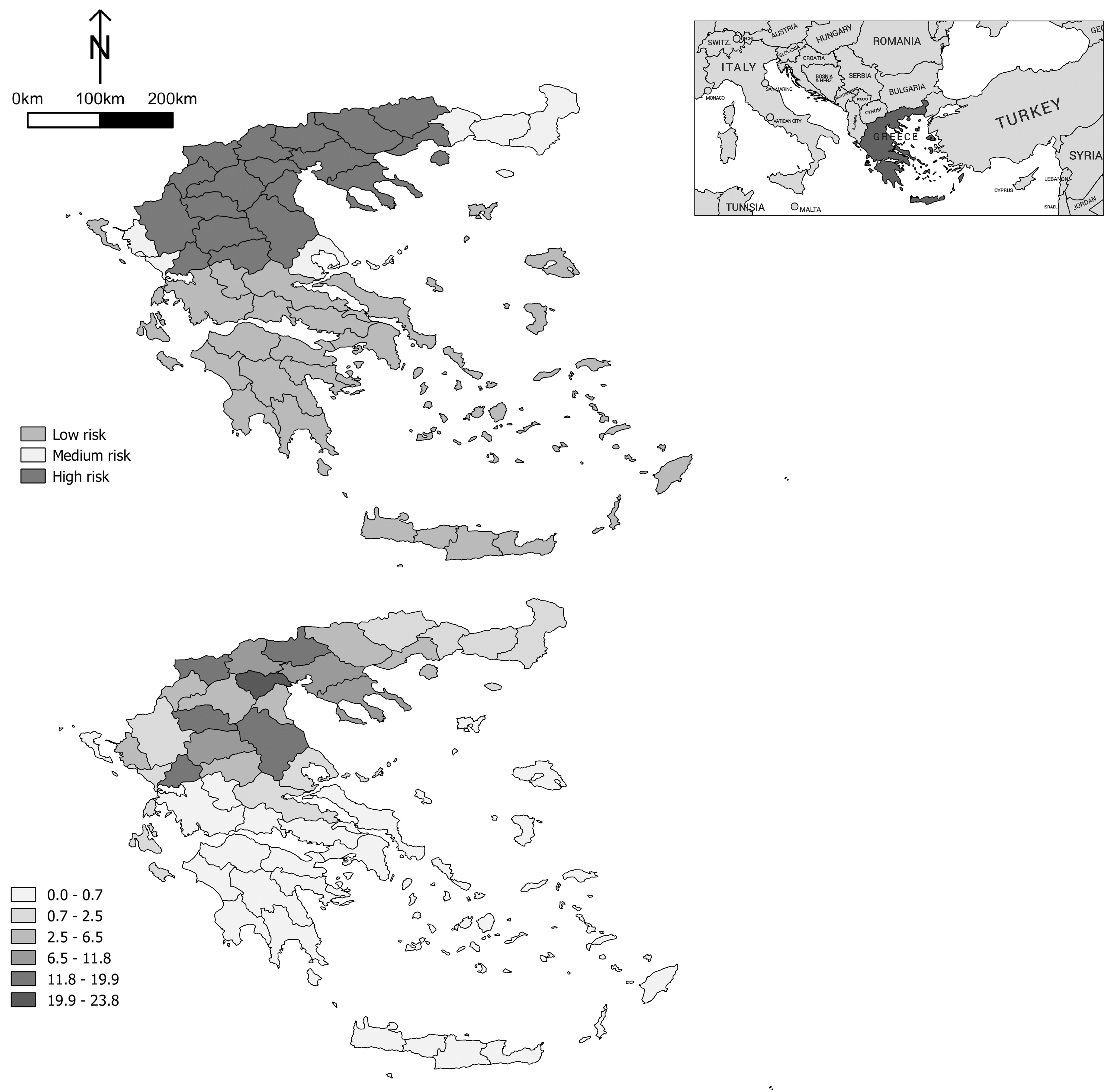
Upper row: estimated risk for rabies circulation in local fauna per regional unit. Lower row: average number of rabies PEP per 100,000 residents per year per regional unit due to exposure to animals, n = 51, Greece, October 2012–December 2016. PEP, postexposure prophylaxis.
An average of 29.1 PEP was administered per month (CI 95%: 24.4–33.7, mdn = 27.5, range: 5–61). The temporal distribution of administered PEP per trimester and per regimen appears in Figure 3.
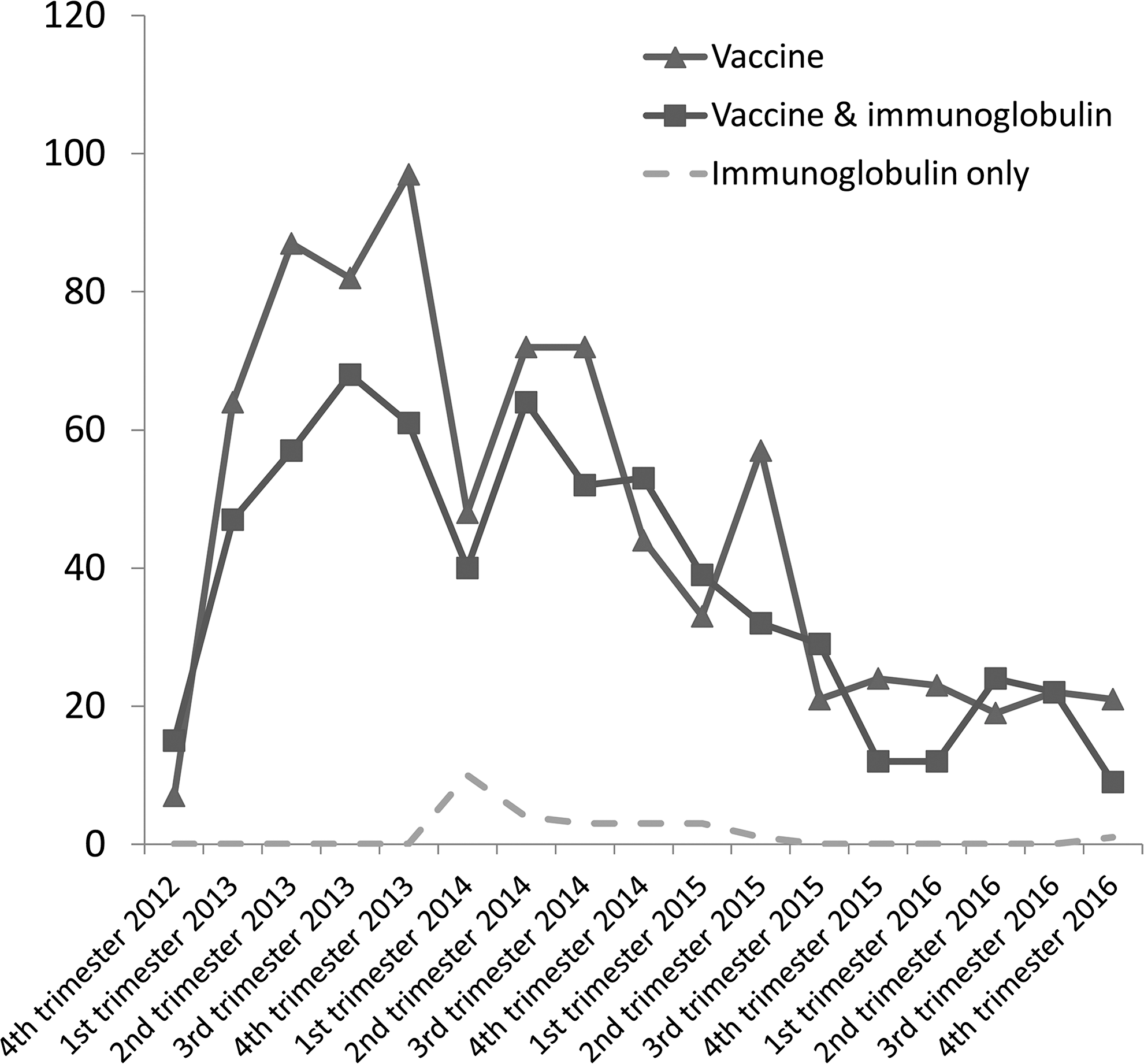
Number of rabies PEP per scheme and per trimester due to exposure to animals, n = 51, Greece, October 2012–December 2016.
Initial cleansing of the wound before presentation to the hospital (usually by a private physician, a pharmacist, or by the victim him/herself), was reported in 69.4% (n = 852) of exposure incidents and in 94.2% (n = 649) was performed during the first 3 h after the incident.
A median of 2.0 h elapsed from the exposure until evaluation from a medical practitioner (n = 1173, avg = 21.3, CI 95%:18.8–23.8, range: 0–397) with 77.0% of cases presenting at a healthcare setting during the first 24 h. Time interval until presentation to a healthcare provider after the exposure was significantly different among the three COE (H = 41.430, p < 0.001); COE III victims (n = 792) had significantly shorter time interval before arrival at a hospital (avg = 17.2 h, CI 95%: 14.3–20.1, mdn = 1.0, range: 0.00–397) compared with COE II (n = 366, avg = 28.7 h, CI 95%: 23.9–33.6, mdn = 4.0, range: 0–282) (U = 114693.5, p < 0.001) or COE I (n = 15) (avg = 58.5 h, CI 95%: 30.8–86.2, mdn = 88.0, range: 0–169) (U = 3262.5, p = 0.02) (Fig. 4).
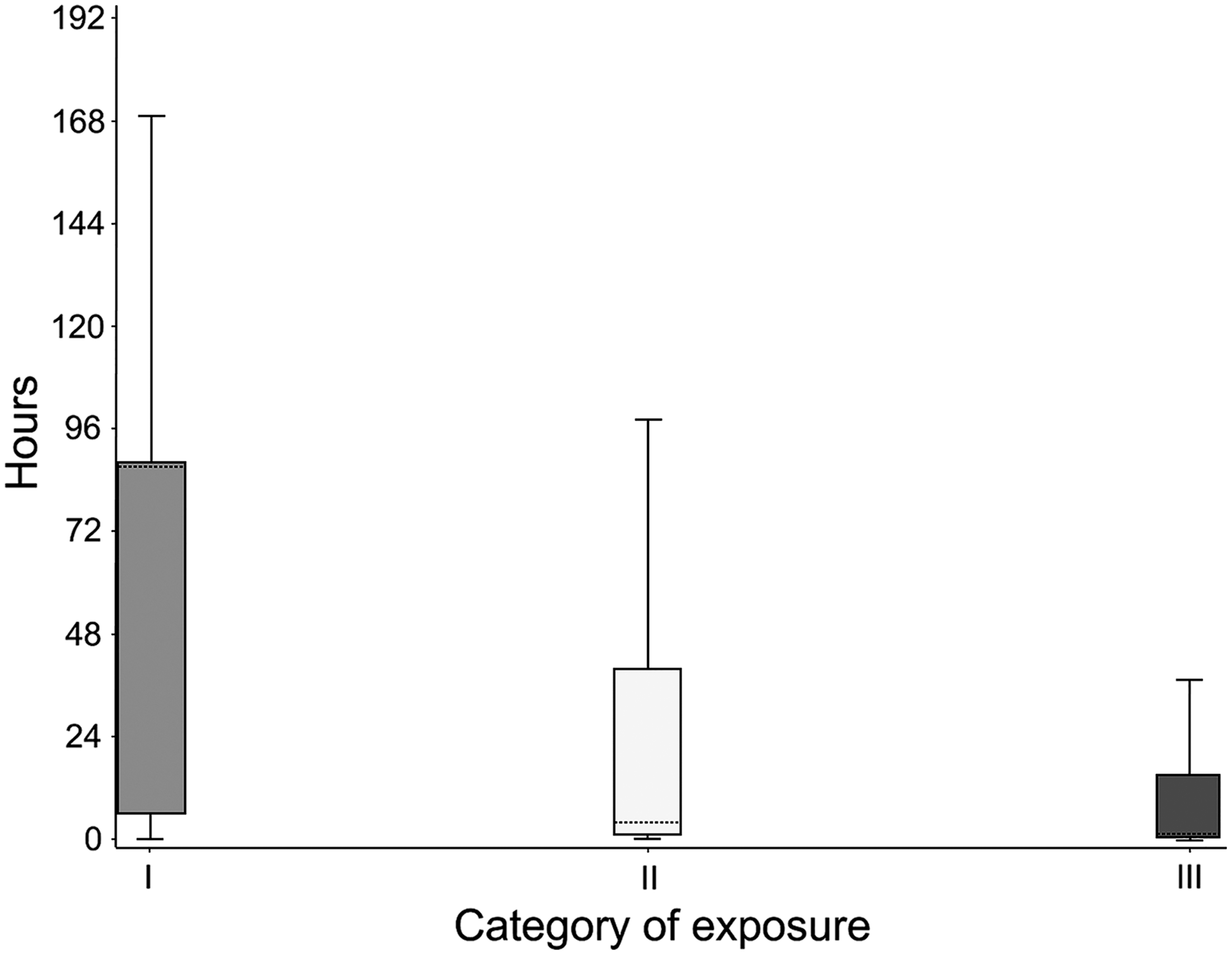
Boxplot diagram of hours elapsed after exposure to an animal until presentation at a healthcare setting, by category of exposure, n = 1173, Greece, October 2012–December 2016.
Only 0.7% (n = 10) of the exposed subjects reported pre-existing vaccination against rabies. COE III was reported in most of the incidents followed by COE II; the majority of exposed persons were initiated on a vaccine series followed by combination PEP (immunoglobulin plus vaccine series) whereas in a small percentage of cases only immunoglobulin was provided because vaccine was not readily available and PEP was discontinued because in the meantime the implicated animal was evaluated as free of clinical signs or tested negative for rabies (Table 1).
Exposure to ownerless dogs was reported in the vast majority of incidents where PEP was used, followed by companion dogs, ownerless cats, shepherd dogs, foxes, bats, hunting dogs and other animal species (Table 2).
Unknown status of dogs in 17 exposures.
Horse (3), bovine (3), pig (1).
Ferret (6), bear (3), mouse (5), boar (5), jackal (1), wolf (1), weasel (1), monkey (1).
Multiple exposures of two up to eight individuals to the same animal were recorded in 4.9% (n = 71) of cases and were due to dogs (n = 52; 73.2%), foxes (n = 9; 12.7%), cats (n = 4; 5.6%), and other species (n = 6; 8.5%).
Among the foreign citizens treated with PEP, 71.4% (n = 20) were exposed to free roaming dogs, 10.7% (n = 3) to owned (companion) dogs, 10.7% (n = 3) to bats, 3.6% (n = 1) to an ownerless cat, and 3.6% (n = 1) to an unspecified animal.
In 1.9% (n = 27) of cases the animals involved in the exposures were later laboratory-confirmed as infected with rabies virus (RABV) (three shepherd dogs, two ownerless dogs, one semi-owned cat, two foxes, and two bovines).
In low-risk geographical areas PEP was administered in 112 instances, most frequently after exposure to ownerless dogs (n = 61; 54.5%), bats (n = 15; 13.4%), foxes (n = 10; 8.9%), owned (companion) dogs (n = 9; 8.0%), shepherd dogs (n = 4; 3.6%), ownerless cats (n = 3; 2.7%), owned (companion) cats (n = 1; 0.9%), and other animal species that is, wild boar, bear, jackal, horse, monkey, and weasel (n = 9; 8.0%).
In a small percentage of cases (n = 157; 10.8%) the implicated animals (134 dogs, 15 cats, and 2 horses; 2 dogs were involved in the exposure of 5 and 3 individuals respectively) were evaluated by a veterinarian; the majority of these cases involved dogs (n = 140; 89.2%) followed by cases associated with cats (n = 15; 9.6%), and other species (horse) (n = 2; 1.3%). In incidents involving dogs and cats, the veterinary evaluation (examination and observation for 15 days after exposure as Greek legislation requires) occurred in 31.5% (n = 80) of cases of exposure in owned animals whereas in only 6.6% (n = 72) of exposures to ownerless animals. Frequency of veterinary evaluation did not differ between cases associated with dogs (11.3%) and cats (12.0%). In the majority of the incidents, the animals were evaluated as free of rabies compatible signs but the PEP was initiated before the evaluation. In 14 (8.9%) of cases with veterinary evaluation, the animals (9 dogs and 1 cat) were deemed suspect for rabies; in 8 of these cases the animals were confirmed for rabies (3 dogs and 1 cat) in the Greek National Reference Laboratory for Rabies.
No human cases of rabies were recorded in Greece during the period of the study.
Discussion
When rabies reemerged in Greece along with the development of updated guidelines for the medical management of humans potentially exposed, a system was also deployed to monitor the incidents and the administered PEP. In this article, results of the semi-active surveillance scheme monitoring the medical management and the epidemiological profile of cases with potential exposure to Lyssavirus spp are provided for the period 2012–2016 in Greece.
Our data indicated that men had a higher probability of receiving PEP as is already described by others (Palacio et al. 2005). The adult population was mostly affected with 50% of all PEP administered in individuals aged 24–55 years while other studies presented mixed results (Morgan and Palmer 2007, Hampson et al. 2008, Gautret et al. 2013).
A diminishing trend in the rate of PEP administration was observed over the study period, even though the risk classification per local administrative unit for rabies circulation in animals remained unchanged and the same guidelines for health services were in use. We attribute this phenomenon to the increasingly efficient collaboration among health, veterinary, and municipal authorities, so that animals were promptly evaluated and PEP was avoided. The prolonged absence of reports for new rabid animals in Greece may have also contributed to fewer individuals seeking medical help over the study period.
The observed variation of the PEP rate among high-risk regional units may be attributed to a multitude of factors such as education of the public, density of ownerless animals, efficiency of cooperation among stakeholders, and capability of municipal authorities to effectively collect and evaluate free-roaming animals and communicate results to health services in a timely manner.
The average PEP rate, 4.0 and 11.1 for the whole of Greece and for rabies affected areas respectively, is not feasible to compare with other countries due to diverse human-animal ecosystems, socioeconomic status, public awareness, different PEP regimes, implementation of centralized surveillance, and scarcity of similar reports from European countries (Bourhy et al. 2009); 0.4–3.3 PEP rate was reported in north Africa countries (Gautret et al. 2011) whereas in France was 5.7, and Poland had an average of 18.4 (Bourhy et al. 2009). In a study in the city of Marseille the annual rate averaged 45.2 PEP only for dog bites (Gautret et al. 2013).
The domestic pet animals and notably dogs were the main species involved in incidents resulting in the need of PEP, in accordance with similar surveillance data from other countries (Wijaya et al. 2011, Kularatne et al. 2015).
The vast majority of the reported PEP after potential exposure to rabies in Greece involved ownerless dogs. The national legislation permits the free roaming of ownerless animals in residential areas with the exception of hospitals, schools, highways, ports, airports, and archeological sites. The law also provides that municipal authorities are responsible for the management of free-roaming animals including rabies vaccination and prompt veterinary evaluation after human exposure. Serious obstacles were identified in a HCDCP survey conducted during 2014, regarding the capability of competent authorities at the municipal level to promptly seek, collect, and set under veterinary observation free-roaming animals involved in human exposures (Dougas 2015). Large number of presentations mainly due to contact with stray dogs necessitates robust veterinary surveillance so as to exclude or affirm circulation of Lyssavirus spp in animals in certain geographic areas and aid the physician when reaching a decision for PEP administration. However, insufficient animal sampling led to prolonged classification of affected regional units as high risk even in the absence of new animal cases.
The current situation also calls for an efficient mechanism of prompt collection and veterinary evaluation of ownerless animals at municipal level following exposure. Authorities along with animal-care nongovernment organizations should be committed to reducing ownerless animals' overpopulation by spaying, neutering, or adopting, and providing universal vaccination against rabies. Policy makers should enhance measures against abandoning pet animals.
Exposure to owned (companion) dogs was the second more frequent cause for PEP, signifying the need for proper public education and for an explicit legislation clearly defining the obligations of animal owners and attending veterinarians, prioritizing the health protection of the public and the potentially exposed individuals.
Nevertheless, multitude of issues that must be addressed simultaneously renders the effort particularly challenging; reports that document a PEP rate reduction after implementation of interventions regarding animal vaccinations and surveillance, inter-sectorial collaboration or public education, are scarce.
Bats were the 4th most frequently reported animal group in our PEP series, coming only 2nd in nonaffected from rabies areas. No data were available for the bat species involved in exposures; however, reports indicate that 28 of 32 bat species circulating in Europe can be found in Greece (OECD 2010). These animals are almost ubiquitous and classification of COE may be problematic. Bat contact is increasingly recognized as a management challenge in Europe and elsewhere even in areas free of terrestrial rabies (Huot et al. 2008, Moutinho et al. 2015) since bat Lyssavirus variants are largely unrelated with the terrestrial ones (Wang et al. 2010). We maintain that well designed studies on bat rabies are needed to elucidate the actual risk in specific geographic areas and aid to more informed decisions on PEP administration.
Discrepancies were observed in terms of type of PEP administered and national recommendations that were developed according to the relevant WHO guidance. WHO recommends a scheme of vaccine and immunoglobulin and a scheme of vaccine alone, for categories of exposure III and II respectively, however, fluctuations do occur among countries as to the adherence to WHO protocols especially regarding immunoglobulin (Sudarshan et al. 2001, Bourhy et al. 2009). Vaccine and immunoglobulin were provided to only 57.4% of COE III and in 14.3% of COE II immunoglobulin was unnecessarily included in the scheme. The national guidelines are not only aligned with WHO recommendations but also hold that the treating physician is responsible to evaluate all the circumstances related to the incident before reaching a final decision for the need and the appropriate PEP scheme. A few cases of COE I (no exposure) or of unknown category received prophylaxis apparently due to inability to exclude an imperceptible exposure. Moran (2000) suggests that adherence to proper postexposure guidelines may reduce unnecessary and increase justified PEP but could result in a rise of the overall PEP rate.
In this study, we observed a relatively short interval from exposure to initial wound cleansing and to presentation to a healthcare setting that might have further contributed to the prevention of rabies since it provided a safe margin to remove and deactivate the virus with the use of detergents and antiseptics before the potential establishment of the infection (McKay and Wallis 2005, WHO 2018). More severe injuries, with higher probability of Lyssavirus spp transmission (Hemachudha et al. 2013), were associated with shorter time intervals before arrival at the hospital.
In the majority of recorded PEP we cannot conclude as to the rabies status of the implicated dogs or cats as veterinary observation or laboratory examination was not performed. When veterinary evaluation did occur, only in a small percentage of cases the animals were deemed suspect for rabies. However, all dogs and cats that were laboratory-confirmed rabid were initially considered suspect by the attending veterinarian indicating the high sensitivity of the method of veterinary observation and evaluation, which, however, lacked specificity.
The surveillance of antirabies PEP in Greece was not designed to collect data on all exposures but only on those that resulted in administration of prophylaxis. Recording of all animal bite incidents would have provided not only a more complete insight on the injury burden but also evidence of the efficiency of the stakeholders for carrying out the appropriate procedures for rabies management. A modification of the surveillance scheme is under consideration to include all animal-induced injuries.
Conclusions
We describe data on the administration of PEP in humans due to contact with rabies-suspect animals over a 4-year period in Greece after reemergence of rabies in local fauna. Since stray dogs were implicated in the majority of presentations that resulted in PEP, interventions to reduce the rate of bites and increase the efficacy of prompt collection and evaluation of the animals are urgently needed.
Veterinary surveillance should provide reliable up-to-date risk assessment of Lyssavirus spp circulation in animals at local level to aid the management of the increased volume of presentations due to stray animals.
Advise from veterinarians was crucial for excluding or identifying rabies in dogs and cats but not commonly available.
Bat studies are necessary to elucidate prevalence of Lyssavirus spp carriage in these animals at local level and aid physicians for more informed decisions regarding PEP administration.
Education of the public, focused on bite prevention, responsible animal ownership, and necessary actions after an exposure accident, for example, exchange of contact details between animal owner and victim, could reduce incidence of PEP due to owned animals.
A well-designed PEP surveillance system is a valuable tool for rabies management.
Footnotes
Acknowledgments
The authors thank Prof. Vassileios Kontos, Prof. Charalambos Billinis, Aristarchos Seimenis, Eleni Gkaretsou, Theodora Stavrou, Vasiliki Karaouli, Peristera Iliadou, Aikaterini Kirtzalidou, Olga Mangana, Thomas Alexandropoulos, Chrisoyla Dile, and Nikolaos Bokaris for participating in national multisectorial working groups and sharing their expertise, the medical doctors and registered nurses for their relentless efforts to evaluate the high volume of cases, the collaboration with HCDCP and other stakeholders and their participation in the PEP surveillance network, Public Health professionals in local Directorates of Public Health and especially those of the high-risk regional units of Thessaloniki, Pieria, Kilkis, Serrai, Drama, Khalkidiki, Kavala, Pella, Kozani, Kastoria, Florina, Arta, Ioannina, Karditsa, Trikala, Larisa, Grevena, and Imathia for ensuring the administration of the indicated PEP in exposed individuals, for supervising the pre-exposure vaccination of personnel collecting wildlife specimens, and for the overall collaboration with HCDCP. We specially thank Eleni Vrachnou for administrative support, Kassiani Mellou for her support during preparation of this article, Garyfallia Poulakou for her expertise in postexposure evaluations, and Theodore Lytras for his valuable advice in statistical analysis issues.
Author Disclosure Statement
The authors declare that no competing financial interests exist.