




Abstract
Eleven triatomine species, the vector for Chagas disease, are endemic in the southern U.S. While traditionally thought to only occur in rural habitats and sylvatic transmission cycles, recent studies provide compounding evidence that triatomines could exist in urban habitats and domestic transmission cycles in Texas. We conducted a study of active and passive surveillance techniques over 3 years (2016–2018) in the City of Houston, Harris County, Texas to determine the presence of triatomines in this metroplex. Active surveillance methods uncovered Triatoma sanguisuga nymphs from two locations in downtown Houston city parks. We also documented the first Trypanosoma cruzi positive kissing bug collected in an urban environment of Harris County, Texas. Our findings provide evidence that triatomines can be found in heavily populated U.S. urban environments, and warrant public health support for expanded triatomine and Chagas disease surveillance in city settings.
Introduction
C
The primary public health concern for Chagas disease is that one-third of infected individuals will develop clinical manifestations over the course of decades. This insidious pathogenic process is largely asymptomatic until irreversible heart failure and/or gastrointestinal organomegaly have significantly progressed, at which point treatment options are limited (Morillo et al. 2015). Currently, vector control and screening of high-risk patient populations are the two focal points for public health interventions. Historically, public health efforts have targeted known endemic Latin American countries, yet paucity of data exists on the status of autochthonous T. cruzi transmission in the United States (U.S.).
Eleven triatomine vector species are endemic to the U.S. and have been reported in the scientific literature dating back to 1855 (Bern et al. 2011). While historically these species have only been implicated in sylvatic transmission recent finding have begun to challenge this belief. Epidemiologic studies in Texas discovered a higher burden of autochthonous human transmission than previously reported (Garcia et al. 2015a, Gunter et al. 2017), and new case reports from Arizona (Harris et al. 2017) and California (Hernandez et al. 2016) continue to demonstrate this concerning trend. In Houston, Texas, one in three homeless people report having seen the triatomine vector in the city (Ingber et al. 2018). Furthermore, 8% of shelter dogs from Houston have tested T. cruzi positive (Tenney et al. 2014). Despite these compounding preliminary findings that an established transmission cycle exists in this densely, urban populated setting collection efforts for triatomines have been lacking.
Active surveillance of the triatomine vectors can prove difficult and inefficient. Manual surveillance techniques are labor-intensive, and to date, no traps have been validated for collecting triatomine species in the U.S. (Pimenta et al. 2007). Unlike in the U.S., triatomine collection in South America has been widely studied and perfected with multiple types of effective traps, including some that can be used inside of the home. Widely used traps include the Maria sensor traps made of corrugated cardboard (Wisnivesky-Colli et al. 1987), while other methods for use outdoors include live-baited adhesive traps with mice (Noireau et al. 2002, Buitrago et al. 2010, Alvarado-Otegui et al. 2012), live-baited traps plus a shelter for the triatomines (Angulo and Esteban 2011), pit fall traps utilizing yeast cultures to produce CO2 as an attractant (Pimenta et al. 2007), or even utilization of trained dogs to find triatomines (Rolón et al. 2011). Trapping triatomines in the U.S., however, has proven more challenging due to different target species and more stringent regulations. Due to concerns regarding animal care and permitting in the U.S., live animal trapping is uncommon (Pimenta et al. 2007). U.S. based trapping typically utilizes various lights from incandescent bulbs to UV blacklights, however this, method has reportedly yielded very low numbers of triatomines (Bradley et al. 2000, Kjos et al. 2013). Some have found success using UV blacklights, but only in extremely rural environments (Klotz et al. 2014).
Attractive traps that mimic the live-baited adhesive traps utilized heavily in South America are the most effective system found to date in the U.S. (Noireau et al. 2002, Buitrago et al. 2010, Alvarado-Otegui et al. 2012). The key component necessary for attracting any hematophagous insect or arthropod is a lure such as CO2, heat, fatty acids, or other olfactory cues (pheromones or skin oils emitted by animals or humans) (Cohnstaedt et al. 2012). Furthermore, Lazzari and Lorenzo (2009) commented that combinations of physical and chemical attractants or stimuli, such as lures with lights, would be much more attractive to triatomines as they use multiple host cues to locate blood meals (Lazzari and Lorenzo 2009, Cohnstaedt et al. 2012, Akaratovic et al. 2017, Indocochea et al. 2017). Lastly, a way to keep the target arthropods inside the trap is necessary, and sticky boards with glue have been successfully used in South America for this purpose (Noireau et al. 2002, Buitrago et al. 2010, Alvarado-Otegui et al. 2012).
The goal of this study was to use both passive and active surveillance methods to identify areas of triatomine vector activity in a large U.S. urban setting (Houston, TX). We also evaluated T. cruzi infection prevalence in collected vectors to understand the potential for vector-borne transmission of Chagas disease to humans.
Materials and Methods
Passive surveillance
In early 2016, the first trap design was created with the help of a subject matter expert on Chagas disease and kissing bugs, Dr. Edward Wozniak from the Texas Department of State Health Services. The triatomine multimodal trap was developed based on the published reports of effective triatomine attractants (Ryelandt et al. 2011, de Arias et al. 2012, Guidobaldi and Guerenstein 2013). Specifically, it was constructed using a 5” × 5” × 3” cardboard box (Uline, Pleasant Prairie, WI) with an opening on three sides. Sides that did not contain an opening were lined with insect monitor glue tape (Bell Laboratories, Inc., Madison, WI). Cardboard was chosen as the structure material due to the natural association and potential attraction triatomines have to cardboard material (Wisnivesky-Colli et al. 1987, Angulo and Esteban 2011, Dolhun and Antes 2016). The trap was baited with a combination of semiochemicals (BG Sweetscent, Biogents AG, Germany), heat source (HotHands, Kobayashi Americas, Dalton, GA), CO2 source (dry ice), and a generic blue LED tealight candle (Fig. 1). The BG Sweetscent lure was chosen because its chemical composition emulates human and animal odors and previous studies demonstrated its effectiveness for triatomine attraction (Lazzari and Lorenzo 2009, Cohnstaedt et al. 2012, Guidobaldi and Guerenstein 2013, Akaratovic et al. 2017).
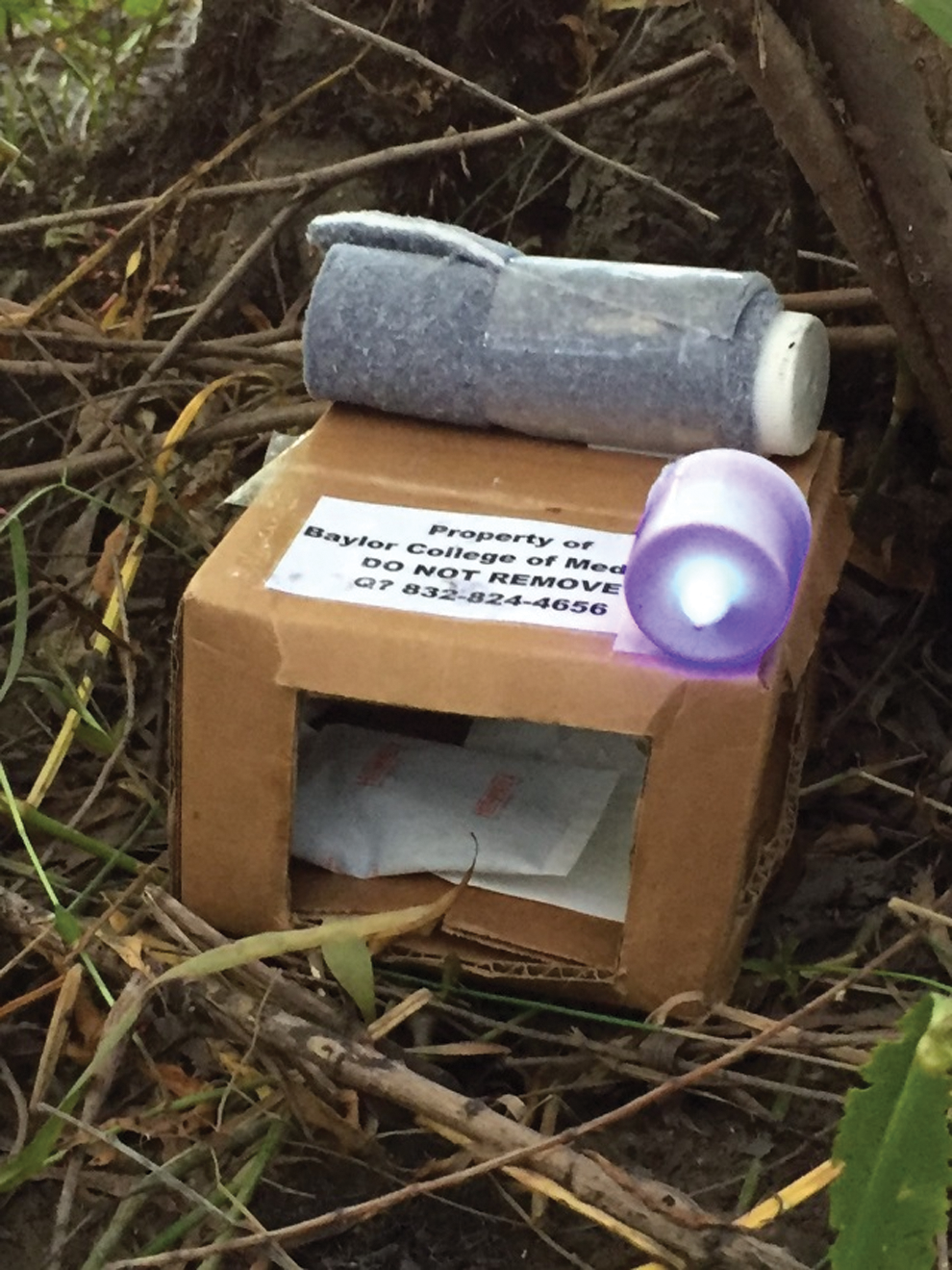
Original triatomine trap design. Color images are available online.
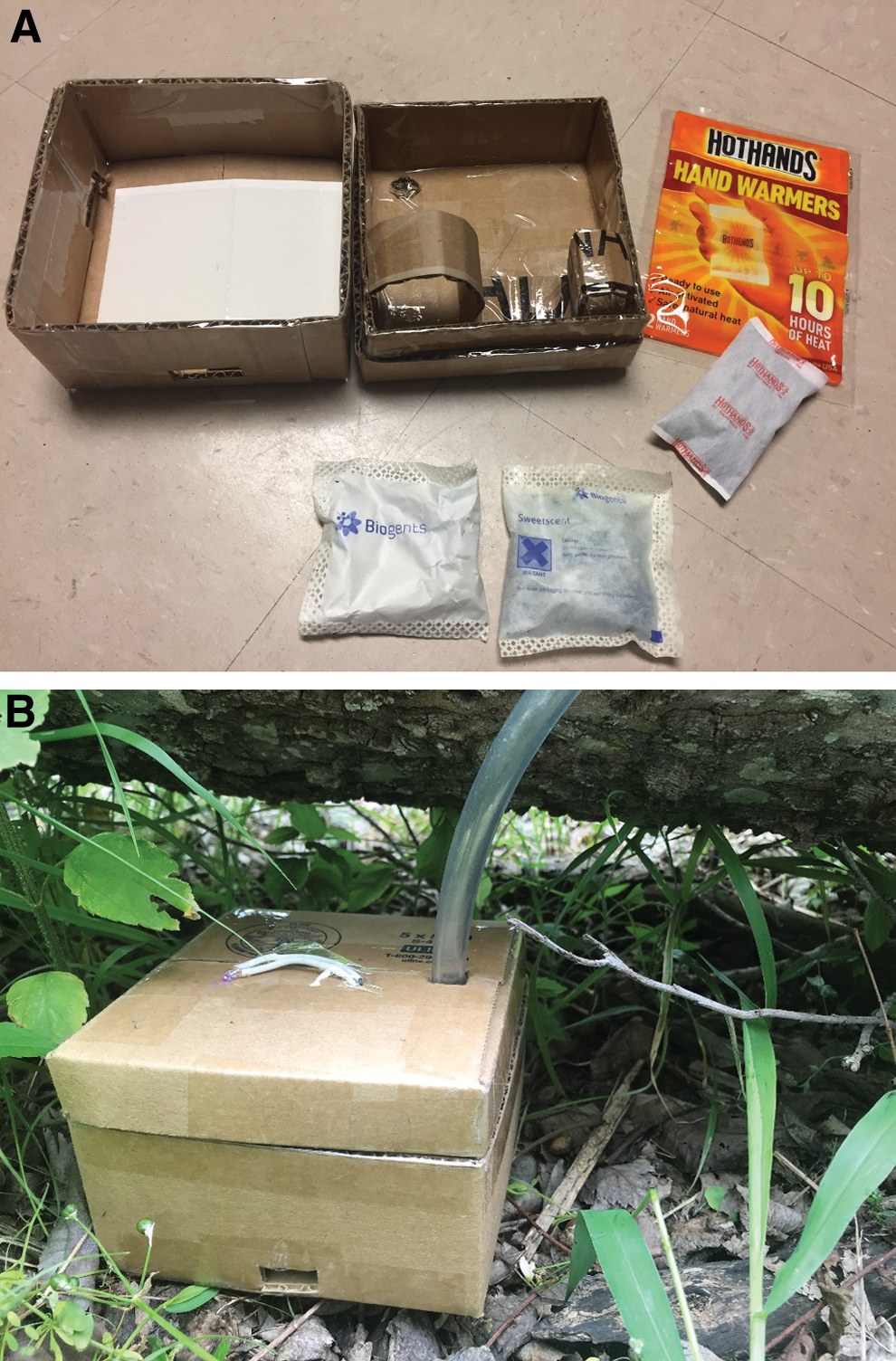
At the end of 2016, the original trap design was modified to potentially increase the relative attractiveness of the traps to kissing bugs. Modifications included (i) reducing the size of the entry ports, thereby reducing airflow inside the trap; (ii) increasing the amount of CO2 emitted by switching from a 50 mL insulated container on each trap to a 9 qt. cooler feeding two traps via 3/16” silicone tubing; (iii) changing the blue light to a small battery-powered UV LED light (EPO Computers, Webster, TX), which is highly attractive to multiple species of arthropods including kissing bugs (Harding et al. 1966, Indacochea et al. 2017) (Fig. 2A, B). The improved trap design was validated in a trapping study conducted at Big Bend National Park, Texas in May 2017. This site was chosen due to a high incidence of human involved kissing bug bites in the park and the surrounding communities (R. Skiles, unpublished data) and the high rate of collected triatomines from this ecoregion in Texas (Kjos et al. 2009, Buhaya et al. 2015, Wozniak et al. 2015). The traps were placed in the Panther Junction region of Big Bend National Park around lodging at dusk and were examined the following morning. Kissing bugs were successfully found inside the traps stuck to the insect glue boards, indicating efficacy of our modified trap (M. Nolan, unpublished data).
Triatomine surveillance in Houston was conducted in 2016 (June–December), 2017 (January–December), and 2018 (May–July) with sites for trapping systematically selected based on multiple factors. These included proximity to animals and human residences, proximity to previously reported or submitted kissing bugs to the Texas Department of State Health Services or Texas A&M University's Citizen Science Chagas campaign (Curtis-Robles et al. 2015), land use (wooded lot vs. residential park), and proximity to abandoned housing. Traps were set at locations in the afternoon and examined for bugs the following morning. Approval to set traps was obtained from the Houston Zoo, City of Houston Parks, and multiple animal shelters in Harris County. Surveillance at the Houston Zoo ended after the first year due to no yield of triatomine bugs collected. We believe this is the result of the robust vector control program implemented by the Houston Zoo in 2016. Of note, the Houston Zoo had reported the presence of triatomines in their facilities before the onset of their new vector control measures (personal communication M. Tocidlowski 2015).
In addition to our active trapping efforts, passive surveillance was instituted and included community outreach in the City of Houston, surrounding municipalities, and Harris County. An informational pamphlet was developed including basic facts about Chagas disease epidemiology, clinical symptoms associated with infection, information on how to identify kissing bugs, and instructions for residents to safely submit any kissing bugs to Baylor College of Medicine for identification and testing. Education and awareness about the study was raised through community-based talks and distribution of pamphlets at local animal shelters, health fairs, commercial expos, and local universities.
Active surveillance
Active vector surveillance was conducted in conjunction with passive surveillance activities and was implemented over the same study time frame and locations. The only exception being abandoned homes due to safety concerns. We conducted active surveillance following the McPhatter et al. (2012) wood excavation technique, where potential triatomine harborage was identified near suspected host nesting or resting sites. Examples of these sites include woodrat nests, organic debris piles, hollow or rotten logs, and animal burrows. In addition to the excavation technique, UV blacklight trapping was conducted once in 2016. This technique was investigated as kissing bugs are known to be attracted to these types of lights in areas of high vector abundance (Klotz et al. 2014, Indocochea et al. 2017).
Laboratory testing
Collected triatomines were transported to the laboratory and stored at −80°C before processing. Nymphal stages were identified according to the entomologic key by Lent and Wygodzinsky (1979). Insects were washed in 20% bleach (1.2% hypochlorite) to remove external contamination and rinsed in molecular biology grade water. Two to three posterior abdominal segments were exsected, and DNA was extracted using Quick-DNA Tissue/Insect Miniprep Kit (Zymo Research, Irvine, CA). Molecular detection of T. cruzi DNA (TCZ1/2 primers) and insect species identification (16S primers) were performed by PCR, as previously described (Gorchakov et al. 2016).
Identification of species sources for triatomine blood meals was done by sequencing of 12S rRNA gene amplicons (Gorchakov et al. 2016). Briefly, DNA extracted from posterior abdominal segments was used in PCR with universal primers for vertebrate 12S gene. Amplicons were directly subjected to sequencing with the amplification primers. Basic Local Alignment Search Tool (BLAST) analysis of the sequences was performed to determine vertebrate species.
Results
In 2016, a total of 289 passive traps were set in the City of Houston and Harris County, TX from June until December. No kissing bugs were collected from either the original or modified passive traps (Table 1). Similarly, in 2017, none were collected from January to November from 638 modified passive traps placed during this time period (Table 1). From May through July 2018, 240 modified traps were placed, and also yielded zero kissing bugs. All three seasons yielded a success rate of 0.00% regarding collection of kissing bugs through passive surveillance in Harris County/Houston. Approximately 1,000 Chagas disease educational pamphlets were distributed to residents and attendees of various community-based events. Two individuals reached out for information regarding insects they had collected. One resident submitted an insect, and the other submitted a picture of an insect they had collected. Both insects were examined and verified as non-triatomine by a trained entomologist.
Active and Passive Surveillance Dates and Monthly Success Rates for Triatomines in Harris County and Surrounding Municipalities from 2016–2018
During the 2018 season, a kissing bug was found by Harris County Precinct 4 staff while landscaping in Dennis Johnston Park, a Precinct 4 Park. The kissing bug was collected, placed in a container, and picked up by Harris County Public Health Mosquito and Vector Control Division staff on Monday, July 9th. The kissing bug was identified as an adult male Triatoma sanguisuga (LeConte), and it was subsequently picked up by Baylor College of Medicine National School of Tropical Medicine staff for testing. The kissing bug tested positive for T. cruzi DNA, no blood meal was detected, and the species was confirmed. This is the first Chagas parasite-positive kissing bug found in Harris County.
The kissing bug was found in the front of the park, adjacent to large flood lights that were on the previous night. In addition, the kissing bug was found less than 10 feet from a park employee's home. We theorize this bug most likely flew to the large light at night. The park employee did not have any pets that lived outside.
Although active surveillance was only conducted 8 times during the 2016 season from September to November, two of those active surveillance dates yielded field-collected triatomines. Three kissing bugs were collected from one site in Harris County on two separate collection months: once in September, and twice in October, yielding 25% and 100% monthly success rates in field collections (Table 1). All three triatomines were identified as nymphs. Figure 3 shows an image of the first collected and documented T. cruzi positive triatomine in Harris County from the July 2018 collection date. In 2017, active surveillance was conducted 82 times in Harris County from January until December. One of those active surveillance dates yielded five field-collected triatomines in June, yielding a 62.5% success rate for that month (Table 1). All five of the triatomines were identified as nymphs. Active surveillance was conducted a total of 16 times between May and July 2018. Zero kissing bugs were collected during this time frame. Lastly, one UV light trapping night was conducted in late 2016; this was not successful at collecting any triatomines. This trapping method was not repeated due to safety and feasibility issues.
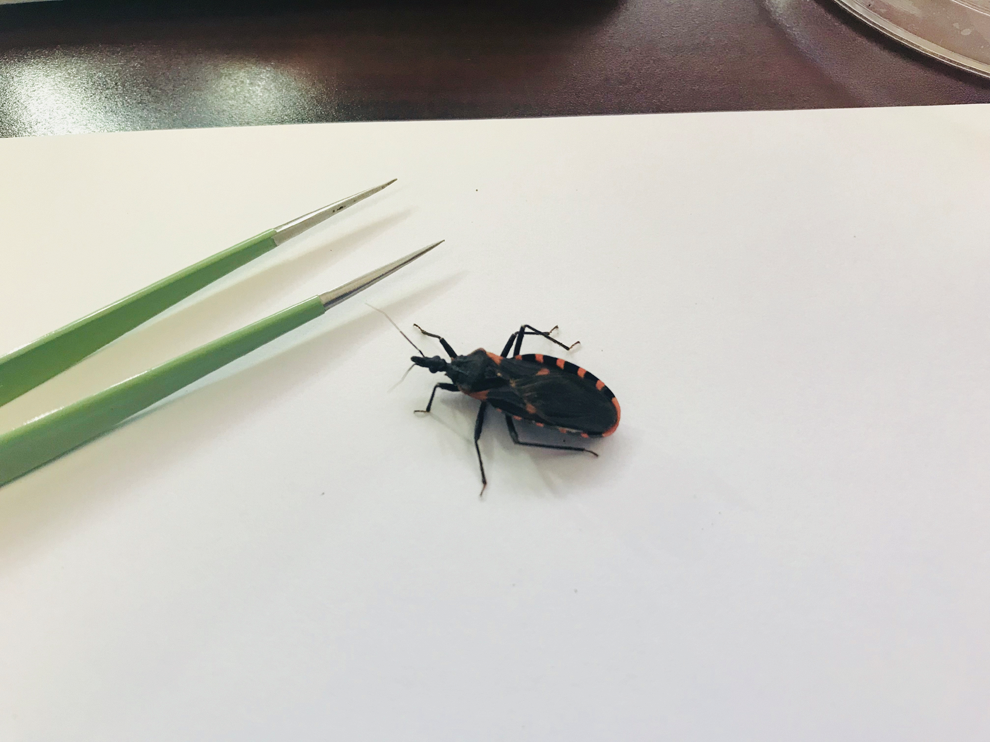
First collected and documented T. cruzi positive triatomine in Harris County, TX. Color images are available online.
A total of nine specimens were obtained over the course of this study between 2016 and 2018. Triatomines were collected in city parks, within the City of Houston. All nine insects were T. sanguisuga. Eight of these were stage N5 nymphs, determined to be negative for T. cruzi. The final insect, collected in 2018 was an adult male, and was found to be T. cruzi positive. From six detected triatomine blood meals, two host species were identified: North American opossum (Didelphis virginiana) (n = 2) and coastal plains toad (Incilius nebulifer) (n = 4).
The collection and surveillance data from 2016 through 2018 seasons were plotted on a map of Harris County using ArcGIS 10.4.1 software (ESRI, Redlands, CA) (Fig. 4). The county is divided into 268 operational areas that are used for standardization of vector surveillance across the county. Each surveillance site's operational area was known and shaded according to the year surveillance activities were conducted. There were 20 different operational areas surveyed for kissing bugs in 2016, compared to 46 in 2017 and 13 sites in 2018. In addition, the coverage of the county was more widespread in 2017 and 2018, with a focus on the suburban sites. However, the kissing bugs obtained in both 2016 and 2017 seasons were collected toward the center of the City of Houston and Harris County, while the positive insect collected in 2018 was found in Dennis Johnston Park, toward the outer edge of the county (Fig. 4).
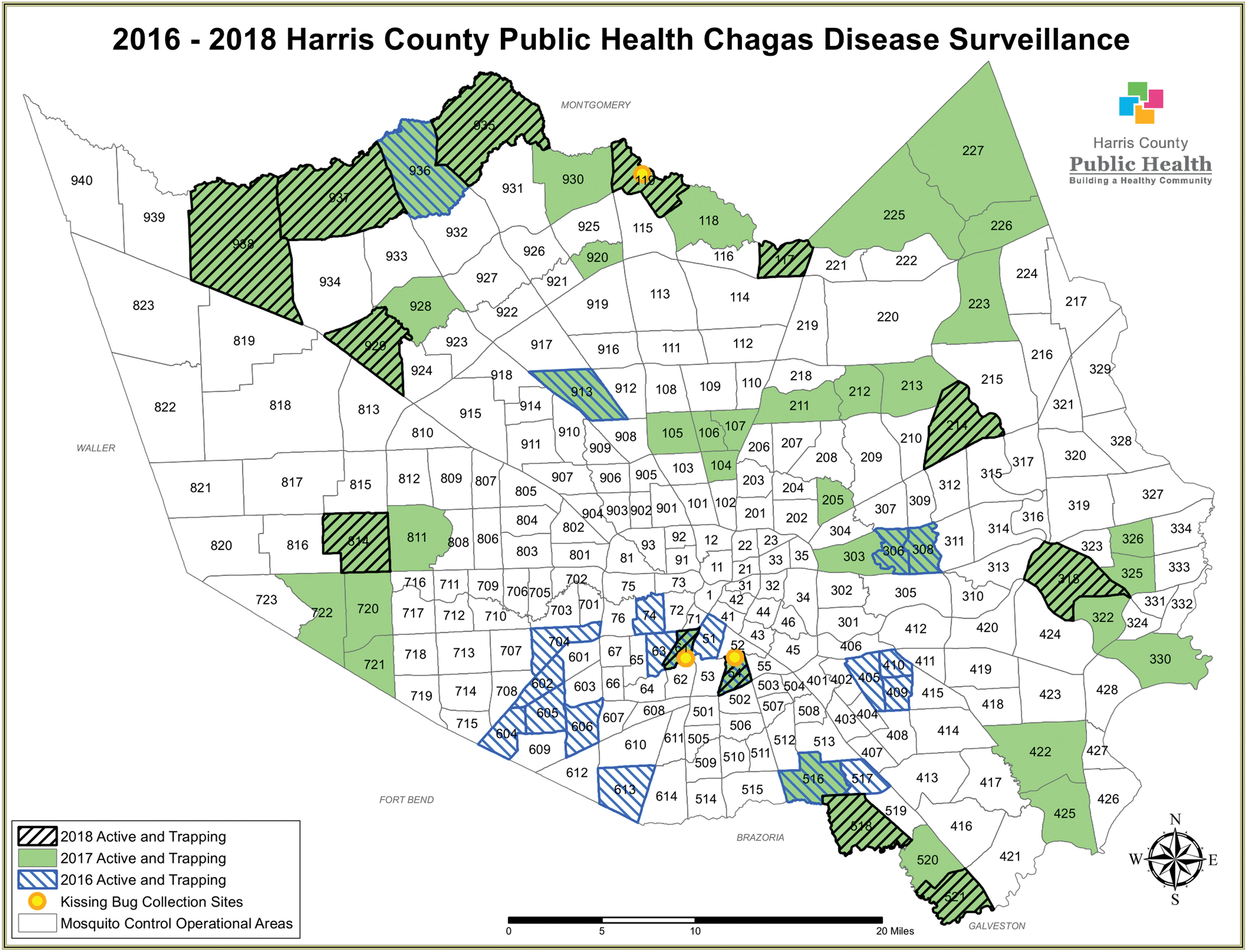
ArcGIS-generated triatomine surveillance activities in Harris County, TX from 2016 to 2018. Color images are available online.
Discussion
In this study we present the first recorded collection of a Chagas disease vector, T. sanguisuga, in the urban center of the City of Houston, Harris County, Texas. Further, this study also presents the first T. cruzi positive kissing bug for this county. Through both passive surveillance and active surveillance techniques, Harris County was monitored for triatomine activity. Although only the active surveillance technique was successful in yielding kissing bugs, the development of a passive surveillance trap was crucial for this project. Densely populated urban environments like the City of Houston pose additional challenges to surveillance utilizing traps relative to rural environments, namely light pollution (Cohnstaedt et al. 2012), higher risk of human interference, and increased cryptic habitats of host animals.
This is the first active surveillance of a major urban center reported in the U.S., likely due to the lack of formal integrated triatomine surveillance in Texas or other states. This study adds to the growing body of research conducted statewide to profile triatomine activity in Texas, with many of the surveillance sites historically in rural locations (Beard et al. 2003, Kjos et al. 2009, 2013, McPhatter et al. 2012, Curtis-Robles et al. 2015, Garcia et al. 2015b, Wozniak et al. 2015, Gorchakov et al. 2016). This is relevant to public health entomology as there has been a noticeable increase in triatomine vector and Chagas disease surveillance in Texas. In addition, the World Health Organization recently called for integrated, comprehensive collaborations in vector control to manage vector-borne diseases causing extreme disease burden, including neglected tropical diseases such as Chagas disease (WHO 2017). This study provides an example of a collaborative effort between a local health department, a research university, and the United States Army Public Health Command Central.
The species of triatomine collected, T. sanguisuga, has one of the widest distributions of kissing bugs in the U.S.; it has been documented from eastern Texas to the Atlantic coast (Bern et al. 2011). It has been collected from a variety of habitats, such as chicken coops and dog kennels, and has association with many different vertebrate hosts, including humans, woodrats, raccoons, opossums, armadillos, frogs, and squirrels (Wood 1941a, b, Grundemann 1947, Olsen et al. 1964, Lent and Wygodzinsky 1979, Yaeger 1988, Kjos et al. 2008, Kjos et al. 2009, Bern et al. 2011, Waleckx et al. 2014, Wozniak et al. 2015). It is not surprising to find this species in an urban park in Harris County where supportive habitats and multiple peridomestic vertebrate hosts are available.
We collected eight nymphal stage triatomines and one adult triatomine, adding to the body of evidence that there is an established population of T. sanguisuga in the metropolitan area of Houston within Harris County. Allergic reactions to T. sanguisuga have been documented in many southern states, and this species has been collected in homes of multiple Chagas disease patients in Tennessee and Louisiana (Packchanian 1940, Griffith 1948, Herwaldt et al. 2000, Dorn et al. 2007, Klotz et al. 2010). In every state where T. sanguisuga has been collected, T. cruzi positive T. sanguisuga species have been documented (Bern et al. 2011). This study documents the first positive kissing bug collected in Harris County, which was identified as an adult male T. sanguisuga. The collection dates of the T. sanguisuga in Harris County somewhat align with collections made by Wozniak et al. (2015), where a large peak of this species was found in September and October. However, roughly half of the triatomines we collected were found in June, which Wozniak et al. (2015) documented as not an ideal time for this species in central Texas. Several factors likely influenced the variance in seasonal collection of T. sanguisuga between our study and similar studies, as is further discussed in subsequent paragraphs.
The City of Houston/Harris County has experienced significant population growth in the past couple of decades, leading to changes in land use (Oguz 2005). This rapid change is predicted to continue with the loss of 2,000 km2 of forest by 2030, given the current rate of urbanization. Deforestation from urbanization leads to significant changes in host-vector contact, which has been documented with multiple vectors including triatomines (Allan et al. 2003, Sarkar et al. 2010). This is mostly due to humans encroaching on their habitats and areas traditionally inhibited by wild mammalian species, and thus increasing the likelihood of vectors coming into contact with humans (Allan et al. 2003, Sarkar et al. 2010, LaDeau et al. 2015). Additionally, many of these urban-wildlife interfaces in Houston are home to multiple T. cruzi mammalian reservoirs, such as raccoons, armadillos, and opossums (Packchanian 1942, Ryckman 1986).
Triatomines have been documented to be well-adapted to human developments in South America, especially after urbanization events (Levy et al. 2006, 2014, Foley et al. 2013, LaDeau et al. 2015). Recently, a surprisingly large number of triatomines were found in suburban areas of Tucson, AZ, with a 42% infection prevalence rate (Reisenman et al. 2010). Due to Tucson's population expansion, much like Houston, residents had encroached on rural land with mammalian reservoir animals and triatomine activity (Reisenman et al. 2010). While these insects were collected in and around homes, actual domestication of the vector in a U.S. suburban environment is unclear and warrants further research. Nonetheless, the risk of Chagas disease human transmission risk from Triatoma rubida in Tuscon, and T. sanguisuga in Houston cannot be ruled out. Our collective studies suggest that U.S. urban environments pose a considerable potential for human-triatomine vector exposure risk.
There were notable limitations that we faced while conducting this study, the first of which was the excessive rainfall experienced in 2016 and 2017 in Harris County/City of Houston. According to the National Weather Service, the City of Houston received 60.96 inches in 2016 and 79.69 inches of rain in 2017 (NOAA 2018). The 10-year average (2006–2015) yearly rainfall before these two seasons recorded in Houston was 48.56 inches, much lower than the 2016 and 2017 seasons (NOAA 2018). Additionally, in August 2017, Hurricane Harvey made landfall on the Texas Gulf Coast, directly impacting the amount of rain this area of the country received. The Houston metro area received between 36 and 48 inches of rainfall during Hurricane Harvey, roughly the same amount of rain the city of Houston received in 1 year during the years 2009–2014 (Blake and Zelinksy 2018, NOAA 2018). This amount of rainfall most likely had an impact on both the triatomines and reservoir hosts in the Houston metropolitan area. It would be beneficial to conduct triatomine surveillance for many additional seasons to determine the presence of Chagas disease vectors when there is not an abnormal amount of rain.
We encountered additional logistical limitations, mostly related to the start-up nature of the project. One methodological limitation was the change in trap design half-way through the study period following improvements and validation. Similarly, late in 2016, experts from the U.S. Army Public Health Command Central provided guided instruction to our study personnel on active surveillance techniques. Our study's funding only allowed for little over 2 years of surveillance, and the area chosen, the entirety of Harris County, is a considerably large area. It's possible multiple seasons are necessary to accurately survey all the parks and suitable areas in the county. We were unable to target areas with active environmental change, that is, pre- and postconstruction master plan communities. Lastly, due to regulatory and safety concerns, we were unable to target abandoned homes for active surveillance, which might have served as additional vector habitats and possibly yielded better results regarding triatomine collections.
Conclusion
This study presents the first documented T. cruzi positive kissing bug in Harris County, TX. We also report the first documented findings of an established population of triatomines in an urban center of the City of Houston, Harris County, TX. Despite previously published research indicating Chagas disease as an almost exclusive rural zoonosis with little public health risk in the U.S., our finding suggests that triatomines have established an ecologic niche in densely populated metropolitan areas like Houston. Efforts to monitor for triatomines in both urban and rural locations in the southern U.S. are warranted to prevent T. cruzi human transmission. Our findings support the need for further entomological research and resources for public education in urban centers regarding this important public health issue.
Footnotes
Acknowledgments
We thank Edward Wozniak (TX DSHS) for comments and suggestions to develop the original trap design and assistance with active and passive surveillance activities; Osagie Vigilant, Servando Guerrero, and Odd Vesteng from HCPH MVCD, and Connor Cordray (BCM) for their work in active and passive surveillance activities; Sarah Hamer and Rachel Curtis-Robles (Texas A&M University) for locations of previous triatomine submissions; Rebecca Berry (BCM) for testing the triatomine samples; Ami Orth and Maryanne Tocidlowski (Houston Zoo), Abandoned Animal Rescue Tomball, BARC Houston, and the City of Houston Parks for permission to conduct surveillance activities on site. This study was funded by NIHNIAID grant R03AI123650.
Author Disclosure Statement
The authors have no financial disclosures to declare.