




Abstract
Kyasanur forest disease virus (KFDV) is a tick-borne flavivirus identified in 1957 in the Karnataka state of India causing fatalities in monkeys and humans. Even after the introduction of a vaccine in the endemic areas, hundreds of cases are reported every year. Being a high-risk category pathogen, the studies on this virus in India were limited till the past decade. The growth characteristics of this virus in various mammalian cell lines have not yet been studied. In this study, we have demonstrated the growth pattern of virus in BHK-21, Vero E6, Vero CCL81, rhabdomyosarcoma, porcine stable kidney, and Pipistrellus ceylonicus bat embryo cell lines, and found BHK-21 to be the best. We have developed KFDV plaque reduction neutralization test for the first time.
Introduction
Kyasanur forest disease virus (KFDV) is a tick-borne virus belonging to the Flavivirus genus under Flaviviridae family (Bhatt et al. 1966). It was first recognized in 1957 in the Kyasanur forest of Shimoga District, Karnataka State, India, during an outbreak of the disease that caused deaths of black-faced langur (Semnopithecus entellus) and the red-faced bonnet monkeys (Macacaradiata) (Work 1958). Haemophysalis ticks play a major role in transmission. The disease is characterized by an incubation period of ∼3–8 days and symptoms such as chills, frontal headache, body ache, and high fever (Banerjee 1990). Internationally, KFDV is ranked as one of the highest risk category pathogens belonging to Bio Safety Level-4. Until 1971, KFDV was endemic to the Sagar, Sorab, and Shikaripur taluks of Shimoga District (Mourya et al. 2014, Upadhyaya et al. 1975). In recent years, KFDV has emerged in the states of Maharashtra, Kerala, Goa, and Tamil Nadu of the Indian subcontinent and has proven to be a cause of human infections and monkey deaths in these regions (Mourya et al. 2013, Tandale et al. 2015).
Multiple aspects of the KFD progression are still not known. Since it is a tick-borne disease, it is difficult to control the spread. This necessitates the development of more efficient vaccines and antiviral therapy for the disease, both of which require an in vitro system. Cell-based studies are useful in assessing antiviral susceptibility and cytotoxicity of new antiviral compounds. This is also useful in upscaling virus production, particularly for a vaccine study. Currently, there is no data available on the differential susceptibility of vertebrate cell lines to KFDV. A quantitative assessment of KFDV growth in these cells will help in developing better strategies toward antiviral testing, vaccine production, and gene therapy.
The objective of our study was to assess the susceptibility of some commonly used vertebrate cell lines to KFDV and the viral growth kinetics in them. We also attempted to develop a KFDV plaque reduction neutralization test (PRNT).
Materials and Methods
Virus
KFDV used in this study (NIV 12839) was isolated from a patient's blood sample received from Shimoga, Karnataka state, India, in 2012. The isolation was performed in BHK-21 cells, and median tissue culture infective dose (TCID50) was 1 × 105.57/mL according to the Reed and Muench (1938) method.
Cell lines
Baby hamster kidney (BHK-21), porcine stable kidney (PS), rhabdomyosarcoma (RD), Vero E6, Vero CCL81, and Pipistrellus ceylonicus bat embryo cell lines available at ICMR-NIV, Pune, were used for the study. Culture bottles (T-25 flasks, 25 cm2) with confluent monolayer were used for subculture. Cells were maintained in minimum essential medium (MEM) with 10% fetal bovine serum (FBS) and were incubated in a CO2 incubator at 37°C under 5% CO2 and 90% relative humidity.
Cell line susceptibility to KFDV
BHK-21, PS, RD, Vero E6, Vero CCL81, and P. ceylonicus cell lines were seeded on different 24 well plates. One hundred microliters of KFDV-infected tissue culture fluid having a titer of 106.79/100 μL was added to each well. Culture plates were observed for cytopathic effect (CPE) for the next 7 days. After the appearance of CPE, cells were scrapped, centrifuged, and the supernatant was used for second passage. Twenty-four-well plates of each cell line were infected and second passage virus stocks were prepared and stored at −80°C.
Immunofluorescence assay
Each cell line was infected with KFDV from second passage stock of the respective cell line. The cells were harvested on 3rd day postinfection, washed with phosphate buffered saline (PBS) thrice, and were centrifuged at 4816g for 5 min at 4°C. The cell suspension (∼30 μL) was placed on a Teflon-coated slide and was allowed to air dry. Uninfected cells (negative control) were also processed similarly. After fixation in chilled acetone for 20 min, the slides were incubated with primary KFDV antibody raised in mouse (1:200 dilutions in PBS) for 1 h at 37°C. The slides were washed three times with PBS-T (PBS containing 0.1% Tween-20) followed by 30 min incubation with fluorescein isothiocyanate (FITC)-labeled antimouse IgG (5008; Light Diagnosis) at 37°C. After three washes, the slides were mounted with a mounting solution (5013; Light Diagnosis) before observing under UV light using a compound fluorescence microscope (Nikon Eclipse Ti).
Growth kinetics of KFDV in different vertebrate cell lines
The cells seeded on 24-well plates were infected with 100 μL KFDV (0.1 multiplicity of infection) and were incubated in a CO2 incubator at 37°C under 5% CO2. Zeroth day collection was done after 1 h of infection. Similarly, supernatant and pellets were collected from one well of each plate every 24 h till the 9th day and stored at −80°C for further analysis. The supernatant was centrifuged at 7000 rpm for 10 min to remove any cell pellets that might have remained. One milliliter 1× PBS was added to the pellets before storage at −80°C.
An hour-based growth kinetic study was performed in BHK-21 cell lines using KFDV (0.1 moi). The supernatant and pellet collections were done on 0, 1, 2, 4, 8, 12, 24, 31, and 48 h postinfection. Titration of KFDV was performed from the collections, and the endpoint titer was calculated as TCID50/mL.
Real-time RT-PCR
Total RNA was extracted from infected cell culture and pellets collected during the growth kinetic study using QIAamp viral RNA mini kit (Qiagen) as per the manufacturer's protocol. Quantitative real-time RT-PCR was performed as described earlier (Mourya et al. 2012, Chaubal et al. 2018) using the following cycling conditions: 50°C for 30 min, 95°C for 10 min, followed by 40 cycles of 95°C for 15 s, and 60°C for 1 min in a BioRad CFX96 real-time PCR detection system. For quantitation of viral RNA number of copies, standard curve was plotted using cycle threshold (Ct) values obtained from 10-fold serial dilutions of in vitro transcribed KFD viral RNA of known number of copies (106 copies) against the log of viral RNA number of copies as defined in an earlier article published (Mourya et al. 2012, Chaubal et al. 2018).
Plaque assay
For standardization of plaque assay on BHK-21 cell lines, two parameters were selected, namely, cell concentration and period of incubation. BHK-21 cell monolayer was prepared in six-well plates in different concentrations, namely 3, 4, and 5 million cells using Eagle's MEM and 10% FBS. Cells were counted using hemocytometer to find the optimum concentration. For standardization of optimum period for incubation of KFDV for complete absorption by the cells, the cells were grown in six-well tissue culture plates, inoculated with KFDV and incubated for 2, 3, 4, and 5 days. The time at which visible, clear, and unfused plaques were observed was considered for the incubation time.
Plaque reduction neutralization test
Serum dilutions of 1:5, 1:50, and 1:500 were made to make a final dilution of 1:10, 1:100, and 1:1000, respectively, after virus addition. Diluted serum samples were incubated at 56°C in a water bath for 30 min for complement inactivation. Virus (10−4 dilution) was added into serum in 1:1 ratio, mixed, and was incubated for 1 h. Then, 200 μl of it was added to each well (in duplicates) of preseeded BHK-21 cell plates and incubated in a CO2 incubator for 1 h. Inoculums were removed, and 3 mL overlay medium (2% CMC +2 × MEM +2% FBS) was added to each well followed by incubation at 37°C in a CO2 incubator for 4 days. Overlay medium was removed, and cells were washed with 1 × PBS and stained with amido black stain.
Results
Virus
The titer of the virus stock used in the study in BHK-21 was found to be 1 × 107.79/mL.
Cell line susceptibility to KFDV infection
Definite CPE (Fig. 1) was observed from 5 days postinoculation onward with cell rounding and aggregation followed by cell disruption in BHK-21 cells. RD and PS cell lines showed loss of shape after virus infection. Vero CCL81 and Vero E6 cell lines also showed some cellular changes, whereas P. ceylonicus cell line did not show any significant CPE and could be noted as not ideally susceptible to the propagation of KFDV. Real-time RT-PCR showed virus amplification in all the cell lines tested for susceptibility and the viral antigen detection was demonstrated by immunofluorescence assay (IFA) (Fig. 2).
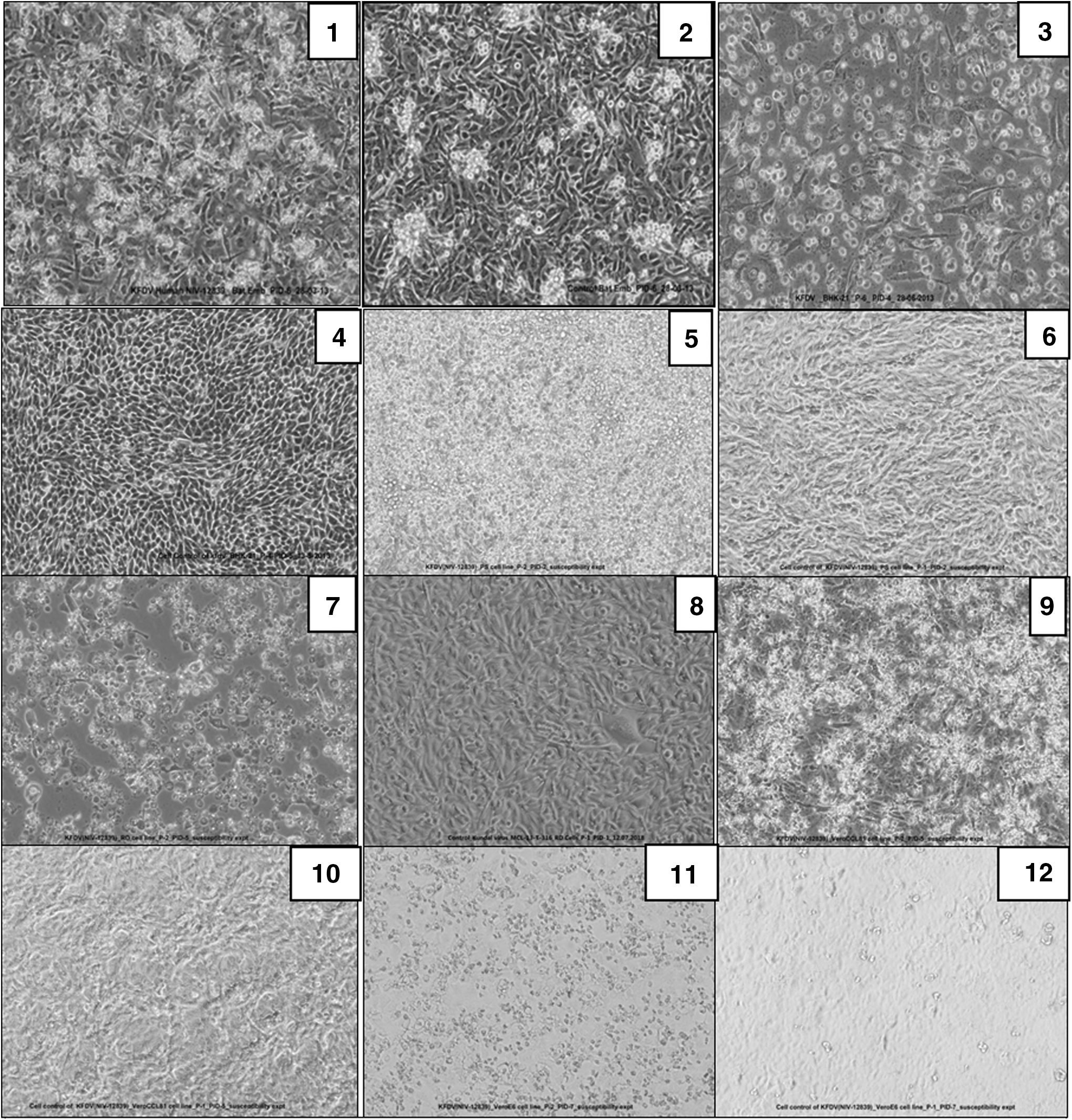
Cytopathic effect in cell lines infected with KFDV.

Immunoflourescence assay. (1) P. ceylonicus cells postinfection showing minimal fluorescence, (2) P. ceylonicus cell control, (3) BHK-21 cells postinfection showing fluorescence, (4) BHK-21 cell control, (5) PS cells postinfection showing fluorescence, (6) PS cell control, (7) RD cells postinfection showing fluorescence, (8) PS cell control, (9) Vero CCL81 cells postinfection showing fluorescence, (10) Vero CCL81 cell control, (11) Vero E6 cells postinfection showing fluorescence, (12) Vero E6 control.
Growth kinetics of KFDV in different vertebrate cell lines
Analysis of the growth curve (Fig. 3) indicated high viral number of copies at 8th day supernatant (number of copies 19573417) and 4th day pellet collections (number of copies 19573417) in BHK-21 cell lines, 8th day supernatant (number of copies 9667053), and 3rd day pellet collections (number of copies 4774430) in PS cell lines, 8th day supernatant (number of copies 575180) and 3rd day pellet collections (number of copies 1164599) in RD cell lines, 8th day supernatant (number of copies 19573417) and 3rd day pellet collections (number of copies 2358028) in Vero E6 cell lines, and 9th day supernatant (number of copies 19573417) and 4th day pellet collections (number of copies 575180) in Vero CCL81 cell lines. P. ceylonicus cell lines showed viral peaks at 4th day supernatant (number of copies 69292) and 3rd day pellet collections (number of copies 4774430).

Day-wise (0–9 days) growth analysis of KFDV in different vertebrate cells.
Considering the CPE pattern, IFA, and real-time RT-PCR results, we decided to perform hour-based growth study on BHK-21 cell lines (using KFDV stock with titer value stated earlier) with collections done from 0 to 48 h. It revealed that KFDV starts releasing into supernatant after 12 h of incubation and is evident by the number of copies obtained for the 24th hour of collection. Titration of supernatant and pellets also reveals an increase in titer between 12th and 24th hour (from 100/100 μL at 8th hour to103.5/100 μL at the 12th hour) in the supernatant and a slight increase in titer in between 4th to an 8th hour (from 100/100 μL at a 4th hour to 100.25/100 μL at 8th hour) in the pellets (Fig. 4).
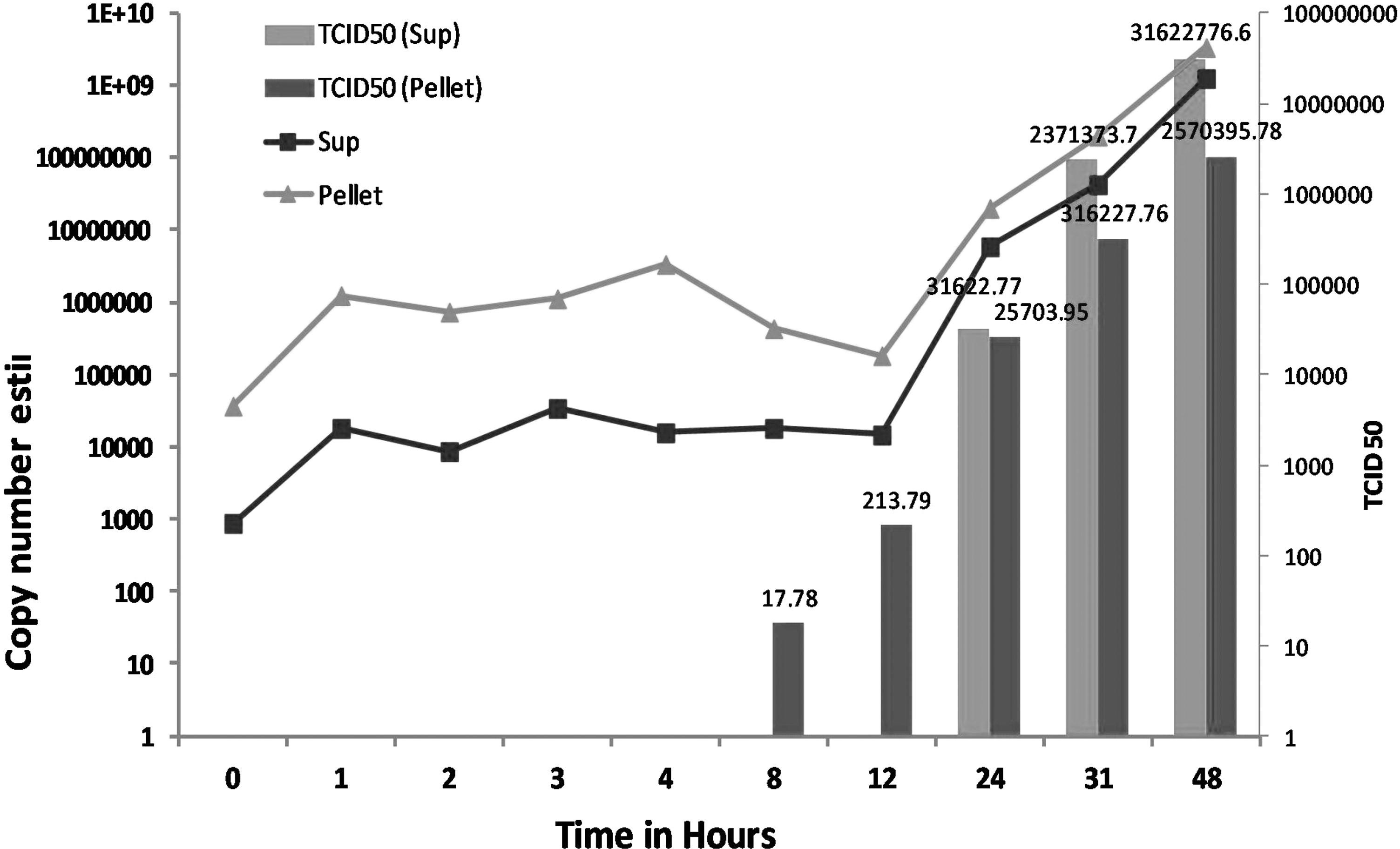
KFDV growth analysis (0–48 h) in BHK-21 and TCID50 in supernatant and pellet. TCID50, median tissue culture infective dose.
Plaque assay and PRNT for KFDV
After standardization, seeding concentration of 5 million BHK-21 cells/six-well plate and 4 days of incubation time was found to be the optimum for the plaque assay. PRNT was also optimized and Fig. 5 shows the results of PRNT performed with positive mice sera in various dilutions showing virus neutralization.
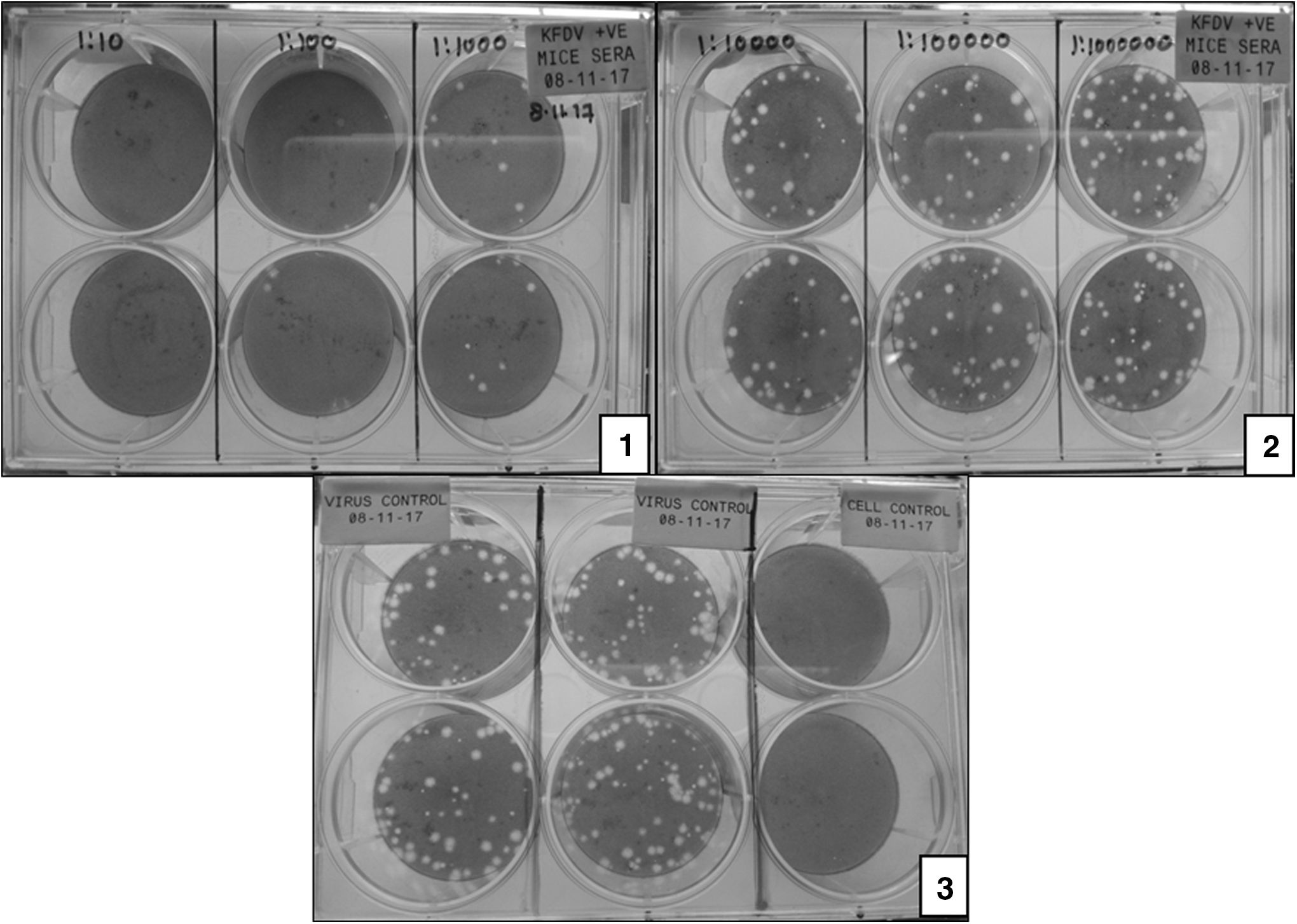
Plaque reduction neutralization test for Kyasanur Forest disease virus, plates
Discussion
Our study has confirmed that KFDV could infect BHK-21, PS, RD, Vero E6, Vero CCL81, and bat embryo cell lines as demonstrated by real-time RT-PCR. Although cytopathic changes could be observed in few such as BHK-21, PS, and RD, a characteristic CPE was seen only in BHK-21. The KFDV antigen was also demonstrated by IFA in these cell lines.
As observed from the growth curve plotted, based on the real-time PCR, increase in the viral number of copies was detected from day 1 in all the cells, which reached a peak between 3rd and 4th day as observed in all cell pellets except bat embryo. The number of copies were maintained without much drop in most of the cell lines till the end of the experiment except Vero CCL81, which showed a one log reduction after the 4th day. Thus the growth curve followed a similar pattern in most of these cell lines, that is, the peak viral number of copies on the 3rd and 4th days of post-inoculation and maintenance of it till the end without much reduction. Comparing the CPE shown and the viral yield obtained using each cell line; BHK-21 was found to be the most efficient for the KFD propagation and of use in diagnostic assays. Growth kinetics study performed with BHK-21 showed a change in Ct value of pellets collected between 12th and 24th hour, indicating that the viral load increased during this period.
The susceptibility of various cell lines to flaviviruses and different growth curve patterns in them were reported by earlier studies. The permissiveness of Vero, BHK-21, human embryonic kidney, and hepatocarcinoma cell lines to Yellow fever virus (YFV) has been demonstrated (Fernandez-Garcia et al. 2016). The growth curve analysis of YFV in human adrenal adenocarcinoma and mouse neuroblastoma cells has shown peak titers at 48 and 72 h, respectively, whereas in BHK cells, it was 72–96 h (Chambers and Nickells 2001). BHK-21 is also a permissive cell type for West Nile virus (WNV) and is recommended for virus titration and growth curve study (Brien et al. 2013). A peak WNV titer was observed in 40 h postinoculation in BHK-21 cells (Shi et al. 2002). The growth kinetics of dengue virus-2 with 1 moi in BHK-21 also has shown a rise in viral particles between 12- and 24-h postinoculation and a peak load by 60 h. The study has also shown the maximum release of viral particles by 72 h (Shrivastava et al. 2011). Shameem et al. (1988) have shown peak Japanese encephalitis virus (JEV) titer at 2nd day postinoculation in BHK-21 cells for six strains of the virus. Teng et al. (2012) showed a peak JEV titer in BHK-21 cells between 60 and 72 h postinoculation and a decline after that. In comparison with other cells used in our study, P. ceylonicus bat embryo cells showed the lowest viral number of copies by real time and absence of CPE indicating its less permissiveness for KFDV. The bat embryo cell line was found not susceptible to other flaviviruses such as WNV, dengue, and JEV by an earlier study (Mourya et al. 2013).
PRNT assay is developed for the first time for KFDV. Similar to other flaviviruses, serological diagnosis is a primary method in KFD diagnosis. Since cross-reactivity is common across all flaviviruses, development of confirmatory assays that determines neutralizing antibodies such as PRNT is essential.
Conclusions
In this study, we demonstrate the utility of BHK-21 cell line for KFDV propagation and diagnosis compared with Vero E6, Vero CCL81, RD, PS, and P. ceylonicus bat embryo cell lines. Moreover, we could successfully standardize PRNT assay for KFDV using BHK-21 cells.
Footnotes
Acknowledgments
We thank Indian Council of Medical Research, New Delhi, India, for the grant support (Project ID 2014: 1048) and a keen interest in this proactive public health research. We are also grateful to Mr. Rajen Lakra and Mr. U.K. Shende for the excellent technical support.
Author Disclosure Statement
No competing financial interests exist.