




Abstract
While fatal infections caused by the Usutu virus appeared to concern only passerines (especially the blackbird) and Strigiformes (especially the great gray owl), we report herein that the virus also naturally causes a fatal disease in an anseriforme species, the common scoter (Melanitta nigra).
Usutu virus (USUV) is a positive sense, single-stranded RNA virus included in the mosquito-borne cluster of the genus Flavivirus, family Flaviviridae (Lindenbach et al. 2013). Its natural life cycle mainly involves ornithophilic mosquitoes (mostly Culex spp.) as vectors and competent birds (those expressing viremias sufficiently high to infect naive mosquitoes) as amplifying hosts, whereas other vertebrates, including humans, are considered incidental hosts (Nikolay et al. 2011). Most of human infections remain asymptomatic, but symptoms ranging from transient flu-like syndrome (fever, headache) to neurological illness have been observed in some cases (Gaibani and Rossini 2017).
USUV was detected for the first time in 1959 from Culex neavei captured near Ndumo game reserve, South Africa (Woodall 1964). Over the following years, the virus was isolated from mosquitoes in several African countries, until its identification as the causative agent of mass mortalities in Eurasian blackbirds (Turdus merula), in Tuscany, Italy, 1996, barn swallows (Hirundo rustica), and great gray owls (Strix nebulosa) in and around Vienna (Austria) in 2001 (Weissenböck et al. 2002). In the following years, the virus expanded to several European countries, where susceptibility to infection (seropositivity and/or viropositivity) has been detected in 93 bird species and susceptibility to disease (viropositivity in diseased/found-dead birds) has been detected in 36 bird species (Benzarti et al. 2019). Eurasian blackbird (T. merula) is the most affected species in Europe where epidemics were demonstrated to cause a 15.7% decline in population (Lühken et al. 2017).
Of the thousands of seropositive bird sera detected so far, only about 20 belonged to the Anatidae family: 1 emperor goose [Chen canagica (Cano-terriza et al. 2015)], 1 Egyptian goose [Alopochen aegyptiaca (Benzarti et al. 2019)], 3 mallard ducks [Anas platyrhynchos (Llopis et al. 2015, Jurado-tarifa et al. 2016, Benzarti et al. 2019)], 1 red-breasted goose [Branta ruficollis (Buchebner et al. 2013)], 1 ruddy shell duck [Tadorna ferruginea (Buchebner et al. 2013)], 1 steamer duck [Tachyeres pteneres (Buchebner et al. 2013)] and 13 Eurasian coots [Fulica atra (Strakova et al. 2015, Lim et al. 2018)]. Here we report, for the first time in an Anatid, the occurrence of a fulminating, fatal disease unequivocally caused by natural infection by USUV.
The Study
The infectious episode took place during August 2018 in five different locations (from north to south: ‘tWaar, Schiedam, Leerdam, Merelbeke, and Passendale), which describes a polygon spread along the southern edge of the North Sea, straddling Belgium and The Netherlands (Fig. 1). These were five private parks whose owners are waterfowl lovers who hold several species simultaneously, among which are the long-tailed duck (Clangula hyemalis), Harlequin duck (Histrionicus histrionicus), spectacled eider (Somateria fischeri), velvet scoter (Melanitta fusca), or common scoter (Melanitta nigra). Recently, they reported a similar story that specifically concerned common scoters without affecting the other anatids in their collection. The testimony of D.H. of Merelbeke is emblematic of the five events. Five common scoters were born on July 12, 2018. On the morning of August 7, one of the birds was found dead while he had presented no sign the day before. On the evening of the same day, two other young scoters showed signs of illness: drowsy, ruffled, and without appetite. They were found dead the next morning. On August 10, the last two young birds were found dead too. Between August 15 and 30, six adult birds showed signs of illness for 3–4 days and then died. In all, 34 common scoters died in August 2018 at the five sites (11 in Passendale, 11 in Merelbeke, 7 in Leerdam, 3 in ‘tWaar, and 2 in Schiedam) without any of the other waterfowls occupying the same parks or aviaries showing signs of disease. Twenty were autopsied (>2 per location). The only reproducible macroscopic lesions in common were hepatomegaly and splenomegaly, similar to those seen in blackbirds and gray owls. Furthermore, as in the latter, histopathological examination revealed necrotizing lymphoplasmacytic hepatitis. The genome of the USUV was detected by reverse transcription qPCR in the spleen of all the birds tested, and the proteins of the virus were detected in several organs by immunohistochemistry (Fig. 2). These observations suggest that the birds studied here succumbed to a fatal infection with the USUV. To our knowledge, the common scoter is the only species within the Anatidae in which virulence has been detected.
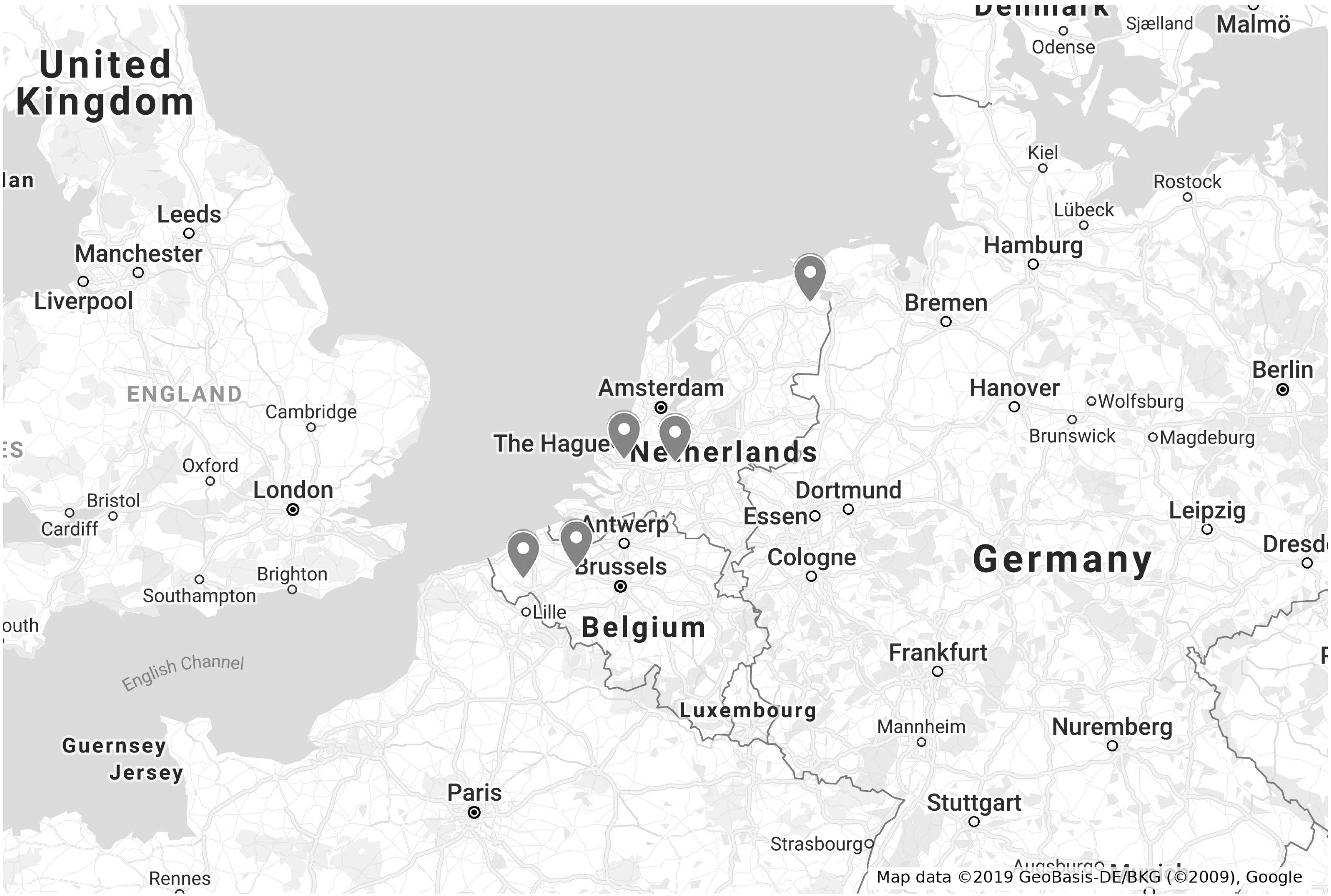
Location of the five private parks where the 34 common scoters died from USUV in August 2018. They form an elongated polygon spread along the southern edge of the North Sea, straddling Belgium and the Netherlands. From north to south: ‘tWaar, Schiedam, and Leerdam in the Netherlands, then Merelbeke and Passendale in Belgium. USUV, Usutu virus.
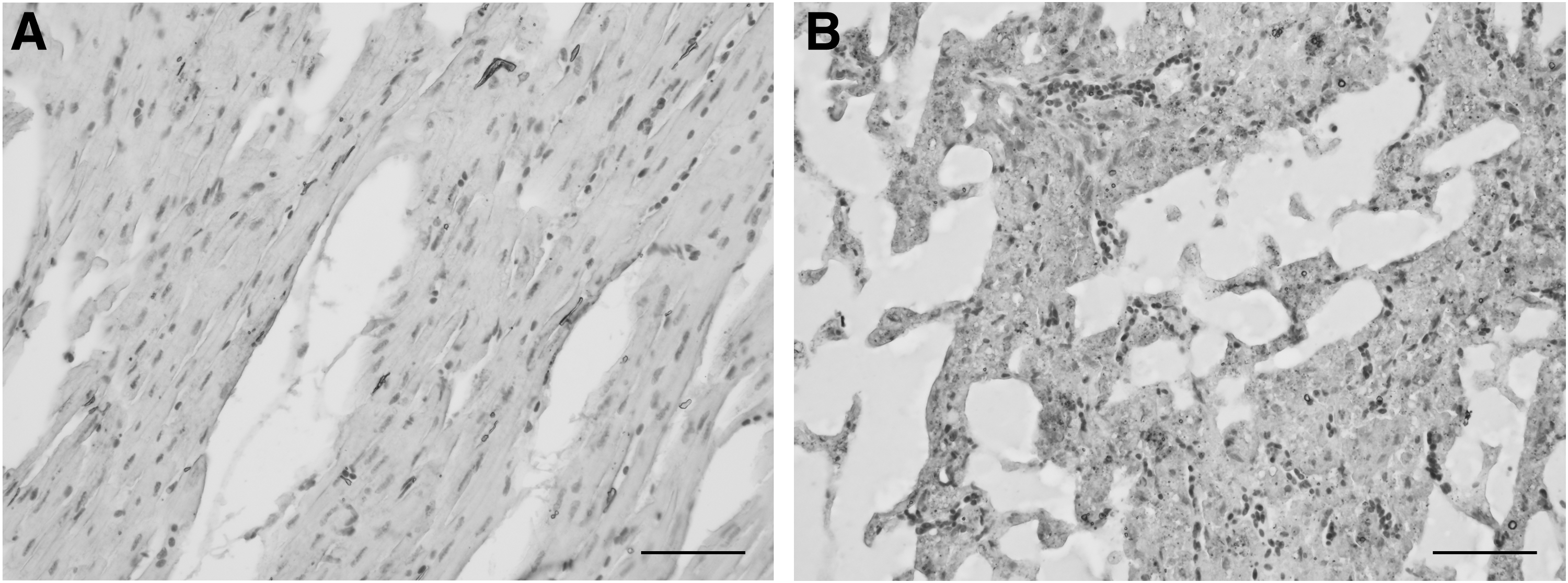
Immunohistochemistry of USUV-infected myocardium
The evidences collected from the bird owners also converge on another aspect: during the summers of 2016 and 2017, no disease signs were recorded in held common scoters, while blackbirds and sparrows living in the same parks died in large numbers due to USUV. Hence the hypothesis of a recent genetic variation that would have made the virus virulent for common scoters. To examine this hypothesis, the genome of the virus present in the spleen of one of Passendale's birds was amplified by RT-PCR using overlapping primers and sequenced by the Sanger method (GenBank #MK419834). To investigate the genetic relationship between the USUV strain responsible for this outbreak and the representative USUV strains, a phylogenetic tree was subsequently generated as described in Cadar et al. (2017). The common scoter virus belongs to the Africa 3 lineage and its phylogenetically closest cousin has been sequenced from a blackbird found dead in Leipzig, Germany, in 2016 (KY199557, Fig. 3). The genome of the virus carries 13 unique silent nucleotide substitutions: C337T, C1935T, A2172G, C3015T, C4030T, G5823A, C5874T, C6204T, A/T/C7500G, C7779T, C7921T, T10416G, and T10937C. Furthermore, one unique nonsilent substitution was also detected, C3667T, leading to Leu1191Phe substitution in the NS2a protein. The effective role of these 15 candidate mutations in adaptation to and development of viral virulence in common scoters still remains to be examined.
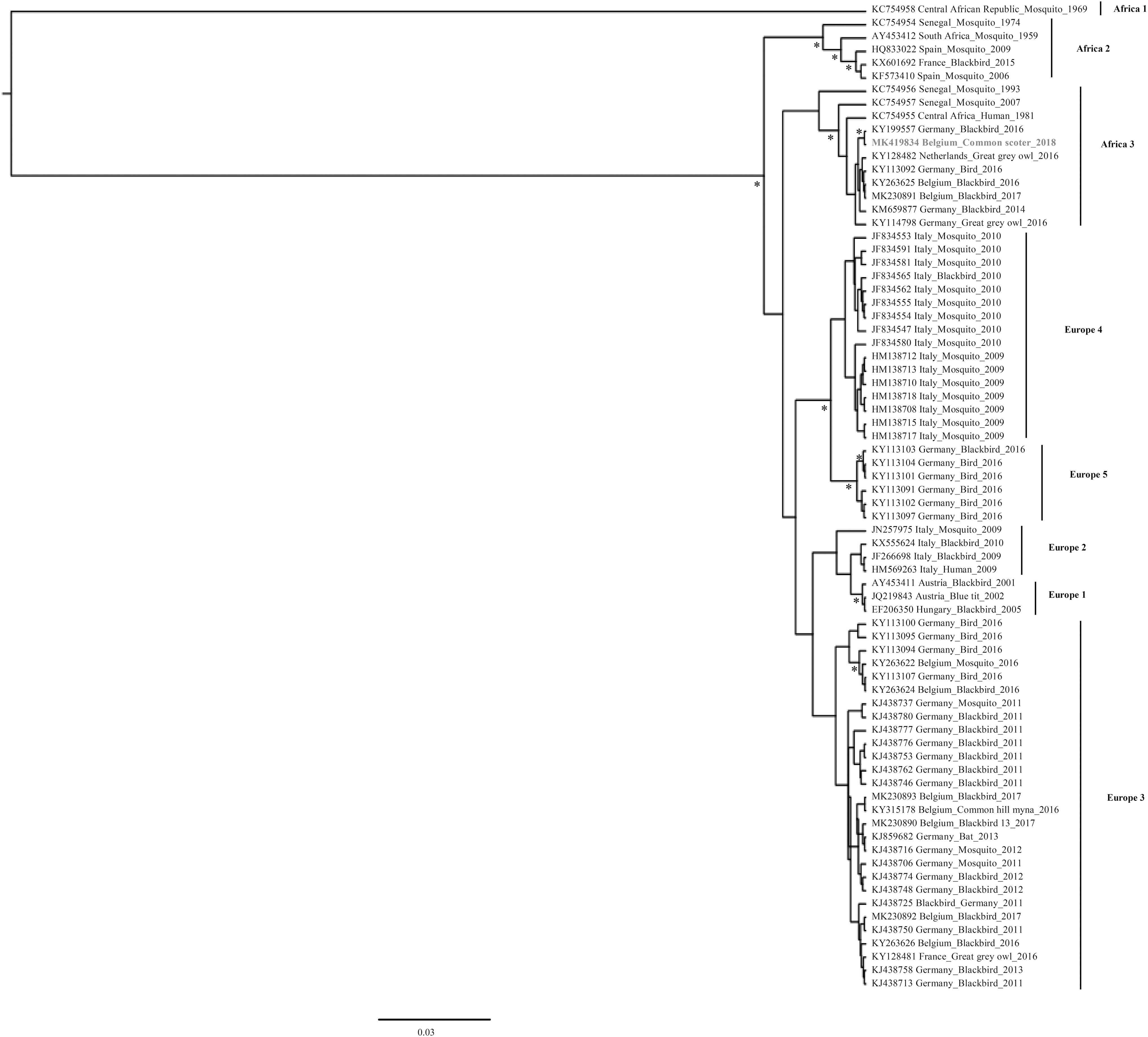
Bayesian tree representing the phylogenetic placement of USUV strain from the common scoter (gray text) compared with representative USUV strains based on partial NS5 gene nucleotide sequences. GenBank accession numbers, countries and hosts of origin for sequences, as well as years of detection of USUV strains are indicated on the branches. Scale bar indicates mean number of nucleotide substitutions per site. Figure 3 can be viewed in greater detail online.
Footnotes
Acknowledgment
The authors warmly thank the waterfowl lovers who shared their experiences and samples with them.
Author Disclosure Statement
The authors declare that there is no conflict of interest with any aspect of the work presented.