




Abstract
Chlamydia is a small gram-negative (G−) microorganism that can be dangerous to human and animals. In this study, we conducted a systematic review and meta-analysis of Chlamydia infection in swine in China. From PubMed, ScienceDirect, Chinese Web of knowledge (CNKI), VIP Chinese journal database, and Wanfang database, we collected a total of 72 publications reported in 1985–2020. The prevalence of Chlamydia was 22.48% in China. In the sampling year subgroup, the prevalence after 2011 was the highest (26.14%). In southern China, the prevalence was 30.97%. By contrast, the prevalence in northern China was only 10.79%. Also the difference was significant (p < 0.05). In the provincial level, Hubei had the highest rate of 36.23%. Boars had a higher prevalence (29.47%). The prevalence of Chlamydia detection in pigs with reproductive disorders (21.86%) was higher than that without reproductive disorders. Among the three age groups, finishing pigs (21.43%) had the highest prevalence. The prevalence in large-scale farmed pigs (28.58%) was the highest in the subgroup of feeding methods. The prevalence in farms was 24.29%, which was the highest in the survey areas. The prevalence in spring was the highest with 40.51%. Other methods had the highest prevalence (39.61%) than enzyme-linked immunosorbent assay (ELISA) and indirect hemagglutination assay. The prevalence of Chlamydia psittaci 18.41% was lower than the prevalence of Chlamydia abortus (41.35%). We also analyzed the impact of different climate factor subgroups (rainfall, temperature, and humidity) on the probability of pigs suffering from the disease. The results showed that Chlamydia was widespread in pigs in China. We suggest that we should strengthen the detection of Chlamydia in the semen of breeding pigs and pigs with reproductive disorders, and reasonably control the environment of large-scale pig farms, so as to reduce further infection of Chlamydia in pigs.
Introduction
C
Chlamydiaceae contain only a Chlamydia genus, under which there are 11 species (Sachse et al. 2015), including Chlamydia trachomatis, Chlamydia pneumoniae, Chlamydia abortus, Chlamydia psittaci, Chlamydia suis, Chlamydia muridarum, Chlamydia pecorum, Chlamydia caviae, Chlamydia felis, Chlamydia avium, and Chlamydia gallinacean (Sachse et al. 2014). Among them, Chlamydia that may infect pigs are mainly C. suis, C. abortus, C. pecorum, and C. psittaci (Everett 2000). The zoonotic potential of C. abortus and C. psittaci is well confirmed (Longbottom et al. 2006) and C. suis may be the potential zoonoses (Kieckens et al. 2018).
Chlamydia can be transmitted by respiratory tract, digestive tract, conjunctiva, and semen, and also by mosquito bites (Liu 2019). Once the pigs are infected, it is very difficult to remove them. The recovered pigs can carry the bacteria for a long time. The feces, urine, aborted fetus, and amniotic fluid of the sick pigs and the infected pigs all contain Chlamydia, which can pollute the environment. What is more, the field mice and almost all birds in the pig farm can carry Chlamydia (Mei 2009). China is the largest pork producing and consuming country in the world. Pork is the most commonly used meat supply and demand in China (Wang 2019). Because the infection of Chlamydia in pigs can cause a variety of diseases and it is difficult to treat, Chlamydia has brought great economic losses to the pig industry in China (Nie 2019). However, the prevalence of Chlamydia in pigs has not been systematically analyzed in China at this stage. Therefore, a systematic review and meta-analysis of Chlamydia infection in pigs in China were carried out. We analyzed potential risk factors, including sampling year, region and province of sampling, detection method, season, age, gender, and breeding scale. At the same time, we also analyzed geographical factors, such as latitude, longitude, altitude, rainfall, humidity, and temperature.
Materials and Methods
Search strategy and selection criteria
We reported the meta-analysis results through the Preferred Reporting Items for Systematic Reviews and Meta-Analyses (PRISMA) guidelines (Supplementary Table S2). In this study, we searched for articles about Chlamydia infection in pigs in China from CNKI, PubMed, VIP Chinese Journal Database, and Wanfang Data (last search date was March 2, 2020).
In PubMed, we first searched MeSH for the MeSH terms “Chlamydophila psittaci,” “Swine,” and “China.” The second step was to use the Entry Terms “Suidas,” “pigs,” “Warthogs,” “Wort Hogs,” “Hog, Wart,” “Hogs, Wart,” “Wart Hog,” “Phacochoerus,” searching the corresponding MeSH term “Swine.” As a third step, used the Entry Terms “Chlamydia psittaci,” looking up the corresponding MeSH term “Chlamydophila psittaci.” The fourth step was to use the Entry Terms “People's Republic of China,” “Mainland China,” “Manchuria,” “Sinkiang,” and “Inner Mongolia,” looking up the corresponding MeSH term “China.” We used the Boolean operators “OR” for Entry Terms and “AND” for MeSH terms. The final search formula in PubMed was “(((((((((((“Swine”[Mesh]) OR Suidae) OR Pigs) OR Warthogs) OR Wart Hogs) OR Hog, Wart) OR Hogs, Wart) OR Wart Hog) OR Phacochoerus)) AND ((“Chlamydophila”[Mesh]) OR Chlamydia)) AND ((((((“China”[Mesh]) OR People's Republic of China) OR Mainland China) OR Manchuria) OR Sinkiang) OR Inner Mongolia).” In ScienceDirect, the keywords “swine,” “Chlamydophila,” and “China” were used to retrieve articles. In the three Chinese databases, “pig” (Chinese) and “Chlamydia” (Chinese) were used as keywords for advanced search, and were set to use synonym expansion or fuzzy search. We used Endnote (version X9. 19. 0.0) to classify the retrieved articles.
Selection and exclusion criteria
After removing the duplicates, we selected the article based on the title and abstract. Then we applied the following inclusion criteria: (1) the purpose of the study was to check the prevalence of Chlamydia in pigs; (2) the study provided the total number of pigs tested and the number of pigs that tested positive; (3) each sample was from one pig (not a mixed sample); (4) the study sample size was greater than 30; and (5) the study design was cross sectional. Articles that did not meet these criteria were removed. Removed reviews, duplicate reports (data duplication), and studies of other hosts (e.g., sheep and cows), as well as studies and reports that showed only prevalence results without raw data.
Data extraction
The four reviewers extracted data by using standardized data collection forms. If there were differences between the reviewers or there was uncertainty in research qualifications, it will be reassessed by the author (C.-Y.S.). The following information was recorded: first author, year of publication, sampling time, region and province of sampling, geographical factors, test method, age and sex of pigs, collection season, type of Chlamydia, breeding method and whether there were reproductive disorders, total number of pigs tested, and the number of positive samples. The climate factor data were collected from the National Meteorological Information Center of China Meteorological Administration, including annual rainfall, annual average humidity, and annual average temperature (annual average maximum temperature and annual average minimum temperature). The database was created in Microsoft Excel (version 16.32).
Quality assessment
The quality of publications was scored according to the scoring method derived from the Grading of Recommendations Assessment (Guyatt et al. 2008). Each article got one point when it met one of the following conditions: random sampling, clear detection method, clear sampling time, the number of samples ≥200, and four or more risk factors. Therefore, a total score of 0–5 could be obtained for an essay. Articles with 4–5 scores were considered to be of high quality, articles with 2–3 scores were of medium quality, and articles with low quality were scored 0–1.
Statistical analysis
In this study, all quantitative analyses were performed in R software version 3.5.2 (R Core Team 2018), using the “meta” package estimation models (Wang 2018). According to our previous study, to make the rate closer to the normal distribution, arcsine transformation (PAS) was conducted before the meta-analysis (W = 0.97586; Table 1) (Li et al. 2020). We chose effect models based on heterogeneity of search studies. If the heterogeneity was less than 50%, the fixed-effect model is used, and random-effect model is used for more than 50%. We tested the heterogeneity by calculating Cochran's Q statistics, and the differences in estimating the prevalence due to heterogeneity between studies were described by practical Hitchin statistics. Results of each study and heterogeneity between studies were shown in terms of forest plots. We preparedly used a random-effect model due to the significant heterogeneity in the selected article. Using funnel plots, trim and filled analysis, and Egger's test were beneficial to assess the publication bias in research, and sensitivity analysis was used to check the stability of the results (Gong et al. 2019).
Normal Distribution Test for the Normal Rate and the Different Conversion of the Normal Rate
“PRAW”: original rate; “PLN”: logarithmic conversion; “PLOGIT”: logit transformation; “PAS”: arcsine transformation; “PFT”: double-arcsine transformation; “NaN”: meaningless number; “NA”: missing data.
To further study the potential sources of heterogeneity, the factors investigated were as follows: the year of sampling (before 2000 compared with 2001–2010 and after 2011), geographical region (comparing southern China with other regions), detection methods (comparing indirect hemagglutination assay [IHA] with other methods), age (comparing finishing pig with others), survey area (comparing farm with others), breeding method (comparing free ranging with large scale), Chlamydia species (C. psittaci compared with C. abortus), season (spring compared with the other three seasons), gender (comparing sows with boars), reproductive disorders (comparison between reproductive disorders and nonreproductive disorders), and quality level (comparison of low quality with the other two levels).
We also conducted a subgroup analysis and regression analysis of climate factors to trace the source of heterogeneity, which included annual average rainfall (comparing 400 mm or less with others), annual average humidity (comparing 60% or less with others), annual average temperature (comparing 0°C or less with others), annual average minimum temperature (comparing 0°C or less with 0–10°C, 10–20°C, and 20°C, or more), and annual average maximum temperature (comparing 15°C or less with 1520°C, 20–25°C, and 25°C, or more).
Results
Search results and qualification studies
After all factors were excluded, we retrieved 1238 publications from five databases and used a total of 72 eligible studies in this meta-analysis (Fig. 1 and Supplementary Table S3), each with a cross-sectional design (Table 1). Thirty-three publications were of high quality (4 or 5 points), 34 publications were considered to be of medium quality (2 or 3 points), and 5 publications were regarded as low quality (0 or 1 point).

Flow diagram of the search and selection procedure for eligible studies.
Pooling and heterogeneity analysis
In the 72 included studies, we chose “PAS” for rate conversion data (Barendregt et al. 2013) (Supplementary Table S1). The total number of pigs surveyed was 56,962 and the prevalence of Chlamydia in pigs in China was 22.48% (95% confidence interval [CI]: 18.57–26.63; Fig. 2 and Table 2).

Forest plot of prevalence of Chlamydia in pigs in studies conducted in China.
Studies Included in the Analysis
ELISA, enzyme-linked immunosorbent assay; ICF, indirect complement fixation test; IHA, indirect hemagglutination assay; Q-PCR, real-time quantitative PCR; UN, unclear.
Pooling and heterogeneity analysis
The extent of heterogeneity in the included studies was measured and demonstrated by a forest plot (Fig. 2). The heterogeneity (I 2 = 99.2%) showed that this study should use a random-effects model. According to the asymmetry of the funnel plot, our study was probably affected by the publication bias and small-study effect bias (Fig. 3). That was also shown in trim and fill analysis because there were articles filled (Fig. 4). However, we conducted an Egger's test to further quantify the heterogeneity, which showed that the study did not have a publication bias (p > 0.05; Supplementary Table S1 and Fig. 5). Therefore, there may be small-sample size bias and no publication bias in our study. The sensitivity analysis showed that when a study was excluded, the retooled data were basically same, indicating that our results were reliable (Fig. 6).

Funnel plot with pseudo 95% confidence interval limits for the examination of publication bias.

Funnel plot with trim and filling analysis of the publication bias.
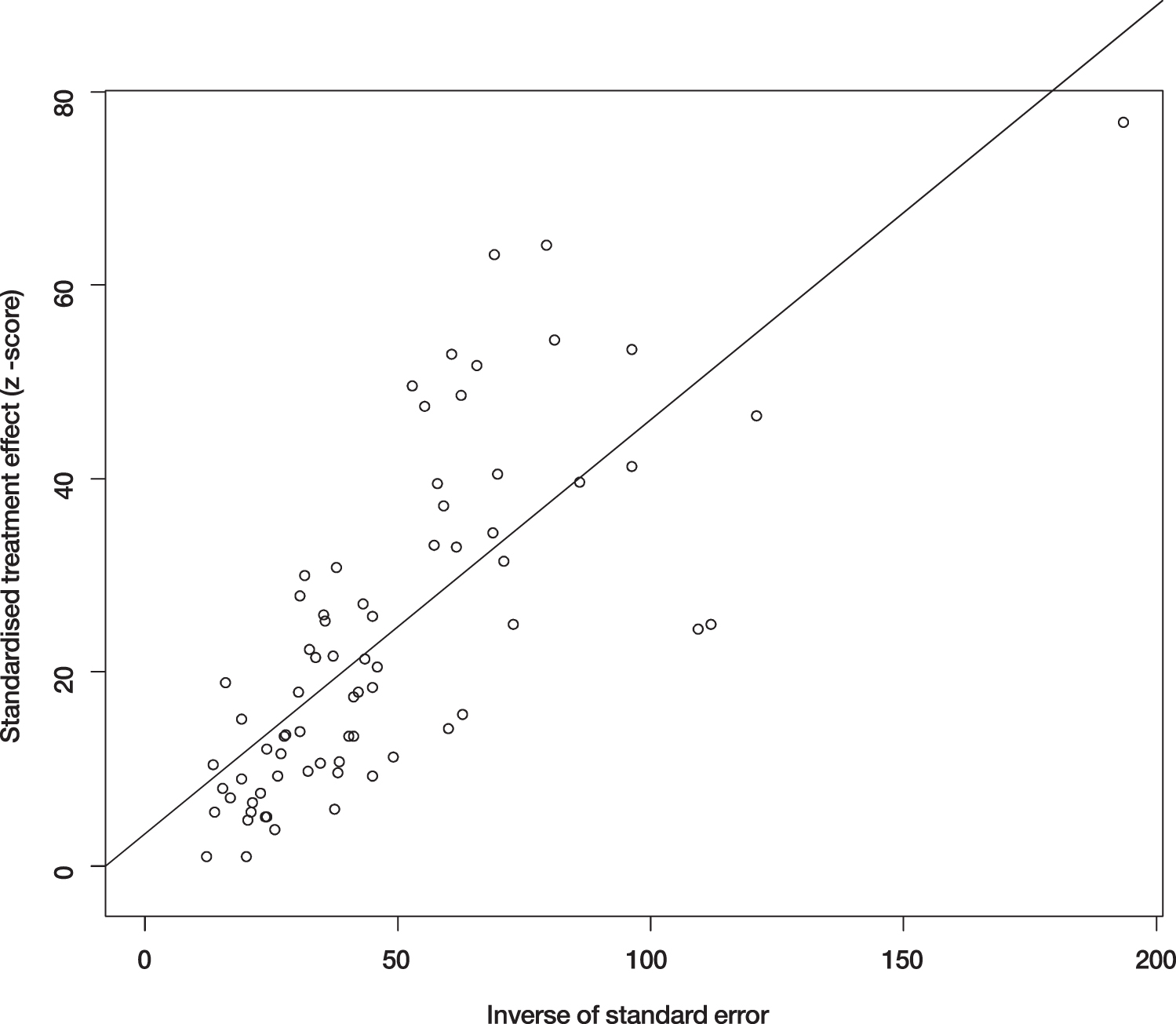
Begger's test for publication bias.

Sensitivity analysis.
Related factors of Chlamydia infection in pigs in China
In different regions in China, the prevalence of Chlamydia showed diversity and the difference was significant (p < 0.05; Table 3). The highest prevalence was in southern China (30.97%, 95% CI: 20.27–42.77) and the lowest was in northern China (10.79%, 95% CI: 3.26–21.86; Table 3). In the province, Hubei had the highest rate of 36.23% (95% CI: 20.29–53.89) and the lowest was in Jiangsu with 3.60% (95% CI: 0.89–7.90; Table 4 and Fig. 7).
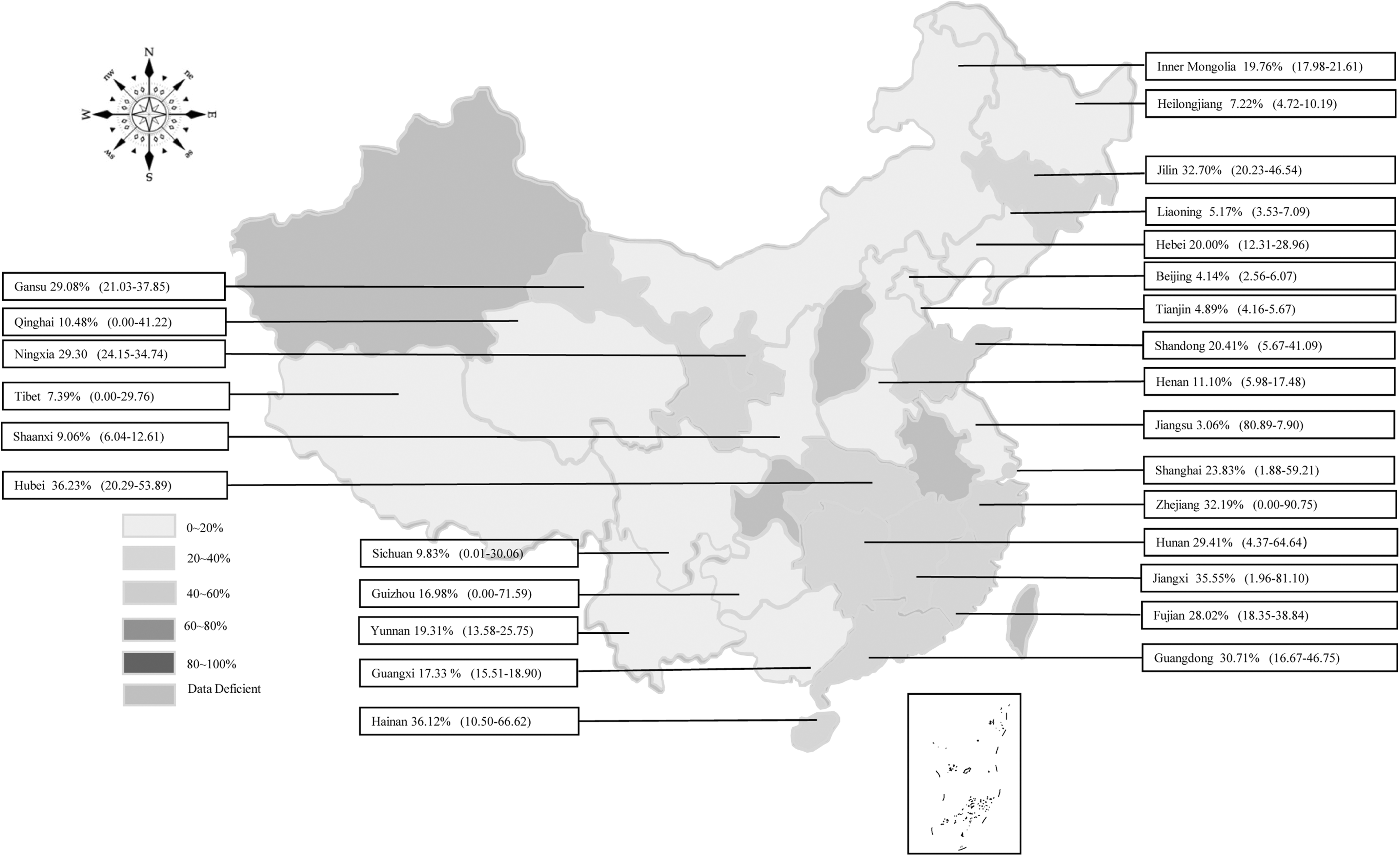
Map of Chlamydia infection in pigs in China.
Estimated Pooled Seroprevalence of Chlamydia by Provincial Regions in China
Pooled Prevalence of Chlamydia in Pigs in Mainland China
Others: Q-PCR(2), HI(1), ICF(1).
Pig ages: Piglet: day 0 to 63; Nursery piglets: day 63 to 168; Finishing pig: >168 days.
CI, confidence interval.
The prevalence in spring was the highest with 40.51% (95% CI: 24.29–57.85). The prevalence in finishing pigs (21.43%, 95% CI: 13.21–30.94) was higher than that in piglets and nursery pigs. In the sampling time subgroup, the highest prevalence was in 2011 or later (24.14%, 95% CI: 23.43–24.86). Compared with enzyme-linked immunosorbent assay and indirect hemagglutination assay, other methods had the highest prevalence with 48.68% (95% CI: 30.29–67.25). The prevalence of C. psittaci (18.41%, 95% CI: 13.54–23.83) was lower than that of C. abortus (41.35%, 95% CI: 0.00–100.00). The pigs with reproductive disorders had a higher prevalence (21.86%, 95% CI: 10.03–36.58) than the healthy pigs. Compared with boars (29.47%, 95% CI: 20.86–38.79), sows had a lower prevalence (26.23%, 95% CI: 20.27–32.65). The prevalence in free-ranging pigs was (16.21%, 95% CI: 5.79–30.43) lower than that in large-scale farmed pigs (28.58%, 95% CI: 23.09–34.39). The prevalence in farm (24.29%, 95% CI: 19.40–29.55) was higher than that in free-ranging household and slaughterhouse.
We also analyzed the climate factor subgroup and calculated the annual average rainfall (>1600 mm; 30.08%, 95% CI: 23.47–37.10); annual average humidity (>80%; 60.32%, 95% CI: 47.25–72.74); annual average temperature (>20°C; 30.93%, 95% CI: 22.89–39.54); annual average minimum temperature (>15°C; 37.62%, 95% CI: 30.03–45.50); and annual average maximum temperature (>25°C; 37.90%, 95% CI: 30.14–45.96). Meanwhile, the differences in each geographical factor subgroup were significant (p < 0.05; Supplementary Table S4). Therefore, region, survey area, detection methods, and all climate factors' subgroup might be the main source of heterogeneity in our meta-analysis.
Discussion
Chlamydiosis is a highly contagious disease caused by different kinds of Chlamydia infection (Longbottom et al. 2003), which is widely spread in animals and human beings (Pan 2015). At present, Chlamydia is not considered an important swine disease, and there is lack of detection and related research (Rohde et al. 2010). However, under certain circumstances, it can cross infect different hosts, which brings huge hidden danger to the breeding industry and public health safety (Yan 2013). Therefore, it is of great significance to understand and evaluate the epidemiology of Chlamydia infection in pigs. This study is the first systematic review and meta-analysis of Chlamydia infection in Chinese pigs. The general prevalence of Chlamydia infection in pigs in China was 21.16%. This result is far lower than 40% in Japan (Chahota et al. 2017) and 63.6% in Sweden (Eggemann et al. 2000).
In 2001, China accessed into the World Trade Organization (WTO), which promoted the development of China's pig industry (Wang 2006). In 2010, the Ministry of Agriculture launched the 12th Five Year Plan, and China entered the stage of livestock and poultry standardized production mode (Ye 2010). In recent years, the scale of China's pig breeding industry has developed rapidly, but it is still in the transformation period of industrial upgrading, and its standardization level is still insufficient (Fu 2016). Therefore, we chose 2001 and 2010 as the entry point for the analysis of Chlamydia infection in Chinese pigs. We found that the prevalence rate was the highest after 2010, followed by 2001–2010, and the lowest before 2001. Also, in large-scale farming systems, a high prevalence (88–90%) of Chlamydia was found in pigs (Becker et al. 2007). In addition, large-scale farms may be prone to microbial transmission and survival, thus increasing the number of infections and disease risk in pigs (Englund et al. 2012). So, the possible reason for the increase of the prevalence is the expansion of breeding scale. At the same time, the same result was found in the scale and survey area subgroups that large-scale farms had higher prevalence rates than others in the two subgroups. Therefore, we speculate that we need to strengthen the awareness of disease control and improve health conditions as the development of the scale of feeding. In addition, the prevalence rate after 2010 is higher. This may not be due to higher disease incidences, but the inclusion of data of ELISA and qPCR after that period, which are highly sensitive tests. This is consistent with the results of the detection method subgroup that ELISA and others had a higher prevalence.
In our study, the prevalence rates of Chlamydia were different in different regions and provinces. Also, the highest prevalence was found in southern China. We believe that the factors leading to this difference are complex and diverse. First of all, there are few studies on Chlamydia infection in various provinces, and only one to two studies have been conducted in most provinces. Therefore, we cannot objectively analyze the epidemic degree of each region. Second, there are differences in the scale of aquaculture in different regions. China's pig breeding is mainly concentrated in Guangdong, Guangxi, and the middle and lower reaches of the Yangtze River, where large-scale breeding accounts for a large proportion (Yu et al. 2018). Because we only pay attention to improve the economic benefits and expand the scale of breeding, but ignore the prevention and control of diseases and the sanitary conditions of pig farms, it leads to lax disease prevention and management in the farm (Zhang et al. 2018). It is suggested that the level of disease prevention and control should be combined with the scale of breeding. In addition, the investigation of Chlamydia infection in China should be strengthened to reflect its real epidemic degree.
In the season subgroup, the highest prevalence was found in spring and summer. The results of climatic factors (Supplementary Table S4) showed that when the temperature was 15–20°C, the humidity was 80%, and the rainfall was 1000–1600 mm, the prevalence rate of Chlamydia in pigs was higher, which was similar to that of spring and summer in season subgroups and South China in region subgroups. It may be related to the seasonal and climatic factors, and the results showed a similar trend with that of some studies (Chen et al. 2013, Zhang et al. 2014b). However, till date, the occurrence/epidemiology of animal and human chlamydiosis is not considered seasonal, and the data used in meta-analysis are only seroscreening based. Simply the presence of antichlamydial antibodies does not indicate active infection or pigs getting infection in any particular season or weather. Therefore, whether the epidemic of chlamydia is related to seasons needs to be further explored.
In this study, the prevalence in pigs with reproductive disorders and the pigs without reproductive disorders, respectively, was 21.86% and 14.46%. This may indicate that reproductive disorders may be caused by Chlamydia infection (Huang et al. 2019). This suggests that these reproductive diseases can be used as one of the clinical diseases for the diagnosis of primordial diseases caused by Chlamydia (Rypuła et al. 2015). However, we found that the prevalence rate in pigs without reproductive disorders is still very high, indicating that some pigs do not show obvious clinical symptoms after infection, which is easy to be ignored (Liu et al. 2019a). That may be one of the reasons why it is difficult to decontaminate pig farms from Chlamydia disease. We suggest that pigs with reproductive diseases should be isolated, and healthy pigs should be screened regularly to reduce the transmission and spread of Chlamydia and ensure the health of pigs.
The prevalence in male pigs was higher than in female pigs, but the difference is not significant. The semen of boar may play a key role in the spread of the disease, especially the semen contamination of boar Chlamydia (Zhu 2016). This suggests that pig enterprises should pay attention to the serious problem of Chlamydia contamination in boar semen, strengthen the detection of Chlamydia in boar semen, so as to block the vertical transmission of Chlamydia through semen and reduce the economic loss caused by Chlamydia and the risk of human and animal co-occurrence (Tian et al. 2012).
In the meta-analysis of prevalence, detection methods are usually the main source of heterogeneity. This is consistent with our results (p = 0.0066). The sensitivity and specificity of different detection methods were different. IHA is convenient and does not need special instruments, but its specificity and sensitivity are low, and there are differences between batches of hemagglutination diagnostic kits produced in different places, and the test results are also different (Wang et al. 2012b). Although ELISA is more rapid, easy to handle, and less laborious, there are some important limitations to be considered (Isaza et al. 2000). Those tests targeting Chlamydia lipopolysaccharide only allow detection at the level of the genera Chlamydia and Chlamydophila without the possibility of species identification (Vanrompay et al. 1994). The present real-time quantitative PCR (Q-PCR) methodology, which can the appraise Chlamydia species, represents a reliable diagnostic tool for rapid, highly sensitive, and specific detection of Chlamydia (Sachse et al. 2003). However, extreme care should be taken when handling the reaction to reduce the risk of contamination. Also, the need for labeled probes and special equipment, which will increase the cost (Pantchev et al. 2010). IHA and ELISA are more convenient in farms, and Q-PCR can be used for laboratory diagnosis. We suggest that in different scenarios, appropriate detection methods are used to help relevant personnel obtain more accurate test data and promote the research of Chlamydia.
In addition, we tried to analyze the subgroup of Chlamydia species. However, in this subgroup, articles about C. abortus were only two, and so, these subgroups could not be analyzed due to the possible small-sample bias. In Chlamydia species, most of the articles we included were not classified, which may lead to deviation in the prevalence of Chlamydia species subgroups. C. abortus (formerly, Chlamydia psittacosis, serotype 1) may cause serious animal husbandry economic problems in the affected areas (Conraths et al. 2004), C. psittaci is currently the best-known zoonotic pathogen. Therefore, we suggest that the species of Chlamydia should be identified during identification, so as to help the relevant personnel to explore the epidemic situation of Chlamydia in more depth.
Our study included 5 low-quality, 34 medium-quality, and 33 high-quality articles. The analysis of these articles showed that the prevalence of different quality research was different and significant (p < 0.05). However, reviewing the low- and middle-quality articles, we found that they did not have random sampling and did not have four or more risk factors. It should be suggested to strengthen these two aspects of research to improve the reliability of data.
The advantages of this study included a large sample size, wide coverage, and comprehensive risk factor analysis, but there were still some limitations. First, some articles from other databases might be excluded. Second, qualified articles in other languages might be missing because of the limit of languages to Chinese and English. Third, some subgroups contained a small number of studies that may lead to small-study effect bias (other detection methods, C. abortus and healthy pigs without reproductive disorders).
Conclusion
The results of the systematic review and meta-analysis showed that Chlamydia is widespread in China, and the scale of feeding model and climate conditions may affect its prevalence. We should improve the standardization level of large-scale pig farms and reasonably control the feeding environment of pig farms to reduce the Chlamydia infection caused by microorganisms. Meanwhile, it is of great significance to strengthen the detection of Chlamydia in boar semen and pigs with reproductive disorders. We should monitor the epidemic situation of the whole country more accurately and comprehensively to provide more data support for controlling Chlamydia infection.
Footnotes
Authors' Contributions
X.L. and R.D. were responsible for the idea and concept of the article. B.-Y.M., G.-Y.G., D.-L.L., and M.-H.L. collected the data. Y.L. and N.-C.D. built the database. Q.-L.G. and K.S. analyzed the results. C.-Y.S. prepared the article. Q.-L.G. and J.-M.L. revised the article. All authors contributed to the article editing and approved the final article.
Author Disclosure Statement
No conflicting financial interests exist.
Acknowledgments
We thank the scientists and personnel of the College of Chinese Medicine Materials and the College of Animal Science and Technology, Jilin Agricultural University, for their collaboration.
Funding Information
This study was financially supported by the Scientific Research Planning Project of Jilin Provincial Department of Education (JJKH20200364KJ). The Science and Technology Development Program of Jilin Province (20190304004YY).
Supplementary Material
Supplementary Table S1
Supplementary Table S2
Supplementary Table S3
Supplementary Table S4
References
Supplementary Material
Please find the following supplemental material available below.
For Open Access articles published under a Creative Commons License, all supplemental material carries the same license as the article it is associated with.
For non-Open Access articles published, all supplemental material carries a non-exclusive license, and permission requests for re-use of supplemental material or any part of supplemental material shall be sent directly to the copyright owner as specified in the copyright notice associated with the article.
