




Abstract
Objective:
We assessed the clinical characteristics of three patients with Chlamydia psittaci-associated pneumonia.
Methods:
Clinical data for three patients with C. psittaci-associated pneumonia admitted to our hospital from June 2020 to December 2020 were retrospectively analyzed, and the diagnosis, clinical features, and treatment of the disease are summarized.
Results:
Fever, headache, and fatigue were the main symptoms in all three patients, whereas local respiratory symptoms such as cough and expectoration were not obvious. Not all patients had a definite contact history with poultry and birds. Chest computed tomography (CT) showed inflammatory exudation, consolidation, and bronchial inflation signs on one side of the lungs, which progressed rapidly. Treatment with beta-amides did not result in positive clinical responses. Combined with clinical manifestations, the disease was confirmed by detection of C. psittaci nucleic acid sequences in alveolar lavage fluid and blood by metagenomic second-generation sequencing technology. Fever and malaise were rapidly relieved after the administration of moxifloxacin-based regimens and levels of infectious blood markers decreased; and the consolidation shadow on chest CT was gradually absorbed.
Conclusion:
Early application of metagenomic second-generation sequencing in patients with community-acquired pneumonia due to rare and complex pathogens that cannot be diagnosed by conventional tests and for whom empirical anti-infective therapy is ineffective is important for definitive diagnosis and selection of appropriate antibacterial drugs.
Introduction
Psittacosis is a zoonotic infectious disease that is caused by Chlamydia psittaci. Humans can get infected by C. psittaci by inhaling aerosols from feces, urine, or respiratory secretions (Hogerwerf et al. 2017) and by being in contact with feathers and tissues from infected birds. Its typical clinical symptoms include fever, chills, headache, myalgia, dry cough, respiratory distress, and gastrointestinal symptoms or rash (Beeckman and Vanrompay 2009); some patients may develop myocarditis, encephalitis, and hepatitis (Radomski et al. 2016). Pathogenic diagnosis of C. psittaci is difficult.
Therefore, for C. psittaci-associated pneumonia, the current initial anti-infective β-amides are less efficacious, leading to disease progression. C. psittaci can be cultured but requires a longer growth period and a higher level of biosafety. Serological examination has a low value in early diagnosis and is only suitable for retrospective diagnosis (Balsamo et al. 2017). Alternatively, multiplex real-time PCR can be used to detect C. psittaci (Nieuwenhuizen et al. 2018), which can rapidly and specifically identify the pathogen and simultaneously perform genotyping, however, it only has a high sensitivity in the acute phase.
These tests are not routinely performed in domestic microbiology laboratories, but only in specialized laboratories; therefore, clinical diagnosis of C. psittaci infections is challenging. Advances in metagenomics generation sequencing (mNGS) has enabled quick and accurate detection of various pathogens (viruses, bacteria, fungi, and parasites) in different samples as long as the clinical samples contain detectable DNA or RNA, regardless of whether the clinical samples are successfully cultured or not (Chiu and Miller 2019).
For new and rare infectious diseases and patients with immune deficiencies, mNGS can significantly improve the detection rate of pathogens and can be used as a first-line detection tool for the mentioned diseases (Parize et al. 2017, Miao et al. 2018). In this study, the mNGS technology was used to diagnose C. psittaci pneumonia; clinical characteristics of the cases were retrospectively analyzed; and clinical manifestations, diagnostic methods, and treatment strategies of the disease were comprehensively discussed.
Materials and Methods
Data for three patients (one male, two female) with C. psittaci pneumonia diagnosed by mNGS in Tongde Hospital, Zhejiang Province, from June 2020 to December 2020 were retrospectively analyzed. Their median age was 57 (48–68) years and they had no histories of chronic respiratory diseases. Their basic information and clinical characteristics are given in Table 1. This clinical trial has been reviewed and approved by our hospital ethics committee, the ethics acceptance number was 2022-001(JY).
Basic Information and Clinical Characteristics
Laboratory and imaging tests
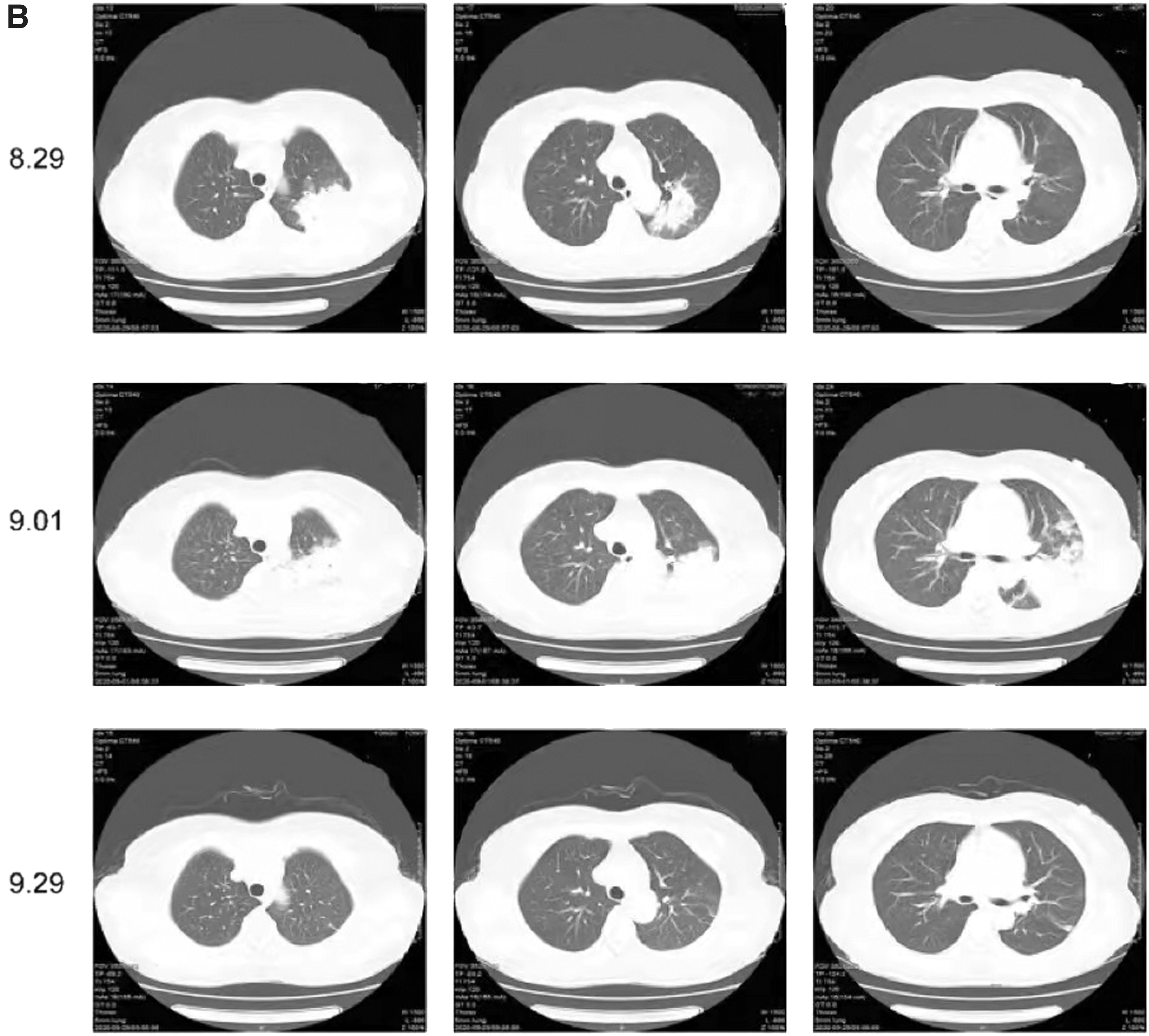
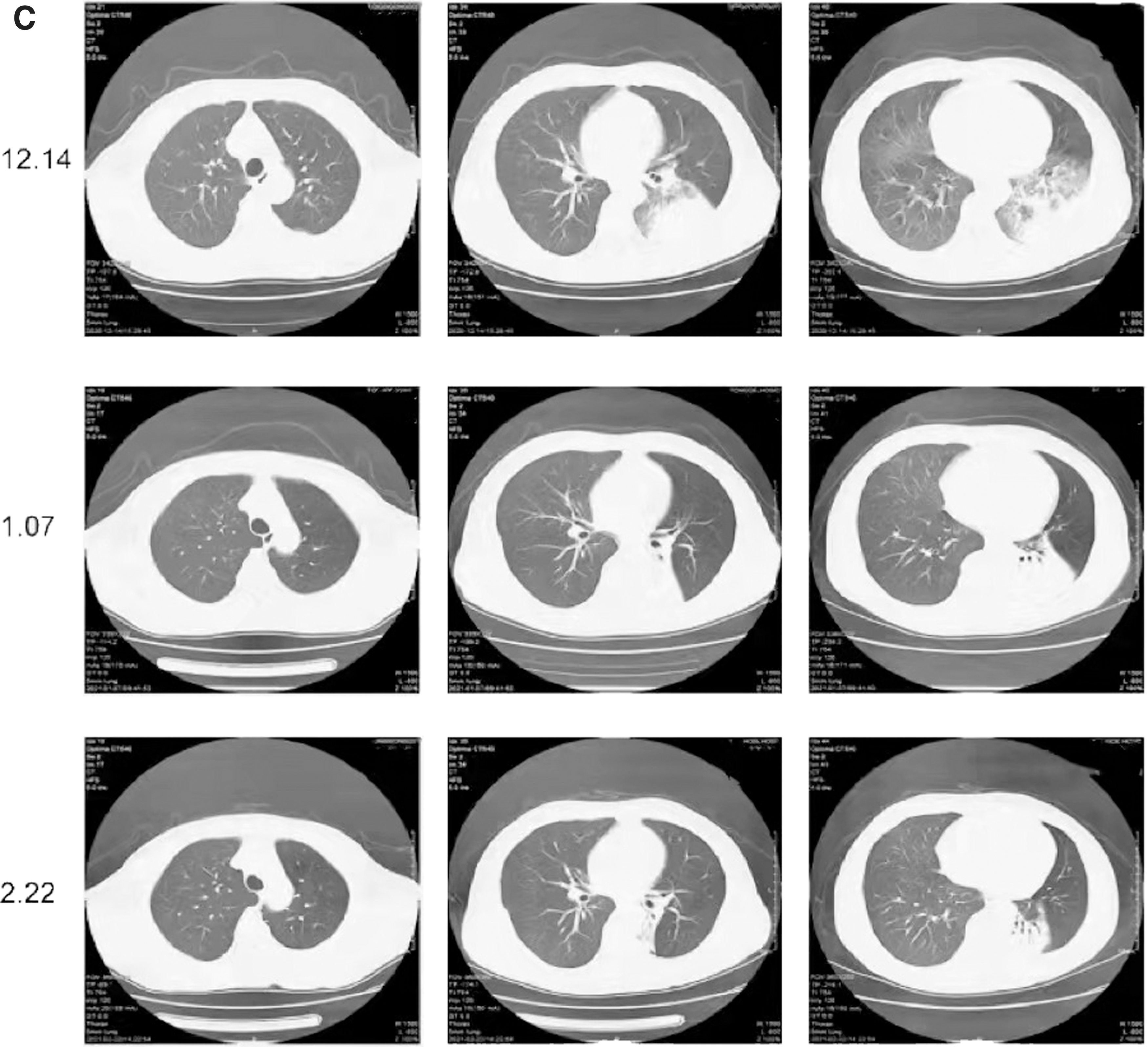
Two of the three patients had normal white blood cell (WBC) counts, whereas one had mildly elevated WBC counts. They all exhibited mild elevations of liver enzymes and hyponatremia. Chest imaging showed the involvement of a single lung lobe, obvious exudation, consolidation, and partial bronchial expansion with small pleural effusions on the affected side, which rapidly progressed and involved multiple lung lobes (Table 2 and Fig. 1).
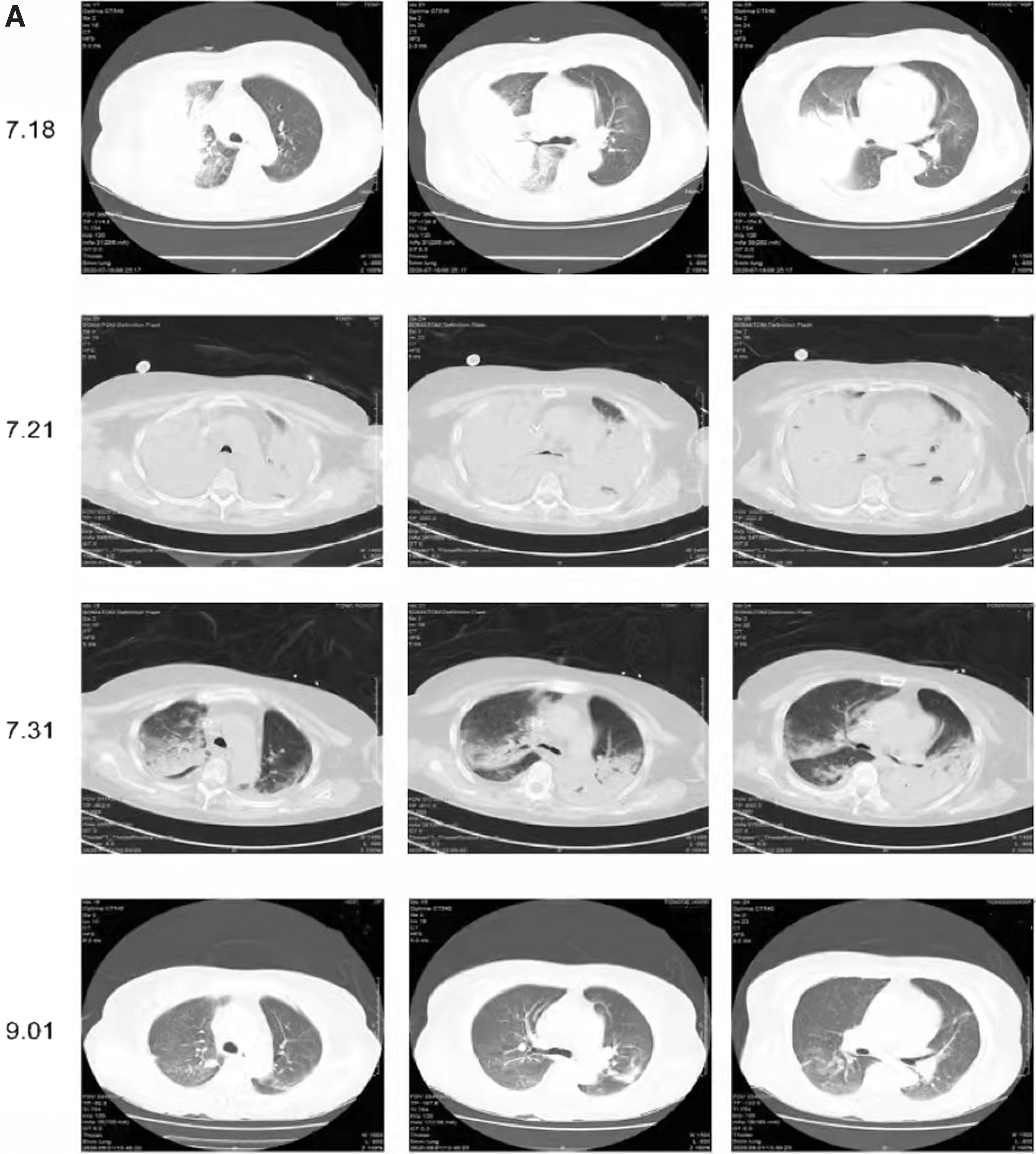
Typical CT images of the lungs of three patients with Chlamydia psittaci pneumonia
Comparison of Laboratory Indicators Within 24 Hours of Admission
ALT, alanine aminotransferase; AST, aspartate aminotransferase; CRP, C-reactive protein; PCT, procalcitonin; WBC, white blood cell.
Metagenomic next-generation sequencing
Case 1 developed severe pneumonia and respiratory failure during the course of the disease, requiring mechanical ventilation with tracheal intubation and treatment with extracorporeal membrane oxygenation (ECMO) support. Alveolar lavage under bronchoscopy and NGS revealed C. psittaci (19,597). The patient's general condition improved after the medication was changed. Her body temperature returned to normal, oxygenation and tracheal intubation were removed, and chest computed tomography showed significant improvement of the lesion.
She was transferred to a general ward for continued treatment until discharge. In case 2, the mNGS test was performed using bronchoscopic alveolar lavage fluid: C. psittaci (270) and Candida albicans (5) were detected. Since C. albicans was considered to be a colonizing organism, treatment was later changed to moxifloxacin combined with meropenem, and the patient's body temperature returned to normal.
The patient's general condition improved after changing the medication, and symptoms were quickly relieved. In case 3, mNGS test of blood samples revealed C. psittaci (4) and epstein-barr virus (4). The patient's general condition improved after changing medication. Even though the number of sequences detected in blood samples was small, the patient was still considered to have C. psittaci-associated pneumonia. Treatment with moxifloxacin resulted in a gradual decrease in the patient's body temperature, which returned to normal; intrapulmonary lesions were gradually absorbed and the patient was discharged (Tables 3 and 4).
Metagenomics Generation Sequencing Assay Results
EBV, epstein-barr virus.
Medication Use and Prognosis
ECMO, extracorporeal membrane oxygenation; PO, Peros.
C. psittaci is a gram-negative, aerobic, and intracellular parasitic microorganism whose primary hosts are birds. C. psittaci-associated pneumonia is a zoonotic disease for various birds and humans. However, the inability to clarify exposure history in medical history does not exclude this diagnosis. In this study, only one of the three patients had a clear history of exposure.
Clinical manifestations of C. psittaci-associated pneumonia
The initial symptoms of C. psittaci infections include fever, chills, headache, and malaise with or without cough (Branley et al. 2014), and respiratory distress may occur in severe cases. All three patients reported in this study had apparent systemic nonspecific symptoms, without significant cough and sputum, suggesting the presence of uncommon and atypical pneumonia. When infected with C. psittaci, WBC counts are generally normal unless the disease is severe, but the neutrophil ratio, C-reactive protein, and procalcitonin are significantly elevated, accompanied by varying degrees of elevated transaminases and hyponatremia (Spoorenberg et al. 2016).
Imaging characteristics of C. psittaci pneumonia are not specific, usually manifesting as patchy ground glass opacity or large confluent consolidation distributed along pulmonary segments, and hilar lymphadenopathy or pleural effusions are rare (Coutts et al. 1985). The three patients in this study showed large area consolidation with bronchial dilatation signs, rapid lesions, and significant progress within 3 days, requiring vigilance.
Imaging results are often more serious than physical examination results; bilateral lung involvement indicates a serious condition. For example, the first patient in this study quickly developed severe pneumonia and was treated with mechanical ventilation and ECMO. The third patient initially presented with unilateral involvement and developed cloud-like changes on the contralateral side 3 days later with rapid progression.
Discussion
Traditional diagnostic approaches include pathogenic cultures, serological testing, and PCR. Pathogenic culture is time consuming, with low positive rates and high biosafety requirements, whereas serological testing has a low value in early diagnosis, thus, it cannot be used for early disease diagnosis (Balsamo et al. 2017). In contrast, the second-generation sequencing approach can cover a broad range of pathogens and is cost efficient.
This method is of great significance for the diagnosis of patients with difficult clinical conditions or immunosuppression (Miao et al. 2018). In this study, blood and sputum samples for the three patients were cultured numerous times after admission, but the pathogens were not clearly detected. C. psittaci was detected by second-generation sequencing of alveolar lavage fluids and blood. Combined with clinical manifestations, the final diagnosis was C. psittaci–associated pneumonia.
The recommended treatment options for C. psittaci-associated pneumonia are tetracyclines (Chiu and Miller 2019). Patients with mild-to-moderate symptoms can be treated with oral doxycycline or tetracycline. Macrolides can be used as alternatives when tetracyclines are contraindicated. In this study, moxifloxacin was used to treat all three patients, with satisfactory outcomes. The reasons are first, doxycycline is only an oral preparation, and there is a risk of treatment failure for patients with severe disease (Verweij et al. 1995). In addition, it was also considered that there was insufficient in vitro drug sensitivity test data of doxycycline for C. psittaci in China, whereas Chlamydia trachomatis has been shown to be highly resistant to tetracyclines, which have greater adverse effects and many hospitals do not usually stock tetracyclines.
The limitation for this study is that only three cases were included, which are insufficient to describe all cases of C. psittaci. However, this study can form the basis for further studies to inform diagnosis when atypical pneumonia patients present with contact history with poultry or birds, high fever, headache, and malaise without obvious respiratory symptoms, such as cough and sputum. Early second-generation sequencing is of great significance for identifying pathogenic microorganisms to inform the selection of effective antibiotics.
Footnotes
Author Disclosure Statement
No conflicting financial interests exist.
Funding Information
This research project was financed by the Zhejiang medical and health science and technology project, project number 2016KYB053.