




Abstract
Background:
This study aimed to determine the prevalence and mean infection intensity of zoonotic foodborne trematodes (FBT) in small indigenous species (SIS) fish hosts.
Materials and Methods:
A total of 8630 specimens of unknown origin were collected from the markets in Phnom Penh City. Fish were identified, weighed, and separated into 20 g subsamples for each fish species, and were examined using the artificial digestion method. A total of 10 species of FBT were detected in 11 species of fish out of the 23 species of fish in the total sample.
Results:
All infected FBT species were intestinal flukes. No liver flukes were found. The overall prevalence of FBT infection was 29.3% ± 5.3%, and the mean intensity was 0.85 ± 1.89 metacercariae (Mc)/g. The highest FBT prevalence was observed for Isthmiophora hortensis (10.7%) and Centrocestus formosanus (7.9%). Other species identified were Diplostomum spp., Echinochasmus japonicus, Echinostoma revolutum, Echinostoma sudanense, Haplorchis taichui, Haplorchis pumilio Heterophyes spp., and Procerovum varium. The highest mean intensity was found for Diplostomum spp. (1.75 ± 3.03 Mc/g). Trichopsis vittata was one of the main species constituting the SIS in urban markets (31.72%) and showed the highest prevalence of FBT (75.0%). In addition, T. vittata had the highest diversity of intestinal flukes compared with other fish species. Amblypharyngodon chulabhornae showed the highest mean intensity. but low diversity (only two species) and low prevalence.
Conclusions:
T. vittata could be considered a potential indicator for targeted monitoring of FBT intestinal flukes, but A. chulabhornae could also be considered for quantitative studies considering its high mean intensity.
Introduction
In Southeast Asia, small indigenous species (SIS) are fish that reach a length of about 25 cm or 6 inches at maturity and are available locally in small water resources, that is, wetlands, canals, and streams (Kongsbak et al., 2008; Sinha et al., 2022). SIS are a typical food and an essential part of the carbohydrate-rich daily diet of many populations in developing countries (Kawarazuka and Béné, 2011; Sinha et al., 2022). These species are a rich source of animal protein, essential fatty acids, vitamins, and minerals and are extremely rich in micronutrients (Kawarazuka and Béné, 2011; Thilsted et al., 2010). Small fish are extremely rich in bioavailable calcium, and some are also rich in vitamin A, iron, and zinc (Kawarazuka and Béné, 2011; Sinha et al., 2022).
Studies in rural Bangladesh and Cambodia have shown that small fish account for 50–80% of the total fish consumption during the peak production season (Douny et al., 2021; Kawarazuka and Béné, 2011; Thilsted et al., 2010). Although consumed in small quantities, the frequency of consumption of small fish is high, particularly in rural areas (Thilsted et al., 2010). A 2009 survey of women in three provinces in Cambodia found that the average fish consumption ranged from 70 to 103 g/day, compared with a national average of 6.84 g/day (Douny et al., 2021). It is traditional in Cambodia to consume raw fermented fish “prohok” and “pha-ork”, made from cyprinoid fish and some species of small indigenous fish, with fresh ingredients and vegetables (Chrun et al., 2020; LeGrand et al., 2020).
Although SIS are important in the daily diet, their consumption can be a risk factor for foodborne human trematode infection, as many cyprinid fish can be vectors of foodborne trematode (FBT) metacercariae, especially the consumption of raw or undercooked freshwater fish and fermented or pickled fish is a known risk factor for human trematode infection (Aukkanimart et al., 2017; Grundy-Warr et al., 2012; Onsurathum et al., 2016).
FBT are one of the so-called neglected groups of tropical diseases in the world, with more than 40 million people infected and 750 million (>10% of the world's population) at risk, and more than 100 species of FBT are known to infect humans (Hung et al., 2013; Sripa et al., 2010). FBTs, particularly small liver flukes (Opisthorchiidae) and tiny intestinal flukes (Heterophyidae), are widespread in regions of the lower Mekong Basin countries, including Thailand, Lao People's Democratic Republic (Lao PDR), Cambodia, Vietnam, and Myanmar (Chai et al., 2014; Grundy-Warr et al., 2012; Patarwut et al., 2020; Tran et al., 2019; WHO, 1995). Opisthorchiasis, a disease caused by opisthorchis flukes, affects more than 45 million people worldwide and more than 90 million people in Southeast Asia are at risk of infection (Labony et al., 2020).
Liver flukes are considered the most dangerous and are implicated in biliary obstruction, biliary stasis, and jaundice (Scholte et al., 2018), and they are also considered a carcinogen of relevance to cholangiocarcinoma in Thailand (Onsurathum et al., 2016; Suwannatrai et al., 2018). Among the liver flukes in Southeast Asian countries, Opisthorchis viverrini, human Opisthorchiasis, and metacercariae of O. viverrini in intermediate hosts have been reported in several provinces of Cambodia (Sohn et al., 2012; Touch et al., 2009).
Intestinal flukes are considered a less critical public health problem than liver flukes (WHO, 1995), however, more than 50 million people are estimated to be infected with intestinal trematodes. Approximately 70 species of trematodes have been implicated in human infections worldwide (WHO, 1995), with 59 species of trematodes infected in Southeast Asia (Chai et al., 2009). Infections with intestinal flukes cause fatigue and mild gastrointestinal symptoms such as epigastric pain, anorexia, and diarrhea, but severe infections cause abdominal cramps, malabsorption, and weight loss (Labony et al., 2020).
However, there are few specific studies on FBT in small native species in Southeast Asia, and information on the prevalence of FBT in small native species in Cambodia is sparse. Therefore, in this study, we investigated the diversity of FBT species, and determine the prevalence and average intensity of FBT infection in common small native fish traded for human consumption in Cambodia.
Materials and Methods
Sample collection
Fish samples were collected from city markets during the dry and wet seasons from March to November 2022 and then transferred to the laboratory of the Faculty of Fisheries, Royal University of Agriculture, Phnom Penh, Cambodia, for identification and parasite diagnosis. The origin of wish was unknown. All fish species were identified by a Cambodian freshwater body field guide (So et al., 2018) and confirmed by the Fish Base website (
Examination of FBT metacercariae
The metacercariae of the FBT were obtained by the digestion method according to the procedure described by the WHO (1995), but with a slight difference between the amount of artificial gastric juice (200–300 mL) and the concentration of the HCl solution (0.6%) and the pepsin (1%) in distilled water (WHO, 1995), as follows: 20 g of the subsample was used and mixed by a hand blender with 100 mL of artificial gastric juice containing the following: 2.4% pepsin (SIGMA TM, P7125–500G) and 0.5% hydrochloric acid (SCHARLAU TM, Expert Q®, 37%) of distilled water. The mixture was incubated in a glass beaker and kept in a water bath bucket with a plastic support basket for 2–3 h at 37°C, pH 3.25, with occasional shaking.
The metacercariae were carefully isolated by pouring the sediment into other beakers, filtered through the sieve (1 × 1 mm), and washed with tap water or salt water (0.85%). The sediment was then allowed to sit for a while until it floated a little and dripped off gently. This was repeated at least 3 to 9 times until the supernatant was clear. After that, the sediment was filtered again through a 0.5 mm sieve and transferred to a small Petri dish containing 6–7 mL of saline (0.85%), and the Petri dish was gently swirled to quickly search for, count, and identify trematodes using a binocular magnifier (LEICA TM MZ125).
Trematodes were then collected with a micropipette and placed between a glass slide and coverslip for identification under a light microscope (OLYMPUS TM CX22LED). For the identification of metacercariae, the detailed morphological characteristics in Chai and Jung (2019), Chai et al. (2009), Toledo et al. (2019), Waikagul and Thaekham (2014) were followed.
Data analysis
For all data, laboratory analyses were recorded using Microsoft Excel 2016. The chi-square test was utilized to determine prevalence, while the non-parametric Mann–Whitney and Kruskal–Wallis tests were employed to compare the mean intensity of parasites in fish. A probability value of less than 0.05 (p-value ≤ 0.05) was considered significant. All these analyses were performed using the SPSS statistical analysis software (version 25). The prevalence was calculated as the number of trematode-infected fish divided by the number of fish examined. Mean intensities were calculated as number of metacercariae/g (Mc/g) of infected fish. Also, composition was calculated as a percentage by the amount of each fish species (g)/total amount of fish (g). Diversity was the number of FBT species in each host fish. Abundance was determined as the number of FBT metacercariae recovered divided by the total number of samples (20 g subsample of each fish species). The Wald method was used to estimate the 95% confidence interval (CI) for prevalence abundance:
where P: prevalence (%); Z: 95% = 1.96; N: number of samples; and CI, confidence interval.
Results
Fish sampling and species composition
A total of 6415.91 g of fish samples were collected from the markets in Phnom Penh City during the dry and rainy seasons from March to November 2022. Among the 23 identified fish species that made up the collected sample, 3 species were dominant, namely Esomus metallicus (32.32% ± 1.14%), Trichopsis vittata (31.72% ± 1.14%), and Clupeoides borneensis (20.62% ± 0.99%). All other twenty fish species were less than 3% (Table 1).
Total Length, Weight, and Composition (%) of Fish Species
CI, confidence interval; N, number of fish; SD, standard deviation.
Prevalence and mean intensity of FBT overall and in different seasons
In Table 2 are illustrated the morphological characteristics and references used to determine the diagnosis of metacercariae, and in Fig. 1 are shown the microscopic pictures of metacercariae. The overall prevalence of FBT infection was 29.3% ± 5.3% and the mean intensity was 0.85 ± 1.89 Mc/g fish (Fig. 1). The prevalence of FBT infection during the wet season (29.6% ± 6.1%) was slightly higher than during the dry season (28.4% ± 10.8%). The mean intensity was 0.97 ± 2.04 Mc/g during the rainy season and 0.46 ± 1.19 Mc/g during the dry season (Fig. 2). However, neither the substantially similar prevalence nor the higher mean intensity in the rainy season was significantly different between the two seasons (prevalence: chi-squared = 0.037, df = 1, p = 0.848; mean intensity: p = 0.096).

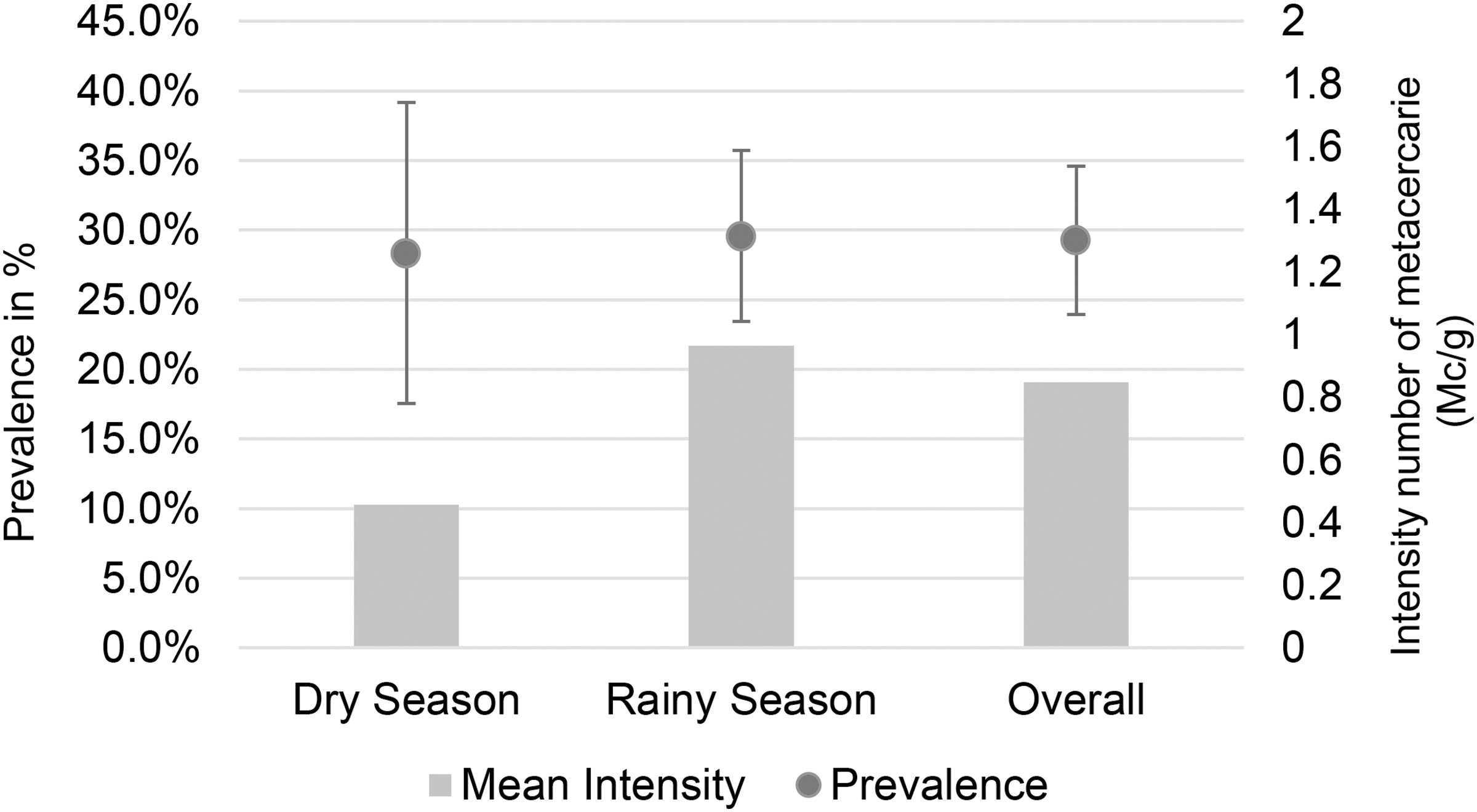
Prevalence and average intensity of the overall and different seasons.
Morphological Criteria Used for the Diagnosis of Trematode Metacercariae
Prevalence and average intensity of FBT overall and in different seasons
The overall prevalence of FBT infection was 29.3% ± 5.3% and the mean intensity was 0.85 ± 1.89 Mc/g fish (Fig. 1). The prevalence of FBT infection during the rainy season (29.6% ± 6.1%) was slightly higher than during the dry season (28.4% ± 10.8%). The mean intensity in the rainy season was 0.97 ± 2.04 Mc/g, and in the dry season 0.46 ± 1.19 Mc/g (Fig. 1). However, neither the substantially similar prevalence nor the higher average intensity in the rainy season was significantly different between the two seasons (prevalence: chi-squared = 0.037, df = 1, p = 0.848; average intensity: p = 0.096).
Prevalence and average intensity of FBT in small native fish species
Prevalence and mean intensity were significantly different between the different fish species (prevalence: chi-squared = 86.006, df = 21, p = 0.000, mean intensity = 29.201, df = 10, p < 0.001). The highest prevalence of FBT was found in T. vittata (75.0%) and the lowest in Trichopodus microlepis (14.3%). The highest average intensity was 12.99 Mc/g (Amblypharyngodon chulabhornae) and the lowest was 0.05 Mc/g for Gymnostomus lobatus, Macrochirichthys macrochius, and Paralaubuca typus (Fig. 3).
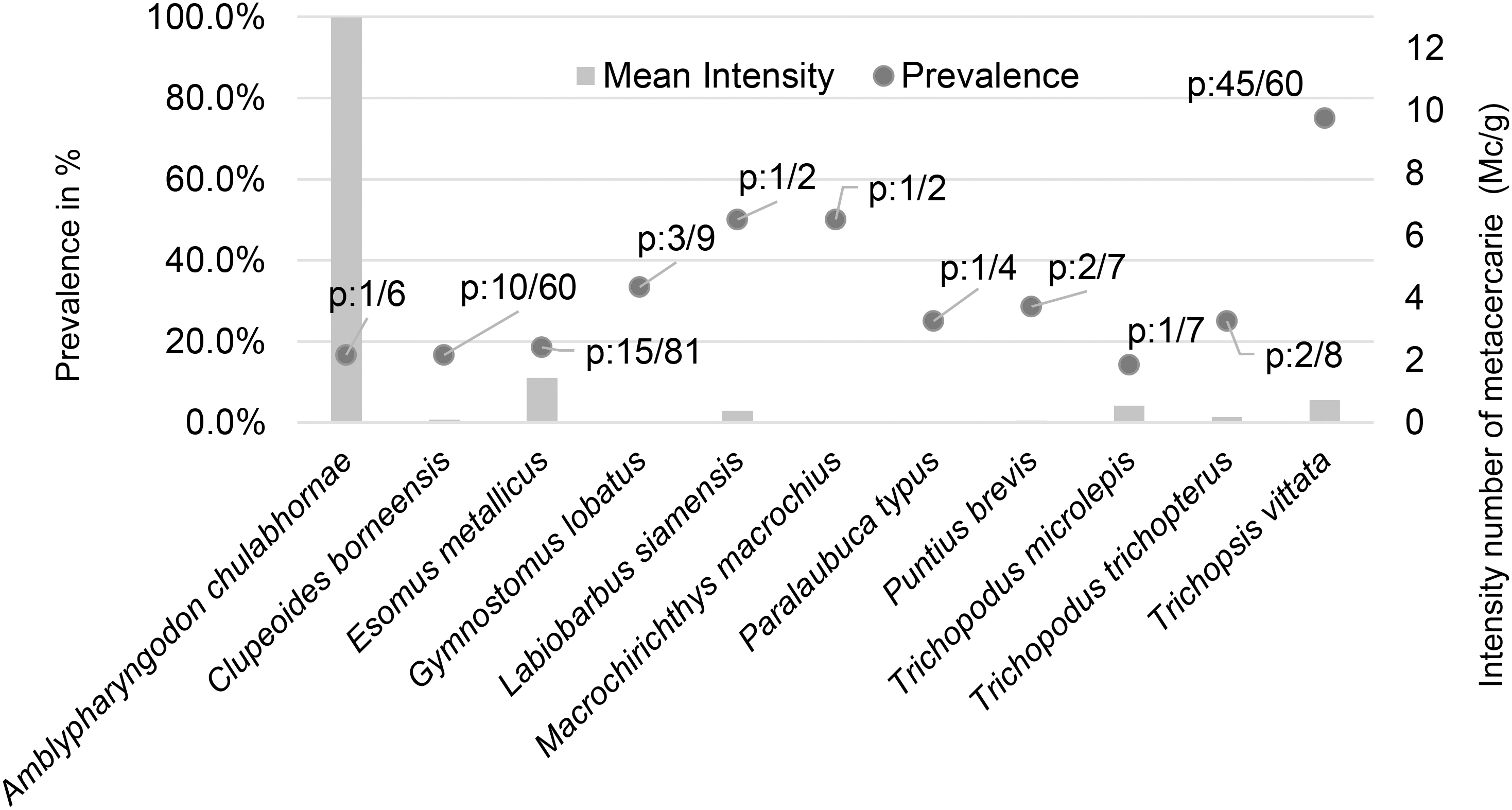
Prevalence and average intensity of different fish species (p, number of subsamples infected/total number of subsamples).
Prevalence and average intensity of FBT metacercariae in fish species
A total of 10 species of FBT were found in small native fish. The prevalence of the different FBT species was significantly different (chi-squared = 69.467, df = 9, p = < 0.001). The highest infection prevalence was for Isthmiophora hortensis (10.7%), and the lowest infection prevalence was Haplorchis pumilio and Procerovum varium (0.4%). The other intestinal flukes identified were as follows: Centrocestus formosanus, Heterophyes spp., Diplostomum spp., Echinochasmus japonicus, Echinostoma revolutum, Echinostoma sudanense, and Haplorchis taichui 7.9%, 7.1%, 5.7%, 5.7%, 3.2%, 7.1%, and 0.7%, respectively (Fig. 4).
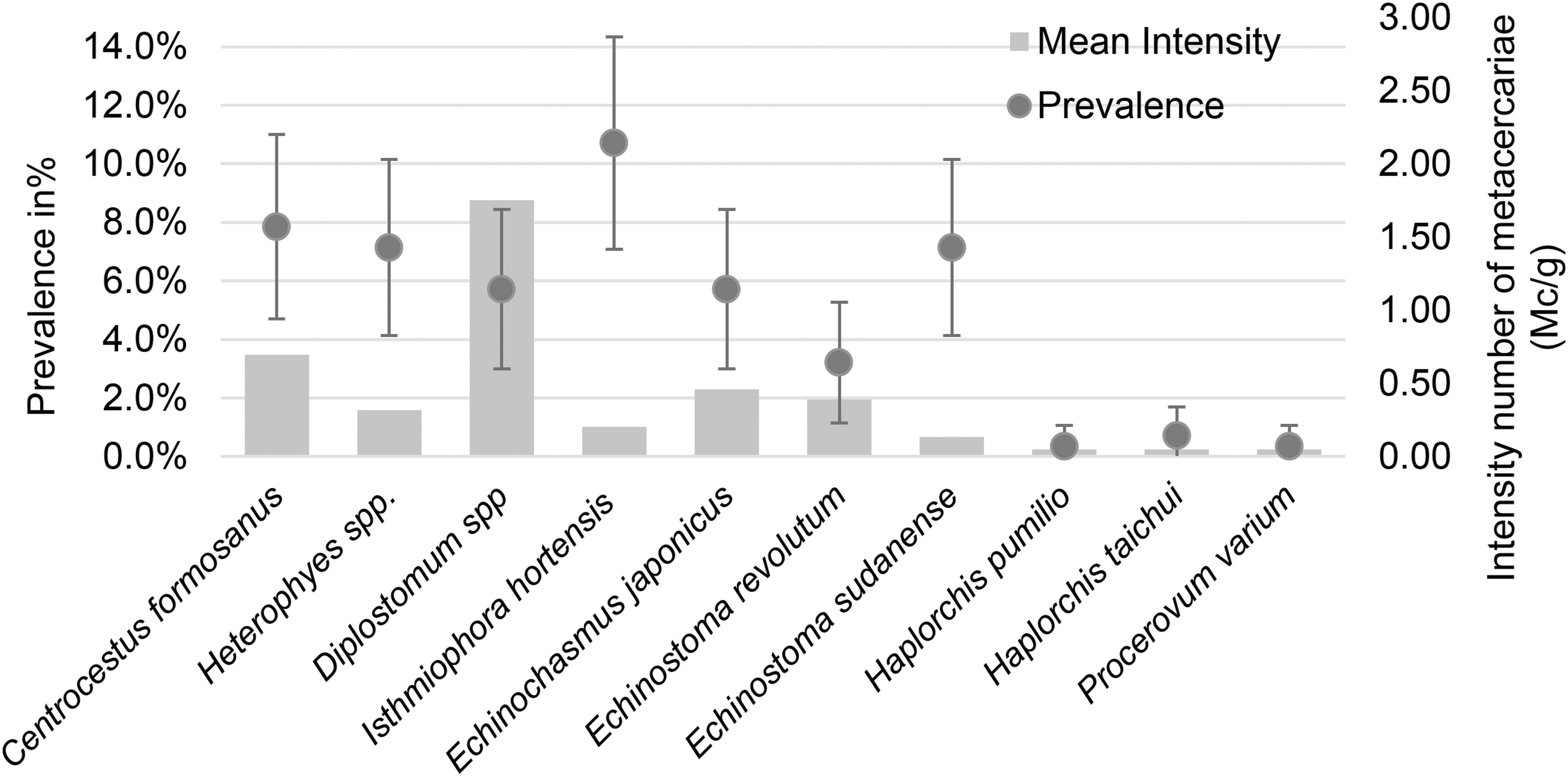
Prevalence and mean intensity in different FBT species (chi-squared = 69.467, df = 9, p < 0.001; mean intensity: α = 21.268, df = 9, p = 0.012). FBT, foodborne trematodes.
The mean intensity was significantly different between FBT species (α = 21.268, df = 9, p = 0.012). The highest mean intensity was found for Diplostomum spp. (1.75 ± 3.03 Mc/g), and the lowest for H. pumilio, H. taichui, and P. varium (0.05 Mc/g). For the other FBT species, C. formosanus, Heterophyes spp., I. hortensis, E. revolutum, E. sudanense, and E. japonicus, the mean intensities were as follows: 0.69 ± 1.61, 0.32 ± 0.41, 0.2 ± 0.26, 0.39 ± 0.68, 013 ± 0.15, and 0.46 ± 1.08 Mc/g, respectively (Fig. 4).
The diversity and abundance of different FBT are shown in Table 3, but the highest diversity of FBTs was detected in T. vittata with eight different FBT species.
Prevalence, Mean Intensity, and Abundance of Foodborne Trematode Metacercariae Detected in11 Fish Species Subsample: 20 g of Each Fish Species
FBT, foodborne trematode; SD, standard deviation; Mc/g, metacercariae/gram of flesh; FBT Mc, foodborne Trematode metacercariae, C.f, Centrocestus formosanus; E.h, Isthmiophora hortensis; E.j, Echinochasmus japonicas; E.r: Echinostoma revolutum; E.s: Echinostoma sudanense; P.v: Procerovum varium; H.t: Haplorchis taichui; H.p: Haplorchis pumilio.
The highest abundance was observed for Diplostomum spp. (3.33) detected in A. chulabhornae, and 3.30 detected in T. vittata. Similarly, C. formosanus was highly detected in E. metallicus (2.78). Also, the lowest were E. sudanense and H. taichui (0.01 detected in E. metallicus) (Table 3).
Discussion
In our study, we found intestinal flukes only in 11 fish species belonging to 3 families (Clupeidae, Cyprinidae, and Osphronemidae). Few studies have reported the presence of FBT in SIS in Southeast Asia: Labony et al. (2020) examined 65 pooled samples of 5 commercial fish species (examined by digestion methods) in Bangladesh; and Myint et al. (2020) examined 689 fish of 12 species of small freshwater cyprinids purchased from local markets in Tachileik, Lower Mekong Region, Myanmar (examined by digestion methods). Our study shows that the overall prevalence of metacercariae is relatively low compared with those reported by Labony et al. (2020) and Myint et al. (2020). The prevalence of FBT depends on many factors, including the host–parasite relationship, the environment, and the traditional feeding habits (WHO, 1995). Given the variability in prevalence and intensity of FBT among fish species, we suggest that the risk of human infection with FBT depends on the species composition of the SIS consumed by the consumer. Prevalence and intensity may depend on the fact that snails and fish live in different habitats (Hassan et al., 2012).
The presence of the primary intermediate host, mollusks, determines the presence of metacercariae in the secondary hosts. There is a strong specificity associated with the presence of cercariae in the primary host mollusks. Different mollusk species act as first intermediate hosts; Parafossarulus sp., Bithynia sp., Galba sp., Radix sp., and Amnicola sp. are the first intermediate hosts for liver fluke species, but not for intestinal flukes (Chai and Jung, 2022). Complex ecological and environmental relationships can alter the mollusk fauna, and interspecific competition can also alter the balance between mollusk populations (Giovanelli et al., 2005).
We found no significant difference between the dry and wet seasons for either prevalence or intensity (metacercariae per gram of fish) in the present study, which is consistent with previous studies in Thailand examining cyprinid fish (Kumchoo et al., 2005) and in northern Egypt on tilapia fish (Lobna et al., 2010). However, previous studies in Cambodia (Touch et al., 2009) and Vietnam (Thuy et al., 2010) indicate that the prevalence of FBT infection is higher during the wet season compared with the dry season. Fluctuations in FBT metacercariae detected in fish may be related to climatic conditions such as temperature, humidity, and precipitation of the year, which may impact snail reproduction, and all these conditions are important for the growth and reproduction of FBT primary host mollusks (Lobna et al., 2010; Utaaker and Robertson, 2015).
The present study significantly contributes to the knowledge of metacercariae in food fish in Cambodia, and also illustrates how different cyprinid species can be important vectors of this zoonosis. Indeed, the highest prevalence of intestinal FBT (75.0%) was found in T. vittata, a species belonging to the family Osphronemidae. This fish was one of the main species present in the SIS of the urban markets in Phnom Penh (31.72% ± 1.14%). To our knowledge, none of the FBT species found in our study has been reported in Trichopsis vittata. However, O. viverrini has been found in this species in Vietnam (Dao et al., 2017), and Acanthostomum sp. and Euclinostomum heterostomum have been identified in this fish (Cojocaru, 2010; Saenphet et al., 2001). Finally, T. vittata is the species with the highest diversity of intestinal flukes compared with other species.
It could therefore be considered a potential indicator for targeted monitoring of FBT intestinal flukes. Another fish species belonging to the SIS group with a high potential for spreading zoonotic FBT is E. metallicus. In fact, this species was parasitized by seven species of intestinal FBT flukes, including H. taichui metacercariae, which is lower than reported in a previous study (Rim et al., 2013). This makes it an indicator fish for intestinal FBTs and potentially an important vector for these zoonotic parasites.
It should be noted that no FBT records have been reported for A. chulabhornae. In particular, in our study, this species shows a low diversity (only two species) for intestinal FBT, in particular only with Heterophyes spp. and Diplostomum spp. Therefore, A. chulabhornae could also be considered one of the target species for a quantitative study.
The prevalence of FBT infection in other fish included in the study is low and virtually absent from the scientific literature. In Trichogaster fasciata (belonging to the same family), some studies show that in our study the prevalence of FBT in T. microlepis and Trichopodus trichopterus was lower than in other fish (Lobna et al., 2010). FBT infection in G. lobatus was relatively high compared with Henicorhynchus siamensis (same genus) (Krailas et al., 2016; Myint et al., 2020). FBT infection in Puntius brevis was lower than in Puntius ticto (same genus) (Labony et al., 2020) and higher than in Myint et al. (2020), who found no FBT infection in P. brevis.
Although we did not find liver fluke metacercariae, the risk of human contamination with intestinal flukes may be high with the consumption of SIS. People who consume raw and fermented fish may be at high risk of intestinal fluke contamination (Myint et al., 2020). The Asian population infected with Fasciolopsis buski, an FBT not related to fish consumption but to aquatic plants, is estimated to be about 10 million (Chai and Jung, 2022). Prevalence ranges from 0.04% in Cambodia to 8.6–50% in Bangladesh, 25–61% in Taiwan, and up to 85% in some parts of China (Chai and Jung, 2022).
Human contamination with intestinal flukes has been reported in Cambodia, where the prevalence of intestinal helminth eggs in stool was 26.2% in 19 provinces between 2006 and 2011 (Chai and Jung, 2022; Yong et al., 2014). In the Oddar Meanchey Province, Cambodia, the general population and student group showed positive egg rates of Echinostoma species of 1.8% and 0.7%, respectively (Chai and Jung, 2022; Sohn et al., 2011). Echinostoma mekongi was described as a new species based on adult flukes from six individuals living along the Mekong River in the Kratie and Takeo provinces, Cambodia (Chai and Jung, 2022; Cho et al., 2020).
Conclusion
In conclusion, this study found a significant prevalence of intestinal flukes in SIS marketed in Phnom Penh. This may represent a significant public health risk and control measures should be implemented. A sanitation measure of −20°C for 2 days is only mentioned for O. viverrini (Sripan et al., 2017), and using −20°C for 7 days can control FBT (WHO/Regional Office for the Western Pacific, 2004). Therefore, it could be applied before fish processing (for prohok, pra ork, or dry fish), but studies need to be conducted beforehand. As SIS consumption is particularly high in rural areas, it is also important to carry out sampling campaigns with a wider territorial coverage.
Footnotes
Acknowledgment
The authors would like to thank Antoine Evrard for his valuable contribution in setting up and organizing the laboratory equipment at the Faculty of Fisheries of the RUA, as well as for his help with field observations on fish trematodes. This is a publication ISEM 2023-219 SUD.
Authors' Contributions
D.C.: Conceptualization, methodology, writing—review and editing, supervision, and funding acquisition. L.K.: Investigation, data curation, formal analysis, and writing—original draft. S.K. and S.Y.: Investigation and resources. S.S. Resource funding acquisition.
Author Disclosure Statement
No competing financial interests exist.
Funding Information
This study, part of the “AQUACAM Sustainability and Risk Prevention of Cambodian Aquaculture” project, was supported by the French Ministry of Foreign Affairs through the Fonds de Solidarité pour les Projets Innovants (FSPI 2020-13) and the French Embassy in Cambodia.