




Abstract
Background:
As a natural accelerator of highly pathogenic avian influenza in wild birds, the H9 subtype of avian influenza poses a substantial threat to both humans and the poultry industry. A comprehensive meta-analysis is necessary to assess the current status of the global H9 outbreak. In this research, a literature review and meta-analysis are presented on the surveillance studies of the H9 subtype of avian influenza in wild birds worldwide up to 2024.
Methods:
A comprehensive search strategy was employed, utilizing the China Science and Technology Journal Database, China National Knowledge Infrastructure, PubMed, Google Scholar, and Scientific Direct databases. The exclusion criteria for this study included duplicate studies, reviews, other host studies, as well as research with inconsistent or insufficient data. An analysis was conducted on data obtained from a total of 31 publications. The rate-conversion analyses were conducted using a random-effects model in the “meta” package of the “R” software, with the PFT method implemented.
Results:
In the meta-analysis, the prevalence of wild bird H9 avian influenza virus (AIV) was found to be 0.02% (193 out of 365,972). Statistically significant higher prevalences of wild bird influenza A virus were observed in Norway and South Africa (0.87%, 21/2417 and 0.44%, 10/1155, respectively) in comparison with other regions. Within the Anseriformes family, the prevalence rate was much greater (0.17%, 80 out of 90,014) compared with other species. In addition, we performed subgroup analyses that included geographical variables. These assessments showed a higher prevalence of H9 in wild birds in cold regions (0.08%, 30/100,691).
Conclusion:
In summary, our results suggest that the occurrence of H9 AIV in avian populations differs among different geographical areas and species. Therefore, it is necessary to conduct further surveillance on the prevalence of AIV in wild birds to guide the creation of strong and efficient regulatory strategies targeted at eradicating the transmission of AIV across different species.
Background
Comprising members of the Influenza A family, the avian influenza virus (AIV) is an RNA virus of the Orthomyxoviridae family (Spackman, 2008). Influenza A is classified into subtypes based on hemagglutinin (H) and neuraminidase (N) glycoprotein. Subtypes 16H subtypes and 9N have been found in the natural bird reservoir (Fouchier et al., 2005). Together, these subtypes create several influenza viruses including H5N8, H7N9, and H9N2. Pathogenicity further divides AIV into low pathogenic avian influenza (LPAI) and highly pathogenic avian influenza (HPAI) (Peacock et al., 2019), with LPAI derived from various hemagglutinin subtypes and H5 and H7 subtypes largely driving HPAI (Spackman, 2008).
H9 is an LPAI subtype (Lloren et al., 2017). Originally found in American turkeys in 1966 (Homme and Easterday, 1970) and was subsequently isolated in wild birds across continental Europe during the subsequent decades (Shortridge, 1992). The H9 subtype is prevalent in poultry populations in some countries in Asia, the Middle East, and Africa (Fusaro et al., 2024). Unlike the highly pathogenic H5 and H7 subtypes of AIVs, H9 viruses have not been prioritized by disease control agencies in many countries (Zhang et al., 2023). Although the H9 subtype has received little attention due to its perceived low pathogenicity, the threat of H9 avian influenza should not be underestimated. When the host is infected with multiple AIVs at the same time, the internal genes of the virus can reassort, resulting in a new influenza virus with pandemic potential (Wen et al., 2024). In addition, the A/H9N2 strains pose an increasing threat to poultry and humans. Mixed infections caused by the A/H9N2 virus are associated with bacteria and other viruses and cause significant economic losses to the poultry industry in the form of reduced egg production and increased mortality (Bi et al., 2022; Fusaro et al., 2024). These economic losses have led some countries to adopt poultry vaccination strategies, which have further promoted the genetic diversity of H9 AIV (Zhang et al., 2023). Indeed, not only birds, multiple human infections with H9N2 have been reported in recent years (Quan et al., 2019), and as of December 1, 2023, H9N2 has been linked to 128 human infections, 90% of which have been reported in China (Fusaro et al., 2024). More than half of the cases are from 2020 to 2023. Human H9N2 infections are usually mild and only one death from the virus has been reported, possibly due to underlying health conditions (Peacock et al., 2019). The vast majority of these human cases have been confirmed to have had contact with poultry and no evidence of human-to-human transmission has been reported (Cáceres et al., 2021).
Migratory birds and wild birds are thought to be major hosts and carriers of AIV including the H9 subtype (Webster et al., 1992). Wild birds play a significant role in the spread of avian influenza from the poultry-wild bird-poultry interface. Many wild birds have been shown to carry virus, which they then pass on to other birds (Wang et al., 2012). In South Africa, the European spectrum of the H9N2 virus has been isolated from farmed ostriches. It appears that these cases most likely represent dead-end spillover events from wild migratory birds (Peacock et al., 2019). Another important factor thought to be responsible for the spread of H9N2 is live bird markets (LBMs), where high densities of poultry species provide ideal conditions for the spread of the virus, and LBMs were identified early on as a major source of AIV outbreaks in mainland China and Hong Kong in the late 1990s (Peacock et al., 2019). The World Health Organization (WHO) and national health agencies recommend that surveillance should be strengthened in poultry farming intensive areas where the virus is highly prevalent to prevent further spread of the virus. Many nations have started monitoring avian influenza A, including wild bird populations with the H9 subtype (Ge et al., 2018). Accurately describing the epidemiology of H9 subtype AIV in wild bird populations is difficult, nevertheless, given the sometimes scattered and difficult to compare data generated from these studies.
Meta-analysis provides a strong statistical approach for combining data from several research, therefore generating more accurate estimates of the pathogen’s epidemiological traits (Hernandez et al., 2020). Our aim in this meta-analysis is to methodically review the current body of research on the global prevalence and distribution of avian influenza A subtype H9 in wild birds. We will also examine the factors that contribute to the spread of H9 subtypes AIV in wild bird populations.
This study will offer a more complete knowledge of the global prevalence of H9 AIV in wild birds by summarizing available data. It will also help to pinpoint important knowledge gaps that must be filled in order to enhance control and preventative plans for this important pathogen. In addition, this study will provide a more comprehensive understanding by assessing the effects of geographical region, season, bird species and detection strategies on the incidence of H9 AIV. Eventually, the results will guide the creation of sensible preventive and control strategies for the H9 subtype AIV.
Methods
This study followed the guidelines of the Preferred Reporting Items for Systematic Reviews and Meta-Analyses Protocols (Page et al., 2021) for conducting a systematic review and meta-analysis (Supplementary Table S1).
Search strategy
A systematic literature search was conducted to identify studies concerning the occurrence and spread of the H9 subtype of AIV in wild birds. PubMed, Science Direct, China National Knowledge Infrastructure, Google Scholar, and China Science and Technology Journal Database were searched for published articles in English or Chinese. Included Chinese articles should have at least an English abstract. The last search time was January 6, 2025. Keywords included, “AIV,” “wild bird,” “migratory bird,” “prevalence,” and “surveillance.”
Inclusion and exclusion criteria
The inclusion criteria for the articles meeting this study were as follows: (1) the articles must be investigations or surveillance studies evaluating the occurrence and/or transmission of H9 subtype influenza virus in wild birds. (2) The study object must be wild birds. (3) The total number of wild birds investigated and the number of positives in the article must be provided. (4) Data must come from active or passive collection of field populations.
The articles were excluded if any of the following cases applied: (1) The full text is not available. (2) No data are provided in the article. (3) The article contains incomplete data or only provides the infection rate. (4) The article contains duplicate data. (5) The article contains conflicting data. (6) The article contains a sample size of less than 25. (7) The article contains mixed samples. (Samples from different birds were mixed and individual samples were not tested after the mixed samples tested positive.)
Data extraction
Two independent reviewers extracted and recorded the following data from the eligible literature: publication year, sampling period, sample location, detection method, season, country, continent, country classification, sample type, wild bird species, thorough geographic and climatic information, total number of samples, and the number of AIV-positive cases of subtype H9 were extracted from the eligible studies. The extracted data were summarized into a Word Processing System (WPS) table for analysis. Any disagreements need to be discussed and resolved by the two reviewers.
Quality evaluation
The data were extracted from the selected articles using a standardized data collection form, in accordance with the purpose and inclusion criteria of this study. The data scoring criteria were as follows: (1) clear sampling location, (2) sample size greater than 50, (3) clear detection species, (4) clear detection season, and (5) inclusion five geographic and climatic risk factors (longitude, latitude, altitude, precipitation, temperature). In accordance with the aforementioned scoring criteria, each item is assigned a value of one point, with the total score for each item subsequently added to the total score for the article.
Statistical analysis
The data collected were analyzed using the “meta” package (release 4.12) of the R software (release 4.1.2) (Viechtbauer, 2010). Four data transformation methods were tested to obtain a closer approximation to a Gaussian distribution: the original exchange rate (PRAW), the logarithmic transformation (PLN), the logit transformation (PLOGIT), the sine transformation (PAS), and the double sine transformation (PFT). The PFT was selected based on the criterion that the W value was close to 1 (W = 0.86002; Table 1). The different transformations of the normal and arcsine exchange rates for the normal distribution were examined by choosing the appropriate effect model (Ni et al., 2020).
Normal Distribution Tests for Normal Rates and Different Transitions
Bold text indicates the final selected/adopted data.
“PRAW”: raw exchange rate; PLN: log conversion. “PLOGIT”: logit transformation.
“PAS”: arcsine transformation; “PFT”: double arcsine transformation.
“NaN”: meaningless number; NA*: data are missing.
The Cochran-Q statistic and I2 statistics yielded significant heterogeneity. If the I2 value was >50%, the p value was <0.05, whereas if the I2 value was <50% and the p value was >0.1, the heterogeneity between the individual studies was visualized by means of forest plots. A random-effects model was used because the assessment results showed significant heterogeneity (I2 ≥ 90.8%). The presence of publication bias was determined by the symmetry of the funnel plot, and the asymmetry of the funnel plot was assessed by visual observation and was verified using Egger’s test and trim-fill test. In addition, a sensitivity analysis was performed for the assessment of the reliability of the results of the meta-analysis.
A statistical analysis was conducted to determine the prevalence of AIV H9. Subgroup analyses were then employed to explore sources of heterogeneity among the included studies and to predict factors contributing to heterogeneity. Factors assessed included sampling time, sample type, assay method, species, country, season, and score. Furthermore, to investigate whether geographical factors are associated with sources of heterogeneity, factors including latitude, altitude, precipitation, and temperature have been evaluated.
Results
Search results and qualified publications
Originally found were 4512 studies by searching five databases using a mix of pertinent keywords. Excluded were 1625 duplicate studies and 2887 irrelevant articles upon evaluation of the titles and abstracts. After a full-text review, 89 articles were eliminated as they did not fit the screening criteria. Therefore, a final collection of 31 articles were fit for inclusion (Abolnik et al., 2022; Barkhasbaatar et al., 2023; El Zowalaty et al., 2022; Espano et al., 2023; Ferro et al., 2010; Fuller et al., 2015; Ge et al., 2018; Gomes et al., 2023; Hansbro et al., 2010; Henriques et al., 2011; Kang et al., 2010; Kang et al., 2024; Karmacharya et al., 2015; Kim et al., 2019; Krauss et al., 2013; Lee et al., 2017; Muzyka et al., 2012; Na et al., 2022; Nam et al., 2021; Ni et al., 2015; Piaggio et al., 2012; Ramey et al., 2016; Ruiz et al., 2023; Shi et al., 2014; Tang et al., 2020; Tønnessen et al., 2013; Verhagen et al., 2017; Wang et al., 2021; Wang et al., 2023; Yang, 2020; Yao et al., 2022) (Fig. 1; Table 2).
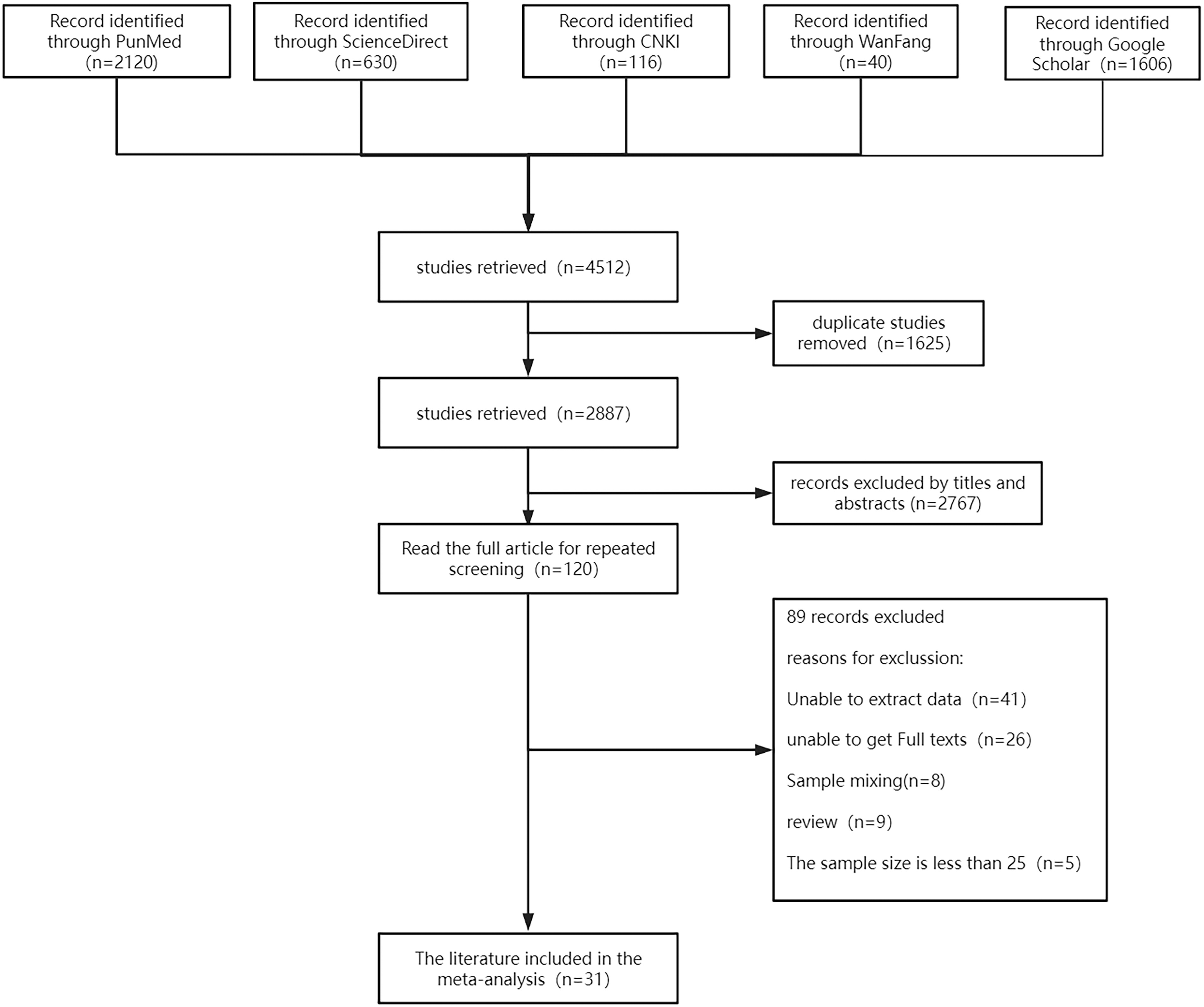
Flow diagram of literature search and selection.
Studies in the Analysis
rRT-PCR*: real-time reverse transcription polymerase chain reaction.
RT-PCR: reverse transcription polymerase chain reaction.
Study characteristics
Of the 31 studies that met the criteria for meta-analysis of the prevalence of H9 AIV infection in wild birds, 13 trials reported sampling periods prior to 2013, 13 trials reported sampling periods between 2013 and 2018, and 7 trials reported sampling periods greater than 2018. Sample types included feces (21 trials), cloacal swabs (7 trials), cloacal and oropharyngeal swabs (4 trials), and oropharyngeal swabs (1 trials). Sixteen studies used real-time reverse transcription polymerase chain reaction (rRT-PCR) as the detection method and 15 studies used RT-PCR. Because the number of bird species was scattered and excessive, this study grouped bird species into Anseriformes (11 trials), Charadriiformes (5 trials), and others (28 trials). Eight trials reported that the sampling season was summer, 14 trials reported that the sampling season was winter, and another 12 studies did not report the sampling season. Fourteen studies were conducted in advanced economies, 16 studies were conducted in developing economies, and 1 study was conducted in Antarctica and was not applicable to national development situations. In addition, according to study scores, 1 study scored low (2 points), 22 studies scored medium (3–4 points), and 8 studies scored high (5 points).
Subgroup analyses revealed that 26 trials were conducted in the northern hemisphere and 4 trials were conducted in the southern hemisphere. Twenty-four trials were conducted in the eastern hemisphere and six trials were conducted in the western hemisphere. The altitudes reported in the trials were categorized as <200 m in 22 instances, 200–1000 m in 3 instances, and >1000 m in 5 instances. There were 10 trials classified as semiarid, 12 trials classified as humid, and 7 trials classified as hyper-humid. Two trials indicated hot regions, whereas warm regions were reported in 22 trials, and cold regions were reported in 6 trials. Thirty studies provided the required geographic details, while the remaining study lacked specific sampling site information.
Publication bias and sensitivity analysis of the publications
The forest plot exposed very significant variation among the selected research (Fig. 2). The funnel plot shows that the points representing the data are concentrated at the top of the funnel and are skewed to one side. Points concentrated at the top of the funnel usually represent studies with larger sample sizes. These studies tend to be more likely to be published, whereas studies with small sample sizes and nonsignificant effects may not be published, suggesting that there may be a publication bias that overestimates the overall effect size (Fig. 3).
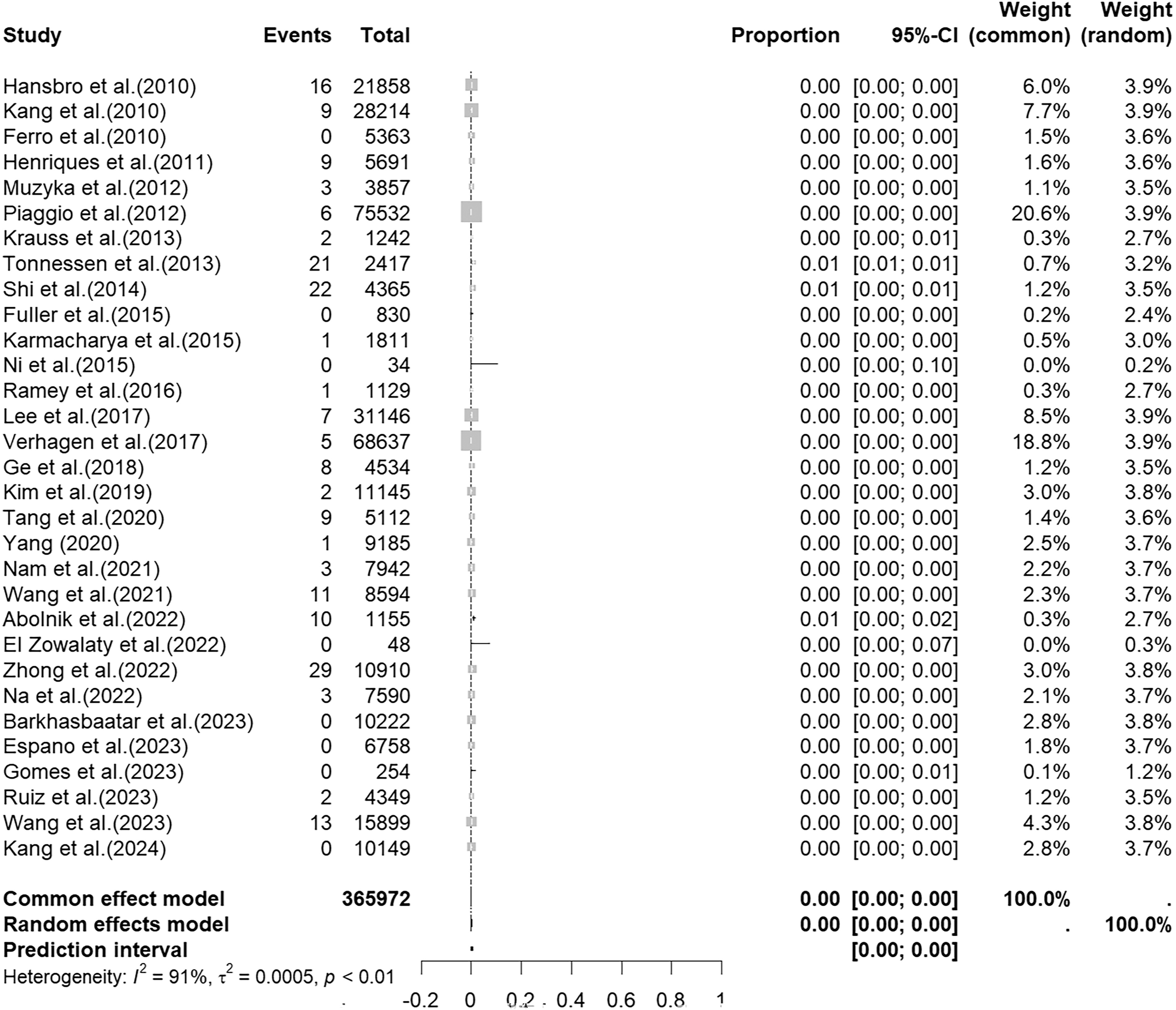
Forest map of the global H9 subtype of avian influenza viruses.

Funnel plot with pseudo 95% CI for publication bias test. CI, confidence interval.
We then ran a trim-and-fill study and an Egger’s test to assess this more closely. The results of Egger’s test confirmed the existence of publication bias in the selected papers (p = 0.0011 and p ≤ 0.05; Fig. 4). An iterative approach was used to estimate the number of missing studies in order to test the hypothesis that publication bias adds to the asymmetry in the funnel plot (Duval and Tweedie, 2000). These 12 extra dummy studies were then included into a fresh meta-analysis, producing an adjusted p value of 0.000 (Fig. 5). The sensitivity research showed that no one study had any effect on the whole data, thereby verifying the dependability and strength of our results (Fig. 6).
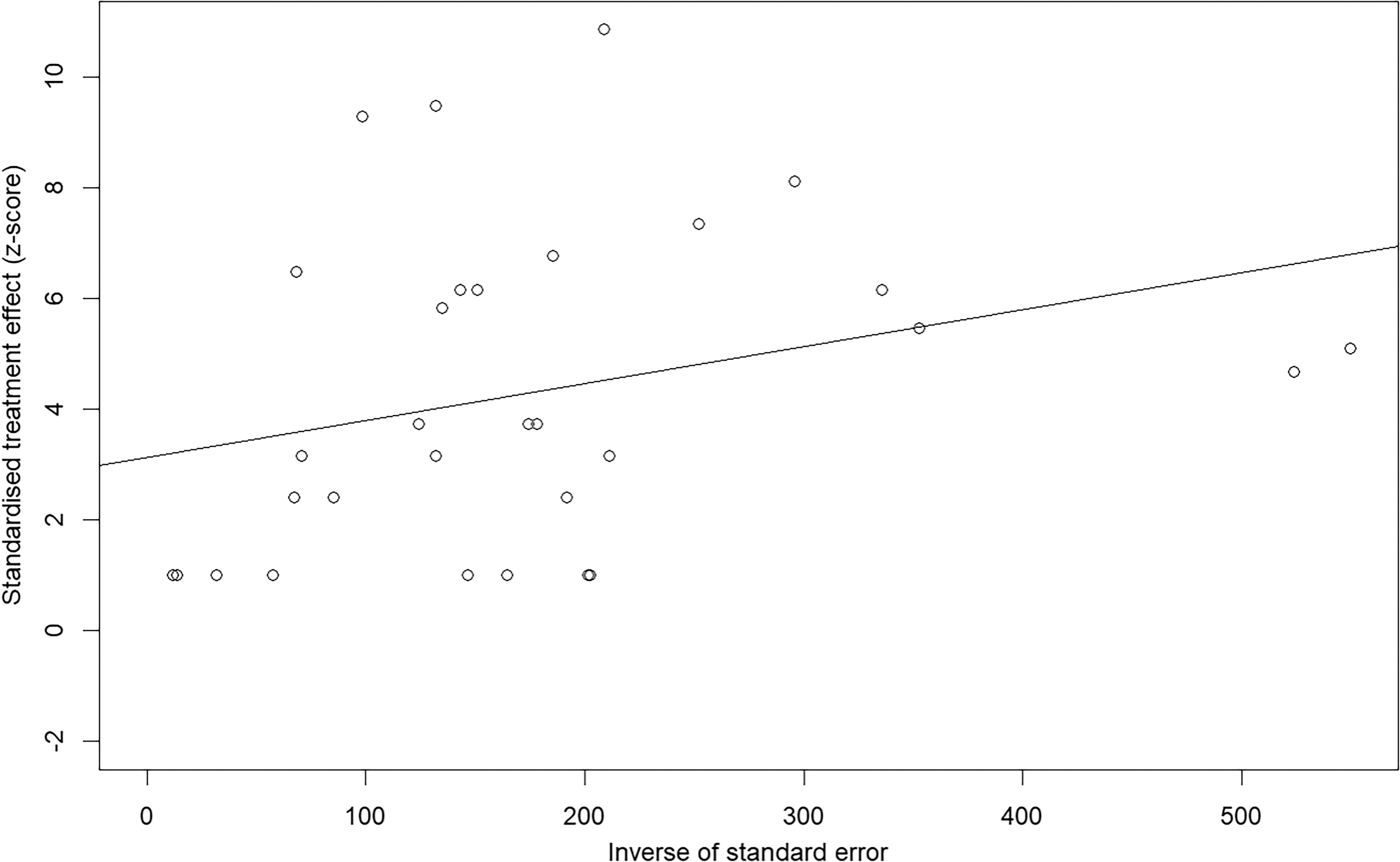
Egger’s test for publication bias.

Shear complement graph and pseudo 95% CI publication bias test.
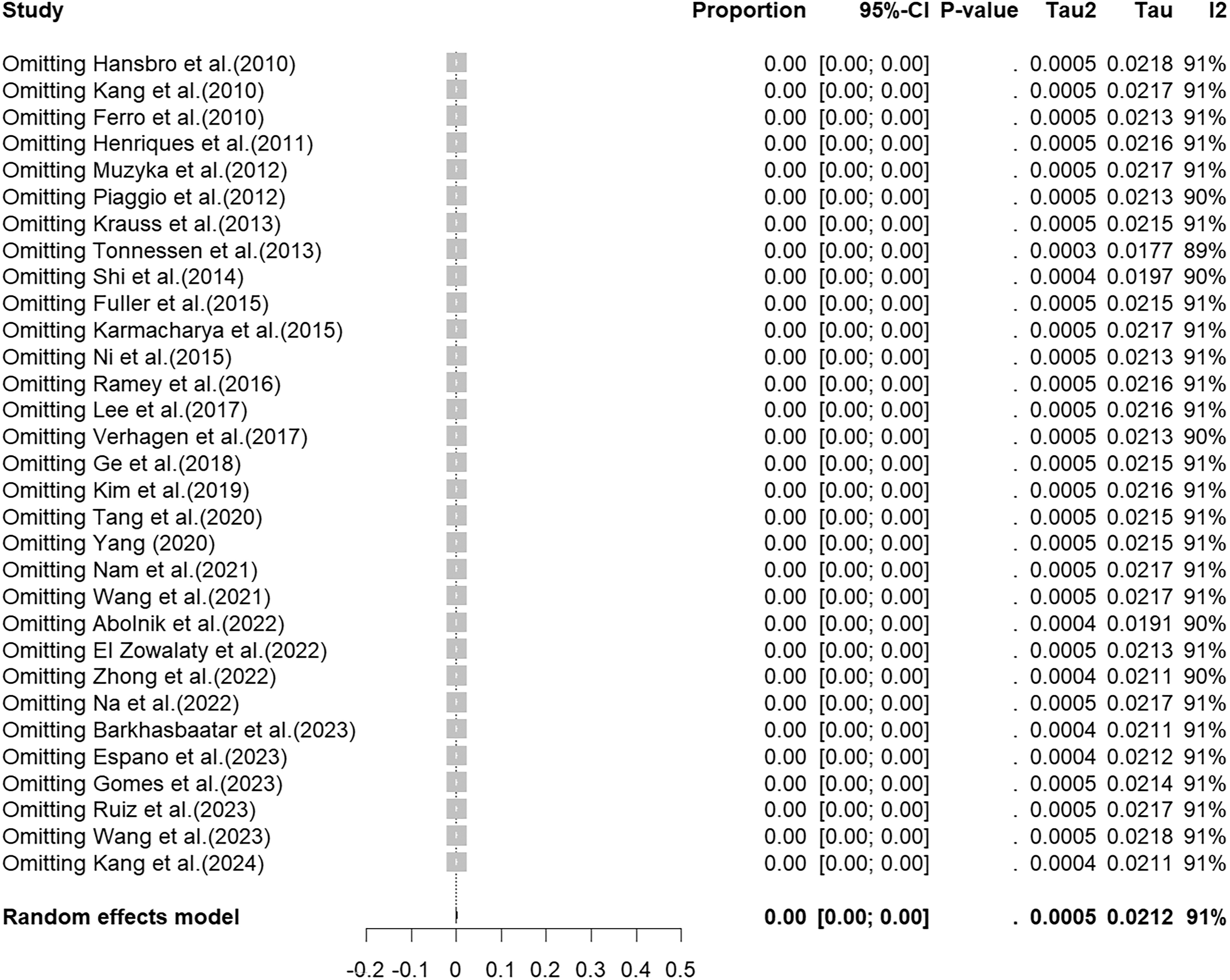
Sensitivity analysis.
Subgroup analysis results
The subgroup analysis performed throughout the study period showed that the prevalence rate in the rRT-PCR subgroup was 0.09% (95% confidence interval [CI]: 0.02–0.21%), whereas the prevalence rate reported by RT-PCR as a test was 0.06% (95% CI: 0.02–0.10%). In addition, the rate of H9 detection in cloacal swabs was 0.17% (95% CI: 0.02–0.49%), surpassing the rates of 0.00% (95% CI: 0.00–3.95) recorded in oropharyngeal swabs, 0.06% (95% CI:0.02–0.11) in fecal samples, and 0.04% (95% CI: 0.00–0.16) in cloacal and oropharyngeal swabs. An examination of subgroups based on species showed that Anseriformes had the greatest prevalence rate of 0.17% (95% CI: 0.05–0.36%). A greater seasonal prevalence of the disease was seen in summer (0.19%, 95% CI: 0.00–0.98%) compared with winter (0.10%, 95% CI: 0.02–0.21%). The prevalence of H9 AIVs in wild birds was shown to be 0.07% (95% CI: 0.01–0.18) in the group before 2013, 0.04% (95% CI: 0.01–0.08) in the group from 2013 to 2018, and 0.07% (95% CI: 0.00–0.27) in the group after 2018 (Table 3). The data demonstrate a declining pattern, succeeded by an ascending one. A greater prevalence rate of 0.05% (95% CI: 0.01–0.12) was seen in the advanced economies group compared with the developing economies group (0.11%, 95% CI: 0.03–0.27) for the national circumstances subgroup. Wildfowl AIV had a statistically significant higher cumulative prevalence in Norway and South Africa (0.87% and 0.44%, respectively) compared with other regions (Table 4).
Results of Subgroup Analysis
Bold text indicates statistically significant values (P < 0.05).
CI*, confidence interval; –*not applicable; p value: * p ≤ 0.05 is statistically significant.
Quality: High: 5 points; Medium: 3 or 4; Low: 2.
Concentrated Prevalence Rate of H9 Subtype of Avian Influenza Viruses in Different Countries
CI, confidence interval.
In relation to geographical variables, the prevalence rates were seen to be greater in the southern hemisphere (0.04%, 95% CI: 0.00–0.53) compared with the northern hemisphere (0.02%, 95% CI: 0.00–0.07). Moreover, the observed prevalence rates were greater in regions with elevations between 200 and 1,000 m (0.04%, 95% CI: 0.00–0.16) compared with regions with elevations above 1,000 m (0.00%, 95% CI: 0.00–0.32) and below 200 m (0.03%, 95% CI: 0.00–0.09). Concerning temperature, no cases of H9 subtype prevalence were found in hot regions, while cold and warm regions had prevalence rates of 0.08% (95% CI: 0.00–0.33) and 0.01% (95% CI: 0.00–0.06), respectively (Table 5).
A Subgroup Analysis of the Prevalence of H9 by Geographical Location
Bold text indicates statistically significant values (P < 0.05).
CI*, confidence interval; p value*, p ≤ 0.05 is statistically significant.
Discussion
Data from 365,972 wild birds from 31 articles were evaluated in this meta-analysis, resulting in prevalence of 0.02% (193/365,972). The results showed that H9 subtype avian influenza was widely distributed around the world, and the highest detection rate was 0.87% (95% CI: 0.53–1.28) in Norway and 0.44% (95% CI: 0.07–1.02) in South Africa. This coincides with the trend of circulating H9 in African poultry (Fusaro et al., 2024), which may be due to the less intensive rearing of African poultry and more opportunities for exposure to wild birds, resulting in virus spillover. Norway is situated on major migratory routes for migratory birds and has a large number of wetlands and coastal areas that provide rich habitats and food sources for wild birds. This may create favorable conditions for the concentration of wild bird populations and the spread and circulation of virus. Geographically, the prevalence of AIV at an altitude of 200–1000 m was significantly higher than that at an altitude of more than 1000 m. Areas of 200–1000 m above sea level are often a confluence of wetlands, forests, and farmland, and many waterfowl and landbirds tend to be active at this altitude, with important correlations between viral activity and wild bird ecology.
We observed the highest prevalence in the cold region classification, which is consistent with previous findings that cold regions favor the preservation of avian influenza viral RNA and longer maintenance of infection (Meng et al., 2022; Sarah et al., 2018). Several investigations have proven that AIVs exhibit increased survival rates at colder temperatures (Zhang et al., 2014). For instance, many viruses maintain their activity for almost 200 days when exposed to a temperature of 4°C (Stallknecht et al., 1990). Moreover, there have been documented occurrences of AIV outbreaks subsequent to a decrease in temperature (Liu et al., 2007). Investigations conducted by Liu et al. have also verified that the occurrence of avian influenza increases when the temperature decreases (Liu et al., 2018).
Our study also found that the positive rate of studies using rRT-PCR was higher than that of RT-PCR, and the detection sensitivity of rRT-PCR was speculated to be higher. rRT-PCR enables real-time monitoring of changes in the fluorescence signal during amplification, allowing precise quantification of the target RNA. This real-time monitoring allows even small amounts of early target RNA to be detected.
Moreover, the design of rRT-PCR usually uses fluorescent probes or dyes, which makes it more sensitive for the detection of low-abundance RNA and can detect less starting template. However, the heterogeneity among the studies was high, and there are still many potential factors for heterogeneity waiting to be explored.
Regarding the sampling time, we found that the positive rate increased significantly after 2018. In China, H9N2 has gradually become the main subtype of AIV in China’s live poultry markets since 2016 (Bi et al., 2020), which may have contributed to the increased infection rate of H9 subtype avian influenza in wild birds. The prevalence of H9 has increased over time, raising concerns that the H9 subtype of avian influenza could become a pandemic. Routine influenza surveillance in China during 2019–2020 showed that the hemagglutinin genes of H9N2 viruses did not cluster together, suggesting recent evolution in the genomes of these H9N2 viruses (Bi et al., 2022; Zhang et al., 2023). The pandemic potential of H9N2 is reflected in the continuous emergence of human infectious influenza viruses with H9N2 internal genes (Wen et al., 2024), demonstrating the urgent need to prevent the generation of new human infectious AIVs at their source or to control the ability of migratory birds to spread viruses across states.
In addition, it is also possible that vaccination may have promoted the evolution of H9 virus and contributed to the increased infection rate in recent years. China (Zhang et al., 2008), Israel (Banet-Noach et al., 2007), South Korea (Lee and Song, 2013), and Morocco (El Houadfi et al., 2016) began to use vaccination as the main means to avoid huge economic losses caused by H9N2 virus infection. Widespread vaccination also contributed to antigenic drift of the H9 virus (Yan et al., 2022), which also contributed to the poor protective efficacy of the vaccine in the immunized chicken flocks (Okamatsu et al., 2008; Sun et al., 2012).
Consistent with past studies (Dugan et al., 2008), the systematic review found Anseriformes as the main natural hosts and transmitters of H9 avian influenza. Our study showed that Anseriformes had far more AIV frequency than non-Anseriformes, implying that Anseriformes are more likely to be avian influenza vulnerable. Researchers should thus give the frequency of AIVs and antibodies in this population top priority. Anseriformes exhibited a greater incidence of AIVs in comparison with nonwaterfowl, therefore providing additional evidence for the notion that Anseriformes possess greater sensitivity than other wild birds.
In the remaining subgroup analyses, the prevalence was significantly higher in summer than in winter, which was not consistent with the conclusions of many studies. We considered that the reasons for this were the large heterogeneity between groups and the fact that many studies did not report the sampling season, which may affect the reliability of this subgroup analysis. In addition, our finding that H9 is more prevalent in wild birds in developing economies than in developed economies is also puzzling, for which we have yet to find a plausible explanation. Sample type was not significantly associated with H9 AIV infection in wild birds (p ≥ 0.05), so it will not be discussed.
Acknowledging specific constraints in this meta-analysis is paramount. First and foremost, the rather limited sample size could affect the dependability and consistency of the findings. The limited generalizability of the small sample size could so influence the results. Despite our efforts to collect the literature on the prevalence of H9 in wild birds, there are still many risk factors that have not been reported in the literature, which affect the accuracy of the results to a certain extent. Furthermore, comprehensive knowledge on H9 strains in wild bird populations was lacking, hence preventing the building of a phylogenetic tree and so compromising our knowledge of strain distribution over several geographical areas. The literature incorporated in this meta-analysis primarily originates from the Northern Hemisphere, which introduces a possible regional bias that could direct the conclusions toward conditions specific to the Northern Hemisphere.
Conclusion
To summarize, this study conducted a comprehensive meta-analysis to assess the worldwide occurrence of H9 AIV. H9 AIV has shown a rising prevalence over time. To mitigate the risk of future viral outbreaks, it is advisable to implement enhanced immunization programs and maintain ongoing surveillance.
Footnotes
Authors’ Contributions
W.-X.T.: Data curation, methodology, supervision, and writing—review and editing. S.-Y.Q. and X.Y.: Writing—review and editing. X.-M.L.: Data curation, resources, and software. J.-H.L. and H.C.: Data curation, resources, and software. J.-J. and H.-T.S.: Data curation, methodology, and visualization. Q.Z.: Conceptualization, supervision, and funding acquisition.
Data Availability
Data will be made available on request.
Author Disclosure Statement
The authors declare that they have no competing interests
Funding Information
This work was supported by the National Key Research and Development Program of China (2022YFC2303803).
Supplementary Material
Supplementary Table S1
References
Supplementary Material
Please find the following supplemental material available below.
For Open Access articles published under a Creative Commons License, all supplemental material carries the same license as the article it is associated with.
For non-Open Access articles published, all supplemental material carries a non-exclusive license, and permission requests for re-use of supplemental material or any part of supplemental material shall be sent directly to the copyright owner as specified in the copyright notice associated with the article.
