Abstract
Introduction:
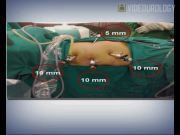
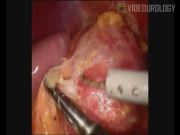
Since its advent in 1991, 1 laparoscopic approach has been increasingly employed for radical extirpation of large renal malignancies (>4 cm). With increasing expertise, laparoscopic approach has also been successfully attempted for radical nephrectomy in anomalous kidneys. 2 We narrate our 10-year experience in laparoscopic radical nephrectomy. The video spans over 7 minutes and 25 seconds and demonstrates a surgical exercise of laparoscopic radical heminephrectomy in a horse shoe renal anomaly.
Materials and Methods:
All patients are worked up in detail. A transperitoneal approach was employed universally. Renal mobilization was performed external to the Gerotas fascia plane. In upper polar tumors or simultaneous adrenal pathologies, the ipsilateral adrenal gland was also removed in toto. The ureter was divided at the level of crossing over of the gonadal vein. The hilum was entered and renal pedicle divided. In horse shoe anomaly, heminephrectomy was performed at the level of isthmus. Specimen was retrieved through a Pfannenstiel incision. All patients were followed 3 monthly with blood parameters and imaging.
Results and Conclusions:
Two hundred eleven laparoscopic radical nephrectomies were performed (210 in anatomically normal kidneys and 1 in horse shoe renal unit). Mean ± SD age was 40.5 ± 4.1 years (range 7–69 years). Ninety-three were women and 117 were men. One hundred seven patients were asymptomatic at presentation. Preoperative renal profile was normal in all. Mean ± SD longitudinal dimension of the lesion was 7.6 ± 1.3 cm (range 5.0–12.8 cm). Mean ± SD operation duration was 95 ± 10 min (range 65–155 min). Conversion to open technique was required in two cases. Postoperative complications included prolonged peritonism ( n = 2), retrieval-site infection ( n = 3), and leg vein thrombosis ( n = 1). Pathological impressions were as follows: Wilms tumor anaplastic variant, 1; chromophobe adenoma, 13; renal cell sarcoma, 1; oncocytoma, 3; and clear cell carcinoma, 193. Resection margins were free of tumor in all. One hundred ninety-six patients completed at least 1-year follow-up. No local recurrences were remarked. Irrespective of anatomical orientation, radical nephrectomy can be conveniently performed via laparoscopic approach. Preoperative computed tomography angiogram delineates vascular aberrations and aids in surgical performance especially in renal anomalies. 2 The morbidity profile is excellent. The immediate and long-term outcome achieved in our patient cohort is encouraging and confers well within the published standards. 3
No competing financial interests exist.
Runtime of video: 7 mins 25 secs