Abstract
Introduction:
Laser procedures are an innovative surgical treatment alternative to transurethral resection of the prostate secondary to benign prostatic obstruction. Herein, we introduce the first known experience of vaporesection of the prostate using the newly introduced Xpeeda™ side-firing Holmium laser fiber.
Methods:
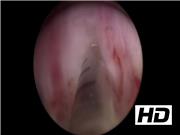
Twenty patients underwent holmium laser vaporesection of the prostate (HoLVRP) from July to September 2018. We used a 100 W holmium: YAG laser (VersaPulse PowerSuite; Lumenis) with a side-firing Xpeeda laser fiber. All patients were managed by a single surgeon (H.E.). Two posterior grooves were created at the 5 and 7 o'clock positions up to the verumontanum, allowing vaporesection of the median lobe. The laser fiber was then rotated under the adenoma from the 7 o'clock to 11 o'clock position using a sequence of semicircular movements, starting from the bladder neck to the verumontanum. The other lateral lobe was resected in a similar manner. Patients' demographics and preoperative data were collected, including transrectal ultrasonography prostate sizing and preoperative (prostatic specific antigen [PSA], International Prostate Symptom Score [IPSS]). The laser energy and operative times were recorded. Intra- and postoperative complications were recorded in addition to catheter time and hospital stay. Trial of void (TOV) was done after 2 hours. The short-term follow-up data included IPSS, postvoid residual (PVR) and Q max at 3 months postoperatively.
Results:
Twenty patients with a median prostatic volume of 50 cc (IQR = 41–59) had HoLVRP. The median age at surgery was 66 years. Lower urinary tract symtoms was the main presentation in 85% of patients with median PVR of 168 mL (IQR = 85–338). The median preoperative IPSS score was 22 (IQR = 20.3–28.3) and median preoperative Q max was 8.3 mL/s (IQR = 5.9–10.9). There were no intraoperative complications or blood transfusions. All patients had a catheter removal at 2 hours postoperatively. Initially, four patients (20%) had failed TOV (requiring catheter reinsertion), but succeeded after 1–3 days. Postoperatively, one patient experienced stress urinary incontinence and another patient developed urge incontinence; however, both disappeared at 3 months follow-up. The PSA, IPSS, PVR, and Q max significantly improved at 3 months (p = 0.004, 0.03, 0.012), respectively.
Conclusion:
HoLVRP is a promising and safe technique in the management of moderate-sized prostates. Further studies with longer follow-up are warranted to evaluate this technique.
Statements: This study was performed after approval by our Institutional Review Board, and after obtaining informed consent from a patient (or other responsible individuals). We have received and archived patient consent for video recording/publication in advance of video recording of procedure.
H.E. has received a speaker honorarium from Lumenis, Inc. Other coauthors have no conflict of interest.
Runtime of video: 6 mins 56 secs