




Abstract
Using reverse genetics (rg), we generated two reassortant viruses carrying the NS1 gene of two closely related HPAIV and LPAIV H7N1 variants (designated rgH7N7 HPHPNS1 and rgH7N7 HPLPNS1, respectively) in the backbone of the HP H7N7 strain A/Chicken/Netherlands/621557/03 (rgH7N7 HP). Comparison of these reassortants allowed us to determine the effect of amino acid differences in the nuclear export and nucleolar localization sequences of NS1 on pathogenesis in chickens. Compared to rgH7N7 HPLPNS1, a delay in weight gain and an increase in mortality were observed for rgH7N7 HPHPNS1. Furthermore, an increase in viral load in brains, lungs, and cloacal swabs, as well as an increased induction of mRNA for type I interferons and pro-inflammatory cytokines in brains, were observed for rgH7N7 HPHPNS1. Comparison of rgH7N7 HPLPNS1 with the backbone strain rgH7N7 HP allowed us to examine differences in pathogenesis due to differences in NS1 alleles. rgH7N7 HP, which contained allele A of NS1 showed a higher in vitro replication rate and proved to be more virulent than the isogenic virus carrying allele B of NS1(rgH7N7 HPLPNS1). In addition, higher virus accumulation in the lungs and brains, and an increased induction of host gene responses, especially in the brains, were found for rgH7N7 HP compared to rgH7N7 HPLPNS1. No large differences were observed in type I interferon expression in the lungs of chickens infected with any of the viruses, suggesting that differences in virulence due to differences in NS1 could be related to differences in the induction of pro-inflammatory cytokines in vital organs such as the brains.
Introduction
A
Keiner et al. (16) studied the functional differences in vitro of NS1 of two closely related HPAIV and LPAIV H7N1 avian influenza virus strains from the Italian outbreak of 1999–2000 and demonstrated that the differences between these strains in NS1 influence pathogenicity. Here, we investigated the in vivo consequence of the differences between the NS1 proteins of these two H7N1 variants in the backbone of an isogenic HP H7N7 strain. In addition, by comparing NS1 of H7N7 and H7N1 we were able to investigate differences between the A and B alleles of NS1 since H7N7 carries the A allele and H7N1 the B allele. Differences in pathogenicity of the single-gene NS1-reassortants were examined by analyzing mortality, morbidity, and weight gain of infected chickens, as well as viral RNA distribution and immunological gene responses in the lungs and brains. Lungs and brains were selected as representatives of primary and secondary infected organs, respectively.
Materials and Methods
Construction of recombinant viruses.
The highly pathogenic avian influenza virus isolate A/Chicken/Netherlands/621557/03 (H7N7) was obtained from the index farm of the 2003 Dutch avian influenza virus outbreak. Full-length cDNAs of all 8 genome segments were cloned in transcription vector pPolSapRib and the PB2, PB1, PA, and NP genes were additionally cloned in expression vector pCAGGS according to the 12-plasmid reverse genetics system for influenza A virus (4). Virus was rescued by transfection using a mixture of Madin-Darby Canine Kidney (MDCK) and human embryo kidney (HEK) 293T cells, followed by inoculation of the transfection supernatant into embryonated eggs. The rescued virus was designated rgH7N7 HP. The intravenous pathogenicity index (IVPI) of rgH7N7 HP was established at 2.6, which was only slightly lower than that of the wild type virus (IVPI: 2.9). Using the same reverse genetics system, two derivatives of rgH7N7 HP were generated [i.e., one that contained the NS1 gene segment of the LPAIV H7N1 strain A/chicken/Italy/1067/99 (designated rgH7N7 HPLPNS1) and another that contained the NS1 gene segment of the HPAIV H7N1 strain A/turkey/Italy/4580/99 (designated rgH7N7 HPHPNS1)]. Specific differences between the NS1 genes of HPAIV H7N7, H7N1, and LPAIV H7N1 may be seen in Figure 6.
Viruses
The viruses were propagated and titrated in the allantoic cavities of 10-day-old specific pathogen-free embryonated chicken eggs. For animal experiments, virus was diluted in sterile phosphate buffered saline (PBS) to 106 EID50/mL immediately prior to use. To measure differences in replication, MDCK cells were infected with the different viruses (MOI: 0.01) and incubated for different periods of time. The supernatant was discarded, cells were washed three times with PBS, and collected in TRIzol. Viral RNA was isolated using phenol/chloroform extraction and quantitated by Real-Time PCR (qRT-PCR) as previously described (29). A standard curve consisting of 10-fold serial dilutions of a virus stock with a known median egg infectious dose (EID50) titer was used to convert the Ct values into equivalent virus titers (EID50).
Animal experiments
Chickens
Lohmann Brown male layer-type chickens were obtained from a commercial breeder (Pronk's Broederij, Meppel, The Netherlands). After hatch, the chickens were housed in floor cages for 3 weeks without immunization. For each experiment, chickens were randomly distributed into four treatment groups. Feed and water were provided ad libitum. All studies were approved by the institutional Animal Experiment Commission in accordance with the Dutch regulations on animal experimentation.
Experiment
Chickens of group 1 were inoculated with 0.2 mL (2*105 EID50) of the rgH7N7 HP strain, equally divided between the intranasal (i.n.) and intratracheal (i.t.) route. In the same way, animals of group 2 and 3 received 2*105 EID50 of the rgH7N7 HPLPNS1 and rgH7N7 HPHPNS1 strain, respectively. A control group of chickens was inoculated with 0.2 mL PBS. At 7 days post infection (dpi), the experiment was terminated.
Sampling
Six chickens from each group were sacrificed just before infection (t=0) and at 1, 2, 3, 4, and 7 dpi The body weight of the chickens was established, cloacal swabs were taken, and from all sacrificed chickens gross pathology of the organs was studied. Lungs, brains, and heart were collected, snap-frozen in liquid nitrogen and stored at −80°C until use. All experiments were performed in Biosafety Level 3 facilities. Isolation of RNA was performed using the phenol/chloroform extraction method, and qRT-PCR was used to quantitate viral RNA, as previously described (29). The quantitation of TLR3, IFNα, IFNβ (lungs and brains), IL1β and IL6 (lungs, brains, and heart) mRNA was performed as previously described (2,30). Briefly, cDNA was generated from the organs using random hexamer primers and reverse transcriptase. The PCR was employed with on-line detection of the PCR reaction using SYBR Green PCR Master mix (Applied Biosystems).
Statistical analysis
Differences in weight and PCR data on AIV RNA load, TLR3 and cytokine mRNA responses were analyzed for statistical significance by the Mann–Whitney U test. Generally, differences were compared to the controls (weight gain and induction of genes) or backbone strain (rgH7N7 HP; replication on MDCK cells and viral load).
Results
Replication in MDCK cells
Exchange of NS1 did influence replication of the virus in MDCK cells (Fig. 1). After 32 h and 48 h of incubation, a significantly (p≤0.05) more virus of the backbone strain could be demonstrated compared to the NS1-reassortants. Differences in replication in MDCK cells between the NS1-reassortants could not be established.
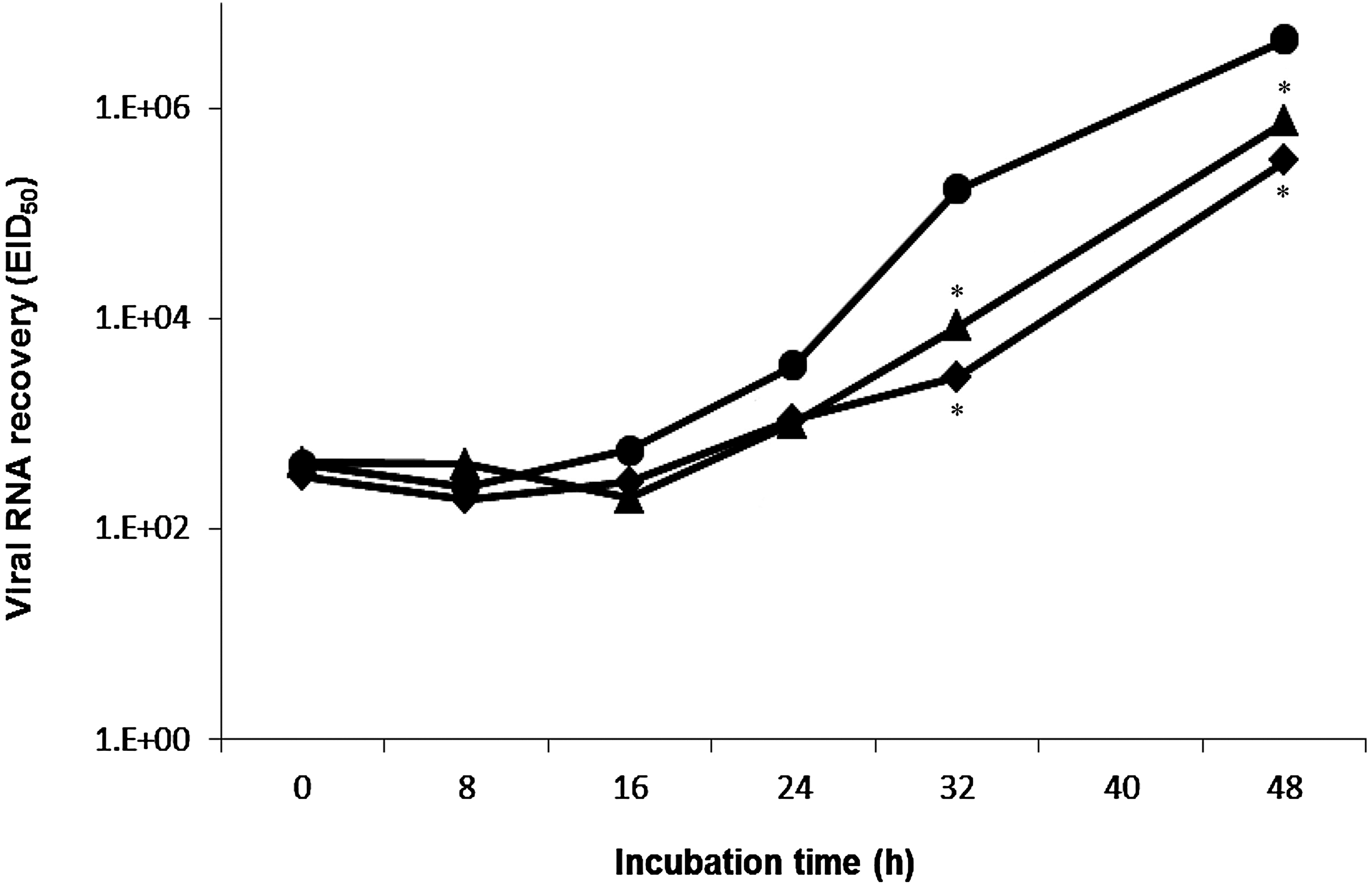
Virus replication curve in MDCK cells. MDCK cells were infected (MOI: 0.01) with rgH7N1 HP (●), rgH7N7 HPLPNS1 (♦), or rgH7N7 HPHPNS1 (▲), and incubated for indicated periods of time. The amount of viral RNA in cells was determined by qRT-PCR. Indicated are the significant differences in the viral RNA of rgH7N7 HPHPNS1 or rgH7N7 HPHPNS1 compared to rgH7N7 HP; *p≤0.05.
Clinical signs of infection
Overall effects of infection were examined by determining weight gain and mortality (Fig. 2). Significant differences in weight gain of infected chickens compared to the PBS controls were found for all treatment groups (Fig. 2A). The effects on weight gain were most prominent for rgH7N7 HP and rgH7N7 HPHPNS1 inoculated chickens. At day 3, 4 and 7 p.i., the mean weight of rgH7N7 HP and rgH7N7 HPHPNS1 inoculated chickens was also significantly different from rgH7N7 HPLPNS1 inoculated chickens (p≤0.05; not indicated). Chickens died as a consequence of inoculation with rgH7N7 HP and rgH7N7 HPHPNS1, however at a different mortality rate. All chickens (10/10) died within 7 dpi with rgH7N7 HP, whereas 5 out of 10 chickens died due to rgH7N7 HPHPNS1 infection (Fig. 2B). However, no chickens died after inoculation of rgH7N7 HPLPNS1 within the 7 days observation period. No mortality was observed in the PBS-inoculated chickens.
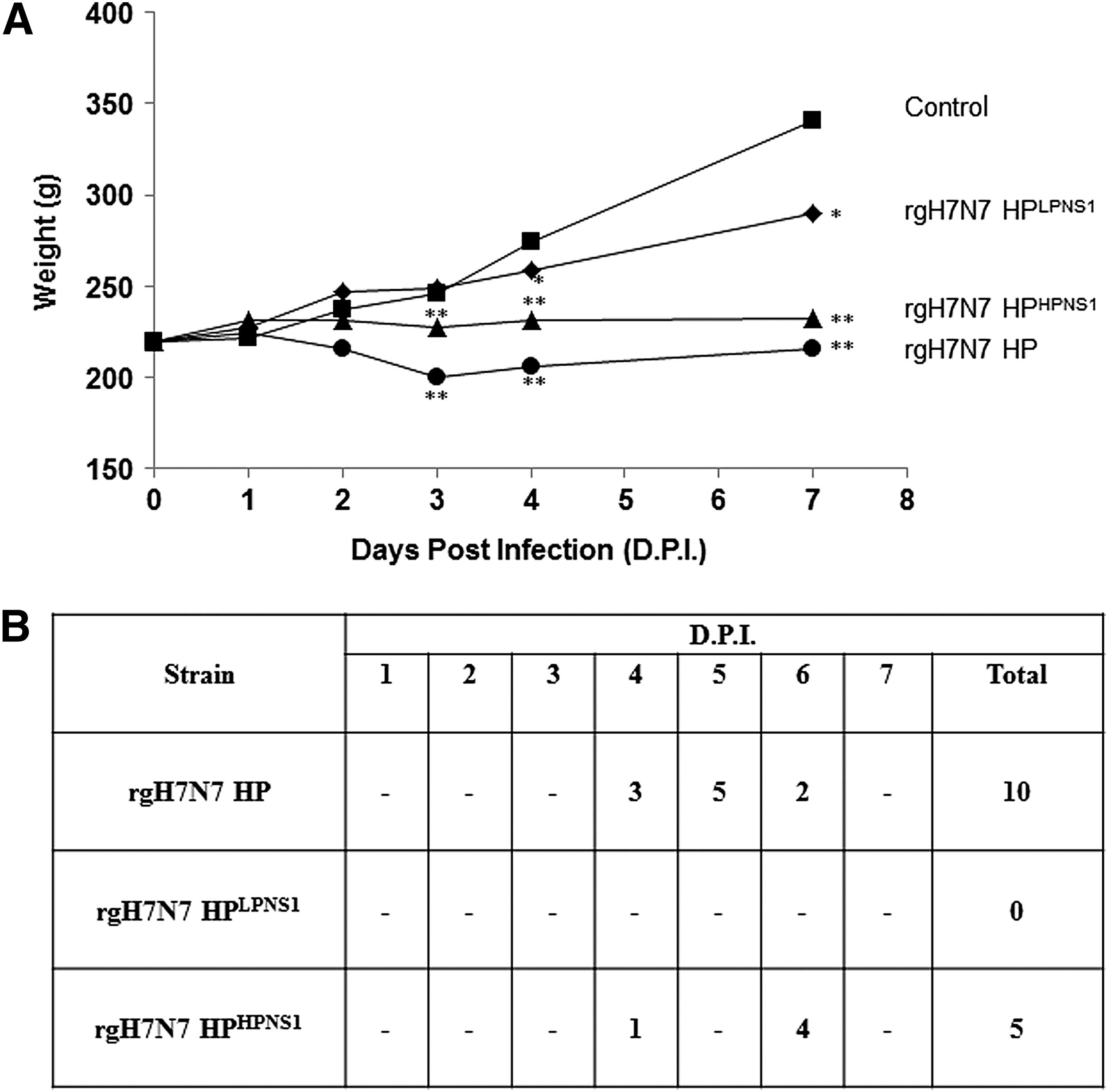
Weight gain and mortality during the experimental period. Chickens inoculated with rgH7N7 HP (●), rgH7N7 HPLPNS1 (♦), rgH7N7 HPHPNS1 (▲), or PBS control (■) were screened for weight gain
Viral load and shedding
The presence of different NS1-segments in the backbone of rgH7N7 HP resulted in differences in viral RNA load in lungs, brains, and cloacal swabs of inoculated animals (Fig. 3).At different time points, the groups inoculated with the reassortant viruses rgH7N7 HPLPNS1 and rgH7N7 HPHPNS1 displayed a significantly lower viral RNA load when compared to the group inoculated with the backbone strain (rgH7N7 HP). These differences were more predominant during the first days after inoculation. Comparison of viral RNA load between rgH7N7 HPLPNS1 and rgH7N7 HPHPNS1 resulted in a significant higher viral RNA load at 1 and 2 dpi in lungs and at 4 dpi in brains for rgH7N7 HPHPNS1 (p≤0.05; not indicated). Thus, clear differences in maximal viral RNA load, as well as in the kinetics of viral RNA accumulation in lungs and brains, were seen for the reassortants compared to the backbone strain, as well as between the reassortants rgH7N7 HPLPNS1 and rgH7N7 HPHPNS1. The brains were chosen as representative of a secondary infected organ since viral RNA accumulation in brains and heart showed comparable profiles (data not shown). In agreement with the data on viral RNA load in tissue, a delay in cloacal shedding was seen in both rgH7N7 HPLPNS1 and rgH7N7 HPHPNS1 inoculated chickens, especially in the first days after inoculation with significant differences compared to rgH7N7 HP at day 1 (rgH7N7 HPLPNS1; p≤0.01, rgH7N7 HPHPNS1; p≤0.05), day 2 (rgH7N7 HPLPNS1; p≤0.01), and day 4 (rgH7N7 HPLPNS1; p≤0.01). Compared to rgH7N7 HPLPNS1, a significant higher viral shedding via the cloaca could be detected at day 2 (p≤0.01; not indicated) and day 3 (p≤0.05; not indicated) for rgH7N7 HPHPNS1.
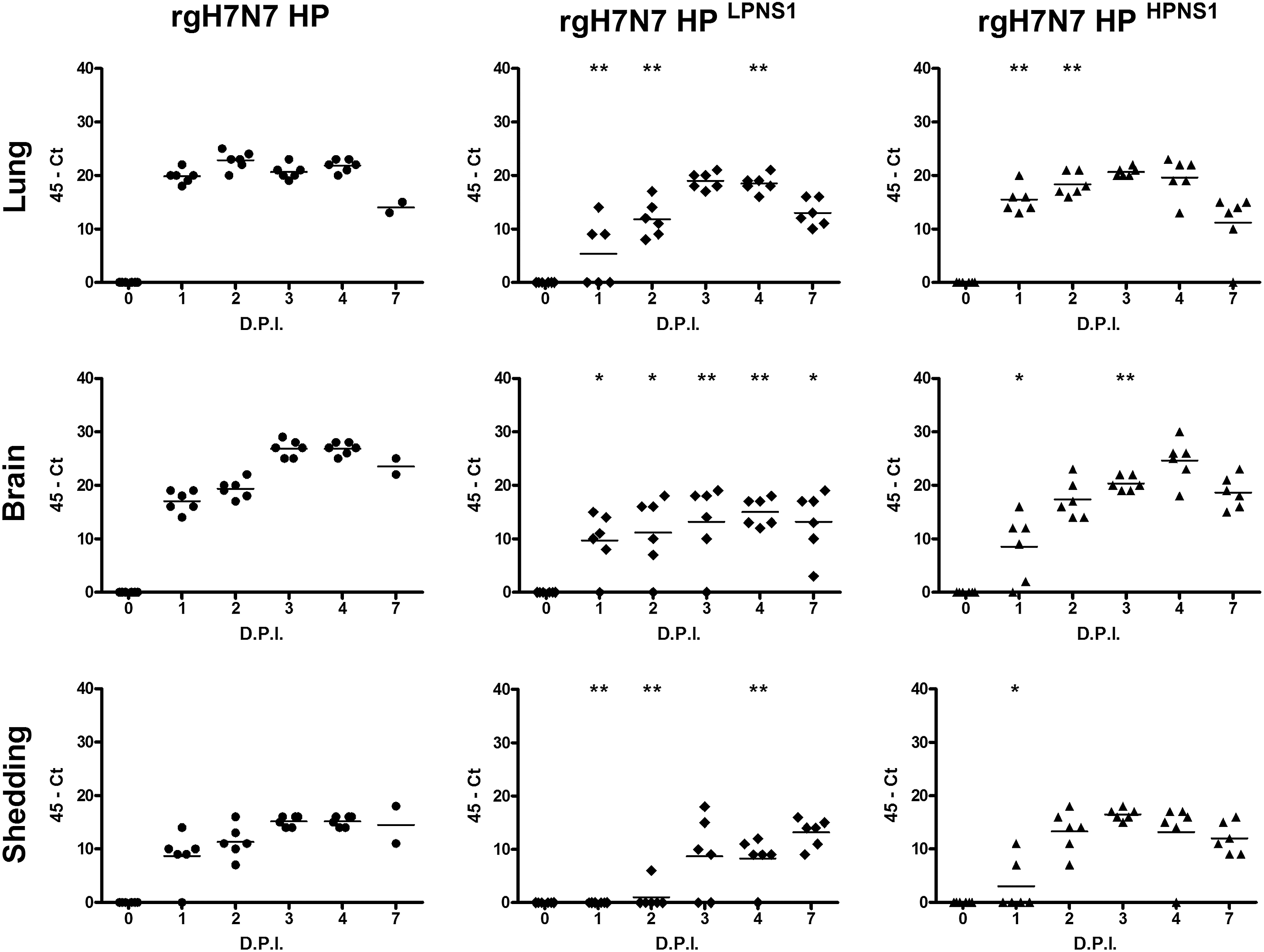
Scatter plot of 45-Ct values of viral RNA in lungs and brains from individual birds at different days post inoculation (DPI). Chickens were inoculated with rgH7N1 HP (●), rgH7N7 HPLPNS1 (♦), or rgH7N7 HPHPNS1 (▲), and the presence of viral RNA in lungs, brains, and cloacal shedding was examined at different time points. Triangles represent the 45-Ct value of individual birds. The horizontal line represents the mean of 6 birds. Due to high mortality, only 2 rgH7N1 HP inoculated chickens could be sampled at 7 dpi. No Ct values were found for PBS inoculated controls. Significant differences in viral load in rgH7N7 HPLPNS1 or rgH7N7 HPHPNS1 infected chickens compared to rgH7N7 HP infected chickens were indicated; *p≤0.05; **p≤0.01.
Expression profiles of TLR3, IL1β, IL6, IFNα, and IFNβ mRNA in lungs, brains, and heart
In Figure 4 and Figure 5, the results are shown for the induction of TLR3, IL6, and IFNα mRNA after infection with the different strains. The results for IL1β and IFNβ mRNA induction were largely comparable to those of IL6 and IFNα, respectively, and are therefore not shown. Differences in mRNA profiles were found between strains and between organs (lungs vs. brains).

qRT-PCR of TLR3, IL6, and IFNα mRNA levels normalized to 28S in lungs and brains of infected chickens. Chickens were inoculated with rgH7N1 HP, rgH7N7 HPLPNS1, or rgH7N7 HPHPNS1, and the presence of mRNA in organs was examined at different days post infection (D.P.I). For determination of statistical significance time points, p.i. were compared to controls; *p≤0.05; **p≤0.01.
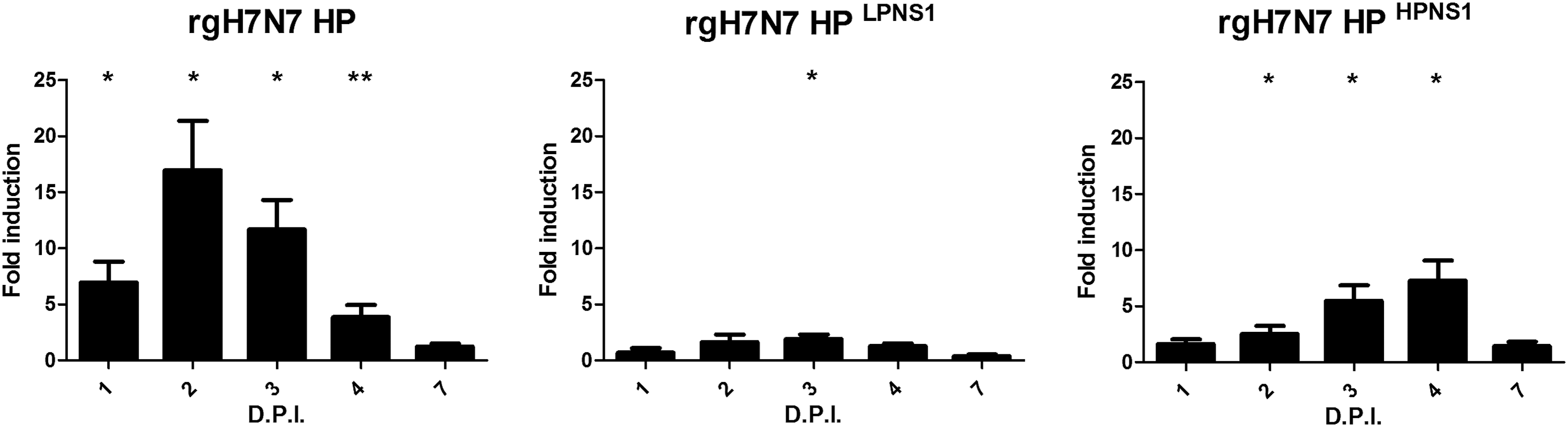
qRT-PCR of IL6 mRNA levels normalized to 28S in heart of infected chickens. Chickens were inoculated with rgH7N7 HP, rgH7N7 HPLPNS1, or rgH7N7 HPHPNS1, and the presence of IL6 mRNA in heart was examined at different days post infection (D.P.I). For determination of statistical significance time points, p.i. were compared to controls; *p≤0.05; **p≤0.01.
TLR3
TLR3 mRNA expression in the lung was significantly upregulated after infection with rgH7N7 HP. However, after infection with the reassortants, no changes were detected in TLR3 mRNA in the lung compared to the PBS control, which was in sharp contrast to the expression in the brains. For all three viruses, a clear upregulation of TLR3 mRNA was detected from either 1 or 2 dpi compared to the PBS control.
IL6
Upregulation of IL6 mRNA was found in the brain and heart samples of all infected chickens compared to the PBS control, and only in the lungs of chickens treated with rgH7N7 HP. No changes were seen in the lungs of chickens infected with the reassortants. Similar results were obtained for IL1β mRNA expression (data not shown).
IFNα
IFNα mRNA expression did not change in the lungs of chickens, independent of the treatment. Furthermore, no induction of IFNα mRNA expression was found in the brains of rgH7N7 HPLPNS1 infected chickens. IFNα mRNA expression was upregulated after rgH7N7HP (at 1 dpi) or rgH7N7 HPHPNS1 (from day 2 p.i. on) infection. Similar results were obtained for IFNβ mRNA expression (data not shown).
Discussion
Although several genes contribute to the pathogenicity of AIV in vivo, the NS1 gene has received considerable attention (3,5). Alignment studies between the closely related pathogenic H7N1variants (HPAIV and LPAIV) of our previous study (29) revealed prominent differences especially between the HA and NS1 proteins (16). To study the contribution of NS1 to virulence of AIV for chickens in vivo, reassortant viruses carrying the NS1 segment of HPAIV H7N1 (rgH7N7 HPHPNS1) or LPAIV H7N1 (rgH7N7 HPLPNS1) in the genetic background of rgH7N7 HP were generated using reverse genetics. Comparison of the reassortants allowed us to examine the effects of a 2 amino acid (aa) difference in the nuclear export signal (NES) in combination with a 6 aa truncation in the nucleolar localization signal (NoLS) of the NS1 protein on pathogenesis. Furthermore, comparison of the backbone strain rgH7N7 HP with the rgH7N7 HPLPNS1 reassortant allowed us to study the effect on pathogenesis of differences between alleles A and B of NS1, which were not related to NES and/or NoLS.
Clear differences between rgH7N7 HPHPNS1 and rgH7N7 HPLPNS1 infected chickens were found in weight gain, mortality rate, and viral RNA load in lungs, brains, and cloacal swabs. Furthermore, in the brains, higher mRNA expression levels of type I interferons and pro-inflammatory cytokines were found for rgH7N7 HPHPNS1 compared to rgH7N7 HPLPNS1 infected chickens. Considerable differences in IFN and pro-inflammatory cytokine mRNA expression between lungs and brains could not be related to differences in viral RNA load between these organs. Therefore, different levels of regulation of these genes in lungs and brains indicate organ-dependent differences in host-pathogen interactions (6). Higher levels of type I interferons and pro-inflammatory cytokines are apparently not effective in clearing the virus, as can be concluded by comparing disease development and viral load in rgH7N7 HPHPNS1 versus rgH7N7 HPLPNS1 inoculated chickens. On the contrary, peak levels of cytokine mRNA in the brains seemed to coincide with the first cases of mortality of rgH7N7 HPHPNS1 inoculated chickens.
Although differences between the NS1-reassortants could not be related to differences in replication kinetics in MDCK cells, differences in viral load between rgH7N7 HPLPNS1 and rgH7N7 HPHPNS1 indicate that replication differences in vivo cannot be excluded.
Furthermore, it has been shown that the differences between the NS1 of HPAIV H7N1 and LPAIV H7N1 in NoLS and NES contribute to replication and presumably to pathogenicity. This may be caused by the presence of mutations in HPAIV H7N1 that correlate with a stronger IFN antagonistic activity in primary chicken fibroblasts (16). Although we did find that rgH7N7 HPHPNS1 was more pathogenic compared to rgH7N7 HPLPNS1, in contrast to the in vitro study of Keiner et al. (16), in vivo rgH7N7 HPHPNS1 showed higher levels of IFNα/β mRNA in the brains. In the lungs, no effect on IFNα/β mRNA levels could be detected for any of the strains. Differences in weight gain, mortality, viral load, and host–gene induction were also found between rgH7N7 HP and rgH7N7 HPLPNS1, which have the same NES and C-terminal amino acid sequences, but differ markedly in other allele-specific amino acids. Compared to rgH7N7 HPLPNS1, a higher mortality rate and increased viral RNA accumulation in the organs was seen shortly after rgH7N7 HP inoculation. The differences between rgH7N7 HPLPNS1 and the backbone strain may, at least partly, be related to differences in replication speed, since differences in replication in MDCK cells exist. Differences in the induction of host genes between the backbone strain and rgH7N7 HPLPNS1 were found in the lungs (TLR3, IL1β/IL6) and the brains (TLR3, IFNα/β, IL1β/IL6). rgH7N7 HPHPNS1 seems to induce an intermediate response between the backbone strain and rgH7N7 HPLPNS1, with regard to changes in weight, mortality, and IL1β/IL6 mRNA expression in the brain. Karpala et al. (11) found in the lungs, but not in the brains, of rgH5N1 HP inoculated chickens a strong IL6 and IFNα/β mRNA induction 36 h post-infection. In contrast to our study, large differences in the viral load between lungs and brains were found by Karpala et al. (11). This makes a reliable comparison with our study difficult and might indicate viral strain related differences. It has been found that in vitro the A allele was more efficient at suppressing type I IFN responses in comparison to the B allele, although differences between strains exist (25,39). No unambiguous differences in IFNα/β mRNA responses were found between the A and B alleles in our study. In the lungs, no IFNα/β mRNA induction was found for any of the strains. Compared to rgH7N7 HPHPNS1, the IFNα/β mRNA upregulation by rgH7N7 HP was suppressed in the brains. However, compared to rgH7N7 HPLPNS1 the backbone strain showed a higher IFNα/β upregulation at day 1 in the brains. Apparently, the in vivo situation may be more complex than selective in vitro data might show (27). Nevertheless, since differences in disease development between the strains as seen in this study can only be attributed to differences in NS1, the overall effect of the native A allele of rgH7N7 HP resulted in a higher pathogenicity, with the highest mortality compared to the B allele (rgH7N7 HPHPNS1 and rgH7N7 HPLPNS1).
Differences in aa sequence between the NS1 A and B alleles are present throughout the entire amino acid sequence (Fig. 6). As a consequence, all domains of NS1 might be affected, and it is therefore difficult to determine the contribution of changes in individual domains to the reduced virulence of the reassortants from this study. Known substitutions that could alter pathogenicity (7,19,20,21,26,31) were not found except for a difference between the NS1-reassortants and the backbone strain at position 103, which is related to binding of CPSF30 (17). Compared to the backbone strain, our reassortants have a Y103F mutation, which could not be related to altered IFN β production in A549 or MiLu cells (25). Whether this and/or other amino acid differences between alleles A and B are responsible for the difference in pathogenesis in chicken remains to be determined.
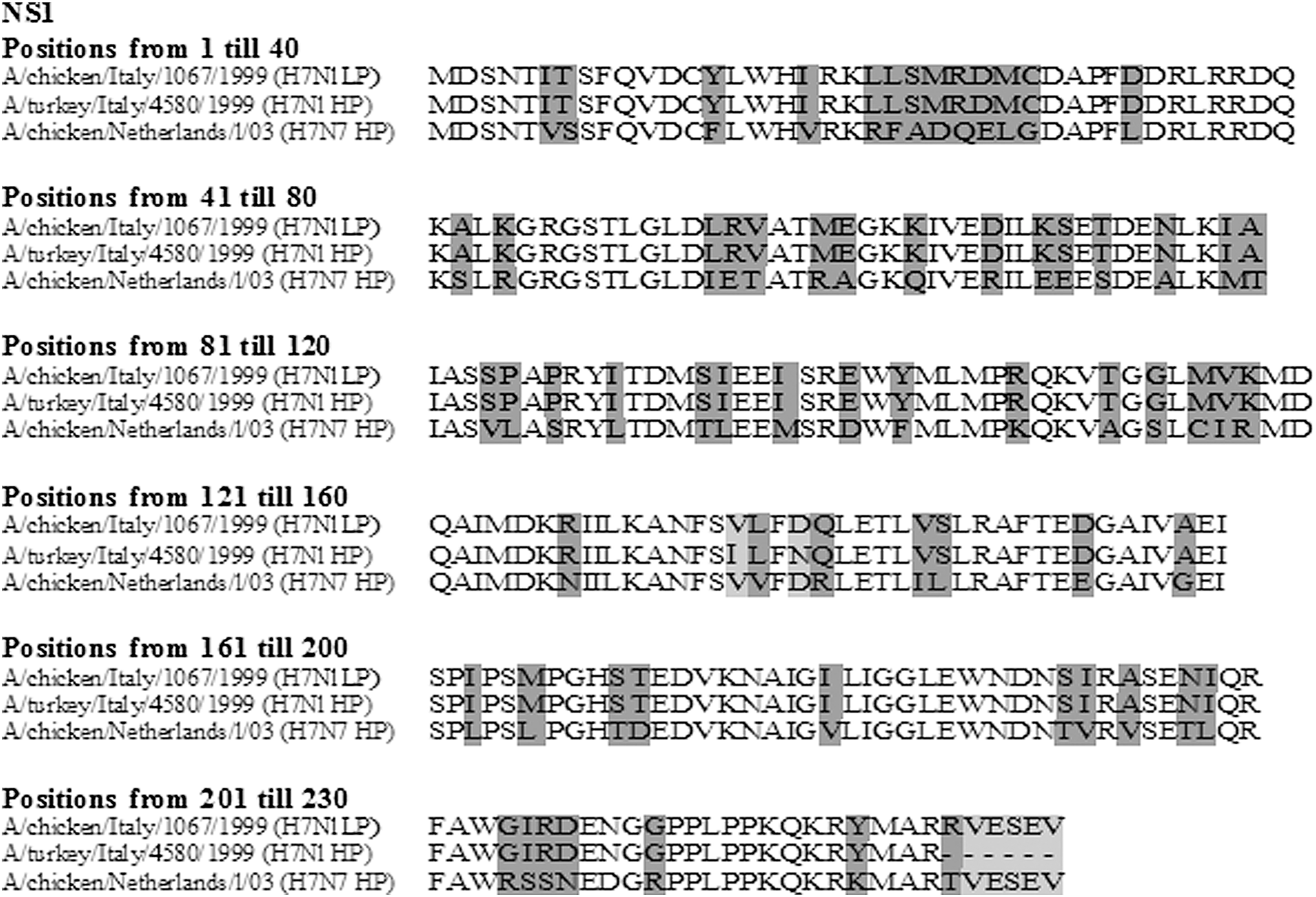
Comparison of NS1 amino acid sequences of A/chicken/Italy/1067/1999 (ACZ47431, LPAIV H7Nl), A/turkey/Italy/4580/1999 (ABO52769, HPAIV H7Nl), and A/chicken/Netherlands/l/03 (AAR04369, HPAIV H7N7). Differences between A/chicken/Italy/1067/1999 (H7Nl LP) and A/turkey/Italy/4580/1999 (H7Nl HP) are light gray color. Differences between A/chicken/Italy/1067/1999 (H7Nl LP) and A/chicken/Netherlands/l/03 (H7N7 HP) or differences between all the strains (position 225) are dark gray color.
Pattern recognition receptors (PRRs) play a key role in the response to viral pathogens such as AIV via the production of pro-inflammatory interferons and interleukins (13,14). In chicken, MDA5 (12) and TLR3 (36) are thought to be the most important viral RNA sensors. In agreement with other reports (2,10), expression of TLR3 and cytokine mRNA was considerably increased in the brains upon infection with AIV. In contrast, TLR3/IL1β/IL6 mRNA regulation in the lungs was limited especially for the NS1-reassortants. The reason for the absence of a firm mRNA induction in the lungs remains unclear. Chickens infected with the NS1-reassortants differ remarkably in viral load, weight gain, and mortality. However, these differences do not seem to result in large differences in host gene responses in the lungs. Therefore, we speculate that processes in the lungs are not directly related to the differences in viral load (6,30). In humans, mortality of the H1N1 and H5N1 pandemic strains was related to hyper induction of pro-inflammatory cytokine production (hypercytokinemia) and simultaneous induced cell death-related genes (32), probably enhanced by viral proteins as NS1 (35) and PB-F2 (23). Speculating from the mammalian data, a ‘cytokine storm‘ upon infection might be related to the clinical manifestations in AIV infected chickens (11). In support, the pro-inflammatory responses that were seen in chickens but not in ducks were suggested to be related to the differences in disease development between chickens and ducks (1,2). The consequent differences in weight gain, mortality, and viral load (rgH7N7 HP □ rgH7N7 HPHPNS1 □ rgH7N7 HPLPNS1) seem in line with an increased production of IL1β/IL6 mRNA in the brain. We speculate that in chickens, mortality might result from an increase in (virus triggered) NS1-dependent pro-inflammatory cytokine expression and consequent apoptosis in vital organs such as the brain. This hypothesis is supported by findings in ducks (8,22) and ferrets (28) demonstrating that localization of HP H5N1 in heart and brain tissue might correlate with disease severity and mortality. Additional measurements showed that also the pattern of IL6 mRNA induction in the brains and heart was largely comparable (Fig. 5).
In conclusion, differences in influenza virus pathogenicity due to differences in NS1 were established in vivo. These differences are due to mutations that influence compartmentalization of NS1and to differences in allele-specific amino acid sequences of NS1. Differences in NS1-dependent pathogenicity between the viral strains coincidence with increased pro-inflammatory cytokines in the brain. We hypothesize that NS1-related pro-inflammatory cytokines induce apoptosis in vital organs such as brain and heart, thereby contributing to mortality of AIV-infected chickens.
Footnotes
Acknowledgment
Financially supported by EU 6th framework Flupath (Grant 044220) and program “Impulse Veterinary avian influenza research in the Netherlands” Dutch Ministry of Agriculture, Nature and Food Quality.
Author Disclosure Statement
No competing financial interests exist.