




Abstract
Residues 221–239 of rubella virus E1 glycoprotein contain antibody neutralization domains, and the solvent-exposed charged amino acids at the binding interface may be crucial for binding ability. However, the role of charged amino acid residues on the E1 epitope in peptide–antibody binding is unknown. To investigate the role of single amino acid substitutions on the important neutralizing epitope, biolayer interferometry and serological tests were performed. There are three charged residues in the neutralizing epitope: D229, R237, and H238. Substitution of D229 for amino acid A had no influence on the binding activity of the antibody to the peptide. However, substitutions of R237 or H238 for charged amino acid H or R were found to abolish the binding activity. Furthermore, substitution of an uncharged amino acid Q236 for a charged amino acid D was found to reduce the binding activity significantly. Thus, R237 and H238 are key amino acids in the rubella virus E1 neutralization epitope.
Introduction
R
The envelope of RV contains two envelope glycoproteins: E1 and E2 (481 and 282 amino acids respectively). Previous studies have shown that E2 carries two antibody neutralization domains (E2[1–16] and E2[1036]) and a T-cell epitope (E2[14–29]), but it is not sufficient to protect animals against RV infection (7). However, various studies have concluded that virus protection is mainly induced by neutralizing anti-E1 antibodies (4,16,29). E1 glycoprotein, structurally homologous to viral class II fusion proteins and featuring three β-sheet-rich domains (9), is a type I membrane protein inserted in the viral enveloping membrane (25). Several studies of E1 have revealed that E1 carries the principal antigenic determinants, and is responsible for receptor recognition and low-pH-triggered membrane fusion upon internalization through receptor-mediated endocytosis (9). On one hand, it was found that antibodies binding to amino acids 221–239 of RV E1 are abundant in RV-positive individuals, but there were few antibodies in congenital rubella syndrome patients who were persistently infected with RV (23,33). On the other hand, the amino acids 213–239 of RV E1 (E213–239 peptide) have been used as a coated antigen in enzyme-linked immunosorbent assay (ELISA) for the screening of RV neutralizing antibodies (14).
At present, the role of the amino acid residues of the E213–239 peptide is not understood. The solvent exposed positively charged amino acids at the binding interface were found to be crucial for binding ability (3,27). Enumeration of potential binding sites on the surface of the predicted 3D models suggested that R237 and H238 are positively charged amino acids located on the E213–239 peptide.
In this study, we performed site-directed mutational analyses of charged amino acids (D229, R237, and H238) and uncharged (Q236) on the E213–239 peptide to explore the role of these amino acids sites. We also determined the binding kinetics of the peptide–antibody interaction by biolayer interferometry, and detected RV-specific antibody levels by peptide-ELISA in order to analyze the roles of amino acids in the antibody–antigen interaction.
Materials and Methods
Peptides
Peptides were synthesized by solid-phase N-α-9-flurenylmethyloxycarbonyl chemistry, purified by reverse-phase high performance liquid chromatography, and confirmed by amino acid analysis and electrospray mass spectrometry (Sangon).
Antibodies and antisera
The mouse anti-E1 IgG antibody and goat anti-inactivated RV antibody were purchased from Abcam. RV-positive individual sera were collected from the blood bank of Qilu Hospital of Shandong University in 2012, and were found positive for RV infection by testing with Anti-Rubella Virus ELISA (EUROIMMUN AG).
Peptide ELISA
Peptide ELISA plates were made according to a previously described procedure (4,14). The E213–239 peptide ELISA (BCH-ELISA) is considered an effective method to detect neutralizing antibodies against the E213–239 peptide (19). The peptide (1 μg/well) was coated on to 96-well ELISA plates (high binding; Corning Costar 918) in incarbonate buffer (40 mM NaHCO3/Na2CO3, pH 9.6) for 16 h at room temperature (22–24°C) with gentle shaking. After incubation, the plates were washed with phosphate-buffered saline (PBS; pH 7.4). After 1 h blocking in PBS containing 1% BSA (dry powder supplied by Merck), the plates were washed three times with PBS containing 0.05% Tween-20 supplied by Sigma. Sera and calibration sera were diluted 1:50 with PBS, and 100 μL diluent was added to each ELISA plate well and incubated for 1 h with gentle shaking. After washing twice with PBS containing 0.05% Tween-20, goat anti-mouse IgG (supplied by Abcam, diluted 1:10,000 in PBS) was added and incubated for 1 h. All blocking and incubation steps were performed at temperatures between 22°C and 24°C. After washing four times with PBS (0.05% Tween-20), the substrate solution (3,3′,5,5′-tetramethylbenzidine; Sigma-Aldrich) was added, sulfuric or phosphoric acid was added after an incubation of 30 min, and the absorbance changes at 450 nm were measured with a Digiscan microprocessor controlled microplate reader (Asys Hitech). Each absorbance value was corrected by subtracting the absorbance value of the respective analogous blank well (lacking the E213–239 peptide and prepared using only coating buffer solution without peptide, but later introducing the respective sera and all the subsequent reagents as described for the properly coated wells). The ELISA positive was defined as the A450 ratio of the sample to the negative control (S/N)>2.1.
Biolayer interferometry
To screen for mouse anti-E1 IgG antibody (goat anti-inactivated RV antibody or RV-positive individual sera) with the highest affinity to the original peptide and its mutants, Protein A Biosensors (ProA), Protein L Biosensors (ProL), and Amine Reactive 2nd Generation (AR2G) biosensors were dipped in and saturated with the peptide solution (ProA–antibody binding, ProL–antibody or PAR2G–peptide binding) for 5 min. After washing for 2 min, the biosensors were dipped in peptide solution for 2 min (antibody–antigen association), then in eluting buffer (glycine/HCl, pH 2) for 3 min (dissociation), and finally in Tris (pH 9) for neutralization. Association (120 s) and dissociation (180 s) curves were recorded for the individual samples, and data were processed and analyzed using the Octet data analysis software 6.4 (Pall ForteBio). The total response value (nm) that was achieved on each surface following a 120 s pulse is given as a function of peptide concentration. The three-parameter Hill equation was used to create the regression line.
B max represents the maximum specific binding, Kd represents the concentration required for half-maximum binding, and h represents the Hill slope.
Mouse studies and vaccination
Peptides were dissolved in DMSO (Sigma-Aldrich) to a working concentration of 5 mg/mL. Six-week-old female BALB/c mice (n=6) were subcutaneously vaccinated in the abdominal flank with 100 μg of peptide prepared in 100 μL emulsion with 50% Complete Freund's Adjuvant (CFA; Sigma-Aldrich) in PBS. Vaccinated mice were further boosted another two times at day 20 with 100 μg of the peptide prepared in Incomplete Freund's Adjuvant (IFA) (Sigma-Aldrich). Control mice (n=6) were vaccinated with PBS/CFA and PBS/IFA on first vaccination and subsequent booster shots respectively. Sera were collected from all mice at day 20, day 40, and day 50 post-vaccination for E213–239 peptide-based ELISA and virion-based ELISA. All experimental protocols in this study were conducted in accordance with the policies established in the Guide to the Care and Use of Experimental Animals.
Virion-based ELISA
Virion-based ELISA is a method that has been comprehensively used (6,14,19,34). The RV JR23 strain was isolated from a RV patient (31). Formaldehyde-inactivated virus particles (15,000 virions per μL in PBS; 100 μL per well) were immobilized on 96-well ELISA plates (high binding; Corning Costar 918). Wells were blocked with PBS containing 0.05% polyoxyethylene-sorbitanmonolaurate (Tween-20) and 1% Bovine Serum Albumin (BSA), and plates were incubated for 1 h at room temperature (22–24°C). Sera were diluted 1:50 with PBS, and 100 μL aliquots were added to each ELISA plate well and incubated for 1 h with gentle shaking. HRP-conjugated goat anti-mouse IgG (Abcam) was used to detect mouse antibodies. Reactions were developed using TMB substrate (Sigma-Aldrich) and terminated by Stop reagent (Sigma-Aldrich). Absorbance was measured at 450 nm. Serum samples from mice immunized with PBS/CFA and PBS/IFA were used as negative controls. The ELISA positive was defined as the A450 ratio of sample to negative control (S/N)>2.1. ELISA readings were done in duplicate.
Statistical analysis
Values are given as the mean±standard deviation (SD). Comparisons between two values were performed using analysis of variance (ANOVA), while statistical significance was assessed by conducting the Bonferroni test. A confidence level of p<0.05 was considered significant.
Results
Interactions between peptide E213–239 and different antibodies
To determine which antibody binding to the wild-type (WT) E213–239 peptide is best, biolayer interferometry was used to analyze the binding reactivity between the E213–239 peptide (trimer of E1 protein shown in Fig. 1A and trimer of E213–239 peptide shown in Fig. 1B) and different antibodies (mouse anti-E1 IgG antibody, goat anti-inactivated RV antibody, and RV-positive individual sera). Both the mouse anti-E1 IgG antibody and RV-positive individual sera could bind to the E213–239 peptide, but the goat anti-inactivated RV antibody could not (Fig. 2). The response value of the mouse anti-E1 IgG antibody at 120 s (RUmax) was 0.7899 nm, but RV-positive individual sera and the goat anti-inactivated RV antibody were only 0.2919 nm and 0.0932 nm respectively. Thus, the anti-E1 IgG antibody was the most appropriate antibody.
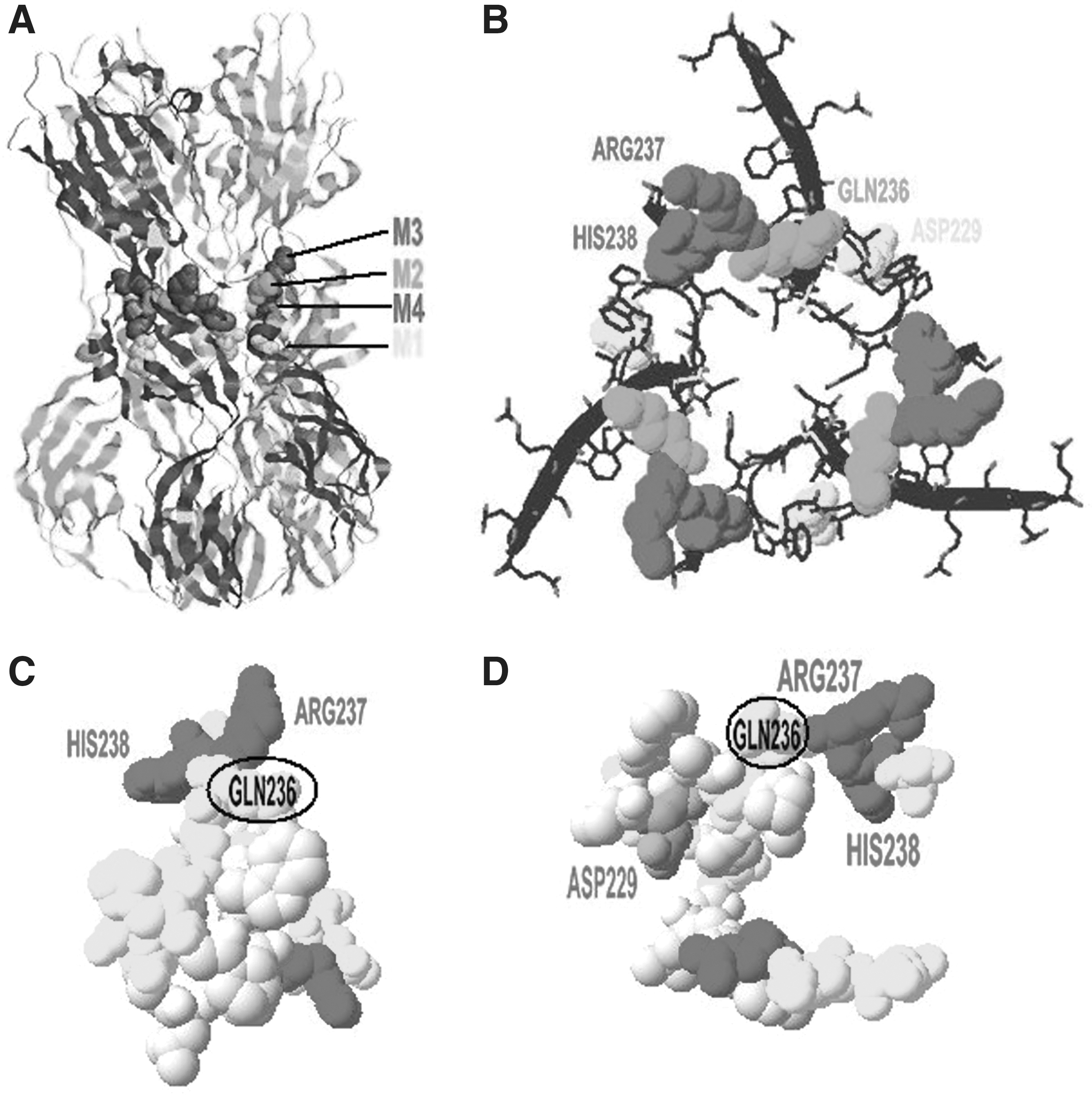
Scheme of mutation sites of the RV E1 protein. (

Competition curves of the peptide E213–239 and different antibodies (anti-E1 antibody, anti-inactivated RV antibody, and RV-positive individual sera). The peptide concentration is 62.5 nM in NaAc-HAc buffer solution, the RV-positive individual sera were diluted 1:10, and both the concentration of anti-E1 antibody and the anti-inactivated RV antibody were 20 μg/mL. All concentrations were determined by preliminary experiments.
Interactions between mutated peptides and mouse anti-E1 IgG
To determine the binding ability of the mouse anti-E1 antibody to the mutated peptides (mutation sites are shown in Fig. 1), serial dilutions of the mouse anti-E1 antibody were added to 96-well plates coated with the peptides. As shown in Figure 3, the E221–239 peptide, the E213–239 peptide, D229A mutant, and Q236D mutant recognized the anti-E1 antibody in a similar manner and was roughly equivalent to the WT peptide, whereas the R237H mutant, H238R mutant, and R237A/H238A mutant did not recognize the anti-E1 antibody. The R237H mutant, H238R mutant, and R237A/H238A mutant did not efficiently bind, suggesting that these peptide mutants were valid epitope hits (Fig. 3).
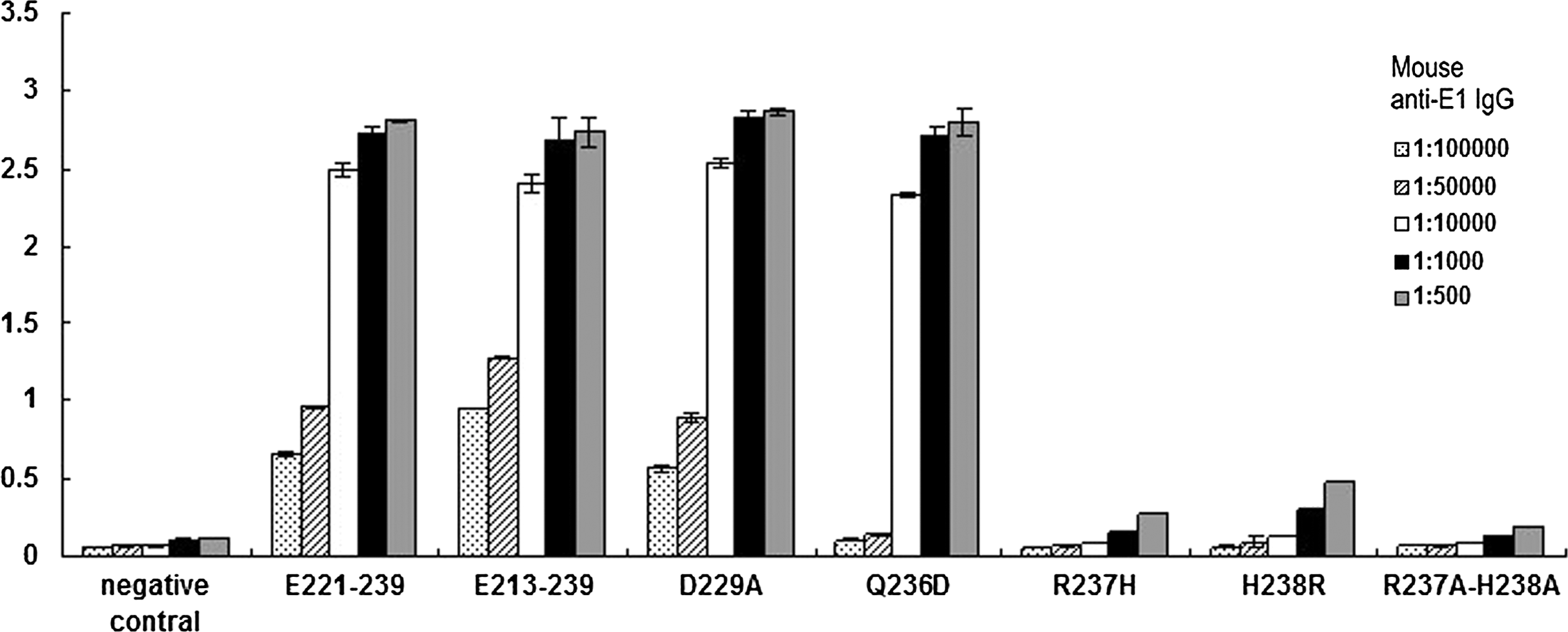
Binding activities of peptides (wild-type [WT] peptide and its mutants) to mouse anti-E1 antibody by the enzyme-linked immunosorbent assay (ELISA) method. The ELISA plate was coated with peptides at 1 μg/well, and the original concentration of the mouse anti-E1 IgG antibody was 2 mg/mL.
Binding kinetics of peptide–antibody binding
To characterize further the binding activity of mouse anti-E1 IgG to peptides, affinity measurements were carried out by biolayer interferometry. Biolayer interferometry is a label-free, optical-based technology, and is an attractive technique for epitope binding due to its speed and low antigen consumption (1,11,28). Kinetic binding measurement was performed on the peptides captured on the surface of Octet red probes with anti-E1 antibodies in solution. This assay format is good for accurately assessing the on rate, off rate, and affinity to peptides. The observed range in peptide–antibody binding affinity was analyzed by a hierarchy in the total amount of mAb on the sensor chip surface at 120 s (RUmax), indicating variability in total antigen–antibody complexes formed on the sensor surface (D229A>E221–239>E213–239>Q236Q>R237H≈H238R≈R237A/H238A; Fig. 4). High-affinity binding was observed for the E221–239 peptide, the E213–239 peptide, and D229A mutant (Kd =2.48 nM, Kd =3.67 nM, and Kd =2.83 nM; Fig. 4). These results suggest that the structures of these peptides for binding to the anti-E1 antibody are intact. The on rate for the R237H mutant, H238R mutant, or R237A/H238A mutant was markedly slower than that for the WT peptide E221–239 or E213–239 (Fig. 4).
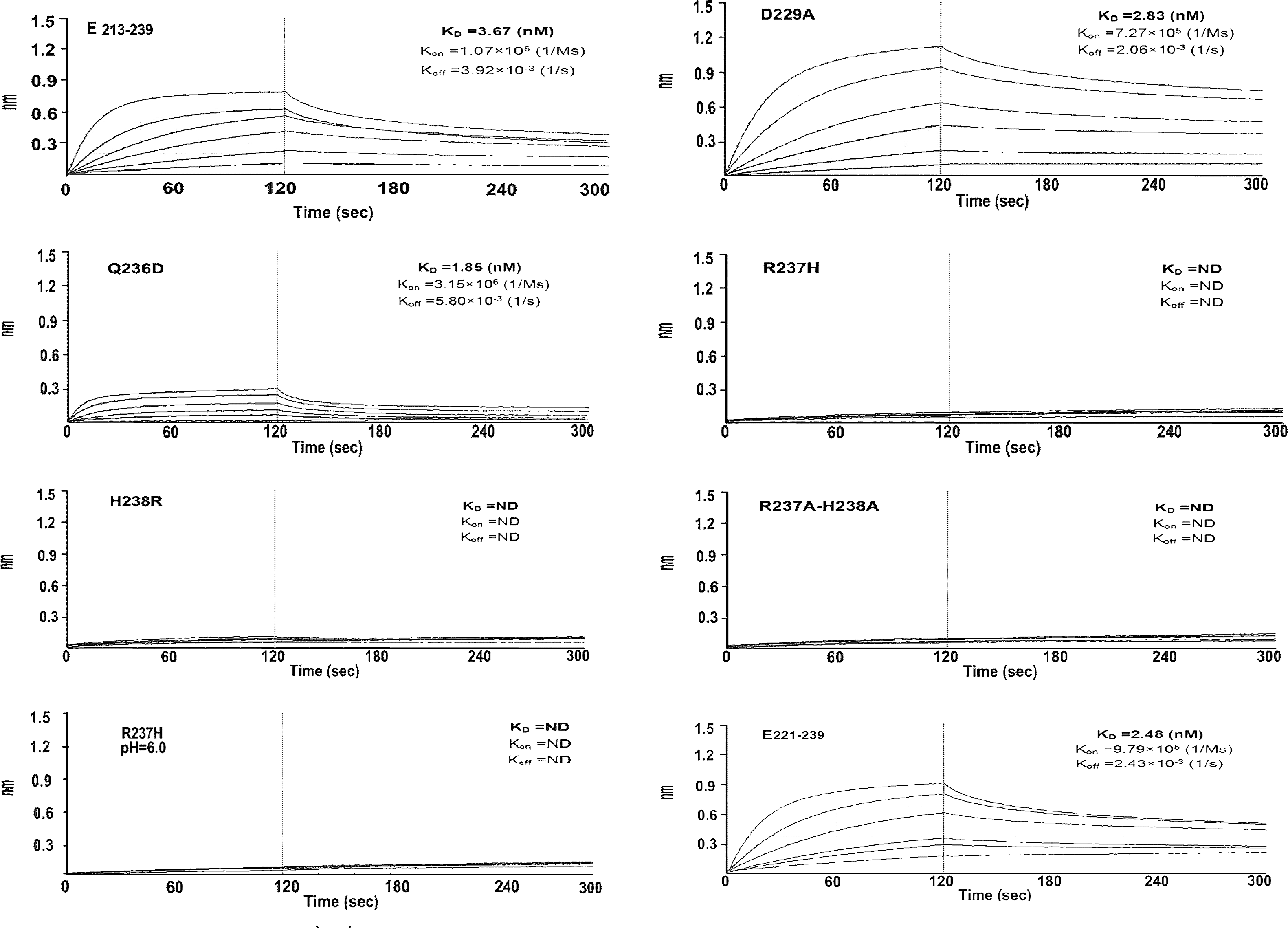
Binding kinetics of seven peptides (the original peptide and its mutants) to mouse anti-E1 IgG. Recognition of mouse anti-E1 IgG by peptide E221–239, peptide E213–239, D229A mutant, Q236D mutant, R237H mutant, H238R mutant, and R237A-H238A mutant was assessed by Octet using biolayer interferometry; representative curves are shown. Curves are the experimental traces obtained from biolayer interferometry experiments. The calculated dissociation constants of mouse anti-E1 IgG with the peptide-coated surface over a range of concentrations from 1.95 to 62.5 nM in NaAc-HAc buffer solution at room temperature.
WT and mutated peptides bind to the antibody in a dose-dependent manner
The binding efficiency of the antibody to the WT and mutated peptides and the dose–effect relationship between antibody and peptides were determined by biolayer interferometry. With a rise in concentrations of peptides from 1.95 to 62.5 nM, the response values of the E221–239 peptide–antibody, the E213–239 peptide–antibody, D229A mutant–antibody, and Q236D mutant–antibody gradually increased. It indicates that the antibody could bind to these peptides in a dose-dependent manner (Fig. 5). However, no dose-dependent relationship was observed when the antibody bound to R237H, H238R, and R237A/H238A mutants, showing that the anti-E1 antibody cannot bind to these mutants.

Dose–response curve of peptides to anti-E1 IgG. The anti-E1 IgG was 20 μg/mL. The binding of anti-E1 IgG to serial diluted peptides gradually increased from 1.95 to 62.5 nM. The total RU that was achieved on each surface following a 120 s pulse is given as a function of peptide concentration. The three-parameter Hill equation was used to create the regression line.
Relationship between peptide–antibody binding and the isoelectric points of peptides
To determine whether the reduced affinity of R237H, H238R, or R237A-H238A to the antibody was due to PI changes of the peptides, the binding affinity of R237H, H238R, R237A-H238A, D229A, and Q236D was measured, and their PI values were calculated by Compute PI/MW tool on the ExPASy server (29). The S/N values of D229A and Q236D (antibody concentration: 0.2 μg/mL) were 38.29±0.97 and 35.24±1.04 respectively, which showed high affinity with the anti-E1 antibody (S/N>2.1), and calculated PI values of H238R, D229A, R237H, Q236D, and R237A-H238A were 9.02, 9.02, 7.0, 6.9, and 6.73, respectively (Table 1). The results indicated that D229A and H238R had the same PI, but the affinity of D229A was significantly different from H238R. Q236D also had a similar PI to R237H and R237A-H238A, but its affinity was different from the other two. So there was no relation between the binding ability and the PI of peptides, suggesting that the PI of peptides is not a critical determinant of the peptide–antibody binding interaction.
The isoelectric points were calculated by the Compute PI/MW tool on the ExPASy server according to Gasteige et al. (12).
Reactivity of antibodies against inactivated whole RV and E213–239 synthetic peptide
To evaluate the capacity of these mutants to elicit neutralizing antibody responses, BALB/c mice were vaccinated with them, and then antibodies in the sera of the mice were examined by the E213–239 peptide ELISA at 20 days, 40 days, and 50 days post the first vaccine (dpv). As seen in Figure 6A, specific antibodies measured by the E213–239 peptide ELISA appeared following injection of the E221–239 peptide or the E213–239 peptide at 40 dpv (S/N=2.14, S/N=2.60). The mean antibody titers of the E221–239 peptide group or the E213–239 peptide group was significantly higher (p<0.05) than the negative control group at 20 dpv, 40 dpv, and 50 dpv. There was no significant difference in antibody responses between the groups immunized with peptide mutants and the negative control group (p>0.05; S/N<2.1). These findings suggest that these peptide mutants cannot induce specific reactive antibodies response to the E213–239 peptide. However, ELISA binding titers against the inactivated RV virion were not detected in the WT peptide and its mutant groups, which indicates that the virion-based ELISA was not useful for the detection of anti-E213–239 IgG antibodies (S/N<2.1; Fig. 6B).
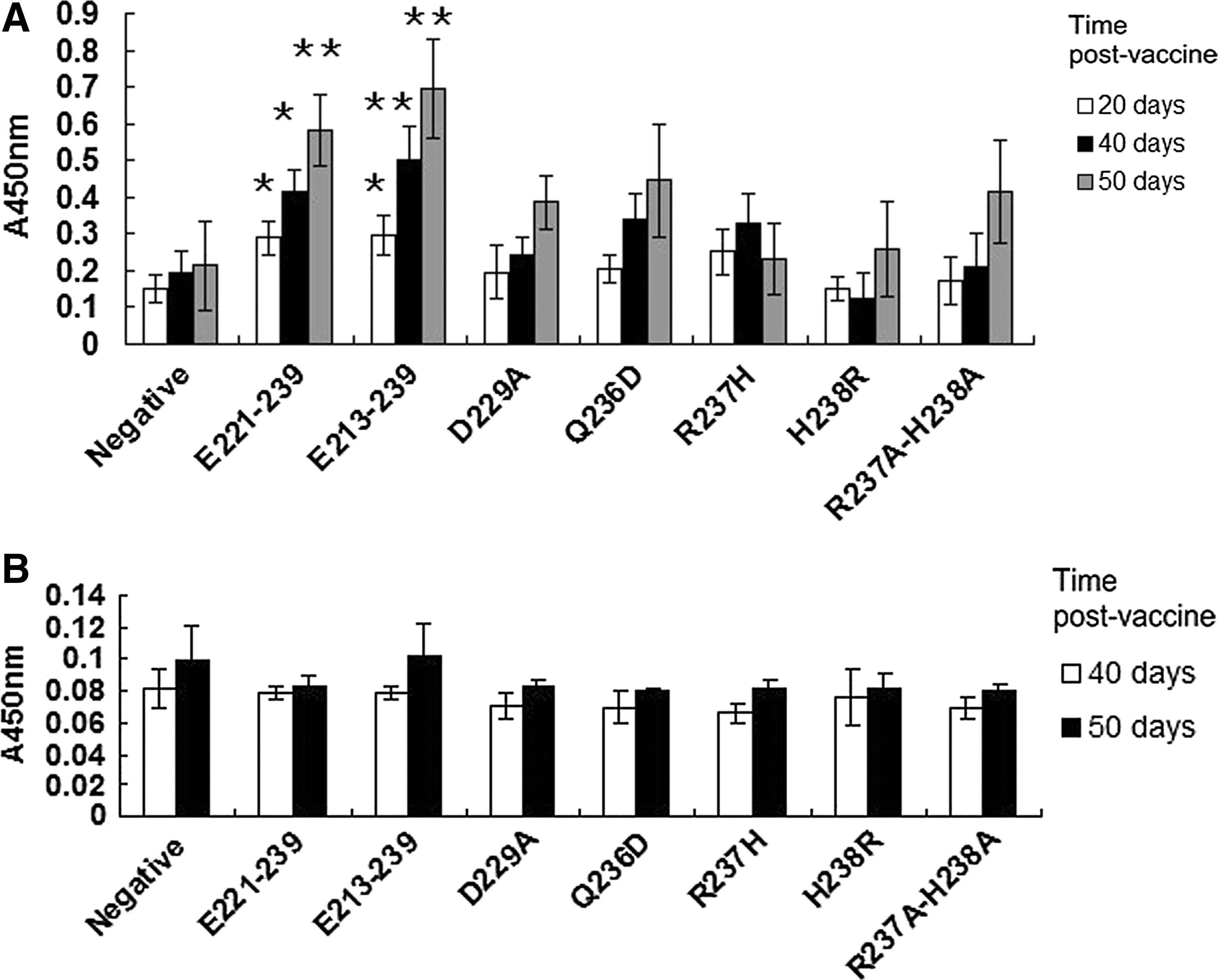
Immune response of BALB/c mice following immunization with the original peptide and its mutants. Mice were immunized with 100 μg of peptides in complete or incomplete Freund's adjuvant and bled by retro-orbital puncture, and the sera were analyzed for antibodies against the original peptide (
Discussion
Identification of epitopes capable of binding with antibodies will significantly facilitate the development of epitope-based vaccines. The RV E1 protein, in particular, is immunodominant, and is the major target of the humoral immune response (4,17,21). Mitchell et al. noted that there are four antibody neutralization domains on E1: E1(213–239), E1(234–252), E1(254–285), and E1(272–285) (21). Of these, one region, E1(213–239), has been shown to induce RV neutralizing antibodies 14 days after injection into mice (10). However, very little is known about the role of the amino acid residues of the E213–239 epitope.
In this study, the role of amino acid residues of the E213–239 epitope was assessed based on the binding activity of epitope mutants and antibodies. The binding results of antibodies to the WT peptide showed that the anti-E1 antibody or RV-positive individual sera but not the anti-RV (inactivated virus) antibody can bind to the peptide (Fig. 2). This shows that the E213–239 epitope was accessible to infectious virions but was unavailable to inactive virions (Fig. 2), and suggests that the anti-E1 antibody was the most appropriate.
The anti-E1 antibody was then used to recognize the epitope mutants in ELISA. ELISA results showed that the positively charged amino acid-mutated peptide in this region not only has a severely reduced interaction with the antibody, but also has reduced immunogenicity (Fig. 3). R237H, H238R, and R237A-H238A completely lost peptide–antibody binding. Thus, the results confirmed the importance of R237 and H238 in peptide–antibody binding. Yonemura et al. found that the calculated isoelectric points (PI) of some proteins were associated with the protein–protein interaction (35). The PI of the whole cytoplasmic domains of some proteins indicated that the domains have a net positive charge or a net negative charge at neutral pH, and the positively charged domain can bind to another protein that has a net negative charge (35). This hypothesis may explain why the PI of protein is a critical determinant of the protein–protein interaction. However, anti-E1 antibody binding to E213–239 peptide or site-directed mutants cannot be explained by this hypothesis. No relation between the binding ability and the PI of peptides was found. These results are consistent with the further findings of Yonemura et al., which suggested that the three-dimensional structure in or around the positively charged amino acid clusters but not the PI is important for specificity of the protein–protein interaction (35).
In addition, we explored the binding kinetic differences in these processes of antibodies binding to peptide mutants. R237-H238 may be on the binding site of the E213–239 epitope, since a mutant carrying the combined change of R237 to Ala and H238 to Ala lost the binding ability. Furthermore, the loss of peptide–antibody affinity arising from R237H at pH 7.4, where the His should be largely uncharged, involved the loss of multiple ionic interactions as well as nonionic interactions. The nonionic interactions involved reflect hydrophobic, hydrogen bonding, or van der Walls interactions (8). The same loss of peptide–antibody affinity was observed at pH 6.0, which should have resulted in protonation of the major fraction of the histidine and its acquisition of a positive charge (Fig. 4). R237 thus appears to have highly specific ionic and nonionic interactions with antibodies, which cannot be replicated by substituting the His side chain. The interaction between R237 and antibodies may be similar to a previous finding, which found that R129 of antithrombin has specific ionic and nonionic interactions with heparin (8). The additional H238 mutated residue had dramatic effect on binding, which indicates that the residues are critical in the binding interaction between the E213–239 epitope and antibodies. Substitution of H238 with the positive-charged Arg lost antibody binding, which may have been caused by alteration in steric effects, or the increased positive charge may affect antibody binding.
For the D229A mutant, the association and the dissociation were slightly increased, while the mutant had similar affinity to the WT peptide. This result was further supported by binding results of ELISA, which showed no significant difference in S/N values between the D229A mutant and the WT peptide. The similar affinity could be because a large part of the negatively charged residue D229 side chain is hidden by the tryptophan side chain and proline (Fig. 1C and D). Thus, D229 was masked by other residues' side chains, and may be not in the peptide–antibody binding interface.
Five mutated peptides were generated in order to reveal the influence of point mutation on immunogenicity. The mutated peptides, D229A, Q236D, R237H, H238R, and R237A/H238A all reduced the immunogenicity of the E213–239 peptide. It is suggested that the substitution for D229, Q236, R237, or H238 affects the immunogenicity of the E213–239 peptide. The identified viral neutralizing B-cell epitope and T-cell epitope are located within the peptide, and reducing immunogenicity of the peptide may be caused by alteration in sequence and structure of these epitopes (5,22). However, all peptide-ELISA positive antisera were negative using RV-IgG ELISA (inactivated RV-IgG ELISA), which is in agreement with the hypothesis proposed by others. Gießauf et al. found that approximately 75% of RV-Ig G negative sera were positive using BCH-178 ELISA, and two of three RV-IgG negative sera were positive using BCH-178 ELISA. This suggested that the E213–239 epitope (BCH-178 epitope) is less accessible using the RV-IgG ELISA (14).
In summary, it has been shown that mutations in the E213–239 epitope reduced binding affinity or abolished its binding affinity to interact with antibodies and reduced antigenicity. Two point mutations (R237H and H238R) in the E213–239 peptide resulted in loss of peptide–antibody binding affinity. Our results provide some key information for developing an effective non-replicating rubella vaccine. Studies are currently underway in our laboratory to investigate more crucial residues that may be involved in RV epitope–antibody binding interactions and to design an artificial immunogen for elicitation of the broadest and most potent neutralizing antibodies.
Footnotes
Acknowledgments
This work was supported by the science and technology program of Shandong Province (2009GG10002042) and the Scientific Foundation of Innovative Research Team at Shandong University. Thanks to Dr. Edward C. Mignot, Shandong University, for linguistic advice, and to the Light Chemical Engineering Research Team at the Shandong Technician Institute.
Author Disclosure Statement
No competing financial interests exist.