




Abstract
Hepatitis B virus (HBV) and hepatitis C virus (HCV) are the major cause of the global burden of hepatitis. One of the main routes of transmission for both viruses is through exposure to infected blood, which includes sharing blood-contaminated syringes and needles. Human immunodeficiency virus (HIV) attacks the immune system and results in acquired immune deficiency syndrome and opportunistic infections. The objective of this study was to assess the epidemiology of HBV and HCV infections among HIV-infected people who inject drugs (PWID). The study enrolled 100 PWID from different addiction centers of the city of Lahore in Pakistan. All subjects were HIV-infected males and were above 16 years of age. Screening of HBV and HCV infections was performed through immunochromatography tests and enzyme-linked immunosorbent assays. The prevalence of HCV and HBV infections among the 100 HIV-infected PWID was 55% and 6%, respectively. HIV monoinfection was found in 37% of the subjects, while triple infection was detected in 2% of the subjects. Majority of the HIV-infected PWID were using heroin and Avil injections (65%). Half of the subjects had used injection drugs for 1–5 years, while 32% had used injection drugs for 6–10 years. HCV infection was more common than HBV infection among the enrolled subjects. Most of the PWID were practicing heroin and Avil injections.
Introduction
V
Recent large-scale survey studies in Pakistan have demonstrated that the prevalence of HBV and HCV infections is 4.8% and 5%, respectively (2,13). HBV and HCV are the major reasons of hepatocellular carcinoma (HCC). Almost, 87% cases of HCC are either HCV (68%) or HBV (22%) (22). Approximately, 83,468 individuals are HIV infected with only 7,568 registered cases in 18 acquired immune deficiency syndrome (AIDS) control centers of the country. Moreover, almost half of the registered patients are living without recommended antiretroviral therapy (ART) (14).
Mostly, the viruses are transmitted by blood contact, sexual contact, and sharing of needles and syringes. PWID constitute a group of individuals frequently exposed to a range of transmissible infectious agents (10). Before injection of psychoactive drugs (heroin, cocaine), a small quantity of blood is drawn into the syringe to determine whether the needle has been properly located in the vein. If another person uses the same needle and syringe for an injection purpose, any residue inside the syringe and needle is transferred to the second user (24). Thus, sharing injections or needles is implicated as one of the significant risk factors in transmission of viral infections among PWID (8,26). In Pakistan, during the last 10–15 years, it is observed that there is a shift from inhalation and smoking of heroin to injecting of heroin and synthetic drugs. Injectors of heroin are an ever-growing proportion of total heroin users, rising from less than 2% in 1993 to more than 25% in 2007 (31). In Pakistan, about 9 million people are drug users and almost 10% of them are PWID. According to a report of 2005, HIV prevalence among PWID was 6.2% in Pakistan (20). There is an increased risk of morbidity and mortality rate in hepatitis and HIV-coinfected subjects besides enhanced hepatotoxicity under ART (5).
Pakistan is considered as a country with a large profile of high-risk groups for viral infections. If protective measures are not taken among high-risk groups of PWID, the HIV/AIDS situation may reach an alarming stage. People take both legal and illegal drugs for different reasons. Most people take psychoactive drugs for a sense of detachment, relaxation, and energy. The most commonly used injected drugs are heroin and other opiates, cocaine, and amphetamines (1).
The aim of the current study was to estimate the risk and prevalence of HBV and HCV infections among HIV-infected PWID in Lahore, Pakistan. Moreover, the sensitivity and specificity of two different techniques (immunochromatography [ICT] and enzyme-linked immunosorbent assays [ELISA]) for the detection of HBV, HCV, and HIV infections were evaluated. The study is important as we have targeted a highly susceptible group (HIV-infected PWID) for HBV and HCV infections and we found that sharing of needles and syringes is the main culprit of HBV and HCV infection spread in Lahore, Pakistan.
Materials and Methods
Sample collection
This was a descriptive cross-sectional study, which was conducted from January 2013 to December 2013. Blood samples from study population referred from Punjab AIDS Control Program (PACP) were collected in the pathology department of Allama Iqbal Medical College, Lahore, Pakistan. Moreover, PWID from PANAH, the Blessings addiction centre, and addiction centre of Mayo Hospital Lahore, Pakistan, were also enrolled in the current study. The patients were not reimbursed for time or sampling as all the tests were performed free of cost. The study was approved by the Ethical Review Board (ERB) of the institute, which involved Dr. Ahmed Bilal Waqar, Dr. Zareen Fatima, and Dr. Muhammad Imran. All the enrolled subjects agreed to a predesigned questionnaire form revealing their sociodemographic profile, types of drugs used, sharing of needles and syringes, and history of sexual contacts. The questionnaire form was designed by the ERB in Urdu language, that is, the national language of the country, and comprised 10 questions. All the enrolled subjects have poor literacy rate, therefore the questionnaire form was read out aloud to them. The patients' history demonstrated to have no vaccination record for HBV infection as all the subjects belonged to lower- and middle-class families and have no access to vaccination. The enrolled subjects in the current study belonged to Lahore and peripheral regions. All the recruited subjects were aged ≥16 years. HIV-infected females and subjects from other provinces were excluded from the current study as the number of such subjects was less.
After disinfection of venipuncture site with 70% alcohol, 5 mL of blood samples was collected from HIV-infected patients. Serum was separated from the blood samples within 4 h of sample collection by centrifugation at 3,000 rpm for 5 min and stored in aliquots at 4°C for short-term storage (24 h) and at −20°C for long-term storage (≥24 h). All three infectious agents were initially screened by rapid test device method (ICT).
Detection of infectious agents
HIV detection was performed by the DS-EIA-HIV-AGAB-SCREEN kit. It is a fourth-generation immunoassay kit utilizing a mixture of antigens and antibodies for the qualitative simultaneous detection of IgG, IgM, and IgA antibodies against all known subtypes of HIV-1, HIV-2, HIV-1 group O, and HIV-1 p24 antigens at the early stage of infection in human serum or plasma. Detection of HIV and HBV infection by ICT method was performed by Alere Determine HIV-1/2REF (7D2342, 7D2343) and Alere Determine HBsAg kits, respectively. Initial screening of HCV was performed by Global's Rapid Test.
HBV confirmation by ELISA was performed by HBsAg ELISA Kit (Cat No.: 4105), which was specific for IgG antibodies. The cutoff values for all samples were calculated and compared with the supplied controls according to the manufacturer's instructions. HCV screening was performed by ELISA Kit (Cat No.: MBS702189). The valence of human anti-HCV antibody was calculated by comparison of sample with provided controls according to the manufacturer's instructions.
Statistical analyses of data
Data collected through preformed questionnaire were entered into statistical package for social sciences (SPSS, version 17). After entering the data, they were analyzed descriptively.
Results
The age range of the enrolled 100 HIV-infected PWID was from 16 to 60 years (median = 33.5). The marital status of all the subjects showed that 53% were married, 35% were single, and 12% were separated. The employment status demonstrated that 49% were employed, 47% were unemployed, and 4% were students. Most of the subjects were involved in high-risk behaviors such as sharing needles and syringes (93%), alcohol intake (61%), and sexual contacts with high-risk or infected individuals (82%). The frequency of prevalence of infections among PWID represented that 85% of infected subjects belonged to lower class, while the remaining 15% were from the middle class of socioeconomic status.
The record of recruited subjects showed that most of the patients (65%) were using heroin and Avil injections (Avil is a drug from H1 antihistamines), others were using cocaine and Avil injections (9%), heroin and distilled water (5%), diazepam and Avil injections (20%), and cocaine and distilled water (1%) as injectable drugs (Fig. 1). All the recruited HIV-infected PWID were tested for HBV and HCV infections by rapid testing (ICT method), 5% patients were positive for antibodies against HBV and 50% for antibodies against HCV. To validate the results of rapid testing (ICT method), ELISA was also performed and it showed that HBsAg was reactive in 6% subjects and anti-HCV was reactive in 55%. There was difference in sensitivity and specificity between the ICT and ELISA. The ELISA method was more sensitive and specific for the detection of HBV and HCV infections than the ICT method. The results demonstrated that HIV/HCV and HIV/HBV coinfections were present in 55% and 37% subjects, respectively, while triple infection and HIV monoinfection were present in 2% and 6% subjects, respectively (Fig. 2). According to the patient's histories, the duration range of injection drug usage for half of patients was 1–5 years (Fig. 3).
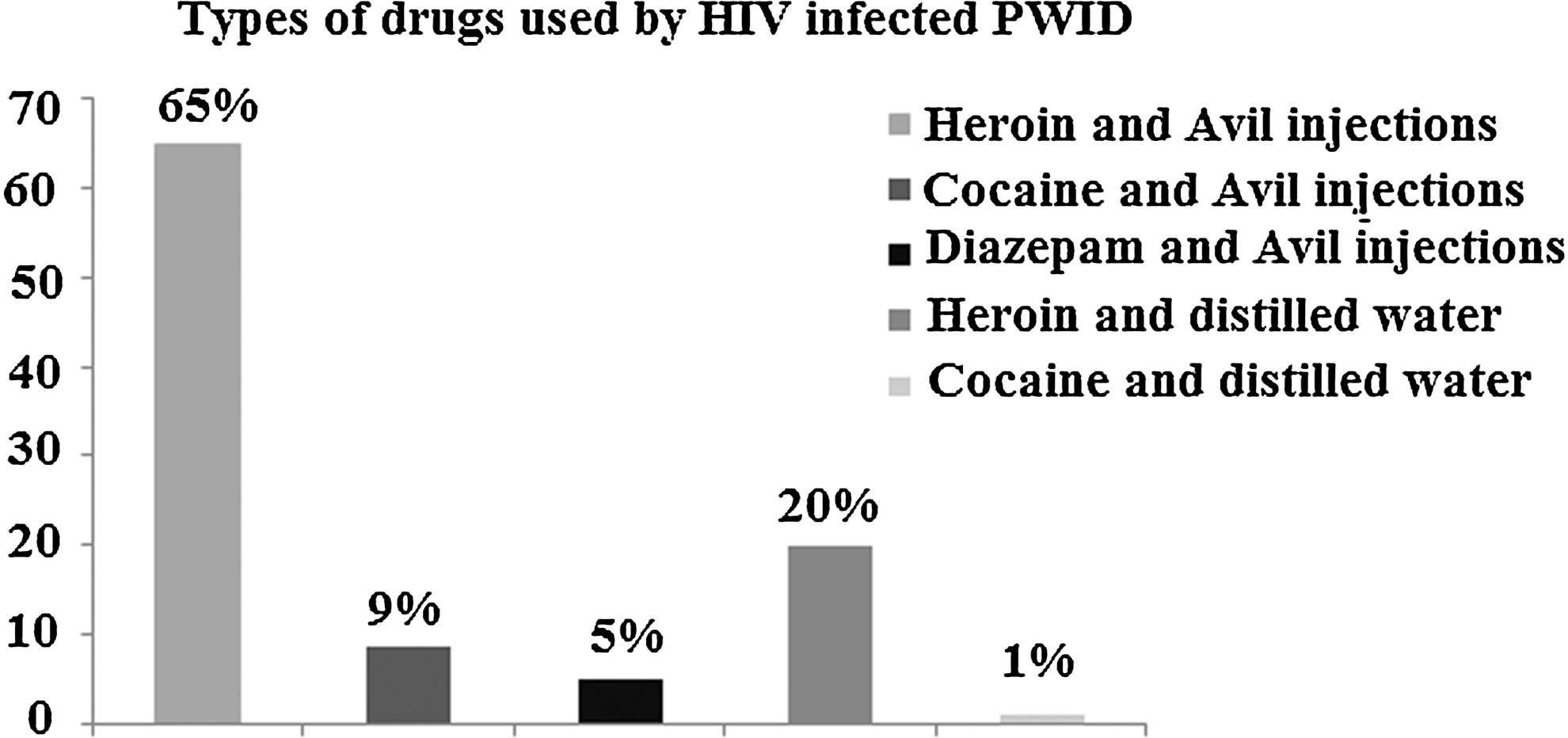
Percentage frequency of 5 types of drugs used by 100 HIV-infected PWID. HIV, human immunodeficiency virus; PWID, people who inject drugs.

Distribution of 3 viral infections among 100 HIV-infected PWID.
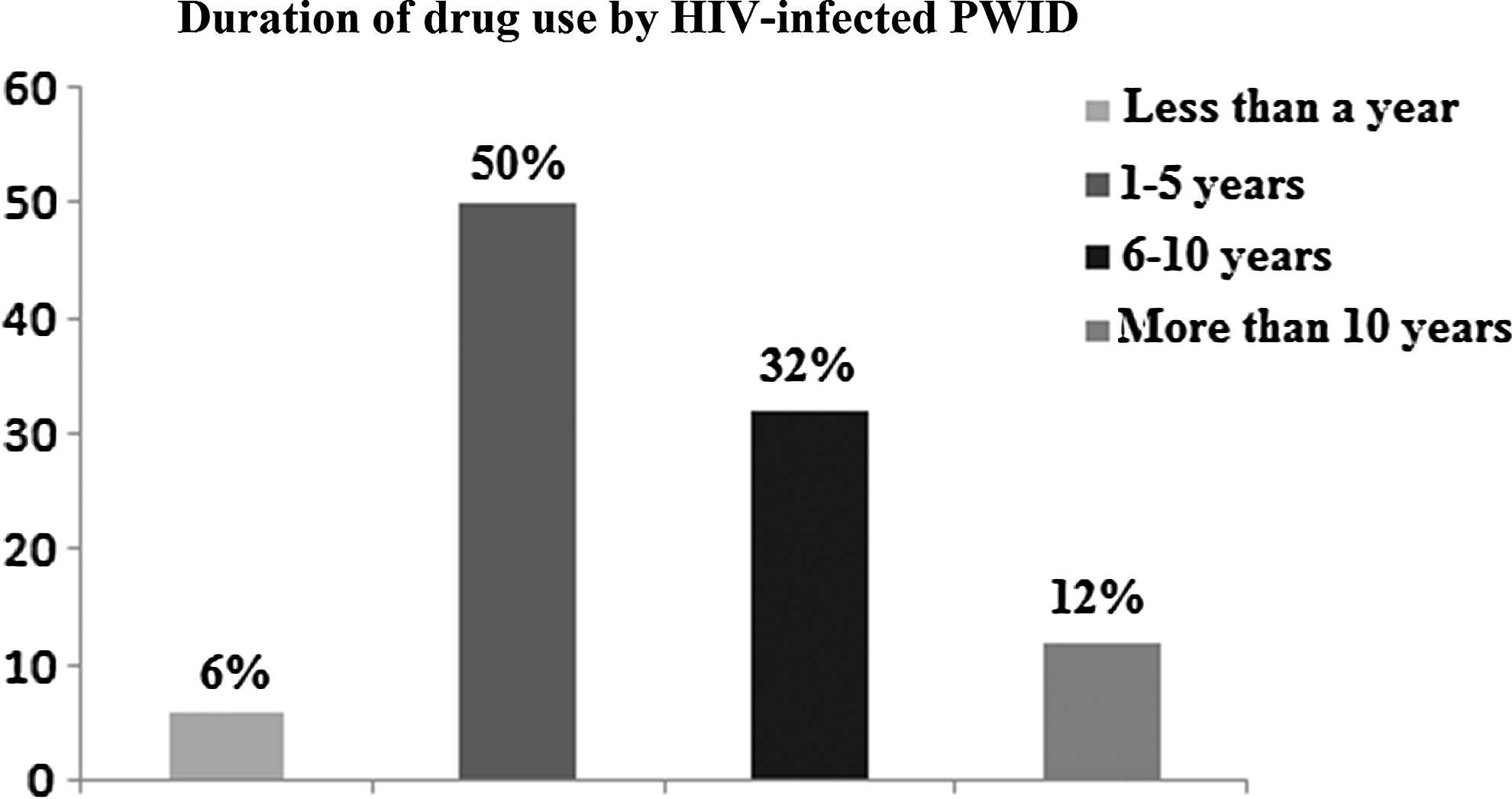
Frequency of duration range of drug addiction among HIV-infected PWID.
Discussion
Sharing of syringe needles is a key factor in the transmission of blood-borne pathogens. It is shown that both direct and indirect sharing of injections are conducive to the spread of HIV, HBV, and HCV infections among PWID (1). In the current study, we recruited 100 HIV-infected PWID, these drug users were male, with average age of 34.7 years (16–60 years), and belonged to lower socioeconomic status. The history of the enrolled subjects demonstrated that 93% subjects shared syringes with other PWID. Pakistan is a developing country with high Human Poverty Index and high illiteracy rate; consequently, people lack awareness about the transmission of viral infections. The incidence of sharing syringes among PWID in Pakistan is 73%, which is very high compared with the rest of the world (7). In the current study, the frequency of sharing syringes and needles was even higher than previously reported (93% vs. 73%). Thus, the trend of using shared needles and syringes is still rising and seems to be one among the most likely reasons for high incidence of HCV infection among the PWID in the present study. Moreover, the demographic profile of the enrolled subjects showed that 82% of them had unprotected sexual habits and 61% were alcoholic too (Table 1).
HIV, human immunodeficiency virus; PWID, people who inject drugs.
In the current study and previous studies, the PWID group was the main group targeted for the prevalence of viral infections as it is the most susceptible group for acquiring viral infections (8,10,24). The results of the present study showed that incidence of HCV and HBV coinfections among HIV-infected PWID was 55% and 6%, respectively. A study in Bangladesh reported that the prevalence of HBsAg anti-HCV antibodies among 129 PWID was 6.2% and 24.8%, respectively (27). A similar study in Iran showed that distribution of HCV, HBV (HBsAg), and HIV infections among 101 PWID was 60%, 3%, and 7%, respectively, and 49% of the enrolled subjects were using shared syringes and needles (25). Another study conducted in Afghanistan demonstrated the prevalence of HIV, HCV, and HBsAg infections among 463 PWID as 3.0%, 36.6%, and 6.5%, respectively. All of these PWID were involved in high-risk infection transmission behaviors as 50% of drug users were involved in sharing needles and syringes, while 76% were involved in high-risk sexual practices (30). The difference in prevalence of the studied viral infection among the neighbor countries may be attributed to the behavioral practices among PWID. Historically, taking opium through noninjection means such as smoking, vaporization, and oral ingestion was common among the drug users in Afghanistan. Drug injection represents a new behavior in Afghani people. This new behavior seems to have been learnt in countries of refuge during the time of political unrest in Afghanistan. A study in the border city of Quetta demonstrated that Afghan refugees were more likely to be involved in risky behavior of taking opium than their counterpart Pakistani PWID (30).
All these findings highlight that PWID are the most susceptible group for acquiring these viral infections. Moreover, among hepatitis infections (HBV and HCV) in PWID, HCV was predominant (55%). It is well known that HIV/HCV coinfection is predominantly associated with nonsexual parenteral route of transmission of blood or blood products, particularly for PWID, while HIV/HBV coinfection is linked most often with sexual intercourse (both heterosexual and in men who have sex with men) (15). It is well established that chronic hepatitis due to HCV infections is more common (85%) than due to HBV infections (5–10%) (12,19). Moreover, in Pakistan, HCV carriers (10 million) are more common than HBV (4–5 million) carriers (11).
The limitation of the current study is that it was conducted on HIV-infected PWID of Lahore and vicinity only. Moreover, the true prevalence of HCV and HIV coinfection may be underestimated as up to 4% of coinfected patients may have undetectable antibodies besides HCV viremia or due to immune suppression by HIV infection (21). The current study confirms the findings of previous studies indicating that use of shared syringes by PWID renders them at high risk of these infections (28). Thus, there is an alarming situation of high distribution of HCV infections among HIV-infected PWID (55%). Moreover, there was an increase in the practice of sharing syringes and needles among PWID (93%) than has been reported earlier (73%) and it might be the most likely reason for the increase in spread of HCV infections among PWID (16,29).
Footnotes
Acknowledgments
The study was supported by Faculty of Health and Allied Sciences, Imperial College of Business Studies, and Department of Pathology, Allama Iqbal Medical College Lahore, Pakistan. The authors are very thankful to Dr. Kalina Rosenova Atanasova for proofreading the article.
Author Disclosure Statement
No competing financial interests exist.