




Abstract
This study evaluated the immunological effect of an aGV rabies virus strain using the Essen and Zagreb immunization programs. A total of 1,944 subjects were enrolled and divided into three groups: the Essen test group, Essen control group, and Zagreb test group. Neutralizing antibody levels and antibody seroconversion rates were determined at 7 and 14 days after the initial inoculations and then 14 days after the final inoculation in all of the subjects. The seroconversion rates for the Essen test group, Essen control group, and Zagreb test group, which were assessed 7 days after the first dosing in a susceptible population, were 35.74%, 26.92%, and 45.49%, respectively, and at 14 days, the seroconversion rates in this population were 100%, 100%, and 99.63%, respectively. At 14 days after the final dosing, the seroconversion rates were 100% in all three of the groups. The neutralizing serum antibody levels of the Essen test group, Essen control group, and Zagreb test group at 7 days after the first dosing in the susceptible population were 0.37, 0.26, and 0.56 IU/mL, respectively, and at 14 days after the initial dosing, these levels were 16.71, 13.85, and 16.80 IU/mL. At 14 days after the final dosing, the neutralizing antibody levels were 22.9, 16.3, and 18.62 IU/mL, respectively. The results of this study suggested that the aGV rabies vaccine using the Essen program resulted in a good serum immune response, and the seroconversion rates and the neutralizing antibody levels generated with the Zagreb regimen were higher than those with the Essen regimen when measured 7 days after the first dose.
Introduction
R
At present, the intradermal and intramuscular postexposure prophylaxes that are recommended by the WHO include the Essen regimen, Zagreb schedule, Thai Red Cross schedule, and Oxford regimen. The Essen regimen, which involves repeated intramuscular injection (IM) vaccine injections on days 0, 3, 7, 14, and 28, is the gold standard for all of the postexposure prophylaxis regimens (6). The Zagreb schedule (IM 2-0-1-1) is similar to the Essen regimen, but the patient is not routinely seen on day 3 when most tropical wound infections become apparent.
CTN-1, aG, PM, and PV are Chinese rabies vaccine strains. The aG strain was originally isolated from an infected canine in Beijing in 1931 and it was obtained after several passages in mice and 55 generations in hamster kidney cells. Changchun Biological Products adapted this strain in Vero cells, subsequently generated the aGV strain, including the main virus seed and the work virus seed, and prepared the rabies vaccine that was used in this study. The clinical trial was approved by the Center for Drug Evaluation of China and conducted to evaluate the immunological effect of the aGV rabies vaccine using the Essen and Zagreb immunization procedures. The aim of this clinical research program was to provide evidence for the use of an aGV rabies vaccine in China.
Materials and Methods
This protocol was approved by Guangxi Ethics Committee (No. GXIRB2014-0045).
Study subjects
A total of 1,944 patients (10–60 years old) were randomized 1:1:1 into the Essen program test group, Essen program control group, and Zagreb program test group. Subjects randomized to the Essen programs (n = 648 each for the test and control vaccine groups) received respective IM inoculum single doses on days 0, 3, 7, 14, and 28. The subjects in the Zagreb program test group (n = 648) were inoculated IM on days 0, 7, and 21, with two doses on day 0, and single doses on days 7 and 21. All of the subjects provided written informed consent.
The enrollment criteria for the subjects were as follows: 10–50-year-old healthy resident (no travel plan in 2 months); willing to take part in this test and sign informed consent; never vaccinated against rabies, not inoculated with other vaccines, antisera, or human immunoglobin or other products within the last month, and had an underarm temperature of ≤37°C. In addition, the subjects themselves or their guardians were able to comply with the requirements of the clinical research program.
Criteria for the withdrawal and termination of the participation of subjects were as follows: the violation of the program regulations; intolerable adverse events; health status of the subjects did not allow them to take part in the test; subjects had any unusual clinical findings as judged by the researchers about the vaccine and negotiated with the clinical trial bidder, and researchers judged whether the subjects terminated the clinical trial early.
Study design and objectives
This was a randomized, double-blind, controlled trial design. Blood was collected at the following time points for subjects who received vaccines: group A (Zagreb program test group; n = 324) days 0, 7, and 35; group B (Zagreb program test group; n = 324) days 0, 14, and 35; group C (Essen test group; n = 324) days 0, 7, and 42; group C (Essen control group; n = 324) days 0, 7, and 42; group D (Essen test group; n = 324) days 0, 14, and 42; and group D (Essen control group; n = 324) days 0, 14, and 42, there were two group Cs and two group Ds. Rabies antibody levels and positive seroconversion rates were evaluated at days 7 and 14 after the first dose and 14 days after the full vaccination for both the Essen and Zagreb program.
The study took place at Yizhou City in the Guangxi Zhuang Autonomous Region from May 2016 to November 2016. Many nationalities live in the city of Yizhou, including the Zhuang, Han, Yao, Miao, Water, and Maonan people, the total population is 660,000.
In the current study, we tested the hypothesis:(I) In the Essen test group, the positive seroconversion rate of the vaccine was not inferior to the Essen control group 14 days after the first dose; (II) The positive rate of the rabies antibodies was 100% in the Essen test group and the Essen control group at 14 days after the full vaccination, and there was no significant difference between the Essen test group and the Essen control group in antibody level; and (III) At 7 and 14 days after the first dose and 14 days after the full vaccination, the positive seroconversion rate and the antibody levels of the Zagreb program were not lower than that of the Essen program.
Research endpoint
Blood samples were taken 14 days after the final vaccination to detect serum antibodies as immunogenic endpoints.
Sample size
It is assumed that the positive rates of antibodies in the Essen test group and the Zagreb test group is not less than 97% in the 14 days, and both of them are not inferior to the Essen control group. To calculate with PASS software, each group needs 290 columns. So we planned for the Essen test group, Essen control group, and Zagreb test group to consist of 648 people each for a total of 1,944 participants.
We used the stratified blocked randomization method, and the block length was six. We used the SAS statistical software plan process step to automatically generate a random encoding table according to the number of the test group, each group center number, case number, and distribution length parameter. Then, the subjects were randomly assigned to the random encoding table. The number of the study and the blood collection program were printed on the table in advance. After the participants entered the group, the study number and the blood sampling program code were assigned according to the group arrangement.
Experimental trial products
Test vaccine: Freeze-dried rabies aGV vaccine was prepared for human use in Vero cells (Changchun Biological Products Research Institute Co., Ltd., Lot number: 20140909). The vaccine potency was 6.4IU/mL.Vero cells (acquired from WHO) were cultured in high density use 14 L fixed-bed bioreactor (NBS celligen 310). They were inoculated with the aGV virus with a multiplicity of infection of 0.1, with continuous perfusion culture, and we harvested the virus solution that was concentrated by ultrafiltration, inactivated, purified, and lyophilized. Subsequently, vaccine formulations were obtained.
Control vaccine: Freeze-dried rabies control vaccine for human use was prepared in Vero cells (Liaoning Cheng Da Biological Limited by Share Ltd., Lot number: 201404081). Control vaccine potency was 5.7 IU/mL. Rabies Vaccine for human use, freeze-dried produced by Liaoning Cheng Da Biological Limited by Share Ltd. in Vero cells has a high market share in China and has been listed for more than 10 years. Vero cells were cultured in a 40-L bioreactor, inoculated with PM virus, with continuous perfusion culture, and harvested the virus solution that was concentrated by ultrafiltration, inactivated, purified, lyophilized, and then vaccine formulations were obtained.
Vaccine potency was determined by the Chinese National Institutes for Food and Drug Control on the basis of the National Institutes of Health rabies vaccine potency test. All of the vaccines were administered in the deltoid muscle in the upper arm.
Blood collection
Blood (3 mL) was drawn from each subject on the specified days described above (see Table 1 for design overview). Serum was collected, split into two samples, and stored at −20°C until use. The sera were tested for rabies virus-neutralizing antibodies using a rapid fluorescent focus inhibition test (12) at the Chinese National Institutes for Food and Drug Control.
Immunogenicity evaluation
Susceptible subjects were defined as individuals whose specific antibody concentration was <0.5 IU/mL before immunization; nonsusceptible subjects were defined as individuals whose specific antibody concentration was >0.5 IU/mL before immunization. The immunogenicity criterion for specific antibody concentration was <0.5 IU/mL before immunization and it was >0.5 IU/mL after immunization (seroconverted) for susceptible subjects. For nonsusceptible subjects, the pre- and postimmunization criteria were >0.5 IU/mL and four times growth, respectively.
The positive conversion rate was considered the proportion of the subject number that seroconverted in each group.
Statistical analysis
Data analysis was performed using SAS 9.3 software. The positive conversion rates of each test group and control group after immunization of the susceptible population and of the nonsusceptible population were calculated. A unilateral 97.5% confidence interval for the difference in conversion rates between the Essen test group and the Essen control group was established to determine noninferiority, and a bilateral 95% confidence interval for the conversion rate difference between the Zagreb test group and the Essen test group was also calculated. The immunogenicity data were compared between groups in the following hierarchy: (1) positive conversion rate and neutralizing antibody levels of the Essen test group versus the Essen control group, and (2) positive conversion rate and neutralizing antibody levels in the Zagreb test group versus the Essen test group.
Results
There was no significant change to the methods after trial commencement. Of the 1,944 subjects in the study, a total of 94.44% (1,846 subjects) completed the trial, with 108 (5.56%) prematurely withdrawing from the trial (Table 2). There were 604 subjects in the Essen test group, 613 subjects in the Essen control group, and 598 subjects in the Zagreb test group who were available for the immunogenicity analysis, there was no significant difference in the loss rate between the three groups (Fig. 1 and Table 3). There were no significant differences in the demography and baseline characteristics between groups (Table 4).
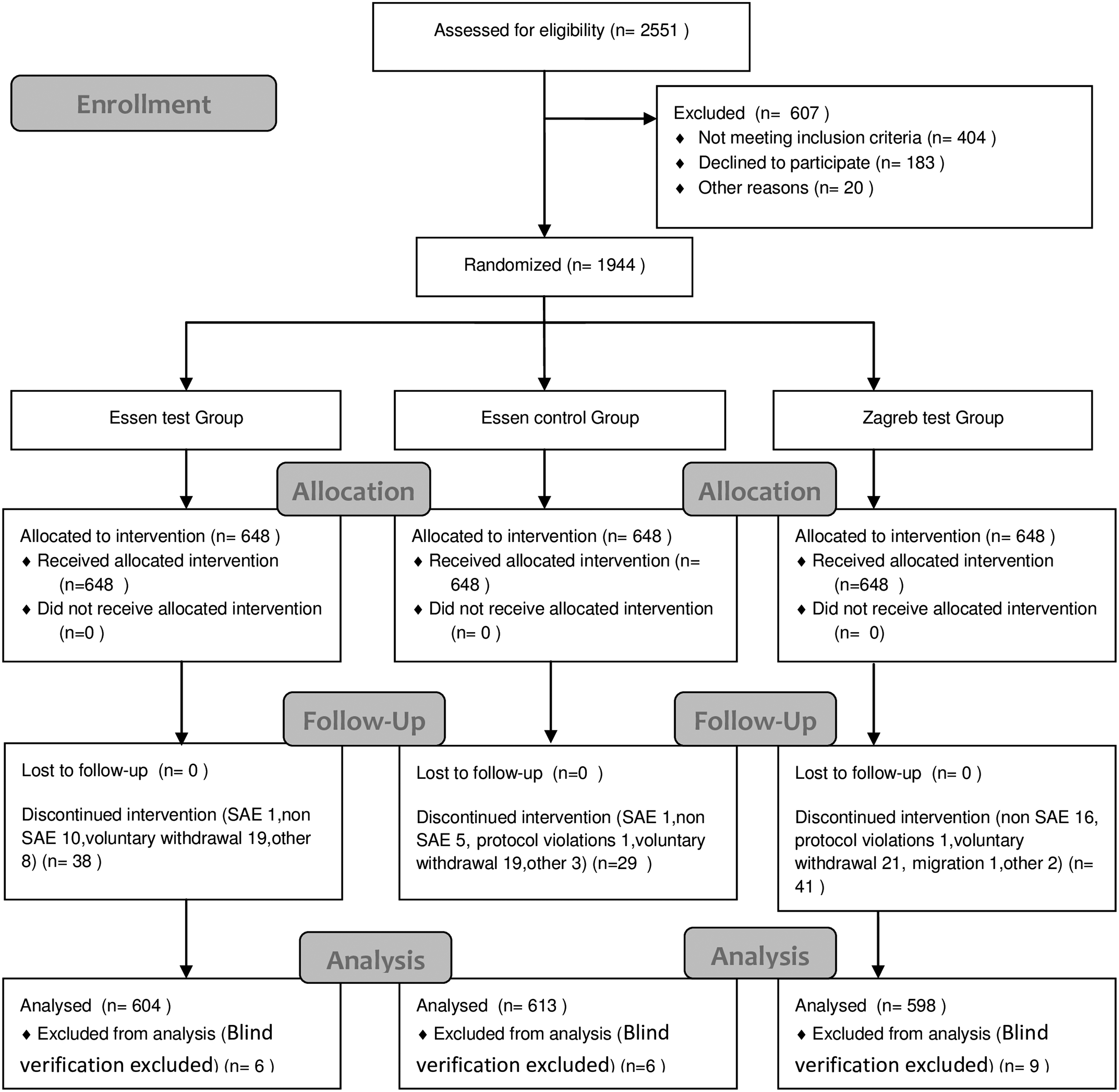
Flow diagram of the trial.
Comparison of abscission rate between groups Fisher p = 0.3096.
SD, standard deviation.
Seroconversion rate
(1) At 7 days after the first dose (Fig. 2 and Supplementary Table S1; Supplementary Data are available online at
(2) After sampling 14 days after the first dose (Fig. 2 and Supplementary Table S1), there was no significant difference in the antibody seroconversion rates within the total study population (97.02%, 98.03%, and 96.72% for the Essen test group, Essen control group, and Zagreb test group, respectively). No differences in seroconversion rates were seen in the susceptible population (100%, 100%, and 99.63%, respectively), and there were no differences between the groups within the nonsusceptible persons (77%, 79%, and 74%, respectively). There was no statistical difference in the seroconversion rates between the Essen test group and control group (95% confidence interval [CI]) in the total population and susceptible groups, and the positive seroconversion rate in the Essen test group was noninferior to the Essen control group. There were no statistical differences between the Zagreb test group and the Essen test group (95% CI) in either the total population or susceptible persons, and the positive seroconversion rate in the Zagreb test group was noninferior to the Essen test group.
(3) After sampling 14 days after the full doses were received (Fig. 2), the positive seroconversion rate of the susceptible subjects in the Essen test group, the Essen control group, and the Zagreb test group was 100%, and in the total sample population the antibody seroconversion rates were 97.35%, 98.53%, and 96.49%, respectively, with no significantly statistical difference between the groups. There was no difference between the Essen test group and the Essen control group (95% CI) in the total population or in susceptible persons, and the positive seroconversion rate in the Essen test group was noninferior to the Essen control group. There were no statistical differences between the Zagreb test group and the Essen test group (95% CI) in either the total population or the susceptible persons, and the positive seroconversion rate in the Zagreb test group was noninferior to the Essen test group.
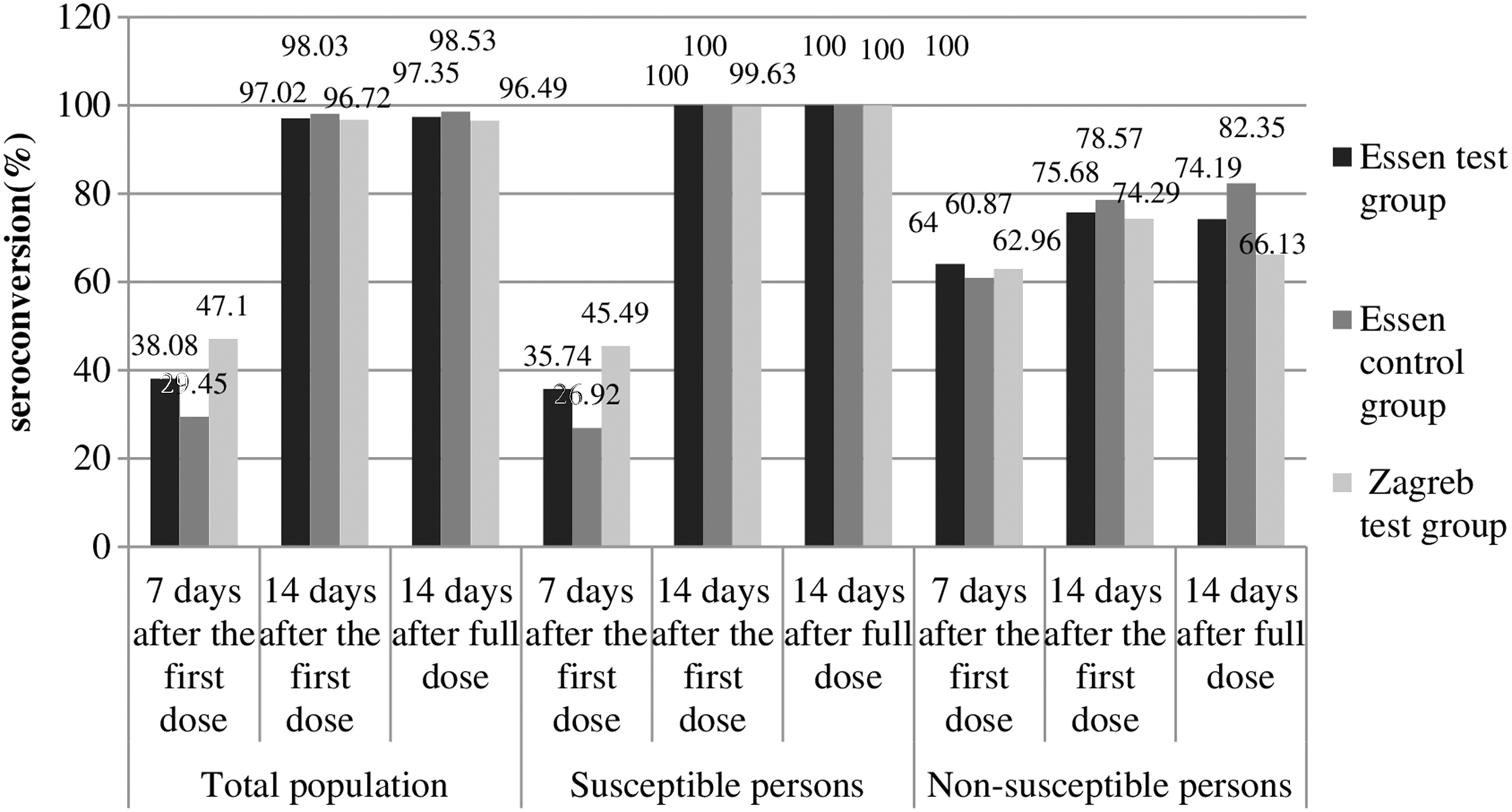
The seroconversion rate in each group after immunization.
Antibody levels
Considering all of the subjects, the geometric mean concentration (GMC) of the neutralizing antibody levels in the Essen test group and in the control group increased with later inoculum times, peaking 14 days after the final dose inoculation for each group (24.81 and 16.71 IU/mL, respectively) (Fig. 3 and Supplementary Table S2). The peak antibody GMC levels in the Zagreb test group were 14 days after the initial dose inoculation (18.85 IU/mL) and they were significantly higher than 14 days after the final inoculation (9.93 IU/mL) in the total population.
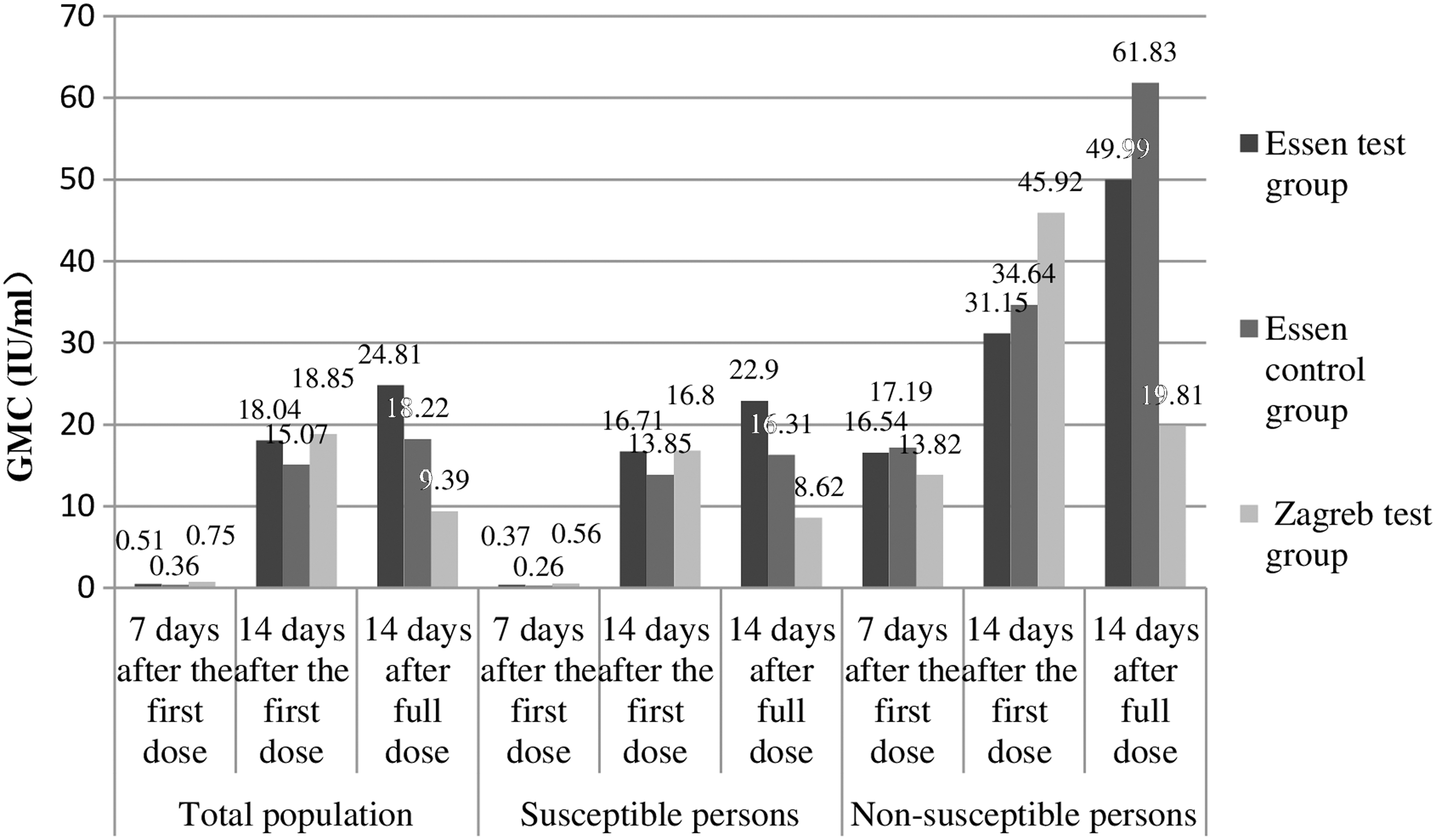
Antibody GMC in each group after immunization. GMC, geometric mean concentration.
(1) At 7 days after the first dose (Fig. 3 and Supplementary Table S2), the antibody GMC levels of the Essen test group in the whole population and in the susceptible population were higher than the levels in the respective Essen control groups (p = 0.0310 and p = 0.0153, respectively). GMC antibody levels in the Zagreb test group were higher than in the Essen test group in the whole population and in the susceptible population, as well (p = 0.0214 and p = 0.0075, respectively). There were no significant differences in the GMC antibody levels between the three groups in the nonsusceptible persons after 7 days following the start of each program.
(2) At 14 days after the first dose (Fig. 3 and Supplementary Table S2), the antibody GMC levels of the Essen test group in the whole and susceptible populations were higher than the levels in the Essen control group (p = 0.0283 and p = 0.0284, respectively). There were no statistically significant differences between the Zagreb test group and the Essen test group in the antibody GMC levels for the whole, susceptible, and nonsusceptible populations.
(3) At 14 days after the full dose (Fig. 3 and Supplementary Table S2), the antibody GMC levels of the Essen test group in the whole and susceptible populations were higher than the levels in the Essen control group (p < 0.0001). The antibody GMC levels of the Zagreb test group in the whole, susceptible, and nonsusceptible population were significantly lower than the levels in the Essen test group (p < 0.0001).
Discussion
Herein, we developed a rabies vaccine for human use based on the aGV rabies strain. Chinese domestic vaccine strains include the CTN and aG strain, the latter of which was isolated from the brain tissue of a Chinese Shandong patient. A comparison of the G protein genes has shown that the homology of the aGV, 3aG, PV, CTN-1, and CVS strains and the street strain was 99%, 92%, 84%, 91%, and 84%, respectively (4). In our study, the potency of the aGV strain vaccine was determined to be higher than the CTN strain vaccine; therefore, it was chosen as the model strain.
Our results showed that the potency of the experimental vaccine (6.4 IU/mL) and the control vaccine (5.7 IU/mL) was similar, but that the antiviral antibody levels generated by the experimental vaccine were higher than those receiving the control vaccine. This indicated that the aGV strain rabies vaccine was capable of producing higher levels of neutralizing antibody and had a better protective effect as an experimental vaccine.
The seroconversion rates at 7 days after the first dose indicate that the Essen test group had higher conversion rates than the Essen control group, and the Zagreb test group had the highest seroconversion rates of all three of the groups. After exposure to the rabies virus, the early generation of neutralizing antibodies is important, and higher seroconversion rates are indicative of greater protection. From this point of view, the immunization programs that generate high antibody conversion rates within the first 7 days may correlate with better protection.
The antibody responses in the Essen test group were similar to those in the Essen control group; in both groups, the neutralizing antibody levels increased with the number of inoculations and the antibody levels were highest at 14 days following the administration of the final dose. GMC antibody levels in the Essen test group were higher than those in the Essen control group 14 days after the first dose and 14 days after the final inoculation. The antibody in the Zagreb test group peaked at 14 days after the initial dosing and had decreased by the sampling time point 14 days after the final inoculation. This result was similar to the report by Vodopija et al. in 1986 (9), wherein the immunological response profile induced by the Zagre regimen differed fundamentally from the Essen curve induced by a standard regimen in which the antibody values peaked on day 14 after the final dosing. The Zagre curve obtained in that study was characterized by an early peak (day 14) and a subsequent plateau of titer values showing no significant elevation or depression as measured on day 35. The booster vaccination at day 21 did not produce significant elevations of titer.
The results of this study show that the application of the aGV strain rabies vaccine led to complete seroconversion in both groups. The neutralizing antibody response was superior for the Essen test group compared to the Zagrab group with 22.9 and 8.62 IU/mL titer, respectively. This clinical research provides data to support a rabies vaccine immunization program and provides a practical basis for vaccine market orientation using the aGV rabies strain.
Footnotes
Acknowledgment
We did not receive a grant from any funding agency in the public, commercial, or not-for-profit sectors for our work.
Author Disclosure Statement
No competing financial interests exist.
References
Supplementary Material
Please find the following supplemental material available below.
For Open Access articles published under a Creative Commons License, all supplemental material carries the same license as the article it is associated with.
For non-Open Access articles published, all supplemental material carries a non-exclusive license, and permission requests for re-use of supplemental material or any part of supplemental material shall be sent directly to the copyright owner as specified in the copyright notice associated with the article.
