




Abstract
Infectious bursal disease (IBD) is an acute, highly contagious, immunosuppressive disease of young chickens that causes considerable economic loss in the poultry industry worldwide. Vaccination with live attenuated vaccines is still the most important method used for the control and prevention of IBD in chickens. Here we present the results of in vitro characterization, as well as efficacy and safety testing of a live, intermediate plus vaccine against IBD based on strain G6. Strain characterization confirmed that G6 strain is an intermediate plus strain, showing a high degree of homology with the existing vaccine strains of the same virulence. Safety studies showed that chickens can be vaccinated from 10 days of age. Onset and duration of immunity in specific pathogen free and maternally derived antibodies (MDA) chickens was proven to be 14 and 35 days after vaccination, respectively. When immunizing MDA-positive chickens, vaccine is capable of breakthrough at a titer of ≤500 ELISA units. The field trial conducted on commercial broilers showed a 95% protection against vvIBDV challenge. Stability of the freeze-dried vaccine after reconstitution was confirmed over a period of 3 h. Overall, IBD G6 vaccine has shown good safety and efficacy profile in accordance with European Pharmacopoeia requirements.
Introduction
Infectious bursal disease (IBD) is an acute and highly contagious disease of young chickens, which results in significant economic loss in the poultry industry worldwide (14, 20). The causative agent IBD virus (IBDV) is especially infectious in chickens 3–6 weeks of age and is characterized by the destruction of bursa of Fabricius (BF), a primary lymphoid organ in chickens. More specifically, the target cells are B lymphocytes and the infection, if not fatal, results in immunosuppression with subsequent poor immune response to different secondary infections and vaccination (24).
Two distinct serotypes of IBDV have been identified of which only serotype I is pathogenic and causes disease in chickens. According to their virulence serotype I strains are classified as classical virulent, very virulent, variant, or attenuated IBDV strains (33). The most virulent IBDV strains (vvIBDV) cause severe clinical symptoms including anorexia, depression, diarrhea, and high mortality rates 3–6 days after infection. Serotype II viruses have been isolated from turkeys and cause neither mortality nor morbidity in specific pathogen-free (SPF) chickens (25, 40).
In addition to strict biosecurity measures, vaccination is the most important measure to control IBDV outbreak in poultry farms. Vaccination programs with live attenuated and inactivated vaccines have been widely used to prevent IBD (34). Conventional live IBDV vaccines that are suitable for mass application through drinking water are classified based on their residual virulence as mild, intermediate, and intermediate plus or hot vaccines (1).
Young chicks are usually well protected against early infection of the bursa by maternally derived antibodies (MDA) as a result of previous vaccination of parent flocks. As level of protective antibodies decreases, chicks become susceptible to infection with virulent field strains (43). It has been shown that determination of the optimal timing for vaccination owing to interference with MDA in broiler progeny is crucial for effective vaccination (28). The optimal vaccination time depends on the MDA level of the broiler chickens, the vaccine strain to be used, its breakthrough titer, and the field pressure (4, 11). If vaccination with intermediate vaccines is found ineffective, less attenuated intermediate plus vaccines should be used considering that a lower attenuation level of vaccine is correlated with a higher breakthrough titer (29). Indeed, the choice of the vaccine type depends on the field situation, desired breakthrough titer, acceptable level of bursal damage, and effects on the efficacy of other vaccines (4, 20).
In this study, we present the results of efficacy and safety testing of live intermediate plus vaccine based on strain G6 as required within the EU regulatory framework. The onset and duration of immunity was determined in laboratory studies with SPF and MDA chickens, whereas field studies in commercial MDA broilers showed good safety and efficacy as well as unaltered production parameters after vaccination through drinking water. The residual pathogenicity of the G6 vaccine strain was determined by assessing histopathological lesions and atrophy of the BF. In-use stability was also evaluated considering that the success of vaccination in field conditions is highly dependent on virus stability after reconstitution.
Materials and Methods
Vaccines and viruses
Live, intermediate plus IBD vaccine based on strain G6 (Avishield IBD Plus, Genera, Inc., part of Dechra Pharmaceuticals PLC group) is used in this study. It is produced in accordance with European Pharmacopoeia (Ph. Eur.) and Directive 2004/28/EEC concerning quality, safety, and efficacy of live poultry vaccines. For vaccination experiments, freeze-dried vaccine was reconstituted and diluted to contain a dose specific for each experiment, as described hereunder. Commercially available live attenuated IBDV vaccine with intermediate plus strain was used as a comparator in the field study. The efficacy of IBD G6 vaccine was assessed using vvIBDV strain DV86 as a challenge virus. To assess the potential immunosuppression of IBD G6 vaccine as described in the Ph. Eur. monograph for live IBD vaccines, chickens were vaccinated with a commercially available vaccine containing Hitchner B1 strain of Newcastle disease (ND) virus 7 days after vaccination with IBD G6 vaccine and challenged with very virulent ND virus strain Herts33/56.
Sequence analysis
Virus RNA was extracted using High Pure Viral RNA Kit (Roche) following manufacturer's protocol. One-step reverse transcription-PCR (RT-PCR) was carried out using Affinity Script One-Step RT-PCR Kit (Agilent) according to the manufacturer's instructions. Forward primer IBDV-576s (5′-GCCAACATCAACGACAAAATTGGG3′) and reverse primer IBDV-R (5′-ATCCTGTTGCCACTCTTTCGTAGG-3′) were selected to amplify part of VP2 genome region (6, 37). Sequencing was performed from both directions by Eurofins Genomics (Germany). Phylogenetic tree was constructed based on partial IBDV VP2 sequences of selected IBDV strains using neighbor- joining algorithm.
In-use stability testing after reconstitution of freeze-dried vaccine
In-use stability testing after reconstitution was performed as described in the European Medicines Agency's (EMA) Guideline (17). Three batches of the vaccine were tested at room temperature after reconstitution in sterilized tap water cooled to ambient temperature, to simulate reconstitution of the vaccine when administered in the field by drinking water. Virus titer and appearance of reconstituted vaccine were tested up to 3 h after reconstitution, mimicking the field situation where the vaccine has to be applied within 3 h after reconstitution to assure that the chickens receive the desired dose. Virus titer was determined by infection of 9- to 11-day-old SPF chicken embryos with serial dilutions of the virus. After incubation, virus presence was determined by observing changes characteristic for IBDV strain G6 (retarded growth, green-spotted liver) and the virus titer was calculated by Spearman–Kärber equation.
Animal studies
A series of laboratory and field animal studies required for registration of live IBDV vaccine in EU countries were performed to assess vaccine's safety and efficacy (Table 1). Studies were designed and conducted following specific general guidelines provided in relevant Ph. Eur. and EMA monographs and chapters. All animal experiments were conducted in accordance with national and European Union regulations regarding the use and protection of animals used for scientific purposes (Directive 2001/82/EC, Directive 2010/63/EU, Directive 86/609/EEC, Croatian law OG 102/17, Croatian regulation OG 55/13).
Summary of In Vivo Studies Performed Using G6 Vaccine Strain
SPF, specific pathogen free.
Evaluation of safety in SPF chickens in laboratory conditions
Safety of the vaccine when applied orally in 10-fold maximum dose (104.2 EID50/dose) was evaluated in two studies: (i) General safety test for chickens and (ii) Damage to the BF. In both studies 10-day-old SPF chickens were blood sampled to confirm the seronegative status to IBD. In the first study chickens were observed 1 and 4 h after vaccination for any reaction to the treatment and then daily over 14 days for general appearance, behavior, and signs of IBD. Body weight was measured on the day of vaccination and then once a week until the end of the study.
In the second study, chickens were observed for 35 consecutive days after inoculation. On days 7, 14, 21, 28, and 35 days after inoculation gross pathology and bursa sampling were performed. Histological lesions of the bursa (bursa lesion scores, BLS) were scored at a scale 0–5, according to the standard Ph. Eur. protocol (7) as follows 0 = No lesions, normal bursa; 1 = 1–25% of the follicles show lymphoid depletion and influx of heterophils in lesions; 2 = 26–50% of the follicles show nearly complete lymphoid depletion, affected follicles show necrosis, and severe influx of heterophils may be detected; 3 = 51–75% of the follicles show lymphoid depletion, affected follicles show necrosis, and severe influx of heterophils is detected; 4 = 76–99% of the follicles show nearly complete lymphoid depletion, hyperplasia and cyst structures are detected, affected follicles show necrosis, and severe influx of heterophils is detected; and 5 = 100% of the follicles show nearly complete lymphoid depletion, complete loss of follicular structure, thickened and folded epithelium, and fibrosis of bursal tissue. Representative micrographs of the histopathology of the BF and corresponding BLS are given in Supplementary Figure S1.
Immunosuppression test
Immunosuppressive effect of the vaccine applied at one maximum dose in 10-day-old SPF chickens was investigated according to the Ph. Eur. protocol (7). In brief, three groups of 15 SPF chickens were used where one maximum dose of IBD vaccine was given only to the first group. After 7 days, one dose of the vaccine against ND virus (containing Hitchner B1 virus strain) was applied intraocularly to the first two experimental groups. The third group was kept as a nonvaccinated control. Fourteen days after administration of the ND vaccine, chickens from all groups were challenged by intramuscular route with the virulent ND virus Herts 33/56. Clinical signs and mortality were observed for 7 days after challenge and protection was evaluated.
Evaluation of efficacy in SPF chickens
To examine onset and duration of immunity (OOI and DOI) two laboratory efficacy studies were performed. In both studies, groups of 10-day-old SPF chickens were vaccinated orally with a minimum recommended dose (101.9 EID50/dose) of IBD G6 vaccine following Ph. Eur. Protocol (7). Groups of chickens were used as nonvaccinated controls. Challenge was performed using vvIBDV strain DV86 14 (OOI) and 35 (DOI) days after vaccination. Before each challenge, blood samples were collected from vaccinated chickens to determine serological response to vaccination. After challenge, chickens were observed daily for general appearance, behavior, mortality, and presence of any clinical signs with special attention to IBD consistent symptoms for 10 days. Ten days after challenge chickens were killed for determination of BLS. Serum antibodies to IBD virus were determined using ELISA (IDEXX IBD Ab Test; IDEXX Laboratories, Inc.).
Evaluation of efficacy in MDA-positive chickens in laboratory conditions
Efficacy of IBD G6 vaccine in the presence of maternal antibodies was tested under laboratory conditions using commercial broilers with minimum effective dose of 101.9 EID50/chicken. Seven-day-old chickens were blood sampled to determine the optimum vaccination day according to Deventer formula using ELISA (IDEXX IBDV; IDEXX Laboratories, Inc.) (11). The targeted breakthrough titer was 500 anti-IBDV ELISA units. The study design was the same as with SPF chickens, that is, the onset and duration of immunity were tested 14 and 35 days after vaccination, respectively. After challenge, chickens were observed daily during a 10-day period for general appearance, behavior, mortality, and presence of any clinical signs with special attention to IBD consistent symptoms. In the DOI study, body temperature as additional efficacy parameter was examined. The differences between mean temperatures of the study groups on the same day were tested by one-tailed, unpaired t-test with the significance of p < 0.05. Ten days after challenge chickens were killed for determination of BLS.
Evaluation of safety and efficacy in field conditions
Safety and efficacy of the live attenuated vaccine based on strain G6 under field conditions was performed on commercial broilers. The trial was performed as a comparative study with a similar, already marketed product (Nobilis Gumboro 228E), which has indications similar to the tested intermediate plus IBD G6-based vaccine. Two groups of broiler chickens, each consisting of ∼21,000 commercial broilers (hybrid line Ross 308) were included in the study, each divided into two houses. Study was designed in accordance with applicable guidelines and regulations (Table 1).
Day of vaccination was determined for each flock independently using Deventer formula taking the titer of 500 as the targeted breakthrough titer. To evaluate safety of the vaccine, chickens were observed for clinical signs, mortality, bodyweight, and feed conversion. As a secondary efficacy variable, chickens were tested for antibody response to vaccination and presence of vaccine virus. Blood samples were taken on the day of vaccination (at the age of 15 days), 14 days after vaccination, and before the slaughter (at the age of 42 days) and analyzed using Idexx ELISA kit. IBD virus was detected in bursae collected before on the day of slaughter by PCR analysis.
As challenge on the farm could not be performed, 80 randomly chosen chickens (35 chickens before vaccination and 45 chickens 10 days after vaccination) were taken to the animal facility and challenged with vvIBDV (strain DV86) 14 days after vaccination. After challenge, chickens were observed daily during 10 days for general appearance, behavior, mortality, and presence of any clinical signs with special attention to IBD-consistent symptoms. Ten days after challenge chickens were killed and BLS were determined.
Statistical analysis
Differences in levels of protection between vaccinated and nonvaccinated groups were assessed using Fisher's exact p one-tailed test in Tibco Statistica 13.3.
In the field study, general linear model was used to analyze data on body weight and antibody titers according to tested vaccines. Data were analyzed using software IBM SPSS Statistics 22; values of p < 0.05 were considered significant for all analyses.
Results
Molecular characterization of the IBDV G6 strain
The nucleotide and deduced amino acid sequence for 432 bp VP2 hypervariable region (HVR) of the master seed of IBDV vaccine strain G6 was determined. This fragment includes the complete highly variable region including the major and minor hydrophilic peaks (13). Obtained amino acid sequence was 100% identical to the intermediate plus strain 228E (GenBank Accession No. AJ586966.1). Comparison against intermediate strain D78 (GenBank Accession No. EU162087.1) showed four amino acids changes (aa 222, 253, 256, 284), which are associated with cell tropism and virulence of isolates (35). The phylogenetic tree based on nucleotide sequences (Fig. 1) shows that G6 strain clusters together with related intermediate plus vaccine strains with high homology against similar classical attenuated vaccine strains (30).
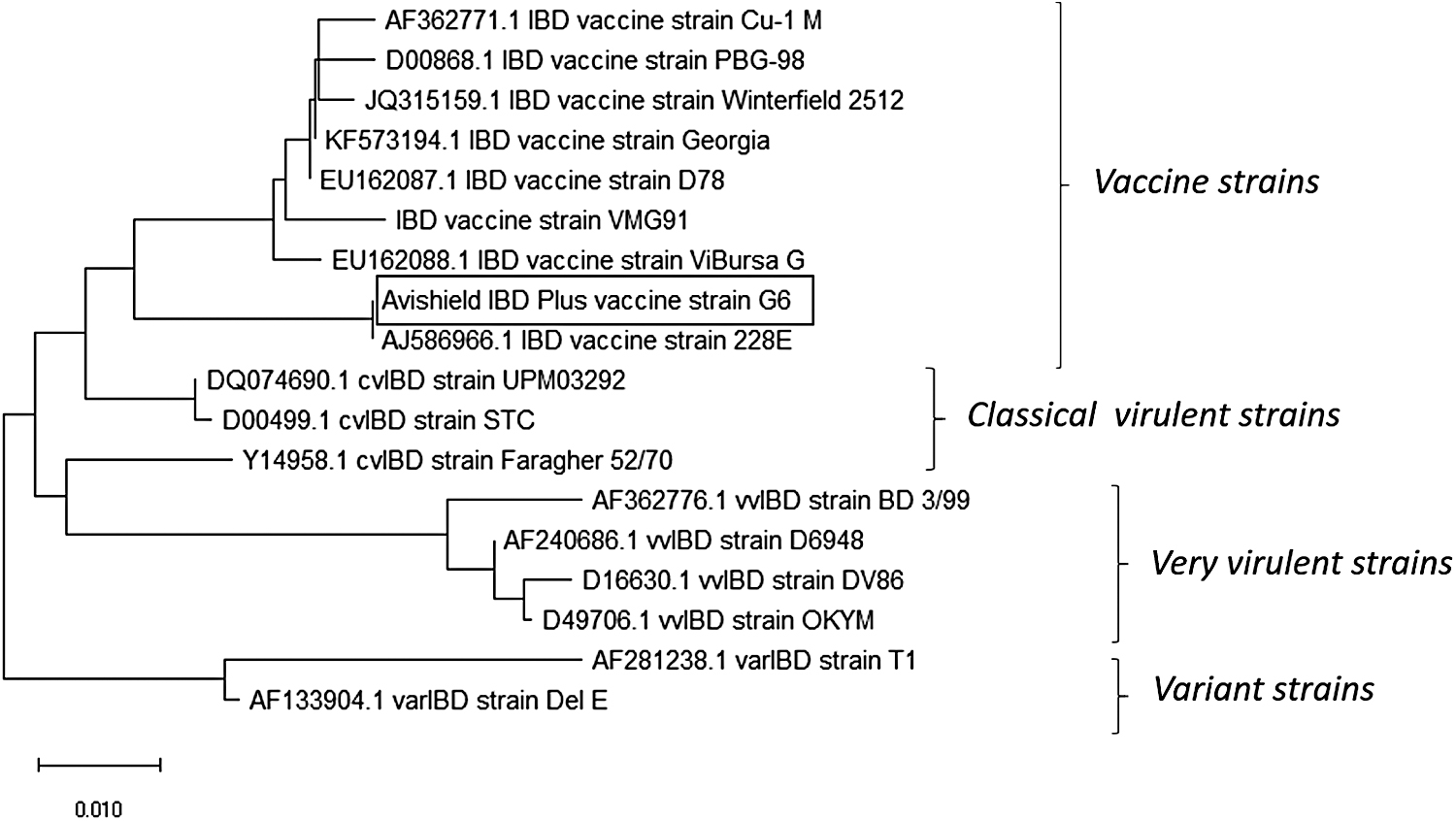
Phylogenetic tree based on the alignment of VP2 protein partial amino acid sequences of selected vaccine or field IBDV strains. IBDV, infectious bursal disease virus.
Stability after reconstitution of freeze-dried vaccine
Vaccine stability in solution was tested using three representative batches of the vaccine at ambient temperature (20°C–25°C). Virus titer was measured during the period of 3 h after reconstitution in sterilized drinking water cooled to ambient temperature. This 3-h period is the recommended time during which vaccine should be utilized in the field conditions. Results showed that the virus titer remained unchanged over the tested period (Table 2).
In-Use Stability Testing at Ambient Temperature (20°C–25°C) After Reconstitution of Vaccine
Safety in SPF chickens
Safety on SPF chickens was evaluated by oral administration of MSV in a 10-fold dose to SPF chickens. The vaccine was demonstrated to be safe when given in overdose as no chicken showed abnormal signs of disease or died from causes attributable to the vaccine virus during a 14-day observation period. Chickens had steady growth during the study. The aim of the Damage to the BF study was the investigation of bursa damage effect of the overdose administered infectious bursal disease (IBD G6 strain) virus applied by oral route in 10-day-old SPF chickens. Histological examination of bursa samples taken 7 and 14 days after vaccination revealed partial lymphocyte depletion in the lymphoid follicles and infiltration by inflammatory cells in the interfollicular septa (without follicular necrosis, hemorrhages, or edema). These changes were scored 2.0, 1.0, and 1.0 on a BLS scale for bursa taken 7, 14, and 21 days after vaccination, respectively. Twenty-eight days after vaccination, regeneration was observed in 60% of samples giving a BLS of 0.4, whereas complete regeneration was observed in 100% samples 35 days after vaccination.
Immunosuppression test
The immunosuppressive effect of the vaccine was assessed by comparison of protection and serological response to NDV vaccination between the groups of chickens vaccinated with IBDV G6 vaccine and Hitchner B1 vaccine or Hitchner B1 alone. In vaccinated groups no chickens had clinical signs of ND during the whole postchallenge observation period (7 days after challenge). The difference in mortality between the vaccinated groups was found not to be significant using Fisher's exact test (Exact Sig. -2-sided p = 0.0000). Serological response to ND vaccination was measured before challenge in both groups. The proportion of chickens responding serologically to ND vaccination and the HI titers are summarized in Table 3. The mean log2 HI titer of group 1 was 6.6, whereas in group 2 it was 7.7. The independent samples t-test showed significant difference between the HI titers of the two groups (Sig. 2-tailed p = 0.0118). During the postchallenge observation period, no chicken from vaccinated groups died or had clinical signs of the disease, whereas in the control nonvaccinated group all chickens died after challenge. The postmortem findings in these chickens were related to Newcastle disease infection (Table 3).
Serological Response to ND 14 Days After Vaccination and Protection Rates After Challenge of Chickens Vaccinated with ND B1 Vaccine Only, G6 + ND B1 Vaccines or Left Nonvaccinated
Efficacy in SPF chickens
The efficacy of the vaccine was demonstrated in the study in which SPF chickens were vaccinated with a minimum recommended dose following Ph. Eur. Protocol (9). Onset of immunity was confirmed to be no later than 14 days postvaccination. Average seroconversion to the vaccine was high and significantly above the protection level (Table 4).
Bursa Lesion Score and Serological Response to Infectious Bursal Disease Virus G6 Vaccine 14 (OOI) ad 35 (DOI) Days After Vaccination
OOI, onset of immunity; DOI, duration of immunity.
After challenge no clinical signs or mortality were observed in the vaccinated group. In the control group ruffled feathers and depression were present in all chickens, four of them died, and postmortem examination revealed that all of them have died owing to infection with IBD. The degree of bursal damage for each chicken was assessed 10 days postchallenge. No mortality or clinical signs were observed in the vaccinated group that had relatively low mean BLS of 1.2. The nonvaccinated control group was completely unprotected as 100% chickens had clinical signs of the disease with the mortality rate of 44.4%. The mean BLS for the surviving chickens was 5.0, indicating complete depletion of lymphocytes in the bursal tissue.
Duration of immunity was evaluated 35 days postvaccination. Serological response to vaccination was determined and average titer of >4000 ELISA units was detected (Table 4). After challenge no clinical signs or mortality were observed in the vaccinated group. In the control group all chickens were depressed and had ruffled feathers, and only two of them survived until the study day 55 and were used for the BLS determination. The average BLS of the vaccinated group was 1.5, whereas both surviving chickens in the control group had maximum BLS of 5.0. Duration of immunity of minimum 35 days postvaccination on SPF chickens was demonstrated as 100% of birds were both seropositive and protected against challenge virus. Individual BLS are listed in Supplementary Table S1.
Efficacy in MDA-positive chickens in laboratory conditions
The onset and duration of immunity studies were performed in accordance with the Ph. Eur. Monograph (7) and EMA guideline (18). Although Ph. Eur. Monograph is not obligatory for strains classified as intermediate plus, we followed the proposed study design for assessing the IBD G6 vaccine efficacy, nevertheless.
Blood was sampled on day 7 of the study and used for determination of the optimum day of vaccination using Deventer formula and breakthrough titer of 500 ELISA units. The estimated day of vaccination in OOI study was day 16 and subsequent blood samples analysis showed that the ELISA mean titer on the day of vaccination was 481, which was considered satisfactory. Fourteen days after vaccination, before challenge virus infection, good seroconversion was found with the mean ELISA titer of 2718. At the end of the study at day 40, ELISA test of sera showed good seroconversion, confirming the good vaccine uptake (Fig. 2). Moreover, no mortality or clinical signs were observed in the vaccinated group, with the mean BLS of 1.75, demonstrating 100% protection. The nonvaccinated control group was considered unprotected as 60% chickens had clinical signs of the disease (ruffled feathers, dropping wings, depression, and enteritis) with the mean bursal lesion score of 3.50.
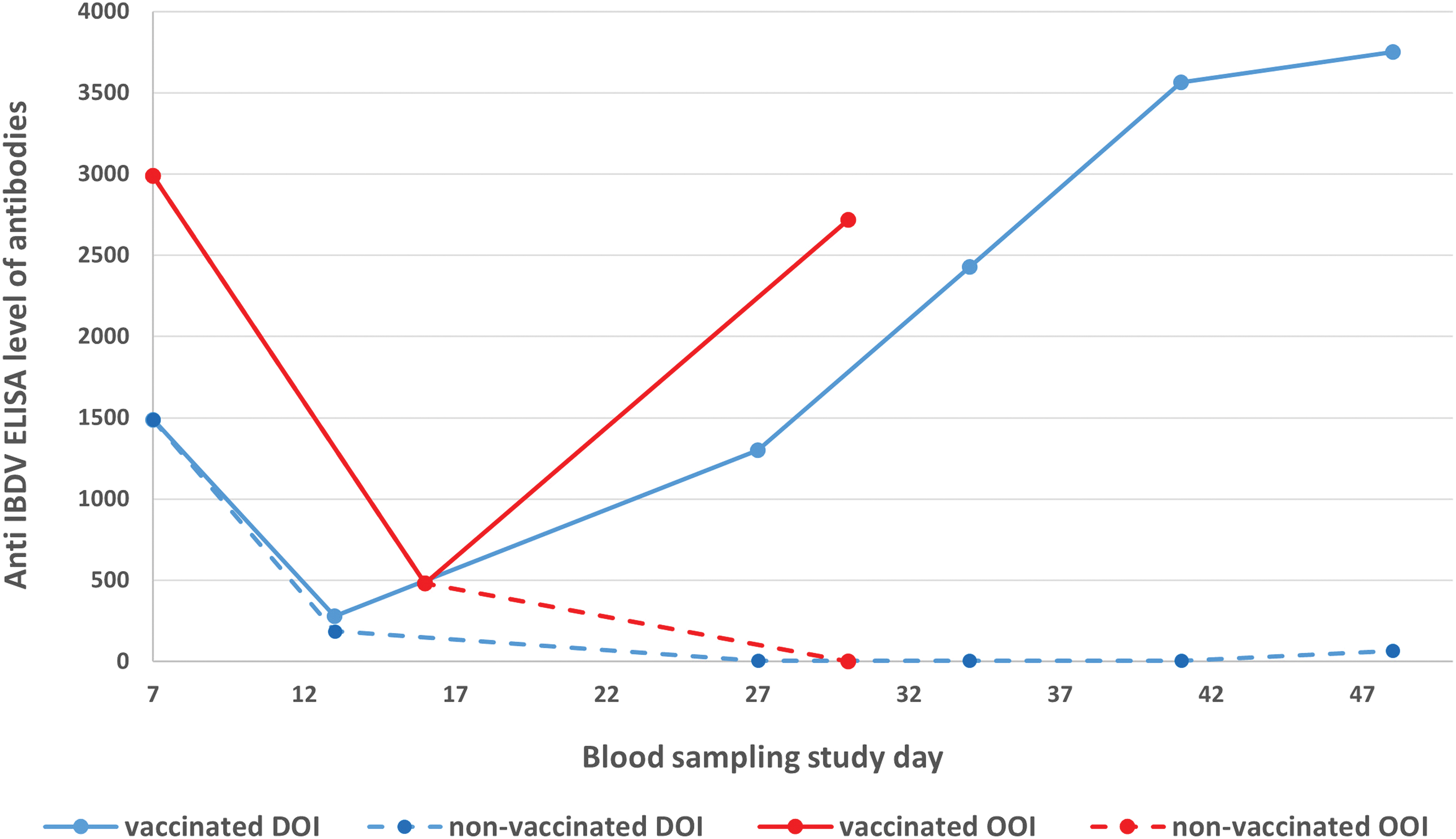
Anti-IBDV ELISA titers of MDA+ chickens in vaccinated and nonvaccinated control group in OOI and DOI efficacy studies. Data represent mean value, n = 20. MDA, maternally derived antibodies; OOI, onset of immunity; DOI, duration of immunity. Color images are available online.
According to the obtained mean ELISA titer on day 7 (1789 ELISA units) and the Deventer formula, the estimated day of vaccination in DOI study was day 13. Serology was also performed on sera collected on study days 13, 27, 34, 41, and 48. After vaccination, mean ELISA titer of the vaccinated group steadily increased. Fourteen days after vaccination 19 of 30 chickens (63.3%) seroconverted (ELISA titer >396 U), which increased to 16 of 20 chickens (80%) by the time of challenge. In the unvaccinated group MDA level declined to the background level by D27 (Fig. 2).
During the observation period after challenge, no clinical signs or mortality were observed in vaccinated or control group. As it is known that infection of older birds may result in less observable or unobservable clinical signs of IBDV infection, we have introduced body temperature as an additional parameter in assessing protection against infection with vvIBDV in the duration of immunity study (14). Significant increase in the mean body temperature was observed in the control group compared with the vaccinated group 2 and 4 days after challenge (D51 and D53). Results are summarized in Figure 3. The differences between mean temperatures of the study groups on the same day were tested by one-tailed, unpaired t-test with the significance of p < 0.05. It was shown that nonvaccinated chickens had significantly higher mean body temperature than vaccinated chicks after the challenge, on study days 51 (p = 0.04) and 53 (p = 0.0054). No significant difference was seen on the day of challenge, study day 48 (p = 0.0622) (Fig. 3). All chickens from the vaccinated group survived and had no clinical signs of the disease. Mean BLS of 3.33 in the control group and 1.20 in the vaccinated group were found, indicating that bursae of control chickens were on average more affected by the challenge IBD virus than those of vaccinated birds. Individual and mean BLS are listed in Supplementary Table S1.
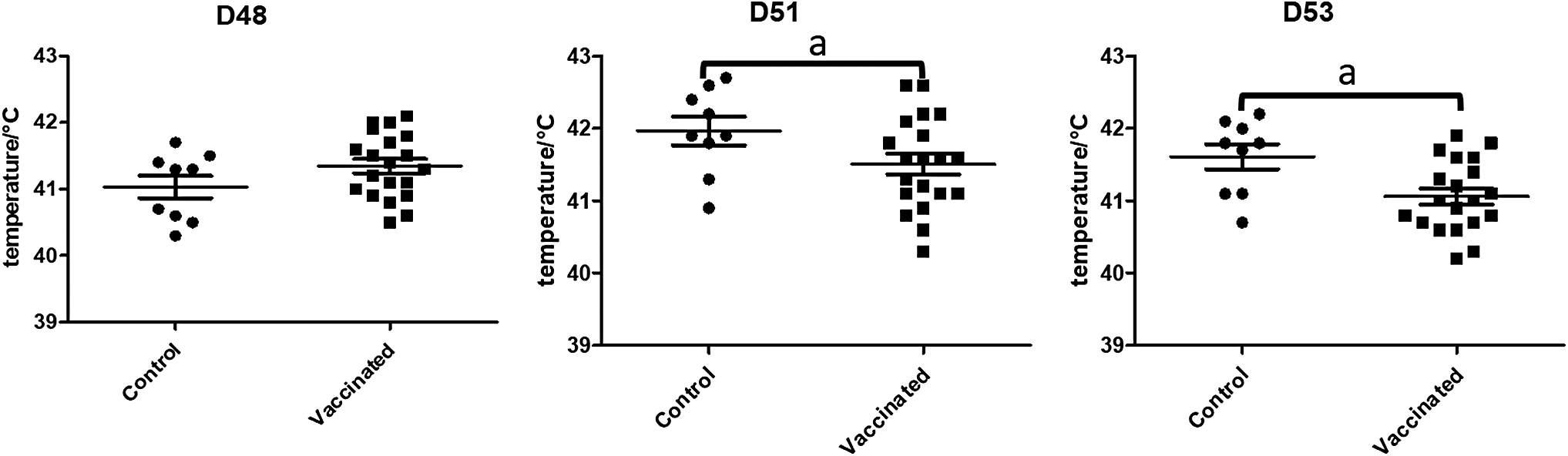
Cloacal body temperature of chickens from vaccinated and unvaccinated taken on study D48, D51 and D53 (0, 2 and 4 days after challenge). Differences between groups on the same study day were tested by one-tailored t-test (p < 0.05). Significantly different groups are marked with “anti-IBDV ELISA titers of MDA+ chickens in vaccinated and nonvaccinated control group. Data represent mean value, n = 20.
Evaluation of safety and efficacy in field conditions
Safety and efficacy of the IBD G6 vaccine under field conditions was evaluated on commercial broilers using similar commercially available intermediate plus IBD vaccine as a comparator. Targeting the breakthrough titer of 500 ELISA units, chickens were vaccinated at 15 days of age with one dose of the vaccine, by drinking water. The mean ELISA titer on the vaccination day was 555 in the IBDV G6 group and 480 in the comparator group (Supplementary Table S2).
Safety and efficacy were monitored until the day of slaughter at 42 days of age. During the study mortality was low and comparable in all four flocks (data not shown) and there were no culled animals in any of tested flocks. Feed conversion ratio (kg/kg), average body weight, and production index were calculated per each group (IBD G6 vaccine and comparator group) at the end of the trial. Results are given in Table 5.
Average Production Results in the Field Study with Commercial Broilers
Fourteen days after vaccination on D29 only 1 of 20 samples per flock was positive in anti-IBDV ELISA in one flock vaccinated with IBD G6 vaccine and in both comparator flocks. On the last sampling (at 42 days of age), all flocks showed uniform seroconversion to IBDV with no statistically significant differences between the flocks (Fig. 4).
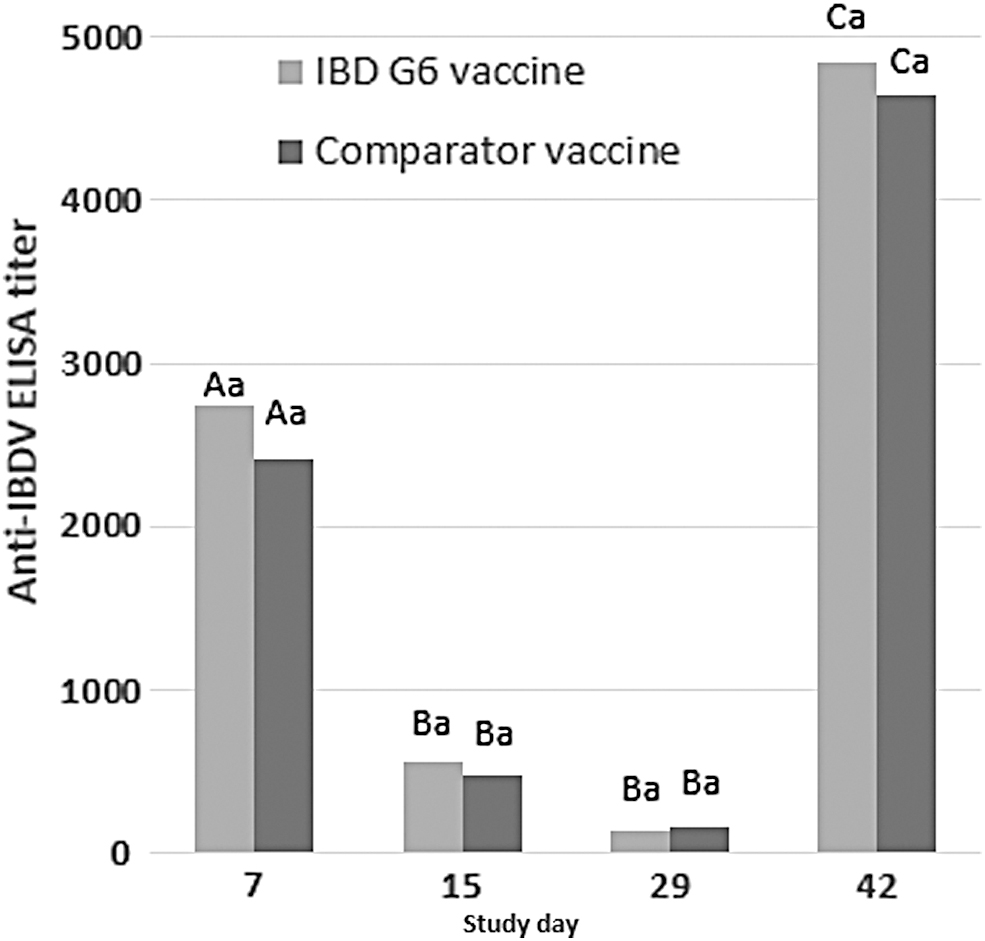
ELISA anti-IBDV titers in the field study using commercial broilers. IVP: IBD G6 vaccine, CVP: comparator intermediate plus vaccine. Titers marked by the same lowercase letter did not differ significantly (p < 0.05) between flocks on each SD. Titers marked by different uppercase letters differ significantly (p < 0.05) between SD.
Before the final slaughter, 20 samples of BF were taken from chickens from each flock for the PCR testing on the presence of IBDV. All samples were positive in both groups. The sequencing confirmed 100% homology with the respective vaccine strains.
Efficacy against challenge was tested 14 days after vaccination. No clinical signs of the disease were observed in any of the groups before the challenge. Three days postchallenge, one chicken from the vaccinated group was depressed and was found dead the next day with enlarged and swollen BF. In the nonvaccinated control group, 60% of chickens showed typical clinical signs of IBDV infection. Overall, vaccinated commercial broilers demonstrated 95% level of protection against vvIBDV challenge, compared with 40% protection in unvaccinated controls. Results of parameters obtained at the end of the study are given in Table 6, whereas individual and mean BLS are listed in Supplementary Table S1.
Results of Mortality, Protection Level and Average Bursa Lesion Scores 10 Days After Challenge
Difference is statistically significant at p > 0.002.
Difference is statistically significant at p > 0.03.
Discussion
Control of IBD in modern farming greatly depends on the use of vaccines. The choice of vaccine and vaccination schedule largely depends on the situation in the field (24). Although intermediate vaccines are still the most commonly used, less attenuated strains may be required in cases of unfavorable epizootiological situation or an immediate threat of IBDV outbreak. Intermediate plus vaccines can break through high titers of MDA, thus enabling earlier vaccination and better protection in cases where vvIBDVs are circulating in the field (20). The potential downside may be transient damage to bursa, which may impair immune response to other vaccines or pathogens. To ensure that vaccination will provide sufficient benefits over the inevitable adverse events, comprehensive evaluation of vaccine candidates is required before releasing the new product to the market.
Molecular and biological characterization, as well as in vivo efficacy and safety studies performed on the intermediate plus IBD G6-based vaccine, are presented in this article. Molecular characterization of IBD strains is most commonly based on sequences of HVR of the capsid protein VP2, the major host protective antigen (23, 26, 32, 46). Sequencing of the HVR on G6 strain showed high homology with the existing hot vaccines strains in the said segment, which is further reflected in phenotypic behavior characterized by breakthrough titers of ≤500 ELISA units and considerable but transient damage to BF. It has to be stressed that while predominant in most cases, VP2 gene is not the only determinant of the strain's pathogenicity as it was shown that VP1 gene may play an important role in strain's virulence as well (31, 47). Furthermore, intragenic recombination between the strains is possible and might result in a change of virus epidemiologic character, which needs to be considered when classifying strain's virulence based on VP2 sequence only. The recombination between vaccine and the circulating strain might result in strains of increased virulence and induction of lethal disease (3, 21, 45).
Vaccinations with live vaccines in modern poultry integrations are preferably carried out using mass application techniques such as administration using drinking water or spray (42). However, live viral vaccines are inherently unstable in solution, with degradation starting immediately after vaccine reconstitution or thawing. To establish optimum vaccination practice, in-use stability testing should be performed on the reconstituted vaccine to determine the maximum duration of vaccination. According to Vrdoljak et al., a decline in virus titer depends on various environmental and physicochemical factors, with temperature and water quality being the most important. The obtained data show that titer of IBDV strain G6 remains stable for at least 3 h after reconstitution, which was expected as IBD viruses are known to be very stable and resistant to physical and chemical agents (14).
Safety studies were performed on Leghorn type SPF birds, which are considered as the most susceptible chicken for IBDV and are often used as the model for pathogenesis studies (2, 38, 40). Using the most susceptible breed for safety studies enables later extrapolation of safety results to other, less susceptible breeds. Safety was demonstrated by application of 10-fold maximum dose of G6 strain to SPF chickens at 10 days of age, which is the youngest age recommended for vaccination. Such study design represents the anticipated worst-case scenario for safety assessment. It was observed that lymphoid depletion in bursal follicles peaked 7 days after vaccination followed by gradual repopulation, which was completed 35 days postvaccination, which is in accordance with Geerligs et al. In addition, no clinical signs were observed during the study.
Alongside chicken infectious anemia and Marek's disease, IBDV is the major infectious immunosuppressive agent that may increase susceptibility to other viral, bacterial, and parasitic diseases and interfere with acquired vaccinal immunity (22). A shared feature is lymphocytolytic infection capable of suppressing both humoral and cell-mediated immune functions, which significantly impact production results. To prevent immunosuppression, IBDV vaccines are required to comply with the immunosuppression test as described in the Ph. Eur. monograph for IBDV mild strains (7). Because hot strains cause more substantial but still transient depletion of lymphocytes than milder strains, their use is nevertheless still justified in cases when milder vaccines cannot provide sufficient protection against field IBD challenge.
The immunosuppressive effect of the vaccine was assessed by comparing the protection and serological response to NDV between IBDV G6 vaccinated and nonvaccinated chickens. The test is designed to represent the worst-case scenario where ND vaccine is applied at the peak of lymphocyte depletion. Despite lower average serological response to ND vaccination, none of the vaccinated chickens developed clinical signs of Newcastle disease thus demonstrating acceptable level of transient immunosuppression caused by vaccination with hot IBDV strain. This is not surprising as previous data on similar vaccines have shown comparable results. Furthermore, newer data show that protection against NDV challenge provided using live ND vaccines is more dependent on cell-mediated response rather than seroconversion (44).
To harmonize efficacy in vivo studies and make results comparable Ph. Eur. proposes detailed guidelines on the design and evaluation of efficacy studies for veterinary vaccines (7, 10). To challenge the vaccine's efficacy under the likely worst-case scenario, a minimum recommended vaccine dose is used in the laboratory studies. The onset and duration of immunity in both SPF and MDA-positive chickens were demonstrated at 14 days and at least 35 days after vaccination, respectively, which was confirmed in the field studies on commercial flocks.
The major obstacle in early vaccination with live IBDV vaccines is the presence of circulating antibodies in the laying hens, which are transferred to the chicks through egg yolk (29, 36). Because MDAs may interfere with live IBD vaccines, the earliest vaccination age is determined by the residual level MDAs and the ability of vaccine strain to overcome this barrier and induce the required immune response. The common practice of predicting the optimum vaccination age is based on ELISA testing of serum samples for average levels of anti-IBDV MDAs and prediction of the earliest vaccination days using vaccine's declared breakthrough titer (11, 40). The day of vaccination in OOI and DOI studies with MDA-positive chickens was estimated using Deventer formula (11) by targeting the MDA levels of ≤500 Idexx ELISA units in 75% of the chickens. However, measured titers were 481 and 280 on the day of vaccination, indicating that the real titer in the DOI study was below the target titer. Predictions using Deventer formula are never fully accurate not only owing to the flock heterogeneity and slight differences in IgY catabolism between individuals and between the breeds but also infection pressure, housing, and management conditions. Such discrepancies are common in the poultry practice regardless of the formula used for the calculation (41). This may lead to a suboptimum vaccination and related problems and research in this problem is still ongoing (27).
The assessment of IBDV vaccines' efficacy in older birds may be particularly challenging, especially in broilers that are generally less susceptible to IBDV infection than layers. Infection of birds older than 6–8 weeks of age is often subclinical and without observable/measurable clinical manifestations. Relying on the common manifestations of IBDV infection in such experiments may therefore result in unconvincing and unreliable results with poor statistical strength (4). Considering the late age of chickens at challenge in the duration of immunity study and anticipating difficulties in the assessment of the vaccine's efficacy, measurement of cloacal body temperature was introduced as an additional quantitative parameter of acute infection. It was shown that acute IBDV viremia is likely to induce transient, but significant increase in body temperature (43). Our results confirmed this finding and showed that nonvaccinated chickens had significantly higher mean body temperature compared with vaccinated chickens, indicating acute viremia in the control chickens. In addition, the difference in the mean BLS score between the vaccinated and control group was nevertheless significant in this experiment thus supporting the DOI period of at least 35 days. This is in a rough agreement with DOI claims for similar vaccines being in the range 4.5–6 weeks.
Field trials for new vaccine candidates should confirm laboratory safety and efficacy results under the usual field conditions. If available, a similar existing commercial vaccine is given to another experimental group for comparison. Prediction of the optimum vaccination day in the field study was accurate with average anti-IBDV titers of 555 (IBDV G6) and 485 (comparator) on the vaccination day. Seroconversion and production results confirmed the laboratory findings on the safety and efficacy. Comparison of seroconversion results between the laboratory DOI study on MDA-positive birds (antibody titer 3749) and the field study (antibody titer 4840) indicates the successful vaccination in both cases, despite the difference in MDA titers on vaccination days.
Our overall results confirmed the results of Tsukamoto et al., Block et al., and Geerligs et al. who reported the importance of estimating optimal vaccination time for IBDV vaccination under field conditions to achieve a detectable immune response (4, 20, 39). It was also demonstrated that G6-based vaccine had no negative effect on economically important parameters such as feed conversion, mortality, average body weight, or production index that is in accordance with other studies (4, 5, 12). These results demonstrated that the tested IBD vaccine based on G6 strain is efficacious in situations where infection pressure is high and vvIBDV strains are present.
Conclusions
Comprehensive evaluation of an intermediate plus IBD vaccine, based on strain G6 was conducted in compliance with the current Ph. Eur. and EMA requirements. Current requirements for vaccine's safety and efficacy challenge candidate's performance by simulating most unfavorable field conditions and thus resulting in reliable and effective vaccines, provided that vaccines are applied following manufacturer's instructions.
Footnotes
Author Disclosure Statement
Katarina Huić Babić, Lana Ljuma Skupnjak and Anto Vrdoljak are employed by Genera Inc., part of Dechra Pharmaceuticals PLC, manufacturer of Avishield IBD Plus vaccine.
Olga Zorman Rojs is employed by Veterinary Faculty, University of Ljubljana, Institute for Poultry, Birds, Small Mammals and Reptiles, Slovenia, which was a contract research organization for field studies. Máté Halas is employed by Prophyl Animal Health Ltd., Mohács, Hungary, which performed part of laboratory trials.
Funding Information
This work was supported by European Regional Development Fund, Cohesion Fund and The Government of the Republic of Croatia, as a part of the project Product research and development in the field of live poultry vaccines KK.01.2.1.01.0092.
Supplementary Material
Supplementary Table S1
Supplementary Table S2
Supplementary Figure S1
References
Supplementary Material
Please find the following supplemental material available below.
For Open Access articles published under a Creative Commons License, all supplemental material carries the same license as the article it is associated with.
For non-Open Access articles published, all supplemental material carries a non-exclusive license, and permission requests for re-use of supplemental material or any part of supplemental material shall be sent directly to the copyright owner as specified in the copyright notice associated with the article.
