




Abstract
This study aims to analyze the achievements of coronavirus disease-2019 (COVID-19) vaccination in five provinces in Indonesia, North Maluku, West Sulawesi, Maluku, West Papua, and Papua. Furthermore, to establish herd immunity in the new normal perspective. Vaccination is important because it is an effective way to build immunity. This method uses qualitative research with a Qualitative Data Analysis Software (QDAS) approach. The source of data was obtained from the official website of the government, the ministry of health, in the category of areas with low vaccination achievement, and data were also obtained by capturing news in credible official media to find the cause of the low vaccination rate in the community. The data analyst uses NVivo12 software to code and visualizes data in graphs, images, and word clouds. The findings of this study indicate that in five provinces in Indonesia, North Maluku (68%), West Sulawesi (76%), Maluku (66%), West Papua (62%), and Papua (41%), the achievement of vaccination implementation is still relatively low. Due to doubts in the community about the status of the vaccine, information and communication education from the government have not been optimal; the environment and geography vary, so it becomes an obstacle in carrying out vaccination.
Introduction
In many countries, the emergence of coronavirus disease-2019 (COVID-19) has become a severe problem for public health (Chung et al., 2020). Furthermore, the public sector faces various challenges and demands that must improve better services, one of which is the implementation of vaccination in the community as an alternative solution to establish herd immunity. Vaccination against COVID-19 is crucial to combat the pandemic (Patzina and Dietrich, 2022). Vaccines are also an effective way to prevent and fight disease transmission (Pfattheicher et al., 2022), as an appropriate and long-term pharmacological solution to deal with COVID-19 (Maserat et al., 2021).
However, the availability of vaccines alone is insufficient for overall immunological protection: they must also be well received by the health community and the general public. Vaccine hesitancy is a significant barrier to vaccination implementation and achieving herd immunity in the community to protect the population most vulnerable to COVID-19 (Bullock et al., 2022). This is due to various biological, environmental, and sociobehavioral factors; the threshold for COVID-19 herd immunity is between 55% and 82% of the population (Sanche et al., 2020). Lack of education and communication from the government results in the rejection of vaccination (Astuti et al., 2021). Plus, the intention to receive the COVID-19 vaccine varies according to the demographics of the perceived severity of the virus (Coe et al., 2022).
The low achievement of vaccination implementation has become a challenge and a problem for the country. Based on sources from Our World in Data, Indonesia is one of the countries where the COVID-19 vaccination coverage is still low compared to countries in the Southeast Asian region, and a study in Indonesia found that the acceptance of COVID-19 was influenced by the effectiveness of the vaccine and the perceived risk (Faturohman et al., 2021).
Of all the issues raised about vaccine indecision, Edwards and Haskell identified that there are three broad categories of vaccine concerns: (1) vaccine need, (2) vaccine safety, and (3) freedom of choice (Edwards et al., 2016). Furthermore, the implementation of vaccination aims to reduce the number of exposure and death from COVID-19 substantially; a good and safe vaccine must be given quickly and widely to the public once the vaccine is available (Schaffer Deroo et al., 2020), and thus will be important in achieving confidence in actual vaccination implementation (Harrison and Wu, 2020).
The identification that has been carried out in the COVID-19 vaccine studies has been described from various perspectives; this study aims to analyze the implementation of the COVID-19 vaccination in five provinces where vaccination coverage is still the lowest in Indonesia. The data are seen from the official COVID-19 website of the government ministry of health (Vaksinasi COVID-19 Provinsi, 2023) and captured news from national media (Kompas, 2023) to find the cause of the low vaccination rate in the community in five provinces, North Maluku, West Sulawesi, Maluku, West Papua, and Papua.
At the stage of analyzing the data using the NVivo12 software to visualize the data findings. This analysis looks explicitly at the achievement of the COVID-19 vaccination implementation to establish herd immunity in the five provinces. Furthermore, this study reveals the achievement of herd immunity from the perspective of new public services (NPSs). Where the NPS positions citizens as the main object in a democratic government, the community is not only seen personally but also citizens are part of the government in the public service system (Denhardt and Denhardt, 2015b).
Literature Review
Achievements in the implementation of COVID-19
Implementing vaccination, which was initially the right of citizens, can become an obligation for everyone because it can potentially infect and even kill other people (Gandryani and Hadi, 2021). Vaccination is a process in the body to have immunity and be protected from disease. Because if you are exposed to COVID-19, you will only experience mild illness after receiving the vaccination. While in the long term, to destroy and eliminate the disease itself (Fitriani Pramita Gurning et al., 2021). The side effects felt after the first and second vaccination doses were mild and predictable. These data will help reduce vaccine doubts (Alghamdi et al., 2021).
Furthermore, it is carried out in stages and prioritized for health groups in receiving vaccines early. Common side effects are monitored to assess vaccine safety (MacDonald et al., 2021). It is critical for world leaders to urgently address and reverse the socioeconomic consequences of the COVID-19 pandemic, involving the private sector and society, to mitigate the growing fear and stigma. So it can quickly form herd immunity (Sahu et al., 2021).
Herd immunity
Herd immunity is the effect of increased individual immunity to the population level, which provides indirect protection from infection to susceptible individuals when a sufficiently large proportion of immune individuals exist in the population. These population-level effects are often considered in vaccination programs (Randolph and Barreiro, 2020). Immunity can be exercised at all individual levels, naturally with pathogens or through immunization with vaccines. Globally, the journey from vaccine discovery to herd immunity to COVID-19 continues to encounter significant policy challenges that require a collaborative global response (Forman et al., 2021). The COVID-19 pandemic is unlikely to end until a global rollout of vaccines can protect against severe disease and promote herd immunity (Wouters et al., 2021). Herd immunity in Indonesia can be realized with the principles of NPS with the involvement and collaboration of all stakeholders (Dharma, 2021).
From several studies that have been conducted, case studies in Indonesia, vaccines with doses 1 and 2 are used to obtain herd immunity (Anisa Ell Raharyani, 2021; Permata and Yogyakarta, 2022). Achieving vaccination with doses 1 and 2 is essential for herd immunity because it can suppress the rapid spread of COVID-19 and, when exposed, only causes mild illness (Leiwakabess et al., 2022). Vaccines with doses 1 and 2 can increase the body's immunity, fight bacteria, and maintain the body's resistance (Kurniawan and Putra, 2022).
The World Health Organization (WHO) states that immunization is based on the idea of “Herd Immunity,” which is also referred to as “population immunity” and can be protected from certain viruses if the immunization coverage threshold is met (Camelia Gracia et al., 2021). Efforts to achieve herd immunity through the COVID-19 vaccination program are also one of the programs set by the Government of Indonesia for fighting COVID-19 (Kholidiyah et al., 2021).
New public service
NPS is serving, not directing, providing a framework for many voices calling for the affirmation of democratic values, citizenship, and service in the public interest. There are seven core principles in the NPS: (1) serve citizens, not customers; (2) seek public interest; (3) the value of citizenship and public service above entrepreneurship; (4) think strategically, act democratically; (5) realize that accountability is not simple; (6) serve, not direct; and (7) value people, not just productivity (Denhardt and Denhardt, 2015a).
Research Method
This method uses qualitative research with a Qualitative Data Analysis Software (QDAS) approach. The data source is obtained from the official website of the government of the ministry of health (Vaksinasi COVID-19 Provinsi, 2023) and captures news from credible national media (Kompas, 2023) regarding the causes of low vaccination implementation and to find out the problems and challenges faced by the community. Furthermore, at the data analysis stage, NVivo12 software is used to code data and visualize it in the form of graphs, images, and word clouds. The stages of this research can be seen in Figure 1 below.

Stages of research. Processed by Author.
Results and Discussions
Achievements of vaccination implementation in five provinces in Indonesia
Vaccination is one solution to increase the body's active immunity against an antigen from germs, viruses, or bacteria (Sahoo et al., 2021). The virus or bacteria in question is a virus that is transmitted through droplets; in medical terms, it is known as the liquid that a person excretes when coughing and sneezing (Seprianto et al., 2021). The COVID-19 vaccination is essential to deal with the SARS-CoV-2 virus in Indonesia (Cucunawangsih et al., 2021). The Indonesian government has conducted vaccinations nationally to deal with COVID-19 from January 13, 2021, until now (Pilishvili et al., 2021).
Although nationally, the last date was on April 19, 2022, the ministry of health website (Vaksinasi COVID-19 Provinsi, 2023) shows that the first vaccination dose has broken through 95.21% or equivalent to 198,288,035 doses of vaccine from the total target of 208,265,720 million people. At the same time, the implementation of the second vaccination is still 78.24% of the target. Because there are 34 provinces in Indonesia, there are still areas with low vaccination achievements. However, vaccination implementation is hoped to be further improved in all regions of Indonesia. The five provinces where the achievement of vaccination implementation is still relatively low can be seen below in the map of Indonesia (Fig. 2).
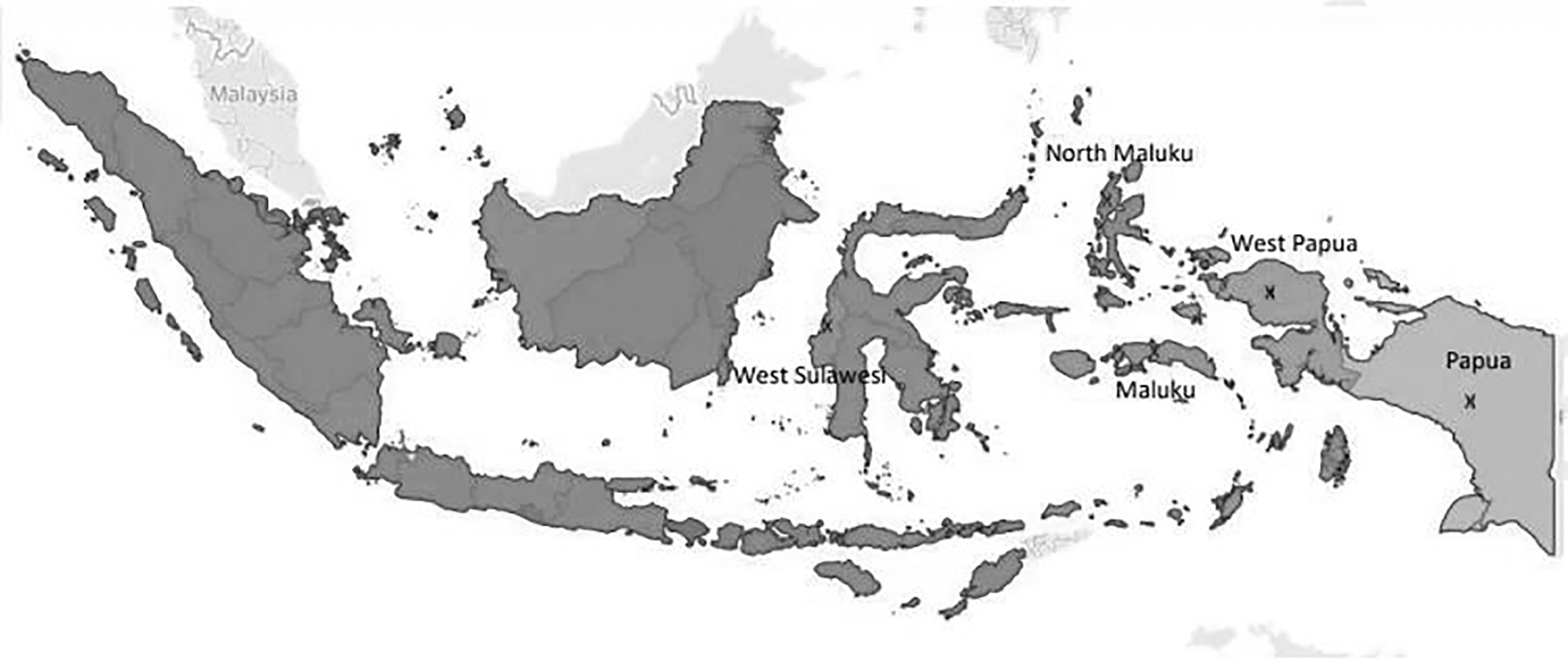
Five provinces with the lowest vaccination achievements (Vaksinasi COVID-19 Provinsi, 2023).
On the distribution map of vaccination achievements in Indonesia, five provinces, such as North Maluku, West Sulawesi, Maluku, West Papua, and Papua, are still relatively low in vaccination achievements. (Note: the darker the blue, the better the vaccination). West Sulawesi is still light blue along with North Maluku, Maluku, West Papua, and Papua. This indicates that the five provinces are still low in vaccination coverage. The achievements of implementing vaccination at the first and second doses in the five provinces are described below in Figures 3 and 4.

Achievement of lowest first dose vaccination in five provinces. Vaksinasi COVID-19 Provinsi (2023), processed using NVivo12
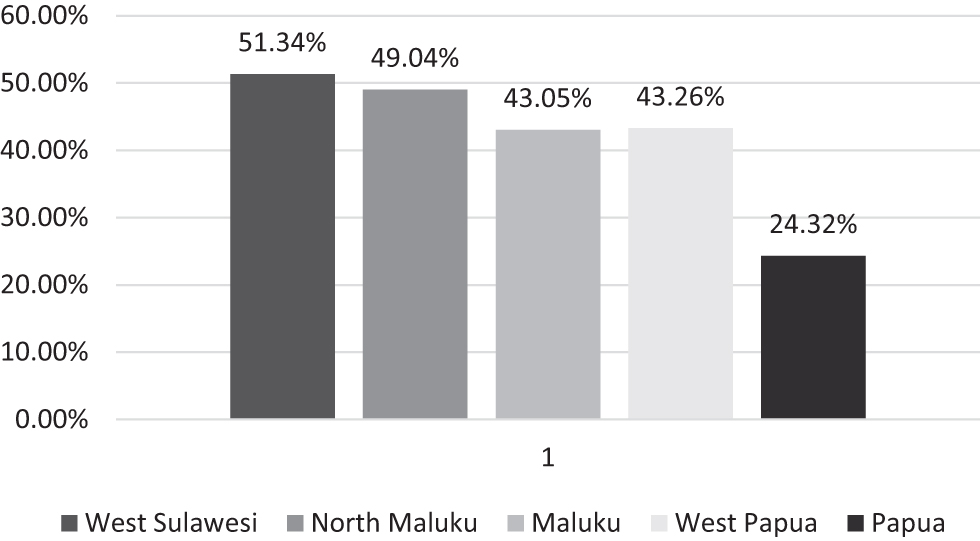
Achievement of the second lowest dose of vaccination in five provinces. Vaksinasi COVID-19 Provinsi (2023).
The figure found that the percentage of COVID-19 vaccination at the first dose was carried out in five provinces; it is known that Papua is the lowest province at 32.81%. The second lowest vaccination achievement was West Papua with 62.06%, and the third lowest province was Maluku with 72.79%. The fourth lowest province was West Sulawesi, with 78.34%. In comparison, the fifth lowest was North Maluku with 83.17%. Overall, the main factor facing the low achievement of vaccination in these five areas is the common understanding of the community and family support regarding the importance of vaccination (Harapan et al., 2020).
Knowledge and belief in vaccination itself (Efendi et al., 2022). Plus, Papua province is the most remote area in Indonesia to be accessed, and its people are still low in terms of their level of education (Nangarumba, 2015). In the implementation of the second vaccination dose, it was again found that vaccination achievement was the lowest in the same five provinces. More details can be seen in Figure 4 below.
From the picture, it is explained that in the implementation of the second dose of vaccination, it was found that the same five provinces had the lowest achievement of COVID-19 vaccination, namely Papua with a percentage of 24.32%, the second lowest, followed by West Papua, 43.26%. The third lowest is Maluku, 43.05%, the fourth lowest province in North Maluku with a percentage of 49.04%, and the fifth lowest province in West Sulawesi with 51.34%.
As for the types of COVID-19 vaccine variants in Indonesia, which have obtained permission from the Food and Drug Supervisory Agency or BPOM for emergency use authorization, there are a total of 10 types of COVID-19 vaccines, namely Sinovac, AstraZeneca, Sinopharm, Moderna, Pfizer, Novavax, Sputnik-V, Janssen, Convidencia, and Zifivax (Tentang Vaksinasi Covid-19, 2023) through bilateral and multilateral agreements such as the COVAX Facility with GAVI and WHO, as well as donations from friendly countries, efforts are being made to obtain this vaccine (Firdaus, 2020; Gupta et al., 2021). The achievement of vaccination implementation in these five provinces is still relatively low due to several factors, namely public distrust due to hoax news that has already been circulating, giving rise to doubts and fears about vaccinating (Fig. 5).
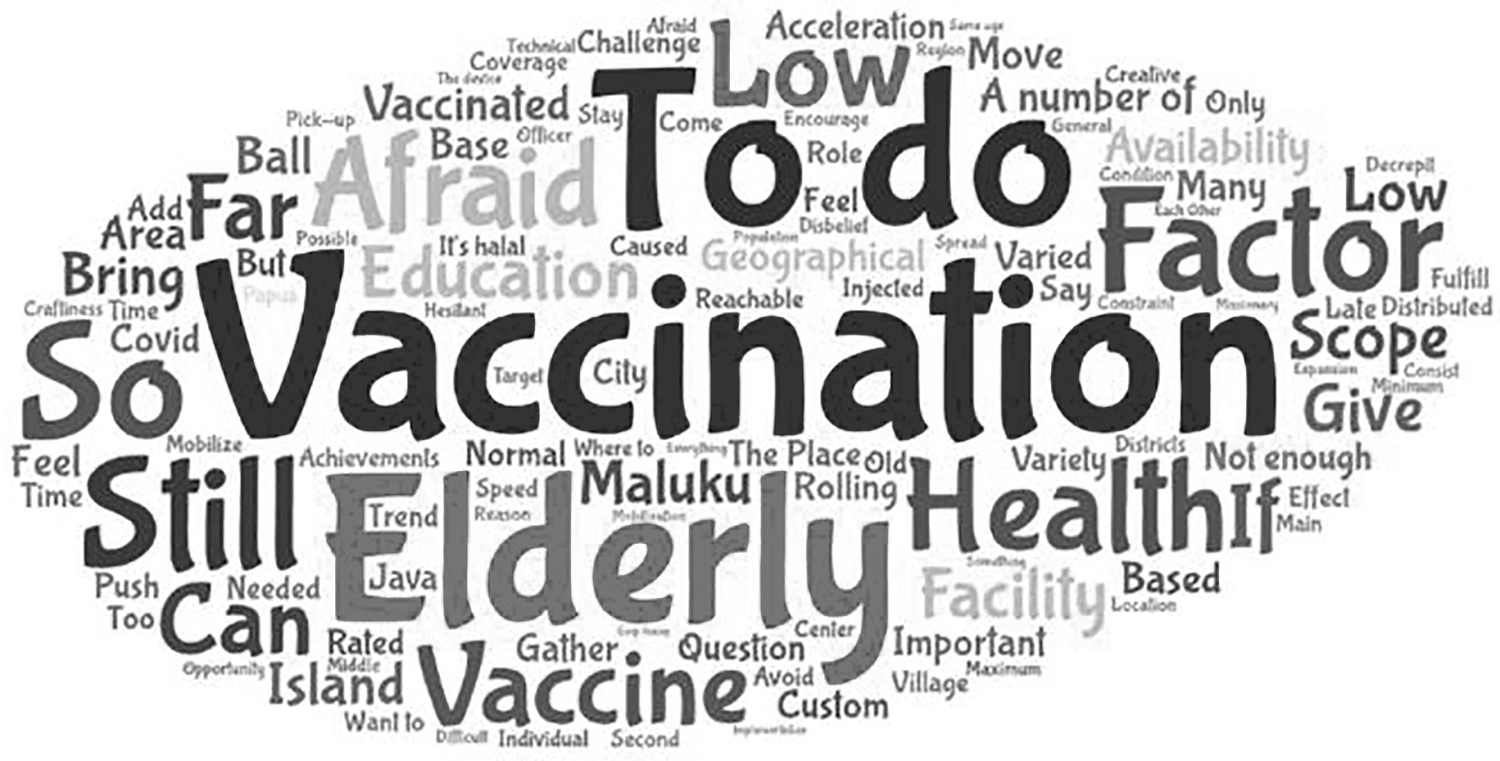
Causes of low vaccination in the community. NCupture data media, Kompas (2023) processed using NVIVO12.
The visualization of the image explains that the low vaccination achievement in five provinces in Indonesia is due to excessive fear, especially among the elderly group; distribution and availability of vaccines are considered slow between the central government and the regions. The lack of educational facilities and geographical location is also challenged, so the implementation of vaccination in the community is still low. There is a need to encourage mobility in the community and awareness of the importance of being vaccinated.
Vaccination achievements in five provinces forming herd immunity
Herd immunity is an event that occurs in community groups that are resistant to disease (Faizal et al., 2020). Developing herd immunity depends on the disease. For example, with measles, about 95% of the population must be immunized to achieve immunity. Meanwhile, the threshold for polio disease is around 80% (
With the new variant, experts estimate that COVID-19 herd immunity can be achieved if 80% to 90% of the population has been vaccinated. Several groups forming immunity in Indonesia are divided into five groups: the Elderly, General and Vulnerable Society, Public Officers, Health Human Resources (HR), and Ages 12–17 Years. The data results can be seen in more complete vaccination achievements in establishing herd immunity in the five lowest provinces in Indonesia, Central Sulawesi, West Sulawesi, Maluku, West Papua, and Papua (Table 1).
Herd Immunity Achievements in North Maluku
Source: Vaksinasi COVID-19 Nasional (2023).
HR, Human Resources.
Table 1 shows that vaccination achievements in North Maluku still need to improve in achieving herd immunity to COVID-19. Only the Health HR group achieved more than 70% of the COVID-19 herd immunity vaccination threshold, with 118% of the target of 9,151 people, whereas in the elderly group, only 55% of the target of 74,323 people, general and vulnerable people 65% of the target of 609,731 people, public officials 53% of the target of 115,045 people, and ages 12–17 years with a percentage of 51% targeting 145,842 people.
The low achievement of vaccination in each group is due to a lack of knowledge regarding the importance of vaccination in handling COVID-19; there are still high public doubts about the halal status of vaccines and also areas that are difficult to reach (Hakim, 2021; Imama et al., 2022). Plus, the target population for COVID-19 vaccination varies depending on geography and local demographic structure differences (Wang et al., 2020). To overcome the problems faced, the local government in North Maluku is suppressing the exposure of people infected with the COVID-19 virus by educating the public about the importance of vaccination to reduce the risks posed (Hamid, 2022). They are encouraging the collaboration of regional stakeholders in North Maluku so that the Herd Immunity target can be achieved (Iqbal and Burhanuddin, 2020). Furthermore, low vaccination achievement in West Sulawesi can be seen in Table 2 below.
Achievement of Herd Immunity in West Sulawesi
Source: Vaksinasi COVID-19 Nasional (2023).
The achievement of herd immunity in West Sulawesi found two groups that succeeded in achieving herd immunity covid-19 vaccination, namely the group of public officers with an achievement of 83% of the 111,643 target people and Health HR with 117% of the target of 9,445 people. Meanwhile, the elderly reached 56% of the target of 89,146 people, the general public and the vulnerable 58% of the target of 715,281 people, and ages 12–17 years with 64% of the target of 163,725 people.
The low achievement of vaccination in West Sulawesi is the low level of public awareness of the importance of vaccination because many still need to violate health protocols, wear masks, and wash their hands without using soap (Ardiputra et al., 2021). The distribution is not optimal due to the staff's lack of knowledge when delivering vaccines correctly and SOPs that still need to be created (Marwayani, 2021)—coupled with the condition of the area, which is difficult to reach so that the implementation of vaccination is not optimal (Hamzah, 2022).
In dealing with the problems that are being faced, the local government in West Sulawesi issued regional regulations, one of which is the Regent Regulation Number 32 of 2020, regarding judicial operations, social fines, application of monetary fines, and routine patrols in crowded places. Encourage coordination and collaboration between the TNI, Polri, the COVID-19 Task Force, and Satpol PP in implementing these regional regulations. In addition, the local government in West Sulawesi has increased socialization in the media (Yuliana et al., 2022). The result is that more and more people want to vaccinate independently and prevent hoax news from developing in public (Wahyuni, 2022). Another solution encouraged in meeting the availability of vaccines is to carry out diplomacy between the government and international institutions, the government and private institutions, and the government (Harizqi, 2022). Furthermore, data on vaccination achievements in Maluku can be seen in Table 3 below.
Herd Immunity Achievements in Maluku
Source: Vaksinasi COVID-19 Nasional (2023).
The table shows that in Maluku, only the Health HR group has met the COVID-19 herd immunity target with 110% of the 14,255 target recipients, while in the elderly group, 43% of the target 127.308 recipients, the general public and vulnerable 54% of the target 885.532 recipients, public officers 59% of the target 174,705 recipients, and ages 12–17 years with 63% achievement of the target 215.89 recipients. The reasons for the low implementation of vaccinations in Maluku include the following: (1) has a disease that comes from birth; (2) because they believe that COVID-19 is not a complex problem to cure; (3) they do not believe vaccines are necessary; (4) they are not sure about the effectiveness of the vaccine and are still afraid of the adverse effects of the vaccine; and (5) citizens who believe the rumor that the chip is in the vaccine (Astria Dela Arabaling et al., 2022).
In addition, public confidence and knowledge are still low regarding the importance of vaccinations to prevent infection and suppress the spread of COVID-19 (Novita and Ramadhani, 2021). Many people ignore vaccinations and health protocols for washing their hands, wearing masks, keeping their distance, avoiding crowds, and reducing mobility (5M) (Margaretha et al., 2022).
Efforts made to increase the implementation of vaccinations in Maluku are by socializing the importance of vaccines to prevent COVID-19 in the community (Monike Hukubun et al., 2022). The community is also encouraged to make hand sanitizers made from betel leaf herbs to prevent transmission of COVID-19 (Wabula et al., 2021). Countermeasures against COVID-19 can also be carried out by providing educational information on social media so that people do not easily accept hoax news that develops (Latupeirissa et al., 2021). The government also encourages people to adopt a healthy lifestyle to prevent the transmission of COVID-19 (Hajiyanti Makatita, 2021). Meanwhile, the results of vaccination in West Papua are presented below in Table 4.
Herd Immunity Achievements in West Papua
Source: Vaksinasi COVID-19 Nasional (2023).
From the data table, it is explained that the achievement of herd immunity against COVID-19 in West Papua is only one group that reaches more than 70% of the herd immunity threshold, namely the Health HR group with 123% of the target of 8,564 recipients. Meanwhile, other groups that have not achieved herd immunity, such as the elderly group who are still 29% of the target 50,834 recipients, the general public and vulnerable people are still 53% of the target 493,762 recipients, and public officials 60% of the target 116,328 recipients. While in the 12–17-year age group, 47% of the target was 127,914 recipients.
The cause of low vaccination in West Papua is public doubts about the status of halal and safe vaccines because the information received still needs to be clarified (Novita and Ramadhani, 2021). The government has yet to minimize hoax news developed in society (Nursofwa et al., 2020). The public's desire to receive vaccines is still low; this problem is confirmed in Agustarika et al.'s research (2022a) that the level of knowledge, fear and education are the main factors in receiving vaccines (p values, 0.018, 0.031, and 0.019).
The efforts made by the government in accelerating the implementation of vaccinations in West Papua are by advocating with stakeholders so that they have a clear division of tasks in the community to provide an understanding that vaccination is necessary and safe to use in preventing the covid-19 virus (Agustarika et al., 2022b). On the other hand, everyone is expected to change their behavior and be involved in social control because implementing the health protocol is a new way to wear a mask, keep distance and wash hands, and are advised to exercise to reduce the transmission rate of COVID-19 (Kwando et al., 2020). The lowest area for implementing the COVID-19 vaccination in Indonesia is Papua, and the finding data are presented below in Table 5.
Herd Immunity Achievements in Papua
Source: Vaksinasi COVID-19 Nasional (2023).
Data show that the achievement of herd immunity against COVID-19 in Papua is the lowest data of the four regions described above. In the elderly group, the vaccination achievement was only 13% of the target of 177,361 recipients. Furthermore, for the general public and vulnerable groups, the achievement is 25% of the target of 1,689.11 recipients. In the group of public officials, 49% of the target of 289,919 recipients, and ages 12–17 years is 21% of the target of 407.85 recipients. Meanwhile, the Health HR group achieved herd immunity from COVID-19 at 97% of the target of 19,529.
The reason for the low vaccination rate in Papua was the government's slow response at the start of the pandemic causing the policy to handle COVID-19 to be delayed, the policy inconsistency of limiting activities across countries, and the procedures made to implement the policy less than optimal (Aminah et al., 2021). Indigenous Papuans are still reluctant to receive the covid-19 vaccine (Yulia, 2022). They are coupled with the need for more awareness and community participation in handling COVID-19 (Ilham et al., 2021).
Interestingly, in Indonesia, many civil and criminal laws have been approved in certain cases of infectious diseases so that people are required to vaccinate in dealing with the COVID-19 pandemic and are not justified in refusing (Beccia et al., 2022). To speed up the vaccination process, the Indonesian government makes use of strategic public spaces, government, and private offices and involves the private sector in implementing the second phase of vaccination (Arifin and Anas, 2021; Dayera et al., 2022). In more detail, you can see the achievement of each community group in percentage in graph six below.
Figure 6 shows that the achievement of COVID-19 vaccination from five provinces in Indonesia is still low because of the community groups targeted by the Indonesian government in implementing the COVID-19 vaccination; only Health HR can consistently achieve the target of 70% of herd immunity. The low achievement of the COVID-19 vaccination was caused by the level of public doubt about the usefulness of the vaccine (Vera Iriani Abdullah, 2022). There still needs to be more public understanding and awareness regarding the risks posed (Di Sumatera, 2022). Access to community settlements that are difficult to reach (Sujatmoko, 2020; Welembuntu and Gobel, 2022).

Percentage of vaccination achievements in target groups in five provinces. Created by the author.
Group immunity in the achievement of the covid-19 vaccination is essential because a person is protected from disease through a process in the body called vaccination, which ensures that they will not get sick or only experience a mild illness if they get the disease; the target of achieving 70% is carried out so that covid cases and the disease soon disappear (Junaedi et al., 2021; Yuliza et al., 2022). Efforts to achieve public immunity (herd immunity) through the COVID-19 vaccination program are one of the programs established to combat COVID-19 in Indonesia (Aini and Widjaja, 2021; Gunawan and Toni, 2022; Kholidiyah et al., 2021). According to research, people who have been fully vaccinated against COVID-19 with two doses get three times more protection than those who have not been vaccinated at all, so herd immunity can be formed by injecting the vaccine to stop the spread of the virus.
Herd Immunity in each of the five groups is essential to achieve the implementation of the COVID-19 vaccination in Indonesia, starting from the Elderly, General Public and Vulnerable, Public Officers, Health HR, and Age 12–17 groups (Zilhadia et al., 2022). and encouraging Herd Immunity because it is an effective way to increase one's physical endurance and suppress transmission to people around (Nikmatuzaroh, 2019). In line with what was conveyed by the Ministry of Health of the Republic of Indonesia, achieving two doses of vaccination is the main target that must be carried out to reduce mortality and the rapid spread of COVID-19 (Fitriyani, 2020; Pusposari, 2020).
In the elderly and general and vulnerable groups, it is important to achieve herd immunity because most of them have congenital diseases; this group is very vulnerable to exposure to the COVID-19 virus (Yolanda, 2022). Besides that, the Public Officer and Health HR group are also essential to achieve herd immunity because these two groups directly deal with COVID patients in their care (Devi Lawra and Adriyanti, 2021). The other group is the 12–17-year-old group; it is essential to achieve herd immunity because it can significantly prevent transmission during activities in the school environment and when they play with their peers (Cahyaningtyas et al., 2021).
Therefore, herd immunity plays a vital role in stopping and suppressing the spread of COVID-19 in Indonesia so that cases in the public do not increase (Aminuddin Ilmar, 2020; Fitrianty et al., 2021). Furthermore, the vaccination achievements of each group in the covid-19 vaccination to encourage the accomplishment of Herd Immunity are presented in Table 6 below.
Achievements of Herd Immunity Coronavirus Disease-2019 Vaccination in Five Provinces
Processed by the author.
Table 6 shows that herd immunity in five provinces is still relatively low, with the target set by the Indonesian government to establish herd immunity with a minimum threshold of 70% of the population must have received 1 and 2 total doses of vaccine from the population in each region; this is a policy of the Indonesian government to prevent the transmission of the COVID-19 virus from becoming more widespread in society and reducing the death rate from COVID-19 (Gunawan et al., 2022). When seen from the visualization of Figure 7, these results show that of the five population groups that have been determined to achieve herd immunity, only Health HR consistently achieved significant Herd Immunity population acceptance of COVID-19 vaccination in five provinces, North Maluku (118 %), West Sulawesi (117%), Maluku (110%), West Papua (123%), and Papua (97%).

Visualization of herd immunity in the five provinces. Processed by the author.
The type of vaccine variant that is widely used in the Health HR group is the Sinovac vaccine variant because it is the first variant that has received approval from the Indonesian Ministry of Health and permission from the Food and Drug Supervisory Agency (BPOM) and has obtained a halal fatwa from the Assembly Indonesian Ulama (MUI) for use in society (Gunawan et al., 2022). Roro emphasized (2021) said that this variant of the Sinovac vaccine is also prioritized for the Health HR group because it is a profession that is the first and foremost guard with direct contact in handling COVID-19 patients.
Overall, in five provinces, North Maluku, West Sulawesi, Maluku, West Papua, and Papua, herd immunity against COVID-19 is still very low among the 34 provinces in Indonesia, and it can be concluded that in these five provinces, herd immunity against COVID-19 has not yet been reached. Especially for the Health HR group, the herd immunity target against COVID19 has been achieved. However, in general, herd immunity needs to be accelerated to fight the COVID-19 virus so that everyone can have immunity and protect themselves and others around them from the transmission of the COVID-19 virus (Frederiksen et al., 2020). With the results previously described above, it is only natural that the five provinces are in the lowest position in Indonesia in implementing the COVID-19 vaccination.
The primary reason is the geographical conditions of the area, which are difficult to reach (Megatsari et al., 2022). The public still doubts vaccine safety and halal status (Utami et al., 2022). In addition, the availability of vaccines was still limited at the start of the emergence of COVID-19 in Indonesia (Fuady et al., 2021). In addition, knowledge about vaccines is still low, so there are still provinces in Indonesia where vaccination results have yet to reach herd immunity (Fuady et al., 2021). Herd Immunity is a new way to deal with the spread of COVID-19 in society to prevent and reduce mortality from the COVID-19 virus (Clemente-Suárez et al., 2020; Dong et al., 2021; Williams and Cooper, 2020).
NPS achieving herd immunity in the NPS perspective
The principal paradigm of the NPS places citizens as customers, but, at the same time, people who are seen as citizens have the right to get quality public services from the state (public bureaucracy). In this concept, the public bureaucracy must change itself from government to governance so that public administration will appear more assertive in explaining contemporary problems in public discussion. In the public bureaucracy, it does not only concern elements of the government but also all issues related to public affairs and public interest (Agus, 2016). Strictly speaking, the NPS proposes a new doctrine in public service, namely, (1) serve citizens, not customers, (2) seek the public interest, (3) value citizenship over entrepreneurship, (4) think strategically and act democratically, (5) recognize that accountability is not simple, (6) serve rather than steer, and (7) value people, not productivity juices.
However, implementing the seven principles of the NPS has not been felt optimally in the social community, especially in services for handling the COVID-19 pandemic to form herd immunity. The working group examined the relationship between vaccine hesitation and vaccine demand (Anonymous, 2013). In the Global Vaccine Action Plan, approved by the World Health Assembly in May 2012, Strategic Goal 2 states that “individuals and communities understand the value of vaccines and demand immunization as their right and responsibility” [p. 38] (Fig. 8).
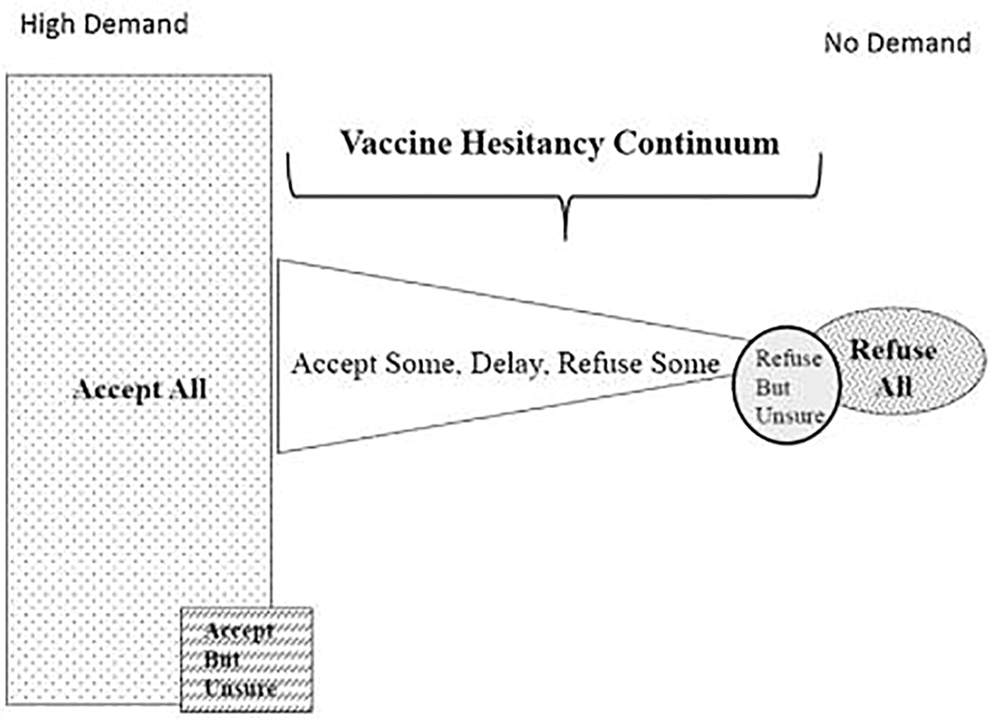
The continuum of hesitancy between total acceptance and outright. MacDonald et al. (2015).
As illustrated in Figure 8, vaccine doubt occurs in the continuity between high vaccine demand and complete vaccine rejection, i.e., there is no demand for available and offered vaccines. However, demand and doubt are not entirely congruent. An individual or community may fully receive vaccinations without hesitation, but may not demand certain vaccinations or vaccines. The following example illustrates the aspect of a request that goes beyond hesitation. In Uttar Pradesh, India, the public is demanding, through the court's public, access to the Japanese encephalitis vaccine to curb the annual disease outbreak associated with high morbidity and mortality among their children (MacDonald et al., 2015).
In Calgary, Canada, access in schools to the Human Papilloma Virus vaccine was banned in Catholic schools in 2008. However, citizen requests overturned this ban in 2013 and supported access to HPV vaccination in schools as previously only available in nonpublic schools. Catholic (Guichon et al., 2013).
As doubt undermines demand, countries need to take action to combat doubt to achieve vaccine demand goals, as defined in the Global Vaccine Action Plan. When the level of doubt is high, the level of demand is low, but a low level of doubt does not necessarily mean that the demand will be high. To achieve high demand for individual and community vaccines, context-, community-, and vaccine-specific strategies must be developed beyond those to overcome doubt (Fig. 9).

Three Sc” model of vaccine hesitancy. MacDonald et al. (2015).
According to NE MacDonald, there are three models for increasing vaccination in the community so that herd immunity can be achieved in all public target groups: first, there must be complacency that is felt in the community. Second, there must be reasonable confidence from the health side, government, and target groups in carrying out vaccinations. Third, there must be a convenience that is felt by all parties in the implementation of vaccination.
If the Three Sc” model of vaccine hesitancy is realized well, then vaccination in all target groups can reach the level of herd immunity. Of course, supported by the seven principles of the NPS, it must be applied to services to accelerate vaccination in Indonesia.
Conclusion
COVID-19 is a social disaster that has hit the world globally. Serious handlers are needed in dealing with this disease so that it does not become more contagious and affects all community groups. In Indonesia, five provinces are still relatively low in the achievement of vaccinations implemented, especially in the elderly group. The five provinces are North Maluku, West Sulawesi, Maluku, West Papua, and Papua. The vaccination achievements of five provinces have not yet reached herd immunity in the target group. According to NE theory, MacDonald divides three models in accelerating the implementation of vaccination to the public: complacency, confidence, and convenience. Services in optimizing vaccination must apply the principles of the NPS so that MacDonald's three NE models can appear in community groups and form Herd Immunity.
Footnotes
Authors' Contributions
Asriadi: review and editing (equal); D.M.: conceptualization (lead); writing—original draft (lead); formal analysis (lead); and writing—review and editing (equal).
Author Disclosure Statement
No competing financial interests exist.
Funding Information
No funding was received for this article.