




Abstract
Conduct a narrative review study to identify, evaluate, and summarize pertinent published literature on the influence of U.S. military culture on male victims of military sexual assault (MSA) and military sexual trauma (MST). Various aspects of military culture have been shown to contribute significantly to barriers of reporting, prevention, and social support for male service members who have experienced MST and MSA in the U.S. military forces. A variety of U.S. military cultural factors associated with barriers to reporting MST/MSA among male military service members and veterans were assessed and identified in this narrative review. Overall study findings suggest that increasing research on the impact of military culture and male MST and MSA is imperative in the effort to reduce and prevent sexual violence within the U.S. military armed forces. Various aspects of the U.S. military culture play a significant role in the influence of sexual assault occurrences that take place within U.S. military service units. Supporting evidence suggests that the U.S. military culture impacts the overall severity of barriers to reporting sexual assault and/or trauma among male military service members and veterans.
Introduction
Over the past decade, researchers have begun to notice concerning influences between U.S. military culture, rape myth, and occurrences of male military sexual trauma (MST) and military sexual assault (MSA). The commonly regarded hypermasculine culture of the military in addition to a high prevalence of rape myth has been credited as a significant influencer of male victims of MST/MSA who may forgo reporting sexual assault. In addition, supportive evidence has shown that various facets of complex relationship between rank, positions of power, and cohesion relationships in the U.S. military culture may be utilized as tools to perpetrate male victims.
MST includes sexual assault, sexual battery, or repeated threatening sexual harassment experienced during military service (U.S. Department of Veterans Affairs 2020). Prevalence and cases of MST among U.S. male veterans remain underreported, stigmatized, and are significantly underrepresented. Within the global community, one in six boys is sexually abused before their 18th birthday. This number rises to one in four men who experience unwanted sexual events across their lifetime within the global population. Men are less likely to report sexual abuse, to identify experiences they have had as abusive, and to seek support or formal treatment for these experiences (Soriano-Mas and Harrison 2019).
Echoing our global community, sexual trauma among men in the U.S. military is a significant and highly unreported problem. A 2008 Veterans Affairs (VA) study found “Self-reported rates of sexual harassment among active-duty men range from 27% to 38%, with ∼1% of men reporting sexual assault” (Street et al. 2008). Numerous studies have been conducted to investigate MST among military service members and veterans, however, research specifically addressing MST among men remains lower in prevalence compared with studies on women. This article examines the influence of military culture on occurrences of MST and lack of reporting among men in the U.S. military forces. Review of current literature is conducted to better understand cultural barriers, outcomes, and reporting rates of male-victim MST in the U.S. military.
Search Methods
We searched for reports of MST among men in the U.S. military (Programs, Reports, Research, Advocacy) articles published between the years 2007 and 2019. We used data-based specific language, search headings, and broadly inclusive terms joined by Boolean operators to capture records describing MST among men in the U.S. military within the PubMed and PsycINFO database systems. The following terms were used to retrieve reports: Military Culture, Cultural Ethics in the Military, Cultural Psychology in the Military, Military Cultural Psychology, Military Sexual Trauma, Military Sexual Violence, Military Sexual Assault, Military Servicemen, Veterans, Men and Males.
Methodology: Inclusion and Exclusion Criteria
Reports were included if they contained primary data regarding U.S. military culture and MSA/MST that targeted male military servicemen and veteran populations. Given the anticipated paucity of reports, no exclusion criteria based on study design or type (e.g., cluster-randomized trial, pre/post method, observational study, implementation science, policy analysis, description of program or surveillance structure), setting, type of mechanism(s) addressed, actor, quality, or language were applied. Only peer-reviewed journal articles and systemic reviews were selected for inclusion. Reports that focused solely on female veterans and civilian population members were excluded. The study protocol was drafted in accordance with the Preferred Reporting Items for Systematic Reviews and Meta-analyses guidelines. The Author determined this research does not involve human subjects and therefore waived the need for informed consent.
Results—Search Outcome
The search returned 37 records for screening (31 PubMed, 6 PsycINFO). After screening, 29 records were excluded for MST among female veterans, sexual abuse among general civilian population members, posttraumatic stress disorder (PTSD) studies on veteran populations, and studies primarily focused on the rate of drug abuse among male military service members suffering from PTSD. Therefore, eight full-text reports were obtained and reviewed. Report exclusions included the following: a lack of primary data including quantitative data investigating rates of MST among male-service members and/or efficacy of interventional care, prevention, and outreach care programming within the military force branches targeted toward male-MST victims, and studies unspecified for populations of U.S. male military service members and veterans. Search outcomes, a total of eight full-text reports, satisfied all criteria and are included in this literature review. All the selected reports are peer-reviewed and citied in both the (five, PubMed and three, PsycINFO) databases (Fig. 1).
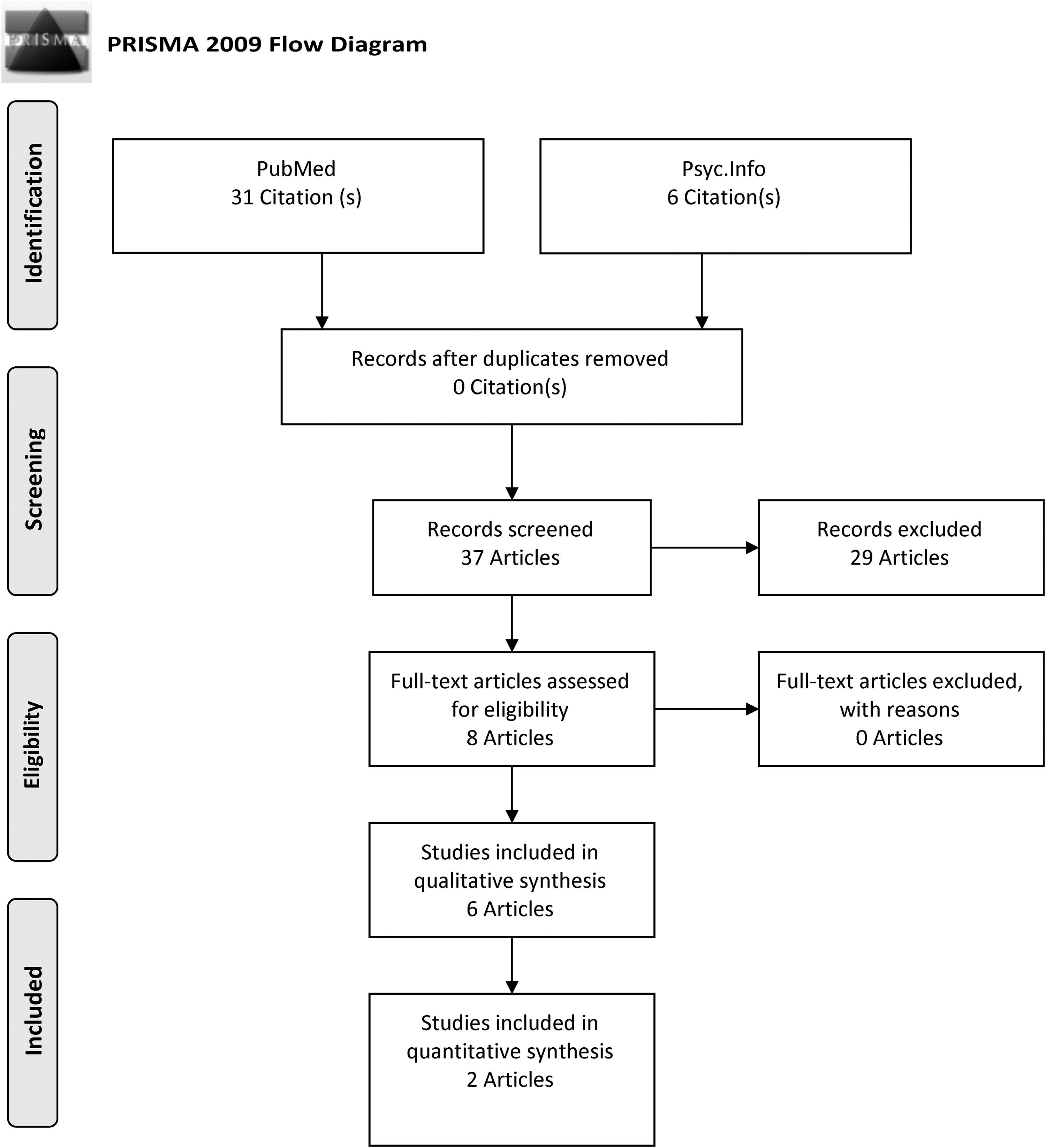
PRISMA flow diagram. (Original Copy, www.prisma-statement.org/PRISMAStatement/FlowDiagram). PRISMA, Preferred Reporting Items for Systematic Reviews and Meta-analyses.
Review of the Literature (Theoretical Theory)
Estimated percentage of male victims
According to the Centers for Disease Control and Prevention (CDC) an estimated 1–4 men experience sexual assault in their lifetime (CDC 2020). In 2020, The Disabled American Veterans (DAV) Charity reported that an estimated 1–100 male military service members/veterans experience sexual assault (Military Sexual Trauma—MST—DAV 2020).
In 2015, the National Intimate Partner and Sexual Violence Survey reported that 24.8% of civilian men in the United States reported experiencing sexual assault (Smith et al. 2018). Compared with the civilian population, an estimated 3% of male military service members reported sexual assault in 2018 according to a Department of Defense (DOD) Annual Report on Sexual Assault in the military (Department of Defense 2019). However, in 2012, the Department of Defense reported that an estimated 81% of men do not report their MSAs (United States Department of Defense, Sexual Assault Prevention and Response Office 2012).
Overall, a variety of studies addressing the specific percentage of male victims of MST vary greatly in the literature, and therefore, we have opted to include the most recent evaluations provided by the DOD. The need for additional examination of cultural variables correlated with sexual assault among men within the U.S. military may broaden a general understanding of factors associated with low reporting rates. For the purpose of this review, we seek to investigate sources of cultural barriers to reporting MST among male military service members and veterans and the impact of military culture on victims of male-MST.
A brief overview of military culture
Culture prompts the worldview of the individual in the social group, through shared mental models expressed in attitudes, expectations, and assumptions, all of which arise from deep-seated norms and values (Siebold 2007). All these prompts contribute to the learned behavior and conformation toward embracing military culture into one's identity within the U.S. military. The 4-Is of the cultural cycle (Individuals, Interactions, Institutions, and Ideas) within the military are instituted through a collective, strong, and cohesive culture, allowing them to operate functionally during crises. Both the characteristics of the individual and the military structure itself contribute to military culture (Redmond et al. 2015).
Military culture can be defined as an active process of constructing shared meaning and is represented through shared ideas, beliefs, attitudes, teamwork, trust, uniformity, anonymity, and an environment that acknowledges that the unit's goals are always placed ahead of an individual member's goals (Foronda et al. 2018). The U.S. military has a unique culture, each branch contains specific chains of command, organizational structure, and a highly ordered social environment. There are 6 × as many men in the military forces as women, creating a “unique and hypermasculine” cultural environment for service members. (Foronda et al. 2018). Military culture promotes an ordered and disciplined social environment through rituals, ceremonies, and celebrations to promote unity, cohesion, and camaraderie.
Each branch upholds three major key culture elements known as cohesion, comradery, and esprit de corps. The concept of Military Cohesion is made-up of four major components: “peer (horizontal), leader (vertical), organizational, and institutional bonding.” (Siebold 2007). “Military culture reinforces the denial and/or repression of emotional distress and expects the service member willingly to subsume personal needs for the good of the unit. It is believed that this will further unit cohesion, considered essential for the success of the military mission” (Greene et al. 2010).
Rank among the service members is expected to be respected and followed without question to maintain strict organization. Service members are expected to be disciplined in their actions and words and to maintain control of their emotions and their physical selves at all times (Halvorson 2010). For service members the military is predominantly viewed culturally as an extended family unit. At the start of enrollment, soldiers undergo intensive training to become submerged into the values of the military. Service members' first introduction to the concept of military culture and military family is during the initial training where they learn that there is no greater bond than the one they share with the people to their left and to their right. For many, this bond of brotherhood/sisterhood lasts throughout their military career and beyond and is highly valued, nurtured, and protected (Halvorson 2010).
For male MST victims the values of cohesion, respect of rank, comradery, and “family” are violated by perpetrators who may utilize various aspects of the military culture and environment to gain control and silence their victims.
Human behavior
Perpetrator and victim characteristics
A 2017 DOD study revealed that “69% of male servicemembers sexually assaulted in the last year indicated that the perpetrator was a man or that the group of people who assaulted them included both men and women. Forty-three percent of male victims reported being assaulted by a friend or acquaintance, 19% by a stranger, and 31% stating that they did not know who had assaulted them. Among active-duty servicemen who were sexually assaulted, 71% of victims were under the age of 30 and 67% were junior enlisted pay grade” (Severance et al. 2017). Based on the data, presented variables such as abuse of power and relevance of military rank appear to be significant factors utilized to perpetrate sexual assault onto victims within the armed forces.
A 2017 systemic review study
“Military hazing, rape myth, and lack of reporting male-MST”, examined 4 documented reports on MSA found that the following socialization processes are correlated with utilization of sexual assault within the military: (1) Trivializing sexual harassment and assault to establish assault as an appropriate form of punishment and license retaliation against victims who report. (2) Officers sometimes sexually harass and assault subordinates, thereby endorsing similar acts by service members under their command. (3) Formal socialization processes of enlisted men and women, despite recent reforms, continue to reproduce a masculinity that undermines policies that seek to prevent sexual assault, in part, because it fails to override these unauthorized and illegal socialization processes. (4) The socialization of officers, combined with problematic incentive structures, undercuts efforts to end the de facto tolerance of sexual abuse by many officers (Wood and Toppelberg 2017).
The 2014 RAND Military Workplace Study on Sexual Assault and Sexual Harassment in the U.S. military researchers found military hazing practices involving newly initiated service members within units as the most common type of sexual assault committed among men within the U.S. military forces (Morral et al. 2015).
A 2016 U.S. army media interview was conducted with Dr. Galbreath (Senior Executive Advisor to the Department of Defense Sexual Assault Prevention and Response Office 2012). Dr. Galbreath stated according to “news reports in the past included accounts of Soldiers arriving in Afghanistan who had been held down and sexually assaulted as a form of unit initiation” (Lopez 2016).
In 2014, The RAND Military Workplace study revealed that “among many military men experience a range of sexual assault crimes; they do not necessarily perceive these acts as sexual.” Based on cross-sections Rand-Military Workplace Study data, it appears many of these acts are confused with hazing and meant to humiliate or degrade the victim. Men in these circumstances may not want help from a sexual assault program because they perceive their experience as a cultural norm and unrelated to sexual misconduct. (Department of Defense 2016).
Many male MSA victims may feel silenced from coming forward due to the internal pressure to maintain unit cohesion (O'Brien et al. 2015). The ability to take control of hostile situations and become the aggressor is an expectation within the military workforce. This ideology may negatively impact the military forces progress toward accepting and acknowledging men who are perceived as being strong soldiers as victims of sexual assault. The inability to protect oneself from sexual assault may result in a higher likelihood of secrecy and denial of assault among male-MST victims (O'Brien et al. 2015).
Additional barriers to reporting MSA include rape myths. Rape myths have been shown to play a significant role in the lack of reporting, investigation, social support, and prevention of MST on men. Rape myths are defined as false beliefs people hold about sexual assault that shift blame from the perpetrator to the survivor. Rape myths have grown out of the long-standing gender roles, acceptance of violence, and incorrect information concerning sexual violence that exist in our society (Burt 1980). Rape among men in the military, for example, has been negatively associated with sexual orientation and that men who are raped are more likely to be homosexual. This particular type of rape myth has been shown by various studies to prevent reporting of male victims to authorities in fear that they may be ill-treated with homophobic reactions. Similar sources of prejudice and negative social stigma within the military forces may further diminish the trust of male service members from reporting assault to their supervising officers, managers, and/or medical personnel (U.S. Department of Veterans Affairs 2020).
Mental health
The military unit is often perceived by service members as a family, and the military more broadly as a trusted institution. MST constitutes a violation of security and trust. Male-MST victims are more likely to self-isolate and suffer from mental health complications such as PTSD compared with female-MST victims, other military service members, and veterans (Smith and Freyd 2013). Victims of MST may benefit from group interventions of trusted family members and friends as well as therapy (Smith and Freyd 2013). Functional Correlates of MSA in Male Veterans, a 2015 Veterans Association (VA) study, revealed data findings that suggested male Iraq/Afghanistan veterans who reported MSA endorsed higher levels of PTSD symptoms, higher levels of depression symptoms, and suicidality than other groups of veterans who served in Iraq or Afghanistan. Despite higher rates of mental health complications, male veterans who experienced MSA showed an overall level of social support that was equal to that of male military service members who did not experience MSA (Schry et al. 2015).
The Influence of Military Sexual Trauma on Returning Operation Enduring Freedom and Operation Iraqi Freedom Male Veterans, a survey study conducted between 2004 and 2008, assessed the prevalence of screening for mood disorders, substance abuse disorders, and PTSD among 961 veterans. The overall study results indicated that MSA was associated with lowered levels of social support, postdeployment mental health complications, and increased risk of PTSD among male-MST victims than other active duty experiences, including combat among male and female military service members and veterans (Mondragon et al. 2015). A 2018 survey study conducted by RAND researchers interviewed the U.S. military personnel providing innervational mental health services to male victims of MST. Interviewees believed that the military system could benefit from additional male-specific mental health services, increased access to safe support services and education of military servicemen on MST, confidential services for victims, increased training of medical personnel to assess and provide proper treatment to victims, and legal, spiritual, and financial support (Matthews et al. 2018).
Varying study results investigating perceived social support among male-MST victims suggest significant differences in methodology utilized to survey male-MST victims, military service members, and their clinicians. Researchers who provided survey questioners to selected male military service members who reported MST yielded higher rates of perceived social support compared with randomly selected participants who suffered from male-MST.
Despite differences in their reported findings, each of the included studies highlighted the need for increased research investigating social support, mental health, and depressive disorders among male-MST victims and military service members.
The need for cultural competency in health care delivery
Several barriers to care may prevent male victims of MST from gaining proper medical intervention. Barriers to care include social stigma, as well as limited access to training, education. and supportive programs/resources perceived to provide secure confidential effective services to MST patients. For many male-MST victims, constructs of discordant identity have negatively influenced their comfort in seeking out medical services. For example, the male dominant environment of most VA facilities has deterred male victims of MST to seek services based on concerns of being in a potentially triggering environment. In addition, a lack of confidence in the military system and fear of negative consequences in response to reporting have been strongly noted by various studies as one of the most significant barriers to reporting assault and seeking care among male victims of MST (Tanielian et al. 2008).
Military culture includes patterns of beliefs, language, and cultural practices that impact use of health care services and health practices. Culturally competent care for service members and veterans may hinge on understanding the extent to which individuals identify with the military ethos. The military ethos values and beliefs have a powerful influence on recognizing and interpreting symptoms, help-seeking behavior, and engagement with health care services (Tanielian et al. 2008).
A 2015 Veterans Association study on male veterans who suffered from MST revealed that many military men experience an overall lack of interventions for MST. Researchers suggested a lack of services impacted by cultural barriers (e.g., differences in communication and etiquette in the military, lack of experience serving in the military outside of the VA hospital), lack of introspection, and an overall lack of cultural competency (understanding of military norms/identity, attitudinal, cognitive, behavior within the military force). Although military providers are considered service members, many of them may not have had the experience serving in a capacity outside of the VA hospital system or the United States, and public providers may have limited exposure working with a significant number of the military workforce outside of facilities in partnership with the VA system. To combat these gaps, researchers encouraged the military health service branches to adopt continued research efforts to better inform clinicians of postdeployment needs and treatments for the male MST population (Mondragon et al. 2015).
Discussion
Acknowledging the psychosocial consequences of failure in reporting male-MST is imperative in the effort to improve access to successful and comprehensive care interventions. Heightened efforts to reduce military cultural steamed prejudice and social stigma may aid in increasing rates of MSA/MST reporting among male U.S. military service members. Increased efforts to research the influence of military culture on rates of MST may aid in improving institutional efforts to implement prevention programming, promote awareness, increase education, and to identify and provide effective treatment for MST victims within the armed forces. Based on the information provided by the reviewed studies in this scope of review, our overall findings suggest that further research on the impact of military culture as it relates to male MST and MSA is imperative.
Limitations
Several limitations are worth mentioning. First, only PubMed and PsycINFO database articles were utilized for the search and a limited number of quantitative data studies were included for inclusion. Next, potential publication bias may have impacted our initial search results due to current academic criteria standards. Difficulty accessing credible and context-friendly publication outlets may pose significant challenges in reporting and/or researching relevant information and resources available via specific U.S. military sources and/or academic research journal publications. Lastly, a more extensive search of gray literature may have recovered additional efficacious studies. Despite these limitations, this review provides a potentially useful overview on the topic of military culture and MST, barriers to reporting MST/MSA and the impact of military culture on reporting outcomes among the U.S. military male service members.
Conclusions
This literature review was used to conduct a brief examination on the impact of rape myth, military culture, stigma on the reporting of MST/MSA, and the prevalence of male-MST within the U.S. military. Our findings suggest the need for increased research efforts addressing the impact of military culture on occurrences of MST/MSA and investigation of barriers to reporting assault among male military service members. Dedicated programming and active research examining the relationship between military culture, military environment, stigma, and modes of access to care or lack thereof within the military are critical for an increased understanding of male-MST to be obtained and effective interventional care programming to be implemented within the U.S. military force branches.
Footnotes
Acknowledgments
The author would like to thank three anonymous professors from The University of Washington and one anonymous Veterans Health Administration physician for their support in performing this independent research study.
Author Disclosure Statement
No competing financial interests exist.
Funding Information
The author(s) received no specific funding for this work.