




Abstract
Prior research on coercive control has focused on coercive behavioral tactics to better understand how coercion is exacted in abusive relationships. Furthering this body of research, this study extends coercive behavior to the linguistic domain, by examining the linguistic correlates of long-term coercive relationships. Using transcripts of wiretapped conversations, spanning a 2-year period, between two pimps and four women they sexually exploited, this study examined the distinct linguistic manifestation of asymmetric power in commercial sexual exploitation. Our findings suggest a complementary linguistic dimension to the commonly reported behavioral repertoire of coercive control tactics. Specifically, the victims consistently complied with the microregulation and surveillance presumed by their pimps by engaging in discursive overelaboration. This overelaboration often included details of their location, activity, and timing—and were designed to justify those as work-and profit-relevant. This pattern of pre-emptive, unsolicited overelaboration that the commercial sexually exploited women exhibited toward their pimps was almost nonexistent in their personal conversations with other individuals. These results open the opportunity for the indirect measurement of interpersonal abuse, making it less dependent on explicit physical abuse and more broadly situated within the coercive environment.
Introduction
Retrospective studies of long-term abusive relationships suggest a conditioning of the victim to exhibit compliance even in the absence of overt threat or violence by the abuser. This phenomenon was observed in intimate partner violence (Barbaro and Raghavan 2018; Beck and Raghavan 2010), sexually coercive encounters in the context of dating (Mitchell and Raghavan 2021; Raghavan and Cohen 2014), as in sex trafficking contexts (Dalla et al. 2003; Mitchell and Raghavan 2021; Morselli and Savoie-Gargiso 2014). These studies suggest that the use of nonphysical and implied threats is effective in maintaining high levels of control long after the more overtly aggressive “conditioning period” whereby the victim was punished for their actual or attempted disobedience. By its very nature, this type of coercive control is often invisible to people outside the relationship.
In the context of commercial sexual exploitation (CSE) (Doychak and Raghavan 2018), this inaccessibility creates a critical confusion as to whether the victim was sexually trafficked or consented voluntarily to engage in commercial sex (Kim 2011). In addition, this further complicates the victims' mental state by confusing their perceptions and beliefs about their own agency, their ability to leave the relationship, and confers a sense of futility to their contemplated attempts to communicate the abuse to legal authorities. The intractability of long-term conditioned compliance has also been cited as contributing to the complexity of the legal assessment of coercion in sex trafficking (Herzog 2008).
By the same token, the use of minimal effort and implicit tactics of abuse are crucial to the cultivation and longevity of CSE because constant use of labor-intensive tactics of abuse (i.e., physical abuse, restraints, injuring the woman) would render CSE more detectable to law enforcement, less effective as a management strategy of the sexual workforce for the pimps, and thus riskier and less sustainable. Furthermore, identifying coerced compliance through linguistic markers is crucial for differentiating between sex trafficked victims and nontrafficked participants in commercial sex—a hotly debated area with important implications for survivors (Kempadoo et al. 2015; Stark and Hodgson 2004; Watts and Zimmerman 2002; Weatherall and Priestly 2001).
The goal of this study was to shed light on this dynamic of implicit compliance in the context of CSE. To detect and quantify this elusive and scantly researched phenomenon, we utilize both a novel data source and a novel methodology. The data on the long-term relationship of trafficked women with their pimps were obtained from wiretap recordings of their phone conversations, made throughout a period of 2 years. To detect implicit coercive control in the absence of extensive explicit aggression, we utilized a linguistic paradigm that combined computational text analysis and critical discourse analysis. Both paradigms are sensitive to deviations in the power differential between the speakers and are sensitive measures of interpersonal safety and comfort.
Consistent with previous research, compliance in this study was broadly defined to include all speech acts of agreeance, submission, and obedience as a response to coercive control (Stark 2009). All three aspects have linguistic and discursive correlates. In particular, this study focuses on their manifestations as unsolicited overelaboration, whereby the anxious individual signals their cooperation and seeks approval from the more powerful speaker by preemptively providing details about their whereabouts, actions, and intentions, as aligned with the interests of the more powerful speaker.
The rest of the article will begin by defining and characterizing sex trafficking based on the existing research literature, followed by a brief conceptualization of coercive control. Then, we review empirical linguistic frameworks that are relevant to power dynamics, compliance, and coercive control. Although victims of sex trafficking can be of any gender, this study, in alignment with a majority of the previous research and with the overwhelming majority of victims, focuses on female victims (Kendall and Tannen 2001; Jadav and Suvera N.d.).
Sex trafficking: definition and prevalence
In 2000, the Trafficking and Violence Protection Act (TVPA) was created “to combat trafficking in persons, a contemporary manifestation of slavery whose victims are predominantly women and children, to ensure just and effective punishment of traffickers, and to protect their victims” (p. 114, STAT. 1466). The TVPA of 2000, as well as its re-authorizations in 2003, 2005, 2008, 2013, and 2017, defines sex trafficking as any means to use a person for purposes of CSE, which includes elementary means of obtaining and retaining slaves, such as kidnapping and force (U.S. Department of State 2000). In addition to force or fraud, the TVPA specifies that the use of coercion can also be used to legally identify whether sex trafficking has occurred and indeed, the use of coercion appears to be equally if not more widespread than the consistent use of force and threats (Baldwin et al. 2014; Donovan and Barnes-Brus 2011; Stark 2009, 2012).* Not only may coercive control be more “cost-effective” in controlling the women, enforcing implicit methods to obtain individuals for the purpose of trafficking appears to be more psychologically gratifying for those in control (Reid 2016). Finally, the ability to identify and prosecute CSE increases in difficulty as the methods and tactics used by these pimps become progressively implicit over time (Morselli and Savoie-Gargiso 2014; Norton-Hawk 2004; Reid 2016).
Reliable rates of sex trafficking have proven difficult to estimate for a few different reasons. As a service-oriented criminal enterprise, sex trafficking is conducted under the radar of law enforcement, but not too far from the public's eye (Hom and Woods 2013). Furthermore, there are conflicting perspectives on what constitutes coercion, how to distinguish it from apparent free-will or “empowerment,” and how to measure it (Kim 2006; Morselli and Savoie-Gargiso 2014; Reid 2016). Finally, the identity of traffickers is largely unknown, as they are scarcely researched. The small body of research that does exist suggests that a significant number of sex trafficking rings are run by either families or independent criminal entrepreneurs (Morselli and Savoie-Gargiso 2014; Raymond et al. 2001; Weitzer 2011), making tracking, surveilling or infiltrating these rings more complex than the tracking of large, partially legit, and organized crime networks. All these factors are often cited as hindrances to the efforts to identify the prevalence of this particular form of victimization. Nonetheless, an estimated 14,500 to 17,500 people are trafficked into the United States each year for labor or sexual exploitation purposes. It is important to note that these numbers do not include domestically trafficked individuals as those are more difficult to gauge because of the near absence of a paper trail (Belser 2005; Estes and Weiner 2001; U.S. Department of State 2000). Integrating anecdotal and clinical research data suggest that a growing percentage of domestically trafficked individuals are women of color; an estimated 40% of sex trafficking cases comprised black women and girls (Office for Victims of Crime, US Dept of Justice, Office of Justice Programs, & United States of America 2013; Schisgall and Alvarez 2008).
Coercive control and long-term abusive relationships
Coercion is both a legal and a psychological concept, with the psychological concept of coercive control having been used widely in the domestic violence and intimate partner violence literature (Barbaro and Raghavan 2018; Raghavan and Cohen 2014; Kaplenko et al. 2018; Loveland and Raghavan 2017; Myhill 2015; Raghavan et al. 2016; Stark 2009). The formalization of trafficking law specifies coercion as one identifying condition of sex trafficking. This has led to an increased interest in establishing coercive control to demonstrate sex trafficking dynamics (Doychak and Raghavan 2018; Hagan et al. 2021; Reid 2016). Although the boundaries of what constitutes coercive control is not specified by the law, from a psychological perspective, coercive control is an abuse dynamic, utilized to control a victim by denying, challenging, and limiting her liberty, autonomy, and equality (Barbaro and Raghavan 2018; Beck and Raghavan 2010; Johnson 2006; Kelly and Johnson 2008; Loveland and Raghavan 2017; Stark 2009; Tanha et al. 2010). Common domains used to achieve coercive control include surveillance, microregulation, manipulation/exploitation, isolation, intimidation, deprivation, and degradation (Beck and Raghavan 2010; Doychak and Raghavan 2018; Dutton and Goodman 2005; Johnson 1995; Lehmann et al. 2012; Raghavan et al. 2016; Stark 2009). An important facilitator of the coercive control tactics is the sensitive privileged knowledge that the abuser has of the victim and her vulnerabilities; accordingly, each relationship is unique in its profile of abusive tactics. Furthermore, sensitive and privileged knowledge is also used to induce persistent fear in the victim through threats of disclosure, which affords the perpetrator with almost effortless yet efficient control over the victim's behavior. In sex trafficking contexts, whereby the pimp and the victim(s) know each other intimately, the overt and aggressive demands for subservience may relax over time, as the authority and expectation of the abuser are established. The victim then settles into a behavioral pattern where low-level, hinted, or implied threats elicit high levels of compliance through reflexive conditioning (Doychak and Raghavan 2018).
As Figure 1 shows, coercive control tactics are used to elicit coerced outcomes (e.g., compliance), which in turn may facilitate or sustain other outcomes (self-control, self-monitoring, subservience, etc.), with the prominence of these factors in the relationship shifting with time (Baldwin et al. 2014; Kim 2006; Morselli and Savoie-Gargiso 2014; Reid 2016; Williamson 2010). Among the most common coercive control tactics that were implicated with sustained compliance over time are microregulation and surveillance. Microregulation is one of the most prevalent tactics within abusive relationships, as it is seamlessly embedded into daily activities and decisions, including control over what victims wear or eat, as well as sleep-wake cycles and work schedules (Doychak and Raghavan 2018). The microregulatory demands are often arbitrary, contradictory, and confusing, and they are presumably purported to gradually inculcate helplessness and a dependency on the abuser (Doychak and Raghavan 2018). To establish compliance, microregulation is initially complemented by more intimidatory tactics such as explicit denigration, humiliation, threatened, or actualized blackmail, and physical and emotional abuse (Stark 2009). Over time, abusers often lessen the frequency, severity, or duration of intimidatory or aggressive tactics but continue to microregulate their victims/survivors. Anecdotal and clinical data suggest that microregulation and surveillance continue to exert their influence, although in a more reflexive form, as established division of labor or habits, such as coordinating a driver for the women in commercial sex or controlling cell phone use (Morselli and Savoie-Gargiso 2014; Reid 2016).
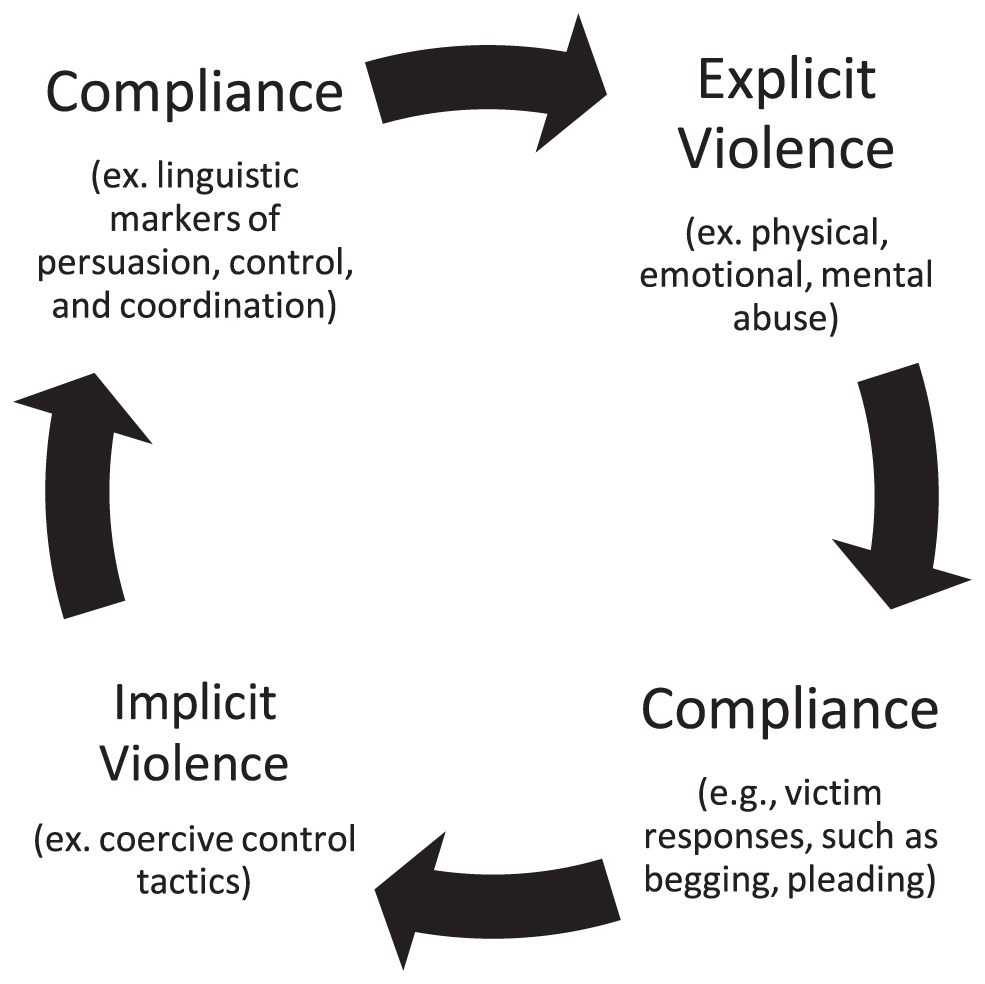
Coercive control cycle. This is a general guide for coercive control, and it cannot exist without nuance and unique relational components.
These overtly coercive tactics are often replaced with their more subtle proxies of power and control to trigger surveillance- and microregulation-mediated compliance. For example, some abusers explicitly remind victims of past painful outcomes and others use nonverbal triggers, such as a fleeting displays of threatening looks or tone embedded in seemingly innocuous communications. Over time, those proxies become sufficient to elicit the desired compliance.
Although research of microregulation in CSE is still in its infancy, some studies suggest financial control of the victim as an important common mediator of it. For example, through their control of the money flow, the pimp often controls the clothing, food, drugs, and alcohol consumption of women in the commercial sex industry (Doychak and Raghavan 2018; Reid 2016). Taken together, a growing body of evidence suggests that high levels of compliance can be maintained through less explicit intimidation tactics and lower level controlling behaviors in long-term abusive relationships (Baldwin et al. 2014; Kim 2006).
In this study, we examine these smaller, nuanced, yet established patterns of compliance as they manifest in the language that the victims are using in conversations with their abusers. Specifically, this study cross-validates the use these subtle dynamics in long-term abusive sex trafficking relationships by using two complementary methods: Coding for the presence of coercive control tactics by trained raters and conducting computerized text analysis. Both have proven sensitive enough to capture implicit power relationships in conversations (McHugh and Hambaugh 2010; Pennebaker et al. 2003).
Three main psychological mechanisms have been suggested in the literature as mediating the apparent decreased reliance on explicit threats or actual physical violence to obtain compliance, in longer term abusive relationships. First, punitive, severe retaliation early on in the relationship is more effective in inducing compliance through avoidant behavior. The victims then exert self-control and self-regulation when they recognize early signs or correlates of the threat (e.g., a raised voice). Some support for this hypothesis comes from the sexual coercion studies that showed that women gave in to demands of unwanted sex even when the partner did not explicitly threaten them, because past attempts to protest had ended poorly for them (Mitchell and Raghavan 2021; Raghavan and Cohen 2014).
The second mechanism, which is arguably more pertinent to surveillance and microregulation, is that behaviors that signaled affection early on are easier to “weaponize” seamlessly (Morselli and Savoie-Gargiso 2014; Reid 2016). For example, during early courtship, checking in frequently and asking regularly about activities may be viewed as caring and romantic. However, over time, the main purpose of these check-ins may shift from signaling attachment and helpfulness to that of surveillance and microregulation. Because this transition is often gradual, the victim may not be aware of the change before its nefarious ramifications fully emerge (Reid 2016).
The third putative mechanism, which is most salient in the context of microregulation, concerns the long-term psychological sequelae of the capricious “flip-flopping” between punitive or degrading behaviors following disobedience and positive or rewarding behaviors following compliance. More damaging, arguably, is the ever-changing sensitivity to what constitutes actionable disobedience or compliance. As such, the victims are left guessing which of their behaviors will be rewarded and which will be punished—creating a chronic disconcerting atmosphere of unpredictability and hypervigilance, which in turn often translates to a constant approval-seeking behavior from the victim (Dutton and Painter 1993; Reid 2016). Naturally, this increase in approval-seeking behavior obviates many of the explicit threatening and physically violent tactics in the pursuit of compliance, thus making increasingly trivial microaggressive cues into an increasingly effective microregulation tools (Herman 2015; Morselli and Savoie-Gargiso 2014; Stark 2009). In this study, we gauge approval-seeking behavior by exploiting the fact that it often manifests verbally as an effusive overelaboration of personal details that go above and beyond what is deemed appropriate, customary, or face-value relevant in power imbalanced relationships such as the ones between victims and their habitual abusers.
Psycholinguistic perspectives on gendered control and violence
As the primary medium in which human relationships are realized, language has long been mined for implicit motives and power dynamics. Early sociolinguistic studies gauged the impact of asymmetric power (and its simultaneous threat to the speakers' comprehension, self-presentation, and relationship quality) through subtle mismatches between the expected and the actual verbal behavior of the speaker. In normal conversation between equals, the verbal behavior is presumed to be governed by the ubiquitous “cooperative principle,” whereby the speaker estimates the current knowledge and capabilities of the listener, and—after adding considerations of the particular constraints (including cultural) of the situation at hand—conveys the information deemed most appropriate without overwhelming, distracting, or offending the listener with irrelevant (or inappropriate, unasked-for, etc.) information (Grice 1975; Ochs 1976; Sperber and Wilson 1996).
However, systematic analysis of breaches in power between speakers gave rise to “Politeness Theory,” which conceptualizes asymmetric or high-stakes conversational situations such as the dynamic co-construction of “face,” to create or maintain a favorable presentation of the speaker to themselves or to the listener—thus maintaining the social status quo (Aston 1988; Brown and Levinson 1987; Goffman 1968). More recent developments in the field have integrated cooperativity, politeness, and other verbal “rituals” into the larger effort to understand human verbal behavior in terms of the implicit power structure undergirding them and their contribution to the management of the social order (Eelen 2014; Holmes 2005).
This “meta” approach is often referred to as “Critical Discourse Analysis” (Bourdieu 1991; Fairclough 1989; McKenna 2004). A common scenario for exemplifying the verbal maneuvers for rapport and face maintenance is the declination of an invitation: An act that might potentially threaten the status quo between the inviter and the invitee. Consistent with the theories of implicit sociocultural power, linguistic studies demonstrated that the more powerful the inviter, the more elaborate, specific, and reasoned is the language used for declining the invitation by the invitee (Aijmer 2014: p. 166, 190; Davidson 1984; Mao 1994; Spencer-Oatey 2005). Other studies have similarly demonstrated that whenever the stakes of the interaction are high owing to power imbalance between the speakers (either temporarily or structurally), the less powerful speaker is more likely to engage in verbal overelaboration to cater to the more powerful speaker and to the relationship at large (Holmes and Stubbe 2015; Holtgraves and Yang 1992; Leichty and Applegate 1991; Lustig and King 1980; Shuy 2001).
Although fewer studies have focused specifically on gendered power differentials, their results are largely consistent with the generic models of sociocultural power. Generally speaking, women are socialized to express themselves as having lower power (O'Barr et al. 1980). As such they express greater deference to higher status speakers (James 1996; Lakoff 1973), engage in more politeness strategies, especially indirect ones (Anderson and Leaper 1998a; Cody et al. 1981; Falbo and Peplau 1980; Holmes 1995; Kitzinger and Frith 1999), and signal their authority and interests through greater use of collaborative and perspective-taking linguistic devices (Cohen 2004; Cohen et al. 2018; Kitzinger and Frith 1999; Mott and Petrie 1995). In fact, the linguistic features of a female's speech are consistent and specific enough as to be considered in certain circles a distinct dialect within a language, or “genderlect” (Kendall and Tannen 2001; Tannen 1990).
In long-term abusive relationships, the isolation of the victim from their social support often leaves them with little emotional or cognitive resources for handling confrontation or threats (Dalla et al. 2003; Hagan et al. 2021). Explicit overelaboration in the form of praise and flattery for the pimp is then followed by a reassertion of the victim's commitment to the abusive relationship in the form of compliance with the abuser's (by now implicit) control wishes. This is often accomplished by providing extensive details on their whereabouts, what they are doing, who they are with, and when they might be available to serve the next client: all without explicit solicitation for that information (see Table 4 for an example from our data). Thus, abusive power dynamics are expected to manifest more reliably through the implicit linguistic maneuvers that the victim uses to minimize threats of the abuser or the rapport with him, rather than expecting them to explicitly and directly reflect on their indoctrination and subjugation.
Quantitative linguistic studies have shown that women tend to use tactics of rapport management and self-justification, provide more elaborate answers (Pennebaker et al. 2003), interrupt less (Anderson and Leaper 1998a), and “paint a better picture” to aid the listener by using wider gamut of synonyms and linguistic variants (Kendall and Tannen 2001; McHugh and Hambaugh 2010). Women also tend to use more emotional words, adverbs, and personal pronouns (Anderson and Leaper 1998b; Mondorf 2002; Mulac et al. 1988) while at the same time demonstrating deference, attunement, and willingness to accommodate through greater use of persuasion markers (e.g., justifiers), hedges, filled pauses (e.g., “um”), discourse markers ( “you know,” “like,” etc.). Also consistent with women's socialization within conversation are their greater use of questions (Fishman 1990; Holmes 1995; Laserna et al. 2014; Macaulay 2001; Mulac et al. 1988), including tag questions (e.g., “it's ok, isn't it?”; Cameron 1989; Thome et al. 1983), among other features. Thus, in the discourse of women involved in CSE, we would expect that victims who underwent longstanding indoctrination by coercive control tactics will spontaneously elaborate on their whereabouts, actions, and intentions without being prompted or without explicit markers of demand, threat, or abuse preceding their elaborations. Although general markers of politeness and rapport management are likely to be used by women in CSE, in a wide variety of situations and conversations, the steep power imbalance in their relationship with their pimps is likely to manifest in specific linguistic markers of accommodation, such as persuasion and justification words, in addition to the coordination of their work in the context of location, timing, plans, and so on.
Study overview
Using wiretap data, we investigated how the particular ways in which women in CSE demonstrate their compliance to their pimps can reveal the specific coercive control tactics that were used to condition her to do so. We analyzed this phenomenon using two strategies. First, we examined 79 conversations and coded them for the coercive control tactics and responses therein. Because these relationships are longstanding, we expected to find more maintenance tactics of microregulation, surveillance, and validation of compliance, rather than foundational ones such as explicit intimidation, threat, or degradation. Second, we studied the linguistic patterns of the women involved in commercial sex. We expected them to invest disproportionate discursive resources in rapport management, self-disclosure, and self-monitoring in the form of overelaboration and overproduction of specific discourse thematic markers as detailed previously. Finally, we explored the prevalence of the overproduced linguistic markers of compliance (control, persuasion, and coordination). Specifically, we proposed the following hypotheses:
Overarching Research Aim: Examine the extent to which the presence of coercive control (which indicates that sex trafficking is present) can be measured, in the absence of self-report.
Research Aim 1: Explore which coercive control codes are being used more frequently in the interactions between women in the commercial sex industry and their pimps.
Research Aim 2: Assess the extent of overelaboration associated with the power-imbalanced relationships of the women in CSE with their pimps.
Research Aim 3: Quantify the linguistic features of the self-disclosure, compliance validation, and rapport management that is specific to the power-imbalanced relationship of the women in commercial sex with their pimps in contrast with their spontaneous conversations with others.
Overarching Hypothesis: Consistent findings across varying methods will enable the demonstration of coercive control (i.e., indicating that sex trafficking is present), in the absence of self-report.
Hypothesis 1: Microregulation and surveillance will be the most prevalent forms of coercive control.
Hypothesis 2: The women in the commercial sex industry will use higher word frequency when communicating with their pimps than when communicating with any other individuals (i.e., drug dealer, family, friends or buyers).
Hypothesis 3: There will be a higher usage of linguistic markers of power imbalance (e.g., evidenced by persuasion, control, and coordination) used by the women in CSE when talking to their pimps than with any other individuals (i.e., drug dealer, family, friends, or buyers).
Methods
Research design
This study used an archival design, examining wiretap recordings of two perpetrators and four women involved in CSE, which were acquired in a police investigation over a 2-year period. The first steps in the procedure of this study included the transcription of the wiretap data followed by two separate and independent coding strategies. First, the data were first coded by analyzing the transcripts for coercive control tactics (Table 1), and then separately for the “victim's responses” (Table 2) to identify implicit forms of abuse. The data were then analyzed again by exploring the verbiage used between the perpetrators and the women involved in CSE using a discourse analytical framework and creating a power differential marker dictionary (Table 3) to assess for explicit solicitation in instances of overelaboration. It compared the use of power differential markers used by the victims in conversations with the trafficker and conversations with others.
Coercive Control Codebook
Victim Response Codebook
Functional Dictionary for Words: Control and Persuasion
Participants
The sample consisted of two male pimps and four commercially sexually exploited women. Extracted from publicly available information, the two pimps were 67 and 40 years of age, respectively. The women in the commercial sex industry age ranged from 25 to 35 years, with length of time spent with their pimp ranging from 1 to 15 years. To protect the identities of the women in the commercial sex industry, names and identifying information was altered or removed. In addition, race, ethnicity, and geographic location are not provided. It can be noted that the participants worked in a large metropolitan area and lived in the surrounding area.
Materials
Researchers had access to audio communications over a 2-year investigation. The conversations ranged from 45 sec to 60 min. All calls over the course of this time period were recorded, including personal phone calls involving friends and family members. A subset of the data was used, which includes 225 recordings of two pimps communicating with each other and with the women they sexually exploited, as well as conversations between the women in the commercial sex industry and with other individuals (family members, johns, drug dealers, etc.). Materials include a qualitative analysis software (MAXQDA), the coercive control codebook (Table 1), the victim response codebook (Table 2), and the power differential marker dictionary (Table 3). Coding materials were approved by the university institutional review board before sampling.
Once the data were obtained from the original source, the audio files were then translated into text files. The audio data were transcribed verbatim by trained research assistants. The transcripts were organized by date of call, then by individual whose phone was being tapped. Word documents were created, each consisting of all the calls on that individual phone per day.
An eight-item coding scheme instrument was used to assess the presence of coercive control tactics (Table 1). To assess for the impact of coercive control on the women, a five-item instrument was designed to code for the women's responses to their respective pimps (Table 2). Both the coercive control and victim response instruments were developed by using thematic analysis through grounded theory to analyze the data. We explored the presence of coercive control and victims' responses within a single data set of pimp/CSE women transcripts. Over a period of 9 months, a panel of experts and a panel of graduate student research assistants met to identify categories of coercive control and victims' responses, both through prior literature and audio recordings. Through editing a total of 12 progressive versions, the final coding books were developed. The power differential marker dictionary was established to distinguish markers of control, persuasion, and coordination within interactions between victims and their pimps, as well as in conversations with others.
Procedure and analysis
Coercive control tactics through qualitative analysis
To code the data, we randomly sampled 112 transcripts from the total 225 transcribed calls. Two trained research assistants separately coded the data for coercive control tactics and two different trained research assistants coded the data for behaviors and emotional tone of the women. This included both the tactics employed by the abuser and the resulting outcomes for the women involved in CSE (See Table 3). The four coders were part of the research team used to develop the coding definitions; they also participated in the practice coding sessions over a period of 5 months, meeting once a week. Each coder was provided with the audio recording of the conversation and the written transcripts (Examples in Table 4), as well as the coding definitions for clarification. While listening to each clip, the date of the call, the number assigned to the audio clip, and the coder's responses were recorded. In instances where the two raters concluded conflicting codes, a panel consisting of trained research assistants and an expert psychologist were assembled to determine a “tie-breaking” response, which was then recorded as well. The results of the interrater analysis are kappa = 0.714 with p < 0.001. This measure of agreement is a substantial agreement (Landis and Koch 1977).
Coercive Control Qualitative Analysis
Linguistic analysis
A preliminary analysis of the 63 wiretap audio files that were randomly selected for transcription identified two women engaged in CSE (recoded as “Holly” and “Sarah”) whose sampling was extensive enough to reliably characterize their language with their pimp (renamed as “Greg”) and contrast it to their conversations with other individuals. This sample contained 263 transcribed calls involving “Holly” (amounting to 12.5 call hours) and 276 calls involving “Sarah” (amounting to 14 call hours). The transcriptions were then analyzed using standard text analysis procedure (see details in Cohen 2016).
To detect meaningful “code switching” in the women's language with their pimps compared with the language they used with their acquaintances, we first calculated the linguistic “keyness” for each of the two women in their conversation with their pimp, which identified the words whose frequency difference was statistically significant between the two conditions (i.e., pimp vs. nonpimp). Specifically, linguistic keyness was calculated using Ted Dunning's Log Likelihood test (Dunning 1993; Rayson et al. 2004), using the online calculator at Lancaster University Centre for Computer Corpus Research on Language (UCREL) (http://ucrel.lancs.ac.uk/llwizard.html).
The words that were identified in the keyness analysis for each woman were then subjected to concordance analysis (Table 5). This allowed us to identify unique expressions whose frequency differential drives the significant keyness of individual words. For example, whereas the word “you” appears more frequently in conversations with the pimp, concordance analysis showed that most of the difference is driven by the idiomatic discourse marker “you know” rather than the word “you” in isolation.
Unsolicited Elaboration Examples
We then merged only the words that appeared more frequently in the women's conversation with their pimps. This was performed to identify the positive “signature” of coercive control in the words that the women might have felt compelled to utter. The merged list was then subjected to thematic classification. First, the Linguistic Inquiry and Word Count (Pennebaker et al. 2015) software package was used to determine the rough thematic landscape of the words. In the second stage, these general thematic domains were further refined based on the nuances of the specific words in the list. This stage identified five distinct themes: Persuasion (e.g., cognitive process words, justifiers, etc.), Activity, Coordination, Location, and Timing. The latter four are typical dimensions of regulation and control (as will be elaborated below) and can therefore be viewed as components of a hierarchically supraordinate thematic dictionary of “Control” (Table 5).
Results
Method 1: Coercive control tactics through qualitative analysis
As described by research aim 1, we coded all conversations for presence of coercive control tactics. Of the common domains used to achieve coercive control (surveillance, microregulation, manipulation/exploitation, isolation, intimidation, deprivation, and degradation) (Beck and Raghavan 2010; Dutton and Goodman 2005; Johnson 1995; Lehmann et al. 2012; Raghavan et al. 2016; Stark 2009), all were present, but a majority of the calls were coded as microregulation and surveillance. As predicted in hypothesis 1, of 79 cases, we found 20 primary cases of microregulation (25%). We also found 39 primary cases of surveillance (49%). It is worth noting that none of the pimps' responses were coded as positive or supportive in 79 total interactions (0%) (Table 4).
Next, as described in research aim 2, we assessed the use of overelaboration in the women's responses to coercive control. To determine whether overelaboration was present, we coded each call for both victim interaction style and emotional tone. In support of hypothesis 2, we examined how women in the commercial sex industry responded generally and found 16 cases of overelaboration (20.2%). Overelaboration was the second most prevalent code after that of a neutral response (45.6%) such as “standard business as usual” or “expressing accomplishment” as coercive control theory would predict (Table 4).
Method 2: Quantitative linguistics of coercive control
Using the five mutually exclusive thematic dictionaries that were identified previously (see Procedure and analysis section), we systematically tallied the proportion of words denoting persuasion and control (including Activity, Coordination, Location, and Timing subdictionaries) and contrasted their proportion in the conversation of the women in CSE with their pimps and with others. The results are given in Figure 2.
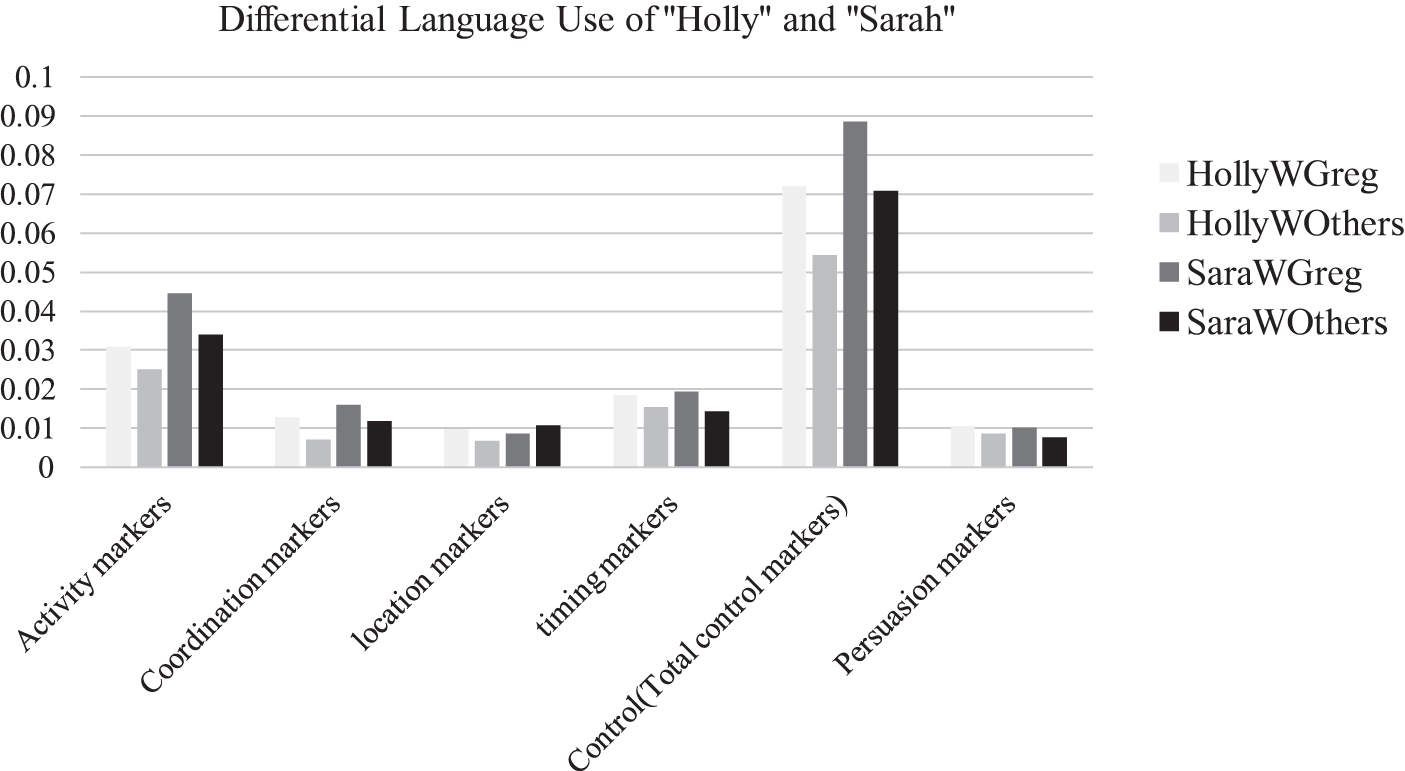
Differential language use of victims. Frequency of linguistic markers used by the women in conversation with their pimp compared with linguistic markers used by the women in conversation with anyone else they spoke to (including family, the other women and drug dealers). The frequencies are formatted as a percentage of linguistic markers within the total word count of the conversation. The frequencies are further parsed out by specific type of linguistic marker: coordination, control (activity, location, and timing) and persuasion.
Figure 2 visualizes the excessive use of persuasion and compliance words for the women across all five linguistic dimensions (with the exception of Location words for Sarah, which will be discussed later). It also shows that, consistent with sociolinguistic theories of asymmetric power, the women utter overall more words per conversational turn when they speak with their pimp. Markers of persuasion (only, reason, trying to, that's why) and self-disclosure for control and surveillance purposes (markers of location, such as ((traffic)) light; of activity, such as check in, drinking, promise, text/ed/ing; of timing, such as soon; and of state, such as done, tired, was, etc.) were significantly higher in conversations of both women with their pimp as compared with their conversations with anybody else. In fact, even discursive coordination markers (e.g., a'ight, gotcha, nah or chuckles) that the women used with her pimp were mostly unique to those conversations. As a word that may be used both for persuasion and for self-disclosure for external control, the first-person pronoun “I” was particularly frequent in the language of the victims with their trafficker as compared with their conversations with anybody else.
With almost three times the words used as the pimp, the women demonstrated a much higher word count in these conversations than conversations with anyone else. In addition, we are able to see the significantly higher level of linguistic markers of persuasion, control, and coordination when the women are engaging in conversations with the pimp versus anyone else with whom they are speaking. Taken together, in accord with our research aim, these findings demonstrate the ability of linguistic analysis to detect covert coercive control in the context of sex trafficking.
Discussion
How coercive control operates in long-term abusive relationships—such as those between a pimp and the commercially sexually exploited women—has previously been incredibly difficult to observe owing to the complex dynamics of the relationship including the individualized nature of the tactics, the invisibility of subtle coercive tactics used once power and threat have been established, and the unique linguistic diction of each group. Our findings demonstrate that as an abusive relationship marked by a power imbalance progresses, the need for explicit degradation, threats, and violence gradually gives way to a more subtle, less confrontational and energy consuming verbal cues that can now yield the same level of compliance. In this study, compliance was operationalized broadly to include all acts of agreeance, submission, and obedience as a response to coercive control (Stark 2009), and power imbalance is conceptualized as a prerequisite of coercion. Within this data set, coercive control was most frequently demonstrated through microregulation and surveillance by the pimps. In addition, evidence of compliance and power imbalances were present in the coding of interactions between the pimps and CSE women in this sample by the presence of “victims' responses” of overelaboration and “expressions of accomplishment” as a means of seeking approval.
In addition, through examination of the linguistic patterns of unsolicited overelaboration in the victims' conversations with their pimps, we found the telltale “signature” of coercive control in the form of the specific content areas of that overelaboration and its correspondence to known domains of control and surveillance. In fact, ratings of the dataset that were not included in the data analysis here, also show that much of the emotional tone of the women was anxious and submissive (71.4% interrater reliability). Although such overelaboration may look as a quirk at first glance, our study shows that it is deeply rooted in the theory and practice of coercive control and is consistent with sociolinguistic models and predictions for highly power-imbalanced relationships.
In long-term abusive relationships, the risk of explicit violence is well established; the victim is aware of the consequences of resistance or noncompliance as she has experienced them before. At the outset of a relationship, extreme acts of violence may be necessary to induce submission. However, once abusive relationship dynamics are solidified, verbal cues and threats become sufficient to maintain compliance, as avoiding punishment or physical abuse becomes a central goal of the victim. We observed this phenomenon when verbal signals from the pimp, that in and of themselves did not contain a threat or order, were met with excessive proportion of verbal compliance indicators.
We propose that to further understand and successfully prevent or litigate long-term coercion within a sex-trafficking context, we must extend our inquiry beyond overt or physical evidence of abuse. Instead, researchers (with law enforcement and courts in tow) need to consider the subtle indications of power imbalance and coercive control that remain after the overtly criminal interpersonal tactics were established and internalized. Our study offers specific and quantitative ways to uncover these dynamics in the form of linguistic indicators that correspond to known models of coercive control.
Specifically, our results indicate that linguistic markers of persuasion, control, and coordination specific to pimp-victim communication can assist in establishing the existence of a coercive control in the absence of overt coercive tactics. This may be an especially fruitful approach, as it shifts the measurement of abuse from the presence or absence of explicit physical abuse to a more contextualized consideration of the coercive environment (e.g., by focusing on implicitly controlling language through interaction and expression; Williamson 2010).
Although the idea of shackles and chains is now largely understood as an inaccurate portrayal of trafficking, the question of why these individuals stay in these relationships, and even develop a semblance of normalcy and attachment, still exists. Both within the judicial and clinical settings, the ability to transform a previously invisible phenomenon into an observable, testable, and quantifiable construct is an essential step in that direction. Rather than a limited focus on incident-specific situations, the framework of coercive control allows researchers to uncover the overall dynamic of an abusive relationship over an extended period of time, which is ecologically more valid considering the relative longevity of relationships in the sex-trafficking context. Furthermore, a novel strength of this study is the examination of victims' responses (e.g., through linguistic analysis), which is an additional, underutilized method for understanding coercion within a sex-trafficking context. The use of this measurement is resistant to the pitfalls and limitations that self-reporting measures might demonstrate (e.g., personal biases, altered memories, and emotional influence). The correspondence of the qualitative assessment and the more quantitative linguistic view of the relationship adds further credence and validity to the coercive control framework. Finally, it allows us to draw conclusions about these relationships that would otherwise be unobservable; the observation of coercive control demonstrates the presence of sex trafficking.
Limitations and future directions
Although this study presents an original way of analyzing this type of data by using both qualitative and linguistic analyses, several limitations are noted. Although the methods used in this study present high inter-rater reliability, alternative methods reliability is not present as most of these codebooks were designed within this study. In addition, although 2 years of transcripts is an extensive length of data for humans to analyze, it only captured a mere snapshot of the rich and fraught relationships between the pimp and his victim(s), as these relationships lasted ∼10 years. With regard to the totality of the relationships, the courting period of each victim remains unknown, which would be incredibly helpful in identifying how the observed verbal behaviors were established. The linguistic patterns found here can only indicate that such an overtly coercive conditioning period indeed took place. Unfortunately, the dataset did not include the period of time when these victims were brought into the trafficking ring. In addition, in-person communication, coercive control, and physical violence were inaccessible to the researchers; however, these unknown dynamics no doubt helped to ensure the “success” of subtle forms of coercion. Finally, overelaboration in conversation is generally consistent with vulnerability, but the linguistic patterns by themselves cannot establish the presence of coercive control. This can only be established in conjunction with the coercive control qualitative analysis at this time. As such, although our results suggest that patina of consensual sex may actually mask significant sex trafficking dynamics, such data are not necessarily “beyond reasonable doubt” in a legal context. Without this critical component, the linguistic patterns can only establish a significant imbalance of power. With that said, it is also essential to note the intersection of gender roles with power imbalance in our linguistic analysis. Therefore, coercive control may present differently within different gendered dynamics.
Conclusion
Despite the limitations presented here, this study contributes to our understanding of the ways in which coercive control is enacted and compliance is maintained in long-term relationships within CSE. Through the analysis of this exclusive dataset, we offer individual linguistic responses indicative of compliance (e.g., overelaboration) and power imbalance (e.g., linguistic markers of persuasion, control, and coordination). Previously invisible to the untrained eye, these linguistic patterns offer insight into the dynamic, evolving, and subtle nature of what is necessary to maintain compliance overtime.
Footnotes
Author Disclosure Statement
No competing financial interests exist.
Funding Information
No funding was received for this article.