




Abstract
In the early hours of June 8, 2017, a Weis Market employee in Tunkhannock, Pennsylvania, shot three co-workers and herself. Shortly before the shooting, the perpetrator uploaded vast amounts of digital material, so-called legacy tokens, to the Internet. She daily frequented various forums and social media platforms and produced large amounts of written, audio, and video content, some of which macabre and explicit. This content revealed her desire for fame and attention and a fascination for other rampage killers, both characteristics of fame-seeking rampage shooters. In this study, we analyze the perpetrator's legacy tokens and shed light on her biography, family relationships, personal crises and grievances, and recurring themes in her communication. The perpetrator was particularly preoccupied with a fictional group she founded called “Ember's Ghost Squad”; death and dying; depression and suicidal tendencies; gender identity and sexuality; violent fantasies; previous rampage killers (esp. the Columbine shooters); and grandiose fantasies, narcissistic tendencies, and a desire for fame. We present hypotheses regarding drives and motives that led to the shooting and conclude that the core of severe targeted violence lies in an enduring maladaptive coping with individual grievances, regardless of the narratives they are embedded in. Particularly, fame seeking as a means to identity building and stabilization of self-worth offers a valuable explanatory approach, which can also be helpful from a risk assessment perspective. Highlighting some challenges that arose in data mining and analysis, we discuss practical implications and recommendations for the early detection of intent to commit a violent act.
Introduction
We all know we die. We all know the world is too big for us to be significant. So all we have is the hope of being seen, or heard, even for a moment.
- Mae Holland (“The Circle,” Eggers 2014)
F
In line with this fourth approach, this study focuses on the preattack communication (so-called legacy tokens) (Van Brunt 2016) of a fame-seeking perpetrator. Studying this offender type is particularly interesting for two reasons: first, (online) preattack communication provides opportunities for early detection of intent to commit a violent act, and second, studies show that perpetrators whose main motive is fame cause more casualties than those who are less concerned with fame (Duwe 2004; Lankford 2016; Silva and Greene-Colozzi 2019). Lankford's (2016) prediction of the continuous growth of fame-seeking incidents and the call for more research on this perpetrator type in mind, we hope to contribute to the understanding of this phenomenon.
The subject of this case study (referred to hereafter as “the perpetrator”*) killed three co-workers and herself † at her workplace at Weis Market in Tunkhannock, Pennsylvania, in June 2017. The perpetrator meets the criteria of fame-seeking rampage shooters proposed by Silva and Greene-Colozzi (2019), expressing a particular interest in other rampage killers and the idea of fame and glory through a number of legacy tokens, while also exhibiting some unique characteristics that may have contributed to the decision to carry out the shooting, which we elaborate on. The perpetrator used social media to communicate frequently and extensively and uploaded a large data package to the Internet shortly before the shooting.
This package contained numerous self-testimonies consisting of text, audio, and video files, through which she intended to spread her thoughts and motives and become famous. On closer inspection, some data included in the collection indicated a critical development years before the shooting, showing a pathway marked by violent fantasies that eventually culminated in the attack.
In the following sections, we (1) provide a brief introduction to the literature on fame-seeking rampage killings, (2) present the methodology, (3) analyze and discuss the case, especially with respect to the perpetrator's drives and motives, and (4) draw conclusions about the usefulness and employability of the analysis of legacy tokens for the early detection of potential high-risk cases of severe targeted violence.
Desire for Fame and Popularity: Literature on Fame-Seeking Rampage Shooters
Lankford and Silver (2020) provide a range of examples for studies that show the role that desires for fame, attention, and celebrity status have been playing in the lives of young people in Western industrialized countries in recent years. Especially within American society, such desires are more widespread than ever before (Lankford and Silver 2020). However, very few people achieve lasting fame. Usually, the attention they receive fades rapidly and is not sufficient to fully satisfy their needs. In some cases, the search for alternatives can lead to extreme measures being taken, sometimes as far as resorting to violence (Bushman 2017; Larkin 2018). The Columbine shooting in 1999 can be considered a cultural turning point in this regard, as it led to the advancement of violent attacks from local news events to worldwide headlines (Muschert 2002).
Consequently, mass murder has taken root as a potential strategy to gain fame and media attention (Lankford 2016; Silva and Capellan 2019; Silva and Greene-Colozzi 2019). At the same time, the desire for fame or infamy became the primary motive for many perpetrators, among other common motives such as revenge or jealousy (Kellner 2015; Lankford and Silver 2020; Stone 2015).
Mass killers who are predominantly driven by a desire for fame are referred to as fame-seeking rampage shooters, a term coined by Lankford (2016) and increasingly used in scholarly literature in the past years (e.g., Langman 2018; Silva 2021; Silva and Greene-Colozzi 2019). The perpetrators of the Columbine High School shooting are frequently mentioned as prototypical cases (e.g., Böckler et al. 2013; Lankford and Silver 2020; Larkin 2009 2018; O'Toole 2009), and many scholars in the field of school shooting research have dealt with the copycat effect and the inspiration that other shooters have drawn from this attack in the past 20 years (Coleman 2004; Helfgott 2015; Langman 2018; Lankford and Madfis 2018a; Larkin 2009; Towers et al. 2015).
Unsurprisingly, many perpetrators reference Columbine shooters (and other perpetrators) in their preattack communication (Böckler and Seeger 2013; Langman 2018). For example, Larkin (2009) found that 67% of US school shooters who carried out attacks between 1999 and 2007 directly referenced the Columbine shooting. Lankford and Silver (2020) found that the rate of high-fatality public mass shootings influenced by previous attacks rose from 25% between 1966 and 2009 to 50% between 2010 and 2019.
References to past acts appear to be particularly characteristic for younger offenders and play a minor role among older offenders (Allwinn et al. 2019; Langman 2018; Lankford 2016; Lankford and Silver 2020), and this phenomenon is not limited to school shootings. Accordingly, most of the lone actor terrorists who have recently carried out attacks in Western countries ‡ and referenced each other have been younger than 35 years (Duwe 2020; Larkin 2018).
Some perpetrators engage with previous attackers to learn from them (Meloy et al. 2015). Sometimes, they regard their predecessors as kindred spirits and try to follow in their footsteps (Kiilakoski and Oksanen 2011; Langman 2018; Lankford and Madfis 2018b). What may seem like a side note is of actual relevance for people's lives: Lankford and Silver (2020) found that mass shootings influenced by previous attacks were deadlier compared to attacks without such influence. This indicates that a preoccupation with their predecessors may lead to a desire to outperform them, for example, by applying innovative methods, selecting certain victims, or reaching a higher death toll (Lankford 2016; Lankford and Silver 2020; Silva and Greene-Colozzi 2019).
Studies on fame-seeking perpetrators have revealed specific characteristics that differentiate them from other offender types such as school shooters, terrorists, or perpetrators of workplace violence. One of these characteristics is the use of various means of communication to draw attention to themselves: Fame-seeking rampage shooters commonly produce legacy tokens, such as letters, journals, videos, audio files, or online posts, to gain media attention and present their views, intentions, and even plans for potential attacks (Langman 2018; Lankford and Madfis 2018a; Lankford and Silver 2020; Larkin 2018; Silva and Greene-Colozzi 2019; Van Brunt 2016).
In addition to traditional media outlets, the web and social media have become an El Dorado for fame-seekers, providing a myriad of opportunities for spreading legacy tokens and gaining attention and fame. The past 20 years offer a number of examples, particularly, but not exclusively, in the United States (cases from outside the United States include, e.g., Tuusula, FIN, in 2007; Christchurch, NZ, and Halle, GER, in 2019; for more examples and analyses see Allwinn and Böckler 2021; Lankford 2016; Silva and Greene-Colozzi 2019).
Case and Methodology
The perpetrator of the 2017 Weis Market shooting presented in this study meets the fame-seeking rampage shooter criteria proposed by Silva and Greene-Colozzi (2019). These criteria include (1) direct statements about becoming famous; (2) seeking media notoriety through submitted legacy tokens; (3) posting on media platforms immediately before or during the incident to capitalize on the interest they plan to receive after the attack; and (4) mentioning role models with a history of violence, including famous fictional figures or actual mass murderers/shooters (p. 27).
We conducted a retrospective case analysis of the primary material produced by the perpetrator, allowing us to extract relevant themes, views, motives, and risk indicators. The retrospective approach is often used in criminology, especially when the perpetrator or witnesses are not accessible for questioning (Fast 2014), which is particularly common for mass murderers who often commit suicide in the course of the attack (Allwinn et al. 2019; Meloy 2015; Meloy et al. 2012). This research approach undoubtedly comes with challenges, as the available information may not always be comprehensive and validity of analysis may be limited (Fast 2014), yet yields valuable insights, especially when using primary data.
Shortly before the shooting, the perpetrator uploaded a folder containing a large collection of digital material produced by her, including written, audio, and video content. We conducted a thorough content analysis of the written documents in this folder, the perpetrator's private journal, § and her Twitter profile. ** Following Mayring's (2014) evaluative qualitative content analysis approach, we applied a hermeneutic-interpretive method to understand the underlying subjective meaning of the texts and capture the key themes that the perpetrator was preoccupied with. Our analysis focused on identifying themes and their interconnections that would allow for an understanding of the case, as well as factors that may have contributed to the genesis of the crime.
We became familiar with the case through the perpetrator's main Twitter account and then proceeded to view some of the less extensive documents that were published shortly before the attack, which allowed us to gain an initial understanding of the case and identify recurring topics and salient personality traits. Thereafter, we turned to more extensive documents to either reject or validate the categories we found, or to form new hypotheses, which we then re-applied to the material. The analysis ended when we concluded that no new insights were gained from any further source of information. The material selected was evaluated independently by the first two authors and discussed in an effort to reach a consensus.
In the following section, we outline the course of events and shed light on the perpetrator's biography, family relationships, personal crises and grievances, and recurring themes in her preattack communication. Of particular note are a fictional group founded by the perpetrator called “Ember's Ghost Squad” (EGS); death and dying and, relatedly, depression and suicidal tendencies; gender identity and sexuality; preoccupation with weapons; hatred of humanity in general and specific groups of people in particular; violent fantasies; fascination with rampage shooters and especially admiration for Columbine; and grandiose fantasies, narcissistic tendencies, and fame seeking.
We analyze these aspects and other conspicuous features in the perpetrator's behavior and communication from a psychological perspective and try to draw conclusions about her personality and possible psychopathologies †† to arrive at an understanding of the genesis of the crime.
Case Analysis
The perpetrator (age 24) was employed as a shelf clerk at a supermarket in Tunkhannock, Pennsylvania, for several years. On June 7, 2017, she was scheduled to work night shift. At around 11:00 p.m., she barricaded an emergency exit and, uploaded a selfie to Instagram wearing work attire with the caption “I hate this place,” the hashtags “#embersghostsquad,” “#EGS,” and a hashtag with her pseudonym. She then continued her designated work at the supermarket. Just before her attack, she posted links to several files and a data package on Twitter, including files titled “Journal,” “Suicide Tapes,” and “Digital Set.” The perpetrator then barricaded the remaining emergency exits and locked the entry doors. She proceeded through the supermarket carrying two shotguns and shot three of her co-workers and, ultimately, herself.
Online activity and ego documents showing the pathway to the attack
A particularly striking characteristic of the perpetrator was her extensive online activity. She used various social media platforms on a daily basis and produced large amounts of written, audio, and video content, some of which were macabre and explicit. The most relevant and frequently used platforms were Facebook, Twitter, and YouTube. She created her first YouTube account in 2007. Initially, she used a channel called “Pioneers Productions” to upload short skits and clips she had filmed with friends. In response to a number of personally significant negative events in 2013 (see Crises, Grievances, and Their Narcissistic Processing section), she started a new channel, “Ember's Ghost Squad” (EGS). ‡‡
The first EGS video was uploaded on April 6, 2014, a day she later dubbed “Emberversary” (a compound of “Ember” and “anniversary”). From that time on, she began uploading videos to this channel on a regular basis and communicating through the Twitter profiles of the fictional members of EGS. Most of these accounts were created in the summer of 2015 and have been more or less active since.
The perpetrator was dedicated to producing, editing, and publishing videos. According to her own records, she produced 31 videos between 2008 and 2015. Her records also quantify the times from the initial idea to the final production, which illustrate the intensity of her involvement in this process: some videos took between three and over 10 months from planning to completion. She continued to create videos beyond 2015, and, apart from the aforementioned elaborate videos, frequently filmed herself with her smartphone, recording her thoughts and remarks on various topics for hours on end. In addition, she produced over 17 h of audio material, which she compiled in a folder named “Suicide Tapes,” and kept a handwritten journal starting in November 2016, with a total of 237 pages. She published the complete folder before the shooting. §§
On the night before the attack, the perpetrator uploaded a YouTube video titled “The Westborough High Massacre.” This animated short dealt with a rampage at a fictional high school committed by her alter ego and a character from EGS (Fig. 1).
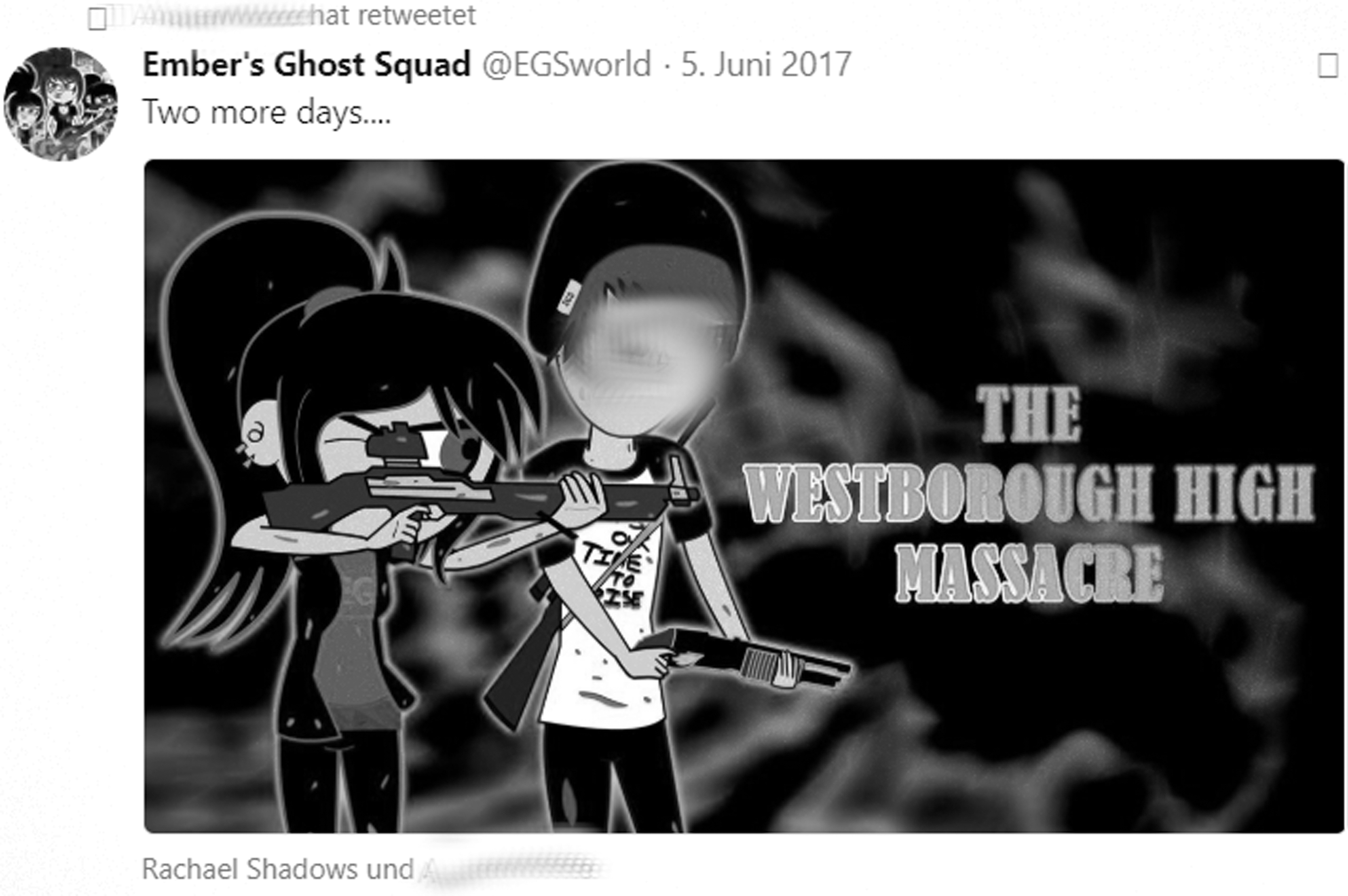
The perpetrator's retweet of a tweet by @EGSworld, one of her Twitter accounts. It shows a screenshot of the video “The Westborough High Massacre.” EGS, Ember's Ghost Squad.
Just before the crime, she uploaded a variety of videos, photos, and documents detailing her planning and preparation activities (Fig. 2). This digital “manifesto” contained the aforementioned “Suicide Tapes,” as well as various other files and folders labeled, for instance, “Shooting Videos” and “Shotgun Pictures.” The perpetrator posted the link to this set to Twitter with the comment, “All of these recordings and videos are essential for understanding what I did and how I did it.”

Screenshot of the media package that the perpetrator uploaded a few minutes before the attack.
Biography
The perpetrator was born in Pennsylvania in 1992. Up until the attack, she lived at home with her family, about whom very little information is available; she had a brother 2 years younger, and her father worked as a manager in a supermarket.
The perpetrator characterized herself as a shy kid. In elementary school, she avoided eye contact with others and felt helpless when her parents were not around. She enjoyed being alone and hated group projects. She stated, “I felt like nobody. […] I desperately wanted people to like me, but at the same time leave me alone completely. […] I just felt lost.” Although she had friends in elementary school, she never engaged with them outside of school.
The perpetrator started producing videos with her best friend as early as elementary school. After this friend became involved with a girl in ninth grade, she felt abandoned and the friendship ended. At this time, she did not foster other friendships. In ninth grade, she formed another deeper friendship that she characterized as “decent,” which was also based on the passion for video creation and lasted until the day of the crime.
Starting in tenth grade, things reportedly went downhill. Fear of failure, pressure to perform, doubts about her career choices, and the future were defining aspects of the perpetrator's daily life. She stopped trying to make friends and experienced what she called mild forms of bullying. Classmates occasionally hid or stole her belongings and made lewd and ambiguous jokes about her.
Little is known about her time in college, and she barely discussed it in her writings. She only mentioned having had many classes and rather poor grades in most of them. In 2010, she started a part-time job at the supermarket, where she would later commit the shooting. Hating her job, she started looking for alternatives in 2014 and quit the same summer. She assumed a full-time job at a hospital, but quit after only 1 day. Since then, the perpetrator has been tormented by worries about the future, financial concerns, and career prospects, and her unemployment caused conflicts with her parents. When she was offered to return to her job at the supermarket, she accepted and shortly thereafter took a full-time position on the night shift, which she held until the shooting.
Relationship with her family and reproaches against the parents
Very little information is available about the perpetrator's family and the quality of family relationships. According to her journal and videos, the perpetrator felt that her parents did not care about her. Strikingly, she directly addressed her mother in her journal several times, but never her father. She despised her father, who worked as a supermarket manager, and wished to be as far away from him as possible. This hatred intensified over the years as she became increasingly dissatisfied with life, following a career path similar to her father's.
In her journal, addressing her mother, she described contempt and a desire for revenge: “Just be thankful I didn't kill your husband because trust me I would've, but he's just as responsible as you for giving me life, you both need to suffer, alive […] Seriously, I would've killed dad but he needs to suffer; what the fuck is he even doing with his life? NOTHING! He's a manager at a fucking supermarket, that's one of the lamest, worthless, pathetic jobs on earth!”
In her farewell video, which was also her coming-out, the perpetrator addressed her family and, for the first time, openly spoke about cross-dressing, her fascination with death and darkness, and the events that led to something “breaking” inside. In this video she, found very clear words and accused her family of never having asked the right questions: “Look at my posters on the walls, it's all full of pony stuff, ‘My Little Pony’, it's a girls' show. They call the guys who watch it ‘bronys,’ which I was one. […] Since like 2016 I've been shaving my arms and legs and entire body […] nobody ever questioned that […] which I couldn't believe.”
Regarding her mother, she alternated between positive remarks (“Mom, you were great […]”) and immense accusations of not seeing the signs and not noticing her emotional state: “How she hasn't questioned me or seen the signs is beyond me.”
According to the journal, her mother only once confronted her about her emotional state in 2015, after learning about a post she had published on Facebook that a family member had found alarming. As the perpetrator put it, her mother had known that “I was down about where I stood in my life but never knew I was this severely depressed and disturbed.”
Even less is known about the perpetrator's younger brother. She felt that her brother was superior and looked down on her, the “little dumb kid.” He did better in school, had many friends, was extroverted, and popular with girls. The perpetrator, on the other hand, had never had any sexual or romantic encounters until the day she died. In middle school, she fantasized about her brother leaving home and no longer being part of the family. Later, when the perpetrator went off to college, the relationship improved, and the two slowly began to open up to each other. However, the perpetrator assumed that her brother had no idea how “dark and different” she was and what path she was on.
Crises, grievances, and their narcissistic processing
The perpetrator never felt that she belonged, neither at school nor in her family. As she stated in her journal, “I truly feel like I was sent here from another dimension. I don't belong to this place; never have, never will.”
Everyday problems or inconveniences sometimes triggered strong emotional reactions, which she would express through violent fantasies in her journal. She experienced deaths that occurred in her extended circle as very impactful, even if the relationships with the deceased persons had not been very close at the time of their deaths. These instances, in her own words, intensified her depressiveness: “Tom […]'s death was the first of many events that led to ‘EGs' and changed me into who I am today. […] Tom's death sucked the life out of me. Matt's death killed me.” *** On several occasions, she referred to 2013, the year of these deaths, as a fateful year. From this time on, she progressively refused to communicate with others directly.
Whenever the behavior or reactions of others did not meet her expectations or she felt insulted, she would easily get offended and adopt a derogatory and even aggressive language. She gradually withdrew from her environment and was, according to her own words, not interested in other people or their views and feelings.
The perpetrator declared herself a narcissist in several instances. Her thoughts revolved almost exclusively around herself. All her communication seemed to be focused on self-examination and self-admiration. In her journal, she summed up this self-infatuation as follows: “I love to hear myself talk on the internet. Whether it be my EGS takes, EGS tapes, live streaming, or my suicide tapes recordings […] I can listen to myself for HOURS. […] I recorded a new […] ‘suicide tape’ recording, and it was 2hours long; I listened to the whole thing twice, non-stop.”
Elsewhere it says: “When I'm dead the world will have lost one of its greatest minds […]. Don't you EVER forget me, humans.” The perpetrator obviously felt superior to others (“I'm superior to these humans. I'm fucking evolved.”) and repeatedly articulated fantasies of grandeur (“One day we'll make worldwide headlines” or “There will come a day when the world will realize how great I really am.”).
Recurring Themes in the Preattack Communication
The golden thread in the perpetrator's biography is her fascination with cinematography and the creation of videos, as well as her desire to use these videos to narrate a comprehensible story about herself, her life, and the motives for her crime. Her videos, social media postings, and other documents reveal several themes that dominated her world of thought.
Ember's Ghost Squad
One of the most prominent themes was EGS, a fictional group the perpetrator created that consisted of several female characters, as well as herself. The supposed founder and leader of EGS, a ghost girl named Ember, was based on a vicious, antagonistic character from the animated series “Danny Phantom,” who, in her final appearance on the show, tries to banish all men from Earth.
Based on this story, she created more characters and the mission for EGS to recruit new members from the ghost realm, take control of the world, and eventually destroy humanity, following the slogan “Join us and leave your life behind.” Summing up the essence of EGS on Twitter, she wrote, “No one will be safe once we gather enough souls. It'll be the true apocalypse and the end of the catastrophe that is the ‘human race.’”
EGS played a crucial role in her world of thought and everyday life. The perpetrator created various comics and videos about EGS, decorated her walls with the characters' posters, and became increasingly involved in parasocial relationships with the characters. She maintained a considerable number of social media accounts related to EGS; she was particularly active on Twitter and used various profiles (at least seven) that were supposedly owned by different characters of EGS. The characters and their postings varied with regard to content and choice of words, examples including Columbine fan and rampage killer Rachael Shadows, and Mackenzie West, the perpetrator's alleged soul mate whom she hoped to be reunited with in death (Fig. 3).

Screenshot of a Twitter post tweeted by the perpetrator using her alias. The picture shows one of the characters of “Ember's Ghost Squad” (right) and the perpetrator's alter ego (left) arm in arm with a caption saying “Together forever.”
Finally, the perpetrator cherished the hope that EGS and the characters she invented would outlive her, and that more videos or even an entire series would follow after her death.
Physicality, gender identity, and sexuality
Another consistent theme is the perpetrator's struggle with gender identity. She repeatedly expressed feeling trapped in her male body and actually being a girl. She talked about not belonging in this world and coming from another dimension, her “true identity” being a female ghost.
When she was home alone, she often wore her mother's clothes and underwear and regularly removed her body hair. Believing that her family did not notice, she did not discuss the issue with anyone fearing that she would be made fun of.
At the same time, identifying as non-homosexual was very important to her. The perpetrator repeatedly described her intense aversion to men and male sexual organs, as well as her fixation on everything feminine: “I can't wait to have my penis and butt hole taken away and to have my pussy and breasts back […]. Words cannot describe my love for girls. Girls are my life. Guys on the other hand are absolutely disgusting […]. I'm not gay. […] I despise men […].”
Regarding her fixation on women, we find accounts of her saying that, on the one hand, she had been attracted to girls since puberty. On the other hand, she repeatedly stated that she had no sexual interest in them (or anyone else), but rather wanted to resemble them. This desire was often expressed in fantasies that appeared macabre at times: “I have fantasies of killing girls and laying their corpses on top of me and fusing into their bodies, absorbing their feminine traits and absorbing what little life is left inside of them. […] I want to become them […].”
Her identity as a transgender person was one of the main motives for her suicidal ideation, accordingly: “The thought of becoming a woman again is the main drive behind the suicidal side. It's so hard to live on this planet and to ‘act normal.’”
She felt trapped in the wrong body and not at home in this world. In her suicide note, it says: “[I]n reality I've been a trapped soul who's been forever searching to rediscover herself. […] I'm a girl who's been trapped in a man's body […] I don't belong on this planet, nor have I ever. I need to die, and I'm taking whomever I can down with me.”
Depression and suicidal tendencies
One rather prominent feature of her communication is the description of her depressive symptoms and suicidal tendencies. As mentioned earlier, in her suicide note, she identified the year 2013—4.5 years before the shooting—as the beginning of a downward spiral that drove her into severe chronic depression and, ultimately, to planning her attack and suicide. From 2016 onward, her life had become “one enormous concoction of stress, anger, hatred, depression, boredom, tiredness, and desire.”
In a passage in her journal, she describes her everyday life and physical as well as mental condition as follows: “I sit at my computer completely isolated from the world, I never want to do anything with ANYONE, I hardly sleep, I eat very little […], I'm severely underweight, I never exercise, I rarely smile, […], I'm always quiet, […] I purposely make zero friends, […] and I always look depressed.”
Several passages in her journal and the Suicide Tapes indicate a death wish harbored for many years; on vacation trips, for instance, she would pray for the plane to crash. Elsewhere she wrote that she had been ready to “go” for 7 years. She barely ate and lost weight steadily, a process that she documented thoroughly. As an explanation for her death wish, she stated that life no longer offered any considerable experiences worth living for and that she did not strive for milestones such as a career or social life. In addition, death would save her from further bearing with her repulsive body.
Concurrently, she longed for life after death in a new body (in the shape of a female ghost) and a new family (EGS). Finally, she repeatedly expressed suicidal fantasies in her notes, for example, “I'm tired of envisioning putting that barrel in my mouth and pulling the trigger […]. Every time I look at that suicide picture of [the Columbine shooters] it's like I just want it to be here already.”
Death and dying
The perpetrator had a particular somber fascination with death that began in elementary school and become ubiquitous in seventh grade. As a result, her videos began to change, both visually and in content, becoming gloomier and no longer humorous. Short stories that she wrote for class always ended with the protagonists' deaths. The perpetrator was preoccupied with afterlife as well and claimed to yearn for it: “I always envisioned the afterlife as being this magical place where you can do like whatever you wanted and be whoever you wanted […].”
Furthermore, in her journal, she described fondness for cemeteries and graves. She would regularly drive up to a hill not far from home and spend hours observing a nearby cemetery.
Hatred of humanity in general and specific groups of people in particular
In all of her documents, she repeatedly expressed hatred for humanity in general and specific groups of people in particular. This generalized hatred had arisen at the end of her college years: “2016 and 2017 have been full of almost nothing but hatred towards humans. I wanted to kill as many people as I could.” On Twitter, she repeatedly posted statements such as, “I hate 97% of the humans who breathe on Earth. […].” She particularly held animosities against people of color. As her alter ego put it on Twitter, “I'm racist, prejudiced, discriminate, and sexist; that's one hell of a lethal combination.” Elsewhere, she mentioned drinking bleach regularly and using special lotions to whiten her skin. She equally entertained profound antipathy toward the elderly and, by extension, toward aging. As suggested earlier, she also despised the male sex.
The generalized hate speech was often paired with violent fantasies: “[…] I'd make you cry for mercy until you die of old age. I'd gut you from head to toe and stabilize, neutralize, and hypnotize your bodies to prevent you from dying, keeping you alive and consciously awake from start to finish […].”
She also harbored intense feelings of hatred toward specific people in her environment and expressed violent fantasies and even death threats in her videos and writings. Among these people were, for example, her work colleagues, her boss, her father, and people from the online community with whom she had collaborated.
Fascination with rampage shootings and admiration for Columbine
Throughout her records, we find remarks about her fascination with previous rampage killings. For instance, she referred to the anniversary of the Sandy Hook Elementary School shooting in a tweet. Her journal contained a list of late individuals she wished to meet after her death, which, apart from rock stars, included several violent criminals, rampage killers such as the Sandy Hook shooter, and domestic terrorists such as the Oklahoma City Bomber. The perpetrator was particularly fascinated with the Columbine shooters. She felt “sucked into the story,” idealized, and idolized them.
They inspired her to, for example, keep a journal, and buy a shotgun and tape its grips. She felt particularly drawn to one of them: on Twitter, she posted pictures of one of the shooters with the hashtag “#Hero” and described the spiritual connection she felt toward him. In addition, she was an active member of an online Columbine fan forum and wore t-shirts with a “Natural Selection” print in several of her videos, resembling the t-shirt one of the Columbine shooters had owned. She repeatedly voiced regret that the Columbine shooting had not claimed more casualties, expressed a wish for more rampages, and mentioned that she wanted to carry out such an attack herself.
She created fan art based on a photograph of the shooters' bodies in the school library (Fig. 4), her Twitter profile's wallpaper depicted this scene as well (Fig. 5), and she had a poster of it hanging on her bedroom wall. Finally, she produced an animated video about a school shooting (“The Westborough High Massacre”), a sequence of which took place in a library that resembled the one at Columbine High School.

Edit by the perpetrator, based on a photo of the Columbine perpetrators with the hashtag “#Heroes,” posted on Twitter on the day before the attack. The original photo was shared by the perpetrator as early as March 25, 2017, captioned “mood.”
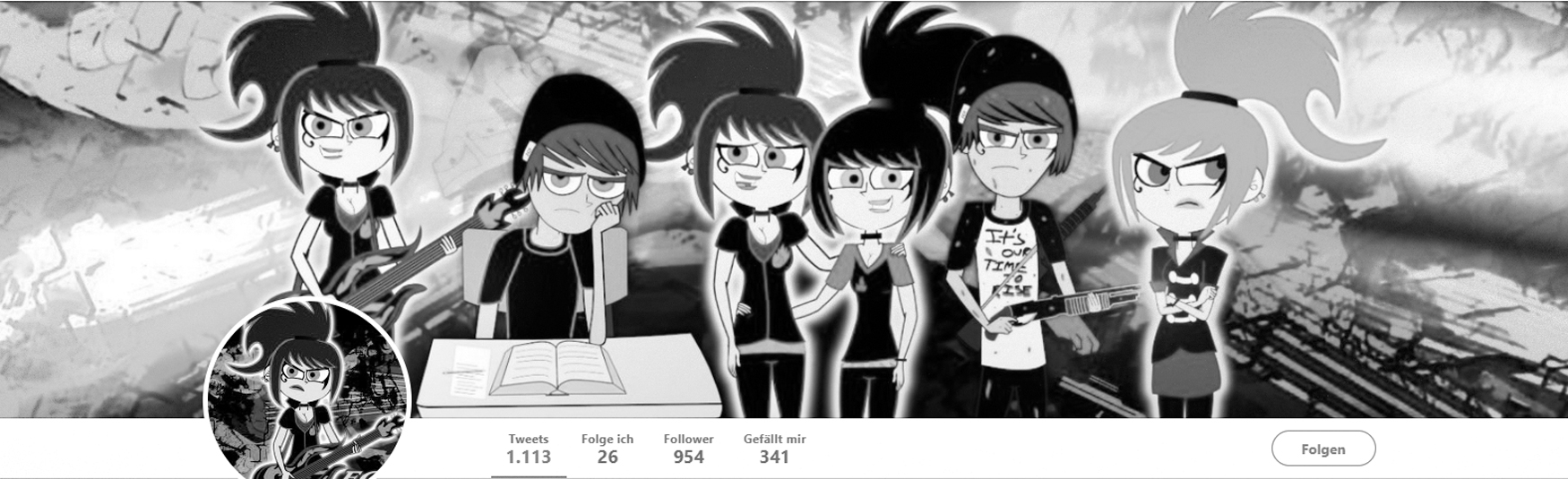
Profile picture of the perpetrator's main Twitter account.
The EGS story was closely intertwined with her admiration for the Columbine shooters; she posted about Columbine through EGS Twitter accounts and made statements such as “Me and @EGSRachael are going to try and search through dimensions to find EHDK.” †††
Violent fantasies and weapons
Not only was the perpetrator fascinated with rampage killings but was also keen on violence, in general, as well as firearms. As early as December 2016, she uploaded a brief video sequence to Twitter captioned “Guns! Beautiful …” that featured her shooting her mother's handgun.
Later, she purchased two shotguns and named them after two members of EGS. From December 2016 to June 2017, she filmed herself target practicing with these weapons on a total of seven occasions (see Fig. 6 for an example). She later included these videos in the media package that she uploaded just before her crime. In February 2017, she posted a selfie with a shotgun in a gun case, and in April 2017, 2 months before the shooting, she mentioned buying a shotgun in her journal.

Screenshot of a video shot on April 15, 2017, showing the perpetrator target practicing with a shotgun. The print on her t-shirt says “natural selection,” resembling the t-shirt one of the Columbine perpetrators wore during the shooting in 1999.
Violent fantasies played a significant role in her communication and occurred in her videos on Twitter and in her journal. Her journal contained numerous descriptions of different scenarios and methods by which she wanted to inflict violence. For instance, the perpetrator stated that she wanted to kill her boss even though she did not really care about him, explaining repeatedly that she just wanted to kill people regardless of who they were. On Twitter, she posted as follows: “I'm gonna go to the beach tomorrow and cause someone to drown. I've always wanted to do that … creep below someone underwater and grab ‘em.”
Fame seeking
Apart from personal emotional reasons, such as her desire to leave her abhorrent body, one of the main motives for her crime was a desire for fame and recognition. Initially, she tried to achieve this by producing videos and pursuing a YouTube career. However, despite “decent views,” she never managed to reach the level of fame she had dreamed of. In her suicide note, she concluded: “I was just never meant to be famous while I was alive. I wanted fame, I wanted to be recognized on the street, I wanted to be in movies or have documentaries made about me (or re-enactments with actors).”
Evidently, from her perspective, the only alternative was to go down in history by committing an act of violence. Using the character Rachael Shadows, she expressed on Twitter: “Decades from now, I want to be remembered as a goddess who walks among you worthless pathetic humans.” In her journal, she fantasized, “In 25days I'll go into the history books. … The human race will remember my name for a century.” She hoped that the content, characters, and stories she had created would outlive her and be continued after her death. She also desired to inspire copycats, saying “I hope I inspire more shootings, big or small” and “I know I'll spawn cult followers […].”
Case Summary and Discussion
The perpetrator was obsessed with death. Initially, the deaths of people around her upset her; later, she became so preoccupied with the idea of death that she wished to end her life. While the specific dates on which she wanted to commit suicide changed several times, the desires she associated with it remained the same: she wanted her parents, and especially her father, to suffer from her death, which is why she decided to spare their lives; she desired to escape her loathed body, be cremated, and return to her “true” shape as a ghost girl; using her alias, that is, her “real” name, she wished to join EGS to seek revenge on humanity; and lastly, she hoped to become famous, to leave a permanent impression on the world, and go down in history.
Fame seeking was a crucial factor in her everyday life and a major source of identity: she had aspired to be a successful YouTuber, but did not manage to achieve the numbers of followers and likes she hoped for. Although she put a lot of time into this idea, she increasingly lacked the energy and drive needed to continue on this path, perhaps due to her progressing depression. However, she could not find another path or goal, either personal or professional. Due to the lack of options in the present, she therefore postponed the achievement of fame to an “afterlife.” The shooting was to make her a celebrity posthumously. Just as her Columbine role models, she hoped to inspire others to commit acts of violence and to continue her stories so that both herself and EGS would outlast her death.
Ultimately, she traded unattainable fame for attainable infamy. Surprisingly, however, she selected a place and time for the act that would hardly make history with a record death toll. It is also worth mentioning that she initially planned to only commit suicide and reportedly decided to extend it to a murder-suicide by flipping a coin. The choice of place and time of the crime indicates that the perpetrator had originally intended to gain fame by other means and was reluctant to commit a large-scale crime right up to the end. It may also indicate that suicide was her main motive, merely clad into a story that made it look like “something bigger” and allowed her to identify with an imaginary community of “dark heroes.”
The perpetrator resented her body and sex. She repeatedly expressed disgust for men and desired to cut off her genitalia and become a girl. She cross-dressed and wore her mother's underwear. Her choice of a male nickname for her female alter ego shows her ambivalence toward the subject of gender and gender identity. Simultaneously, her alter ego reveals another identity conflict: she repeatedly referred to herself as a “ghost girl”−not a “ghost woman.”
Moreover, she frequently declared that she had no sexual interest whatsoever and fundamentally rejected sexuality. This may reflect her inability, or at least unwillingness, to deal with the demands of adult life (career prospects, life plans, relationships, etc.). The character that represents her identity illustrates the immense contrast between her external and internal reality: not only did the perpetrator struggle with her gender identity but also with her position as a child/adolescent vs. adult, and regressed into the stark opposite—not merely back to being a child, but a female child, even.
The reports about her family reveal that she was unable to openly talk about her emotions, lack of perspective, anger, gender identity, and sexuality with anyone. She never initiated such conversations herself nor did her parents offer opportunities or notice signs that hinted at her issues. Her behavior reveals a strong ambivalence regarding desires for affection and emotional support, as she continually concealed her feelings, while at the same time voicing reproaches against her parents for not noticing what was going on. Eventually, she found the fulfillment of her needs for relatedness and belongingness—fundamental psychological needs (Baumeister and Leary 1995; Bowlby 1969; Grawe 2000, 2004; Maslow 1943, 1962; Ryan and Deci 2000)—by creating the fantasy of Ember and EGS.
Quite possibly, the reluctance to open up to her family may have been caused by an aversion to their lifestyle, the opposition to her parents, and especially her father being an important determinant of her emotional life; she criticized her father, who worked in retail just like herself, for not making more of his life. Perhaps she blamed him for not giving her any perspective and for not being a good role model and identification figure.
In her suicide note, the perpetrator identifies the year of her great-grandfather's passing as the beginning of her emotional “downward spiral.” He may have been the perpetrator's preferred male reference person, so his loss, combined with the feeling that her father did not represent a suitable alternative, may have encouraged her hostility toward masculinity and her shift toward the feminine. Her accounts reveal, on the one hand, an attraction to girls since puberty. On the other hand, she repeatedly declared that she had no sexual interest in them (or anyone), but rather wanted to be like them, demonstrating significant ambivalence with regard to physicality and sexuality. The perpetrator was in conflict with her own body and sexuality, and ultimately wished to transform life into death, masculinity into femininity, and physicality into incorporeality.
Throughout her adolescence and early adulthood, she was exposed to several distressful experiences, namely lacking relatedness, self-worth, orientation/control, and pleasure. Consequently, she developed a number of dysfunctional coping strategies, such as withdrawal, preoccupation with violence, and extensive media consumption, to avoid any further violation of her needs and the resulting negative emotions such as fear, shame, and guilt.
Experiences of needs violation in childhood, adolescence, and young adulthood are considered general risk factors for (juvenile) violence (Baglivio et al. 2015) and constitute important components of her maladaptive development. Curiously, her precise and blunt self-descriptions reveal a high degree of introspection, which is quite rare for individuals employing such maladaptive coping strategies. Despite this self-awareness, however, she evidently lacked the ability to take a step further and develop nondestructive courses of action.
The perpetrator can be described as a “modern-day Narcissus,” who was, in a sense, in love with herself and her own thoughts and voice, to which she put a face through the EGS comics. In addition to this self-infatuation, her way of dealing with crises and grievances, and her social withdrawal are both indicative of narcissistic functioning (Kernberg 1996; Kohut 1973; Rudolf and Henningsen 2017). When faced with small or big crises, setbacks, and conflicts, she reacted with anger, rage, and contempt, which culminated in violent and homicidal fantasies—possibly an attempt to compensate for her lack of strength and power. Such violent fantasies were very prominent in her writings, and she often used imaginative, vivid, and even flowery language. It almost seems as if she feasted on these descriptions and gained a certain sense of pleasure from them, which she evidently lacked from other sources.
Externalizing guilt is another typical mechanism associated with narcissistic style (Pincus and Lukowitsky 2010). In her case, this was evident in two respects: first, by accusing her parents of not having noticed her troubles, she laid the blame for her actions on them. Second, she often referred to “fate” and “destiny.” Perhaps, from her perspective, her extensive communication was a “test of fate”: “They” (parents) or “someone” (society, her followers) could have stopped her from committing the crime; since that never happened, it must have meant that the act was predetermined and, thus, legitimized. In a video titled “Flip a Coin,” the perpetrator left it to fate to decide whether to only kill herself or take others along into death.
The communication with the outside world and the fictitious characters she had invented was one of the most striking features of the perpetrator and allowed us to gain insight into her psyche. Her intention was to self-express and connect with others in a way that would not bear the risk of being hurt, and it seems as if she found the ideal means for it; her communication was almost exclusively a one-way street, allowing her to act out a dramatic, self-presentational side of herself without having to directly face the reactions of others, which would have been overwhelming for the more introverted, insecure side of her. At the same time, she wanted others to engage with her and her issues, but hardly ever gave them a real opportunity to do so. She vacillated between self-loathing and self-rejection, and overconfidence and grandiosity.
The vacillation between two seemingly contradictory standpoints is also reflected in the perpetrator's authenticity. She explicitly claimed to be authentic, emphasizing that all of her content and statements should be taken literally and seriously. However, she created a number of secondary and tertiary identities and barely addressed real people; instead, she conveyed her thoughts to the anonymous Internet.
At times, she appeared quite stilted in her videos, using dramatic phrases, gestures, and facial expressions, sighing and pausing theatrically, and producing an “evil laughter” that seemed rehearsed. Her monologs occasionally sounded like a sort of mantra, a way of persuading herself of her opinions and attitudes, her identity, and personality, from which she ultimately was unable to escape. Again, she vacillated between desires for intimacy and great distancing. As she had failed to connect to human society, she sought relatedness to fictitious characters that would never reject her (Ashe et al. 2005).
The perpetrator operated various social media profiles that were allegedly owned by the characters she had created. One recurrent commonality was the rejection of life and the desire to end it. It is interesting and striking, however, how differently these characters expressed themselves, how the content they posted varied, and how different their wording was.
Unless pathological, that is, in the sense of a dissociative identity disorder, separating parts of the self into several subidentities is generally a normal, healthy process and a strategy that most people apply to meet their psychological needs or accommodate the needs of significant others (Stryker 1980, 1989). The perpetrator contained different, sometimes conflicting sides within herself as well, such as a young adult who was hurting and felt unseen, a secretly transgender person, a lonely child looking for a sense of belonging, and a misanthrope harboring violent fantasies.
The creation of EGS and its characters can be interpreted as an attempt to accommodate all these different personality aspects. Clearly, the strategy was not adequate for coping with her often negative, ambivalent emotions. In the end, the perpetrator may have decided to resolve her inner and outer conflicts definitively by committing an act of violence and ending her own life.
Explanatory Approaches for the Genesis of the Attack
Narcissistic personality traits are more prevalent in violent offenders and murderers than in the general population (Lambe et al. 2016). Mass killers, on average, are likely to exhibit more pronounced narcissistic traits than other violent offenders (Bushman 2017). In fact, very distinct narcissistic tendencies can be found in school shooters and other mass murderers (Bushman 2017; Hoffmann et al. 2009; Langman 2009). Specifically, fame-seeking shooters often display narcissistic traits (Bushman 2017; Kellner 2015; Twenge and Campbell 2003).
A core feature of narcissism is a vacillation between self-aggrandizement and self-deprecation and attempts to compensate for low self-esteem through delusions of grandeur (Altmeyer 2000; Kernberg 1996). Langman (2017, p. 2) accurately concludes as follows: “For those who feel like they are nobody, the path to becoming somebody is very simple—get a gun and shoot a lot of people.” ‡‡‡
The biographies of the fame-seeking rampage shooters described at the beginning of this article often contain feelings of loneliness, exclusion, inferiority, and unstable self-esteem, which they try to compensate for with their pursuit of fame—characteristic features of people with narcissistic personality traits (Kernberg 1996; Kohut 1973). The fame they hope to achieve through violence creates a sense of individuality, protects them from insecurity of any kind, and provides the perpetrators with an identity (Serazio 2010).
Bushman (2017, p. 8) highlights that a high degree of public attention that offenders receive after committing severe acts of violence increases the risk of extreme and hence violent behavior, as has been discussed in other scholarly works (Helfgott 2015; Lankford and Madfis 2018a; Larkin 2009; Towers et al. 2015). For some perpetrators, murder is mainly a means of achieving celebrity status (Langman 2017, p. 2), which is precisely what they get from the media coverage (Lankford 2018; Lankford and Madfis 2018b).
The literature on pathological narcissism commonly distinguishes two types of narcissism: grandiose narcissism and vulnerable narcissism (Dawood and Pincus 2018; Dickinson and Pincus 2003; Pincus and Lukowitsky 2010; Pincus et al. 2009, 2014). In this case, the perpetrator's self-descriptions contain accounts of both forms. This concurrence of both grandiosity and vulnerability is not uncommon (Pincus et al. 2014). Both phenotypes are associated with depressive symptoms (Dawood and Pincus 2018) and aggressiveness toward the self and others (Ansell et al. 2015; Blasco-Fontecilla et al. 2009; Pincus et al. 2009).
Furthermore, the grandiose type is more likely to have issues regarding dominance and vengefulness in relationships (Pincus and Wiggins 1990), which in this case manifested in excessive violent fantasies directed at her supervisor, culminating in his murder (Pincus et al. 2009). Thus, the perpetrator's narcissistic tendencies may provide part of the explanation for her difficulties in forming relationships, social withdrawal, and depressive and aggressive reactions to setbacks, conflicts, crises, and grievances.
Kalish and Kimmel (2010) propose a sense of aggrieved entitlement as an explanatory approach for the genesis of severe acts of violence. Perpetrators of such acts externalize guilt for their perceived agony, humiliation, and marginalization onto their environment and thus onto other people. Recovering, or at least attempting to recover, their losses is viewed as legitimate, and sometimes even as a moral imperative. Kalish and Kimmel (2010) argue that these feelings are inherently masculine because they primarily concern the loss of masculinity and the attempt to regain it through violence, translating this concept into the slogan “destroy others to restore the self” (Kalish and Kimmel 2010, p. 463).
However, killing out of anger is usually not enough, as most perpetrators also wish to perceive their actions as legitimate. Not only do they believe they are in the right, sometimes they actually feel a moral obligation to “fight back.” The humiliation they experienced serves as a justification to take revenge on those who have wronged them.
In this case, aggrieved entitlement is likely to have contributed significantly to the genesis of the attack. Her skills and talents may have brought the perpetrator some temporary success, but she never achieved the fame she had longed for. She believed to be destined for greater things and to be entitled to more than she had received. Feelings of anger or grievance arise when people “want what they don't have and feel that they deserve what they don't have” (Tavris 1989; as cited in Kimmel 2017, p. 23).
Remarkably, as we see it, this case shows that aggrieved entitlement may not necessarily be inherently masculine: although the perpetrator was born and socialized male, she identified as female. Arguably, her gender identity can be characterized as somewhat fluid and highly ambiguous, while Kalish and Kimmel's concept seems to follow a dualistic, categorical understanding of gender. §§§
In addition to these intense negative feelings, the perpetrator may also have experienced strong positive emotions and pleasure before the act, that is, during her preparations for the attack and through her preoccupation and identification with other offenders. Collins (2014) concludes that by secretly engaging in violent fantasies and the potential act, future offenders find a unique source of emotional energy, which the author refers to as clandestine excitement. Altmeyer (2019) considers the preoccupation with an impeding act a “prefantasized posthumous fame that promises worldwide media coverage” (p. 71) and, similar to Kalish and Kimmel's (2010) aforementioned slogan, aptly puts this into the phrase, “I hate and destroy the other, therefore I am” (p. 73).
Negative emotions arising from aggrieved entitlement may thus be transformed into positive emotions by directing them toward a target. Such positive emotions may then serve as a major driving force on a perpetrator's path toward a severe targeted act of violence, as seen in this case.
Finally, the perpetrator's radical, hateful posts on social media, violent fantasies, death threats, and glorification of severe acts of violence can be interpreted as a form of self-commitment (Böckler et al. 2018; Collins 2014), which may have further pushed her to carry out the attack. Perhaps she got herself into a pretty pickle having to put her words into action.
Conclusion and Implications for Practitioners
Summing up these findings, we argue that what lies at the core of severe targeted acts of violence is the enduring maladaptive coping with individual crises and grievances—or live events that are subjectively interpreted as such—regardless of the potentially confusing, bizarre, or idiosyncratic narratives they may be embedded in. In particular, the concept of fame seeking as a way of identity building and self-worth stabilization offers a valuable explanatory approach. This case provides a striking example of the variety of legacy tokens and highlights potential difficulties in handling them: the sheer amount of data, the wide variety of topics, including individual and unprecedented combinations of pop cultural elements and fictional narratives that may seem inconspicuous at first glance, present challenges to early data mining, and, in particular, accurate content assessment.
We argue that to comprehend the genesis of severe targeted acts of violence, it is necessary to, similar to an onion, peel off the outer layers, that is, themes, cultural references, and specific issues that a person is preoccupied with, to uncover and understand the underlying emotions and driving forces of (potential) perpetrators.
The case analyzed in this study appears to be almost prototypical for the fame-seeking rampage shooter type (Silva and Greene-Colozzi 2019), as the perpetrator (1) openly and directly expressed a desire to become famous, (2) sought media attention through YouTube videos and other legacy tokens, (3) posted on Twitter shortly before the shooting to draw attention to the attack, and (4) referenced role models (esp. the Columbine perpetrators). What makes this case particularly special and caused us to subject it to in-depth analysis was the variety and extent of online activity that preceded the shooting. Although it was unusually comprehensive compared to other rampage killers (Pfaffendorf et al. 2021), its relevance in the current “era of social media” is not limited to individual cases such as this one.
Threat assessment and prevention more than ever depend on the assessment of user-generated online content, as extensive and varied online communication can provide an array of opportunities for the early detection of violent intent. Nevertheless, the main difficulty lies in the resources needed to sensibly detect, structure, analyze, and classify such large amounts of data. In our view, the key factor is to identify behavior that indicates a risk of violence at an early stage and assess the risk as precisely as possible. Research in the field of psychological threat assessment is particularly interesting and relevant in this regard as it focuses on behavioral and communication-based factors that allow for the early detection of intentions and plans to commit a violent act (Allwinn et al. 2019; Borum et al. 1999; Meloy and O'Toole 2011; Meloy et al. 2012).
As in all comparable case studies, we were faced with the unique situation that we already knew the outcome of the case, thus knowing it would be “worthwhile” to examine it in depth. This does not reflect the reality of prevention practitioners and law enforcement authorities. Therefore, research needs to explore ways to quickly screen online content in a resource-efficient manner to determine whether it potentially points to a risk for violence and whether a more in-depth analysis, similar to the one we undertook in this case, is necessary. Looking for specific risk indicators—using well-established frameworks such as, for example, the Warning Behavior Typology (Meloy et al. 2012)—may significantly reduce the effort of analysis in the first step and help identify potential high-risk cases.
Apart from content analysis of legacy tokens of individuals who display conspicuous behavior or communication, another promising approach has been arising in the past years: instead of (or rather, additionally to) focusing on the content, quantitative analysis of linguistic style may provide valuable insights for the early detection of criminal intent and the assessment of risk for targeted violence (e.g., Cohen et al. 2016; Kaati et al. 2016; Pfaffendorf et al. 2021), because it may reveal underlying emotional states and personality aspects that may be concealed or “drowned out” by seemingly inconspicuous content. This approach should be further explored to gain knowledge that can support threat assessment and the prevention of severe targeted violence.
Footnotes
Authors' Contributions
M.A. conceived the idea for this study, acquired the data, and drafted the article. M.A. and S.T. analyzed and interpreted the data and completed the article. S.T. was responsible for the translation and language editing. T.G. critically reviewed the article and provided valuable insights. All authors have read and approved the final article.
Author Disclosure Statement
No competing financial interests exist.
Funding Information
The authors received no specific funding for this work.