




Abstract
Abstract
Zebrafish (Danio rerio) are widely used in neuroscience research, where their utility as a model organism is rapidly expanding. Low cost, ease of experimental manipulations, and sufficient behavioral complexity make zebrafish a valuable tool for high-throughput studies in biomedicine. To complement the available repositories for zebrafish genetic information, there is a growing need for the collection of zebrafish neurobehavioral and neurological phenotypes. For this, we are establishing the Zebrafish Neurophenome Database (ZND; www.tulane.edu/∼znpindex/search) as a new dynamic online open-access data repository for behavioral and related physiological data. ZND, currently focusing on adult zebrafish, combines zebrafish neurophenotypic data with a simple, easily searchable user interface, which allow scientists to view and compare results obtained by other laboratories using various treatments in different testing paradigms. As a developing community effort, ZND is expected to foster innovative research using zebrafish by federating the growing body of zebrafish neurophenotypic data.
Introduction
In the age of information technology, scientists are increasingly turning to bioinformatics to find new ways of solving biological problems.26–32 Collecting massive amounts of data in publicly available online locations has produced multiple scientific databases that make scientific information available to more scientists in more places.33–45 This “database revolution”47,48 has allowed researchers to apply in silico approaches (in addition to in vivo and in vitro experiments49–54 ) to analyze large amounts of data rapidly, as well as to deconstruct and re-integrate highly specific aspects of their data, leading to a greater collective understanding of neurobiological phenomena.
Given the importance of zebrafish for modeling complex brain disorders,21,55–58 mounting neurobehavioral evidence requires a data repository available to scientists involved in zebrafish research. Several existing popular online databases that use other species, such as the Mouse Phenome Database (MPD), Mouse Genome Informatics (MGI), and PhenoGen,33,59,60 facilitated and inspired this project. These databases are excellent examples of powerful and useful online resources that foster innovative research by collecting existing behavioral and physiological data, allowing scientists to identify candidate genes, biological pathways and potential therapeutic targets.
With the recent surge of bioinformatics-based approaches, the scientific community61–64 recognizes the importance of further data dissemination and sharing. The widely used Zebrafish Information Network (ZFIN) is the main online database of zebrafish biological data,65–67 comprehensively covering genomic, proteomic, and developmental data. 68 In order to cover neurophenotypes in zebrafish, we have established the Zebrafish Neurophenome Database (ZND; www.tulane.edu/∼znpindex/search), which currently contains adult zebrafish neurophenotypes, but will eventually include larval zebrafish models as well. ZND is a dynamic database supported by the Tulane University Innovative Learning Center (ILC) as part of the Zebrafish Neurophenome Project led by the Zebrafish Neuroscience Research Consortium (ZNRC), an international network of collaborating laboratories dedicated to zebrafish research. As an ongoing, community-driven effort, 69 this database is an online open-source repository for behavioral and related physiological data, reflecting the current state of knowledge on zebrafish neurophenotypes. The utility of this project greatly depends on contributions from the zebrafish research community 69 and the goal of this paper is to introduce the ZND concept to a wide audience of zebrafish investigators.
Content of the ZND
ZND is designed to consolidate zebrafish information to provide a comprehensive open access database of their behavioral and neurological phenotypes. The database contains details of experimental manipulations and the corresponding responses across all major behavioral domains and tests/paradigms (Table 1), enabling a better characterization and interpretation of zebrafish phenotypes. ZND also reports negative findings (e.g., ineffective drug doses or inactive stressors), which gives researchers complete information to make more informed decisions regarding optimal experimental design of their zebrafish studies.
The information flow between ZND, its contributors, and users is shown in Figure 1. Using the input of the growing zebrafish neuroscience community, ZND covers various forms of scientific communication including scholarly journal publications, books and book chapters, conference abstracts, patents, doctoral dissertations, theses, project reports, government documents, web-sites, posters, personal communications, and unpublished observations. ZND also allows users to submit their own data, which are curated (to assure compatibility) by its team and then added to the database. For this, a detailed Excel template and online submission forms are provided on the ZND web-site within the “Submit” toolbox. Users can review their uploaded data, verify its accuracy, and contact the ZND team to make necessary corrections (Fig. 1). Since the original publications may occasionally omit important methodological details (e.g., pre-treatment duration or testing intervals) or results, the ZND team will contact the principal investigators for clarification, in order to correctly update this information to the best of our knowledge. Collectively, this is expected to facilitate the comprehensive and updated coverage of zebrafish neurophenotypic data, making it accessible to researchers in this field.
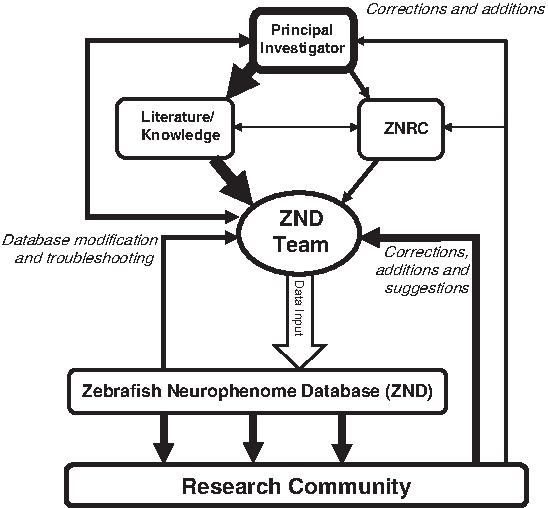
A diagram summarizing the Zebrafish Neurophenome Database (ZND) development and information flow. This diagram displays the relationships between principal investigators interested in zebrafish research, the Zebrafish Neuroscience Research Consortium (ZNRC), and the ZND framework. The ZND inter-disciplinary team currently consists of zebrafish neuroscientists (Kalueff laboratory at Tulane University, New Orleans, LA, www.kaluefflab.com; accessed November 6, 2011), computer/database team (Tulane Innovative Learning Center), and scientific literature experts (Tulane Howard-Tilton Memorial Library). In addition to data search by the ZND team, the investigators are able to correct data input into the database, ensuring its reliability and accuracy. ZND also regularly networks with zebrafish investigators, inviting them to review and update data currently available in the database, as well as submit their most recent findings.
Organization and Structure of the ZND
In its present form, ZND is maintained on a Tulane University server running an industry-standard Linux-Apache-MySQL/PHP application stack (LAMP) as a MySQL database. The database is hosted on a secure up-to-date professional-grade web server named Pulse, with automatic nightly back-up and a hurricane disaster recovery plan. The ZND data repository is managed using VFront, 70 a free open source user front-end for managing data within MySQL and PostgreSQL databases. The search interface and results screens are authored, supported, and continuously developed by the ILC of Tulane Technology Services.
The summary of a typical experiment in ZND is presented in Figure 2. Each study, which contains detailed descriptions of the age, sex, strain, and housing conditions of the fish used, is divided into intervals based on the timing of the experiment (a 5-day treatment exposure has 5 intervals of 1-day each, or a single interval of 5 days). 71 The intervals are further separated by treatment, which can be any behavioral, pharmacological, or genetic manipulation (e.g., predator stress, acute morphine exposure or mutant strain, respectively). Each treatment also contains test details such as model and its duration (e.g., 6-min novel tank test, 15-min light/dark box, 30-min open field test) and test results. For each treatment and test, all endpoints are listed in the results section, with a field for treatment effect (i.e., increased or decreased compared to controls) and a field denoting statistical significance. Specific endpoints which were not significantly modulated in a given experiment are listed as “Unaffected endpoints” on the results page, reflecting all negative results from each study in ZND.
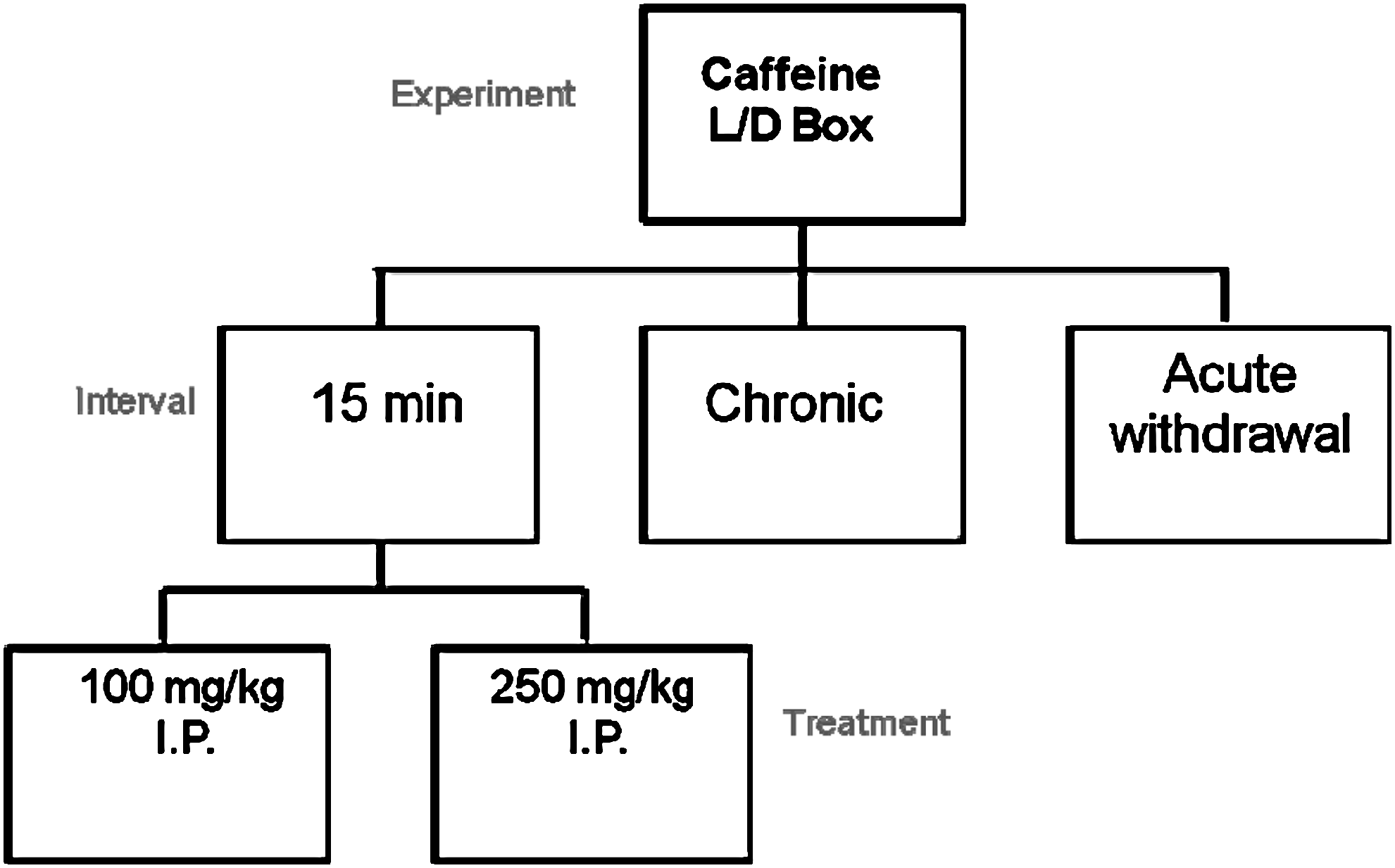
Diagram illustrating parent–child relations within different components in the Zebrafish Neurophenome Database (ZND).
To search ZND for neurobehavioral data, users can select an experiment or treatment from a drop-down list of treatments (on the database's main search page), ranging from pharmacological manipulations (e.g., acute cocaine or nicotine) to experimental stressors (e.g., light exposure or vortex stress). 71 The endpoints measured for a given treatment are listed in the result output. Other search options, such as by the Principal Investigator's name, are also available in the ZND, 71 and will be expanded in the future.
Potential Applications
One of the goals of the ZND is to increase our knowledge and basic understanding of zebrafish neurobiology. For example, a zebrafish researcher working with glutamatergic drugs can search ZND data for the selected ‘reference’ treatments (e.g., Ketamine or MK-801), and use results generated in a different laboratory to determine the effective dose range of these compounds in adult zebrafish, and/or to compare their effects with responses observed in his/her own laboratory. Scientists can also use the concentrations and resulting effects of those treatments to determine the dose range for other drugs not previously tested in zebrafish, but whose activity dose ranges may be extrapolated based on potency relative to other ligands that are already in the database. ZND also improves our ability to critically evaluate the available zebrafish data. For example, peer-reviewers of journal articles, grant applications, or protocols submitted to the Institutional Animal Care and Use Committees (IACUC), who are not experts in zebrafish neuroscience, may benefit from using ZND to evaluate the novelty of proposed research, feasibility of approaches and the efficacy of proposed treatments.
ZND also assists interdisciplinary research across different domains of knowledge. For example, a researcher searching for environmental contaminants in adult zebrafish can use ZND to determine which compounds are already known to be toxic to zebrafish, thereby maximizing time and resources for prospective studies and establishing effective dose ranges. Statistical tools and raw data, albeit currently not part of ZND, will eventually be added to the database (similar to MPD, MGI, and PhenoGen databases) to assist in such analyses.
Furthermore, ZND allows researchers to plan experiments better, saving time and resources in accordance with the 3R's principles of research.72,73 For example, the use of ZND can reduce the number of animals involved in the planned study by allowing scientists to determine effective dose ranges and their most sensitive endpoints, based on prior research performed by other laboratories. The database also helps to refine the existing techniques used to study zebrafish behavior by displaying data collected in the most common behavioral testing paradigms, thereby facilitating further analysis by identifying the best models for testing a particular treatment in question. Such in silico experimentation also complements and optimizes animal research by enabling re-analysis and meta-analysis of existing data without the need to repeat actual testing in live animals. The possibility of rapid analysis of zebrafish phenotypic data improves data-mining ability and allows for the efficient assessment of complex behavioral domains.
Importantly, ZND can also be utilized as a complement to literature searches. For example, ZND collects positive and negative findings from published and unpublished data in multiple formats, including book chapters, conference abstracts, and personal communications (many of which are not covered by the PubMed and other traditional tools for scientific literature search). Using ZND, researchers can now collect and analyze published and unpublished data in a shorter period of time, uncovering novel relationships and improving our understanding of the zebrafish models. Likewise, investigators working with other popular fish species (such as goldfish or medaka fish), may also benefit from ZND, using it, for example, to compare their own results with those generated in zebrafish models.
As already mentioned, the importance of sharing and dissemination of scientific knowledge is increasingly recognized by the scientific community,61–64 federal funding agencies,74,75 and national legislation in various countries. Other funding agencies and leading academic journals also require that authors of peer-reviewed papers share their raw data, statistical methods, and software necessary to interpret or reproduce their published research. The zebrafish research community fully supports the need for data sharing and dissemination.65–67 In line with this, ZND offers an opportunity for zebrafish laboratories to upload and store their data, serving as a free data repository for investigators working in the field of zebrafish neuroscience. Finally, in addition to promoting zebrafish research, ZND can also be a used in biomedical education and teaching, where the potential of this model organism is becoming widely recognized.65,76–79 For example, high-school and college educators can use ZND to identify effective treatments and experimental models to be used for classroom demonstrations and independent research projects of their students.
Overall, ZND is designed as a dynamic framework that is constantly enhanced and modified to incorporate novel findings in the field in close contact with zebrafish laboratories and the neuroscience research community (Fig. 1). The ZND team will continue to expand the database to incorporate genetic and physiological evidence, especially genomic, proteomic, and pathway data in order to more fully characterize adult zebrafish behavior and neurophysiology. With the growing international network of laboratories involved in zebrafish research, ZNRC and other members of the zebrafish research community 69 will continue to provide necessary expert support to ZND, further increasing the participation of established and newer groups in sharing their zebrafish data through ZND.
Conclusion
In summary, ZND is expected to continue to enhance zebrafish neurophenotyping by providing scientists with an open-access comprehensive resource of relevant data generated in this species. This innovative, dynamic online database offers a timely tool for researchers studying zebrafish behavior and neurobiology. Continuing the current trends of data sharing and dissemination, it increases visibility of zebrafish research, and encourages collaboration between established and new laboratories worldwide. Providing researchers with an effective new resource for data-mining and analysis, ZND shows how compact specialized neurobiological databases not only address specific biomedical problems, but can also advance our understanding of complex biological phenomena.
Footnotes
Acknowledgments
This project is supported by Tulane University, Tulane Medical School Intramural and Pilot funds, LA Board of Regents P-Fund, and NIDA R03 SOAR (DA030900-02) grants. Organizational and methodological support is provided by the Tulane University Innovative Learning Center, Tulane Neurophenotyping Platform, and the International Zebrafish Neuroscience Research Consortium. The authors thank R. Riehl, R. Razavi, A. Allain, L. Monnig, K. Rhymes, M. Hook, I. Bruce, C. Fryar, J. Hester, J. Raymond, S. Bagawandoss, and J. Enriquez (Tulane University) for their help with the initial phase of the ZND project. Help of Xiang Chen and colleagues from Tulane University's Innovative Learning Center is also greatly appreciated.
Disclosure Statement
No competing financial interests exist.