




Abstract
Abstract
Zebrafish is a vertebrate animal model. Their maintenance in large number under laboratory conditions is a daunting task. Commercially available recirculating zebrafish maintenance systems are used to efficiently handle the tasks of automatic sediment cleaning from zebrafish tanks with minimal waste of water. Due to their compact nature, they also ensure the maximal use of available lab space. However, the high costs of commercial systems present a limitation to researchers with limited funds. A cost-effective zebrafish maintenance system with major features offered by commercially available systems is highly desirable. Here, we describe a compact and recirculating zebrafish maintenance system. Our system is composed of cost-effective components, which are available in local markets and/or can be procured via online vendors. Depending on the expertise of end users, the system can be assembled in 2 days. The system is completely customizable as it offers geometry independent zebrafish tanks that are capable of auto-cleaning the sediments. Due to these features, we called our setup as Open-RAC (Open-design, Recirculating and Auto-Cleaning zebrafish maintenance system). Open-RAC is a cost-effective and viable alternative to the currently available zebrafish maintenance systems. Thus, we believe that the use of Open-RAC could promote the zebrafish research by removing the cost barrier for researchers.
Introduction
Z
In our lab, we were interested in using zebrafish to study links between environmental toxins and psychiatric diseases. However, the absence of any established zebrafish culture facilities in our locality forced us to rear and maintain zebrafish population within the laboratory. Unfortunately, as a start-up lab with limited funding, we were unable to afford the commercially available recirculating zebrafish maintenance systems that are costly. This led us to search for cost-effective and viable alternatives to the commercially available system.
We discovered few reports describing the custom-made, recirculating zebrafish maintenance systems.11–13 However, none of the open-design systems described in the literature seemed as effective as the commercially available systems. Due to this lacuna of open-design alternatives, we were motivated to build a compact, open-design, zebrafish maintenance system with auto-cleaning and recirculating features as effective as commercially available systems. In this article, we share our insights for building with ease, a compact, stand-alone system capable of holding up to ∼500 adult zebrafish in standard laboratory conditions. We used the custom-made siphon technology for auto-cleaning of sediments in zebrafish tanks. 14 The use of water recirculation in the system helped us to maximize the use of available water. Due to these features, we named our setup as Open-RAC (Open-design, Recirculating, Auto-Cleaning zebrafish maintenance system). We believe that Open-RAC could provide a cost-effective and viable alternative to the currently available zebrafish maintenance systems.
Materials and Methods
All the materials used in the construction of Open-RAC are listed in the Table 1. These were procured from the local markets and/or online vendors. The arrangement of various structural and functional units used in the Open-RAC is shown in the Figures 1–3. The three-stage (mechanical, chemical, and UV disinfection) purified water was produced using standard reverse osmosis (RO) water assembly unit installed in the lab premises.
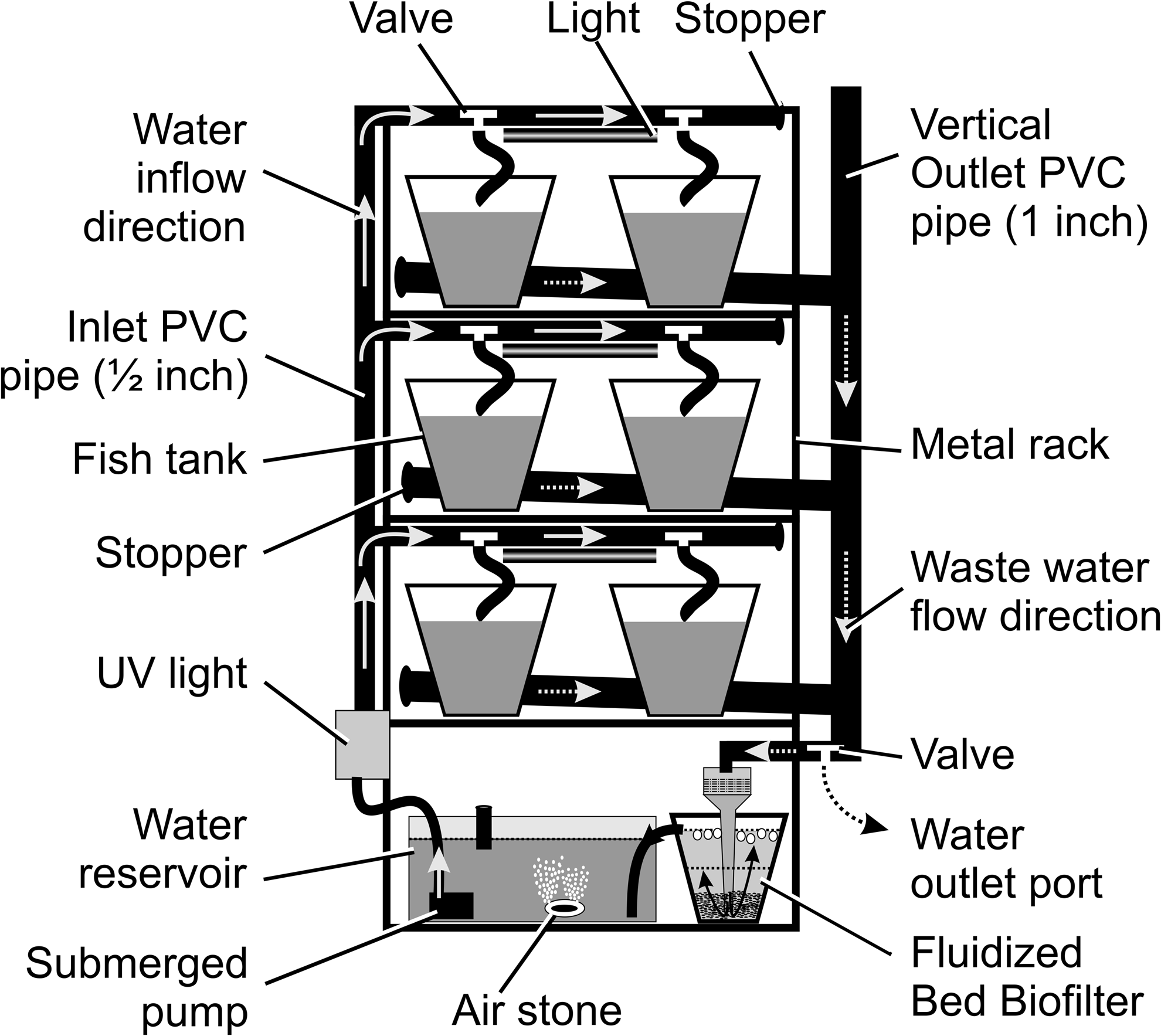
Schematic drawing of Open-RAC from front side. Important components and flow direction of water is shown by arrows. Solid arrows denote water flow directions in the inlet pipes. Dotted arrows denote water flow direction in the outlet pipes.
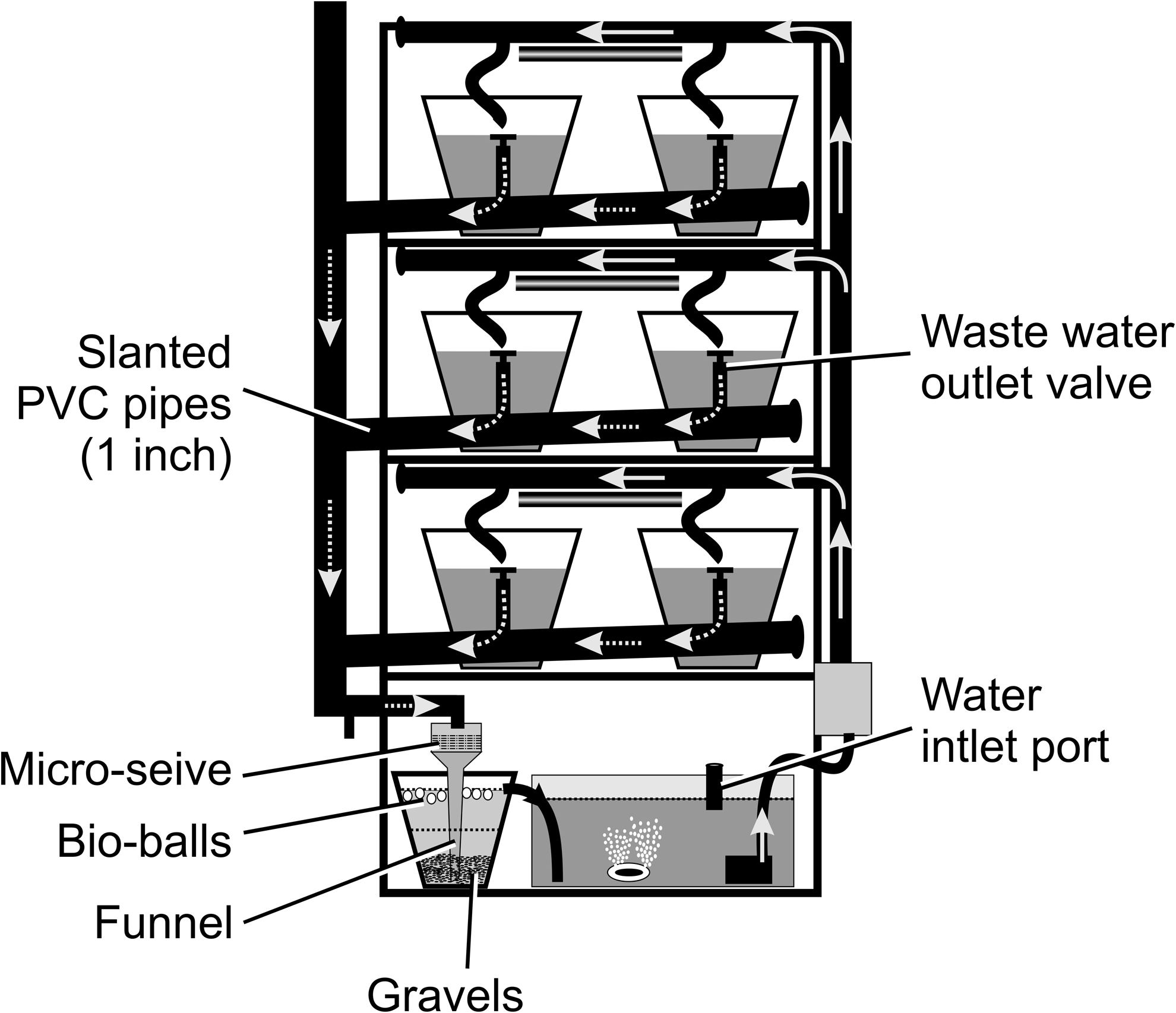
Schematic drawing of Open-RAC from back side. For clarity, not all the components are labeled.
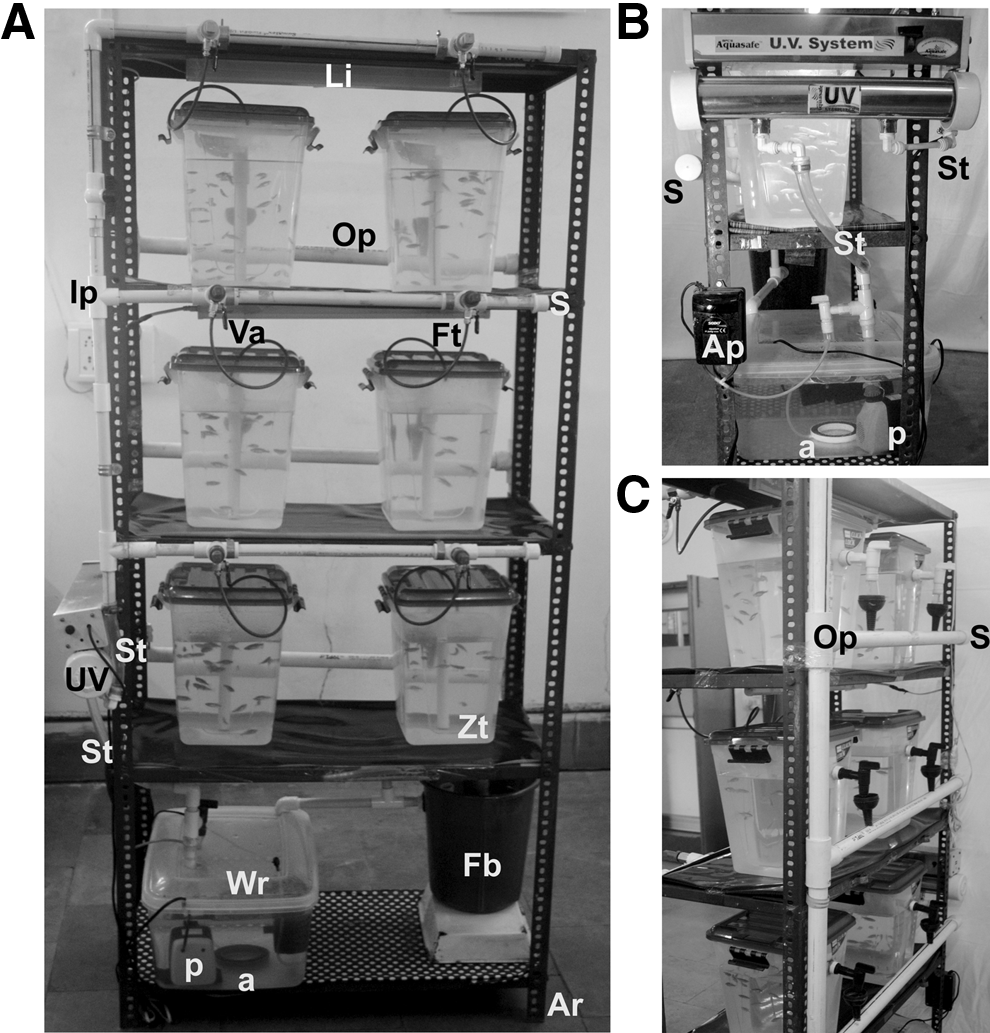
Real images of Open-RAC system.
Supermarket.
Electrical shop.
Pet store.
Hardware market.
Online sites.
Structural units of our zebrafish maintenance system
Zebrafish rack
The overall dimensions of our Open-RAC were 185 × 35 × 85 cm (H × D × W). The rack was made of high strength (20-gauge thickness) iron angle-frames coated with rust-free, hydrophobic paint. The three shelves of the rack held total six zebrafish tanks, each containing ∼8 L of water, that is, each shelf had two tanks placed in a side by side configuration as shown in Figures 1 and 3A.
Zebrafish tanks
We used trapezoid-shaped, transparent, food grade plastic tanks of 25 × 25 cm (L × W) (top) and 18 × 18 cm (L × W) (bottom) and height of 30 cm dimensions for holding zebrafish (Figs. 3 and 4). The arrangement of “auto-cleaning unit” or “self-cleaning unit” in the zebrafish tanks is shown in Figure 4. Its installation was done as described in our previous study. 14 All the zebrafish tanks were individually covered with removable transparent lids to avoid accidental contamination of the contents of the tanks while ensuring the proper illumination of tanks. Two holes were drilled on each lid. One was used for ventilation and the other for the insertion of water inlet tube into the tank (Fig. 4).
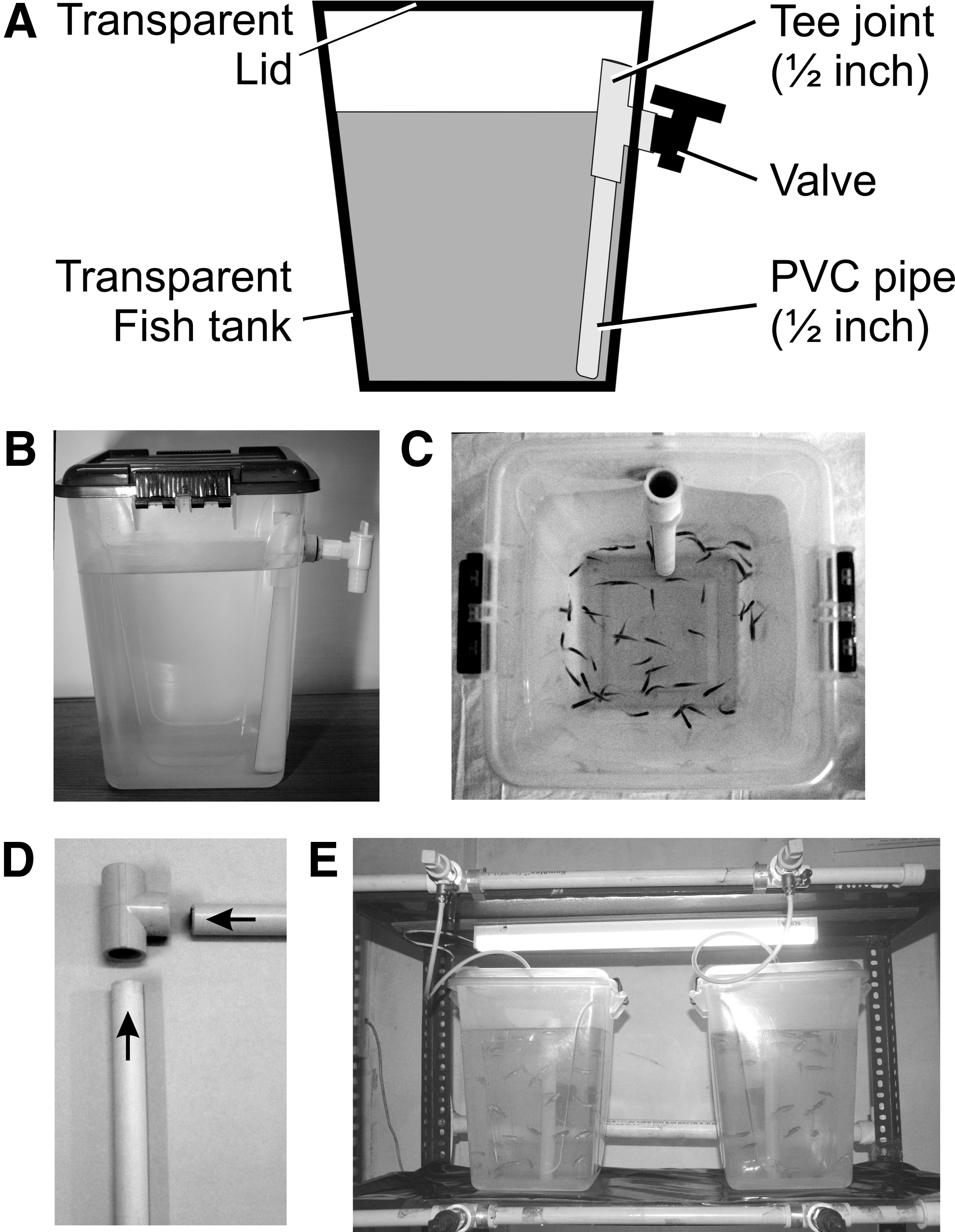
Zebrafish tanks and auto-cleaning unit.
Water reservoir tank
A single transparent, food grade plastic tank with lid, was used as a water reservoir. It has the dimensions of 20 × 45 × 35 cm (H × D × W) and could hold ∼20 L of water. Submerged pumps with aeration, heating, and charcoal units were also installed in the water reservoir tank as shown in Figure 5A. Four ½ inch holes were drilled on the lid of the reservoir tank. These holes were used for water inlet, backflow regulator, and outlet pipes as shown in Figure 5B.

Water reservoir tank and its components.
Lights with timer
To mimic day/night conditions (e.g., light on/off timing (h) as 14/10 or 10/14), three LED tube-lights of 8 W each (one tube-light per shelve) emitting 6000 K white light were used. These were connected to auto-timer and were installed over the zebrafish tanks as shown in Figures 1, 3A and 4E. Each LED tube-light was capable of producing ∼1000 Lux as judged by light intensity meter.
Pipes, connectors, and valves
Short flexible ½ inch silicone tubing was used to connect the submerged water pump to the UV assembly and then to the vertical ½ inch, schedule 80 PVC pipe used as the water inlet pipeline as shown in Figures 1, 3A, and 3B. Schedule 80, 1 inch PVC pipes were used as water outlet pipelines for wastewater collection as shown in Figures 2, 3A, and 3C. To regulate the direction and speed of water flow, PVC bends, Tee-joints, connectors, and valves of corresponding size (½ or 1 inch) were used at appropriate locations (Figs. 1, 2, and 3A). To restrict the flow of water in the water inlet and outlet pipelines PVC end-caps of corresponding sizes were used (Figs. 1, 3A and 3C). Water was supplied to the zebrafish tanks via flexible silicone tubing of 0.5 cm diameter, which connected zebrafish tanks to the ½ inch PVC pipe through a flow regulating valve (Figs. 1 and 3A).
Water pump
A submerged pump (Make: REVA, 40 W) capable of lifting water to 9 ft was installed in the water reservoir tank, which was used to circulate the water in the system (Figs. 1, 3A, and 5A). In our Open-RAC system, backflow regulating valve was also installed in the ascending tube of water supply pipe connected to the pump. It was used to reduce the backflow-induced pressure stress on the pump (Figs. 3B and 5B).
Aeration assembly
To maintain the dissolved oxygen concentration, the water was constantly aerated using an air-stone placed in the water reservoir tank (Fig. 5A). It was connected to an aerator pump (Make: SOBO, SB648A of 5 W) via a small silicone tubing (Figs. 3B and 5A).
Temperature controllers
The temperature of water was maintained at 28°C ± 2°C by installing a submerged aquarium heater (Make: Aquagrace, 200 W) in the water reservoir tank (Fig. 5A). This arrangement was especially required during the winter season. In the summer season the room was cooled using AC/water coolers.
Functional units of our zebrafish maintenance system
The functional units of our system were responsible for filtration, cleaning, and disinfection of the system water. The filtration process allowed us to recirculate the system water. Following are the important components of the functional units.
Mechanical filtration unit
Due to the siphon mechanism, “auto-cleaning unit” could automatically clean the sediments from the zebrafish tanks. All the particulate waste matter that was collected through the main outlet pipe could be filtered through mechanical filtration. This was done in our system by using micro-sieves of polyester pads/sponge pads installed in the funnel of the fluidized-bed reactor (Figs. 1, 2, 6A, and 7). The use of the funnel helped us to regularly change the clogged filter with ease without disturbing the fluidized-bed reactor.
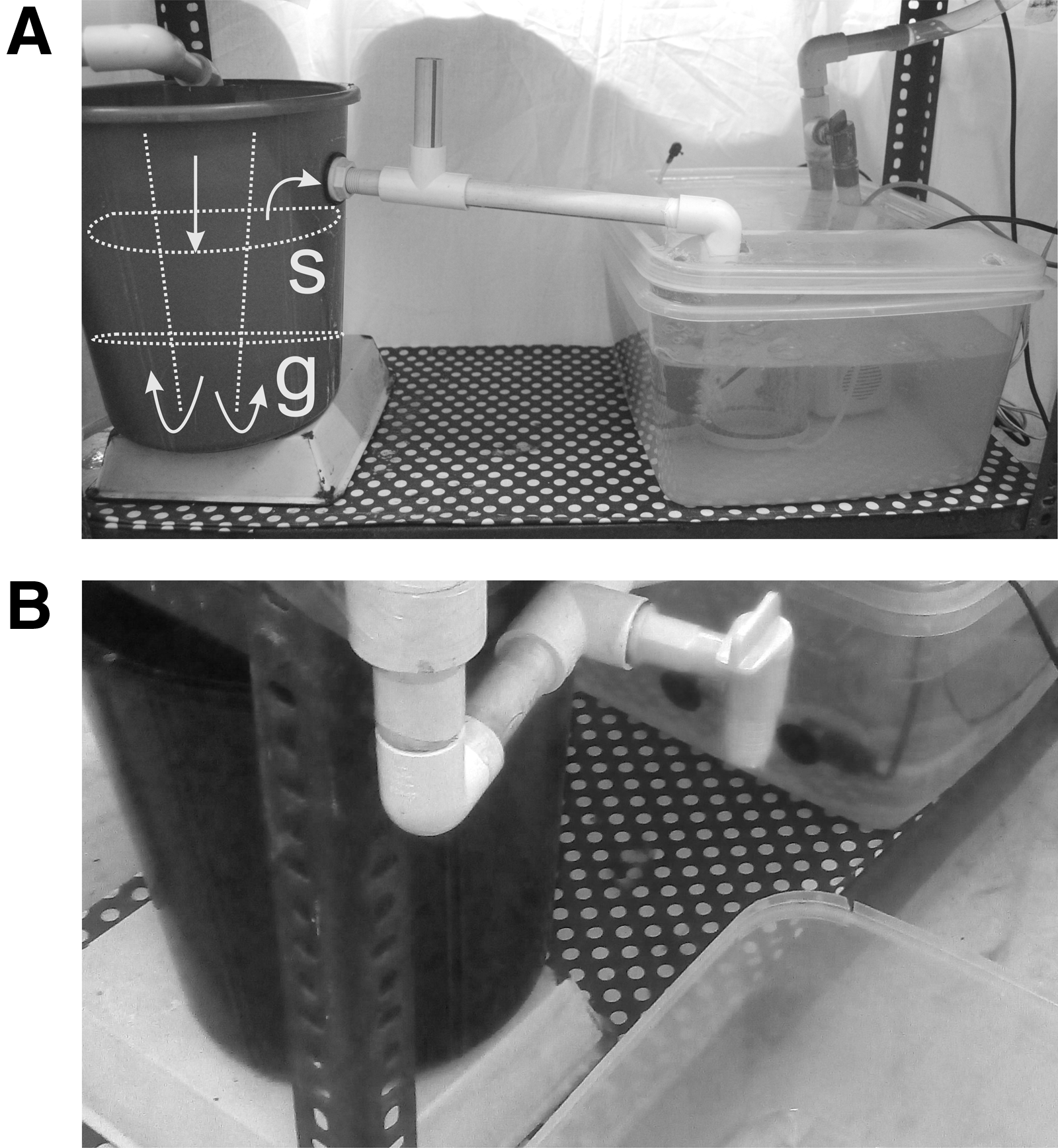
Fluidized bed reactor and excess water removal port.
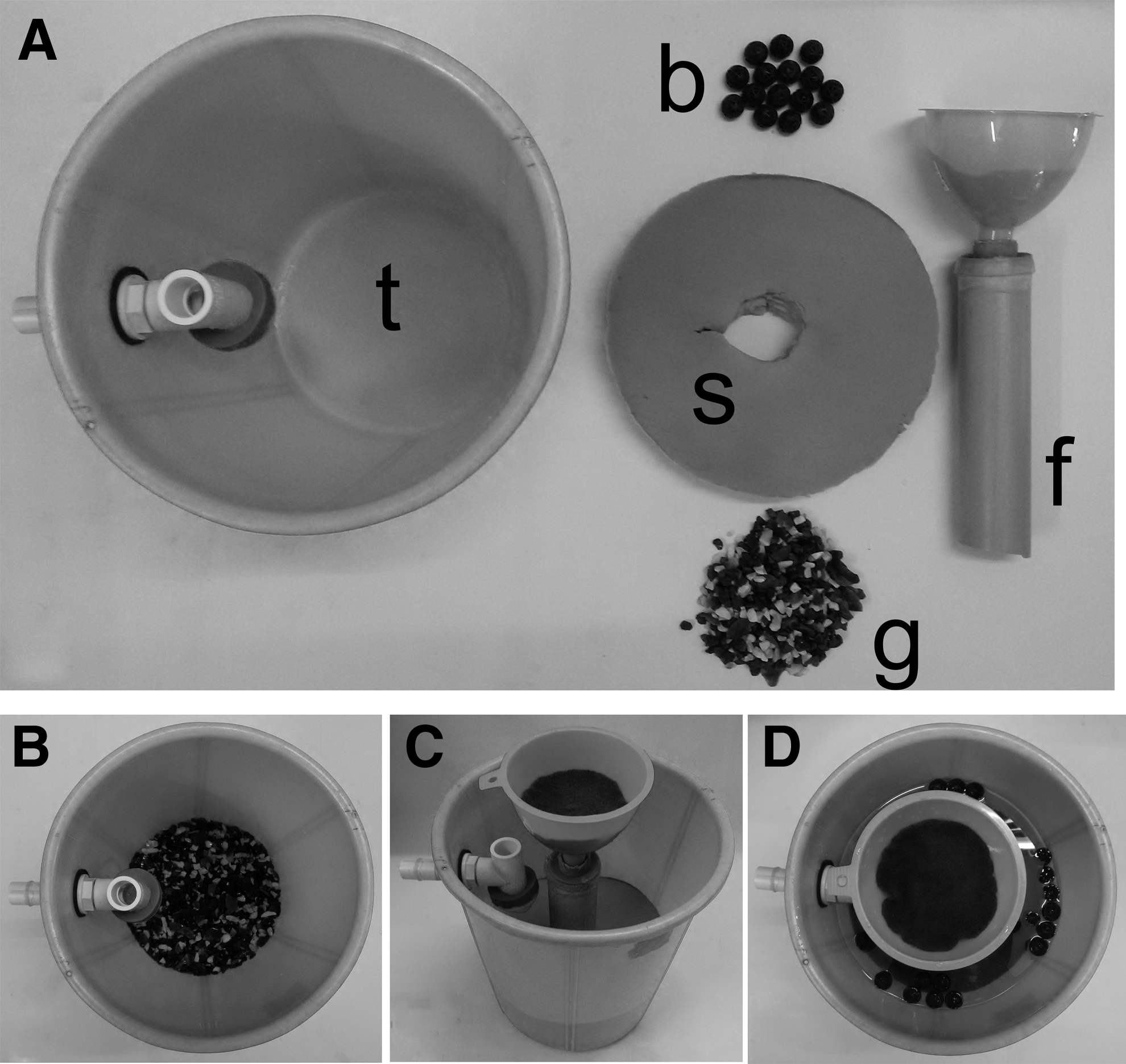
Custom-made fluidized bed reactor.
Biological filtration unit
Biological filtration in our system was achieved using a custom-made fluidized-bed reactor as shown in Figures 1 and 7. It was made of food grade plastic bucket (26 × 28 cm, diameter × height) containing gravels (0.8–1.0 kg), sponge sheet and bio-balls (∼30–50). A large funnel passing through the sponge sheet was used to direct the flow of mechanically filtered water directly to the gravels (Figs. 1, 6A and 7C). The sponge sheet divided the bucket into upper and lower compartments. The gravels in the lower compartment allowed the growth of denitrifying bacteria under “wet-wet” configuration, and the bio-balls in the upper compartment allowed the growth of nitrifying bacteria under “dry-wet” configuration. The synergistic activity of both these bacteria led to lowering of nitrogen content (especially the nitrite) in the recirculating water. To further reduce the buildup of nitrate and other toxic chemicals in the water, 5 L of the recirculating water was daily exchanged with the fresh three-stage purified water. Fresh water was added in the system using the water inlet port present on the lid of water reservoir tank (Figs. 2 and 5B). The excess water was removed via the water outlet port located at the water outlet pipeline close to the fluidized-bed reactor (Figs. 1 and 6B).
Chemical filtration unit
For the chemical filtration of the water, activated charcoal in a nylon bag was placed in the water reservoir tank (Fig. 5A). It was used to remove any dissolved odors and especially the dissolved chlorine (if any) from the water.
UV lamp unit
UV irradiation is required for the disinfection of the water. In our setup, single 12 W UV assembly was installed between water pump and water inlet pipeline as shown in Figures 1, 3A, and 3B. It is generally advisable to replace UV lamp every 9 to 10 months. 15
Results and Discussion
Preference for recirculating system over others
Zebrafish can be maintained in either static,16,17 flow-through, 18 or recirculating systems. 19 Nearly all the commercially available systems are recirculating ones as it offers minimal waste of water through water recycling, and maintenance of high water quality through the use of filtration process. Our Open-RAC system also uses recirculating mechanism, which helped us to save significant amount of water (water exchange of 5–10 L per day in Open-RAC system as compared to ∼2000 L per day in continuous flow-through system 18 ).
Zebrafish holding capacity of our Open-RAC system
A typical commercially available stand-alone rack contains at least three shelves of overall dimensions of ∼130 × 40 × 130 cm (H × D × W). Such compact dimensions are required to minimize the lab space needed for zebrafish maintenance. Taking this as the industry standard for compact recirculating systems, we also designed our Open-RAC with three shelves of overall dimensions of 130 × 30 × 80 cm (H × D × W) capable of holding six zebrafish tanks of water holding capacity of ∼8 L each. Based on the reports that up to 12 fish/L could be stocked without affecting their reproductive performance, 20 our Open-RAC system is suitable to hold upto 500 zebrafish.
Physical and chemical parameters
The health of zebrafish in the recirculating systems is dependent on the water quality. In our setup, we used the three-stage (mechanical, chemical, and UV disinfection) purified water produced through RO water assembly. This enabled us to simultaneously purify the water and reduce the total dissolved solutes in the tap water from 500–800 mg/L to less than 30 mg/L. If desired to have appropriate hardness, afterward sea salts can be added to the RO water. The water was monitored daily to ensure the temperature of 28°C and pH value of 7.4. The use of 24 × 7 aeration was required to have proper dissolved oxygen concentration in the system water. These chemical parameters had positive impact not only on the overall health of zebrafish but also on the components used in our Open-RAC system, for example, we have been able to continuously use water pump (having magnetic drive motor) for last 2 years without any breakdown. In our setup, water flow rate was adjusted via individual valves located at the water inlet pipelines close to the zebrafish tanks (Fig. 3A).
Efficiency of sediment cleaning
Our previous work has demonstrated that the custom-made “self-cleaning or auto-cleaning unit” was efficient in removing sediments from the zebrafish tanks of cylindrical and rectangular geometry. 14 We installed these siphon-based auto-cleaning units in our trapezoid-shaped zebrafish tanks. Typically, the flow-rate of 70–80 L/h was enough to result in efficient sediment cleaning from each zebrafish tank.
Cleaning/washing schedule of the setup
The siphon-based auto-cleaning unit was only able to automatically clean sediments in the zebrafish tanks. However, due to long periods of light exposure and continuous dwelling of live zebrafish in the tanks, build-up of algae/ biofilms on the walls of tanks and the submerged PVC pipes of the auto-cleaning units is inevitable. To clean them, we used manual scrubbing and thorough washing of zebrafish tanks and flushing of water lines of the setup. Typically, our Open-RAC system could run for 2–4 weeks without any visible signs of algal/biofilms growth.
Breeding performance and quality of fertilized eggs
In our setup, we have kept TU wild-type and heterozygous population of transgenic zebrafish expressing red fluorescent protein in their muscles. Their breeding performance and quality of fertilized eggs was tested in mating experiments at 7.4 pH and 28°C ± 2°C with a ratio of two females to one male. All fish used in our experiment were stocked in Open-RAC at a density of 3 fish/L. This experiment was performed in the months of March–April 2017 for 18 times (TU wild-type strain) and 13 times (Heterozygous transgenic strain). Figure 8 shows the average clutch size (average number of fertilized eggs produced during mating of that strain), % spawning rate (% times fertilized eggs were produced during total number of times mating was performed for that strain), and % viable embryos after 6 hpf (% of embryos showing absence of whitish agglutination after 6 hpf). Based on the results and their comparison with similar study performed by others, 20 it is clear that our Open-RAC is able to provide environment for overall growth and maintaining the reproductive health of zebrafish similar to those provided by the commercially available system.

Effect of Open-RAC environment on the reproductive health of zebrafish.
Comparison of Open-RAC with other open-design systems
Our Open-RAC system differs from other open-design systems in following manners.
Introduction of backflow valve
Unlike in other open-designs, the water inlet pipelines in our setup were not directly connected to the water reservoir. 12 Because of this, it was essential for us to introduce backflow regulator valve close to the water pump in the water reservoir. This arrangement not only reduced the backflow induced stress on the water pump (which increased the shelf life of the pump) but also allowed the constant agitation of water in the water reservoir tank (which helped in continuous water stirring and aeration).
Location of UV assembly
Unlike other open-designs where UV assembly was installed in the water outlet line, 11 we installed UV assembly at the water inlet line because the Zap-dose of UV is maximum when water is free from particulate matter. 8
Installation of auto-cleaning units
This is a unique feature of our setup, which is totally absent in any of the previous open-designs.11,12,18
Centralized aeration unit
Instead of installing individual air-stone in each zebrafish tank for aeration as is the case in other open-design setups, 18 we installed the aeration unit directly in the water reservoir tank. It led to cost reduction and simplification of the design of our setup.
Submerged water pump
We used submerged water pump in our setup as opposed to the external pump used by others. 12 Submerged pumps produce low noise as compared to the external pumps (personal observation).
Overview of cost of zebrafish maintenance system
Here, we compare the cost of building the open-design and commercial setups in Table 2. We have attempted to provide an indication of a system that should be inexpensive to set up, though the actual cost of a setup would depend on various factors like the scale of the setup, quality of materials used in the setup, and the materials and labor cost in a country. To further help potential users in building their own Open-RAC, we have listed the important components, their place of purchase, and a note on their requirement in Table 1.
For rough estimation, we considered 5 fish/L for calculations. However, the zebrafish can be stocked upto 12 fish/L without affecting their breeding performance (see text for reference).
Official quotation for the e-RACK.
Considering 70 as conversion factor for INR to USD.
Future Directions and Conclusion
In future, it would be interesting to see the compatibility and performance of commercially available zebrafish tanks with our Open-RAC setup. We believe that our cost-effective Open-RAC system would help in lowering the cost barrier for the researchers establishing their own zebrafish culture facility, thus promoting zebrafish research.
Footnotes
Acknowledgments
The authors would like to thank Mr. Yashwant Vishwakarma (University Science Instrument Centre, Dr. Harisingh Gour Central University) for his help in crafting the setup, Dr. Anamika Bhargava (IIT Hyderabad, India), and Pranesh Bhargava (Groningen University, the Netherlands) for critical reading of the article and comments. This work was supported by the Science and Engineering Research Board (SERB), DST, New Delhi, India grant number: SB/FT/LS-439/2012 to Y.B.
Authors' Contributions
Idea and conceptualization by Y.B.; experimental validation by S.N. and Y.B.; formal data analysis by Y.B.; writing–original draft by Y.B.; writing–review and editing by S.N. and Y.B.; data visualization, supervision, project administration, and funding acquisition by Y.B.
Disclosure Statement
No competing financial interests exist.