




Abstract
Abstract
As the zebrafish is rapidly becoming a species of choice in preclinical research, several efforts are being placed toward creating educational programs for K-12 students based on this promising model organism. However, as any other model organisms, the use of zebrafish in classroom settings requires additional experimental resources and poses ethical challenges related to animal use. To mitigate these factors, we have developed an application (app), simUfish, which implements a mathematical model of zebrafish behavior for generating multiple fish trajectories and animating their body undulations. simUfish is developed using a multiplatform game engine and is expected to promote the knowledge of zebrafish behavior to both K-12 students and the general public. Specifically, it demonstrates basic principles of fish individual and social behaviors, including environment interaction; fear response toward a predator; shoaling; and attraction toward a stimulus, which can be a food source or simply a finger placed on the touch screen. The effectiveness of the app as an accessible experimental tool for learning was tested in an outreach activity on middle school students from the New York City school system. The results from this activity show an immediate, tangible improvement of students' satisfaction and willingness to learn about key concepts on zebrafish behavior, accompanied by high level of interest in life sciences.
Introduction
Z
Just as zebrafish are gaining momentum in preclinical research, more efforts are being placed in developing hands-on learning activities revolving around this promising animal model for young students. 11 Introducing zebrafish to young students might help to inspire curiosity in life sciences and grow interest toward careers in science, technology, engineering, and mathematics (STEM). As such, zebrafish have been successfully utilized to create active learning environments, through laboratory experiments on developmental biology, genetics, neurobiology, and neuroscience.11,14–17 Zebrafish were used to introduce key biology concepts to middle school students through experiments focusing on investigation skills that are critical in science careers. 16 Classroom laboratory material on zebrafish development and environment was utilized to educate middle school students on anatomy and vertebrate development. 14 A course focusing on swimming, sexual reproduction, and breeding was proposed by Guerra-Varela et al. 17 to engage students in scientific activities and encourage them to think about careers in science.
While bringing fish to K-12 students is an excellent approach for promoting learning and stimulating engagement in science, practical and ethical considerations may limit its feasibility. For example, the need for carrying water tanks, filters, heaters, and other necessary equipment, possible physical contact with animals that may cause infections or injuries in fish, and animal distress are important factors that should be considered when designing outreach programs based on animal experiments.
To mitigate some of these factors in teaching zebrafish behavior, we have developed an educational application (app), simUfish, which simulates some basic zebrafish individual and social behaviors. Our app is built using a multiplatform game development engine that implements a realistic model of zebrafish locomotion 18 augmented with environment interaction to simulate fish individual and social behaviors. This model is part of an ongoing effort by our group to establish a computational framework to afford in silico experiments on zebrafish,18–24 which could ultimately contribute to the 3Rs (replacement, reduction, and refinement) in animal experiments first described by Russell et al. 25 In silico experiments could empower the zebrafish community with new means to perform pilot trials on a computer, perform statistical power analysis before experiments, and select salient observable quantities from analysis of computer simulations.
Our app offers the possibility of generating zebrafish locomotory patterns, including interaction with their swimming environment (such as tank walls or obstacles) thigmotaxis; thrashing against the tank walls; fear response induced by a predator; shoaling or schooling with conspecifics; and attraction toward conspecifics, food sources, or just a finger placed on the touch screen device. Some of these behaviors may be leveraged to illustrate the manifestation of some important emotions, such as fear or anxiety. 13 In addition, by design, our app can support learning of zebrafish behavior in a number of settings, within and outside the classroom, whereby it may be installed on computers, tablets, and smartphones, without the need of additional accessories. The simplicity of the menu makes the app intuitive to navigate through, thereby requiring the knowledge of a few basic instructions.
The current work presents two key, methodological novelties compared with our most recent publication. 19 Specifically, it provides visual simulations and interactive elements that have been made possible through an entirely new app. This is in contrast with the graphical outputs obtained through MATLAB code by Mwaffo et al., 19 which were only intended to validate computer simulations on the motion of the fish centroid (without body undulation) against experimental observations. Although focusing on two-dimensional (2D) swimming, as opposed to three-dimensional (3D) swimming, 19 this work radically expands on the modeling framework proposed by Mwaffo et al. 19 to include multiple zebrafish, predators, food sources, and obstacles. Modeling each of these features is a specific technical milestone, which is unique to this article, thereby significantly departing from the model of a single zebrafish in an empty tank proposed by Mwaffo et al. 19
Apps are becoming ubiquitous in everyday life as valuable tools that can organize information, entertain users, and provide educational contents on various topics.26–29 Recent technological advances have made these tools readily accessible to the public and capable of supporting complex operations, through computers, tablets, and smartphones. 30 The high level of sophistication and interactive capabilities of apps running on these devices greatly facilitate the process of engaging people in virtually any topic through games or entertaining activities. 31 Apps have also become popular among students due to their frequent integration in educational programs, along with the large number of activities and entertainment choices they offer.29,32
Apps have been used to complement traditional methods of teaching by providing more contents, details, and examples, along with a virtual environment to illustrate classroom topics.26,33,34 They were also utilized as a tool to promote distance learning 35 and support informal science programs based on interactive robotics.36–38 Although computer addiction has been identified as a potential cause of distress, 39 the appropriate use of apps has been found to improve students' organizational and learning skills by providing an active medium to learn and practice.40,41 Students' grades have also been found to benefit from the conscious use of educational apps that could transform the school environment into a more enjoyable place. 32 Apps have been found to be effective in increasing motivation in a number of educational programs designed to teach specific concepts about computer hardware, 42 chemistry modules, 43 or artistic drawing. 44 Young children have also been found to benefit from the use of educational apps by improving their critical thinking, planning skills, visual-motor coordination, and visual memory. 26
Based on prior educational programs using interactive apps, we expected simUfish to provide an experimental tool to aid in learning some key zebrafish behavioral phenotypes 13 in an engaging manner. By combining knowledge from interdisciplinary domains of life science, physical science, engineering, and mathematics in a single tool, simUfish is in line with the learning objectives of the Next Generation Science Standards 45 for middle schoolers that it is expected to impact positively through the standards, MS-PS2 Motion and Stability, MS-LS2 Ecosystems, and MS-ETS1 Engineering Design. The effectiveness of the app in promoting learning of zebrafish behavior was assessed through a usability study on middle school students from the New York City public school system. The students attended an in-class formal lecture on animal experimentation and were then presented with the app as a complement to the formal lecture. By using the app, they had the opportunity to visualize several examples of zebrafish behavior taught in the formal lecture. Through surveys administered prior and after the activity, we measured the impact of the app as a complementary experimental tool for learning about zebrafish behavior.
Materials and Methods
Software development
The app (Fig. 1) was built on Unity 5, Version 5.3.5f1 (Unity Technologies, San Francisco, CA), a freeware, multiplatform game engine, which allows for three- and 2D game development engine. Unity offers the possibility of rapid deployment in Android (Google, Inc., Mountain View, CA), iOS (Apple Computer, Inc., Cupertino, CA), and other popular operating systems. A combination of C# and JavaScript was utilized to code the app, with a bottom-up 2D visual approach to simulate zebrafish swimming in a tank from an overhead view. Animated images of the zebrafish, predator (red tiger oscar, Astronotus ocellatus), background, and menu were digitally drawn using Adobe Photoshop (Version 13.0, San Jose, CA) and uploaded as sprites, which are used in computer graphics to animate images from smaller units. Note that images of zebrafish and red tiger oscar were drawn by taking inspiration from overhead pictures of these fish.

Main screen of simUfish showing a zebrafish and a predator amid four rocks in the center of the swimming tank. Each simulated behavior is selected using the tactile and retractable menu on the right side of the screen and the user can move the rocks and the predator on the screen as desired. The menu also provides the possibility to select one of three built-in tank surface backgrounds, including a light blue-colored screen (shown here in grayscale), a yellow sand-colored screen, or a gravel-colored screen.
When launching the app, a single fish appears on the screen and the user may observe it swimming and interacting with the tank walls. By selecting on the retractile menu on the right of the screen, the user may add a predator, obstacles (up to 9 rocks), stimuli (food or finger), conspecifics (up to 10 zebrafish in total), and change the background screen (3 in total). Predator and rocks may be dragged by using the finger in arbitrary locations in the tank and may be deleted at any time using the retractile menu. The predator will induce a fear response, manifested in avoidance and escape behavior, while rocks will simply cause obstacle avoidance, similar to the tank walls. The presence of conspecifics will elicit fish shoaling, whereby conspecifics will tend to form cohesive groups and potentially align their body orientation. Similarly, a food source or a finger placed on the screen will cause attraction. Specifically, by selecting “Attract” on the retractile menu, the user may opt to either release food in the tank, toward which fish will quickly swim, or attract zebrafish toward the finger. By touching the button to set the screen background on the menu, the user can select a gravy-colored, a yellow sand-colored, or a light blue-colored screen.
Mathematical simulations of zebrafish individual and collective behavior
The jump persistent turning walker model (JPTW) proposed by Mwaffo et al. 18 was utilized as the basis to simulate zebrafish swimming (Supplementary Video S1; Supplementary Data are available online at www.liebertpub.com/zeb). The model was augmented to incorporate speed modulation and environment interaction with tank walls and obstacles (Fig. 2) by adapting a response function similar to previous work on data-driven modeling of fish behavior.19,46 The model was parameterized with respect to zebrafish body length (BL) of ∼3 cm, 47 converted to 168 pixels for graphical display.

Modeling fish interaction with tank walls and obstacles:
The position and heading angle of fish i at time step k, denoted by
where
In Equation (1), the increments in fish speed
where
where
The response function
where the first summand
Fish interactions with stimuli (Fig. 3) were implemented by extending the wall avoidance function in Equation (3) to assimilate obstacles and the presence of a predator as virtual walls to be avoided and by adding some additional features to simulate fear response elicited by a predator. Specifically, obstacle avoidance (Fig. 3a) was modeled by implementing the wall avoidance function in Equation (3) on the circumference of a circle enclosing the obstacle (Supplementary Video S2). Similar to obstacle avoidance, response to predator (Fig. 3 b) was modeled as wall avoidance with respect to a virtual domain surrounding the predator. To offer a more realistic animation of the fear response induced by a predator, additional effects were included to simulate an escape behavior, including fast turns, sudden acceleration, and erratic movements (Supplementary Video S3).
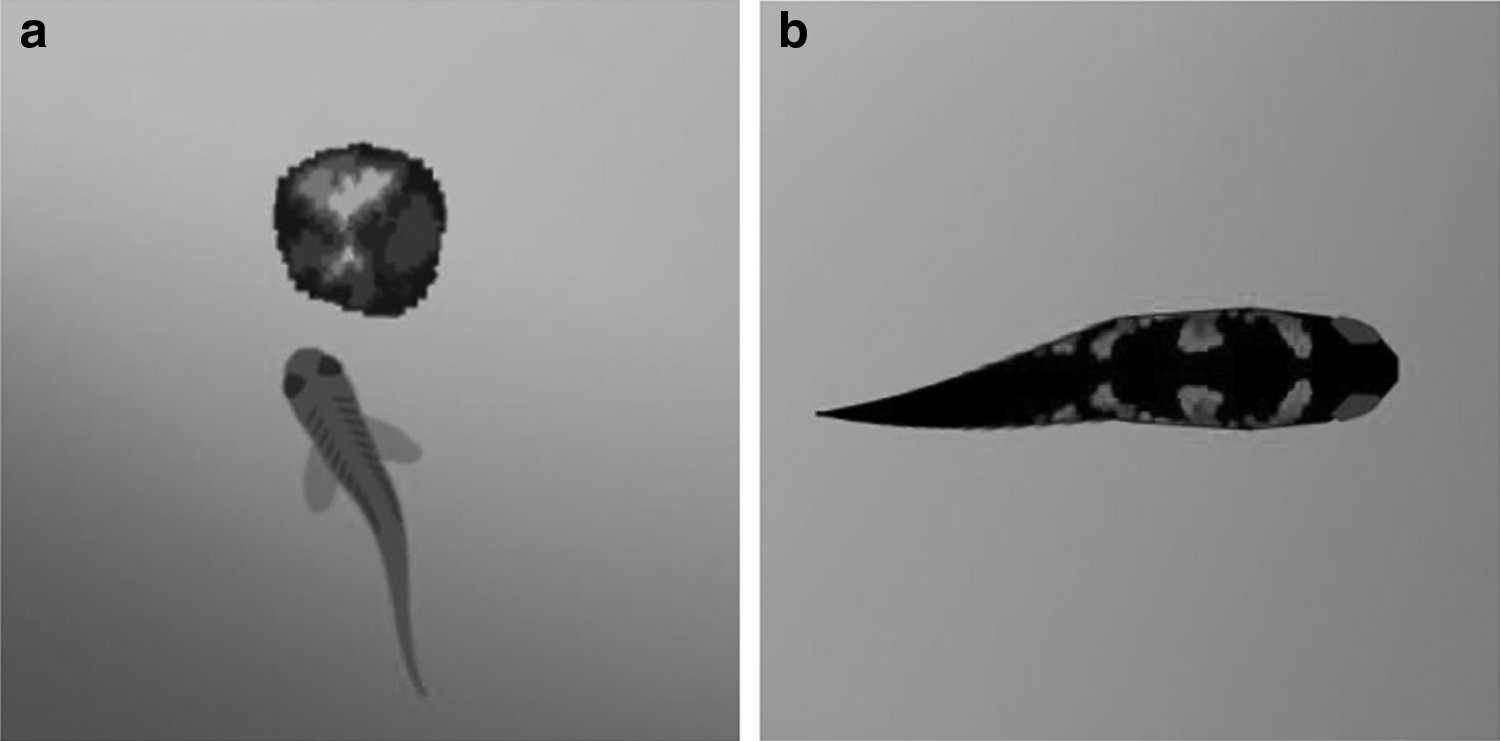
Zebrafish interacting with
To simulate social interactions (Fig. 4a and Supplementary Video S4), we augmented Equation (4) with two additional summands modeling attraction and alignment between pairs of fish as follows:
where

Illustration of fish attraction to
Finally, the numerical simulations used to generate the sought trajectories were performed by setting the fish model parameters to their averaged calibrated values (Table 1), as computed in the literature.18,19,46 The weights of the alignment and positional interactions were enhanced to favor alignment and grouping. Each fish trajectory was initialized in the center of the tank with a common speed and turn rate (
The model parameters are set to the average zebrafish model parameters values by Mwaffo et al. 18 ; speed parameters and wall avoidance parameters are from Mwaffo et al. 19 ; and alignment and interaction parameters are from Gautrais et al. 46
BL, body length.
Animating zebrafish body undulation
Animations of zebrafish and predator body motions were created through an embedded mesh grid controlled by a mathematical expression depending on fish speed and turning maneuvers. Specifically, fish body undulation (Supplementary Video S1) was inspired by a carangiform model of swimming.48,49 In this model, at a given time step k (initialized from 0 for convenience), the lateral deflection of the tail
where
With respect to fish i, tail beat frequency was estimated from its speed by adapting the relationship proposed by Hunter and Zweifel for Triakis henlei
50
:
where 1.39 has the units of BL1/3 s−1 and L is selected as half the length of the fish, which undulates during swimming. Equation (7) was solved at every time step to compute the tail beat frequency from the speed, which is set to its nearest ceiling integer value in BL s−1 to obtain a discrete set of tail beat frequencies during swimming. For example, for a speed of 1.7 BL s−1, the tail beat frequency would be [2 + 1.39(1/2)2/3]/[0.98(1/2)] = 5.87 Hz.
To implement the carangiform motion in Equation (6), zebrafish body was discretized using a 2 × 50 triangular mesh grid for a total of 100 deformable mesh points (Fig. 5). The lateral deflection was computed for the mesh points from the centroid to the fin (Fig. 5a), whereby we hypothesized that the head of the fish was rigid. The body undulation was created by moving the mesh as a function of the configuration of the anteroposterior axis of the fish (Fig. 5a). A similar approach was used to animate the predator, although its speed was set to zero and its length set at 6 cm.

Usability study
We conducted a usability study to test the effectiveness of the zebrafish app as a complementary learning tool on middle school students from the New York City public school system. Students' participation was subject to the signature of a parental consent form (Supplementary Data S1). The learning goal of the usability study was to teach students about zebrafish behavior through a formal lecture and computer simulations as a complement (Supplementary Video S6 for a video of the complete set of simulations).
In each survey session, a group of about 20 students was given a 5-min lecture on the use of zebrafish in behavioral research, typical behaviors exhibited by zebrafish, common measures used to score zebrafish behavior, and use of mathematical modeling to simulate animal behavior. Before the lecture, all participants were administered a presurvey to record their demographic data and measure prior knowledge of the subjects. After the lecture, the participants were divided in two groups: control (CTRL) and experimental (EXP) with approximately equal size. Students of the experimental group were handed tablet computers with the app, simUfish, preinstalled to enhance their understanding of zebrafish behavior with in silico experiments. A postsurvey was administered to the control group for apprehending the knowledge gained from the formal lecture. The experimental group was asked to fill out the postsurvey after their exposure to the app to receive feedback from their experience with both the lecture and simUfish.
In the preactivity survey, seven questions were asked. Questions 1–4 addressed demographic information, such as age, gender, existence of a family member working in the STEM field, and career perspectives, and questions 5–7 captured participants' prior exposure to zebrafish (Supplementary Data S2). In the postactivity survey, nine questions were asked, including questions to measure satisfaction (question 1) and willingness to learn more about zebrafish behavior (question 8) and six questions (questions 2–7) to measure knowledge learnt from the activity. The last question of the postactivity survey was designed to capture student's preference toward a specific method of learning about zebrafish behavior, including a class lesson, a visual app to display zebrafish behavior, and observations of fish swimming in an aquarium (Supplementary Data S3).
Further evaluation of students' learning was garnered through a concept map administered in the pre- and postsurveys (Supplementary Data S4). Concept maps are often utilized to graphically represent the knowledge gained from an activity. 51 Concepts are typically enclosed in circles or boxes, and arrows are then used to establish relationships with the main topic. A concept map may contain simple branches linking new concepts to the main topic or more complex branching structures with several sub-branches underlying a clear understanding of and differentiation in knowledge. 52 In our study, the concept map contained a circle with the word zebrafish at the center of the map representing the main topic. The concept maps were collected after the presurvey and redistributed to students during the postsurvey to assess new knowledge gained after the lecture and interaction with the app. To ease the process of creating the concept map, students were provided a template of a concept map about a different topic. To differentiate between concept maps in pre- and postsurveys, students were provided pens with different colored ink. While a unique standard for the evaluation of concept maps is lacking, most of the studies score the number of branches and their complexity. 53 For simplicity, since students did not receive prior training on concept maps, we attributed a score of 1 to all the relevant links added to the map, without differentiating their complexity or organizational structure.
The lecture addressed learning objectives related to zebrafish behavior through visual simulations. Specifically, these objectives were designed around two New York State school curriculum standards: (Standard 4) “Students will understand and apply scientific concepts, principles, and theories pertaining to the physical setting and living environment and recognize the historical development of ideas in science,” and (Standard 6) “Students will understand the relationships and common themes that connect mathematics, science, and technology and apply the themes to these and other areas of learning.”
The lecture started with an introduction on the reasons why zebrafish are becoming popular in scientific research. Students were presented images of the animal accompanied by a description of the reasons of it typical use in experiments. The second slide presented some zebrafish behaviors that are observed also in human beings. The third slide explained a few key zebrafish behaviors, their manifestation, and their potential cause. The fourth slide presented a short 2-min video on zebrafish swimming, showing individual motion, wall interaction, predatory response, and social behavior (Supplementary Data S5). The final slide introduced mathematical modeling as a feasible means to simulate animal behavior and included a video simulation of zebrafish.
After the lecture, students of the experimental group interacted with simUfish, upon receiving a few basic instructions on how to use it. Specifically, students were instructed on how to use different modules of the main menu (predator, obstacles, food sources, and shoaling), how to attract fish by placing a finger on the screen, and how to increase the number of conspecifics in the tank. Students from the control group were allowed to use the app only after completing the postsurvey such that their responses were not affected by the exposure to the app.
The survey answers were analyzed using MATLAB (MathWorks, Natick, MA). We performed a simple descriptive analysis of the response by computing their frequency of occurrence and comparing control and experimental groups. To analyze each concept map, a score was assigned based on the number of relevant branches added to the map. We performed a two-way analysis of variance (ANOVA) test to compare students' score in the concept map, with the timing of the concept map, before or after the activity, as between-subject factors and the experimental condition as within-subject factors. A chi-square test was conducted to test the independence between the aggregated response of students' responses in questions 1 and 8, indicating their satisfaction and willingness to learn more about zebrafish behavior and the experimental condition. To perform the chi-square test, we removed “not sure” answers from the contingency table. Another chi-square test was conducted to dissect the relationship between the students' preferred learning tools and the group.
Results
Demographics
A total of 61 students participated in the study, including 45.9% females, and 54.1% males (Fig. 6). Student ages ranged from 11 to 13 with a mode and median age of 11. To study the effectiveness of the app as an experimental tool to complement in class learning, students were partitioned in an experimental group of 31 individuals and a control group of 30.
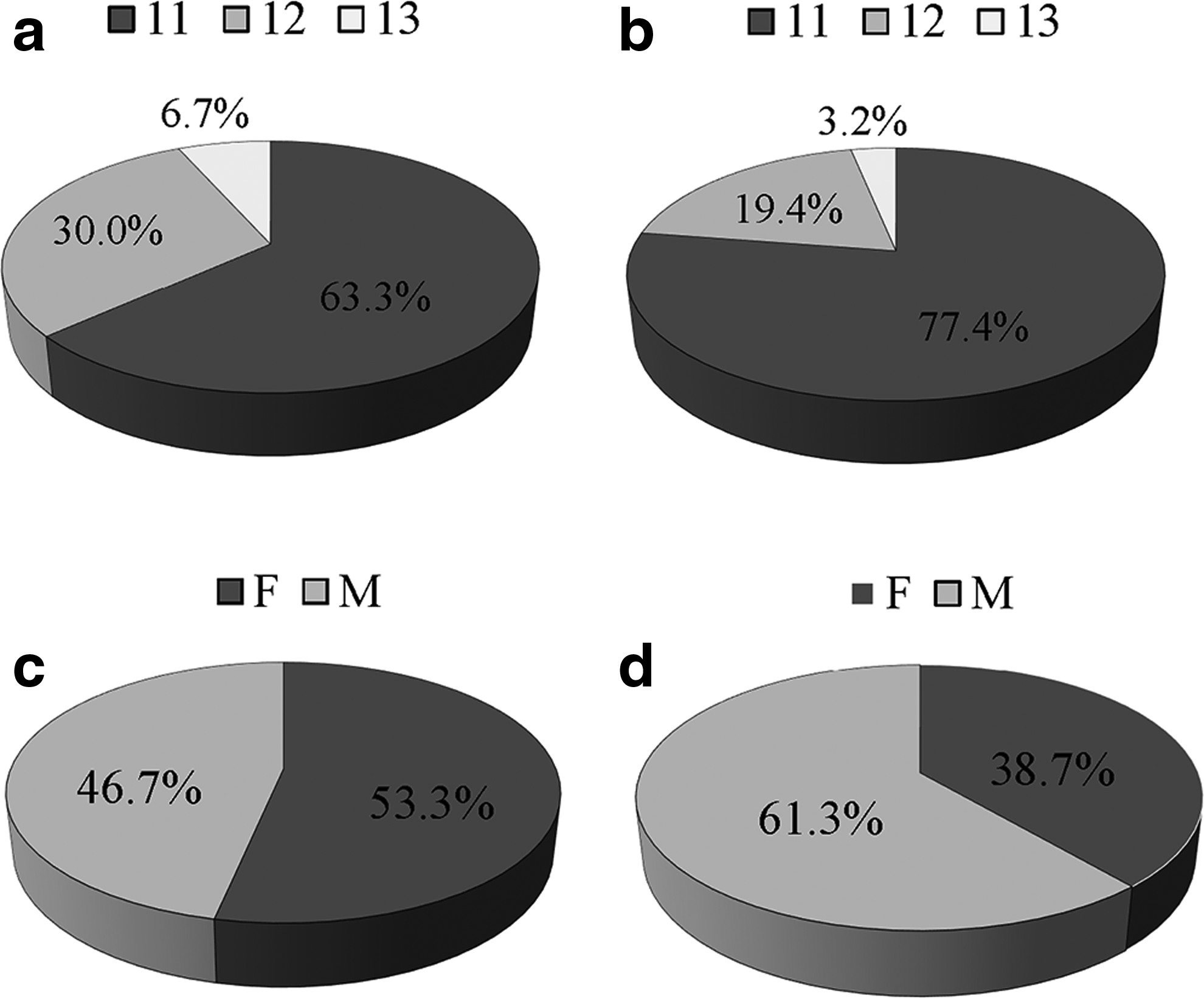
Student demographics [
Student engagement and knowledge of zebrafish before the activity
In the presurvey (Fig. 7), a small fraction of participants (16.7% in the control and 22.6% in experimental group) attested having a family member who is either a scientist or an engineer (question 3), while a large proportion (70.0% in the control and 67.7% in the experimental group) of students reported seeing themselves or their friends becoming scientists or engineers (question 4). Regarding their prior knowledge of zebrafish (question 5), only 40.0% of students in the control group and 29.0% in the experimental group affirmed to have some knowledge about this fish species. However, a large proportion of students (90.0% in the control group and 74.2% in the experimental group) attested to have spent time watching how fish swim before the activity (question 6).
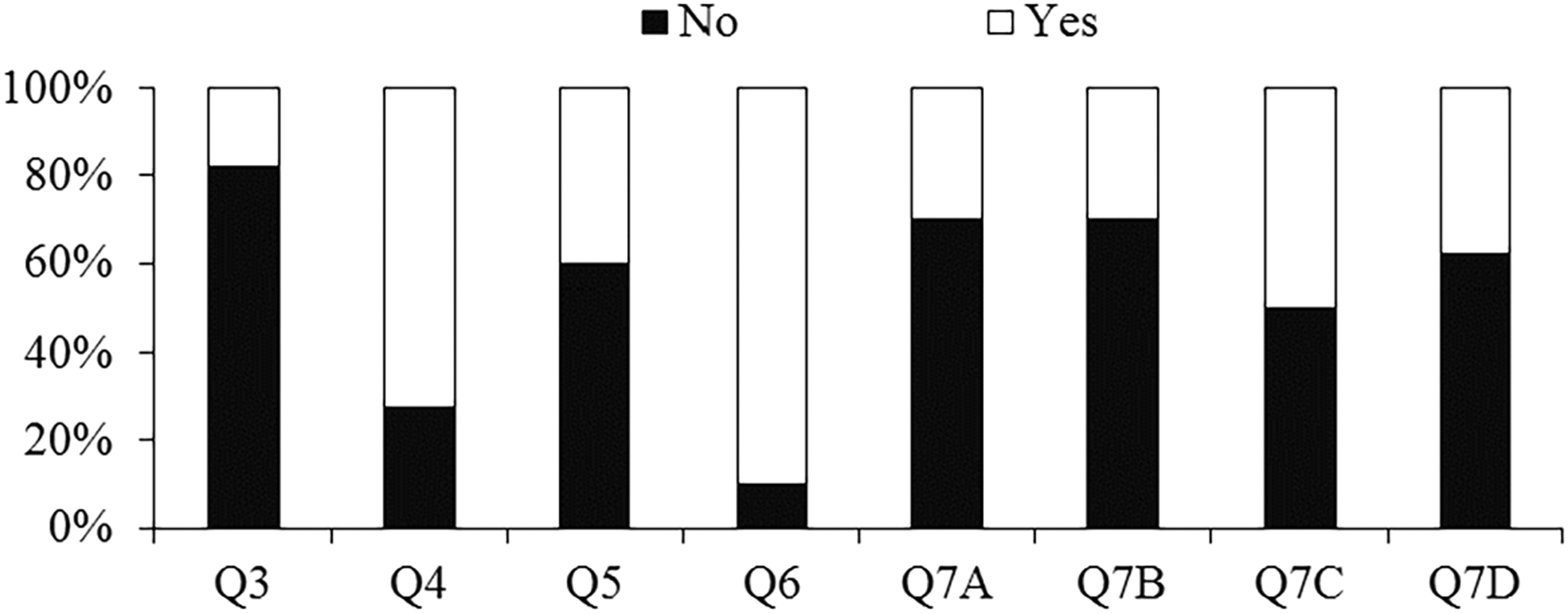
Summary of student answers to the presurvey questions 3–7.
Among the participants who attested to have ever spent some time watching fish swimming, we gathered the following data. Only 30.0% in the control and 22.6% in the experimental group declared to have seen fish in a home aquarium; 70.0% in the control and 74.2% in the experimental group affirmed to have seen them in a public aquarium; 50.0% in the control and 51.6% in the experimental group indicated to have seen them on TV or movies; and 36.7% in the control and 51.6% in the experimental group affirmed to have seen them in nature (question 7).
Student engagement and knowledge of zebrafish behavior after the activity
In the postsurvey (Fig. 8), 63.3% of students in the control and 74.2% in the experimental group indicated to have enjoyed learning about zebrafish behavior (question 1), while 46.7% of the students in the control and 64.5% in the experimental group declared to be willing to learn more about zebrafish behavior (question 8). A chi-square test rejected the null hypothesis that students' overall satisfaction and willingness to learn about zebrafish behavior are independent of the group (

Student [
In the questions designed to test student knowledge after the activity (Fig. 9), 80.0% of students in the control and 96.8% in the experimental group provided a correct answer about the reasons why zebrafish are popular laboratory animals (question 2). When asked about the type of behavior zebrafish display in the presence of a predator (question 3), 90.0% of students in the control and 96.8% in the experimental group provided a correct answer. The percentage of correct answers in regard to the behavior that zebrafish display when swimming against a glass wall (question 4) was 93.3% in the control and 93.5% in the experimental group. When asked about what attracts zebrafish (question 5), 73.3% of students in the control and 71.0% in the experimental condition provided a correct answer. The proportion of students responding correctly about the type of behavior, which may be observed when two or more fish swim in the same tank (question 6), was 83.3% in the control and 83.9% in the experimental group. The percentage of students to provide a correct answer about the reasons why scientists use mathematics to study animal behavior (question 7) was 93.3% in the control and 87.1% in the experimental group.
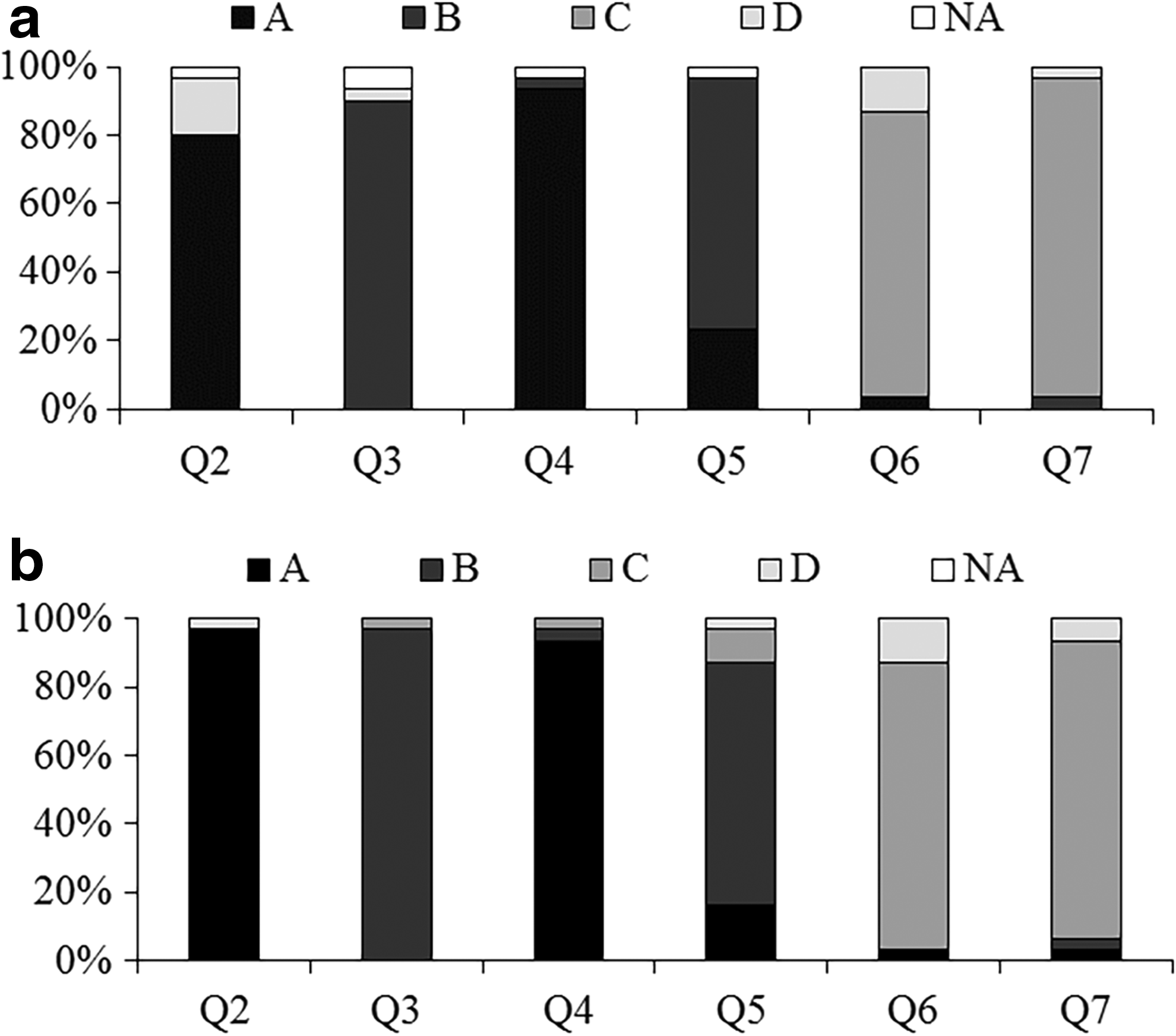
Student score to questions testing the knowledge gained from the activity in the postsurvey
On the question addressing students' favorite tools, which can help engage them the most in learning about animal behavior (question 8), most of them (53.3%) opted for the aquarium visit in the control group, while about the same proportion of students were favorable to either the app (45.2%) or the aquarium visit (41.9%) in the experimental group (Fig. 10). A chi-square test rejected the null hypothesis that students' favorite learning tools (lesson, app, or aquarium visit) are independent of the group (
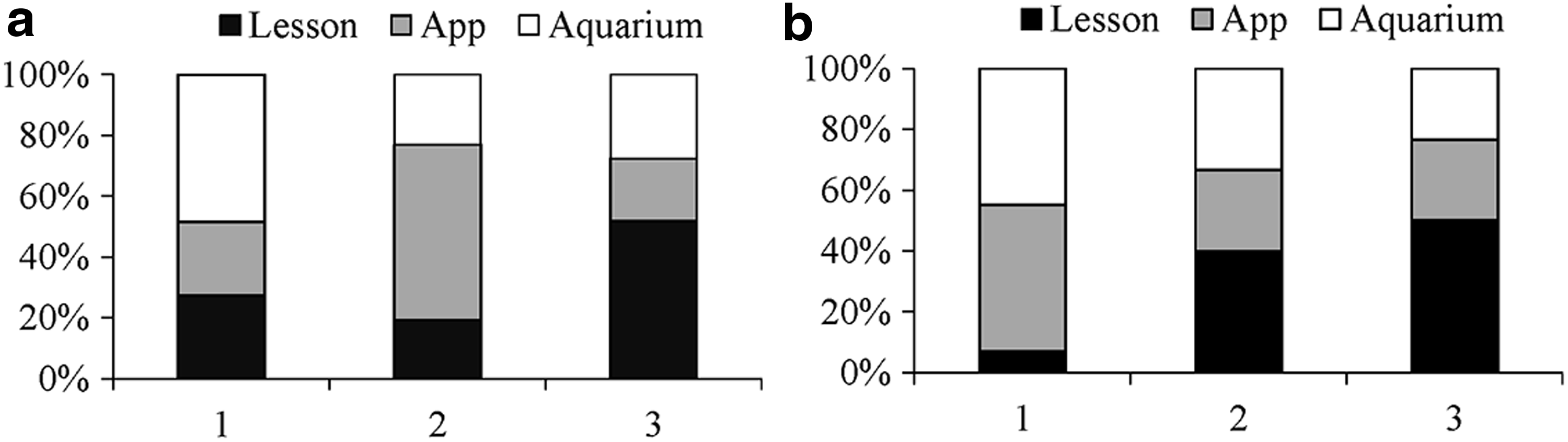
Student ranking about the tools they believe can help engage them the most in learning about animal behavior in
Concept maps
Analysis of the concept maps (Fig. 11) indicates that about 63.3% of the students in the control and 54.8% in the experimental group were not able to add a single correct branch before the activity. After the activity, this number dropped to 13.3% for the control and 12.9% for the experimental group, whereby most of the students were able to add at least one correct branch to the concept map. Two-way ANOVA indicates that the exposure to the activity, either the brief lecture or the brief lecture combined with the app, was effective in improving student scores in the concept map (F1,119 = 76.71, p < 0.01), but failed to validate the differential effect of students' exposure to the app (F1,119 = 1.09, p = 0.2974). No interaction effect was found between the timing of the concept map and exposure to the app (F1,119 = 0.24, p = 0.6209).
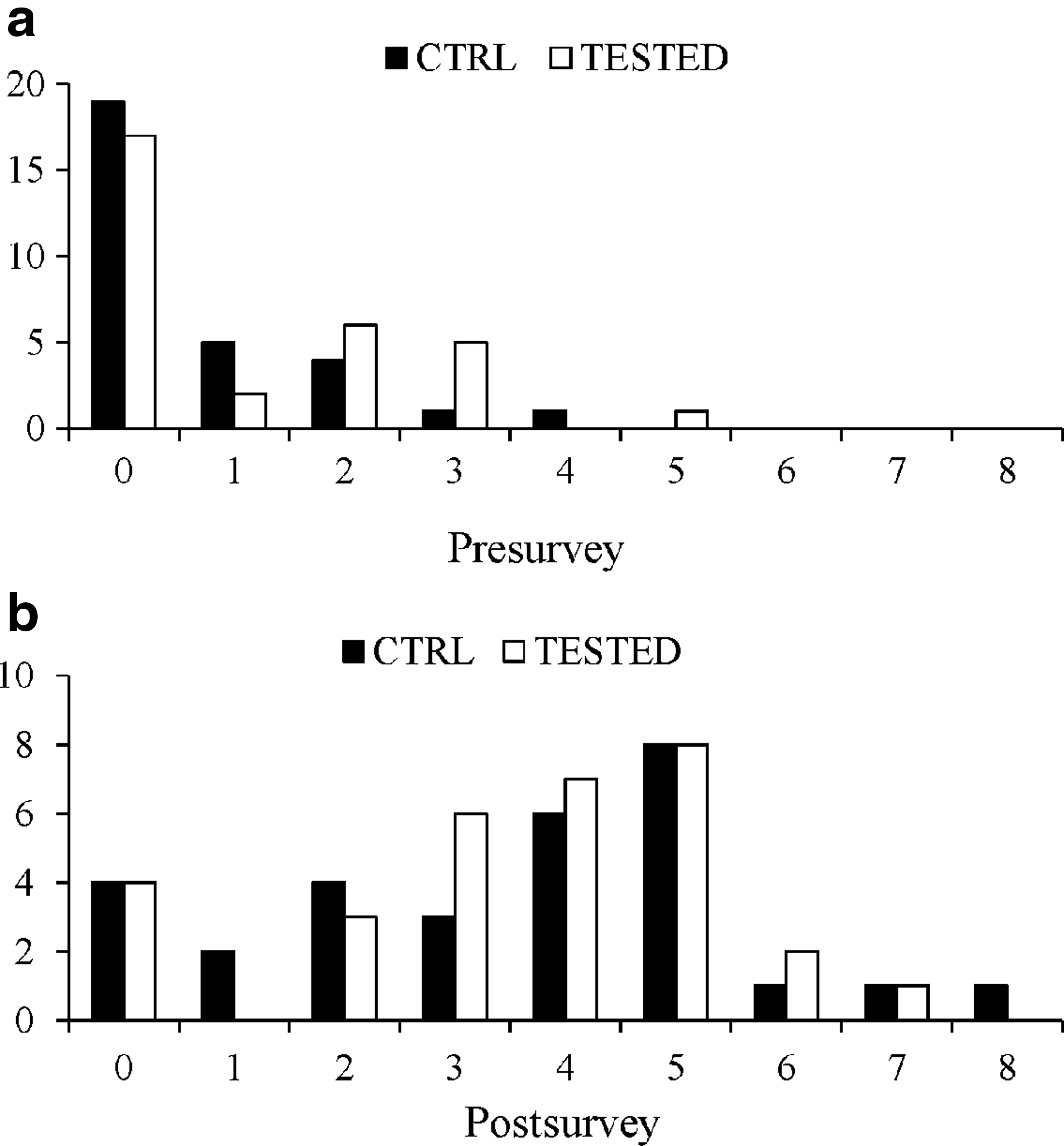
Distribution of students' score based on the number of relevant links added to the concept map in
Discussion
In this work, we have developed and tested a novel app, simUfish, to simulate zebrafish individual and social behaviors, thereby providing an experimental tool to support learning about this promising animal model. The app is powered by Unity, a multiplatform game engine that allows for 2D and 3D graphical development and is compatible with most popular computer and mobile operating systems. By using simUfish, we expect to promote knowledge of basic concepts on zebrafish behavior through interactive simulations of several zebrafish swimming patterns. We tested the effectiveness of the app in an outreach activity on a group of middle school students from the New York City public school system, comprising a control group that attended a brief lecture on zebrafish behavior and an experimental group that in addition experienced simUfish. Students' feedback was gathered using pre- and postsurveys along with concept maps that were administered before and after the activity.
Our results suggest that simUfish could be an effective experimental tool to complement traditional means of teaching biological concepts, thereby creating a virtual space where students can visualize and interact with zebrafish. Although the vast majority of students were excited to become scientists or engineers before the activity, less than 40% of them had prior knowledge of zebrafish and barely 20% had a family member working in the STEM field with whom they could share technical knowledge. In addition, a large proportion of students (75%) declared to have seen fish swimming in a home or public aquarium, on TV or movies, or in nature. After the outreach activity, more than 70% of students correctly answered the multiple-choice questions that were designed to test the knowledge gained from the activity. Although a statistical test could not differentiate student responses between the control and the experimental group, a slightly higher performance of the experimental group with respect to the control group was noted. A remarkable proportion of students, 63.3% in the control and 74.2% in the experimental group, enjoyed learning about zebrafish behavior; similarly, about 64.5% of students in the experimental group declared to be interested in learning more about zebrafish behavior, while only 46.7% of the control group were interested to do so. Overall, these findings validated the effect of the app in improving students' aggregated satisfaction and willingness to learn about zebrafish behavior. We also found dependence between students' preferred method for learning about zebrafish behavior and the exposure to the app, whereby students in the experimental group considered interacting with the app and visiting an aquarium as comparable learning activities.
The analysis of the concept maps revealed that before the activity, more than half of the students (59%) were not able to link zebrafish to any new meaningful concept. After the activity, a significant increase in the number of relevant branches added to the concept map was observed in both groups, with only 13.1% of the students not contributing a branch. However, students' scores could not be statistically differentiated between the control and the experimental groups. In addition, very few students established complex relationships between concepts on zebrafish, in agreement with observations by Markham et al. 51 on freshman students in non-biology majors. The use of concept maps allowed for assessing students' understanding of the knowledge taught and evaluating their ability to establish appropriate relationships between notions.51,52,54 Different from traditional methods of evaluation, such as simple open questions or multiple-choice questions, concept maps may provide further insight into students' comprehension, 55 thereby contributing to assessing the relevance of simUfish as a learning tool.
Student performance on the multiple-choice questions and the concept map may be attributed to the brief lecture, which provided them with a global view of the subject being taught. On the other hand, it is unlikely that the brief lecture was the main cause for their interest toward learning more about zebrafish behavior. As shown by the chi-square tests, conducted to differentiate between the control and the experimental group and to apprehend the relationship between the preferred teaching method and the group, we would favor the explanation that student satisfaction and interest for zebrafish behavior were related to the visualization and interaction with the app, which contributed to deepen their understanding of zebrafish. 56 In addition, the app, proposed here as an accessible experimental tool for learning theory, was also placed at the same level of preference of an aquarium visit by students in the experimental group, demonstrating the positive impact of realistic and interactive simulations visualized through simUfish.
As zebrafish are emerging as a popular laboratory animal to investigate several neurobiological processes, research efforts are being placed on finding new means for introducing zebrafish in the classroom to assist in teaching biology, physiology, neuroscience, and genetics.11,14,15,17,57,58 These studies have demonstrated the possibility of introducing important life science concepts in the classroom through experiments on the zebrafish animal model in lieu of traditional model organisms, such as mice or rats, which might be more difficult to handle in a classroom setting. Different from all these approaches based on live animals, our app offers the possibility to provide an accessible experimental tool for learning zebrafish behavior and curiosity toward STEM fields through visual and interactive simulations.
simUfish provides a promising tool to facilitate the implementation of the Next Generation Science Standards 45 for middle schoolers by allowing students to (1) explore connections across science domains, (2) learn about animal experimentation as a means to study diseases affecting human health, and (3) gain an appreciation of in silico experiments as a plausible investigation tool in science, with the potential to help replacing or reducing the use of animals in experiments. Specifically, simUfish allows students to learn about life science using zebrafish as an exemplary case study (MS-LS2 Ecosystems: Interactions, Energy, and Dynamics), learn about physical science by focusing on zebrafish locomotion and interaction with their environment (MS-PS2 Motion and Stability: Forces and Interactions), and gain exposure of traditional engineering practice, including mathematical modeling, computer simulations, and product development (MS-ETS1 Engineering Design).
While our usability study was conducted on middle school students, our learning tool is designed for implementation on a broader age range. The app has the capacity to intuitively replicate a salient array of fish behaviors through a single click or touch on the screen. simUfish is designed to simulate fish interaction with their environment, including walls and obstacles, fear response in the presence of a predator, and shoaling or attraction toward conspecifics, food sources, or simply a finger placed on the screen. Users have the choice of visualizing each of these behaviors separately or all at once, while interacting with the simulation. Objects placed on the screen, including obstacles and predators, can be easily moved around the virtual tank by using a finger. This feature is particularly attractive for students who may explore the specific causes of fish behavior by modifying the locations of obstacles, predator, or food sources. By properly breaking down the concepts of the lecture, the activity could target younger students toward improving their learning of zebrafish and promoting a career in STEM fields.
simUfish may be implemented at reasonable costs in informal venues, such as museums or public exhibits, toward promoting science learning outside of the classroom. 59 The app does not require additional tools or accessories which are instead needed for experimenting with live animals. Alternatively, it only requires a computer, tablet, or smartphone, which have become ubiquitous in our society and can be readily installed in informal settings.36–38 Indirect evidence for the feasibility of informal learning through simUfish may be garnered from our usability study, suggesting that the app is intuitive to use with minimal instructions for its operation. In the usability study, most of the students were indeed capable to operate the app without looking at the user guide.
Although simUfish cannot replicate the complex catalog of zebrafish behaviors, 13 it is flexible for multiplatform deployment, such as Windows, Android, and iOS, and the underlying mathematical modeling framework can be adapted to simulate other behaviors. Specifically, additional swimming patterns may be replicated by adapting the existing environmental interaction functions. A third dimension may also be included in the simulation to allow diving and trashing,13,19 which could not be appreciated from a 2D view of the tank. The development framework, Unity Game Engine, is free of any cost for educational use and offers the possibility to deploy the app on the most popular platforms, including Apple iOS, Android, and Microsoft Windows. While the app is already included in this work (Supplementary Video S7), we plan on making it available on several app stores (Android, iOS, and Windows) where it could be downloaded for free to ease its dissemination in formal and informal learning.
Ethics Statement
All procedures involving human participants in this work were in accordance with the ethical standards of the institutional and/or national research committee and with the 1964 Helsinki declaration and its later amendments or comparable ethical standards. In addition, the surveys conducted for this study were done in accordance with the regulations of the University Committee on Activities Involving Human Subjects of New York University (IRB-FY2016-909).
Footnotes
Acknowledgments
This work was supported by the National Science Foundation under grant nos. CMMI-1433670, CMMI-1505832, and the Mitsui USA Foundation. The authors would like to thank David Diner and Tommaso Ruberto for valuable discussions during the preparation of the manuscript. Also, the authors would like to express their gratitude to the editor and two anonymous reviewers, whose constructive feedback has helped improve the work and its presentation.
Authors' Contributions
V.M. analyzed the data, performed the experiments, and wrote the article. V.K. developed the app, performed the experiments, and analyzed the data. M.P. analyzed the data and wrote the article.
Disclosure Statement
No competing financial interests exist.
References
Supplementary Material
Please find the following supplemental material available below.
For Open Access articles published under a Creative Commons License, all supplemental material carries the same license as the article it is associated with.
For non-Open Access articles published, all supplemental material carries a non-exclusive license, and permission requests for re-use of supplemental material or any part of supplemental material shall be sent directly to the copyright owner as specified in the copyright notice associated with the article.
