




Abstract
The greatly increased use of aquatic species to study disease over the past 20 years necessitates understanding their husbandry and housing requirements to optimize research and welfare and to ensure compliance with regulations. To achieve these goals, aquatic systems have expanded from pet shop and home aquaria to research-grade systems incorporating designs and features to increase their robustness, practicality, and flexibility. Moreover, these last decades have seen the increasing use of aquatic animals for infectious disease research using containment level 2 (CL2)/biosafety level 2 pathogens. In this study, we discuss the facility design requirements and modifications, which must be considered for the planning, construction, and use of an aquatic facility for zebrafish infected with CL2 pathogens. These include decontamination of water and equipment, racking and filtration design, personal protective equipment, and husbandry procedures. This guidance is based on our experience in the design and ongoing management of such facilities.
Introduction
The use of pathogenic microorganisms is subject to governmental regulations, which stipulate different containment levels. The term containment describes the prevention or control of exposure of laboratory workers and others as well as the outside environment to biological agents. Each country stipulates containment levels, which are broadly similar. In the United Kingdom, containment levels are stipulated by the Control of Substances Hazardous to Health (COSHH) regulations. The four containment levels specified by the COSHH are based on the hazards associated with a given microbial pathogen (Box 1). The zebrafish is being used as a model host for studies on bacterial pathogenesis, using containment level 2 (CL2) or biosafety level 2 guidelines.
Bacterial and fungal pathogens as well as parasitic worms are being studied across the globe (Table 1). The design of a CL2 facility considers the various potential routes of entry of CL2 pathogens that include skin and mucous membranes. Well-defined processes and procedures must be followed with in-depth training, standard operating procedures (SOPs), risk assessments (RAs), and provision of appropriate personal protective equipment (PPE). We discuss the key points to be considered when creating a CL2 aquatic facility or modifying an existing area to allow for the use of CL2 pathogens. These include room design considerations, including those for storage, donning and removal of the required PPE, and provisions for decontamination of the wastewater from the system and sink pre-drain.
Containment Levels Specified by the Control of Substances Hazardous to Health Regulations Based on the Hazards Associated with a Given Microbial Pathogen
HG, hazard group.
Examples of Containment Level 2 Fish Studies Around the World
Room Considerations
As with all aquatic facilities, there must be adaptability and flexibility to accommodate current projects while anticipating future ones. Consideration should be given to the number of users (current and anticipated) and sufficient lighting, temperature, and humidity for both staff and animals, and ergonomics for the staff. Because the wastewater requires decontamination before discharge to the drains, consideration must be given to the need to store the water from the sink and tank racking (see the Decontamination of System Water Before Entering Drains section).
The door and frame to the room should be made of moisture- and corrosion-resistant material with a seal at the bottom of the door to prevent the escape of potentially contaminated water. Consideration must also be given to providing a defined clean zone such as a clearly marked area next to the entrance for donning and removing of PPE, that is, laboratory coats, gloves, safety shoes, and face shields. Because PPE must be removed before leaving a CL2 facility, provisions for their disposal or storage for reuse must be provided in this area.
Ventilation and Heating
The ventilation system should be designed to ensure a safe and comfortable environment, including maintaining adequate oxygen supply, removal of excess heat, extraction of waste gases and particles, and maintaining relative humidity in a defined range. To comply with the COSHH regulations, the ventilation must be sufficient to ensure the room is at negative pressure to its surroundings at all times. To prevent the spread of airborne bacterial and viral organisms, a high efficiency particulate air filter is used before both air supply to and extraction from the room. To ensure the effectiveness of filters, regular servicing of the system fittings and seals must be carried out at least every 14 months. 1 Further guidance can be found on the Health and Safety Executive (HSE) management and operation of microbiological containment laboratories. 1
The ventilation system should also provide adequate air changes to keep levels of condensation within the room at a minimum. This can be a particular issue for static tank systems, which require a higher room temperature than water temperature. Aquatic systems of recirculating design can maintain water temperature using chillers and heaters within the life support system, allowing for a cooler or warmer room temperature to be maintained without affecting the welfare of the animals on the system. It is advised to maintain air changes of 15–20 per hour to ensure adequate ventilation. 2
Cleaning of Surfaces and Waste Disposal
The CL2 room must be designed for ease of cleaning and maintenance. Room equipment, fixtures, and fittings must be easily cleaned with chemicals. Where possible, control systems such as lighting and ventilation control boards should be outside the room ensuring engineers can easily access the equipment without having to enter the room. Walls and ceilings must be seamless, and pipes must be sealed at entry and exit points to ensure ease of cleaning and, if required, fumigation. There should be easy access to autoclaves and other waste disposal areas. Ideally, pass-through autoclaves should be used, which are designed to open within the CL2 area and allow for contaminated items to be decontaminated without leaving the CL2 defined area. CL2 autoclaves must be validated before use to confirm that the settings used are sufficient to kill the pathogens being used.
When the autoclave has completed its cycle, another set of doors will open outside the CL2 room, allowing for the items to be removed without becoming contaminated again. Where this is not available and items must leave the CL2 area for decontamination, the movement must be away from public corridors and within sealed autoclavable containers. These containers must show clear labeling of the hazard group contained within to ensure the safety of others and compliance with the COSHH and must be decontaminated with wipes or spray before leaving the area. The chemicals used must be known to kill the pathogen within the contact time used before removal. For instance, in our facility, we use 70% ethanol for all surfaces, which we have shown to kill the pathogen we use, Mycobacterium marinum, within 1 min.
We chose ethanol due to the quick killing and drying time achieved, its compliance with our safety procedures, and its easy availability. These are useful general criteria to be considered for each pathogen. Resources such as the Centers for Disease Control and Prevention (CDC), 3 the HSE, 1 and the Department for Environment Food and Rural Affairs (DEFRA) provide further guidelines regarding decontamination of pathogens and the legal requirements in different countries. 4 CL2 autoclaves must be validated before use to confirm that the temperature provided is sufficient to kill the pathogens being used.
Benching, Storage, and Sinks
The COSHH regulations require bench surfaces to be resistant to acids, alkalis, solvents, disinfectants, impervious to water, and easy to clean. To avoid contamination, surfaces should be sterilized, as a minimum, after each procedure is conducted. This should be performed with chemicals, which are known to kill the pathogen, while also ensuring sufficient contact time is achieved. Where possible, splash backs that are sealed to the benching should be in place to protect the walls.
Storage is vital within a CL2 room to reduce staff movement in and out of the room to collect items. Cupboards on castors should be used instead of open shelving to reduce contamination and for ease of cleaning. Where possible, at least two cupboards should be used, one for potentially contaminated items and one for clean items to reduce the risk of cross-contamination.
The sink unit should be integral with the bench top without joints and must be sealed to the bench to avoid the escape of water. Polypropylene or epoxy resin sinks are preferred over stainless steel due to their greater resistance to disinfectants. Where possible, two work zones should be created within the room, a “clean” zone and a “dirty” zone, each with benching and a sink providing reverse osmosis (RO) water and main water supply for washing items such as tanks and feeding equipment. The “dirty” zone should be used for the cleaning and handling of potentially contaminated items such as used nets, feeding bottles, and contaminated water. This zone must include a water storage tank, which can hold all potentially contaminated water leaving the dirty sink, allowing for treatment before entering the drains.
All contaminated water must be decontaminated with either ultraviolet (UV) sterilization, chemical treatment, or heat treatment sufficient to kill the pathogens handled in the area before entering the main drains (more information regarding treatment of water can be found in the Fish System Design Considerations section).
Placing the dirty water storage container under the sink preserves floor space and allows for ease of collection of wastewater. Where possible, this tank could be large enough to also hold the dirty water discharged from the rack housing the fish, therefore avoiding the need for two separate tanks. The “clean” zone is where only clean items such as feed bottles used for control tanks are handled. The wastewater entering the clean zone sink can go directly the main drains without the requirement of pretreatment. The two zones must be clearly defined and divided from one another, for instance, using clear Perspex screens which are sealed and easily cleaned.
A hand wash sink must be provided near the exit of the room with a main water supply. This must be easily operated without the need for using hands to turn the tap. Drainage from this system can be straight to the main water drains. Soap dispensers must be close to the sink and ideally be motion activated to avoid the need to touch them to retrieve soap. Paper towel dispensers must be available near the sink and exit.
Floors
The flooring must be made of material that in addition to being slip resistant can withstand exposure to disinfectants, prevent adsorption of infectious material, and be easily cleaned with seamless smooth joints. Drains are essential in an aquatic facility; however, within a CL2 room, these must be covered and sealed to ensure that contaminated water cannot enter the drains without pretreatment to decontaminate first (Fig. 1).
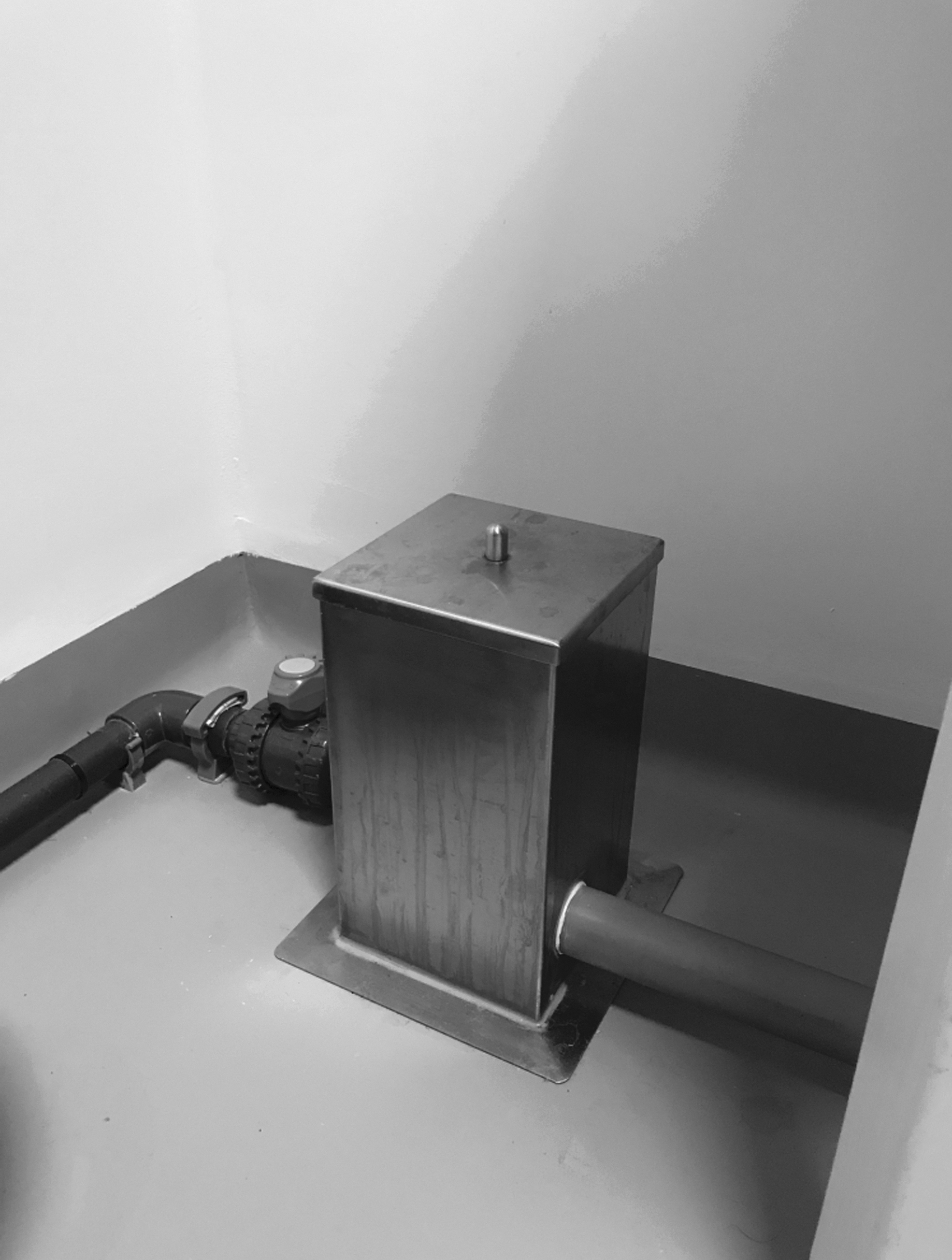
Cover for floor drain within CL2 room. CL2, containment level 2.
Access
To comply with the Animals Scientific Procedures Act (ASPA) and COSHH, the CL2 room is under restricted access, with only staff who have been fully trained and assessed for working in a CL2 environment being authorized to enter the room. This can be achieved by adding a lock to the door requiring swipe card or key release. The door to the room should be clearly labeled with a biohazard sign indicating the level of work being conducted within. Ideally, the names of those who have access as well as emergency contact information should also be provided in the form of a label on the door.
Although it is not required at CL2 level, it is recommended to add an internal door window to the room for ease of viewing staff (such as lone workers) without the requirement to enter. It is generally advised that a lone worker alarm is available to those working alone, such as out of hours, to ensure that they can raise an alert in an emergency. This is of particular importance in a CL2 area in which the staff can be considered at greater risk. Due to the potential of increased risk of susceptibility to CL2 pathogens, provisions must be made to review staff by occupational health providers to address any risks or concerns. For additional staff and engineers to access the area, it is advised that they are accompanied by trained staff and supervised at all times.
Fish System Design Considerations
Current aquatic facilities use two main types of systems for housing fish, namely flow-through and recirculating systems (Table 2). 5 Within a recirculating system, filtered water enters the tanks and then flows out to the reservoir where it is pumped back to the filtration unit before reentering the tanks (Fig. 2). This type of system exchanges water but only at time points set by the user, therefore reducing water consumption and the dosing of salts and bicarbonate to maintain optimal water quality, thereby being more ecological and having lower recurring costs. Another advantage of the recirculating system design is the continuation of filtered water being provided even if the water supply to the system should fail, keeping the fish healthy for longer, compared with a flow-through system, which relies solely on water supply at all times.
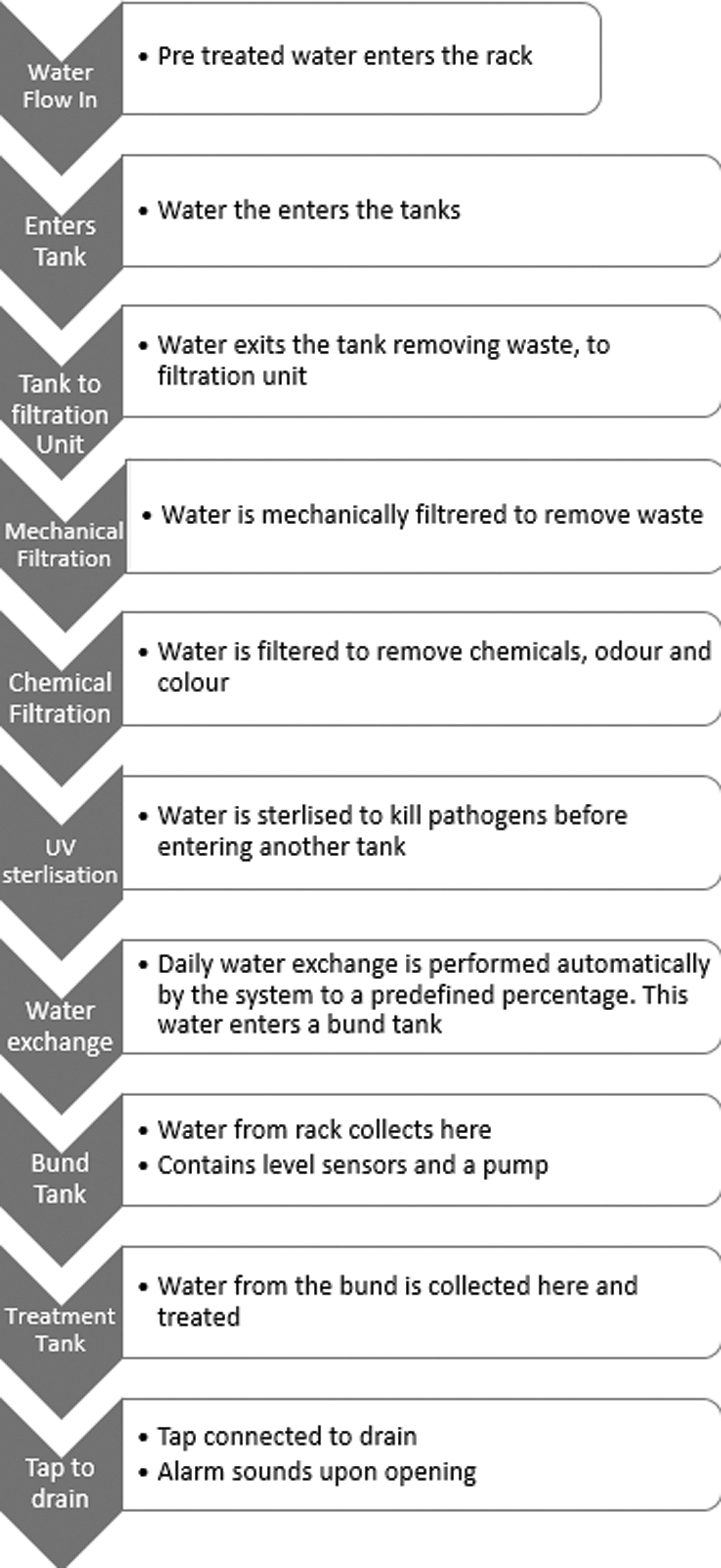
Example of a CL2 recirculating system design.
Personal Protective Equipment Required and Steps of Donning and Removal
CL2, containment level 2; PPE, personal protective equipment.
Comparison of System Components for Recirculating and Flow-Through Systems
UV, ultraviolet.
If a recirculating system is used, it is essential to ensure that UV sterilization is achieved. To ensure optimal effectiveness, the UV system is placed at the end of the filtration unit where most debris has been removed. The measurement of UV power is measured as μw/cm2, with 20,000 μw/cm2 considered sufficient to kill common bacteria and viruses, and 17,000 μw/cm2 killing M. marinum. 6 Within a CL2 recirculating system, this UV power is expected to be at least double (40,000 μw/cm2) to remove any chance of cross-contamination risk. Within our facility, the UV power is 180,000 μw/cm2.
Factors that can affect the killing efficiency of the UV system are the age of the UV tube and the sleeve in which it is held, the speed at which the water passes through the unit, water clarity, and microbial load. Typically, UV tubes and sleeves are changed yearly. However, within a CL2 unit, six-monthly changes are recommended to ensure optimal effectiveness.
Along with UV sterilization, mechanical and chemical filtration must be maintained to reduce contamination and nitrogenous waste affecting welfare of the animals. These maintenance requirements can be circumvented by installing a flow-through system in which filtered water enters the tanks and then flows out to a storage tank for treatment before entering the main drainage (Fig. 3). Within this system, water exchange is continuous, resulting in high costs to the facility due to water usage; however, this type of system is effective for reducing the risk of infection passing from one tank to another and minimizing nitrogenous waste due to its continuous exchange of water; however, large water storage tanks for chemical treatment pre-drain are required. A flow-through system also requires careful monitoring of minerals in the water to ensure that water quality meets the animals' needs during large water changes.

Example of a flow-through system design within CL2.
Table 2 summarizes a comparison of the two systems. Both systems remove solids; however, a recirculating system also uses chemical filtration for the removal of chemicals such as metals, UV treatment for the sterilization of the water, and biological filtration for the conversion of ammonia to nitrite and nitrate. Both systems provide a water exchange; this water must be pretreated to remove harmful substances before it enters the racking; this is commonly achieved by the use of RO systems. The type of system chosen can be affected by costs, scientific needs, and available space.
The maintenance frequency required will be based on the number of fish housed on the rack, the amount of food provided, and the frequency of water exchanges. To assist with determination of maintenance requirements, regular water tests must be conducted to measure the systems nitrogenous waste values as well as daily manual checks on the systems mechanical filtration components (such as filters). Where possible, timers should be used for the monitoring of the number of hours the UV sterilization tubes have been in use, this should alert staff when the tubes will soon require changing to ensure that effective sterilization of the water is achieved.
Racking and Tanks
Aquatic racking is available in various sizes from stand-alone units to multi-racking systems that can hold various sized tanks on multiple rows. For all facilities, racking must be rust proof, easy to clean, and able to withstand high salinity and disinfectants. Moreover, to aid with the cleaning of the flooring, the rack should be held on castors. Due to the risk of spillages and leaks, a bund should be installed under the rack to ensure that any potentially contaminated water is captured within the bund and can be easily treated before entering the drains.
The choice of tank is also important. Generally, tanks are manufactured using polycarbonate (PC) or polysulfone (PSU). For CL2 investigations, PSU tanks are advised due to their ability to withstand autoclaving at 134°C, whereas PC can only withstand 121°C. Within the tanks are baffles and syphons of various sizes allowing for housing of fish at all stages of development. Where possible, the tanks and components should also be able to withstand autoclaving or chemical disinfection.
Within both recirculating and flow-through systems, water typically enters each tank through the lid and exits the tank through an overflow or syphon before flowing into the guttering connected at the back to the racking. This movement of water can create aerosols and splashing, therefore bungs to block unused holes in tank lids and covers to sumps and drains are essential for the welfare of staff and avoidance of contamination (Figs. 4 and 5).

Bungs within tank lids and sumps.
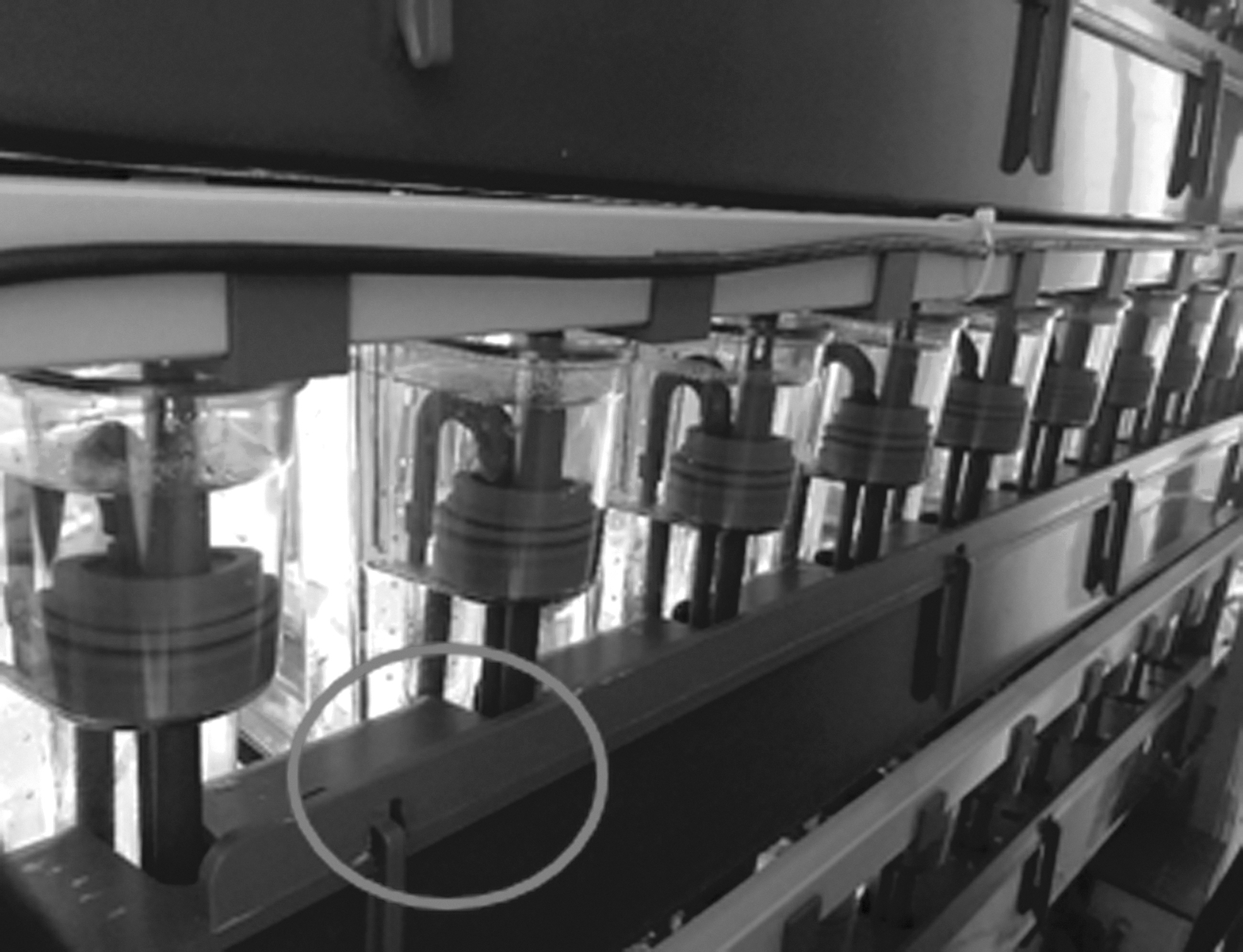
Covers to rack guttering. Circle highlights the guttering section which is covered.
Decontamination of System Water Before Entering Drains
Decontamination of system water is required before release into the main drainage system. This can be achieved by UV sterilization, which is typically found within the aquatic system racking. It is essential to ensure that sufficient exposure is achieved with regular changes of UV tubes and sleeves as well as ensuring mechanical filters are working effectively. To ensure complete treatment of the water that passes through, water must be prefiltered to reduce particles and each UV circuit must hold sufficient power to eradicate the pathogen. Using UV as a method of decontamination has the potential risk of insufficiently treated water entering the drains due to the difficulties of monitoring treatment effectiveness continuously. Where possible, a monitoring system measuring UV power may be installed, which is able to shut down the system should UV power not reach the required level.
Heat treatment can be used to kill microbial pathogens. 7 This can be achieved by storing the system wastewater within containers and either manually or automatically applying the treatment for the required kill time. This treated water can then be sent directly to drains. A disadvantage of this method is the additional space and cost requirements. For instances in which pumps are needed to push the water from the rack to the treatment tanks, additional costs will be incurred for power and equipment. There is also the potential risk that the water has not reached the required temperature before disposal, checks should be implemented to confirm the heaters have provided sufficient power; this can be achieved by the installation of temperature probes and timers.
As with heat treatment, chemical treatment can also be achieved by storing the system wastewater within containers and either manually or automatically applying the treatment for the required kill time. To reduce the floor space required, wastewater from the rack could enter the same wastewater container as that of the dirty sink for treatment. An advantage of using chemical treatment is the guarantee of sufficient treatment being provided. As with heat treatment, a timer should be used to ensure that sufficient kill time has been achieved before wastewater is sent to drains.
When chemicals are used, there is an additional risk to staff health and safety and therefore sufficient training, COSSH documents, RAs, PPE, and SOPs must be in place and reviewed annually as a minimum. There is also the concern of water pollution and chemical degrading of system components; it is therefore essential to ensure that the chemical used is discussed with the safety team to determine the required dilution rate before entering the drains. It is also essential to ensure that the chemical does not degrade the system components, making them vulnerable to failures.
When using heat treatment or chemical treatment, it is vital to consider the size of the treatment tanks required based on current and future requirements. Consideration must be given to the volume of water the system exchanges (water exchanged from racking each day), how frequently the water is being exchanged and when this can be treated, the volume of water used for cleaning dirty equipments such as tanks, the number of dirty tanks that may require emptying at any given time such as the end of an experiment, and the volume of water the rack will discharge when the pumps are switched off. All these areas must be considered when calculating the size of the treatment tank or tanks, with further addition of a capacity buffer for unforeseen circumstances (such as system failure causing sudden high-water loss).
Figure 6 shows the flow diagram of the process we perform for the chemical treatment of water from the main system racking, which would need minimal modification to change into a heat treatment system. We use Anistel and Biocleanse due to the short contact time required to kill M. marinum, their easy availability, and the ability to dispose them to the drain following dilution. The system includes two water tanks: the first is a large storage tank kept under the rack, which collects and holds wastewater directly from the rack in the form of a bund. It contains level sensors and a pump, which forces water to the second water tank close by which is a treatment tank. When the preset desired water level is reached, the technician can manually start the pump by pushing the“run pump” button on the main controller of the disinfection system.
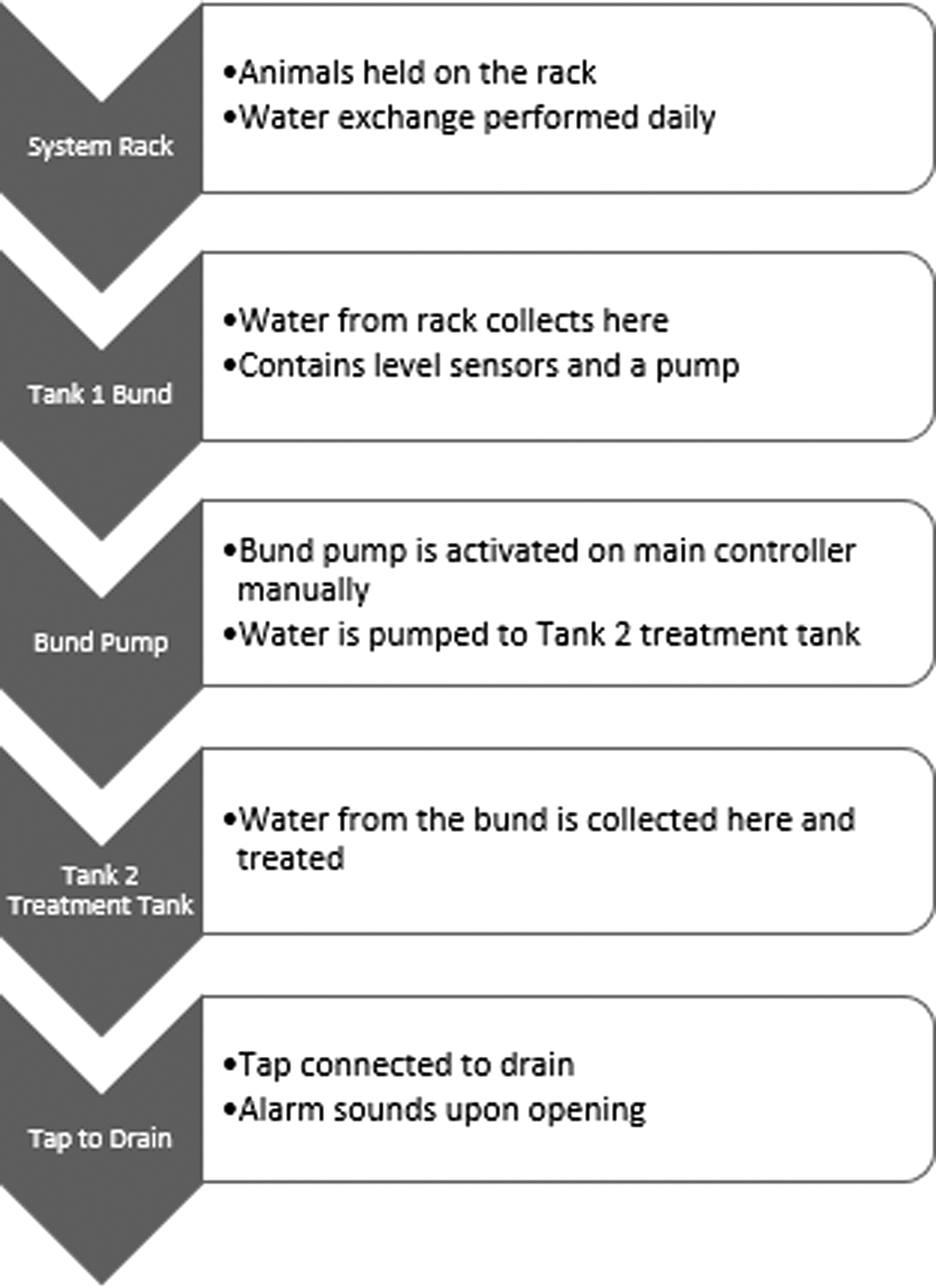
Example of a decontamination process for CL2 rack wastewater.
This pump forces the water from the large storage tank to the treatment tank. Once the maximum level is reached within the treatment tank, the pump in the storage tank switches off preventing any further water being added to treatment tank, ensuring decontamination before draining. A chemical is then dosed to the water at a volume, which is known to kill the pathogen. A preset timer then begins to count down on the control panel, which can be seen by the operator. This time is defined by the kill time required when using the chemical dosed. During this time, the large water tank is still able to collect water from the rack, allowing for water exchange to continue.
Once the preset time is reached, the control panel displays the words “cycle complete,” indicating to the user that they can drain the treatment tank. The tank is drained manually by opening two taps fitted between the disinfection tank and the main drain. When the taps are open, an audio alarm sounds to ensure that the users are aware the tap is now open. Once the tank is drained, the tap is closed, and the alarm stops. Should further dilution of the chemical be required to meet environmental regulations, water can be dispensed into the treatment tank and immediately drained at the required dilution ratio.
Figure 7 shows the flow diagram of a chemical treatment system for the sink wastewater, which we use in our CL2 facility. Contaminated water from tanks or the cleaning of equipment enters the sink and is drained into the storage tank below. Here, the water is held until it reaches a preset volume, when a sensor within the storage tank is activated and immediately closes a valve between the sink and storage tank, preventing any further water entering the tank. The chemical is then dosed at the volume that achieves concentrations required to kill the pathogen. A preset time (the kill time required for the chemical to kill the pathogen) then begins to count down on the control panel that can be seen by the operator.
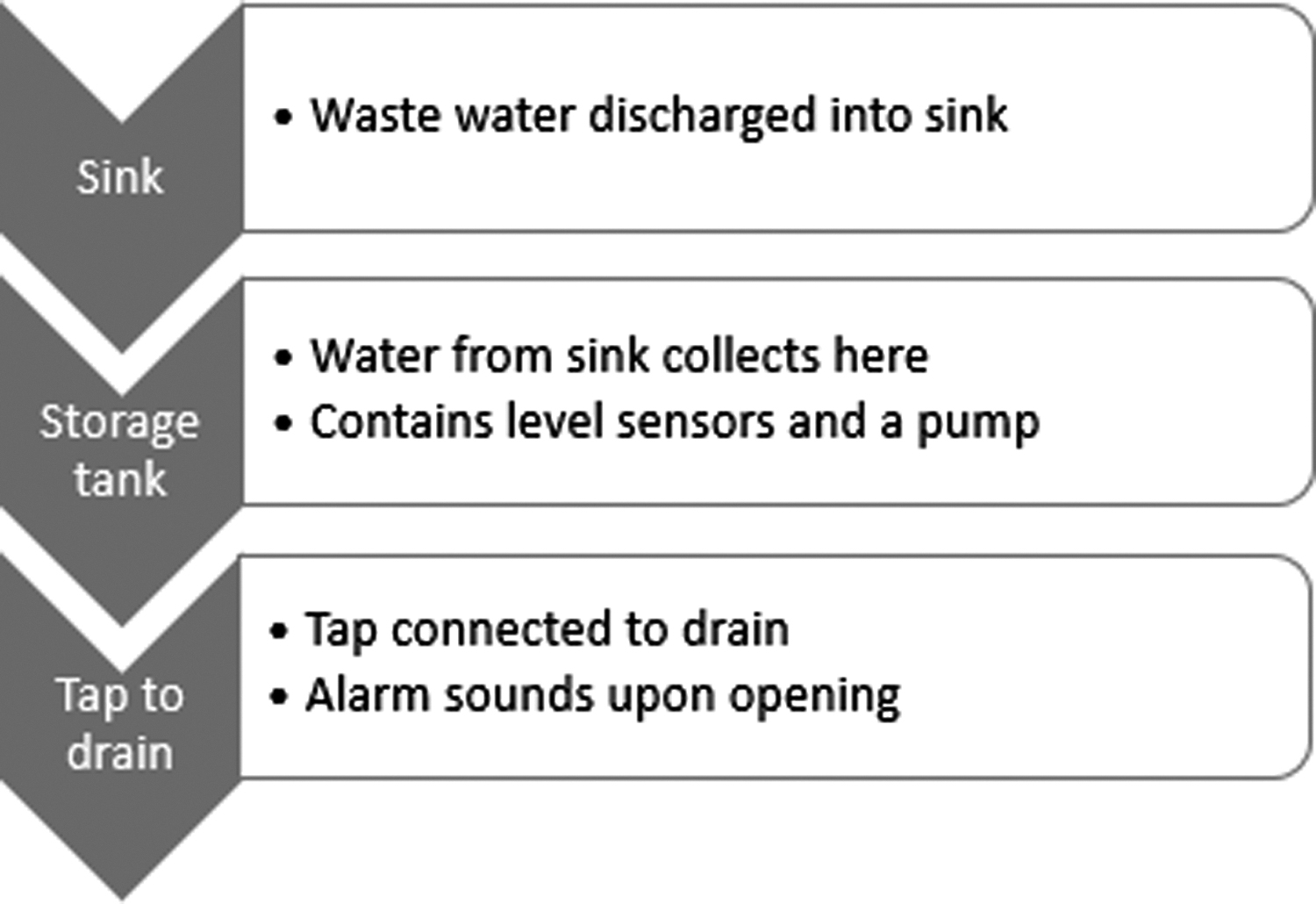
Example of a decontamination process for CL2 sink wastewater.
Once the time has ended, the “cycle end” light illuminates to make the user aware that the tank can be drained. There are two drain taps connected to the tank to ensure that if one should fail, another is in place to avoid water loss pretreatment. Both drain taps are opened to release the treated water to the drain. To comply with environmental regulations, the chemical may require further dilution before entering the drain. To allow this to happen, this system also has a manual override for the valve between the sink and storage tank, once the disinfection cycle ends, the drain taps are opened allowing for the water taps on the sink to be opened to dilute the chemical as it enters the drain at the required dilution rate to meet environmental regulations. When the tank is empty, the drain taps are closed allowing for water to reenter the tank.
To ensure that these tanks do not overflow at any time, a level sensor should be added to each tank, which is able to provide an alarm should the maximum water level be reached. This alarm should be able to alert staff outside working hours to ensure a quick response preventing the flow of untreated wastewater escaping the tanks. Floor sensors should also be fitted, which are capable of alerting staff outside working hours when water is on the floor. This will ensure that if a leak or failure of sensors should occur, staff are aware and can respond.
Personal Protective Equipment
Within a CL2 facility, potential routes of contamination are ingestion, inhalation, and inoculation with particular risk of infection through contact of skin, eyes, and mucous membranes. To ensure the safety of the staff within the CL2 area, it is essential to ensure that correct PPE is provided and worn at all times. To ensure that biosecurity is achieved, the contaminated PPE must be removed before leaving the CL2 designated areas. To apply PPE safely and avoid contamination, it is advised to create a “clean changing zone” with sufficient space to allow application and removal of PPE without risk of contamination (Fig. 8). PPE must be donned and removed in a specific order to reduce cross-contamination and ensure biosecurity. Box 2 shows the PPE equipment and process we use in our facility for donning and removing PPE.

Floor markings used to clearly define the clean changing zone for adding PPE. PPE, personal protective equipment.
Dedicated waterproof laboratory coats must be worn, and when there is an increased risk of splashing of contaminated water, coveralls should be worn. These come in the form of boiler suits, which cover the entire body except the face and hands. These must be held near the entrance (e.g., hooked onto back of door) and have quick release Velcro or studs with close fitting cuffs. These must be changed frequently following a regular routine. To ensure this, the date should be added to the laboratory coat showing when it was first worn. A typical routine would be to replace the laboratory coats weekly, as we do. Should the laboratory coat become contaminated before its routine change is due, it must be discarded or laundered. Disposable laboratory coats offer efficiency if entrance to the room is kept minimal.
However, for frequent use, laundered laboratory coats are more cost-effective. For laundering, laboratory coats must be placed in water-soluble sealed bags within the CL2 room, boxed, and moved to the laundry room where they can immediately enter the washing machine without the requirement to open the bag. Where there is no access to washing machines that complies with the above requirement, only disposable laboratory coats should be used. Clothing worn underneath the laboratory coat can be handled as non-CL2. However, as there is the potential for the hazard to occur, it is advised to have spare scrubs within a sealed bag in the CL2 area so that if clothing does become contaminated, it can be removed immediately and placed within a sealed bag in the CL2 area, boxed, and moved to the laundry room as per laboratory coat instructions.
Face shields are used to protect the eyes and mouth and to prevent accidentally touching the face with contaminated gloves. These can be reused following decontamination.
Any accidental exposure of skin to the pathogen must be washed thoroughly and health and safety informed immediately, in accordance with the protocols in place for dealing with pathogen exposure.
Husbandry Procedures
All staff carrying out husbandry procedures within the CL2 area must be fully trained and competent, with in-depth understanding of the risks within the area. Where possible, it is advised for staff to perform tasks within CL2 at the end of the day to prevent the cause of cross-contamination. All tasks must have a clearly written SOP and RAs, which must be read, understood, and signed by each member of staff performing the task. It is also advised that each person has been assessed by another member of staff (different to original trainer where possible) to ensure competency. A code of practice should also be provided, which details work conducted in the area, hazards, disinfection processes, control of contamination, process to handle spills, waste disposal, approved disinfectants, and key contacts.
Within our facilities, we have successfully prevented cross-contamination while allowing staff movement between the animal rooms and CL2. This has been achieved by ensuring many months of training with staff, clear information provided regarding the risks and possible consequences to the animals and the team, careful writing of SOPs and RAs with very clearly defined processes, which we have developed over several years, as well as full assessment including a practical examination/assessment for each task. Only those who have achieved this level of competency can enter the area.
Feeding
Within a CL2 facility, there will most likely be uninfected animals as well, being used as control animals in the experiments being carried out. Care should be taken to ensure that they do not become infected accidentally. Feeding equipment must be separated for the two groups. To further prevent cross-contamination, ensure that the uninfected animals are not exposed to the pathogen via feeding equipment, control tanks should be fed first, and the infected tanks fed last. All unused food from each feeding session should be discarded, and any equipment used must be decontaminated after each use as an additional precautionary measure.
Where possible, feeding equipment should be held in separate containers to avoid cross-contamination and food should be brought into the room in small containers such as centrifuge tubes, which can be easily discarded after each feed. To further reduce the risk of cross-contamination, it is advised to color code the feed items with the labeling on the tanks, for example, all infected tanks with red labels will be fed with only the red-labeled feeding equipment.
Welfare Checks, Culling, and Removal of Sick Animals
To monitor the health of the animals, checks must be performed daily, ideally just after feeding when the fish are most active. Checks can usually be performed without removing the tank from the rack to reduce disturbance and stress to the animals; however, dependent on the clinical signs to be observed, tank removal may be required (i.e., when looking for small lesions). Sick animals can be culled after removing them from the tank using a net. Care must be taken to ensure that contaminated water does not splash and drip onto floors, surfaces, and personnel.
To achieve this, it is advised to use a shelf, which can connect to the rack, allowing for tanks to be gently pulled forward onto the shelf and the lid to be removed easily. Carrying tanks containing infected fish across the room should be avoided where possible, due to risks of spillage. Where small spills do occur, disinfectants must be applied for the required contact time and then be mopped up with tissue and discarded in clinical waste. Large spills must be cleaned with a spill kit and health and safety notified.
Culled animals should be placed directly into autoclavable bags and the outside of these cleaned with disinfectant before placing into an autoclavable container for decontamination, this is then followed by incineration. If the body is needed for the experiment, the animal must be placed in a container, which should be wiped down with disinfectant and placed in secondary containment before removing from the room. It can then only be reopened in another CL2 area unless it has been placed in a fixative for histopathology studies, which kills all bacteria.
Nets used to remove the animals must be disinfected between use with using appropriate disinfectants and disinfection times known to kill the pathogen being used. Where chemicals are used for the culling, such as MS-222, these must be put into a chemical waste container held within the room, which must also be treated with disinfectants to kill the pathogen. The container must then be wiped down to ensure decontamination before leaving the room for waste disposal. Since it is no longer considered CL2 contaminated, waste disposal teams can discard it based on the chemical held within the container, ensuring the COSHH compliance.
Tank Cleaning
The removal of waste and algae from the tank is essential to ensure the welfare of the animals and clear view for observations. To ensure the safety of staff, it is advised to wear a full waterproof coverall when performing this procedure instead of a laboratory coat. Tanks containing uninfected fish should be cleaned first by taking the tank directly to the sink, gently pouring the fish into a clean tank, replacing labels onto the clean tank, placing fish back onto the rack, breaking down of the dirty tank, rinse and placing all tank components directly into an autoclavable container, or disinfect using chemicals immediately. This should be repeated for tanks containing contaminated fish also, where possible using a different sink. Following tank cleaning, decontamination of the sink area is required before reuse. Any cloths used should be disposed of immediately upon completion.
Filter Replacements
Due to filters being located before the UV sterilization units within an aquarium life support system, the filters are considered a potential source of contamination. These will require replacement periodically based on the biological load of the system. The filter changes should be performed as per the manufacturer's instructions with additional consideration of the CL2 pathogens within the system. To avoid spillages of untreated water, it is advised to use buckets to carry dirty filters to the sink area for decontamination and draining. Filters can then be autoclaved within autoclavable containers, followed by incineration.
Screening
Screening for pathogens that are potentially deleterious to fish health is routinely performed in an aquatic facility. A typical setup for a recirculating sentinel system would be sample the water used in the tanks. This is performed by collecting the water in a sump and feeding it directly by pump to the sentinel tank to ensure exposure of the fish to any pathogens in the system, before UV treatment. However, the aim for a CL2 sentinel screen is not to confirm what pathogens are in the system, but to determine if the procedures in place are reliably preventing cross-contamination. For a CL2 sentinel screen, a tank of fish must be added to the rack, away from the infected animals, and provided water post-UV treatment. The fish must be fed with the same equipment as the other uninfected tanks and be handled similarly to them.
The length of time the sentinels must be held on the system to ensure that sufficient exposure to the pathogen is dependent on the amount of pathogen being shed and expected time course of disease manifestation with low infecting inocula. 8 Screening of sentinels every 3–6 months is a common practice. The fish can be either fixed for histology or frozen for polymerase chain reaction (PCR) assays before sending to a diagnostics facility. It is recommended to conduct both types of sampling to ensure that all pathogens are captured. When running a PCR test for pathogens, it is common practice to run a general primer initially, followed by detection sequences for specific species of interest and culturing. However, the methods chosen will change dependent on what the user is looking for, such as adaptations to incubation temperature and length of time as well as the chosen media. 8
The process would include positive and negative controls and run-in duplicate for confidence in the results being accurate. Where possible, it is advised to send waste from the sentinel tank and biofilm from the tanks surface for screening to further investigate if the pathogen is within the sentinel tank itself. This is particularly useful for mycobacterium, which readily survives within the tank biofilm. Surface swabs of the room can also be taken to confirm that cleaning procedures are working correctly. If a positive test is found within the test samples, it is advised to send more samples from the sentinel tank for a repeat screen to be conducted. If a second positive is found or a repeat screen is not possible, UVs should be replaced immediately and CL2 procedures and process further explored to improve containment and to identify breaches in equipment or practices.
The system water must also be screened, pre- and post-treatment to confirm that the treatment being used, and the contact time provided is sufficient to kill the pathogen. This must be performed at the initial setup of the system before the water goes to the drain and periodically during the period when infected fish are being housed on the rack. The testing of the water pretreatment will determine if the UVs on the system racking are killing the pathogen. Microbiological testing for pathogen growth is necessary as PCR testing may give false positives as it will amplify DNA even from pathogens that have been killed. Testing of the water post-treatment will confirm if the treatment is killing the pathogen, again culturing is required to confirm this, not PCR.
All samples must be packaged complying with the country's regulations for the transport of CL2 pathogens. It is advised to clearly label each sample with the room ID, tank ID, date, and whether pre- or post-filtration to ensure accurate interpretation of the results provided by the diagnostic facility.
Occupational Health and Staff
The COSHH stipulates that health surveillance is required where there is an identifiable disease, which may be related to workplace exposure, reasonable likelihood that the disease may occur, and valid techniques for detecting indications of the disease are available. Within aquatic facilities, particular focus should be on skin conditions due to the salt in the water and potential pathogen exposure.
Summary
This article draws on our experience in building and maintaining a recirculating zebrafish facility and the broader experience of our close colleagues in building and maintaining a flow-through zebrafish facility. We have run the recirculating facility for more than 4 years now without any cross-infection between the fish or any infection to personnel. Given it is much lower consumption of water, an increasingly scarce global resource, we recommend the wide use of recirculating facilities. We hope that the detailed description given here will ensure similar success in the community of zebrafish researchers.
Footnotes
Acknowledgment
We thank Lalita Ramakrishnan (Molecular Immunity Unit, MRC Laboratory of Molecular Biology, and Cambridge Institute for Therapeutic Immunology and Infectious Disease, Department of Medicine, University of Cambridge, Cambridge, United Kingdom) for her encouragement and detailed input into this article.
Disclosure Statement
No competing financial interests exist.
Funding Information
This work was funded by a Wellcome Trust Principal Research Fellowship (223103/Z/21/Z) and National Institutes of Health (NIH) MERIT award R37 AI054503 awarded to Lalita Ramakrishnan.