




Abstract
We have developed a one-credit semester-long research experience for undergraduate students that involves the use of CRISPR/Cas9 to edit genes in zebrafish. The course is available to students at all stages of their undergraduate training and can be taken up to four times. Students select a gene of interest to edit as the basis of their semester-long project. To select a gene, exploration of developmental processes and human disease is encouraged. As part of the course, students use basic bioinformatic tools, design guide RNAs, inject zebrafish embryos, and analyze both the molecular consequences of gene editing and phenotypic outcomes. Over the 10 years we have offered the course, enrollment has grown from less than 10 students to more than 60 students per semester. Each year, we choose a different gene editing strategy to explore based on recent publications of gene editing methodologies. These have included making CRISPants, targeted integrations, and large gene deletions. In this study, we present how we structure the course and our assessment of the course over the past 3 years.
Introduction
The advantages of hands-on, experiential, or inquiry-based approaches for science education are well documented and recognized as highly effective pedagogy.1–3 This approach has been adopted widely and is often implemented as course-based undergraduate research experiences (CUREs).4–6 The CURE pedagogy emanates from two major principles. The first is to engage students in the process of science through real-life, authentic, and open-ended research. The second is to demonstrate to students that biology is “a vibrant and active field” that provides the opportunity to contribute to new knowledge, as outlined in the Vision and Change in Undergraduate Biology Education. 7 When implemented, CUREs provide an opportunity for students to answer open-ended questions by developing hypotheses and performing their own experiments. Available data demonstrate that CUREs also engage students from diverse backgrounds and have a powerful and positive impact on underrepresented students.3,8,9
We designed a CURE that introduces undergraduate students in the Genetics and Biology programs at Iowa State University to the genetic requirements of vertebrate development using gene editing technology. In this course, students use the model organism zebrafish (Danio rerio) and CRISPR-generated mutations to test hypotheses on genes potentially involved in early development. Zebrafish are an ideal choice for the purpose of this course as their early development is well characterized, hundreds of embryos can be obtained at the 1-cell stage to serve several laboratory sections, and microinjection is straightforward for delivering gene editing reagents.10–12 In addition, the optical clarity of the embryos and external fertilization allow students to perform observations of developmental stages and phenotypic analysis of injected embryos using microscopy.
Moreover, fluorescent transgenic lines allow distinct developmental processes to be observed in living embryos, providing increased resolution and cellular detail that is often inspiring to students. Other important features are that the zebrafish genome is well characterized, annotated, and 70% of human genes have homologs in zebrafish. 13 As a result, the structures and functions of many genes are conserved from zebrafish to humans. Many homologous genes from zebrafish are involved in human disorders related to the nervous system, heart, blood, kidneys, and muscles. 14
Leveraging the advantages outlined above, several groups have implemented CUREs with the zebrafish model system. 15 Building on previous efforts,16–18 we have designed a one-credit CURE using zebrafish to introduce students to both gene editing with CRISPR/Cas9 and concepts in development. The course is open to students at all levels, and they are allowed to take the course up to four times during their undergraduate career. Each year, a new gene editing strategy is tested in the classroom. Previous years have used CRISPR/Cas9 to make CRISPants,19,20 targeted integrations of fluorescent proteins,12,21 and large deletions. 22 In this study, we outline our strategy for the course and present assessment data from the past 3 years. These data point to students gaining understanding in basic genetics and molecular biology and increased confidence with conducting scientific research.
Materials and Methods
Students with introductory-level biology knowledge are encouraged to join the course, and there are no formal prerequisites. We actively recruit freshmen students through announcements in introductory biology courses, advisor suggestions, tours of the zebrafish laboratory, and presentations during class orientations and learning communities.
Upon completion of the course, students earn one upper-level laboratory credit that fulfills a degree requirement. Grading is based primarily on participation, engagement, and communicating results to peers and instructors. Most students receive full points for attending class and completing the learning outcomes below. As part of their grade, students are required to keep a notebook, prepare a specific aims page that outlines their experiments, and make a group presentation of their findings at the end of the semester. Because we cater to freshmen through seniors, we focus on mentoring students in research experiences rather than assessments for grading. The overarching goals of the course are to introduce students to research early in their undergraduate careers, to get them comfortable with conducting research, and to build confidence in doing so. We aim to build a community of undergraduate researchers. We run the course as a research laboratory where students work at their own pace, are allowed to make mistakes, repeat experiments, and determine and plan what they are doing on any given day.
Student learning outcomes from the course
After completing the course, students will be able to:
Utilize online databases such as ZFIN, NCBI, and Ensemble to extract and interpret genes. Outcome: Students are able to find sequences and download them to a local file and annotate introns and exons to understand gene structure. Promoters are identified as well as splice variants. Since many students take this course as freshmen, this reinforces important aspects of the central dogma. Students submit a Snapgene file of their work to the instructors for feedback before proceeding to the next step. Sketch out the mechanism of CRISPR-Cas9 mutagenesis. Outcome: Students understand the processing of a DNA double-strand break in the genome. This outcome is assessed with the design of specific gRNAs. Design guide RNAs to specifically target genes for mutagenesis. Outcome: Students identify regions of a gene to create integrations, small insertions and deletions, and large deletions. Students predict the outcomes of making targeted double-strand DNA breaks using Snapgene. Instructors check the files to ensure proper design and provide guidance when necessary. Evaluate the best gRNAs based on a given set of criteria to selectively target a specific gene. Outcome: gRNAs are evaluated for off-targets using Blast and GC content. Students also consider the regions of the gene to best target for the types of mutations they are attempting. Instructors evaluate the students' design and provide feedback to modify the design if needed before ordering gRNAs. Students learn about homology, repetitive elements, and optimal gRNA design. Perform phenotypic analysis on the injected embryos using microscopy. Outcome: Students become familiar with zebrafish early development and hallmarks of different stages of embryo development. This step often introduces students to fluorescent transgenic embryos to follow different lineages in zebrafish. Relate phenotypes to mutagenesis in genes by polymerase chain reaction (PCR) and sequence analysis. Outcome: Students correlate phenotypes with on the degree of mutagenesis of the gene they targeted. Students use sequence analysis of PCR products and online tools to establish mutagenesis frequency. This reinforces the predictions from gRNA design above. It is often difficult for students to first grasp the mosaic nature of CRISPR/Cas9 injections without the help of the peer learning mentors (PLMs), teaching assistant (TA), and instructors. Students gain competencies in primer design, PCR, gel electrophoresis, and sequence analysis. Communicate research findings and experiences with peers. Outcome: Students gain experience communicating research findings and confidence discussing the topics covered during the semester. Students are given time in class to develop their presentations and are provided with feedback from the instructors before their presentations. The final presentation is carried out as a group to lower stress levels in students, and students are provided with pizza to celebrate the end of the semester. Given the feedback and mentoring throughout the semester, students generally enjoy communicating their results and receive full credit for their presentations. Students are provided with a rubric for their presentations to guide their preparation (Supplementary Table S1).
Students also prepare a one-page specific aims page that outlines their mutagenesis strategy and provides background of the gene they are targeting. This is carried out early in the semester, and students submit this several times to the instructors for feedback and guidance until a refined hypothesis is presented. They are provided with a template from the Grant Writers' Seminars and Workshops, LLC website.
Procedure (workflow) of a class section through the semester
We run three 15-week long class sections in-person during spring semester. Each class section has a maximum of 24 students. Each section meets twice a week for 1 h and 20 min. The students work as teams during class sessions. A team is composed of two to five students from first year to advanced-level undergraduates who are interested in, or are pursuing, Biology or Genetics as majors. The students are provided one-on-one guidance by two instructors, a graduate TA, and undergraduate PLMs throughout semester. Students are allowed to take this course up to four times during their undergraduate education to follow through with projects and fully master the techniques used during the course; however, only a few students have retaken the course. Those who have repeated the course have only done so once. Instead, students often return to assist with the course as undergraduate PLMs with three to eight PLMs assisting per semester. PLMs are students who have taken this course previously and are registered for one credit as an undergraduate TA and/or a research experience.
The course is approved by Institutional Animal Care and Use Committee (IACUC) and the Institutional Biosafety Committee (IBC). Our IACUC protocol waives training for the students, as we only allow them to use embryos. All mating and work with both larval and adult zebrafish are carried out by the instructors or the TAs. As part of the IBC protocol, all students and faculty are required to take a general laboratory safety course that is administered online by Environmental Health and Safety. The Institutional Review Board has deemed the course assessments of student learning exempt from oversight.
The activities in the course align with the levels in Bloom's taxonomy of learning that range from acquiring knowledge, to its application, synthesis, and evaluation. 23 Building on the structure outlined in the study by Wolyniak et al., 18 weekly class sessions throughout a semester are summarized in the flow diagram, as shown in Figure 1. A tentative weekly schedule of activities throughout a semester is outlined below:
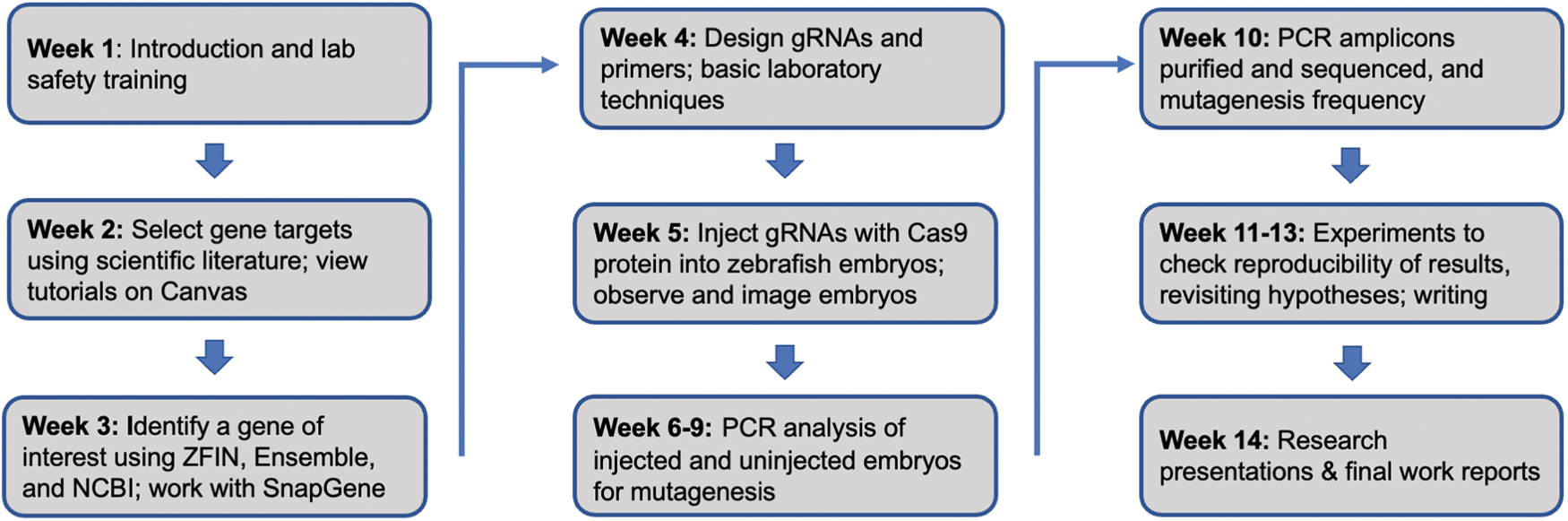
Workflow of the course for the semester.
Week 1: Introduction and laboratory safety training
Students get to know each other and are introduced to background information and the scientific rationale behind the learning goals of the course. Since there are freshmen students in the class, students are instructed on how to search scientific literature using PubMed. They are also introduced to basic laboratory techniques and encouraged to watch related videos posted on Canvas. The second class period during the first week is primarily devoted to safety training. Students complete laboratory safety training and earn a certificate from EH&S to prepare them to work safely in a laboratory.
Week 2: Select gene targets using scientific literature; view tutorials on Canvas
The students are provided with a list of potential genes that are predicted to play a role in some aspect of zebrafish development. Students discuss potential projects and look for team members that align with their interests. They read and discuss research articles related to the genes to be targeted. By the end of week 2, they begin to collect information about their gene of interest from websites: Zfin, NCBI (https://www.ncbi.nlm.nih.gov), and Ensembl genome browser. PLMs contribute by assisting students in this process.
Week 3: Identify a gene of interest using ZFIN, Ensemble, and NCBI; learn to work with SnapGene
Students who have identified a gene of interest begin to analyze and download the respective sequences from websites such as Zfin, Ensemble, and NCBI. Some groups choose to mutagenize members of a gene family with each individual student taking one gene to work on. They create files for the gene sequences using the SnapGene software and learn to use the software. As part of this process, students annotate introns, exons, untranslated regions, and coding sequences to learn the structure of a gene. All students are allowed to work at their own pace. They may require additional time and help from the instructors, TA, and PLMs to settle on a gene of interest, annotate their genes, and learn to manipulate sequences.
Week 4: Design gRNAs and primers; basic laboratory techniques
Students design gRNAs for mutagenesis and primers for PCR using protocols derived from the GeneWeld protocol for targeted integrations. 12 Their sequences are checked by the instructors and ordered from Integrated DNA Technologies (IDT) for synthesis. While students are waiting for synthesis to be completed, they are instructed on how to record all their work throughout semester and how to make an outline of a research proposal. During this time, demonstrations are given on micropipetting, PCR, gel electrophoresis, imaging, and documentation. PLMs play an important role here in demonstrations of laboratory techniques and answering student queries.
Week 5: Inject gRNAs with Cas9 protein into zebrafish embryos; observe and image embryos
Students begin to inject gRNAs with Cas9 protein into zebrafish embryos with the help of the instructors and PLMs. Injections are carried out early in the week for analysis later in the week. Injected and uninjected control embryos are compared using microscopy for identification of possible developmental defects. Embryos are observed using different transgenic backgrounds such as Tg(fli1a:EGFPy1). They are then imaged and isolated for PCR analysis.
Week 6–9: PCR analysis of injected and uninjected embryos for mutagenesis
PCR analysis of injected and uninjected embryos is carried out using primers designed by the students to look for evidence of mutagenesis. Protocols for PCR derived from the GeneWeld protocol. 12 PCR analysis is also carried out to investigate the 5′ and 3′ integration sites in genomic DNA if an integration was attempted following the same protocol. Initial signs of mutagenesis are observed as wide or smeary bands following PCR amplification.
Week 10: PCR amplicons purified and sequenced, and mutagenesis frequency is determined
PCR amplicons are purified using the Qiagen PCR clean up kit and sequenced directly at Iowa State DNA facility. Students perform ICE analysis (Synthego) to determine the degree/percentage of mutagenesis in injected embryos. Chromatographs of the sequences are also used to illustrate mutagenesis. Students draw conclusions on the success of their experiment.
Week 11–13: Experiments to check reproducibility of results, revisiting hypotheses, reports writing
Students repeat experiments and assess reproducibility of their mutagenesis, organize data, prepare presentations, and work on their reports. Some students may revise their hypothesis.
Week 14: Research presentations and final work reports
Students finalize research presentations and their work reports. They present their research projects in teams to peers and instructors. The presentations include sections on rationale, background literature, results, conclusions, and future directions.
Results
Gene targeting strategies developed for teaching undergraduate students
Over the years of offering this course, we have attempted several different gene targeting strategies using CRISPR/Cas9 as a CURE using zebrafish. Initially, we simply injected gRNAs that were designed and synthesized by the students using in vitro transcription with Cas9 supplied as a mRNA, as described.19,24 These methods often led to observable mutagenesis and phenotypes for a large proportion of the groups, but the students struggled with in vitro synthesis of the gRNAs being new to pipetting and molecular biology. This led to the TA and instructor synthesizing the gRNAs after a couple of failed attempts. In more recent years, we have turned to ordering the synthetic (s) gRNAs from IDT and have used Cas9 protein, based on the study by Hoshijima et al. 22 These methods have worked well for students by circumventing the need to synthesize gRNAs and Cas9 mRNA using in vitro transcription and have led to reproducible mutagenesis of the selected genes.
Building further on this strategy and wanting to avoid producing alleles that induce genetic adaptation or compensation,25,26 we have recently turned to making large deletions to remove the coding sequence of a targeted gene by using two sgRNAs, one that targets the beginning of the gene and the other that targets the end, with Cas9 protein. 22 This has also led to a high success rate for the students with deletions observed in four out of four of the targeted genes (e.g., below of one gene from a student project). The same genes were targeted in multiple sections to determine the reproducibility of the methods for undergraduates beginning research. Each group was able to demonstrate induction of a deletion in the P0 injected embryos. In addition, two of the four targeted genes produced a reproducible phenotype.
We have also attempted targeted knock-ins using short regions of homology to direct integration at a CRISPR/Cas9 target site. Using the GeneWeld method, 12 students prepared plasmid DNA templates containing short regions of homology flanking the reporter gene to be targeted by molecular cloning. Almost all students struggled with making the targeting constructs, requiring the TA and instructor to step in after a couple failed attempts. This led to a large part of the semester devoted to making a plasmid template for targeting rather than learning CRISPR/Cas9 mutagenesis. We have also attempted to make templates for targeted integration using Biotin-5′-labeled homology arms by PCR, based on the study by Seleit et al.27,28 While many students were able to make the templates for integration with short homology arms flanking a fluorescent protein, only 4 out of the 16 targeted genes displayed fluorescence following injection of the template, Cas9 protein, and a sgRNA. Only one of these genes displayed widespread expression in a low proportion of embryos (4%). Consequently, we have returned to making deletions using Cas9 protein and sgRNAs.
An example of a student project to make a large gene deletion carried out in a semester
As an example of a project, students in two different sections collaborated to create a large deletion spanning a tandem duplicated locus, gjc4a.1 and gjc4a.2 (Fig. 2A). The teams designed gRNAs at the beginning of the gjc4a.1 and at the end of the gjc4a.2. Following injection of the gRNAs with Cas9 protein as outlined in Ref., 22 they performed PCR to detect the deletion and found bands of the expected size (Fig. 2B). The bands were verified by sequencing to show that the amplified fragment contained the ends of both genes (Fig. 2C). While the embryos did not show defects, the remaining zebrafish were grown to adults and are being screened currently to identify F1 zebrafish carrying the deletion. This effort is being carried out as an independent research project by a subset of the students that were involved with the initial characterization. Figure 2 is generated by the students with the help of the PLMs and used as part of their final presentation.
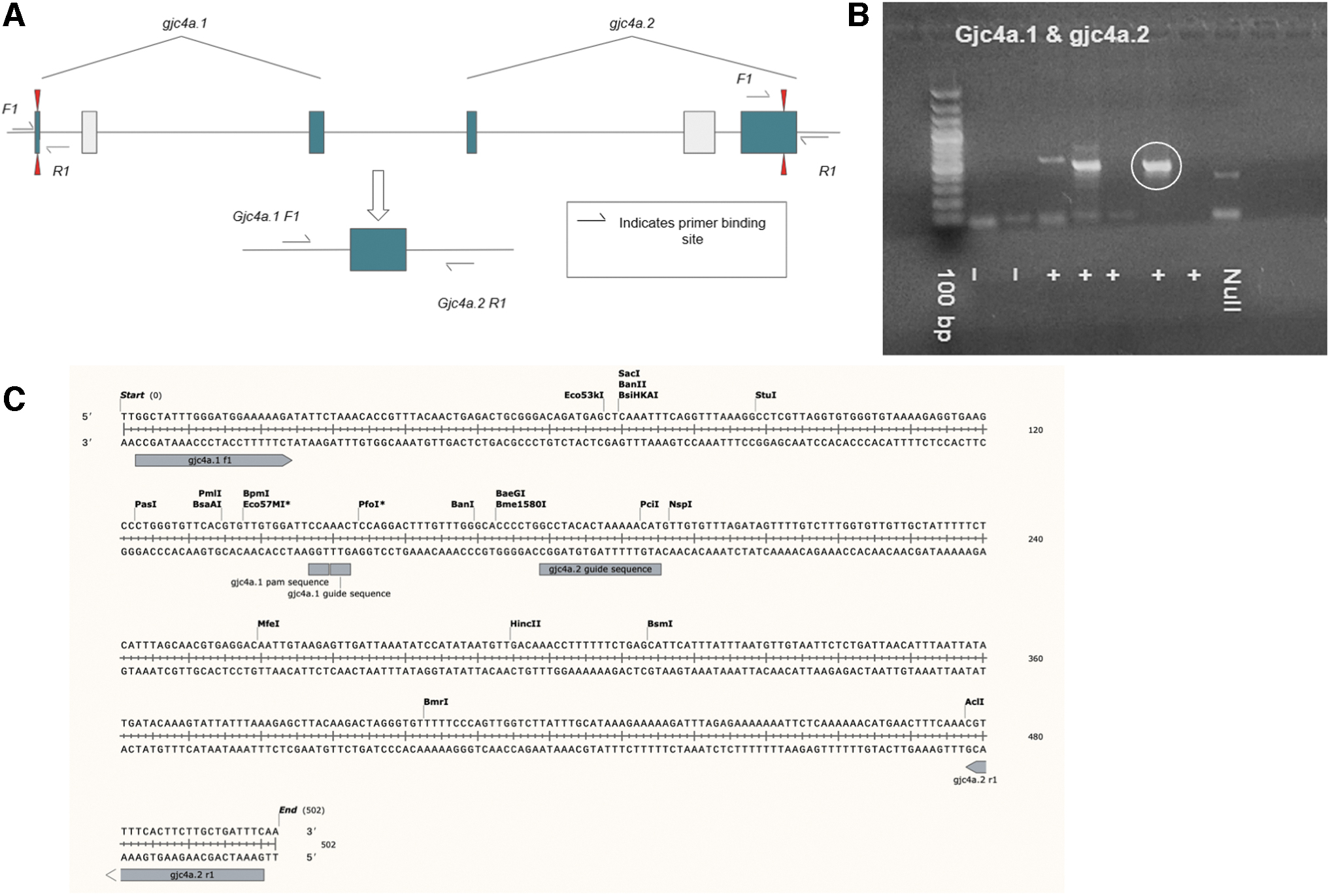
Design and CRISPR/Cas9 mutagenesis of a tandemly duplicated locus in zebrafish, gjc4a.1 and gjc4a.2.
Students' impressions of learning
To evaluate the progression of learning and effectiveness of the course, we performed learning outcome surveys at the beginning and end of the semester. The PLMs were not included in the survey, and the low number of students who have repeated the course are not expected to dramatically affect the outcomes of the survey. The statements in the survey were aligned with learning goals of the course and are listed in Table 1. The survey was designed on Excel and statements were delivered through Canvas to all students. The same set of survey questions were distributed during the 1st week (as a pre-course survey) and 14th week (as a post-course survey).
Assessment of Students' Impressions of Learning
PCR, polymerase chain reaction.
The survey responses were collected from students over three spring semesters spread over 3 years. Students were given credit to incentivize completion of the survey. As a result, 85.5% (124 of 145) of students completed the pre- and post-course survey. Students were given a choice of yes, no, or somewhat, where somewhat indicated that they were somewhat familiar with the idea but not the process. The results of the survey are shown in Figure 3 and summarized in Table 1. Student responses from the survey showed that the students acquired confidence in writing a hypothesis and designing experiments to tailor the hypothesis rose by 32.7% by the end of the semester. The student awareness regarding CRISPR technologies and their application in research and medicine increased dramatically by 60%. Their perceived competence to set up PCR reactions and perform DNA gel electrophoresis also showed a significant improvement.
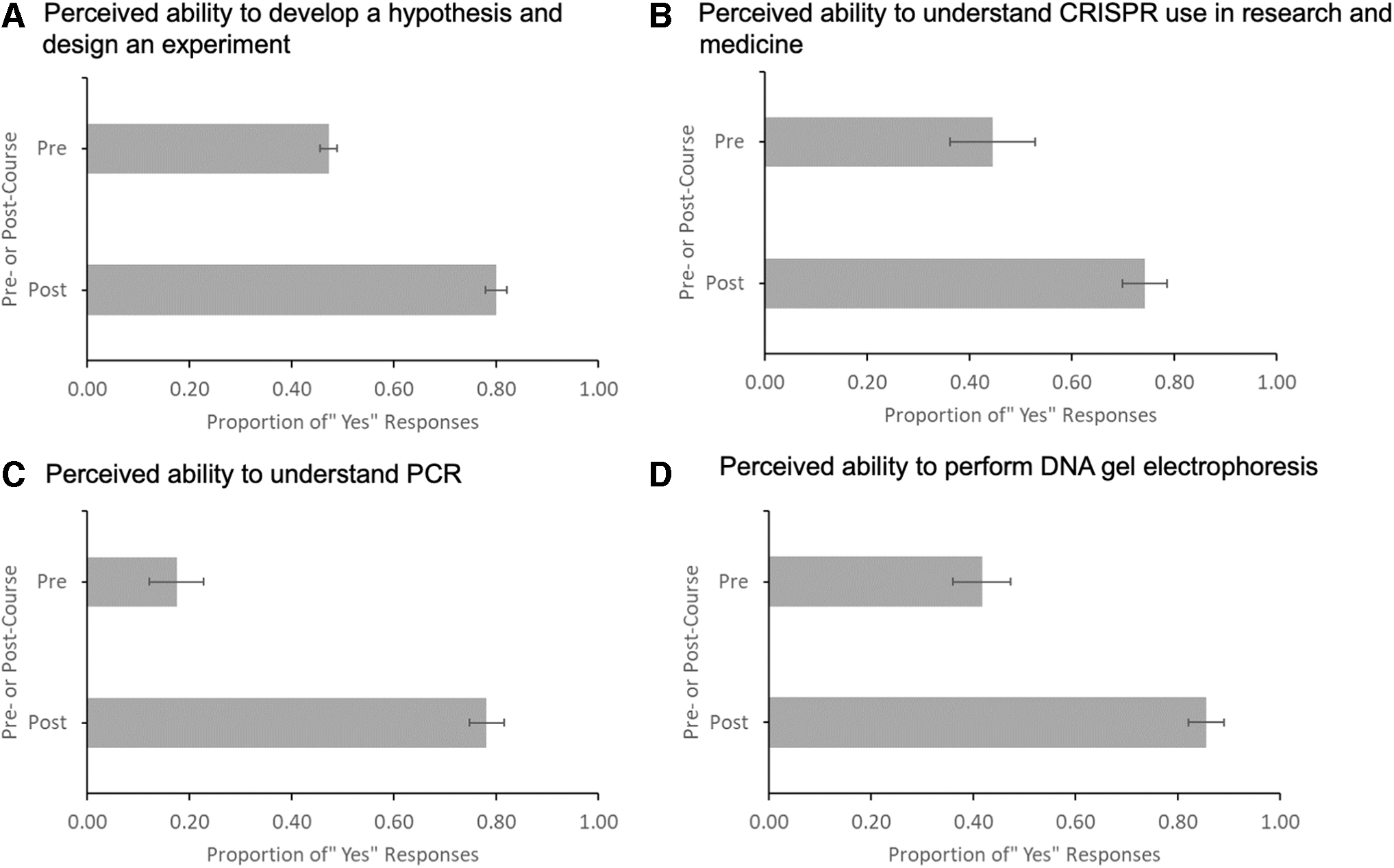
Proportion of “Yes” responses to pre- and post-course survey questions.
Discussion
A course utilizing zebrafish as a model system and using a CRISPR-based approach to mutagenesis was developed and has been implemented for 10 years. This course has served more than 400 students in relatively small size sections of no more than 24 students. The small size of each section allowed for direct interaction of students with two course instructors, the graduate TA, and two to three PLMs. Students worked on their projects in teams that allowed them to collaborate, communicate with peers in a research setting, and benefit from significant peer-to-peer learning. This zebrafish CURE provided undergraduate students an opportunity to develop a strong understanding of the scientific method and to engage in an authentic research experience.
During the course, the students acquired proficiency in essential research skills such as being able to develop a testable hypothesis, design experiments, and participate in data collection, analysis, and interpretation of results. In addition, they developed competency in a variety of experimental methods including designing gRNAs and primers for PCR, gel electrophoresis, and imaging using fluorescence microscopy. Students developed critical thinking and problem-solving skills by troubleshooting various aspects of their experimental design and execution. Finally, they practiced scientific writing in the context of biology and science communication by presenting their research findings in a final summative assessment.
Participation in the course as a PLM and the ability for a student to enroll in future offerings of the course are opportunities provided to students to be able to continue their research. PLMs are an accessible intermediate link between instructors and students during the progression of the course and will often develop leadership skills by working closely with one or two groups. Students who elect to re-enroll in the course bring significant competencies in the various techniques they used in previous semesters. As a result, they can learn new techniques and concepts, share this expertise with others in their group, and develop and test more sophisticated hypotheses. In future iterations of the course, we plan to assess both knowledge and technical scaffolding and the extent to which this approach enhances peer-to-peer learning.
The course also serves as an entry point for developing undergraduate research projects and generating mutations in zebrafish for PIs. At the end of the semester, all interested students are encouraged to continue their projects in the following semesters. This often involves screening for germline transmission of targeted mutations in F1 zebrafish with more senior undergraduate researchers. Once mutations are identified, some projects in the following year's class are centered around the analysis of these mutations, sometimes assisted by PLMs who initiated the projects as students the previous year. This provides a large number of students the opportunity to initiate and follow through with undergraduate research projects. Ultimately, the goal is to publish the findings from the mutagenesis efforts. Undergraduate students give formal presentations at local and national meetings and are included as authors on articles that describe the genes they have worked to mutagenize and characterize. This can provide an additional layer of instruction in scientific writing and presenting results for some students.
Thoughtful design and execution of this CURE has led to consistent achievement of the primary objectives of the course. The course meets the various learning objectives of Bloom's taxonomy from acquiring knowledge to application, synthesis, and evaluation. The zebrafish gene editing CURE also provides an alternative to a semester-long, summer, or thesis/capstone research experience and serves many undergraduates by introducing them to research. Furthermore, students acquire skills from the course that are beneficial to student career development. It is well documented that engaging undergraduate students in research early in their studies sparks an interest in scientific research and potentially influences career choices in STEM. The course has positively impacted students by encouraging several to continue with research, medicine, or related fields. In conclusion, integrating a zebrafish gene editing CURE into undergraduate curricula engages students in research and enriches their educational experience.
Footnotes
Authors' Contributions
R.S.: Writing—original draft (lead), conceptualization (supporting), formal analysis (lead). She is an Assistant Teaching Professor at Iowa State University and has been a co-instructor of the course described here for the last 4 years. She has provided critical student support and developed course surveys. C.W.D.: Writing—original draft, review, and editing (equal), formal analysis (lead). He is a senior undergraduate Genetics major from Iowa applying to PhD programs in human genetics. He took the course as a freshman, has been a learning assistant for 3 years in a row, and carries out independent research in the Essner lab. A.G.K.: Writing—review and editing (supporting). She is an undergraduate majoring in Genetics from Illinois and is applying to Genetic Counseling graduate programs. She also took the course as a freshman, has been a learning assistant for 3 years, and carries out independent research in the Essner lab.
S.M.E.: Formal analysis (supporting). He is an undergraduate senior majoring in Genetics from Iowa and is applying to PhD programs to studying gene networks. He took the course as a freshman, has been a learning assistant for 3 years, and also works on an independent project in the Essner lab. A.Z.: Formal analysis (supporting). She is a Genetics major from Illinois and plans to pursue a PhD program in human genetics. She took the course as a freshman and has been a learning assistant for 1 year. She is following up the mutagenesis project described here to recover germline mutants with M.D.C.H. M.D.C.H.: Formal analysis (supporting). She was born and raised in Costa Rica and is an undergraduate junior at majoring in Genetics on a pre-medical track. She is interested in the field of Neurosurgery and Neurology. She also took the course as a freshman, has helped as learning assistant, and works in the Essner lab.
K.J.A.: Formal analysis (supporting). He graduated in the spring class of 2023 with a degree in Genetics. He is currently employed as a lab tech at an agriscience company and hopes to return to school to pursue a master's degree in genetic counseling. He took the course as a freshman, was a learning assistant for 3 years, and conducted his honors project in the Essner lab. A.M.E.: Formal analysis (supporting). She is senior undergraduate majoring in Biology. As a student in the course, she assisted in generating the data in  . She is currently taking the course a second time. J.N.L.: Formal analysis (supporting). He is a first-generation college student of Salvadorean heritage. He is a psychology and biology major with hopes of becoming a licensed therapist to low-income families and conducting neuroscience research. He took the course and assisted in generating the data presented in Figure 2.
E.C.N.: Formal analysis (supporting). She graduated in 2023 with a degree in Biology. Her future plans are to attend medical school to become a doctor. As a student in the course, she assisted in generating the data in . M.H. and E.M.: Formal analysis (supporting). M.H. and E.M.: graduated in 2023 with a degree in Biology. Both assisted with generating the data in Figure 2 while they took this course. E.J.S.: Conceptualization (supporting). She is an Assistant Professor of Neuroscience in the Department of Zoology at Weber State University. She previously was a postdoctoral fellow supported by a Howard Hughes Medical Institute (HMMI) grant to develop the Freshmen Research Initiative at Iowa State University. She has experience coordinating course-based research experiences and studies neurodegeneration using zebrafish as a model system.
C.O.: Conceptualization (supporting). He is the Graduate Dean and Associate Vice President for Research at Montana State University. Before this, he was a Morrill Professor at Iowa State University in Physics, Assistant Dean of the Graduate College, and principal investigator on a Howard Hughes Medical Institute (HMMI) grant to develop the Freshmen Research Initiative, which helped support the early efforts of course described here. P.L.: Writing—review and editing (supporting). He is a Professor at Grinnell College who studies heart regeneration and engages undergraduates in research using both zebrafish and the giant Danio. As a visiting professor at Iowa State University, he was a frequent visitor to the course and assisted with directing students. J.J.E.: Writing—review and editing (equal), conceptualization (lead). He is a Professor at Iowa State University and developed the course to engage undergraduate students in gene editing. He served as a co-investigator on a Howard Hughes Medical Institute (HMMI) grant to develop the Freshmen Research Initiative. He has been delivering the course in various forms using CRISPR/Cas9 for 10 years.
Disclosure Statement
J.J.E. declares a financial conflict of interest with Recombinetics, Inc., Immusoft, Inc., LifEngine, and LifEngine Animal Health. No other authors declare a conflict of interest.
Funding Information
This work was supported by the Howard Hughes Medical Institute Award Engage to Excel at Iowa State University, LAS Dean's High Impact Award, Fung Fellowship, and the Department of Genetics, Development and Cell Biology at Iowa State University.
References
Supplementary Material
Please find the following supplemental material available below.
For Open Access articles published under a Creative Commons License, all supplemental material carries the same license as the article it is associated with.
For non-Open Access articles published, all supplemental material carries a non-exclusive license, and permission requests for re-use of supplemental material or any part of supplemental material shall be sent directly to the copyright owner as specified in the copyright notice associated with the article.
