



Abstract

Professor Niels Alexander Lassen,
Lassen was born in 1926 in Copenhagen and graduated from the University of Copenhagen as a medical doctor in 1951. He trained in internal medicine and was one of the founders of the specialty of clinical physiology in Denmark. From 1962 until his retirement in 1996, he was chairman of the Department of Clinical Physiology and Nuclear Medicine at Bispebjerg Hospital in Copenhagen. The department became famous soon after its establishment. In 1986, the Danish Medical Research Council established a position of Professor of Neuroscience for Lassen Many Danish and foreign researchers came to his laboratory to work with and receive training from Lassen.
Lassen's research activities covered many areas in medicine. However, his main interest, which started at the time when he graduated from medical school, was cerebral circulation. Seymour S. Kety and Carl F. Schmidt had introduced the use of the inert gas nitrous oxide for measurement of global cerebral circulation. Lassen, together with his Danish colleague Ole Munck, extended the measurement of global cerebral circulation to include the use of radioactive isotopes. After this contribution, Lassen went to work with Seymour S. Kety at the National Institutes of Health in Bethesda, MD, U.S.A. There he also met and worked with Louis Sokoloff, who later introduced the 2-[14C]deoxyglucose method for determination of regional cerebral metabolic rates of glucose, and John W. Severinghaus, with whom he later investigated the effects of high altitude on the regulation of the cerebral circulation in Bolivia, and the effects of pH in the areas around cerebral arterial smooth muscles. During these years at the National Institutes of Health, Niels wrote his review article—a classic and frequently quoted paper—on cerebral circulation that was published in Physiological Reviews in 1959.
In 1961, Lassen and David H. Ingvar from Lund, Sweden, introduced into neurobiological research, a novel method for the measurement of regional cerebral blood flow based on the intracarotid injection of the radioactive gases, 85krypton or 33xenon, dissolved in saline. The isotope clearance was recorded by external detectors. In subsequent decades, this method was widely used in many experimental as well as clinical research studies and led to a great number of important neurobiological discoveries. One of the highlights of the applications of this method in Copenhagen and Lund was the introduction of functional brain mapping of the human brain in health and disease for the first time. The method detected functionally activated brain regions by their increases in blood flow. Lassen's group then continued this pioneering work with the construction of a 254-detector system that displayed in color images the distribution of cerebral blood flow and function in the brain in greater detail. This research field has since expanded because of technological developments that allowed the introduction of newer, less-traumatic methods. The evolution of computer technology has been the basis for the development of new methods to be used in brain research. First, in the 1970s, x-ray computed tomography (CT), single photon emission computed tomography (SPECT), and positron emission tomography (PET) were developed essentially independently of one another, and in the 1980s magnetic resonance imaging (MRI) technique was introduced for investigations in man. Lassen contributed early to this development, and in the late 1970s, the first dedicated SPECT brain scanner was developed in Copenhagen and used during the next decade in studies of several cerebral diseases.
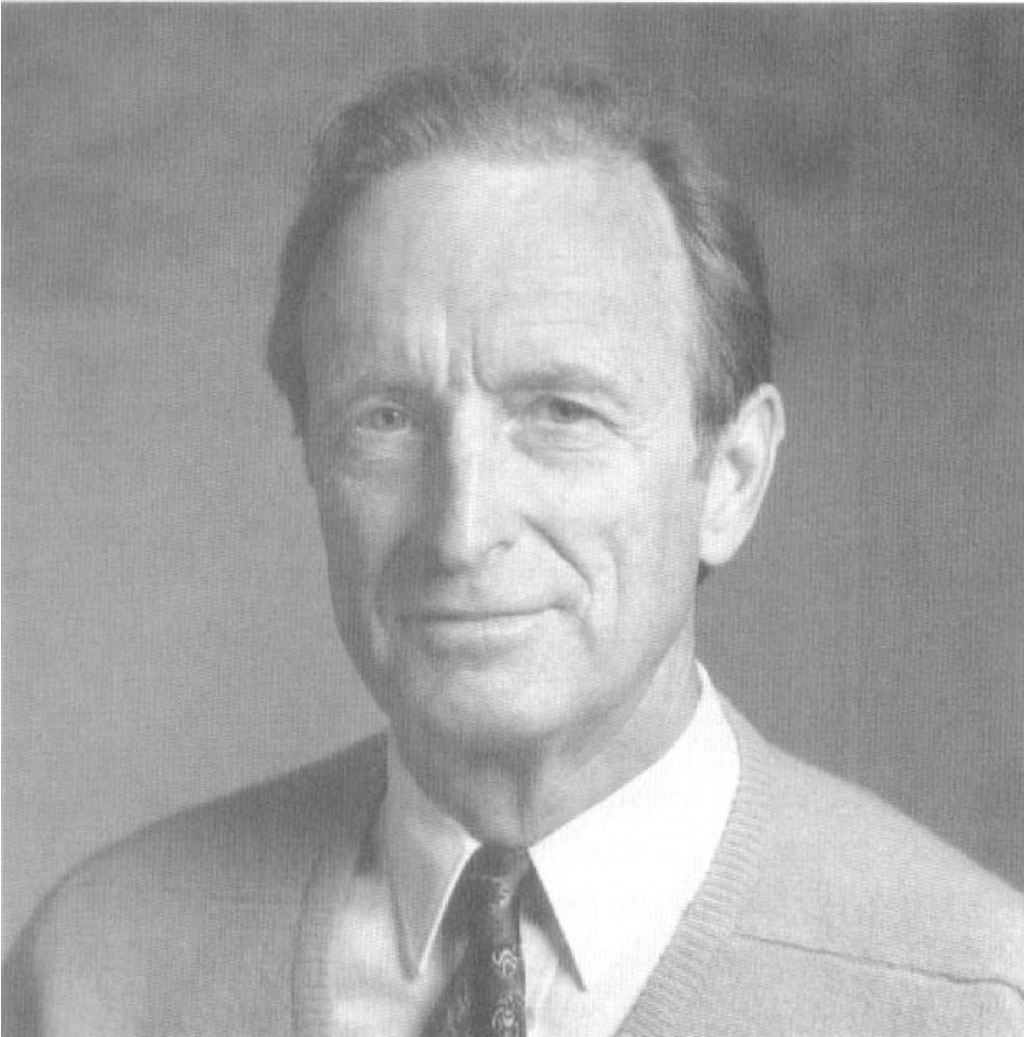
Niels A. Lassen,
In the 1980s, research endeavors in Denmark became somewhat more difficult because of enormous cuts in university and research funding. This situation improved in the 1990s, but Lassen, unfortunately, has left us at a time when so many of his Danish colleagues are expecting a new epoch with expansion of research opportunities.
Lassen's impressive knowledge of physiology resulted in several contributions to the understanding of the physiology and pathophysiology of the cerebral circulation. One of the milestones was his introduction of the term “luxury perfusion”, which was first published in Lancet in 1966. Luxury perfusion implies that in ischemic brain tissue, the blood supply may surpass the metabolic demand of the tissue, resulting in increased oxygen tension in the venous blood and increased capillary pressure with the risk of edema formation. His talents provided the foundation for many other important discoveries related to the pathophysiology in several major cerebral diseases and conditions, such as stroke, migraine, epilepsy, carotid surgery, the consequences of hypertension, and pharmacological intervention. Lassen's research not only involved the development of new methods and discoveries in areas of the physiology and pathophysiology of the cerebral circulation, but also contributed significantly to tracer kinetic theory which made possible the use of, or led to the improvement of, many methods. The book Tracer Kinetic Models in Medical Physiology, published in 1979 with William Pearl, is an outstanding example of such a contribution.
Historically, vascular research in the 20th century in Copenhagen was introduced by August Krogh's studies of capillary physiology. This was followed by Mogens Fog's description of the vasomotor function that formed the basis of the concept of cerebral autoregulation. This tradition has been carried on in the second half of the century by Lassen, who established a strong Danish school of neurobiological and circulation research with major international impact. In the 1990s, his enormous contributions have become even more evident with the massive expansion in the research field of brain mapping in health and disease, including psychiatric diseases.
Lassen held a number of major professional positions. He was one of the founders of the International Society of Cerebral Blood Flow and Metabolism and its publication the Journal of Cerebral Blood Flow and Metabolism. He was a member of the Danish Medical Research Council and the Royal Danish Academy of Science. He was Doctor Honoris Causa at the Universities of Lund, Copenhagen, Lille, and Toulose. He received the Novo Award, the Anders Jahres Medical Award, the Lundbeck Foundation's Research Award, the Johan M. Klein's Award, the George Heresy Award of the Society of Nuclear Medicine, the Soriano Award, the Mogens Fog Award, and finally, the Lifetime Achievement Award from the International Society of Cerebral Blood Flow and Metabolism.
Lassen enjoyed collaboration with many researchers worldwide. It was also a great pleasure for him to travel to meetings and other research laboratories to discuss and conduct science and achieve new insight into the mysteries of brain function. He was a highly appreciated speaker and visiting scientist. His international collaborations are reflected in his list of publications that contains 696 articles with the majority being original scientific publications and major reviews in well-established journals and textbooks. Here one finds more than one thousand different coauthors.
With Lassen's death, international and Danish neuroscience has lost one of its most prominent representatives. He was an outstanding mentor and an eager and enthusiastic personality who could offer constructive criticism and elaborate broadly about his ideas, primarily to promote science completely free of any personal vanity. Niels' death has left a void, but his ideas, thoughts, enthusiasm, and spiritual presence will live in a new generation of researchers who owe him more than can be expressed in words.