




Abstract

Professor emeritus David H. Ingvar, M.D., Ph.D., a great neuroscientist and pioneer of cerebral blood flow studies in man, died on September 27, 2000, in Lund, Sweden, at the age of 76. Ingvar suffered from a slowly but relentlessly progressive motor system disease. Although highly disabled by the disease and a degeneration of the retinal macula making him unable to read, he continued to work with unfailing eagerness and endurance.
During the last year of his life Dr. Ingvar wrote a few scientific papers, and even during the last months he took an active part in public discussions by writing articles and book reviews for daily newspapers. Last spring he published a book of essays on brain diseases in prominent politicians and writers discussing how their work may have been influenced by the diseases. All of this was made possible by the unfailing help and support from his wife, Elisabet.
Ingvar earned his medical degree in 1950 at the University of Lund. He spent the next two years as a research fellow at the Montreal Neurological Institute, the leading center for clinical neurophysiology at that time, which hosted two especially prominent figures, the neurosurgeon Wilder Penfield and the neurophysiologist Herbert H. Jasper.
From 1953 to 1955, Ingvar had a fellowship at the Nobel Institute for Neurophysiology at the Karolinska Institute, which was led by Ragnar Granit who later became a Nobel laureate. Ingvar earned his Ph.D. degree in 1954 and returned to Lund a year later as a research fellow of the Swedish Medical Research Council. He became associate professor and head of the department of clinical neurophysiology in 1963, then was promoted to professor in 1976, and became professor and chairman of clinical neurophysiology in 1983, all at the University of Lund.
In his thesis, Ingvar made observations on the coupling between brain function and brain blood flow. This theme was to be the core of his subsequent brain research. Late in the 1950s, with a first publication in 1961, Ingvar and Niels A. Lassen of Copenhagen introduced a new radio isotope technique to measure regional cerebral blood flow (rCBF) in man: 85Krypton or 33Xenon dissolved in saline was injected into the carotid artery and their clearance was recorded with external detectors. With this technique a new era began in experimental and clinical brain research in which rCBF measurements were used to study variations in regional brain function in health and disease.
David H. Ingvar, M.D., Ph.D.: 1924-2000
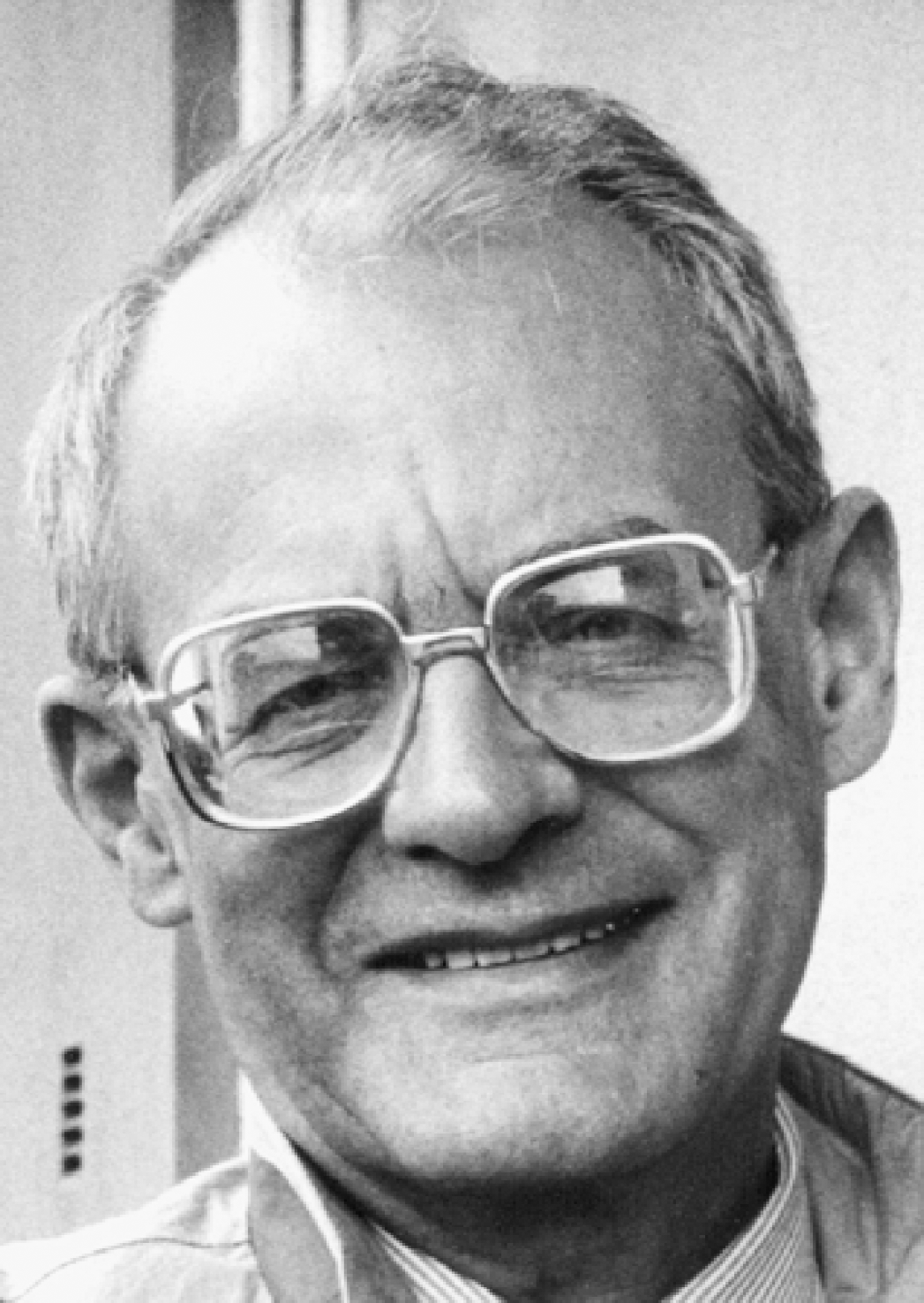
The technique was further developed both in Copenhagen and Lund. Among other things, the spatial resolution was improved by the addition of an increasing number of detectors. The fact that the rCBF measurements soon proved their value in basic and clinical brain research probably motivated the later development of expensive computer-based tomographic techniques (SPECT and PET).
Whereas the Lassen group focused their interest on the physiology and pathophysiology of the cerebral circulation, Ingvar and his collaborators studied predominantly neuropsychologic and neuropsychiatric problems. Both the Lund and Copenhagen school made seminal contributions and important discoveries within their respective areas of research.
In studies of the cortical rCBF patterns in awake healthy subjects in the resting state, Ingvar described what he called a hyperfrontal pattern, that is, a relatively high rCBF frontally compared with more posterior areas. He concluded that frontal mechanisms responsible for the serial organization of neuronal activity play a primary role for the conscious state. This conception was further supported by his and his collaborators' later findings of characteristic differences between the normal pattern and that of cases of coma, chronic stupor, apallic syndrome, and akinetic mutism.
Ingvar and his collaborators performed pioneering studies of the effect of various types of mental activity on the rCBF pattern. In 1974, he and his collaborators demonstrated for the first time with rCBF measurements that language perception and production activates not only the classical Broca and Wernicke areas but also a number of other cortical areas in both hemispheres. These findings have been confirmed in several other centers and later extended with PET technique. They have prompted a reappraisal of classical models for cortical speech functions.
In a series of papers co-authored by G. Franzen published in early 1970s, it was shown that cases of chronic schizophrenia with predominantly negative symptoms may have a “hypofrontal” rCBF pattern. This was interpreted as indicating a reduced activity in prefrontal structures responsible for the serial organization of cognition, and was by that time one of the few neurophysiologic signs of disturbed brain function in this disease.
Ingvar and his group demonstrated the value of rCBF measurements for the differential diagnosis of organic dementias and found that focal clinical symptoms correlate to specific regions of reduced rCBF.
Ingvar had several professional commissions. His many achievements include co-founding the International Society for Cerebral Blood Flow and Metabolism and the Journal of Cerebral Blood Flow and Metabolism and serving a term as president of the society. He was also president of the Swedish Society of Medicine, Adviser to the Max-Planck-Institute of Neurological Research in Cologne, and president of the Social Economic Board of SE-banken, Stockholm. He was founder and editor of Human Neurobiology as well as being a member of the editorial board for a number of scientific journals. He received the Retzius prize from the Swedish Society of Medicine, the Hugo Spatz award from the German Neurological Society, the Claus Zülch prize from the Max Planck Gesellschaft, and the Lifetime Achievement Award from the International Society for Cerebral Blood Flow and Metabolism. He was doctor honoris causa at the Universities of Montpellier, Cologne, and Copenhagen.
Ingvar maintained close contact with a rich network of international friends and colleagues. He enjoyed travelling, attending meetings, visiting research laboratories, and lecturing-he was an excellent speaker. During four years in the early 1980s, he was visiting scientist and Fogarty scholar at the National Institutes of Health, Bethesda, Maryland, U.S.A.
The general public in Sweden recognize Ingvar for his great contributions to popular neuroscience. He wrote four books and edited a five other books in Swedish on various aspects of human brain function. He wrote articles and reviews in daily newspapers, gave lectures on the radio, and appeared regularly on television together with other “learned men of Lund” answering questions from the general public or invited celebrities. This was a very popular television program and David became known all over Sweden as the foremost authority on everything that had anything to do with the brain.
After retiring from his position as professor of Clinical Neurophysiology at the University of Lund, Ingvar accepted a temporary appointment from 1990 to 1995 as Professor of Organizational Psychology at the Stockholm School of Economics. His lectures there were highly appreciated by the students and were very popular as proven by the high attendance records. While he was employed at the school of economics, Ingvar, in collaboration with the psychiatrist C. G. Sandberg, published a book, Det medvetna företaget (The Conscious Corporation), which was a huge success and subsequently was published in two editions. In the book, knowledge and experiences from cerebral physiology and behavioral science are skillfully applied to problems of industrial management. It is certainly unusual or perhaps even unique that immediately after retirement a professor would be appointed professor at such a different kind of school and in a completely different academic subject and that this remarkable arrangement would turn out to be such a great success.
David Ingvar will be remembered as a great pioneer and inspiration. His enthusiasm for his work and brain research in general was contagious; he transmitted his passion to his students and collaborators, sparking their own creativity. He had a great talent for friendship and won many friends. His lively intellect, cultural interests, verbal talent, and wit made him a brilliant conversationalist and author of popular science. He will be deeply missed not only by friends and colleagues but by all those who enjoyed reading his books and listening to him on the radio and television for whom he became a guide to the world of neuroscience.