




Abstract
Theoretical research in marketing has traditionally focused on centralized brand‐extension strategies where a brand expands its product offerings by controlling the design, production, marketing, and sales of new products “in‐house.” However, luxury brands frequently use “brand licensing” as a decentralized brand‐extension strategy under which a brand licenses its brand name to an “external licensee” that designs, produces, and sells the new product. Licensing is a time‐efficient and cost‐effective brand‐extension strategy for luxury brands to reach out to their aspirational, low‐end consumers (“followers”) who value a brand more when more high‐end consumers (“snobs”) purchase the brand's primary product (i.e., “positive popularity effect”). On the other hand, over‐licensing might dilute the brand for snobs who value brand exclusivity (i.e., “negative popularity effect”). We develop a game‐theoretic model to study luxury brand licensing in a decentralized setting by incorporating these two countervailing forces. First, in the monopoly setting (a benchmark), we find that the monopoly brand should license only when the negative popularity effect is not too high, and it should prefer “royalty licensing” over “fixed‐fee licensing” when the negative popularity effect is intermediate. Second, to explicate our analysis, we study the duopoly setting under fixed‐fee contracts. In contrast to the monopoly setting, we find that fixed‐fee licensing can “soften” price competition between brands so that licensing is “always” profitable for both brands under competition. Interestingly, in equilibrium under fixed‐fee contracts, competing brands face a prisoner's dilemma and both brands prefer not to license in some cases, even though both would be better off if they could commit to fixed‐fee licensing. Finally, we expand our analysis of the duopoly model by incorporating royalty licensing in addition to fixed‐fee licensing. We find that, in contrast to fixed‐fee licensing, royalty licensing can “intensify” price competition so that both brands have to lower their prices. Consequently, when the positive popularity effect is sufficiently strong, fixed‐fee licensing “dominates” royalty licensing. We also show that, under competition, luxury brands should adopt royalty licensing contracts only when the follower market is large and positive and negative popularity effects are small enough.
INTRODUCTION
A brand is a name, term, sign, symbol, or design that contributes to the value of a product beyond its functional use (Farquhar, 1989). A great example is Louis Vuitton: a luxury brand that has US$ 33.6 billion in brand value (Forbes, 2018). Luxury brands usually build their initial brand image/reputation by designing, producing, and selling high‐quality products in certain categories for niche customers. For example, Giorgio Armani offers a high‐end designer clothing line, Gucci designs and manufactures handbags from fine leather, and Bang & Olufsen makes uniquely designed electronics.
In many instances, once the market for a luxury brand's primary (speciality) products matures, it faces pressure from investors to grow and capture aspirational consumers. To do so, many luxury brands use their strong brand image as a “platform” and license their brand names for quickly launching products in new categories for aspirational consumers.1 Specifically, many luxury brands license their brand names to firms (licensees) with the expertise to design, produce, and sell licensed products. For example, Burberry, Gucci, and Hugo Boss license their fragrance and/or cosmetics business to Coty—one of the world's largest beauty and fragrance companies (Sandle, 2017). In the same vein, Bulgari, Ferragamo, Prada, and Versace license their eyewear to Luxottica—the world's largest eyewear company (License Global, 2004). In 2017, retail sales of licensed goods reached $271.6 billion, and the bulk of this sales figure was generated from the sales of licensed goods that bear different luxury brand names (Greene, 2009; Licensing Industry Merchandisers' Association, 2018). In general, licensed products are significantly more affordable than the primary products (License Global, 2004). For example, many consumers cannot afford Gucci handbags, but they can show their aspiration by purchasing licensed products such as Gucci fragrance (Centre for Fashion Enterprise, 2012). Therefore, licensing creates an opportunity for luxury brands to build a presence for aspirational consumers in the mass market and to venture into new product categories with greater ease.
While appealing, licensing might come at a price and dilute the image of a luxury brand because, under brand licensing, the system is “decentralized” in the sense that the luxury brand loses its control of sales operations in the new product category to its licensee. When making their purchasing decisions, consumers of luxury brands' primary products (i.e., snobs) value exclusivity and are conscious about the composition (i.e., type and number) of consumers adopting the brand (Dubois & Laurent, 1995; J. Kapferer & Bastien, 2009; Stegemann, 2006). Due to these social effects, in the event that its licensee develops and sells too many licensed products, the image of the luxury brand can be tarnished (Colucci et al., 2008; License Global, 2004; Stegemann, 2006; The Economist, 2004). Therefore, brand licensing can hurt the sales of a brand's primary products, as experienced by Gucci, Yves Saint Laurent (YSL), and Burberry when their licensing attempts failed (License Global, 2004).2
Consequently, there are complex trade‐offs when luxury brands need to decide whether or not to license their brand names to licensees. On the one hand, they can use licensing to grow and reach out to their aspirational consumers in the mass market who value the brand popularity (i.e., followers). On the other hand, licensing reduces luxury brands' attractiveness for consumers purchasing their primary products in the niche market who care about brands' exclusivity (i.e., snobs). Surprisingly, to the best of our knowledge, there is no theoretical research on luxury brand licensing in the marketing literature despite its importance (especially, for luxury brands), and it is still not clear whether luxury brands should license their brand names in new product categories or not.
Theoretical research in marketing has traditionally focused on centralized brand‐extension strategies where the brand extends by controlling the design, production, marketing, and distribution of the new product “in‐house” (e.g., see Amaldoss & Jain, 2015; Cabral, 2000; Keller & Lehmann, 2006, and references therein). However, brlicensing is a decentralized brand‐extension strategy where, through a licensing contract, the brand licenses its name to an “external licensee,” who designs, produces, and sells the new product. For this reason, theoretical research in marketing literature remains silent about the strategic interactions between the brand and its licensee, and the issue of licensing contracts, especially, in luxury context. Therefore, our paper represents the first theoretical analysis that examines how social effects and competition can affect luxury brand licensing.
In this paper, we develop a game‐theoretic model to examine how competition and interactions between snobs and followers (i.e., “reference group” effects) impact on a luxury brand's licensing strategy. We consider two competing brands that produce their primary products in the same category (e.g., handbags) and sell them in the same niche market. At the same time, by using either fixed‐fee or royalty contracts, both brands consider licensing their brand names to two competing licensees which have expertise in producing affordable products in a different category (e.g., eyewear) and selling them in the same mass market. Under a fixed‐fee contract, the licensee pays the brand a lump‐sum fixed fee upfront, and the licensee has the right to produce and sell certain products that carry the brand name for an extended time frame (Centre for Fashion Enterprise, 2012; Chevalier & Mazzalovo, 2012). Under a royalty licensing contract, the brand charges the licensee a per‐unit royalty fee for each unit sold (Centre for Fashion Enterprise, 2012; License Global, 2004). On the consumer side, we model reference group effects by considering two segments, namely, “snobs” and “followers.” Snobs in the niche market value exclusivity, and they do not want to be associated with followers (i.e., negative popularity effect). However, followers in the mass market have a strong desire to assimilate the same brand adopted by snobs so that they value licensees' products more as more snobs purchase the brand (i.e., positive popularity effect). Only snobs can afford brands' expensive primary products; therefore, brands offer their primary products to snobs, while licensees offer their licensed products to followers.
As a benchmark, we study the monopoly case and find that the monopolist brand should not license when the snobs' negative popularity effect is too high. We also show that, when the snobs' negative popularity effect is intermediate (neither too high nor too low), a royalty licensing contract is preferred by the monopolist brand over a fixed‐fee licensing contract. This is because the royalty fee makes the licensee more inclined to raise its price and sell fewer licensed products. In doing so, the brand can manage the impact of the negative popularity effect on the snobs' demand for the primary product. In summary, we complement economics literature on patent licensing (e.g., see Beggs, 1992; Bousquet et al., 1998; Poddar & Sinha, 2002) and identify social effects (or conspicuous consumption) as another rationale behind royalty contracts that are frequently observed in practice (Centre for Fashion Enterprise, 2012; License Global, 2004).
We also examine the duopoly setting. To explicate our analysis, we first consider the case when brands can only use fixed‐fee contracts to license. Interestingly, in contrast to the monopoly setting, we find that licensing is always beneficial for both brands since fixed‐fee licensing creates an indirect (strategic) effect that “softens” price competition between brands so that both brands can afford to increase their selling price without losing market share. This is in contrast to Amaldoss & Jain (2015) who show that a centralized brand‐extension strategy (i.e., “umbrella branding”) “intensifies” price competition between brands and reduces brands' profits from their primary products. As a result, this result challenges a common belief among luxury brand experts (e.g., J. Kapferer & Bastien, 2009; J.‐N. Kapferer, 2015) and implies that, under competition, luxury brands can benefit from a decentralized brand extension via “brand licensing.” We also characterize brands' equilibrium licensing strategies under fixed‐fee contracts. We find that licensing is not always optimal for both brands and, in equilibrium, both brands license only when the negative popularity effect is sufficiently low. When the snobs' negative popularity effect is above a certain threshold, each brand would have earned more if they could both commit to licensing via fixed‐fee contracts; however, in the absence of such a commitment, we find that both brands would face a prisoner's dilemma and do not license in equilibrium.
Next, we incorporate royalty licensing contracts into our duopoly model and extend our analysis to the case where brands can use either royalty or fixed‐fee contracts when they license. We find that a royalty licensing contract can create a new royalty effect that “intensifies” the competition between brands so that both brands will lower their prices when they both license. This result is driven by the fact that, under a royalty licensing contract, both brands can earn more royalties by increasing the followers' demand for the licensed product. Because of the followers' positive popularity effect, both brands can increase the followers' demand in the mass market by increasing the snobs' demand in the niche market. As both brands compete for higher demand in the niche market, the price competition between them is intensified. As a result, when both brands license, prices of their primary products will be lower under a royalty contract than under a fixed‐fee contract. When the followers' positive popularity effect is sufficiently high, the competition between brands in the snob market is very intense and the royalty contract is dominated by the fixed‐fee contract.
Finally, we characterize licensing strategies of brands in equilibrium where each brand can use a fixed‐fee or royalty contract, and we identify cases where two brands use symmetric or asymmetric licensing strategies. We show that, in cases where positive and/or negative popularity effects are sufficiently high, the royalty contract will never dominate and, whenever a brand chooses to license in equilibrium, it will adopt the fixed‐fee contract. We find that, in the event when both brands choose to license, a royalty licensing contract is preferred in equilibrium by at least one brand, only when positive and negative popularity effects are both low and the licensing market is large enough. All aforementioned results have important managerial implications, which we shall discuss in Section 7.
This paper is organized as follows: In the following section, we review the related literature. In Section 3, we present our model and assumptions. We study the monopoly setting in Section 4. In Section 5, we present our analysis of the duopoly setting with fixed‐fee contracts. Section 6 extends our duopoly analysis in Section 5 by considering royalty licensing contracts. Finally, we discuss the managerial implications of our results in the context of luxury brand licensing and the future research in Section 7. Proofs of all results in the paper are presented in Appendix I.2 in the Supporting Information.
LITERATURE REVIEW
Our paper is related to three research streams: patent licensing, distribution channel, and conspicuous consumption. First, the economics literature on patent licensing dates back to Arrow (1962). Using different game‐theoretic frameworks, several economists analyzed different licensing strategies of an inventor (licensor). Kamien (1992) shows that, when there is perfect information, fixed‐fee licensing outperforms royalty licensing for the inventor when the inventor (licensor) is an outsider and does not compete with its licensees. However, royalty licensing dominates when the inventor is an insider and competes with its licensees, and/or when there is demand/cost uncertainty or information asymmetry; see Bousquet et al. (1998), Beggs (1992), Gallini & Wright (1990), and Choi (2001). Unlike the economic literature on patent licensing, we examine the issue of luxury brand licensing by considering reference group effects and are able to capture the impact of licensing on luxury brand dilution.
Second, there is extensive literature in marketing and operations management on the distribution channel (or the supply chain). By studying a bilateral monopoly (i.e., an upstream firm (manufacturer) selling its product through a downstream firm (retailer)), the literature identifies the decentralization as the main cause of channel inefficiency and focuses on the vertical integration (or coordination) between channel members through pricing schemes or formal contracts (e.g., see Cachon, 2003). By considering a monopolist manufacturer that produces and sells a durable good over two periods, Desai et al. (2004) are the first who show that the manufacturer is better off from selling through a retailer. and the decentralization can benefit the channel if the manufacturer can commit to specific wholesale prices for both periods in advance. Similarly, Su & Zhang (2008) show that a bilateral monopoly channel for a nondurable good can benefit from decentralization if consumers are forward looking and can strategically delay their purchases. Cachon and Kök (2010) study a channel with multiple competing upstream firms (manufacturers) that sell their products through a common downstream firm (retailer) by using a two‐part tariff or wholesale‐price and quantity‐discount contracts. By allowing upstream firms to compete for the business of the downstream firm, they show that a two‐part tariff or quantity discount contract intensifies price competition between upstream firms so that they are better off using wholesale price contracts. Ingene and Parry (2000) consider an upstream firm selling through two competing downstream firms and determine the conditions under which a channel‐coordinating wholesale‐price strategy is preferred by the upstream firm over a two‐part tariff. McGuire and Staelin (1983) study a distribution channel where two competing upstream firms (manufacturers) vertically integrate into the downstream (e.g., retailing) or sell their products through two dedicated downstream firms (retailers). They show that, when the products are highly substitutable, it is not optimal for upstream firms (or their channels) to vertically integrate and control the operations of their downstream firms. This is because, in such cases, decentralization within the channel softens price competition between upstream firms and increases their profits as well as the profit of their respective channels. Moorthy (1988) studies the same channel structure as in McGuire and Staelin (1983) and identifies general conditions under which decentralization within a channel is optimal in equilibrium. Unlike the literature on the distribution channel, our paper considers reference group effects and studies a more general channel structure with two upstream firms (brands) that already compete against each other in an existing market (or a product category) and consider expanding into a new market (or a product category) by licensing their brand names and selling through two dedicated competing downstream firms (licensees).
Third, the literature on conspicuous consumption dates back to Veblen (1899) who postulates that individuals consume conspicuous products to signal their wealth and social status. Becker (1991) and Corneo and Jeanne (1997) show that the demand for a product may increase in its price when consumers are followers (conformists) and value a product more when more people purchase it. Amaldoss and Jain (2005a, 2005b) develop a model of conspicuous consumption and analyze how demand and price of a firm are affected by snobs and followers in the monopoly and duopoly settings. Agrawal et al. (2015) analyze the product design and introduction strategies of a firm selling a conspicuous durable product over multiple periods and find that, with exclusivity‐seeking consumers or snobs, firms introduce products with high durability at low volume and high price. Arifoğlu et al. (2020) consider snobbish consumers with heterogeneous (high and low) valuations. They find that snobbish consumer behavior leads to buying frenzies and price markdowns. Unlike these papers, we model reference group effects and analyze luxury brands' licensing strategies. There are also several papers that study the impact of conspicuous consumption on pricing and the product management strategies of firms selling multiple products (e.g., Amaldoss & Jain, 2008; Balachander & Stock, 2009). Unlike these papers, we analyze the implications of reference group effects on brands' licensing strategies.
In this paper, we adopt the modeling framework developed by Amaldoss & Jain (2015) to capture: (1) the snobs' negative popularity effect and (2) the followers' positive popularity effect. However, our paper is fundamentally different in four aspects. First, unlike Amaldoss & Jain (2015) who study the “product line extension” within the same category through umbrella or individual branding, we focus on the “product category extension” through brand licensing and aim to determine when a brand should license its brand name to extend in a new product category. Second, unlike Amaldoss & Jain (2015) who examine centralized brand‐extension strategies (i.e., umbrella and individual branding), we investigate the issue of brand licensing that is a decentralized brand‐extension strategy where each brand licenses its brand name to an external licensee to produce and sell a different and more affordable product to followers. This enables us to model strategic interactions between brands and their licensees and to capture the impact of decentralization on brands' brand‐extension strategies. Third, we examine fixed‐fee and royalty licensing contracts arising from a decentralized brand extension, whereas such contracting issues do not exist in a centralized brand extension as examined in Amaldoss & Jain (2015). In doing so, we are able to compare fixed‐fee and royalty licensing contracts and determine their impact. Fourth, we obtain some new findings. We find that fixed‐fee licensing “softens” price competition between brands and improves brands' profits from their primary products even without taking into account their licensing revenues. This result is fundamentally different from Amaldoss & Jain (2015) who show that umbrella branding “intensifies” price competition between brands and reduces brands' profits from their primary products. We also find that royalty licensing “intensifies” the price competition between brands when the positive popularity effect is high. Consequently, under competition, we find that fixed‐fee licensing dominates royalty licensing, especially when the followers' positive popularity effect is strong.
Overall, our paper is the first to examine different brand licensing strategies (i.e., fixed‐fee and royalty contracts) operating in a decentralized system in the presence of reference group effects and competition.
MODEL PRELIMINARIES
Consider two competing luxury brands A and B that produce and sell the same category of “speciality” and “more expensive” product(s) in a niche/exclusive market (e.g., Fendi and Gucci for leather goods). Each brand considers licensing its brand name to its corresponding (external) licensee (say, licensee a for brand A and licensee b for brand B) who has expertise in designing, producing, and selling a different category of “more affordable” product (e.g., cologne) in the mass market that carries the corresponding brand name. We use


Market structure. The “primary” products of both brands are sold in market s (i.e., snob market) comprised of high‐end, exclusivity‐seeking consumers (i.e., “snobs”) with market size equal to 1. The “licensed” products produced by the licensees are sold in a different market f (i.e., follower market) comprised of low‐end, aspirational consumers (i.e., “followers”) with market size β (that can be larger than market s). Followers cannot afford brands' primary products that are very expensive, but they can satisfy their aspirations by purchasing affordable licensed products (Amaldoss & Jain, 2015; Centre for Fashion Enterprise, 2012). For tractability and clear exposition, our base model assumes that snobs do not purchase the licensed products. However, in Appendix F in the Supporting Information, we extend our duopoly model under fixed‐fee contracts and consider cases where a fraction of snobs purchases licensed products.
Our model captures the “competition effect” within each market and “reference group effects” across markets as follows.
Within market competition effect. For both snobs and followers, a product's value is influenced by functional and social effects. Within each market s (or f), we use the Hotelling model to capture heterogeneous preferences for the functionality of the product so that all snobs are uniformly distributed over the line [0, 1], where brand A's product is located at 0 and B at 1. Hence, for a snob who is located at θ, his/her functional value for brand A's product is


Using a similar construct, we assume that licensed product a is located at 0 and b at 1, a follower located at θ values product a at


Cross market reference group effects. Through licensing, a brand's name is exposed to both snobs and followers in markets s and f, which can bring about reference group effects, namely, “positive” and “negative” popularity effects among snobs and followers. Snobs despise the popularity of licensed products sold in market f so that a snob's utility derived from purchasing brand I is decreasing in





Followers in market f interpret the popularity of a brand in market s as a form of endorsement; hence, a follower's utility derived from purchasing licensed product i is “increasing” in We consider reference group effects in our model to capture the empirical research finding in marketing, which shows that reference groups do influence consumers' purchase intentions and their choice of luxury brands (Bearden & Etzel, 1982; Childers & Rao, 1992). In our context, Stegemann (2006) and Stankeviciute and Hoffmann (2010) show that extending in a new product category might impact the luxury brand “negatively” and cause the brand dilution (i.e., negative popularity effect) since it reduces the brand's exclusivity/uniqueness for snobs who purchase to differentiate themselves from the masses. On the other hand, Park et al. (1991) and Eren‐Erdogmus et al. (2018) show that (aspirational) consumers fulfill their group belonging needs by purchasing a product of a luxury brand even in a completely new category because group affiliations of the luxury brand create reference points in their memory and make them form positive associations between the luxury brand and the extension product (i.e., positive popularity effect).





Consumers' individual‐level desire for uniqueness within each market (e.g., snobs and followers might want to be different from everyone else in their own market) exists even when a brand does not license and has a second‐order impact on a luxury firm's brand licensing strategies compared to reference group effects across markets (segment‐specific desire for uniqueness). Because we aim to study luxury brands' licensing strategies, we focus on reference group effects and, for tractability, we ignore consumers' individual‐level desire for uniqueness in our base model. In Appendix D in the Supporting Information, we extend our duopoly model under fixed‐fee contracts by considering within market social effects and study the impact of consumers' individual‐level desire for uniqueness on brands' licensing decisions under fixed‐fee contracts. Within market social effects
Profit functions of a brand and its licensee. Each brand I licenses its name through a contract that specifies a transfer payment






Licensing contracts. In this paper, we study fixed‐fee and royalty contracts that are commonly used in the luxury goods industry (Centre for Fashion Enterprise, 2012; Chevalier & Mazzalovo, 2012). Under a fixed‐fee contract, the licensee i pays a fixed fee To isolate the effect associated with the fixed fee


Rational expectations equilibrium. We note that snobs' or followers' expectations, that is,


MONOPOLY
Consider the case when brand A operates as a monopoly located at 0 in market s. Brand A may license its brand name to licensee a located at 0 in market f. For ease of exposition, we shall restrict our analysis to the case when market s is fully covered (i.e., the resulting


We consider the following sequence of events. First, brand A decides whether to license or not, and if it licenses it determines and offers a (fixed‐fee or royalty) contract to licensee a. If licensee a agrees to the contract, then brand A sets its price


Next, we consider three cases: (i) brand A does not license, (ii) brand A licenses via fixed‐fee contract, and (iii) brand A licenses via royalty contract. Then, comparing brand A's optimal profits in these three cases, we determine its equilibrium licensing strategy in Section 4.4.
No licensing (NL)
As a benchmark, suppose brand A does not license to licensee a so that



Fixed‐fee licensing contract (F)
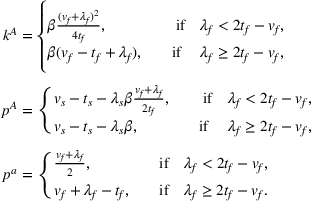
We now consider the case when brand A licenses its brand name to its licensee a by charging a fixed‐fee When brand A licenses its brand name to licensee a by using a fixed‐fee contract, the fixed fee and prices are, respectively, given by

Through fixed lump‐sum payment


Brand A's profit under the fixed‐fee contract is given by

Royalty contract
Next, we consider the case when brand A uses a royalty contract and charges When brand A licenses its brand name to licensee a by using a royalty contract, the per‐unit royalty fee and prices are, respectively, given by


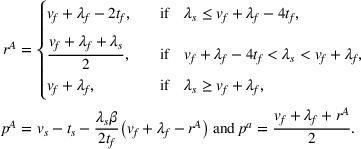
From Lemma 2, we observe that as snobs' “negative popularity effect”


Moreover, by comparing Lemmata 1 and 2, we observe that brand A and its licensee charge (weakly) higher prices under the royalty contract in the monopoly setting. Compared to the fixed‐fee contract, the royalty contract increases licensee a's effective marginal cost. Therefore, licensee a charges a higher price and sells to fewer followers under the royalty contract (i.e., double marginalization effect of royalty licensing). This, due to the strategic complementarity between prices of the brand and its licensee, increases snobs' valuations more; therefore, brand A charges a higher price for its own primary product under the royalty contract compared to the fixed‐fee contract (i.e., strategic complementarity effect of royalty licensing).
Brand A's profit under the royalty contract is given by

Equilibrium licensing strategy of the monopoly brand
To characterize the equilibrium licensing strategy of brand A, we compare brand A's profit without licensing (i.e.,
Brand A does not license, that is, When brand A licenses (i.e.,







Proposition 1(i) implies that the licensing decision of a monopoly is driven by the interplay between snobs' negative popularity effect


Proposition 1(ii) shows that, when licensing, brand A prefers the fixed‐fee contract when snobs' negative popularity effect is sufficiently low, while it prefers the royalty contract when the negative popularity effect is neither too high nor too low. On the one hand, the double marginalization effect of royalty licensing creates channel inefficiency and reduces brand A's licensing revenues from market f; on the other hand, the strategic complementarity effect of royalty licensing curbs the negative impact of licensing on snobs and enhances brand A's profits from its primary product. When

DUOPOLY: FIXED‐FEE LICENSING CONTRACTS
To explicate our analysis and ease our exposition, we examine the case when competing brands can only use fixed‐fee contracts if they decide to license. (In Section 6, we expand our duopoly analysis by incorporating royalty contracts.) Because brand A and brand B are symmetric, it suffices to consider three cases: (i) both brands do not license, (ii) both brands license via fixed‐fee contracts, and (iii) only one brand licenses via a fixed‐fee contract and the other brand does not license. Below, we study each of these three cases, and then, by comparing brands' optimal profits associated with these three cases, we characterize the equilibrium licensing strategies of both brands under fixed‐fee contracts in Section 5.4.
For tractability, we restrict our analysis to cases where it is optimal for duopoly brands to cover both market s and f (i.e., We show that all our results continue to hold in a duopoly model with fully covered market s and partially covered market f (see Appendix B in the Supporting Information). We also study the duopoly model where both market s and f are partially covered. In this case, each brand and its licensee become a “local monopoly” in their respective markets. Hence, there is no competition in both markets and the duopoly model is a simple extension of the monopoly model with two local monopoly brands and their licensees. We omit the analysis of this case for brevity.


Both brands do not license (NL, NL)
Suppose both luxury brands do not license (so that










Both brands license via fixed‐fee contracts (F, F)
When brands A and B license their brand names to external licensees a and b by charging fixed fees When both brands license their brand names by using fixed‐fee contracts, the fixed fee and prices are, respectively, given by


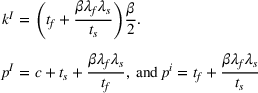


Lemma 3 shows that, unlike in the monopoly case (F) where the brand licenses via a fixed‐fee contract (see


In addition, Lemma 3 reveals that, relative to brands' equilibrium prices associated with the no‐licensing case By considering cases where market s is partially covered, Appendix C in the Supporting Information extends our duopoly model under fixed‐fee contracts and compares brands' prices in cases


When both brands use fixed‐fee contracts to license, their profits are given by Relative to the no‐licensing case, each brand earns more when they both license by using fixed‐fee contracts, that is,







Lemma 4 implies that both brands earn more by licensing their brands to their respective licensees by using fixed‐fee contract. This result is in contrast to the monopoly case (F) (see Proposition 1) and appears to be counterintuitive because licensing has a “negative popularity effect” on snobs' valuations. However, as discussed above, in a duopoly when both brands use fixed‐fee licensing, the negative popularity effect of licensing on each brand cancels each other out and the competition between brands is softened due to the “indirect effect” across markets s and f. Consequently, both brands can afford to charge higher prices for their primary product and obtain more profits from market s even without taking into account the licensing revenues.
This result is in contrast to Amaldoss & Jain (2015) who show that, when both brands use umbrella branding strategies and extend themselves by producing the new product in‐house, the price competition between brands intensifies and brands' profits from their primary products in market s decrease.8 Also, against the common opinion among luxury brand experts (e.g., J. Kapferer & Bastien, 2009; J.‐N. Kapferer, 2015), our result suggests that luxury brands might benefit from decentralization when extending their brands through licensing. As such, brand licensing can be preferred over umbrella branding.
Only one brand licenses by using a fixed‐fee contract (F, NL)
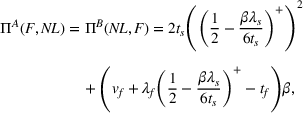
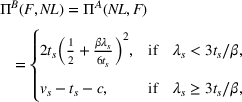
It remains to consider the case when exactly one brand licenses by using a fixed‐fee contract. Because both brands and both licensees are symmetric, it suffices to study the case When brand A licenses its brand name to licensee a by using a fixed‐fee contract and brand B does not license: if if


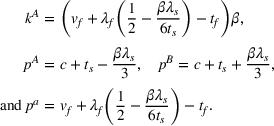


Lemma 5(i) shows that, when the negative popularity effect is low (i.e.,


Both brands are symmetric so that the profit of each brand in the case when only brand B licenses is given by



Equilibrium licensing strategies of duopoly brands under fixed‐fee contracts
By comparing brands' profit functions (presented in the previous sections) under different licensing strategies as in a two‐player simultaneous‐move game, Proposition 2 characterizes the licensing strategy that each brand will adopt in equilibrium under fixed‐fee contracts. In preparation, we define the thresholds Under fixed‐fee licensing contracts, brands' equilibrium licensing strategies can be characterized as follows: When the base valuation of the licensed product is low so that both brands do not license if both brands either license or do not license (i.e., two equilibria exist) if only one brand licenses if both brands license if When the base valuation of the licensed product is high so that only one brand licenses if both brands license if


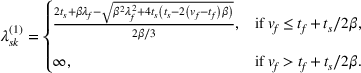
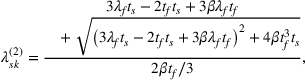





Figure 1a illustrates Proposition 2(I) for the case when




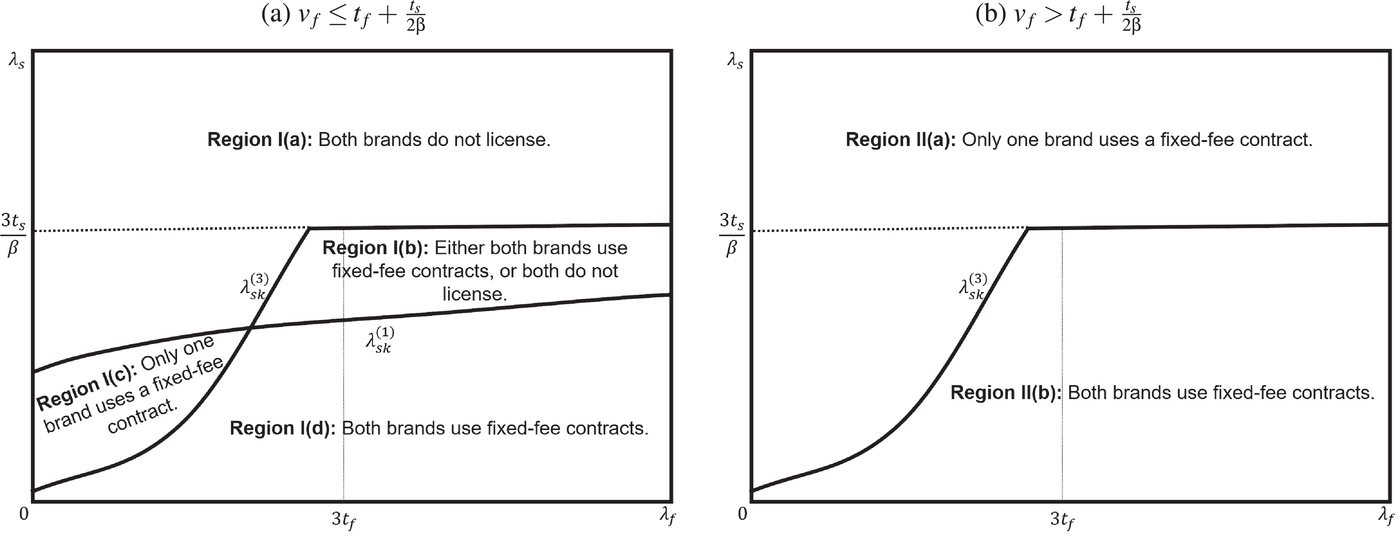
Brands' equilibrium licensing strategies under fixed‐fee contracts.
From Figure 1a, we observe that, given any






Figure 1a also shows that, for a given





Figure 1b illustrates Proposition 2(II), which corresponds to the case when





DUOPOLY: INCORPORATING ROYALTY CONTRACTS
We now expand our duopoly analysis in Section 5 by adding royalty contracts into the consideration set so that, when brands consider licensing, they can choose between fixed‐fee and royalty contracts. To characterize the brands' equilibrium licensing strategies in this case, we need to compare their profit functions under six different licensing strategies as in a simultaneous‐move game with two symmetric players (i.e., brand A and B) and three strategies (i.e.,

Both brands license by using royalty contracts (R, R)
First, consider the case where brands A and B license their brand names to licensees a and b by charging (per‐unit) royalty fees When both brands license by using royalty contracts, the royalty fee


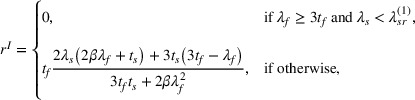


Relative to brand I's equilibrium prices in case both brands use fixed‐fee contracts to license (see Lemma 3), Lemma 6 reveals that, under royalty contracts, licensees charge higher prices in market f, while brands charge lower prices in market s. When both brands use royalty licensing, the effective marginal costs of licensees increase by their respective royalty fee; as a result, each licensee increases its price according to an extra term


When both brands use royalty contracts to license, brands' profits satisfy
Relative to the case when both brands license via royalty contracts, as in case Relative to the case that both brands license via royalty contracts, as in case



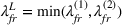









Lemma 7(i) asserts that, instead of licensing via royalty contracts, as in the case


Lemma 7(ii) shows that, independent from the negative popularity effect


Only one brand licenses by using a royalty contract (R, NL)
Next, consider the case when only one brand (brand A) licenses via a royalty contract, while the other brand (brand B) does not license. Hence, brand A charges the royalty fee






One brand uses a royalty contract and the other brand uses a fixed‐fee contract (R, F)
Now, consider the case where both brands license and use different contracts. Without loss of generality, suppose that brand A uses a royalty contract and charges a per‐unit royalty fee


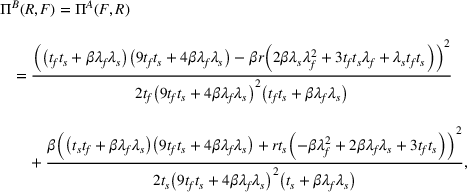
Lemma I.4 in Appendix I.1 in the Supporting Information characterizes brand A's royalty fee


Brands' profits in this case are given by

Equilibrium licensing strategies of duopoly brands
We finally characterize brands' equilibrium licensing strategies when they can use either fixed‐fee or royalty contracts to license. Characterizing equilibrium for all Brands' equilibrium licensing strategies can be characterized as follows: If If


Proposition 3 resembles Proposition 2, and the equilibrium licensing strategies when brands can use fixed‐fee or royalty contracts have similar characteristics as under fixed‐fee contracts when the negative popularity effect is sufficiently high, and when the negative popularity effect is low and the positive popularity effect is high (i.e., as illustrated in Figure 1 for


Proposition 3(i) shows that, when the negative popularity effect is low and the positive popularity effect is high enough (i.e.,


Proposition 3(ii) implies that, as in the monopoly case (see Proposition 1), when followers' base valuation is sufficiently low (i.e.,


Numerical examples. To obtain a more complete picture about the brands' equilibrium licensing strategies beyond the range of positive and negative effects that are considered in Proposition 3, we conduct an extensive numerical study.12 We observe from all numerical examples for sufficiently low negative popularity effect (i.e.,


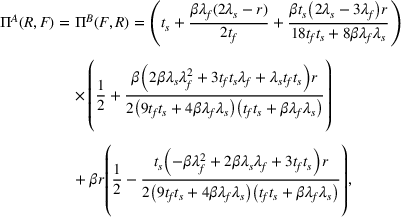
Figure 2 illustrates brands' equilibrium licensing strategies for low values of negative and positive popularity effects (i.e.,


Brands' equilibrium licensing strategies under fixed‐fee and royalty contracts for


Further, from Proposition 3, and Figure 2a,b, we observe that both brands prefer royalty licensing only when the follower market (i.e., β) is sufficiently large, the negative popularity effect is neither too high nor too low, and the positive popularity effect is sufficiently low. This is because, in such cases, royalty contracts enable brands to increase marginal costs of their licensees and prevent them to sell too much in market f; moreover, they soften price competition between brands so that they can charge higher prices in market s (i.e., a high indirect strategic effect and a low royalty effect). Lastly, together with Proposition 3, Figure 2 indicates that any combination of no licensing (NL), and fixed‐fee and royalty licensing (F and R) is possible so that each of the six cases analyzed in Sections 5 and 6 can be observed in equilibrium.
DISCUSSION AND CONCLUDING REMARKS
Over the last 30 years, many luxury brands have licensed their brand names to licensees so that they can extend their product offerings in new product categories in a cost‐effective and time‐efficient manner (License Global, 2004). While licensing can enable a luxury brand to capture additional revenues from aspirational consumers (or followers), it can lead the brand to lose the direct control over the sales of the licensed products to the licensee. Consequently, licensing can backfire and make the brand less attractive for the exclusivity‐seeking consumers (or snobs) who purchase brands' own primary products as it was evident when several luxury brands such as Gucci, YSL, and Burberry failed when they attempted to license in the 1980s and 1990s (License Global, 2004).
To examine these two countervailing forces associated with licensing, we have developed a game‐theoretic model to investigate how reference group effects and competition affect luxury brands' licensing strategies. Our analysis provides some useful insights on luxury brand licensing.
How do fixed‐fee and royalty licensing affect the price of a brand's primary product? Due to snobs' desire for uniqueness, it is intuitive to expect a decrease in the price of a brand's primary product when it licenses. While we have confirmed this intuition in the monopoly setting, we have shown that it is not true in most cases in the duopoly setting. Specifically, in cases where both brands license via fixed‐fee contracts, an indirect effect emerges and “softens price competition” between brands. Therefore, fixed‐fee licensing increases prices of brands' primary products in the duopoly setting. In cases where both brands use royalty contracts, in addition to the indirect effect that softens price competition between brands, a royalty effect arises and “intensifies price competition” between brands. The royalty effect dominates the indirect effect, and hence royalty licensing decreases brands' prices only when followers' desire to adopt the same brand as snobs (i.e., positive popularity effect) is sufficiently high. This is because, when followers have a strong desire to emulate snobs, both brands compete for the snobs' demand by lowering their prices so that they can attract more followers to purchase their licensed products and increase their overall royalties. These results indicate that the impact of licensing on brands' prices and profits depends critically on contracts being used, and luxury brands should be careful when they determine their licensing contracts.
Does licensing always decrease a brand's profit obtained from its own primary product? Since licensing decreases brand exclusivity for snobs, one could argue that a brand will obtain a lower profit from snobs if it licenses. Indeed, we have shown that this is true in the monopoly setting. In the duopoly setting, however, we have found that, when both brands use fixed‐fee contracts, licensing always increases a brand's profit from its primary product and is always beneficial for both brands. The intuition of this result is primarily driven by the indirect effect of fixed‐fee licensing that softens competition between brands. It is interesting to observe that, despite the negative popularity effect, competing luxury brands license their brand names, for example, Chanel and Dior license their brand names to Luxottica and Safilo in eyewear (Luxottica, 2020; Safilo, 2020). We uncover a plausible reason behind this practice of luxury brands and show that brand licensing can soften price competition between luxury brands and improve profits from snobs.
Is it beneficial for a brand to use royalty licensing to influence its licensee's price and sales of the licensed product when snobs' desire for uniqueness is high? Our analysis has revealed that, in the monopoly setting, a royalty licensing contract enables a brand to counteract the negative popularity effect more effectively than a fixed‐fee licensing contract (under which a brand cannot affect its licensee's sales). Therefore, for high values of snobs' desire for uniqueness, a monopoly brand always benefits from licensing via a royalty contract. On the other hand, under competition in the duopoly setting, we have found that, when the followers' desire to adopt the same brand as snobs is strong, snobs' desire for uniqueness has no impact and both brands are always better off licensing by using fixed‐fee contracts, instead of using royalty contracts.
Why do some brands never license? We have found that, in both monopoly and duopoly settings, a brand should not license when snobs' desire for uniqueness is above a certain threshold. In the monopoly setting, the primary motivation for a brand to choose not to license is to avoid the negative impact of licensing on its profits from snobs. In the duopoly setting, however, a brand may not license also due to the lack of a commitment mechanism. In particular, we have shown that, in the duopoly setting, when snobs' desire for uniqueness is very high, each brand would have earned more if they could both commit to licensing via fixed‐fee contracts. However, in the absence of such a commitment, both brands face a prisoner's dilemma and do not license in equilibrium. This provides an alternative explanation for why luxury brands like Louis Vuitton and Hermes never license their brand names (Chevalier & Mazzalovo, 2012; License Global, 2004).
Limitations and future research. When we developed our model, we have made simplification assumptions for tractability and to obtain clean insights. Consequently, our model has limitations and there are several avenues for future research. First, we have only considered brand licensing through fixed‐fee and royalty contracts in order to isolate the effect of fixed fee and per‐unit royalty fee. However, brands can also use mixed licensing contracts (i.e., a combination of fixed‐fee and royalty contracts) or umbrella branding strategy (i.e., producing in‐house) to extend in a new product category. Future work can study mixed licensing contracts and/or umbrella branding strategy. Second, we have assumed that brands have a single primary product and they consider extending only in a single (new) product category via licensing. In practice, luxury brands have multiple primary products and/or they can use brand licensing to extend in more than one product category. Future research can extend our paper by studying such cases. Third, we have assumed that followers value a brand's licensed product more as more snobs purchase its primary product (i.e., positive popularity effect). However, there can be cases where followers do not want to be associated with snobs (i.e., followers value a brand's licensed product less as more snobs purchase its primary product). Our paper can be extended by considering such cases. Lastly, we showed that, in the duopoly setting under competition, fixed‐fee licensing always leads to higher prices and profits for brands compared to no licensing when the snob market is fully covered (i.e., snobs' base valuation is sufficiently high). Our analysis in Appendix C in the Supporting Information indicates that, when the snob market is partially covered (i.e., snobs' base valuation is sufficiently low), this result holds true only for high and low values of positive and negative popularity effects, respectively. Future work can empirically test for what realistic parameter values this result is valid and thereby identify how likely it is to occur in practice.
Footnotes
ACKNOWLEDGMENTS
The authors thank the department editor, Fred M. Feinberg, the senior editor, and two anonymous reviewers for several suggestions that greatly improved this paper.
1
Aspirational consumers are willing to be associated with high‐end consumers (i.e., snobs), belong to the conformist group (i.e., followers), and are subject to severe budget constraints (Barnett, 2005; Bekir et al.,  ).
).
2
In the 1980s, Gucci licensed its brand name to different licensees who produced more than 22,000 products such as alcohol, key chains, and even toilet paper and distributed them through department stores. This licensing strategy backfired because the Gucci brand was diluted, and its image was associated with “drug stores” (Jackson et al., ). Gucci gradually recovered its image by limiting the number of its licenses and by having tighter controls over its licensees.
3
In practice, the royalties are based on a percentage of the licensee's overall revenue, and this percentage ), we assume that royalties are collected for each unit sold. However, by letting
4
See Lemma H.1 in Appendix H in the Supporting Information for the lower bound on snobs' base valuation
5
Under umbrella branding, when market s and f are fully covered, the price of monopoly brand's (brand A's) primary product is equal to ). Therefore, relative to the case of no licensing/extension, umbrella branding, similar to (royalty and fixed‐fee) licensing, reduces monopoly brand's price and profit in market s due to the negative popularity effect.
6
That is, we focus on cases where both markets are fully covered so that duopoly brands and their licensees compete in their respective markets, and jointly rising prices of brands and licensees do not affect aggregate demand in market s and f, respectively.
7
See Lemma H.2 in Appendix H in the Supporting Information for the lower bounds on snobs' and followers' base valuations
8
The aforementioned indirect (strategic) effect also emerges in the case when both brands use umbrella branding strategies and produce their new products in‐house, as analyzed by Amaldoss & Jain (). However, its impact is completely opposite and, relative to the case of no licensing, the price competition between brands in market s is intensified. (For consumer tastes that are uniformly distributed between 0 and 1, brands' prices when both use umbrella branding strategies reduce to
9
We make this assumption for ease of exposition, and the condition in () is sufficient but not necessary. There might be cases where that condition is violated but the equilibrium still exists. The condition in (14) is equivalent to assuming that the size of market f is sufficiently large (high β). Therefore, our assumption is in line with practice as the size of follower market (market f) is much larger compared to the size of the market for a brand's own luxury goods (market s).
10
In the event that
11
This assumption (i.e., is still valid under this assumption.
12
We choose ) is satisfied so that the royalty fee(s) in cases
References
Supplementary Material
Please find the following supplemental material available below.
For Open Access articles published under a Creative Commons License, all supplemental material carries the same license as the article it is associated with.
For non-Open Access articles published, all supplemental material carries a non-exclusive license, and permission requests for re-use of supplemental material or any part of supplemental material shall be sent directly to the copyright owner as specified in the copyright notice associated with the article.
