




Abstract
This article uses fieldwork collected in four villages of the Sarnyéré Dogon in Mali between 2002 and 2010 to explore the impact of unprecedented individual youth mobility. This small Sahelian population has been challenged by declining natural resources and an opening up to the outside world. Temporary migration of families before each rainy season or harvest has always been part of this population’s adaptation to an arid environment, but youth mobility, especially among girls, is new. Although migration is short term and over relatively short distances, it is an increasingly prevalent alternative to agricultural subsistence strategies. Whereas economic reasons underpin boys’ mobility, for young unmarried girls, the predominant driving force is the discovery of the outside world. Broadly speaking, youth migration in this population is one part of changing intergenerational and gender relations and is especially related to youths’ more individual choices of spouse.
Keywords
The Sahelian populations have developed impressive capacities to cope with recurrent droughts. However, the current combination of population growth, increased aridity, and negative impacts of economic policies has made alternatives to agriculture more and more necessary. There has thus been a general trend toward livelihood diversification, but the response of households is specific to each situation and context (Batterbury 2007). Different types of new activities have developed, due to the varying opportunities of the broader context (e.g., access to urban centers; labor market opportunities). Mobility has become a key strategy to reduce vulnerability and increase resilience (Tacoli 2009). Studies in Mali and Burkina Faso show that short-distance, temporary moves increase during droughts, whereas migration to urban centers and abroad is found during years with normal rainfall and among the better off (Findley 1994; Henry, Schoumaker, and Beauchemin 2004). Thus, rather short-distance and circular migrations may become an increasingly important element of adaptation to change, including climatic change (Tacoli 2009). Economic transformations and the increased mobility of young people are concomitant with processes of modernization and individualization (Marie 1997), which are profoundly transforming familial behavior in sub-Saharan Africa (Pilon and Vignikin 1996). As shown by Toulmin (1992), 1 the rise of individual projects among family members makes extended families more fragile and challenges their capacity to use their resources as well as or better than smaller households (Lloyd 1999). Parents’ release of control over choices of spouse and more auto-nomy granted to youths tend to make the married couple into a private unit (Locoh 1995; Locoh and Mouvagha Sow 2005; Hertrich 2007), and the fragilization of family models in a context of increased precariousness contribute to the weakening of intergenerational solidarities (Locoh 1995).
We analyze the mobility habits of young people in a small Sahelian population in Mali that is witnessing a brutal transition from a cohesive social system and a self-sufficient economy to integration into the outside world in a context of extreme cultural and environmental precariousness. Our aim is to discover whether youth migration enables the population to adapt to economic and social challenges or if it precipitates the disintegration of a society already weakened by decreasing natural resources and the spread of new family and cultural values (what Sauvain-Dugerdil and Preiswerk [1993] would call “migration-structure” or “migration-rupture”). We examine what distinguishes the new, temporary, more individualistic migration of very young people from the role that mobility played previously. Is their reason to migrate clearly economic? Does their temporary migration have an impact on family subsistence or their own well-being? What is the impact of migration on intergenerational and gender relationships?
Data and Methods
Our study focuses on four villages 2 of the Sarnyéré Dogon (about 2,500 persons in 2010). Our work in the region dates back to the mid-1970s, and is what has been described as a comprehensive demography (Bozon 2006; Petit 2008), relying on mixed survey methods. 3
This study presents qualitative research on the changing behavior of young people in rural areas and is a result of a partnership between the Universities of Geneva and Bamako developed in 2000. The rural fieldwork took place in 2002, 2004, and annually from 2006 until 2010. Special emphasis is put on the emic viewpoint, that is, the meanings that villagers give themselves through interviews and participant observation. The information used in the present article relies on ninety-six interviews conducted in this eight-year time span (2002–2010) with small groups of women and men, youths and adults. 4 The interviews mainly focused on youth migration and its impacts. Specific topics were added on family network (in 2007), choice of spouse and subsistence strategies (2008), and socioeconomic inequalities (2009). 5 Interviews took place in the local language—Torotegu, a Dogon dialect—were translated into French by a local translator, and were transcribed by the researcher(s). 6
The analysis has adopted an inductive approach in line with what is known as grounded theory (Glaser and Straus 1967), conceived as a “circular interaction” between the description of the discourse and the building up and verification of interpretative keys (Guillemette 2006). We used the program Atlas-Ti to elaborate the interpretative model through the usual steps of open and axial coding, that is, identification of main concepts that structured the discourse and the concepts’ logical links. 7
The construction of the explanatory model relies on a comparative process of the discourses, put in perspective with other types of information from the field and from the literature. Validation of the results is reached through “saturation,” when all information converges to give a coherent image. The qualitative data are complemented by more factual information. A questionnaire given in 2002 to a small sample of 200 young people has provided detailed retrospective information on youth mobility. On each subsequent field mission, we carried out a count of the number of young migrants by village in that specific year. The interpretative work also relies on participant observation and the overall knowledge of the long-term dynamics of the population since our first studies in the 1970s.
The Sarnyéré Population: A Story of Survival in a Harsh Environment
Baro and Batterbury’s (2005) case studies in Niger and in Koro, a Malian Dogon municipality southeast of the Sarnyéré, show that the Sahelian populations have an impressive capacity to cope with their harsh environment by diversifying their livelihood strategies, yet this diversification brings with it changes to the social system. The Sarnyéré is in many regards an extreme case of diversification. It provides a well-documented example of survival through the extensive exploitation of natural resources. The cost of this diversification, however, has been very high; the population has been marked by mortality crises (in some cases, the disappearance of entire lineages), and in- and out-migration of families and even entire villages (Sauvain-Dugerdil 1980; Gallay and Sauvain-Dugerdil 1981). The population in the Sarnyéré mountains has managed to survive, but child mortality was so high that the population barely reached the reproduction level. 8 In the mid-1970s, child mortality was as high—infant mortality was 282 percent per thousand and the probability of surviving to five years old was 0.50—as during periods of epidemics in other areas (Hill 1985). This mountain population remained particularly marginalized until very recently, even in comparison to other villages that spoke the same variety of the Dogon language. They were found to exploit and consume a wider range of wild resources than in other villages, and had a higher fertility rate (8.3 children among women older than 40). The latter had been interpreted as a result of the near-absence of temporary migration, which was already spreading in other Dogon villages in the same area in the early 1980s (Cazes et al 1993).
Similar to the Dogon in general (Petit 1997; Thibaut 2005), mobility has been an integral part of the Sarnyéré peoples’ history and their adaptive strategies (Sauvain-Dugerdil 1980; Sauvain-Dugerdil, Dougnon, and Diop 2008). Families or even entire villages have adapted to the limited water resources by moving temporarily. When the strategic advantage of living in the mountains decreased and more peaceful relations with neighboring populations developed, the Sarnyéré gradually moved to the mountain foot: by 1989 the last families had left the slopes. In the last decade, they increasingly colonized the lowlands.
Youth Migration, Livelihood Diversification, and the Path to Modernity
As a result of a decrease in natural resources and new outside influences, the Sarnyéré economy has gradually shifted from one that maximizes local natural resources to one in which livelihoods are diversified. In line with what has been described elsewhere (Batterbury 2007), this shift was a result of both the development of the agro-pastoral system and the implementation of new subsistence strategies that have brought with them capitalism and economic inequalities among families. Commercial contacts with the outside world have increased, and temporary migration of young people has become a source of monetary resources. Since the 1990s, individual temporary migration has rapidly spread. Mobility is a pillar of family subsistence strategies for the Sarnyéré, but it is also the expression of deep sociocultural changes associated with the individualization that often comes with modernization.
We examine the spread of this new mobility through statements from young people about their overall experience and its positive and negative outcomes. We also analyze the broader impact of this new mobility on the economy and family behavior.
“Exodus”: The Revolution of Youth Mobility
The “exodus” trend
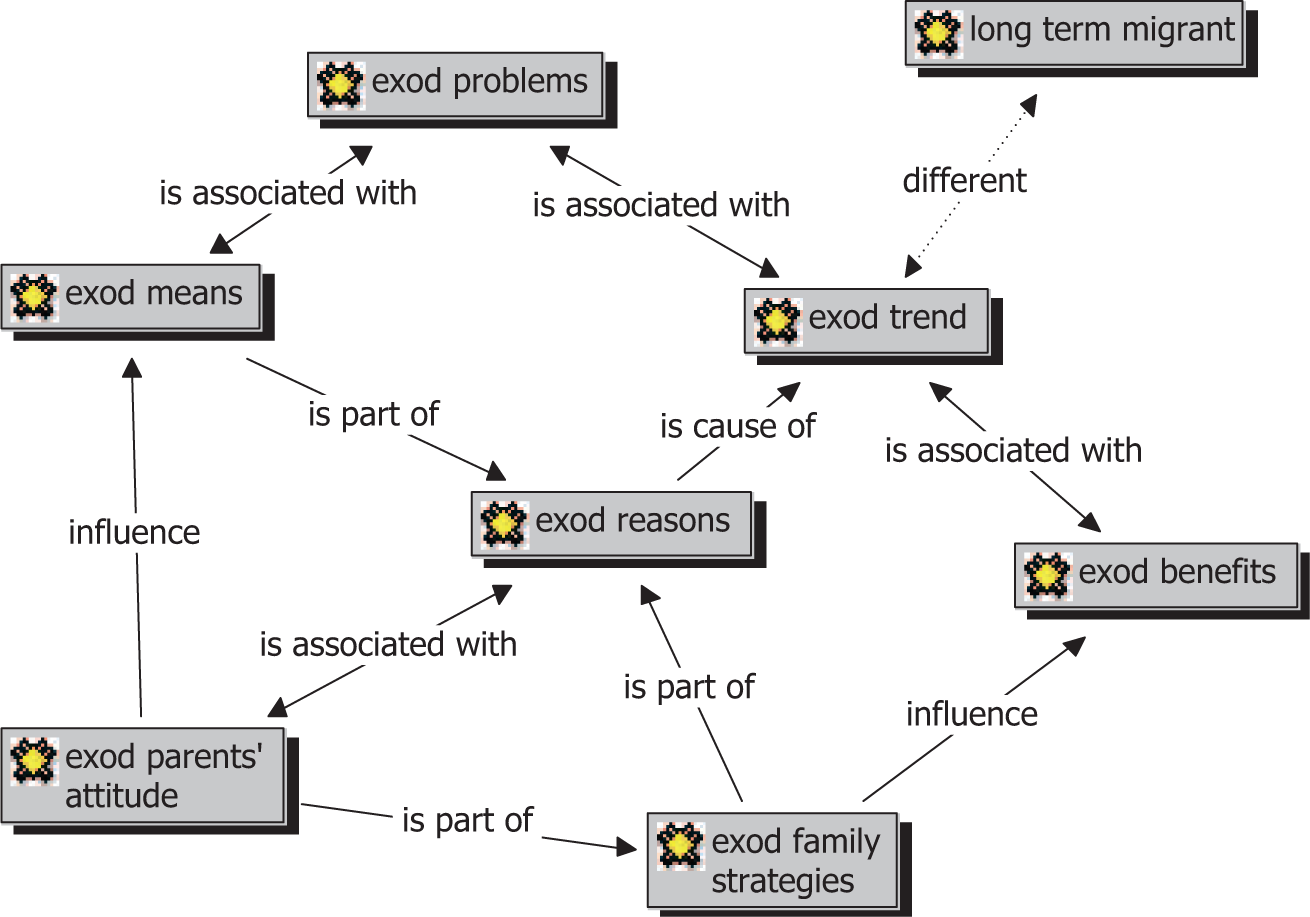
The temporary migration of young people—locally called “exodus”—should be distinguished from long-term national or international migration, which remain very rare and usually concentrated within a few families (see Figure 1). Exodus has spread during the last decade. In 2002, among the 128 young people surveyed in the Sarnyéré villages, 60 percent had neither migrated nor left their village the week before (three-fourths among girls), and the proportion was half that in the two other Dogon villages visited in the area. From the Sarnyéré, only 13 percent had experienced more than one migratory episode (38 percent in the other villages). Five years later, a poll among ninety-one young people indicated an important progression in the phenomenon of exodus, especially among very young single girls: 94 percent of these girls (aged 17 and younger) 9 and 80 percent of boys (aged 20 and younger) reported that they had left the village the week before, and 72 percent and 58 percent, respectively, had been on at least one exodus.
Youth Migration
In 2006, for the first time in the history of the Sarnyéré villages, without informing anybody, a group of six girls, aged 14–15, walked some 12 miles to reach a road; they paid for transportation with their modest jewels and traveled to Mopti, Mali’s third largest town, some 155 miles away. In Mopti, they helped sell goods in the market; they then found work as domestic servants. After 10 days, one of the girls’ fathers arrived to take them home.
By 2010, never having experienced an exodus became the rarity. Among boys, only those who were in charge of caring for the herds had never left. Most girls had experienced mobility. However, they do not go every year, except in one village where girls “have taken [up] the habit [of] leaving and wish to go again.” 10 Still, very few young people, and rarely girls, stay away for as long as a couple of years, and when they do, they return when it is time to marry. In short, mobility has rapidly spread among this population, but its scope remains limited.
Parents’ attitudes, and migrants’ means and reasons
Initially, girls’ exodus was taken up without the parents’ consent and even, anticipating their refusal, without informing them at all. They were “going in the bush to gather wood or wild fruit as usual” 11 or to the weekly market in Boni, and they would leave. Along the way, they might meet a family acquaintance; parents, thus, would find out where they were. Parents would then commission one of the fathers to bring them home. However, parents were aware that they could not prevent their daughters from leaving. In some cases, the mother knew of the daughter’s plan to leave and even contributed to the costs of transportation. With the spread of this type of migration, running away has become less frequent.
We were told that parents do not force their daughters to come back as much anymore, except if they have been away too long or if it is time to marry. Although most men still disapprove of this practice for girls, they tolerate the phenomenon because it is seen as unavoidable: they “will go anyway” and “if they inform you, this [is] a sign of respect.” 12 Parents accept this practice because “when they [the children] go with the authorization of the parents, they come back with presents for them.” 13 Large differences remain between villages, however. In the village most reluctant to accept this practice of mobility, absconders are still a reality.
Young people may pay for their transportation with some earnings—for boys, earnings from local hired work and for girls, from selling wild fruit—but most of the time, they do not have their own means to support their leaving. Thus, those who go without their parents’ permission sell goods to pay for their transport. Girls will sell jewelry (given to them by their parents) and boys will steal animals from the parents’ herd to sell.
Economic motivation is an important reason young people (particularly boys) leave their village, but it is not the only reason. In 2002, slightly more than half of young men (52 percent) declared that they would leave to earn money, 19 percent said for agrarian work, and 14 percent said to compensate for a poor harvest. Young women leave to buy kitchen tools (57 percent) or earn money (20 percent). For young men, the economic objective dominates. This was expressed in 2004 in a young shepherd’s statement; he explained that he did not need to leave because he could sell one of his animals to meet his individual financial needs. The economic dimension is less central for girls, whose earnings potential remains very limited elsewhere. Their main incentive to leave, at least for the first time, is to follow the example of those who have already gone and have discovered the outside world.
Family strategy, benefits, and problems
Young people’s exodus is a new phenomenon inasmuch as “it is their [young people’s] decision” 14 to leave. Yet in this respect, there are important gender differences. Girls’ migration is clearly an individual project that most men consider useless. “What they bring back is not a relief for the family”; 15 girls’ exodus “does not bring any benefit and makes them take [up] bad habits.” “They become lazy and prefer to cook macaroni [instead of the traditional millet meal, which has an extensive preparation].” 16 It is, however, increasingly recognized, especially by women, that, although modest, girls’ exodus is benefiting their parents, through small presents and items that the girls are buying on their own. More broadly, in times of scarcity, “the absence of young people allows [the family] to save food.” Yet the economic benefit of boys’ migration is systematically seen by adults as useful for the family. They buy personal goods that benefit all members of the family: clothes and bikes (the better-off buy motor bikes), radios, watches, hoes, carts, donkeys, and even camels. However, boys often have difficulty finding work outside the village or are hardly able to spare anything after paying for their food and lodging and the trip home.
Young men’s two main sources of work while on exodus are helping to harvest rice, and they are often paid for this work in goods (one to ten bales), or preparing mud bricks (earning 750–1,000 CFA a day, about $2 to $2.50 a day). This is about twice as much as what a girl earns molding millet. In one case, a girl told us that she was very satisfied with her earnings—5,000 CFA a month (about $12). What makes a big difference for these youths financially is securing food and lodging; girls can obtain these through domestic work or, in a few cases, boys working as gardeners can. Boys describe the work as hard and report problems of violence or with the police. In turn, girls testify that they have a wonderful experience: domestic work is not as hard as their work at home, they are not exploited or subjected to violence, and they learn a lot.
The decision to leave is clearly the young person’s, but it varies depending on the family. Boys and girls are expected to return in time for harvest and are expected to stay home until the harvest is over. Girls’ decisions remain more individual than boys, although they increasingly consult their parents and in some cases do not leave because their parents have refused to support their decision. Boys mentioned family reasons as reasons not to leave, such as caring for old parents, repairing the house, and caring for the family herd. In 2009, about one-third of boys stayed in the village to finish their masonry work. Young shepherds do not leave until a younger brother can take up their work.
Youth Migration: One Dimension of Livelihood Diversification to Cope with Uncertainties
Individual exodus should also be distinguished from temporary family migration to cope with a bad harvest or a lack of water. All testimonies confirm that in a “bad” year, the entire family moves, such as was reported in early 2003. The water supply remains the most limiting factor and the main determinant for the location of settlements. Families settled in the plain may spend weeks in the piedmont villages to be closer to hill ponds. Young people’s exodus appears to be independent of agricultural production: they leave even when there is a good yield and possibly more often because there is a good yield, as it is easier to finance transportation. In 2010, after a harvest described as “very good,” as many young people left as the year before, which was qualified as “not very good.”
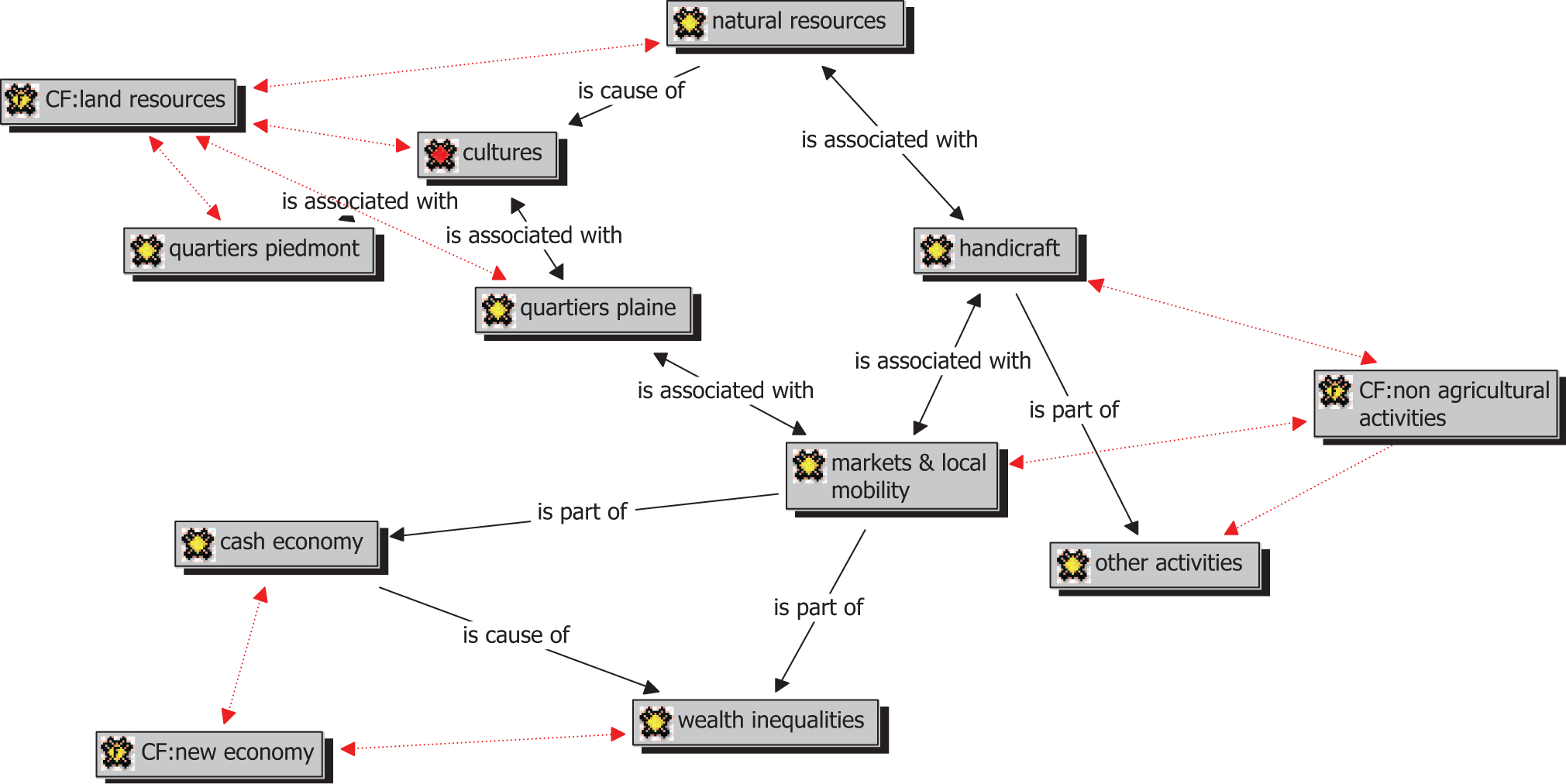
Young people’s mobility is part of a broader phenomenon of the diversification of livelihoods, which is linked to decreasing natural resources, demographic pressures, and the entrance into a cash economy (see Figure 2). Settling in the lowlands has given people access to larger and more fertile plots, but all testimonies converged to declare that agricultural production had decreased by about one-third. Natural resources have been shrinking as well. Wild game that was present at the time of our fieldwork in the mid-1970s is not seen anymore. The same is true for the very large number of wild plants that the Sarnyéré people used to consume. Women have to walk longer distances to find wild fruits. Baobab trees have disappeared and cotton does not grow any more.
Livelihood Strategies
The former way of living—intensive exploitation of all natural resources—is not viable anymore, and agriculture intensification alone is not enough. Livelihoods had to diversify and the autarchic economic system had to open to the outside world and the cash economy. The abandonment of cotton growing, spinning, and weaving are main contributors to the need for a cash economy. However, the need for cash is also fomented by outside influences: industrial material is preferred to the crude homemade cotton, young people are entering the era of jeans and t-shirts, and traditional heavy and fragile potteries are being substituted with plastic and metal pots.
In addition, the location of the villages in the plain and the acquisition of bicycles and carts make it easier to frequent the weekly markets in surrounding towns. Some young men buy basic goods in places where the prices are lower and stock their own small business in the village with these items. Women sell wild fruits or homemade baskets and other wickerwork. The shift from a purely agricultural society to an agro-pastoral system opens the door to incipient capitalism. Animal breeding is the main source of cash. Crop surplus remains rare, as it requires three successive good harvests.
Wealth is linked to the ability to diversify sources of income and therefore with the size of the family’s labor force. Youth mobility, then, does not bring large benefits to the family, but, rather, it contributes to emerging economic inequalities: the poorest ones use their earnings to meet basic needs whereas the better off capitalize on their earnings. Economic inequalities are also the result of a more individualistic way of living. Life in the compact mountain villages meant strong solidarity and mechanisms of wealth redistribution that have faded in the scattered lowland settlements.
Youth Migration: Cause and Consequence of Deep Sociocultural Transformations
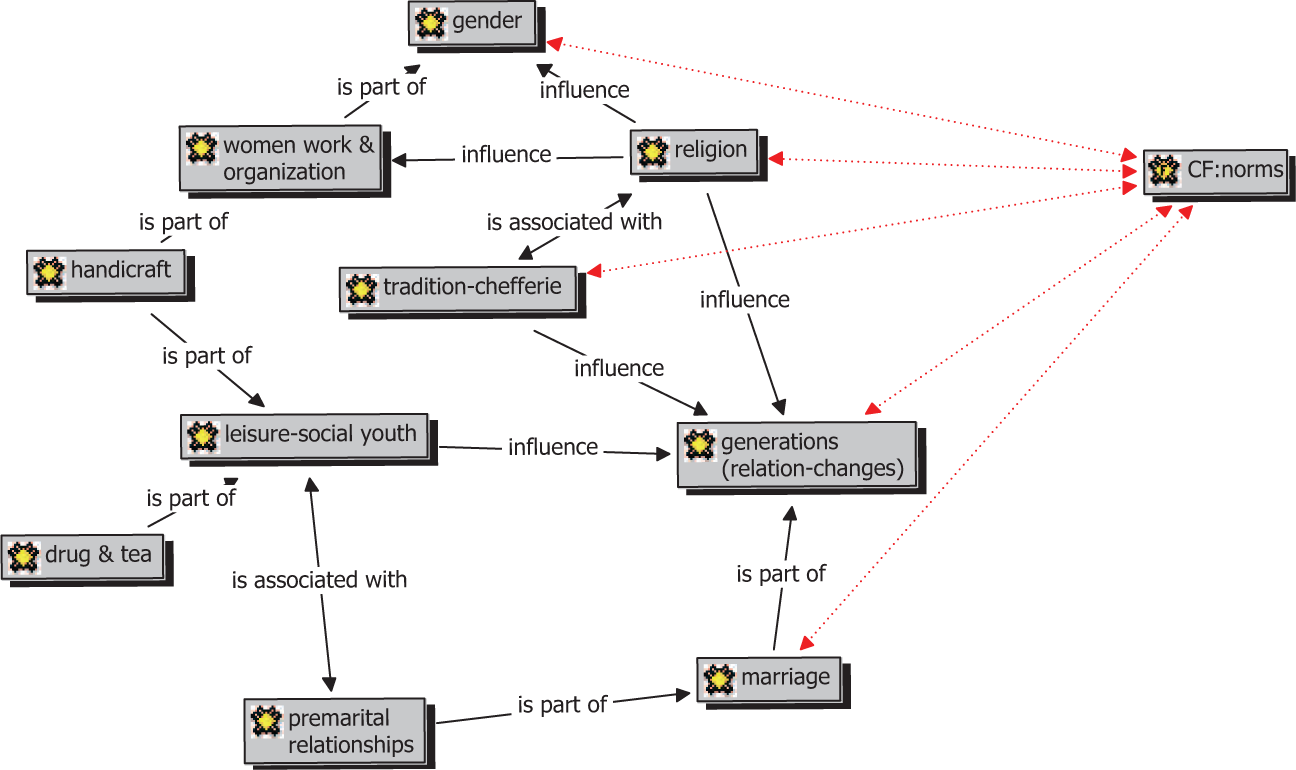
Parents acknowledge that they cannot prevent young people from leaving, because they cannot give them what the young people acquire from their exodus. More generally, parents recognize that these new behaviors are an expression of “the world chang[ing].” 17 The outside world is part of young people’s way of living, a powerful potential force of change in generational and gender relationships (see Figure 3). Parents worry that their children may not come back, one reason “they do not dare any more [to] hit their kids.” Men are afraid that young women will consider them “dirty”—because they have not learned basic hygiene (mainly because of the lack of water), which is seen as being modern and urban—and will not marry them.
The Sociocultural System
Modernization is expressed both through incipient individualization of family members and increased autonomy of family units. The current youth population is the first generation with personal belongings: bikes, radios, watches, but also their own livestock. These new possessions are powerful bridges to new behaviors and values. Other Sarnyéré villages and local markets have become part of the “usual” territory. Contacts with neighboring communities have developed beyond the former goods exchanges, the temporary stays of the blacksmith, and sporadic visits of merchants or marabous. Tea drinking and Western-style clothing are more than just new goods; they imply a change in lifestyle.
Moving into the lowlands has also been described as a way to become independent from the traditional leaders, and the scattered households re-enforce each family’s autonomy. Traditional leadership is losing power, but new conservatisms are emerging. Radical Islam is replacing the prevailing long-term traditions but is having little influence on everyday life in the Sarnyéré villages, which are known for their witchcraft. Thus, currently, there is complex syncretism and a mix of tradition and modernity.
The new Islamic discourse forbids tam-tam playing and dancing, which are considered amoral in Islam. The traditional bell dance has lost its ceremonial meaning as a way to communicate with the local spirits and as an occasion for young people to meet. The new Islamic principles also recommend that women stay home. Women, therefore, stopped working in their husband’s field and dedicated more time to their own crop. What could be seen as an improvement in women’s autonomy has turned into increasing women’s responsibilities in providing for the family’s sustenance. Rather than providing food for their families from their crops, then, men increasingly use the cash from sales of their crop to buy livestock, for example (Sauvain-Dugerdil et al. 2008).
Girls’ exodus is tolerated by the society as long as it does not challenge marriage, that is, as long as the girls accept their chosen husband and return for the marriage. A woman must move into the husband’s house after marrying; however, if the union is not a good match, she may return to her parents’ home. If she returns home, she is free to choose a new husband. This practice is not new, but the number of young women who “do not sit down” at their husbands’ is increasing. Premarital sex is not an accepted practice. Yet young people do have premarital sex but not with a future spouse. When premarital pregnancy occurs, marriage is postponed until after the birth. In most instances, the child remains with the mother’s family, but sometimes he or she lives with the mother at her husband’s home.
Exodus does not seem to challenge the social order, yet indices show that it may be generating dramatic changes in marriage practices and childbearing. A young person’s chosen spouse is increasingly questioned. Young men wish to be consulted about the choice of spouse, and more and more often parents confirm their son’s choice rather than impose their own. Girls’ refusals of the chosen husband, especially when much older, are more frequent. Exodus, in some instances, then, has become a way to reject planned marriage. Moreover, individual exodus appears to have spread among married women, who often leave without informing their husbands. The few cases of exodus of new mothers who leave their child behind are looked down on, whereas those of young married women not yet mothers seem to be more or less tolerated. However, elders mentioned in 2004 their fear that this new habit would delay the arrival of the first child: “When a married woman do[es] not move, she will have a child rapidly and the family will be wealthy. It is more important to have children than earn money.” In our data from the 2002 survey, such an effect could not be seen: the distribution of age at first birth was identical among those who had migrated and those who never had (Sauvain-Dugerdil et al. 2008). Yet there appears to be a slight postponement of the first child among younger cohorts: 74 percent of those younger than 17 had not yet had a child, whereas the figure was 60 percent among those aged 17 to 20 (Sauvain-Dugerdil et al. 2008).
Discussion
Since the first cases in the late 1990s, temporary migrations of very young Sarnyéré people, especially girls, have rapidly spread. What was still a new behavior at the time of our first interviews in 2002 has now become the norm, a new kind of threshold along the path of the transition to adulthood. However, the scope of exodus remains relatively limited in its frequency, duration, and economic benefits. Young people do not go every year, and only in very specific cases do they refuse to return home for agricultural work or marriage. Such cases exist in the villages with more outside contact, and villages differ in the frequency of the exodus and in the degree of adult agreement about it.
Although modest, the economic benefit of exodus is worthwhile in this context of extreme destitution. It is part of the process of livelihood diversification, necessary to cope with increasing pressures from declining natural resources. Moreover, the economic meaning of exodus has a strong gender dimension. Young men’s decision to migrate relies on an economic rationale and is often described by young men as a financial obligation. Although they increasingly give priority to obtaining personal goods while on exodus, they also contribute to family needs. Their bikes become a means of transportation for the whole family, and they acquire goods useful for agricultural work. Their exodus is an individual decision, but it is closely tied to the family. Therefore, the whole community sees it as useful.
The economic dimension appears less obvious for females’ exodus. The main reason they leave is to discover the outside world rather than to meet material needs. Exodus has spread among girls as the wish to know what the pioneers—those most in contact with the outside—had experienced. Their earnings are smaller and their stay is usually shorter than boys’. Moreover, the goods they bring back are not seen as useful, because they concern the “female” realm, for example, kitchen tools. The young women we spoke to never expressed exodus as an economic obligation. Often, after having left the first time without informing their parents, they wish to go again but with parental consent. They do not leave every year and usually not after getting married. Exodus opens up for them a completely new period of increased autonomy, described by the fact that they became more awake (éveillées), but their everyday lives do not seem to change much: “after a few days [after their return], they behave as before.” When they return, they do not spend time drinking tea or smoking cigarettes like young men; they do not have new belongings, such as a bike.
Temporary exodus among young people in these Sarnyéré villages is part of a global trend toward modernization, characterized by giving up traditional clothing and handicraft and, most of all, by a fundamental shift toward individualization. Exodus affects intergenerational relationships and questions traditional power systems and social institutions, such as the established rules of marriage. At the same time, conservative religious influences are infiltrating some sectors of the population and are affecting the value system, especially the gender system. In these societies, women have always enjoyed a large degree of autonomy. Women have apparently gained more economic weight and decision power. Men complain about the increasing role of women in family decisions, particularly about mothers’ connivance with girls’ exodus. But most of all, women’s responsibility for the family’s well-being has increased, for example, with the new responsibility due to decreasing natural resources (Tacoli 2009).
At this point in time, youth mobility appears to be more a “migration structure” than a “migration rupture.” It offers a new opportunity for this remote population to cope with economic uncertainties and to negotiate the transition to modernity. Yet the central issue remains whether mobility empowers the young people without provoking social disintegration. There is a delicate redistribution of power taking place within the society, but real generational conflicts seem to be avoided thanks to the realism of elders toward the fact that “time is changing.” Another issue is whether exodus will help women to face their growing responsibilities in a context of pressures from new traditional Islamic values.
There are signs that girls’ exodus is increasingly becoming economic in motivation. In one village, they now go on exodus every year, and they apparently have started to take part in the commercial sex trade. During our last interview in 2010, one elder acknowledged that sex during exodus is much more frequent than admitted, as are premarital pregnancies (three recent cases in their village). There is a new trend of commercial sex with unskilled migrant laborers, which has provided girls with an easier way to get more financial benefits from their migration. Such emerging issues have to be further considered. More broadly, future research should examine whether this new window to the world will make young men and women able and willing to continue to make their living in their home population, or whether exodus will become a factor of social disintegration and the path to more definite emigration.
Footnotes
Notes
Claudine Sauvain-Dugerdil is a professor of social demography. She has done fieldwork in Switzerland, Mali, and Central America. Her research focuses on family and fertility, life course transitions, time use, and population and development; she employs mixed methods strategies designed to identify inequalities in well-being, particularly between genders.