



Abstract
There are now more than 300 mental health courts in the United States; yet studies on their effectiveness in reducing criminal recidivism are relatively few, and most follow defendants after entry into the court, during their participation, and sometimes, for a short period following exit. Using a preenrollment-postexit design that follows participants of one mental health court for 2 years after exit, this article examines criminal recidivism of participants after they no longer receive the court’s services, supervision, and support. It investigates participant demographic, clinical, and criminal history and key arrest characteristics as well as process measures and graduation as predictors of two measures of recidivism, arrests, and postexit jail days. Its findings support the hypothesis that mental health courts can reduce criminal recidivism postexit and point to criminal history, time in mental health court, and graduation as the main influences on recidivism.
Mental health courts (MHCs) are a type of specialty court designed to reduce the arrest and incarceration of offenders with mental illness, who have substantially higher arrest and incarceration rates compared to those of the general population (Baillargeon & Penn, 2009; Fisher et al., 2011; Steadman, Osher, Robbins, Case, & Samuels, 2009; Teplin, 1990, 1996). With the first courts appearing in the late 1990s, there are now more than 300 MHCs in operation across the United States (Council of State Governments Justice Center, 2011). 1 The goal of these courts is to provide a regimen of supervised treatment and services meant to reduce subsequent involvement in the criminal justice system for defendants with mental illness.
MHCs vary somewhat in procedure across jurisdictions but in general adhere to the principles of therapeutic jurisprudence, which suggest that court process can have a positive emotional and psychological impact on offenders when the court uses its authority to encourage meaningful change (Wexler & Winick, 1991). Participation in an MHC is voluntary, and unlike traditional criminal courts (TCCs), MHCs adopt a “problem-solving” approach whereby a team consisting of judge, prosecution and defense attorneys, mental health practitioners, probation officers, and other experts collaborate to link defendants to treatment and services (Berman & Feinblatt, 2003; Hiday, Moore, Lamoureaux, & de Magistris, 2005). Team members cooperate in a nonadversarial manner to encourage defendants to follow prescribed treatment regimens and court mandates for behavioral change that are designed to alter the underlying problems associated with their criminal behavior. In required periodic status review hearings, the MHC judge is especially important and often speaks with defendants individually to encourage adherence to treatment, offering praise for good behavior and warnings or sanctions for noncompliance (Frailing, 2010; Ray, Dollar, & Thames, 2011; Wales, Hiday, & Ray, 2010). After successful court completion, defendants may have their original criminal charges dismissed or sentences reduced.
Studies on the effectiveness of these courts in reducing criminal recidivism are few, though the number of studies is growing. These studies consistently suggest that MHCs can be successful in reducing reoffending for defendants (Christy, Poythress, Boothroyd, Petrila, & Mehra, 2005; Cosden, Ellens, Schnell, & Yamini-Diouf, 2005; Cosden, Ellens, Schnell, Yamini-Diouf, & Wolfe, 2003; Dirks-Linhorst & Linhorst, 2012; Frailing, 2010; Herinckx, Swart, Ama, Dolezal, & King, 2005; Hiday et al., 2005; Hiday & Ray, 2010; McNiel & Binder, 2007; Moore & Hiday, 2006; Palermo, 2010; Ridgely et al., 2007; Steadman, Redlich, Callahan, Robbins, & Vesselinov, 2011; Trupin & Richards, 2003). Arrest, time to rearrest, and jail time are the most common outcome indicators employed, though some studies evaluated severity of reoffending (Dirks-Linhorst & Linhorst, 2012; McNiel & Binder, 2007; Moore & Hiday, 2006), and one has looked at cost-effectiveness (Ridgely et al., 2007). All but one recent recidivism study (Steadman et al., 2011) focused on a single court. Most studies follow defendants during treatment and supervision and sometimes for a short period following exit; they do not track defendants after exiting MHC to see whether criminal desistence continues. Studies that have followed MHC participants 2 years postexit find that they have lower arrest rates than before MHC entry and that those who complete the MHC process continue to have lower rates of rearrest than those who do not complete (Hiday & Ray, 2010) and lower rates than those in a matched control group (McNiel & Binder, 2007). These are only two studies, done in substantially different jurisdictions; thus, more evidence is needed before knowing whether defendants are at reduced risk for recidivism after exiting MHC supervision.
Our study adds to this small but growing body of literature by using a preenrollment-postexit design that follows MHC participants for 2 years after the end of MHC supervision to examine postexit criminal recidivism and factors affecting it, paying particular attention to the effect of type of court exit (graduation, opt-out, or termination) on recidivism. Successful completion of MHC (graduation) has been reported to be one of the most significant predictors of reduced criminal recidivism (Dirks-Linhorst & Linhorst, 2012; Herinckx et al., 2005; Hiday & Ray, 2010; McNiel & Binder, 2007; Moore & Hiday, 2006). We use MHC administrative data, matched with countywide criminal data, for all defendants 2 years prior to MHC entry, during MHC, and 2 years after MHC exit. We examine both rearrest and postexit jail days as measures of criminal recidivism. We ask (a) what proportion of defendants who enter MHC successfully completes the program and graduates, (b) what predicts successful completion of MHC, (c) to what extent is participation in MHC associated with a reduced likelihood of criminal recidivism 2 years after exit, and (d) what predicts reduced recidivism post MHC exit? On the basis of prior research, we use the following as predictors of graduation and recidivism: sociodemographic characteristics (age, race, gender, employment, and homelessness), clinical characteristics (primary and co-occurring substance abuse diagnoses), criminal history (prior jail days), key arrest charge level (felony vs. misdemeanor), and process measures (jail days during MHC and MHC duration); we use graduation as an additional predictor of recidivism.
Method
Setting
This study’s MHC, established in December 2004, averages 25 new cases a year. Its jurisdiction in northern Georgia covers one county, Hall, with an estimated total population of 179,684 according to the 2010 census. All defendants in the MHC are charged and reside in this county. The court admits both misdemeanor and felony cases for defendants with violent or nonviolent charges. They may be referred by anyone from a judge or public defender to a treatment provider or family member and may enter the program pre- or postadjudication. Eligibility requirements include a primary diagnosis of severe and persistent mental illness (psychotic and major mood disorders) or other Axis I disorders that are considered primary to the defendant’s involvement in the criminal justice system. Those who meet the legal and clinical eligibility criteria and voluntarily enroll in the program are immediately released from jail, if not already released to the pretrial release program for bondable defendants. They progress through a series of mental health treatment (and substance abuse treatment, if needed) phases accompanied by case management to facilitate reception of needed community services, such as food stamps, disability payments, and housing. Each progressive phase has less monitoring and requires less frequent court appearances (from weekly to biweekly and, eventually, monthly) and clinical contact, including both mental health and dual diagnosis groups, along with more responsibility and independence. Duration of MHC averages 14 months for graduates but ranges from less than 1 month to 35 months depending on offense seriousness and compliance with treatment and behavioral mandates.
At any point after enrolling in MHC, defendants may choose to opt out, that is, to have their cases returned to TCC for processing, or they may be terminated and sent back to TCC for lack of compliance and/or failure to make court appearances. Duration of MHC for opt-outs ranges from less than 1 month to 20 months; and duration for those terminated ranges from less than 1 month to 16 months. Noncompleters average less time in MHC (6 months) than do graduates (14 months). Just more than one fourth of noncompleters leave the court by the 4th month, and almost three fourths are gone by 1 year. Because the MHC team expects participants to slip up as they try to change their behavior, it gives second chances to defendants; thus, noncompliance with court-ordered treatment and behavioral mandates, even rearrest, does not automatically result in termination and return to TCC. The court provides social support and uses a variety of incentives, such as encouragement, praise, and gift certificates, and a variety of negative sanctions for noncompliance with court mandates or for a new arrest, such as admonishment, community service, increased meetings and drug tests (urine analysis), and jail. Those incarcerated are typically released in time for the next MHC session.
Data Collection
The office of the MHC provided administrative data that included sociodemographic characteristics, primary diagnosis, co-occurring diagnosis, months in MHC, status at MHC exit, features of key arrest for MHC entry, lifetime arrests, and days spent in jail for 2 years prior to MHC involvement, during MHC, and 2 years following MHC exit for all defendants from 2005 through 2010. There were 157 defendants in those years, 99 of whom had complete data 2 years following MHC exit (last eligible defendant exited September 2, 2008).
Dependent Variables
We evaluated the MHC by examining the proportion of defendants who successfully completed the program and by criminal recidivism. Graduation, that is, successful completion of MHC, is a dummy variable measuring whether the defendant followed court mandates for treatment and behavioral change and demonstrated stability for a sustained period (1 = graduate, 0 = defendant was terminated from program or opted out). Graduation is also used as an independent variable in predicting recidivism. Criminal recidivism is measured by (a) rearrest, a dummy variable measuring whether the defendant was rearrested at least once following MHC exit (1 = rearrest, 0 = no arrest following court exit), and (b) number of jail days following court exit, a continuous variable measured as the total number of jail days for the 2 years following court exit.
Independent Variables
Prior jail days, our indicator of degree of criminal history, is a continuous variable measuring the total number of jail days served by each defendant for the 2 years preceding MHC entry. Jail days during program is a continuous variable measuring the total number of jail days served by each defendant during the MHC program. Gender is a dummy variable whereby 1 = male and 0 = female; and race-ethnicity is measured by creating dummy variables for non-Hispanic White, Black, and Hispanic whereby 1 = respective racial-ethnic category and 0 = other race-ethnicity. Age is a continuous variable coded in years at MHC entry. Employed is a dummy variable whereby 1 = employed and 0 = unemployed, retired, or receiving disability assistance or family support at MHC entry. Homeless is a dummy variable whereby 1 = homeless and 0 = lives with family, in a group home, in a supported apartment, with residential assistance, or in independent housing at MHC entry. Primary diagnosis is defendant’s latest primary diagnosis given by a psychiatrist prior to MHC exit. We single out bipolar disorder using a dummy variable (1 = bipolar disorder and 0 = all other diagnoses) even though the risk of crime is low among those with bipolar diagnosis, because substance-use comorbidity is high among those with this diagnosis and there is a significant association between violent behavior and those with bipolar and substance-use comorbidity (Elbogen & Johnson, 2009; Fazel, Lichtenstein, Grann, Goodwin, & Langstrom, 2010). In addition, the only multisite MHC recidivism study found bipolar disorder to be a predictor of criminal recidivism among diverted persons with a severe mental illness (Steadman et al., 2011). Co-occurring substance abuse, a major predictor of arrest among all persons with mental illness (Elbogen & Johnson, 2009; Fazel et al., 2010; Hiday & Burns, 2010; McNiel, Binder, & Robinson, 2005; Swartz & Lurigio, 2007), is a dummy variable whereby 1 = co-occurring drug or alcohol diagnosis and 0 = no substance abuse diagnosis at MHC entry. Felony charge is a dummy variable whereby 1 = felony and 0 = misdemeanor for the charge of the key arrest leading to MHC entry. Duration of MHC, indicating the length of time defendants participated in MHC, is a continuous variable measured in months.
Analytic Method
After describing the sample, we examine the proportions of defendants the MHC graduates and those who are rearrested, followed by a comparison of arrests and jail days for all defendants from 2 years prior to court entry to 2 years following court exit to assess whether this MHC is associated with reduction of postexit recidivism for its defendants. We pay particular attention to how these outcomes vary by court completion status (graduate, opt-out, terminated). We look at what factors predict the odds of MHC graduation and then show models examining the effects of predictors on our two recidivism outcomes: rearrest and jail days. We employ three separate series of models for our multivariate analysis: (a) a logistic regression model predicting the odds of graduation on the basis of sociodemographic, clinical, criminal history, key arrest, and MHC process characteristics; (b) logistic regression models predicting postexit rearrest, first, with the same independent variables plus MHC duration and, second, with court completion status added in Model 2; and (c) the negative binomial models predicting jail days following court exit with the same sets of variables. We use the negative binomial model because of the skewed distribution of the dependent variable with a large number of zeros and a substantial percentage of high outliers with more than 100 postexit jail days (32.3%; McCullagh, 1984; Nelder & Wedderburn, 1972).
Results
Sample Characteristics
Table 1 displays the sociodemographic, clinical, criminal history, and key arrest characteristics for all 99 MHC defendants. There are more females and Whites. Mean age for all defendants was approximately 34.9 years. Only about a third of defendants were employed; and 17% of defendants were homeless. Most defendants had a chronic mental illness and a co-occurring substance abuse diagnosis in addition to their primary diagnosis. Just more than half of the defendants had less than a month of jail days prior to MHC entry, but the other half with more than 30 jail days ranged to 464 days (31-60 days = 13.1%, 61-180 days = 24.1%, 181-365 days = 9.1%, >365days = 3.3%). More than three fourths of defendants admitted to MHC had felony charges. Almost all felony violent offenses (91.2%) involved cases of aggravated assault, battery, or obstruction. Misdemeanor violent offenses were mostly simple assaults or threats of violence. Property offenses consisted of burglary, larceny (shoplifting or theft), vandalism, and trespassing. The majority of drug offenses were possession though some were intent to distribute. “Other” offenses included offenses such as public disorder, DUIs, and forgery.
Sample Sociodemographic, Clinical, Criminal History, and Key Arrest Characteristics at Mental Health Court Entry
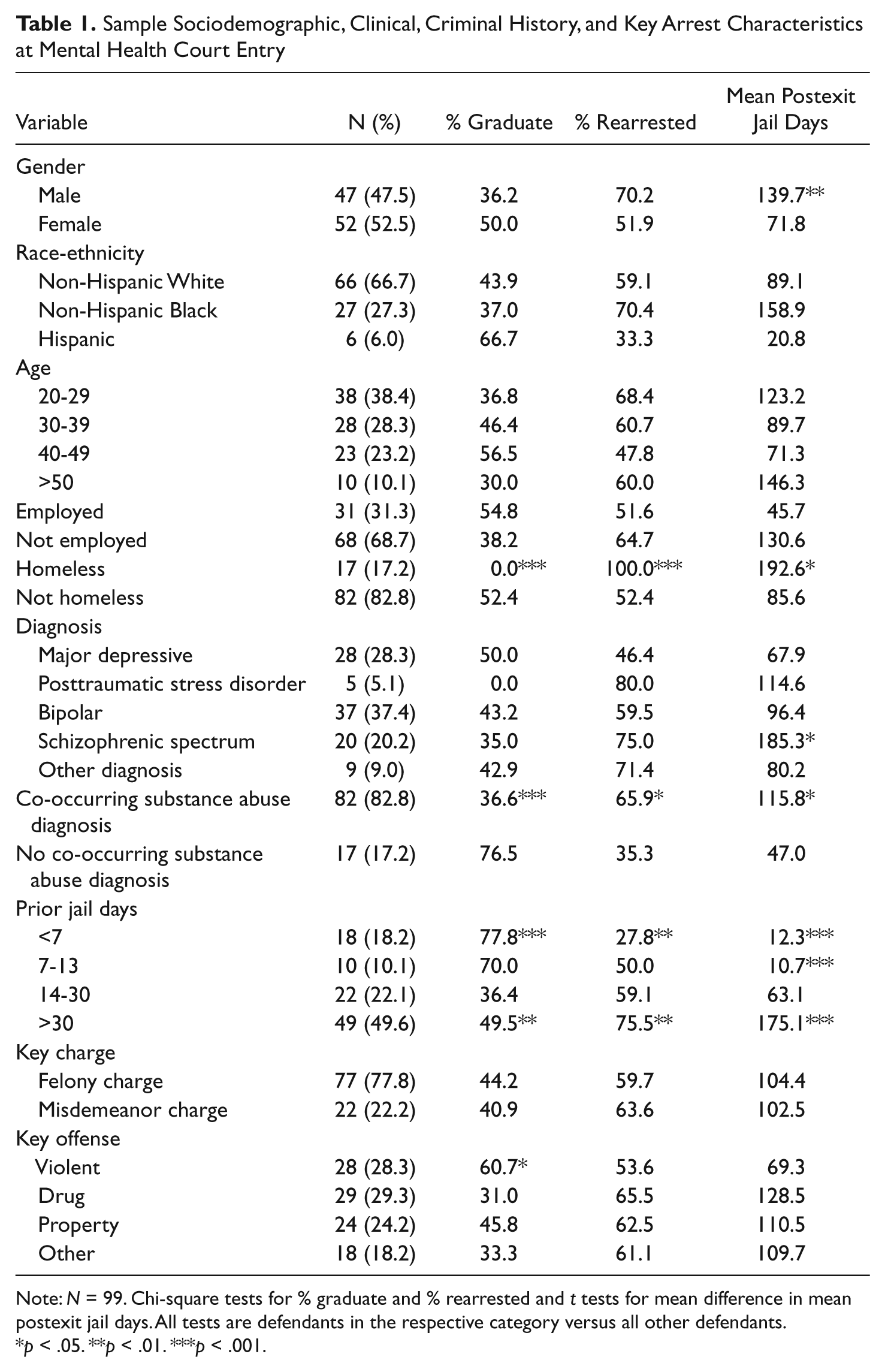
Note: N = 99. Chi-square tests for % graduate and % rearrested and t tests for mean difference in mean postexit jail days. All tests are defendants in the respective category versus all other defendants.
p < .05. **p < .01. ***p < .001.
Table 1 also presents this study’s three outcome variables by these characteristics. Homelessness, co-occurring substance abuse diagnosis, and prior jail days are negatively associated with graduation but positively associated with rearrest and number of jail days after MHC exit. Of the sample half with more than 30 prior jail days, 45.0% had more than 100 prior jail days and a disproportionate increase in postexit jail days. Violent offense is positively associated with graduation. Defendants with a schizophrenia spectrum diagnosis have significantly more postexit jail days relative to other diagnostic groups.
Court Outcomes
This MHC graduated fewer than half of the defendants (43.4%) and terminated an equal proportion. The rest of the defendants opted out (13.1%) and voluntarily returned to TCC for adjudication of their cases along with those terminated. More than three fourths of those terminated (79.1%) were noncompliant with treatment; all but one of the others had new criminal charges, and one had no reason given. Table 2 provides an overview of the postexit outcomes examined in this study by exit status. Overall, 39.4% were not rearrested in the 2 years after MHC exit. The difference in rearrest between graduates and other defendants is striking: Only 24.6% of graduates were rearrested in the 24-month postexit period, whereas 76.9% of opt-outs and 90.7% of terminated defendants were rearrested (p <.001, difference-of-proportions test, graduates vs. noncompleters). Graduates have more positive outcomes on the other two recidivism outcomes as well, averaging only 2.8 postexit jail days, whereas opt-outs averaged 113.6 days, and terminated defendants averaged 202.3 days (p < .001, t test, graduates vs. noncompleters).
Mental Health Court (MHC) Process Participation and Outcomes by MHC Completion Status
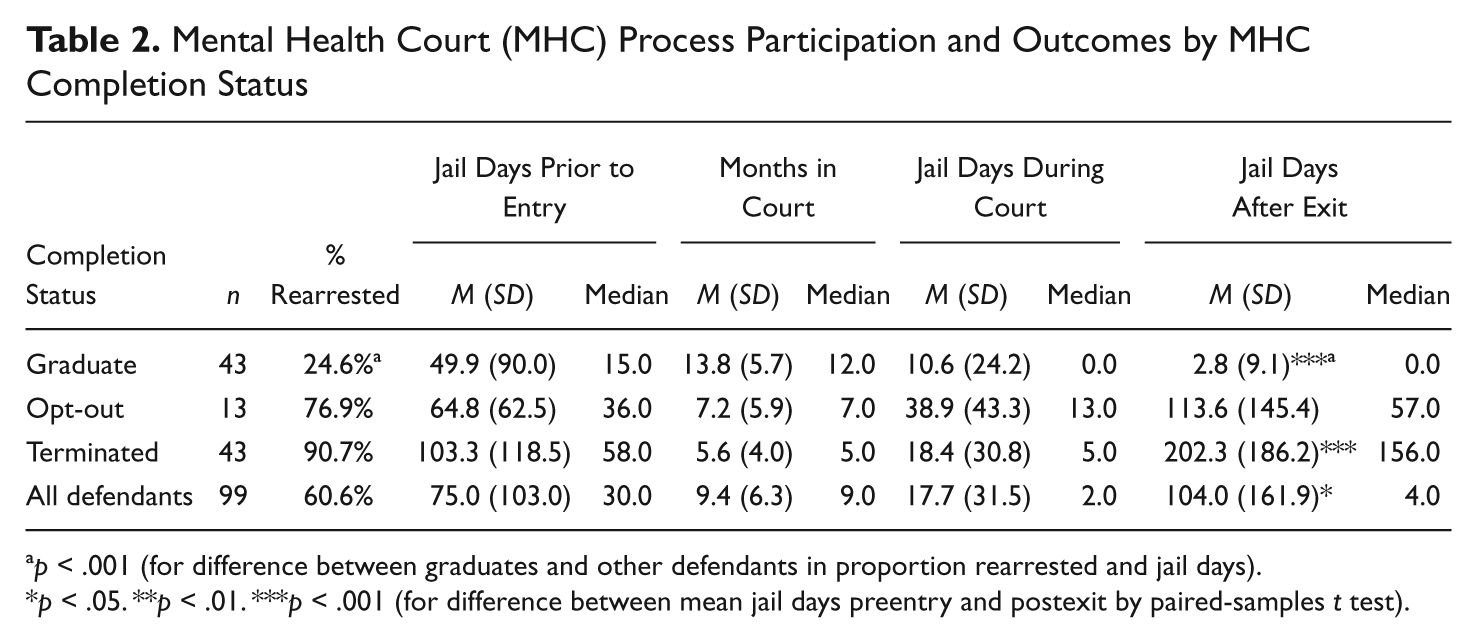
p < .001 (for difference between graduates and other defendants in proportion rearrested and jail days).
p < .05. **p < .01. ***p < .001 (for difference between mean jail days preentry and postexit by paired-samples t test).
Changes in mean jail days for the full sample show an increase from pre-MHC entry to post-MHC exit (75.0 to 104.0 jail days); and as with rearrest and postexit incarceration, the preentry-postexit changes vary by exit status, with graduates having the most positive outcomes. Whereas graduates have significantly reduced recidivism compared with the precourt period as measured by change in jail days (2.8 days down from 49.9, p < .001, t test), opt-outs increase (64.8 to 113.6 days, ns), as do those terminated (103.3 to 202.3 days, p < .001, t test). The increase in mean jail days for the full sample is misleading because approximately three fifths of all defendants declined in jail days from pre-MHC entry to post-MHC exit. The mean increase is caused by sizable minorities of defendants who exceeded 100 jail days preentry (22.2%) or postexit (32.3%). These outliers with excessive incarceration time heavily influence their means.
Using medians instead of means as measures of central tendency produces a substantial reduction in overall recidivism for all defendants, from 30 to 4 days. For graduates, median jail days decline (15 to 0) as do their means, whereas median jail days for opt-outs and those terminated still show an increase (36 to 57 days and 103 to 156 days, respectively). Given that the mean increase in jail days for all defendants is driven by outliers, the subset of defendants who not only are more likely to be terminated but also have an exceptionally high number of total jail days, the better evaluative measure of this MHC is change in median jail days.
Prior MHC jail days and months in MHC appear to be important factors in criminal recidivism outcomes. Graduates who have the most improved recidivism outcomes had significantly fewer prior jail days (49.9) compared to opt-outs (64.8; p < .01, t test) and those terminated (103.3; p < .001, t test), and they had significantly more months in court (13.8) than did the opt-outs (7.2; p < .01, t test) and those terminated (5.6; p < .001, t test). Almost half of each group of noncompleters spent 4 or fewer months in MHC. Although graduates spent fewer days in jail on average while under MHC supervision (10.6), and although those who eventually opted out and were terminated averaged more days (38.9 and 18.4, respectively), jail days during MHC are not significantly associated with exit status.
Multivariate Analyses: Graduation
We use logistic regression to examine the predictors of graduation. Because of the skew of prior jail days with outliers more than 30 days and more than 100 days, we use its natural log in this and subsequent modeling to assess better the nonlinear effect it has on the odds of graduation. Table 3 shows that the only significant predictors of graduation are co-occurring substance abuse diagnosis and prior jail days (ln). The effects of these variables are substantial: Defendants with a co-occurring substance abuse diagnosis have 91% lower odds of graduation compared those without a substance abuse diagnosis, and a one-unit increase in the natural log of prior jail days predicts 42% lower odds of graduation. Separate analysis (not shown) finds that those with more than 30 jail days prior to MHC entry have 78% lower odds of graduation compared to defendants with 30 or fewer jail days and that defendants with 7 or fewer jail days have approximately 6.5 times greater odds of graduation compared to those with more jail days. Note that jail days served during MHC do not affect graduation. Note also that three variables are excluded from this equation: (a) Duration of MHC is excluded because graduation perforce places a floor on the time in MHC and its opposite, noncompletion, places a ceiling on time for most of the noncompleters. (b) Homelessness is excluded from this and subsequent multivariate analyses because every homeless person was terminated from MHC. Its inclusion would cause a complete “separation-of-data” error and biased standard error estimates (Albert & Anderson, 1984). The only practical solution for such an error is to exclude the variable (Allison, 2008). (c) Key offense type is excluded from all models because its inclusion would necessitate a set of dummy variables that lead to small cell sizes (<5) when other variables are controlled and, thus, to biased coefficients.
Odds of Graduation by Sociodemographic, Clinical Characteristic, and Key Charge of Defendants
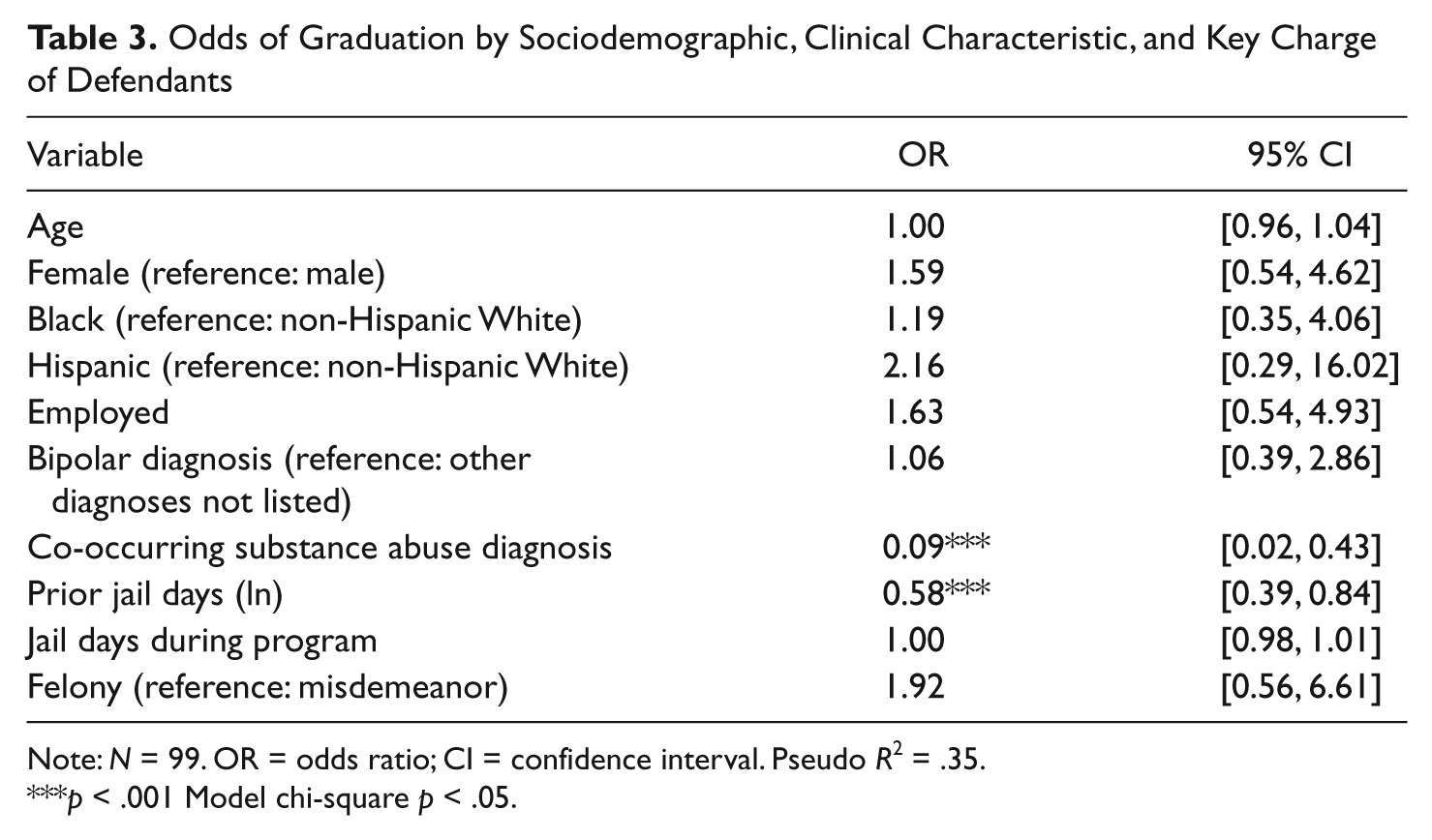
Note: N = 99. OR = odds ratio; CI = confidence interval. Pseudo R2 = .35.
p < .001 Model chi-square p < .05.
Rearrest
Table 4 examines predictors of rearrest in two logistic regression models. Model 1, which includes all predictors but graduation, shows that MHC duration reduces the odds of rearrest, whereas prior jail days (ln) increases the odds of rearrest. Model 2, which adds graduation, shows that graduates are much less likely to be rearrested than opt-outs and those terminated. Net of other variables, they are 88% less likely to be rearrested. When graduation is added, MHC duration and prior jail days become nonsignificant, as graduation subsumes their effects.
Odds of Rearrest by Sociodemographic, Clinical History, Key Charge, and Graduation Status of Defendants
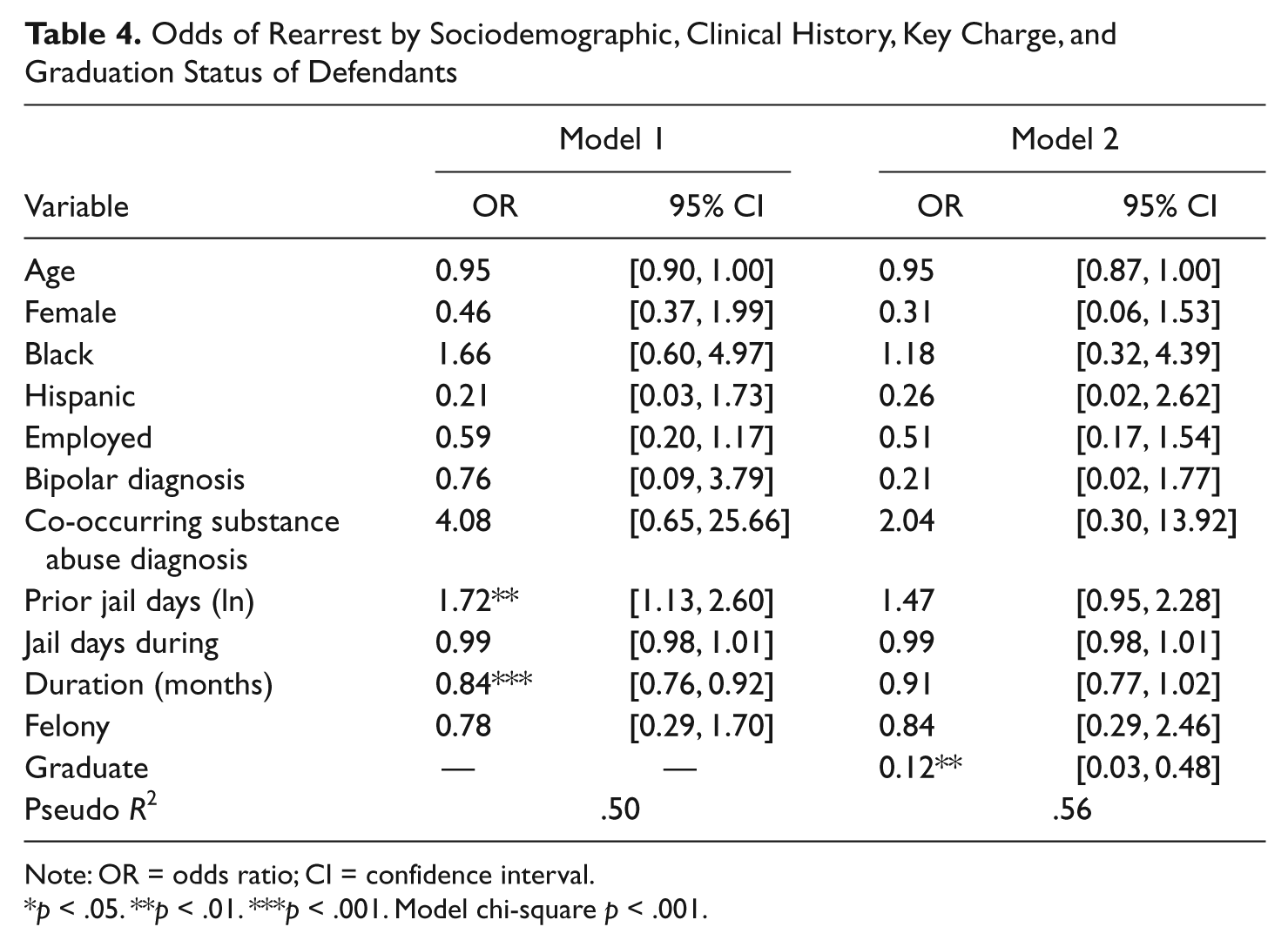
Note: OR = odds ratio; CI = confidence interval.
p < .05. **p < .01. ***p < .001. Model chi-square p < .001.
Jail Days 2 Years Following MHC Exit
Table 5 presents the negative binomial models predicting jail days after MHC exit. As in the model predicting rearrest, Model 1 shows that prior jail days increases incarceration time in the 2 years after court exit and MHC duration decreases incarceration time after leaving the court. It also indicates that Hispanics have fewer jail days relative to non-Hispanic Whites. Model 2 that adds graduation shows successful completion is again the most significant predictor of recidivism, here of reduced jail days; graduation predicts approximately 95% fewer jail days on average, net of other covariates. In addition, introducing exit status reduces the strength of prior jail days and reduces MHC duration to nonsignificance.
Negative Binomial Model of Jail Days 24 Months Following Mental Health Court Exit by Sociodemographic, Clinical History, Key Charge, and Graduation Status of Defendants
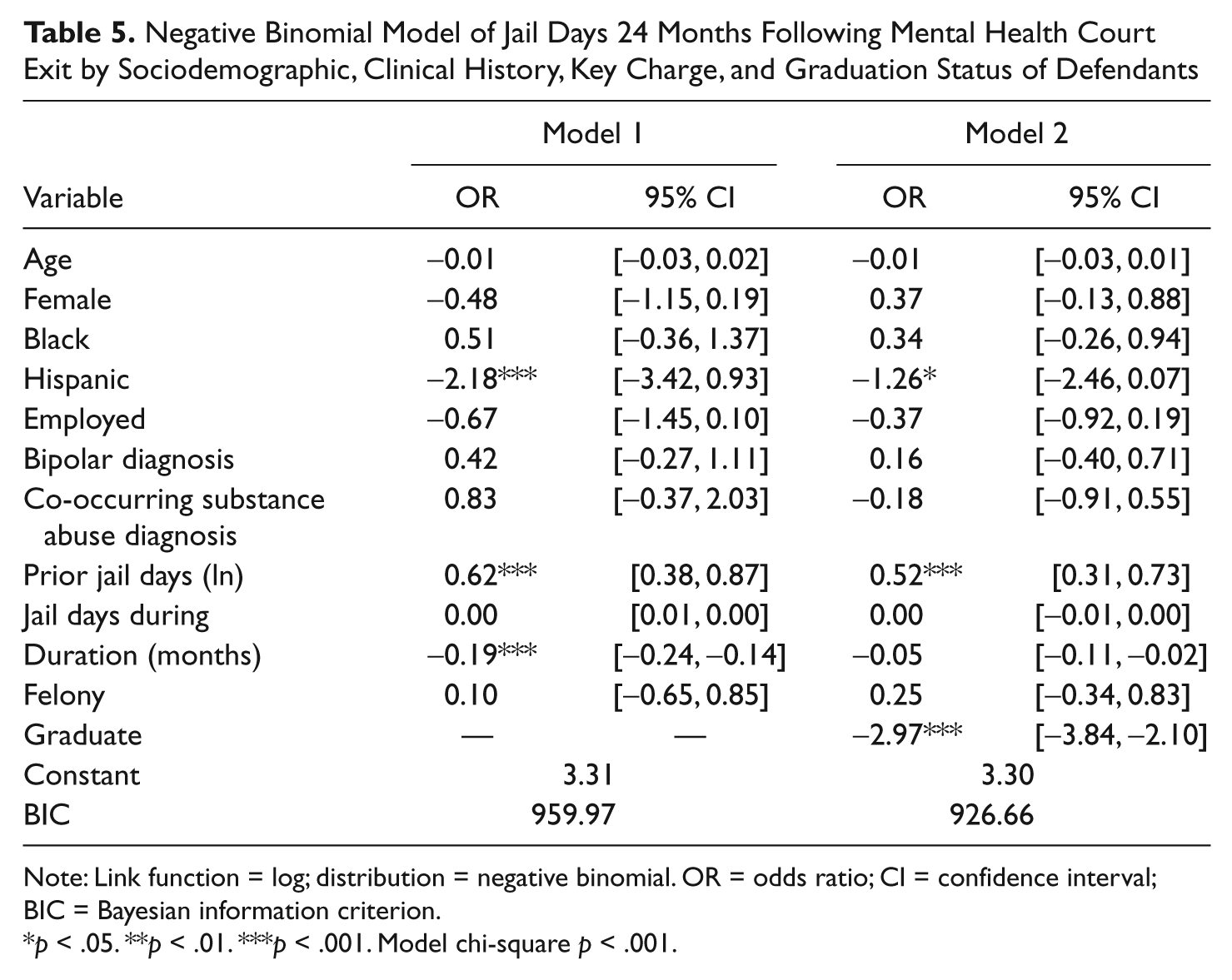
Note: Link function = log; distribution = negative binomial. OR = odds ratio; CI = confidence interval; BIC = Bayesian information criterion.
p < .05. **p < .01. ***p < .001. Model chi-square p < .001.
Summary and Discussion
The major public policy question concerning MHCs is, do they work as intended to improve functioning of offenders with severe mental illness so as to reduce criminal recidivism and protect public safety? The current study adds to the growing body of empirical research that supports MHCs as a possible answer to the problem of large numbers of persons with severe mental illness being arrested and incarcerated. Whereas most studies report that MHCs reduce the likelihood of criminal recidivism after MHC entry—with follow-up during MHC participation and perhaps for shortly afterward—the current study finds that completing the MHC program has a negative association with recidivism 2 years after court exit when participants are no longer receiving the MHC’s supervision, structure, treatment, case management, and social support. Approximately three fourths of graduates were not rearrested in the 2 years after leaving the court. Their 24.6% rearrest rate represents a substantially lower rate of recidivism than that of offenders with mental illness in TCCs (McNiel & Binder, 2007; Moore & Hiday, 2006; Steadman et al., 2011). It is comparable to that of one of the only two other studies that reported 2-year postexit recidivism (28%; Hiday & Ray, 2010) and lower than the other (36%; McNiel & Binder, 2007). Graduates had lower recidivism than noncompleters, as reported by the five earlier studies that examined effects of MHC completion on recidivism (Dirks-Linhorst & Linhorst, 2012; Herinckx et al., 2005; Hiday & Ray, 2010; McNiel & Binder, 2007; Moore & Hiday, 2006), and they had a smaller number of post–MHC exit jail days. Of the three exit groups, graduates had the only decline in jail days from the 2 years prior to MHC entry.
The current study’s rearrest rate for the sample as a whole (60.6%) is high and is larger than the study that reported 2-year postexit rearrest for both completers and noncompleters (48%; Hiday & Ray, 2010). On the other hand, reduced criminal recidivism is indicated by the approximately three fifths of the full sample having less incarceration time in the 2 years following MHC exit compared to the 2 years before MHC entry. But change in jail days as a measure of recidivism in the current study presents a complex picture in that mean jail days for the full sample of defendants did not decrease from before MHC entry to after MHC exit; in fact, it increased. The MacArthur multisite MHC study (Steadman et al., 2011) also reported an overall increase of mean jail days (but only pre- to post-MHC entry). The increase in two of its four MHCs was not substantially different from the 29 days’ increase of the current study’s MHC. MacArthur researchers considered the increase as small, especially as it was significantly smaller than the increase among the comparison TCC defendants; thus, they viewed this finding as supporting the positive effects of MHCs. The current study had no comparison sample, but it, too, minimized the increase in mean jail days for the full sample, because a solid majority of all defendants had a decline in jail days preentry to postexit and because the high proportion of terminated defendants (equal to graduates) had a high arrest rate and a skewed distribution of postexit jail days, with a large proportion (65.1%) spending more than 100 days in jail. In contrast to comparisons of means, median comparisons demonstrated a substantial decline in jail days from before MHC entry to after MHC exit for all defendants as well as for graduates. Opt-outs and those terminated still had an increase in median jail days, but it was not as large as indicated by the means.
The overall outcomes of this MHC are therefore distorted by a small group who may represent “life-course-persistent” offenders who recidivate even past the age of 50 despite intervention and contact with the criminal justice system (Moffitt, 1993; Robins & Ratcliff, 1979; Sampson & Laub, 1993, 2003, 2005). It is important to note for future evaluations that such defendants may be enrolled in MHCs, and as a result, they may distort the depiction of an MHC’s effectiveness for defendants whose offenses arise from the direct and indirect effects of their mental disorders (Hiday & Burns, 2010).
Alternatively, members of this small group may also represent those with the greatest needs who did not have those needs addressed because of inadequate program resources. We saw that of one group with great need, the homeless, no one graduated from MHC, all recidivated in the follow-up, and their jail days mean was more than two times larger the mean of those housed. The MHC program was unable to provide a crucial resource, housing, for this group. Our study is limited by not having treatment and service data, but we know that there were fewer resources and there was instability in staffing during the first 2 years of this study’s MHC, both of which affected supervision and services and likely affected graduation, rearrest, and jail days.
The rate of termination of the current study’s MHC, although high (43.4%), is in the middle of termination rates of MHCs, from 12.8% to 76.3% (Dirks-Linhorst & Linhorst, 2012; Frailing, 2010; Herinckx et al., 2005; Hiday & Ray, 2010; McNiel & Binder, 2007; Redlich et al., 2010), but its terminated defendants’ high arrest rate (90.7%) is higher than the only other study reporting 2-year post–MHC exit arrests among those terminated (81%; Hiday & Ray, 2010). The large number of postexit jail days of those terminated in the current study is greater than the other study reporting postexit jail days (202.3 vs. 183.4). The preentry-to-postexit increase for those terminated is almost identical to the other study reporting postexit jail days (99.0 and 99.2, respectively; Frailing, 2010; but the current study’s follow-up was twice as long [2 years vs. 1 year]). 2 The high rate of substance abuse diagnosis among defendants in the study’s MHC (83.1%), which is greater than that reported in other MHC studies and approaches that of defendants in drug courts, makes them a particularly high-risk population. Their high risk is reflected in the graduation rate (43.4%), which is toward the low end of drug court graduation rates, and in the large proportion rearrested, which is similar to 2-years-or-longer recidivism after drug court entry (Banks & Gottfredson, 2004; Gottfredson, Kearley, Najaka, & Rocha, 2005; Peters & Murrin, 2000; Rossman, Roman, Zweig, Rempel, & Lindquist, 2011).
Although graduates constitute the majority of those with fewer jail days postexit than preentry (67.8%), opt-outs and those terminated constitute almost one third (32.3%) of those with a decrease in jail days after exiting MHC. These opt-outs and terminated averaged significantly more time in MHC than those noncompleters who had an increase in jail days from preentry to postexit (7.5 vs. 4.9 months, p < .05, t test). Graduates spent the most time in MHC and received the highest MHC “dose,” but noncompleters who stayed longer in MHC yet did not manage to graduate still benefited from that increased time and the accompanying higher MHC dose they received. Other studies have reported that length of time in treatment and diversion programs negatively affects recidivism (Peters & Murrin, 2000; Rossman, Roman, Zweig, Rempel, & Lindquist, 2011; Swanson et al., 2001).
As with many MHCs, the current study’s court initially limited enrollees to those with lower-level offenses and expanded later to include persons with more serious criminal charges and histories (Griffin, Steadman, & Petrila, 2002; Redlich, Steadman, Monahan, Petrila, & Griffin, 2005). Wanting to make the greatest possible impact on reduced recidivism, in 2008, this study’s MHC made a deliberate fundamental shift to target high-risk offenders who have not only a co-occurring diagnosis of severe mental illness and substance abuse but also a significant criminal and drug-abusing history, a population commonly excluded from many diversion programs because of its high failure rate and difficulty to place in treatment (Denckla & Berman, 2001; Luskin, 2001; Naples, Morris, & Steadman, 2007; Peters & Osher, 2004). In conjunction with the new enrollment emphasis, it marshaled more resources and inaugurated a more structured program with increased drug testing, frequent and multiple in-house therapeutic groups (as opposed to relying on community providers), and more intensive supervision. The impact of these changes is not captured in the current study’s data of the court’s first few years. We included only three of those admitted since these changes because their MHC exits occurred in the first few months after entry. All of these were terminated. Such early exits shorten the dose of MHC supervision, treatment, case management, services, and support; and accordingly, they shorten possible benefit time. At the same time, the sample does not include those admitted after the changes who did not opt out or were not terminated. They were either still in court or had graduated but had not reached the 2-year postexit mark by the time of data collection. We, thus, cannot know whether this MHC with its changed treatment, testing, and supervision has made the same impact on them as it did on earlier graduates.
The current study found no that sociodemographic or clinical variable predicted graduation except co-occurring substance abuse, and none predicted rearrest. Of these, only Hispanic race-ethnicity predicted postexit jail days, but Hispanics composed only a small number. The process variable, duration of MHC, was significant in predicting rearrest and postexit jail days without graduation controlled; but the other process variable, jail days during MHC, used as a sanction for noncompliance and rearrest, was not significant in predicting any of this study’s outcomes: graduation, rearrest, or postexit jail days. The likely explanation is that jail as a sanction has the intended positive effect on some noncomplying and rearrested defendants, getting them to change their behavior such that they eventually graduate, even though it takes them longer. Graduates who had jail days during MHC averaged 6 months longer to complete the MHC program than graduates without jail days during MHC (17.1 months vs. 11.4 months).
Prior jail days, our measure of criminal history, predicted graduation, rearrest, and number of jail days after MHC exit but was subsumed by graduation in the final model predicting rearrest. Previous studies have also found measures of prior criminal involvement to be associated with recidivism after entering and/or exiting MHC (Christy et al., 2005; Herinckx et al., 2005; Hiday & Ray, 2010; Moore & Hiday, 2006; Steadman et al., 2011).
The current study has greater numbers of females, non-Hispanic Whites, and older persons relative to their numbers in the larger jail population as MHCs and other diversion programs of prior studies (Luskin 2001; Moore and Hiday 2006; Naples, Morris, and Steadman 2007; Redlich et al. 2010; but see Steadman, Redlich, Griffin, Petrila, and Monahan 2005). It has been suggested that these disproportions occur because of “cherry picking”; that is, diversion programs select candidates who are perceived to be lower risk and to have greater success potential (Redlich et al., 2010; Wolff & Pogorzelski, 2005; but note Frailing, 2011). The current study’s court had no formal criteria for avoiding high-risk defendants; but these disproportions suggest that there may have been informal, unacknowledged ones. Besides “cherry picking” by the MHC team, these disproportions may occur because of self-selection by voluntary participants who are motivated for change or whose family, friends, or attorneys pressure them to take the opportunity to change offered by MHCs.
Such possible selection bias raises the question of whether those not rearrested would not have been rearrested without MHC participation. Although we cannot answer this question definitively, we think it unlikely because our data indicate high rates of chronic mental illness, substance abuse, and unemployment. Furthermore, like most mentally ill defendants, our sample members were likely to be poor and have low education and insufficient social support. Without MHC, they would have little or no treatment and services to address their problems and would lack coping resources, which are major risk factors for repeat offending (see Draine, Salzer, Culhane, & Hadley, 2002; Hiday & Burns, 2010).
Limitations of the current study should be kept in mind. It has no comparison group, making it impossible to know whether defendants in this MHC have lower criminal recidivism rates than similar defendants processed through TCC in the same environment. Although it controls for some of defendants’ sociodemographic and clinical characteristics, it has no measure of their income, education, social support, insight into their illness, and motivation for change that might affect graduation and criminal recidivism. Moreover, it does not have data on number, timing, or type of pre- and post-MHC arrests; and the pre- and post-MHC arrests and jail days are only for the county of the study MHC and, thus, miss criminal justice involvement in other counties of the state. Our measure of criminal history, prior jail days, likely includes some time in jail after key arrest before MHC entry. Not having key arrest date, we could not assess the extent of such wait time, but we were able to ascertain partial wait time between MHC referral and entry. It had wide variation; however, it was not associated with prior jail days or with any of the three MHC outcomes. Other than duration of MHC and jail days during MHC, there is no measure of defendant reception of the specific program components, such as medication, therapeutic group, and sanctions; thus, we do not know how each affects MHC’s impact. Finally, the current study is only of a single site, so neither specific program components nor organizational procedures, such as procedural justice (Wales et al., 2010), reintegrative shaming (Peters & Osher, 2004), and the role of MHC team members (Castellano, 2011), can be evaluated in comparison with other courts; thus generalizability of its findings is limited.
On the other hand, single court studies, because of their differences in eligibility, procedures, program components, resources, and community environment, provide important independent tests for the MHC model. This study, with all its limitations, contributes to the accumulating evidence from studies of other single sites and one multisite study supporting the hypothesis that MHCs reduce criminal recidivism. It also adds to the evidence that graduation (or completion of the MHC program) is important in achieving reduced criminal recidivism. Although defendants with illegal substance abuse and more prior incarceration were less likely to have positive outcomes, we strongly argue against screening them out from MHC. Excluding them would eliminate persons with mental illness who could benefit from MHC participation, as many such defendants did in the current study. Instead, MHCs could take additional steps to treat higher-risk defendants to improve their outcomes by addressing their risks with integrated mental health and substance abuse treatment, structured programs with intensive monitoring and sanctions, and more resources. Future studies should seek to ascertain what program components lead to success and failure for both higher- and lower-risk participants. Identifying the mechanisms by which MHCs work can lead to continued refinement of their programs.
Footnotes
Acknowledgements
The authors would like to thank Denise McKinney for providing the data and background information on the Hall County Mental Health Court and for her swift and thoughtful responses to our inquiries.
Authors’ Note
Authors are listed alphabetically.
Declaration of Conflicting Interests
The author(s) declared no potential conflicts of interest with respect to the research, authorship, and/or publication of this article.
Funding
The author(s) received no financial support for the research, authorship, and/or publication of this article.