



Abstract
This review article examines 142 journal articles on fake news and misinformation published between 2008 and 2017 and the knowledge generated on the topic. Although communication scholars and psychologists contributed almost half of all the articles on the topic of fake news and misinformation in the past 10 years, the wide variety of journals from various disciplines publishing the topic shows that it has captured interest from the scholarly community in general. Male scholars outnumbered female scholars in both productivity and citations on the topic, but there are variations by fields. There are very few scholars who have produced a large body of work on the topic yet. Effects of fake news/misinformation is the most common topic found in journal articles. A research agenda by the different roles in the production, spreading, and using fake news/misinformation is suggested.
The interest in fake (false) news and misinformation has grown exponentially since the rise of social media and mobile media in 2008. The ease to create, share, and spread information online and through messaging apps such as WhatsApp and WeChat raised concerns for the proliferation of misinformation and fake news. U.S. President Donald Trump’s frequent use of the term fake news popularized its use around the world. “Fake News” became American Dialect Society’s (2017) and Collins Dictionary’s Word of the Year in 2017 (Meza, 2017). The former defines fake news either as “disinformation or falsehoods presented as real news” or “actual news that is claimed to be untrue,” while the latter defines it as “false, often sensational, information disseminated under the guise of news reporting.” Journals such as New Media and Society and the American Behavioral Scientist had special issue calls for papers on the topic of fake news and misinformation. The recent development in artificial intelligence and the use of bots in social media further exacerbated the problem (Ferrara, Varol, Davis, Menczer, & Flammini, 2016). Yet a recent study of 126,000 stories on Twitter from 2006 to 2017 shows that false news spreads deeper and faster than authentic news due to humans rather than robots. People are excited by the novelty in false news and are more likely to spread it than robots (Vosoughi, Roy, & Aral, 2018).
Misinformation can come in different shapes and forms with different motivations. Fake news is one type of misinformation presented as news. Misinformation became Dictionary.com’s Word of the Year in 2018, which is defined as “false information that is spread, regardless of whether there is intent to mislead” (Sherman, 2018). Some misinformation is simply erroneous information or containing factual errors due to unintentional or innocent mistakes. But some misinformation is false information intentionally created to mislead and misinform people with an agenda. Such intentional and malicious messages are called “disinformation.” Examples of disinformation include deceptive political and commercial advertisements, government propaganda, forged documents, internet frauds, fake websites, and manipulated Wikipedia entries (Fallis, 2015). However, as the intention of the message is difficult to be ascertained by the receiver who may be the subsequent propagator of the message, misinformation is an appropriate descriptor of false information until it is confirmed as disinformation. There is a greater likelihood of true and false information appearing together so that it requires substantial knowledge of the audience to determine which part of the message/news articles is true and which is not. Since realism has been argued to be more persuasive when the information is intended to be used to guide someone’s action (Andsager, Austin, & Pinkleton, 2001), “fake news” and misinformation can be a mix of real and fake information. As such, identifying the “fake” from the real becomes a hot topic for research, which is much more complex than a black and white fake versus real dichotomy.
The purpose of this review article is twofold. We first examine the trends in scholarship in the past 10 years on the topic of fake news and misinformation to see how the surge in social media and mobile media use and the election of Donald Trump affected the research on misinformation and fake news. We use an interdisciplinary approach in reviewing the topic by looking at various disciplines such as psychology, economics, political science as well as communication in contributing to the scholarship about misinformation and fake news from the causes to effects of the use of misinformation and fake news. A list of the most productive scholars and common journal outlets are identified for researchers’ reference. We then examine the impact of such research and the factors affecting the impact of those research to provide a roadmap for future researchers on the topic. It is similar to the approach of Kim, Park, Yoo, and Shen’s (2010) review article on Health Communication scholarship.
Conceptual Review of Fake News and Misinformation
Early research about misinformation did not use misinformation as a term. Rather, false information and rumors were the more common subjects of study. Interestingly, in earlier studies, false information was not considered undesirable but beneficial in persuading readers in some circumstances. For example, Nunnally and Bobren’s (1959) experiment found that for anxiety-provoking issues, such as catatonic schizophrenia, messages containing false information are as effective as messages containing accurate information to the participants because they are less threatening. Misinformation, according to Karlova and Fisher (2013), is not necessarily fake information. It is rather incomplete or inaccurate information, which could be valid and truthful. Nevertheless, scholars often interpret misinformation as misleading information, which is closer to the definition of fake news.
Prior to the 2016 U.S. presidential election, communication researchers used the term fake news to refer to news parody and political satire TV programs such as The Daily Show With Jon Stewart, The Colbert Report, and Saturday Night Live (e.g., Balmas, 2014; Day & Thompson, 2012). Fake news genre represents “programming where either the program’s central focus or a very specific and well-defined portion is devoted to political satire” (Holbert, 2005). These researchers found that this kind of “fake news” can help increase knowledge of politics with its interpretation and representation of news and political figures. Baym (2005) and Jones (2010) called this as a new form of critical journalism based on satire as an alternative to mainstream press. However, there are also criticisms to such fake news/political satire shows as media malaise, decreasing confidence in the democracy and political leaders, confusing viewers, and lead to indifference and political nonparticipation by young voters (e.g., Baumgartner & Morris, 2008).
Moving away from this narrow and limited conception of fake news since 2015, researchers started to identify some characteristics of fake news in addition to its falsity: deliberateness, provocative, sensational, eye-catching, and clickbait. “Fake news involves only deliberate falsities, not accidental errors or innocent mistakes,” and is “supposedly direct and have powerful, and immediate effects on the easily fooled, unenlightened masses.” (Calvert & Vining, 2017, p. 160). Regularly receiving fake news makes consumers get used to them and perceive them as real (Balmas, 2014). The clickbait practices of many online news sites using sensational headlines or sexy words to attract audience traffic is another kind of misinformation (Y. Chen, Conroy, & Rubin, 2015). Misleading headlines unrelated to or exaggerating the content can attract readers and can boost the web traffic to the news. The news story itself may be fully accurate, but the headline summarizing the content is false. It may not qualify as fake news but is misleading enough to warrant a cue for fake news. Using sensational headlines is not new as tabloid newspapers use them all the time. But online, the number of views are publicly displayed and can boost the traffic to the site. Such clickbait practices confuse readers further as different types of sites are using such techniques to attract readers’ attention.
Political content is frequently associated with news stories containing misinformation or those that could be considered fake news. The political environment resulting from the 2016 U.S. presidential elections has been christened as a posttruth world by some scholars (Kucharski, 2016; Lewandowsky, Ecker, & Cook, 2017). Posttruth studies on fake news and misinformation focus on the decline of trust in science and the increasing political polarization. To some scholars, posttruth only implies a time frame, that is, after the 2016 presidential elections; but the content itself, fake news, does not differ conceptually from general definitions of fake news (Paul, 2017). Rochlin (2017) argues that fake news in the posttruth era replace facts with emotions. Therefore, the posttruth era framework is an emotion-based market. Posttruth implies that media is polluted with fake news, clickbait, conspiracy theories, extreme bias, and hate news, among others.
Growing Importance of Fake News and Misinformation Studies
The increasing penetration of the internet provides a fertile ground for the spread of misinformation: “False information has always existed and fake news has been a part of online news since it began” (Brennan, 2017, p. 179). Metzger, Flanagin, and Zwarun’s (2003) study found that convenient access to information is a more powerful predictor of college students’ media use than credibility, and students seldom verify the information. Since people carry their phones all the time, which makes it convenient to share content through social media and messaging apps, misinformation and fake news propagate easily in this era of smartphones and social media.
Certain content categories such as health and medicine are more susceptible to misinformation because they require prior knowledge on the topic and some uncertainty is associated with it. It has been found that during a Zika outbreak, the majority Instagram posts containing messages about the virus included misleading information (Seltzer, Horst-Martz, Lu, & Merchant, 2017). Vaccination is another health topic plagued with a large amount of misinformation (Shelby & Ernst, 2013; Zimet, Rosberger, Fisher, Perez, & Stupiansky, 2013). Contraception, abortion, and women’s health are among many health-related topics studied under the umbrella of misinformation (Bryant & Levi, 2012; Chipeta, Chimwaza, & Kalilani-Phiri, 2010; Rowlands, 2011; Tobin, 2008). Other than health and medicine, environmental science and climate change (Bedford, 2010; Van der Linden, Leiserowitz, Rosenthal, & Maibach, 2017) are also common topics in misinformation studies.
Political communication scholars have a strong interest in the study of fake news (e.g., Coe et al., 2008; Nelson & Taneja, 2018) because media have significant impact on politics. They shape public opinion and influence the democratic voting process. The spread of fake news has intensified the research conducted on fake news outside of the political communication framework as well. A good example is the research involving entertainment or the hybrid between information and entertainment—also called infotainment (Beavers, 2011; Berkowitz & Schwartz, 2016; Reilly, 2013; Tenenboim-Weinblatt, 2009). Political satire as infotainment is a special type of political communication. Although its basic argument is truthful, to provide entertainment value, information is exaggerated and fictionalized as “fake” news.
Motivation to Create and Spread Fake News and Misinformation
Allcott and Gentzkow (2017) suggested that making profits and promotion of ideology are the two motivations for creating fake news. Fake news tend to attract readers and can be good advertising strategies. Helping to promote certain candidates and ideological agenda during elections by attacking the opponent through dissemination of fabricated information is another main motivation for producing fake news.
Fake news and misinformation can be determined through checking verifiable facts. Hence, opinion and biased reports do not constitute fake news. In discussing fake news and misinformation, we need to differentiate between the originator and the distributor, and the intention of creating and distributing false information. So there are three types of responsibility for the harm caused by the different roles in the process. When an originator creates and uses misinformation, he or she may do it out of ignorance and deficiency in knowledge or error in understanding the topic. Such misinformation is out of innocence rather than intentionally misleading others from the truth. The responsibility of such mistakes is analogous to manslaughter rather than homicide. The second type of harm is to deliberately create fake news that pretends to be true news with a clear goal of misleading the public as a form of disinformation. This responsibility is similar to homicide rather than manslaughter. Accordingly, they should be held accountable for the harm they caused the society with the most severe punishment among the disinformation creators. The third type of responsibility is distributing the misinformation/fake news to others with or without the knowledge of the falsity of the misinformation. This equates to being an accomplice to the person creating the fake news because sharing increases the reach and apparent credibility of the fake news. Sharing information is the choice of a user. So a user willingly spreading the fake news should bear some responsibility for the consequence of the harm caused to other people.
Information sharing is a common motivation among people (Karlova & Fisher, 2013). In online environments, information is more visible if it is shared more, wherein, the more the information is shared, the more visible it is. Practices such as clickbait titles and headings make misinformation easier to spread. Sharing information is an attempt to influence other people’s opinion that are often out of good intention (Bobkowski, 2015). Yet when people are unable to identify misinformation and believe it is true, sharing that misinformation helps spread rumors and hoaxes.
Contribution of Different Disciplines to the Study of Fake News/Information
Due to the importance of the topic of fake news and misinformation to the society, scholars from different disciplines offered their perspectives on the issue and proposed solutions. Journalism and communication scholars shifted from examining the benefit of fake news as political satire (e.g., Holbert, 2005; Jones, 2010) to investigating fake news in social media as a major news source and how fake news pertains to spreading false information with an agenda. Solutions to counter the prevalence of fake news include fact checking (e.g., Coddington, Molyneux, & Lawrence, 2014), inoculation, and media literacy (Calvert & Vining, 2017; Downman, 2017). Psychologists focus on the information processing and memory of fake news and misinformation. Lewandowsky et al. (2012) found that people tend to stick to misbeliefs for a long time, and it is hard to remove them from their memories. They suggested some debiasing strategies to overcome those resistance to correction such as warning in advance, repeated retraction, reinforcing the correct facts, using simple rebuttals, and fostering healthy skepticism.
Computer scientists are interested in identifying cues of fake news and misinformation and using algorithms to detect or block those messages online such as Y. Chen et al.’s (2015) framework or Ferrara et al.’s (2016) review of the different methods to detect social bots in social media and identify the operators of the bots. Economists such as Allcott and Gentzkow (2017) offer their perspective on the economics of fake news. They argue that while fake news may generate psychological utility for some consumers to reaffirm their beliefs and biases, it also imposes social costs by making it more difficult for other consumers to determine what is right for them. Fake news prosper in social media that tend to promote cheap news sources. Low barriers to the production and dissemination of fake news afforded by digital technologies and social media platforms make fake news an increasing problem in our society than ever before. Fake news sites rarely intend to build reputation and do not invest resources for accurate reporting. Based on web browsing data, an original postelection online survey of 1,200 people, and analysis of a database of 156 election-related news stories that were categorized as false by leading fact-checking websites in the 3 months before the election, Allcott and Gentzkow (2017) show how an increase in fake news exposure might have aided Donald Trump to get elected. Facebook’s initiatives to improve fact checking and identifying fake news for consumers may increase consumer social welfare, but this will also make Facebook and fact-checking sites the arbiter of truth for the public.
Library scientists saw some fundamental issues in the approach to remedy the prevalence of fake news. Rochlin (2017) argued that the current efforts to combat the epidemic of fake news—compiling lists of fake news sites, flagging stories as having been disputed as “fake,” downloading plug-ins to detect fake news—are misdirected. He suggested that the problem is rooted in the public’s mistrust of all news in general, and the current digital news industry’s practice of using clicks-as-reward facilitated the spread of fake news and other clickbait.
Research Questions
This review will answer the following questions on the fake news and misinformation scholarship:
How do fake news and misinformation research evolve over time since the rise of social media and mobile media in 2008 and after the U.S. presidential election in 2016?
Which journals publish misinformation and fake news research the most?
Which disciplines contributed the most to the study of misinformation and fake news during the period 2008-2017 and have the highest impact in number of citations?
What topics do misinformation/fake news researchers study the most, and what are the latest trends? What are the common approaches and methods they use to study the topic?
What attributes of misinformation and fake news research (author, gender, country of affiliation, study population, medium, data originality, topic, approach, and country setting) are likely to generate higher citations?
Are grant-funded studies on fake news/misinformation more likely to generate citations with more resources available to the research project?
Who are the most productive scholars on this topic and their citation impact?
Method
Because the focus of this review is the journal article publications in recent 10 years from 2008 to 2017, we decided to use Google Scholar to search for qualified articles instead of other academic databases. Other academic databases usually have a lag of several months to a year for the journal articles and do not have comparable citation figures for us to assess citation impact of the articles. Web of Science citation counts lagged 2 years, which will not be useful for the more recently published articles. Google Scholar automatically tracks articles published online in real time so it captures all recently published articles. It provides a consistent format of articles with real-time citation count and article sources. The comparability of the data is critical in our study, hence we determined Google Scholar to be a more appropriate data source for this review. We understand the citations provided in Google Scholar include citations in books, book chapters, conference proceedings, and so on. Hence, it is not the same as Web of Science, which only includes journals in social science citation index. But the citation count is still a good indicator of academic impact and trend as it shows how many scholars and research studies use the article.
The first author compiled the article list in September, 2018, using two keywords “misinformation” and “fake news” and limited the time period from 2008 to 2017. The citation figures of the articles were saved to avoid changes in citation count in real time. Only academic journal articles were selected for review and analysis. The initial search results yielded 78 journal articles using the keyword “misinformation” and 76 articles using the keyword “fake news.” Interestingly, none of the misinformation or fake news articles duplicate with each other. On further inspection of the content, 12 articles located from the “fake news” keyword were deemed unrelated to misinformation or fake news and did not address the issue of misinformation or fake news. They were excluded from the analysis. Hence, a total of 142 articles were examined in this review. (A full list of articles included in the study is included in the Supplemental Appendix available online.). Although it is likely that there will be some articles touching on the subject of fake news or misinformation using other keywords, if they are not searchable using these two keywords, the likelihood of their use by other scholars on the topic will be low.
Coding Scheme
The coding scheme of the study contain key variables in this review:
Funding status of the study: Whether the study received a grant funding to sponsor the study. Coders located information from the acknowledgment section of the study.
Lead/sole author’s country of affiliation: The country was determined by the country location of the lead or sole author’s university or institution.
Number of citations: The number of citations of the article as listed on Google Scholar as of September 26, 2018.
Gender of the lead/sole author: We determine gender by the first name and for gender-neutral and unclear name, we looked up online for the gender of the author by picture.
Study country setting: Because of the dominance of the United States (U.S.) in communication research, we first examined the country setting of the research as U.S. only, non-U.S. only or both U.S. and non-U.S. For non-U.S. and both U.S. and non-U.S., we separated the continent of the study settings.
Approach of the study: We categorized the approach of the study to quantitative, qualitative, mixed methods, and conceptual paper. Quantitative studies must contain statistical analysis of the data with numerical information. Mixed method combines qualitative and quantitative methods and has data.
Research method: We identified 16 most common research methods used in social scientific studies and humanities in analyzing the studies: (a) survey, (b) experiment, (c) content analysis, (d) textual analysis, (e) in-depth interviews, (f) ethnography, (g) focus group, (h) discourse analysis/rhetoric criticism, (i) case study, (j) legal method, (k) historical method, (l) bibliometrics, (m) meta-analysis, (n) network analysis, (o) eye-tracking or other physiological methods, (p) web traffic/log data analysis, and (q) other. Multiple categories could be used in one study.
Topic of study: After a cursory review of the topics found in the articles, we grouped the topics into 12 nonmutually exclusive categories ranging from causes to effects of fake news and misinformation: (a) causes/motivations to produce fake news/misinformation, (b) sources of fake news/misinformation, (c) prevalence of fake news/misinformation, (d) audience’s determination/recognition of fake news/misinformation, (e) content/attributes/characteristics of fake news/misinformation, (f) spread and diffusion of fake news/misinformation, (g) consumption/use of fake news, (h) information processing and memory of misinformation and fakeness, (i) effects of fake news/misinformation, (j) fact checking to counter fake news/misinformation, (k) solutions/strategies to combat or reduce fake news/misinformation, and (l) other.
Message/news types and medium type: We then broke down the news or information topic type of the misinformation or fake news being studied into 11 non–mutually exclusive categories: (a) political news, (b) science/technology news/information, (c) health/medicine news/information, (d) entertainment, (e) education, (f) business news/info, (g) environment/weather/natural disaster, (h) racial issues, (i) gender issues, (j) crime (including testimony) with an (k) other category.
We classified the medium into 13 categories ranging from very general unspecific such as (a) media in general to more specific medium, (b) websites/online media/internet in general, (c) print media, (d) radio, (e) television, (f) telephony (include landline and cellular phones), (g) social media, (h) mobile media, (i) blogs, (j) messaging apps/groups such as WhatsApp or WeChat, (k) books, (l) magazines and newsletters, and (m) newspaper.
10. Data originality: We then examined if the study is based on empirical data or not. Non–data-based papers were classified as conceptual paper and data-based papers were coded either as original and secondary data or both original and secondary data.
11. Study population and scope: We then examined the study’s sample population and scope. Sample population were differentiated into people and content. For people, we based on Ha et al.’s (2015) review of most common sample populations in surveys such as general population, college students, professionals/executives, children, minorities, and media population, which was differentiated into online and nononline content. Sample population scope ranged from national, regional, local, and international (i.e., involving more than one nation).
Coding and Coder Reliability
Coders were two doctoral students in media and communication who were trained to use the coding scheme developed by the first author. They first practiced three articles with the first author and discussed the discrepancies. Then they double-coded five articles until they achieved perfect agreement on the items. Then they coded the items individually. At the end of the coding, they double-coded 14 items (10% of total sample). The reliability is high across the items. We used Cohen’s Kappa to measure the intercoder reliability, which corrected for chance agreement because almost all the variables are nominal variables except the number of citations. Overall, Cohen’s kappa for all the variables is .783. Six main variables (gender and country affiliation of first author, grant funding for the study, country setting, journal title) achieved perfect reliability with 100% agreement. Data originality has 93% coder agreement. Approach and study population has 87% agreement. The average agreement is 84% across 12 topic categories.
Results
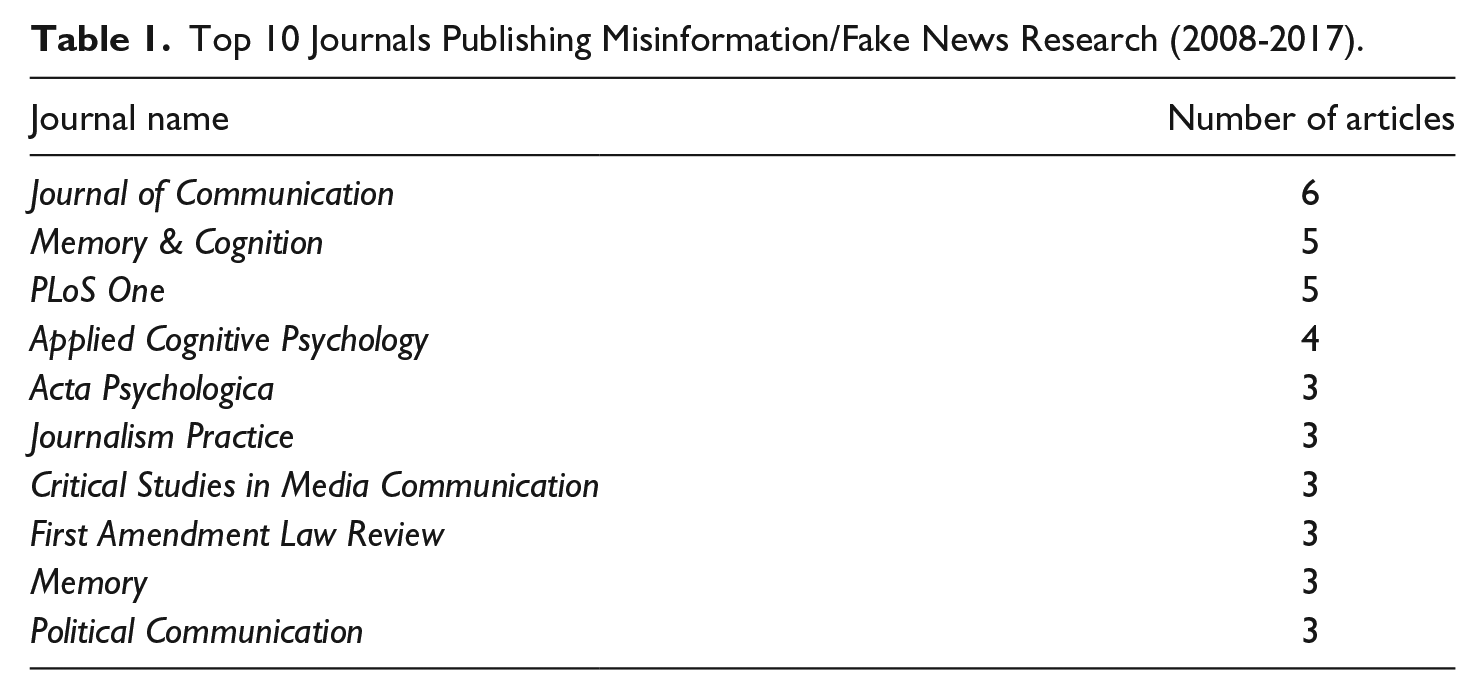
We separated the research articles into fake news or misinformation based on the keyword used to locate that article. Based on a total of 142 articles identified as focusing on fake news or misinformation published in 2008 to 2017, we found that the spike in fake news research occurred most recently in 2017 after the 2016 election. Misinformation research as a mainstay in health communication and cognitive psychology is steady over time in the past 8 years since 2010 (see Figure 1). As shown in Table 1, the journals that published misinformation or fake news the most are psychology journals and communication journals with the exception of PLoS One, which is a general open access journal. More articles on the topic appeared in journals in the field of cognitive psychology than communication. However, there was no journal that published a large amount of misinformation or fake news research articles except Southwell and Thorson’s (2015) coedited special issue on misinformation in the Journal of Communication with six research articles during our study period. Overall, the journal titles that published articles on the topic were very diverse from many fields other than psychology and communication, such as anthropology, computer science, economics, education, environmental science, finance, geography, global studies, information and library sciences, law, philosophy, physical science, political science, popular culture, public health, sociology, technology, and general social sciences and physical science.

Number of misinformation and fake news studies by year (2008-2017).
Top 10 Journals Publishing Misinformation/Fake News Research (2008-2017).
Topics, Methods, and Approaches Used in Misinformation and Fake News Research
Effects of fake news/misinformation is the most common topic found in journal articles (N = 55). The effects were examined either empirically or conceptually. However, the consumption of fake news/misinformation is the least common topic (N = 15). Most of the studies on misinformation or fake news used a quantitative approach (43.45%) or mixed methods (7.59%). Almost one third of the articles are conceptual papers without empirical data. Only 15.17% of the articles used a qualitative approach. Table 2 is a comparison of the topic by research approach. We found that research that focuses on audiences’ responses to fake news/misinformation, effects, and information processing of fake news/misinformation are much more likely to use quantitative methods in studying the topic. In empirical studies on the effects of misinformation, the effect is often conceptualized as the alteration of knowledge of the facts as they happened in reality—producing a distortion of the original event. Most of the articles analyzed in this study explored the negative effects of misinformation and fake news, and compared with the original events studied in those articles. Those that examine the causes and motivation of fake news, solutions to fake news, effect of fake news, and characteristics of fake news are more likely to discuss them as conceptual papers.
Common Approaches and Topics.

Note. Values are expressed as numbers with percentage in parentheses.
Multiple coexisting categories.
Among those articles that have empirical data, experiment (N = 28) and content analysis (N = 26) were the most common quantitative research methods used. There were also five articles using web traffic/log data analysis. Other qualitative methods being used were legal methods (N = 8), case study (N = 9), in-depth interviews (N = 3), focus groups (N = 2), and rhetorical criticism. A total of 25 articles employed multiple methods to collect data.
Funding of Research Topics and Impact
As shown in Table 3, about one-third of the studies we analyzed were funded by research grants. The topics most likely to receive funding were audience’s determination/recognition of fake news/misinformation (N = 20), effects of fake news (N = 21), and information processing of misinformation and fake news (N = 18). The average citations of funded studies (mean = 124 citations, N = 47) are almost three times higher than the nonfunded studies (mean = 48 citations, N = 95; t = 2.31, df = 110, p < .01). In general, misinformation studies received higher citations (mean = 68.2 citations) than fake news articles (mean = 50.1 articles). But generally, they were also published earlier than fake news studies too. Among the funded studies, prevalence of fake news/misinformation, source of fake news/misinformation, spread and diffusion of fake news/misinform are the topics having the highest average citations.
Funding Status by Topic and Citations.

Multiple coexisting categories.
Contribution by Discipline, Gender, and Citations
Communication (N = 30) and psychology (N = 35) were the two major disciplines that contributed the most articles to the study of fake news and misinformation, respectively. Table 4 shows that the 142 journal articles published in the recent 10 years on misinformation and fake news generated 8,641 citations, which means on an average, an article has 61 citations. As an emergent topic of study, such citation figures are impressive, especially in light of many articles getting published only very recently. There are some signs of the Matilda effect in which women received less impact than men on the topic. Although the difference is not statistically significant due to larger number of male scholars with higher standard deviations, male scholars have more citations than female scholars on the topic across many fields. Average number of citations per article for men is 17 more than women scholars. The only exception is in the field of anthropology, library science, and public health, where female scholars’ citations are higher than their male colleagues. In environmental science, sociology, and popular culture, only female scholars published work on misinformation and fake news with citations. There is also significant difference across fields in terms of citation on the topic. Computer science (mean = 120 citations) and economics articles (mean = 377 citations) on the topic tend to generate the highest number of citations. Psychology (mean = 71.6 citations) and public health (mean = 68.6 citations) also have higher citation figures than communication (mean = 60.6 citations).
Comparison of Discipline by First Author Gender and Citations.

Author’s Country Affiliation, Study Settings, Information Type, and Medium
Most of the first authors of the fake news/misinformation article are from U.S. institutions (N = 81) or English-speaking countries (N = 30). Only 3 are from African countries and 13 studies have first authors from institutions in Asia. Nonetheless, the study settings were not confined to the United States. As shown in Table 5, about one-third of the studies (N = 48) were conducted in non-U.S. settings or compared U.S. with non-U.S. settings. Among the non-U.S. settings, most of them were in Western Europe and Oceania (Table 6).
Comparison of Topic by Study Setting.

Note. Values are expressed as numbers with percentage in parentheses.
Multiple coexisting categories.
Topics Studied in Non-U.S. Settings.

Multiple coexisting categories.
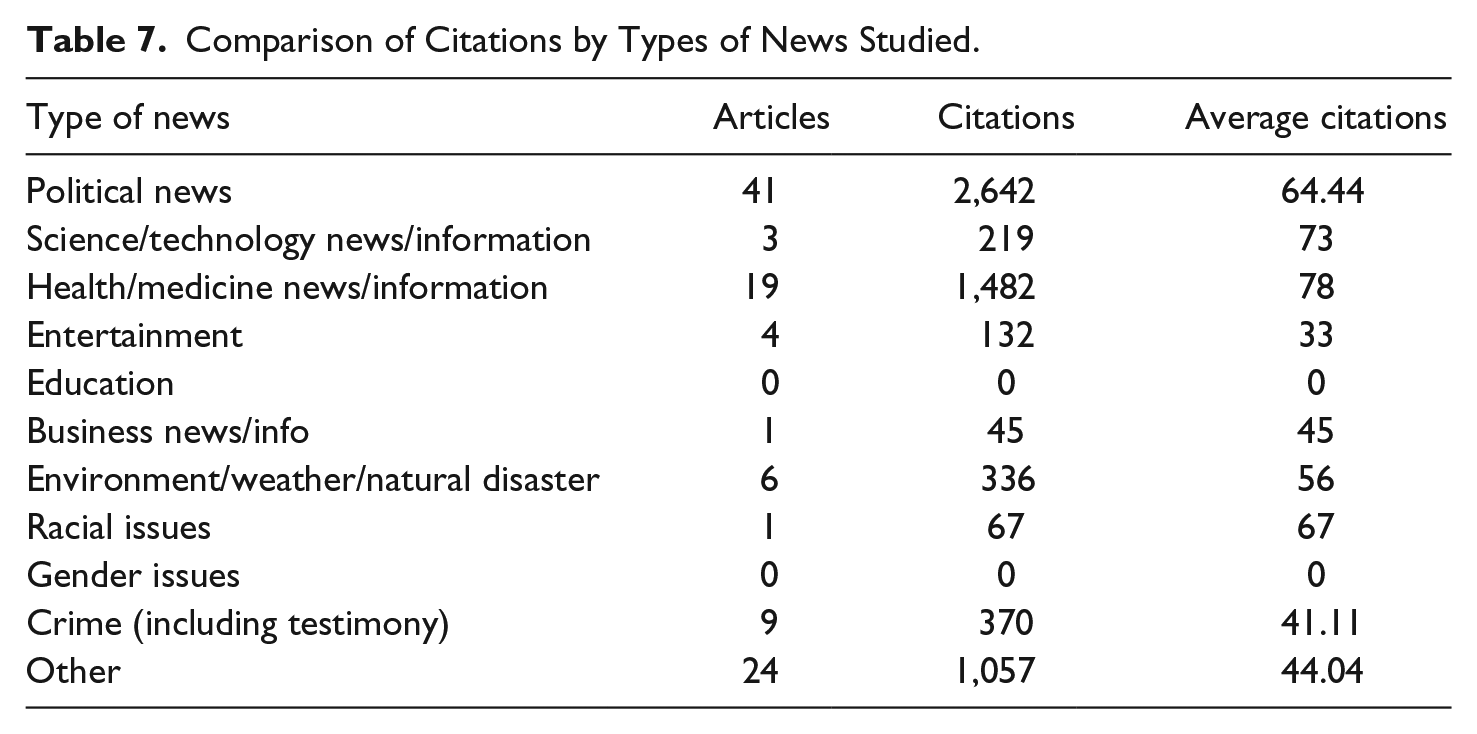
Not surprisingly, political news (N = 39) and public health/medicine news (N = 21) were the most common content type of fake news and misinformation being studied (Table 7). Psychologists studying processing of misinformation did not use specific media content and just manipulated the message stimuli (N = 24). Health and science misinformation received the highest citations, followed by political news and racial issues. In terms of medium, more than a quarter (28%) discuss the problem of misinformation or fake news in media in general, especially more among the conceptual papers (N = 22). However, for papers with empirical data, online media were more commonly studied. A total of 24 articles studied online media content, including social media, messaging apps, websites, and blogs.
Comparison of Citations by Types of News Studied.
As for study population or sample, only two third of the studies are empirical studies with study population information. Among them, some studied only people (N = 63) and some studied only media content (N = 52; see Table 8). When comparing the use of study population by topic, information processing studies that are mostly experiment based are likely to use college students as sample. When determining audiences’ recognition of fake news and solutions to combat or reduce fake news/misinformation, general population is more likely to be the study sample. Online media content is more likely to be studied (N = 38) than nononline media content (N = 14). Researchers more often studied online media content to examine content attributes of fake news and misinformation (15%), sources of fake news (13%), and solutions to fake news (13%).
Topic by Study Population Sample.
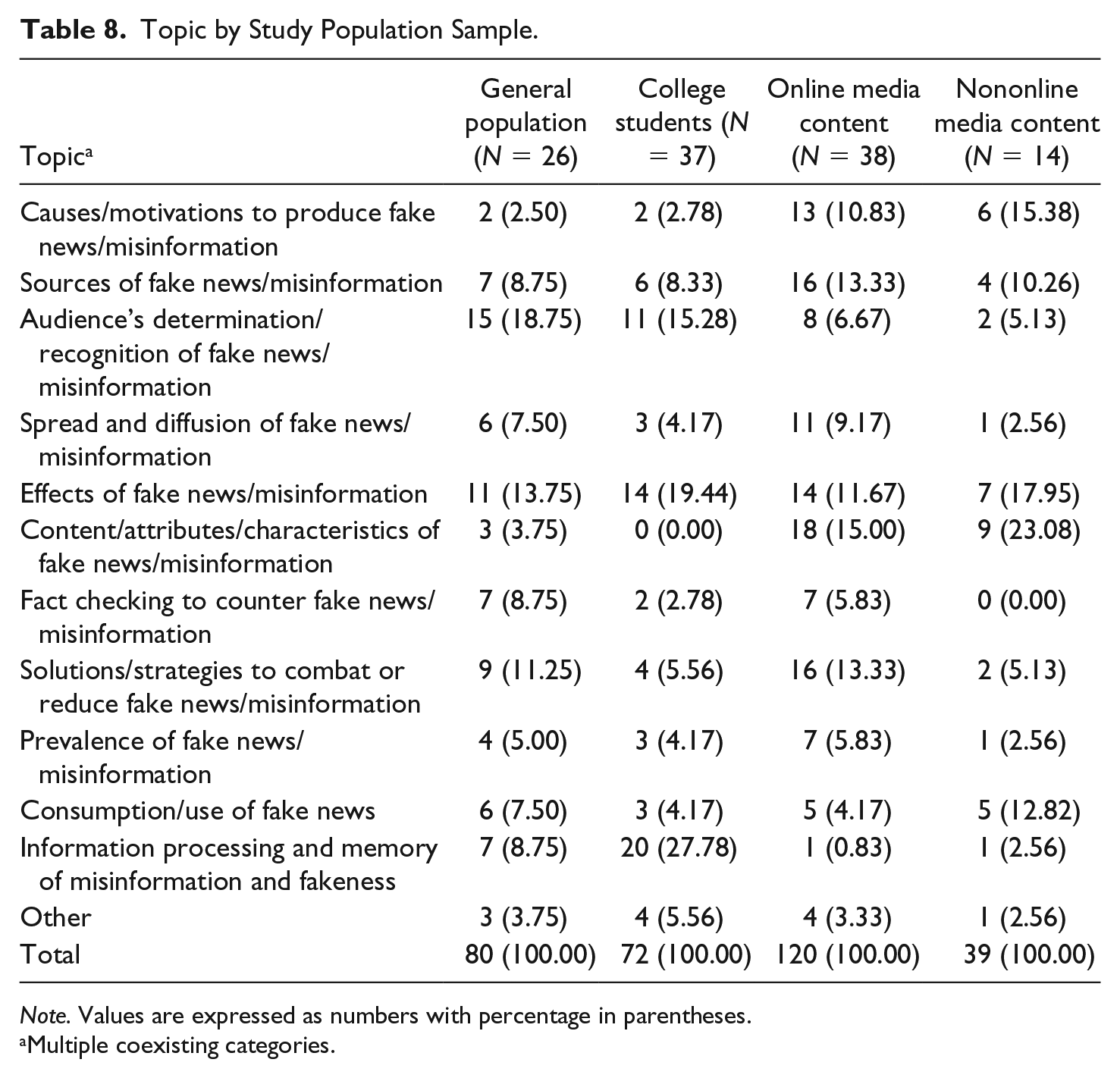
Note. Values are expressed as numbers with percentage in parentheses.
Multiple coexisting categories.
Data Originality and Citations
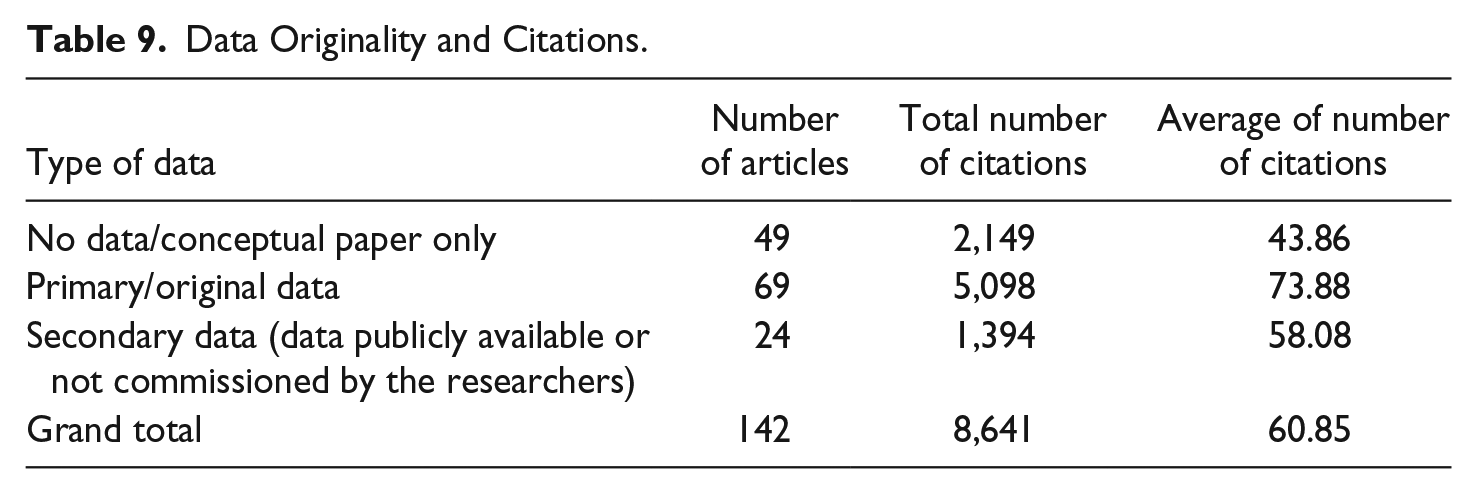
As shown in Table 9, we found that having original data on fake news/misinformation are more likely to generate citations than conceptual papers. The overall average number of citations of the articles is 60. But articles with primary and original data are much higher than average (mean = 74 citations). Those using secondary data have lower number of citations and close to average (mean = 58 citations). Conceptual papers on the topic of fake news/misinformation have the least likelihood of being cited by other researchers.
Data Originality and Citations.
Most Prolific Scholars
Although most misinformation and fake news scholars are affiliated with U.S. universities, the most prolific scholars on the topic in terms of number of published articles and total number of citations are two scholars from University of Western Australia, Ullrich Ecker and Stephan Lewandowsky, who also collaborated in several articles. The third most prolific scholar is Bi Zhu from Beijing Normal University in China. Because all her articles were all coauthored with two scholars in the University of California-Irvine, they are also on the most prolific list because we gave full credit to each author rather than fractional credit. Most scholars only have one published article on the topic in the study period. Although Allcott and Gentzkow’s sole article on fake news titled, “Social media and fake news in the 2016 election,” was only published in 2017, it already garnered 706 citations. Hence, we noted this in Table 10 to show that those who produced more articles may have lower academic impact in terms of citations than those who only published one article.
Most prolific scholars on fake news and misinformation research, 2008 to 2017.

Coauthored with Bi Zhu.
Discussion and Conclusion
Although communication scholars and psychologists contributed almost half of all the articles on the topic of fake news and misinformation in the past 10 years, the wide variety of journals from various disciplines publishing the topic shows that the topic has captured interest from the scholarly community in general. The proliferation of articles especially on fake news in the past 2 years shows that fake news is taking the center stage in scholarly attention among different types of misinformation. The participation of computer science and economics as fields with high citations will benefit the impact of scholarly research on the topic. Yet the dominance of the U.S. scholars on the topic is still apparent in terms of author affiliations and study settings. Male scholars also outnumbered female scholars in both productivity and citations in most fields. There are not many scholars that have produced a large body of work on the topic yet.
Based on what we learned from this review of articles, the motivation for producing fake news or misinformation is intrinsically linked with the intention and bias of the source. It is also related to achieving specific outcomes, be it political awareness through satire (Bernal, 2013; Reilly, 2013), spreading propaganda (Farooq, 2018; Khaldarova & Pantti, 2016), or gaining popularity on social media (X. Chen, Sin, Theng, & Lee, 2015). A majority of the studies have discussed how internet in general and social media in particular help in propagating misinformation. As such, various approaches have been suggested to verify source credibility. Even so, audience’s determination of fake news has been found to be influenced by the volume of stories pushing a particular narrative as well as their own biases (Ecker, Lewandowsky, Fenton, & Martin, 2014; Foster, Huthwaite, Yesberg, Garry, & Loftus, 2012). False medical and political information are especially appealing to those who seek validation about their beliefs (Shelby & Ernst, 2013; Thorson, 2016). A meta-analysis of research about debunking misinformation and misinformation processing conclude that people are likely to keep believing the false information even after it has been debunked (Chan, Jones, Jamieson, & Albarracín, 2017). Theories like continued influence effect, worldview backfire effect, and motivated cognition have been employed to explain the cause for such resistance to corrected information (Cook, Lewandowsky, & Ecker, 2017; Swire, Berinsky, Lewandowsky, & Ecker, 2017).
Opinion leaders on social media groups are critical to the spread of misinformation. News recommendations to their large circle of friends and acquaintances allow rumors to spread across several networks, thereby reaching a large number of people. Social media groups dedicated to conspiracy theories also aid in the diffusion of misinformation among large populations (Bessi et al., 2015). Bearing in mind the popularity of social media platforms across the world, there is a vast scope for inquiry into how misinformation spreads in different contexts and regions. Certain platforms are more popular than others in different countries. WhatsApp is extremely popular in many developing countries in South Asia Africa and the Middle East, while WeChat is the most dominant in China. There are very few published studies that have explored the topic of spreading fake news and misinformation in the context of messaging apps such as WeChat, WhatsApp, Instagram, Snapchat, and so on.
There are several social, political, and economic implications of sharing fake news. Misinformation often guide public opinion that can lead to either positive or negative results. Satirical news mostly serve to draw people’s attention to pressing issues is a benefit (Reilly, 2013). However, in a posttruth era where journalistic objectivity is increasingly overshadowed by emotional appeal, many people and organizations exploit social media channels for spreading malicious rumors. It has also negatively affected the credibility of traditional media outlets (Turcotte, York, Irving, Scholl, & Pingree, 2015). Unsurprisingly, most of the fake news stories being studied pertain to politics, health, science, and environment. People tend to hold diverse opinions on these topics, which are reinforced by repeated exposure to misinformation regarding those issues.
There have been suggestions to correct misinformation at the source to counter the barrage of fake news that is shared over social networks. Preventive measures such as censorship or blocking are not recommended, but identification and warning of fake news using AI (artificial intelligence) technology, inoculation such as media literacy, and remedial measures such as fact checking and corrections are commonly suggested solutions. There are also limitations to using such methods to check the spread of fake news. Search and machine learning algorithms are constantly updated by the service providers. Hence, developing new algorithms to detect duplicitous news content might already be outdated by the time they are implemented. Because algorithms rely on the presence of keywords or phrases, stricter filters may actually misclassify some genuine information as fake. Botometer, a software developed to detect bot accounts on Twitter, often made mistakes in rating accounts of less well-known people as bots. Inoculating people by providing them with factual evidence before the misinformation is circulated has been proposed as a strategy to counter its negative effects (Cook et al., 2017; Van der Linden et al., 2017). But as Aikin et al.’s (2015) experiment showed, exposure to corrective direct-to-consumer drug advertisements helped reduce the belief in the claims of violative misleading medicine ads on asthma patients, yet exposure to both corrective ads and violative ads did not improve accuracy rating on the drug’s side effects and risks. There are also potential backlash effects using fact checking and corrections when people were told they were wrong and lowered their trust in the media with corrections or other accusations of liberal bias in fact-checking services (Karlsson, Clerwall, & Nord, 2017; Tucker, Theocharis, Roberts, & Barberá, 2017). More unconventional methods to prevent spreading fake news such as borrowing the story-telling techniques and testimonials used successfully by antivaccine activists have been proposed to help distribute correct information to the people (Shelby & Ernst, 2013). The strength and extent of such strategies in neutralizing the negative impacts of misinformation need to be explored using more sophisticated research methods with more empirical evidence.
Freedom of speech legislations in many democratic countries allow fake news and misinformation to thrive in the media. In U.S. contexts, there is a barrier to regulating fake news due to the immunity provided by First Amendment to individuals or organizations involved in creating and propagating false information without any explicit violent intention. Regulation through the Federal Trade Commission by positioning fake news stories as commercial speech has been suggested as an alternate legal strategy to curb fake news at the source (Riggins, 2017). Accreditation and self-regulation by the media industry have also been proposed to address the issue (Emanuelson, 2017; Gonzalez & Schulz, 2017). However, legislation is a lengthy process and there are no agreed standards for self-regulation apart from being nonbinding expectations from media organizations.
While a majority of the articles on the topic used quantitative methods, it will be beneficial to study the motivation and causes to produce fake news, its effects, and characteristics in more depth using qualitative methods. Such exploratory research will provide a more robust framework for informing further studies into the topic of production and propagation of fake news. Understandably, communication and psychology scholars have been more prolific in their contribution to the literature on fake news and misinformation, respectively. However, our understanding of the topics can be further enriched with the insights from various other disciplines, including both humanities and science, technology, engineering, and mathematics (STEM) fields. Collaborative research can reveal interesting perspectives that will be helpful to combat fake news. Conceptual research articles into the solutions also need to be validated through empirical evidence.
From these 142 articles we analyzed, the severity of the problem of misinformation and fake news in mass media as well as the online world has been quite well-documented. But how to prevent the use and the spread of different types of misinformation and fake news effectively in light of various constraints and human defensive mechanism is still a big puzzle to be solved.
Suggestions for Future Research
Clearly, the topic of fake news and misinformation is still an emerging area of research to be explored further. As funding opportunities are quite good on the topic (one third of the published articles have funding support), more large-scale empirical data to test or derive rigorous theories in combating the spread and negative effects of fake news and misinformation are needed. Cross-country comparative studies are still scarce, and it is likely that societies with high media trust versus low media trust or free press versus state-controlled press differ in the prevalence and spread of fake news and misinformation. Generational differences will also be a factor because digital natives who are accustomed to receive news online and social media will use and trust these media more than the older generations will use both traditional news media and online media. To develop an effective media literacy curriculum, more research is needed on the topic to cover areas such as the responsibility in the information creation and dissemination process, identification of fake news or misinformation in different types of content, and practical strategies to use in real life. The media literacy curriculum should begin at the age when children know how to use text messages and social media as they can begin to receive, create, and share messages to others. Rewarding and investing in quality and truly engaging journalism along with educating the general public are alternative avenues to combat misinformation and fake news. A comprehensive list of fake news attributes and cues can help develop algorithms to identify false information. Researchers should compare the effectiveness of different solutions for different types of misinformation and fake news and for different populations as their vulnerabilities to fake news differ. With so many disciplines interested in this topic, more interdisciplinary research and collaboration can help find better and faster solutions to the problem. The future research agenda should focus on people in different roles in the prevention, production, spreading, consumption, and correction of fake news and misinformation.
Supplemental Material
Supplemental_Material – Supplemental material for Mapping Recent Development in Scholarship on Fake News and Misinformation, 2008 to 2017: Disciplinary Contribution, Topics, and Impact
Supplemental material, Supplemental_Material for Mapping Recent Development in Scholarship on Fake News and Misinformation, 2008 to 2017: Disciplinary Contribution, Topics, and Impact by Louisa Ha, Loarre Andreu Perez and Rik Ray in American Behavioral Scientist
Footnotes
Declaration of Conflicting Interests
The author(s) declared no potential conflicts of interest with respect to the research, authorship, and/or publication of this article.
Funding
The author(s) received no financial support for the research, authorship, and/or publication of this article.
Supplemental Material
Supplemental material for this article is available online.
Author Biographies
References
Supplementary Material
Please find the following supplemental material available below.
For Open Access articles published under a Creative Commons License, all supplemental material carries the same license as the article it is associated with.
For non-Open Access articles published, all supplemental material carries a non-exclusive license, and permission requests for re-use of supplemental material or any part of supplemental material shall be sent directly to the copyright owner as specified in the copyright notice associated with the article.
