




Abstract
The spread of misinformation through a variety of communication channels has amplified society’s challenge to manage the COVID-19 pandemic. While existing studies have examined how misinformation spreads, few studies have examined the role of psychological distance in people’s mental processing of a rumor and their propensity to accept self-transformed narratives of the message. Based on an open-ended survey data collected in the U.S. (N = 621) during an early phase of the pandemic, the current study examines how psychological distance relates to the transformation and acceptance of conspiratorial narratives in the context of the COVID-19 pandemic. Two instances of misinformation are examined, both of which were widely heard at the time of data collection: the role of (a) Bill Gates and (b) government during the outbreak of the pandemic. This study uses topic modeling techniques to capture distinctive topical attributes that emerged from rumor narratives. In addition, statistical analyses estimate the psychological distance effects on the salience of topical attributes of a rumor story and an individual’s propensity to believe them. Findings reveal that psychological distance to the threats of COVID-19 influences how misinformation evolves through word-of-mouth, particularly in terms of who is responsible for the pandemic and why the world finds itself in the current situation. Psychological distance also explains why people accept the message to be true. Implications for misinformation and rumor psychology research, as well as avenues for future research, are discussed.
The COVID-19 pandemic substantially restrained movements of humans but not of misinformation. Research on misinformation and COVID-19 has thus far suggested that, despite fact-checkers’ aggressive interventions, false or unverified claims have rarely faded away (Brennen et al., 2020). According to Singh et al. (2020), retweeting misinformation took a relatively small portion of the entirety of the pandemic conversations in Twitter yet nonetheless was larger than retweeting factual messages of legitimate health organizational or expert sources.
The current study explores the role of psychological distance in transforming misinformation narratives and people’s propensity to believe them. This study focuses on conspiratorial misinformation as it tends to persistently resist correction, thus is prone to engendering variegated narratives over time (Sunstein &Vermeule, 2009). While this study is built mainly on psychological research of rumors and misinformation related to cognitive and affective determinants of susceptibility to falsehood (e.g., Kwon &Rao, 2017; Pezzo &Beckstead, 2006; Rosnow, 1991), we focus on the transformation of misinformation narratives by analyzing “what is told and how it is told” as misinformation travels through word-of-mouth (e.g., Bernardi et al., 2012, p.18).
A unique aspect of this study is that it explores the role of psychological distance (Trope &Liberman, 2010) in shaping an individual’s way of rumor storytelling and acceptance. Psychological distance suggests that an individual’s processing of information is based on his or her perception of distance to an object or an event of interest (Trope &Liberman, 2010). Psychological distance has shown to influence policy perceptions (e.g., Ledgerwood et al., 2010), consumer behaviors (Kim et al., 2016), social and moral judgment (Mentovich et al., 2016), and news discourses (Kwon et al., 2017, 2019). That said, few have examined the relationship between psychological distance and misinformation, particularly during the stressful time of a pandemic. While the concept of psychological distance is not orthogonal to other psychological constructs, it uniquely highlights that perception is not a static attribute but a changeable state contingent on external conditions. Further, that this transitory perception influences not only attitudinal or behavioral outcomes (e.g., believing or sharing a rumor) but also narrative styles (e.g., how a rumor story is told) (Trope &Liberman, 2010). In this study, we first review misinformation and rumor research in the context of COVID-19, and discuss how psychological distance may relate to the transformation and acceptance of misinformation. We then use topic modeling and statistical analysis to empirically examine the relationship between psychological distance and conspiratorial rumors in the context of the COVID-19 pandemic.
Literature Review
Rumor as Part of the “Misinformation Machine”
To offer working definitions of misinformation and rumors, this study adopts the proposal that the “misinformation machine” operates as a two-layered process (Ruth, 2019, p. 348). The first layer centers on interactions between original (incorrect) messages and audiences, while the second layer involves subsequent word-of-mouth processes. Ruth (2019) purposefully called the second layer a process of misinformation rumoring to distinguish the circulation of transformed stories or re-written narratives among audiences from first-hand exposures to an initial version of misinformation. She observed: “There is a serious need for a better understanding of how fake news stories transform into rumors and to what extent these rumors can amplify beliefs” (p. 348). An analogy of audience gatekeeping (Kwon et al., 2012) might be appropriate here: Audiences as information transmitters have control over what (mis)information to amplify, and how to transform the message.
When misinformation enters a rumor-mill, the original message breeds multiple variations of narratives in a way that mirrors a rumor transmitter’s own interpretation. Rumor research before the era of online misinformation explained the process of rumor variegation via three distinctive yet overlapping mechanisms: leveling, sharpening, and assimilation (Allport &Postman, 1947). As a rumor travels, the message becomes shorter and more abstract as details are leveled out. The process of sharpening, on the other hand, magnifies certain details of the rumor message. Lastly, assimilation pertains to reframing the message by aligning it with the utterer’s predisposition, identity, or interests. Thus, leveling shortens a rumor message for efficient and effective spreading, sharpening helps the rumor garner greater attention, and assimilation makes the message persuasive.
In this sense, rumor narratives reflect the minds of both individuals and groups. That is, factuality or informational accuracy does little to shape one’s acceptance of the rumored message, especially when the message is successfully assimilated with existing belief systems. Rather, the intention to believe or reject the message depends on other factors, such as social/group identity (Einwiller & Kamins, 2008), personal relevance (Liberman & Chaiken, 1992), credulity (Bordia & Rosnow, 1998), anxiety that an individual perceives from the message content (Pezzo & Beckstead, 2006) or from the uncertain situation (Kwon & Rao, 2017), and the social relational ties between those who transmit rumors and those who receive them (Margolin et al., 2018; Oh et al., 2013).
Psychology of COVID-19 Misinformation
Social psychological understanding of misinformation has continued in digital environments especially in the context of crises, such as natural disasters (e.g., Oh et al., 2010; Takayasu et al., 2015), terrorism (e.g., Starbird et al., 2014), and national security threat (Kwon et al., 2016). Expanding this research trend, recent literature on COVID-19 misinformation has focused on two inquiries. First, studies have examined factors that affect people’s vulnerability, or resistance, to COVID-19 misinformation. For example, Enders et al. (2020) found that people believed dubious, abstract ideas more than specific false claims about COVID-19, suggesting that conspiratorial stories should be more accepted than health treatment-related misinformation. Other studies have highlighted cognitive and reasoning processes of misinformation. For example, a reminder of accuracy-check (Pennycook et al., 2020) and objectively assessed knowledge about COVID-19 (Greene & Murphy, 2020) was positively associated with discerning the veracity of pandemic news stories, whereas information overload and trust in online information predicted the opposite by increasing unverified information sharing (Bridgman et al., 2020). In addition, ideological predispositions, such as trust in science, trust in expert opinions, and partisan motivations, have consistently been associated with belief in misinformation (Agley & Xiao, 2021; Enders et al., 2020; Roozenbeek, et al., 2020; Uscinski et al., 2020). Notably, Freiling et al. (2021) reported an interaction effect between political ideology and emotion such that republicans believed in and showed willingness to share any claims of COVID-19 regardless of factuality, particularly when they experienced heightened anxiety about the pandemic.
Another area of research concerns downstream effects of COVID-19 misinformation. Most widely studied were health behavioral intentions. Studies have found that misinformation belief was positively associated with riskier activities, optimism about the threat of the virus, and reluctance to governmental intervention, while being negatively associated with compliance with public health guidelines, such as contact tracing, social distancing, getting tested for and vaccinated against the virus (Enders et al., 2020; Juanchich et al., 2020; Roozenbeek et al., 2020). Most recently, Luo and Cheng (2021) expanded the third-person effect theory to suggest that the perception of “presumed influence of misinformation on others” increased both one’s own corrective actions (e.g., active fact-checking) and support for restrictive policies (e.g., a platform’s censoring misinformation). Meanwhile, the same study found that different emotional reactions to misinformation have led to differential response. Specifically, anger toward misinformation was associated with self-corrective actions while anxiety led to support for restrictive actions.
Beyond behavioral intentions and responses to public health guidelines, some studies have suggested negative mental and cognitive effects of COVID-19 misinformation. Lee et al. (2020) found the exposure to COVID-19 misinformation increased psychological distress including anxiety, depression, and posttraumatic stress disorder symptoms. Bridgman et al. (2020) linked the information overload about COVID-19 with vulnerability to cyberchondria and news sharing without fact-checking. Furthermore, Kim et al. (2020) showed that exposure to misinformation lowered the informational need for preventing and treating COVID-19, which in turn was associated with the tendency to “avoid further information seeking and heuristically process (rather than systematically process) relevant information” (Kim et al., 2020, p. 607).
To summarize, findings related to COVID-19 misinformation have been generally consistent with prior rumor research that have underscored the role of anxiety, prior belief systems, and trust in informational sources in believing rumors (e.g., Kwon & Rao, 2017; Na et al., 2018; Oh et al., 2018). As Ruth (2019) pointed out, however, there is a gap in current literature as most studies have neglected the premise that misinformation is not static but self-transformative. A handful of studies have detected narratorial variants of misinformation emerging from word-of-mouth processes online (Shahsavari et al., 2020) and offline (Lockyer et al., 2021). That said, these studies have rarely examined how rumor narratives manifest, and are manifested by, psychological factors. Conversely, psychological research has used pre-defined, fixed misinformation messages for empirical tests, failing to capture the self-emergent nature of misinformation through rumoring. The current study fills the gap by interlocking the transformative nature of rumor narratives and psychological determinants underlying this process.
Psychological Distance and Rumors
Rumors are ephemeral and heavily dependent on peoples’ ad hoc judgment of the informational value of unverified claims (Fine & Turner, 2001). This means that rumoring is a spontaneous act (rather than a product of deliberation), and thus prone to be influenced by an individual’s transient mental state (Shibutani, 1966). While some studies have alluded to this aspect by examining momentary emotions, such as anxiety or anger, a mental state may be more complex than just being a feeling.
This study utilizes the concept of psychological distance to operationalize the temporary state of mind in regard to the COVID-19 pandemic. Psychological distance refers to “a subjective experience that something is close or far away from the self, here, and now” (Trope & Liberman, 2010, p. 440). The “self” serves as a reference point when thinking about proximities in terms of social (how close one perceives another individual or group), temporal (how close in time one is to an event), spatial (how close one is located to where an event occurred), and hypothetical (how likely or unlikely an event is) (Trope & Liberman, 2010). Thus, the reference of “closeness” in this paper encompasses all these aspects and is not meant to imply just a spatial concept.
Thus far, psychological distance has rarely been the subject of rumor/misinformation research. This study proposes psychological distance should affect the ways in which rumor narratives are constructed and believed. Importantly, psychological distance not only influences peoples’ attitude or behaviors in a given situation but also influences how they talk about it (Trope & Liberman, 2010). For example, studies have shown that people used more abstract and generic languages to describe an event they perceived distantly, whereas people used more concrete, so called “low-construal” language, for what they perceived as close (Snefjella & Kuperman, 2015; Kwon et al., 2017). The association between psychological distance and language abstractness/concreteness reminds of the lifecycle of rumor transformation. For example, the processes of “leveling out” (making the message short and pithy) and “sharpening” (amplifying specific details in the message) of rumor stories contrast high- versus low-construal languages, suggesting the possibility that the utterer’s psychological distance to the focal issue influences how the story was told. Likewise, another mechanism, “assimilation,” can be understood as a product of social and ideological proximity. To our knowledge, the relationship between psychological distance and transformed misinformation narratives has not been explored, except Valecha et al. (2020) examined spatial, social, and temporal proximity as factors for Zika-virus rumor retweeting. Compared to Valecha et al. (2020)’s large-scale social data analytics, the current study encompasses a much smaller-scale yet measures the perception of psychological distance in a more holistic way, and more importantly delves into different ways rumors are transformed.
Research Design
Research Questions
We explore the relationship between psychological distance to the pandemic and the ways in which people talk about pandemic-related misinformation. We separate the psychological distance to two threats of COVID-19, health and economic, considering that the study period was in mid-May 2020 when the United States forged ahead with reopening its economy, even as the number of coronavirus infections was rising across the country. This governmental move was highly controversial, producing abundant public conversations from many sections of society. Thus, we decided to relate psychological distance to both health and economic impacts of the pandemic as we pursued the following research question: RQ1: How does psychological distance to (a) health threat and (b) economic threat from the pandemic affect the construction of rumor narratives?
It is important to understand not only how people talk about rumors, but also whether they accept them as true claims. Even if people were exposed to the same kind of misinformation, their decision to believe the message or not may depend on how they interpret it. Their interpretation would manifest itself in how they talk about the message with others. Their psychological distance from the subject/object featured in the message may additionally influence their decision to believe the message (or not). We thus posit two additional questions: RQ2: How do rumor narratives affect an individual’s rumor belief? RQ3: How does the psychological distance to (a) health threat and (b) economic threat from the pandemic affect an individual’s rumor belief?
Survey Recruitment and Rumor Collection
We recruited the U.S.-based survey respondents via Amazon Mechanical Turk (Mturk) in mid-May 2020. Mturk represents a readily accessible pool of over 500,000 adult panels. Although Mturk does not guarantee population-representative sampling, it has become a popular venue for convenience sampling for social science research due to its large and diverse participant pool (Steelman et al., 2014). We needed to collect emergency data that would capture a “moving target”: the re-adaptation of online misinformation via word-of-mouth at the peak of controversy about the economic reopening. Given the volatility of the pandemic situation, we prioritized the rapid sampling at the cost of representational rigor of random sampling. Mturk was an optimal choice for this reason as the platform required minimal administrative logistics and consultation time compared to recruiting respondents via a traditional survey company.
We collected respondents’ own utterances of rumors related to two popular conspiracy theories: one about the role of Bill Gates (Gates) and the other regarding the role of the U.S. government in the pandemic (Government). We chose these two conspiracies for a few reasons. Most importantly, they represent powerful elites of different social institutions—economy and politics—and thus were distinctive enough to be able to demonstrate dissimilar patterns of narrative transformations. Second, both were widespread misinformation topics during the early stage of the pandemic. For example, according to Evanega et al. (2020), “Trump mentions [sic] comprised 37.9% of the overall misinformation conversation” between January and May 2020 (p. 1). Similarly, Brennen et al. (2020) reports that conspiracy theories about public authorities as “the single largest category” accounted for almost 40% of all types of COVID-19 misinformation (p. 1). Bill Gates conspiracy theory was not as prominent as Trump-related misinformation but nonetheless the only non-governmental conspiracy theory that ranked in the top five. Third, they targeted different entities yet shared a commonality in that both centered around one of the biggest doubts whether the virus was man-made 1 . Finally, we considered conspiracy theories to be more harmful in the long term than narrowly defined, specific false claims as they have built public distrust toward the society’s leadership in crisis management (Sunstein & Vermeule, 2009).
The survey intentionally referred to each conspiracy vaguely and asked the respondents if they had heard a rumor related to each, and then asked them to write about it in their own words: “Have you heard a rumor about Bill Gates/the U.S. government, and COVID-19? The story you may have heard could be somewhat true or false. Please write down in your own words anything you may have heard about Bill Gates/the U.S. government, and the virus. The more detailed, the better!” A skip-logic question allowed respondents to opt out if they had never heard of either conspiracy theory. Given the nature of the open-ended question, the quality of answers varied from irrelevant trivia to eloquent descriptions, with an average word count of 34.
After removing irrelevant answers, a total of 621 respondents’ answers were included for analysis (530 narratives for the Gates conspiracy and 621 for the Government conspiracy). The respondents were composed of 364 males (58.6%) and 252 females (40.6%), while five participants answered “other”; the median educational level was an Associate’s degree and the median income category was from $50,000 to $74,999. The majority of respondents were White (71.2%), followed by Asian (11.3%), African American (9.7%), Hispanic (5%), and Other (2.8%). Most were aged 55 years or older (65.2%), followed by 34–54 years (17.9%), and between 18–33 years (16.9%).
Measurement
Outcome Variables
Topics in a Rumor Narrative (for RQ1). A single story may contain multiple topical attributes, which together construct a meaningful narrative. Considering that topical attributes would emerge from the stories we collected as opposed to being pre-defined, we took an inductive approach to infer the relative prevalence of different topical attributes presented in a respondent’s rumor story, calling it a “topic proportion.” To measure topic proportions, we used a topic modeling technique, an unsupervised machine learning that generates coherent semantic themes from words’ co-occurrence patterns across textual samples (Roberts et al., 2014). Herein, “topic” is a technical term that refers to a cluster of related concepts that collectively represent a semantic theme. Topic modeling is conventionally useful for large-scale text analysis that warrants computational processing. While our data set was not large, this technique was nonetheless useful to meet the study’s goal to quantify proportions of topical attributes in each rumor story and use the proportion values for statistical analysis. In other words, we used topic modeling to quantify the qualitative properties of rumor narratives. We manually reviewed the dataset before and after performing topic modeling to derive distinctive themes in the most meaningful way. The outputs of the topic modeling are a set of topics (that we exchangeably call themes) and their proportions in a rumor story. Given one topic’s salience was proportional to other topics’ salience within a rumor story, the topic proportion scores within a rumor story always add up to 1. Such interdependency could challenge the independence of residuals. Accordingly, we ran modeling for each topic separately. For all topics, the skewness ([−0.659, 1.625]) and kurtosis ([−0.054, 6.145]) fell in the acceptable range of normality.
Rumor Belief (for RQ2 and RQ3). Respondents were asked how much they believed the rumor they wrote, based on a 7-point Likert scale (1= strongly disagree, to 7 = strongly agree). Two items were used: “I think this story has truth in it,” and “I think this story is based on fact” (Gates: M = 2.937, SD = 2.158, r = 0.923, skewness = 0.652, kurtosis = −1.082; Government: M = 2.738, SD = 2.010, r = 0.921, skewness = 0.799, kurtosis = −0.779). Normality was accessed both graphically (Q-Q plot) and numerically. The results showed that the outcome variable (i.e., beliefs in rumors) was normally distributed, with acceptable skewness in a range of [–2, 2] and kurtosis ranged between [−7, 7] (Hair et al., 2010).
Explanatory Variables
Psychological Distances to Threats (for RQ 1 and RQ3). To comprehensively conceptualize psychological distance to threats of COVID-19, we operationalized it by considering various dimensions of proximity (Trope & Liberman, 2010). Accordingly, this study measured two psychological distance variables, each of which was a composite variable of three items reflective of spatial, social, or temporal proximity.
First, psychological distance to health threat (PD-Health) was measured by three items: (1) “the COVID-19 crisis affects the public health condition of my neighborhood” (spatial proximity), (2) “there probably is someone in my social circle who is sick due to COVID-19” (social proximity), (3) “COVID-19 has an immediate impact on the community public health” (temporal proximity), based on a 7-point Likert scale (1= strongly disagree, to 7 = strongly agree) (Gates: M = 4.743, SD = 1.525, Cronbach’s α = 0.743, skewness = −0.589, kurtosis = −0.137; Government: M = 4.743, SD =1.535, Cronbach’s α = 0.751, skewness = −0.560, kurtosis = −0.205).
Second, psychological distance to economic threat (PD-Economy) was measured by three items, including (1) “the COVID-19 crisis affects the economic condition of my neighborhood” (spatial), (2) “there probably is someone in my social circle who suffers economic losses due to COVID-19” (social), (3) “COVID-19 has an immediate impact on the community’s economy” (temporal), based on a 7-point Likert scale (1= strongly disagree, to 7 = strongly agree) (Gates: M = 5.581, SD = 1.321, Cronbach’s α = 0.773, skewness = −1.020, kurtosis = 0.727; Government: M = 5.596, SD = 1.30, Cronbach’s α = 0.768, skewness = 1.02, kurtosis = 0.817).
Topics in a Rumor Narrative (for RQ2). Topic proportions—as described above—were used as explanatory variables to address RQ2. The interdependent nature of the topic proportions could create a collinearity problem. Accordingly, we ran a separate model for each topic. Eventually, multicollinearity was not a concern in this study considering the highest VIF across all models to be 2.96, which was under the recommended threshold of 5 (James et al., 2013).
Control Variables
We controlled the effects of anger (“This story makes me (1) angry, (2) frustrated,” two-item 7-point scales, M = 3.580, SD = 2.116, r = 0.816 for Gates; M = 3.397, SD = 2.127, r = 0.860 for Government), and anxiety induced by a rumor story (“This story makes me (1) anxious, (2) concerned,” two-item 7-point scales, M = 3.044, SD = 2.020, r = 0.830 for Gates; M = 3.378, SD = 2.088, r = 0.870 for Government). Respondents’ ideological orientations on social and economic issues (1 = extremely liberal, 7 = extremely conservative) and demographic variables were additionally included. We also asked through which communication channels they had heard the rumors, including offline private conversations, private online chats, and public online platforms.
Analytic Strategy
We used the R packages stm and topicmodels for topic modeling. Both packages are based on the most widely used topic model algorithm, Latent Dirichlet Allocation (LDA). As with other computational text analyses, topic modeling requires natural language preprocessing (NLP) of the data by converting it into “tokens” through preprocessing, such as stemming, dropping punctuation, symbols, and numbers, and excluding stop words. Given a relatively small sample size, we reviewed the entire dataset. Specifically, each researcher read rumor stories independently to identify distinctive themes. Researchers then gathered and discussed their findings to collaboratively reach the number of distinctive topics (k) to be around five. We then iterated multiple topic models by changing the setting of k to 4, 5, and 6. Based on the quantitative metrics recommended by the topic modeling software developers (Roberts et al., 2014) and manual reviews of the theme that emerged in each topic cluster across the modeling outcomes, we finally selected the four-topic model for further analysis.
To address RQ1, we employed a thematic analysis based on the 100 most representative posts of each topic cluster generated by the topic modeling. Then, we used a linear regression framework embedded in stm to estimate the effects of psychological distance on topic proportions. To address RQ2 and RQ3, we treated the topic proportions and psychological distance variables as predictors of belief in a rumor story. Given that outcome variables were interval variables, we used the OLS regression.
Results
Gates Conspiracy
Rumor Topics
Topic 1 revolved around the narrative that Bill Gates was involved in the creation of a COVID-19 vaccine and would use that vaccine to make a profit in the current pandemic. The rhetoric painted Gates negatively in anti-rich and anti-tech themes, depicting him as a capitalist rather than a philanthropist. For example, “Bill Gates is in cahoots with pharmaceutical companies to develop a vaccine, further the pro-vaccination movement in hopes of getting more rich.”
In contrast to Topic 1, Topic 2 painted Gates in a more positive light, labeling him as a philanthropist who tried to warn the global community and its leaders about the havoc a pandemic could unleash on the world. For example, “…Bill Gates tried to warn global leaders of the threat from new infectious diseases. And he spent lots of funds for vaccine research. But unfortunately, not many people took that warning seriously. And that is so sad…[sic].”
Topic 3 alluded that Gates was responsible for creating the virus and had an ulterior motive for doing so. Topic 3 focused on the origin of the virus, and that Gates was involved in some way in the creation of the virus to not only reap economic benefits from the outbreak, but also to reduce the global population. Similar to Topic 1, the narratives revealed anti-rich and anti-tech sentiments. For example, “Bill Gates wanted to depopulate the world and that he teamed up with China to unleash this virus to help achieve that. There was also an ominous clip I saw on YouTube and he pretty much predicted that there would be a deadly virus in the future which makes me a bit skeptical of him.”
Topic 4 centered on Gates using vaccines to implant microchips in individuals for surveillance purposes. Whereas Topic 1 and 3 focused on Gates reaping financial benefits, this theme focused on the idea of “Big Brother’s watching.” For example, “Bill Gates had a hand in creating this whole thing so he can subtly implant microchips into people.”
Psychological Distance Effect on Rumor Topics (RQ1)
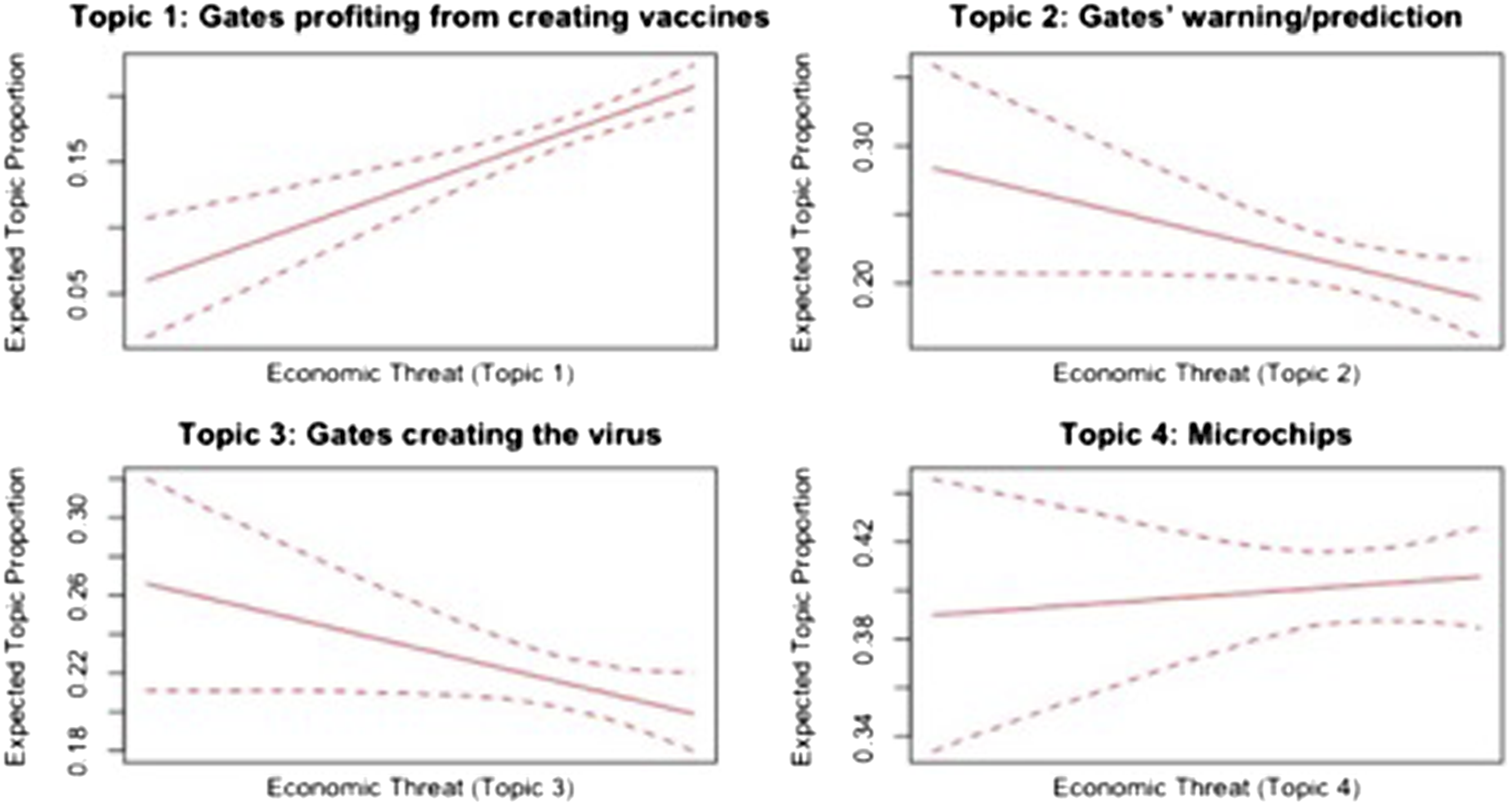
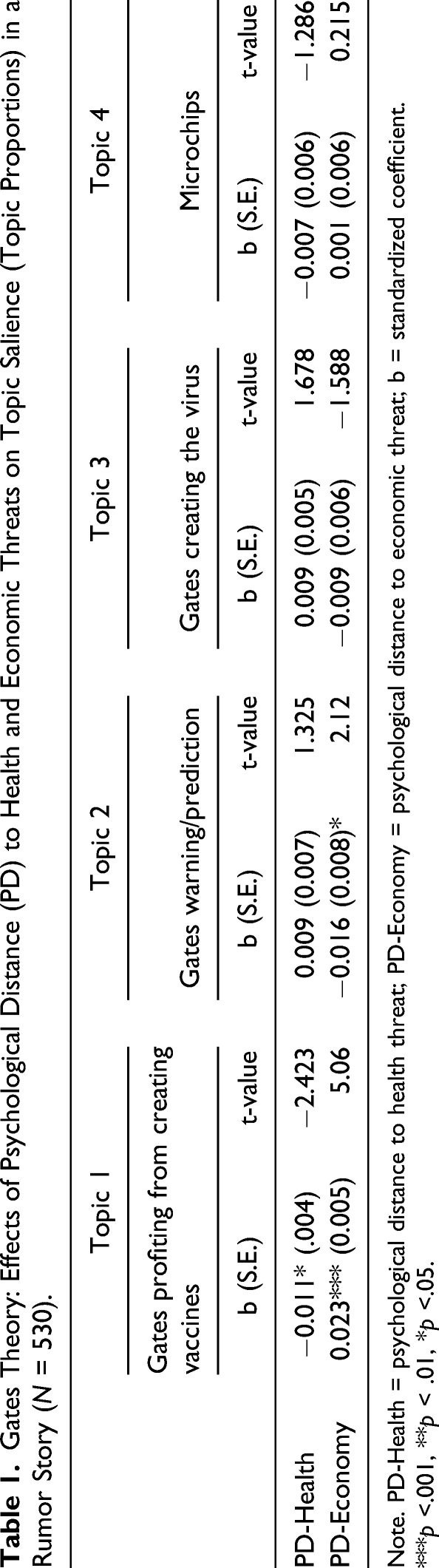
Psychological distance to health threat (PD-Health) was negatively associated with Gates Topic 1 (b = −0.011, p < .05). That is, if respondents felt closer to a health threat, they were less likely to reveal an anti-rich rhetoric in their rumor narrative, which depicted Gates as a bad capitalist (Figure 1). When it comes to PD-Economy, the results were opposite, showing a positive association with the anti-rich rhetoric of Topic 1 (b = 0.023, p < .001) while a negative association with Topic 2, which depicted Gates as a good philanthropist (b = −0.016, p < .05) (Figure 2). Accordingly, these results suggest that those that perceived closeness to health threats were less likely to talk about Gates negatively, while those that perceived closeness to economic threats were more likely to talk negatively. Table 1 summarizes the estimate of PD effects on Gates conspiracy related rumor topics. Gates conspiracy: Effect of psychological distance to health threat (PD-Health) on topic proportion. X-axis indicates the intensity of PD-Health. Y-axis indicates expected topic proportion. Topic 1 was statistically significant. Gates conspiracy: Effect of psychological distance to economic threat (PD-Economy) on topic proportion. X-axis indicates the intensity of PD-Economy. Y-axis indicates expected topic proportion. Topic 1 and Topic 2 were statistically significant. Gates Theory: Effects of Psychological Distance (PD) to Health and Economic Threats on Topic Salience (Topic Proportions) in a Rumor Story (N = 530). Note. PD-Health = psychological distance to health threat; PD-Economy = psychological distance to economic threat; b = standardized coefficient. ***p <.001, **p < .01, *p <.05.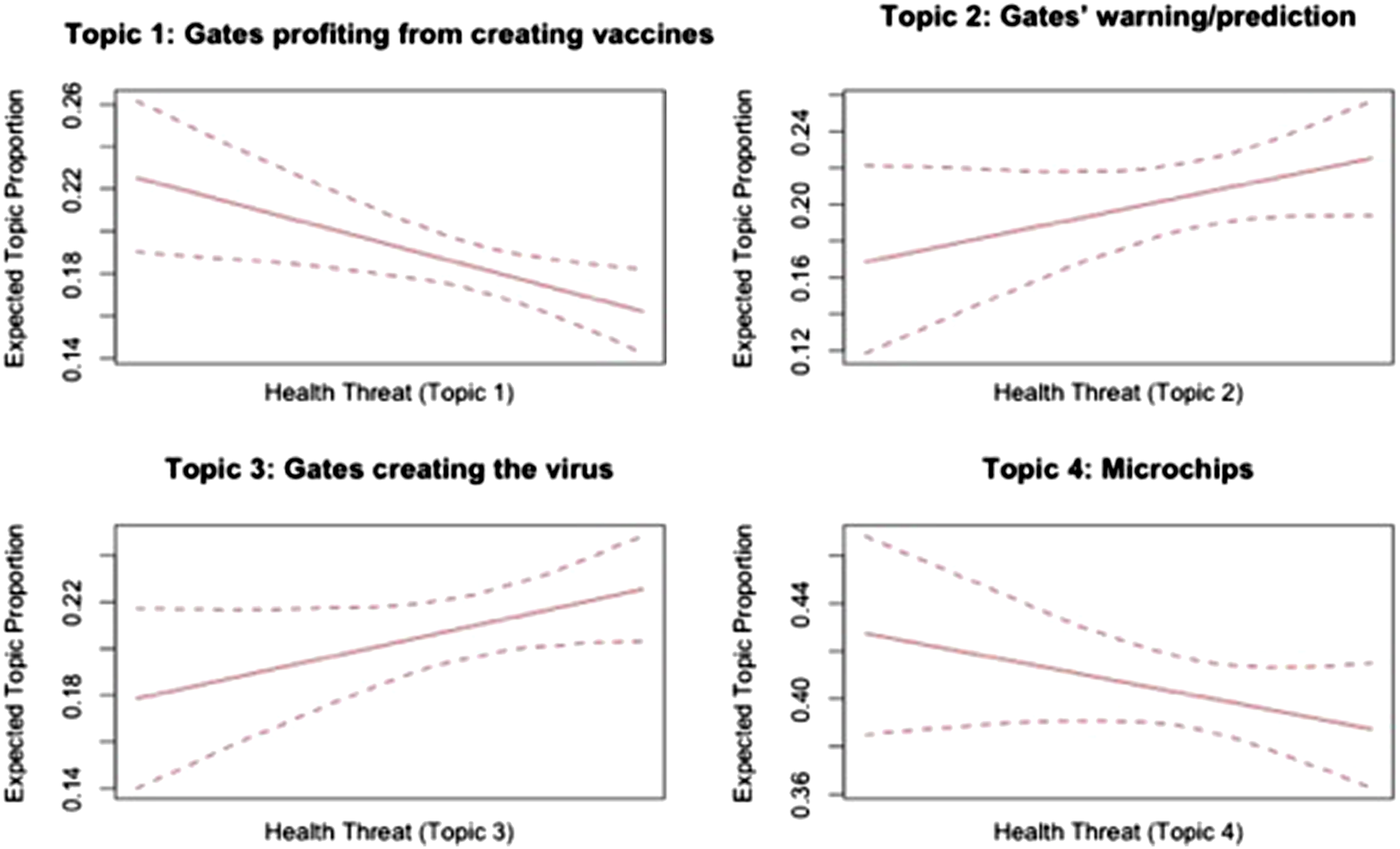
Effects of Rumor Topics and Psychological Distance on Rumor Belief (RQ2 and RQ3)
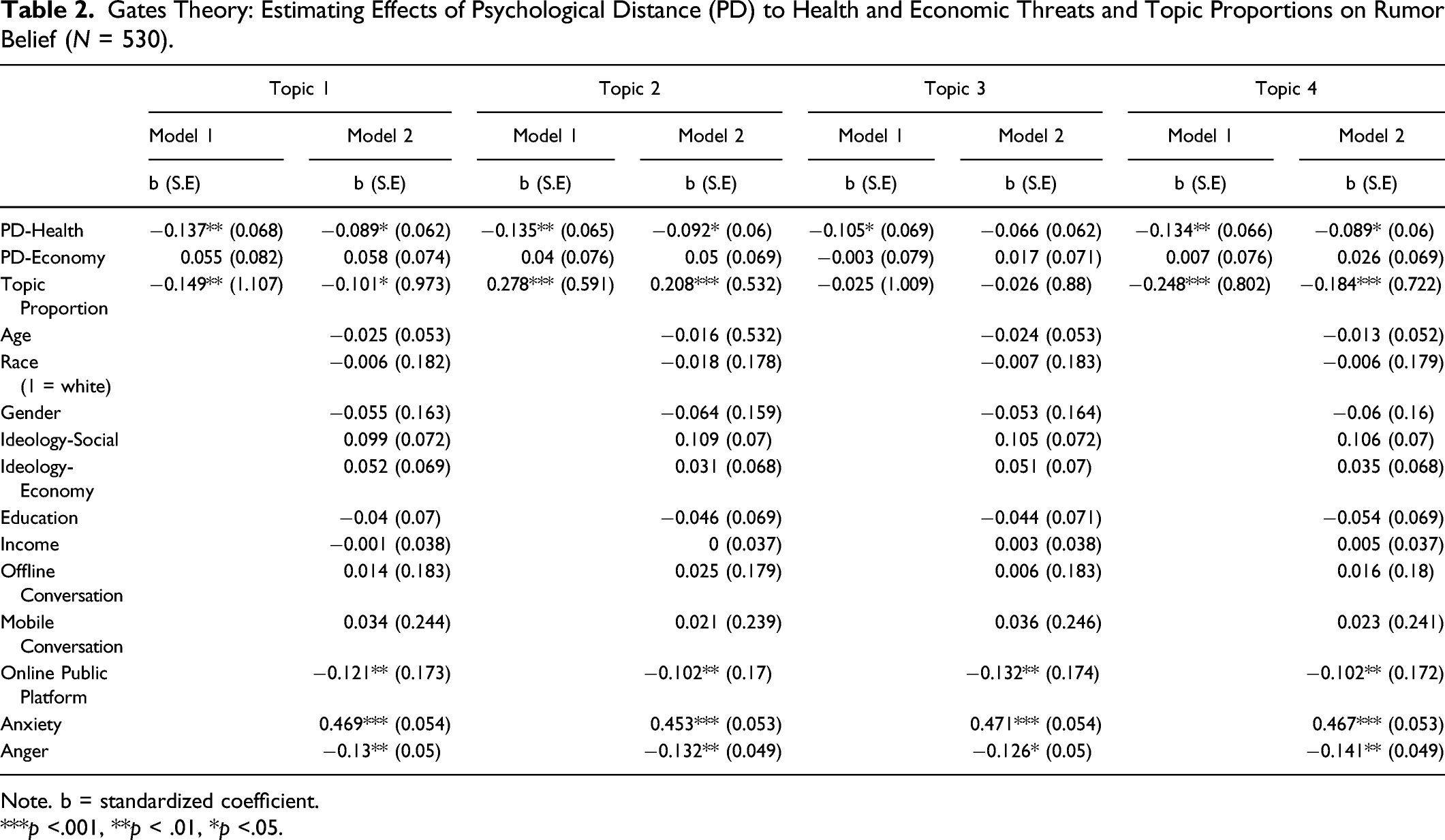
Regarding RQ2, the results showed that Topic 1’s anti-rich theme (b = −0.101, t = −2.524, p < .05) and Topic 4’s microchip conspiracy (b = −0.184, t = −4.854, p < .001) were negatively associated with respondents’ beliefs in what they wrote, while Topic 2’s good philanthropist theme (b = 0.208, t = 5.492, p < .001) was positively associated with the beliefs.
Gates Theory: Estimating Effects of Psychological Distance (PD) to Health and Economic Threats and Topic Proportions on Rumor Belief (N = 530).
Note. b = standardized coefficient.
***p <.001, **p < .01, *p <.05.
Government Conspiracy
Rumor Topics
Topic 1 comprised narratives that the U.S. government had created the virus for an ulterior purpose. The responses pondered why the virus was created, for example, to change the world order; to serve as a political tool; for population control; to develop a bioweapon against China; and to make money from a vaccine. For example, “That the government unleashed the virus so they could exert control over the people and take away freedoms.”
In comparison, Topic 2 centered on who had created the virus, particularly reflective of the tension between economic superpowers. The rhetoric of the human-made virus became concrete by recognizing specific governmental and political names or entities, such as Wuhan lab, the U.S. Army, Central Intelligence Agency (CIA), National Institute of Health (NIH), Green Deal politicians, Joe Biden, a Canadian lab, a private lab in North Carolina, Dr. Anthony Fauci, and even a historical secret group, the Illuminati. We termed Topic 2 “the governmental blame game” because it revolved around two world economic superpowers, the U.S. and China, and the questioned about their uses of COVID-19 for political gain. For example, “The U.S. government introduced the virus in a lab inside China to deal harms to a rival world power [sic]. Tensions over the past few years with regards to trade wars between the two countries starting to escalate. With the virus first emanating in China, the U.S. government could show China purposely exposed the virus to [the] world.”
Topic 3 focused on Trump’s response, spotlighting the government’s mishandling of the pandemic. For example, “The government knew of the risks beginning in January but chose not to act. I also heard that Trump had previously fired the team in charge of analyzing pandemic risks.” Topic 4 expanded Topic 1 and 2 (i.e., who created the virus and why) by highlighting a governmental collusion with private sector such as health and tech industry. A notable claim was that the Government and Bill Gates colluded to create the virus in some way, either to push a new technology (i.e., microchips and 5G towers) on the public, or to gain profit through the sale of a vaccine. For example, “Bill Gates and the government are responsible for the creation of COVID-19. The fact that Bill Gates, a computer guy, is pushing for a worldwide vaccine that has something like a 1% fatality rate is absurd.”
Psychological Distance Effect on Rumor Topics (RQ1)
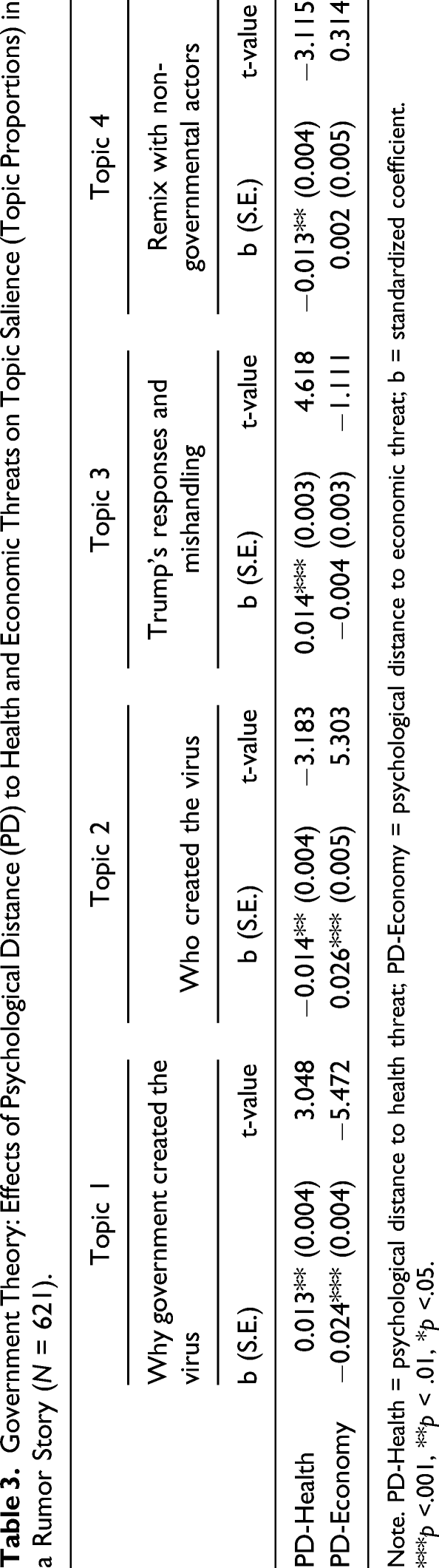
The effect of PD-health was significant for all topics about Government theory. The closer respondents felt to the health threats, the more they highlighted Topic 1 that dealt with why the government would create a virus (b = 0.013, p < .01) and Topic 3 about U.S. government’s mishandling of the pandemic (b = 0.014, p < .001), while the less they mentioned Topic 2 about the governmental blame game (b = −0.014, p < .01) and Topic 4 that focused on the governmental collusion with private sectors (b =−0.013, p < .001) (Figure 3). Those who perceived closeness to the health threat were more likely to reason why this crisis happened, and what must be done to minimize the threat. In this sense, respondents were quick to attribute responsibility to the government. Government conspiracy: Effect of psychological distance to health threat (PD-Health) on topic proportion. X-axis indicates the intensity of PD-Health. Y-axis indicates expected topic proportion. All topics were statistically significant.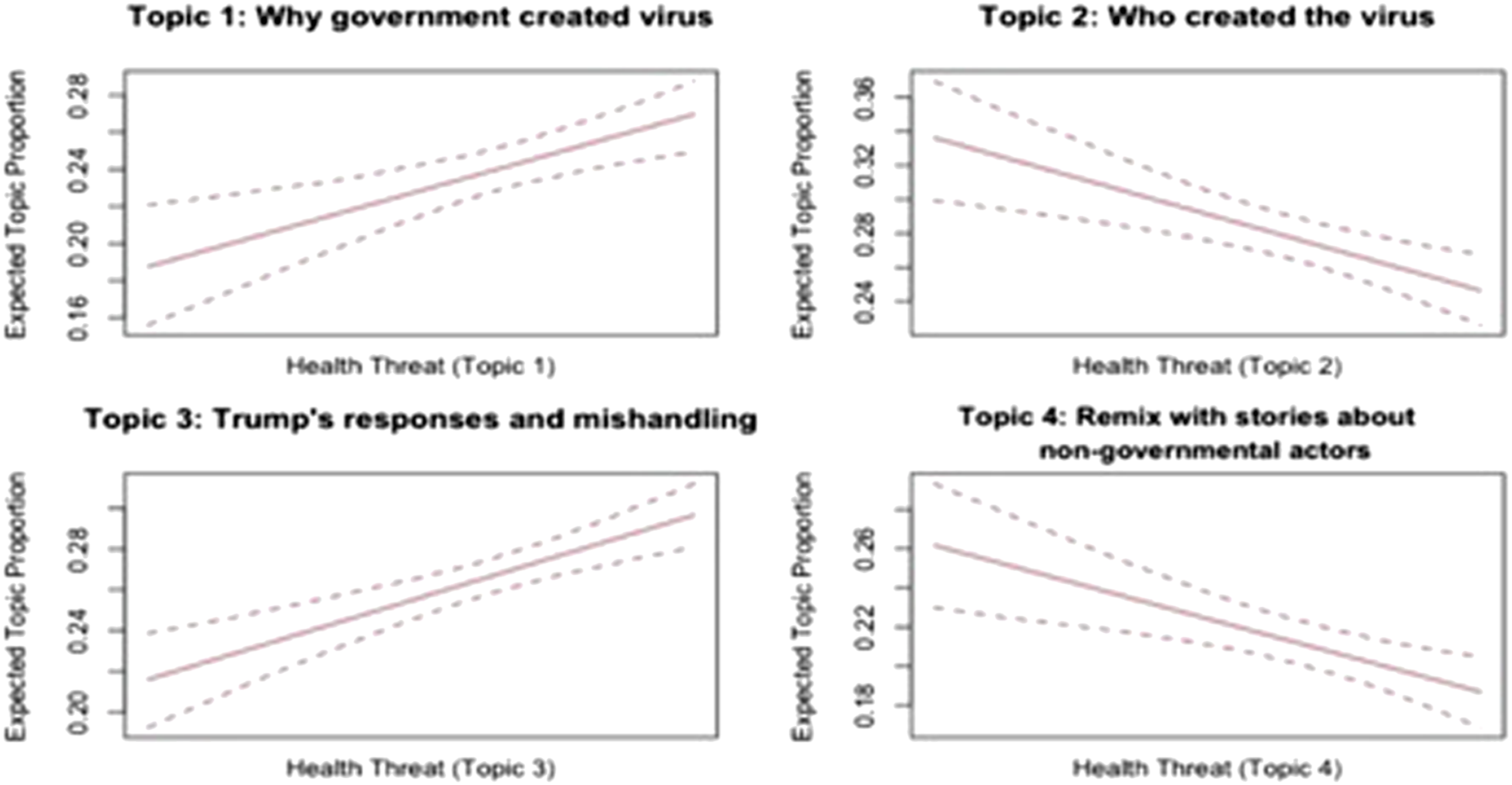
Meanwhile, the results of PD-Economy were more or less opposite of PD-Health, showing a negative association with Topic 1 (b = −0.024, p < .001) while a positive association with Topic 2 (b = 0.026, p < .001) (Figure 4). The findings suggest that if respondents felt close to economic threats, they were more likely to discuss whether it was the U.S. or China that was responsible for the virus outbreak. Considering these two superpowers have been locked in a trade war since before the pandemic, it might be easy to link global and American economic woes with a political rumor. Table 3 summarizes the estimate of PD effects on Government conspiracy related rumor topics. Government conspiracy: Effect of psychological distance to economic threat (PD-Economy) on topic proportion. X-axis indicates the intensity of PD-Economy Y-axis indicates expected topic proportion. Topic1 and Topic 2 were statistically significant. Government Theory: Effects of Psychological Distance (PD) to Health and Economic Threats on Topic Salience (Topic Proportions) in a Rumor Story (N = 621). Note. PD-Health = psychological distance to health threat; PD-Economy = psychological distance to economic threat; b = standardized coefficient. ***p <.001, **p < .01, *p <.05.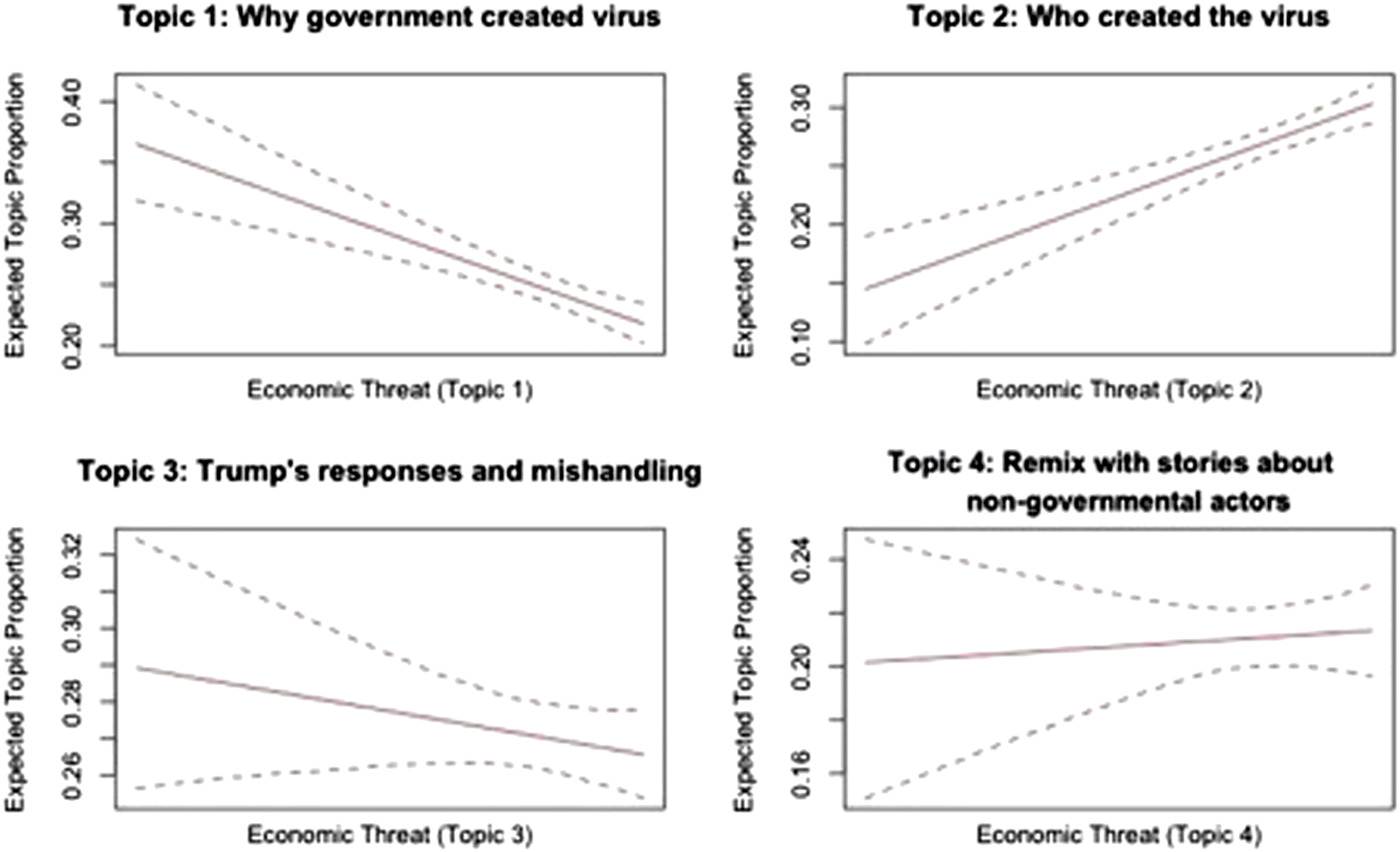
Effects of Rumor Topics and Psychological Distance on Rumor Belief (RQ2 and RQ3)
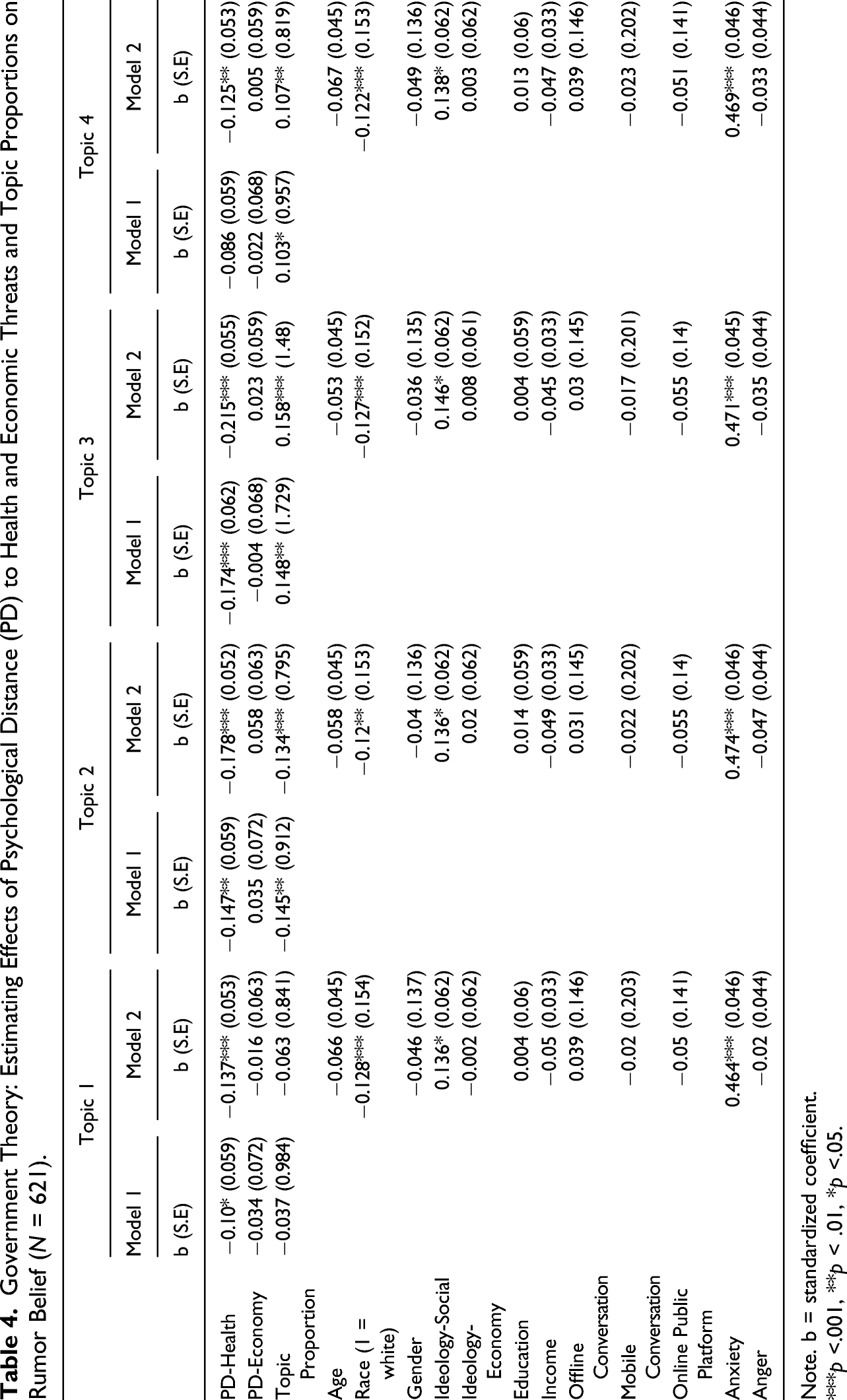
Regarding RQ2, Topic 3 about U.S. government’s mishandling of the pandemic (b = 0.158, p < .001) and Topic 4 about the governmental collusion with private sectors (b = 0.107, p < .01) were positively associated with participants’ beliefs in Government theory, while Topic 2 about the governmental blame game was negatively associated with beliefs (b = −0.134, p < .001).
Government Theory: Estimating Effects of Psychological Distance (PD) to Health and Economic Threats and Topic Proportions on Rumor Belief (N = 621).
Note. b = standardized coefficient.
***p <.001, **p < .01, *p <.05.
Discussion and Conclusion
The COVID-19 pandemic has thrown people’s lives in disarray with not only its health and economic impacts but also informational malaise. We examined ways in which misinformation is transformed into rumor narratives by surveying two widely circulated conspiracy theories. Some responses showed “leveling” of rumor messages, as the written responses had details omitted and participants retold the rumor in vague and brief language. That said, many other responses variegated story versions by “sharpening” certain elements with specific references to social groups, individuals, organizations, and events. In the process of writing the rumors in their own words, individuals’ political perspectives also were interpolated in their storytelling, reflecting what Allport and Postman (1947) called “assimilation.” For example, some respondents’ reasoning for hidden motives of public authorities reflected ideological predispositions.
The main thesis of this study is that rumor narratives are tied to a person’s subjective reality. We defined the subjective reality of COVID-19 in terms of psychological distance (Trope & Liberman, 2010). Overall, our findings showed that psychological distance was associated with making sense of who is responsible and why it happened.
One finding is that, in the Gates conspiracy, PD-Health contributed to the underrepresentation of Topic 1 (Gates as a bad capitalist). This result is possibly because the respondents took the pandemic’s health threats seriously, searched for more information, and reached a conclusion that the idea of Bill Gates being the virus creator was not plausible. More interestingly, they instead tended to lean towards attributing responsibility to the Government. For example, it is possible the respondents felt if the government had dealt with the pandemic effectively, the country would have seen a lower infection rate and number of deaths, all of which would have resulted in a low health risk for the population, resulting in more belief in Topic 3 about government’s mishandling of the situation. Further, if respondents question why the government did not take a proactive stance when combating the pandemic, then they may suspect there were ulterior motives behind the government’s inexplicable behavior, which could trigger the belief in Topic 1 that the pandemic was part of an elaborate political ploy. Indeed, Topic 1 and Topic 3 were prevalent in the narratives of respondents with high PD-Health. These topics were explicit in attributing responsibility for the pandemic to the government.
Meanwhile, PD-Economy seemed to amplify Topic 1 in the overarching Gates conspiracy, that is, Bill Gates created the virus to profit from this health crisis. Topic 1 depicted Gates as a greedy capitalist and alluded to a general negative sentiment towards economic elites, in contrast to his image as a philanthropist, that emerged in Topic 2. The theme in Topic 1 revealed a general lack of trust in those with money, power, and connections. If the pandemic had an adverse economic effect on an individual, such as loss of job or closure of business, it is possible they were frustrated and needed to blame someone. Gates could be an easy target due to his fame and how he has spent his fortune. As one participant stated, “Bill Gates has become somewhat of a scapegoat in this pandemic, due to the work of the Gates Foundation on several vaccines (including Ebola and flu strains). Additionally, he held a panel last year about [the] pandemic, and he said in 2015 that the biggest challenge we may face in future is not an enemy in [the] form of another country, but something like a virus.” In terms of Government conspiracy, the perception of PD-Economy was positively associated with Topic 2, which contained a range of “whos” regarding the origin of the virus. Topic 2 was distinct from other Topics in Government conspiracy, as the respondents’ answers included mention of entities in power and with expertise, such as science labs and pro-vaccination industries.
It is noteworthy that PD-Health was consistently associated with lesser beliefs in rumors, whereas PD-Economy was not associated with beliefs at all. One possible explanation could be that health threats motivated respondents to fact-check more aggressively than economic threats. Alternatively, those who felt close to health threats may wish that public leaders will manage the health crisis successfully, and thus, reject claims that denigrate their credentials. Although this study cannot definitely explain why PD-Health was negatively associated with rumor beliefs while PD-Economy was non-significant, the results contrast with the effect of anxiety, which tends to reinforce misinformation belief, and reaffirms that PD is a unique psychological construct from a feeling, worth studying further in the context of misinformation.
This study is limited in that the survey was conducted in the middle of the pandemic, which could have skewed the respondents’ overall perception of psychological distance. The most ideal approach would be to compare the psychological distance effects during-pandemic to post-pandemic. Moreover, misinformation is a dynamic object and its change in status is contingent upon fact-checking. A plausible misinformation in May may become a falsehood following persistent and consistent fact-checking. Second, the narrative sample we collected was relatively small. A large-scale study that includes a greater number of online user comments would help overcome the sample limitation of this study.
Future research may dive deeper into the effects of different communication channels. Specifically, exposure to misinformation via public online platforms (such as Facebook or Twitter) was negatively associated with beliefs in Gates theory. Future research could further investigate this aspect that remained unexplored in this study. Also, there is room to further explore the role of language in rumor belief. While this study offers preliminary insights into the effect of psychological distance on rumor narrative construction, in-depth investigation on the relationship between language construals and rumor beliefs is warranted.
Footnotes
Acknowledgments
The authors would like to thank the editors and reviewers for constructive reviews.
Declaration of Conflicting Interests
The author(s) declared no potential conflicts of interest with respect to the research, authorship, and/or publication of this article.
Funding
The author(s) disclosed receipt of the following financial support for the research, authorship, and/or publication of this article: This project was supported in part by the National Science Foundation under grants 2027387 (PI K. Hazel Kwon); and Massachusetts Institute of Technology (MIT) under grant PO 7000506684 (PI: Rober Gutzwiller).
