



Abstract
The authors offer a comprehensive gnoseological and axiological study of the prerequisites that may become the grounds for Ukraine’s integration into the EU: social, economic, cultural-historical, and other prerequisites. This practical reflection aims to identify the extent to which Ukraine is currently integrated into the EU. From the geopolitical viewpoint, the act of Ukraine’s accession to the European Union is a formality, which implies the agreement of the EU members to accept Ukraine as an equal actor in a shared, unified economic, cultural, and historical space. Certainly, a decision of this kind should be dictated by concrete, historically substantiated grounds, that is, reasons proven by time and the logic of history.
Keywords
Lymanske, Ukraine.
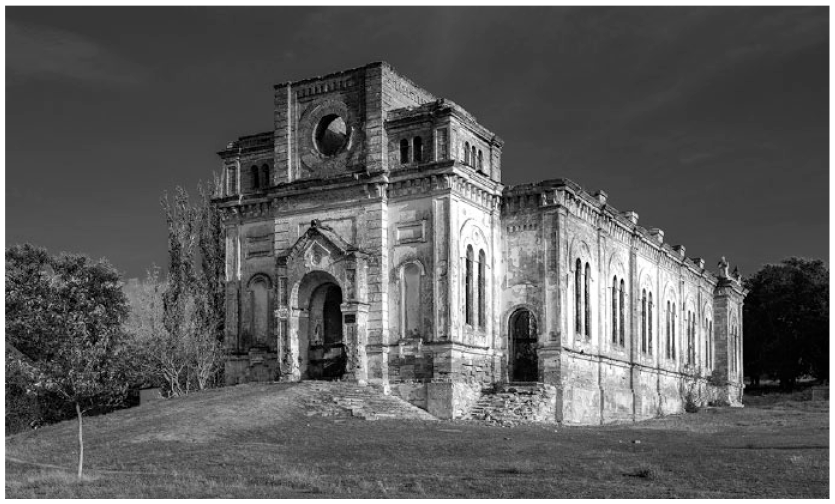
This paper will begin by laying out its research axis. The study of Ukraine as a multicomponent historical environment was tested in two scholarly field studies. In the first expedition with the Memory Institute, we studied the world phenomenon (based on the example of Ukraine) of an ancient generic transcendental underlying the third force, which was shaped to solve global problems (2020). In the second expedition, we studied Ukraine, carrying out a critical examination of the roots of its identity (2021).
This method was chosen because it is very difficult to study Ukraine in any other way than by field study. Although Ukraine is far older than the 18th century, its documented history seems to begin in that century. However, because of some factors, we see that there are no documentary sources in Ukraine that could be considered and investigated by historical and philosophical scholars due to certain, probably non-obvious reasons. After all, if there are no documents, they are absent for some reason.
The article consists of two parts, explicating the results of scholarly investigation in two blocks, reflecting the findings of the Second and the First Expedition to Ukraine. It was decided to begin the presentation of the results of longstanding research work with the second expedition materials and move on to the materials of the first—that is, in the opposite direction, as if unwinding the tape of history. The Memory Institute has collected full-scale conclusions (and their material evidence) about all expedition studies. To reveal these conclusions is the task of the first research part of the article.
Part 1: The Multifaceted Ukraine
Historically, Ukraine is a world power, which in history has often been referred to as a “third world country.” On the other hand, Ukraine is the most enigmatic environment in the world (Maltsev, 2021b). It is an environment of contrasts, the study of which is beyond the power of minds not improved by interdisciplinary methodology, not skilled in visual sociology and anthropology, and familiar with the logic of verified research models.
Heuristically, the first approach to the study of the historical space of Ukraine can be described as follows: there are two rotating stages where two different performances take place. On each stage, there are several actors, and a Ukrainian can be any of them: a European knight, a haydamak, a chumak, a harakternik, an ataman, an artisan, a politician, a scientist. It is a soil in which many grains are planted. Each of the sprouted grains that gave birth to new plants is the direction of the Ukrainian genus’s sprouting and development. The directions themselves create two gardens, and the modern inhabitant of the Ukrainian environment can come from any crop in either garden; conventionally, one can be a “bud” of any tree of these two gardens, born of history (Maltsev & Yavtushenko, 2021a).
How the Research was Conducted
Ukraine was investigated twice by a group of scholars by means of an interdisciplinary methodology at the intersection of visual sociology, anthropology, applied philosophy, and cognitive psychology; photography was used as a basic tool of hypothesis verification and evidential verification; more details on the method can be found in the monograph “Tayna Tretiego Ordena” (Тайна Третьего Ордена) (Maltsev & Yavtushenko, 2021b). The field study covered large territories: from Odessa to Medzhybizh and from Medzhybizh to Lviv. The research group investigated three-fourths of Ukraine’s territory: Kilia, Kherson, Zhytomyr, Berdychev, Cherkasy, Kremenchuk, Poltava, Mykolaiv, Odessa, Medzhybizh, Uman, Vinnytsia, Brody, and other towns (“The Multifaceted Ukraine,” 2020).
Let us consider the course of the second expedition and the scientific challenges we faced in more detail (Huzhva, 2021). In the Soviet era, and still in Russia today, it was common to see Ukraine as “Little Russia,” a minor adjunct to Russia, with basically the same culture, a similar language and religion, parts of the same Orthodox zone, and a site of Russian imperial glory. Within the course of the field study, illustrated by photographic evidence, we encountered visual evidence that contradicts the commonly accepted Soviet scholarly view. For instance, the city of Zhytomyr has architectural objects you would not expect to see in this Ukrainian city. An Italian cathedral stands near the central hotel in the city’s center; these types of cathedrals are peculiar to Padua, west of Venice, and not typical of Russian Orthodoxy. Why exactly this type of cathedral was in Zhytomyr, was incomprehensible at that time for the research group.
Zhytomyr.
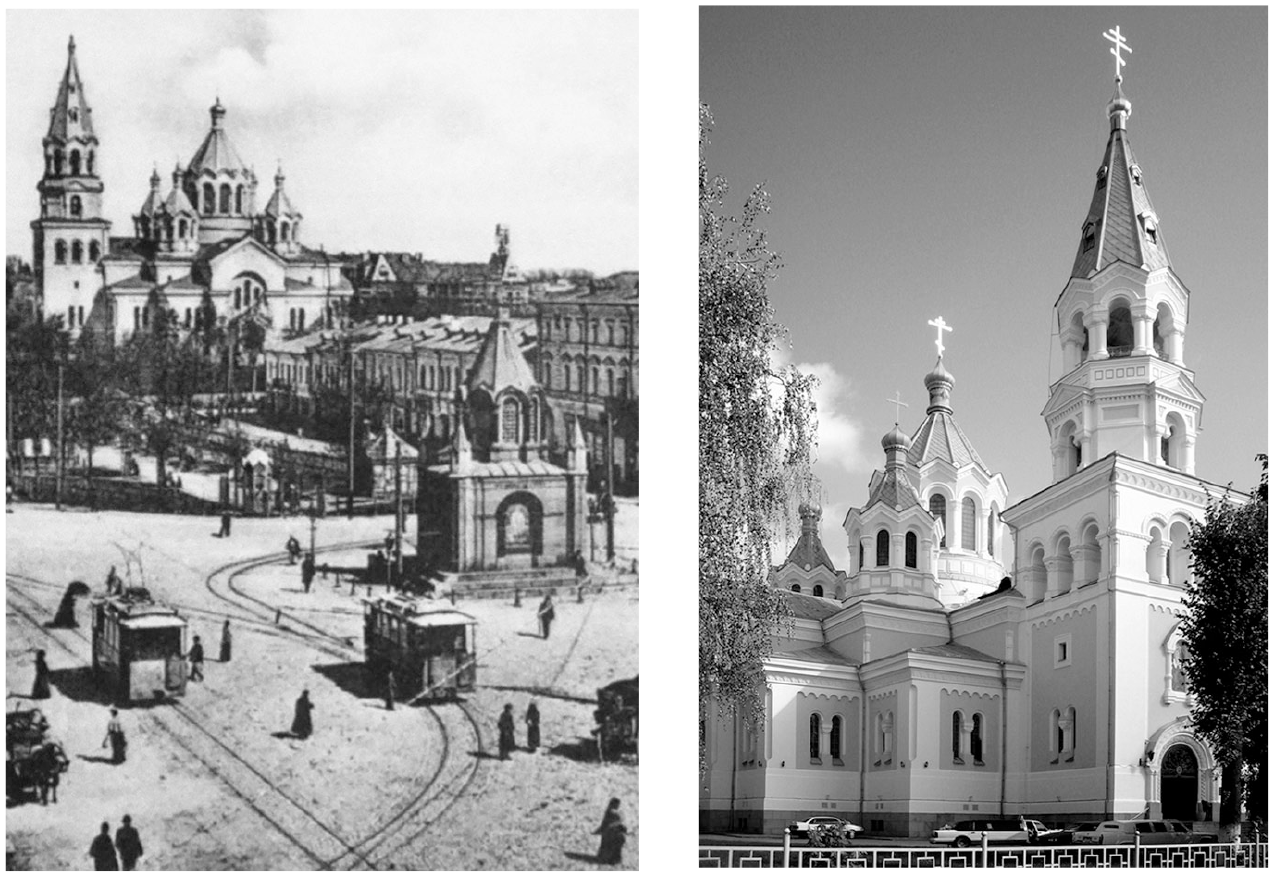
The second “sightseeing place” also looked odd in this city. Even though Zhytomyr looks like an Orthodox city with Orthodox cathedrals and chapels, in the heart of the city, there are remains of a memorial synagogue. From the position of visual sociology, we see with a naked eye specific objects that demand exploration. However, historical objects are almost gone, and very little restoration work is being done in the city. Many “preserved” cathedrals, despite their radical Norman or Venetian architectural identity, have plates that were “glued” on to them, stating that allegedly those are Orthodox churches (the substitution of concepts is obvious).
Moreover, by continuing an in-depth study of the Orthodox cathedrals in Zhytomyr, we came to the conclusion that all these architectural complexes were not Orthodox cathedrals until the 20th century—they belonged to European confessions (“Hypotheses About the ‘Gray Zone’. Scientific Expedition Through Ukraine,” 2021).
The abovementioned findings were a prerequisite for further large-scale expeditionary research in three-quarters of the modern state of Ukraine, and this is the prehistory of the second Ukrainian expedition. These field studies were conducted by the Expeditionary Corps, a department at the Memory Institute named after Grigory S. Popov, that has conducted more than 30 field studies in 15 countries in Europe, the USA, Mexico, and South Africa, in search of archival and historical materials. The Expeditionary Corps is a group of scholars with various kinds of expertise, including businessmen, lawyers, photographers, strategic consultants, and security specialists who investigate and integrate scientific methods for tackling highly complex tasks in the professional services industry. The Expeditionary Corps has about 10 years of experience in field research worldwide and a unique library of millions of film photographs, old treatises, and manuscripts.
Let us begin to cover the research course of the second Ukrainian Expedition. To illustrate the findings, it is necessary

Heuristic research model.
The first surprise of the research group was the absence of landmark buildings and cultural-historical monuments of the Russian-Ukrainian civilization. They are not observed. Kyiv Pechersk Lavra, an important and longstanding Orthodox monastery, is a partial exception. Anticipating that some might say that “all the Orthodox saints are buried in the Kyiv Pechersk Lavra” (actually around half-a-dozen early Orthodox saints), it should be noted that Kyiv is not the whole of Ukraine; it is just one city. That is, the conclusions for one Ukrainian city do not apply as an axiom to the entire historic environment in the aggregate.
Below are several logical assumptions formed based on the analysis of facts confirmed with photographic evidence. Further in the article, we look into these assumptions in the broader sense as related to whether Ukraine has the right to be part of the EU.
(1) The study of three-quarters of the territory demonstrated that Ukraine is a land with European cultural-historical and religious constructions.
(2) There are no orthodox churches of the Moscow Patriarchate on Ukraine’s territory, which were built before the end of the 19th century. In contrast, many German and Italian buildings are observed everywhere, which we give examples of, appealing to photographic material. The same applies to the Odessa region researched separately, which we will get acquainted with later with photographic evidence.
(3) Note the following paradox. The “Orthodox” (according to statistical statements) city of Vinnytsia contains three “Orthodox” cathedrals in its center: one belongs to the Franciscan Order, the second to the Dominican Order and the third to the Order of Carmelites respectively.
Jesuit Monastery (1613).
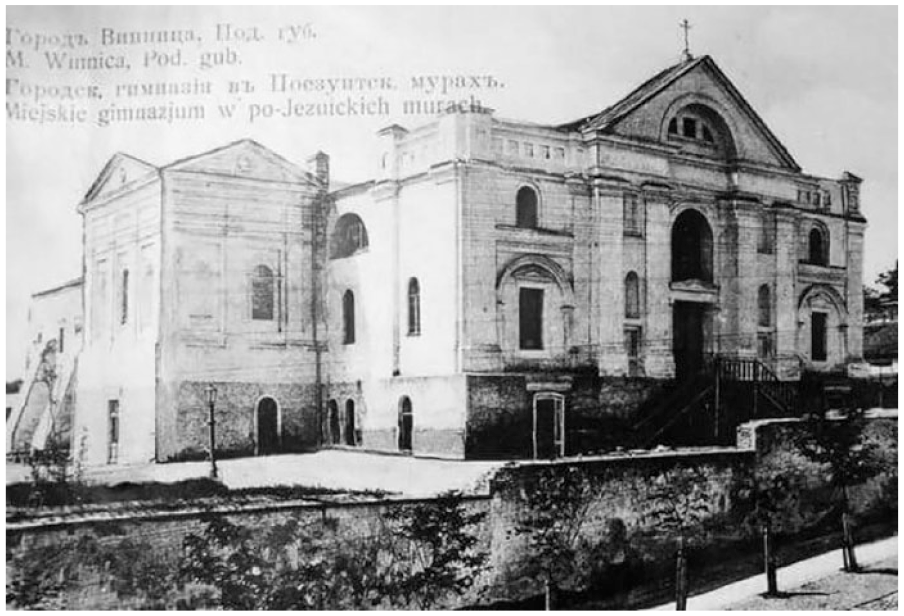
Dominican Monastery (1621).

Church of the Capuchin Order (1745).

Correspondingly, we can say with certainty that, at least before the revolution of 1917, all these cities (Vinnytsia, Odessa, Zhytomyr, etc.) were not cities that embody traces of Russian cultural heritage. So, in the course of the field research, we witnessed the following picture: there was either heritage of the Soviet Union and the Soviet era or monuments of foreign architecture. We did not observe any Ukrainian or Russian buildings from the pre-Soviet period.
Pidhirtsi, Lviv Oblast.
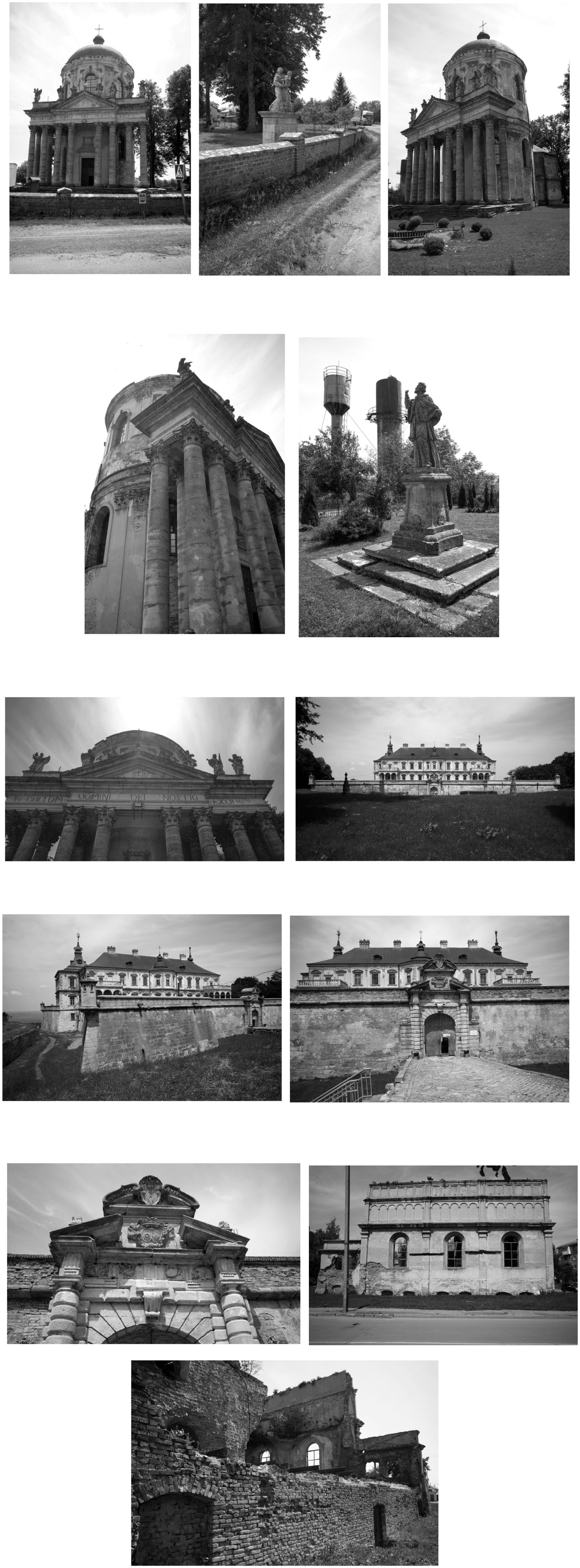
Following the prototypological reasoning further, applying the “opposite method”, let us hypothetically assume that Ukraine is an original Russian land that has no relation to Europe. Correspondingly, this land’s mythologemes and the mental components must be identical to those of Russia.
The epic references to the “three bogatyrs” and the “principality of Kyiv” do not stand up to scientific criticism. The fact is that, alas, we cannot verify the authenticity of what is described in folklore using scientific methods. Since we cannot historically verify this myth, it means that we also have no right to refer to it when arguing for complex conclusions. On the other hand, we have an opportunity to verify other things: graves of saints, heroes, significant historical figures, etc.
From Medzhybizh (the tomb of Baal Shem Tov)—to the tomb of Rabbi Nachman in Uman (one of the most famous pilgrimage sites in the world), we can clearly state: not Orthodox but Jewish saints are buried in Ukraine. In confirmation of this, we provide the following list.
Medzhybizh.
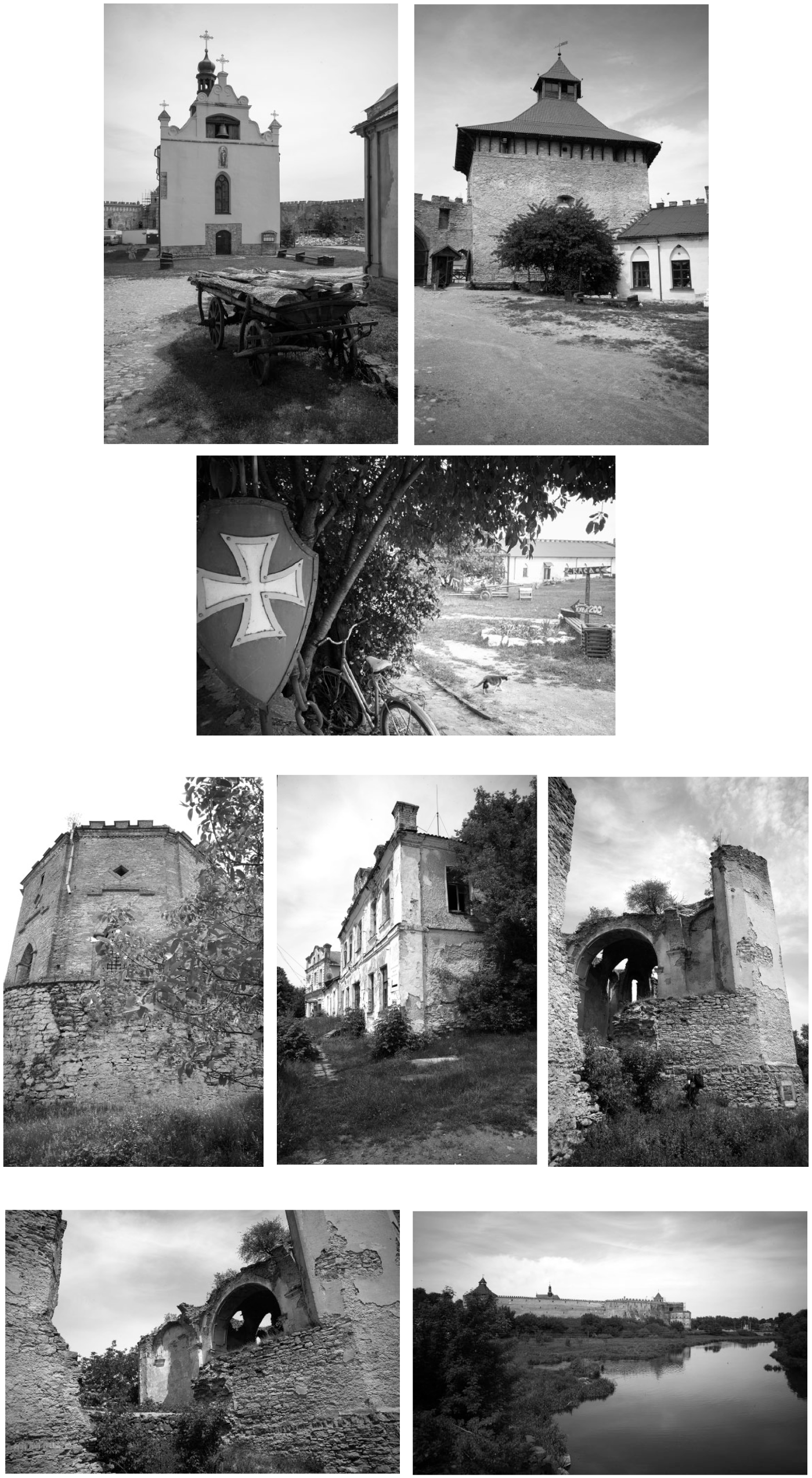
(1) Besht’s (Baal Shem Tov) grave is in Medzhybizh.
(2) The grave and the synagogue of the Breslov tzaddik Rabi Nachman (great-grandson of Besht on his mother’s side) are located in Uman, Cherkaskaya oblast (Mark, 2015).
Uman.

(3) There are five places where Hasidic tzaddiks are buried in the Vinnytsia region:
- the grave of descendants of Rabbi Abraham Geshel is in the village of Murovanny Kyrylovtsy (his synagogue is located in Medzhybizh);
- the grave of
- the graves of rabbis
- the grave of Rabbi Nathan Sterngartz is in Bratslav;
- the grave of Rabbi Moshe Zvi Gitterman of Savran is in Chechelnyk.
(4) The grave of Shneur Zalman of Liadi (1745–1812) is also in Ukraine (United States Commission for the Preservation of America’s Heritage Abroad, 2005). He was called the Alter Rebbe, founder of Chabad in Hasidism and the author of “Tanya.” Burial place is in Hadiach (a small town in the Poltava region on the Psel River).
(5) Similarly, we find in Nizhyn the grave of Rabbi Dovber Shneuri (1773–1827). He was called “The Mitteler Rebbe.” He was the son of the Alter Rebbe. After Shneur Zalman of Liadi died, he led the Chabad movement in 1813 and moved to Lyubavichi (a village in the Smolensk region of Russia). Since then, the Hasidim of Chabad have had a new name— “Chabad-Lubavitch.” He is buried in the city of Nizhyn in Chernihiv Oblast.
(6) Rabbi Dov Ber ben Avraham (1704–1772) is similarly buried in Ukraine. He is called the Maggid of Mezeritch, or the Great Maggid. He is the closest disciple of Baal Shem Tov and his successor headed the Hasidic movement after the death of Baal Shem Tov. His grave is located in the town (village) of Hannopil in Khmelnytskyi Oblast.
(7) In Hannopil, there is also a grave of Rabbi Meshulam Zusha (1718–1800). He is called one of the greatest Hasidic Rebbe of the third generation and a disciple of the Maggid of Mezeritch; that is, Baal Shem Tov’s third generation.
(8) Levi Yitzchak ben Meir of Berdichev (1740–1809) is a disciple of the Maggid of Mezeritch (in fact, and spreader of Hasidism in Volhynia). The Jewish Encyclopedia states that he was one of the most prominent representatives of Hasidism in the late 18th and early 19th centuries. His grave is in Berdichev in the Zhytomyr Oblast. He is also from the third generation of the Baal Shem Tov.
(9) Rabbi Zev Wolf of Zhytomyr (died 1800) is buried in his home city, Zhytomyr. It is known that he was one of the respected Hasidim of the Baal Shem Tov.
(10) Rebbe Shlomo ben Yehuda Aharon Kluger (1785–1869) was a famous Talmudist, preacher, commentator, and law teacher. One of the greatest Torah scholars in 19th-century Galicia. He died in Brody in 1869. According to official information, he was buried in the village of Yazlivchyk in the Brody district of the Lviv region.
(11) Rabbi Abraham ben Eliezer Halevi (1667–1771) was called
(12) Rabbi David ha-Levi Segal (1586–1667), best known as the author of a commentary on the Shulchan Aruch known as the Turei Zohov Gold, “Turei Zahav” (abbreviated Taz), which was printed in Lublin in 1646. The Rabbi was buried in the old Jewish cemetery in Lviv, which the Nazis destroyed during the war.
(13) Graves of other founders of various Hasidic dynasties in the townships of Ukraine were discovered:
- Sadhora (now a Sadhirskyi District of the city of Chernivtsi):
In this city was the residence of the splendid Ruzhinsky Rabbi, great-grandson of Maggid of Mezeritch, father of the Sadigura, Chortkov, and Boyan dynasties.
One of the largest cemeteries is located here, but unfortunately, it is not very well preserved. The tombstone above the grave of the Ruzhinsky Rabbi and Sadigura tzaddiks is the largest in Ukraine.
- Vyzhnytsia (Chernivtsi Oblast) is a small village and the former residence of the Vizhnitz Hasidic dynasty. The Yeshiva building in Vyzhnytsia now houses an oil factory (alas, not much has survived), and the house of the Vyzhnytsia Rabbi is now the military recruitment office. The cemetery is in the village of Chernohuzy, which is adjacent to Vizhnitz. Rabbi Menachem Mendel Hager of Kosiv, the founder of the Vizhnitz dynasty, is buried in neighboring Kosiv.
- Kosiv (Ivano-Frankivsk Oblast) is a real mountain resort town but it is famous for another reason. Baal Shem-Tov lived close to Kosiv and nearby Kut for a long time. There are no Jews in the town, but the Jewish cemetery is in good condition. The cemetery contains the graves of Rabbi Menachem Mendel Hager of Kosiv and his son and grandson, the Hasidic tzaddiks from Kosiv. They were the beginning of the Vizhnitz dynasty.
(14) The grave of Rabbi Dovid Moshe Friedman (1828–1903), head of a branch of another great Hasidic dynasty, is in the town of Chortkiv (Ternopil Oblast). He was the first Rebbe of this city. He was the son of Rabbi Israel Friedman of Ruzhyn (he is the ancestor of the Ruzhin-Sadigura Hasidic dynasty). His grave is not as luxurious as his father’s, but it is visited by 10s of 1,000s of his adherents on holidays.
Jewish graves
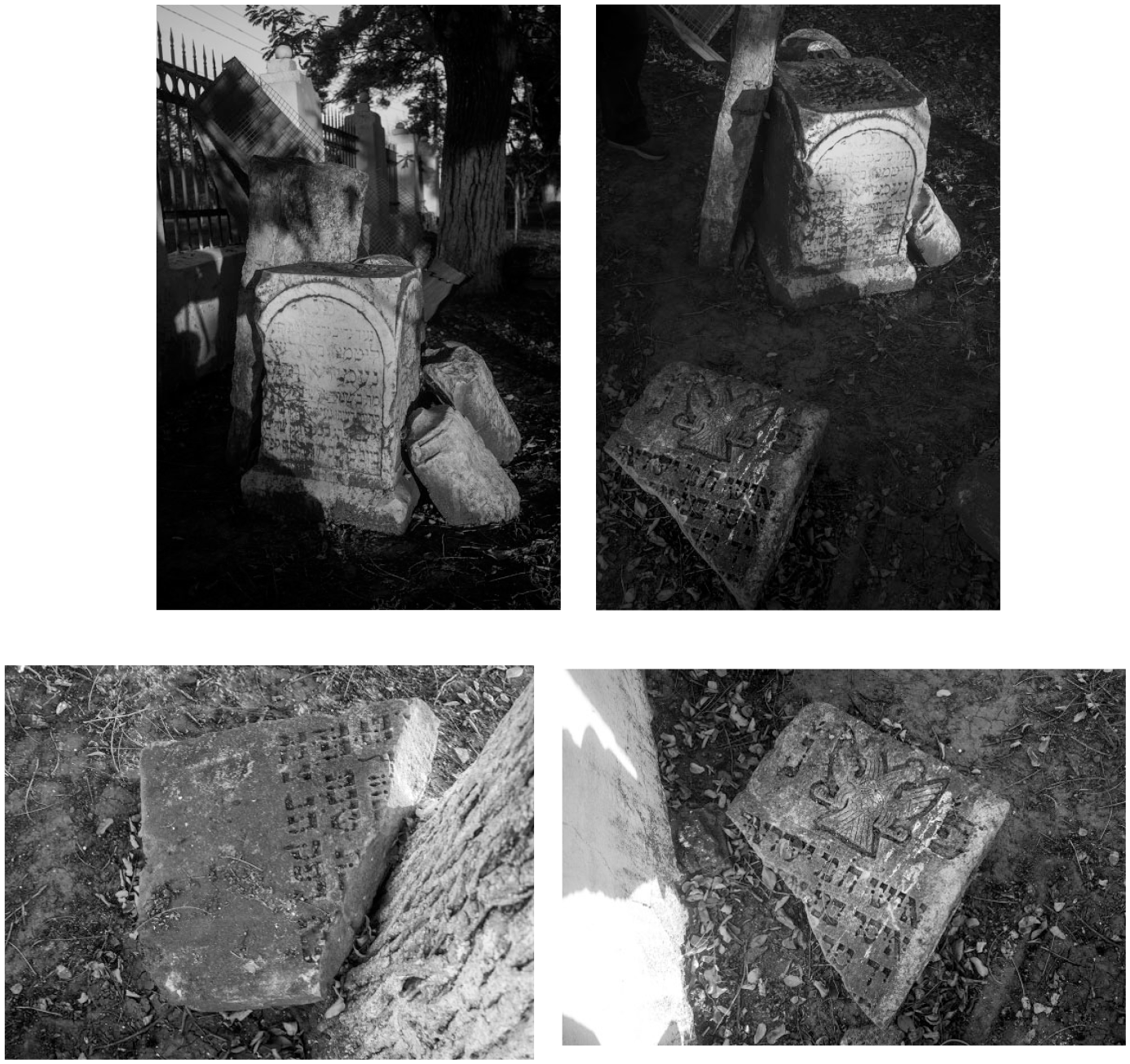
The described array, verified by photographs, raises a huge number of questions: how is it that in a supposedly Orthodox country there are no pilgrimage sites to Christian saints (aside maybe from the one monastery), but there is a large-scale pilgrimage to the graves of Jewish saints every year? Illogical, isn’t it?
Using the method of visual sociology, armed with photographic equipment, guided by the method of spatial analysis of architecture and the methodology of visual anthropology, we see the presence of Jewish saints’ graves and places of pilgrimage, yet in the three-fourths of the territory of Ukraine, the area studied, there are no Orthodox saints’ graves.
Here we can refer to a brief review of the conclusions of the Expeditionary Corps verified in the course of the research of 2018 to 2022 from past expeditions—the noble European family names can be translated only from Yiddish (the meaning of the names come from Yiddish).
We can also note that typologically, architecture in Ukraine is very similar to the environment of German Bavaria. If we analyze the Autonomous Republic of Crimea from the geophysical and economic points of view, we can see its similarity with Austria.
Further, it seems possible to state unequivocally that even the imperial cities of Russia, which Russia (the Russian Empire) claims to have built—such as Kherson, Mykolaiv, and Sevastopol—from the cultural point of view pose a number of significant issues and challenges to the Russian narrative. Here are some observations by way of reference:
(1) Sevastopol was destroyed during the Great Patriotic War and leveled to the ground; it is impossible to accurately study its historical architecture.
(2) Mykolaiv: Photographs from European archives of exterior views of Mykolaiv do not correspond to the architectural heritage of the current environment.
(3) Kherson: There are few buildings from before the 20th century in Kherson, and those that are present directly resemble European architecture.
(4) Odessa: From the position of history criticism, let us pay attention to the following verified phenomena:
- The religious buildings in Odessa do not correspond to the appearance of the pre-revolutionary Russian buildings.
- The second language in Odessa was originally Italian.
- There were 78 (according to lists even 80, from 1890 to 1914) synagogues in Odessa, but only two are left today;
- Today, in the 21st century, there are “Orthodox” cathedrals in Odessa. However, this does not reveal anything about the historical validity of claims the city has an Orthodox background. These cathedrals are all recently built or rebuilt. Even the largest cathedral on Sobornaya Square was destroyed twice and it is absent in photographs taken in 1943. It is unknown how many times this cathedral was rebuilt, but the original design of this cathedral was European and had nothing to do with Russia. The square on which it stands is called Greek Square.
- The names of the streets of Odessa indicate that people from all around Europe used to live in the city (just to name several street names: Jewish street, Arnautian street, Greek street, Italian boulevard, French boulevard, Lustdorf road, etc.). We argue, therefore, that we are dealing with a city characterized exclusively by a European orientation and lacking a Russian orientation. In the following subsection, using the example of the study of Odessa, the authors include an excerpt about Odessa written by Italian photographer Federico Quagliuolo (2018).
Deribasovskaya street, Odessa.

Naples.

Odessa.

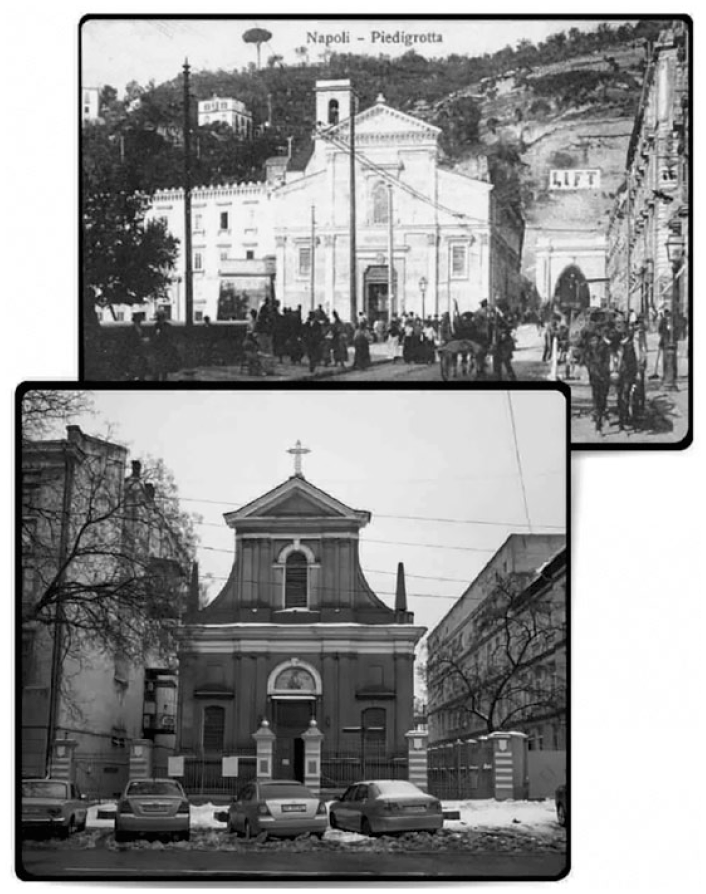
Church of Santa Maria di Piedigrotta (Naples)/Church of St. Peter the Apostle (Odessa).
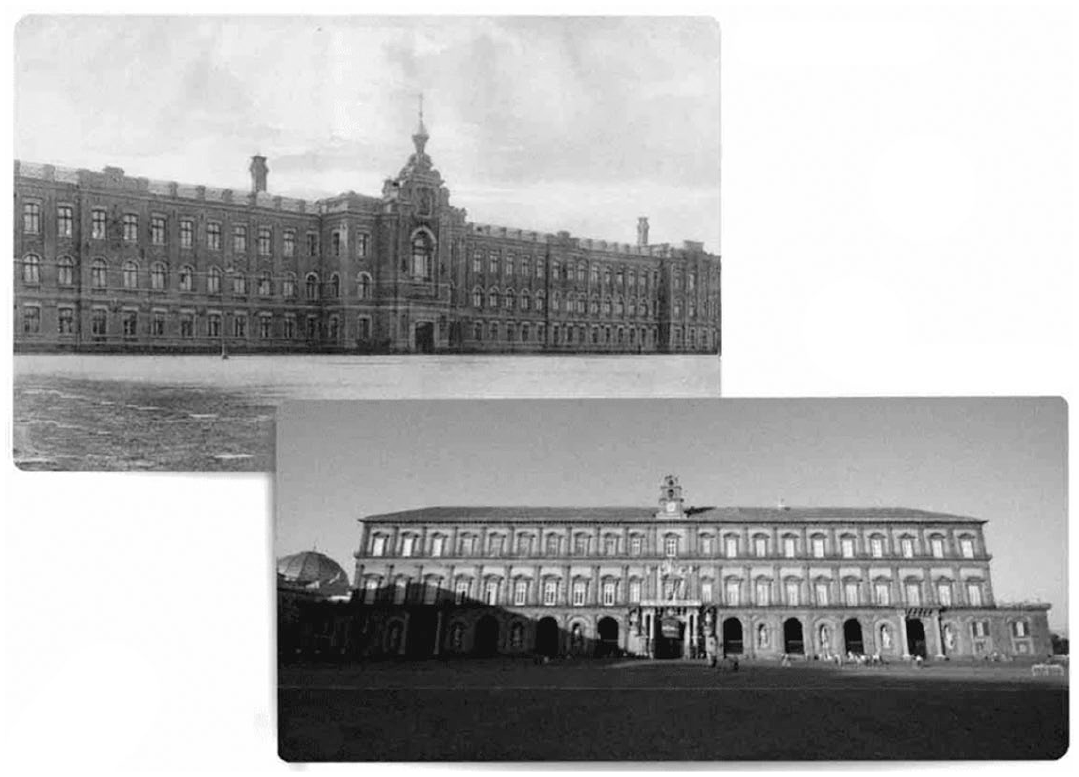
Cadet Corps (Odessa)/Royal Palace (Naples).
Ekaterininskaya Square, Odessa/Via Roma, Naples.
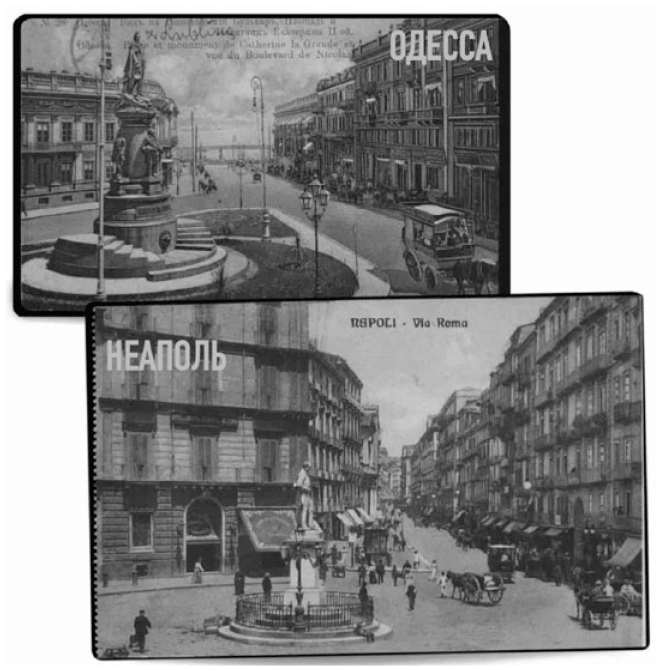
Odessa is a Ukrainian City Founded by Neapolitans
There is a Naples in the very center of distant Ukraine, namely on the main street of the city of Odessa—Deribasovskaya. No need to fear such a name: the street was actually named after the Neapolitan officer Jose de Ribas, who founded “Odesso” in 1794 during a mission in the lands that the Russian Empire had just conquered. However, the name was immediately changed to “Odessa” by the Russian Empress Catherine II, because the city had to be called by a feminine name, as it was supposed to symbolize strength and importance. The empress was assisted in the conquest of Ukraine by Neapolitan troops. On the other hand, friendly relations between Naples and Russia were born during this period. At that time, all subjects of the Kingdom of the Two Sicilies were indiscriminately called Neapolitans—“napolitani.” It is worth noting that even today Odessa is full of palaces under the names “Pesce,” “Rossi,” “Anatra”; these families emigrated from all over the kingdom to the new “Italian” city. Within a few years, they started an infinite number of Italian businesses, from tailoring to producing musical objects.
In the food sector, the Neapolitans established an absolute monopoly from restaurants to grocery stores, including bakeries and pastry shops: all the stores were owned by migrants from the Two Sicilies.
On the other hand, Ukraine has always been considered the breadbasket of Europe and could not find better guests than people who have always loved grain products, even though pizza never was common in Odessa.
Italians were present in all spheres of life in the southern region of Ukraine at such a high level that in the mid-19th century, the city officially adopted Italian as a second language, with signs and official documents written in two languages. In continuation of this trend, university professor Domenico De Vivo, a resident of Odessa of Neapolitan descent, created the first ever Russian-Italian dictionary.
Italian Companies in Odessa
There was also a living example of the connection between Odessa and Naples: the family business of the Menzione marble company, which moved to Odessa in the 19th century to expand its business. Neapolitan marble makers were considered a real “caste” in the city and possessed great wealth, and received orders from all over Russia.
An example of this was the monumental cemetery of Odessa, built entirely by Italian masters. It was destroyed in the 20th century during the Nazi occupation and then under Soviet rule.
Analytical Synopsis of the Material Presented
Revolutions, occupations, and the very harsh conditions experienced by Ukraine resulted in much of the population dying or fleeing. Therefore, the memories of the prosperous city of the past, which was the “Ukrainian Naples,” remained only in the names of streets, buildings, and stores.
These two port cities—Odessa and Naples—have similar architecture and street layouts. Both cities have catacombs. It has long been known that Odessa, as a port city on the Black Sea in the southern part of Ukraine, was founded by the Neapolitan nobleman Admiral De Ribas, and the very existence of this fact raises many questions.
Odessa is a port city. Naples is the capital of the Kingdom of Naples. Kyiv is the capital of Ukraine today, but if you study the history of Kyiv in Ukraine, you could hardly call it the capital 200 years ago. Odessa was the cultural and economic capital. However, Odessa never tried to be the capital of Ukraine. It tried to live its own separate life. Curiously, none of the Odessans call themselves Ukrainians. They say, “I am an Odessan,” emphasizing their belonging to a separate culture.
As mentioned before, many people from the south of Italy migrated to Odessa. During our research in the north of Ukraine, one professor said there was an Italian military mission in Odessa, and many Italians, in addition to emigrating, were staying in the territory held by this body. Just imagine a stationary military mission of a foreign power on the Russian Empire’s territory, which is very strange.
No matter how people interpret these facts, we can say one thing: Naples and Odessa are very similar to each other. It is not a secret that German and Italian architects built Odessa. Moreover, it is very strange that Odessa was built without a single investment of public funds; only private capital was used, starting with its theaters, libraries, and universities. The same can be seen in Naples.
Part 2: About the Mentality and Mythological Components of Ukraine—Abstracts
Considering the root component of the mythologem of the Ukrainian historical region, it seems possible to single out its essential unit. Ukrainian folklore is dominated by the Cossacks, the Harakternik. The phenomenon of Harakternik was studied during the first Ukrainian expedition (see Maltsev & Yavtushenko, 2021b).
The most important thing we would like to point out at this stage of presenting the results of the expeditionary study is that
That is, any attempt of the Don Cossacks (or other Cossacks) to ascribe to themselves the historical continuity of the phenomenon of
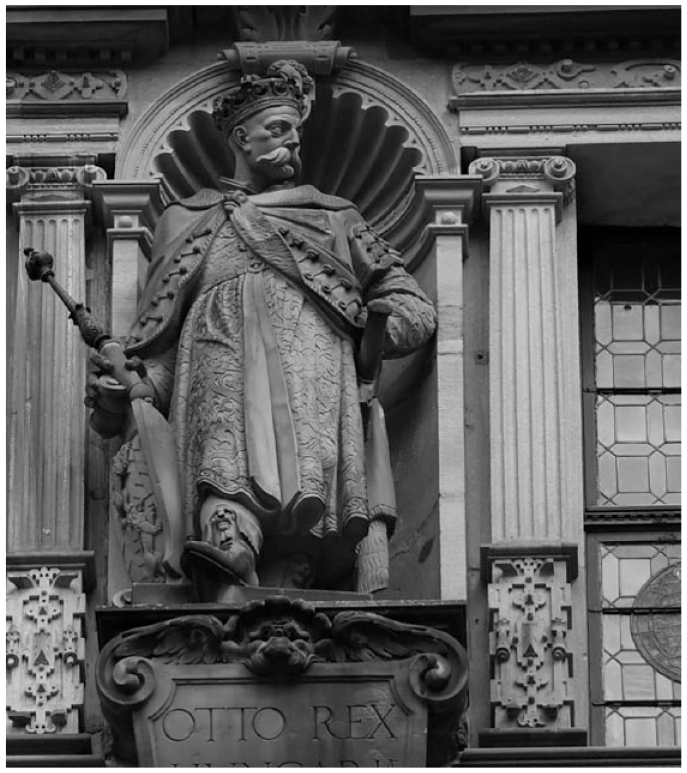
Ukrainian Cossacks belonged to European federations. Zaporizhzhya Ukrainian Cossack Army was a permanent member of the European Holy League (17th century); it had been fighting for a long time as part of the united European armed forces against the Ottoman Empire. After the destruction of Zaporozhian Sich by Empress Catherine II, not being able to return to Ukraine, this Cossack army remained and settled in Europe, as evidenced by the numerous monuments on the territory of European states. The heroes of these states are the Ukrainian Cossacks. The Holy League was a Catholic, not an Orthodox, organization.
The most iconic battle was the Battle of Austria, where Cossacks played a significant role in ending the Ottoman conquest of Europe.
The destruction of the Zaporozhian Sich by Catherine II on her way back from the Turkish War only proves that the Russian Empire tried in every way to make the Ukrainian territory part of its empire, including culturally and historically, but also that it failed. As a result, there are a series of distortions of history in various books and in the works of the Christian Orthodox Church, which hated the culture of this land and attempted to impose their own culture. The Ukrainian
We do not consider the period of the Soviet Union. The reason is that in the Soviet Union, everything was subordinated to the party and the government; it was a socialist, totalitarian state. All the works written by scientists during this period of time and any research conducted were subject to quite strong censorship and political distortion, so it is not possible to look for reliable answers in the Soviet sources.
The war that broke out between Russia and Ukraine opened up tremendous research opportunities for us as scholars. It turned out that Ukraine is not a poor third-world country, and without this state, the world system cannot function smoothly. Ukraine provides:
(1) Grain. It turns out (based on predictions massively described in the respected media) that the world will go hungry; literally, the population of several countries will starve to death if they do not import Ukrainian grain. Ukraine is one of the leading players on the world grain market.
(2) Sunflower oil. The European shortage of sunflower oil is directly related to the Ukraine war. That is, Ukraine has concentrated strategic reserves of sunflower, which supplies all of Europe, which the people of Ukraine did not know before the war began.
(3) It turns out that the BMW plant in Bavaria cannot work because Ukraine produces electronic parts and tires for it. Again, this problem was exposed by the war.
(4) It turns out that Europe is economically dependent on production in this territory (motor vehicles, tires, heavy machinery, chemicals, textiles, etc.). Again, this is borne out by failures in the logistics chains and reduced production.
Economically, therefore, Ukraine has been in a state of European integration since 2004. Moreover, such significant historical events as the two political revolutions of 2004 and 2014, with an interval of 10 years, demonstrate
Do all the regions of Ukraine want to return to the European family? No. Territories that originally belonged to Russia, such as Donetsk and Luhansk, do not wish to be part of the EU, as the military conflict between these territories and the state of Ukraine in 2014 vividly demonstrates.
However, from the point of view of the study of the mental component of culture, we can conclude that the inhabitants of the Luhansk and Donetsk regions consider themselves to come originally from the environment formerly referred to as the Russian Empire. Therefore, it seems possible to conclude with certainty that there are regions of Ukraine, residents of which do not wish to be part of the European family, that is, about one-quarter of the territory of the current Ukrainian state. On the contrary, the people of three-quarters of the territory of Ukraine are categorically unwilling to become a protectorate of Moscow.
Why do Donetsk and Luhansk not wish to join the European family? The fact is that these lands were forcibly annexed to Ukraine during the Great October Socialist Revolution when the Ukrainian SSR was formed. Thus, these eastern lands are not historically Ukrainian because they were forcibly (i.e., artificially) annexed after the Bolsheviks came to power in 1917.
The Russian Federation’s expectation that Russian troops will be welcomed with open arms in Ukraine has been shown by recent events to be unjustified. There are some historically specific reasons for this, which we will summarize in the next section.
Part 3: Ukrainian Realities and Historicisms
A Collection of Verified Discoveries and Conclusions as a Result of Research Expeditions in Ukraine
It is no secret that Ukraine was completely different in the past from what it is today. It has undergone many territorial changes over a long period. During the field studies in Ukraine, the methodologies of the southern and northern lineages of the harakterniks were restored—in particular, the techniques of personality re-transformation, corresponding to the unique mentality prototype peculiar to the Ukrainian environment.
The results of the scientific expedition in Ukraine in 2020 are recounted in full in the monograph “The Mystery of the Third Order.”
The purpose of the expedition, as noted above, was to reconstruct the methodology of harakternik training, which also included resolving such scientific problems as comprehending the religious-philosophical root of the system of upbringing and training of harakterniks, describing their methodology and course of personal improvement, determining the transformation of the harakterniks into superhumans, and studying the category “superhuman” as a certain kind of antipode of an inferior man.
The following research methods were used: construction of a heuristic model, the descriptive method of analysis of historical documents (works of fiction), comparison and collation, a prototypological approach, criminalistics and criminological research methods, scientific research in the field of European mysticism and symbolism, and the analysis of historical eras by methods of visual sociology and anthropology.
The research was the complex result of longstanding work at the interface of sciences, done in four international expeditions to Mexico, Germany, southern Italy, and now Ukraine. The initiator and scientific leader of the expedition research was academician Oleg Maltsev; the scientific team involved the full membership of the Expeditionary Corps.
The research group analyzed several dissertations on harakterniks, and held conversations with specialists and professors who study the Cossacks, the ethnos of the Ukrainian people. Unfortunately, the research group looked up academic sources and found that they also contained much unreliable and implausible data.
One of the obstacles in the way of research is the total lack of quality sources of information. The sparsity of direct sources has forced us to use other methods to get information. We refused to use sources that were released after 1917, because such material is heavily influenced by Soviet propaganda and ideological bias. From 1992 the period of “justifying their usefulness” in the new, young state of Ukraine began; that is, enterprising people justified their businesses based on Cossack ideals, teaching Cossack martial arts, etc. These people essentially created their own martial arts, which have nothing to do with the Cossacks. Professor Vadym Zadunaiskyi also talked about this in one of the conversations in the project “Russian School of Fencing” (Professor Zadunaiskyi about the saber and Cossack hand-to-hand combat, 2018).
However, the libraries and archives have preserved documents on fencing during the training of Cossacks for combat. Note that these documents do not refer to the training of harakterniks, but to the training of Cossacks.
In order to state whether someone is a harakternik or not, it is necessary to answer many questions: What does the etalon of a harakternik look like? Where does it come from? Why do we need such a phenomenon as a harakternik in Ukraine? What is it—a historical collision, a phenomenon? Who is it? What is his purpose? What is his function?
In historical documents, some of the functions of the harakterniks are described: opening locks without keys, breaking into houses, robbing, plundering, turning people into bushes, turning themselves into various animals, and other things (there is a mystification of the unknown phenomenon of the “harakternichestvo”). Some historians and scientific figures put forward the claim that the term “harakternik” was used since the 19th century; before that, there were other names for these amazingly capable and skilful people.
Historical Parallel: Calabria and Ukraine—Prehistory
During the study of Calabria, it was discovered that the people of this region lived based on a system or way of life called the “Ancestral Concept.” The same system of ancestral concept existed among the harakterniks as well: knowledge was preserved within the clan, within the family, and passed down from generation to generation. But at a certain point, the Cossacks began to accept anyone who wished to join. This step had consequences: in the course of the changes, the tribal transcendent was destroyed and lost.
According to a number of sources, there was once a conflict between Christianity and the harakterniks. Christianity has always regarded harakterniks as the spawn of hell (and this is not a metaphor). “Harakternik” is an ancient ancestral transcendent, which existed before Christianity and disappeared precisely because of the emergence of Christianity. The conflict between harakternichestvo and Christianity was so intense that it led to historical oblivion, that is, the termination of the existence of the phenomenon of the harakternik. A harakternik is an independent person who does not need anyone, neither a priest nor anyone else. This person does not go to temples; he does not confess to anyone, but on the contrary, he, as a knowledgeable person, is visited by people looking for advice and answers to questions (“Harakternik and the Ukrainian Identity. Scientific Expedition Has Started,” 2020).
Calabria (the region of modern Italy) preserved its ancestral transcendent precisely because of the absence of conflict with Christianity, whereas Ukraine could not. In our country, because of this religious-philosophical conflict, the Cossacks were divided into two parts: the Christians and the adherents of the ancient ancestral transcendent. This ancient ancestral transcendent gradually disappeared. We could safely assume that as soon as Ukraine regains its ancestral transcendent, Christianity will instantly disappear. Nevertheless, based on its current positions and ambitions, the Orthodox Church will not allow this hypothetical outcome, because in such an event, another form of being would prevail, essentially “another world”—a world in which everything is possible, where people are not a herd, but independent individuals capable of achieving results without relying on anyone else.
Two Lines of Harakternichestvo: North and South
After completing the scientific analysis of the phenomenon of “harakternichestvo,” it became clear that there are two lines of harakterniks, conventionally known as the book line and the knight line. Each of them has its own transcendent ideal. During the prototypical and comparative analysis of the Ukrainian phenomenon of the “harakternik” and the similar Calabrian tradition, the following was revealed.
The book line is the Franciscan line. In Cossack mythology, there is a type of
These lines are inextricably intertwined, but on the transcendental level, they are unrelated. If we consider the first line, the book line, its prototype is Volga Svyatoslavich (the Ukrainian hero). This character was born of a union of a man and a transcendent essence (the snake). This is the line of hunters. If you read the book “Deceptive Silence,” where Calabrian tradition is described in detail, you will see some similarities in the traditions and mythologemes between Calabria and Ukraine. For example, in the Calabrian tradition, there are seven secret names, which is very similar to the southern tradition of Ukraine. Seven wise men taught Volga Svyatoslavich (Maltsev, 2018).
The second line, chivalrous, is the line of wandering heroes; they are called “wanderers,” and the prototype here is Mikhailo Potyk. This is a northern tradition, and it is playful, combinatorial. The folklore says that at one time in the Zaporozhian Sich one of the favorite games was cards, as in Calabria, where people play cards to this day. Mikhailo Potyk was also born of a man and a transcendent essence (a mythical being).
Each line of harakterniks has its own specific approach, its own ancestral transcendent being, its own skills and capabilities. Both lines are Norman in origin. One line is bookish, Talmudic, Volga’s line: here a man is taught by sages, and the prototype of this line, for example, in Mexico is Carlos Castaneda. In the second line—the knightly—a man learns on their own.
Over the years (1994–2022) we studied the criminal tradition of Europe and the Russian criminal tradition quite profoundly. Separate studies on these criminal traditions are conducted to this day. In a comparative analysis of the stages of formation of the Russian fencing school, the Cossack system was found to be unlikely to have codeveloped with the Russian fencing school. On the other hand, it has a high essential probability of coincidence with the European criminal tradition, which tells us that the Cossack system is not of Russian origin.
Harakternik
Most likely, a harakternik can still be raised in the 21st century. Moreover, according to the logic of the prototype, it is possible, especially in terms of skills. On the other hand, we could assume that today it is hardly possible to force harakterniks to exist as a phenomenon.
In a monograph “The Philosophy of Southern Italy” (Maltsev & Lunov, 2020), we argued that the harakternik is an authentic, unique phenomenon peculiar to the South of Ukraine. The ancient manuscripts (dating no later than the 18th century) fully confirm this. The vast majority of books on this phenomenon are published in Odessa, and there is a reason for this. At that time, one century back, Odessa was considered to have Ukraine’s best-developed book printing industry, and also, as a port city, had close connections to the European book trade. As soon as book printing became a profitable enterprise and spread throughout Ukraine, the Jewish printers moved to Podol in Kyiv and set up printing presses on Podol. Before that, all publications were printed in Odessa, including the Torah.
For 6 years, our Memory Institute has explored the south of Italy: Calabria, Palermo, Puglia, Naples and the Calabrian borderlands (conventionally, the areas associated with Calabria), as well as Florence and, outside Italy, Mexico. The research continues to this day. We gathered everything we could to derive the personality structure of the Cossack-harakternik, and to uncover the methodology for educating a harakternik.
The main conclusion, which was verified repeatedly, as a result of comparative analysis of the expedition results of the First Ukrainian Expedition and expeditions to Europe (Heidelberg, Vienna, Sicily, etc.), as well as expeditions to South Africa and the Yucatan Peninsula, concerns the fact that the ancient phenomenon of “harakternik” is a world phenomenon. It is a specific Ukrainian transcendental, yet at the same time, it has global reach and its origins lie far beyond Ukrainian territory.
Monument to the Ukrainian Cossacks (Vienna, Austria).

Cossack Monument (Heidelberg, Germany).
Part 4: Results of the Second Ukrainian Expedition
This review is intended to provide comprehensive observations on the characteristics and properties of the Ukrainian environment as an object of historical analysis:
(1) Zonality. A rather interesting observation made during the study of Ukraine is that it is located in a zone with particular characteristics, the same type of location the Expeditionary Corps studied several times on the island of Sicily, which demonstrates the prototypicality of the historical environments under study.
(2) A strict scheme of Ukraine’s structure has been developed. Based on an analysis of architectural heritage, it seems possible to conclude that Ukraine stands in the Norman tradition, namely that the culture which grows in this territory descends from the Norman socio-cultural grain. In this territory can be found Italian culture, which, as it were, flowed in a wave into Ukraine. The remaining voids in this territory were filled in the Soviet period. The contemporary period (21st century) is characterized by the search for and filling of empty places, and new waves of urbanization (e.g., the construction of new skyscrapers).
(3) In Ukraine, historically authoritative buildings are extremely distant from modern cities, as well as from the highways that exist today. For example, to get to the Church of St. Anthony of Padua (Old Kotelnia), it would be necessary to drive off-road vehicles so as to cross broken roads and fields.
(4) Lack of restoration work. On the territory of Ukraine there are some historical places of worship in which it is only necessary to invest a certain amount of money, restore them, and put them in order, to create a tourist attraction. But for some reason, nobody does it. Most likely, the reason is that, if all the available palaces, fortresses, and castles on the territory of Ukraine are restored, Ukraine will appear in a slightly different form—historically authentic, rich, and diverse in its authenticity.
(5) When studying the cities in the present and in old photos, it was noted that Ukraine was historically built in the Norman and Venetian styles. Of course, you could say that all the local nobility across Europe imitated the same styles, so all the cities are in these styles. But this hypothesis is unconvincing. Also, if you study in detail many old buildings of Ukraine, it is observed that symbolism plays a very small part. It seems as if the history of Ukraine, its symbolism, was simply erased or knocked down, as if someone was intentionally cleaning up its history.
(6) In Ukraine, you can find buildings left by Carmelites, Franciscans, Dominicans, Jesuits, Rosicrucians, and other monastic orders. Why did they all come to Ukraine? It should be noted that monks are not free, they are servile people, and they were in Ukraine by order, not of their own free will. The question arises, who would give such an order? Who needed this territory? All these points indicate that Ukraine was of interest to these monastic orders, and that they had some task in mind when locating to Ukraine. Just as significantly, some of these orders are still in Ukraine to this day (the further selection of photos was made in the city of Berdychiv, Zhitomir region).
(7) No Orthodox cathedral was built in Ukraine in the Russian style before the beginning of the 20th century.
(8) There is a big difference in ethnopsychology within the country; that is, there is no single mentality in Ukraine. Each zone has its own mentality; for example, residents of the Lviv region are fundamentally different from residents of Bessarabia. If you cross out all the mental blocks found in the heterogeneous Ukrainian society, it is possible to reconstruct how Ukraine was originally arranged.
Berdychiv.
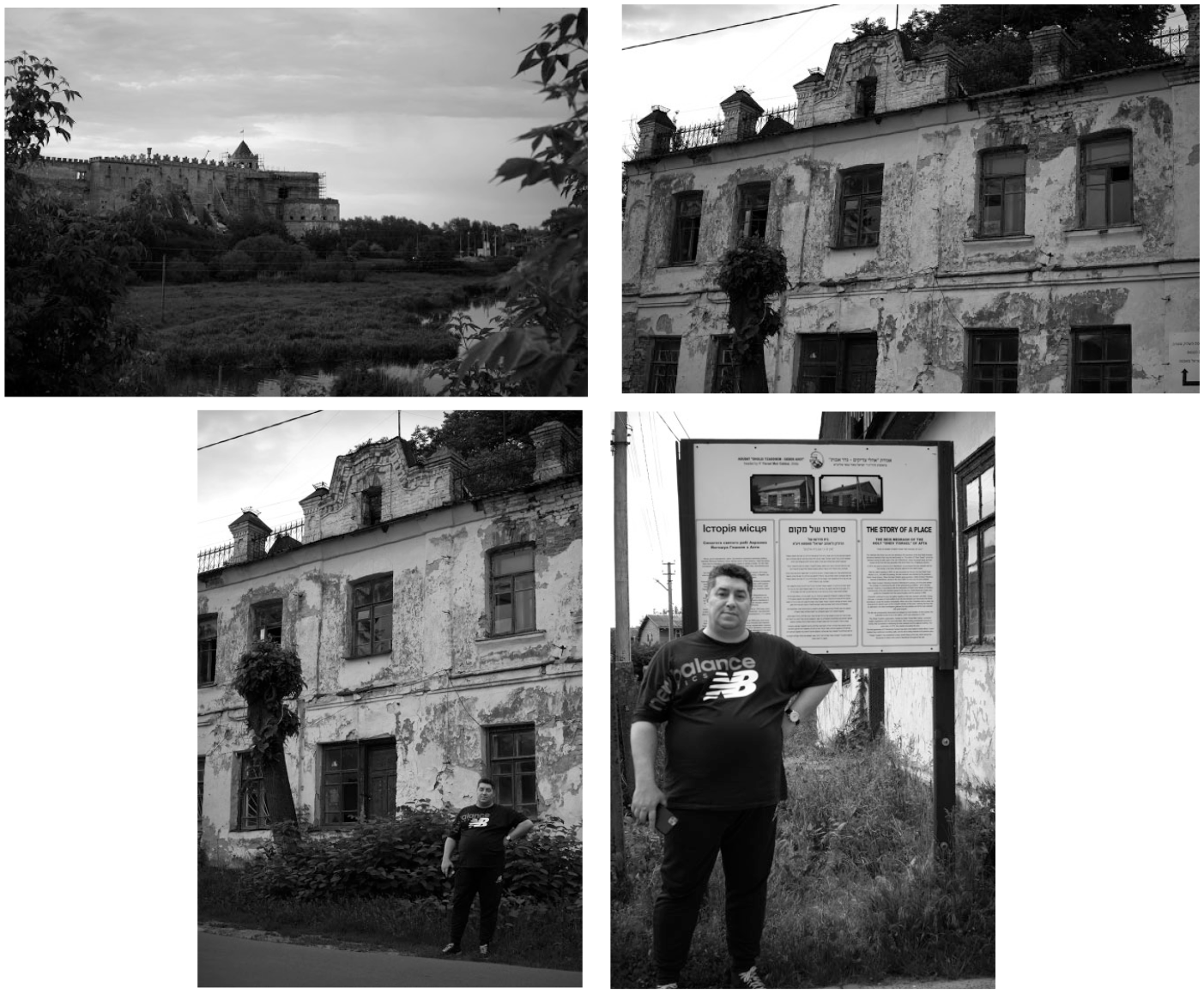
The question of “roots” and Ukrainian identity in the 21st century is a “hot issue”; moreover, as long as it remains open, anyone can “enter” this “market” of roots and corresponding philosophies. In fact, this is the tendency we are witnessing: either the Russian Orthodox Church or American paradigms claim “primogeniture”; there are even hypotheses related to the influence of Filipino culture on the face of the Ukrainian socio-cultural environment. And every “sower of the past in a favorable way” will try to make changes in our history, changing the essence and the course of these or other events, simply destroying or ignoring “unwanted” events. It is this “hand of oblivion” that has touched Ukrainian history: as if with an eraser, they erased the glorious past and left the Ukrainians to live “without lineage, without a tribe.”
German Church, Odessa Oblast.

Final Conclusion
Ukraine is the most mysterious territory that exists today. It was important for me to understand what is Ukraine in its essence. Oleg Maltsev. The second Ukrainian expedition
To penetrate deeper into the mysteries of his country, his fatherland, the scientist Oleg Maltsev organized the expedition to central and southern Ukraine in 2021 to reconstruct the cultural environment as a system and thereby to define the identity of the Ukrainian people.
Unfortunately, in the 21st century, most of the architectural heritage of Ukraine is in a dilapidated and shabby condition, and the preservation of the cultural gifts of our ancestors is of little interest to anyone. Moreover, no one pays proper attention to it. “These ruined churches, buildings, and monuments of culture are our memory, our identity. Even those little examples that are left show the great spirit of European heritage. Figures, photographs, and simply what we have seen with our own eyes completely change the idea of that Ukraine that existed. Besides, it raises a lot of additional questions,” Oleg Maltsev, the initiator of this scientific exploration, explained in an interview with the popular science magazine “Expedition.”
One of the key tasks of the Expeditionary Corps was to construct a conscious and verified (i.e. supported by evidence) understanding of the identity of the Ukrainian people to all who were interested and cared.
Ukrainians are Europeans from a peculiar environment, whose ancestors lived no worse than in today’s technologically advanced Europe a few centuries ago (Maltsev, 2021a). But who made Ukrainians of our days differently, and why? This shift (for the worse, according to the observed lifestyle and level of wealth) is yet to be understood when we study our history—the present, genuine, alive.
It is no secret that the state of Ukraine officially embarked on the course of European integration in 2004. This country is related to Europe culturally, historically, in its mentality, and, as it turned out, it is inseparable economically. In fact, Ukraine does not even need to enter Europe’s common economic and cultural space. Ukraine is already an integral part of Europe. What separates Ukraine and Europe is the voting procedure in the European Parliament, but obviously de facto, Ukraine has always been part of the big European family. We emphasize that literally the only thing separating Ukraine and EU countries is the voting procedure in the European Parliament. A number of the historical assumptions mentioned above testify to the inextricable commonality of Ukrainian history as part of the history of Europe.
This is a complex scientific, practical, cultural-historical, religious-philosophical, and economic overview of European integration, which, according to the authors, is essential to consider when approaching a meaningful answer to the question, “Does Ukraine have the right to be a member of the EU?”
Footnotes
Declaration of Conflicting Interests
The author declared no potential conflicts of interest with respect to the research, authorship, and/or publication of this article.
Funding
The author received no financial support for the research, authorship, and/or publication of this article.
