



Abstract

Seeing and being seen is an essential part of our interactions. As analysts we can notice the way in which patients move into our offices—be it the subtle shifts in gait of the elderly, or patients who initially skip enthusiastically into our offices only to drag in with reluctance as the work proceeds. Tall, short, fat or trim, beautiful or homely, it is all part of the picture. And then there is the changing shape of patients over the course of treatment. Beards shaven or newly grown. Hair colored or cut or even added to. And the subtle changes in the color of patients’ skin. The pallor of illness and anxiety, the glow of romantic happiness, the tan of adolescent immortality, the wrinkles and discoloration of aging. There is the language of color, be it the blues of depression or the green of envy. Added to which is the color patients choose to bring to us. Each day patients have a choice of what artwork they choose to show us. For example, the patient who wore nothing but black and beige until one day a change was announced by a red scarf, which she splashed over the canvas of the couch.
Like many people I doodle and sketch while listening. Whether in a meeting or listening from behind the couch, I will inevitably draw. Nancy Chodorow, in her introduction, asks what I think are the essential questions about the role of my drawing as an analyst. She wonders whether I draw in order to listen or whether I listen through my drawings. I think the short answer is that I do both.
There is little doubt that I listen better while sketching or drawing.
Kris (1952) wrote that the “fantasies and thoughts hidden in doodles are those of which the doodler wants to liberate himself, lest they disturb the process of concentration” (p. 91). He described a patient of his who, finding herself unable to listen during a concert, had resorted to doodling. Rather than her typically preferred pattern—a flower with three leaves—she now drew flowers with only two. Eventually a series of two-leaved images appeared on the concert program. Once she had begun doodling, she could listen to the concert with ease and pleasure. Later she was able to associate to her doodles and interpret them herself. The flower represented her menstruation, which had reappeared after being absent for several months, and the leaves formed a shape that represented an “egg cell that is about to burst open.” The absent third leaf represented her ambivalence about having a third child. Through her associations and interpretation of her drawings the patient was able to gain a clearer sense of what was distracting her from listening.
The analyst’s subjectivity can become available to him in a multitude of creative ways familiar to all of us: examples are the reveries described by Ogden (1997), the visual images used by Gardner (1983), and Lipson’s melodies (2006) that come to mind while listening to patients. When Nancy Chodorow described her observation of my drawing during seminars, I pointed out to her that she does something very similar with her own mind. That is, she sketches out theoretical ideas while listening and repeatedly develops, integrates, contrasts, and eliminates her theoretical constructs. This is a process that is uncanny in its similarity to drawing. My hunch is that most analysts have a creativity that is already active or might be activated in the process of listening to patients. This is a creativity that can provide useful insights into the analyst’s subjective experience. We might wonder how it is that an analyst can ever know his countertransference without creating a metaphorical depiction of the experience. Later I will explore the manner in which my doodling might provide useful information about my subjective experience and aspects of my perception of the patient’s experience, which have not yet been consciously noticed.
On the panel I introduced the audience to the setting and materials of my painting. I have an art studio beneath my psychoanalytic office to which I frequently retreat and paint after seeing patients. Inevitably the work of the day, or perhaps the most engaging patient of the day, has some role in what is expressed on canvas. One day recently, after seeing a particularly difficult obsessional man, I welcomed the opportunity to get into my painting clothes and unwind. A few minutes into the work, my wife passed my studio and wondered aloud why I was trying to control the paint. And so the carryover of my clinical experience is often evident in the painting process.
In the presentation, I showed images of my paintings, with the intention of showing how the mark-making of my paintings reveals preconscious meaning—meaning often unknown to me until the painting is complete and I have had a good deal of time to look at it. Typically my paintings are filled with imagery from South Africa, where I spent my childhood. If the painting is successful, viewers often find their own representations and meaning in it, which are often very different from my own. This feature of the work is very much in keeping with an aspect of Freud’s description of creativity (1908): “The writer softens the character of his egoistic daydreams by altering and disguising it and he bribes us by the purely formal—that is, aesthetic—yield of pleasure which he offers us in the presentation of his phantasies. . . . It may even be that not a little of this effect is due to the writer’s enabling us thenceforward to enjoy our own day-dream without self-reproach or shame” (p. 153).
I included a painting in the presentation that I had done when six years old, because, reflecting back on this painting, I could see that with the naiveté of a child I revealed many of the childhood anxieties I have come to know were present at the time. Preconscious anxieties and concerns found their way into the painting, whether intended or not.
My doodling is typically done with as little conscious intention as possible and can take many forms—abstract patterns, figurative images, and calligraphic forms are all common. I am aware that looking back on the images is often informative, whether they are tight obsessional patterns, which might alert me to a feeling I had while listening, or identifiable forms, which often tell a story in a dreamlike manner. It is essential in such a process that I allow my drawing hand to move freely, without preconception. Kris (1952) refers to this as the drawing hand creating “autonomously” (p. 91).
Marion Milner (1950) described a similar process in her drawing:
Quite often there was some conscious intention of what to draw, at the beginning, but the point was that one had to be willing to give up this first idea as soon as the lines drawn suggested something else. And will did come into it to the extent of the determination to go on drawing, to keep one’s hand moving on the paper and one’s eye watching with a peculiar kind of responsive alertness the shapes that it was producing. In fact it was almost like playing a game of psycho-analyst and patient with oneself, one’s hand ‘talked’ at random, the watching part of one’s mind made running comments on what was produced [p. 84].
With the panel presentation in mind, I thought to conduct an experiment in which I would draw during each session with one of my analytic patients. I was apprehensive about the experiment, given that already, in anticipation, the process would not be private but I would be drawing for an audience. Added to this concern was my wish to convey something in the drawings that would be recognizable and could be identifiable in such a way as to invite associations by the viewer. I decided on two strategies to manage these issues. First, I would draw in every session and make as many drawings as I felt like doing. In this way I was assured of a redundancy of drawings and could select drawings for the presentation without feeling that any particular drawing was for public viewing while I was in the process of drawing it. Nevertheless, each drawing was done very quickly, in no more than two or three minutes at some point in the analytic hour and very much in an attempt at letting my drawing hand move “independently.” The drawings shown are not edited in any manner, so that I can revisit them in their original manifest form. Although there is great value in revising a drawing, this is a different consideration. Having decided to rapidly produce a succession of drawings, I was then faced with what content I might allow myself in anticipation of the panel. Here I decided that I would try to use figurative forms, which would be easy for viewers to relate to. Finally, I decided that I would quickly write down associations to the drawings, either during the session in which the drawing was done or immediately afterward.
I will briefly describe the patient and then present sixteen drawings, together with my associations and thoughts, done over a period of approximately six weeks.
The patient is an attractive thirty-nine–year-old married woman with four children, whom I have treated in analysis for several years. Initially the patient came to me feeling very anxious and overly dependent on her husband, a successful biomedical engineer, who she feared would leave her. The patient had a depriving, neglectful early life with a narcissistic, uninvolved father and a mother who was preoccupied with her appearance and unrelated to the patient. While her father was alive, she repeatedly attempted to win his affection, though he was a cold and inhibited man who would distance himself the more she sought his attention. The linkage of her affection to her father’s rejection has been an important theme in the analysis, underscoring the childhood fantasy that warm libidinal feelings were the cause of disapproval and rejection. She has maintained a distance from her husband, which she justifies with a long list of criticisms of him. The patient fears the return to her childhood experience with her father, where her love was unrequited and she was left feeling ashamed and ugly.
In the transference, I have been treated largely with kid gloves so long as I maintain my distance. She is thankful for the ways in which I have helped her; however, she maintains a conviction that were she ever to allow me to be a real person in her life and to show any positive feelings toward me, I too would coldly reject her and leave her alone and ashamed. The patient closely monitors our relationship; for example, she keeps a close vigilance that I should never be even a few minutes late for fear that it means I have forgotten her. She forbids me to disclose even the most benign aspects of my personal life lest this bring us too close, and she makes a point of not noticing me outside my strictly professional role. There was a time when I had an accident, which left my foot noticeably injured and bandaged for some time. She pretended not to notice. She very much wants to have a more alive, spontaneous, and erotic life, but any interactions approximating intimacy cause her profound anxiety, which is relieved through distancing hostility that reestablishes a safe distance between us. And then the frustrations of that distance reemerge, and the cycle is repeated. In this sense, our work was at an impasse at the time I began doing the drawings.
Drawing #1

I was somewhat surprised by the first drawing, to which I had an immediate and compelling set of associations. As a young child growing up in South Africa, I had a pet budgie that escaped from its cage to a sure death in the wild. I felt guilty because I had come to ignore the budgie and found cleaning its cage a burden.
The feeling of neglect was compelling in my associations. What was it that I had neglected with my patient? And what might the birds represent? I felt certain that the birds represented her freedom of feeling, especially erotic feeling, which was absent both in the analysis and in her marriage. I felt convinced that I had come to neglect my patient’s unspeakable positive transference, which I felt was surely present, but knew too well how aggressively she defended against it for fear of being left alone and ashamed.
What I took from this drawing was that I needed to find a way to approach her resistance to the positive transference as soon as possible in the work and to weather the storms of her hostile resistance. It seemed we were not going to accomplish much by persisting in the impasse and that we had little to lose.
Drawings #2 and #3
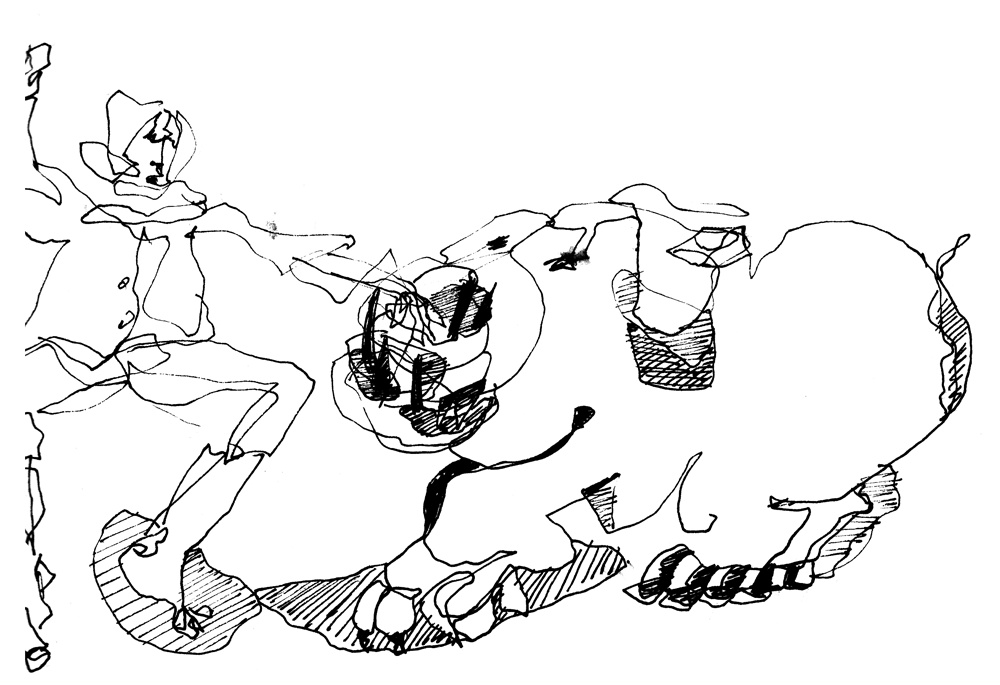

These drawing were done during what were typical analytic hours that followed the hour during which Drawing #1 was done. The patient spoke largely of her difficulties in taking care of her children and her anger at her husband. She felt unappreciated and burdened.
The drawings struck me as responsive to the patient’s ongoing sense of herself, and particularly of her body, which she feels is fat and unattractive. But mostly, I think, the drawings captured the rage that I anticipated and feared as I imagined addressing her resistance to the positive transference, as well as the anger I felt when she devalued and distanced me. I thought I was reminding myself what I would be up against were I to persist on the path of bringing the positive transference into our work.
Drawing #4
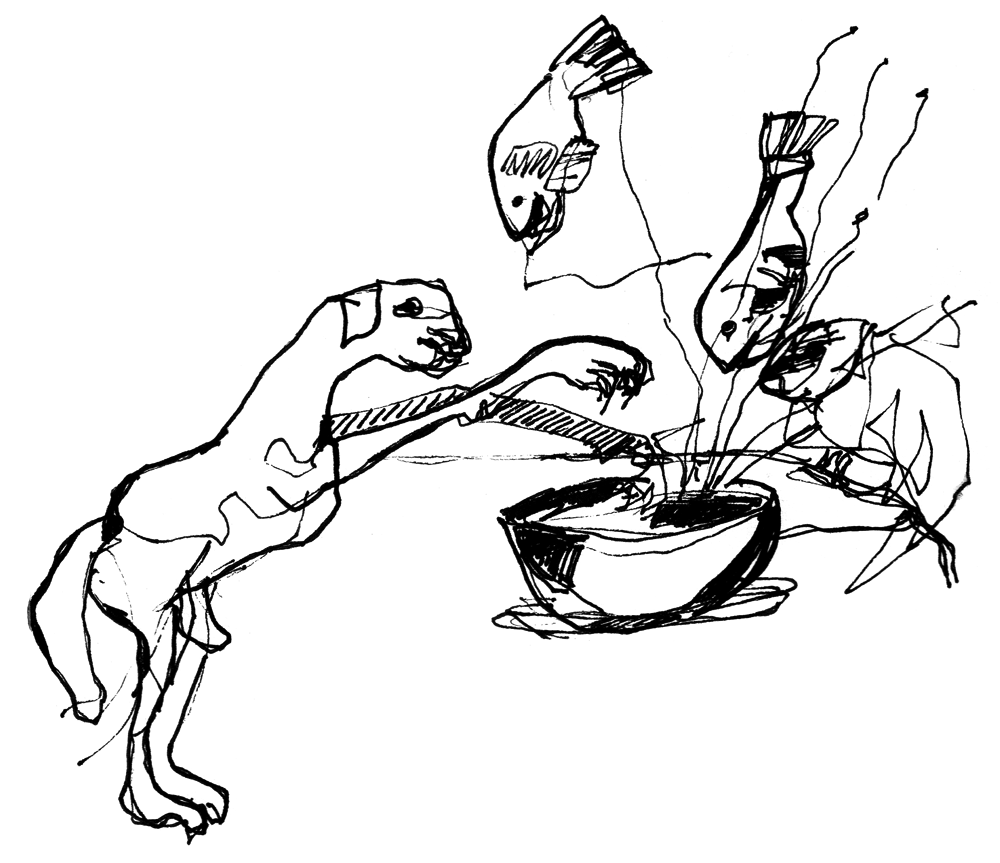
I came to call this the “dog brew” drawing. It was done during the patient’s first session back from a vacation. By this time I was already beginning to reintroduce to her the manner in which she had typically ignored her relationship with me—I was trying to find ways of safely addressing her positive feelings.
She began, “Okay, I missed you. Or maybe I’m just saying I missed you so I can believe I’m getting better.”
At this point I quickly sketched the drawing, which was mysterious to me. I wondered what the dog represented and what the fish symbolized.
I responded, “You don’t know the difference between missing me and feeling it’s a good thing to say you missed me?”
She continued: “It was the dog I really missed. I don’t feel that I exist in your mind . . . and I am sure not going miss you . . . because you don’t miss me.”
The patient persisted, saying that she felt better talking and that the analysis was a place to talk and that as far as she was concerned I was simply a paid listener and should not pretend otherwise. I felt shoved back into my box and knew not to push the issue further just then, as I would surely be met with further hostility.
But, given my newfound conviction of my negligence, I persisted.
I asked her whether her two best friends missed her when she was away and were happy to see her return from vacation. She said that this was certainly true. I then asked how she might know this to be true. She replied, “I can see it in their faces—they become excited and look happy to see me.”
I continued: “And despite your conviction that I am simply a paid listener about whom you have no feeling, I see the same kind of pleasure in your face when returning to see me that you see in the faces of your friends.”
Bracing myself for her devaluation, I was met instead with what seemed like surrender to my presentation. She said she did miss me but did not want to have those feelings in any way part of our relationship. Nevertheless, her associations went to her father and a memory she had never before revealed in the analysis. Her father never touched her or allowed her to touch him; however, she did remember, as a young child, her father carrying her on his back while hiking. As she recalls, it was the only time she could remember that they had touched, and she had felt a weird sick feeling.
The “dog brew” drawing amused me. I drew it before she mentioned her dog in the session, but I knew of her trusting attachment to her dog, who reliably welcomed her at all times. I figured that I wanted to copy the emotional brew the dog provided, perhaps wanting to know how the dog was able to do what I had not yet found a way to do. The fish, like the birds I think, symbolically represent her aliveness. I imagined finding a brew, perhaps a super-neurotransmitter that would make her feel safe.
Reflecting on the session, I thought it revealed multiple layers of meaning that overall I felt to be encouraging. The first part of the session was familiar. She implied, even if in the spirit of appeasing me, that she missed me. When I pursued that feeling, she pushed back at me, and I felt I needed to retreat. But when I persisted, she was able to stay with the process rather than becoming angrier, and told me an important memory of a moment of intimacy with her father, not previously revealed in the analysis. I felt encouraged. She was able to recall the experience and place the somatic memory into words as she remembered the “weird sick feeling” of closeness with her father.
Drawing #5

This drawing was done in the session following the hour in which the “dog brew” drawing was done. The patient surprised me by telling me that while in the waiting room she adjusted my thermostat. I was taken aback, as this was a piece of action of a new sort. She would never have dared exhibit such comfort (in my space) in the past. Historically, she has not shown any awareness of my office and surroundings. I commented that this seemed different, in that just a few months ago, she would not have touched the thermostat.
She immediately made a connection herself: “I couldn’t touch my father, but I touched your thermostat . . . this is breaking down a little.”
She associated again to the scary feeling of being carried on her father’s back but now included associations to her mother’s unpredictable rage: “A roller coaster that could explode at any time.” Here I think the drawing represented the kind of creepy confusion of feelings that she conveyed about touching her father for one of the only times. The drawing seemed helpful in letting me fully appreciate the nauseating mix of frightened, excited, hostile, and stimulating feelings she experienced. And now her mother as a dangerous presence was included in her associations. The patient spoke at length about her disgusting feelings and sense of her body as being ugly and unattractive. I heard this use of language as identification with her mother, who spoke to her in such tones. It was as though she could not differentiate which feelings were inside her body and which were outside.
I was not sure what to make of her comment, “I couldn’t touch my father, but I touched your thermostat . . . this is breaking down a little.” I thought the comment was brazen, and I was familiar with her capacity to talk about painful feelings in a dissociated manner no longer connected to her affective self. That is to say, she could play the role of the patient who was accessing her sexuality or loving feelings but not with a “realness” that might be psychosomatically experienced.
The comment about the thermostat felt like she was throwing me a bone, providing me something she thought I wanted. I felt there was significant hostility in this but also some kindness, in that she was trying to make me feel we were getting somewhere.
At the same time, I thought her memory of hiking with her father held the affective and deeply somatic experiences she feared she could not contain. This part of the work felt authentically different and left me feeling encouraged.
Drawings #6 and #7

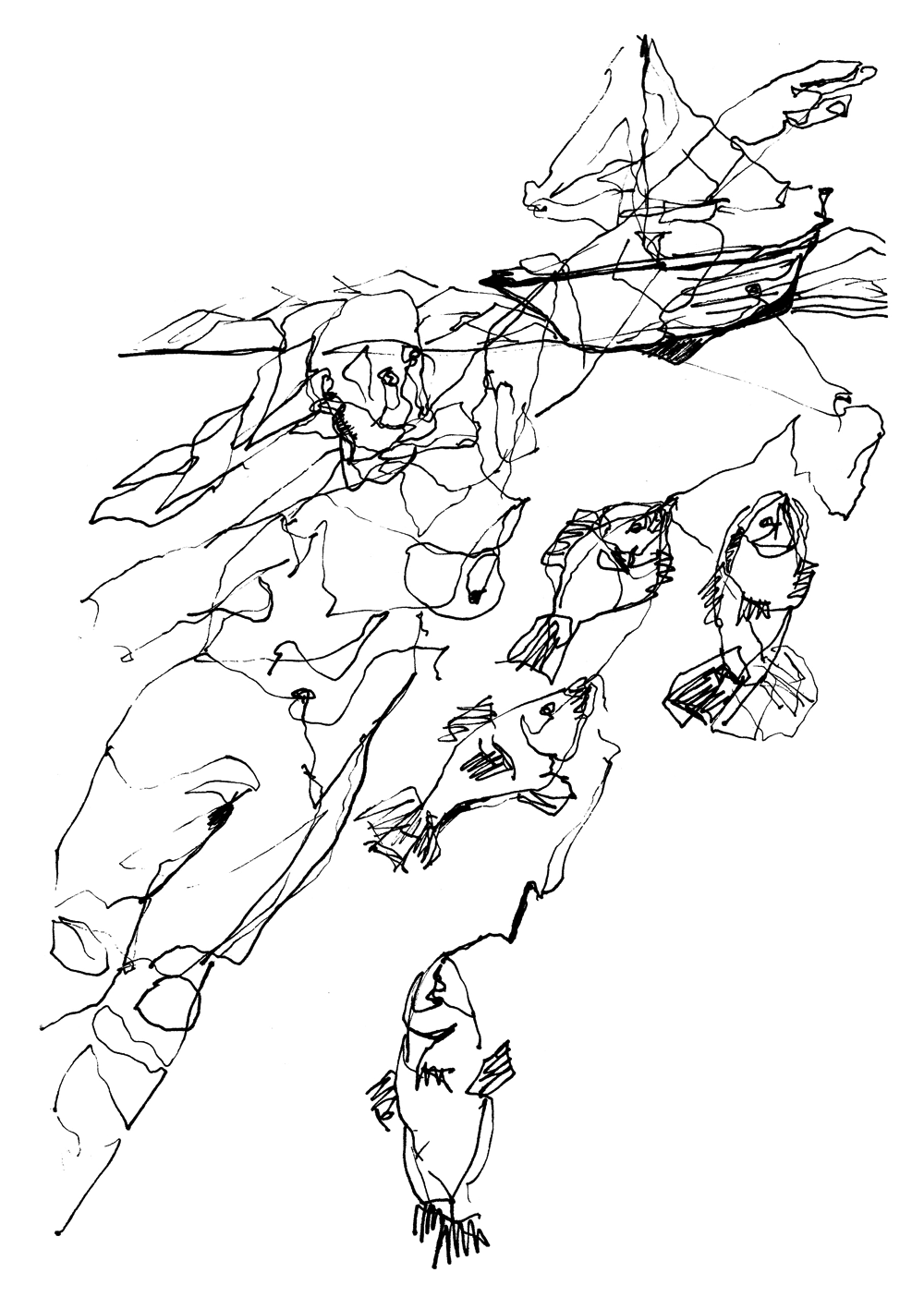
Although the patient was speaking at length about her disgust, somehow I maintained a celebratory feeling captured in the drawing. There was a sense that I had accessed a relatively alive part of her, which was intertwined with both her sexuality and the disgust revealed in the memory of physical contact with her father. Here I thought the fish symbolized her vitality, and I imagined that the drawing depicted me feeling that I have caught the fish. Then in the following drawing the patient is depicted shepherding her own fish. Her body is more clearly revealed, with some better sense of control over the fish. I think this was my wish for her.
At some point in these sessions the patient asked me whether the Kleenex on my shelf was okay to use for colds.
“I guess I know the answer,” she continued. Then she told me that she would hide her sneezes from her mother, who would become anxious about any illness. She associated further that she had led her life hiding what she felt.
“A fear of sneezing,” I said.
“I knew this was going to get to the sexual sooner or later. I am afraid that letting go and saying what I feel would mean that I might say anything,” she responded.
At the time, I thought it clear that the intense automatic bodily release of a sneeze was seen for its metaphorical sexual meaning. And the presence of the forbidding mother from whom she needed to hide her sneeze was now very much back in her conscious awareness.
Drawing #8
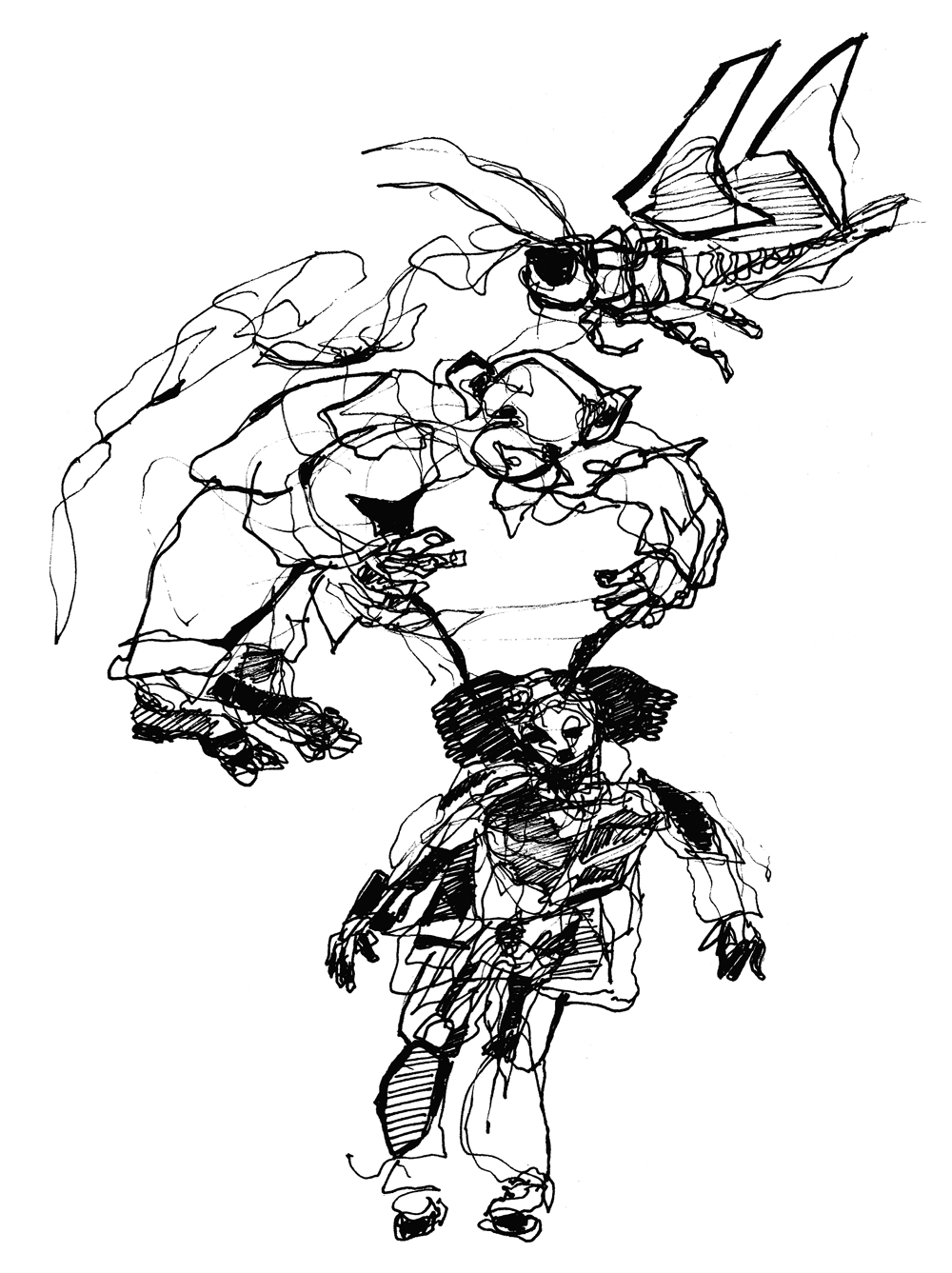
This drawing was done in the session immediately after the one just described. I was feeling encouraged and excited about how the material was opening up. I was interested in her associations, especially to the previous hour. There was the compliant, affectless talk of sex but also the affect-filled associations and memories, which left me feeling that things were moving forward. I thought her associations to sneezing were spontaneous and authentic.
Nevertheless, her affect had shifted to something more distant. I was not immediately attuned to this change, but the drawing clued me in to the extent that she was trying to provide me the kind of interaction she thought I was asking of her. It was as if our agendas had separated. She wanted to keep the work more defensively at the surface, and I wanted to deepen it. I drew her like a lifeless doll. She had told me that she could see herself as a little girl adoring her father, only to then be humiliated. “It’s my choice,” she proclaimed, a clear declaration that she needed to modulate the intensity of the work and would do so.
This is an hour where the drawing captured an understanding and awareness as yet unknown to me. Starting the hour, I was still feeling enthusiastic about the work. I had caught the fish, so to speak. I think my drawing was a response to her affect before I had consciously understood or accepted what was happening.
In this situation I actually used the drawing during the session to help me respond to her. I said, “Are you feeling controlled to go along with my agenda like a puppet on a string?” She said that was exactly what she felt. I was taken aback that the patient really had to spell it out for me before I got it.
I would not be persuaded from my conviction that her associations to sneezing were spontaneous. However, after this hour I began to consider that her suggestion that the sneeze had a sexual meaning was authentic but also expressed in defiant compliance. The drawing of the patient as “a puppet on a string” helped me put this into better perspective. And of course I too was a puppet on a string. As she tried to manage the distance between us, she attempted to control and modulate my involvement, both pulling me in and pushing me away as she tried to be sure I did not get too close. Nevertheless, we seemed to be slowly moving forward, as revealed in part by the appearance of important memories new to the analysis.
Drawing #9

This drawing revealed familiar symbolic images from my own childhood garden in South Africa—images all associated with danger. Snakes and the frogs they ate. Rather ugly fighting tortoises. I took this to mean that the work had moved too quickly and that both the patient and I had become afraid.
Drawing #10
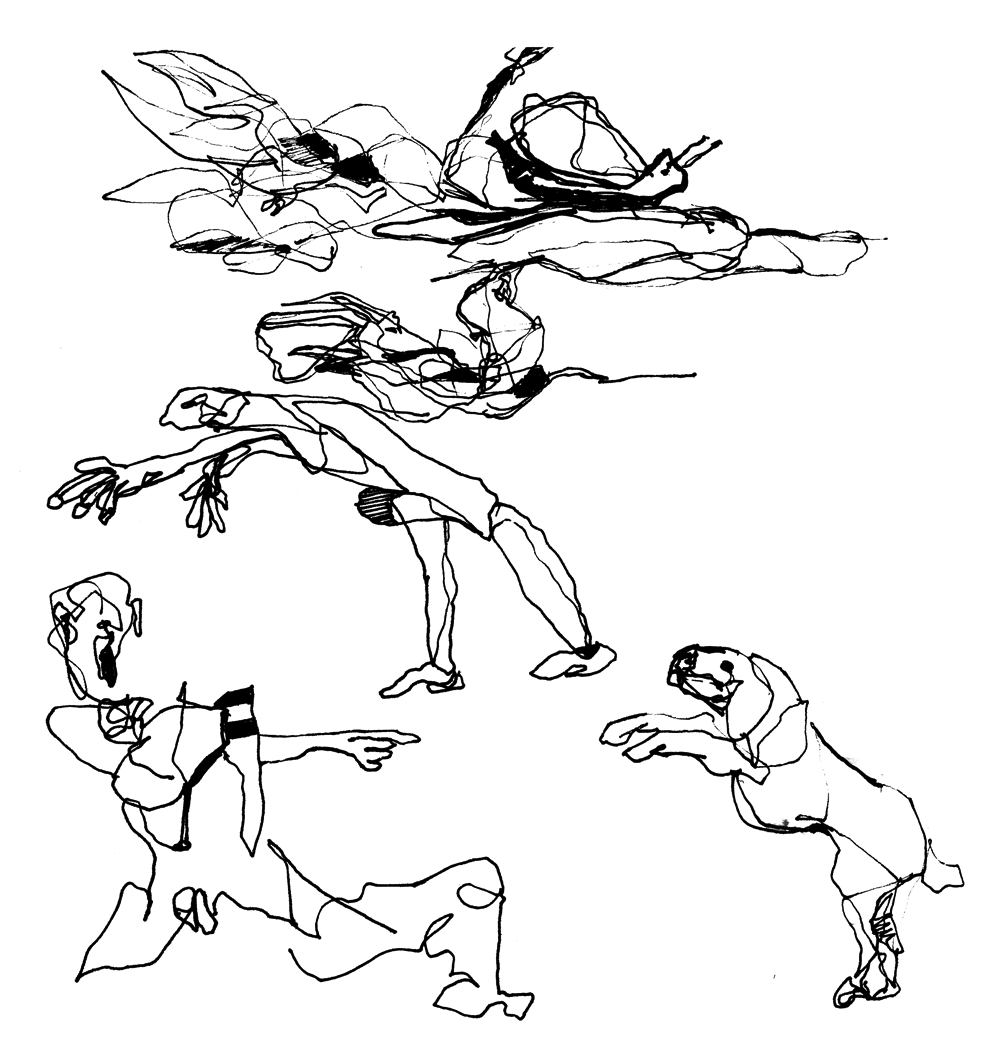
I thought of the patient as the obedient dog, perhaps to comply with the phallic men surrounding her, myself included. A snail up above was perhaps a signal to slow down. I felt again that I should be most attentive to her increased resistance. I became very careful to let her take control of the process and allowed her to feel that she would lead the way.
Drawing #11
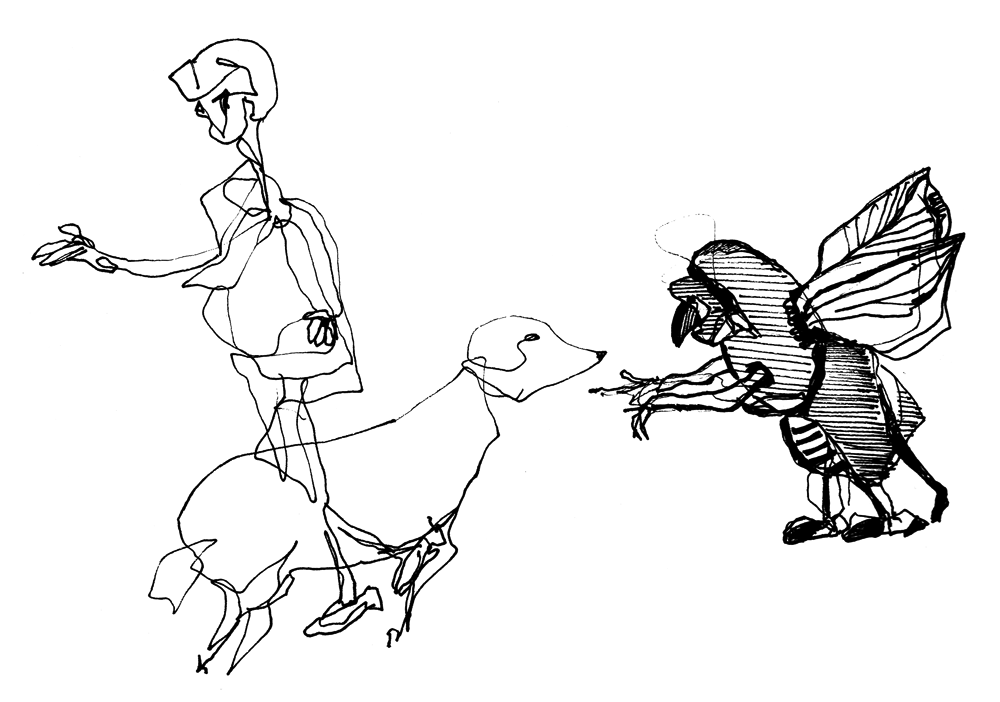
My associations to this drawing were of the father as the dangerous bee or perhaps me as the lethal African bee juxtaposed to the domesticated dog. All and all, these were hours of apprehension and danger, as though I was disillusioned by my fantasy of reaching her and was now opening my eyes to the dangers of her inner world, which forced her to keep a safe distance in her relationship with me.
With respect to the process of doodling, it was of special note that the drawing of the lifeless doll (#8) had alerted me to her inner experience before she needed to angrily distance me and aided in my being attuned to her anxiety earlier than I would otherwise have been.
The sense of anger in drawings #9, #10, and #11 were my inner sense of the danger that I imagined she felt, rather than the danger I needed to infer from her hostility toward me.
Drawing #12
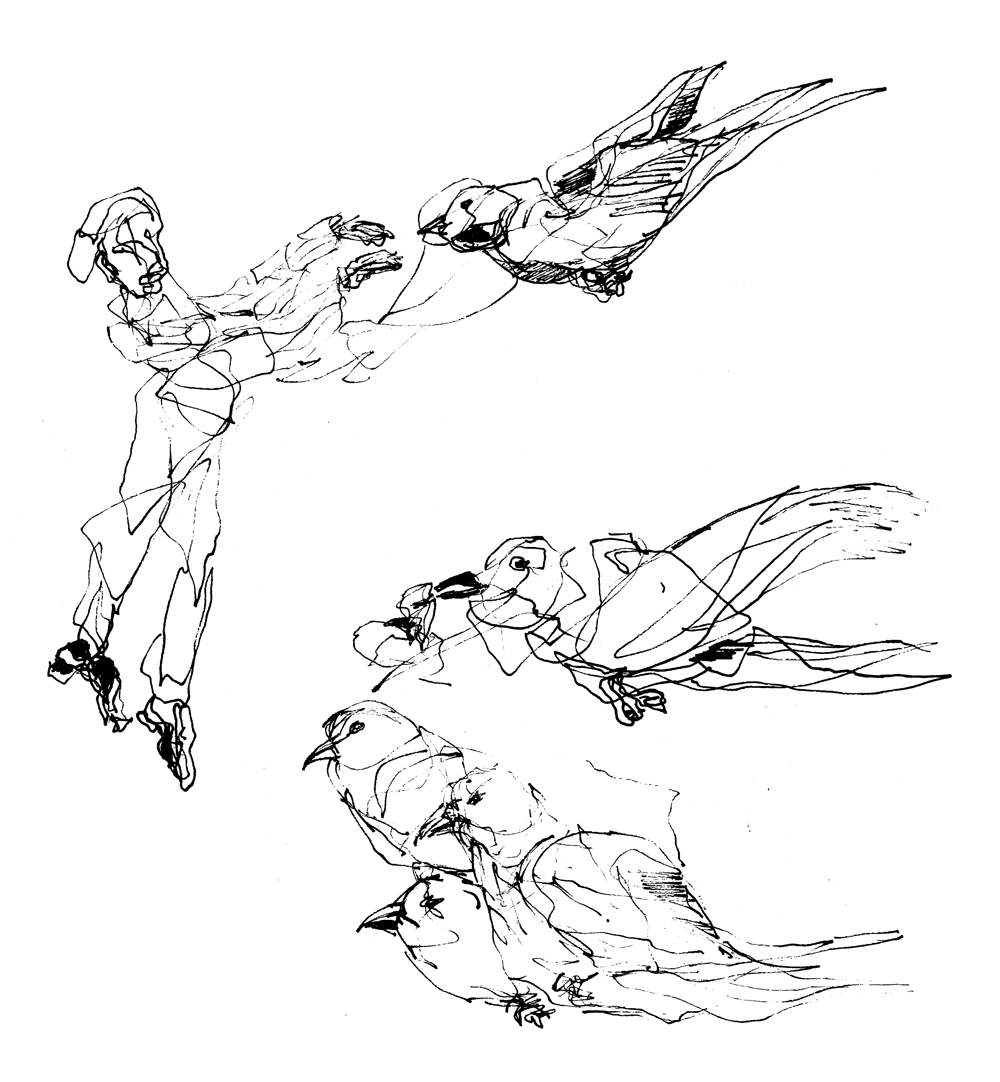
Eventually the ongoing sense of danger and ugliness seemed to subside. The affect had shifted. In this session I felt that the patient was softening a little from her more resistant stance, which I felt repeatedly warned me in various ways of the dangers of her inner world. I was not sure what shifted the work back to relative safety, but I thought that my allowing her to take control of modulating the pace of the work was helpful. I appreciated that I too needed to be a puppet on her string to some extent so that she could assert the necessary control that allowed her to feel safe.
This drawing captured my persistent wish to coax some warm, loving feelings into the room. I also appreciated that perhaps the persistent enthusiasm itself, as depicted in the drawing in which I am happily carrying the fish, was frightening to her. I wanted to move back toward the progress I thought we were making but also knew the dangers of my enthusiasm, which, from my drawing, seemed unyielding. Nevertheless, I think that by placing these feelings in the drawings I was able to avoid burdening her too much with my enthusiasm.
Drawing #13

The patient had softened but still remained scared and resistant, and I did this drawing, which made me feel awkward—as though I was again trying too hard to bait the vitality under the surface, symbolically represented by the fish.
I backed off but had hardly lost my enthusiasm. The drawing, especially the somewhat ridiculous depiction of this hapless man trying every which way to lure the fish, conveyed to me my bumbling helplessness and overintentioned participation in the sessions. I guess I did want her to go back to talking about the intimacy I thought she had touched on.
Drawing #14
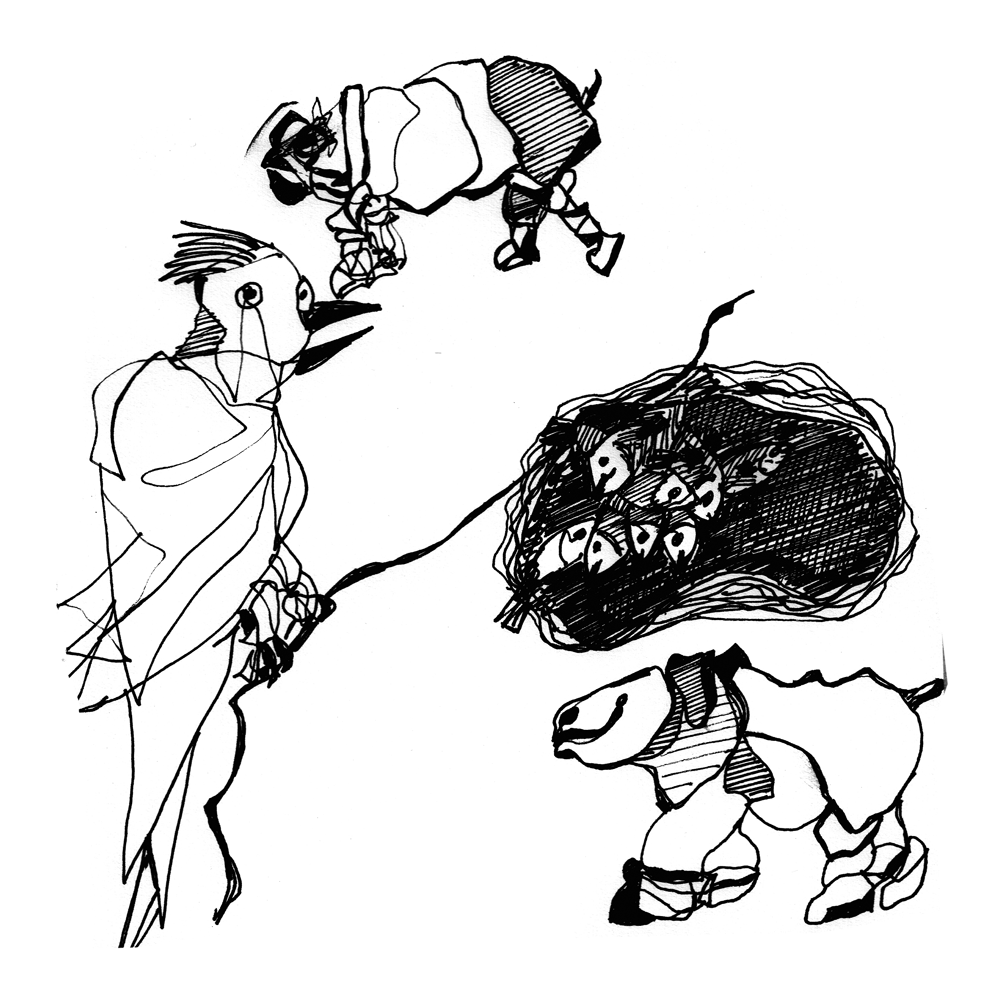
The patient was offended that I had asked for clarification about a detail of her life, which she felt I should have remembered. I felt we were back to an old place where anger took the leading edge. A familiar hour in which some minor lapse in my memory was used to demonstrate my inattentiveness and lack of caring. The drawing seemed to capture my feelings. Dead fish. Thick-skinned animals and what looked like a stuffed parrot.
However, during the same hour the patient had said she could never have criticized her father the way she criticized me because she would have gotten a beating.
It did not go unnoticed that there was movement in the transference despite her resistance. Although she distanced me in a familiar way by criticizing me for my poor memory, at the same time she told me she was aware that she was safer with me than she had been with her father. I thought she was carefully titrating the transference.
Drawing #15
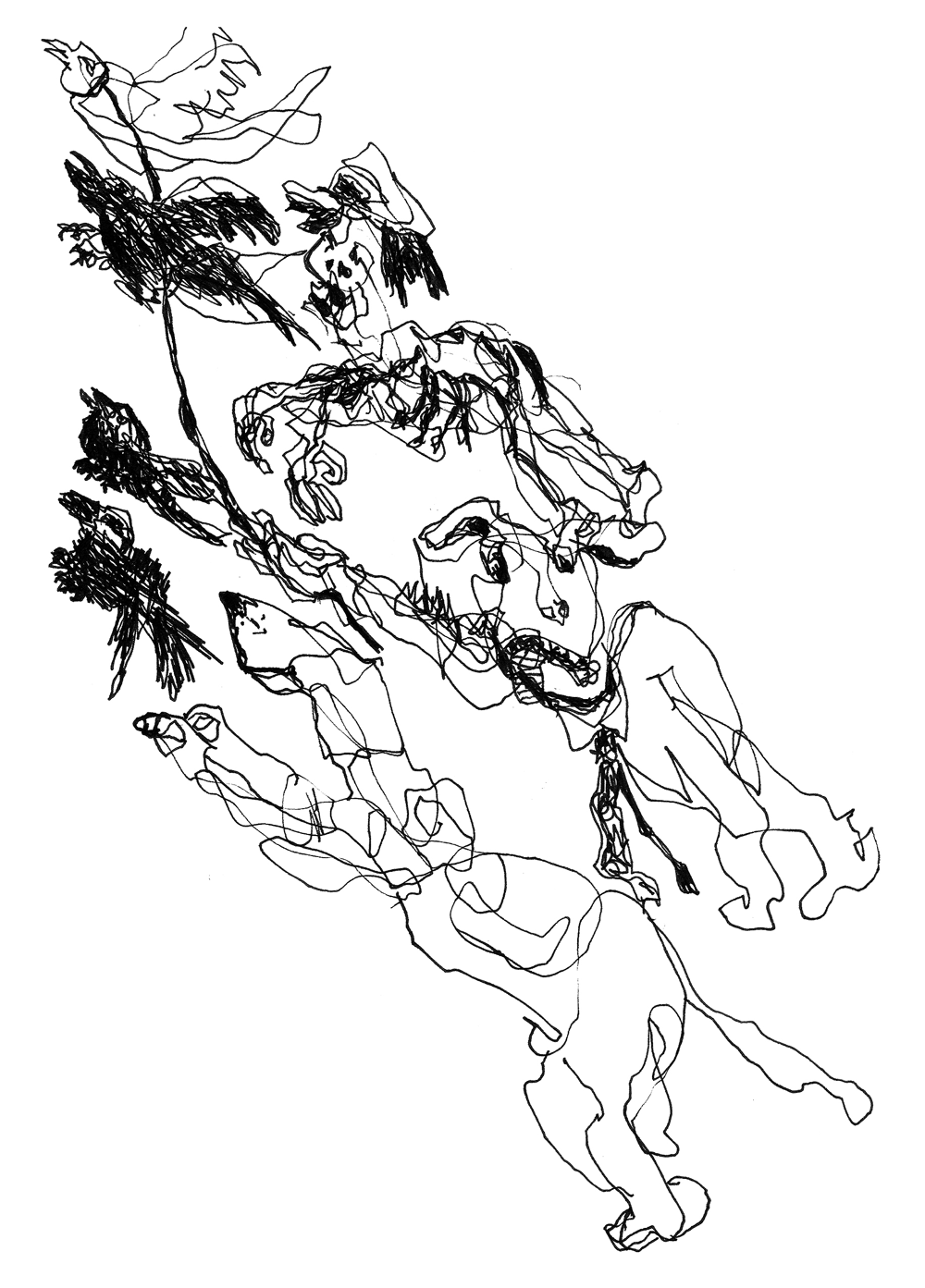
Here I felt we took a step backward once more, with her resistance increasing. She chastised me for my conviction that she could manage all her feelings and suggested I couldn’t know she wouldn’t turn out to be one of those mothers who set their homes on fire with their children inside. I knew the patient to have good impulse control, especially with respect to her aggression, but felt alerted that this was not her inner experience. I began to reconsider whether I had not given adequate consideration to the depth of her sadistic wishes. I felt more strongly that I needed to return to a stance that allowed her to modulate the intensity of the process. Intuitively, I saw the potential for the analysis to slip into a sadomasochistic struggle in which action replaced curiosity; I had to recognize that my attempts to show her how she avoided acknowledging her positive transference feelings seemed to also increase her anxiety that she could not manage her sadistic impulses.
In the spirit of relinquishing control, I had the idea that I would draw with my left hand. It is an odd notion in retrospect, but I imagined that I might be aided in loosening up my analytic attitude through taking less control of my drawing process. Nevertheless, I think the drawing is one of the better ones. There are three figures chasing the birds of my patient’s libidinal life, although the birds look ominously black, as though irreversibly tinged with darkness. The dog seemed to have the best grasp of the situation. I thought that the figure in the middle represented me—confused, exhausted, and frustrated that I couldn’t quite catch the birds. The top figure, I thought, represented my patient, frightened and distraught by the task of catching the birds, which she would like to accomplish even more than I would, but feeling frightened she could lose all control.
A couple of sessions later, a scheduling question came up. The patient asked whether she could skip a session at the end of her vacation. From the way she phrased it, I thought she was asking whether I would hold her responsible for paying for the session. I inquired as to what she meant, and she became outraged that I might suggest she was looking to avoid payment, reminding me that she had never failed to pay for a missed session. This was a familiar place for us. That is, her sense that I did not know her. But then as she persisted I noticed that her affect was different from how it was usually in these situations. The usual was that she would be enraged for the duration of the hour, adding layers of distancing hostility. But now there was something softer in her tone than I would have anticipated. It was as though she herself did not fully believe in her own anger. Nevertheless, she persisted in holding my feet to the fire, saying I did not really know her. But now I noticed a teasing quality, very new to our interactions.
“I think you are teasing me,” I suggested.
“Perhaps it’s the best I can do,” she responded.
Feeling that I needed to spell it out, I said, “Sometimes teasing is a way to manage distance between people, especially when things might feel a little too close.”
She shot back, “I thought that was my point.”
When left to her own resources, the patient found a modulated way toward intimacy, buffered by a relatively benign form of sadomasochism—the teasing. Again I felt optimistic that we could work our way through these issues, but the drawings helped me see that the patient needed to pace the process. She had heard me and was showing me that we would move forward, be it at her pace, in a manner attentive to both her hostility and her affection, best shown in her newly acquired willingness to tease me.
Drawing #16
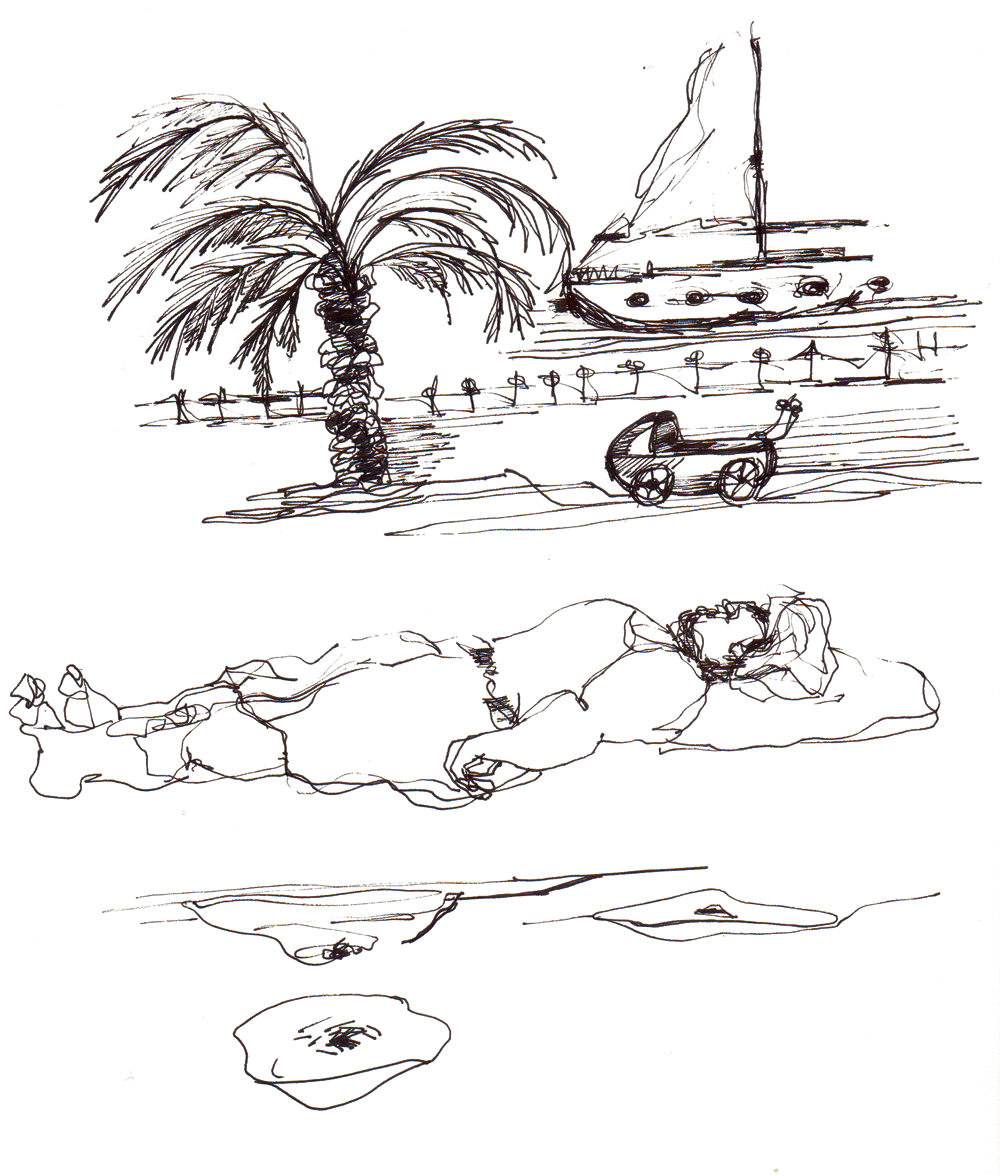
The final drawing contains images I found very useful in understanding the analytic work. The setting is familiar to me from my own childhood: the palm trees and seaside setting. The funnel shapes at the bottom of the drawing confused me for a while until I could remember that there were very similar funnel shapes under the palm trees in the garden of the house where I grew up. These were the sand traps that little insects called ant-lions made. The ant-lions are the larval form of an insect and approximately a quarter of an inch long. They burrow into the sand, creating funnel shapes about an inch in diameter, which they use to capture ants. The ant-lion buries itself at the bottom of the funnel, and when the unsuspecting ant enters, the ant-lion emerges from its hiding place and injects a lethal poison into the ant before devouring it. I remembered that as little children we would take one of the long thorns of the palm tree and tickle the edge of the funnel, mimicking an ant and so teasing the ant-lion into emerging from hiding, where I could stab it with my thorn.
In this drawing I saw the depth of danger and sadism that governed our relationship. Perhaps I was alerting myself to tread cautiously lest I be misguided and think we had reached a safe place.
And what about penetrating the little ant-lion with the long thorn of the palm tree? I thought that I was getting a clue into how the sadism masked the sexuality that had yet to emerge in the analysis.
This drawing and my associations to it shifted my listening. In particular, I became sensitized to the fundamental role of sadism for my patient. She has responded to my interest with curiosity and greater ease and perspective in talking about her sadism. This has made me consider that in some unrecognized fashion, I had participated in the resistance to her describing the full depth of her sadism. As her sadistic fantasies have become shared, she is less afraid of losing control in the face of her “cruelty,” which she now seems to believe is the true essence of who she is. The most immediate consequence of this work in her life outside the analysis has been a reengagement with her creative life in music, which she had ignored since childhood.
I conclude by repeating that the creative ways in which analysts can become aware of their subjectivity are as many as there are psychoanalysts. The purpose of discovering a format of creative expression is not to make great art, but to discover through one’s creativity what has not previously been known. I end with a quote from Bion (2005):
We can be afraid of expressing our stray thoughts, wherever they come from, because we are afraid of the reception they will get. And then the poet, the painter, the musician implicit in each of us does not get expressed, for fear it would be destroyed if it were [p. 60].
Footnotes
Training and Supervising Analyst, Boston Psychoanalytic Society and Institute.