Abstract
Recent scholarship highlights the importance of public discourse for the mobilization and impact of social movements, but it neglects how cultural products may shift discourse and thereby influence mobilization and political outcomes. This study investigates how activism against hydraulic fracturing (“fracking”) utilized cultural artifacts to influence public perceptions and effect change. A systematic analysis of Internet search data, social media postings, and newspaper articles allows us to identify how the documentary Gasland reshaped public discourse. We find that Gasland contributed not only to greater online searching about fracking, but also to increased social media chatter and heightened mass media coverage. Local screenings of Gasland contributed to anti-fracking mobilizations, which, in turn, affected the passage of local fracking moratoria in the Marcellus Shale states. These results have implications not only for understanding movement outcomes, but also for theory and research on media, the environment, and energy.
Social movements attempt to change public perceptions of their grievances not only by organizing collective actions, but also by using cultural products and artifacts. Movements may introduce new ideas through cultural products such as music (Danaher 2010; Eyerman and Jamison 1998; Roy 2010), books (Meyer and Rohlinger 2012), and films (Andits 2013; Whiteman 2003). These cultural products do not mobilize masses and generate government response by themselves: they require intensive and organized efforts to generate activism (Meyer and Rohlinger 2012). When social movements “do” culture—not just consume culture—they possess “an extraordinarily powerful mode for both solidifying commitment to collective action and for helping collectivities achieve their goals” (Roy 2010:258). But although a number of studies of movement mobilization and outcomes analyze the role of cultural products, they primarily examine how issues that social movements address relate to cultural content (Berezin 1994; Eyerman and Jamison 1995; Hanson 2008; Lipsitz 2000; McAdam 1994; Steinberg 2004; Zolberg 1997).
Empirical research on social movements’ use of cultural products to alter public perceptions has two important shortcomings. First, these studies do not examine the influence of movement-related artifacts on the broader public sphere, especially public spheres that extend beyond mainstream media. Recent studies point out that features of the broader political culture moderate movements’ likelihood of generating social and political change, as contentious collective actors must also develop persuasive accounts that align with themes in public discourse (Bail 2012; Ferree 2003; Giugni et al. 2005; Koopmans 2004; Koopmans and Olzak 2004; McCammon et al. 2008; McCammon et al. 2007). In this body of research, scholars draw attention to whether a movement’s claims-making aligns with broader societal discursive opportunities, that is, ideas about what is sensible, realistic, or legitimate in political culture (Koopmans and Statham 1999). These opportunities may be stable or volatile and they may be narrowly selective or broadly inclusive and accepting of movement ideas; furthermore, these opportunities may shape movement actors’ decisions to tailor their frames to resonant themes (McCammon et al. 2007). These studies have widened the lens of research on social movement outcomes, but they have not examined how activists exploit cultural products as discursive opportunities, particularly outside the realm selectively covered by the mass media.
A second shortcoming in research on movements’ use of cultural products is that it does not explain systematically how artifacts are used to mobilize sympathizers and affect change. A particularly important, yet insufficiently researched, type of artifact is the documentary film. Documentary filmmaking is increasingly a central component of organized, multimedia social action campaigns. We argue that documentary film may represent a discursive opportunity available to social movement actors. Documentary films can be seen as discursive opportunities that generate public interest, discussion, problematization, and new political preferences around critical social issues, as we will explain in further depth. Documentary films create new topics of popular discourse, inspire political activism, and even influence policymaking. Some pieces of legislation, in fact, are informally known by the name of the documentary that inspired them, such as the recent “Blackfish bill” in California that would ban Sea World from keeping orcas in captivity. 1 There are now entire film production companies, such as entrepreneur Jeff Skoll’s Participant Media, that focus primarily on creating documentaries to inspire social change. However, social scientists have yet to systematically explore how social movements use documentary films to leverage social change campaigns (Karlin and Johnson 2011). In particular, it is not known if documentaries are effective tools for local mobilizations, and the extent to which they may influence policymaking either directly or indirectly.
Beyond social movement theories, understanding how activists use cultural products to alter discourses and shape policymaking is important for theories of media and environmental sociology. Research on media focuses on the processes of gathering and disseminating news in mass media (Gans 1979; Gitlin 1980; Tuchman 1978) or through social media (Bennett and Segerberg 2012; Hussain and Howard 2013; Tufekci and Wilson 2012), but not in both simultaneously. Moreover, this research primarily examines the role of disruptive events and political contexts on newspaper coverage (see, e.g., Amenta et al. 2009), but not the role of artifacts such as documentaries. 2 At the same time, research on environmental sociology shows that, even though many communities are plagued by environmental problems, the perception or public expression of grievances is frequently lacking (Aronoff and Gunter 1994; Crenson 1971; Gaventa 1982; Roscigno 2011). Yet, research has not explored how activists use cultural products to overcome quiescence. Furthermore, while research shows that activism may change perceptions of environmental risks (Vasi and King 2012), it does not examine how activism can shape perceptions of risks, mobilize the public, and affect policy change. We argue that by scrutinizing activism surrounding documentaries, we can identify changes in perceptions of environmental risks in mass and social media spheres, and we explore how these changes lead to public claims-making and local political change.
We undertake an analysis of the strategy and effects of activist documentary through a detailed investigation of social movement efforts to halt the controversial natural gas extraction method known as hydraulic fracturing, or “fracking.” We use a detailed conceptualization and measurement of the shifts in public discourse that follow from such opportunities, which is made possible by the relatively recent availability of social media data. This allows us to understand these processes starting with public attention to a topic (Internet searches), moving to the overall volume of chatter about it (on social media sites), and, in turn, the generation of diagnostic (problem identification and blame attribution) and prognostic (suggesting remedies through online chatter) frames (see Benford and Snow 2000). In the same fashion, we also track discourses found in conventional media reports, as done by previous analysts. However, we believe our richer investigations into the dynamics of the contemporary public sphere are valuable for understanding the true importance of movements’ alignment with the rhythms of mass public (rather than only mass media) discourse. As we will explain, this strategy helps us address key debates in the sociologies of media and the environment; the former in terms of how the new social media landscape shapes public discourse and activism around critical issues (Bennett and Segerberg 2012; Chadwick 2013; Kreiss, Finn, and Turner 2011), and the latter in terms of how environmental risks are socially constructed and politically contested (Freudenburg and Jones 1991; Leiserowitz 2004; Pidgeon, Kasperson, and Slovic 2003; Vasi and King 2012).
We begin by providing background on contention surrounding hydraulic fracturing and the value of this research site for investigating our theoretical questions. We then discuss the importance of activist documentaries and discursive opportunities. After laying out our expectations for the study, we offer background on the rich online and social media data that we use to supplement our data sources on media discourse, fracking activity, and other measures. We then describe results from our investigations at both national and local levels. At the national level, we examine the role of activism surrounding Gasland for the emergence of discursive opportunities in social and mass media. At the local level, we examine the use of Gasland as an organizing tool and assess its contribution to mobilizations that led to municipal fracking bans in the Marcellus Shale region of the eastern United States.
Hydraulic Fracturing and Gasland
Hydraulic fracturing—also known as “fracking”—is a method of extracting natural gas that goes back to the 1940s, although it was in only limited use until recent years. Traditionally, the method involved pumping large amounts of pressurized water—mixed with various chemicals—into porous sandstone or limestone to release natural gas. Starting in the early 2000s, drilling companies developed unconventional methods to harvest natural gas trapped in shale rock. These methods involve drilling horizontal wells that extend from their vertical well shafts along relatively thin, horizontal shale layers. Applying the hydraulic fracturing process to a horizontal well requires much larger volumes of water mixed with sand and chemicals under greater pressure than conventional methods, and this poses engineering challenges and increases the potential for environmental pollution.
Opposition to hydraulic fracturing is motivated primarily by local environmental and health concerns. The environmental risks of fracking, previously off the public agenda as an unknown practice, are now being vigorously debated (Osborn et al. 2011; Wilber 2012). To date, no conclusive research exists to prove that hydraulic fracturing is dangerous. On one side, natural gas industry groups and supporters argue that the risk of water contamination is overblown. For example, the Independent Oil and Gas Association of New York argues that the chemicals used in fracking are safe and are made of “a small amount of dilute, benign additives found in common household products” (Wilber 2012:117). On the other side, environmental activists claim the industry is misleading the public by downplaying the risk of water contamination and other environmental problems, and civil society groups are monitoring water quality for evidence of harms (Jalbert, Kinchy, and Perry 2014). Some grassroots groups, such as Marcellus Protest, claim “there are almost as many violations as there are wells. Numerous incidents of spills, contamination and blow outs have been documented.” 3
Awareness about fracking risks increased rapidly in 2010, when the documentary Gasland—directed by filmmaker Josh Fox—was released. Gasland’s extraordinary potential for raising awareness about the environmental risks associated with hydraulic fracturing comes primarily from a few scenes in which Fox visits residents living near natural gas wells and witnesses them light their (apparently methane-contaminated) tap water on fire. Similar to how pictures of the burning Cuyahoga River energized the 1960s environmental movement, powerful images of burning water from Gasland energized activists. Film critics immediately recognized that Gasland could be used as a mobilizing tool: one critic wrote in early 2010 that “Gasland may become to the dangers of natural gas drilling what Silent Spring was to DDT.” 4 Activists also recognized that Gasland had a major impact. As one organizer put it, “Josh Fox’s Gasland blew the doors off what was happening, raising awareness a tremendous amount.” 5 In a personal communication, Fox told us, “This [raising awareness] happened all over the place. . . . It would take quite a bit of time to document all of the impacts, but I would say there were dozens of examples of this in specific cases and the cumulative impact was a big factor.”
This documentary’s impact on the movement can be assessed at national and local levels. First, if Gasland had a nationwide effect on the public debate about fracking, then this effect should be strongest when the film was released nationally on HBO and when it was nominated for an Academy Award. 6 Second, if Gasland had an effect on local areas, this effect should be strongest in communities where the movie was screened, and soon after it was screened. 7 Given that multiple issues compete for public attention at any given moment, it is extremely difficult to maintain high levels of awareness about new issues. Any discernible effects of films and other artifacts on activism are thus likely to last for a relatively short period.
Discursive Opportunities: Toward a Richer Understanding of Public Discourse
Most research on framing processes examines how collective action frames contribute to recruitment and collective identities (for a review, see Benford and Snow 2000), but a number of recent studies have generated critical insights into how frames can be linked directly to social movement outcomes (Bail 2012; Cress and Snow 2000; McCammon et al. 2008; McCammon et al. 2007). In so doing, these studies draw attention to the ways contentious collective actors are subject to features of the broader public discourse (Steinberg 1999). These interests have congealed into a focus on how social movement frames, to have policy effectiveness, must not only resonate with potential activists but must also connect with broader themes in public discourse. When a movement’s ideas are congruent with these broader public discourses, actors benefit from “discursive opportunities,” or moments when movement ideas align with what the culture at large deems to be sensible, realistic, or legitimate (Koopmans and Statham 1999; McCammon et al. 2007).
A limitation of these studies, however, is that their conceptualization and measurement of public discourse often privileges discourses represented in the mass media without sufficiently investigating mass discourse more broadly. Understanding the differences between coverage of critical social issues in the mass media versus social media offers insight into a number of key questions in the sociology of the media (for reviews, see Schudson 1989, 2002). Most directly, methods of news-gathering and dissemination are seen by media sociologists as critical to the content of coverage on a topic (e.g., Gans 1979; Gitlin 1980; Tuchman 1978). The bureaucratic routines of traditional news-gathering, for instance, encourage a reliance on official sources and a general deference to official statements (Fishman 1980). When covering contentious politics or protest events, this should mean that events involving social movement organizations (SMOs) will gain greater coverage than those that do not (Earl and Kimport 2011); also, the disruptiveness, resource mobilization, and policy environment surrounding protest groups shape prominent newspaper coverage (Amenta et al. 2009). When covering events associated with controversial or environmentally risky projects, mass media act as either social amplification or social attenuation stations (Flynn, Slovic, and Kunreuther 2001; Pidgeon et al. 2003). It is also well known that the predominant norm of conventional news reporting is to seek out a balanced perspective in reporting (Benson 2004; Gamson and Modigliani 1989), even if this means including a certain amount of false equivalence.
Contemporary social media sources like Twitter and Facebook do not share these features, partly because the work of reporting on events of the day is distributed, non-bureaucratic, and mainly done by lay participants (Chadwick 2013; Kreiss et al. 2011). Furthermore, activist groups often communicate directly through these services, such that SMOs become less important as spokespeople (Bennett 2003); this leads to what some call a “personalization” of collective action (Bennett and Segerberg 2013). Twitter, for instance, is now widely recognized as an effective mechanism on its own for generating and amplifying claims-making among collective actors (Bennett and Segerberg 2012; Hussain and Howard 2013; Tufekci and Wilson 2012). Because social media provides the capacity to broadcast ideas and to organize directly through online means (Shirky 2008), coverage of the risks posed by technological practices such as hydraulic fracturing may be more substantial and more negative in social media than in mass media.
Another important omission of media and social movement studies is an analysis of changing discursive opportunities. We explore the complex nature of movements’ discursive opportunities ranging from general to specific: (1) initial online public attention to an issue; (2) evolution of social media chatter about, and mass media coverage of, a topic; (3) identification of problems associated with a topic in social and mass media (analogous to diagnostic framing); and (4) discussion in social and mass media of what can be done to remedy the issue (analogous to prognostic framing). 8
Related to the argument above, existing research on mass media and discursive opportunities does not consider in sufficient depth how movement-related artifacts serve as key sources of changing discursive opportunities. 9 This is an important omission because, as research on political opportunity structures shows, social movements can sometimes create opportunities for themselves and for other movements at later points in time. Indeed, as Kriesi (2004:79) notes, “episodes of contentious interaction are likely to modify the relevant configuration of actors and, thus, to change the specific opportunities for future options for collective action.”
We argue that social movements use cultural artifacts to influence public debates and capitalize on discursive opportunities in multiple public spheres. Specifically, we theorize that discursive opportunities are made possible by the national release of documentaries and their nomination for major awards. In this case, Gasland is thought to have had a large impact on building the movement because it identified water pollution as a serious problem and called for organizing, helping to counter dominant frames about the safety of natural gas drilling.
Hypothesis 1: Gasland’s release and award nominations increased (1) online public attention toward fracking; (2) social media chatter and mass media coverage; (3) discussion of water problems in social and mass media; and (4) discussion of bans and moratoria in social and mass media.
Cultural Products, Mobilization, and Political Outcomes
Analysts of contentious politics argue that movements use cultural artifacts to advance their cause and contribute to positive social change. Movement participants introduce new ideas through such products as films (Andits 2013; Whiteman 2003), music (Danaher 2010; Eyerman and Jamison 1998; Roscigno and Danaher 2001; Roy 2010), and books (Meyer and Rohlinger 2012). Existing research, however, focuses primarily on social movements’ impact on the broader cultural context (Berezin 1994; Eyerman and Jamison 1995; Hanson 2008; Lipsitz 2000; McAdam 1994; Steinberg 2004; Zolberg 1997). For example, studies show that abolitionists introduced African American spirituals into white mainstream culture (Cruz 1999); leftist artists had a major influence on American painting, sculpture, literature, and theater (Hemingway 2002); and the women’s movement of the 1960s and 1970s shaped American poetry (Reed 2005). What is frequently underappreciated in these accounts is an analysis of how social movements “do culture” and its consequences. This is consequential, because movements that bring people together through poetry reading or singing can solidify commitment and mobilize actors toward achieving goals (Roy 2010).
Looking at films in particular, social scientists suggest that activist cinema can have substantial effects, but there is only limited empirical evidence for these arguments to date. For example, Whiteman (2003) argues that the 1992 documentary From the Ground Up, which examined the environmental impacts of mining in Wisconsin, fostered local opposition against mining in Wisconsin through video screenings in diverse venues: bars, county fairs, churches, and sporting group meetings. Leiserowitz (2004) uses survey data to show that individuals who watched The Day After Tomorrow, which depicts fictional disasters spawned by climate change, were more likely to perceive global warming as a threat and more willing to take action. Jacobsen (2011) conducts what is arguably the most rigorous analysis of activist cinema, exploiting spatial variation in the release of former vice-president Al Gore’s climate change documentary An Inconvenient Truth, and shows that the documentary caused individuals to purchase carbon offsets. A variety of other accounts show that films and documentary programming may influence social processes. 10
Public screenings of documentaries are a more moderate protest form, consistent with other information-distribution strategies such as teach-ins, tabling, leafleting, and holding press conferences to educate the public. 11 But the moderate nature of screenings need not imply they will have little impact. Documentaries can be used to overcome quiescence, or the absence of grievance perception in the face of significant inequality. The fact that individual grievances about environmental problems may exist in a community where polluting industries are located does not mean grievances will be expressed collectively (Crenson 1971; Gaventa 1982; Roscigno 2011). Numerous environmental justice studies show that residents “endure years of uncertainty in the face of contradictory evidence on the health and environmental risks posed by contaminants” (Aronoff and Gunter 1994:243). Because scientists and officials often cannot provide definitive answers about risks, ambiguity and conflicting interpretations frequently emerge (Auyero and Swistun 2008; Brown, Kroll-Smith, and Gunter 2000; Brown and Mikkelsen 1990; Elliott and Frickel 2013; Fowlkes and Miller 1982; Kroll-Smith and Couch 1993; Kroll-Smith, Couch, and Levine 2002). Even when information is made available, it may be presented using scientific jargon that is not accessible to many citizens (Freudenburg and Jones 1991). Moreover, in an unequal political system, citizens may distrust information presented by experts (Cable 2012). Documentaries created by non-experts may present facts in a more accessible manner and overcome such problems of mistrust.
In the case of Gasland, filmmaker Josh Fox attempted to alter public perceptions of social reality and victimhood by showing evidence that fracking can contaminate drinking water, proximity to hydraulic fracturing wells puts public health at risk, and the natural gas industry takes advantage of landowners who sign leases—which generally come with non-disclosure agreements (NDAs), a topic we will return to—without fully understanding the consequences. Gasland also legitimizes anti-fracking activism, prescribes courses of action, and calls for mobilizations: the filmmaker argues that local opposition is not only legitimate but also necessary, given that natural gas drilling is exempt from the Safe Drinking Water Act and government regulators appear unwilling to protect affected communities. Additionally, Gasland has sustained the movement against fracking through screenings in numerous communities across the country. Indeed, the documentary was instrumental in connecting individuals interested in joining the opposition against fracking. The film’s website has links that allow people to share information through Twitter, Facebook, and YouTube, as well as links to contact elected officials and participate in local events. The website tracks participation in actions to “help prevent gas drilling from harming your community.” By the end of November 2013, more than 183,900 actions were reportedly taken through this website.
Like the proverbial tree that falls in the forest, Gasland screenings may have no effect because activists are not present. We argue that this is unlikely: activists are probably involved in organizing local screenings, because the documentary was not shown in large commercial cinemas. Moreover, even if anti-fracking activists did not organize the screenings, they likely knew about the screenings and promoted them in their local communities. Therefore, we argue that Gasland screenings influenced local mobilizations against fracking, but we expect the effect of these screenings was relatively short term, that is, it lasted only a few weeks or months. At any given moment, multiple issues compete for public attention (Baumgartner and Jones 1993), which makes it extremely difficult to maintain high levels of public interest in new issues and to organize long-term collective actions. Indeed, studies of local opposition against energy projects find that not all at-risk communities experience mobilizations and, when they do occur, local mobilizations are usually short lived (McAdam and Boudet 2012).
Hypothesis 2: Local screenings of Gasland will have a short-term effect on local mobilizations against fracking.
We also expect that screenings influenced the adoption of anti-fracking policies in a number of ways. First, screenings likely affect the adoption of local bans because they increase the number of mobilizations. Communities with more mobilizations will likely have a higher level of commitment to the cause, even if the number of participants in these events is not very large. Second, screenings of Gasland are likely to attract new activists and sympathizers. According to Josh Fox, screenings frequently involved hundreds of people, and many viewers likely became sympathetic to the cause after seeing the documentary. Indeed, after screenings many people expressed outrage and their determination to “spread the word,” as evidenced in statements such as: “I had no idea,” “I can’t believe they’re getting away with this,” and “I’m going to tell everyone I know to see this film.” 12 Third, communities with screenings likely have a local political context that is favorable to activism due to the presence of influential allies. For example, councilmembers from cities such as New York and Pittsburgh organized screenings. 13 The effect of screenings on local policies can be direct or indirect.
Hypothesis 3: Local screenings of Gasland will have a direct effect on the adoption of fracking bans.
Hypothesis 4: Local screenings of Gasland will have an indirect effect on the adoption of fracking bans, by contributing to local mobilizations against fracking.
Research Design
We use two separate sets of analyses. First, we explore how a documentary represents the opening of discursive opportunities nationwide. Several theoretical and methodological concerns motivate our choice of examining discourses in what we conceptualize as distinct public spheres. Like previous scholars, we are attentive to the public discourses reported in the media and their particular influences on the political impacts of movement action. Indeed, a primary way that movements “enter the public sphere” is through appearing in media reports (Oliver and Myers 1999). Yet, movements are also enmeshed in broader public discourses that extend well beyond traditional media. Movements may find that discursive opportunities also exist when cultural products on themes related to the movement become popular online. Indeed, recent research shows that online public attention to a social movement—as measured by Internet searches for terms associated with the movement—is a useful predictor of movement emergence (Vasi and Suh 2012). Additionally, movements may find that discursive opportunities exist when relevant cultural products become important topics of social media discussion. Of particular importance is the Twittersphere, or the postings made on the social media website Twitter, which provides a space where people often share opinions and disseminate political information (Gerbaudo 2012; Howard and Hussain 2011; Papacharissi and Oliveira 2012; Vasi and Suh 2012). Moreover, unlike Facebook and other social media platforms, Twitter facilitates the downloading of large volumes of messages on a certain topic.
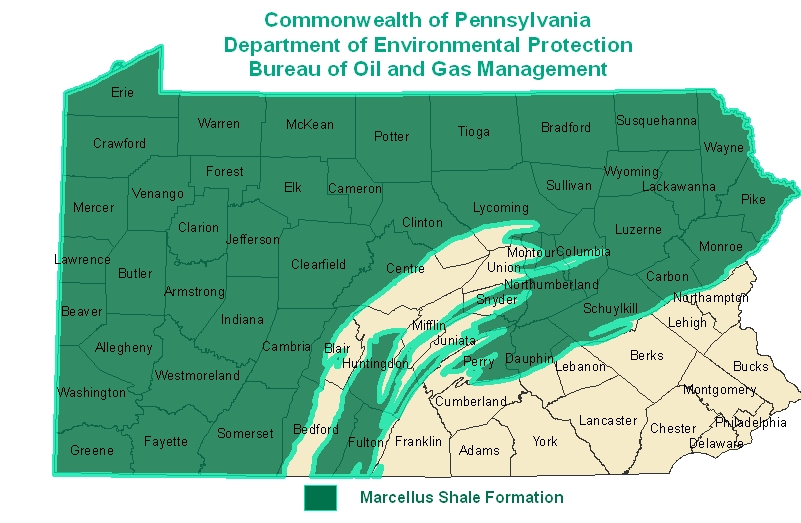
Next, we examine how the documentary may have influenced local mobilizations and policymaking. We focus on cities within the Marcellus Shale states (Pennsylvania, Ohio, New York, and West Virginia). The Marcellus Shale is the largest shale formation in the United States (Kargbo, Wilhelm, and Campbell 2010), it currently generates more than twice as much natural gas as the next largest formation (Eagle Ford in Texas), and the area was the primary focus of Gasland. Despite its incredible potential for natural gas production, fracking in the Marcellus is a relatively new phenomenon in the past decade. This formation has also had a higher growth rate than all other formations, increasing nearly 13-fold between January 2007 and March 2015. 14 Drilling in the Marcellus Shale has grown rapidly, and this activity has apparently served as a “suddenly imposed grievance” (Walsh 1981) for residents. Given the vast gas reserves in this shale play, the prospect of long-term societal changes due to fracking is a significant component of public discourse surrounding drilling in the Marcellus.
Also, in models reported in the online supplement for this article, we took additional steps to account for the endogenous selection of Gasland screenings, examining differences between matched cities with and without screenings.
In each of our models of local mobilizations and fracking bans we focus on the city level because the processes we wish to explain occurred primarily within cities; it is reasonable to assume that activists’ city-level organizational activities were more closely associated with a city’s politics than with a state’s politics. To date, only New York and Vermont have adopted a state-level moratorium or freeze on hydraulic fracturing; more than 240 cities have adopted local bans in the Marcellus Shale region. Our dataset includes all cities in the Marcellus Shale states—a total of 3,322 cities—observed between July 29, 2010, and May 31, 2013; a total of 1,038 city-day observations. 15 The most fine-grained measures were available at the day level; city-days are thus the appropriate units of observation. The rich history of local activism and the decentralized nature of politics in the United States present us with another motivation for choosing the city-level.
Dependent Variables
Our analyses use four types of dependent variables: social media discourse, mass media discourse, local mobilizations, and local bans. Because we are interested in the complex nature of the opportunities that followed from this documentary film—ranging from public attention to an issue, to social media chatter about the topic, and contentious discussions of remedies—we investigate both social media interest (search) and social media chatter. We choose the slang term “fracking” rather than the industry preferred “hydraulic fracturing” because it is a more popular term in the public discourse. 16
We measure public attention using Internet and YouTube searches through the Google search engine. 17 In Google Trends, we conducted simultaneous Web and YouTube searches for “fracking” and “Gasland” between January 2009 and May 2013. 18 We included simultaneous but separate searches for “fracking” and “Gasland”—not “fracking and Gasland”—to obtain the percent of searches for “fracking” relative to the percent of searches for “Gasland” by month. This allows us to compare trends in searches for fracking with trends in searching for Gasland.
We measure chatter and discussion using data from the social media platform Twitter. 19 We used a parsing algorithm to remove spam and to include Twitter messages that mention “fracking” and are related to the topic of interest: hydraulic fracturing. 20 We measure chatter as the monthly number of Twitter messages that mention “fracking” between January 2010 and May 2013, relative to the total number of Twitter messages in a month. 21 We also measure discussion of potential water pollution, because this was the most important problem discussed in Gasland and indicates the formation of a diagnostic frame. We conducted an initial analysis of the context in which water is mentioned, and we found that the word “water” is most frequently mentioned in association with words such as “contamination,” “pollution,” and “chemicals”; therefore, mentions of water indicate the discussion is focused on a range of water-related problems. Using all Twitter messages that mention fracking, we conducted an automated content analysis for mentions of the word “water” using WordStat. We measure discussion of potential solutions (prognostic frames) for water contamination problems by conducting an automated content analysis in WordStat for mentions of the words “ban” (or bans) or “moratorium” (or moratoria). Again, the search was conducted for all Twitter messages that mention fracking.
We operationalize mass media discourse on fracking through newspaper coverage and discussion. We measure mass media coverage using a Lexis-Nexis search of all U.S. newspapers that mentioned “fracking” between January 2009 and May 2013. 22 Using Word Stat, we conducted an automated content analysis of all newspaper articles that mention fracking for mentions of the words “water,” “ban,” and “moratorium.”
We measure local mobilizations against hydraulic fracturing using data from the website MarcellusProtest.org, a grassroots organization that acts as an information clearinghouse about Marcellus Shale gas drilling and activism. This website contains a calendar of all anti-fracking events planned after July 29, 2010, in the Marcellus Shale region. We created a web scraping program in Python, an open source programing language, to obtain information about all mobilizations. This variable takes the value 1 for the day when a mobilization took place in a city, and 0 for the other days. 23 We measure the adoption of anti-fracking municipal ordinances in the Marcellus Shale region using information from Food & Water Watch, an organization that “works to ensure the food, water and fish we consume is safe, accessible and sustainably produced.” 24 We found the dates for most municipal bans in documents posted on Food & Water Watch, but some dates were missing; in these cases, we obtained dates by searching municipalities’ websites and contacting offices of city clerks. 25 The ban variable was coded 1 for the day when a city adopted a ban and 0 for the other days, with observations after the ban was passed right-censored.
Independent Variables
Regarding the documentary, we utilize data about local Gasland screenings. We obtained data from Josh Fox about all screenings of the documentary in the United States. These screenings were organized by individuals and nonprofits in local libraries, cinemas, schools, and other public spaces. In our models, we examine the effects of Gasland screenings using measures of the effects of screenings in the short to medium term (i.e., from a few weeks to a few months post-screening) and within a close radius (five miles between the city where a screening took place and other cities). 26 Some screenings were initiated by Fox and others affiliated with the film; other screenings were initiated by local community members who sought a copy to screen at a local theater or other public venue (Josh Fox, personal communication, March 17, 2014). In a personal communication, Fox said he aimed to inspire local activists to initiate local fracking bans and to give communities the tools they would need to go forward. These local screenings were carried out on a variety of dates starting in August 2010, thus making it difficult to see the effect of these screenings on Google searches or Twitter chatter. Indeed, it is unlikely that the effect of local screenings can be detected in the Google or Twitter data (which is aggregated at the national level) because, although the HBO release has reached millions of viewers, each screening has reached at most a few hundred viewers. 27
We also include a measure of the overall volume of fracking-related Twitter chatter in a given city-day. We coded all Twitter users according to the location they entered in the “location” field associated with a user’s Twitter handle at the time each respective tweet was posted. We first excluded all tweets not issued from the eastern time zone, because all four Marcellus states are in that location; among this subset, 87 percent of tweets were associated with a user with an entry in the location field. We then coded these entries by city and state, finding that approximately 40 percent of tweets with an entry in the location field were posted by a user account located in New York, Pennsylvania, Ohio, or West Virginia. We then converted these tweets into a city-day sum total of fracking-related tweets per 10,000 people, logged the measure, and lagged it by one day. 28
We control for the adoption of municipal ordinances and population size, because larger cities are more likely to have a critical mass of citizens who mobilize against fracking. We measure population size using data from the 2010 U.S. Census, and we apply the natural logarithm to correct for skewness. We control for the dominant political ideology, because environmental campaigns are mainly associated with left-of-center politics (Brulle 2000). We measure left-of-center political ideology using the percentage of votes for Barack Obama, at the county level, during the 2008 presidential election. We control for unemployment, because cities with high levels of unemployment are less likely to oppose drilling for natural gas. Indeed, the natural gas industry frequently touts hydraulic fracturing as beneficial for local economies. We also control for income, because cities with high-income residents are more likely to organize Not In My Back Yard (NIMBY) campaigns (Bullard 2000). We measure unemployment rate and income using data from the U.S. Census Bureau about the unemployment rate and median income in 2010.
We control for the presence of the oil and gas industry using data from the Bureau of Labor Statistics about the total number of people employed in the oil and gas extraction industry in a year, by county. We standardized this measure per 10,000 and lagged it by one year to avoid simultaneity bias. We include as a control whether a city is located directly above the Marcellus. We expect cities located directly above the Marcellus Shale will perceive a greater risk from drilling than cities located elsewhere. 29 Data about Marcellus Shale locations come from maps developed by state agencies. 30
We include measures of proximity to natural gas wells because this might (1) increase citizens’ grievances and lead to mobilizations and the adoption of bans, or (2) depress activism because individuals who live very close to wells have likely leased their land and signed the associated non-disclosure agreements (NDAs) that prevent their activism, or they benefit financially from the industry. We obtained data on permits from each state’s department of natural resources/environmental protection. 31 Using these data, we calculated the sum of active hydraulic fracturing wells within a specified radius from each city in the previous year. We experimented with various radii, but for simplicity we include only a five-mile radius. 32 To calculate the sum of all wells we used GeoNear, a Stata module that allows the calculation of distance-based variables; these are log-transformed.
We also include a measure of water contamination events due to fracking, and here we use the same five-mile radius as we do for proximity to wells. To create this measure, we relied on state disclosures on fracking regulatory violations from Pennsylvania and Ohio, combined with an MIT research team’s primary systematic report on all fracking violations to date (Moniz et al. 2011) and national reports on fracking-related water contamination from Earthjustice. 33 We control for the state in question because each state has a specific regulatory and economic context. We include dummy variables for New York, Ohio, and Pennsylvania (West Virginia is the reference category). We include a measure of environmental organizations, because communities with a strong environmental movement infrastructure are likely aware of hydraulic fracturing’s environmental impacts and possess resources for mobilizing against this practice. 34 We also control for the density of overall nonprofit organizations as a measure of general civic and political capacity of communities, consistent with the finding in many studies that high general civic capacity represents a powerful force to counterbalance industry interests in the siting of environmental bads (Aldrich 2008; McAdam and Boudet 2012; McAdam et al. 2010). All data come from the National Center for Charitable Statistics (NCCS): the environmental groups include all nonprofits categorized in NTEE section C (environmental), and the general civic measure includes all nonprofits in the NCCS overall. 35
Finally, we generated a diffusion variable to examine whether previous adoptions of bans in geographically proximate cities influence the passage of local bans. We experimented with different radii for proximity (e.g., 30, 60, or 100 miles) as well as different functions (cumulative, an inverse square root of distance, and various decay functions) that model how the influence of proximate cities decreases with geographic distance. 36 Alternative specifications produced similar results, so we describe results from the inverse square root of distance measure with a 100-mile radius, because this functional form was used in previous research on diffusion (Andrews and Biggs 2006; Hedström, Sandell, and Stern 2000). Table 1 shows the means, standard deviations, and correlations for all variables.
Means, Standard Deviations, and Correlations

Estimation Techniques
Because the dependent variables are the day a mobilization occurred in a city and the day a ban against fracking was adopted, hazard models are appropriate (Bennett 1999; Box-Steffensmeier and Jones 1997, 2004). We use a single-events Cox proportional hazards model to estimate the adoption of bans against fracking because these events occur only once; thus, once a city experiences a ban it is dropped from the analysis for the remaining days. 37 We use stratified Cox models with repeated events for the analysis of mobilizations because these events occur multiple times. Following Box-Steffensmeier and Jones (2004), we use conditional gap time models because they offer the best solution for dealing with events that have sequential risks. Therefore, the dependent variable in the case of anti-fracking events is reset to zero after each event.
Results
Changing Discursive Opportunities
We begin by exploring trends in public attention toward fracking. Figure 1 displays trends in overall public attention toward fracking as measured via Google web searches only for “fracking,” and public attention toward fracking as measured via Google web searches only for “Gasland.” As predicted, we find that online public attention toward fracking—as measured by Internet searches—increases immediately after Gasland’s release and award nominations. Gasland contributes to an increase in public attention toward fracking in two ways: first, Internet searches for “Gasland” increase when the documentary is released and nominated—we call this the Gasland-specific public attention to hydraulic fracturing; second, Internet searches for “fracking” increase after the documentary is released and nominated for an Academy Award—we refer to this as fracking-specific public attention.

Gasland’s Influence on Online Public Attention
These two contributions are apparent in Figure 1. First, searches for the documentary peak in June 2010, when it is released on HBO, and in February 2011, when it is nominated for an Oscar award. Remarkably, Internet searches for the documentary surpass searches for fracking in June and July 2010. For most months, searches for Gasland account for less than 5 percent of the highest value of overall public attention to fracking, but in June 2010 they account for over 40 percent of the searches, in July 2010 they account for approximately 24 percent, and in February 2011 they account for about 20 percent. Second, Internet searches for fracking increase immediately after the HBO release and the Oscar nomination. When examining searches for both fracking and Gasland, we see a clear increase in searches for these terms after the release and nomination.
Figure 1 also displays trends in overall online public attention toward fracking as measured by YouTube searches for “fracking” and for “Gasland.” Again, we find that overall public attention toward fracking—as measured by YouTube searches—increases over time, particularly after Gasland’s release and award nominations. Gasland contributes to an increase in public attention toward fracking in two ways. First, YouTube searches for “Gasland” increase when the documentary is released and nominated—the Gasland-specific online public attention to hydraulic fracturing. Figure 1 shows that YouTube searches for the documentary peak in June 2010, when it is released on HBO, and in February 2011, when it is nominated for an Oscar award. Interestingly, YouTube searches for the documentary surpass overall searches for fracking not only during these two critical months but throughout the entire period from January 2010 until May 2011. This is most likely because YouTube is a video-sharing website; therefore, searches for a documentary are likely to be higher on YouTube than on the web. Second, YouTube searches for “fracking” increase after the documentary is released and nominated—the fracking-specific public attention to hydraulic fracturing. Indeed, the findings presented in Figure 1 are consistent with experiences described in the field. As Gasland creator Josh Fox told us in a personal communication, “When Gasland hits, it changes the game on the word ‘fracking,’ which never leaves the media after that point.”
Next, we explore trends in social media chatter about fracking. We find that chatter in the Twittersphere about fracking increases over time, particularly after Gasland is released on HBO and is nominated for an Oscar award. Figure 2 displays trends in social media chatter about fracking as measured by Twitter messages about fracking or about Gasland. The figure shows that the percentage of Twitter messages about Gasland is larger than the percentage of Twitter messages about fracking when Gasland was released, in June 2010. While the percentage of Twitter messages about Gasland is not larger than that of Twitter messages about fracking in February 2011, when Gasland is nominated for an Oscar, it is relatively close. The release and nomination events are accompanied by an increase in chatter not only about Gasland but also about fracking: chatter increases by approximately 6 percent after the release and by approximately 9 percent after the nomination (compared to the previous month).

Gasland’s Influence on Twitter Chatter about Fracking
We now examine trends in mass media coverage of fracking. Figure 3 shows the number of newspaper articles that mention “fracking” or “Gasland” between 2010 and early 2013. As predicted, we find that mass media coverage of fracking—as measured by newspaper articles—increases over time, particularly after Gasland’s release and award nominations. Gasland contributes to an increase in coverage of fracking in two ways: first, coverage of Gasland increases when the documentary is released and nominated—we call this the Gasland-specific coverage of hydraulic fracturing. Remarkably, more than half of the articles that mention fracking in June 2010 and January 2011 also mention Gasland. Second, coverage of fracking increases after the documentary is released and nominated for an Academy Award—we refer to this as the fracking-specific coverage.

Gasland’s Influence on Mass Media Coverage of Fracking
Next, Figure 4 examines changes in social and mass media discussion about fracking—specifically, how diagnostic and prognostic frames emerged through a focus on water problems and on bans and moratoria immediately after Gasland’s release and award nominations. Our automated content analysis reveals that Twitter mentions of the word “water” increase after Gasland is released on HBO (from 1.2 percent in May 2010 to 1.6 percent in June 2010) and after it is nominated for an Oscar (from 1.5 percent in January 2011 to 1.8 percent in February 2011). At the same time, newspaper mentions of the word “water” decrease after Gasland is publicly released (from 2 percent in May 2010 to 1.1 percent in June 2010) and after it is nominated for an Academy Award (from 1.3 percent in January 2011 to 1.1 percent in February 2011). Twitter mentions of the words “ban” and “moratorium” increase after Gasland is nominated for an Oscar (from .3 percent in January 2011 to .6 percent in February 2011) but do not change after Gasland is released on HBO (.3 percent in May and June 2010). Newspaper mentions of these words increase very little after the documentary is released (from 0 to .1 percent) but decrease after it is nominated for an academy award (from .2 to .1 percent). Figure 4 shows that, overall, these words are used less frequently in mass media than in social media. Twitter mentions of bans and moratoria are highly variable over time, reflecting concentrated periods of activity when particular fracking bans were being proposed, debated, and in some cases enacted.

Gasland’s Influence on Social and Mass Media Discussion about Fracking over Time
Local Mobilizations and Policymaking
Table 2 displays results of models that estimate the effects of Gasland and covariates on mobilizations. Table 3 displays results of a set of models that estimate effects of the anti-fracking events (and covariates) on the passage of local moratoria against fracking. The models in Table 2 are from conditional gap time event history analysis models (clustered on city and stratified by event number); in Table 3, results are from single-event event history models. In both tables, models include measures of proximity to permitted fracking wells and proximity to water contamination accidents (within a five-mile radius). 38
Effects of Gasland Screenings on Anti-fracking Mobilizations in the Marcellus Region States

Note: Conditional gap time models clustered on city and stratified by event number.
p < .05; **p < .01; ***p < .001 (two-tailed tests).
Effect of Gasland Screenings and Anti-fracking Mobilizations on Anti-fracking Municipal Bans in the Marcellus Region

Note: Single-event Cox models.
p < .05; **p < .01; ***p < .001 (two-tailed tests).
Results in Table 2 show that screenings of Gasland in a given community lead to a significant increase in anti-fracking events in the relatively short term, and this is true regardless of how the model specifies proximity to active wells or to wells that have contaminated water. Results in Model 1 show that local screenings are associated with local mobilizations in the same day. Results in Models 2 and 3 show that the effect of Gasland does not last very long if we are not including the day of the screening: for example, the effect is significant (p < .001) when it is assumed to last two months, and it is weaker but still significant (p < .05) when it is assumed to last four months after the screening. Thus, the effect of Gasland screenings does not last much beyond four months. 39
Results in Table 2 show that cities with growing Twitter chatter about fracking have a greater likelihood of organizing events, an important finding that suggests local activists used Twitter as an organizing tool. 40 Results in this table also show that population size and location in any region directly above the Marcellus Shale (with or without existing wells) increase the likelihood of organizing events in a city. We also find a very strong effect of the overall scale of the nonprofit sector, suggesting that a city’s overall civic capacity represents a substantial influence. Indeed, our review of the field of organizations active in making anti-fracking claims illustrates that the majority of these groups are ad hoc coalitions, built from preexisting blocs of citizens, which have sprung up in recent years to fight against this contested activity. The presence of environmental organizations and proximity to water contamination sites are not significant influences on anti-fracking mobilizations. 41 Proximity to wells and a greater share of Democratic voters decrease the likelihood of organizing events; both are surprising findings. However, it is also clear that individuals who live in close proximity to fracking often benefit materially from the activity or sign NDAs. The finding on partisanship likely reflects the property-rights orientation of many conservative landowners. Finally, local employment in the oil and gas industry increases the likelihood of mobilization—such workers are often a source of resentment in communities—as does location in Pennsylvania or Ohio.
Moving to our findings on local moratoria, our primary finding in Table 3 is that the anti-fracking mobilizations—which were, in part, motivated by screenings of Gasland—had a significant influence on the passage of moratoria against fracking. Model 2 shows that local Gasland screenings had a significant (p < .05) direct effect on the adoption of bans; yet, this effect becomes nonsignificant at p < .05 (although it is significant at p < .10) in Model 3, when the mobilization variable is added. Therefore, we conclude that Hypothesis 3 is not supported but Hypothesis 4 is supported.
As mentioned earlier, we also estimated additional models (reported in the online supplement) investigating the effects of Gasland screenings on local mobilizations using a matched set of cities with and without screenings, given concerns of endogenous selection; the results add further support to the argument that screenings had a significant effect on mobilizations within the following two months. 42
Another important finding is that geographic proximity to previous adopters increases the likelihood of adopting a ban, which suggests activists are influenced by neighboring communities. These effects are stronger if we assume that closer cities exert a stronger influence than do distant cities. 43 Unlike mobilizations, for moratoria we do not find significant effects of local Twitter chatter. However, as with our findings on mobilization patterns, general civic capacity was a factor in the passage of local moratoria; the overall number of nonprofit organizations in a city was a significant factor in the passage of moratoria, whereas we find no effect of the presence of specific environmental nonprofits. As in the previous case, we expect that the population of nonprofit organizations represented a significant resource on which anti-fracking activists could build and represent themselves against the threat of a potentially risky new practice. We also find that areas with higher rates of unemployment were less likely to pass fracking moratoria, confirming the expectation that economically vulnerable areas would not want to cut off a potential source of investment. In contrast, areas with greater population size and income are more likely to pass fracking moratoria.
Discussion and Conclusions
This study makes a number of important contributions to the literatures on social movement outcomes, media, the environment, and political change. Our findings make clear that cultural artifacts created by actors allied with social movements have both national and local effects; in our case, they helped displace expectations that gas drilling is safe with an alternative frame of fracking risk. At the national level, we show that the documentary Gasland created a discursive opportunity, particularly in social media. An important and growing body of work highlights the benefits that accrue to activists when they find “discursive opportunities” to make their claims politically resonant, but earlier work does not examine in sufficient depth how discursive opportunities emerge and change. We demonstrate that Gasland’s nationwide release on HBO and nomination for an Oscar award contributed to the emergence of a more favorable set of discursive opportunities for the anti-fracking movement. Specifically, Gasland contributed not only to an increase in online public attention to fracking, but also to increased chatter about fracking on social media and to increased coverage of the topic in mass media. Moreover, Gasland influenced the social media discussion about fracking by supporting diagnostic frames related to water pollution and, to a lesser degree, supporting prognostic frames regarding local bans and moratoria. Yet, Gasland’s influence on mass media’s discussion about fracking was weaker: mass media discussion did not become more focused on water problems or on bans and moratoria.
Our study shows that the release of the Gasland documentary influenced public discourse on fracking by highlighting environmental risks and offering possible solutions. This influence was larger in the Twittersphere than in the mass-mediasphere, in part because mass media coverage was more “balanced,” giving equal weight to critics and proponents of fracking. 44 We argue that using only mass media sources to understand discursive opportunities may lead scholars to wrongly conclude in the direction of a “false negative,” in which opportunities are overlooked. Social media discourses may, in many cases, be much more aligned with movement claims and preferences than what is represented in the newspaper or on television. Some of this divergence may be due to mass media’s balance norms (Boykoff and Boykoff 2004; Gans 1979; Tuchman 1978), or to elite public relations campaigns and other efforts by counter-movements to challenge ideas favorable to a social movement (Vasi 2011; Vasi and King 2012; Walker 2009, 2014).
Readers might express concern that we have investigated the impact of a documentary film that was perhaps unusual in its ability to generate social change. Indeed, we find it remarkable that Figures 1 and 2 both show periods when discussion and Internet searching of “Gasland” surpassed overall discussion/searching for “fracking” (on Google, YouTube, and Twitter). Hundreds of political documentary films are released each year, and most will not generate very much discussion or activism. Given such considerations, we believe our study is generalizable for understanding the impact of documentary films that gain widespread popular attention, and future researchers could investigate similar effects for analogous films like Blackfish, An Inconvenient Truth, and The Cove.
At the local level, we show that screenings of Gasland in different locations had an effect on the mobilization of local campaigns against the controversial practice of hydraulic fracturing; in turn, these local mobilizations made local policymakers significantly more likely to take action to ban the practice of fracking in cities across the Marcellus Shale states. Social movements try to use cultural artifacts, such as documentaries, to build support for their cause and win policy changes. These cultural artifacts are not merely epiphenomenal traces of movements’ organization-building efforts but are themselves key mobilizing tools that help movements address the problem of quiescence (Crenson 1971; Gaventa 1982; Roscigno 2011) and counter opponents. Other studies of social movement outcomes show the importance of cultural artifacts, but this study is among the first to provide systematic evidence of their impact on both mobilization and political outcomes.
Taken together, these findings suggest that Gasland opened up a new discursive opportunity for the movement, increasing sympathetic social media chatter. That opportunity, in turn, supported anti-fracking mobilization in local communities. We find that both Twitter chatter and Gasland screenings had direct effects on organized events. But when it came to actually passing local bans, neither Twitter chatter nor the Gasland screenings were directly influential. What mattered more were anti-fracking mobilizations and diffusion processes. Discursive opportunities were critically influential in setting the stage for influencing social movement outcomes. In this respect, our finding is consistent with bodies of work on both political and discursive opportunities, which find that these effects are indirect.
This study also makes clear the importance of civic capacity for a community’s ability to respond to threatened environmental changes. Other studies have found similar evidence regarding the siting of contentious facilities (Aldrich 2008; McAdam and Boudet 2012). Here we find that communities’ capacities for mobilizing and changing policy were very much influenced by the density of preexisting nonprofits. In addition, the presence of local activists who were active on social media increased communities’ capacity for mobilization. These factors mattered more than the density of environmental nonprofits, suggesting that anti-fracking activity needed to build from the overall civic capacity of an area. Of course, consistent with previous research, much of this NIMBY activism reflects a more civically advantaged community’s ability to resist unwanted land uses.
We encourage future researchers to investigate the effects of other documentaries, films, and consciousness-raising tactics. Given that most of these events do not take place outdoors, on streets or public squares, but indoors, in cinemas, public libraries, or college campuses, these events are less visible and, therefore, harder to study. However, further research is necessary to understand why only some documentaries lead to large-scale mobilizations or how these less visible tactics contribute to social change. We also encourage future researchers to investigate the role of industry counter-mobilization through grassroots efforts and public relations campaigns on behalf of natural gas interests, as this may also affect community mobilization processes, media discourse, and ultimate political outcomes. There is some initial evidence of these influences. First, it is clear that natural gas interests have been heavily mobilized in favor of fracking, through campaigns organized by trade associations such as America’s Natural Gas Alliance and third-party groups like Energy in Depth. Furthermore, the natural gas industry helped promote the documentary Truthland, which raised questions about the accuracy of Gasland, and the counter-documentary FrackNation, which attacked Fox’s evidence and credibility. Given the issue’s shift from a place of almost complete novelty to such an established and contentious position over less than a decade, fracking serves as an excellent example of how movements grapple with contentious energy issues and the environment.
Footnotes
Acknowledgements
The authors would like to thank Burton DeWilde, Doris Domoszlai, and Joanna Raczkiewicz at the Harmony Institute (for data collection and research assistance), the University of Iowa Computing Cluster, the Urban Institute (for access to the NCCS data), and colloquium audiences at Brown University, Northwestern University, Stanford University, University of Arizona, University of California-Irvine, UNC-Chapel Hill, University of Colorado-Boulder, University of Colorado-Denver, University of Michigan, University of Southern California, the West Coast Nonprofits Data Conference, the European Group for Organizational Studies, and the 2014 ASA meetings. Additionally, we thank Chris Bail, Steve Barley, Neal Caren, Joe Galaskiewicz, Don Grant, Tanya Heikkila, Lori Hunter, Colin Jerolmack, Michael Kennedy, Francesca Polletta, Woody Powell, Timmons Roberts, Sarah Soule, Patricia Strach, and Lori Yue for helpful feedback.
2.
It is important to distinguish between mass media as a technological platform (newspapers, magazines, radio, television, and the Internet) and the artifacts (essays, plays, songs, films, and documentaries) that are sometimes disseminated through these platforms in addition to news and other information. An artifact may have its own technological platform (a CD or MP3 format for a song; a DVD or BluRay format for a film) but, to reach the majority of the public, it often needs a mass media platform as a means of communication. However, artifacts can also be distributed through either formal or informal activism: for example, samizdat literature was distributed in the former communist countries not through mass media but through informal networks of dissidents.
3.
See MarcellusProtest.org, accessed November 2013 ( ).
).
6.
HBO had 28 million subscribers in 2011 (http://www.economist.com/node/21526314). Even if the documentary was initially viewed by only a modest 5 percent of subscribers, we would estimate viewership of 1.4 million. The film’s producers claim a premiere to 3 million (see ).
7.
8.
A second dimension could be described as an institutional opportunity structure, which opens with the growth of new social media.
9.
This reflects two distinct ways that cultural forces matter for social movements: as cultural products (documentaries enable the emergence of new ideas and practices) and as structures of discourse and meaning-making (which offer more or less fertile environments for the reception of social movement claims-making). A third option would be the tool-kit or cultural repertoires approach, which remains critical to understanding social movement processes (Clemens 1997; Walker, Martin, and McCarthy 2008) but is beyond the scope of this article. We note, however, that anti-fracking groups have creatively borrowed and adapted rhetorics and tactical approaches from other movements, most notably environmentalism.
10.
These include, for instance, Kearney and Levine’s (2014) study on how the MTV program 16 and Pregnant reduced teen childbearing and quasi-experiment on how Argo and Zero Dark Thirty increased trust in government.
11.
In a supplementary analysis, we examined the Dynamics of Collective Action data on all protests reported in the New York Times (1960 to 1995), looking for the co-occurrence of film screenings (act n = 12) with other tactics. We found that film screenings co-occurred with such practices as dramaturgical presentations, public discussions, press conferences, ceremonies, and activist photo exhibitions.
13.
14.
Other high-producing formations grew at a much slower rate over this period, such as Eagle Ford (4.6 times), Haynesville (1.8 times), Niobrara (1.2 times), and Permian (1.4 times). Drilling in other formations grew at a high rate but accounts for only a fraction of the gas production of the Marcellus: Utica (12.1 times the growth, but only 12 percent of the gas extraction of the Marcellus as of March 2015) and Bakken (8 times the growth, only 9 percent of Marcellus gas production; Bakken’s high volume of oil extraction is not included here). Nonetheless, given that fracking has been taking place for longer in other formations, the total number of fracked wells is higher in the non-Marcellus Shale plays.
15.
July 29, 2010, was the earliest date for which mobilization data were available; May 31, 2013 was the last day for which we collected data and the day before Gasland 2 (the sequel) was released. There are more observations in the conditional gap time models used to predict mobilizations than in the single-event models used to predict the adoption of bans (3,448,236 versus 3,401,471) because in the former, the variable counting the passage of time is reset after each event.
16.
For example, we found that in 2013, “fracking” was used approximately 7 times more frequently in Google searches, and 10 times more frequently in YouTube searches, than “hydraulic fracturing.”
17.
18.
Google Trends data are normalized by dividing a term’s frequency by the total number of searches for a topic in a given period. Google fixes a certain “low-interest threshold”; only searches involving a level of interest above this threshold are presented, and the rest are considered missing data. Results are presented on a scale from 0 to 100. To arrive at this final number, Google takes the normalized data and assigns 100 to the case that presents the highest overall search interest (for time series, this is the date on which the term received the greatest attention) and scales other cases proportionally.
19.
One of this study’s authors purchased these data through The Harmony Institute from DataSift. We acknowledge that our study may be limited by using one social media platform, albeit a widely influential one.
20.
We used a topic modeling model, Latent Dirichlet Allocation, to remove spam; we implemented this using the lda package in the R statistical software. We experimented with the number of topics parameter to obtain an accurate spam filter; the final filter allowed removal of span from most messages. We treat the remaining messages unrelated to hydraulic fracturing as randomly distributed.
21.
We were not able to obtain data from 2009 because our Twitter data provider, DataSift, only provides data from 2010 onward.
22.
We used Lexis-Nexis because it is the most comprehensive database of U.S. newspapers. We experimented with different search queries to eliminate false positives and off-topic reports. We found that the most accurate query was [“fracking” and (“hydraulic fracturing” or “natural gas”)].
23.
This measure of anti-fracking mobilizations includes any type of collective gathering to organize opposition against fracking, not just street demonstrations. We are unable to distinguish between events that included large numbers of people and were highly visible, such as street demonstrations, and events that included a relatively small number of activists and were not highly visible, such as a debate at a local library or college.
25.
We excluded three cases where municipal ordinances were later repealed.
26.
We experimented with larger radii (10, 15, and 20 miles) but the main effects did not change. We used information about the geographic coordinates of the cities where the film was screened.
29.
Areas not located directly above shale formations often protest fracking, too, due to concerns about related activities (e.g., trucking, compressor stations, and downstream pollution).
30.
We used the following sources for each: New York (http://www.nysm.nysed.gov/nysgs/research/oil-gas/marcellus.html), Pennsylvania (http://www.dep.state.pa.us/dep/deputate/minres/oilgas/BOGM%20Website%20Pictures/2010/Marcellus%20Shale%20Formation.jpg), Ohio (http://geosurvey.ohiodnr.gov/portals/geosurvey/Energy/Utica/Utica_Marcellus_Ohio_8x11.pdf), and West Virginia ().
31.
We used the following disclosure websites for each: Pennsylvania (https://www.paoilandgasreporting.state.pa.us/publicreports/Modules/Welcome/Agreement.aspx), New York (http://www.dec.ny.gov/cfmx/extapps/GasOil/search/wells/index.cfm), Ohio (http://oilandgas.ohiodnr.gov/shale), and West Virginia (). Local permits issued in New York State are preempted by its state-level moratorium.
32.
We included the number of wells within a given radius in the previous year because we wanted to include only wells that were already active and, therefore, acted as “suddenly imposed grievances” (). Given that both dependent variables are measured in days but the well data is available only by year, we could not be sure that a well was already drilled by the time people mobilized against hydraulic fracturing. However, we also included the sum of active fracking wells within a certain radius from each city in the same year; results were similar.
33.
We included contamination documented by Earthjustice only if we could verify it using media sources.
34.
A full census of anti-fracking SMOs is beyond our scope. However, many events were sponsored by ad hoc community groups, such as the Gas Drilling Awareness Coalition (in Dallas, Pennsylvania).
35.
We acknowledge, as in other studies that rely on nonprofit tax data to estimate associational populations, that these figures underestimate informal and short-lived associations. We included other versions of the nonprofit measures, such as diversity of nonprofits and total revenues, as controls in alternative specifications. None of these measures had significant effects.
36.
Results available upon request.
37.
Because the estimation of proportional hazards models when hazards are non-proportional can result in biased estimates, incorrect standard errors, and faulty inferences (), we use the Grambsch and Therneau tests for non-proportional hazards. The main effects do not change when we include time interaction for the covariates with non-proportional hazards.
38.
We also estimated measures of proximity to wells and water contamination accidents beyond a five-mile radius (10, 15, and 20 miles); the main effects remain the same.
39.
More detailed illustrations of the decay are available upon request.
40.
We also found that local screenings increase the number of fracking-related Twitter messages posted from the city where the film was screened, but the effect lasts only for a few days post-screening.
41.
However, we find a significant interaction effect between Gasland screenings and total number of NGOs or number of environmental NGOs; these are omitted due to space limitations.
42.
See the online supplement for additional robustness checks.
43.
For example, we find that the cumulative number of previous adopters in a certain radius has a weaker (but significant) effect than does weighted number of previous adopters. We report results only from f = 1 / sqrt(d), but we experimented with other decay functions (e.g., f = 1/2^[x/10]; f = 1/2^[x/20]); the main results remain unchanged. We also tried alternative radii of influence (e.g., 30 miles and 60 miles) with similar results.
44.
In supplemental analyses (available upon request), we found that mass media coverage of fracking was significantly more positive in sentiment than was the Twitter discourse.
References
Supplementary Material
Please find the following supplemental material available below.
For Open Access articles published under a Creative Commons License, all supplemental material carries the same license as the article it is associated with.
For non-Open Access articles published, all supplemental material carries a non-exclusive license, and permission requests for re-use of supplemental material or any part of supplemental material shall be sent directly to the copyright owner as specified in the copyright notice associated with the article.