




Abstract
Background
The COVID-19 pandemic strained hospital systems and post-pandemic data on colectomy trends for diverticulitis are limited. We aimed to describe trends in colonic resections in patients with diverticulitis before, during, and after the pandemic.
Methods
This retrospective cohort study queried the American College of Surgeons NSQIP database, analyzing patients who underwent a colectomy for diverticulitis during quarters 2-4 (April 1-December 31) in 2018 (“pre-COVID”), 2020 (“during COVID”), and 2022 (“post-COVID”). The primary study outcome was emergency case rates during the 3 time periods. Secondary outcomes included trends in patient comorbidities, severity of presenting illness, 30-day postoperative complications, and disposition status.
Results
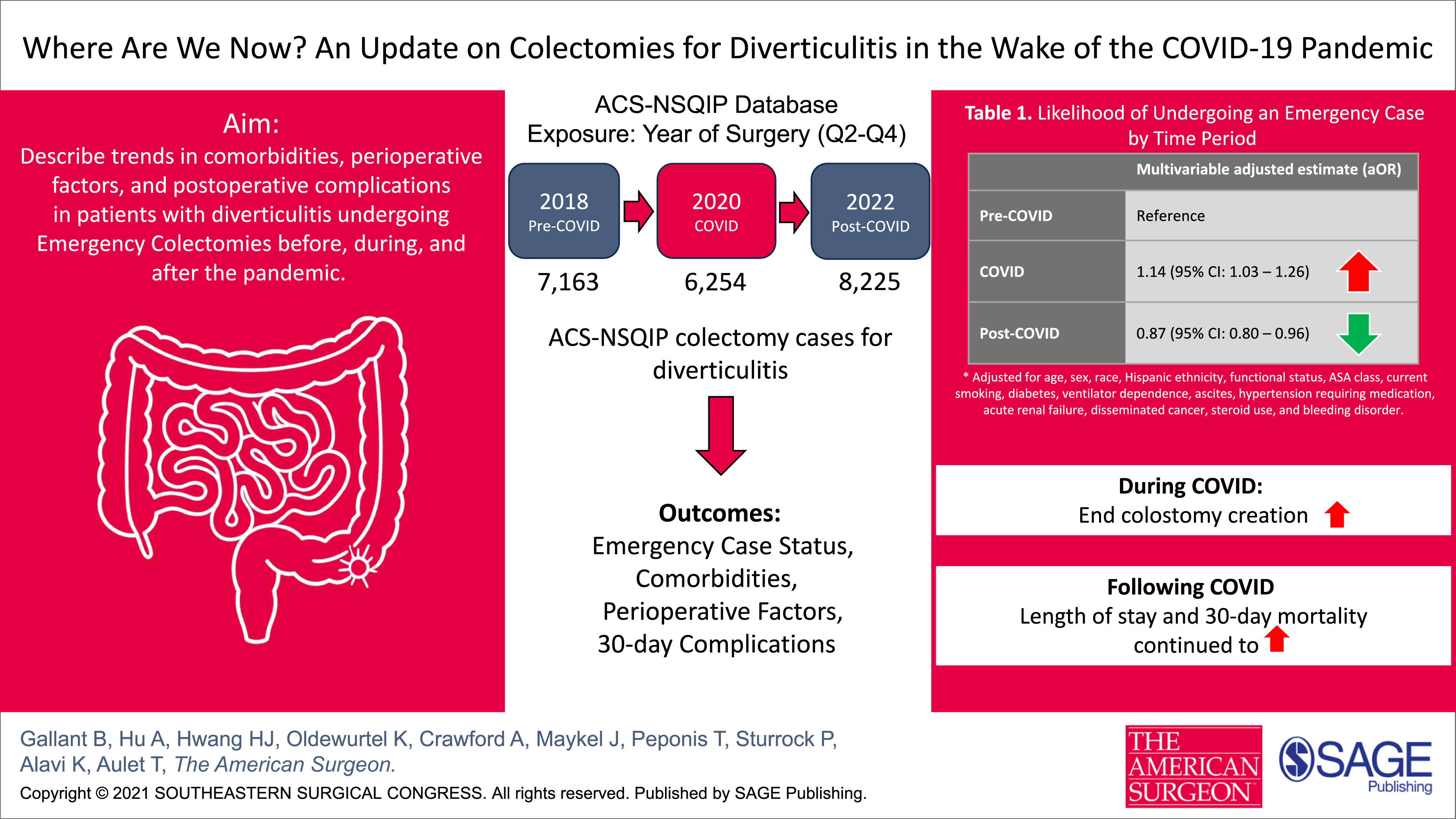
A total of 21,642 patients were studied (7163 pre-COVID, 6254 during COVID, and 8225 post-COVID). Emergency cases of diverticulitis increased to 21% during the COVID period but remained at 17% and 18% during the pre-COVID and post-COVID periods, respectively (P < 0.001). Similarly, end colostomy creation rates rose to 20% during COVID and returned to baseline levels (18%) after the pandemic (P < 0.001). Hospital length of stay and 30-day mortality increased during the COVID period and remained slightly elevated post-COVID.
Conclusions
The COVID-19 pandemic was associated with a temporary increase in emergency colectomies and end colostomy creations for diverticulitis, with operative urgency returning to pre-pandemic levels in the post-COVID period. Short-term postoperative outcomes also shifted modestly during and after the pandemic. These findings offer a national perspective on trends in the surgical management of diverticulitis during and after the pandemic and may help guide surgical practice during future health care disruptions.
Get full access to this article
View all access options for this article.