




Abstract
This article examines the content of supervision sessions between probation officers and their clients and the extent to which supervisors make use of effective practice skills. It summarises the literature which suggests that when probation officers use particular skills, those under their supervision are likely to have lower recidivism rates than the clients of probation officers who do not use these skills. It discusses the few studies which have directly considered the extent to which probation officers make use of effective practice skills. It then outlines a research project which involved personal observation of 119 interviews between youth probation officers and their clients in Juvenile Justice in NSW with a view to identifying the content of interviews and the extent to which probation officers used effective practice skills. The findings suggest that probation officers are strong on relationship and pro-social modelling skills but make less use of role clarification, problem solving and cognitive behavioural skills. The implications of this are discussed.
Background
This article examines the content of supervision sessions between youth probation officers and their clients and the extent to which supervisors make use of effective practice skills. It first looks at the literature relating to effective practice. The literature suggests that when probation officers use particular skills, those under their supervision are likely to have lower recidivism rates. It discusses current knowledge of what probation officers actually do and say in supervision sessions and the extent to which they make use of effective practice skills. It then outlines a research project which observed interviews between probation officers and their clients in the Juvenile Justice Department in New South Wales (NSW) with a view to identifying the nature and content of interviews and the extent to which probation officers used effective practice skills in their day-to-day supervision sessions.
The terminology for ‘probation’ and who delivers probation supervision varies. The term probation is used in this article to refer to community-based supervision whether it relates to probation orders, parole orders, supervised bonds, or other legal community-based orders which involve supervision. Similarly, the term ‘probation officer’ is used to refer to probation officers, community corrections officers, parole officers, juvenile justice workers or counsellors, or others who supervise offenders in the community under court orders.
The term effectiveness is often used in the literature and is used in this article to refer to reducing recidivism by reducing re-offending, or reducing failures to comply with conditions of probation. The terms supervision, treatment and programmes are sometimes used interchangeably in the literature to refer to the services offered to offenders. In this article we have referred to supervision as the routine or regular interviews which take place between probation officers and those sentenced to probation and other community-based court orders. Where the other terms are used it is because they have been used in the literature to describe specialist individual or group services such as drug treatment or group programmes.
Despite the prevalence of probation, little is known about what occurs in supervision. Bonta et al. (2004) refer to this lack of knowledge as the ‘black box’ of community supervision. However, knowledge about what goes on in supervision is important for several reasons. It is one of the most used dispositions for criminal offences in western countries, and most persistent offenders experience probation or other community-based orders at some stage in their lives. According to the US Bureau of Justice Statistics (BJS) as many as 5 million people were on probation or parole at the end of 2009 – about 3 per cent of adults in the US population. In Australia during 2008–09, an average of 56,972 offenders, were serving community corrections orders on any given day. This is a rate of 338 per 100,000 adults (562 per 100,000 adult males and 121 per 100,000 adult females) (AIC, 2010).
Probation represents the primary form of intervention with young offenders in Australia (AIHW, 2011). Around 7200 young people were under juvenile justice supervision on any given day in 2008–09. Most (90 per cent) were under community-based supervision, with the reminder in detention. In NSW during 2009–10, 4521 young offenders were under the supervision of the NSW Department of Juvenile Justice on community-based orders (NSW Government, 2009/10). Aboriginal and Torres Strait Islander young people continue to be overrepresented in community supervision as well as in detention (AIHW, 2011).
Knowledge about probation supervision is likely to be of interest to judges and magistrates who sentence offenders and to legal representatives who recommend sentences. It is also of particular interest to those who work in and with probation services, particularly given the evidence discussed later in this paper that suggests that probation supervision can lead to reduced re-offending and in some circumstances can even lead to increased re-offending, depending on the nature of the supervision. Failure on supervision, particularly parole supervision, may also lead to imprisonment with a subsequent impact on imprisonment rates.
Knowledge about what goes on in supervision is of particular relevance to those who offer education, training and supervision to potential and practising probation officers. If some effective practice skills are consistently neglected or misused, for example, then this can be addressed through training and supervision. Information from this study and others like it can therefore help to inform the nature of training and supervision for probation officers.
A concise understanding about what goes on in probation supervision can also help to develop knowledge about the nature of the skills used. For example, there is evidence from the child protection field that problem solving in the field might be different in practice to the way it is set out in textbooks (Trotter, 2004). Evidence about how skills are delivered in practice can help to refine our understanding of the nature of those skills. This has advantages for developing knowledge about the nature of effective supervision practices, and, in turn, for education, training and supervision.
Of particular interest is the nature of the supervision of young people, where caseloads are generally lower than in adult probation and there are opportunities for higher levels of supervision and therefore for higher levels of impact. Juvenile probation is the focus of the study reported on in this article.
Literature review
Effective practice skills
There is considerable evidence that the nature of correctional interventions can make a difference to the re-offending rates of those who receive them (e.g. Bonta and Andrews, 2010; Farrington and Welsh, 2005; McIvor, 2005; McNeill et al., 2005; Raynor, 2003; Trotter, 2006). The argument presented in the literature is not that correctional interventions always work, but that appropriate forms of intervention can be effective. In a review of meta-analysis of treatment effectiveness, Andrews and Bonta (2006: 329) argue that appropriate treatment led to reductions in recidivism of ‘a little more than 50 percent from that found in comparison conditions’.
Much of the research on the effectiveness of correctional interventions has been undertaken on specific interventions, for example cognitive behavioural programmes or drug treatment programmes. Less attention has been paid to the routine supervision of offenders on probation, parole or other community-based orders. Nevertheless the research which has been undertaken suggests that certain practices are effective in the supervision of offenders on adult and youth probation.
Role clarification
Work with offenders involves what Ronald Rooney (1992) and Jones and Alcabes (1993) refer to as client socialisation or what others have referred to as role clarification (Trotter, 2006). One aspect of role clarification involves helping the client to accept that the worker can help with the client’s problems even though the worker has a social control role. Other aspects of role clarification involve exploring the client’s expectations, helping the client to understand what is negotiable, the limits of confidentiality and the nature of the worker’s authority. Some research has been undertaken on this issue in mental health (Videka-Sherman, 1988) and in child protection (Shulman, 1991; Trotter, 2004). Less work has been done in corrections settings although Trotter (1996) found that role clarification skills were part of a group of skills which related to reduced re-offending by probationers. Dowden and Andrews (2004) also found support in their meta-analysis for the appropriate use of authority – an approach which is ‘firm but fair’, although the skill was not used often in the studies reviewed and the effect size of .17 was relatively low.
Pro-social modelling and reinforcement
Pro-social modelling and reinforcement have been shown to be effective in a number of studies (e.g. Andrews and Bonta, 2006; Gendreau, 1996; Raynor, 2003; Trotter, 2006), including studies focused on community supervision in adult and juvenile settings (Andrews et al., 1979; Bourgeon et al., 2010; Trotter, 1990, 1996). It is included as one of the core components of effective probation supervision in a meta-analysis of studies on probation supervision by Dowden and Andrews (2004). There is support for probation officers modelling pro-social behaviours, for positively reinforcing clients’ pro-social behaviours and for challenging clients’ pro-criminal behaviours. The use of pro-social modelling and reinforcement was strongly related to recidivism in two studies by Trotter (1990, 1996), both suggesting that when workers used these skills the clients of those workers had levels of recidivism which were between 30 and 50 per cent lower than when the skills were not used. Similarly, the meta-analysis by Dowden and Andrews (2004) found a correlation with effect size of .34 with effective modelling, .24 with effective reinforcement and .17 with effective disapproval.
Problem solving
Effective interventions in corrections address the issues which have led offenders to become offenders, often referred to as criminogenic needs (Andrews and Bonta, 2006). Criminogenic needs may include employment, family relationships, drug use, peer group associations, housing, finances or pro-criminal attitudes. A number of studies also suggest that working collaboratively with offenders and focusing on the issues or problems which the offenders themselves identify as problematic leads to lower recidivism (McNeill and Whyte, 2007; Trotter, 1996, 2006). There is also support for problem-solving approaches whereby workers canvass a wide range of client issues, reach agreement on problems to be addressed, set goals and develop strategies to achieve those goals (Andrews and Bonta, 2006; Dowden and Andrews, 2004; Trotter, 1996). Trotter (1996) found that problem solving was related to a 50 per cent reduction in conditions-related breaches of probation but not to offence-related breaches. Dowden and Andrews (2004) point to a correlation with effect size of .29 for problem solving in their meta-analysis of core correctional practice.
Relationship and desistance
Dowden and Andrews (2004) also identified the client–worker relationship as one of the elements of core correctional practice in their meta-analysis. Relationship skills are also referred to in other reviews (e.g. Bonta et al., 2008; Bourgeon et al., 2010; Gendreau, 1996; Trotter, 2006). It is argued that probation officers should have relationships with clients that are characterised by empathy, openness, warmth, humour, enthusiasm, appropriate self disclosure and a positive view about the clients’ capacity to change. Dowden and Andrews (2004) in their meta-analysis indicate a correlation with effect size of .25 for relationship factors.
Focus on high risk and cognitive behavioural techniques
The work of Andrews and Bonta (2006) in particular has highlighted the risk/need/responsivity (RNR) model. They point to the need to focus on medium- to high-risk offenders. They refer to four studies which found recidivism rates which were as much as 50 per cent lower when high-risk offenders received intensive treatment, and actually up to 50 per cent higher when low-risk offenders were offered intensive treatment. They also refer to the value of cognitive behavioural interventions. Cognitive behavioural interventions, which help offenders address thinking patterns which relate to crime, are often targeted towards groups of offenders, rather than individuals; nevertheless these interventions may also be used in one–to-one supervision in probation. The Dowden and Andrews (2004) meta-analysis of core practices indicates an effect size of .37 for structured learning which involves cognitive behavioural interventions, the highest effect size of any of the variables.
Other factors
There is also support for relapse prevention techniques, which involve the worker helping offenders to identify and avoid precursors to offending (Dowden et al., 2003); for ‘multi-modal’ approaches, which rely on a range of intervention methods (Andrews and Bonta, 2006); for working with families of young offenders (Lipsey et al., 2010); and for matching workers and clients according to learning style and personality (Gendreau et al., 1996; Wing and Nellis, 2003).
What works – differing perspectives
While there seems to be considerable agreement in the research that the approaches referred to above are related to reduced recidivism, there is less agreement about the relative importance of the different factors, with some emphasising relationship and strengths-based factors and others emphasising risk assessment and cognitive behavioural factors.
The ‘Good Lives Model’ (Ward, 2010), for example, focuses on client strengths, on enhancing opportunities to achieve the goals of a good life such as employment and social relationships, and on developing holistic plans for change. It is critical of the focus on risk factors in the RNR model, and it emphasises the importance of therapeutic alliance and on enhancing opportunities for offenders to achieve goals associated with a good life such as employment and social relationships.
The Good Lives Model has much in common with the desistance paradigm in correctional practice (Maruna and LeBel, 2010). The desistance paradigm involves focusing on offenders’ pro-social networks and attitudes and allowing offenders to guide interventions themselves. Rather than focusing on risk-related issues it focuses on issues that might make offenders’ lives meaningful, and on fostering and supporting the changes that offenders make for themselves as they mature.
While it is a broader concept, the desistance paradigm is consistent with the principles of pro-social modelling and reinforcement referred to earlier. In addition to its pro-social and strengths focus, it emphasises – like the Good Lives Model – the importance of the therapeutic relationship. The desistance paradigm draws support from the general counselling field for its stress on the importance of the therapeutic relationship. McNeill et al. (2005), for example, in a report on effective practice refer to earlier work by Assay and Lambert (1999) which argues that therapeutic relationship factors represent 30 per cent of the impact on client outcomes in therapy, compared to specific techniques such as problem solving which account for 15 per cent, expectancy and placebo effects (15 per cent) and extra-therapeutic factors (40 per cent).
The research, in particular the meta-analysis, has tended to focus on general groups of offenders and less on the specifics of what works best for particular groups, such as young, cognitively impaired or indigenous offenders. Nevertheless the appropriateness of the RNR model and cognitive behavioural approaches with women has been challenged. It has been argued that women, in particular, may respond better to relationship-based interventions (Gelsthorpe, 2004). It is argued that cognitive behavioural interventions attribute offending to thinking processes rather than to structural inequalities relating to education or poverty, for example, and that this disadvantages women in particular (Hannah-Moffat, 2001).
Implementation of ‘what works’ principles
While publications on ‘what works’ date back many years (e.g. Andrews et al., 1990), and many corrections organisations offer training to staff in these principles, there is little known about how, or the extent to which, they are actually used in practice. Some evidence suggests that correctional interventions in general make little use of ‘what works’ principles (Andrews and Dowden, 2005). Andrews and Dowden (2005) refer to the concept of therapeutic integrity, which can be understood as the extent to which programmes or interventions are delivered in the way they were intended. They undertook a meta-analysis of therapeutic integrity in correctional treatment. The results from 273 studies suggest that often interventions were not implemented as planned and that treatment effectiveness was subsequently compromised.
Another meta-analysis by Dowden and Andrews (2004) focused on the use of core staff practices in human service corrections programmes. The programmes selected exclude punishment programmes, and although the nature of the programmes is not defined, it appears to include probation and parole programmes as well as other human service interventions offered in the community. They found very low adherence to the core principles. Relationship factors were found in only 5 per cent of the studies examined; problem solving in only 16 per cent; effective modelling in 16 per cent; and effective reinforcement and disapproval in only 5 and 3 per cent respectively.
Bonta et al. (2008) undertook an examination of audio-taped interviews between 62 probation officers and their clients. They found that probation officers did not generally focus on the principles of effective practice but more on complying with probation conditions. For the most part, probation officers spent too much time on the enforcement aspect of supervision (i.e., complying with the conditions of probation) and not enough time on the service delivery role of supervision. Major criminogenic needs such as antisocial attitudes and social supports for crime were largely ignored and probation officers evidenced few of the skills (e.g., prosocial modeling, differential reinforcement) that could influence behavioral change in their clients. (Bonta et al., 2008: 248)
A different picture is presented, however, in a small study by Raynor et al. (2010) undertaken in adult and youth probation services in the Channel Island of Jersey. They examined video-tapes of interviews, unlike Bonta et al. (2004) who used audio-tapes. They used a coding manual based on measures of effective use of authority, pro-social modelling skills, problem-solving techniques and effective communication skills (Raynor et al., 2010: 116). They used three researchers to rate each interview but had only rated six interviews at the time of publication. Nevertheless they found a much higher use of the skills than in the studies referred to earlier. They comment that: most officers routinely meet most or all of the criteria for use of some types of skill particularly in the set up of interviews, quality of communication, use of authority (mostly relationship skills) and in pro-social modelling (in which they have been trained) but with larger differences evident in other structuring skills – motivational interviewing, problem solving and cognitive re-structuring. (Raynor et al., 2010: 125)
The Bourgeon et al. study (2010) also found, like a number of other studies, that training not only improved the likelihood that probation officers would use effective practice skills but also that those under the supervision of the trained officers had lower rates of recidivism. This was also evident in a study done in Australia (Trotter, 1996) which found that the clients of officers trained in the skills of role clarification, pro-social modelling, problem solving and relationship building had up to 50 per cent lower recidivism after one year and after four years, depending on the recidivism measure used. A recent study by Robinson et al. (2011) also found improved outcomes for pre-trial and post-conviction clients for those supervised by officers trained in effective practice skills. Again the re-offence rates were up to 50 percent lower depending on the measures used. They also found increased compliance with pre-trial conditions.
While it is increasingly evident, therefore, that the use of particular skills by probation officers leads to improved outcomes for clients, there is doubt about the extent to which effective practice skills are used routinely in probation. Most of the research, at least the research undertaken with large samples, suggests that the skills are used in practice only minimally unless probation officers are involved in specific training in the skills, and even then only some of the skills are used. Little work has been undertaken in Australia examining the extent to which skills are used by probation officers in supervision, and little work has been undertaken at all examining the nature of skills used by probation officers in juvenile justice settings. Most of the work reported on in the preceding sections of this paper has been undertaken with adult rather than juvenile offenders, and at this stage there seems to have been insufficient research to distinguish the relative effectiveness of skills used with adults and young people. Further, the work done to date examining the content of probation interviews has gathered data through analysing audio-tapes or video-tapes of interviews. None have used personal observation by researchers, a method which might give a more complete picture of the nature of the interaction between workers and probationers.
Methodology
Aim of the study
This study aimed to identify the extent to which the effective practice skills referred to in the literature review were used in interviews between juvenile justice officers and their clients working in juvenile justice in New South Wales, Australia. It is a study about the use of effective practice skills rather than about the impact of those skills on client outcomes.
Sample
One hundred and nineteen worker/client interviews were personally observed by one of three research officers between 2006 and 2010. Forty-six staff members participated in the interviews. It was initially intended to observe five interviews per worker – however, the practicalities of accessing interviews meant that in some cases only one or two interviews were observed per worker. Fifteen juvenile justice counsellors were involved in 33 of the interviews and 31 juvenile justice officers conducted the remaining 86 interviews. Juvenile justice counsellors and juvenile justice workers each provide direct supervision to young offenders on probation, parole or other community-based supervision orders. Juvenile justice counsellors have relevant tertiary qualifications and have a counselling or problem-solving role, whereas juvenile justice workers are not required to have tertiary qualifications and are generally expected to focus more on compliance and practical issues. The workers were most often aged between 35 and 44, and the average years of experience working in juvenile justice was 10. Sixty-four of the interviews were conducted by female officers and 55 by male officers.
The organisation provides regular training in effective practice skills. Training in the four key skills of role clarification, pro-social modelling, problem solving and relationship building has been conducted throughout Juvenile Justice in NSW over the past five years, along with the introduction of and training in a cognitive behavioural method known as TARGETS or CHARTS, which involves structured methods of addressing client issues through the use of worksheets.
Consistent with (Monash University) ethics approvals, the project was dependent on workers and clients volunteering and on workers facilitating the observations for the research officers. Initially more than 90 staff members offered to be involved, however ultimately only 46 of those were observed.
The 119 young people had an average age of 15.82 years with the youngest being 12 and the oldest 18. Eighty-two percent (98/119) were male, 43 were on supervised bonds, 32 on probation, 19 on suspended sentences, 15 on parole and the remainder on other forms of supervision (e.g. bail supervision). They had an average of 1.46 prior convictions. The most common offences for which they received the current order included assaults (33), breaking and entering (23), robbery (12), theft (11) and property damage (11).
Observations
Observations of supervision sessions were undertaken in the first three months of the young person receiving their new community supervision order. While there would have been advantages in also observing interviews at later stages in the order, it was decided to limit the observations to the early stages because some orders, particularly parole orders, are short and the researchers were concerned about excluding those on short orders. Also, it was anticipated that a number of young people would breach orders through further offences and the longer the time to the observation the more likely that higher-risk young people would not have been included in the sample. Further, intensive work was conducted for the most part in the early stages of the order when it was anticipated that reporting would be more frequent.
The interviews took place at a number of venues. Thirty-one per cent were undertaken in juvenile justice offices, 28 per cent in clients’ homes and 40 per cent in another community setting. The project was conducted in two stages. The first phase was funded through a grant from Monash University (2007–08), and the second phase was funded through the Australian Criminology Research Council (2008–11). In the first phase of the project the interviews were manually recorded with as much detail as possible. Permission was then sought from university and juvenile justice ethics committees to audio-tape the interviews and subsequent interviews were audio-taped.
An Aboriginal research officer undertook 16 of the observations. A high proportion of the clients in juvenile justice in NSW are Aboriginal (23 per cent of the sample) and it was felt that an Aboriginal worker may identify particular practices or interactions which might help to identify culturally appropriate approaches to supervision.
It is acknowledged that workers and clients may behave differently when they are observed. The observers therefore attempted to be as unobtrusive as possible. They also emphasised that the purpose of the observation was to view the interview as it would normally occur and that no one could be identified in any reporting of the study.
Coding of observations
A coding manual was developed in consultation with investigators on similar projects conducted by Peter Raynor and colleagues in Jersey (UK) and by James Bonta, Guy Bourgeon and others in Canada. The manual aimed to define the skills and assist in the accuracy and reliability of the estimates of the extent to which the skills were used in interviews. It was divided into 15 sections: set up of the interview; structure of the interview; role clarification; needs analysis; problem solving; developing strategies; relapse prevention/cognitive behavioural techniques; pro-social modelling and reinforcement; nature of the relationship; empathy; confrontation; termination; use of referral/community resources; non-verbal cues; and incidental conversations. Each of the 15 sections contained a number of items which could be rated on a five-point scale. For example the problem-solving section included: problem survey; problem ranking; problem exploration; setting goals; timeframe; review; developing a contract; developing strategies; ongoing monitoring; and time spent conducting problem solving.
The observer rated the extent to which workers used the skills during the interview. This was rated on a five-point scale dependent on whether the skill was:
not present at all; infrequently present (at least one example present through entire duration of the interview); sometimes present (several examples are present during the interview); often present (numerous examples of this being present during the interview; present (worker is clearly using this skill deliberately with the client throughout the entire interview).
For the skill to be rated highly it needed to be implemented in a way which was consistent with the research about good practice referred to in the literature review. For example, problem solving would be rated high if the worker frequently helped clients to identify their own problems and goals and helped clients to identify strategies themselves to address them. It would be rated low if the worker identified problems with minimal input from the client and then set goals and strategies for the client.
Inter-rater reliability
A total of three research officers conducted field observations. Ninety-nine observations were completed by the first research officer, who was employed continuously on the project for a period of four years. Sixteen observations were completed by an Aboriginal research officer and four were completed by another research officer.
The coding was undertaken by three research officers. The second and third research officers did not observe the interviews but coded from the tapes and the non-verbal cues form filled out at the time of the interviews. The coding manual contained detailed instructions and definitions of the various skills. Each of the research officers was trained in using the coding manual and cross-coded a number of interviews using the audio-tapes of the interviews prior to doing the final coding of the interviews. Detailed discussions were undertaken ensuring that each of the coders had consistent interpretations of the wording in the coding manual.
Ideally, two research officers would have observed a number of interviews together in order to determine the level of inter-coder reliability, however, this was not practical because of the expense and time involved. Thirteen of the interviews were, however, coded by the research officer who observed the interview and subsequently cross-coded by another research officer using the audio-tapes of the interviews. The research officers using the audio-tapes also had access to the non-verbal cues section of the coding undertaken by the first worker in an attempt to overcome the disadvantage of not having observed the interview in person. There was a high degree of consistency in the ratings. For example, the correlation between first and second coders on time spent discussing role clarification was .771 (sig .002), on time spent on problem solving was .806 (sig .001) and on pro-social modelling .575 (sig .040).
Results
The average time for an interview was 30.48 minutes; however, there was considerable variation in the length of interviews, with the shortest being five minutes and the longest 102 minutes. Female staff had longer interviews than male staff, with female staff averaging 33.20 minutes and male staff averaging 27.43 minutes. The gender of the client was not however associated with the duration of interviews. High-risk young people (those who rated above the mean on the Youth Level of Service Inventory, the standard risk assessment tool used in the department) had longer interviews (33 minutes for higher risk and 26 minutes for lower risk). They also had more frequent interviews consistent with departmental policy. The mean number of contacts with high-risk young people was one per week, whereas the mean number of contacts with low-risk young people was one every two weeks.
In the interviews, the workers and clients talked about issues such as the conditions of the order, expectations of clients and the purpose of supervision. As pointed out below, they talked a lot about criminogenic needs such as employment or education, family, drug use, and recreational activities and friends. They also talked sometimes about incidental issues such as sport or TV shows. As mentioned earlier, however, the aim of this study was to examine the extent to which workers used effective practice skills rather than to measure the subject of discussions.
Role Clarification
Workers’ use of role clarification skills (1 = not discussed; 5 = discussed a lot)
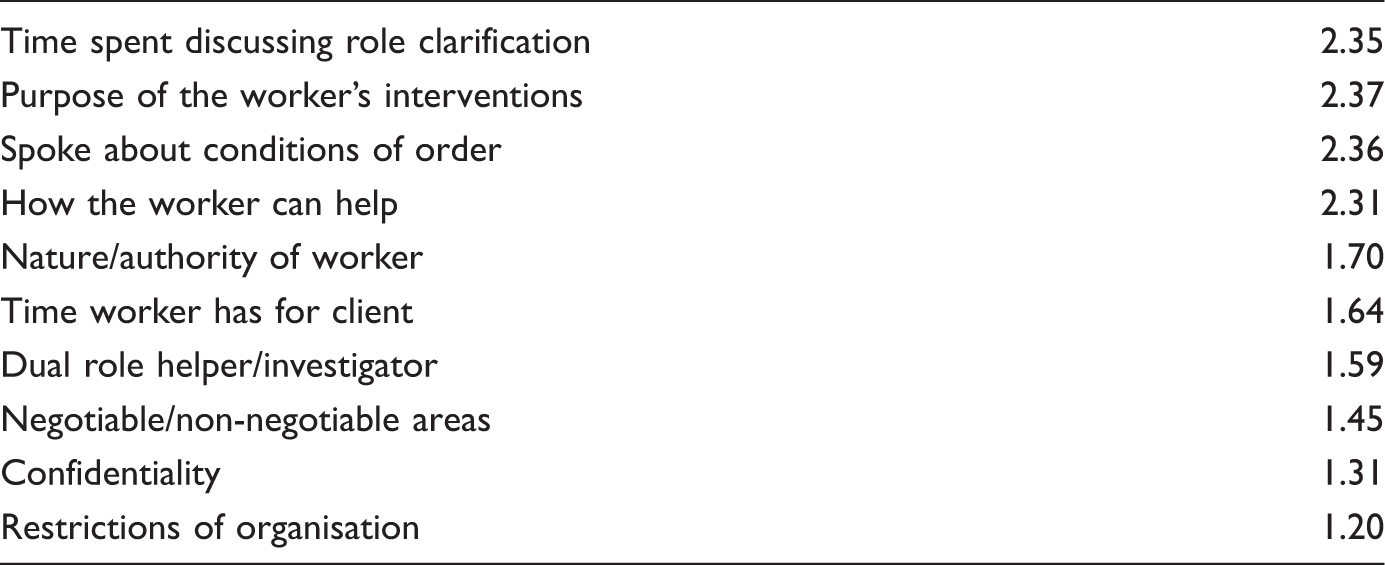
The workers infrequently (at least one example in the interview) helped the client to understand the worker’s purpose, the conditions of the order, or how the worker could help the client (for example by making referrals to other agencies or counselling the client). There were fewer examples in the interviews of helping the client to understand the nature of the worker’s authority (for example what happens if a client misses an appointment), the worker’s dual role as a helper and investigator (for example the worker explaining the difference between being a helper/counsellor and their authority as a juvenile justice worker), the negotiable and non-negotiable areas of probation (for example the time and day of the appointment may be negotiable whereas the frequency of supervision may not be negotiable), and the time the worker had for the client. There were little if any references to the other role clarification skills of helping the client to understand the extent to which the interviews were confidential, or the role of the worker in relation to their organisation.
Problem solving
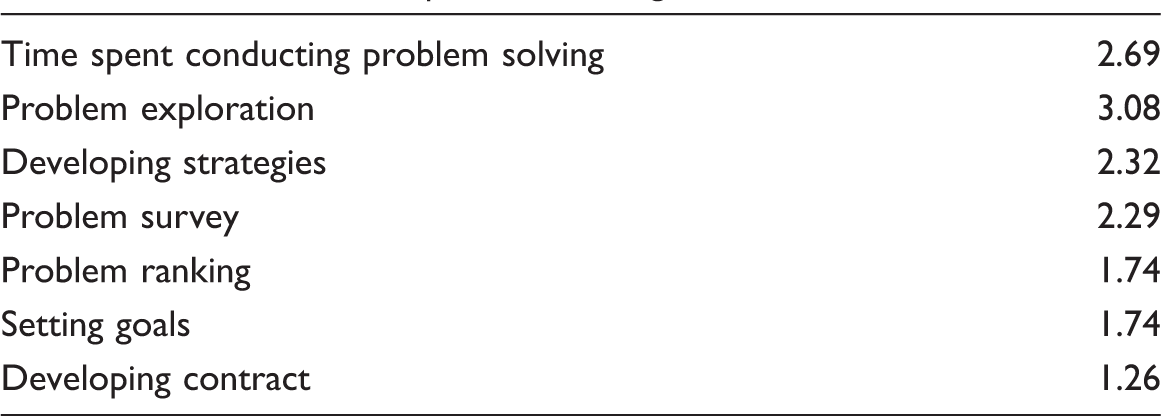
Workers’ use of problem-solving skills
Criminogenic needs discussed during interviews (5 = discussed a lot; 1 = not discussed at all)

Pro-social modelling and reinforcement
Pro-social skills used in interviews

Relationship skills
Use of relationship skills by workers

Cognitive behavioural skills
Use of cognitive behavioural skills

Variability in use of the skills
There was considerable variability in the use of the skills by the workers, with between 20 and 24 per cent of the scores falling at 1 or 5 for the key skills of pro-social modelling, problem solving, and role clarification. In other words a total of 20 to 24 per cent (distributed over two ends of the scale) of the workers either used none of the skills in the interview or used them deliberately throughout the entire interview. There were also strong correlations between the ratings of the use of the skills by the same workers. In other words if a worker used one of the skills, they were likely to use all of the skills. The correlations between the ratings of each of the key skills of role clarification, pro-social modelling, and problem solving for example were each between .286 and .489 and statistically significant at the .01 level.
Why did the workers use different skills?
There was a relationship between use of some of the skills and the characteristics of the workers. There was a significant correlation (<.05) between the age of the workers and the use of the skills, with younger and less experienced workers making more use of each of the key skills, perhaps because they had more recent educational experiences where they may have learnt the skills. Juvenile justice counsellors who are required to have a relevant degree, and who were younger, also made more use of the skills (problem solving and pro-social modelling p < .05 and role clarification p < .10). The gender of the staff or the risk levels of the clients was not associated with use of the skills.
Limitations
The results must be considered in light of the limitations of the study. First, each of the interviews observed followed an expression of interest by a worker in being involved in the project. Those who volunteered represent only a small proportion of the total number of juvenile justice workers in NSW Juvenile Justice (approximately 330) and may not be representative of the skills and practice of all workers in the system. Second, coding the transcripts is an imperfect science. While there was a high degree of consistency in the coding, and the coding manual was developed in collaboration with others doing similar work, there is nevertheless a degree of subjectivity in the definitions of the skills and in the interpretation of the coding manual.
The limitations of the study are acknowledged, nevertheless the results do provide valuable insights into the way in which a sample of probation officers in NSW Juvenile Justice carry out their work.
Discussion
The results from the observations suggest that the workers are strong on relationship skills. They are friendly, open, honest, engaging and enthusiastic. The observations suggest that the workers were also strong on at least some pro-social modelling skills. They often rewarded pro-social comments and actions, and praised clients for saying and doing ‘good or positive things’.
These findings, in relation to the use of relationship and pro-social modelling skills, are consistent with the other studies focused on examining probation interviews referred to earlier in this paper. This includes the Bonta et al. (2008) study which examined audio-tapes of adult and youth probation interviews in Canada; the Raynor et al. (2010) study which used video-tapes in a small study in Jersey, UK, with adult probationers; and the Bourgeon et al. (2010) study which examined audio-tapes of adult probation interviews in Canada.
The findings of this study suggest that the workers were not as strong on role clarification skills as they were on relationship skills, particularly in relation to discussing issues such as the dual role, confidentiality, and negotiable and non-negotiable areas. While a considerable amount of discussion in the interviews was taken up with needs analysis there was less focus on setting goals, developing solutions and the use of cognitive behavioural techniques. Similar findings were found in the other studies in relation to problem solving and the use of cognitive behavioural techniques, although the other studies paid less attention to role clarification issues. These findings are similar in different countries and with different probation populations and with different methods of gathering data (audio-tapes, video-tapes, observations and client interviews).
While the research suggests that the clients of probation officers with particular skills have good outcomes, there is no research that can tell us exactly how often the various skills should be used in each interview. There is also an argument, consistent with the desistance paradigm, that a good worker–client relationship combined with a strengths focus is likely to be effective regardless of the other skills used. Nevertheless, the research discussed earlier suggests that probation supervision that includes problem solving provides for better outcomes. This includes setting goals with clients, helping the client develop solutions and using cognitive behavioural techniques. This study suggests that 64 per cent (76/119) did not discuss goals at all, and 45 per cent did not discuss solutions at all (53/119) in the interviews which were observed. A picture is painted by this study and those before it of excellent work done by probation staff in developing relationships and reinforcing client pro-social activities but not taking the next step in addressing criminogenic needs through problem solving and cognitive behavioural strategies.
To conclude – little is known about what goes on in probation interviews despite the fact that probation and other forms of community supervision are among the most common sentencing dispositions, and most serious or repeat offenders experience probation at some time in their lives. This study is one of the few studies that has examined the nature and content of probation interviews, and, to the best of the authors’ knowledge, the only published study to date which has used personal observation to examine probation interviews with young offenders. The study findings have implications for selection, training and supervision of probation staff, particularly given the impact that training and supervision have been shown to have on the practices of probation officers (Bourgeon et al., 2010; Trotter, 1996). The research suggests that recidivism rates may be reduced through probation supervision if probation officers use evidence-based practice skills. The results of this study, when considered alongside the other studies which have been done on this issue, suggest that a focus on staff training and supervision, particularly in relation to role clarification, problem solving and cognitive behavioural skills, may lead in turn to more effective supervision.