




Abstract
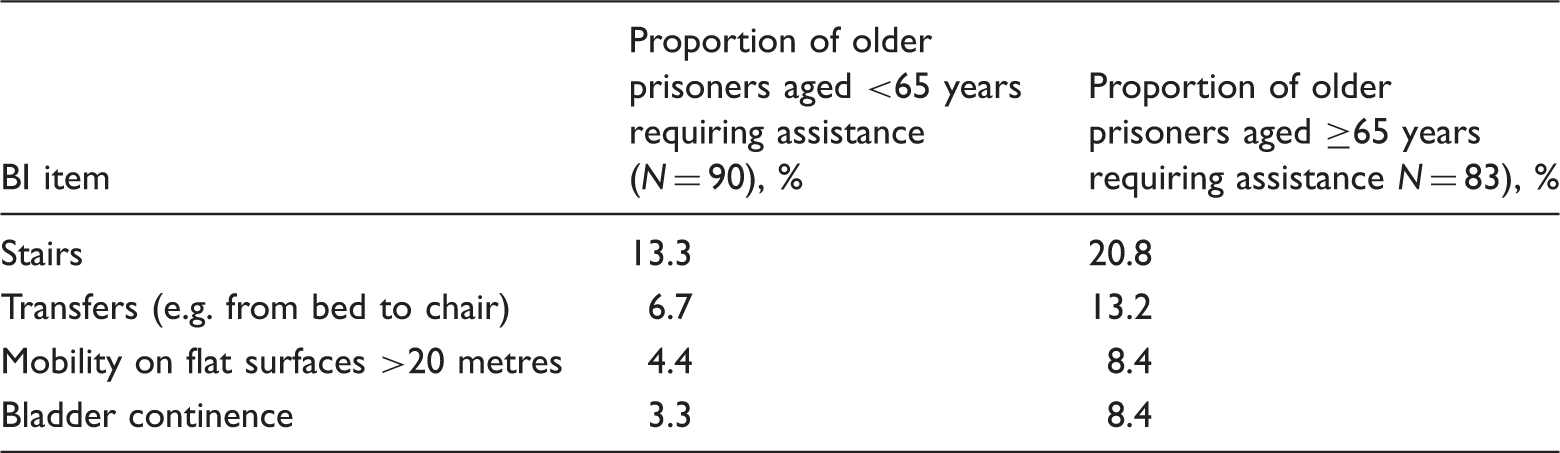
There is considerable evidence pointing towards the growth of older prisoner populations in Australia. This article presents findings from the first large-scale study of older prisoners in Australia (N = 173), examining functional independence, aspects of the prison environment which present difficulties for less able older prisoners, the uptake of prison programs and social functioning from the perspective of older prisoners. Results indicate that 22% of prisoners aged 50 years and older required assistance in day-to-day tasks, and that bunks, stairs and bathroom facilities presented the greatest difficulties for older inmates. The majority of older prisoners (77%) engaged in prison work and approximately one half of those nearing release had attended offending behaviour programs. Prisoners aged 65 years and older were more likely to describe social disconnection, were more likely to be experiencing functional impairments and victimisation in prison, and those experiencing functional impairment were more likely to report feeling unsafe in prison compared to prisoners aged 50 to 64 years. Implications for corrections planning and prison management are discussed.
Background
Older prisoners are the relatively fastest growing age group of prisoners in the Australian prison system and in prison systems around the world (American Civil Liberties Union, 2012; Baidawi et al., 2011; Cooney & Braggins, 2010). Longer sentences and the increase in numbers of older sex offenders often convicted for historical offences provide some explanation for this phenomenon, as well as the general ageing of the Australian population (Baidawi et al., 2011). The ageing prisoner population presents a number of challenges for prison systems, particularly in dealing with increasing numbers of inmates with either physical or cognitive impairments.
This article focuses on the functioning of older inmates in the prison environment. In particular, it examines their level of independence and need for assistance in day-to-day tasks, the specific aspects of the prison environment which present difficulties for physically impaired older prisoners, their uptake of prison programs and activities, and the social functioning of older inmates. The literature relating to the growth of the older prisoner population and their functioning in the prison environment is reviewed. A research project involving interviews with 233 prisoners across two Australian states is then outlined, and selected findings are presented relating to the issues faced by older prisoners and those who manage them in the corrections environment.
Definition of older prisoners
Researchers, policymakers and corrections administrators have yet to reach a consensus on what constitutes an older prisoner, and definitions vary substantially, ranging from 45 years and above to 65 years and above (Aday & Krabill, 2012; Stojkovic, 2007; Yorston & Taylor, 2006). The issue of definition is essential for comparative research and it has been argued that a lack of consensus can impede the development of a sound evidence base concerning older prisoners (Baidawi et al., 2011).
Despite the variability of definition, many researchers have adopted a definition of ‘older prisoners’ as being those who are 50 years of age and older (Kerbs & Jolley, 2007; Stojkovic, 2007). The utilisation of 50 years and older as an appropriate gauge for ‘old age’ in prison is based on research findings that identified a 10-year differential between the overall health of prisoners and that of the general population (Reimer, 2008; Williams et al., 2006). This accelerated ageing is generally attributed to a combination of the lifestyle of offenders prior to entering prison (including poor nutrition, substance misuse and a lack of medical care) and the understanding that prison environments may escalate age-related illnesses and conditions (Carlisle, 2006; Her Majesty’s Inspectorate of Prisons (HMIP), 2004; Stojkovic, 2007). Additionally, in the Australian context, a modified definition of older prisoners in relation to Indigenous inmates has been suggested (45 years and older) to account for the lower median age of death in this population compared to non-Indigenous Australians (Australian Bureau of Statistics (ABS), 2011; Baidawi et al., 2011).
An ageing inmate population
In 2012, inmates aged 50 years and older comprised 12% of the Australian prison population (ABS, 2012b), compared to 2002 when only 8.4% of prisoners were aged 50 and over (ABS, 2002b). Of all older prisoners, the greatest growth has been observed among those aged 65 years and over, whose numbers rose over 140% in the decade from 2002 to 2012 (ABS, 2002b, 2012b). Similarly, there is considerable evidence pointing towards the growth in older prisoner populations across the United States, Canada and the United Kingdom (Aday & Krabill, 2012; HMIP, 2004; Howse, 2003).
The growth in the Australian older prisoner population over the period 2002 to 2012 far exceeds that of the total national prison population (40%), and the growth in the Australian general population aged 50 years and older (28%) over the same period (ABS, 2002a, 2002b, 2012a, 2012b). This indicates that factors aside from the ageing general population and expanding prisoner population are influencing the observed growth in the older prisoner group.
Researchers from the US have postulated that both the ageing of the general population, as well as changes in prosecution and sentencing laws and practices – including mandatory minimum sentencing and reduced options for early release – may be contributing to the observed expansion of the older prisoner group (Aday, 2003; American Civil Liberties Union, 2012; Auerhahn, 2002). Reliance on international studies to understand the drivers of growth in the older prisoner population is, however, problematic, and future Australian research should attempt to ascertain the causes of this phenomenon in the regional context.
Putting aside the question of causality, the rising number and proportion of older prisoners still presents significant implications for planning, policy and service delivery across the correctional system. Older prisoners are characterised by different issues compared to the overall prisoner population, and present unique challenges across a number of domains, including physical and mental health needs, costs associated with incarceration, vulnerability to victimisation, functioning within the prison environment, program delivery and release planning (Aday, 2003; Baidawi et al., 2011). Such challenges must be managed in the context of complex prison systems, within which operational, safety, health and rehabilitation issues, among others, must be both practically and strategically managed by both administrators of individual prisons and government corrections departments.
Literature review
Much of the available data concerning the characteristics and needs of older prisoners has been generated in the US and UK, and little information is available in the Australian context to assist with planning for this population. This section outlines the available data concerning the functioning of older inmates, including declines in physical functioning, difficulties presented by the built prison environment, participation in prison programs and social interactions within the prison context.
Age-related functional decline
While older prisoners are certainly not a homogenous group, like their counterparts in the general population some will encounter difficulties negotiating the prison environment (Aday & Krabill, 2012; HMIP, 2004). Age-related functional decline can be understood as loss or limitation in ability to independently carry out daily tasks (e.g. bathing and grooming) as a result of ageing, rather than a pre-existing condition or disability. Measurements of age-related functional decline offer an indication of the proportion of older prisoners who could be expected to encounter obstacles in their daily functioning.
Various studies from the US and UK have found that significant proportions of older prisoners describe difficulties with activities of daily living (ADLs); however, differences in definition, sampling and measurement make comparison between studies problematic (Colsher Wallace, Loeffelholz, & Sales, 1992; Fazel, Hope, O’Donnell, Piper, & Jacoby, 2001). Overall, the prevalence of functional impairments in older prisoner populations is estimated at 10–16%; however, when prison-specific ADLs are considered, the proportion of older inmates who experience impairments may rise to up to two thirds (Williams et al., 2006). Termed ‘Prison Activities of Daily Living’ or PADLs, these institution-specific activities include, standing for head counts, climbing on and off top bunks and hearing orders from staff. Other measures of functional decline have been reported in various studies concerning older prisoners, including issues with vision and hearing, urinary continence, and the need for the use of therapeutic aids and devices (Aday & Krabill, 2012; Colsher et al., 1992; HMIP, 2004).
In the only Australian study reporting findings in this area, Butler and Milner (2003) found that 31.2% of the older male inmates in their study (those aged 40 years and older, n = 210) reported movement restriction; 6.5% reported difficulty walking; 8.6% reported difficulties lifting; 4.3% had trouble with eating; and 2.2% reported difficulty with toileting. There is also evidence to suggest that functional declines may be slightly higher among older female prisoner populations; Williams et al. (2006) reported that 16% of older female prisoners in California (N = 120) needed assistance with one or more ADLs and 38% reported needing help with one or more ADLs or having a mobility impairment. Although the literature does not posit reasons behind these gender differences, they do reflect differences in the ageing of the general population (see, for example, Liang et al., 2008).
Difficulties presented by the prison environment
It is commonly understood that prisons are primarily designed for the young and able-bodied, who comprise the majority of inmates (Aday, 2003; HMIP, 2004; Potter, Cashin, Chenoweth, & Jeon, 2007). Given that limited adaptations may be available in response to the types of functional decline some older prisoners experience (for example, due to cost or institutional safety concerns such as minimising potential hanging points), many researchers have argued that such physical limitations are exacerbated by prison environments and regimes (Aday, 2006; Prison Reform Trust, 2008). Research findings support this assertion and suggest that prison environments cater poorly for the needs of older prisoners with physical disabilities, such as limited mobility (e.g. requiring the use wheelchairs or walking frames), hearing or vision impairments, frailty or incontinency (Aday, 2003; HMIP, 2004; LeMesurier, Kingston, Heath, & Wardle, 2010; Prison Reform Trust, 2008).
Aspects of the prison environment which have been repeatedly highlighted as problematic for older prisoners include top bunks and staircases, inadequate numbers of disability compliant cells and bathroom facilities, a lack of adaptations to prison facilities (e.g. railings, accessible light switches, adaptations for hearing and vision impairment), large walking distances to access various facilities and programs, and problems with temperature and ventilation (HMIP, 2004; Kratcoski & Babb, 1990; Prison Reform Trust, 2008).
Some writers have described this situation as a ‘double punishment’, concluding that difficulties with prison facilities create a harsher prison environment for older prisoners (Howse, 2003; Potter et al., 2007; Stojkovic, 2007). Others have described the lack of adaptation as ‘not only disadvantageous, but dangerous in some cases’ (HMIP, 2004, 9; Prison Reform Trust, 2008).
In the Australian context, it remains unclear which aspects of the prison environment, if any, present the greatest difficulties for older inmates and what proportion of older prisoners experience such problems.
Suitability of prison programs
Just as prison environments and regimes have been designed with the needs of younger prisoners in mind, so too have most prison programs (Grant, 1999; Harrison, 2006; HMIP, 2004, 2008; Prison Reform Trust, 2008). A lack of appropriate and meaningful programs for older prisoners has been noted in the provision of a range of program areas including education, vocation and exercise (Prison Reform Trust, 2008; Wahidin & Aday, 2005). Many prison education programs are often focused on basic literacy and numeracy skills (targeting younger prisoners), and the physical education provided may be too challenging or unsuitable for many older prisoners, who may also have to contend with younger prisoners dominating exercise equipment (HMIP, 2004). Still, previous studies have suggested that older prisoners seek to remain engaged in work whilst in prison, where the availability of suitable work and their physical condition make this possible (Dawes, 2009; HMIP, 2004).
For prisoners who are past retirement age, and no longer wanting to or physically unable to work, the available studies suggest a lack of structure and programs to maintain engagement in daily prison life (HMIP, 2004; Howse, 2003; Kratcoski & Babb, 1990; Prison Reform Trust, 2008).
There is no data concerning older prisoners’ involvement in prison programs and activities in Australia; therefore, it remains unclear if the issues identified internationally are applicable in the local context.
Social functioning
The social world of the older prisoner comprises interactions with other inmates (both younger and older), prison staff, and family and acquaintances outside the prison environment. Older inmates typically socialise with other older peers in the prison environment, and their relationships with younger inmates are at times characterised by a fear of victimisation, particularly for older prisoners experiencing declines in physical functioning (Aday, 2003; Dawes, 2009; Kerbs & Jolley, 2007; Krabill & Aday, 2005; Kratcoski & Babb, 1990; Marquart, Merianos, & Doucet, 2000; Williams et al., 2006). Fear of victimisation may limit the level of social engagement of older prisoners, generating experiences of isolation (Dawes, 2009; Snyder, van Wormer, Chadha, & Jaggers, 2009). While the research presents conflicting information as to whether older prisoners are more likely to be victimised compared to younger prisoners, it does suggest that the majority of victimisation experienced by older inmates is in the form of psychological victimisation (such as insults and threats) and property victimisation (Dawes, 2009; HMIP, 2004; Kerbs & Jolley, 2007).
Older prisoners typically have smaller social networks than the general inmate population, and may encounter difficulties sustaining external relationships during longer prison sentences due to deaths and difficulties potential visitors may experience commuting to prison locations (Bond et al., 2005; Snyder et al., 2009). At the same time, the majority of research describes positive relationships between older prisoners and prison staff, despite indications of a lack of case planning and understanding of the needs of older prisoners (HMIP, 2004, 2008; Prison Reform Trust, 2008).
Overall, the available literature concerning the functioning of older inmates in the correctional environment is almost entirely limited to studies from the US and UK. The majority of Australian research in this area consists of analysis of secondary data, with the exception of one small-scale qualitative study of 14 older prisoners in South Australia (Dawes, 2009). This lack of information, coupled with the observed growth in the older prisoner population in Australia gave rise to the current study, funded by an Australian Research Council Linkage Grant, the Victorian Department of Justice and the Victorian Association for the Care and Resettlement of Offenders. It is the first large-scale project examining the functioning of older prisoners in the Australian context.
Methodology
Aims of the study
This study aimed to identify issues faced by older prisoners in two Australian states (Victoria and New South Wales). Together, these two states held approximately half of the Australian prisoner population (49.5%) in 2012 (ABS, 2012b). This paper reports on practice domains in relation to older inmates which may bring about challenges for prison management. Findings relating to health and mental health of older prisoners were excluded from the current article, and will be reported on elsewhere.
Recruitment
Prison data collection sites.
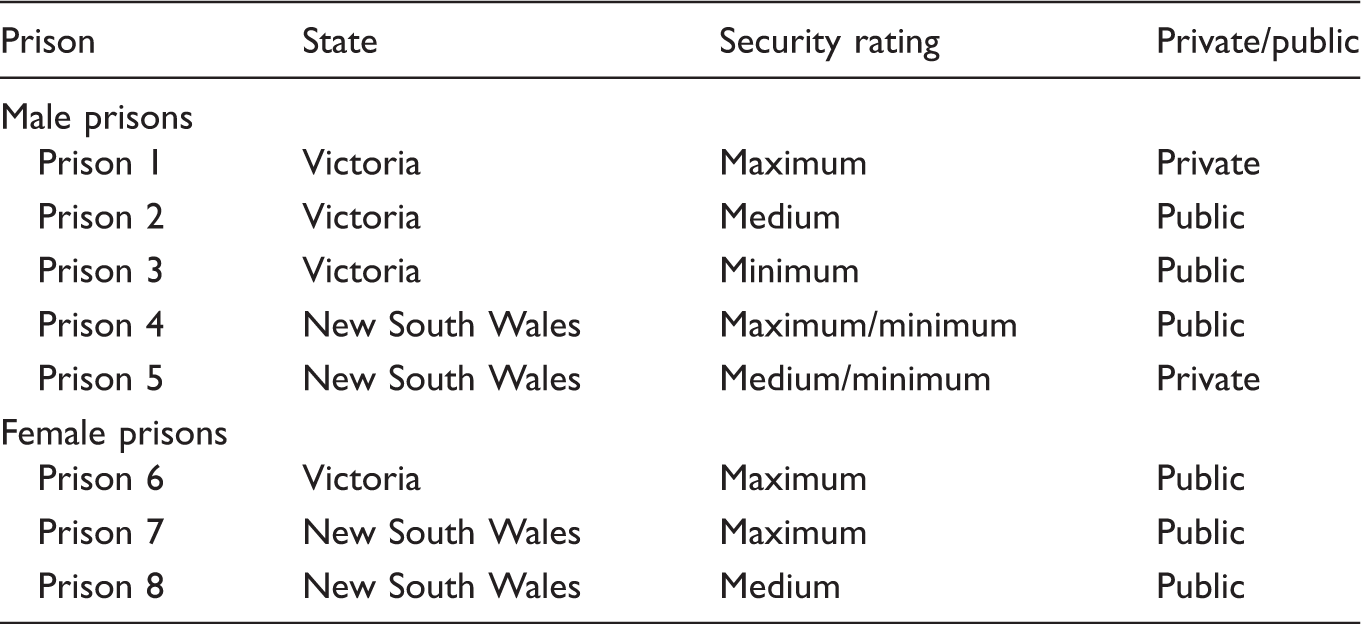
Recruitment aimed to involve a total of 90 sentenced prisoners in each state (60 prisoners aged 50 years and older and 30 prisoners aged less than 50 years in each state). Greater numbers of older prisoners were included in the sample as this population constituted the focus of the study, and younger prisoners were also included in order to provide a comparison between the experiences of older and younger prisoners. Various purposive sampling methods were adopted with a view to representing the breadth of experience of older prisoners. First, the older prisoner sample was intended to be evenly distributed between prisoners aged 50 to 64 years and those who were 65 years and older. Second, both the older and younger prisoner samples were to comprise a minimum female representation of 10%. Third, as the broader study also aimed to analyse the post-release experiences of older and younger prisoners, all of the younger prisoners and half of the older prisoners were recruited within 90 days of their expected release date, allowing prisoners to reflect on their prison experience. Finally, certain exclusion criteria were applied, including prisoners identified as having an intellectual disability and prisoners who the administration identified as potentially behaviourally or emotionally unstable (due to researcher and participant safety issues).
All older prisoners and every fourth younger prisoner from the prisoner list who met the above criteria were forwarded a flyer advertising the study by prison program staff. Eligible prisoners opted into the research by notifying a nominated prison staff member of their interest.
Prisoner sample
Data collection took place in Victoria throughout 2011, and in New South Wales in 2012. The final prisoner sample comprised 173 older prisoners and 60 younger prisoners. Older prisoners were aged 50 years and older at the time of interviewing, while younger prisoners were aged less than 50 years, and a modified definition of ‘older prisoner’ was adopted for Indigenous prisoners (45 years and older).
Selected socio-demographic and prison history characteristics of the prisoner sample groups.

Includes those participants who reported being homeless, couch-surfing, residing in a boarding home or being in crisis accommodation prior to entering prison.
Self-reported lifetime months spent in prison or detention as an adult or juvenile.
p < 0.05, **p < 0.01.
The younger prisoner sample was broadly reflective of the sample states’ prisoner populations in terms of mean age, and the proportion that were Australian-born; however, Indigenous prisoners and those with English as a second language were under-represented in both the younger and older prisoners samples. As a group, older prisoners had a greater average number of children, were more highly educated, and less likely to have been unemployed prior to entering prison compared to the younger prisoners.
Methods
Face-to-face structured interviews were conducted with individual prisoners at the prison locations, and varied between 45 and 90 minutes’ duration. The interview schedule comprised the collection of demographic information, and a combination of yes/no, scaled and short answer questions concerning a variety of topics; those reported on in this paper include physical functioning, program participation, experiences of the prison environment and social functioning. Physical functioning was assessed using the Barthel Index (BI), a standardised 10-item measurement of a person’s level of independence in performing ADLs including bathing, grooming, continence and mobility (Mahoney & Barthel, 1965). The BI is a valid measure, reliable for use by unskilled non-healthcare professionals (Collin, Wade, Davies, & Home, 1988; Wade & Collin, 1988). The researchers completed the BI with each prisoner utilising participant self-reported responses. Interview data were entered into IBM SPSS Statistics 20 for analysis. Qualitative analysis using the QSR NVivo program was performed on short-answer responses to examine data for repeated themes, which are reported in the relevant sections. Some statistical analyses were performed to identify significant differences between the younger and older prisoner samples; however, given the potential for self-select bias, differences should be interpreted with caution as the prisoner sample was not selected as a representative group. Chi squared (Fisher’s exact, two-tailed) tests were utilised to check for statistically significant differences in categorical variables, while independent means t-tests were used to analyse differences in data presented as averages.
Results
This section presents findings of the study relating to the physical and social functioning of older prisoners, and data relating to the built environment of prisons, participation in prison programs, and social functioning.
Functional status – BI results
Barthel Index total scores (**p < 0.01).

Areas of functional impairment among older prisoners.
The prison environment
Common problem areas in the prison environment among older prisoners.
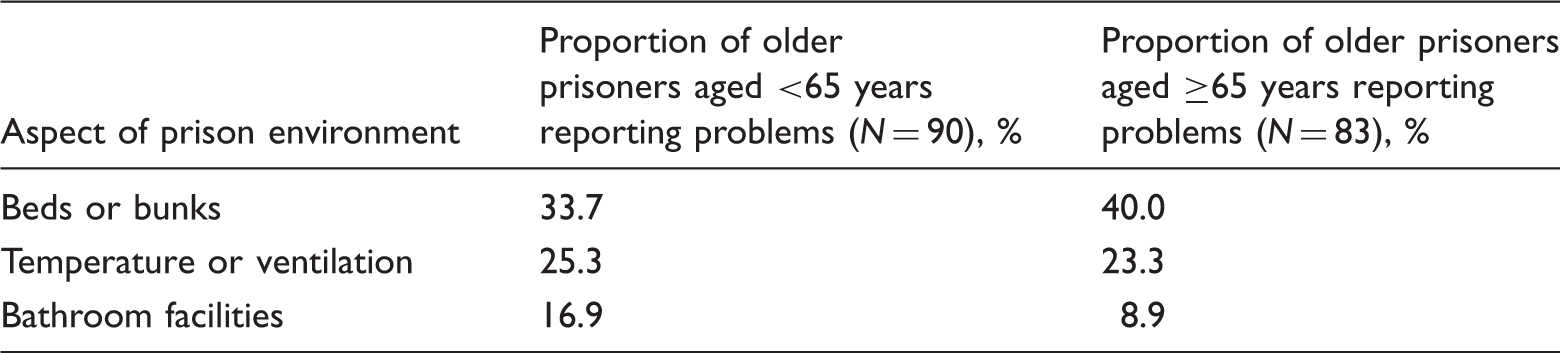
Older prisoners reported difficulties getting up and down from top bunks, making beds, and issues with pain and stiffness associated with prison beds. These issues were less prevalent for prisoners aged 65 years and older (33.7%) compared to other older prisoners (40.0%), perhaps indicating that prisons were more mindful of appropriately placing this group. Nearly a quarter of older prisoners described issues with temperature and ventilation. More extreme weather presented problems for older prisoners who described inadequate heating and difficulties when accessing facilities or services outside of their prison unit (for example, lining up for medication or prison head counts in inclement weather). Equally, ventilation problems were described by prisoners with respiratory issues sharing cells with smokers. The main difficulties outlined in relation to bathroom facilities were the lack of aids (grab rails, shower chairs, commodes and handheld shower heads). The presence of time-limited shower facilities in some units also presented problems, with some older prisoners reporting difficulties showering within the allocated time.
Prison programs and activities
Prison work
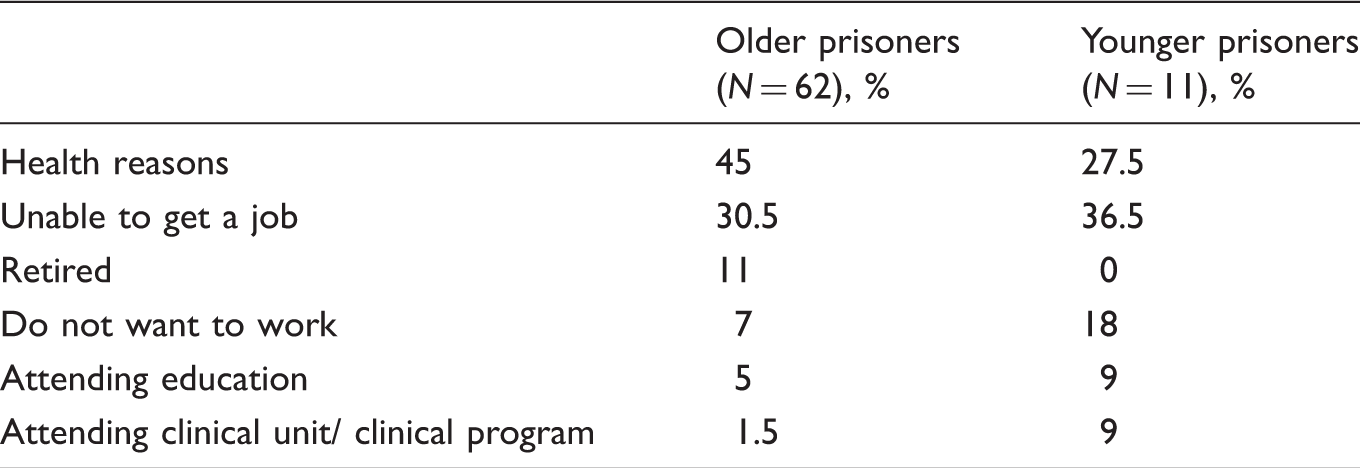
Reasons for not working in prison.
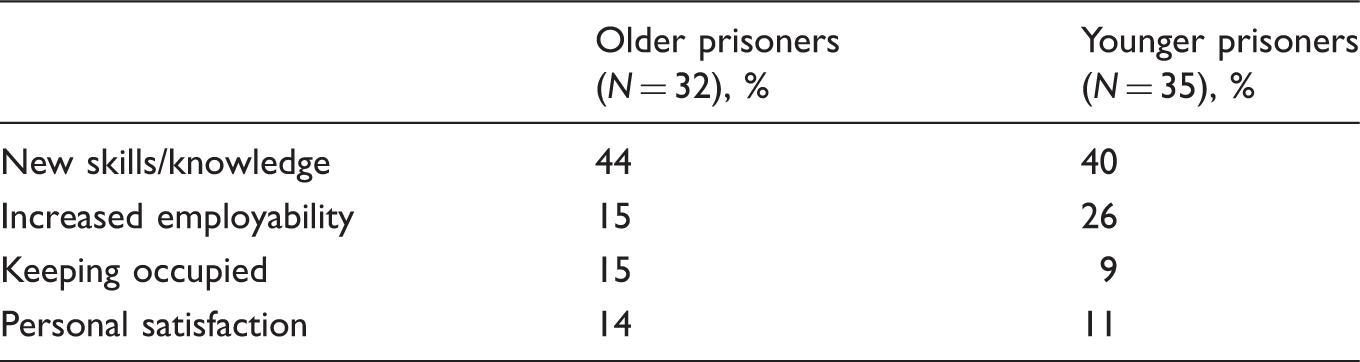
Perceived benefits of work in prison (**p < 0.01).
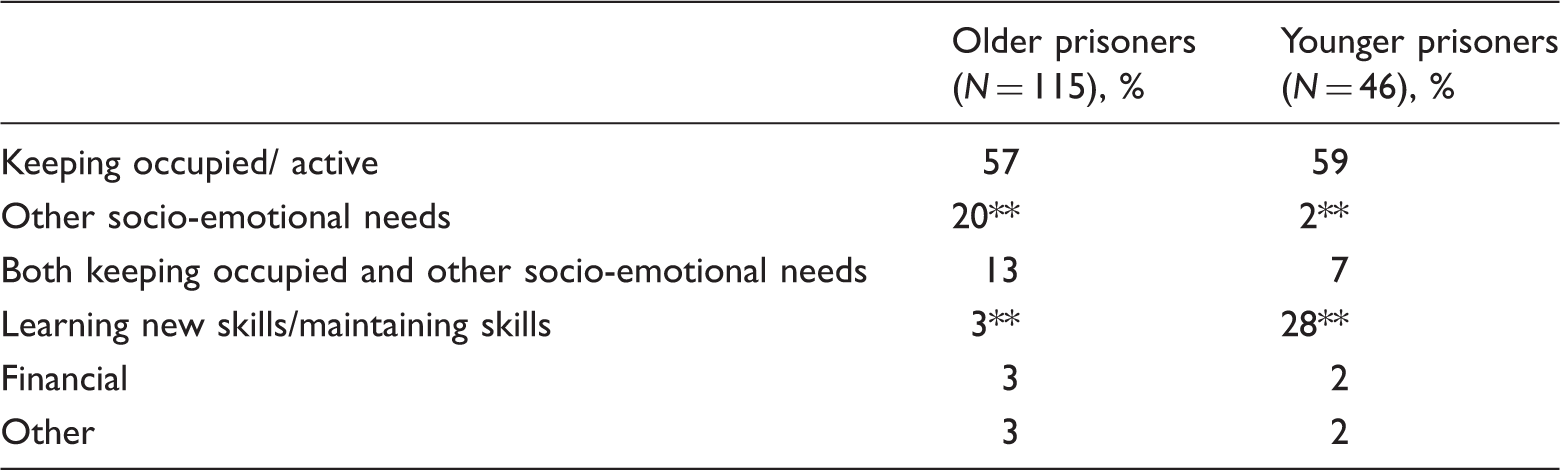
Older prisoners indicated that there were further opportunities to utilise the skills and life experience they held. Some older prisoners utilised these skills in an informal sense (e.g. by assisting younger prisoners writing letters or filling in forms), but believed these efforts could be more formalised. A final theme that was raised in the interviews was in regard to retirement. Older prisoners indicated that there were often inconsistencies between prisons in the policies surrounding retirement for prisoners (e.g. retirement age, and rate of payment from prison for retirees).
Prison education and training
Perceived benefits of education.
Participation in offending behaviour programs and other activities
Self-reported OBP participation (prisoners within 90 days of release).
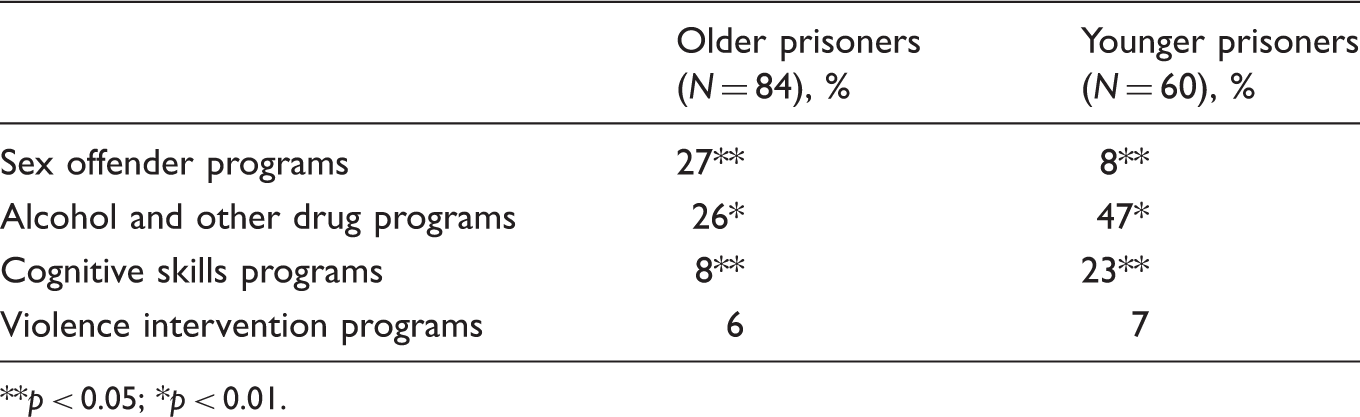
p < 0.05; *p < 0.01.
Self-reported non-OBP program participation.
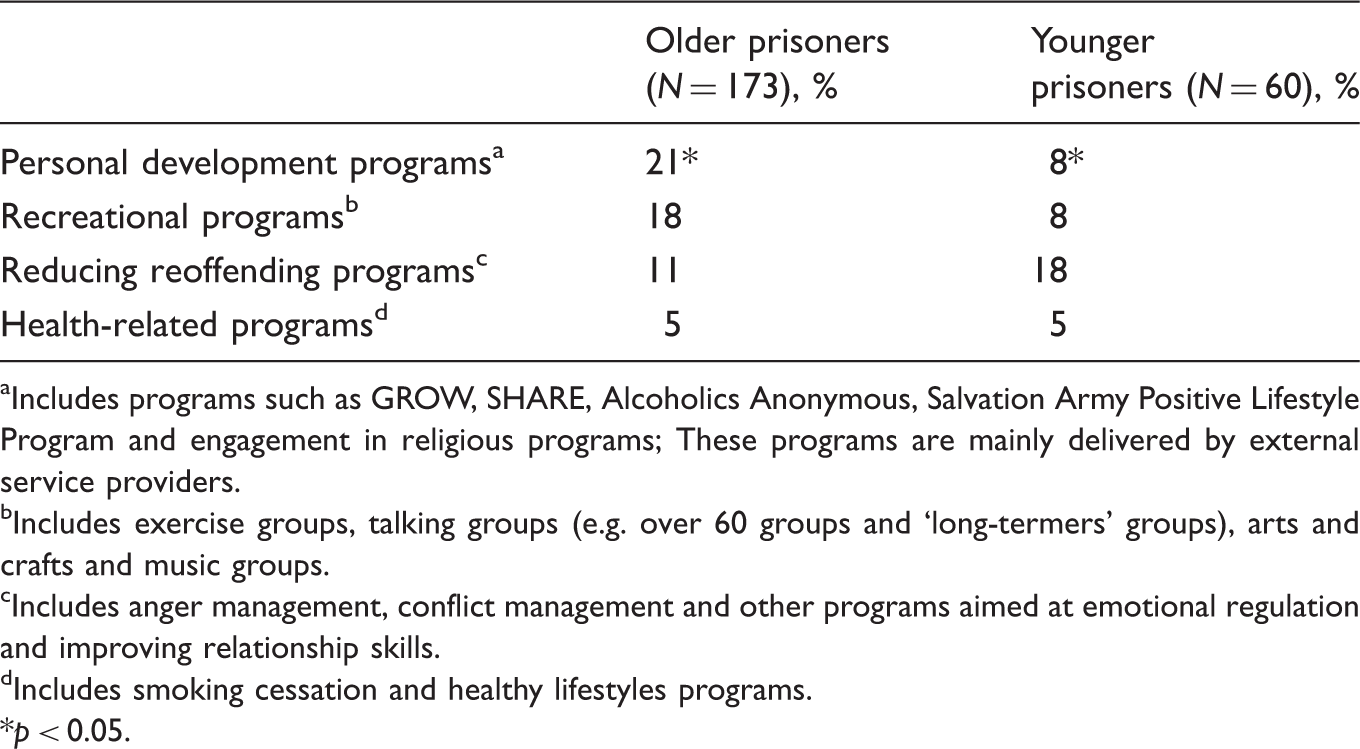
Includes programs such as GROW, SHARE, Alcoholics Anonymous, Salvation Army Positive Lifestyle Program and engagement in religious programs; These programs are mainly delivered by external service providers.
Includes exercise groups, talking groups (e.g. over 60 groups and ‘long-termers’ groups), arts and crafts and music groups.
Includes anger management, conflict management and other programs aimed at emotional regulation and improving relationship skills.
Includes smoking cessation and healthy lifestyles programs.
p < 0.05.
Social functioning
Contact with family and friends
Older prisoners indicated their contact with friends and family in the previous two weeks. The results showed that 45% had at least one visit from family or friends; however, this varied by prison. At one correctional centre, only 18% of the older prisoners (4/22) had received a visitor in the previous two weeks. Eighty per cent of older prisoners had made a telephone call to family or friends, and 60% had received mail from family or friends.
Prisoners aged 50–64 years had more communication with family and friends compared to both prisoners aged 65 years and over and younger prisoners. Compared to prisoners aged 65 years and over, those aged 50–64 years were more likely to have had at least one visit (50% vs. 40%), made a telephone call (89% vs. 72%) and received mail (63% vs. 55%) in the previous two weeks. Additionally, older female prisoners appeared to have more communication with family or friends than older male inmates. Compared to older male prisoners, older females were more likely to have had at least one visit (78% vs. 40%, p < 0.001), made a telephone call and received mail in the previous two weeks.
Social functioning within the prison environment
The majority of older prisoners indicated that they had another prisoner (67%) and a prison staff member (75%) whom they could speak to, if required. While three quarters of both the older and younger prisoners reported having a staff member they could speak to, younger prisoners were somewhat more likely to report having another prisoner to speak with (73% vs. 67%, respectively).
Sense of safety
A majority of the older prisoners (75%) reported feeling safe or very safe in the prison environment, compared to 78% of younger prisoners surveyed. There were no gender differences in the proportion of older prisoners stating they felt safe or very safe. Those aged 65 years and over were slightly less likely to indicate they felt unsafe or very unsafe compared to those aged 50 to 64 years (8.5% vs. 11.4%). This trend was observed for both male and female older prisoners and may be a result of management efforts to co-locate older prisoners, or to be mindful of placement issues. At the same time, older prisoners whose BI scores indicated a need for assistance (BI total score < 100) were more likely to describe feeling unsafe or very unsafe, compared to older prisoners who were fully independent (16.2% vs. 8.2%, respectively). This suggests that the presence of physical limitations, rather than chronological age, may be more relevant to older prisoners’ sense of safety. Many older prisoners indicated that they were wary of being caught up in an incident or fight involving younger prisoners, and that they adopted various strategies in order to manage their safety. This included avoiding areas or activities requiring proximity to younger prisoners (for example, visits and gym areas), remaining in the vicinity of other older prisoners and staff, and avoidance of health services requiring a transfer to a higher security prison location. Older prisoners also appreciated the efforts of staff to assist in their sense of safety.
Self-reported victimisation in prison
Prison incidents.
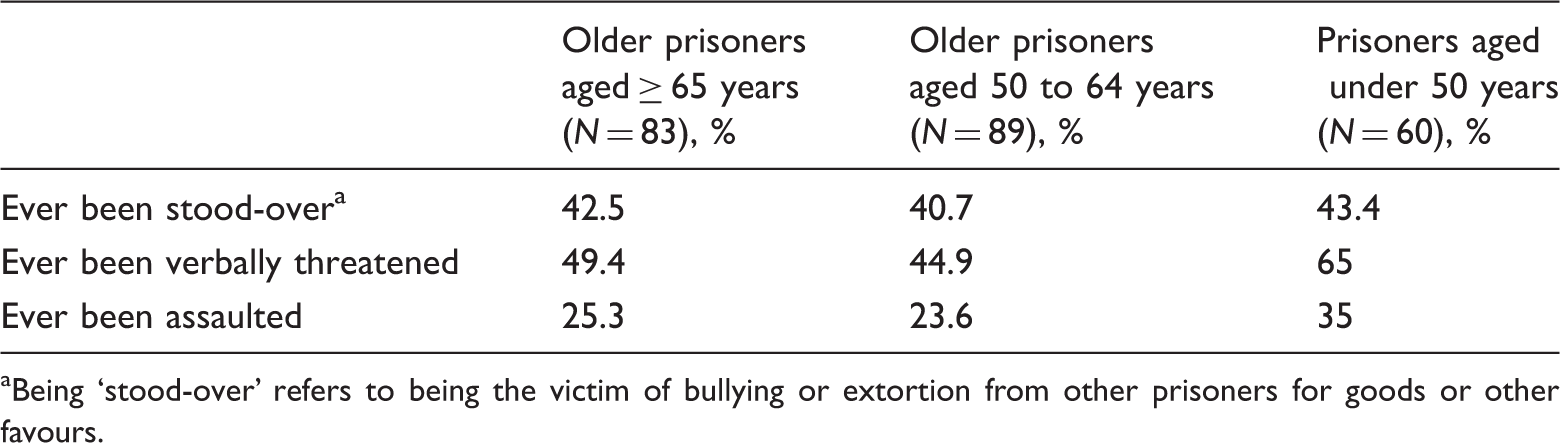
Being ‘stood-over’ refers to being the victim of bullying or extortion from other prisoners for goods or other favours.
Discussion
Reference has already been made to the limitations of this study as a result of the reliance on prisoner volunteers as the primary data source. Nevertheless, it represents the first large-scale study of older prisoners in Australia. While the level of functional impairment among older prisoners in this study was greater than described in previous international studies (Colsher et al., 1992; Fazel et al., 2001), the research confirmed in the Australian context international findings that older female prisoners tend to experience a greater degree of functional decline than older male prisoners (Aday & Krabill, 2012; Williams et al., 2006). The research highlighted bunks and beds, temperature and ventilation, and bathroom facilities as common aspects of the prison environment presenting issues for older inmates.
The value and meaning of prison-based work and education for older inmates was consistent with that described by previous studies, which have likewise identified that older prisoners remain engaged in such activities where suitable and relevant options are available, including light duties and part-time work options (Dawes, 2009; HMIP, 2004; Human Rights Watch, 2012; Marquart et al., 2000). The research identified certain activities specifically targeted towards the needs of older prisoners which had been developed at the local prison level (for example, targeted recreational programs), and highlighted the importance of activities fulfilling socio-emotional and personal development needs for older prisoners, which can be incorporated into consideration of future activities for this group. Despite a generally lower risk of reoffending, roughly one-third of the older prisoners nearing release had participated in OBPs. This suggests that there is a need for issues pertaining to ageing – for example potential eyesight, hearing and mobility issues – to be considered in program delivery (HMIP, 2004). This study also supports the findings of a previous study which had identified problems surrounding the lack of consistent policies and programs relating to retirement in the prison context (particularly concerning retirement pay and keeping retired prisoners occupied) (HMIP, 2004).
The importance of developing proactive strategies to keep older prisoners (particularly those aged 65 years and above) engaged in the prison context is emphasised by findings that this group were less socially connected and were more likely to report functional impairments and victimisation in prison compared with prisoners aged 50 to 64 years. Those who were functionally impaired were also more likely to report feeling unsafe in prison compared to prisoners aged 50 to 64 years.
The findings are limited in their ability to specifically consider any needs of certain subgroups of older prisoners (particularly older prisoners from Indigenous or non-English speaking backgrounds, who were under-represented in this study). Such topics may form a useful focus for future research in this area.
Footnotes
Implications
Older prisoners have largely remained a forgotten group in relation to strategic level policy and planning by state corrections departments in Australia. Research pertaining to older prisoners over the previous decade has continually emphasised the difficulties accommodating frail older inmates in traditional prison environments designed for the young and able-bodied (Aday, 2003; HMIP, 2004; Prison Reform Trust, 2008). While this study found that many older prisoners do not face functional difficulties in the prison environment, it is apparent that for some prisoners, modifications and specialised accommodation (e.g. disability compliant cells and facilities) are necessary to meet their physical needs. These results provide further support to the considerable body of international evidence suggesting that prison environments are unable to consistently cater for the needs of older prisoners with physical incapacities (Crawley, 2005; HMIP, 2004; Potter et al., 2007).
There are implications for planning in relation to prison structure and facilities for the growing population of older inmates, particularly in relation to the identified problem areas such as bunks, staircases and bathroom facilities. However, determining the appropriate response to these issues is complicated by a number of factors. Clearly, one issue is the expense associated with providing modifications or specialised accommodation for older prisoners, particularly in the context of limited corrections budgets. Additionally, corrections management and policy makers may need to factor in the impact of public concern, either that older prisoners may be being treated too well, or too severely particularly in comparison to older people in the general community (Indermaur, 2008).
Adding to the complexity is the understanding that management of issues pertaining to the physical needs of older prisoners must be balanced with substantial safety considerations. For example, therapeutic devices such as canes and walking frames can potentially become weapons in the custodial context, which can be used against staff, other prisoners or the older prisoners themselves. Other aids such as grab rails may conceivably be used as hanging points, presenting risks for suicidal inmates. Given the considerable and ongoing efforts by corrections authorities to manage the risk of prison suicides (Australian Institute of Criminology, 2013), addressing the needs of physically impaired older inmates presents a difficult predicament. On the other hand, the risks to individual prisoner safety, such as falls and other injuries, associated with a mismatch between prisoner capacities and the prison environment also raises potential concerns. Policies and planning are also required in relation to older prisoners in a number of other areas, including work for older inmates, retirement policies, and activities which maintain a sense of inclusion and daily structure for older inmates in the prison context. Where older prisoners are not engaged in any programs, evidence suggests that they may become isolated and experience health declines; these issues are particularly noted among retirees and those with significant physical or sensory limitations (Aday, 2003; HMIP, 2004; Marquart et al., 2000). Over the past decade, various specialised units catering for the growing older prisoner population have been developed in some prisons across Australia and New Zealand, as well as in the UK and the US (Aday & Krabill, 2012; Anno, Graham, Lawrence, & Shansky, 2004; Cooney & Braggins, 2010; HMIP, 2004; New Zealand Deparment of Corrections, 2013). In Australia, such units include the Frail Aged Care Assessment Unit and Kevin Waller Units at Long Bay Correctional Centre in New South Wales, the Norval Unit at the Hopkins Correctional Centre in Victoria and the High Dependency Unit currently being developed at Yatala Labour Prison in South Australia (Government of South Australia, 2012; New South Wales Department of Corrective Services, 2012b). While such developments assist in ensuring age-appropriate accommodation for the most physically vulnerable older prisoners, there remain a breadth of other issues associated with the overall ageing prisoner population which persist (for example, dealing with lower level personal care needs and addressing the needs of older female prisoners). Catering for physical impairments among older female prisoners and prisons with smaller populations of older inmates may be even more difficult; given their smaller numbers, it may be perceived that the critical mass is not present to justify expenditure to meet the needs of such groups. This may necessitate creation of partnerships between corrections departments and aged care providers in the general community to enable service delivery in some circumstances. Overall, the complexity of issues perhaps points to a need for co-ordinated planning at the jurisdictional level as a strategy for addressing the needs of the growing older prisoner population.
Funding
This work was supported by an Australian Research Council Linkage Grant (grant number LP100100599); the Victorian Department of Justice; and the Victorian Association for the Care and Resettlement of Offenders.