




Abstract
A little investigated correlate of persistence and desistance is the effect of parenthood. Research suggests that for females particularly, parenthood plays an important role but the evidence for males is mixed. Yet, prior studies have not considered potential selection effects. This paper seeks to overcome this limitation by examining the effects of having a child on offending using propensity score matching, with data from the Cambridge Study in Delinquent Development, a longitudinal study of 411 South London males followed since childhood. Findings indicate that, while there are reductions in offending from several years before the child’s birth to several years after the child’s birth, the effects are not large. Further analyses examining ‘shotgun’ marriages show that reductions in offending are larger than for non-‘shotgun’ marriages. Also, if a man remains with the child for at least five years, then reductions in convictions are greater than when he does not.
Introduction
The family is one of the most discussed influences on offending and many individual-level criminological theories have something, usually positive, to say about the importance of families in socializing children and in deterring antisocial behaviour (Agnew, 1992; Gottfredson & Hirschi, 1990; Hirschi, 1995; Moffitt, 1993; Patterson et al., 1989). Not surprisingly, family effects have long been empirically examined in the criminological literature (Loeber & Stouthamer-Loeber, 1986), with the most recent attention devoted to the effects of marriage on patterns of desistance – largely on the heels of the resurrection and re-analysis of the classic Glueck study of delinquents by Sampson and Laub. These authors (1993) suggest that marriage can act as a ‘turning point’ in the criminal career and this finding has been replicated in several studies (Barnes & Beaver, 2012; Beaver et al., 2008; Bersani et al., 2009; Blokland & Nieuwbeerta, 2005; Burt et al., 2010; King, Massoglia, & MacMillan, 2007; Piquero et al., 2002; Sampson, Laub, & Wimer, 2006; Theobald & Farrington, 2009; though see Lyngstad & Skardhamar, 2013). However, one aspect of the family that has received somewhat less empirical attention has been the effect of having a child on continued or curtailed offending. Several important questions arise, for example: does having a child somehow alter a parent’s orientation to their lives and their social network patterns, as might be suggested by age-graded social control theory (Sampson & Laub, 1993), in much the same way as marriage is suggested to do? Or does having a child have no substantive impact on offending over the effect of marriage? To examine these questions, this paper uses longitudinal data from the Cambridge Study in Delinquent Development (CSDD) to examine whether the birth of a first child reduces the father’s offending.
The birth of a child and desistance from offending
As stated previously, there have been few studies to date that have considered the effect of the birth of a child on a father’s offending. With a few exceptions (see Monsbakken, Lyngstad, & Skardhamar, 2013; Zoutewelle-Terovan, van der Geest, Liefbroer, & Bijleveld, 2012) most report little or no effect (Blokland & Nieuwbeerta, 2005; Kreager, Matsueda, & Erosheva, 2010; Sampson & Laub, 1993; Skardhamar & Lyngstad, 2009; Thornberry, Wei, Stouthamer-Loeber, & van Dyke, 2000; Uggen & Kruttschnitt, 1998; Wakefield & Uggen, 2004; Warr, 1998). These studies include analyses of males, females and mixed samples, and generally the results are inconsistent. There may of course, be differential effects for males and females, and to date for marriage at least, it appears that marriage is more beneficial for males compared with females with regard to reduced offending. As many factors may influence the effect of marriage, it might also be expected that the effect of having a child would also depend on many factors, such as whether the child was planned or unplanned, the quality of parental relationships, coping skills, marital status, financial resources, and social support (Cox, Paley, Burchinal, & Payne, 1999; Ganem & Agnew, 2007; Giordano, Seffrin, Manning, & Longmore, 2011; Huston & Holmes, 2004; Nomaguchi & Milkie, 2003).
In one study, Thornberry, Wei, Stouthamer-Loeber, and van Dyke (2000) found that teenage fatherhood was followed by increased offending rates, which might suggest for example, that age and all the problems surrounding early fatherhood might influence the effect of having a child, or that these young men were on an increasing offending trajectory. Another study carried out by Blokland and Nieuwbeerta (2005) in the Netherlands suggested that becoming a parent seemed to increase convictions for some offenders, notably those who were sporadic offenders, but the authors suggested that these results may have been affected by the too few offences carried out by these offenders. In a recent study in Norway, Skardhamar and Lyngstad (2009) found that men who were in cohabiting and married relationships decreased their offending in the five years prior to the birth but that this decrease in offending was not permanent, and increases in offending occurred in the five years after the birth. On the other hand, in Finland, Savolainen (2009) reported that offending did decrease after a child’s birth but only for cohabiting or married couples and that “union formation and parenthood… typically go hand in hand” (p.299). Although this study did not examine interaction effects between parenthood and type of relationship, an additive effect of the ‘full family package’ was observed. In contrast, studies of women more often show that it is the birth of the child rather than marriage that acts as a ‘turning point’ in women’s lives rather than marriage (Ganem & Agnew, 2007; Kreager, Matsueda, & Erosheva, 2010; but see Giordano, 2010; Giordano, Cernkovich, & Rudolf, 2002).
It is difficult to tease out whether the effects of having a child, or partnership formation such as getting married or cohabiting, have direct effects on offending. For example, in Sampson and Laub’s (1993) qualitative narratives of the Glueck offenders, the importance of social capital in adult relationships “especially between husbands and wives” seemed paramount in encouraging change but also relevant was having a child or children – especially if the man had strong social bonds to them (p.220). Using a national survey from the US, Ganem and Agnew (2007) showed that regardless of age and gender parents were significantly less likely to be involved in crime if they had high quality relationships with their children. To add further complication about ‘child-on-crime’ effects, Farrington and West (1995) found that the men who had their first child after at least nine months of marriage were less likely to be convicted than those who had their first child before marriage or before nine months of marriage, but this result could reflect selection effects.
In short, the current evidence on the effect of having a child on a parent’s offending is inconsistent. It might be expected that marriages at earlier ages, and especially if they occur because of a conception outside of wedlock (referred herein as ‘shotgun’ marriages) may have different effects than those marriages that follow a more traditional format, in a sequential way where the first child is born sometime into the marriage. Marriages and childbirth at early ages, particularly in the teenage years, are often rife with problems not necessarily conducive to successful outcomes in the social, family, health and financial spheres (Dahl, 2010). However, regardless of the timing of the birth of the first child there are many other factors in any one study that may impact on the effects of the birth of a child. It could also be argued that having a child or getting married could be as much an outcome as a cause of the change in criminal behaviour. Importantly, methods which allow researchers to study the change in offending after having a child compared to the period before having a child may help to attend to the problem of causal order and can better assess whether the change in offending occurred after the birth of the child. Statistical techniques, such as propensity score matching, provide one approach to study this question and offer a potentially more convincing way of establishing the impact of having a child on offending (see Murray, Eisner, & Farrington, 2009).
Current focus
This paper builds upon Farrington and West’s (1995) previous investigation of the effects of having a child on a father’s offending using data from the CSDD, but extends their work to consider a longer time period and most importantly in utilizing propensity score matching, a quasi-experimental procedure that matches individuals on a score that predicts their likelihood of having a child. Also, in the CSDD many of the males had become fathers by the age of 21 and about a third of these marriages were ‘shotgun’ marriages, where the child was conceived before marriage (Bosick, 2012). Because early marriages and ‘shotgun’ marriages in particular have been found to be less stable (Amato, 2000; Berrington & Diamond, 1999; Furstenberg, Brooks-Gunn, & Morgan, 1987; but see Bosick, 2012), we further examine the influence of a ‘shotgun’ marriage on offending and also how the length of time the man stays with his child influences his offending behaviour. Not only does this paper represent an advance over the Farrington and West study, but it also helps to contribute to the small empirical knowledge base on the effects of having a child on offending – especially with the application of a more advanced methodological approach and over a long period of time.
The key questions examined in this study are: (1) What is the effect of having a child on offending 1 for men whose first child was born earlier (i.e. before age 25) and later (after age 25)? (2) What are the predictors of having a child? (3) What is the effect of having a child on offending after matching on a man’s prior convictions and a propensity score? (4) Is there any differential effect of having a child on offending if the child was conceived prior to the marriage? (5) Is there a benefit in terms of reduced offending if the man stays with the child for at least five years? 2
Data and methods
CSDD is a prospective longitudinal survey of 411 males born in South London in the early 1950s and followed for over 40 years (Farrington, 2003, 2006; Farrington, Coid, & West, 2009; Farrington, Piquero, & Jennings, 2013; Piquero, Farrington, & Blumstein, 2007). The survey was originally carried out to investigate the development of delinquent and criminal behaviour in males from an inner-city area. Information on marriages was gathered at the age-32 and age-48 interviews and confirmed by searches in the Public Record Office. Convictions were obtained from repeated searches of criminal records between 1964 and 2004. This information included the age of onset and the frequency and duration of offending and dates of incarcerations (which were few). The majority of the men committed their first offences in the adolescent years (ages 13–17), peaking at age 17. Overall, 167 (41%) were convicted for standard list offenses (excluding motoring offenses) by age 50.
Of the 411 men, 73% had children and the first child was born at a median age of 25.58 (inter-quartile range (IQR) = 22.75–29.17). Of the 167 convicted men, 78.4% had children with the first born at a median age of 24.67 (IQR = 21.33–27.17). Of the 244 unconvicted men, 69.3% had children, with the first born at a median age of 26.50 (IQR = 23.63–26.50). Unconvicted men were significantly older (mean = 27.36, SD = 5.28) than convicted men (mean = 25.17, SD = 5.27) when they had their first child (t(298) = 3.56, p < .001). The 167 convicted men had an average of 4.83 (SD = 5.24) convictions up to age 50; those with children (n = 131) had an average of 4.96 (SD = 5.34) convictions; those without children (n = 36) had an average of 4.39 (SD = 4.92), not a significant difference.
Procedure
In order to investigate the effect of having a child on a man’s offending, offences leading to convictions were counted before and after the age of the man at the birth of his first child. Following previous criminal career research with the CSDD (Farrington, 2006; Piquero et al., 2007), these offences included burglary, theft of a motor vehicle, theft from a motor vehicle, shoplifting, theft from a machine, theft from work, other theft, fraud, receiving, robbery, assault, threats, possessing an offensive weapon, sex offenses, drugs and vandalism. Incarceration times when an individual was not at risk of offending were taken into account and used to extend the period of the count. For example, if a man had been incarcerated for one year in the period before the birth marriage, the count was extended by one year to six years before marriage.
Previous CSDD results on the effects of life transitions such as marriage on offending have found that the effects vary with age (see Theobald & Farrington, 2009). Therefore, we have stratified the convicted men into those who had their first child up to the age of 24 (n = 72) and those who had their first child at age 25 or older (n = 59). 3 A ‘nearest neighbour’ matching without replacement strategy was implemented whereby each person’s age at the birth of his first child was listed in ascending order and he was matched with the nearest person in the alphabet who still remained childless for at least five years afterwards. The non-replacement meant that an individual without a child could not be matched more than once. In order to determine if there were significant differences between convictions before and after marriage for the cases and controls, a paired sample t-test was used. The change in the number of convictions of the cases (after versus before the age at the birth of the first child) was compared with the corresponding change in the number of convictions of the controls from before to after the same age.
Second, we calculated a propensity score to predict the probability of having a child, based on important childhood and adolescent risk factors measured at age 8–18 (for more information about all these factors, see Farrington, 2000, 2003, 2006: Farrington, Ttofi, & Coid, 2009). For the current analyses, 28 factors measured at age 8–10 years were studied: broken home, convicted father, convicted mother, delinquent sibling, harsh parental discipline, large family size, low family income, low SES, nervous boy, nervous mother, nervous father, authoritarian parents, parental disharmony, physical neglect, poor housing, poor parental supervision, young mother, daring, dishonesty, few friends, high extraversion, hyperactivity, impulsiveness, low school attainment, low verbal IQ, low non-verbal IQ, troublesomeness and unpopularity. There were 18 age 12–14 factors studied: early regular smoker (<15 years of age), early sexual behaviour (<15 years of age), father not involved in family activities, poor housing, harsh maternal attitude, parental disharmony, nervous boy, neuroticism, bullying, hostile to police, low non-verbal IQ, delinquent friends, low SES, self-reported delinquency, teacher-rated aggressive, hyperactivity, truancy and unemployed father. The 28 age-18 factors were: having an aggressive attitude, going out with mates, no girlfriend, had unprotected sex, promiscuous sex (two or more girls in the previous six months), high debt, heavy drinker, engages in fights after drinking, binge-drinking, positive attitude to drugs, marijuana user, engaged in group violence/vandalism, anti-establishment attitude, hangs about, drunk driver, impulsive, unskilled manual job, unstable job record, unemployed, low take home pay, not living with parents, poor reader, no exams passed, poor relationship with parents, heavy smoker, self-reported delinquency, self-reported violence and juvenile conviction. Following previous analyses of the CSDD, all age 8–18 variables were dichotomized, where the highest score represented being ‘at risk’ (see Farrington & Loeber, 2000).
Third, each father was matched on both his propensity score and his previous convictions with another man who remained without a child for at least five years after the father’s (the case) age at the birth of his first child. Therefore, the ‘control’ man could be someone who later had a child. 4 Total convictions were counted: (1) before the birth of the child; (2) in the five years before the birth; (3) in the five years after the birth and (4) in the 10 years after the birth. 5
Randomization and propensity score matching
Randomization is considered to be the ‘gold standard’ in experimental research (Kraemer et al., 1997). In an experiment, individuals are randomly assigned to receive a ‘treatment’ or not, which ensures that all other factors should be equally distributed between the groups (i.e. that the only difference between the cases and controls is in the intervention or ‘treatment’). Randomization controls for both measured and unmeasured variables and overcomes the problem of selection effects in other study designs. However, it is difficult, and not always feasible or ethical to carry out randomized experiments (Luellen, Shadish, & Clark, 2005, p.531). For example, individuals could not be randomly assigned to have a child or not. In observational studies, the most common method for dealing with selection effects is by adjustment in statistical analyses. This, however, places great importance on whether potential confounding variables have been identified and measured accurately (Stewart, 2003, p.232). It is difficult to deal with selection bias adequately in non-experimental research but recent attempts to address this problem have been based on propensity score matching (see Rosenbaum & Rubin, 1983, 1985).
Matching based on a propensity score is used to overcome the problem of selection bias in the estimation of treatment effects in observational studies, especially in criminology (Apel & Sweeten, 2010), and it has been used to examine the effect of getting married on crime (King et al., 2007; Sampson et al., 2006; Theobald & Farrington, 2009). Propensity score matching seeks to mimic random assignment by matching cases and controls on the probability of receiving the ‘treatment’ (e.g. having a child). Yet, there is an important and ongoing debate about which variables to include in the propensity score model. Austin, Grootnedorst, and Anderson (2007, p.736) suggested that including a variable that is related to treatment but not to outcome does not improve the balance in the measured characteristics between treated and untreated individuals and can substantially reduce the number of matched pairs. Where many variables are used with only a weak relation to the outcome, it might be more appropriate to use classical matching as it is possible that the same propensity score could reflect different patterns in the data. However, when using theory-based classical matching, it will be increasingly difficult to find a (precise) match as the number of variables increases. Even when a relatively small number of variables are included, it is likely that some individuals will remain unmatched. Propensity score matching is not a substitute for the classical method but it allows the matching to be based on a single index and therefore to include most individuals in the analysis. 6
Results
What is the effect of having a child on offending for men whose first child was born earlier (before age 25) and later (after age 25)?
First, recall that each father (the case) was matched with another man who had not had a child up to five years after the case (the control), and who was closest to him in the alphabet. Total convictions were counted for the time up to the child’s birth, 5 years before, 5 years after, and 10 years after the father’s (the case) age at the birth of his first child.
Mean number of convictions before and after a first child, matching on age at birth of first child.

Notes: *p < 05 (one-tailed due to directional predictions). Early birth = before the man’s age 25; later birth = at the man’s age 25 or later. Effect size calculated using Cohen’s d corrected for dependence between means (Morris & DeShon, 2002).
Mean difference is the difference between changes of cases and controls. For example, for 5 pre–5 post the change in the cases is 0.75–1.71 = −0.96 and in controls 0.62–1.25 = −0.63. Therefore, −0.96–(−0.63) = −0.33 with minus values meaning that the cases decreased more.
For those men who had their first child at age 25 or older, there were also reductions in the average number of convictions from before to after the first birth of a child. For the cases, the mean number of convictions from five years before to five years after the birth reduced from 0.73 on average to 0.46, a reduction of 36.98%. For the controls, the number of convictions reduced from 0.63 to 0.34 on average, a reduction of 46.03%. Paired sample t-tests were non-significant and effect sizes were very small. For total convictions before the birth of the child to 10 years after, there was an 82.3% reduction in offending for the cases compared with a 69.0% reduction for the controls. Paired sample t-tests for total convictions before the birth to 5 years after and for total convictions before the birth and 10 years after were significant with medium effect sizes, 0.40 and 0.35, respectively.
It is important to note that the men were not matched on the number of convictions before the birth of the child so there is a possibility that regression to the mean lead to the greater decrease in convictions of the cases, because the cases had more convictions than the controls before the birth. Also, matching purely on the man’s age at the birth of his first child does not take into account the fact that the best match for the treated individual may be different from him on many extraneous variables and may have a very different likelihood of having a child. Therefore, it is necessary to match the men on the number of convictions before the birth of the first child and also on the likelihood of having a child. This likelihood of having a child can be estimated using propensity scores.
What are the predictors of having a child?
Factors predicting having a child.
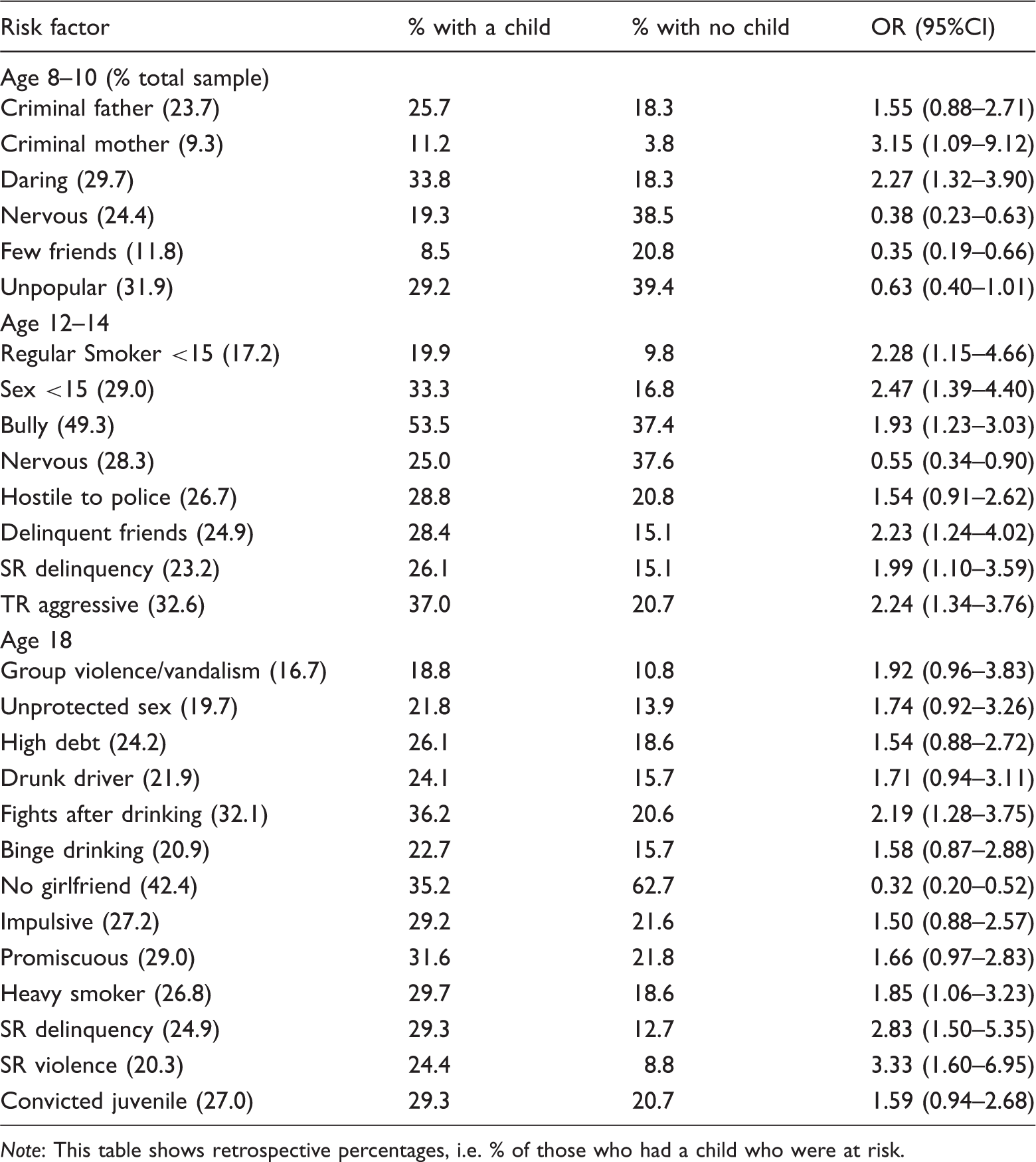
Note: This table shows retrospective percentages, i.e. % of those who had a child who were at risk.
Results of logistic regression analysis predicting having a child.
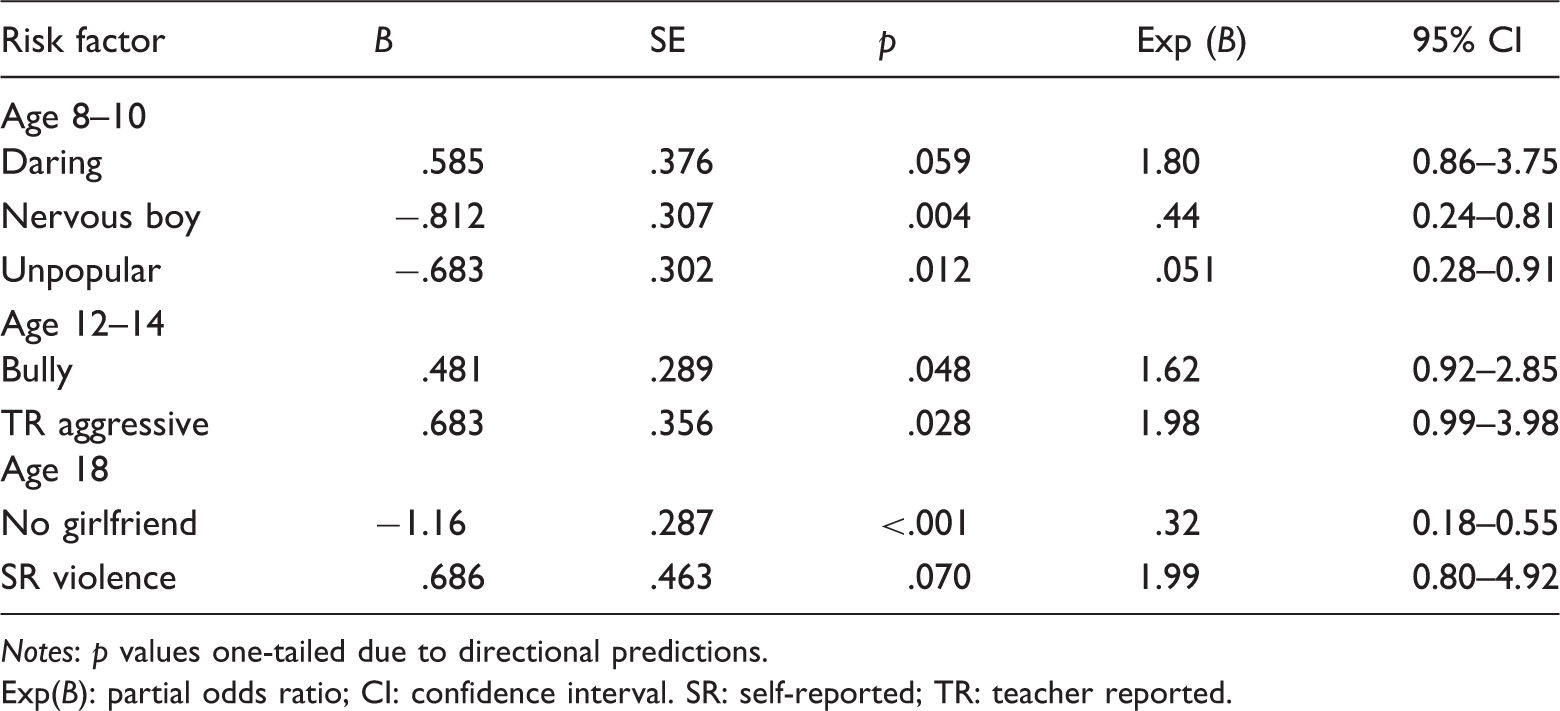
Notes: p values one-tailed due to directional predictions.
Exp(B): partial odds ratio; CI: confidence interval. SR: self-reported; TR: teacher reported.
What is the effect of having a child on men’s offending after matching on prior convictions and a propensity score?
These analyses were carried out on the 167 convicted men. Matching of cases (fathers) and controls was carried out using both the propensity score (based on the seven age 8–18 variables) and the total number of convictions before the birth of the first child. Recall that matches were carried out separately for men whose first child was born before age 25 and for those whose first child was born at age 25 or later. This matching was carried out on a ‘nearest neighbour’ without replacement basis. For example, case 885 had 1 conviction before his first child was born at age 20.42 and he was matched with case 822 who also had 1 conviction before age 20.42 but he did not have his first child until age 26.17. They both had an equal likelihood of having a child according to the propensity score, which was .90554 in both cases. The matches for the early births propensity scores were 87.5% within .05 with only four matches discrepant by more than .10. For the number of convictions before the birth of the child, 78.4% of matches were exact, with only 9 matches having a difference of 1 conviction and 4 having a difference of two convictions either way. For the later births, 70.6% of the propensity scores were within .05 with only 1 match over .10, and 82.4% of the convictions before the birth of the child were exact matches with only six having a difference of one either way.
Mean number of convictions before and after a first child, matching age at birth of first child, propensity score (based on age 8–18 risk factors), and prior convictions.
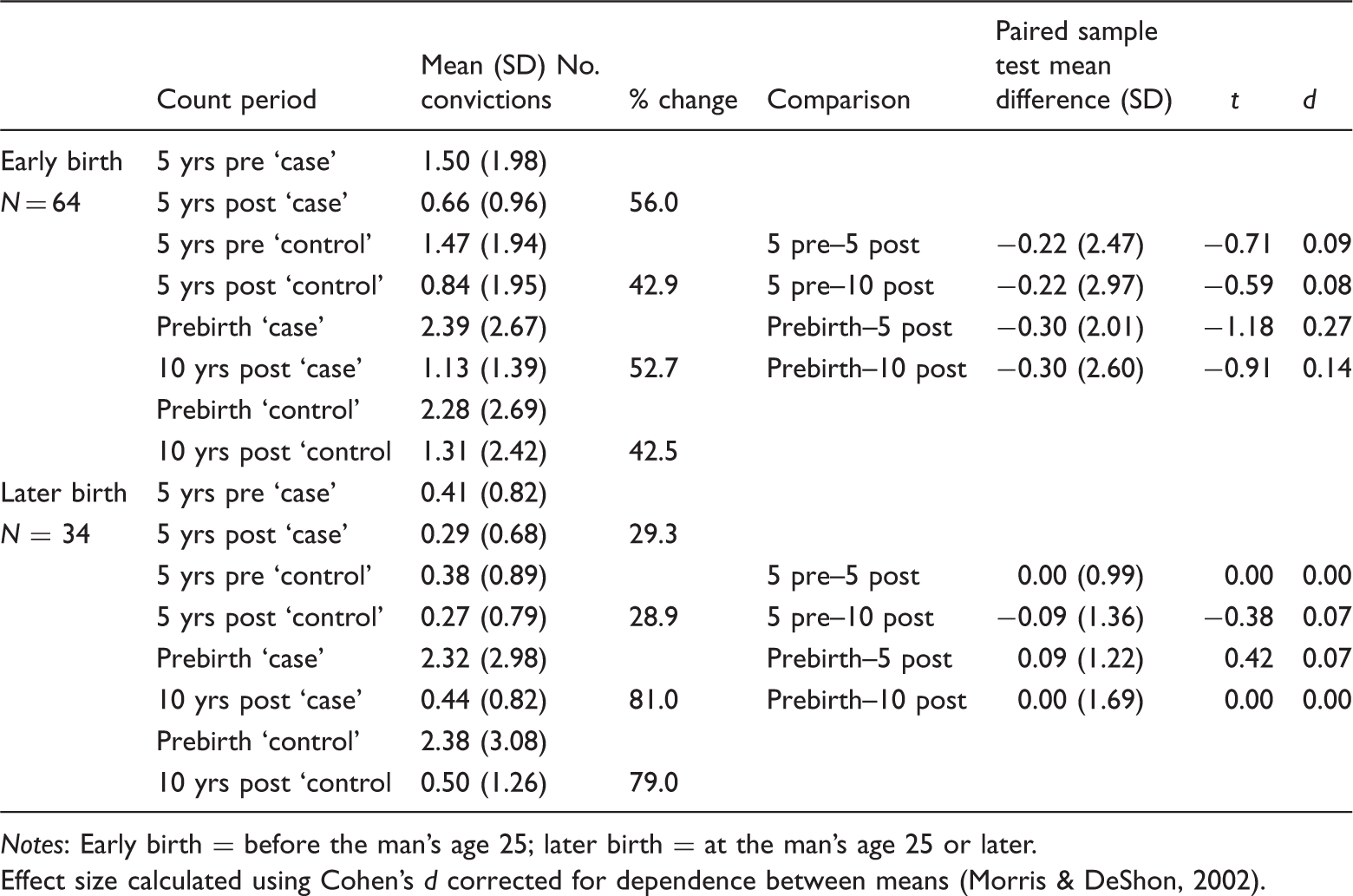
Notes: Early birth = before the man’s age 25; later birth = at the man’s age 25 or later.
Effect size calculated using Cohen’s d corrected for dependence between means (Morris & DeShon, 2002).
For those men who had their first child at age 25 or older, the matching was almost exact for both convictions up to the man’s age at the birth and convictions in the five years before the birth; the cases had incurred an average of 2.32 convictions before the birth compared to an average of 2.38 convictions for the controls. In the five years before the birth of the child, the cases incurred an average of 0.41 convictions and the controls incurred an average of 0.38 convictions. The reductions in offending were similar from five years before to five years after for both the cases and controls and the paired sample t-tests were not significant.
Is there a differential effect of having a child on offending if the child was born before or within nine months of the marriage (‘shotgun’ marriage)?
We also examined the effects of having a ‘shotgun’ marriage on offending and of the man staying with the child for at least five years. However, because of the small numbers within the stratifications for these analyses (e.g. the number of ‘shotgun’ marriages in the late birth category was only five), we amalgamated the two age groups. All cases and controls were matched on the age at birth, the number of prior convictions, and the propensity score. Of 78 matched pairs, 75 were married and 3 lived together.
Mean number of convictions before and after a first child, for shotgun and other marriages.
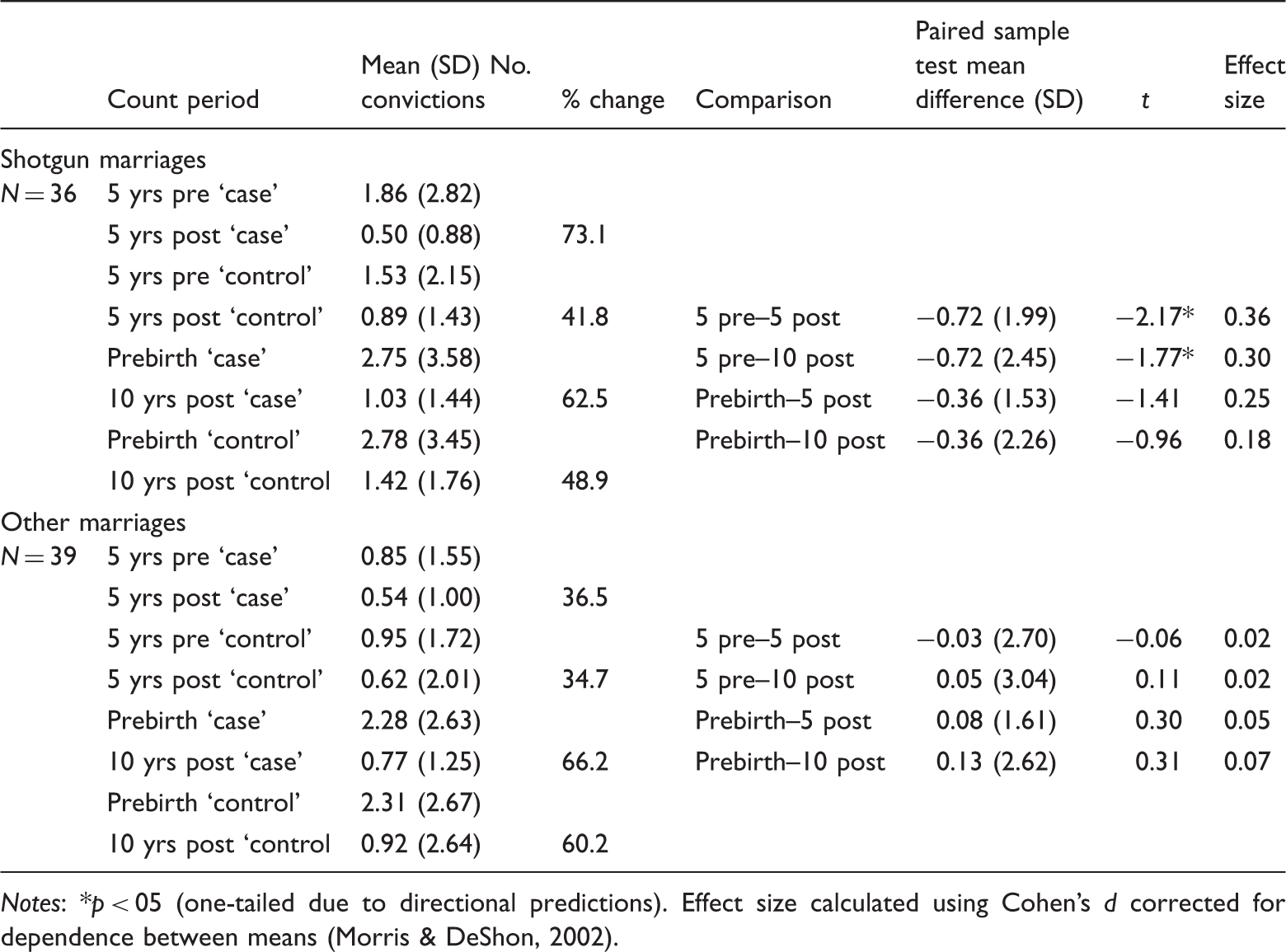
Notes: *p < 05 (one-tailed due to directional predictions). Effect size calculated using Cohen’s d corrected for dependence between means (Morris & DeShon, 2002).
For the 39 other marriages, there was very little difference between the cases and controls in the reduction in average number of convictions. For example, the cases incurred 0.85 convictions in the five years before having a child which reduced to 0.54 in the five years after, compared with the controls, who incurred 0.95 convictions in the five years before the birth, reducing to 0.62 in the five years after. The percentage reductions were similar for the cases and the controls, 36.47% versus 34.73%. There were no significant differences in the paired sample t-tests and the effect sizes were very small.
Is there a benefit in terms of reduced offending in staying with the child for at least five years?
Mean number of convictions before and after a first child, versus staying with the child for at least five years (or not).
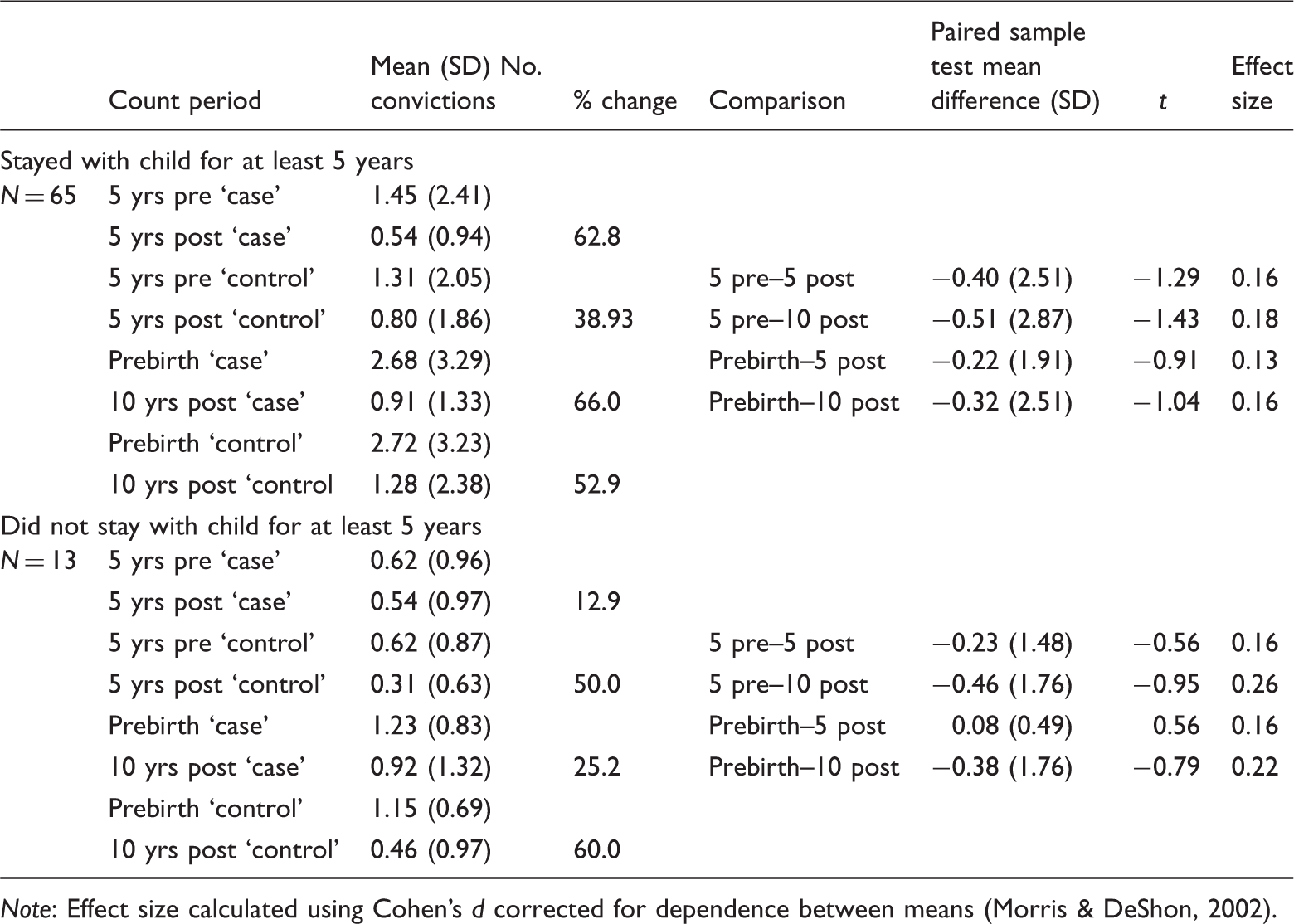
Note: Effect size calculated using Cohen’s d corrected for dependence between means (Morris & DeShon, 2002).
Those who did not stay with their child for at least five years also had reductions in their average number of convictions but in this comparison there were larger reductions for the controls than for the cases. For example, there was a reduction of 12.90% for the cases, from an average of 0.62 convictions in the five years before to 0.54 in the five years after. For the controls, there was a much larger reduction of 50%, from 0.62 in the five years before the birth to 0.31 in the five years after. Paired sample t-tests were not significant.
Discussion
Effect of the birth of a first child
Research in developmental and life-course criminology has paid considerable attention to the role that marriage in particular has on the persistence/desistance from offending (see Craig, Diamond, & Piquero, 2014), with few studies focusing on the impact of the birth of a child. Studies that have examined the effect of having a child have produced a mixed set of conclusions. Accordingly, we investigated the effects of having a child on men’s offending over several years before and after the birth using longitudinal data from the CSDD. Firstly, we found little effect of having a child on offending when the males were matched on age at the birth of their first child for births at earlier or later ages. We then matched on a propensity score based on the likelihood of having a child using childhood and adolescent risk factors measured at ages 8–18. The greatest effect size (d = 0.27) was for earlier marriages when examining convictions before birth to five years after birth. For those births that occurred when the man was 25 or older, the reductions in offending were similar for cases and controls. Having a child had little effect on offending and it may more likely be the case that the father’s relationship with his child(ren) is dependent on his relationship with their mother which might suggest that it is the ‘quality’ of the parental relationship that is important. Data constraints precluded our ability to investigate any qualitative aspects of these relationships at or around the time of the birth. Future research should examine issues related to relationship quality, marriage, childbirth and offending between persons who remain with the same partner compared to persons who change partners.
Effect of having a child conceived out of wedlock
We then investigated the effect of having a child that was conceived out of wedlock, often referred to as a ‘shotgun’ marriage. In these analyses, we found that there was a much larger reduction in convictions (73.1%) for the cases compared with the controls (41.8%) from five years before the birth to five years after. The paired sample t-tests were significant and the effect size was moderate (d = 0.36). These findings suggest that those who had ‘shotgun’ marriages at earlier ages had a greater reduction in convictions following the birth of their first child than those who had a child at later ages, although it is important to note that the majority of ‘shotgun’ marriages occurred at an earlier age. In contrast for those with more traditionally sequenced family formation, there was little difference in the reductions in offending five years before to five years after the birth (36.5% versus 34.7%). In the early 1970s, when most of the CSDD males were forming intimate relationships it was a social expectation that a couple would marry if the girl became pregnant; indeed, when asked at age 18 if they would marry a girl if she became pregnant almost all of the males said that they would. If we consider commitment to marriage or any other long-term intimate relationship, we would probably consider that commitment would be less if a man felt obliged to marry and because of this he may not change his attitude toward his offending. We did not find this in our analyses. It may be the case that in this sample of working class males in this particular time period marrying because a girlfriend was pregnant was more common and males considered that it was their duty with all the traditional interpretations of the male role.
These results could be explained by regression to the mean, but this should have been alleviated through the matching process, and previous analyses of the CSDD data before and after other life events (marriage) have also shown that reductions/increases in the average number of offences could not be explained by this phenomenon (Theobald & Farrington, 2009, 2011). It may also be the case that early family formation and the role transition that may take place had a positive effect on these male offenders where the responsibility of being a father ensured they gained or maintained stable employment which influenced their continued offending. This would support age-graded social control theory (Sampson & Laub, 1993), routine activities theory (Cohen & Felson, 1979) and cognitive transformation theory (Giordano et al., 2002). 8
Research in the family literature suggests that it is the relationship with the partner that is the most important but it may be the case that it is the whole package that is most important (see also Zoutewelle-Terovan et al., 2012). With regard to the former it may be the case that males who marry early due to ‘shotgun’ marriages may have experienced family breakdown as a child/adolescent which may result in precocious role exits. The stress often experienced can lead adolescents to become sexually active earlier and to form relationships that lead to early marriages (Armour & Haynie, 2007; Hill, Yeung, & Duncan, 1996; McLanahan & Bumpass, 1988). Interestingly, the men who did not experience a ‘shotgun’ marriage had similar percentage reductions before and after the birth as the matched controls, suggesting that the birth of the child had little effect in these marriages.
The effect of staying with the child for at least five years
We then considered whether there was a differential effect if the man stayed with the child for at least five years, which could be a proxy measure of commitment to the child and/or the intimate relationship. Our findings suggest that if a man stayed with his first child for at least five years then there were reductions in offending before to after the birth of the child, however effect sizes were small. In sum, the largest effect sizes were for those males who had their first child at younger ages (d = 0.10–0.27), for those who had conceived the child out of wedlock (d = 0.25–0.36), and for those who stayed with their first child for at least five years (d = 0.13–0.18). Although the literature suggests that early marriages are often those that do not last, it is important to point out that in the CSDD there was no tendency for the earliest marriages of convicted men to last the shortest time; 15% of those who married at ages 18–21 did not last five years, compared with 22% of those who married at ages 22–24 and 13% of those who married at age 25 or later. The definition and effects of an early marriage may change over time, of course, because the average age on first marriage has increased in the United Kingdom and many other countries (see Mensch et al., 2005; Office of National Statistics, 2009). It may be that it is not the age at which and individual marries but the ability to accept change that is more important. Younger men may be more malleable than older men and may not enter marriage with preconceived role models. Certainly, early marriages that evolve into enduring, strong attachments can have a preventative effect on offending over time (Laub, Nagin, & Sampson, 1998).
For those men who do not stay with their child it is difficult to say whether it is the effect of the separation from the child or the partner that is more important or the breakdown of the ‘overall package’ that influences any increases in offending (Theobald & Farrington, 2012). However, these men may be those who lack any commitment to their partner or their children and are unlikely to gain any benefit from the effects of fatherhood or indeed any relationship that requires some form of ‘cognitive transformation’.
To be sure, some limitations should be noted. We used propensity scores as a method of estimating the effects of having a child on offending. Propensity scores are limited by the available data, as some variables that were unavailable in the original data collection could not have been taken into account and may be pertinent to the likelihood of having a child. There may be hidden bias that will be unaccounted or unadjusted for. Many variables were measured in the CSDD because they were likely to be related to offending, not necessarily to having a child. However, these variables may also influence an individual’s personality development and influence the way in which he develops and influences the different life transitions he makes. Still, propensity score matching helps shed some light on the effects of having a child and it also provides a basis for future research into which types of individuals are most affected. With regard to using propensity scores rather than classical matching, the difficulty in finding a match is reduced but does not disappear completely; we found that there were a few individuals who had propensity scores beyond the set calliper of 0.15 and who had high numbers of convictions before marriage that were too different from all control individuals, and so could not be included in the analyses. Also, as with much of the research in this area, we only examined males and it is important to consider the impact of childbirth on female offending. For example, while previous studies using more conventional samples tend to find that women often abruptly desist from crime after the birth of their first child, other studies using institutionalized female offenders do not support this view (Giordano, 2010, pp.41–42). There is still much work to be done to understand not only the effect of having a child on persistence or desistance from crime across a wide range of sampling frames including gender, race/ethnicity, and type of sample, but also the effect of the timing of having a child – especially given the demographic changes of the past decades with respect to both marriage and childbirth. Also, this study used official conviction records, and these findings need to be replicated with self-reports of offending. It would also be valuable to consider the effects of having a child on the variety of offending, the frequency of offending, the possibility of offense-type switching, or indeed from overt offenses to more covert offenses such as intimate partner violence. It is also important to consider that while there may be some advantage in examining the effect of having child in a cohort where most of the males married, the early marriages that we observe in the CSDD are much less common even in lower socio-economic groups. Also, even though the transition into marriage may be initiated by the conception of a child outside of wedlock there is less social pressure to marry in this situation. Subsequent research should attend to these details and consider additional longitudinal analyses of ‘child effects’ on its potential for reducing criminal activity.
Footnotes
Acknowledgements
We would like to thank the Editor and the reviewers for their suggestions as well as Dr. Peter Bleackley for assistance with the matching algorithm.
Funding
This research received no specific grant from any funding agency in the public, commercial, or not-for-profit sectors.
Conflict of interest
None declared.