



Abstract
In English-speaking western cultures the punitive attitudes towards law-breakers is well documented. The present study examines the utility of predictors of punitive attitudes with online survey data obtained from a convenience sample of 566 Australian residents. After controlling for demographic variables, the study examines the utility of two theoretical models; the Crime–distrust model and the Racial–animus model, in predicting punitive attitudes. All three factors of the Crime–distrust model significantly predict punitive attitudes. The study extends the current literature through identifying the significance of negative perceptions of Indigenous Australians in predicting punitive attitudes to sentencing. Results suggest that community perception of Indigenous Australians is a significant predictor of punitive attitudes in addition to factors of the Crime–distrust model. Future research using a more representative sample of the Australian population is recommended to increase the confidence with which findings are interpreted.
Keywords
The desire to punish rule breakers is arguably a universal characteristic of human societies (Boehm, 1986; Tyler & Boeckmann, 1997). Garland (2013) attributes the desire in Western Societies for harsher punishments in the decades following World War II, to social emancipation, consumer capitalism and the emergence of ‘high-crime societies’ (p.480). From the mid-1970s onwards a reactionary ‘culture of control’ developed in order to manage new social risks (Garland, 2001). In western cultures such as the United States of America (USA), the United Kingdom (UK) and Australia, the public desire for harsher penalties for lawbreakers in contemporary society is revealed in a variety of different survey studies. For example, approximately two-thirds of the surveyed public across these countries expressed the desire for harsher sentences for offenders (Mackenzie et al., 2012; Spiranovic, Roberts, & Indermaur, 2011). In an Australian context, responses to the 2007 Australian Survey of Social Attitudes (AuSSA) suggest that 71% of the Australians surveyed believe that lawbreakers should be given harsher sentences (Roberts & Indermaur, 2009).
Societies’ ‘war on crime’ via demands for harsher prison sentences can be costly resulting in an unsustainable explosion in the prison population experienced in most Western countries such as the USA and the UK (Cunneen et al., 2013; Johnson, 2008; Jones & Newburn, 2005). In Australia and New Zealand prison populations have experienced a similar increase in numbers (Baldry et al., 2011; Cunneen et al., 2013). In Australia alone, the number of prisoners in custody had risen to an all time high of 0.2% of the adult population, with Indigenous people accounting for 27% of those in custody (Australian Bureau of Statistics, 2013). This increase in custodial sentences appears to be a global trend in western industrialised countries with the implementation of punitive sentencing policies, such as youth curfews, ‘zero tolerance’ and ‘three-strikes’ sentencing, as a response to the public's demand for more severe sentencing policies and practices (Jones & Newburn, 2005). Social psychologists, sociologists and students of the law have endeavoured to understand what factors influence the prevailing punitive attitude in western societies (Durkheim, 1984).
Punitive attitudes to sentencing
A common approach to defining the psychological construct of ‘punitiveness’ has involved equating punitive attitudes with support for harsher sentencing of offenders and harsher crime policies (Hogan, Chiricos, & Gertz, 2005; Maruna & King, 2009). ‘Harsher’ sentencing may involve support for greater intensity and/or length of sentencing outcomes for people who break the law (Maruna & King, 2009). A consistent approach to understanding what predicts punitive attitudes has been to examine global trends regarding factors associated with punitive attitudes (Unnever & Cullen, 2010a). The majority of research exploring predictors of punitive attitudes and sentencing policy development comes from the USA, the UK and Canada (Gelb, 2008). In the USA, for example, several predictive factors have been linked with punitive attitudes including: demographic variables (Spiranovic et al., 2011), crime salience (Costelloe, Chiricos, & Gertz, 2009), concern over the state of society (Tyler & Boeckmann, 1997), and racial and ethnic intolerance (Unnever & Cullen, 2010b). In the UK, research has also examined individual's attribution styles in relationship to punitive attitudes (Maruna & King, 2009). In Canada, research has explored gender differences and the impact of different measurement tools on the levels of reported punitive attitudes (Sprott, 1999).
Indigenous issues
While a number of predictive demographic and crime factors have been associated with punitive attitudes in the Australian literature, there is a dearth of research exploring the relationship between perceptions of Indigenous people and punitive attitudes. This is despite research which suggests that awareness of community prejudice is related to Indigenous Australian's suicidal behaviour, anger, incarceration rates and experiences in prison (Larson, Gillies, Howard, & Coffin, 2007).
The Royal Commission into Aboriginal Deaths in Custody widely published the gross overrepresentation of the Indigenous people in custody in the early 1990s (Blagg, 2008). While criminal justice reforms have been implemented to reduce the number of Indigenous Australians sentenced to prison, the gap between Indigenous and non-Indigenous incarceration rates has continued to widen. In 1992 Indigenous people comprised just 14% of the adult prison population (Bond, Jeffries, & Weatherburn, 2011). In the past decade, punitive sentencing decisions have become particularly harsher for Indigenous when compared with non-Indigenous Australians (Anthony, 2013). While Indigenous people account for less than 5% of the total contemporary Australian population, they now comprise over a quarter of the adult prison population (Australian Bureau of Statistics, 2013). This disparity in incarceration rates between Indigenous and non-Indigenous Australians now exceeds the disparity between African-Americans and white American incarceration rates in the United States (Snowball & Weatherburn, 2007). Research suggests that Indigenous Australians are over-represented at every stage of the criminal justice process, and they are the most imprisoned people group in the world (Blagg, 2008).
Theoretical predictors of punitive attitudes
It is not possible in one study to examine every potential explanation for societal differences in punitive attitudes (Unnever & Cullen, 2010b). According to the recent literature, there are two prominent theories that have emerged in the West to explain the public's punitive attitudes towards sentencing (Unnever & Cullen, 2010b); (a) the Crime–distrust model and (b) the Racial-animus model. In the current study, the relationship between these two models and punitive attitudes are investigated, with a special focus on the public perception of Indigenous Australians.
The Crime–distrust model
Considerable research has been conducted associating the public's concerns about crime with their demand for harsher penalties (Kornhauser, 2013). The Crime–distrust model seeks to operationalize the public's concerns about crime by arguing that punitive attitudes arise from two key factors:
a. The perception that crime rates are rising in a way that threatens the public's way of life and b. Distrust in the government and courts to protect the public from the danger of crime (Unnever & Cullen, 2010b).
Simon (2007), for example, proposed that both the fear of crime and distrust in government institutions fuel the public rational for harsher sentences. The Crime–distrust theory is operationalized by two key constructs: crime salience and institutional distrust.
Crime salience
Costelloe et al. (2009) hypothesised that punitive attitudes have their roots in the perceived danger of crime, with ‘crime salience’ identified as a key predictive factor in the punitiveness literature. Frost (2010) proposed three components of crime salience: emotional, cognitive and experiential. Costelloe et al. (2009) operationalized these three components of crime salience as:
Fear of crime – reflecting the ‘emotional’ component. General perception of crime operationalized as the ‘cognitive’ component, and; The experience of criminal victimisation measures the ‘experiential’ component.
Fear of crime
The fear of crime was ‘discovered’ in 1967 as a consequence of three large-scale Victim of Crime surveys conducted in the United States. Prior to 1965 there was very little discourse concerning the public's anxiety about crime (Lee, 2007). Lee has therefore argued that fear of crime is an invented concept that exists only as an organising principle within the minds of criminologists, statisticians and policy makers.
In contrast, Miller, Rossi, and Simpson (1986) proposed that people's different views on punishment are influenced by their proximity to crime. For example, support for harsher penalties for those who break the law may arise from the ‘fear’ of becoming a victim of crime. Fear of crime relates to a subjective proximity to crime. That is, the fear of having the same objective experience as someone who has been an actual victim of crime (Miller et al., 1986).
The weight of the empirical evidence appears to favour fear as a significant predictor of punitive attitudes (Applegate, Cullen, & Fisher, 2002; Maruna & King, 2009; Spiranovic et al., 2011). Sprott and Doob (1997), for example, established a relationship between fear of crime and punitive attitudes which remained significant regardless of gender or prior experience of crime victimisation. However, earlier empirical research did not support more recent findings where ‘fear’ was shown to be a predictor of punitive attitudes (Kelley & Braithwaite, 1990). However, despite these conflicting findings, the weight of the evidence lends support to the hypothesis that those who are more frightened of crime victimisation will be more punitive (Spiranovic et al., 2011).
Perception of crime
The public opinion that crime rates are rising is a common perception in many Western Countries such as Australia, despite evidence that confirms that crime rates are generally declining (Indermaur et al., 2005). A theoretical argument can be made that even with falling crime rates the salience of crime has increased due to the public's ‘exposure’ to crime through the media (Costelloe et al., 2009). For example, according to Garland (2001), the media can provide selective coverage of factual crime stories or unrealistic presentations of crime in drama stories that contribute to a collective perception of rising crime rates as a ‘social fact’.
In exploring cognitive component to crime salience, participants have been asked whether crime is one of the most important issues facing the country (Kornhauser, 2013) or if they perceive crime rates to be increasing (Spiranovic et al., 2011).
In the Australian context, Roberts and Indermaur (2007) identified ‘accurate crime perceptions’ as one of five ‘criminal justice attitudes’ that significantly predicted punitive attitudes. Kornhauser (2013) used data from the 2005 AuSSA, to test the crime–distrust theory and found that those who reported that crime rates had risen in Australia the past two years also indicated support for stiffer sentencing.
Spiranovic et al. (2011) examined the crime salience component of the Crime–distrust model. In a prospective study involving a nationally representative sample of 6005 Australians, crime salience was operationalized as ‘fear of crime’, ‘perception of crime’ and ‘personal experience with courts’. Participants completed a telephone survey using scales developed and piloted for the purpose of examining Australian's views concerning crime and punishment. The ‘perception of crime’ variable presented as the strongest predictor of punitive attitudes (Spiranovic et al., 2011). Although perception of crime measures and punitive attitude scores may reflect situational factors at the time of the survey, such as media reporting. The general consensus in the literature lends strong support for the hypothesis that those who perceive crime rates as rising will endorse stronger punitive attitudes.
Victimisation of crime
It may seem reasonable to predict that those with an objective experience of being a victim of crime are more punitive in their attitudes. The experiential component of crime salience failed to demonstrate a relationship with punitive attitudes (Applegate, Cullen, Fisher, & Vander Ven, 2000). That is, those who have been victimised by crime are no more punitive than those who have not been a victim of crime. The consistent failure in the literature to demonstrate a relationship between victimisation of crime and punitive attitudes is the argument for excluding victimisation of crime from our investigation.
Institutional distrust
Institutional distrust proposes that the public generally distrusts the court and legal system to protect them from crime (Costelloe et al., 2009). The majority of research exploring public confidence and sentencing has been conducted in the UK, USA and Canada (Mayhew & Van Kesteren, 2002). These international studies produced conflicting findings. In the USA, for example, Unnever and Cullen (2010b) concluded there is no relationship, while Cochran and Piquero (2011) identified a significant relationship between the public's distrust in the courts and punitive attitudes.
Empirical research in Australia has identified a correlation between the public's confidence in the court system and their punitive attitudes (Kornhauser, 2013; Roberts & Indermaur, 2007). Individuals with less confidence in the courts and legal system are more punitive in their attitudes to sentencing.
Hypothesis One
H1. After controlling for demographic variables, the inclusion of the Crime–distrust model variables account for a significant additional variation in punitive attitudes. Such that:
1a. People who fear crime will show more punitive attitudes. 1b. People who perceive crime rates to be rising will show more punitive attitudes. 1c. People who have more confidence in the courts will show less punitive attitudes.
The Racial–animus model
The Racial–animus theory proposes that a significant factor in determining punitive attitudes towards offenders is based on a negative perception of cultural minority groups (Unnever & Cullen, 2010a, 2010b; Unnever, Cullen, & Fisher, 2005). Racial–animus has been defined as the harbouring of animus, resentment and/or negative sentiment to cultural minority groups (Unnever & Cullen, 2010a). Much of the research examining the racial animus model has occurred in the United States and Western Europe. Within the USA there is a large body of research demonstrating a relationship between punitive attitudes and animus towards African Americans and non-English speaking immigrants (Chiricos, Welch, & Gertz, 2004; Hogan et al., 2005; Unnever & Cullen, 2010b). In fact, one of the most salient predictors of punitive attitudes amongst the white population in the USA was racial animus (Bobo & Johnson, 2004; Johnson, 2008; Unnever et al., 2005).
Minority group threat theory
One of the theoretical foundations under-pining racial animus as a predictor of harsher penalties is based on the minority group threat theory. This theory posits that conflict between groups is fuelled by perceived threats to the ‘in-group's’ status, power and privileges (Unnever & Cullen, 2010a). As such, the ‘in-group’ utilizes power through crime control and public support to suppress minority groups who are seen to threaten scarce social resources such as employment, housing and social welfare (Wheelock, Semukhina, & Demidov, 2011).
While international research identified perception of cultural minority groups as a predictor of punitive attitudes (Unnever & Cullen, 2010a, 2010b), Australian research to date has focused largely on the Crime–distrust model in relative isolation from cultural explanations for punitive attitudes (Kornhauser, 2013; Snowball & Weatherburn, 2007). Few studies have explored the link between the minority group threat hypothesis and punitive attitudes towards sentencing in Australian society (Snowball & Weatherburn, 2007). By way of caution, Jones and Weatherburn (2010) wrote, “It is not safe to assume that Australian public attitudes towards the criminal justice system are a mirror image of those found in countries such as the United States and Britain” (p. 507).
Australian research using the Racial–animus model
The Racial–animus model has been explored in the Australian context in a limited capacity through examination of negative attitudes towards new-immigrants (Roberts & Indermaur, 2007). A limitation of these studies, however, has been the inclusion of only a single item measure or a three-item measure of anti-immigration sentiment (Kornhauser, 2013).
An early Australian study by Kelley and Braithwaite (1990) did examine ‘sympathy for out groups’ as a possible predictor of support for capital punishment in Australia. They found that resentment towards Indigenous Australians and non-English speaking migrants predicted support for the death penalty. Kelley and Braithwaite concluded, however, that a general intolerance toward ‘out groups’ predicted support for the death penalty rather than more specifically a negative perception of minority cultural groups.
Indigenous Australians
The importance of distinguishing between public negative perception of new immigrants and Indigenous Australians is outlined by Dandy and Pe-Pua (2010) as they wrote, “there are unique characteristics within the historical relationships between Indigenous and non-Indigenous Australians that differ significantly from non-Indigenous Australians and new immigrants”. These differences are historical as well as current and warrant investigation for their influence upon persisting punitive attitudes in Australia society. For example, there is a history of formal and informal institutional segregation between Indigenous and non-Indigenous Australians that is historically evident in schools, hospitals and the penal and prison system (Cunneen et al., 2013). Indigenous offenders were subject to unique disciplinary regimes compared with non-Indigenous offenders which included imprisonment on islands like Rottnest Island, and confinement in reserves and mission stations (Cunneen et al., 2013). Following the replacement of these regimes with assimilation policies in the 1950s, the Indigenous population in mainstream prisons increased to the present level of disparity (Hogg, 2001).
Systemic racism has been identified as one of the factors contributing to ongoing Indigenous over-representation in custody (Blagg, 2008). The Victorian Aboriginal Justice Agreement (VAJA), for example, identified racism and discrimination as contributing factors to Indigenous over-representation within a criminal justice system that is often at odds with the values of Indigenous communities (VAJA, 1999). Another factor to answer the community's demand for harsher sentencing for Indigenous offenders is the shift in judicial and policy attitudes over the past decade (Anthony, 2013). Through an analysis of sentencing remarks, Anthony (2013) concluded that there has been a notable shift away from “the judicial idea that Indigenous offenders could be reformed through integration in their communities, and towards a view that long prison sentences are the only disciplinary instrument” (p. 56). Anthony noted that this shift has occurred in the context of a ‘reimaging’ of Indigenous offenders in more condemning terms such as failure, dysfunction and victimisation.
There is also considerable evidence that racial prejudice towards Indigenous people extends beyond the judicial system and pervades Australian society (Dunn, Forrest, Burney, & McDonald, 2004). Paradies and Cunningham (2009) identified a number of areas of considerable prejudice and discrimination against Indigenous Australians including disparity in areas such as physical health, mental health, employment and housing. Indigenous Australians, including Indigenous women, are over-represented in police and prison custody (Baldry & Cunneen, 2014; Cunneen et al., 2013). The median age of Indigenous Australians is well below that of the general population of 37 years. This alone impacts upon Indigenous crime and incarcerations statistics as higher crime rates are associated with younger offenders (Cunneen et al., 2013). The high Indigenous incarceration rate itself, however, may influence the public's view of crime and sentencing in relationship to Indigenous Australians, and a more general demand for punitive sentencing. Despite the obvious disparities, investigations have to date not explored the influence of perceived attitudes towards Indigenous Australians as a ‘minority other’ on punitive attitude. Extensive literature reviews were unable to detect research that specifically examined punitive attitudes to sentencing and perceptions of Indigenous Australians.
The present study will extend the current body of literature through the examination of the utility of the racial animus model in reference to Indigenous Australians.
Hypothesis Two
H2. After controlling for the demographic variables and variables of the Crime–distrust model, it is hypothesized that the Racial–animus model (negative perception of Indigenous Australians) will account for significant additional variance in punitive attitudes. That is, people with a strong negative perception of Indigenous Australians will show greater punitive attitudes.
Method
Participants
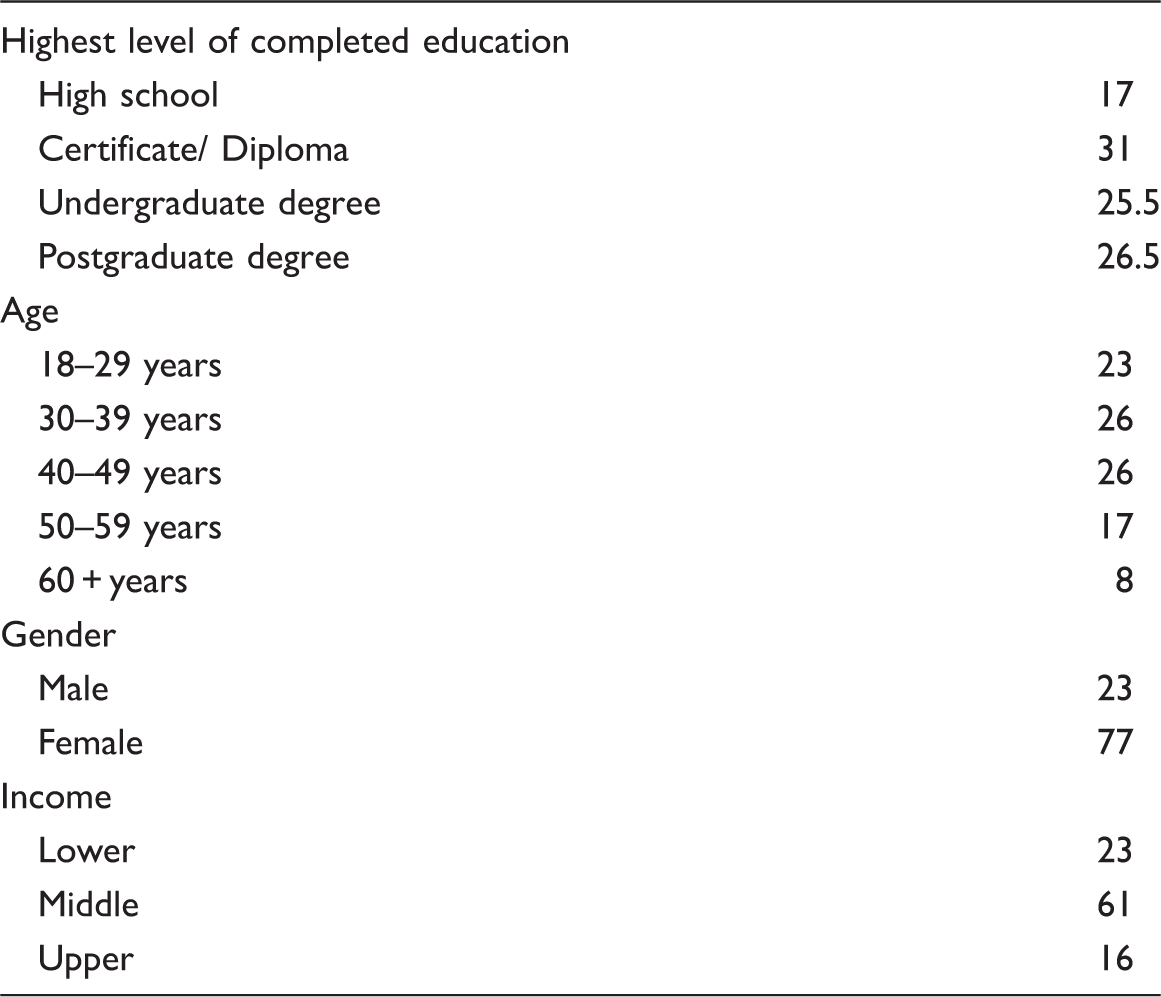
Demographic information (N = 533).
Measures
Demographic variables
Participants provided details about their age, gender, education and income level.
Dependent variable
The construct of ‘punitive attitudes’ was measured using the Punitiveness Scale (PS) (Spiranovic et al., 2011). The PS consists of seven items each measured on a 5 point Likert scale (1 = strongly disagree; 5 = strongly agree). A sample question was “People who break the law should be given stiffer sentences”. Scores were summed together with higher scores on this scale indicate higher levels of punitive attitudes. Spiranovic et al. (2011) found the measure to have good internal consistency (Cronbach's α = .83) and a recent Principle Axis Factor Analysis supported the idea of a uni-dimensional scale. The reliability measure for the PS in this study is consistent with previous research findings with Cronbach's α = .92.
Independent variables
(a) The Crime–distrust variables. Crime salience and institutional distrust (Crime–distrust model) were operationalized and measured using three separate subscales:
The Fear of Crime (FOC) Scale, The Perception of Crime (POC) Scale, and; The Confidence in Courts (CIC) Scale.
The FOC scale was designed to measure participant's concerns about becoming a victim of crime (Spiranovic et al., 2011). The three items of the FOC scale were measured on a five-point Likert scale, however the first had a different rating system (1 = never; 5 = many times) to the other two (1 = very safe; 5 = very unsafe). A question was “How safe do you feel when alone at home after dark”. Higher scores on the FOC scale indicated stronger fear of becoming a victim of crime.
The POC Scale measured the participants' perception that crime rates are rising (Spiranovic et al., 2011). The three items of the POC scale were measured on a five-point Likert scale (1 = decreased a lot; 5 =increased a lot). A question was “In your opinion, do you think that the level of crime overall in your state or territory has increased, decreased or remained the same in the last two years”. Higher scores on the POC scale indicated a stronger belief that crime rates are on the increase.
The CIC scale measured a participant's confidence or trust in the court and legal system. The three items measured a participant's degree of confidence in the courts system as an institution (Mackenzie et al., 2012). The items used a five-point Likert scale (1 = not at all confident; 5 = very confident). A question was “How confident are you that the courts are effective at giving punishments which fit the crime”. Higher scores on the CIC indicated greater confidence in the courts and legal system.
In previous studies the FOC and POC Scales demonstrated acceptable internal consistencies (FOC Cronbach's α = .69; POC Cronbach's α = .71) (Spiranovic et al., 2011). In the present study the three subscales demonstrated good internal consistencies (FOC Cronbach's α = .75; POC Cronbach's α = .80; CIC Cronbach's α = .91).
(b) The Racial–animus variable. Negative perception of minority cultural groups was operationalized and measured through the Modern Racism Scale (MRS).
The MRS was originally designed by McConahay, Hardee, and Batts (1981) and was adapted for the Australian context by Augoustinos, Ahrens, and Innes (1994). The revisions reflect more accurately the Australian setting. For example, the authors replaced the term ‘black’ with ‘Aboriginal’. As such, an example item from the original scale “Blacks should not push themselves where they are not wanted” became “Aboriginals should not push themselves where they are not wanted”. Augoustinos et al. (1994) made further revisions to two items. Item three was revised to read “Aboriginals have more influence upon government policy than they ought to” while item four was revised to read “Aboriginals are getting too demanding in their push for land rights”. The seven items were rated on a five-point scale (−2 = Disagree strongly; 2 = Agree strongly). Scores range from a possible minus 14 indicating low or no prejudice to plus 14 indicating high levels of prejudice with zero as the middle point.
The Australian adaptation of the MRS is considered an explicit measure of prejudice towards Indigenous Australians. While the MRS was developed over 20 years ago, it remains an appropriate measure of social attitudes. For example, it demonstrated strong internal reliability and validity when compared with an adaptation of the Implicit Association Test (Skinner et al., 2013). The Australian version of the MRS has demonstrated good internal consistency (Cronbach's α = .85) (Augoustinos et al., 1994). In the present study the reliability of this measure was consistent with previous findings with a Cronbach's α = .90.
Results
Descriptive statistics and assumptions
Descriptive information of measurement scales (N = 533).
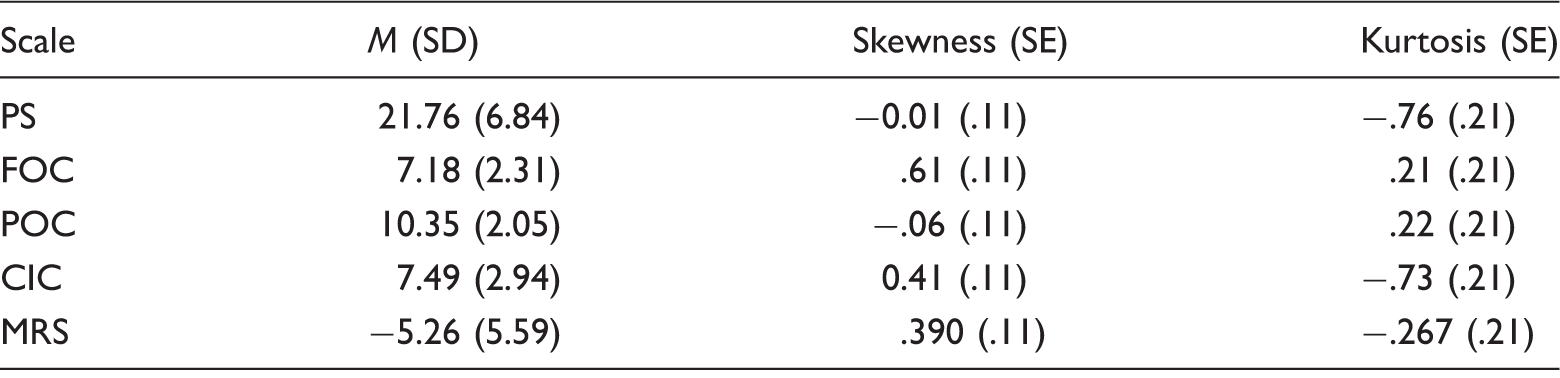
PS: Punitiveness Scale; FOC: Fear of Crime Scale; POC: Perception of Crime Scale; CIC: Confidence in Courts Scale; MRS: Modern Racism Scale.
There were no extreme univariate outliers, but six multivariate outliers were excluded from further analysis as their Malhalanobis distance were greater than 3.29 standard deviations away from the mean (Tabachnick & Fidell, 2014). The final sample size of N = 527 met the acceptable sample standard to conduct regression analysis (Green, 1991).
Zero-order correlations of the criterion and predictor variables.
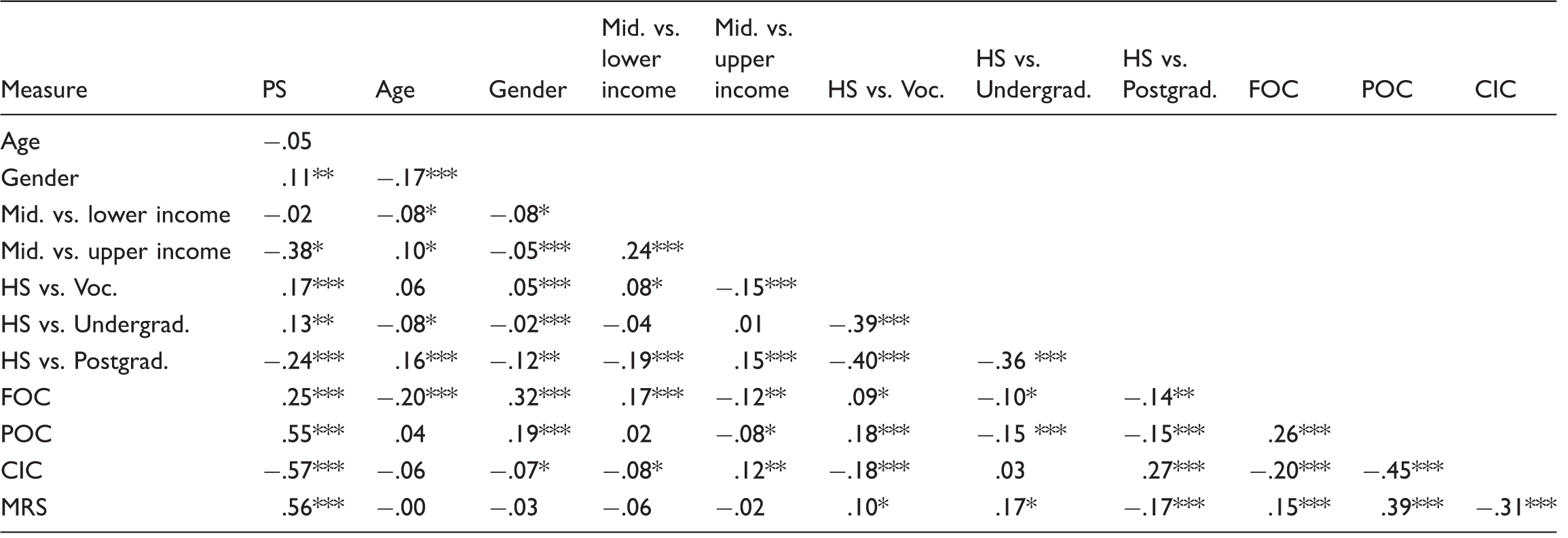
PS: Punitive Scale; FOC: Fear of Crime Scale; POC: Perception of Crime; CIC: Confidence in Sentencing Scale; MRS: Modern Racism Scale; Coding for gender; 1 = male; 2 = female; Coding for education; High school (HS) vs. vocational (Voc) = 1; HS vs. Undergraduate degree (Undergrad) = 2; HS vs. Postgraduate degree (Postgrad) = 3. Coding for income = Middle vs. Lower = 1, Middle vs. Upper = 2.
Note: *p < .05; **p < .01; ***p < .001.
Hierarchical multiple regression analysis predicting punitive attitudes to sentencing.
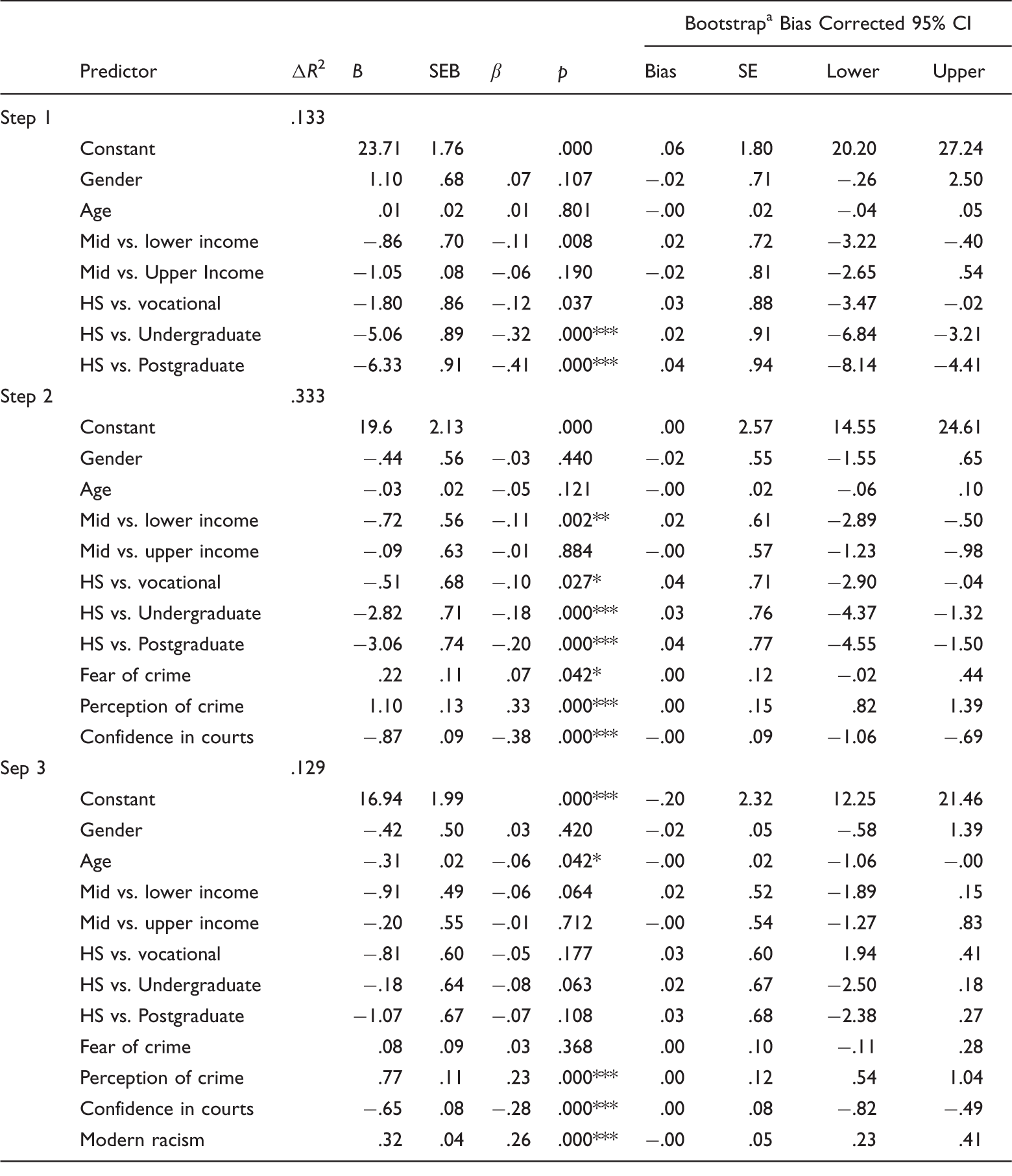
B: unstandardized regression co-efficients; β: standardized regression co-efficients, SEB: standard error; Bias: difference between original mean and bootstrap mean; SE: standard error of the bias. Coding for gender: 1 = male; 2 = female; Coding for education; High school (HS) vs. Vocational (Voc) = 1; HS vs. Undergraduate degree (Undergraduate) = 2; HS vs. Postgraduate degree (Postgraduate) = 3. Coding for income = Middle vs. Lower = 1, Middle vs. Upper = 2.
Note: *p < .05; **p < .01; ***p < .0001.
Unless otherwise noted, bootstrap results are based on 5000 bootstrap samples.
Predicting punitive attitudes
A three-step hierarchical linear regression analysis was conducted to test the stated hypotheses (see Table 4). Regression model one in step 1 examined the predictive variance of demographic variables (Age Gender, Income and Education). The second model included the Crime–distrust variables (FOC, POC, and CIC), and the third model included the Racial–animus variable. The full model was found to be statistically significant (F(2, 514) = 82.09, p < .001; R2 = .60), accounting for 60% of the variance on Punitive Attitudes. This indicated a very large effect size which is uncommon in social science research (Cohen, 1988).
In step one, entry of the demographic variables into the multiple regression equation resulted in: R2 = .13, F(7, 519) = 11.36, p < .001. Model 1 was significant with demographic variables accounting for a significant 13% of the variation in punitive attitudes, and R2 = .13 representing a medium effect size (Cohen, 1988).
In step two, entry of the Crime–distrust variables into the model equation resulted in: R2 = .47, F(3, 516) = 107.44, p < .001. Model 2 was significant and the Crime–distrust variables in the model equation accounted for an additional 33% of the explained variance, suggesting a large effect size (Cohen, 1988). This finding supported the hypothesis that all three components of the Crime–distrust model (FOC, POC and CIC) predicted punitive attitudes. In summary, ‘fear of crime’, ‘perception of crime’ and ‘confidence in the court system’ predicted punitive attitude.
In step three, entry of the Racial–animus variable in the regression equation resulted in a significant model, R2 = .60, F(2, 514) = 82.85, p < .001. Racial–animus added an additional 13% to the accounted variance that is a medium effect size (Cohen, 1988). This finding indicates that Racial–animus is a significant predictor of punitive attitudes towards sentencing.
In reviewing the co-efficients of the Step 3 model after the addition of Racial–animus to the regression model indicates that all of the three Crime–distrust variables, except fear of crime, contributed significantly to the final model. This finding indicates that fear of crime no longer functions as a predictor of punitive attitudes after the ‘attitude towards Indigenous Australians’ variable was introduced. This finding supports the hypothesis that ‘attitude towards Indigenous Australian's’ influences punitive attitude.
This research has confirmed that the components of the Crime–distrust model predicted punitive attitudes, but fear of crime in this model became non-significant after the inclusion of the Racial–animus variable in the regression model.
Discussion
The aim of the study was to examine the utility of two theoretical models to predict punitive attitudes: (a) The Crime–distrust model and (b) The Racial–animus model.
Fear of crime
The present study found that participants who reported higher levels of fear of crime were also more punitive. This finding is consistent with contemporary Australian empirical evidence (Spiranovic et al., 2011). It is important to note, however, that not all studies have included fear of crime in their examination of the utility of crime salience construct to predict punitive attitudes. For example, Australian researchers (Kornhauser, 2013; Roberts & Indermaur, 2007) did not examine fear of crime, as they used an earlier data set that did not have a fear of crime measure included.
Earlier International studies (Costelloe et al., 2009; Sprott & Doob, 1997; Tyler & Boeckmann, 1997) and one Australian study (Kelley & Braithwaite, 1990) failed to uncover an association with fear and the support for ‘stiffer’ sentencing. Comparative differences between the current findings and older research may be related to social changes in the community. Kelley and Braithwaite, for example, analysed dated survey data from the National Social Science Survey, 1984. Since 1984 Australia has been exposed to the impact of 9/11 terrorist attack and access to both the 24 hour-a-day news services and social media networks. The proliferation of media sources and recent terrorist events may have influenced the public's fear of crime and a desire for harsher sentencing.
The Fear of Crime variable predicted punitive attitude without the influence of the Racial–animus variable.
Perception of crime
The current study found, consistent with the Australian literature, that perception of escalating crime rates increases endorsements of punitive attitudes. In two contemporary Australian studies (Roberts & Indermaur, 2007; Spiranovic et al, 2011) the perception of increasing crime rates was the strongest predictor of punitive attitudes. These results are also consistent with international findings (Hogan et al., 2005; Soss, Langbein, & Metelko, 2003).
The finding that ‘perception of increasing crime’ is significant in predicting punitive provides focus for efforts to redress punitive attitudes. The significant association between crime salience and punitive attitudes suggests that public punitiveness could be ameliorated through access to accurate crime rate information. Research suggests that a perception of escalating crime rates is common in Australia despite factual information to the contrary (Indermaur et al., 2005). There is also empirical evidence to suggest that the public is generally poorly informed about crime rates and the types of crimes committed and obtains this inaccurate information from the media (Garland, 2001; Indermaur et al., 2005; Jones & Weatherburn, 2010). With regard to media consumption, research evidence suggests that people who watch more TV generally, tabloid media specifically and report uncritical acceptance of the media are more punitive (Roberts & Indermaur, 2007; Spiranovic et al., 2011). Uncritical consumption of sensationalised media crime stories may increase crime salience, and account for its utility in predicting punitive attitudes.
Confidence in courts
The current study found that participants who reported more confidence in the court system were less punitive in their attitudes. This finding is consistent with other Australian literature. Two Australian studies exploring predictors of punitive attitudes (Kornhauser, 2013; Roberts & Indermaur, 2007) found that reduced confidence in the courts was associated with attitudes that are more punitive. Research by Spiranovic et al. (2011) although not directly assessing institutional distrust found that participants with personal experience with the criminal courts were less punitive.
The current findings are inconsistent with other international studies (Tyler & Boeckmann, 1997; Unnever & Cullen, 2010b). These studies did not find a relationship between level of confidence in the courts and punitive attitudes. Unnever and Cullen (2010b), for example, failed to uncover a relationship between institutional distrust and punitiveness. This inconsistency could be explained by the differences between the present study and American research. Firstly, Unnever and Cullen's study was retrospective and analysed dated data obtained from the 2000 National American Survey. Secondly, there is a significant time difference noted between the present study and earlier American research (Tyler & Boeckmann, 1997; Unnever & Cullen, 2010b). Since the year 2000 the USA and the Western World have experienced the impact of the 11 September terrorist attacks and a presidential election that was determined by their supreme court. These events may have influenced the public's views and institutional distrust captured as ‘snapshots’ in the two different moments in time.
Both crime salience and institutional distrust tell a unique story about the public's crime concerns and their desire for harsher penalties for offenders. The present study found that punitive attitudes were not only associated with public concerns about being victimised by crime due to perceived escalating crime rates, but punitive attitudes were also associated with less confidence in the courts to respond appropriately to those concerns (Unnever & Cullen, 2010b).
Negative perception of indigenous Australians
The Racial–animus model proposes that when people associate cultural minorities with crime, a demand for harsher sentencing becomes a way of expressing control or resentment towards ‘other’ groups (Kornhauser, 2013). The current study supports this model and the hypothesis by finding that participants with more negative perceptions of Indigenous Australians are more punitive in their demand for harsher penalties for offenders.
This finding supports previous research confirming the utility of the Racial–animus model as a predictor of punitive attitudes in the USA (Unnever & Cullen, 2010b) and Australia (Kornhauser, 2013). Previous research exploring the utility of the Racial–animus model in Australia has been limited to negative perception of new immigrants (Kornhauser, 2013). Current findings suggest that public perception of Indigenous communities may also function as predictors of punitive attitudes. It is perhaps surprising that Australian research has not given attention to culturally focused explanations for punitive attitudes in a national context (Kornhauser, 2013).
Considering the minority group threat thesis, it may be the Australian penal criminal justice system itself that has played and continues to play a role in establishing some cultural groups, as threats through an ongoing association between them and criminality (Cunneen, 2001). The finding obtained in the current study may relate, for example, to post-colonial segregation and institutional differences in the application of non-Indigenous law for the coloniser verses the colonized (Cunneen et al., 2013). One example of difference is sentencing outcomes that have been arguably more punitive in nature for Indigenous than non-Indigenous offenders. For example, Indigenous populations were historically over represented in death penalty sentences compared with non-Indigenous Australians (Finnane, 1997). In addition public executions of Indigenous offenders in Western Australia continued long after the abolishment of public executions of non-Indigenous offenders in 1871. A practice which continued in Western Australia until the legislation was repealed in 1952 (Markovich, 2003).
Contemporary research supports a further shift in judicial and policy attitudes in the past decade resulting in harsher sentencing outcomes for Indigenous Australians (Anthony, 2013). The ongoing over-representation of Indigenous Australians in custody has been summised by some as reflecting higher levels of offending by Indigenous people and/or as a result of systemic bias (Weatherburn, Fitzgerald, & Hua, 2003). This binary approach has been criticised as simplistic in opposition to a “multifaceted conceptualisation of Aboriginal over-representation which goes beyond single causal explanations” (Cunneen, 2006, p. 334). As Harry Blagg writes: The ongoing over-representation of Indigenous Australians in the criminal justice system cannot be accounted for solely in terms of the prejudices of individuals within the system or greater levels of offending by Indigenous people… They are, rather, a reflection of the multiple layered patterns of disadvantage and extreme forms of marginalisation experienced by Aboriginal people (Blagg, 2008, p. 9).
There are also additional factors, such as media representations of minority groups, which may explain the association between negative perception of Indigenous Australians and public punitive attitudes. The literature suggests that Indigenous communities within Western countries experience marginalisation through media representation as ‘other’. This is the case with Native Americans (Daniels, 2006), Maoris (Nairn, Mc Creanor, Rankine, & Barnes, 2009) and Indigenous Australians (Mc Callum & Holland, 2010). Indigenous Australians, for example, are often under-represented in mainstream newsrooms (Cullen, Williams, Stewart, Johnston, & Phillips, 2012) and have their ‘English’ speech subtitled (Phillips, 2009) which can alienate them from the assumed mainstream culture. Indigenous Australians have also been represented in the media as ‘criminal other’ with sensational crime stories often received as fact, contributing to an public increase demand for punitive sentencing measures (Cunneen et al., 2013). Further research is required to investigate a possible association between media representations, and perceptions of Indigenous Australians and punitive attitudes. Cultural changes in the media, such as more inclusive and accurate reporting, may be beneficial in promoting positive attitudes towards Indigenous Australians and de-identifying them from ‘criminal other’.
Study limitations and future research
Quantitative measures, such as the MRS, assume that Indigenous Australians form a homogenous culture (Bodkin-Andrews, Denson, & Bansel, 2013). The current findings should therefore be considered cautiously as Indigenous Australians represent a diverse culture in a number of areas such as language use, living conditions and cultural values. The study also does not take into account the ethnic background of respondents nor differentiate punitive attitudes based on Indigenous and non-Indigenous demographics. Future research could consider including these additional cultural variables.
While it is not possible to examine every potential predictor of punitive attitudes in a single study, future research should consider including a measure of political attitudes, e.g. liberalism versus conservatism. Conservative political attitudes have been associated with punitive attitudes and racial prejudice (Langworthy & Whitehead, 1986). Inclusion of this variable may further explain the relationship found between the Racial–animus model and punitive attitudes.
One of the threats to the generalisation of the current findings is the use of a convenience sample. Recruiting through social networking and university students resulted in an overrepresentation of females and an underrepresentation of older participants. Furthermore, this sampling strategy focused on subjects with tertiary education. The findings, therefore, need to be considered with caution as they are representative of a highly educated group. Future research using a representative sample of the Australian population would increase the confidence with which findings are interpreted and generalised to other settings.
Conclusion
Determining predictors to punitive attitudes in Australian society is not only important in understanding the phenomenon of ‘punitiveness’, but also in ensuring that current information regarding public opinion towards sentencing is available for policy development and political purposes (Roberts & Indermaur, 2007). The present study examined the applicability of two theoretical models to predict punitive attitudes with an Australian sample group. The study extended the current literature through identifying the significance of negative perceptions of Indigenous Australians as a predictor of punitive attitudes to sentencing in an Australian context. Results suggest that community perceptions of Indigenous Australian function as a significant predictor of punitive attitudes in addition to factors of the Crime–distrust model.
There are implications of these findings with regard to the factors informing current public negative attitudes towards Indigenous Australians, such as institutional frameworks, post-colonial relations between Indigenous and non-Indigenous Australians, and the influence of the media. Further investigation is warranted to determine whether these factors can also become the source of positive public attitudes towards Indigenous Australians and potentially ameliorative public punitive attitudes. In accepting a need for institutional change, one may explore what type of institutional change would facilitate a public attitudinal change towards Indigenous Australians and sentencing. Future research may focus on beneficial strategies aimed at nurturing positive perceptions of Indigenous Australians as an additional approach to reducing public demand for harsher sentencing.
Footnotes
Declaration of conflicting interests
The author(s) declared no potential conflicts of interest with respect to the research, authorship, and/or publication of this article.
Funding
The author(s) received no financial support for the research, authorship, and/or publication of this article.