




Abstract
Adolescent violence toward parents is a unique form of family violence which for many, including police personnel, challenges traditional views of parent–child relationship, and raises questions about victimization. There has been minimal research in Australia to date in this area, and knowledge about both prevalence rates and the characteristics of offenders and victims remains limited. This exploratory study utilized police data from four Australian States to document prevalence rates of reported offenses to police, and the characteristics of adolescent violence toward parents in Australia. Between 1% and 7% of family violence reported to the police is adolescent violence toward parents. The “typical” perpetrator is a 15- to 17-year-old Caucasian young man who is generally violent toward his mother. Findings are limited by the differing police practice and policy variations between States, including the use of police discretion, leaving several questions open for further investigation. In conclusion, there is a need for change in policy and practice with regards how best to assess and respond to adolescent violence toward parents.
Introduction
For the past 30 years, police policy and practice in relation to family violence have developed significantly, with an array of measures now commonly implemented to improve the safety of women and children (Miles & Condry, 2016). Adolescent Violence Toward Parents (AVTP) is most commonly defined by Cottrell (2001) as “…any act of a child that is intended to cause physical, psychological or financial damage to gain power and control over a parent” (p. 3). It challenges our commonly held ideals around power dynamics between parents and children, and this relationship being one of safety and care. AVTP is a specific form of family violence which often creates a dilemma for criminal justice professionals; as the youth court often aims to find a balance between a justice and welfare response (Holt, 2016). This is complicated by multifaceted elements of victimization, with often experiences of being victim of family violence, common for both the victim and the perpetrator (Moulds & Day, 2017; Routt and Anderson, 2011). The Australian Institute of Health and Welfare (2018) reported numbers as high as two-thirds of mothers who experienced violence said a child had seen or heard the violence. With the legal system beginning to recognize that AVTP is an emerging issue, the challenge for police is translating this awareness into appropriate practice. This should be based on a clear understanding of the nature of the issue, both in terms of prevalence and the characteristics of those involved. This study aims to provide an overview of the prevalence of reported incidents of AVTP and the characteristics of the perpetrators, victims and the incidents themselves, using Australian police data.
In Australia, there is no federal-level agreement regarding family violence policy or policing practices, with various definitions and practices utilized in different contexts, jurisdictions, and legislations (Australian Bureau of Statistics [ABS], 2013). This is the same for AVTP, where there is a lack of consensus regarding definition, and no specific police policy or guidelines in place to guide responses. As such police officers are often left to depend on child protection, family violence, and youth justice frameworks, despite AVTP having applicability in all of these areas (Hunter et al., 2010).
Across Australia, family violence broadly constitutes a significant proportion of police work, and has been identified as one of the biggest challenges facing the justice system (State of Victoria, 2016). Police data are the most commonly used source of information for descriptions of family and domestic violence trends in Australia (Alcohol/Drug-Involved Family Violence in Australia [ADIVA], 2016), However, it is restricted to reported cases, and therefore often the cases represent a distinct type of AVTP; perhaps cases which are particularly dangerous, high risk, or when this behavior has been longstanding (Holt, 2012; Miles & Condry, 2016). Police data are ultimately limited by police process and procedure, with a level of discretion and responsibility in the hands of the police (Holt, 2012; Miles & Condry, 2016). When police attend, this represents an important moment for the parent to experience how someone will respond to their plea for help; therefore, police responses need to be empowering, supportive, and recognize the victimization of the parent (Miles & Condry, 2016). For police, violence within families is often not reported, court proceedings can be heavily dependent on victim testimony, and there are challenges around the most appropriate ways to respond (Miles & Condry, 2016). One study, conducted in New South Wales, determined that less than half of all people who had been a victim of family violence reported the incident to police (Grech & Burgess, 2011). Boivin and Leclerc (2016) further note that even when incidents are reported to the police, only a very small number result in prosecution and conviction, describing what they term the “funnel” function of family violence. When police do attend a family violence incident they are typically balancing discretionary versus mandated practice to try and achieve protection for victim(s) and prevent further violence (Diemer et al., 2017). According to the Australian Institute of Health and Welfare (2018) report on Family, Domestic and Sexual Violence in Australia, there is a need for further work to guide a consistent national approach to reporting family and domestic violence incidents, as there is no consistent method for identifying incidents across States and Territories in Australia.
In 2016, a State government instituted a Royal Commission into Family Violence, which also considered adolescent violence in the home. Data were collected from the Victorian Police between July 2009 and June 2014 which showed that approximately 1 in 10 family violence incidents reported to the police were perpetrated by an adolescent. The Commission heard evidence that parents often viewed calling the police as a “last resort,” wanting assistance to address their child’s behavior and not a criminal justice response. The Commission noted that police officers could be limited by the options available to them. The Commission concluded that a lack of community acknowledgement and understanding, parental guilt, denial, self-blame, and minimization of abuse (e.g., defending the adolescent’s violence on the basis of “typical adolescent behavior”) suggests that the prevalence of AVTP is significantly under-reported.
Miles and Condry (2016) in their analysis of 100 AVTP cases where police had responded found that a lack of official recognition and formal policy meant that police discretion often influenced how incidents were responded to and recorded. They noted that while the police are the first contact for many AVTP victims, they are often only utilized at crisis point. In these circumstances, police are expected to balance the rights of the victim and respond in a way which takes their victimization seriously, as well as trying to not criminalize the perpetrator by exploring available diversionary measures for the young person (Miles & Condry, 2016; Routt & Anderson, 2011; State of Victoria, 2016). They also noted some unique challenges associated with policing AVTP, including those that arise as a result of: the perpetrator being under 18 (raising issues about the use of intervention orders when s/he is still classified as a minor and dependent on the parent/victim); parent resistance (to making statements) and shame; the lack of appropriate accommodation and service options; and finding a response that was acceptable to all family members. They concluded that police at all ranks face significant challenges in relation to how to effectively respond, and that these are exacerbated by a lack of policy guidance in the area.
It is also important to consider the perspectives of perpetrators and victims. Howard and Abbott (2013) interviewed 11 adolescents who had had police and/or court contact because of AVTP along with 15 parents. They found that many parents (80%) waited for years before they contacted the police, mainly due to shame, stigma and guilt, feeling that they should be able to manage the problem themselves, and not wanting the child to have a permanent record or to be permanently removed. It is unsurprising that statistics on AVTP are generally thought to significantly under-estimate the societal experience (Barnett, Miller-Perrin, & Perrin, 2011).
Current research on the prevalence of AVTP relies on, and is restricted by, reported cases, which are also thought to represent only the most severe cases (Miles & Condry, 2016). A recent literature review (Moulds et al, 2016) found that while there is significant variance in relevance rates, approximately one in ten families is impacted by AVTP. The majority of the studies were, however, conducted in the USA and Spain (e.g., Brezina, 1999; Calvete, Orue, & Gámez-Guadix, 2013; Contreras & Cano, 2014; Ibabe & Jaureguizar, 2010; Routt & Anderson, 2011), and these estimates may largely reflect the legislative structures of these countries and have limited applicability to the Australian experience. The estimated prevalence of AVTP was also likely to vary quite markedly as a function of characteristics of the study design, for example sample size, and whether the sample was clinical or forensic, or community based.
There are also currently no Australia-wide prevalence data, although some analysis was conducted in Victoria as part of the Victorian Royal Commission into Family Violence (see above). The only other publically available data comes from Western Australia, where the Police Business Intelligence Office has provided statistics from 2009 to 2014 on the prevalence of physical and sexual violence. These show that 1416 cases of reported assaults (out of 2013) within the home were recorded as having been perpetrated by adolescents (10–17 years of age) (Hopkins, 2014). The lack of substantive prevalence studies means that the prevalence of AVTP across Australia remains largely unknown, even in terms of official statistics.
There is also limited knowledge about the characteristics of those involved in AVTP (Walsh & Krienert, 2009; Williams, Tuffin, & Niland, 2016). While studies are consistent in finding that it is women who are most likely to be a victim, with rates as high as 70–90% (Contreras & Cano, 2014; McCloskey & Lichter, 2003), gender prevalence estimates vary markedly between studies (e.g., Bartle-Haring et al., 2015; Calvete et al., 2013; Kennedy et al., 2010; McCloskey & Lichter, 2003). The review conducted by Moulds and Day (2017) nonetheless concluded that AVTP offenders and their families could be characterized as a high needs group which commonly experiences difficulties with drugs and alcohol, high rates of trauma, and comorbid mental health concerns. The trauma and maltreatment profiles for both victims and perpetrators of AVTP create a shared, cyclonical aspect to victimization, which complicates judgments of culpability (Miles & Condry, 2016; Moulds & Day, 2017). Having a clear conceptualization of the prevalence and nature of AVTP within Australia will assist police in their efforts to prevent and intervene in AVTP and start to challenge some of the barriers that exist in encouraging parents to reportand seek support when AVTP occurs. The current study aims to provide an indication of the prevalence of AVTP in Australia based on police data, and patterns with regards to victim, perpetrator, and contextual characteristics. More specifically, this exploratory study will investigate: how many police reports in Australia are made in regard to AVTP? What do we know about characteristics of perpetrators of AVTP? How do factors such as gender and race impact on AVTP perpetration? What do we know about characteristics of victims of AVTP? and What do we know about incidents of AVTP?
Method
This study is an investigation of data collected in an Australian National Drug Law Enforcement Research Fund (NDLERF) funded project (the ADIVA) which collated police data from every State and Territory over a five year period. Permission to access the ADIVA data set was granted from Queensland (QLD), Western Australia (WA), the Australian Capital Territory (ACT), Victoria (VIC), and New South Wales (NSW). The ACT data could not, however, be utilized in analysis due to the data obtained not including perpetrator information (e.g., age), meaning that adolescent offenses could not be identified. All data were de-identified. There are no consistent methods of identifying family and domestic violence incidents across States and Territories within Australia and therefore State and Territory police data cannot be compared and analyzed collectively and need to be considered separately, which is a recognized limitation of the study, however the study provides the unique opportunity to explore prevalence of AVTP across different jurisdictions.
Data relating to AVTP were identified based on a number of filters (see results for a description of methods for each state). Where possible, an incident where the victim was a grandparent or sibling was excluded by filtering for victim relationship (child/parent) and age (e.g., maximum age of victim 60, minimum age of victim 24), this was due to the focus of this research being on AVTP, rather than adolescent perpetrated family violence more broadly.
The data were analyzed using quantitative methods, predominately descriptive statistics to create an overarching profile of the nature of AVTP in Australia. Bivariate (chi-square) statistics were conducted to explore group differences on key categorical variables of interest: age, race, and gender.
Results
Results are presented individually by each participating jurisdiction, due to Commonwealth and State and Territory governments implementing individual policy’s regarding family violence, which vary the way in which data is collected and classified. Each jurisdiction collects data differently, defines family violence/AVTP differently, and uses incomparable systems to manage data. Each state differs in policy and practice around family violence, and varies in the degree to which there is cross-agency collaboration, the way in which data is collected and what risk assessments are utilized. Moreover, for each State and Territory, what information is collected is often at the discretion of the officers, which can have an impact on a number of variables, such as time, perception of what information is valuable, and what information is made available when responding to an offence. See the ADIVA report (Miller et al., 2016) for more detail regarding differences in state policy and procedure.
New South Wales
Prevalence
New South Wales had an approximate population of just over 7 million in 2011, and has a land size of 2,529,875 km2, with a population density of 9.52 (persons per km2) (ABS, 2017). Data for the study were obtained from the NSW Police database for the period 1 January 2009 to 31 December 2013. It was divided into person and incident data; no victim specific data was made available. Cases of AVTP were identified by selected cases of family violence, cases where the relationship was child (of victim), and where the age of offender was 10–17 years of age. Across the reporting period there were 119,833 family and domestic violence incidents, with a total of 10,634 young people who committed family violence (person data) and 8312 incidents of AVTP, meaning 8.87% of family violence incidents were committed by an adolescent and 6.94% of family violence incidents were AVTP (or 78% of family violence incidents committed by an adolescent). To consider AVTP within this population, family violence data was sorted based on the variable “Relationship offender to victim” (child) and for the offender to be between 10 and 17 years of age. Between 2009 and 2013, incidents of AVTP rose from 1338 incidents in 2009 to 1894 in 2013. This represents a 42% increase.
Characteristics
Demographic data identified that most cases of AVTP reported to police were perpetrated by males (64%) who were between 14 and 17 years of age (68%), with just over a third of perpetrators being recidivist offenders (of AVTP or other offences). Police reports suggest that in half of cases children were present, and the majority of incidents were not drug or alcohol related. There was no clear pattern in relation to what days AVTP occurred during the week; however, 40% of incidents occurred after 6 p.m. For a summary of demographic data, see Table 1.
Demographics New South Wales (NSW).
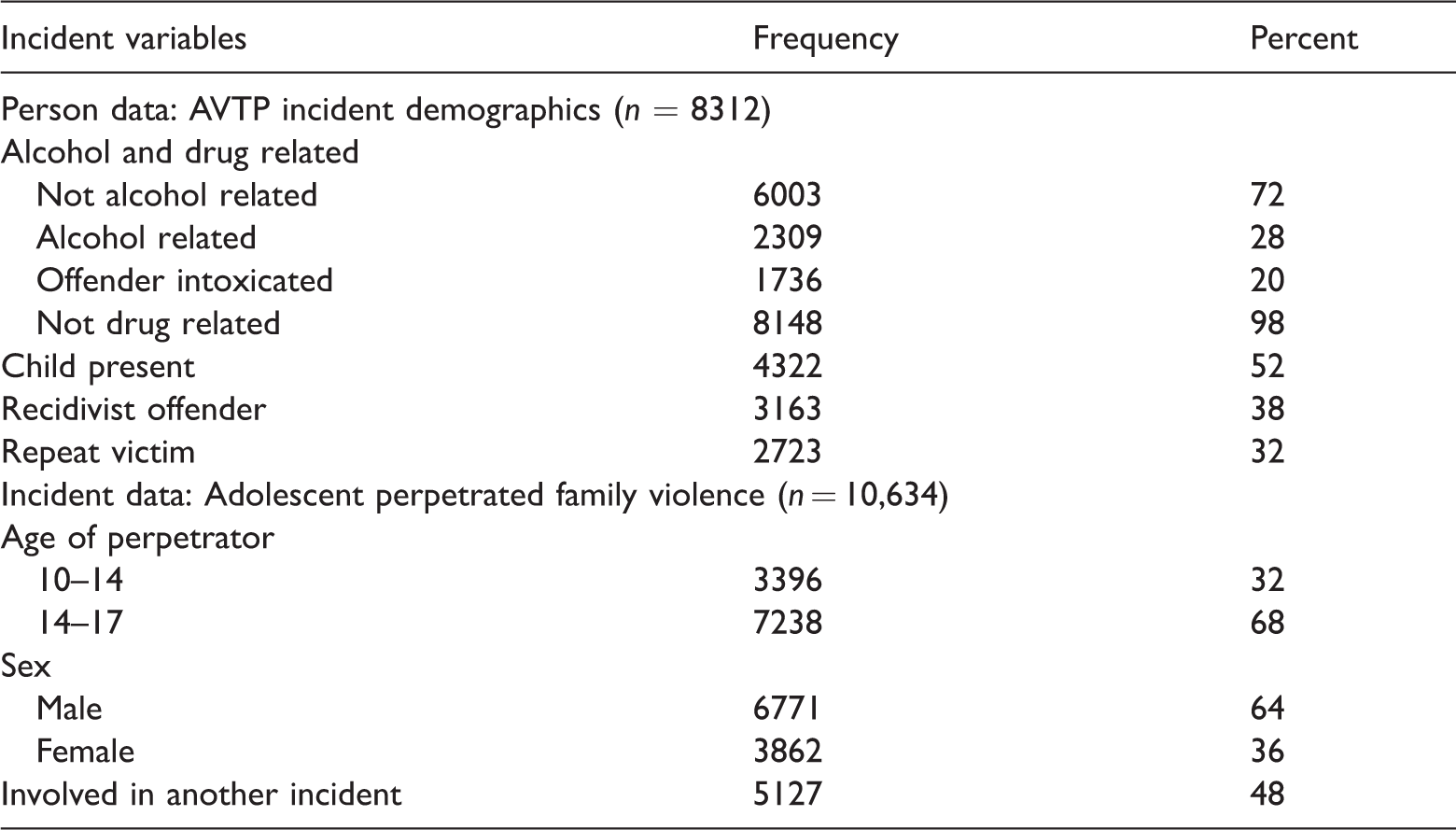
AVTP: Adolescent Violence Toward Parents.
A chi-square test of independence was performed to examine the association between age and gender. The relation between these variables was significant, χ2(14) = 153.83, ρ < 0.001. Male rates of AVTP tended to steadily increase, female rates seem to plateau at age 15 (Figure 1). A chi-square test of independence was performed to examine the relation between gender and whether the perpetrator was involved in another incident. The relation between these variables was significant, χ2(2) = 25.63, ρ < 0.001. Female perpetrators were slightly less likely to be involved in more than one incident.
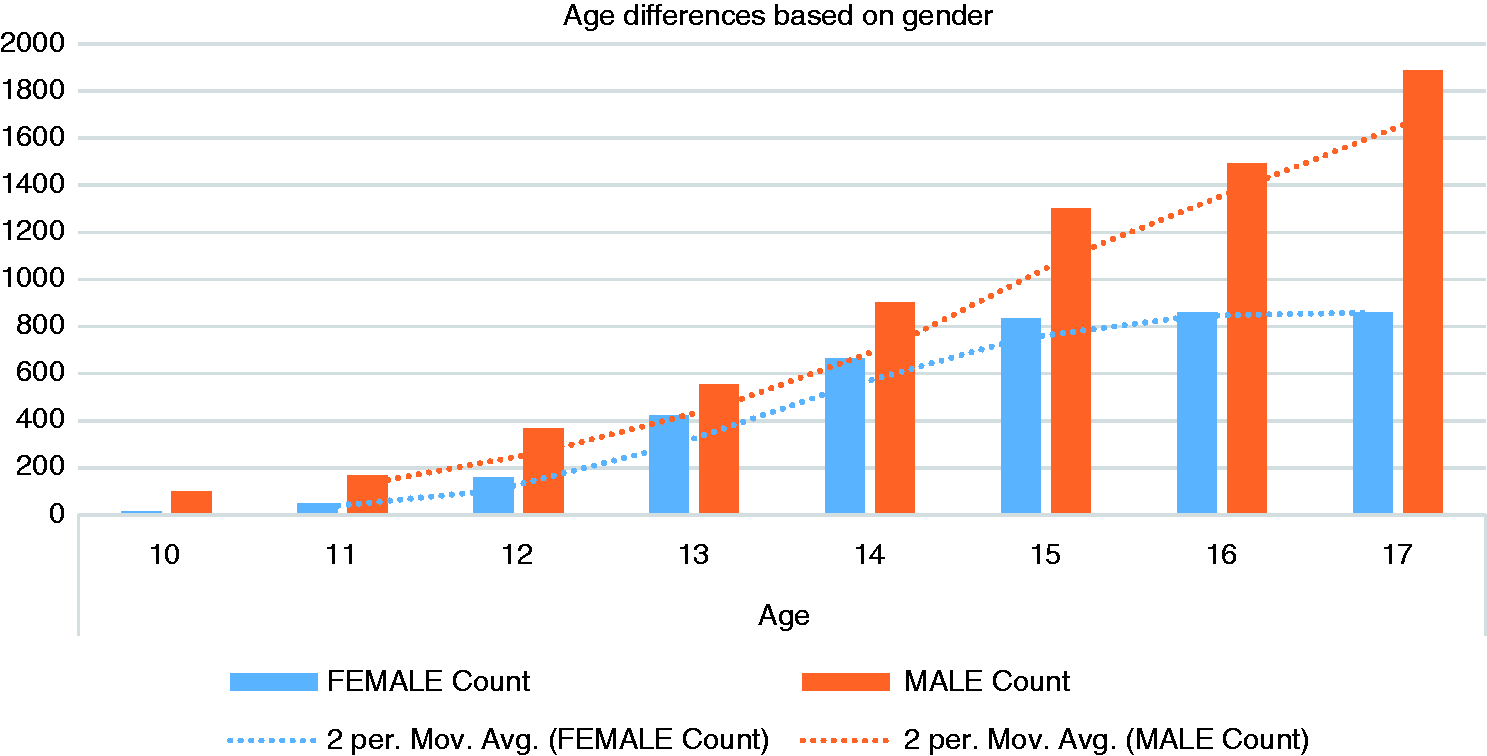
NSW age differences based on gender. 2 per.Mov. Avg refers to the moving average.
Victoria
Prevalence
Victoria (VIC) had an approximate population of just over 5.5 million in 2011, and has a land size of 227,416 km2, with a population density of 26.11 (persons per km2) (ABS, 2017). This section presents trends for offenders within family violence incidents attended by VIC police between 1 January 2009 and 31 December 2013. Data were sorted for AVTP based on perpetrator age (10–17 years old), victim age (>18) and relationship (child/parent). In total, there were 235,847 incidents of family violence between 1 January 2009 and 31 December 2013. Of these, 11,243 (4.77%) of these were incidents of AVTP. Incidents of AVTP rose from 1696 in 2009, to 2903 in 2013, representing a 71.17% increase.
Characteristics
Demographic data identified that most cases of AVTP reported to police were perpetrated by males (65%) who were Caucasian (67%) and between 15 and 17 years of age (65%). In terms of victim characteristics, Victorian police reports suggested that 80% were female, with 50.5% being between 40 and 49 years of age. With regard to characteristics of the incidents, for 26% of cases, it was their first reported incident of AVTP; Intervention Orders in the majority of cases not present (83%); 40% occurred between 6 p.m. and midnight. The future risk was considered unlikely in almost half (42%) of cases, with less than 1% remanded in custody based on the incident. Of the reported cases, drugs and alcohol were reported to be involved in less than 10% of cases. For a summary of demographic data, see Table 2.
Demographics Victoria.
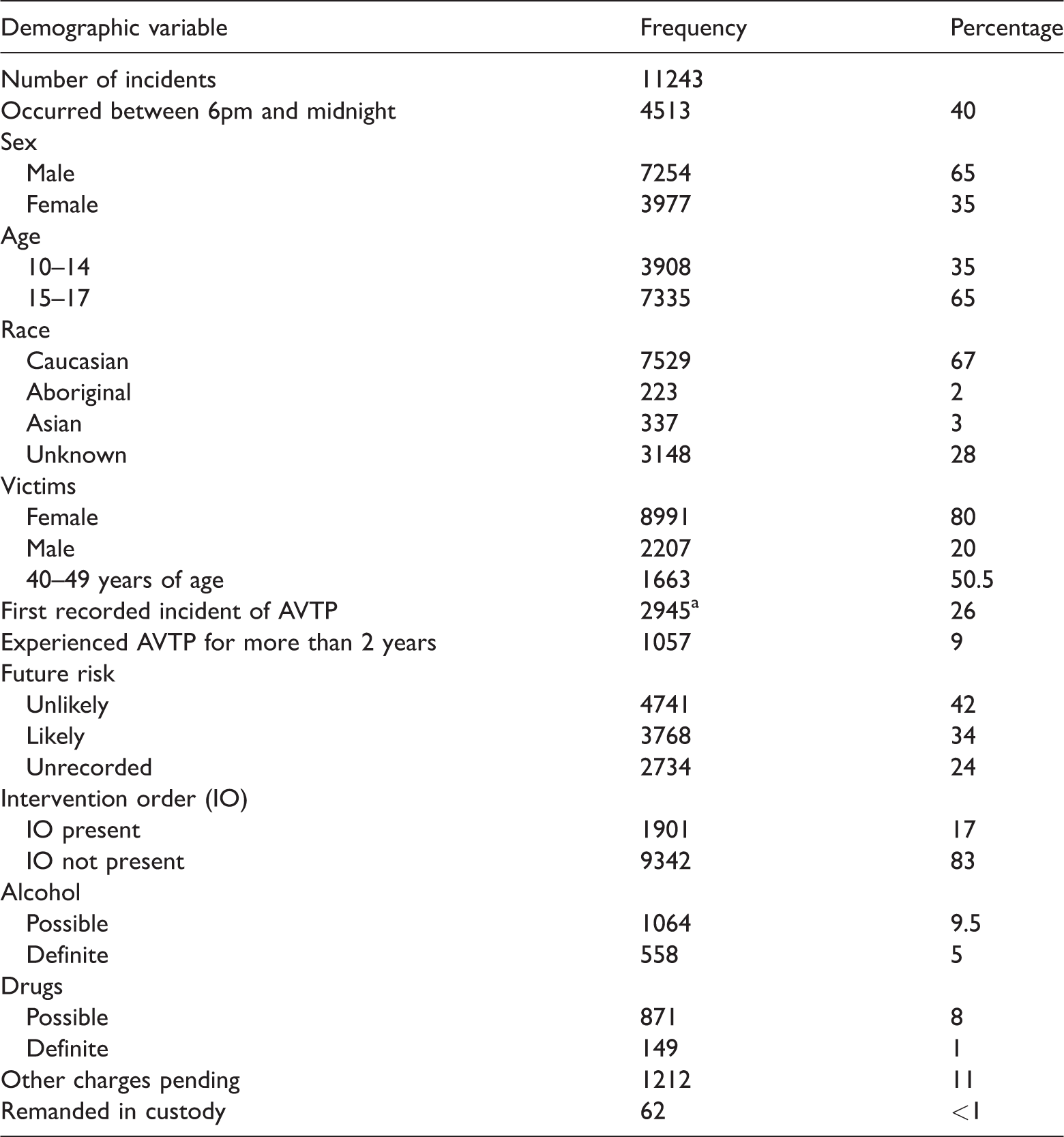
AVTP: Adolescent Violence Toward Parents.
aStatistics on incident history and length was only collected/valid for 10.5% of families (n = 1175).
Queensland (QLD) demographics.
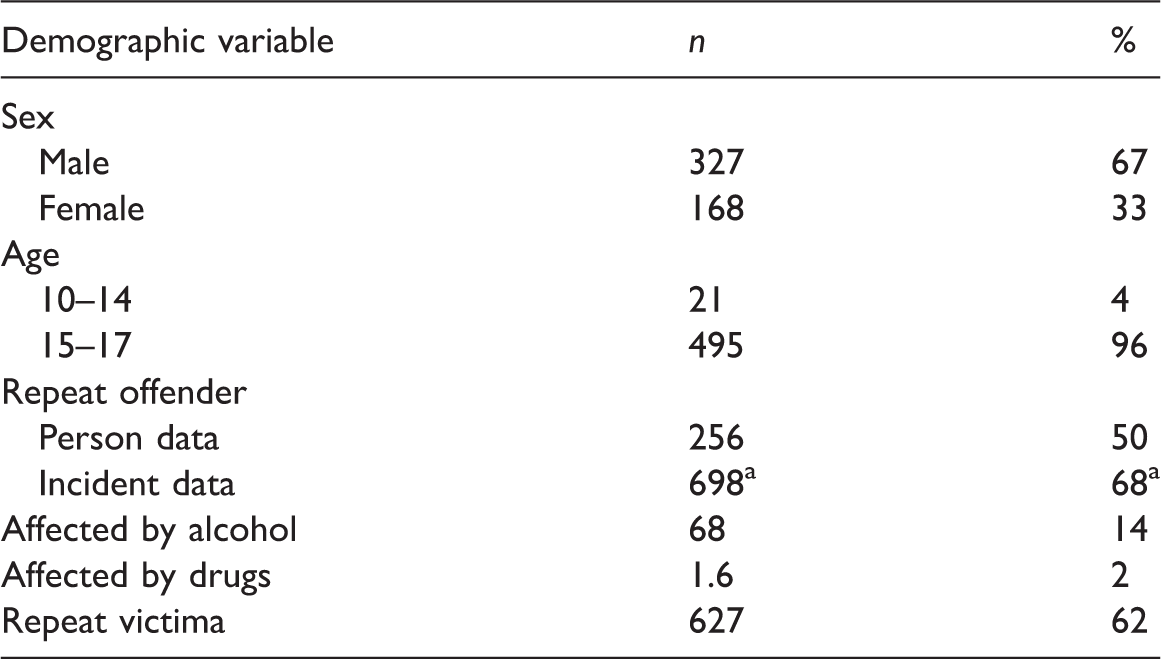
aIncident data.
A number of chi-square tests of independence were conducted to further explore characteristics. Females were significantly more likely to perpetrate AVTP against female victims than male victims, χ2(1) = 94.68, p < .001. More young Aboriginal women perpetrate AVTP than young Aboriginal men, and, more young Caucasian men perpetrate AVTP than young Caucasian women, χ2(4) = 15.28, ρ = 0.004. Female offenders were slightly younger (10–14 years of age) than their male counterparts, however in both cases over 60% were over 15, χ2(1) = 56.36, ρ < .001. When reported, AVTP was perpetrated by a female they were classified as higher risk of reoffending than reported incidents of AVTP that was perpetrated by males, χ2(2) = 20.95, ρ < .001. Male perpetrators were slightly more likely to be placed on an intervention order (than female perpetrators), χ2(1) = 87.88, ρ < .001. Victorian Police use the Family Violence Risk Assessment and Risk Management Framework (known as the Common Risk Assessment Framework or CRAF) to measure risk of re-offending. Of the young people who were placed on intervention orders, 11.7% were identified as likely risk to reoffend compared to 65.4% who were identified as unlikely (22.9% unknown risk level), suggesting that intervention orders were not based on future likely risk, χ2(2) = 619.77, ρ < .001. There was a tendency for Caucasian offenders to be more likely classified as unlikely risk of future AVTP offending and Asian offenders to be more likely classified as likely risk for future AVTP offending, χ2(8) = 141.7, ρ < .001. Asian AVTP offenders were more likely to be placed on an intervention order than Aboriginal or Caucasian AVTP offenders, χ2(4) = 17.69, ρ < .001.
Queensland
Prevalence
Queensland (QLD) had an approximate population of just over 4.5 million in 2011, and has a land size of 1,730,647 km2, with a population density of 2.76 (persons per km2) (ABS, 2017). Please see table 3 for a summary of QLD demographics data. This section presents trends for offenders within family violence incidents attended by QLD police between 1 January 2010 and 31 December 2015. Data were spilt between person and incident data. AVTP cases were identified by selecting only family violence cases, cases where the relationship was child and the offender was aged between 10 and 17 years of age. Data were sorted for AVTP based on perpetrator age (10–17 years old), and relationship (child). In total, there were 330,701 incidents of family violence between 2010 and 2015. There was no available data related to characteristics of the victim, for example gender, or age. There was no data relating to race. Incident data suggested that 2.9% (n = 9693) of these cases were AVTP. Between 2010 and 2015, there was a 53.8% increase in reported incidents of AVTP. There was no clear real change in prevalence in regard to month, day of week, or time in which AVTP occurred.
Characteristics
Demographic data identified that most cases of AVTP reported to police were perpetrated by males (67%) and were between 15 and 17 years of age (96%). In regard to characteristics of the incidents, at least half of perpetrators were repeat offenders, with 62% of victims being repeat victims. Of the reported cases, drugs and alcohol were reported to be involved in between 2% and 14% of cases. For a summary of QLD demographic data, see Table 4. A chi-square test of independence was performed to examine the relation between perpetrator age, perpetrator sex, and whether drugs and/or alcohol were involved. The relation between these variables was not significant.
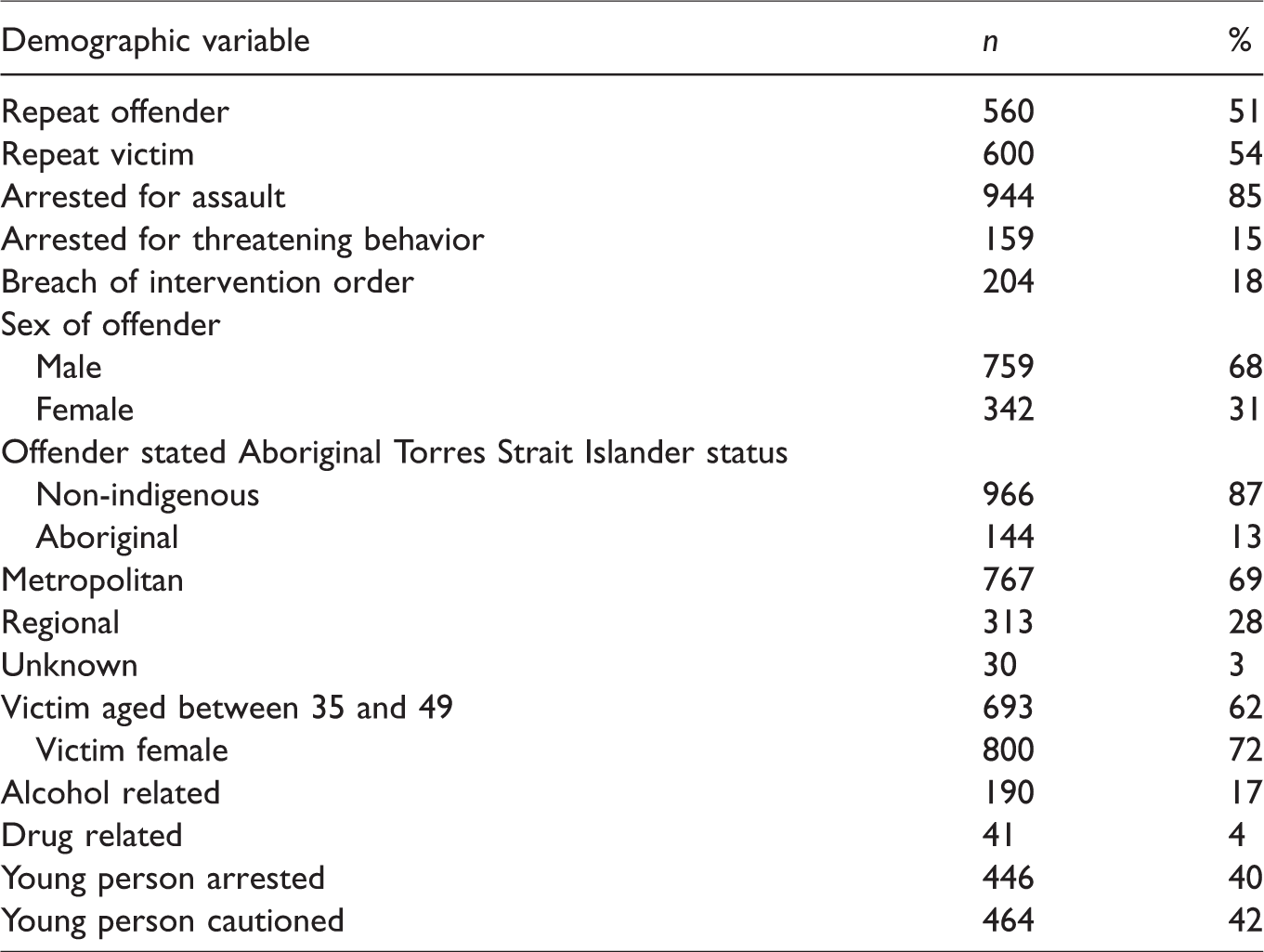
Western Australia (WA) demographics.
Western Australia
Prevalence
Western Australia (WA) had an approximate population of just over 2 million in 2011, and has a land size of 2,529,875 km2, with a population density of 1.02 (persons per km2) (ABS, 2017). This section presents trends for offenders within FV incidents attended by WA police between 1 January 2009 and 31 December 2014. Data were sorted for AVTP based on perpetrator age (10–17 years old), and victim age (24–60 years of age). This was not ideal, as it did not guarantee relationship; however, this variable was unavailable. Therefore, results should be interpreted with caution. In total, there were 140,638 incidents of family violence between 2009 and 2014. Of these, 1110 (0.79%) were suspected incidents of AVTP. Incidents went from 204 in 2009, down to 130 in 2014. There was no clear pattern in relation to month in which AVTP occurred.
Characteristics
Demographic data identified that most cases of AVTP reported to police were perpetrated by males (68%) who were non-indigenous (87%). The victim of reported cases was most often female (72%) and between 35 and 49 (62%). The mean age for a suspected AVTP offender was 15 years old (SD = 1.56) with the mean age for suspected victim of AVTP 41 years old (SD = 64.8). In regard to characteristics of the incidents, at least half (51%) of perpetrators were repeat offenders, with 54% of victims being repeat victims. Of the reported cases, police noted drugs and alcohol to be involved in between 4% and 17% of cases. Offenders were most often arrested for assault (84%). Only a small percentage of offences (18%) were in breach of an intervention order. The majority of incidents occurred in metropolitan regions (69%), and in 40% of cases the perpetrator was arrested, with 42% of cases leading to a formal caution. For a summary of demographic data, see Table 4.
A chi-square test of independence was performed to examine the relation between perpetrator sex and whether they were identified a repeat offender. The relation between these variables was significant χ2(2) = 7.4, ρ < .021. Males were more likely to be repeat offenders than female perpetrators. A chi-square test of independence was performed to examine the relation between perpetrator race and whether they were identified a repeat offender. The relation between these variables was significant χ2(1) = 13.43, ρ < .001. Slightly more Aboriginal and Torres Strait Islander (Indigenous Australian) (ATSI) young people were identified as repeat offenders than non-ATSI young people. A chi-square test of independence was performed to examine the relation between perpetrator sex and victim sex. The relation between these variables was significant χ2(4) = 15.32, ρ < .013. Female perpetrators of AVTP were slightly more likely to offend against women than male perpetrators of AVTP. A chi-square test of independence was performed to examine the relation between perpetrator sex and perpetrator race. The relation between these variables was not significant χ2(2) = 2.637, ρ > .05. A chi-square test of independence was performed to examine the relation between ATSI status and outcome (e.g., arrested or cautioned) χ2(7) = 108.01, ρ < .05, which was significant. ATSI young people were more likely to be arrested with non ATSI young people more likely to be cautioned. This could be due to ATSI young people being more likely to be repeat offenders, with a chi-square test of independence suggesting that the relationship between ATSI status and being a repeat offender being significant χ2(1) = 11.95, ρ < .05. A chi-square test of independence was performed to examine the relation between perpetrator gender and outcome (e.g., arrested or cautioned). The relationship between these variables was not significant χ2(14) = 26.165, ρ < .05.
Discussion
The aims of this study were to describe the prevalence of AVTP as reported to police within the Australian community, and to map the profiles of AVTP perpetrators, victims, and incidents. These data can be triangulated with that from other studies which have explored AVTP (e.g., Brezina, 1999; Calvete et al., 2013; Calvete, Orue, & Gámez-Guadix, 2015; Ibabe et al., 2013; Jaureguizar et al., 2013; Kang & Lynch, 2014; Pagani et al., 2009), to determine if characteristics and prevalence reported internationally of AVTP was mirrored in an Australian context.
How many police reports are made in regard to AVTP?
States varied substantially in the reported prevalence of AVTP. For example, in NSW, approximately 7% of cases of family violence were identifiable as AVTP; however, in WA it was only 0.79% of cases. This variation may be an indication that perpetration of AVTP differs across jurisdictions; however, it may reflect the influence of differing police policies, understandings, and classifications. Overall, it is acknowledged that police data are likely to under-estimate the true rate, given the shame, parental blame, and lack of community acknowledgment of AVTP (Correll, Walker, & Edwards, 2017). As such these figures should be regarded as conservative and are well below a prevalence rate of approximately 10% reported in other parts of the world (Brezina, 1999; Calvete et al., 2013, 2015; Ibabe et al., 2013; Jaureguizar et al., 2013; Kang & Lynch, 2014; Pagani et al., 2009). Gallagher’s (2008) study, however, suggests that a figure of 3–4% is likely to be an accurate representation of true rates of AVTP, with other rates likely to be an overestimation of true figures due to difficulties with self-report measures and the lack of clarity and consistency in definitions of factors such as violence. The WA data identified that 85% of cases attended by the police were assaults, highlighting the “crisis” nature of police calls in relation to AVTP, with only 15% being threats of violence. The analyses suggest that AVTP is a form of violence that is impacting on Australian families, and the variation warrants an increase in attention regarding police policy and classification. This is particularly important, given a reported increase in rates of 42% increase in NSW, a 53.8% increase in QLD and a 71.17% increase in Victoria over the five-year period. However, The Victorian Royal Commission (2016) reported an increase in family violence incidents, and commented that it was not clear whether the prevalence was increasing, or rather that it reflects greater acknowledgment and reporting of family violence. This suggests that this number may reflect a change in parents’ experience of AVTP and a genuine increase in occurrence, or rather, it may be reflective of a change in confidence and willingness to report AVTP.
What do we know about perpetrators of AVTP?
Within all obtained data sets, there was a clear pattern of males being more likely to perpetrate AVTP than females, with approximately 60% of offenders being male. This finding is consistent with some of the research internationally in the area of AVTP (Calvete et al., 2015; Ibabe et al, 2014; Kuay et al., 2016; Miles & Condry, 2014; Nock & Kazdin, 2002). Both NSW and Victoria showed that females were more likely to be perpetrators of AVTP at a younger age than their male counterparts, with it seeming a problematic behavior that they “age out of,” a phenomenon that is not mirrored by male AVTP offenders. Within juvenile justice broadly, studies have found that male offending behavior persists longer than female offending behavior (Moretti, Odgers, & Jackson, 2004; Webb, 2017). NSW and WA data both showed that females were also less likely to be repeat offenders, suggesting more of a once off behavioral incident, as opposed to a pattern of AVTP. The gendered nature of AVTP perpetration has been debated, with the literature often divided in its understanding (see Moulds & Day, 2017). Correll et al. (2017) suggest that studies that consider AVTP perpetrators within the juvenile justice system highlight males being the likely perpetrators; however, in community studies the gender pattern is not as clear. Further research is needed to explore some of the nuances of these gender differences, in particular differences in trajectories, and whether females are more likely to have only one off offences. Miles and Condry (2011) found that in cases of AVTP females were more likely than males to inflict minor injury and be reported for assault, whereas males were more likely to be reported for property damage. They hypothesized that this could be reflective of true gender differences, or may be that there is different thresholds for males and females, and parents may feel more threatened by sons, or that it is more socially acceptable to report male AVTP.
In terms of age, all States identified that at least two thirds of incidents of AVTP were committed by 14–17 year olds across all data sets. Male rates of AVTP tend to steadily increase according to NSW and Victorian data; whereas female rates seem to plateau at age 15, perhaps indicating that female offenders mature out of the behavior as they age, or perhaps that intervention from police (e.g., cautioning) is more effective with young women to deter further offending. However, QLD data highlighted no relationship between age and gender. This suggests that this may be an issue for later adolescence, however, this needs to be interpreted within the consideration for the difference between age of onset, as opposed to age of the behavior being reported (which tends to reflect either a long-standing pattern of AVTP or a peak in severity) (Moulds & Day, 2017).
In regard to cultural differences, all States suggested that Caucasian, or individuals who do not identify as ATSI, were more likely to perpetrate AVTP. Previous research in the USA has also found a cultural difference, with Caucasian young people more likely to perpetrate AVTP than Hispanic or African American young people (Bartle-Haring et al., 2015; Gebo, 2007; Kennedy et al., 2010). What is unclear is what this cultural difference reflects, for example whether this reflects a cultural difference in reporting family violence, or that it is a true cultural difference in family functioning and violence levels.
What do we know about victims of AVTP?
All four states recorded minimal information in regard to victim characteristics. The most commonly recorded information related to victim gender. The data supported the already established understanding that women are more likely to be the victim of AVTP, with Victoria reporting 80% of cases and WA reporting 72% of cases of AVTP being targeted at women (Contreras & Cano, 2014; McCloskey & Lichter, 2003; Miles & Condry, 2016). While this may reflect a gender difference in seeking police assistance, it seems to suggest that regardless of the gender of the perpetrator of AVTP, this is a gendered phenomenon, with women consistently being victimized at levels similar to other forms of family violence. Similarly, in line with Calvete et al. (2013), the Australian data suggest that women in their forties are most likely to be victimized. Interestingly, Victorian and WA data found that female offenders were slightly more likely to offend against female victims; this is in line with Walsh and Krienert (2009) who concluded that sons were more likely than daughters to be violent toward a parent; however, females were even more likely to be violent towards their mothers. They added however, that mothers are more likely to report abusive sons over daughters and this may have influenced conclusions regarding the role of gender in both perpetration and victimization (Walsh & Krienert, 2009).
What do we know about incidents of AVTP?
In terms of incident characteristics, States varied dramatically in regard to what data were available. For example, WA was the only State to provide whether incidents occurred within metropolitan or regional areas. The police data found that 70% of cases occurred in metropolitan areas, perhaps reflective of population rates, or possibly suggesting that it is less likely to be impacting on rural families or perhaps suggesting lower levels of acknowledgment and higher levels of tolerance and/or shame within rural communities. While this has not been explored within the field of AVTP, women living in regional, rural, and remote areas experiencing family violence, report fear of stigma, shame, and community views as barriers to seeking help, with a lack of privacy of services inhibiting women’s willingness to engage with local services (Campo & Tayton, 2015).
For all States, alcohol or drugs were not identified by police as being related to the violence in the large majority of cases. This was in line with some research in the area (e.g., Bartle-Haring et al., 2015), however in contrast to many studies which report an association between substance use and AVTP (Calvette et al., 2013, 2015; Contreras & Cano, 2014; Pagani & Tremblay, 2004). This lack of association may be more reflective of police not recording or identifying alcohol or drug use in AVTP cases due to safety being the priority, or may be a reflective of the age of offenders.
In regard to future risk, Victorian data suggested that 34% of young people were identified as likely to commit AVTP again. This is in contrast to intervention orders, with only 17% having an intervention order in place, with analyses indicating that intervention orders were not associated with future likely risk. Less than 1% of AVTP offenders were remanded in custody. When AVTP was perpetrated by a female they were classified as higher risk than male counterparts, however, males were more likely to be subject to an intervention order. This is an area which would benefit from further investigation, as perhaps the mechanism here, in particular as Miles and Condry (2011) hypothesized, as to whether this is due to males being perceived as a greater threat long term, however females are identified by the police having a once off, incident of AVTP. In addition, while Caucasian offenders were more likely classified as unlikely risk of future AVTP offending, Asian offenders were more likely classified as likely risk for future AVTP offending and placed on an intervention order. In WA, 40% of AVTP perpetrators were arrested and 42% were cautioned. Analysis of WA data found that ATSI young people were more likely to be arrested, and non ATSI young people more likely to be cautioned, however this may be explained by ATSI young people being more likely to be repeat offenders than non ATSI young people.
Strengths and limitations
The current study is a useful descriptive study which begins to explore the prevalence of AVTP in a number of Australian jurisdictions. It also highlights how different legislations, policy, and reporting rules are likely to influence findings. While this study’s volume of cases, and breath of the data are strengths, this study, however it is vulnerable to limitations. Only a proportion of AVTP cases are reported to the police and, arguably, these are often representative of severe cases (Barnett et al., 2011). Therefore, the data reported do not represent all AVTP incidents that occurred within each of the States during the study period.
Significant consideration needs to be given to how robust and reliable the data analyzed in this study is. Within the data set there were substantial missing data both across and within jurisdictions due to a number of potential reasons, for example whether fields were mandatory, whether alcohol/drug level was tested or recorded, whether information regarding cultural identity was gained and whether factors such as risk were recorded. Attending police officers make a judgment on what key incident details to record based on a risk assessment of the situation and the purpose or likely outcome (e.g., if this matter is likely to proceed to court) (Miller et al., 2015). This limits the generalizability and strength of these conclusions. This balance between compulsion and discretion is a significant challenge for police, with some suggesting that guided discretion is best suited to achieve collaborative, problem-solving approaches that partner best with communities (Diemer et al., 2017). While Police data are the most commonly used source of information, the data are primarily collected for operational purposes by police dealing with complex situations, which by its nature has some limitations. While police data are statistically robust in regard to its quantity, it is restricted to reported cases. Therefore, the cases of AVTP in which police attend are likely to be a distinct group of AVTP offenders, and those that represent the most severe cases of AVTP, or perhaps those with the most complex family dynamics (Holt, 2012; Miles & Condry, 2016).
Filters used to analyze data were based on assumption, e.g. age, and therefore vulnerable to excluding or including cases which are not indicative of AVTP. There is a lack of consistency and differences around what is recorded and collected by each state. For example, some data are broken down by age range 0 to 17 years, whereas other data are broken down by age range 10 to 14 years and 15 to 19 years. In some cases, the age of the perpetrator and/or victim, and the relationship between the perpetrator and victim was not recorded, and therefore they were excluded from the analysis. Each state collected different data related to incidents of data, which meant that different analyses or variables could be explored.
When police attend incidents, they can be highly volatile situations that have operational constraints which can impact on what is practically possible in regards to what information is recorded. Police data are ultimately limited by police process and procedure, with data reflecting what police and justice systems more broadly deem important (Holt, 2012; Miles & Condry, 2016). This often leads us to having a clear conceptualization of who and what is happening in those incidents that are reported, however a very limited understanding of how and why (Holt, 2012). The level of discretion and responsibility left to police, without clear guidance, could compromise the statistics regarding the size or nature of AVTP and the level of consistency, however for police; the primary concern is community safety (Miles & Condry, 2016). Further, the diversity of police policy and practice in regard to responding to and recognizing cases of AVTP means that data from different States cannot be easily compared or combined, which limits the strength of conclusions.
Despite these challenges, this study is valuable in the sense that it triangulates some of the internationally understood factors of AVTP (e.g., characteristics of perpetrator and victim). Whilst it may not be a full representation of the experience of AVTP within the community, these broad and vast data sets give us important information regarding features of cases of AVTP which were reported to police. This is problematic, as we need reliable estimates to help effectively resource and respond to this challenge for families. Understanding how common AVTP is, typical characteristics of victims, perpetrators and incidents is crucial to inform risk assessment, responses and working towards an informed, uniformed approach. This study is the first of its kind within Australia, providing a large-scale analysis of what is known in regards to police reported incidents of AVTP, and the characteristics of families who contact the police when AVTP occurs.
Future directions
While the subject of AVTP continues to grow in awareness and recognition, there is a lack of clear guidance in regard to how this translates into police, justice and family practice (Miles & Condry, 2016). More research is needed into what factors actually do increase risk or are significant predictors of, or protectors against AVTP. This study suggests that there is still a lot of unknowns in regard to AVTP, for example a need for greater exploration of whether it is more common in rural/remote communities or metropolitan communities, whether it is occurs more often in families who have previously experienced family violence in other forms, and the impact of response (e.g., arrest) on further incidents. There is a need to gain a better understanding of what constitutes the “best response” to cases of AVTP, and what works in regard to not just the police response, but broader system and support responses. How AVTP is operationalized within a youth justice, legal framework needs to be explored, and research into police understanding and best practice is warranted. This needs to occur within a broader discussion of whether a legal, justice response is the most appropriate and effective. Future research is needed to explore how police are currently responding qualitatively, to help effectively guide this process.
Conclusions
Police play a crucial role in providing what is often the first response from the community in relation to these events, influencing how parents and adolescents feel and conceptualize the behavior, and the reception from others (Miles & Condry, 2016). This key moment influences families’ perception of how seriously authorities and the community will believe their victimization, and assist them in gaining assistance, and their sense of blame (Miles & Condry, 2016; Routt & Anderson, 2011). The challenge of balancing the safety of the parent, while providing an intervention that is in the best interests of the child is not easily solvable. There is a need for a more sophisticated, standardized and consistent police response to AVTP, including well-developed policy, training, and a framework to inform practice.
This study was the first known of its kind to incorporate multiple Australian state data in relation to AVTP. This study concludes that AVTP reported to, and by, police has represents between 1% and 7% of cases of family violence within Australia, and is typically perpetrated by 15- to 17-year-old Caucasian young men towards mothers. Police did not identify incidents as being alcohol or drug related, as the perpetrators first incident, and unlikely to result in an arrest, custody, or an intervention order. This study supports the need for more research and development in policy and practice in regard to best response in regard to AVTP. The challenge remains that AVTP does not fit neatly into the fields of youth justice, child protection or domestic violence, with each area needing to take some responsibility for its management (Hunter & Piper, 2012).
Footnotes
Acknowledgements
The author(s) would like to acknowledge the support and contributions of the Queensland, Western Australian, Victorian and New South Wales Police in facilitating and assisting with this project.
Declaration of conflicting interests
The author(s) declared no potential conflicts of interest with respect to the research, authorship, and/or publication of this article.
Funding
The author(s) received no financial support for the research, authorship, and/or publication of this article.