




Abstract
The study examined students’ perceptions of effective components in school-based wellbeing programs, addressing a critical gap where adolescent voices are absent. Data was gathered through a questionnaire, individual interviews, and focus groups conducted with 36 Year 12 students across three independent co-educational schools in Western Australia. Thematic analysis identified seven key components essential for effective wellbeing programming: targeted content providing respite from academic pressures, engaging and relatable presenters, strategic timing, developmental appropriateness, meaningful measurement, genuine teacher engagement, and authentic incorporation of student voice. Students valued practical, non-academic content and expressed scepticisms about teacher-delivered programs. Timing emerged as a previously underexplored factor in wellbeing literature. Students distinguished between authentic and performative program delivery. These findings challenge universal program approaches, revealing disconnects between programs and student needs. Students demonstrated nuanced understanding of effective programming, identifying implementation factors overlooked in traditional evaluation. Authentic student engagement in program design and delivery is essential for effective outcomes.
Keywords
Introduction
Contemporary educational systems across the globe are grappling with an escalating crisis in adolescent mental health and wellbeing. Evidence indicates a concerning trajectory of deteriorating wellbeing as young people progress through their teenage years, with global statistics revealing that mental health disorders affect approximately one in seven young people between ages 10 and 19, accounting for 15% of the total disease burden in this demographic (World Health Organization, 2024).
In Australia, the urgency of addressing adolescent mental health is particularly pronounced, with 14% of young people aged 12–17 experiencing a mental health disorder in the previous 12 months (Australian Institute of Health and Welfare, 2022). The national response has been substantial, with over $500 million allocated to school wellbeing programs across various government initiatives, representing one of the most significant investments in educational mental health support in Australian history (Clare & McBride, 2023). This investment reflects a broader policy commitment embedded across key national declarations from the Melbourne Declaration (Ministerial Council on Education, Employment, Training and Youth Affairs [MCEETYA], 2008) to the Alice Springs (Mparntwe) Education Declaration (Department of Education, Skills and Employment, 2019) and operationalised in Australia’s Student Wellbeing Framework (Department of Education, Skills and Employment, 2020), which identifies student voice as central to effective practice.
Scholars argue that wellbeing cannot be understood apart from students’ subjective experiences (Hossain et al., 2023; Watson et al., 2012), yet student voice remains largely absent from program design and evaluation (Bubb & Jones, 2020; Charteris & Smardon, 2019; de Leeuw et al., 2020). This omission contradicts rights-based principles, including the UN Convention on the Rights of the Child, which asserts that young people should have a voice in decisions affecting their lives (United Nations, 1991).
However, empirical evidence of meaningful integration remains scarce, raising concerns about whether policy commitments reflect genuine practice or symbolic compliance. Excluding student perspectives has tangible consequences; students report frustration when their insights are ignored and can distinguish between authentic and tokenistic engagement, influencing program outcomes (Humphrey et al., 2010; Osler, 2010). Zepke (2018) argues that current approaches privilege structural control over agency, often reducing participation to superficial consultation rather than democratic co-creation.
Adolescents’ developmental characteristics, heightened sensitivity to judgment, preference for autonomy, and contextual adaptability make their perspectives critical for program success (Diener et al., 2025).
The evidence regarding program effectiveness, despite substantial investment, remains mixed (Berger et al., 2022; Gunawardena et al., 2023). Critically, few studies have incorporated student perspectives on wellbeing programs directly, with notable exceptions limited to small-scale qualitative research (Coleman, 2009; Humphrey et al., 2010; Simmons et al., 2015). This article addresses this critical research gap by examining adolescent perspectives on the effective components of school-based wellbeing programs.
Research Aims
This study examines Australian secondary school students’ perspectives on school-based wellbeing programs addressing the research question: What components of school-based wellbeing programs do students perceive as effective and/or ineffective?
Methodology
This study employed a convergent mixed-methods approach, collecting and analysing quantitative and qualitative data simultaneously to provide a comprehensive understanding of student perspectives.
The study was grounded in a social constructivist framework, which recognises that knowledge and meaning are constructed through social interactions and individual experiences within specific contexts (Creswell & Poth, 2016). This social constructivist approach aligns with Zepke’s (2018) critique of mainstream student engagement research, which argues that structural factors typically predominate over genuine student agency.
Participants and Setting
Characteristics of Participant Schools in 2025
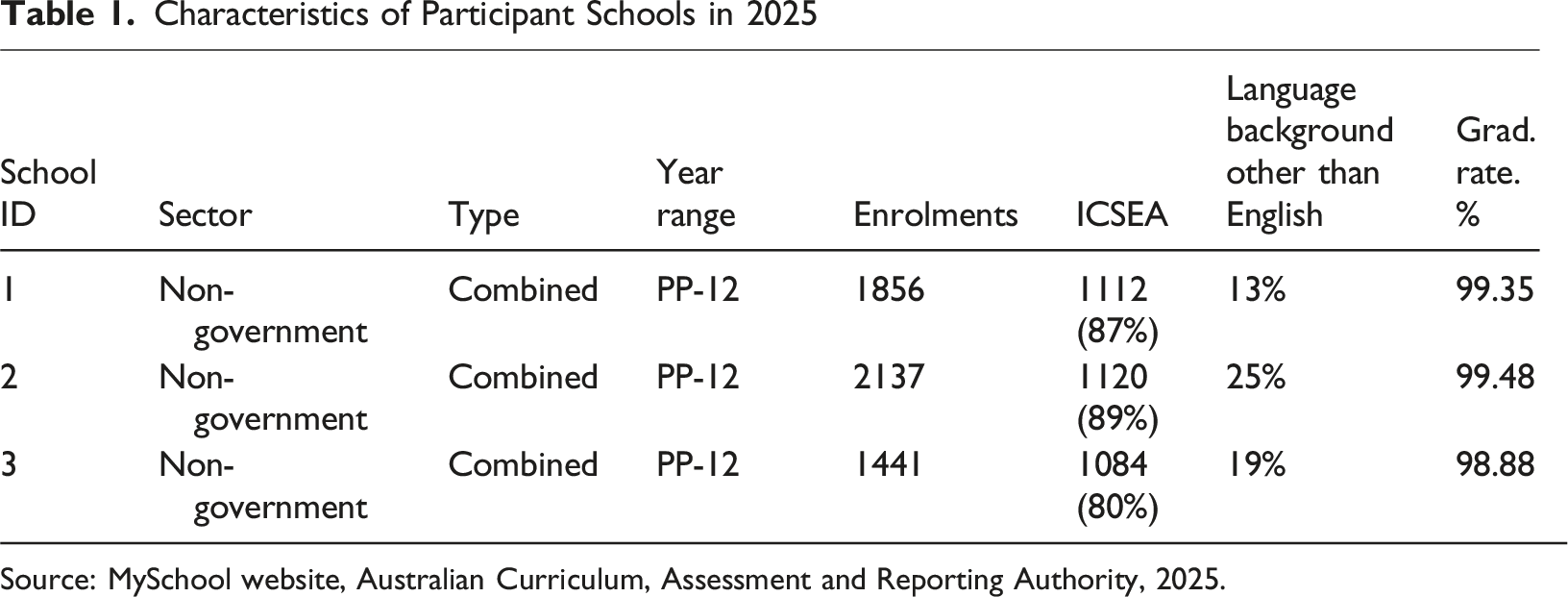
Source: MySchool website, Australian Curriculum, Assessment and Reporting Authority, 2025.
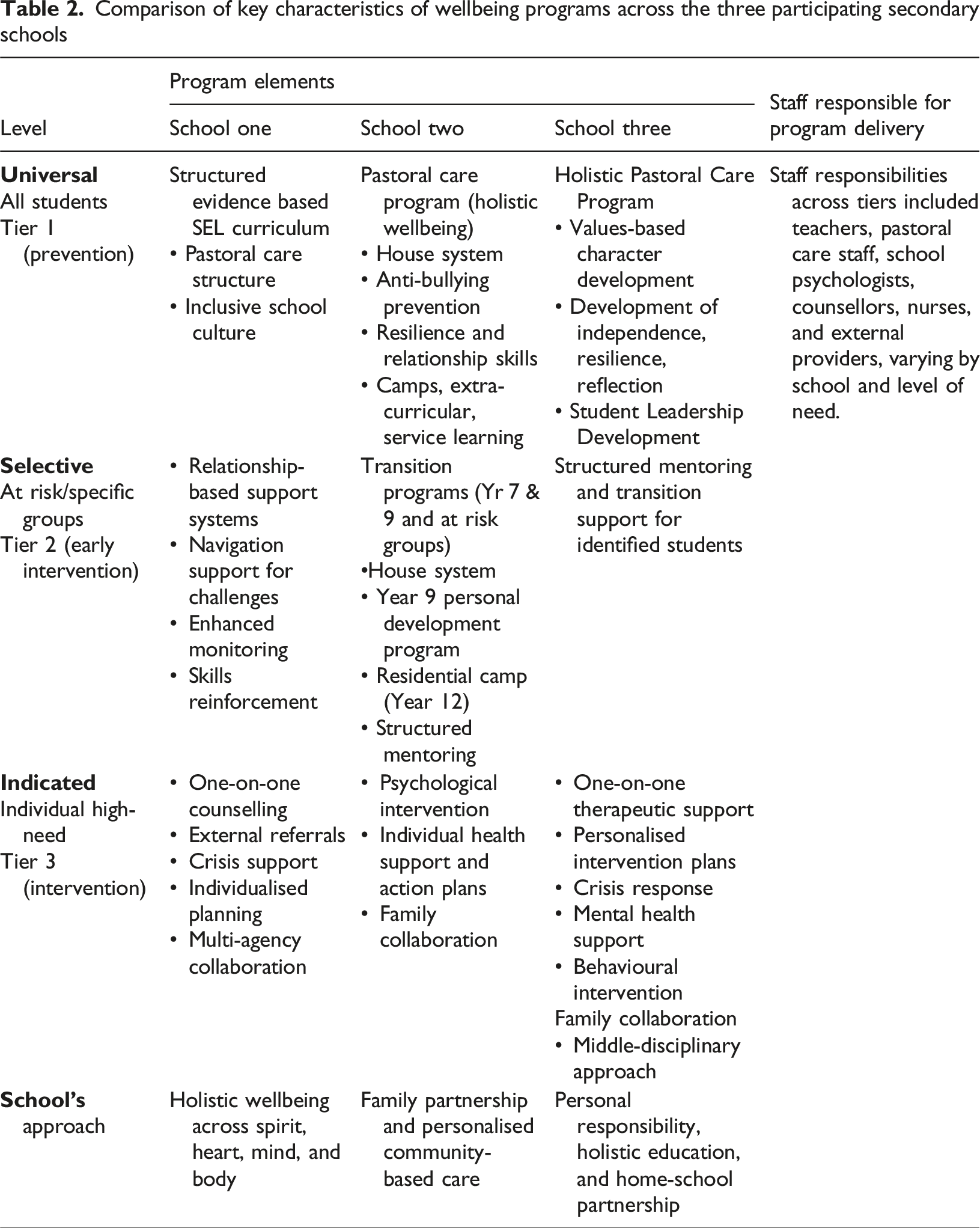
Comparison of key characteristics of wellbeing programs across the three participating secondary schools
Ethics approval was obtained from the Edith Cowan University Human Research Ethics Committee (20726). All Year 12 students were invited to participate, with written informed consent obtained from both parents and students prior to data collection, with forms retained by the researcher. Students who returned both parent and student consent forms received a link to the online survey (n = 40, 20 male and 20 female students).
The involvement of adolescent participants required particular ethical vigilance (Adams, 2013). Addressing the inherent power dynamic between researcher and participants was central to the research design (Seidman, 2013); interviews were conducted in familiar school spaces chosen by students, with a semi-structured format allowing students to redirect or end the interview at any time.
Students came from diverse cultural backgrounds, reflecting the multicultural nature of Australian independent schools, including students from Anglo-Australian, Asian Australian (Chinese, Indian, and Southeast Asian), Middle Eastern, and European backgrounds. Specific demographic breakdowns were not systematically collected due to the study’s focus on program effectiveness rather than cultural comparison.
Data Collection
This study employed three complementary methods, online questionnaires, semi-structured interviews, and focus groups, to capture both breadth and depth of student perspectives on wellbeing programs. Of the 40 students enrolled, 36 participated, with four absent on the day of data collection. Fifteen students completed questionnaires, fifteen participated in individual interviews, and six joined focus groups. Triangulation across methods enhanced credibility and allowed exploration of individual experiences, collective sense-making, and broad patterns (Corbin & Strauss, 2008).
Questionnaires
Questionnaires were developed through literature review, expert feedback, and pilot testing for clarity and validity. The final instrument (39 questions) was administered via Qualtrics and included Likert-scale items assessing program frequency, perceived effectiveness, and delivery preferences, alongside open-ended questions inviting detailed reflections and recommendations.
Semi-Structured Interviews
Fifteen students participated in interviews lasting 45–75 minutes (mode 65), conducted in private school spaces during non-instructional time. Scheduling was flexible to accommodate academic commitments. The protocol was pilot tested with academic colleagues and a Year 12 student from a different school to ensure appropriateness. A semi-structured format combined core questions with probes to explore examples, clarify concepts, and examine contradictions. Sessions were audio-recorded, transcribed verbatim, de-identified, and supplemented by field notes.
Focus Groups
Six students participated in focus groups lasting 60–75 minutes, held in neutral, comfortable school spaces arranged to promote dialogue. Groups were deliberately small (3 students per group) to ensure all voices could be heard, given the sensitivity of wellbeing topics. The protocol mirrored interview themes but emphasised peer interaction. The researcher facilitated discussion by introducing topics, encouraging students to respond to each other, and inviting quieter voices without pressure. Strategies included exploring consensus and disagreement. Sessions were audio-recorded, transcribed with speaker attribution, and supplemented by notes on group dynamics and non-verbal communication.
Data Analysis
Qualitative data from focus groups and interviews were analysed using thematic analysis, following the approach outlined by Clarke and Braun (2013). Initial coding identified key themes and patterns in student responses, which were then refined through iterative analysis. Quantitative data were analysed using descriptive statistics to identify patterns in student experiences and perceptions.
Rigour was established following Lincoln and Guba’s (1985) criteria, with credibility supported through triangulation, transferability through thick description, and confirmability through reflexivity and audit trails. Small purposive samples necessitate particular attention to these criteria (Patton, 2002).
Findings
Types of Wellbeing Programs Experienced
Students identified a diverse range of programs they had experienced under the umbrella of ‘wellbeing’ during their secondary schooling. These aligned with the Multi-Tiered System of Support (MTSS) framework across three tiers, indicated, selective, and universal as detailed in Table 1.
Indicated Wellbeing Approaches
Indicated programs, delivered primarily through school counsellors and psychologists, were recognised by students as essential support mechanisms. However, access was constrained by high demand and extended waiting times, limiting the consistency of support available. Stigma also acted as a deterrent, with students reluctant to seek help due to concerns about peer judgment. A further limitation was the absence of practical self-management strategies following sessions, with students appreciating the opportunity to feel heard but leaving without tools for independent management, creating reliance on counselling rather than building capacity.
Selective Wellbeing Programs
Selective programs, primarily peer support groups for students sharing common challenges such as grief or LGBTQI+ concerns, were valued for the connection they facilitated among students with shared experiences. However, implementation challenges significantly undermined their effectiveness. Low participation led to cancellations, while inconsistent professional facilitation left groups without appropriate therapeutic guidance. Students also reported stigma associated with attendance, expressing concern about peer identification.
Universal Wellbeing Programs
In contrast to the targeted nature of indicated and selective approaches, universal programs were designed for all students and thus represented the most commonly experienced form of wellbeing intervention. These programs covered a wide variety of areas and topics, ranging from mental health awareness and study skills to relationships, substance use, and general wellness, and took the form of awareness days, camps, pastoral care initiatives, curriculum-based programs, guest speakers, and workshops. These universal programs demonstrated limited effectiveness, providing only short-term negligible positive impact with minimal strategies for sustained wellbeing improvement. The majority of students reported no effect on their overall wellbeing from universal programs, with one student noting: “It’s not enjoyable, I skipped this class a few times because it made me feel worse”. Where benefits of these programs were noted, they were highly individual. For example, one student found nose breathing techniques helpful, while others found no value in the same session.
Effective Components of School-Based Wellbeing Programs
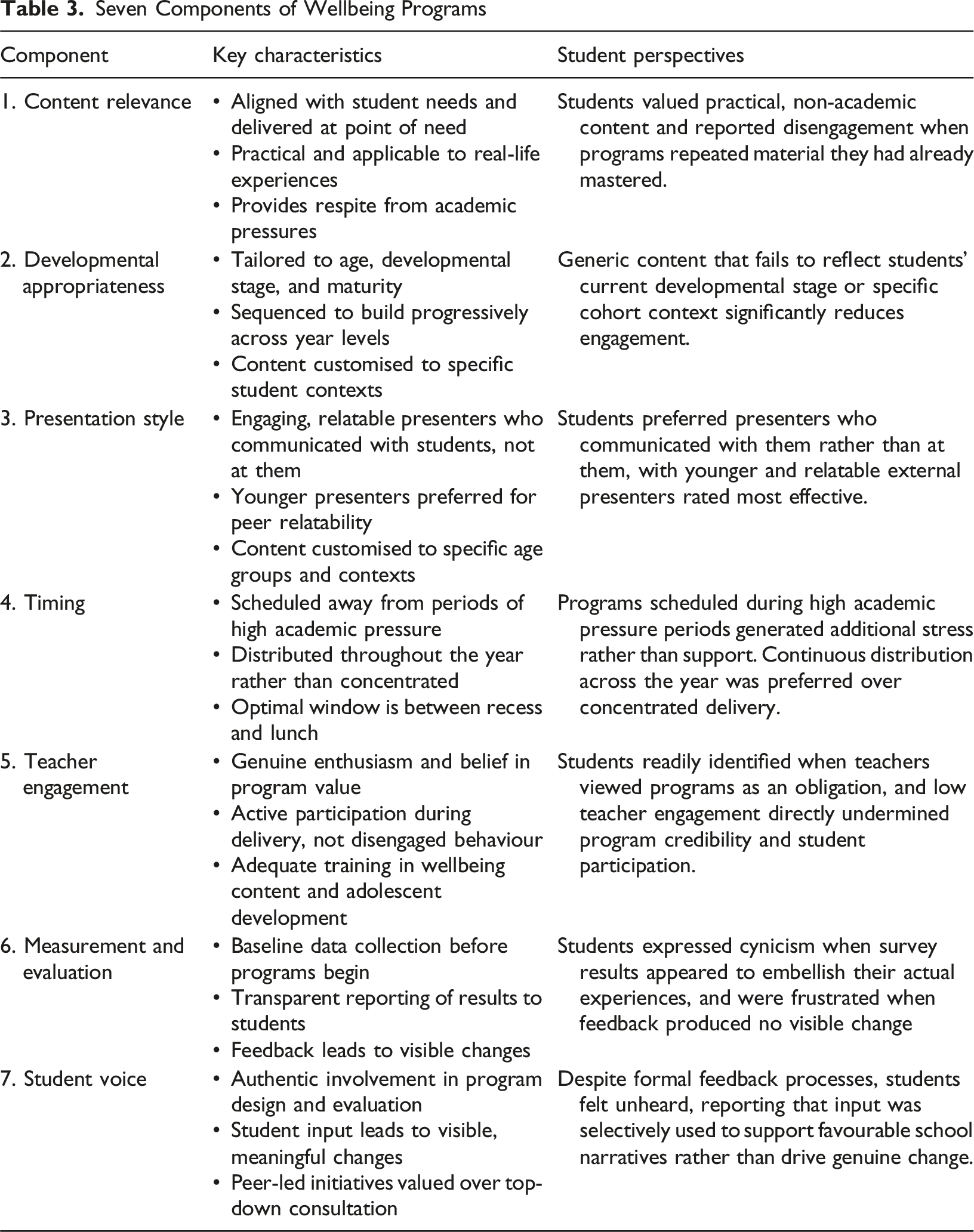
Seven Components of Wellbeing Programs
Content Relevance
Programs often failed to acknowledge students’ existing knowledge, as one student observed “some of the study skills stuff, you might get maybe half the year group that it’s relevant to and half the year group that say, “I’m already doing this,” so they just switch off”. The issue was compounded by the repetitive nature of content delivery across year levels; one student explained “The study skills bring up the same stuff every year. By the time you get to Year 12, you have found what works for you and then having people telling you that what you are doing is wrong”. Students felt frustrated when programs repeated identical content without building upon previous learning or acknowledging their developing expertise, indicating that this not only wasted educational time but actively discouraged engagement with wellbeing initiatives.
Students emphasised the importance of program content reflecting their lived experiences and current challenges, distinguishing between academic content such as study skills and authentic wellbeing content. Non-academic sessions were particularly valued, with budgeting workshops and careers fairs cited as more engaging than traditional wellbeing topics. Students sought practical strategies, viewing theoretical knowledge without actionable tools as ineffective.
How wellbeing content was structured was noted with students describing weekly wellbeing classes that jumped from one topic to the next without coherent sequencing. As one student highlighted, classes would cover “WACE 1 requirements in one lesson followed by controlled breathing in another”, without allowing time for students to trial and consolidate techniques and knowledge. This fragmented structure left students feeling that programs lacked depth and follow-through.
Developmental Appropriateness
Students identified the importance of programs catering to their developmental stage, acknowledging that different life stages bring distinct challenges. A differentiated approach between junior and senior cohorts was identified as useful, with one student noting that year-based programming allows presenters to “use language more specific to that group and really target in on what you want to focus on”. Even within these categories, individual variations in readiness and prior knowledge were not always adequately addressed.
Presentation Style
The role of the presenter emerged as a pivotal component in determining program effectiveness. Students stressed the need for presenters to communicate with them rather than at them. As one student explained, effective presentations required presenters who “are engaging, funny. Talked to us. Not information overload, only had a few points to say, relevant and well timed. [The presenters] understand us”.
The preference for younger, relatable presenters was particularly pronounced. One student articulated the widely held view that “it is more relatable when it comes from someone close to your age. They’re like us and you can actually pay attention. Overall, it is a lot more relatable and effective if it comes from my peers”.
Students provided specific examples of effective external presenters, “they talked to us like we are humans, they didn’t try to tell you don’t do this… They don’t tell you not to do something, rather provide safe ways to do it”. This approach created genuine dialogue among students rather than one-way information transmission.
Students valued programs that customised content to specific age groups and contexts, noting that “a more tailored approach would be much better, and you would get much more out of it”. Generic content was perceived as failing to address the particular needs or cultural contexts of individual student groups.
Teacher-delivered programs received mixed reactions. Some students valued teachers’ expertise and authority, while others found familiar voices monotonous over time. One student captured this tension precisely “half your brain is, like, You should listen! as they’re a teacher and they know what they’re talking about, and it could be useful. The other half is, like, You have heard this teacher talk a hundred times”.
Teacher Engagement
Students demonstrated awareness of teachers’ varying engagement with wellbeing programs, clearly recognising those who viewed programs as obligatory rather than valuable, with program success depending heavily on individual teachers’ enthusiasm and commitment. Students consistently distinguished between authentic commitment and superficial compliance, describing instances where teachers approached wellbeing delivery as an unwelcome obligation, questioning “what is the point of this” either explicitly or through their demeanour and presentation style.
Students reported that reluctant delivery undermined program credibility, with teachers’ lack of conviction apparent through tone, body language, and minimal engagement. When teachers delivered wellbeing content without genuine belief in its value, students recognised this immediately: “sometimes I just feel like they mention it but don’t mean it” and “some teachers give off a perception that it's unimportant, just like a nuisance, but you have to get it done”.
Teacher engagement also emerged as critical when external presenters delivered wellbeing programs. Students frequently observed teachers sitting in the back of classrooms, marking assignments or working on computers during external presentations. Students interpreted these behaviours as clear indicators that teachers viewed wellbeing programs as unimportant interruptions to “real” academic work. One student noted how such teacher behaviour sent a powerful message that “these programs are not important”.
Timing
Students consistently identified scheduling as a primary barrier to meaningful engagement with wellbeing programs. This challenge was most evident when wellbeing programs were scheduled during periods of intense academic pressure, particularly before examinations and major assessments. Students reported being unable to focus on program content when facing immediate academic demands, describing instances where important topics like consent education were delivered immediately before mathematics examinations, creating competing demands for cognitive resources. Continuous support was viewed as more beneficial than intensive but poorly timed delivery.
Students also identified specific preferences for timing within the school day. They reported that the period between recess and lunch represented the optimal window for wellbeing programs, explaining that “you have had something to eat and have lunch to look forward to, and you’re not really about to go home”.
Measurement and Evaluation
Students discussed questionnaire and surveys they had completed as part of school-based wellbeing programs, with one student noting “We had to do a few surveys, and we were told it was part of research, and they collect data”. These surveys were external and school-based, distinct from the researcher-generated questionnaires used in this study. However, students expressed confusion about the purpose of these questionnaires and how the data was subsequently used.
The questionnaire administration process sometimes presented challenges that students felt compromised data quality. Students highlighted the problematic group setting, describing “a weird environment to do it in with everyone doing it together and being, like, how depressed are all of us?” Students noted that depression surveys “almost become like a joke” where students would compare results and joke about their supposed depression levels.
More troubling to students was the apparent disconnect between student responses and reported results. Students expressed frustration when reported outcomes seemed to “embellish” their actual responses and did not accurately reflect their experiences. Students perceived that their feedback was often ignored or selectively interpreted to support predetermined conclusions about program effectiveness.
Students highlighted a lack of transparency and meaningful follow-up on survey results. One student observed that they received “my own data back, but don’t see the overall picture” while another noted “no one follows up to see if you are okay”. Most troublingly, guidance provided to students based on survey data included advice not to support peers with mental health issues, directly contradicting the potential benefits of peer support (Richard et al., 2022). Students’ conclusion that surveys “are not helpful” reflected broader sentiment that data collection felt extractive rather than purposeful.
Student Voice
Despite policy rhetoric about the importance of student voice, students consistently reported feeling unheard in relation to wellbeing program development and implementation. While schools often sought feedback through surveys and consultation processes, students perceived that their input rarely led to meaningful changes. Students noted that if feedback was recognised, it was selectively used to support the school’s favourable depiction of wellbeing programs’ effectiveness rather than to identify areas for improvement. This selective use of student voice created cynicism among students about the authenticity of consultation processes with students stating “they hear you out, they don’t follow through or make it happen. The school listens, but that’s where it stops”.
Student Learning and Self-Awareness Development Through Wellbeing Programs
Many students articulated increased capacity to recognise their personal stress triggers and identify their physiological and emotional stress responses before reaching crisis points. As one student explained “I can now tell when I’m getting overwhelmed before it becomes a complete breakdown. I know my warning signs like when I start getting tension headaches or when I’m snapping at people for no reason”. Another noted “I’ve learned that for me, stress shows up as not being able to sleep. Once I realised that pattern, I could recognise when things were getting too much”.
Students used sophisticated vocabulary for naming and discussing mental health and wellbeing concepts, employing terms like mental health, mindfulness, coping strategies resilience, self-care, and emotional regulation fluently and appropriately in conversation. Students explained what terms meant and applied them to their own experiences. One student observed “at least we can talk about mental health now. Like, my parents’ generation didn’t even have that language. We know what anxiety is, what depression is, that it's okay to not be okay”.
While students could articulate wellbeing concepts and describe various strategies, many struggled to consistently apply knowledge in their daily lives. One student summed this up extremely well: I know all about stress management techniques. We’ve been taught that since Year 7. Deep breathing, time management, positive self-talk, I can list them all. But actually, using them when I’m stressed? That’s completely different. In the moment when you’re freaking out about an assignment, you’re not thinking about your breathing exercises.
Multiple students attributed their deepest self-understanding to personal experience, peer relationships, and family support rather than school programs: “I learned what actually helps me through just living my life and figuring out what works. The programs might have given me ideas to try, but I had to figure it out myself”.
Students also developed critical awareness about programs, distinguishing between authentic and performative support. One student observed: After six years of these programs, you get pretty good at telling which ones are actually trying to help and which ones are just ticking boxes. You can tell when they actually care versus when they’re just doing it because they have to.
This capacity to evaluate institutional sincerity was an unintended but significant outcome of program participation.
Individual Agency and Personal Responsibility
While students identified multiple structural and environmental factors affecting their wellbeing, students also recognised their own role in managing wellbeing. One student articulated, “you have a life outside of school. They have to give you the option and resources, but you have to actually access them and use them. It is your responsibility to access them”. This reflected understanding that schools could provide tools and support, but students themselves bore responsibility for utilising these resources effectively.
However, students also identified tension between personal responsibility and systemic support. When discussing strategies learned through programs, a student observed “I can’t really think of any. I think that they try to give you strategies, but it is your choice to use them or not”. This comment revealed both acknowledgment of individual choice and implicit critique that programs failed to create conditions where strategy use felt compelling or achievable.
These findings indicate that individual responsibility for wellbeing cannot be meaningfully separated from the structural conditions enabling or constraining students’ capacity to exercise that responsibility, a tension explored further in the Discussion.
Discussion
These findings reveal students’ sophisticated understanding of wellbeing program components and nuanced perspectives on effectiveness.
The three-tiered categorisation of wellbeing programs that emerged from student experiences aligns with established prevention frameworks such as the multi-tiered system of supports (MTSS, detailed in Table 1), yet students’ perceptions of effectiveness diverge notably from prevailing educational assumptions about how such frameworks should be implemented in practice. Critically, students functioned not as passive recipients of wellbeing support but as active evaluators of its quality and relevance, with significant implications for program design.
Seven essential program components shaped these effectiveness patterns, with content relevance emerging as particularly critical. Repetitive content delivery undermined program effectiveness highlighting not only the lack of developmental progression in content but also the potential for programs to undermine students’ existing effective strategies. Students’ observation that study skills programs told them “What you are doing is wrong” when they had already developed successful approaches represents a concerning reversal of the intended support function.
The findings align with Mayer’s (2002) research, which identified that tailored, relatable content fosters deeper cognitive processing and facilitates the application of strategies and solutions in real-world contexts. When content lacked immediate relevance to students’ current experiences or developmental stage, engagement diminished significantly. While the differentiated content approach between senior students (Years 10–12) and younger cohorts (Years 7–9) demonstrated some recognition of developmental needs, students indicated that even within these broad categories, individual variations in readiness and prior knowledge were not adequately addressed.
Program Components in Context
Students’ preference for practical, non-academic sessions such as budgeting and career planning challenges current educational paradigms that emphasise cross-curricular approaches to wellbeing. However, this must be balanced against the lack of structured, sequenced content which emerged as a critical barrier to effectiveness. The fragmented structure students described where classes jumped from WACE requirements to controlled breathing without coherent sequencing stands in contrast to McWhirter’s (2009) emphasis on the necessity of structured and sequenced lessons, and Durlak et al.’s (2011) identification that effective programs were structured, sequenced, active, focused, and explicit.
The popularity of theme days, despite their limited lasting impact, reveals the complex relationship between engagement and effectiveness. While these events generated immediate positive responses, they exemplify what Donoghue and Hattie (2021) describe as ‘near transfer’ learning, applicable in the moment but failing to generalise beyond the intervention (p. 8). This finding has important implications for resource allocation and program design in schools seeking sustainable wellbeing outcomes.
The role of presenter characteristics emerged as equally critical to program effectiveness. The preference for younger, relatable external presenters highlights the importance of perceived authenticity in wellbeing delivery. Students distinguished between presenters who ‘talked to them’ versus ‘talked at them’, supporting Scholz et al.’s (2023) emphasis on skilled delivery while suggesting that relational connection may be more critical than professional credentials in adolescent wellbeing contexts.
The customisation of content to specific age groups and contexts that students valued aligns with Barry et al. (2017), who identified the importance of relatable, age-appropriate program delivery in achieving educational outcomes. Generic content that failed to adequately address the particular issues or cultural aspects of individual student groups created a mismatch between presented material and students’ real-life circumstances.
The mixed responses to teacher-delivered wellbeing programs appears to hinge on what Humphrey et al. (2010, p. 3) describe as teachers’ “will and skills” in program delivery. Students’ ability to detect genuine versus performative teacher engagement suggests that surface-level implementation of wellbeing programs may be counterproductive, potentially undermining rather than supporting student wellbeing. In this framework, “skills” encompass proficiency in educational techniques, material understanding, and capacity to engage students, while “will” implies authentic enthusiasm, dedication to student wellbeing, and conviction in intervention effectiveness.
This ambivalence reflects the broader literature, which provides no clear consensus on teacher delivery efficacy. Scholz et al. (2023) note that teacher-delivered programs often yielded insignificant results, while Stallard et al. (2014) found that training teachers was less effective than delivery by health professionals.
Collectively, these findings suggest that presenter effectiveness extends beyond individual charisma to encompass communication style, content customisation, audience relatability, and authentic commitment to student wellbeing. While content and delivery are widely recognised program elements, students’ identification of timing as equally critical represents an underexplored dimension. Effective timing required identifying moments when students were most receptive, not merely avoiding academic pressure points. Students’ preference for continuous support throughout the year reflects the ongoing rather than episodic nature of student stress and support needs.
This study revealed that poorly timed interventions not only failed to achieve their intended outcomes but frequently generated additional stress for students, creating a counterproductive effect that undermined program objectives. Students’ preference for the window between recess and lunch further illustrates that effective timing must account for both physiological readiness and psychological receptivity (Durlak et al., 2011; Nation et al., 2003).
The absence of systematic data collection in wellbeing programs creates a significant evidence gap that undermines program development and refinement. This absence of baseline measurement creates an inability to establish benchmarks against which program effectiveness can be evaluated, rendering assessments of intervention impact incomplete and potentially misleading (Kelly & Reid, 2021; White & Kern, 2017). Without baseline data, schools cannot determine whether interventions are producing meaningful change or identify which specific components contribute to positive outcomes.
More concerning is students’ recognition of this absence and their perception that feedback, when collected, is either ignored or selectively used to support predetermined narratives. This finding reveals a fundamental tension between evidence-based practice and authentic student engagement (Connolly, 2021). The selective use of student feedback to support favourable program evaluations represents a particularly problematic practice that not only undermines program improvement but actively alienates the intended beneficiaries.
Perhaps most concerning was the guidance students received from school staff based on survey findings, with students at one school reporting they were told not to help peers with mental health issues because it could worsen their own mental health. This advice not only contradicted the potential benefits of peer support but also revealed a disconnect between data collection and meaningful intervention strategies, suggesting that even when data is collected, its interpretation and application by schools may be fundamentally flawed (Richard et al., 2022).
The theme of student voice emerged as both an aspiration and a source of frustration, with students recognising when their contributions were tokenistic rather than genuinely valued. This aligns with Lodge’s observation about students’ voices being used to “ventriloquise” adult messages (2005, p.133), while extending understanding of how this process affects program effectiveness and student trust.
Students’ distinction between tokenistic consultation and genuine partnership in decision-making processes reveals a sophisticated understanding of power dynamics in educational settings. Their desire for authentic involvement in program design, delivery, and evaluation, alongside their valuing of peer-led initiatives, suggests that meaningful student voice requires structural changes moving beyond tokenistic consultation towards genuine co-creation.
The student assertion that “adults need to ask us more about what we think is relevant rather than assuming they know” highlights a critical tension – wellbeing programs are designed for students, yet their expertise in shaping these initiatives is often undervalued.
Students’ desire for authentic partnership moving beyond consultation towards genuine co-design aligns with Zepke (2018), who argues that policy-driven structures marginalise student agency, leaving educators “trapped” in compliance rather than fostering authentic participation (p. 439).
The efficacy of student voice initiatives is closely tied to teacher dispositions, as attitudes towards wellbeing programs critically mediate their implementation and perceived legitimacy (Denessen et al., 2015; Fenzel & Domingues, 2009). Students consistently reported that teacher scepticism or disengagement undermined program objectives before content could be meaningfully transmitted (Pulimeno et al., 2020). Students’ observations about dismissive behaviour during delivery point to the need for professional development extending beyond basic program training to include adolescent development, modelling engagement, and authentic participation (Goodwin et al., 2023). Teachers’ visible behaviour during external presentations revealed a critical dimension of implementation fidelity. Professional learning must address teachers’ responsibility as implicit endorsers or potential underminers.
One of the most striking findings concerns what students actually learned after 6 years of program participation. A clear paradox emerged; students acquired considerable wellbeing knowledge and language yet reported minimal impact on their actual practices. This knowing-doing gap suggests programs succeeded in transmitting conceptual knowledge but failed to support behavioural integration from abstract understanding to embodied practice (Gunawardena et al., 2023). Students could articulate strategies and concepts but questioned their relevance, particularly noting that help-seeking was encouraged while support systems remained inadequate or inaccessible.
Perhaps most noteworthy was what students learned about the programs themselves. Repeated exposure to initiatives perceived as superficial or performative fostered critical awareness. Students learned to distinguish authentic from tokenistic support, recognise institutional priorities, and maintain scepticism towards program claims. This unintended outcome, developing analytical skills to evaluate institutional sincerity, was not part of program objectives. If the primary lesson of wellbeing programs is scepticism about wellbeing programs, this represents a deeply ironic and problematic result.
Students acknowledged their own role in wellbeing management, as one student noted, “schools have to give you the option and resources, but you have to actually access them”, yet they simultaneously identified systemic contradictions. Programs frequently taught coping strategies without addressing structural stressors such as assessment clustering, with one student observing: “they tell us to breathe and manage our stress, but they’re the ones who scheduled three exams in two days”. This reflects O'Reilly et al. (2018) identification of the limitations of resilience-focused interventions that neglect environmental conditions.
Limitations
Several limitations should be considered when interpreting these findings. First, the sample was limited to Year 12 students across three independent schools in one Australian city, restricting generalisability to other educational contexts and age groups. Second, while this study prioritised adolescent voice as data, it did not adopt a student-as-partner methodology in which students co-designed or co-led the research process (Cook-Sather, 2014; Healey et al., 2014). Third, the experiences of different groups of students based on gender identification, language, or cultural background were not explored.
Research indicates that cultural background shapes how young people understand and engage with wellbeing concepts, including their willingness to disclose mental health concerns and their response to program content (Kirmayer et al., 2011; Milne et al., 2016). Rather, the cultural homogeneity of the sample drawn from three independent co-educational schools in Perth highlights the need for future research specifically designed to examine cultural dimensions of student voice and wellbeing program effectiveness across more diverse school contexts.
Implications for Practice and Policy
These findings have several important implications for the design and implementation of school-based wellbeing programs. First, programs would benefit from systematic assessment of student needs and prior knowledge before content delivery, with structured and sequenced programming allowing time for skill consolidation (Durlak et al., 2011; Mayer, 2002; McWhirter, 2009).
Second, given students’ acute awareness of teacher authenticity, professional development for wellbeing programs should extend beyond content delivery to include authentic engagement and teachers’ role as implicit program endorsers. Both capability and conviction are necessary for effective implementation (Denessen et al., 2015; Fenzel & Domingues, 2009; Humphrey, 2013).
Third, this research reveals that strategic timing of interventions within the academic calendar and school day warrants equal consideration to program content. Poorly timed interventions may generate additional stress rather than providing support, undermining their intended purpose (Durlak et al., 2011; Nation et al., 2003).
Fourth, students’ experiences of measurement practices as tokenistic or performative suggest the need to redesign evaluation processes to ensure data authenticity and meaningful follow-up. This includes reconsidering group administration of sensitive surveys, providing transparency about data use, and demonstrating visible responsiveness to student feedback (Kelly & Reid, 2021; White & Kern, 2017).
Fifth, the tension students identified between individual responsibility and structural support indicates that effective wellbeing programs should address both individual capacity for self-directed wellbeing management and the structural conditions enabling it (National Mental Health Commission, 2021).
Sixth, students’ distinction between tokenistic consultation and genuine partnership suggests that authentic student voice requires structural changes that move beyond consultation towards genuine co-creation rather than tokenistic consultation (Gillett-Swan & Sargeant, 2019; Powell et al., 2018).
Finally, students’ mixed responses to teacher-delivered wellbeing programs highlight the critical need for clarity around teacher responsibilities in student wellbeing. The findings suggest that policy makers should distinguish between teachers’ natural role in supporting student wellbeing through positive relationships and the additional expectations placed on them to deliver specialised wellbeing content, ensuring adequate training and support for whatever responsibilities are assigned (Goodwin et al., 2023; Mazzer & Rickwood, 2015).
Conclusion
This study reveals a critical disconnect between students’ sophisticated understanding of effective wellbeing programming and current school-based implementation approaches. Through examining student perspectives, seven essential components emerged that challenge fundamental assumptions about program design and delivery, relevant content, authentic presentation, strategic timing, developmental appropriateness, meaningful measurement, genuine teacher engagement, and authentic student voice.
Students can distinguish between authentic and performative approaches to wellbeing, recognising when programs serve institutional rather than student needs. Their preference for practical, non-academic content delivered by relatable presenters at strategically timed intervals reflects a deep understanding of their own developmental and contextual needs.
Perhaps most significantly, this research exposes the tokenistic nature of current student consultation practices, where feedback is collected but rarely acted upon meaningfully. Students’ awareness of this disconnect undermines program credibility and engagement, creating a cycle where wellbeing interventions fail to achieve their intended outcomes. The identification of timing as a critical factor represents a novel contribution to the literature, challenging researchers and practitioners to consider implementation context as seriously as program content.
Effective support requires both personal capacity-building and enabling structural conditions. Schools must address manageable academic demands, authentic teacher engagement, responsive feedback, and cultures that value wellbeing alongside achievement to make both possible. Moving beyond compliance-driven programming requires reimagining power dynamics in program design, with authentic student voice as a genuine partnership rather than tokenistic consultation.
The implications extend beyond program-level adjustments to a fundamental reconsideration of how educational systems conceptualise adolescent wellbeing. Students in this study demonstrated that they understand what effective support looks like; the challenge is whether schools and systems are willing to act on what they are being told. As one student observed: The general attitude towards wellbeing in our generation is improving. It is becoming less of a superficial thing, and we are more serious, and we need to deal with it. But in schools it is still kind of like ha ha it’s a joke and still superficial in how schools are dealing with it and addressing it.
Until schools listen as carefully as students speak, that gap will remain.
Footnotes

Funding
The authors received no financial support for the research, authorship, and/or publication of this article.
Declaration of Conflicting Interests
The authors declared no potential conflicts of interest with respect to the research, authorship, and/or publication of this article.