




Abstract
Focusing on millennials, individuals born between 1980 and 2000 and representing the largest generational population in our history, this research seeks to understand their ethical decision-making processes by exploring the distinctive, yet interconnected, theories of personal values and cognitive moral reasoning. Utilizing a decision-making framework introduced in the 1990s, we discover that there is a statistically supported relationship between a millennial’s personal value orientation and stage of cognitive moral reasoning. Moreover, we discover a strong relationship between three of the four value orientations and a corresponding stage of cognitive moral reasoning. The theoretical and practical research implications of our discovery about millennials’ decision making are discussed.
Exploding on to the business scene in the 21st century are millennials, individuals born between 1980 and 2000. They account for approximately 80 million people, exceeding the population of the baby boomers (born between 1946 and 1964) by 4 million. In 2016, there was a greater number of 26-year-olds in the United States than any single group of individuals of a given age (Ethics Resource Center, 2013).
Millennials are acknowledged as a powerful group in the workforce as they become established leaders of business organizations, an influential population of consumers, and a significant pool of investors. The sheer magnitude of their potential, or increasingly actual, influence on business has caused executives and policy makers to commit extensive resources to understand, accommodate, and influence millennials. Goldman Sachs reports that they have learned their lesson and accept that newly hired employees are not as interested in staying with the firm for the long run. Rather, millennials are seeking experience to catapult them into higher paying jobs with other firms after a few years. According to a LinkedIn poll of a dozen of investment banks surveyed in 2015, millennials stay an average of 17 months on the job, compared with a 26-month average a decade earlier (Huang & Gellman, 2016).
Given the lifetime of experience with technology, millennials understand the value of their talents and the role they can play in society. LinkedIn and Oracle hired an army of millennial consultants, who charge as much as US$20,000 an hour for their expertise, focusing on how to manage and market to other millennials (Manjoo, 2016). Millennials also have exerted themselves into the media industry as an important target market. Verizon Communications and Hearst teamed up to produce multiplatform online video channels aimed at millennials from the heartland. In addition, Conde Nast Entertainment created a demographic called cultured millennials, whose members demonstrate a preference for artisan beer (Lyall, 2016).
While understood as the most educated and technology-savvy population in the history of humankind (Philips, 2014), little is known about millennials as moral actors in society and the ethical decision-making processes they bring to their professional and personal lives. What lies at the core of the millennials’ thought processes leading to a reflective reasoning framework that give rise to decisions and behavior? How do these cognitive processes—personal values and cognitive moral reasoning, for example—connect? If there are linkages, how strong are they or under what circumstances do they occur?
Explorations focusing on the influence of antecedents of ethical decision making abound in the business ethics literature (see O’Fallon & Butterfield, 2005, for a comprehensive review of this literature). Yet, this literature is limited as it typically assesses individual, isolated elements of the complex, multifaceted decision-making process. This research seeks to understand ethical decision-making processes by exploring the independent, yet interconnected, theories of personal values and cognitive moral reasoning.
Scholars began to explore personal values in earnest in the 1950s (Kluckhohn, 1951), and applied this decision theory to managers shortly thereafter (Clare & Sanford, 1979; England, Dhingra, & Agarwal, 1974). Cognitive moral reasoning also emerged as a critical element of ethical decision making with Kohlberg’s (1971) stage model and the assessment of individuals’ moral development (Freeman & Giebink, 1979; Lifton, 1985), which was quickly applied to business managers (Derry, 1987, 1989). Attempts to integrate these two fields of ethical decision making emerged from a decision-making framework introduced in the 1980s and 1990s (Emler, Renwick, & Malone, 1983; Weber, 1993) and continued into the 2000s. This research revisits and tests the findings of these prior investigations by assessing the presence of relationships between these two independent, yet possibly related, cognitive elements leading to decision making and behavior.
In sum, this research seeks to understand millennials’ ethical decision-making processes by exploring the distinctive, yet interconnected, theories of personal values and cognitive moral reasoning. Utilizing a decision-making framework introduced in the 1990s, these recognized cognitive steps leading to decision making and behavior are analyzed and compared for linkages in constructing an ethical decision-making framework.
Personal Values
“A value is a conception, explicit or implicit, distinctive of an individual or characteristic of a group, of the desirable, which influences the selection from available modes, means, and ends of action” (Kluckhohn, 1951, p. 395). This generally accepted definition of a value conveys what is important to us in our professional and personal lives. A person may place greater importance on a set of values (e.g., being courageous, living a life of prudence, or temperance) versus other values (e.g., accumulation of wealth or fame, or preferring to be alone rather than with friends or family).
A particular, singular value may be very important to one person but unimportant or less important to another person even if they belong to the same family, are employed by the same business organization, or are members of the same generation. Values are deeply personal and individualistic. For example, Hanke and Vauclair (2016) built on the earlier work by Hornsey and Wohl (2013) to investigate the role forgiveness plays across various cultures. They surveyed 41,975 subjects in 30 countries to uncover many cultural influences on the role forgiveness plays in individual’s lives and interpersonal relations. Other scholars adopted a cross-generational perspective to explore the role of values. Murphy, Mujtabab, Manyakb, Sungkhawanc, and Greenwood (2010) explored generational differences in Thailand, and compared their results with value preferences exhibited by Americans. Personal values were also compared with organizational values to determine if they are adequate descriptors of organization values (Tuulik, Õunapuu, Kuimet, & Titov, 2016), or if there are discrepancies between individual and organizational values (Dylág, Jaworek, Karwowski, Kozusznik, & Marek, 2013).
To understand and ultimately measure one’s values, American social psychologist Milton Rokeach developed two lists of 18 values—one list contains terminal or end-states of existence values and the other list includes instrumental or modes of conduct values. The end-states or terminal values may be “self-centered or society-centered, intrapersonal or interpersonal,” according to Rokeach (1973, p. 8). The instrumental or modes of conduct values tend to either “have an interpersonal focus which, when violated, arouse pangs of conscience or feelings of guilt for wrongdoing”—that is, moral values. Other values “have a personal rather than interpersonal focus . . . and their violation leads to feelings of shame about personal inadequacy rather than guilt”—that is, competency values (Rokeach, 1973, p. 8).
Rokeach posits that sometimes values are in conflict with other values within one’s personal value orientation, so the decision maker is often forced to choose between competing, but essentially important, values. He also contends that rarely does a single value provide adequate motivation for a decision or action. Thus, the notion of a value orientation, or collection of values rather than a single value, is operationally relevant and active in virtually all decisions and behaviors.
Rokeach (1973) explained, “A value system is an enduring organization of beliefs concerning preferable modes of conduct or end-states of existence along a continuum of relative importance” (p. 5). From his two sets of values, he envisions an intersection of the terminal values as having a Personal or Social orientation, and the instrumental values as having a Competence or Moral orientation. These two dimensions within each general value classification lead to four value orientation combinations: Personal-Competence, Social-Competence, Personal-Moral, and Social-Moral.
The notion of a managerial value orientation took a noticeable step forward when Weber (1990a) explored managers’ value preferences for Rokeach’s original 18 terminal and 18 instrumental values. In addition to providing empirical support to cluster Rokeach’s original 36 values into one of the four orientation groups, Weber analyzed the results from five prior studies to weight the impact of each value associated with one of the value orientations hypothetically proposed by Rokeach. Rather than considering each value as having equal membership (or weight) in the value orientation, Weber was able to assign greater weight to certain values that more closely represented the value orientations discussed by Rokeach (see Appendix A). These categorizations and the weights assigned to the values are discussed later in this article.
Researchers discovered a link between an individual’s personal values and decisions made (Allport, Vernon, & Lindzey, 1960; Beyer, 1981) as well as actions taken (House, Hanges, Javidan, Dorfman, & Gupta, 2004; Posner, 2010). Simply put, why people decide to act the way they do is often influenced by their specific values.
Millennials are beginning to be assessed in terms of their values and the impact of these beliefs on their behaviors. Carmichael (2016) refuted the belief that millennials are not a hard-working generation more concerned with “flex-time, beer carts, and nap rooms” by discovering that they see themselves as “work martyrs” even more than prior generations (43% of the millennials in the study compared with 29% of all survey participants). Millennials overwhelmingly agreed with the following statements: “I feel guilty for using my paid time off” and “No one else at my company can do the work while I’m away” (Carmichael, 2016, p. 3).
Millennials exhibit positive social values when their value systems were explored in a 2014 Millennials Impact Report (Johnson, 2015). Millennials reportedly want to “make a difference” in the world, and want to align themselves with organizations that are making a positive impact on society (Johnson, 2015, p. 4). While millennials recognize that technology has made their life easier, few individuals from this generation manifested a poorer work ethic when compared with members of previous generations. Millennials seem to share many of the work-oriented values of past generations, according to the research reported by Carmichael (2016) and Johnson (2015), but constitute a complex and often-conflicted generation with various values and beliefs.
When applied to business ethics, researchers found that certain personal values create an ethical orientation that influences or promotes ethical behavior or, conversely, leads to unethical behavior (Argandona, 2003) and are connected to selected behavior in real-life situations (see Schwartz & Bardi, 2001, for a summary of previous literature). Turning to a business context, Gehman, Treviño, and Garud (2013) advance the notion of values practices, where values are recognized for their critical role in organizational performance and add a normative dimension to behavior in business.
Therefore, we argue that insights into the millennial generation’s personal value orientation can reveal an important dimension of their ethical decision-making process leading to decisions and behaviors. This is the first step toward understanding the connective chain of multiple cognitive steps comprising an integrated ethical decision-making process.
Cognitive Moral Reasoning Theory
Scholars seeking to understand the decision-making process of individuals also turn to cognitive moral development as a method to assess an individual’s weighing and filtering of information leading to a decision (Rest, 1986; Treviño, 1992). This exploration of cognitive moral reasoning typically uses a well-established cognitive moral development and reasoning framework developed by Kohlberg (1971).
Recently, scholars have focused on the role emotions or affective influences, rather than cognition, might play in the decision maker’s reasoning process. Complementing the deliberative rationale process may be a tendency to evoke an intuitive and emotional decision process. Weaver, Reynolds, and Brown (2014) posited, “A rapidly growing body of social science research has framed ethical thought and behavior as driven by intuition” (p. 100). Work by Graham and colleagues (2011), Haidt (2001), and Reynolds (2006) has “opened the door to reconsidering the substantive content of individuals’ automatic, intuitive responses regarding ethics” (Weaver et al., 2014, p. 101).
Scholars recognize that persons are capable of, and often respond to, more than the concerns of consequences emanating from a decision or evoke ethical principles to reach an ethically defensible decision. Many scholars toiling in the social sciences, such as psychology, anthropology, evolutionary psychology, cognitive science, and behavioral economics, acknowledge the role of intuition or emotion, although this work is only slowly infiltrating organizational behavior and other business fields of study (Ashkanasy, Humphrey, & Huy, 2016; Phillips, Fletcher, Marks, & Hine, 2016).
While accepting the emerging focus on intuition and emotions, this investigation seeks to reinvestigate the linkage between personal value orientations and cognitive moral reasoning. Loyal to the original instruments used by Weber (1993), a cognitive assessment of one’s moral reasoning is utilized—Kohlberg’s (1971) Stages of Cognitive Moral Development Model.
Kohlberg’s model focuses on the reasons given by individuals to explain why certain actions are perceived as morally just or preferable. Within the stage model, Kohlberg identifies three separate levels of moral reasoning with each level comprising two distinct stages—six stages in all. Empirically, the most basic level of moral reasoning is the preconventional level, which includes Stages 1 (Punishment and Obedience Reasoning) and 2 (Instrumental Relativism Reasoning). At Stage 1, the reasoner focuses on the physical consequences of an action to determine the goodness or badness of a decision or action, and seeks to avoid punishment while exhibiting an unquestioning deference to power for those in authority. While this stage of reasoning is often found in children by moral developmental researchers, others have observed Stage 1 reasoning in adults, as people seemingly cling to this notion of self-preservation and avoidance of punishment (Weber & Gillespie, 1998). Turning to Stage 2 of the preconventional level of cognitive moral reasoning, the emphasis is on an interest in satisfying one’s own needs. A Stage 2 reasoner looks to fairness, reciprocity, and equal sharing but interpreted in a physical or pragmatic way with an exclusive attention to the consequences for the decision maker.
As the individual matures in his or her moral reasoning, the conventional level of moral development emerges. In Kohlberg’s stage model, this level includes Stages 3 (Good Boy/Nice Girl Reasoning) and 4 (Law and Order Reasoning). At Stage 3, good behavior or right decision making is now understood as that which pleases or helps others, so that the decision maker is seen by others who are important as a good boy or nice girl. An advancement of an individual’s cognitive moral reasoning is seen when looking at Stage 4—Law and Order Reasoning. The decision maker assumes the role of a generalized member of society, and reasoning relies on a conception of the social system as a consistent set of codes and procedures that apply impartially to all members of society. The focus broadens beyond the family or work group to include all members of a society.
Finally, an individual can mature in his or her moral development to the postconventional level of moral reasoning. This level includes Stages 5 (Social Contract Reasoning) and 6 (Universal Principle Reasoning). At Stage 5, the cognitive moral reasoning includes the understanding of right or moral as a matter of personal values and opinions. Accompanying this focus at the postconventional level is a Stage 6 orientation, where right or moral is defined by decisions of conscience in accord with self-chosen ethical principles appealing to logical comprehensiveness, universality, and consistency. A Stage 6 reasoner demonstrates an “effort to define moral values and principles which have validity and application apart from the authority of the groups or persons holding power and apart from the individual’s own identification with these groups” (Kohlberg, 1971, p. 88).
Since Kohlberg’s creation of his Stages of Moral Development Model, there were various challenges from its critics to modify and improve his framework. Kohlberg and his colleagues responded to these challenges to better capture, analyze, and explain an individual’s cognitive moral reasoning. For example, a gender challenge initially launched by Gilligan (1982), and later by others, argued that Kohlberg’s model discriminated against females, given that all of Kohlberg’s initial test subjects were males and, in subsequent research, female subjects would be capped at Stage 3 of the framework. This challenge was addressed by Kohlberg and his associates, and adjustments were made to the stage scoring method. When Derry (1987, 1989) tested Gilligan’s challenge, she found no conclusive evidence discriminating between female and male managers’ moral reasoning orientation. Donleavy (2008) explored the Kohlberg–Gilligan controversy, and concluded “ . . . what differences do exist [between an ethics of justice and an ethics of care], within a business context, are far outweighed by the other explanatory factors” (p. 816).
Krebs and Denton (2005) offered 11 propositions challenging Kohlberg’s initial longitudinal study and the model’s structural consistency and other measurement issues. Many of their objections are addressed by Kohlberg and his associates in the rescoring of the stages. Other challenges are rendered inconsequential as these challenges tend to focus on the weaknesses in Kohlberg’s initial longitudinal study of all male subjects, which is avoided in this research, and the use of generalized moral reasoning dilemmas, which are replaced in this study with business-context dilemmas. Based on the decades of empirical research using Kohlberg’s Stages of Moral Development Model applied in a business setting, we are confident in using this theoretical framework to assess the cognitive moral reasoning exhibited by millennials as a portion of their ethical decision-making framework.
Integration of Personal Values and Cognitive Moral Reasoning
Although Rokeach’s theoretical work focusing on personal values and Kohlberg’s Stages of Moral Development Model are empirically validated and stand-alone as powerful tools in assessing one’s cognitive decision processes, the combination of the two well-established theories is examined by scholars but only occasionally. The importance of considering both theories is argued by Weber (1993), “although the contributions of these two theories are significant, neither theory alone provides a comprehensive or complete basis for an understanding or explanation of behavioral influences” (p. 435). We support Weber’s contention that unless the two theories—personal values and cognitive moral reasoning—are linked and empirically applied in an assessment of an individual’s cognitive decision-making process, the assessment is incomplete or stated positively—the assessment is stronger when the two theories are combined.
Educators believe that personal values and cognitive moral reasoning are connected and should be used in various pedagogical approaches. Kvalnes (2014) posited that personal values affect the reasoning process when students face opportunities for dishonest behavior. Sivanandan, Thurasingam, and Cho (2013) drew a strong connection between personal values and cognitive moral reasoning when business students face various ethical and legal challenges. Finally, Holland (2013) acknowledged that cognitive moral reasoning and personal values must be fused when students encounter the social, legal, professional, and ethical aspects of information processing in the business environment.
Psychological investigations also reveal strong linkages between values and cognition. Daniel, Dys, Buchmann, and Malti (2014) examined Swiss children and their development of sympathy, moral emotions, and social justice values, and compared these influences with moral reasoning at ages 6, 9, and 12 years. The integration of values and cognition in children’s morality occurred from middle childhood to early adolescence. Confirmatory evidence was discovered by Pennycook, Fugelsang, and Koehler (2015), revealing the individual’s willingness to engage in analytical reasoning overrode their gut feelings. Pennycook and colleagues (2015) found that analytical thinkers were more skeptical about religious, paranormal, and conspiratorial concepts. A five-factor model of personality in ethical decision making was constructed to clarify the influence of empathy and personal values on ethical competency (Pohling, Bzdok, Eigenstetter, Stumpf, & Strobel, 2016). Supportive evidence led the authors to recommend that human resource managers consider the relation between values and ethical decision making when making hiring decisions at their firms.
A strong interconnectivity between a personal value orientation and moral reasoning did not emerge in the management and business ethics literature until the mid-1980s. A review of the business ethics literature uncovers a handful of studies that explicitly look at the interconnectivity between personal values and cognitive moral reasoning. Directly relevant to our exploration of millennials’ values and moral reasoning are the findings from Emler et al. (1983); Weber (1993); Abdolmohammadi and Baker (2006); Myyry, Siponen, Pahnila, Vartiainen, and Vance (2009); and Lan, Gowing, Rieger, McMahon, and King (2008, 2010).
Emler and colleagues (1983) investigated morally mature subjects—adults—and considered a person’s general value orientation, rather than assessing the value preference for a single or limited number of values. After measuring adult moral reasoning using Rest’s Defining Issues Test, they found that subjects previously classified as right-wingers, but were asked to respond as political radicals, produced higher levels of moral reasoning. These increased levels of moral reasoning were characteristic of political radicals or subjects previously classified as left-wingers in their study.
Weber (1993) provided 111 managers with the Rokeach Value Survey and a cognitive moral reasoning instrument, the Moral Judgment Interview. Weber reports statistical significance for the four combinations of a personal value orientation and a corresponding stage of cognitive moral reasoning (Personal-Competence orientation and Stage 3, Social-Competence orientation and Stage 4, Personal-Moral orientation and Stage 4, and Social-Moral orientation and Stage 5). He concludes that only in assessing both personal values and cognitive moral reasoning is an individual’s ethical decision-making process best understood.
Abdolmohammadi and Baker (2006) examined relationships between accounting students’ personal values and their moral reasoning. They hypothesized that there is an inverse relationship between their importance attributed to conformity values and principled moral reasoning. After administering the Rokeach Value Survey and the Defining Issues Test to 164 graduating accounting students enrolled in the capstone courses at two Northeastern U.S. universities, they discovered the inverse relationship as predicted.
In a study published in 2009, Myyry and colleagues explored the influence of cognitive moral reasoning and personally held values regarding adherence to information security rules. They found that subjects reasoning at the preconventional level of moral reasoning more often exhibited a preference for adopting an obedience to authority rationalization, and indicated that they were more willing to comply with information security rules. Alternatively, subjects who value “openness to change,” rather than conformity to authority, were less likely to adhere to the strict information security rules, as expected (Myyry et al., 2009, pp. 134-135). Myyry and colleagues deduce that there is a relationship between one’s personal value preferences, such as respect for authority and the observance to externally imposed rules, and the cognitive moral reasoning stage applied to behavior when faced with respecting information security protocol.
Two published studies by Lan et al. (2008, 2010) provide additional insights into the relationships between personal values and cognitive moral reasoning. In 2008, building on previous research, they concluded, “Our results do provide preliminary evidence supporting our fourth hypothesis that a relationship exists between personal values and levels of moral reasoning” (p. 134). Two years later, this group of researchers surveyed 108 MBA students at a Canadian university, and their findings show a statistically significant and positive association between the postconventional level of moral reasoning, as measured by p scores, and values associated with universalism. They suggest that their “findings provide further evidence that value types affect the postconventional level of moral reasoning” (Lan et al., 2010, p. 195).
With these scholarly investigations as a foundation, we offer the following hypotheses as testable measures to understand the ethical decision-making processes exhibited by our subjects, specifically their personal value orientations and stages of cognitive moral reasoning.
Hypotheses Development
Based on the initial explorations found in the six relevant studies profiled above (Abdolmohammadi & Baker, 2006; Emler et al., 1983; Lan et al., 2008, 2010; Myyry et al., 2009; Weber, 1993), there appears to be ample evidence to suggest potential relationships between millennials’ personal value orientations and stages of cognitive moral reasoning. Therefore, we hypothesize as follows:
As discussed earlier, there are numerous subcategories of personal value orientations and stages of cognitive moral reasoning that characterize the millennials’ ethical decision-making processes, and may demonstrate an interrelationship. Borrowing heavily from Weber’s (1993) theoretically grounded and empirically tested relationships between personal value orientations and stage of cognitive moral reasoning, we hypothesize that each of the four types of personal value orientations based on Rokeach’s (1973) work is associated with a specific stage of moral reasoning found in Kohlberg’s (1971) stage model. Each of these relationships is shown in Table 1. Therefore, each of the value orientations and stages of moral reasoning is a potential classification for our sample.
The Hypothesized Relationships Between Millennials’ Personal Value Orientations and Stages of Cognitive Moral Reasoning.

Personal-Competence Value Orientation and Cognitive Moral Reasoning at Stage 3
Most personal values research discovers the Personal-Competence value orientation as the most common orientation among managers and business students (Weber, 2015). There is little to dissuade us from expecting a similar result, given our sample of millennial business students. Therefore, it is paramount to understand the relationship between this personal value orientation and stage of cognitive moral reasoning as it is likely that this values-reasoning combination characterizes a majority of the millennials in this study.
Subjects associated with this personal value orientation place greater importance on values aligned with themselves. Millennials’ tendency to take selfies, create and use hashtags (#), share nearly all of their life’s moments online, and live with their parents longer than their parents did seem to reflect this self-centered value orientation (Suddath, 2014; Warbreck, 2015). Many of our millennial business student subjects may tend to be more concerned about their personal development, their emerging business career, and the impact of events in their lives upon themselves—rather than a focus on others. It is likely that most millennials in our sample, generally still single and experiencing their collegiate years, may tend to care more about themselves, and focus on what is happening in their lives rather than on others in their community or in society.
Recent studies describe many individuals of this generation as having a competency or results-oriented purpose in their lives and are generally materialistic. There is little concern for others shown in the lesser importance attributed to empathy, charitable donations, and a strong civic orientation by many millennials (Twenge, 2010; Twenge, Campbell, & Freeman, 2012). As discussed earlier, millennials tend to stay at a job for a shorter period than previous generations (Huang & Gellman, 2016). Millennials also exhibit higher levels of narcissism leading to a stronger pursuit of personal gratification or egoism than individuals do at their age in the past. This generation believes that locating a job will be far easier than it was for previous generations, and they will secure a job with a substantially higher salary (Westerman, Bergman, Bergman, & Daly, 2012).
The emphasis on personal, rather than social, values and on competence, rather than moral, values may be perceived as troubling to some as this orientation is also more closely associated with lower stages of cognitive moral reasoning. Most scholars, such as Elm and Nichols (1993), argue that adult subjects typically reason at Stage 3. We believe that the value orientation allied with a personal and competence focus is more closely aligned with a Stage 3 level of cognitive moral reasoning. Although the focus may be on the decision maker—personal—there is an adult emphasis toward enhancing one’s reputation among their immediate peer group, whether this be at home, at school, or in the workplace. At this stage, the reasoning focus is conventional—a focus on the immediate group—and consequential—a focus on seeking positive outcomes for the referent group, family, peers, colleagues, and coworkers. Therefore, we argue that most of the millennials responding to our instruments will likely demonstrate a Personal-Competence value orientation and reasoning at Stage 3 of Kohlberg’s stages of cognitive moral development model.
Social-Competence Value Orientation and Cognitive Moral Reasoning at Stage 4
Focusing on the next values-reasoning combination, we see a slight change in the values orientation—toward a concern for others (or social value orientation) but the retention of the importance given to competence values. Some millennials may be more explicit in manifesting their social connectivity, as seen by some observers of this generation (Johnson, 2015), and therefore demonstrate this attention to, or inclusion of, others in their value preference responses. The context of this social interest may be due to a greater involvement with others during their college years through academic major organizations, belonging to professional or business fraternities or sororities, or a myriad of other collective associations. At this time, many millennial business students begin their careers as employees in a small or family-run business and have their first business internship experience that might broaden their perceptions toward a business department.
Turning to the competence orientation, studies discover that some millennials work well in teams, want to have a significant impact on their organizations, favor open and frequent communication with their supervisors, and are at ease with communication technologies (Myers & Sadaghiani, 2010). They observe fewer boundaries, and are more open and transparent. Some millennials more freely discuss work activity in private and public, often through social media channels. This openness contributes to a perception of tolerance of what others might consider unacceptable behavior (Freestone & Mitchell, 2004).
While still holding on to a competence value preference, this change in value orientation to a social, rather than personal, perspective might also be accompanied by what some would consider as moral development—the broadening of cognitive moral reasoning to the conventional level of moral reasoning, specifically to Stage 4. Millennials may be more concerned about how others perceive them, similar for the Personal-Competence and Stage 3 prediction earlier, but some expand the attention to a broader focus group, such as the entire business organization, university, or those in society. This change in moral reasoning reflects a development to Stage 4, where the individual seeks to emphasize the law and order orientation or a concern for social harmony and order. Therefore, it is possible that some millennial business students in our sample exhibit a Social-Competence values orientation and a corresponding cognitive moral reasoning level of Stage 4—the law and order reasoning stage.
Personal-Moral Value Orientation and Cognitive Moral Reasoning at Stage 4
The next possible values orientation integrates a personal, rather than social, value preference but introduces a new value orientation—importance given to moral, rather than competence, values. As noted earlier, most millennials may exhibit a personal value orientation that is associated with materialism and narcissism, but this may seem to be in clear contradiction to a value orientation that emphasizes a concern for moral values. However, this notion may be more complex than simple selfishness, as initially suspected.
Weber (1993) encountered this apparent conflict and turned to the Janus-head notion of decision making. Based on the Roman god, Janus, the god of gates and entryways, Weber adapted Brady’s (1985) notion of how conflicting perspectives may be able to coexist. Weber (1993) speculated that “a personal-moral manager may be oriented toward utilizing values or reasoning latent from the past, yet look to the future for values or reasoning that are emergent as important guides for decision making” (p. 446). While a personal value orientation may be indicative of a childish development perspective, it is possible that there is a forward-looking value orientation that attempts to embrace what is more ethically and morally accepted as a values focus.
When combining these two value orientations—personal and moral—there may be a corresponding linkage to the conventional level of cognitive moral reasoning when the apparent conflict is resolved. The personal value orientation aligns with lower stages of cognitive moral reasoning, as we discussed earlier, due to the emphasis on the individual decision maker and a concern for seeking attention from those in authority. We posited that a personal value orientation may be aligned with the cognitive moral reasoning Stage 3—the good boy/nice girl reasoning.
Yet, the moral value orientation may be more closely related to higher stages of moral reasoning. An emphasis on the postconventional level, or Stage 5, of cognitive moral reasoning and the reliance upon universal ethical principles would support the moral value orientation. Therefore, the personal-moral value orientation may be aligned with Stages 3 and 5, reflecting both lower and higher stages of cognitive moral reasoning. However, theoretical foundations of cognitive moral reasoning and empirical findings based on this theory do not support the occurrence of simultaneous reasoning at such disparate stages (Colby & Kohlberg, 1987; Weber, 1993).
Where does this place the Janus-headed individual reasoner? Weber (1993) suggested that one possible resolution is to hypothesize that an individual with a personal-moral value orientation would reason at Stage 4 (p. 446). This places the individual within reach of Stage 5 cognitive moral reasoning, recognizing the moral value orientation and desire to apply universal ethical principles, but not too distant from Stage 3 reasoning, supported by the personal value orientation and a concern for earning approval from those in authority or those who the decision maker holds in importance. As nonconsecutive stages of reasoning would violate one of the tenets of Kohlberg’s stages of cognitive moral development model and be counter to empirical research, this compromise of a Stage 4 association with a personal-moral value orientation seems reasonable. Therefore, the combination of a personal-moral value orientation appears to be more interrelated than initially imagined and associated with the properties of Stage 4 conventional level of cognitive moral reasoning. Therefore, we hypothesize as follows:
Social-Moral Value Orientation and Cognitive Moral Reasoning at Stage 5
Finally, the fourth possible values-reasoning combination—a social-moral value orientation—includes many of the elements discussed previously associated with the social value orientation and a concern for moral values. Although millennials were characterized earlier as materialistic and narcissistic (Twenge, 2010), it is likely that a minority will exhibit a value preference for social, rather than personal, and moral, rather than competence, values through a desire to have meaningful impact on their world (Johnson, 2015).
As discussed earlier, these millennial business students may exhibit a greater importance for social values due to their heightened involvement with others during their college years. They are beginning their careers as employees or interns, all of which may broaden their reasoning focus. Their focus may extend beyond organizational boundaries to include the complex multiorganizational system found in society—where business, government, and society need to coordinate to coexist. Their attention to the natural environment and the pressing issue of sustainability, a priority among some millennials (Nielsen Global Survey, 2015), reflects this broader understanding of the context of an ethical decision-making process.
In combination, as evident from this personal value orientation, some millennial business students may embrace a concern for adhering to ethical standards, such as being forgiving, helpful, and honest (all values found in the moral value orientation in the Rokeach Value Survey). There is an acceptance of ethical principles or a professional code for this generation. They are more ethnically and racially diverse and tolerant than prior generations, and are found to be more willing to report wrongdoing to someone outside the organization (Ethics Resource Center, 2013).
The coupling of the greater preference for social values, along with the latest attention to moral values, may result in a heightened level of cognitive moral reasoning than associated with the previous personal value orientations. At this advanced cognitive stage of moral development, an individual goes beyond an emphasis on society, and concentrates on the bonds of a social contract between individuals or groups and the application of universal ethical principles. Therefore, as these individuals embrace a social and moral, rather than personal and competence, value orientation, the decision maker may function at the postconventional level of cognitive moral reasoning. Therefore, we hypothesize as follows:
Method
Sample
The sample consists of 208 junior and senior undergraduate business students at a private university in the eastern region of the United States. All of the subjects were born between 1981 and 2000, thus members of the biological, age-based millennial generation. The average age of our sample is 21 years, with 122 females (59%) and 86 males (41%). Although the regional- and educational-limiting characteristics of this sample are noted later in this article, this work does represent an initial effort in analyzing future business leaders’ ethical decision-making processes to understand this generation and what they may bring to the business workplace in the future.
Instruments
The Rokeach Value Survey was used to assess the importance individuals assign to 18 terminal (personal or social end-states of existence) values and 18 instrumental (competence or moral modes of conduct) values. The Rokeach Value Survey is widely accepted in values research (Vauclair, Hanke, Fischer, & Fontaine, 2011) and, specifically, in assessing business students’ values (McCarthy, 1997).
However, an important modification to the original Rokeach Value Survey characterizing recent research is used here: Respondents are asked to rate, rather than rank, their value preferences. Previous research found that by asking subjects to rate (rather than rank) values on a traditional Likert-type scale enables subjects to consider fewer items at once, and makes the resulting importance given to each value more plausible and reliable (Miethe, 1985). The rating system allows individuals to appraise different values as being equally important to them, and permits for the possibility that a given value item will be negatively valued.
Weber (1990a) provided an important progression in the data analysis by introducing quantitative-based membership or weights for each of the 36 values based on five prior works (Weber’s initial classification is shown in Appendix A). For example, Weber found that A Comfortable Life and Inner Harmony are consistently associated with, or grouped through factor analysis to, a personal value orientation by all five of the prior investigations. Thus, each of these values receives the maximum weight of 5, and are assigned to the personal value orientation. Salvation, however, is found to be associated with the personal value orientation in only four of the five prior studies and once with the social value orientation; thus, Weber not only gives this value a more mid-range weight of 3 (based on 4 − 1) but also assigns this value to the personal value orientation.
Based on the individual’s importance ratings of each value, in combination with the membership weights assigned to each value, value orientation scores are compiled. If a subject exhibits higher importance for the personal, rather than social, values and for the competence, rather than moral, values, then the subject is assigned a personal-competence value orientation.
The Adapted Moral Judgment Interview (AMJI) is adapted from the Moral Judgment Interview designed by Lawrence Kohlberg and his associates at the Harvard School of Education. The AMJI seeks to “elicit a subject’s (1) own construction of moral reasoning, (2) moral frame of reference or assumptions about right and wrong, and (3) the way these beliefs and assumptions are used to make and justify moral decisions” (Colby & Kohlberg, 1987, p. 61). Questions are explicitly prescriptive to draw out normative judgments about what one should do, rather than descriptive or predictive judgments about what one would do.
The creators of the AMJI, along with Kohlberg and his associates, are more interested in how the individual processes information leading to a moral decision than the specific action or what the individual might do when faced with the dilemma. Therefore, the AMJI approach attempts to elicit the stage of moral reasoning predominantly formulated by the individual in response to a series of open-ended, probe questions presented at the end of each moral dilemma. The open-ended format embodied in the follow-up, probe questions induces from the individual his own sense of right or wrong, as opposed to the recognition of what is socially prescribed as acceptable. The result is a predominant stage score for each individual. That is, an assessment of which stage of reasoning is primarily used to resolve the presented dilemma.
The initial Moral Judgment Interview approach encountered some serious research challenges. Many of these issues were addressed in an adaptation of the AMJI (Weber, 1991). Elm and Weber (1994) explained that the Standard Issue Scoring method and manual, the third generation of a Kohlbergian scoring instrument and used in this study, “provides the scorer with clear distinctions between moral stages and presents an abundance of additional examples of moral reasoning rationales representing each stage” (p. 343). Therefore, the current version available to scholars when studying individual moral reasoning—the AMJI—appears to be an accurate and unbiased assessment of the subject’s moral reasoning process.
There are two ethical dilemmas presented in the AMJI with seven follow-up, open-ended questions for the subject to formulate their moral reasoning responses. These responses are coded using the Standard Issue Scoring method and manual (Colby & Kohlberg, 1987; Weber, 1991). A randomly selected sample of 21 surveys (10% of the total 208 surveys) was given to two experienced Kohlbergian scholars for a blind, interrater reliability check. One expert agreed with 20 of the 21 initial assessments of the predominant stage of cognitive moral reasoning, whereas the other expert agreed with 18 of the 21 initial assessments. In all four cases where there was a discrepancy, the difference was a single stage (3 times the experts coded the survey as predominantly Stage 3, where the initial coding was Stage 4; and once the expert coded the survey as predominantly Stage 3, when the initial coding was Stage 2). The interrater reliability check was confirmed at a 90.4% rate for complete agreement and 100% for a within one-stage agreement, well within the acceptable standards for this test (Derry, 1987). From these responses, a predominant cognitive moral reasoning stage score for each subject is determined. The complete instrument is shown in Appendix B.
Results
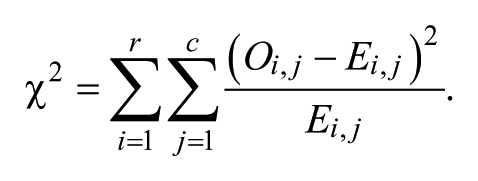
To assess the hypotheses linking the personal value orientation to a corresponding stage of cognitive moral reasoning, a cross-tabulation table was created (see Table 2). The assessment of the data in the cross-tabulation table is based on an if–then relationship. For example, if the subject’s personal value orientation is X, then the subject likely reasons at Stage Y. A chi-square test is traditionally used to assess the statistical relationships within the contingency table of the data distribution. As the expected frequencies—or distribution—is unknown in this exploration, a chi-square test of association is used, rather than the more common chi-square goodness-of-fit test (Glass & Hopkins, 1984). The chi-square test of association helps us determine if the distribution of the subjects’ personal value orientation and stage of cognitive moral reasoning are independent or dependent upon each other. The mathematical properties and equation underlying the test of association are shown in Equation 1: The Mathematical Properties and Equation Underlying the Chi-square Test of Association.
Cross-Tabulation of Millennials’ Personal Value Orientations and Stages of Cognitive Moral Reasoning.

Note. Bold values indicate hypothesized relationship; χ2 = 20.6624; p = .014.
In addition, to assess each of the additional hypothesized relationships discussed above, we rely on Sharpe’s (2015) work, where he suggests a number of approaches available to scholars after discovering a statistically significant chi-square test result: calculating residuals, comparing cells, ransacking, or partitioning. The first approach—calculating residuals, where the observed frequencies are compared with the expected distribution—is used if a significant chi-square test result is discovered to analyze further our data, specifically the hypotheses identified above.
In observing the data distribution in Table 2, there are some important discoveries. The millennial business students exhibit the same predominant personal value orientation found when investigating managers—a majority of millennials belonging to the Personal-Competence value orientation (49%)—similar to managers in the 2010s (37.1%) and in the 1980s (53.5%; see Weber, 2015). The other personal value orientations exhibited by millennials are similar to the distribution found among managers in the 1980s: Personal-Moral (27.9%, compared with managers in the 2010s = 29.4%), Social-Moral (15.9%, compared with managers in the 2010s = 21.8%), and Social-Competence (7.2%, compared with managers in the 2010s = 11.7%). It appears that the millennials in our sample, who are embarking on their professional business careers, are similar in their personal value orientation to managers already immersed in their professional business careers.
It is also revealing that our millennials collectively demonstrate Stages 3 and 4 cognitive moral reasoning (42.3% and 33.7%, respectively). This is consistent with data reported on managerial cognitive moral reasoning dating back to Weber’s initial study where managers reasoned at Stages 3 and 4 (45.9% and 40.5%, respectively; see Weber, 1990b). There appears to be little variation among the moral reasoning used by millennials in this study and the cognitive moral reasoning exhibited by managers nearly three decades ago.
Turning to the hypothesized relationships linking personal value orientation and stage of cognitive moral reasoning, the responses provided by the millennials in this study are assessed using the chi-square test of association, and show a significant dependent relationship between the two variables (N = 208; χ2 = 20.6624; p = .014). Therefore, we have overall support for the hypothesized expectation that millennials’ personal value orientation is related to their stage of cognitive moral reasoning.
We next explore the additional hypotheses that link specific personal value orientations to particular stages of cognitive moral reasoning. We adopted the first (of four) approach suggested by Sharpe—calculating residuals. Delucchi (1993) recommended that the researcher identify those cells with the largest residuals—the difference between the observed frequencies and the expected distribution. A positive residual identifies where the observed frequency is larger than the expected; a negative residual reflects the reverse relationship. The larger the residual, the greater the contribution of the cell to the magnitude of the chi-square value. Variations among the residuals are affected by the overall size of the population pool and the expected distribution within that sample. In our sample, the sample populations range from 102 millennials (personal-competence value orientation) to only 15 millennials (the social-competence value orientation). As stated by Agresti (2007),
A cell-by-cell comparison of observed and estimated expected frequencies helps us to better understand the nature of the evidence . . . [and cells with large residuals] show a greater discrepancy . . . than we would expect if the variables were truly independent. (p. 38)
The calculated residuals for this sample are shown in Table 3.
Calculating Residuals—Observed and Expected Distributions.

Note. Observed frequency less expected distribution = residual. Bold values indicate hypothesized relationship.
Personal-Competence Value Orientation and Cognitive Moral Reasoning at Stage 3
As seen in Table 2, the greatest concentration of millennials demonstrating a Personal-Competence value orientation predominantly reason at Stage 3 (47.1%)—as predicted in Hypothesis 2. This relationship also exhibits the largest residual—+5—for this relationship, as shown in Table 3. With more than double the subjects grouped into this personal value orientation–cognitive moral reasoning relationship (47.1% vs. 23.5% and 28.4% for Stages 2 and 4), there appears to be strong support for the hypothesis linking a Personal-Competence value orientation with Stage 3 cognitive moral reasoning, consistent with what Weber (1993) found when exploring this relationship for business managers.
Social-Competence Value Orientation and Cognitive Moral Reasoning at Stage 4
Despite fewer millennials sorted into the Social-Competence value orientation than any other personal value orientation (15 of 208), Table 2 indicates that more millennials assigned to the Social-Competence value orientation reason at Stage 4 (60%)—as predicted in Hypothesis 3—more than any other combination for this type of personal value orientation and stage of cognitive moral reasoning. The residual for this relationship—+4—shown in Table 3, is the only positive residual for the Social-Competence value orientation. Therefore, in agreement with Weber’s (1993) predictions for managers, millennials exhibiting a Social-Competence value orientation tend to reason at Stage 4 cognitive moral reasoning.
Personal-Moral Value Orientation and Cognitive Moral Reasoning at Stage 4
The Personal-Moral value orientation rendered the second highest value orientation membership for the millennials in our sample (58 of 208). And, as predicted in Hypothesis 4, most of these subjects also predominantly demonstrate Stage 4 cognitive moral reasoning (39.7%), more than any other stage of cognitive moral reasoning for this personal value orientation (17.2%, 32.8%, and 10.3% for Stages 2, 3, and 5, respectively), as shown in Table 2. This relationship’s residual—+3—is the highest residual, as shown in Table 3. The strong relationship between a Personal-Moral value orientation and Stage 4 cognitive moral reasoning is consistent with Weber’s (1993) findings for managers, and provides support for Hypothesis 4.
Social-Moral Value Orientation and Cognitive Moral Reasoning at Stage 5
Nearly 16% of the millennials showed a value orientation of Social-Moral (33 of 208). However, most of these subjects predominantly demonstrate cognitive moral reasoning at Stage 3 (16 subjects, compared with nine subjects at Stage 4 and four subjects at the predicted Stage 5), as shown in Table 2. The residuals for this personal value orientation are quite low (either +2 or −2, as shown in Table 3), with the predicted relationship—a Social-Moral value orientation and Stage 5 cognitive moral reasoning—exhibiting a +2 residual. Hypothesis 5 is the only hypothesis of the four predicted relationships that failed to demonstrate a strong relationship in our post-chi-square data analysis, and did not match Weber’s (1993) findings for his managerial population.
Conclusions and Limitations
The data in this sample provide statistically significant support for Hypothesis 1. We proposed that there would be a significant (correlated) relationship between millennials’ personal value orientations and stages of cognitive moral reasoning. In addition, support was found for three of the four additional hypotheses (2-4). Millennials who exhibit a Personal-Competence value orientation tend to exhibit cognitive moral reasoning at Stage 3—Good Boy/Nice Girl Reasoning. Those who exhibit a Social-Competence value orientation tend to exhibit cognitive moral reasoning at Stage 4—Law and Order Reasoning. Finally, subjects who exhibit a Personal-Moral value orientation tend to exhibit cognitive moral reasoning at Stage 4—Law and Order Reasoning. We conclude from the analysis that there does appear to be a strong relationship between millennials’ personal value orientation and their predominant stage of cognitive moral reasoning, confirming earlier work reported by Weber (1993).
This research helps us understand the integrated ethical decision-making process for a generation that is assuming leadership roles in business organizations and a greater presence as consumers and investors in the global marketplace. Future scholars may wish to test these relationships further, but this work bestows greater confidence in studies that previously assess only personal value orientations or only stages of cognitive moral reasoning. Given the preponderance of literature supporting the relationship between moral reasoning and moral behavior (Brabeck, 1984; Green & Weber, 1997; and more recently, Pohling et al., 2016; Swann et al., 2014), values-only research may be more connected with moral action than previously thought or confirmed.
This exploration provides additional insights into the emerging role millennials may play as employees in the business workplace, as consumers in the marketplace, and as investors in the financial markets. The confirmation of the consistency of millennials’ personal value orientations and stages of cognitive moral reasoning with previous explorations using managers as subjects may give comfort to businesses seeking to understand how to accommodate or appeal to new millennial employees, consumers, or investors.
This discovery confirms other research exploring millennials and their work habits. Hansen and Leuty (2012) explored generational differences in work values, and conclude that the measured differences across baby boomers (typically senior managers in businesses today), generation X, and millennials (our subjects) are quite small, and perceptions of work provide a stronger explanatory power than age differences. An earlier summary of generational work values research acknowledges that differences are not always found (Parry & Urwin, 2011), so perhaps there is more similarity across generations than differences when it comes to personal values, moral reasoning, and workplace practices. Therefore, much of the managerial research that evaluates behavior may be applicable to the newest generation of managers, customers, and investors—millennials.
Alternatively, some variations may exist, and millennials may offer new perspectives or practices within their ethical decision-making processes, as employers are discovering. Firms are challenged to match the millennials’ ethics with their own organizational ethical culture. Are firms able to create a culture or working environment that is attractive to this new generation of employees? Perhaps if a firm emphasizes its concern for social impact or fosters sustainable business practices, millennials with similar interests might be willing to join and stay longer with that firm. There is a clear incentive for firms to retain their valuable investments—new millennial employees. An understanding of millennials’ personal value orientations, cognitive moral reasoning, and the linkage between the two decision-making criteria may be helpful for the firm. Will other firms be able to capitalize on their prior efforts at organizational loyalty to motivate employee retention? It is plausible that the millennials’ perception of “organizational flight” (Derry & Jago, 2015) can be countered through incentives offered by businesses, given the millennials’ personal value orientation.
Perhaps a lesson can be learned from the results found when scholars administered the Motivators Assessment to more than 4,000 millennials. Elton and Gostick (2017) found that millennials’ preference for “changing the world” or “making a difference” might cause them to stay longer at a business than previously thought or observed. If a firm is able to provide opportunities for millennial employees to believe they are making a difference in the world—appealing to the 16% in our sample who expressed a social-moral personal value orientation or the nearly 40% who demonstrated moral reasoning at Stages 4 or 5—these millennial employees may be more loyal to the firm.
Other adjustments, in attracting millennial customers or investors, as noted earlier in this article, may be necessary, but an understanding of millennials’ values and decision processes should be invaluable. Millennials often espouse a #YOLO (you-only-live-once) approach, seen in their lack of a serious investment strategy while in their 20s and 30s. Yet, this lack of attention to retirement savings in their emerging professional careers is hardly new when understanding previous generations’ investment patterns (Butt, 2016). The predominance of millennials exhibiting a personal value orientation (77%, compared with a social value orientation) may necessitate investment firms to attempt once again to incentivize investment commitments among young people who are starting out their careers and seem to be more intent on personal consumption in the here-and-now rather than saving for the future.
Practically, the results reported here suggest that administering the Rokeach Value Survey to prospective employees, new hires, potential customers, or future investors (which is far easier than administering and interpreting the data from a moral reasoning instrument, such as the AMJI) may offer valuable insights into the millennials’ decision-making process. These insights could provide important information to business decision makers in organizational hiring, job placement, task assignment, or promotion or termination decisions. It may also contribute to developing strategies for product development, channel distribution selection, investment portfolio development, and a host of other business choices.
Targeting specifically new or upwardly mobile employees, for example, the organization could infuse their employee ethics training program with an attention to a desired value orientation and/or stage of moral reasoning to promote ethical decision making and behavior (Treviño, 1990). Finally, it may enhance organizational ethical decision making to combine entry-level employees, who are predominantly millennials, with similar value orientations or predominant stages of moral reasoning into the same workgroups. Alternatively, firms may choose to select employees with different value orientations or predominant stages of moral reasoning into various workgroups dependent upon the intentions and necessary makeup of the group and its decision-making responsibilities.
In addition to the practical implications, this research contributes to the scholarly community in a number of ways: Rather than exploring only one dimension of an individual’s decision-making process, as scholars envisioned when constructing and advancing the theoretical foundations of personal values research (Rokeach, 1968, 1973; Schwartz, 1992) or the landmark theoretical foundations of cognitive moral reasoning (Kohlberg, 1971; Rest, 1986), our exploration interrelates two distinct fields of research. As claimed by Weber (1993), “The resulting association [between value orientation and cognitive moral reasoning] has various theoretical, research and practical implications” (p. 455).
Our discoveries allow future scholars to consider an independent, yet related, cognitive framework in understanding ethical decision making—personal value orientations (as general guiding principles) and stages of cognitive moral reasoning (how one weighs and filters information). Importantly, values and cognitive moral development are not isolated intellectual elements, independently related to decision making and behavior. Rather, they are interconnected in the individual’s integrated ethical decision-making process.
This work also suggests that prior research exploring only personal values (Argandona, 2003; Holland, 2013) or only cognitive moral reasoning (Johnson, Hogan, Zonderman, Callens, & Rogolsky, 1981; Sivanandan et al., 2013) needs to be accepted with caution. These works describe only a partial understanding of the integrated ethical decision-making process used by millennial business students or any other group of decision makers. Positively, this work provides empirical analysis and support for the conceptual explorations undertaken by some scholars (Abdolmohammadi & Baker, 2006; Emler et al., 1983; Lan et al., 2008, 2010; Myyry et al., 2009; Weber, 1993) who envision a relationship between personal values and cognitive moral reasoning. The hypothesized connections espoused and discovered by these scholars are confirmed in this research.
There are a few limitations embedded in this research: First, the sample is a convenience sample of millennials currently enrolled as undergraduates in a business administration degree program in the eastern region of the United States. Subsequent research needs to broaden this analysis to include subjects outside of a business school program and in other regions of the United States, or other countries, to discover if there are any biases embedded in this research due to our sampling, or if these results are applicable to a broader group of millennials or other subjects.
Second, two well-respected and commonly used instruments are applied in this exploration: the Rokeach Value Survey (Rokeach, 1968, 1973) and the Kohlberg-based AMJI (Weber, 1991). However, some scholars prefer to administer other instruments to measure personal value orientations, such as Schwartz’s (1992) Theory of Basic Human Values, and stages of cognitive moral reasoning, such as Rest’s (1986) Defining Issues Test.
It is possible that the instruments used in this study, developed decades ago, do not accurately capture some of the unique nuances found in millennials’ decision-making processes, yet this only conjectures. It is also important to note that the increasing role of emotions as an influencer of cognitive decision making may be considered in future research. However, loyal to the cognitive emphasis found in the original work upon which this research is based, the Kohlbergian-based instrumentation relying on cognition was used here. It may be informative to utilize different measures to establish or question the interconnectivity between personal values and stages of cognitive moral reasoning. Nonetheless, this is an initial exploration of individuals’ integrated ethical decision-making processes, and the selected sample and instruments used are helpful in achieving this research goal.
Footnotes
Appendix A
Appendix B
Acknowledgements
The author is appreciative of the statistical analysis support offered by Dr. Amy Phelps at Duquesne University.
Declaration of Conflicting Interests
The author declared no potential conflicts of interest with respect to the research, authorship, and/or publication of this article.
Funding
The author disclosed receipt of the following financial support for the research, authorship, and/or publication of this article: The author is appreciative of the financial support provided by a grant from the A. J. and Sigismunda Palumbo Charitable Trust in 2015.