




Abstract
This article seeks to take stock of the critique of the liberal peace and identify what it has and has not achieved. It also asks ‘where do we go from here?’ The article surveys an agenda for future research and can also be read as a rebuttal of some recent literature that has attempted to shut down the liberal peace debate. The article opens with a quick recap of the bases of the critique of the liberal peace. It then outlines the ‘achievements’ of the debate and examines the failings and oversights of the original critique. Questions are raised about the epistemology and terms of the debate, and of the ability of critical intellectual projects to break through the material power held by mainstream intellectual and policy actors. In its final substantive section, the article asks ‘where next for the critique of the liberal peace?’ We conclude by highlighting avenues of research that might be fruitfully explored.
Introduction
In its most modern incarnation, the critique of the liberal peace has been with us for almost two decades. Some commentators think (and a few possibly hope) that it has had its day as an intellectual debate. For Hameiri (2011: 205), it has become the ‘new mainstream’. Yet, the critique has been growing in momentum as new phases and implications of the debate emerge. We think that the regular reversion to violence and the poor quality of peace in many post-conflict environments justifies the need for a critical interrogation of the concept and practice of peace (Collier et al., 2007). The persistence of liberal peace ‘solutions’ closes the door on political progress and on difficult discussions about sustainable forms of peace, legitimacy, responsibility and inequality.
The liberal peace critique has developed from being a summary of the well-documented failings of international peace-support interventions (Doyle and Sambanis, 2006) and policy prescriptions about how to make them more effective (e.g. Paris, 2004) into a more philosophical unpacking of the various historical and theoretical bases for intervention and power in international relations. It has also extended into a debate on the epistemologies that we use to investigate peacebuilding, related concepts and their context. It has attracted criticism from realist, Marxist, liberal, constructivist, critical and post-colonial scholars, for a range of often similar reasons. It has also attracted the attention of many students, scholars, and policymakers, including from the post-conflict and developing world, and appears to have become one of the central debates in IR.
This article seeks to take stock of the critique of the liberal peace and identify what it has and has not achieved. We are beginning to see the first fruits of a research agenda beyond critique, a greater awareness of the political and scientific purposes behind the critique, and more discussion of the positionality of those engaged in the debate. The article surveys an agenda for future research and can also be read as a rebuttal of some recent literature that has attempted to shut down the liberal peace debate (Zaum, 2012: 122, 124: Selby, 2013). The dismissive perspective carries ideological resonances with previous critiques of liberalism, and also represents a lack of understanding of historical and methodological positionality. It risks reflecting a realist-liberal favouring of the status quo (sometimes dressed up in calls for a modified version of the liberal peace) or a Marxist-inspired dissatisfaction that the critique does not conform to its agendas. This perspective has sought to shoehorn the critique into established paradigms. Importantly, such perspectives do not take peace as their starting point.
However, and more seriously, the dismissive arguments are, first, a rejection of the evidence presented in many databases suggesting at best very limited empirical improvements, from the Gini index, to the HDI index, those of Freedom House and others (Richmond, 2011: Appendix). Second, defences of the liberal peace and some critiques of the critique against the liberal peace seem unaware of arguments relating to power and knowledge. It seems important that fundamental power issues relating to Eurocentrism, the embedded nature of technocracy, and the historic connection of liberalism with Empire are at the forefront of our debates. Dismissive arguments also tend towards a denial of the possibilities of hybrid political orders, and the conceptual opportunities offered by hybridity in general (Richmond, 2008: 155).
As mentioned above, the critique of the liberal peace has not just been subject to attack from the mainstream, but has also been subject to a substantial critique from other (critical) perspectives. This article seeks to address some of this ‘critique of the critique’, hereafter referred to as the secondary critique. The secondary critique has tended to focus on theoretical rather than empirical matters. As can be expected with a rapidly growing academic debate, there has been misunderstanding and misreading. It is worth stressing that the secondary critique does not constitute a homogenous body of work. Apart from being unconvinced by the explanatory purchase of the liberal peace, and critiques of it, it comprises a loose range of perspectives including Marxist, post- and anti-colonial arguments. We construct a rough taxonomy of the secondary critique later in the article.
The arguments in this article are offered in the spirit of constructive engagement, in the hope that the debate on the liberal peace can avoid becoming a narrow site of introspection. Fundamentally, the critique of the liberal peace is interested in real world issues that have direct impacts on the lives and opportunities of perhaps billions of people; hence the attention to the ‘everyday’ and the ‘local turn’, with their suggestions of scale, power, responsibility, justice, emancipation and empathy (Boulding, 1978; Lederach, 1995; Mac Ginty and Richmond, 2013; Richmond, 2005, 2008, 2009). Issues of power, legitimacy, structure and epistemologies still dominate internationally-supported peacebuilding and so we remain convinced of the utility of the liberal peace as a conceptual lens.
Outline of the article
This article proceeds by recapping the bases of the critique of the liberal peace. This includes a rough taxonomy of the secondary critique along with responses to it. The article then outlines the ‘achievements’ of the debate. These are set out not as a piece of self-congratulation or indeed apology, but as a way of identifying waypoints. The article then examines the failings of the original critique. Perhaps its most significant failing has been its inability to engage in a fuller way with the academic and policy mainstream (though these are themselves rather closed off in their own ghettos and are reluctant to engage with critiques or challenges) (Mac Ginty, 2014). This raises important questions about the epistemology and terms of the debate, and of the ability of critical intellectual projects to break through the material power held by mainstream intellectual and policy actors. In its final substantive section, the article asks, ‘Where next for critical thinking on peace and conflict? (Zaum, 2012: Heathershaw, 2013). We conclude this article by highlighting avenues of research that might be fruitfully explored.
A quick recap
A first point to make is that the critique of the liberal peace did not begin with the critical interrogations of post-Cold War interventions. Works by Duffield (2001, 2007), Pugh (2004), Paris (2004), Chandler (2006), Chesterman (2004) and others were indeed seminal in the most recent iteration of the critique, but it would be churlish not to recognise that there has been a long history of thinkers prepared to challenge the basis of international orthodoxy. Kenneth Boulding (1978, 1989) and Elise Boulding (1990), Herman Schmid (1968), Bahr (1973) and many other peace scholars have asked fundamental questions about why international structures are organised as they are, why power operates as it does, and – crucially – why do we approach these issues in the way that we do? How may a more emancipatory peace be achieved given historical injustice, global inequality and a general valorisation of Western power and knowledge (Comaroff and Comaroff, 2012)? These questions connect with wider issues of epistemology and the philosophy of knowledge that have helped us look beyond the confines of traditional paradigms and the power relations they assume (Foucault, 2003). Of crucial importance in this regard was Robert Cox’s essay (Cox, 1981; see also Pugh, 2013) on how the discipline of international relations organised its knowledge and approaches into broadly paradigms: problem-solving and critical. Peace and conflict scholars have often drawn eclectically from a range of critical positions in order to understand the security, constitutional, institutional, legal, economic, political and social requirements of peace in different regions across the world (Azar, 1990). Making peace the focal point of analysis – the standpoint – presents quite a different perspective on these wide ranging issues, when compared to ideological, theoretically, or methodologically motivated approaches from within disciplines such as IR and politics (whether political ‘science’, ‘philosophy’ or ‘theory’) (Richmond, 2009; Smoker, 1981).
The secondary critique has pointed to a significant number of shortcomings and omissions in the critique of the liberal peace. Some of these are accurate and have been very useful in helping to hone the critique. Many are a product of disciplinary or ideological confusions over ‘standpoints’. Others have been off target or based on a misunderstanding of what the critique actually says.
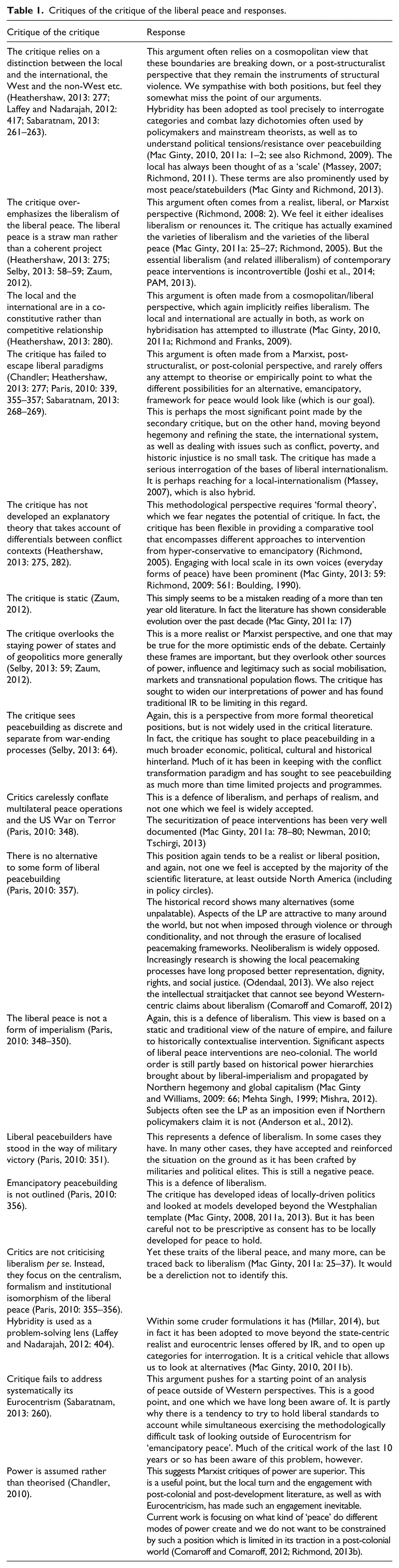
Table 1 offers an abbreviated summary of the main points made by the secondary critique, with brief responses to these points. It also serves as a rough taxonomy of the secondary critique according to the ideological lenses we infer the authors use. We argue that the critique and the secondary critique signify a healthy and increasingly interdisciplinary debate.
Critiques of the critique of the liberal peace and responses.
Achievements
The most significant contribution made by the critique of the liberal peace has been the construction of a framework of analysis allowing scholars to unpack the evolving nature of various forms of peace activity (Chandler, 2009; Mac Ginty, 2008; Paris, 2004; Richmond, 2005, 2013a). This has been carried out in its wider historical, ideological, and methodological contexts, and has mounted a challenge to the liberal peace framework over its claim to represent the most emancipatory peace framework in history on a universal basis (Doyle, 1986; Fukuyama, 1989). From our perspective as peace and conflict research scholars this has allowed us to interrogate comparatively the claims that are often made about peace, both as a reality and as an ideal.
This framework of analysis has a number of attributes. First, it has allowed us to see the generic and structural bases of international intervention, looking beyond individual cases to regard peace-support interventions not as a series of one-off crisis driven interventions but instead as part of wider historical processes linked to power (Chandler, 2009; Jacoby, 2009). The critique has made heavy use of case study material (e.g., among many, Autesserre, 2010; Kappler, 2014; Richmond and Franks, 2009: Boege et al., 2008) but it has also been able to delve beyond individual cases to examine commonalities between cases, particularly the issues of power and structure that connect them (Mac Ginty, 2011a; Richmond, 2011). These commonalities are evident in policy documents from the UN, International Financial Institutions, regional organisations (Richmond et al., 2011) and INGOs, not to mention state donors throughout the last three decades (Mac Ginty and Richmond, 2013). Indeed it is hard to understand why the liberal peace may be said not to exist, or to be a ‘straw man’ (Selby, 2013; Zaum, 2012), when all of these documents assume international intervention can and should focus on liberal constitutions, democracy, human rights, separation of powers, rule of law, neoliberal development and so on. The rhetoric, if not the practice, is most firmly liberal and in the Wilsonian tradition (Joshi et al., 2014). Alternative systems and forms of peace are automatically disallowed, as is any redress of historical injustice by this assumed ‘natural’ hierarchy. Direct imperialism and colonialism may have been discredited, but more subtle forms of control continue. Any act to bring peace, which does not simultaneously enable its subjects to shape that peace, can therefore be construed as maintaining an order in favour of those who act, with their assumptions, norms, political, social and economic systems, and historical positioning.
The existence of the liberal peace is confirmed by data from the Peace Accords Matrix, which points conclusively to the fact that liberal ideals have been embedded in the vast majority of post-1989 comprehensive peace accords (Joshi, Lee and Mac Ginty, 2014; PAM, 2013). Indeed, they also feature prominently in seminal peacebuilding policy documents spanning the Agenda for Peace (1992), and the New Deal (2011). The critique has enabled the construction of a comparative vehicle that has deployed theoretical and conceptual lenses to interrogate the foundational claims and operational impacts of the dominant form of internationally-supported peacebuilding, showing commonalities and inconsistencies across cases and at ‘headquarters level’. Local participation, ownership, identity, norms, and historical systems of power, social organisation and peacemaking are excluded by this version of peacebuilding. Peace instead reflects Western/Northern concerns and priorities.
In recent years, partly as a result of the critique, and partly as a response to a wide array of resistance on the ground, the UN and donor system has adapted in response. It is now commonplace for programme officers and UN personnel to mention conflict sensitivity, to call for more local knowledge and to want to engage with local pre-existing peace structures. It is also common to acknowledge that the era of liberal peacebuilding blue-prints (the 1990s, for example) is now over, and the peacebuilding architecture now proceeds on a case by case basis (Confidential Sources Personal Interviews by Oliver Richmond, 2014).
We do not want to give the impression that we fail to understand the good sense of some interventionist approaches in certain contexts, particularly where local peace institutions have broken down and violence is uncontrolled. The focus of the critique of the liberal peace has been on highlighting contradictions built into the dominant form of peacemaking. Democracy implies consent and legitimacy. These are rarely present in context even if they are internationally. Human rights require material support: international doctrine and markets rarely allow for adequate such support. Positive peace in an emancipatory form cannot be achieved without a recognition of, and support for, subjects’ rights, representation and material situation. The exclusion of the local scale means the liberal peace is an unequal peace benefiting the West/North, being little more than pacification in other contexts. Pre-judging the norms, laws, institutions and architecture of peace, as well as the nature of the state and its position in global markets indicates that the theory and policy of peacebuilding is driven by realist and strategic rationalities. These claim to offer a positive peace. They do not. Nor can peacebuilding’s subjects be represented unless the implications of both inequality in a material sense, and hybrid political orders (Boege et al., 2008), are taken seriously by international policies and doctrines. Again, these factors, both current realities and long represented scientific arguments, are mostly absent from policy responses to crises.
Second, the critique of the liberal peace has sought to move beyond the out-dated perspectives afforded by realism and liberalism and that still pervade the discipline of international relations. The critique has sought to identify and challenge an aggressive international neoliberalism, and to help detect the remnants of colonialism found in many international strategies to promote ‘development’ and order. Certainly reports of the decline of the state have been exaggerated (Chandler, 2010; Creveld, 1999), but the state-centricity of much orthodox and policy literature becomes something of a self-fulfilling prophesy. It is a case of epistemic closure whereby the terms of the debate remain focused on states, boundaries and rather static views of power and legitimacy. It precludes a genealogical understanding of how the states-system and international institutions and markets may themselves be conflict-inducing. It absolves them, and their elites, of the necessity to engage in progressive politics or the need for an emancipatory and hybrid peace and state framework. Above all, state-centric perspectives of peace and conflict risk leaving people out of their analyses. The critique has sought to rectify this through its interrogation of the distribution of power (top-down, bottom-up and all locations in between) and its focus on the perspectives of emancipation from the everyday and the local scale.
Some scholars have chided the critique of the liberal peace for attempting to stray from the boundaries of state-centric analyses (Selby, 2013; Zaum, 2012: 127). We would argue that this horse has long bolted. The state is already (and always was) a highly compromised entity. Yet much of the secondary critique remains beholden to realist notions of power and structure, and intent on maintaining the state for the lack of anything better, or because it ‘maintains rights’ (Chandler, 2010). This strikes us as a conservative position that does not fully exploit the possibility of institutions that transcend and subvert the state. The critique does not ignore the state, but it does question its role in promoting emancipation and is anxious to acknowledge the variegated nature of power. We also note the role of the state as both a positive and negative force from the perspective of the UN system and its progressive ambitions. Moreover, in many societies that experience conflict and liberal peace interventions the state is a predatory, marginal or ineffectual presence (Bliesemann de Guevara, 2012; Kabamba, 2010). The state does not play a progressive role in the lives of many in DRC, Lebanon, Georgia and other conflict-affected societies, and scholarship that remains focused on the state risks perpetuating the myth of the effective state.
Much of the critique of the liberal peace has been aware of geopolitical considerations, especially the extent to which power relations have been skewed in favour of states and institutions based in the global North (Jabri, 2010). Only recently has the critique begun to acknowledge that the rising power of emerging actors often tenuously connected with the liberal peace framework (including Brazil, China, India, Turkey, South Korea and others such as the G7+) (Richmond and Tellidis, in press); more work needs to be done on this area. The criticism that the critique of the liberal peace has paid insufficient attention to strategy pre-supposes that coherent strategies exist, as well as the power to support them. The ‘make it up as we go along’ interventions and occupations of Iraq and Afghanistan do not suggest strategy (Chandrasekaran, 2008). Recent critical work has moved on and is keen to reflect that liberal peace agents often have ‘feet of clay’ and are often reactive agents who are hostage to domestic budget cycles and intervention fatigue among the public, as well as colonial or orientalist relationships with their post-conflict subjects. In other words, liberal peacebuilding is closely related to existing power structures and their historical development (Mazower, 2012).
Fundamentally, the critique has attempted to utilise broader notions of power that stray far beyond the Mackinder or Marxist paradigms. The critique has displayed an emancipatory logic by approaching its task through society and people-focused studies, and is ready to unpack concepts such as power, legitimacy and agency rather than accept them at face value. Indeed, the critique has shown signs of being prepared to push hard at the boundaries of liberalism, the state and the international community in their generally accepted historical forms, in order to understand better historical, ontological, epistemological, methodological and ethical challenges. This requires an interdisciplinary understanding of political processes, one which we do not think can be developed through problem-solving approaches which work through parsimony, prioritisation, pragmatism and power. We would argue that temporal and material justice, redistribution, reconciliation, and interrogation of root cases in their contextual, social framework, are key, if peace is to be emancipatory and thus sustainable.
A third contribution made by the critique of the liberal peace has been its willingness to examine the simplistic categories that populate our interrogations of international intervention. Terms such as ‘international’, ‘bottom-up’, ‘top-down’, ‘local’, ‘traditional’ and ‘indigenous’ are constants in the discussion of the liberal peace although most scholars are aware of the networks and scales that mark its reality (Latour, 2005: 110; Massey, 2007: 7). Terms such as ‘the field’, ‘good governance’ and ‘capacity building’ echo the colonial power relations of the metropole with the periphery. On the one hand, our discourses need to be intelligible sites for mutual understanding and discussion; on the other hand, the very terms that we require for mutual comprehension bring with them explicit and implicit meaning and connotations. Anything a Northern scholar says will be interrogated for discursive power by many in the global South, and any scholar is of course a priori positioned in a historical framework of global politics. The present authors cannot escape completely their own privileged Northern/European (UK and Irish) positionality. The critique of the liberal peace, and in particular the lenses provided by the concepts of hybridity and hybridisation (Mac Ginty, 2011: Richmond, 2011), at least allow us to engage with these dynamics. The non-acceptance of established political categories allows us to re-assess boundaries and identify the connections, networks and co-constitutive elements that comprise the context for contemporary peace-support intervention.
The secondary critique has often raised the critique’s use of language, despite the critique itself repeatedly pointing to the unsatisfactory nature of the conceptual and linguistic tools at our disposal (Mac Ginty, 2011b: 21–22, 208). Sabaratnam (2013), for example, makes the well-worn point that the critique of the liberal peace relies on a distinction between the West and the non-West. For her, the West/non-West dichotomy masks an ontology steeped in Eurocentrism and ‘reinstates Europe as the implicit subject of world history and historical sociology, and occludes the contemporaneous and necessary involvement of the wider world’ (Sabaratnam, 2013: 261). Certainly, much of the language of peacebuilding, statebuilding and development betrays the problem of a world still seen from the central ‘metropolitan’ power’s position (but it points to the US rather than Europe as the key player). The muscular language of peacebuilding reflects this: ‘Headquarters’, ‘field mission’, ‘field work’, ‘capacity-building’, and so on, are redolent of this positioning (Richmond, 2014), these being issues long raised by the (primary) critique. Certainly the critique has long recognised the material and normative power that ‘the West’ has and does wield (Jabri, 1996; Richmond, 2002).
To avoid a focus on the foundational assumptions of liberal peace power would risk overlooking the massive disruptive and exploitative influence of colonialism and global market forces.However, the critique has been much more than an echo-box of Eurocentric historicity, elitism, neoliberalism or post-Marxism. It has gone far beyond attempting to counterbalance ‘the West’ with stories of ‘the non-West’ or attempting to confront the West with its failings to live up to its own propaganda. Instead, it has sought to delve into these categories and expose their limited purchase (Mac Ginty, 2011a: 211–212), as well as to engage with discursive frameworks from within Northern academe or elsewhere – and especially from post-conflict zones or from the global South – which have also sought to challenge these categories, and the way they naturalise existing power relations. It has tried to highlight the possible alternatives and modifications that such epistemologies represent (Lidén et al., 2009: 587–598; Mac Ginty and Richmond, 2013). It has sought to utilise more imaginative conceptualisations of power and agency, seeing them as networked, co-constitutive and adaptive (Foucault, 1991; Richmond, 2013a: Strange, 1988; Scott, 1985; Spivak, 1988). Each is implicated in the other to the extent that the categories become empty signifiers. Concepts of blowback, mimicry, complexity, friction and hybridity (Björkdahl and Höglund, 2013) from post-colonial studies (Bhabha, 1992), along with Focauldian notions of the circulation of power, post-development critiques (Escobar, 1994) and critical geography and its approaches to the local and scalar notions of the global (Massey, 1994: Apparaduai, 1996), have allowed the critique to move beyond the either/or of West and non-West. Post-structural, local and post-colonial turns do not of course claim a monopoly on innovation in peace and conflict studies (Mac Ginty and Richmond, 2013; Richmond, 2002). This act, in keeping with the educative spirit of conflict transformation, has enabled further reflection on formative bases of the epistemology and scholarship that has sought to unpack the meanings of peacebuilding.
The critique has gone out of its way to stress the ‘messy and awkward’ (Mac Ginty, 2011a: 210) nature of the peacebuilding landscape. It has explicitly sought to transcend the simplified dichotomies that populate our studies and is aware of the intersectionality that characterises complex transnational processes (Mac Ginty, 2011b: 1). The critique’s ‘eirenist’ methodological outlook (at least from our perspective) has meant it has also been open to exploring the agonistic tensions of any peace that inevitably goes with recognising difference, in parallel with attempting to think progressively about any shared peace and emancipatory processes across local to international scales (Connolly, 1991; Richmond, 2009). The post-colonial position indicates that any attempt to situate peacemaking and peacebuilding in a wider historical context means that there also needs to be serious engagement with distributive justice (Singer, 2011). Peace praxis cannot merely mean stabilising the current order, something of which we have long been aware (but of which we have also been accused) (Chandler, 2011). For power and authority to be legitimate it has to have the consent of its subjects, worldwide. This would involve not only commendable norms but also some significant attempt to rectify past errors of judgement. A very complex proposition, it requires an acknowledgement of historical injustice as well as contemporary action to rectify inequality where the ‘market’ or development fails to reach, and the self-neutralisation of power and interests in favour of the subject.
A fourth contribution of the critique has been its creation of a site for debate. This site has now been enriched by the secondary debate. A simple bibliographic search brings up well over one hundred books, book chapters, articles and review essays focusing on ‘liberal peacebuilding’ or the ‘liberal peace’ (this excludes the dull debate on the links between peace and trade). A search of conference and seminar titles, as well as PhD thesis titles, brings up many more contributions. This carving out of a space for critical dialogue is no little achievement given the conservatism associated with many disciplines, particularly mainstream international relations and, at times, peace studies (Cox, 1981; Mac Ginty, 2011b: 5; Pugh, 2004; Richmond, 2008; Scholey, 2006: 179–192).
A fifth contribution has been that the debate has encouraged intellectual innovation and experimentation. At times this has involved mistakes, excessive claims and the publication of ideas not fully developed (the authors of this article freely admit to being guilty of these). Innovation has come through fieldwork (with some notable work being conducted by PhD students), theory and concept-building, and lending and borrowing from other disciplines. Here sociology, anthropology and postcolonial studies have been particularly useful in challenging some of the totemic ‘givens’ of international relations Comaroff and Comaroff, 2012). Breaking out of the traditional contestation of IR and politics between realist, liberal, Marxist, critical, and post-structural perspectives has not been easy or necessarily popular.
Perhaps the most important contribution made by the critique of the liberal peace has been the challenge to the naturalised power lying in the states-system and its historic formation. This has involved challenging its claim to make peace, develop and save the other, in the face of its own failings and its denial of others’ rights. This breath-taking blind spot on the part of the current peace architecture, we argue, does not offer an emancipatory peace, but instead is an instrument of historical domination (whether one with a light or heavy footprint) (Richmond, 2005, 2011). Indeed, one of the reviewers for this article noted ‘… the authors do not sufficiently appreciate the progress that has been made in human affairs. The end of the Cold War … does indicate that the West has gotten certain political and economic basics right … The wheel need not be continually reinvented’. Such liberal satisfaction underlines the continuing need for a critique given the limited reach and quality of the liberal peace, and there is some evidence that international organisations, international financial institutions and others involved in peace-support interventions have been taking on board ideas that have been prominent in the critique (UNDP, 2012; WDR, 2011). However, there are also disturbing indications of a contradictory return of neo-trusteeship and ‘native administration’ approaches discernable in the ‘local turn’ of IR’s mainstream and of policy-makers –see, for example, Dodge’s critique of statebuilding in Afghanistan and Iraq (Dodge, 2013).
We have to be cautious about any improvements in two respects. First, it is difficult to draw direct lines of causation between points made in the critique and apparent changes in tack by international peace interventionists. Second, many of the changes by major institutions probably lie in the realm of rhetoric rather than substance. Yet it is interesting that these organisations feel the need to engage in the theatre of policy change and take time to seek legitimacy where before it was assumed. There has been a distinct ‘local turn’ in international approaches to peacebuilding, with efforts to connect with local actors and legitimacy (Mac Ginty and Richmond, 2013). There has also been a renaissance of interest in indigenous dispute resolution knowledge (Wanis-St. John, 2013: 360–374), and a greater tolerance of ‘good enough’ (often meaning, somewhat disparagingly, ‘locally determined’) standards of governance and security (Richmond, 2014). The critique of the liberal peace has gone beyond an audit of failings to highlight the structural and discursive power that lies behind individual operational failings.
Failings
While we would argue that the critique of the liberal peace has offered some significant insights and has had an indirect effect on some policy debates, it has also had failings. Perhaps the single greatest failing, and one that the secondary critique does not dwell on, is that much of the debate on the liberal peace has been restricted to academics, policymakers and students within the global North. While many scholars and practitioners from the global South share the perspective of the critique, their voices have only rarely made it into the mainstream academic debate (the practitioner-orientated Journal of Peacebuilding and Development is an exception). There are multiple explanations for this partial ghettoization of the debate, many of them related to the political economies of publishing and research.
The most intellectually thorny criticism of the critique of the liberal peace has been made by David Chandler (2011: 174–190) in his arguments that the critique is unable to escape from its essentially liberal heritage and is therefore uncritical (at least from a Marxist perspective). Even with our best efforts, our positionality (professional academics in privileged, national university systems, from the West, liberal, white, middle-class, male, etc.) often means it is all too easy to provide new finery in which to dress up ever more sophisticated iterations of power, hierarchy and inequality (Foucault, 1980). Much of the critique of the liberal peace has been careful to avoid falling into the trap of being prescriptive about alternatives to the liberal peace. While the problem-solving approach is unapologetically prescriptive in its policy recommendations, much of the critique has avoided recommending, let alone imposing, alternatives on those in conflict-affected areas. For the most part, scholars contributing to the critique have recognised that agendas of ‘solidarity’ or ‘experiential studies’, a focus on rights over needs, or a compliance with historical hierarchies of power, are inappropriate.
There are, however, issues to which the critique has not paid sufficient attention. Much more work remains to be done on the international political economy of internationally-supported peace interventions. Certainly the critique has highlighted the ideological biases of peacebuilding towards liberalism and neoliberalism. But more research is required on the precise nature of economic power relations under the current system of global governance/globalisation, and how they manifest themselves through donor strategies in relation to peace operations. Moreover, the regional aspect of liberal peace interventions has been under-researched and is especially pertinent given the ascent of the BRICS and others.
The critique – new directions
It is common for critical studies of peace and conflict to call for new approaches to epistemology that will take seriously the imbalance between the material research capacities in the global North and those in the global South. Clearly, more inclusive and participatory forms of research and dissemination are crucial, so that having research ‘partners’ in the global South does not merely reconstitute an essentially neo-colonial relationship (Scholey, 2006: 179–192). A crucial first step is a more serious reconsideration of our own epistemologies (and policy assumptions) and to recognise the tension that often lies between the conceptual and material worlds that researchers inhabit.
The material world of research presents a further set of thorny problems, however. We are all implicated in peculiar political economies of research. These political economies, often driven by our institutions and the marketised world in which they find themselves, usually stand in contradiction to ideas of civic, plural and inclusive epistemologies.
So, to echo a famous phrase, what is to be done? A deep positionality in our studies would be useful, with a searingly honest account of our biases and limitations. Good examples abound (Fulbrook, 2012; Henry et al., 2009), but we need to recognise the limits of our studies and that searches for ‘authenticity’ are often as much about satisfying our own desires, as about improving the accuracy of our research (Chan, 2011: 101). A useful starting point for research is humility and ‘not knowing’, as well as choosing to focus on the most marginal – i.e., conflict or injustice’s subjects, rather than local or international elites (Richmond, 2014). We do not think ignoring, saving or managing subjects is a sufficient ethical or political basis for a sustainable peace.
In terms of methodological directions for the critique of the liberal peace, it would be prudent to get beyond the obsession with levels of analyses, which are of limited worth if we do not seriously examine the epistemologies upon which they are based. Each of the levels is a construction behind which lies a story of our place in the world. It would be useful to deterritorialise the local and see it primarily as a practice rather than a space. Moreover, it would be useful to integrate gender analysis more fully into our research. This is not only for the obvious benefits of examining how peace and war are gendered, but also because of the enlightened and critical research perspectives that feminist studies can bring to the study of peace.
One area requiring more intensive research is the nature of hybrid political orders. We advocate a ‘post-biological’ perspective on hybridity. In other words, we need to get beyond discussions of the biological origins and limitations of the term, and see it as more than the simple grafting of one system onto another. Instead, we see it as a window on complexity and a way of questioning the fixity of categories and boundaries. It further leads us to question the static thought processes that rely on fixed categories and simple binaries. Hybridity is a critical tool that reminds us to take a long historical view – see Canclini’s notion of ‘prior hybridity’ (Canclini, 2005) – and to see institutions as verbs as well as nouns. In other words, political institutions are constituted by the actions of their personnel and ‘users’ (Menkhaus, 2006/2007; Moe, 2011).
To recommend emancipatory forms of peace yet not provide details of what this might look like may seem like an abrogation of responsibility. Furthermore it is not the aim of this article. To enumerate a list of prescriptions and hard policies would negate the principle of envisaging peace as formed primarily through bottom-up rather than top-down dynamics. Even such a loose prescription is fraught with danger given the possibility of bottom-up dynamics being exclusionary or violent. The authors of this article may wish to see emancipatory forms of peace that are open to alternatives and anti-hegemonic, bottom-up, freed from the constraints of statehood and imposed norms, and balancing needs with rights, rather than a homage to a hierarchical order. The prescriptive biases of the liberal peace, and some in the secondary critique, are based on a misplaced confidence that we have the legitimacy to recommend a type of peace for anyone else.
Conclusion
We take emancipatory and hybrid forms of peace as our starting point for methodology and epistemology, not historical materialism, the triumph of liberalism, eternal realism, neoliberalism, or pragmatism, efficiency, and coordination. The essential point of peace studies, after all, is to take peace as the principal referent (Richmond (2009) has previously called this ‘eirenism’). We are suspicious about ontological or epistemological claims that do not include the potential for emancipatory peace systems along with other claims. Searching for the multiple conditions of peace and reconciliation, and its implications for the individual, state and the international, across history and across disciplines, provides us with different approaches, methods, ethics and perspectives. We are unapologetic about this, as we are also unapologetic about attempting to remain outside of any IR or political theory ‘club’. We recognise the contributions these other frameworks have made to the study of and search for peace, as well as the obstacles they present. We feel this intersectional approach is a much better use of resources than reaffirming the balance of power, class conflict, the sanctity of market forces, technocracy, power, or Western values, and merely charting their processes and outcomes.
The bulk of the world’s population is not waiting to be saved or managed, but has expectations of protection against violence, of rights, and material support for its own projects. It also expects these to be embedded in local, state, and indeed global institutions in which it has a clear stake, if peace is to pertain with legitimacy. History will be direct in its denunciations of inequality. The critique and the secondary critique of the liberal peace have made strides forward in understanding the process of realising the fuller dynamics peace requires, but as the majority of the world’s population still suffer from direct or structural violence, they represent waypoints not endpoints. We are engaged in a slow process, along with many others (which will surely outlast our tenure) of piecing together the historical and geographical record, the many theoretical and empirical dimensions of, and the varied possibilities for, peace.
Footnotes
Funding
This research received no specific grant from any funding agency in the public, commercial, or not-for-profit sectors.