




Abstract
This study examined familism, ethnic identity (search and commitment), and gender as moderators in the associations between two minority stressors (perceived discrimination and acculturative stress) and depressive symptoms in college students of Mexican ancestry (N = 207) at a Hispanic-serving institution. Using hierarchical multiple regression, we examined main effects and interactions of minority stress variables with hypothesized moderators. Results indicated that familism buffered the positive association between acculturative stress and depressive symptoms. Ethnic identity search and commitment showed gender-specific moderation effects in that a strong ethnic identity search or commitment was protective for women but not for men, when considerable amounts of acculturative stress were experienced. Ethnic identity search also showed gender-specific moderation effects on the association between perceived discrimination and depressive symptoms. The findings highlight the importance of examining cultural variables and gender to understand what may be helpful to students of Mexican ancestry as they manage minority stressors.
Enrollment of Latinos on college campuses has risen considerably in recent years (Fry, 2011). Nationwide, more than half of all Latino students attend Hispanic-serving institutions (Nora & Crisp, 2006), defined as nonprofit institutions that have at least 25% of their enrollment consisting of Latino students (U.S. Department of Education, 2005). Students of Mexican descent compose the largest subgroup of Latino students in these institutions (Nora & Crisp, 2006). Very little empirical attention has been given to the mental health concerns of this sizable college student population (Nora & Crisp, 2012).
Minority stress theories (e.g., Carter, 2007) emphasize the contributory role of such stressors on negative health outcomes. Indeed, minority stressors such as ethnic discrimination have been found to longitudinally predict behavioral health outcomes (e.g., Cheng & Mallinckrodt, 2015). However, more studies are needed to investigate the psychological effects of minority stress and identify factors that may ameliorate its influence (Crockett et al., 2007; Torres, Driscoll, & Voell, 2012). Consistent with minority stress perspectives, the integrative model of developmental competencies (García Coll et al., 1996) maintains that ethnic minority status places individuals in disadvantaged positions in the societal hierarchy (based on social stratification mechanisms such as discrimination) and subjects them to contextual demands. These demands, such as acculturative stress, may interact with familial, cultural, and individual processes and influence developmental and psychological outcomes.
Minority Stress: Perceived Racial and/or Ethnic Discrimination and Acculturative Stress
Perceived racial and/or ethnic discrimination and acculturative stress are among the most salient sources of minority stress for individuals of Mexican ancestry (Torres et al., 2012; Umaña-Taylor, Updegraff, & Gonzales-Backen, 2011). Discrimination is defined as the self-reported unfair treatment by others based on one’s race and/or ethnic membership (Torres et al., 2012). Acculturative stress is the pressure associated with the process of cultural adaptation and integration between the host and heritage cultures that may manifest in multiple aspects of life, including language, value systems, and behavioral practices (Williams & Berry, 1991). For example, acculturative stress may manifest as the pressure to learn English and acclimate to mainstream values, especially for immigrants, and the pressure to preserve Spanish-language skills and maintain traditional values, particularly for later generations (Castillo et al., 2015).
Although researchers have viewed perceived discrimination as one domain of acculturative stress (e.g., Benet-Martínez & Haritatos, 2005), recent scholars have conceptualized acculturative stress and perceived discrimination as distinct, albeit related, phenomena (e.g., Torres et al., 2012). Specifically, perceived discrimination is related to the positioning of one’s ethnic group in the U.S. sociopolitical hierarchy, which is beyond one’s personal control (Carter, 2007). In contrast, acculturative stress involves challenges inherent in the process of cultural adaptation that have been described as “problematic but controllable and surmountable” (Torres et al., 2012, pp. 18-19). Moreover, although perceived discrimination has often been conceptualized as emanating from the out-group (e.g., majority Whites), acculturative stress may be experienced from both majority culture sources as well as heritage culture sources (e.g., pressure from the majority culture to acquire English-language skills and from the heritage culture to preserve Spanish-language skills; Castillo et al., 2015). Acculturative stress may be a particularly salient construct to examine for students of Mexican ancestry at Hispanic-serving institutions where the presence of both in-group (i.e., sizable presence of students from the same ethnic group) and out-group (e.g., significant number of White faculty, administrators, and students) demands may be significant. Given the distinctions between perceived discrimination and acculturative stress, examining the two variables separately could facilitate a clearer and more comprehensive understanding (Torres et al., 2012) of the complex psycho-socio-contextual adversities faced by individuals of Mexican ancestry.
Substantial research has linked perceived discrimination to a wide range of negative outcomes among racial and ethnic minorities, including elevated depressive symptoms (for a meta-analytic review, see Lee & Ahn, 2012). Prior research on Latino college students has also found a positive association between perceived discrimination and depressive symptoms (e.g., Brittian et al., 2015). Likewise, higher levels of acculturative stress have been associated with more depressive symptoms among Latino adults (Driscoll & Torres, 2013; Torres et al., 2012) and college students of Mexican ancestry (Crockett et al., 2007).
Fewer research studies, however, have identified factors that may mitigate the negative effects of perceived discrimination and acculturative stress on mental health. The integrative model of developmental competencies (García Coll et al., 1996) suggests possible interactions among minority stressors and familial or cultural processes that might inform outcomes. For individuals of Mexican ancestry, familism values and ethnic identity may be promising protective factors because of their culture’s emphasis on the family and the ethnic community as sources of support (Almeida, Molnar, Kawachi, & Subramanian, 2009). Gender, another social position variable specified in García Coll et al.’s (1996) framework, may also interact with familial, cultural, and individual processes. For instance, the extent to which familism values and ethnic identity moderate the impact of minority stressors may be related to how familism values and ethnic heritage are passed down differentially to male and female offspring (Umaña-Taylor & Guimond, 2012).
Familism and Ethnic Identity as Moderators in the Gendered Context of Mexican Culture
Familism
Familismo or familism is the strong commitment to the family, reflected in values such as family honor, loyalty and obligation, subjugation of self for the family, and close attachments to immediate and extended family (Steidel & Contreras, 2003). Strong familism values may provide a sense of guidance, purpose, and support in times of difficulty (Perez & Cruess, 2014). College students of Mexican ancestry who adhere strongly to familism values may possess more psychological assets for overcoming minority stress than do students who do not espouse such values. For example, higher familism levels are generally associated with lower depressive symptoms (see Stein, Gonzalez, Cupito, Kiang, & Supple, 2015, for a review).
Despite the potential of familism as a protective factor, very few studies have examined familism as a moderator between minority stress variables and depressive symptoms; those studies were primarily focused on children and adolescents (Stein et al., 2015; Umaña-Taylor et al., 2011). Stein et al. (2015) found that although greater endorsement of familism was related to lower levels of depressive symptoms, it did not buffer the link between perceived discrimination and depression in a general sample of Latino adolescents. Both Stein et al. and Umaña-Taylor et al. (2011) suggested a need to clarify how familism operates at different developmental stages and with other identity variables (e.g., gender). For example, Umaña-Taylor et al. speculated that the lack of protective effects found for familism might be because of the young age group in their sample and that the full protective potential of familism may not be actualized until an age when family values are more central to individuals’ lives.
Developmentally, college students are likely to be in young adulthood and middle adulthood stages (Hurtado & Ruiz, 2012), where their developmental tasks are to establish romantic intimacy, family life, and parenthood (Erikson, 1950), which may facilitate an examination and consolidation of familism values. Thus, the protective functions of familism may be more readily observable in adulthood. Related research found a link between stronger familism values and greater perceived parental support (Campos, Ullman, Aguilera, & Dunkel Schetter, 2014), which has been found to buffer the positive link between acculturative stress and depressive symptoms among university students of Mexican ancestry (Crockett et al., 2007).
Ethnic Identity
The ethnic identity process has been conceptualized to have at least two elements. Ethnic identity commitment, a subjective sense of ethnic group belonging, affirmation, and affective attachment, has been conceptualized as a cultural resource that has protective functions to offset the negative influence of minority stress on mental health by enhancing self-concept and facilitating group pride and solidarity (Phinney & Ong, 2007). Supporting this theoretical view, research has found that ethnic identity commitment moderated the relation between perceived discrimination and depression among Latino community adults (Torres & Ong, 2010) and the association between perceived discrimination and self-esteem among adolescents of Mexican origin (Romero & Roberts, 2003).
In comparison to the buffering effects of ethnic identity commitment, the role of the exploration aspect of ethnic identity or ethnic identity search (defined as seeking experiences or information related to one’s ethnic group; Phinney & Ong, 2007) has been less clear in the minority stress–psychological distress link. Some research has found that ethnic identity search actually exacerbated rather than buffered the associations between minority stress and poor mental health for Latino adults (Torres & Ong, 2010; Torres, Yznaga, & Moore, 2011). Indeed, although ethnic identity is often recognized as a multidimensional construct (Phinney & Ong, 2007), research suggests that only the commitment component has been more frequently found to have protective functions (Romero & Roberts, 2003). Thus, it is likely that ethnic identity search and commitment may exhibit differential moderation effects on the associations between minority stress variables and depressive symptoms.
Gender
Research has indicated that individuals’ ethnic identity continues to develop and becomes more complex during college (Syed, 2010) and may interact with other social identities, such as gender, to influence adjustment and mental health outcomes (Umaña-Taylor, 2011; Umaña-Taylor et al., 2014). Familial socialization processes can be highly gendered in traditional Mexican culture (Umaña-Taylor & Guimond, 2012). The importance of family is instilled in both males and females of Mexican ancestry, but females are expected to assume more caretaking duties; therefore, they often hold stronger familism values and feel more connected to the family than males (Campos et al., 2014; Cupito, Stein, & Gonzalez, 2015). This espousal of familism values may be especially protective against developing depressive symptoms for females (Cupito et al., 2015) in the face of minority stress. As such, gender may further interact with familism to moderate the relationship between minority stress variables and depressive symptoms (i.e., a three-way interaction), although research has yet to examine such potential interaction effects.
Research has suggested that females of Mexican ancestry are often expected to carry on ethnic traditions to their offspring (Padilla, 2006) and may, therefore, have greater ethnic cultural socialization than do males of Mexican ancestry. In one study, familial ethnic socialization was longitudinally predictive of ethnic identity in Latino adolescents of both genders, but the association was stronger for females than males (Umaña-Taylor & Guimond, 2012). Females may be more cognizant of their ethnic values and cultural practices, and ascribe more importance to ethnic group involvement, than are males (Umaña-Taylor & Guimond, 2012); this may more readily provide them with the protective effects of ethnic identity when dealing with minority stress. Using the subscales of the Multigroup Ethnic Identity Measure (MEIM; Phinney, 1992), Iturbide, Raffaelli, and Carlo (2009) found that gender interacted with Ethnic Identity Affirmation (termed Commitment in revised versions of the MEIM) to moderate the relation between acculturative stress and depressive symptoms such that higher Ethnic Identity Affirmation in individuals of Mexican ancestry was related to lower depressive symptoms for college women, but not men, when low levels of acculturative stress were experienced. At high levels of acculturative stress, Ethnic Identity Affirmation subscale did not exhibit protective effects for individuals of either gender. Interestingly, the same study found that Ethnic Identity Achievement (termed Search in revised versions of the MEIM) demonstrated similar patterns of moderation effects as Ethnic Identity Affirmation, such that greater levels of Ethnic Identity Achievement were associated with lower levels of depressive symptoms for women, but not for men, in the context of low acculturative stress (Iturbide et al., 2009). Thus, although some studies have found that ethnic identity search may intensify rather than buffer the acculturative stress–depression link (Torres & Ong, 2010; Torres et al., 2011), Iturbide et al.’s study indicated different patterns of moderation when gender was considered.
The Present Study
Informed by minority stress theory (Carter, 2007) and García Coll et al.’s (1996) developmental framework, the present study investigated familism, ethnic identity components (i.e., commitment and search), and gender as moderators on the associations between minority stress variables and depressive symptoms in a sample of college students of Mexican ancestry at a Hispanic-serving institution. We hypothesized that familism would buffer the positive relations of perceived discrimination and acculturative stress to depressive symptoms and that the buffering effects of familism would be further moderated by gender such that the positive associations between minority stress variables and depressive symptoms would be weaker for women than men when high levels of familism values were endorsed. Likewise, we hypothesized that the moderation effects of ethnic identity commitment on the associations of perceived discrimination and acculturative stress to depressive symptoms would be contingent on gender such that the buffering effects would be more pronounced for women than men, as suggested by Iturbide et al. (2009). However, we made no specific prediction concerning the moderation effects of ethnic identity search because of the mixed findings in prior research, with one study indicating that it may be protective for women with low levels of acculturative stress (Iturbide et al., 2009), whereas other studies have suggested that it may exacerbate the connections between minority stress variables and depression (Torres & Ong, 2010; Torres et al., 2011). Our study extended beyond the Iturbide et al. study by including the additional protective factor of familism and the additional minority stress variable, perceived discrimination.
Method
Participants
Participants were 207 students of Mexican ancestry from a midsized, Southwestern public university. There were 146 (71%) women and 61 (29%) men with a mean age of 26.57 years (range = 18–63, SD = 9.24). The participants were predominantly seniors (32%), followed by juniors (22%), sophomores (17%), freshmen (16%), graduate students (12%), and “other” (1%). Almost one third (30%) of the participants reported their family annual income was $19,999 or below, 23% from $20,000 to $34,999, 23% from $35,000 to $69,999, 9% from $70,000 to $99,999, 5% from $100,000 to $149,999, and 1% at $150,000 and above; 9% indicated they did not know. Regarding generation status, participants mostly (45%) self-identified as second generation (i.e., born in the United States, with either parent born in Mexico, subsequently immigrating to the United States), 16% as first generation (i.e., born outside of the United States), 14% as fifth generation (i.e., self, both parents, and all grandparents born in the United States), 13% as fourth generation (i.e., self and both parents born in the United States, but not all grandparents born in the United States), and 12% as third generation (self and both parents born in the United States, but all grandparents born in Mexico, subsequently immigrating to the United States).
Instruments
Demographics and validity-check items
Participants were asked to report their age, sex, race and ethnicity, annual family income, generation status in the United States, and year in school. To monitor inattentive responding, two validity-check items were randomly embedded in the survey (e.g., “please select option 2 for this item”).
Perceived discrimination
The General Ethnic Discrimination Scale (GED; Landrine, Klonoff, Corral, Fernandez, & Roesch, 2006) consists of 18 items (e.g., “How often have you been treated unfairly by [others] because of your race/ethnic group?”) that are rated on a 6-point scale ranging from 1 (never) to 6 (almost all the time). The GED was developed with a diverse sample of college students and community adults including Latinos. The factor structure of the GED was supported across four racial and ethnic groups, with internal consistency reliability coefficient alphas between .91 and .95 across groups (Landrine et al., 2006). The GED demonstrated concurrent validity through correlations with measures of anxiety, depression, and other psychiatric symptoms (Landrine et al., 2006). In the present study, the GED items were averaged to generate a scale score and the coefficient alpha was .93.
Acculturative stress
The Riverside Acculturation Stress Inventory (RASI; Benet-Martínez & Haritatos, 2005) consists of 15 items that assess five domains (i.e., subscales) of acculturative stress: (a) Work, (b) Language Skills, (c) Intercultural Relations, (d) Ethnic/Cultural Makeup of the Community, and (e) Discrimination. Sample items include “It bothers me that I have an accent (in English or Spanish)” and “I have had disagreements with Americans for liking my ethnic/cultural customs or ways of doing things.” The Discrimination subscale was not used because of its overlap with the GED. The RASI is rated on a 5-point Likert-type scale from 1 (strongly disagree) to 5 (strongly agree). Coefficient alpha was .84 for the total scale scores in a sample of college students of Mexican ancestry (Miramontez, 2010). In the present study, averaged item ratings were calculated to yield a total scale score, and the coefficient alpha was .81. In terms of validity, RASI scores demonstrated positive associations with scores on measures of perceived stress, anxiety, depression, bicultural identity conflicts, and perceived distance between host culture and culture of origin (Miller, Kim, & Benet-Martínez, 2011).
Familism
The Attitudinal Familism Scale (AFS; Steidel & Contreras, 2003) is an 18-item measure (e.g., “A person should be a good person for the sake of his or her family”) that is rated on a 10-point Likert-type scale ranging from 1 (strongly disagree) to 10 (strongly agree), with higher scores indicating stronger familism values. Coefficient alpha was .83 for the AFS scores among a sample of Latino adults, and validity was shown through its positive association with Latino orientation and negative correlation with Anglo orientation (Steidel & Contreras, 2003). In the present study, item ratings were averaged and an alpha of .85 was obtained for the total scores.
Ethnic identity
The revised MEIM (Roberts et al., 1999) has 12 items consisting of two interrelated factors: (a) Affirmation, Belonging, and Commitment (seven items; e.g., “I am happy that I am a member of the group I belong to”) and (b) Search and Exploration of, and Involvement in, Ethnic Group Identity (five items; e.g., “I am active in organizations or social groups that include mostly members of my own ethnic group”). Items are rated on a 4-point Likert-type scale ranging from 1 (strongly disagree) to 4 (strongly agree), with higher scores indicating a stronger ethnic identity commitment or search. Validity of the revised MEIM was demonstrated through positive associations with psychological well-being (e.g., optimism, self-esteem) and negative correlations with loneliness and depression (Roberts et al., 1999). Using the same version of the MEIM (Roberts et al., 1999), Syed, Azmitia, and Phinney (2007) reported coefficient alphas of .79 to .90 for the Commitment subscale scores and .68 to .70 for the Search subscale scores in a sample of Latino college students. In the present study, item ratings were averaged to yield subscale scores and the coefficient alpha was .91 for Commitment and .71 for Search subscale scores.
Depressive symptoms
The Patient Health Questionnaire–9 (PHQ-9; Kroenke, Spitzer, & Williams, 2001) is a nine-item measure that assesses symptoms of depression. Each item describes a problem situation (e.g., “Feeling down, depressed, or hopeless”) and asks respondents to rate on a 4-point scale from 0 (not at all) to 3 (nearly every day) how frequently they have experienced such a problem in the past 2 weeks. Item ratings were averaged in the present study, with higher scores suggesting higher levels of depressive symptoms. Validity of the PHQ-9 was established through its correlations with interpersonal problems, number of sick days, and decreased daily functioning in a sample of 6,000 patients in medical settings (Kroenke et al., 2001). McAleavey et al. (2012) reported an alpha of .86 for the PHQ-9 in a diverse sample of college students. In the present sample, coefficient alpha was .83.
Procedure
Data were gathered using convenience sampling. A power analysis performed through G*Power program (Faul, Erdfelder, Buchner, & Lang, 2009) indicated that a minimal sample size of 153 students was required to achieve a statistical power of .95 given the number of predictors in our regression models (see the Primary Analyses section). However, this statistical power estimation did not address the ability to detect significant two-way or three-way interactions. Sample sizes larger than 153 were implicated for detecting interactions with enough power. Thus, to recruit as many participants as possible, an online survey was sent via email to 3,755 Latino students identified by the university’s institutional analysis office. As an incentive, 69 gift cards that ranged from $10 to $50 were offered through a drawing. Initially, 452 students submitted surveys, suggesting a response rate of 12%. However, 105 of the initial 452 respondents left one or more entire measures blank. Another 24 participants did not answer correctly on the validity-check items, thus resulting in 323 valid cases; 207 indicated having Mexican ancestry.
Among these 207 students, 73% were missing no items, 20% were missing only one item, and 7% were missing two to six items. All participants completed at least 75% of the measure items on each of the instruments. Little’s (1988) Missing Completely at Random test was not significant (p = .09), suggesting data were missing completely at random across items (Schlomer, Bauman, & Card, 2010). Because data were missing at the item level, we followed Schlomer et al.’s (2010) suggestion to perform multiple imputation procedures using SPSS Version 22 (five imputed data sets by default). The reported statistics represent pooled results from the imputed data sets.
Results
Preliminary Analyses
Means, standard deviations, ranges of scores, and zero-order correlations are summarized in Table 1. Before conducting the primary analyses, we examined whether depressive symptoms varied as a function of participants’ demographic differences in generation status, age, and student level (i.e., undergraduates vs. graduates). An analysis of variance for generation status (p = .34) and a t test for student level (p = .30) showed no significant main effect on depressive symptoms. A simple regression analysis also indicated no association between age and depressive symptoms (p = .35). Therefore, these demographic variables were not included as covariates in the primary analyses. In addition, independent-samples t test indicated that men (M = 0.58, SD = 0.55) and women (M = 0.70, SD = 0.53) did not report significant differences in depressive symptoms (p > .05).
Zero-Order Correlations, Means, Standard Deviations, and Ranges of Scores of Research Variables
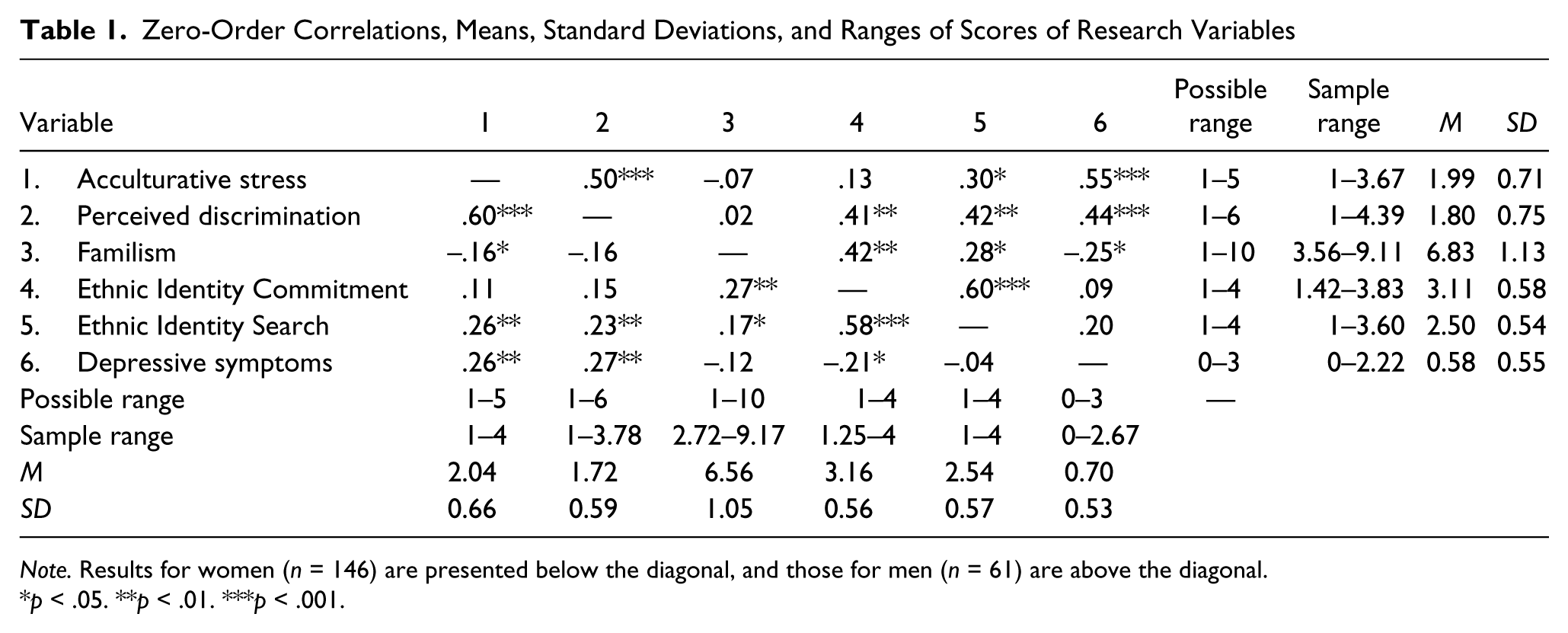
Note. Results for women (n = 146) are presented below the diagonal, and those for men (n = 61) are above the diagonal.
p < .05. **p < .01. ***p < .001.
Primary Analyses: Examination of Moderation Effects
We conducted six separate multiple regression analyses that examined (a) familism and gender as moderators on the association between acculturative stress and depressive symptoms, (b) ethnic identity commitment and gender as moderators on the association between acculturative stress and depressive symptoms, (c) ethnic identity search and gender as moderators on the association between acculturative stress and depressive symptoms, (d) familism and gender as moderators on the association between perceived discrimination and depressive symptoms, (e) ethnic identity commitment and gender as moderators on the association between perceived discrimination and depressive symptoms, and (f) ethnic identity search and gender as moderators on the association between perceived discrimination and depressive symptoms. To reduce multicollinearity, all continuous predictors and moderators were standardized (Frazier, Tix, & Barron, 2004) before calculating interaction terms. In all of the regression models, we included all standardized main effects and all two- and three-way interaction terms simultaneously in the analyses.
Interactions among acculturative stress, familism, and gender
Table 2 shows that acculturative stress was significantly associated with depressive symptoms (b = .12, p < .01). Moreover, familism significantly moderated the association between acculturative stress and depressive symptoms (b = –.11, p < .01). The two-way interaction between familism and acculturative stress uniquely accounted for 3% of the variance in depressive symptoms (sr2 = .03). This result supported our hypothesis that familism would buffer the positive relation of acculturative stress to depressive symptoms. The three-way interaction among familism, gender, and acculturative stress, however, was not associated with depressive symptoms (b = .05, p > .05). Thus, our hypothesis that the buffering effect of familism on the association between acculturative stress and depressive symptoms would be further moderated by gender was not supported.
Multiple Regressions to Examine Interactions of Minority Stressors, Familism, Ethnic Identity Variables, and Gender, with Depressive Symptoms as Criterion
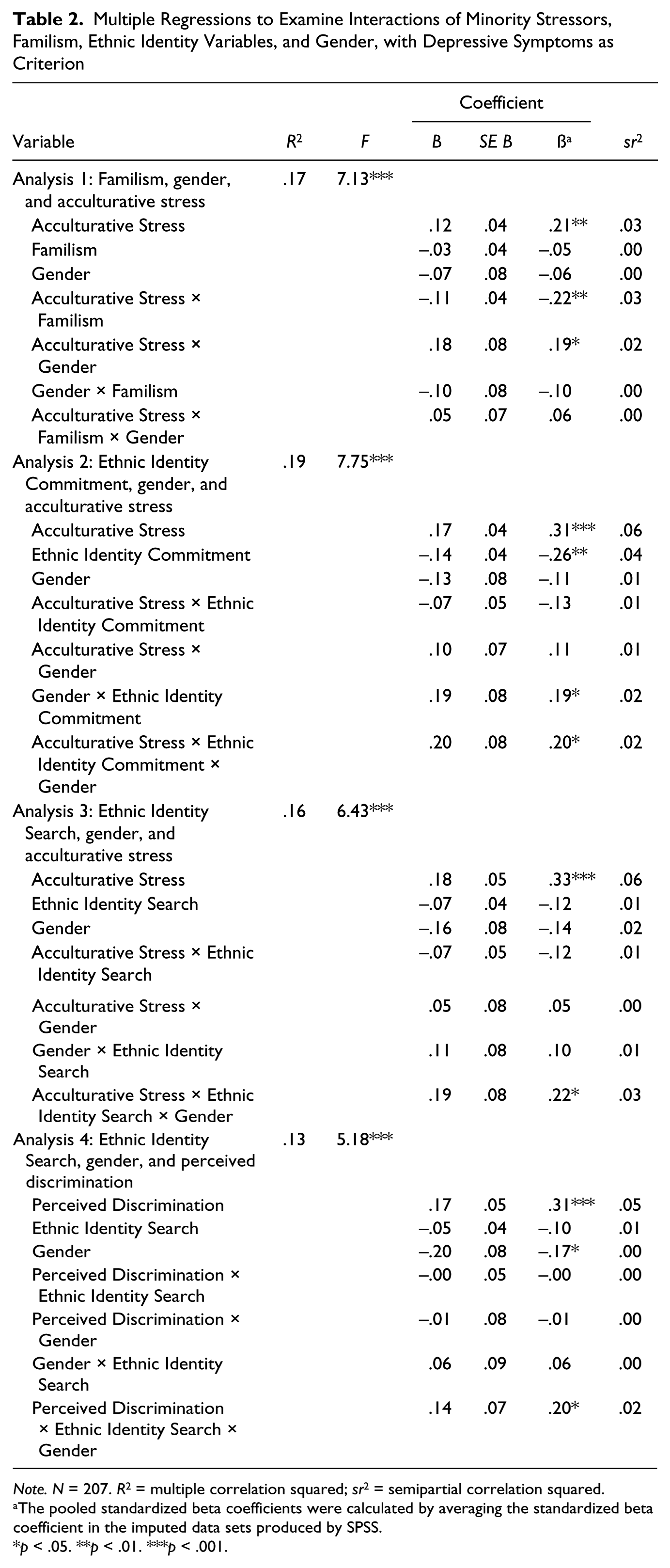
Note. N = 207. R2 = multiple correlation squared; sr2 = semipartial correlation squared.
The pooled standardized beta coefficients were calculated by averaging the standardized beta coefficient in the imputed data sets produced by SPSS.
p < .05. **p < .01. ***p < .001.
To understand the nature of the significant interaction between familism and acculturative stress, we employed procedures recommended by Aiken and West (1991) to plot graphs for the significant two-way interaction using high (i.e., 1 SD above the mean) and low (i.e., 1 SD below the mean) values for the moderator (i.e., familism). Figure 1 depicts the significant two-way interaction between acculturative stress and familism. Specifically, it shows the association between acculturative stress and depressive symptoms was significantly different from zero among students reporting low (b = .24, p < .001) as well as high levels of familism (b = .11, p < .05). However, the slope was much steeper at low levels than at high levels of familism.

Two-way interactions between acculturative stress and familism in association with depressive symptoms. Values were obtained from standardized variables. There were 32 and 29 students, respectively, in the +1 SD and −1 SD familism groups. *p < .05. ***p < .001.
Interactions among acculturative stress, ethnic identity, and gender
Table 2 shows that the three-way interaction among Ethnic Identity Commitment, gender, and acculturative stress had a significant association with depressive symptoms (b = .20, p < .05) and uniquely accounted for 2% of the variance in depressive symptoms (sr2 = .02). Therefore, our hypothesis that the moderation effects of ethnic identity commitment on the association of acculturative stress to depressive symptoms would be contingent on gender was supported.
We then constructed graphs for the three-way interaction among Ethnic Identity Commitment, gender, and acculturative stress. Because of the small sample sizes of the gender groups, we used the 0.5 SD rather than the 1 SD criteria for the three-way interaction follow-up analyses. Specifically, separate regression slopes for the association between acculturative stress and depressive symptoms were plotted for women and men at 0.5 SD above and 0.5 SD below the mean to represent high and low levels of Ethnic Identity Commitment, respectively. Figure 2 shows that for women, the regression slope for acculturative stress on depressive symptoms was significantly different from zero at both high (b = .13, p < .01) and low (b = .21, p < .001) levels of Ethnic Identity Commitment, but the slope was steeper when low levels of Ethnic Identity Commitment were endorsed. In contrast, for men, the regression slope for acculturative stress on depressive symptoms was steeper when they reported high (b = .33, p < .001) rather than low levels of Ethnic Identity Commitment (b = .21, p < .01).
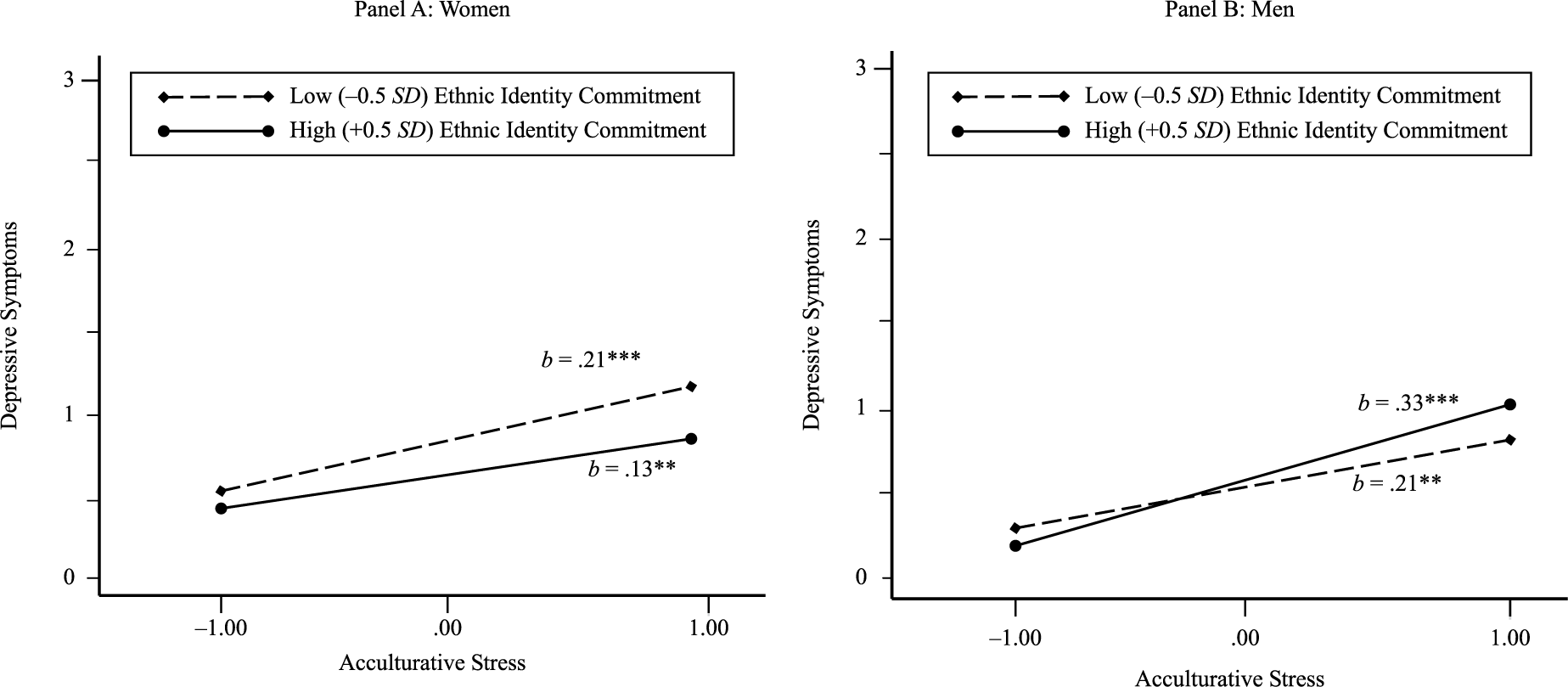
Three-way interaction among acculturative stress, Ethnic Identity Commitment, and gender in association with depressive symptoms. There were 46 and 38 female students, respectively, in the +0.5 SD and −0.5 SD Ethnic Identity Commitment groups. There were 22 and 20 male students, respectively, in the +0.5 SD and −0.5 SD Ethnic Identity Commitment groups. **p < .01.***p < .001.
Similar to the interaction results we found for Ethnic Identity Commitment, we found that the three-way interaction among Ethnic Identity Search, gender, and acculturative stress had a significant association with depressive symptoms (b = .19, p < .05) and uniquely accounted for 3% of the variance in depressive symptoms (sr2 = .03). The interaction graphs depicted in Figure 3 show that for women, the regression slope for acculturative stress on depressive symptoms was steeper when low levels (b = .21, p < .001) rather than high levels of ethnic identity search (b = .14, p < .01) were reported. In contrast, for men, the regression slope was steeper when high levels (b = .29, p < .001) rather than low levels of ethnic identity search (b = .16, p < .001) were endorsed.
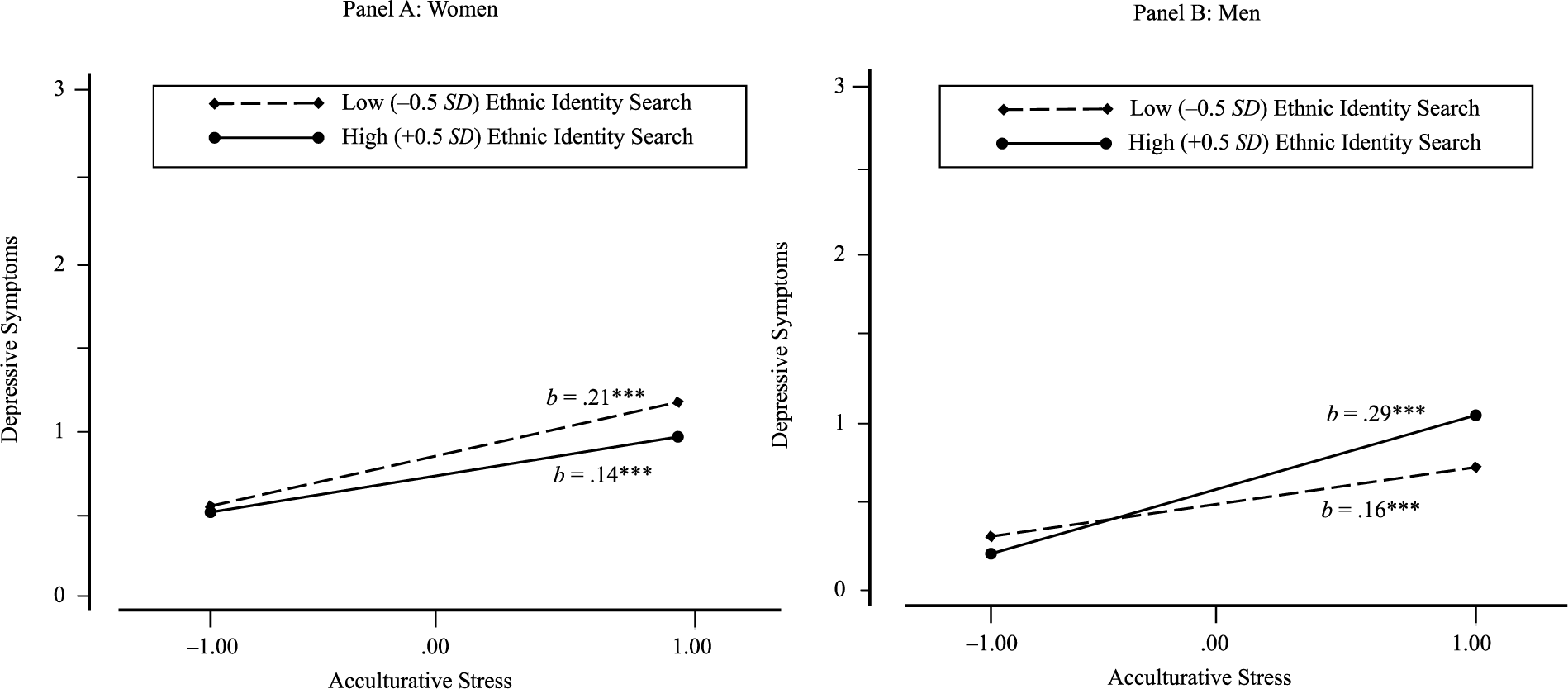
Three-way interaction among acculturative stress, Ethnic Identity Search, and gender in association with depressive symptoms. There were 51 and 41 female students, respectively, in the +0.5 SD and −0.5 SD Ethnic Identity Search groups. There were 24 and 22 male students, respectively, in the +0.5 SD and −0.5 SD Ethnic Identity Search groups. ***p < .001.
Interactions among perceived discrimination, familism, and gender
We also examined moderators of perceived discrimination and depressive symptoms. The first analysis involved examining familism and gender as moderators of the link between perceived discrimination and depressive symptoms. Results indicated that although perceived discrimination was significantly associated with depressive symptoms (b = .12, p < .05), neither the two-way interaction between familism and perceived discrimination (b = –.09, p > .05) nor the three-way interaction among familism, gender, and perceived discrimination (b = .09, p > .05) had a significant association with depressive symptoms. Thus, our hypothesis regarding familism as a buffer in the positive relation of perceived discrimination to depressive symptoms was not supported. Our hypothesis that gender would further moderate the buffering effect of familism on the link between perceived discrimination and depressive symptoms was also not supported.
Interactions among perceived discrimination, ethnic identity, and gender
The analysis involving ethnic identity commitment and gender as hypothesized moderators indicated no significant three-way interaction among Ethnic Identity Commitment, gender, and perceived discrimination (b = .05, p < .05) in association with depressive symptoms. Therefore, our hypothesis that the moderation effects of ethnic identity commitment on the association of perceived discrimination to depressive symptoms would be contingent on gender was not supported.
With regard to the analysis involving ethnic identity search and gender as hypothesized moderators, Table 2 indicated that the three-way interaction among Ethnic Identity Search, gender, and perceived discrimination had a significant association with depressive symptoms (b = .14, p < .05) and uniquely accounted for 2% of the variance in depressive symptoms (sr2 = .02). Figure 4 further indicates that for women of Mexican ancestry, the regression slope for perceived discrimination on depressive symptoms was significantly different from zero at both high (b = .16, p < .001) and low (b = .17, p < .001) levels of ethnic identity search, but the slope was slightly steeper when low levels of ethnic identity search were endorsed. In contrast, for men of Mexican ancestry, the regression slope was much steeper when high levels (b = .23, p < .001) rather than low levels of ethnic identity search (b = .09, p < .01) were reported.
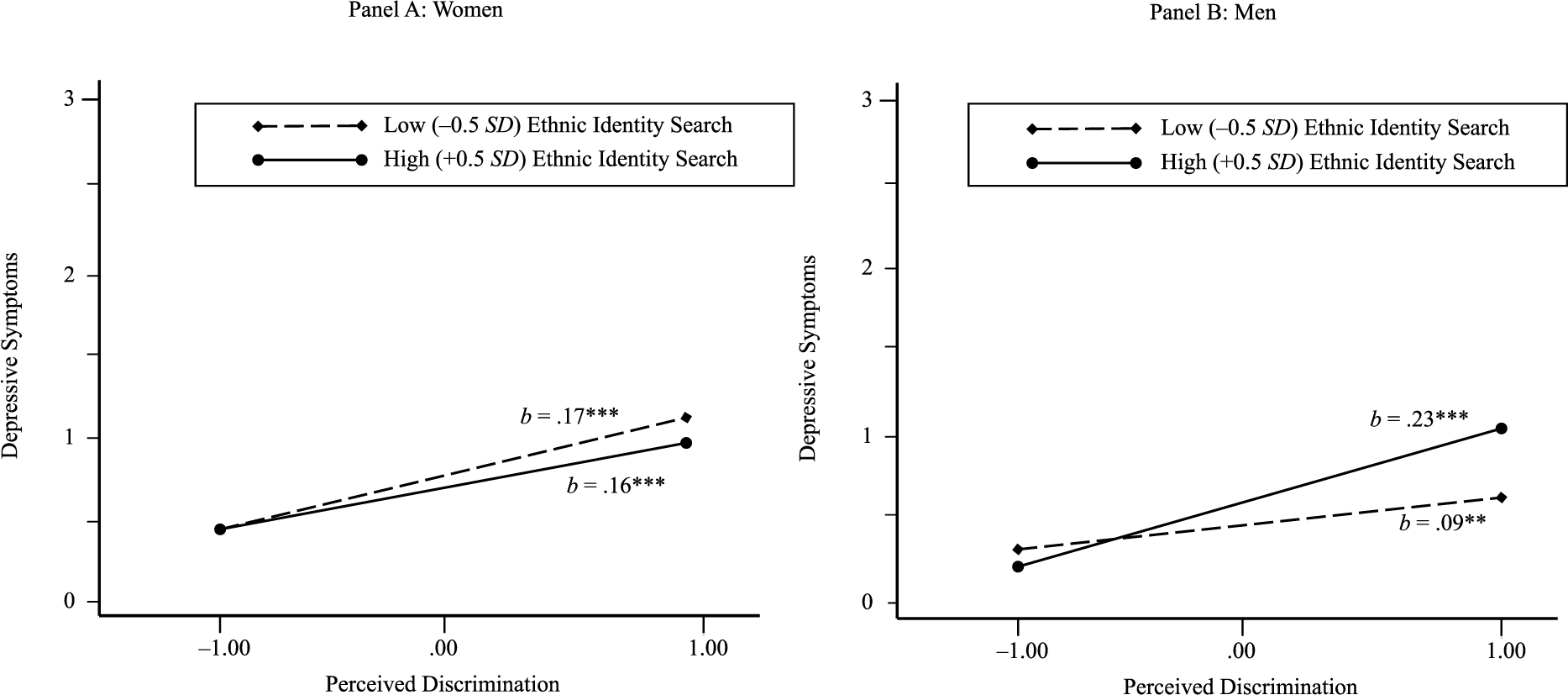
Three-way interaction among perceived discrimination, Ethnic Identity Search, and gender in association with depressive symptoms. There were 51 and 41 women, respectively, in the +0.5 SD and −0.5 SD Ethnic Identity Search groups. There were 24 and 22 men, respectively, in the +0.5 SD and −0.5 SD Ethnic Identity Search groups. **p < .01. ***p < .001.
Discussion
The results provide support for minority stress theories (e.g., Carter, 2007) and are consistent with previous research (e.g., Driscoll & Torres, 2013; Lee & Ahn, 2012) in that we found a positive relation between depressive symptoms and the two minority stressors of perceived discrimination and acculturative stress. The more students of Mexican ancestry experienced minority stress, the more they self-reported depressive symptoms.
Adding to the minority stress literature, we used the integrative model of developmental competencies (García Coll et al., 1996) and identified a social position variable (i.e., gender) and cultural characteristics of familism, ethnic identity commitment, and ethnic identity search that might moderate the pernicious effects of a social stratification mechanism (i.e., perceived discrimination) and a current contextual demand (i.e., acculturative stress) for students of Mexican ancestry. Although not every interaction was significant, the pattern of findings was consistent with the integrative model framework in revealing the complex interplay among contextual stressors, cultural characteristics, and gender.
Familism and Gender as Moderators of Acculturative Stress and Depressive Symptoms
Concerning familism as a moderator, although greater levels of acculturative stress were associated with higher levels of depressive symptoms, this association was weaker among college students with greater familism than among students who did not endorse these values as strongly (see Figure 1). Espousal of traditional familial values protected students from the otherwise strong relationship between depressive symptoms and high acculturative stress. This finding is consistent with the widely held conception of familism values as a cultural strength of individuals of Mexican ancestry (Almeida et al., 2009) that may interact with contextual demands of acculturative stress to shape psychological outcomes (García Coll et al., 1996). Adherence to familism may help students of Mexican ancestry feel a sense of connectedness and kin support to cope with acculturative difficulties. Students who experience high acculturative stress but do not embrace strong familism beliefs, however, may not readily perceive the benefit of familial resources or may not initiate support from familial networks, resulting in greater risks of feelings of isolation and depression.
Regarding the role of gender as a social position factor (García Coll et al., 1996) that may further moderate the buffering effects of familism, we did not find a significant three-way interaction among gender, familism, and acculturative stress. No prior studies have investigated the moderator role of familism on acculturative stress as a function of participants’ gender. One study examined the two-way interaction between gender and familism in explaining depression symptoms in adolescents but did not find significant results (Cupito et al., 2015). Future research should address the paucity of empirical knowledge in this area.
Familism and Gender as Moderators of Perceived Discrimination and Depressive Symptoms
Although we found a significant two-way interaction between familism and acculturative stress in relation with depressive symptoms, we did not find a significant interaction between familism and perceived discrimination. Thus, although the extant literature conceptualizes familism as a cultural strength that may protect individuals of Mexican ancestry from the pernicious effects of minority stressors on mental health (Almeida et al., 2009), we found that such protective effects may be present only in the face of acculturative stress but not racial discrimination. Such discrepant results may be related to the differences between acculturative stress and discrimination. Specifically, although stressful and challenging, acculturative stress may be viewed as a contextual demand (García Coll et al., 1996) that is relatively manageable (Rodriguez, Myers, Mira, Flores, & Garcia-Hernandez, 2002) with the help of supports such as familism. For example, in the case of acculturative stress related to Spanish retention and English acquisition, individuals who endorse higher levels of familism may receive support from family members to gain positive perspectives on the familial meaning of preserving Spanish, as well as encouragement in achieving English, proficiency. Perceived discrimination, however, has to do with the racial and ethnic power hierarchy in society and is largely beyond one’s personal control (Carter, 2007). Although familism may motivate individuals to seek support from family members in the face of perceived discrimination, such support may not be enough to buffer its association with depression or reduce its future occurrence. Researchers need to replicate the present study to further understand how familism influences health outcomes in different minority stressor contexts. Finally, with regard to gender as an additional moderator, we did not find a three-way interaction among gender, familism, and perceived discrimination; thus, this represents another area for future research.
Ethnic Identity Variables and Gender as Moderators of Acculturative Stress and Depressive Symptoms
We found that ethnic identity commitment showed gender-specific moderation effects on the link between acculturative stress and depressive symptoms. Specifically, for women of Mexican ancestry, the increase in depressive symptoms associated with every unit change of acculturative stress was smaller for women endorsing high levels of ethnic identity commitment than for women reporting low levels of ethnic identity commitment. This finding is consistent with theoretical views of ethnic identity commitment as a cultural strength (Phinney, 1992; Phinney & Ong, 2007) and a developmental competency (García Coll et al., 1996) that can mitigate the associations between minority stress and psychological distress symptoms. When facing acculturative stress, women students with high levels of commitment may more readily seek support from ethnic community members and feel a sense of group belonging than women who do not endorse a strong commitment and attachment to their Mexican heritage community.
For men of Mexican ancestry, however, the presence of ethnic identity commitment was not helpful in moderating the relationship between acculturative stress and depressive symptoms. As seen in Figure 2, the increase in depressive symptoms associated with every unit change of acculturative stress was actually greater for men endorsing high levels of ethnic identity commitment than for men reporting low levels of ethnic identity commitment. It appears that when considerable amounts of acculturative stress were present, a stronger ethnic group involvement and commitment could become burdensome for men such that they may experience mental health distress. Research has found that Latino college men reported more depressive symptoms related to acculturative stress than women, particularly as it relates to pressures of heritage-culture retention (Castillo et al., 2015) and that they may experience being bicultural and navigating between two sets of cultural norms as more stressful than women (Crockett et al., 2007). Thus, when high levels of acculturative stress (which can come from both the mainstream and the heritage culture) are present and when there is also a strong commitment to stay engaged with the ethnic group and heritage traditions, such multiple demands may require men of Mexican ancestry to be highly bicultural, which may be stressful and deplete their mental health capacities.
Similar patterns of results were found for ethnic identity search. We found that the link between acculturative stress and depressive symptoms was not as steep for women of Mexican ancestry endorsing high levels of ethnic identity search as it was for women endorsing low levels of ethnic identity search. The opposite was true for men of Mexican ancestry such that acculturative stress had a stronger association with depressive symptoms for men endorsing high levels of ethnic identity search than for men reporting low levels of ethnic identity. Thus, although some research found significant two-way interactions between ethnic identity search and acculturative stress (i.e., not considering gender) such that a stronger ethnic identity exacerbated but did not buffer the association between acculturative stress and depressive symptoms (Torres & Ong, 2010; Torres et al., 2011), we found this intensifying effect to be present only among men. For women, ethnic identity search actually mitigated the otherwise significant link between acculturative stress and depressive symptoms. Only one study (Iturbide et al., 2009) has examined the same three-way interactions related to acculturative stress and found somewhat divergent results. Specifically, Iturbide et al. similarly found that both ethnic identity affirmation and ethnic identity exploration buffered the link between acculturative stress and depressive symptoms for women, but not men. However, they found such moderation effects were present only at low levels of acculturative stress, whereas we found the moderation effect to be present at high levels of acculturative stress. Because there remains limited research considering these complex interactions, future researchers should continue to examine these variables to clarify the contradictory findings.
Ethnic Identity Variables and Gender as Moderators for Perceived Discrimination and Depressive Symptoms
With regard to the hypothesized moderators for perceived discrimination, we did not find a significant three-way interaction among Ethnic Identity Commitment, gender, and perceived discrimination. This finding is not consistent with theoretical or empirical literature documenting the protective role of ethnic identity commitment (e.g., Phinney & Ong, 2007); although as previously described, ethnic identity commitment did show buffering effects on the acculturative stress–depression link for women of Mexican ancestry.
As to ethnic identity search, we found a significant three-way interaction among Ethnic Identity Search, gender, and perceived discrimination. Specifically, for men, each unit increase in perceived discrimination was associated with increased levels of depressive symptoms; however, the associated increase in depressive symptoms was more pronounced for men endorsing high levels of ethnic identity search than for men reporting low levels of ethnic identity search. The opposite was true for women in that the link between perceived discrimination and depressive symptoms was stronger for women reporting low ethnic identity search than for women endorsing high ethnic identity search. Thus, it appears that extensively searching for and exploring one’s ethnic identity may not be psychologically beneficial for college students of Mexican ancestry, especially not for men, in the face of racial discrimination. We could not find any studies that have examined ethnic identity search as a moderator in the perceived discrimination—depressive symptoms link, or studies that have considered gender in such moderation analyses. Although the previously discussed Iturbide et al. (2009) study did examine ethnic identity search (and commitment) and gender as moderators, they examined these moderators only in the context of acculturative stress but not perceived discrimination. Thus, our study extends Iturbide et al.’s study by considering additional minority stress factors. Specifically, although Iturbide et al. found similar patterns of gender-specific moderation effects for both ethnic identity commitment and search in the context of acculturative stress, we found that only ethnic identity search, but not commitment, exhibited gender-specific moderation effects in the context of perceived discrimination. The dearth of research in this area, however, prevents further interpretation of such disparate findings.
Limitations
Several limitations must be addressed. First, the generalizability of the results is limited by the sample characteristics. The sample was drawn from a Hispanic-serving institution in the Southwestern United States. The sample’s mean age (26.57 years) and median income ($20,000-$34,999) were consistent with the demographics of the institution where participants were recruited; they were also consistent with data indicating that students at such schools tend to be older, female, and from lower income families compared to students at predominantly White institutions (Hurtado & Ruiz, 2012). Thus, the findings may not be generalizable to students of Mexican ancestry at predominantly White institutions, in other geographical regions, or from more affluent backgrounds. Second, these cross-sectional data cannot establish temporal relations or determine causality. Third, because many participants (45%) were second generation in the United States, this status may have influenced the range of some of the variables such as acculturative stress. Previous research has shown that earlier generation Latinos generally report higher levels of acculturative stress than their later generation peers (e.g., Caetano, Ramisetty-Mikler, Vaeth, & Harris, 2007), although the opposite appears to be true for perceived discrimination (e.g., Viruell-Fuentes, 2007). Another limitation is that self-report measures were used, and there may have been over- or underreporting of symptoms. In addition, the results of the study are limited in generalizing only to other college students of Mexican ancestry who have reported relatively low levels of depression and perceived discrimination. Finally, the unequal sample size between women (n = 146) and men (n = 61) may have resulted in a decrease of statistical power (Frazier et al., 2004) to detect meaningful moderations (e.g., gender, ethnic identity commitment, and perceived discrimination). Related to this, although the power analysis we conducted a priori indicated sufficient power for typical regression analyses, such power estimation did not address the ability to detect statistical interactions.
Implications for Practice and Research
Our findings may inform counseling practice with college students of Mexican ancestry. When working with students who are presenting with depressive symptoms, it is important that therapists attend to clients’ potential experiences with perceived discrimination and burdens arising from adapting to the mainstream society. For clients facing considerable acculturative stress, an exploration of familism values may make them more cognizant of the support they have and the ideals they live for, which may facilitate positive coping behavior (e.g., calling a family member) and engender a sense of solidarity and strength to combat acculturative stress or reduce its negative impact. Engaging clients in recognizing and expressing familism values may be useful for both men and women due to the non-gender-specific protective effects of familism.
In working with female clients of Mexican ancestry, it may be especially helpful for clinicians to assess ethnic identity search and commitment. By exploring clients’ ethnic beliefs, cultural pride, and connections with the ethnic community, counselors may be able to encourage clients’ deeper recognition of cultural strengths and cultural competence to cope with difficulties arising from the acculturation process. For male clients, it may be more beneficial to explore how ethnic identity could be a potential stressor, particularly when combined with considerable amounts of stress. It might be important for therapists to carefully attend to the possible psychological dissonance resulting from the ethnic identity search process or a strong attachment to the ethnic community as well as a felt pressure to be highly bicultural in navigating two cultural worlds. Finally, campus climate studies and multicultural programs at Hispanic-serving institutions should not overlook the relevance of acculturative stress and perceived discrimination for the mental health concerns of students of Mexican ancestry.
Conclusion
In summary, our study made some incremental contributions to the literature. The design allowed for a fine-grained analysis of cultural features in the minority stress–depression link by attending to sociocontextual risks and cultural resilience and considering the role of gender in the examination of cultural moderators, thereby exploring the intersectionality of multiple social identities (Umaña-Taylor, 2011; Umaña-Taylor et al., 2014). Finally, by using a homogenous ethnic group to evaluate within-group variability in the context of moderators, the present study provides a more precise examination of Mexican-ancestry college students’ experiences than studies that aggregate diverse Latino ethnic groups. Our findings highlight the importance of examining cultural variables and gender to better understand and support students of Mexican ancestry as they manage minority stressors.
Footnotes
Declaration of Conflicting Interests
The authors declared no potential conflicts of interest with respect to the research, authorship, and/or publication of this article.
Funding
The authors received no financial support for the research, authorship, and/or publication of this article.